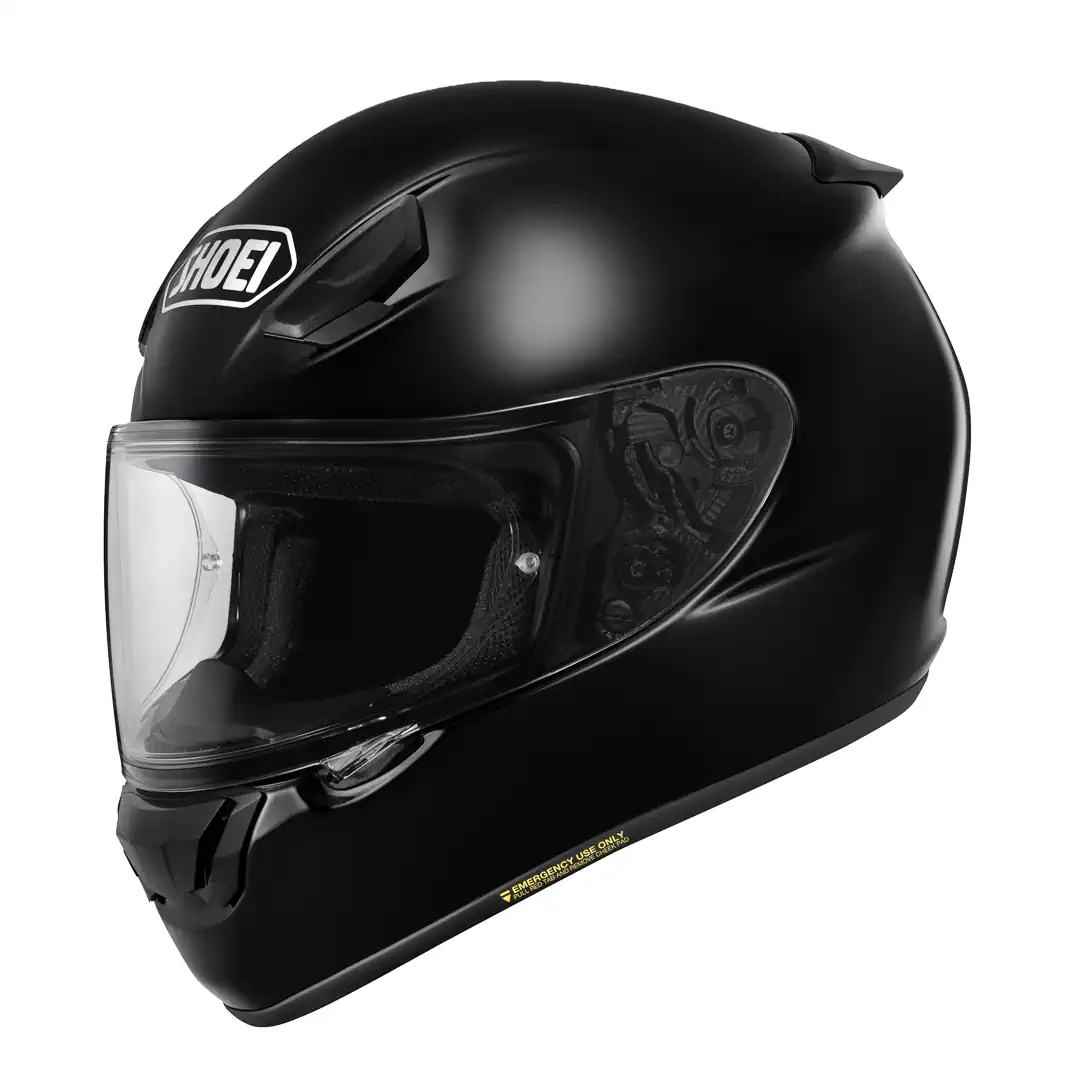
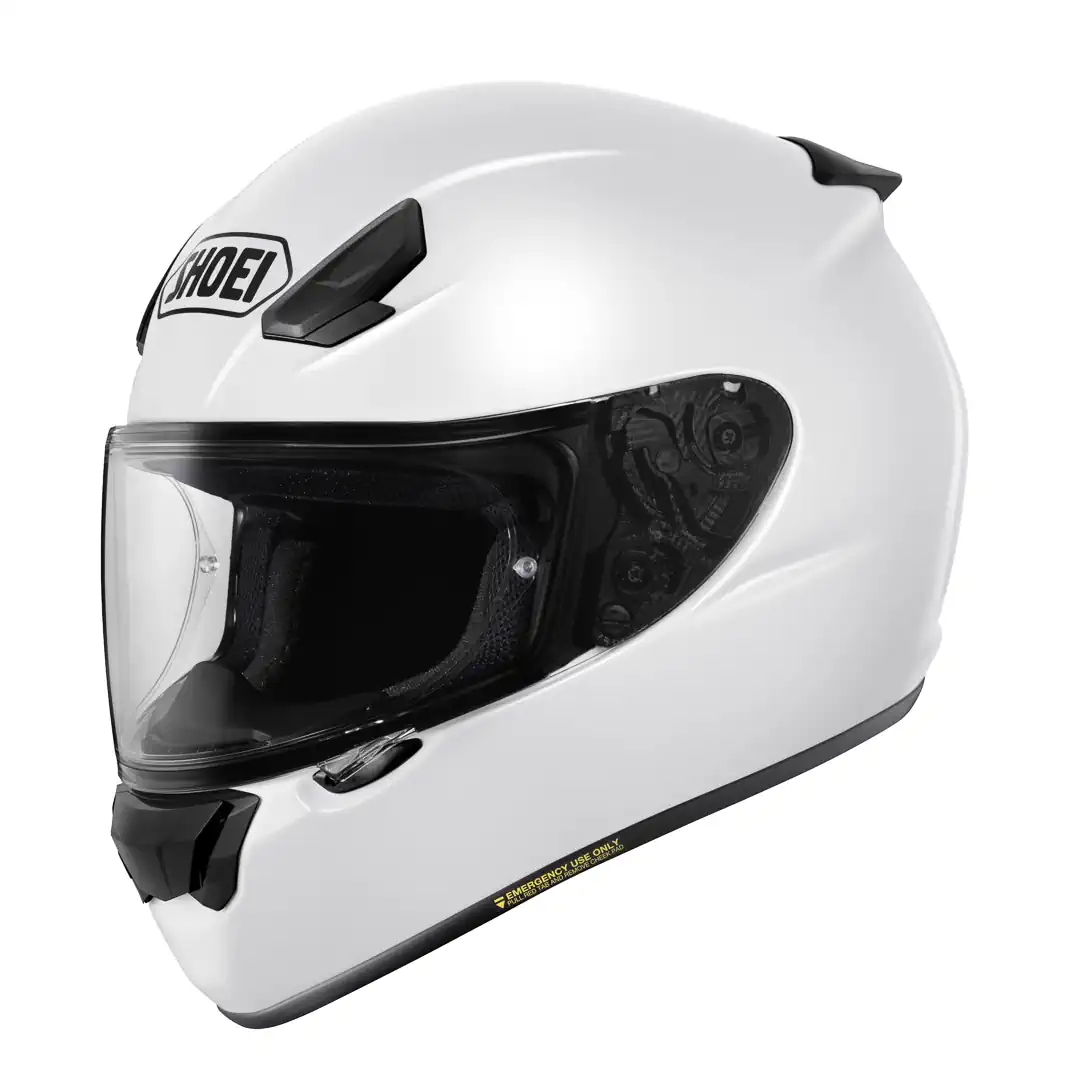
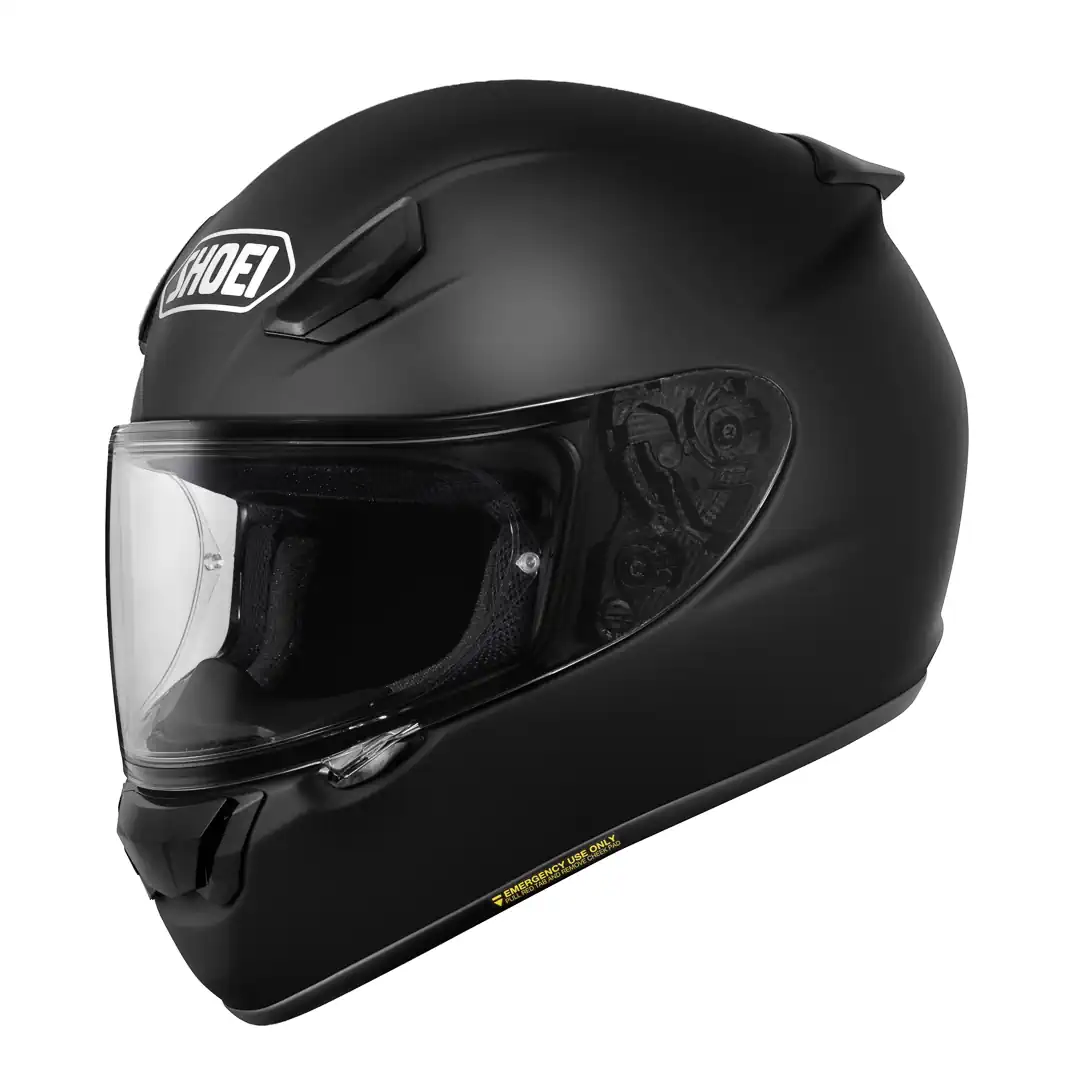
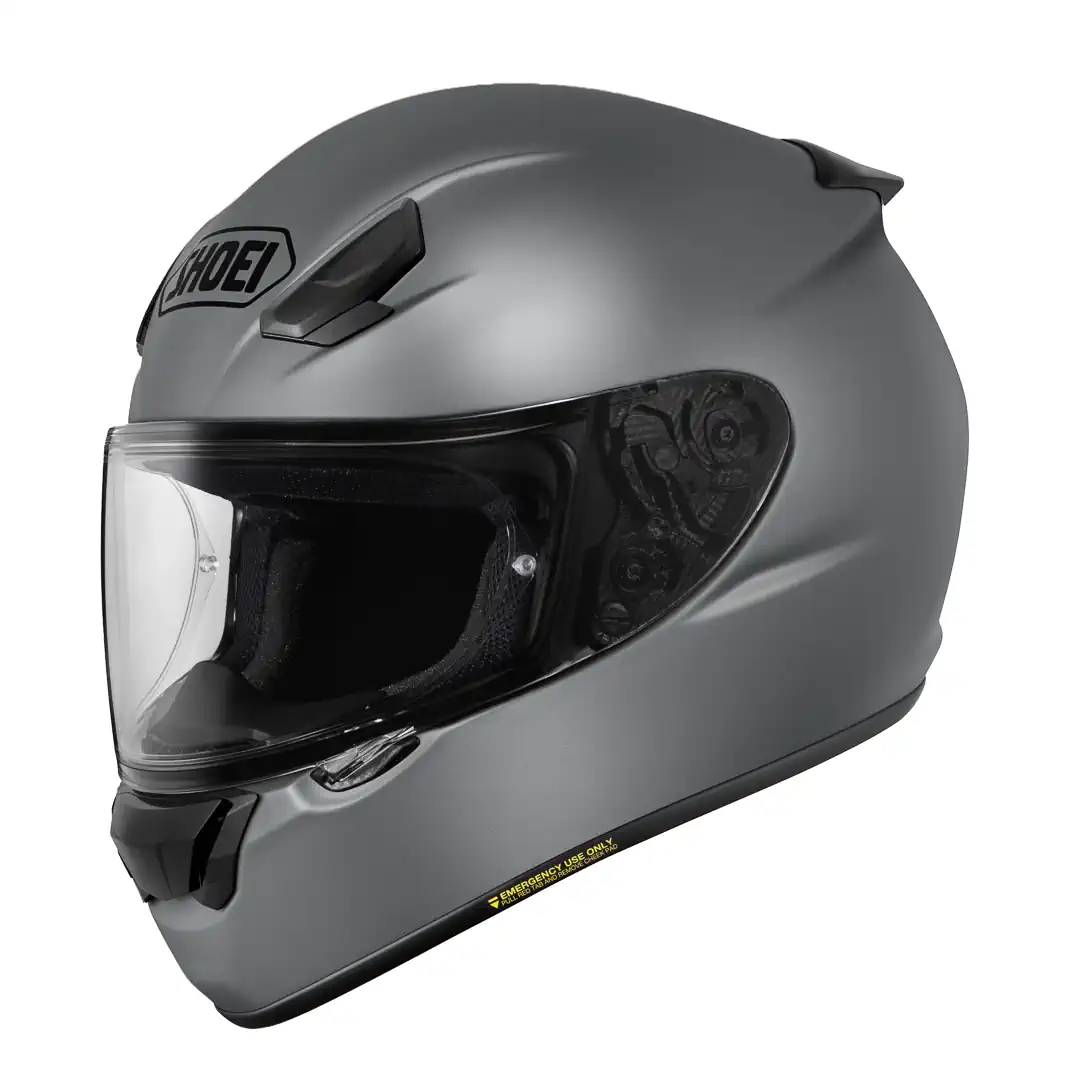
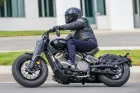
The original Shoei RF-SR had a remarkable run. Nearly a decade on the market is a long tenure for any helmet, let alone one serving as the all-important gateway to a premium brand such as Shoei. It was a smart play by the Japanese manufacturer, giving riders an opportunity to experience the company’s reputation for fit, finish, and safety without committing to the higher MSRPs of the RF-1400 or X-Fifteen, Shoei’s upper-tier full-face street offerings. Now, the Japanese company has released the aptly named Shoei RF-SR2 helmet, which picks up that hefty job and matches the RF-SR’s current $500 MSRP.
Evolution versus revolution is a concept discussed quite a bit, whether we’re talking about new gear or motorcycles. The RF-SR2 is undoubtedly an evolution of the original, though it takes clear steps forward by incorporating influences from Shoei’s larger family of road helmets.
Shoei RF-SR2 Design and Aerodynamics
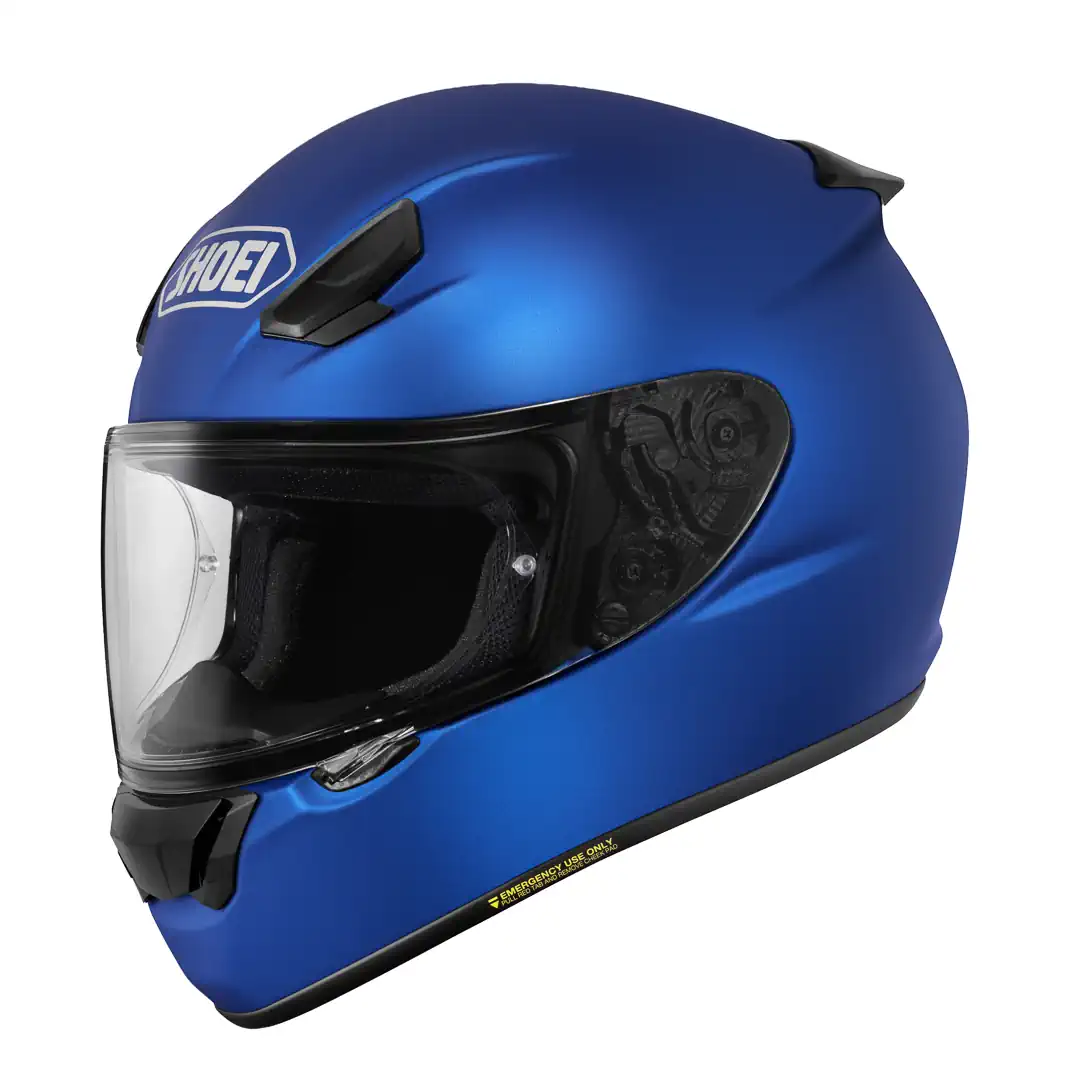
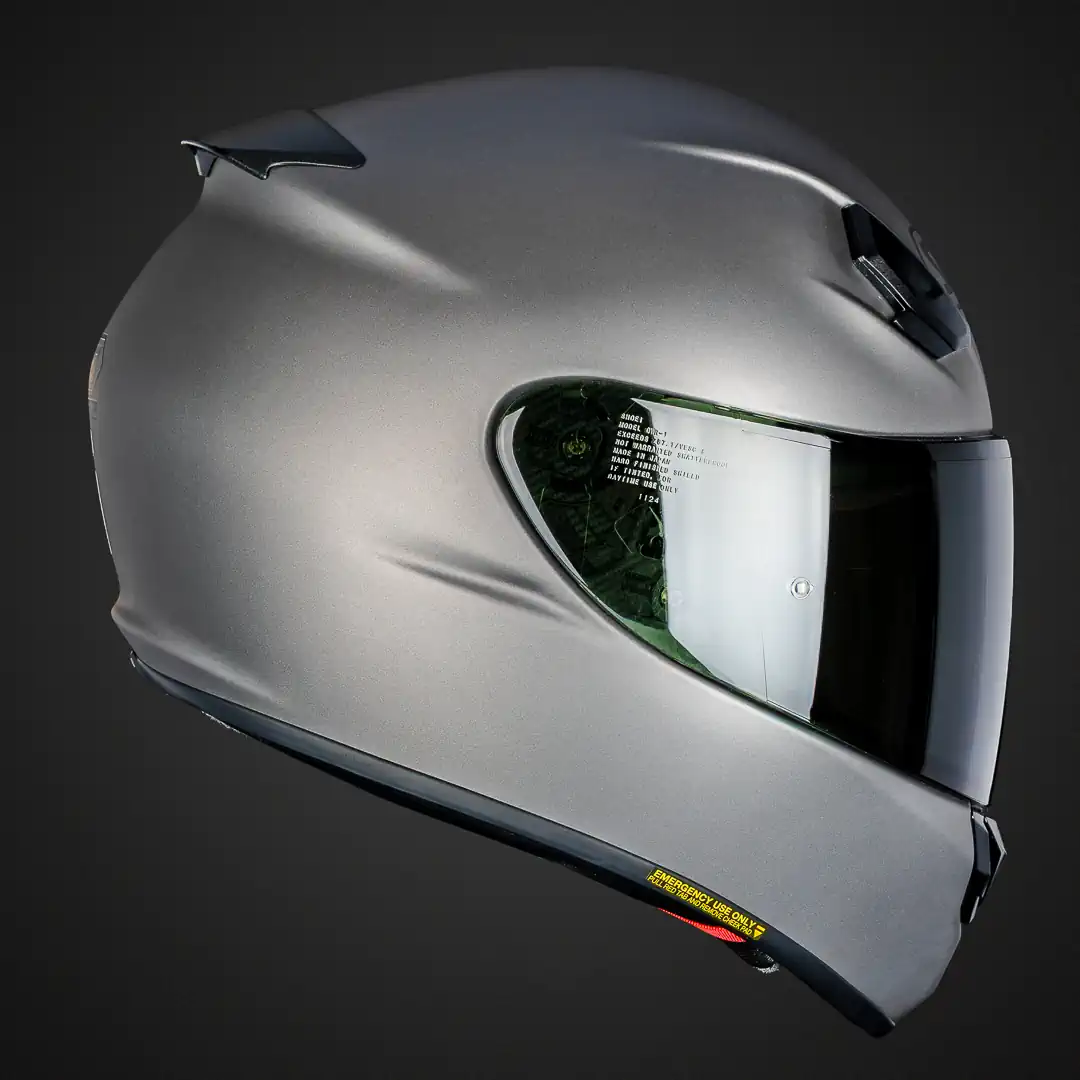
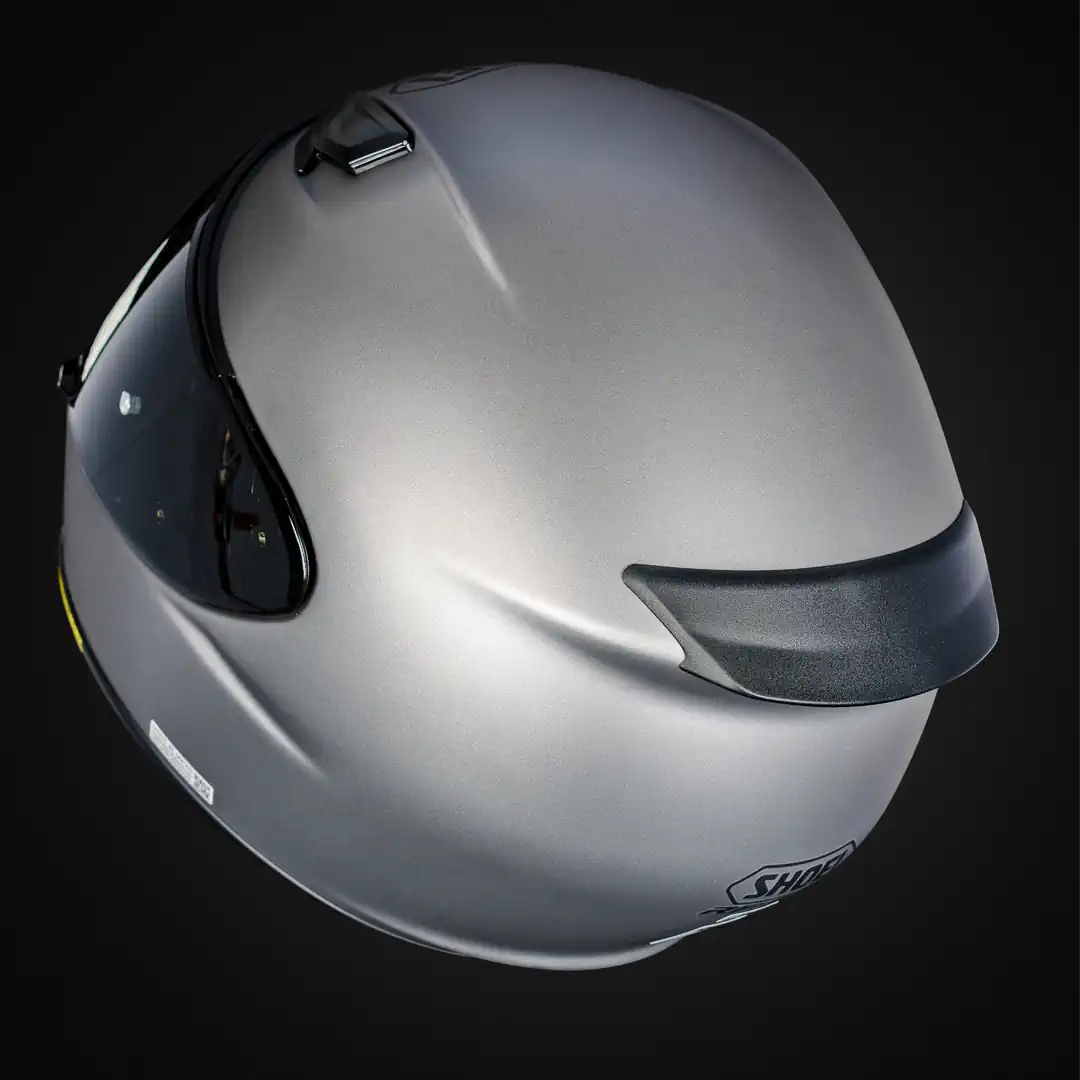
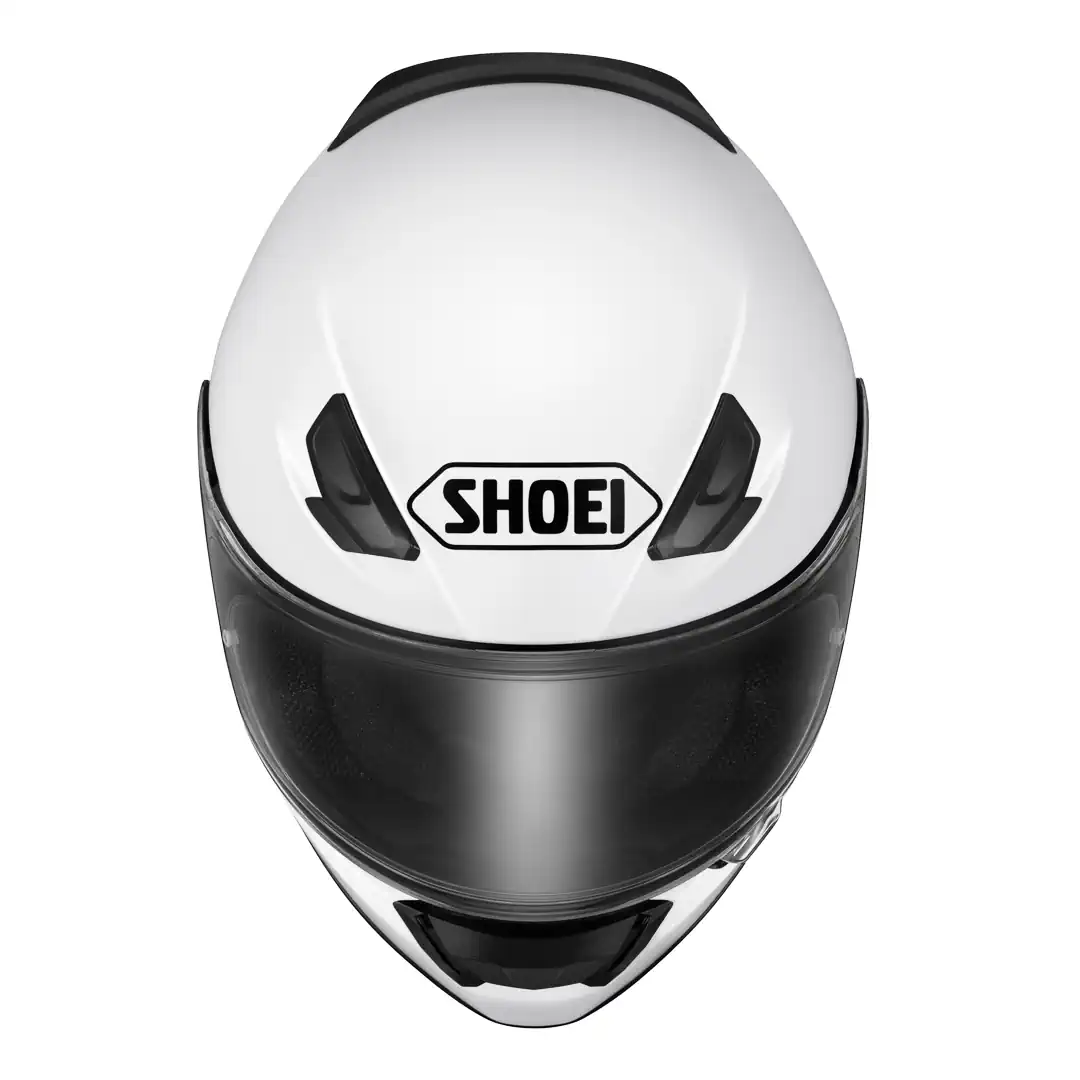
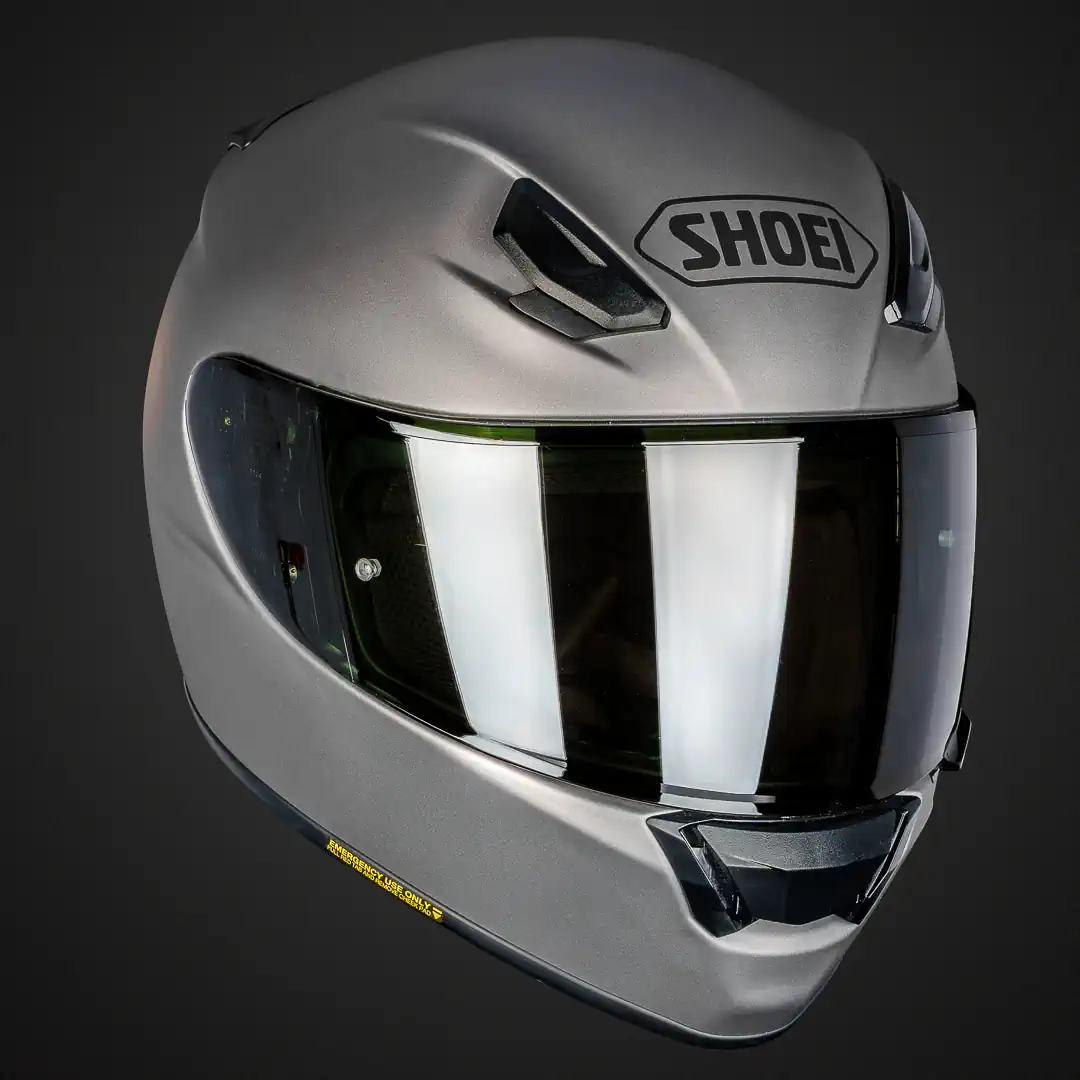
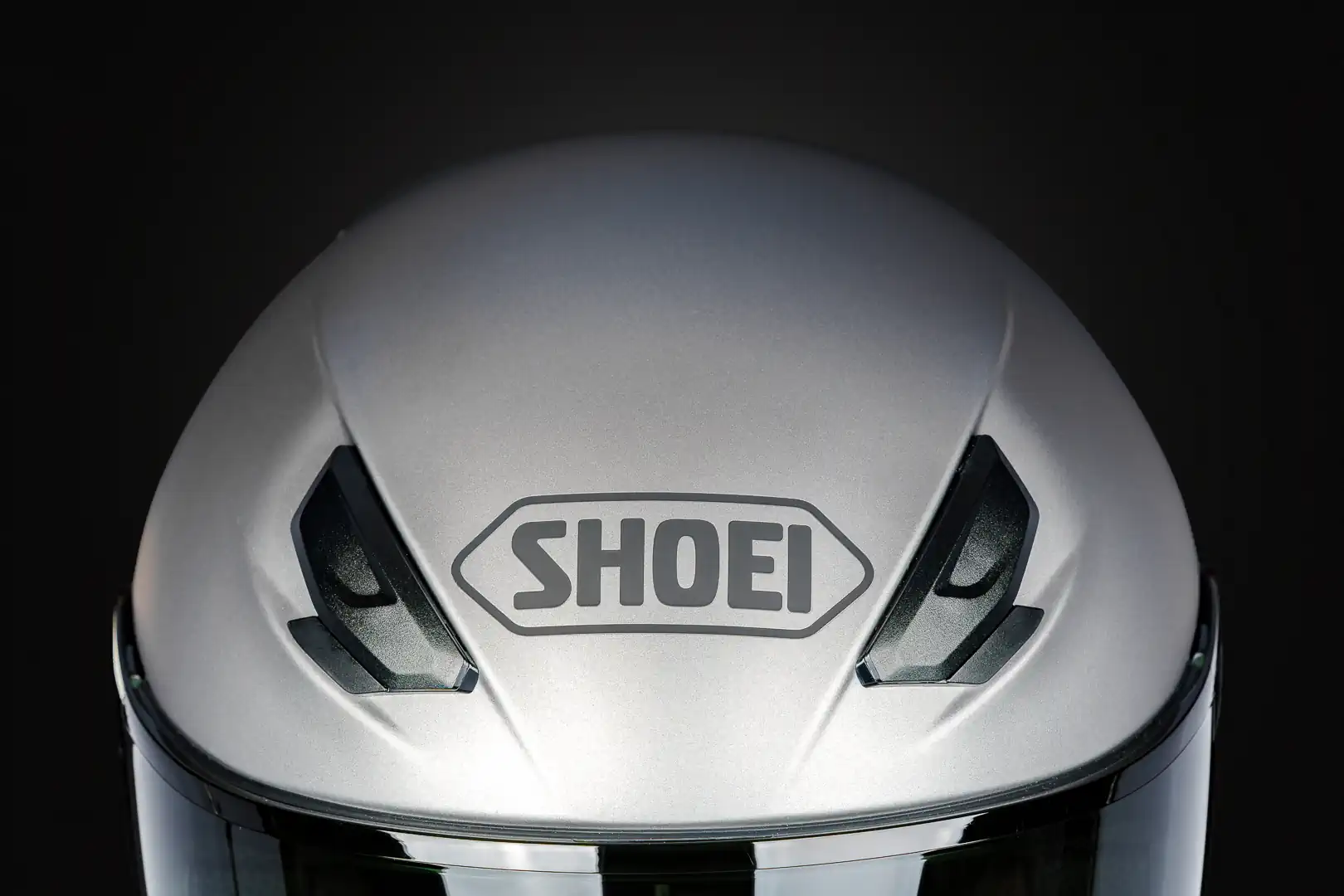
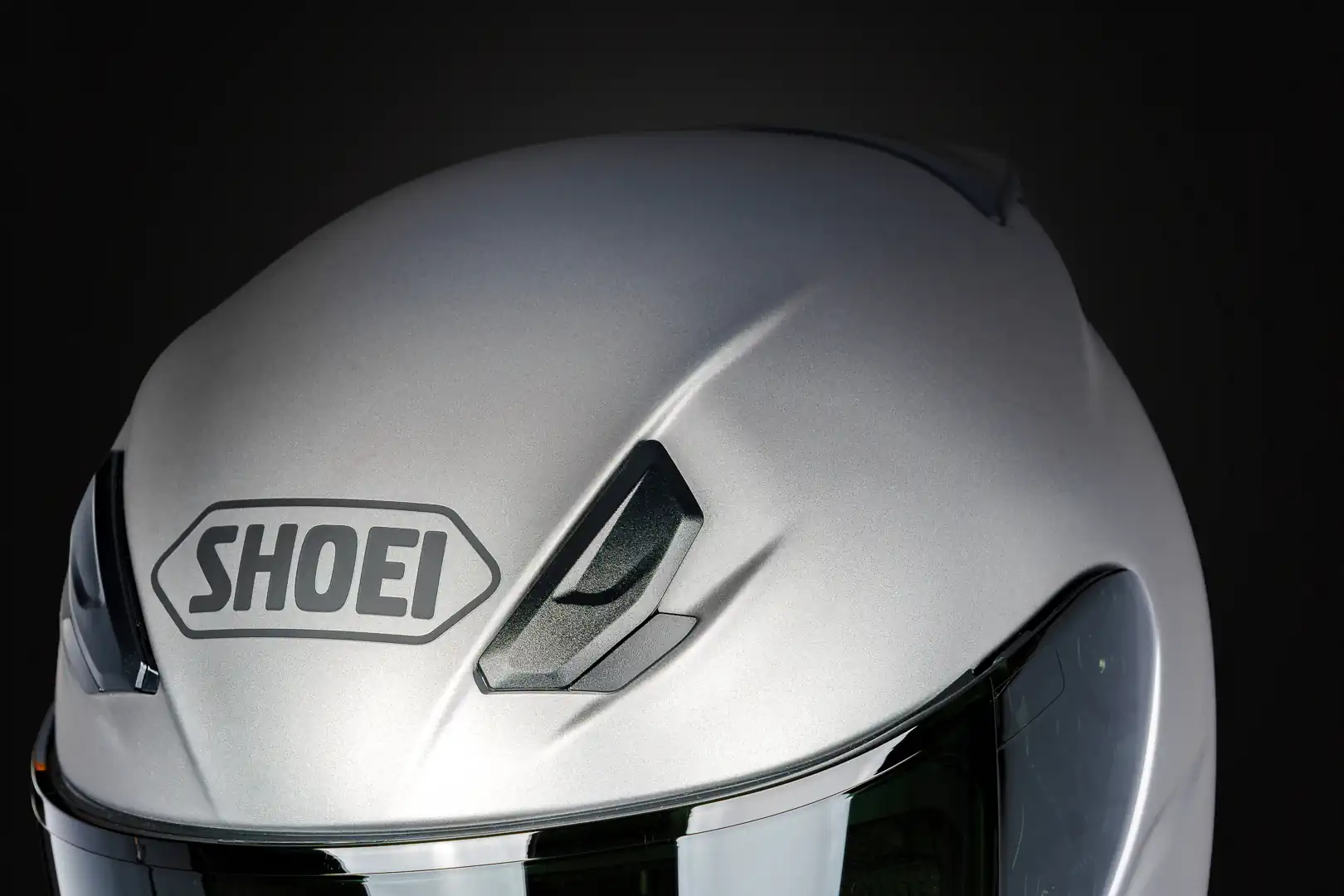
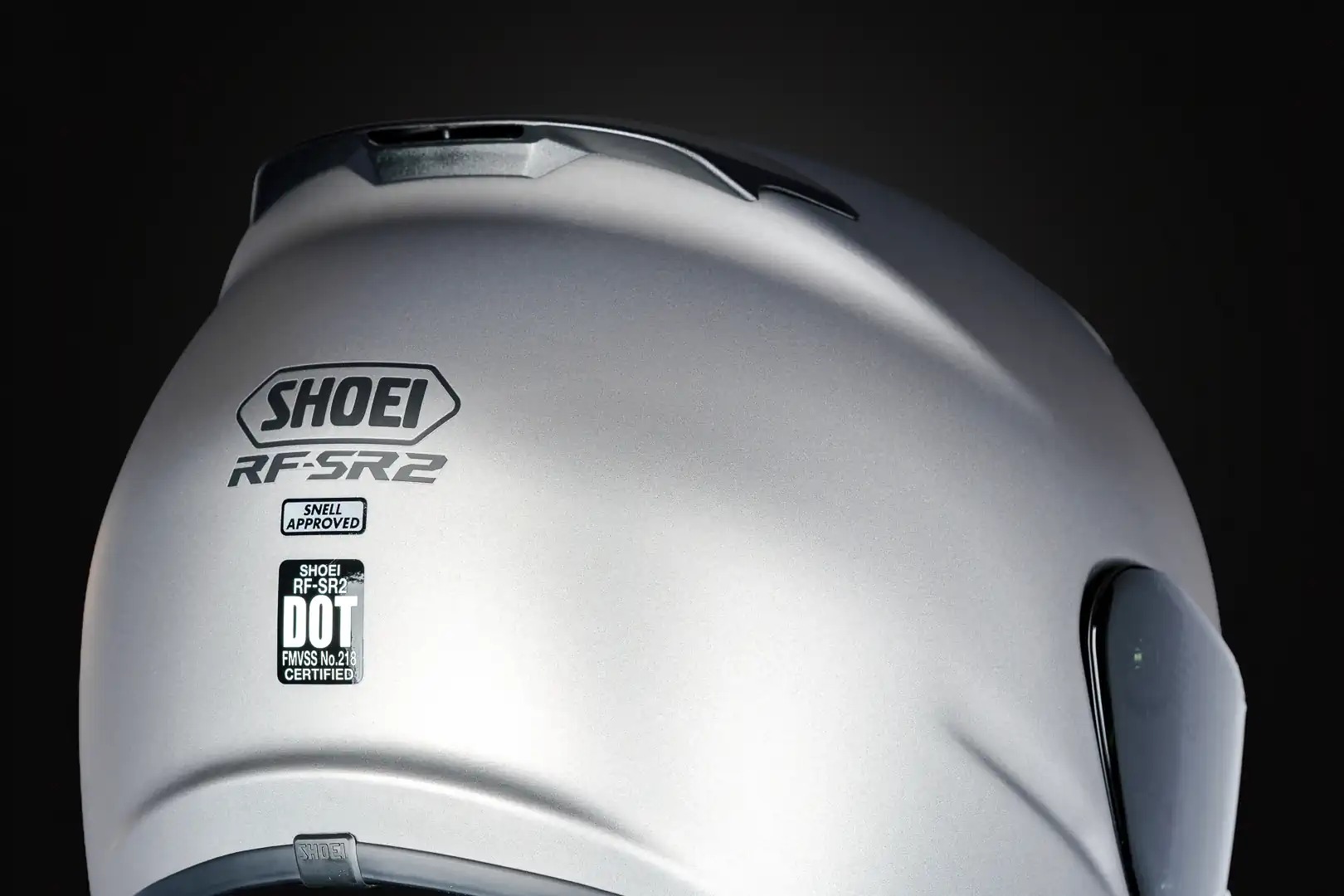
The updated outer shell still reflects RF-SR design language, while appearing far more visually compact and mature. It draws on aero-first principles learned during the development of the MotoGP-ready X-Fifteen.
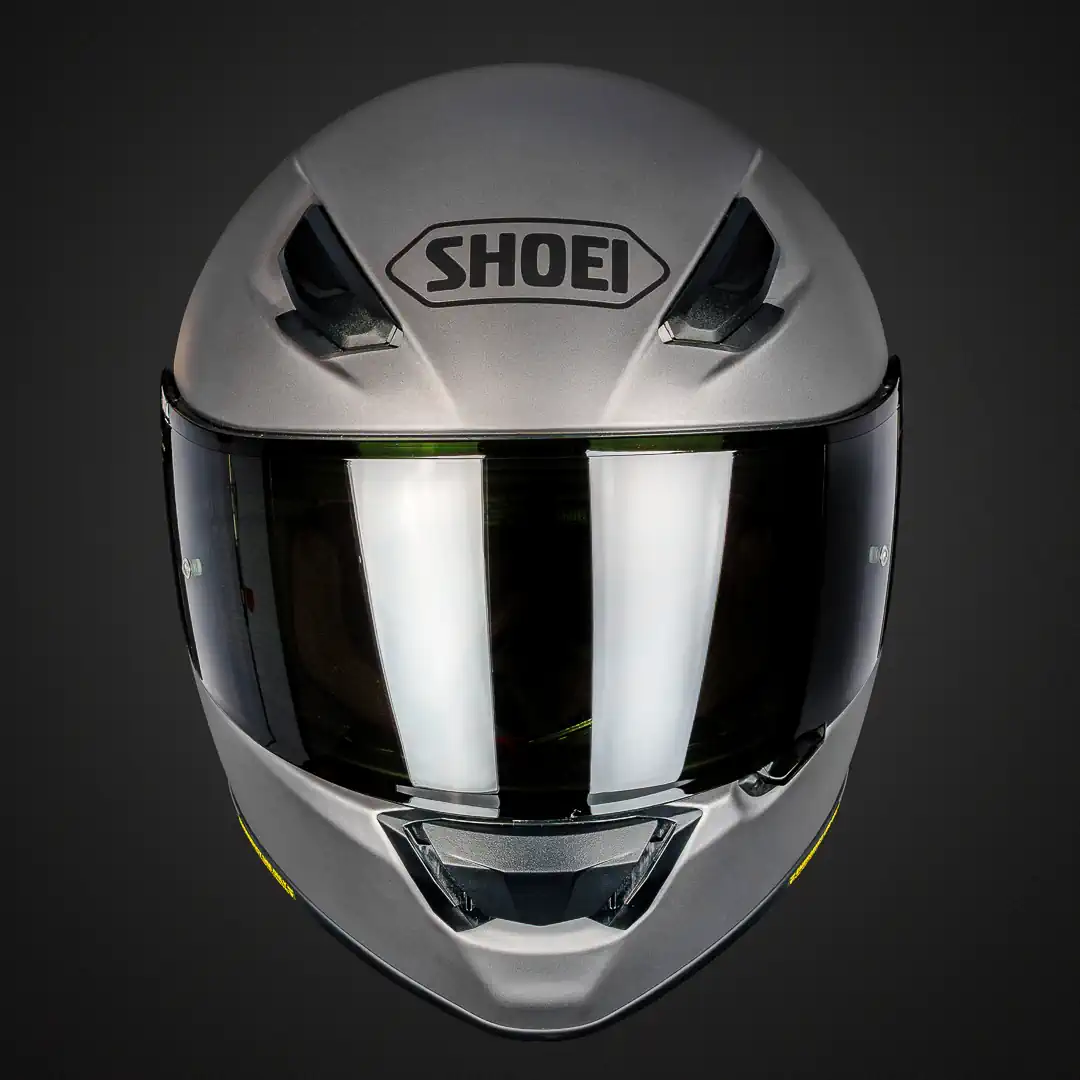
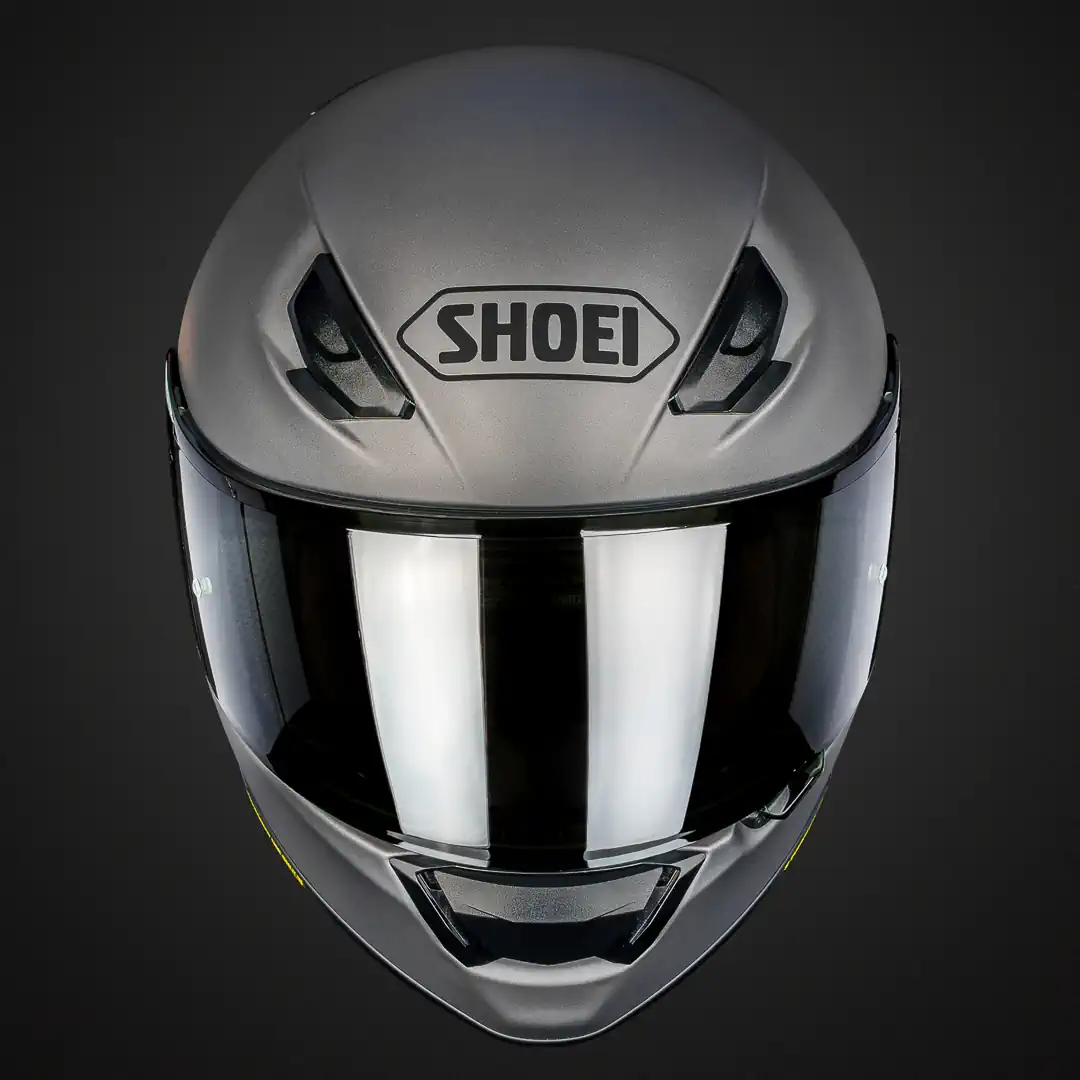
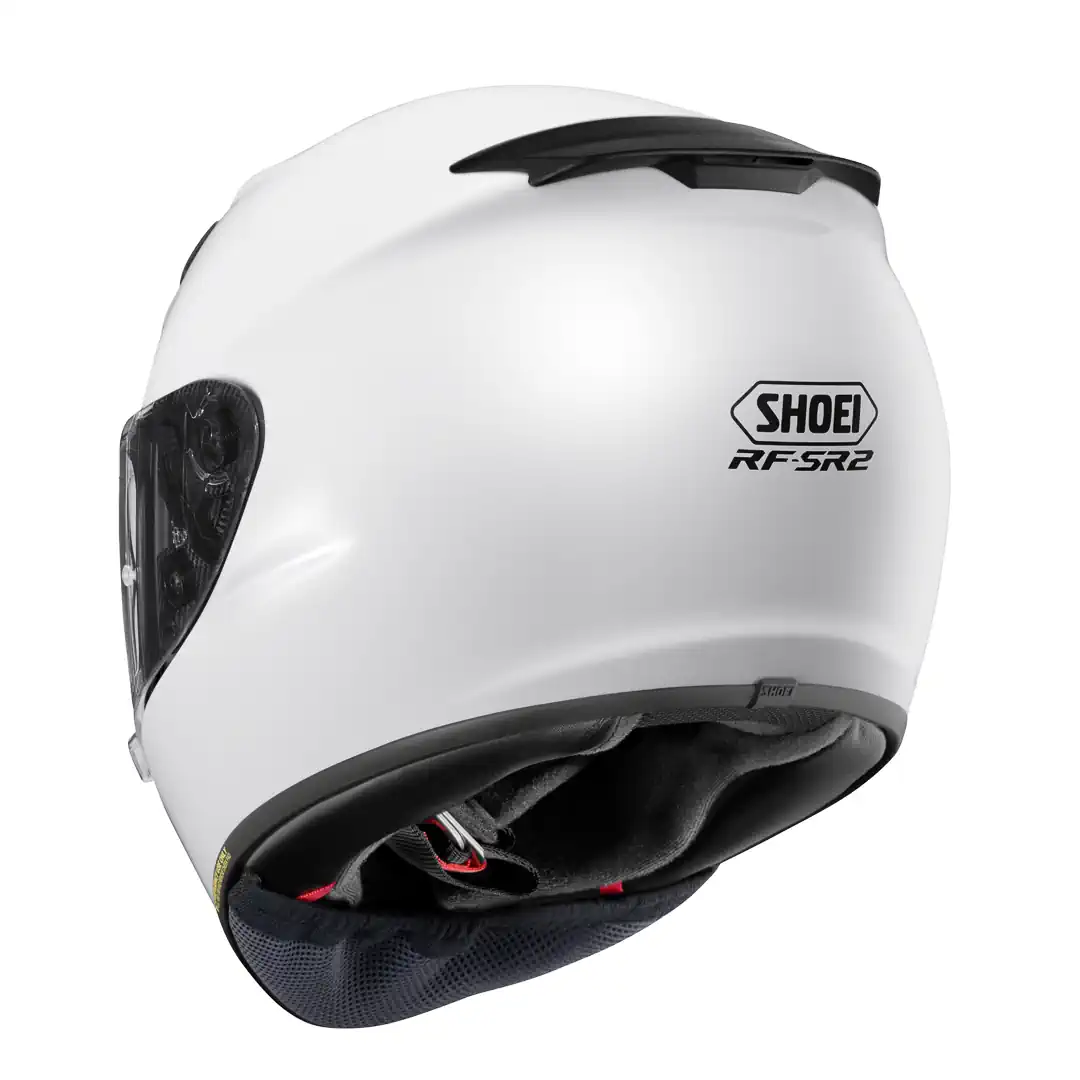
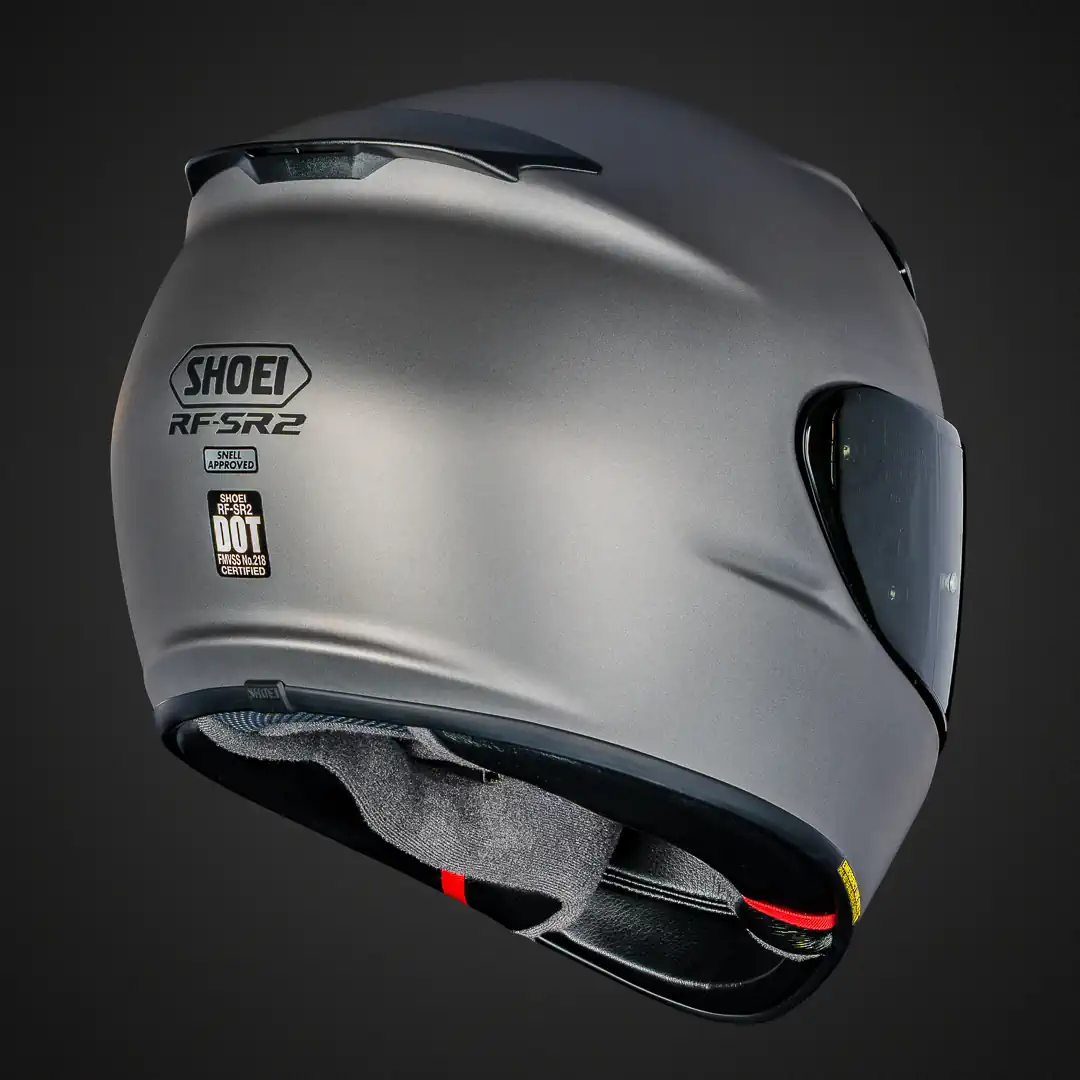
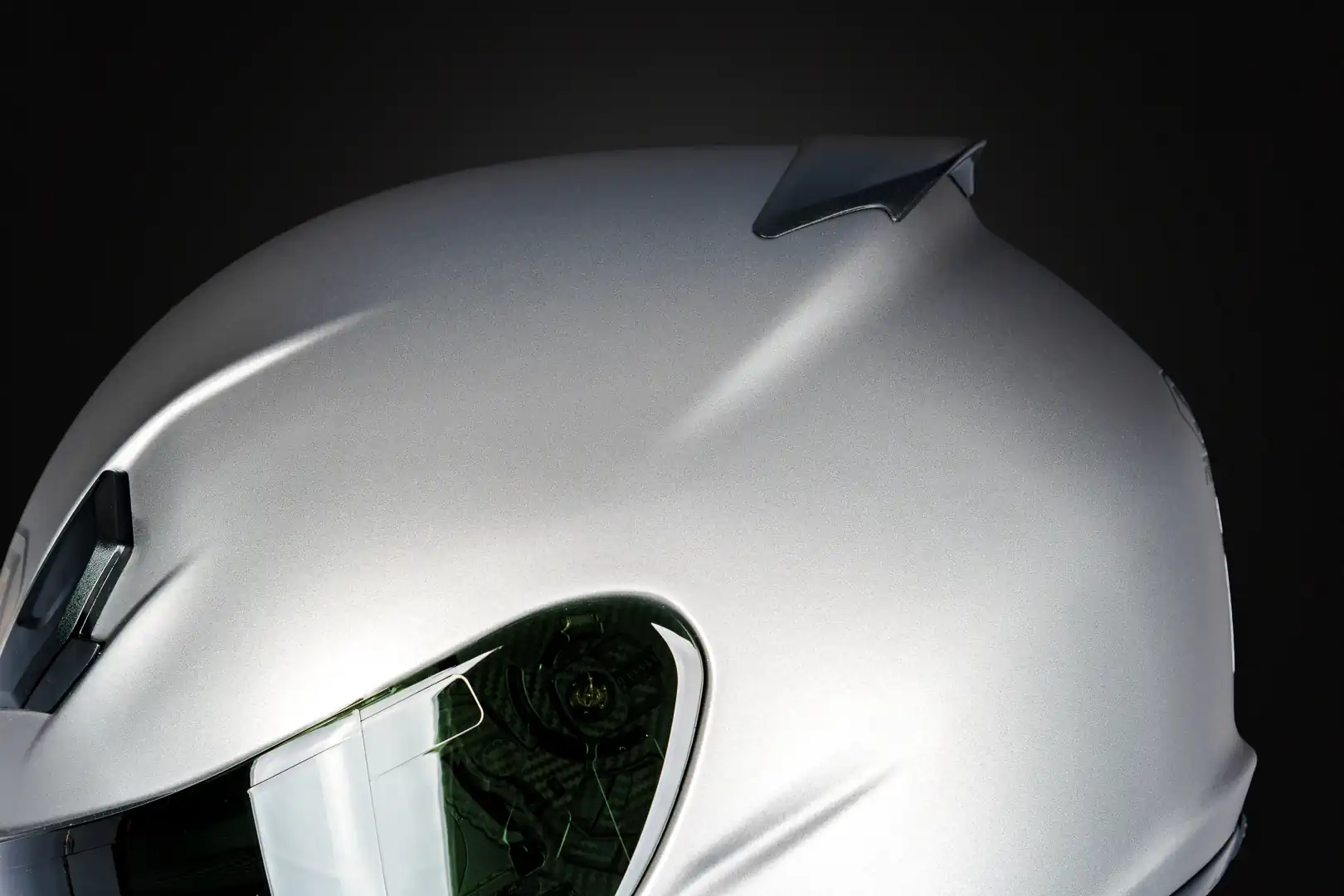
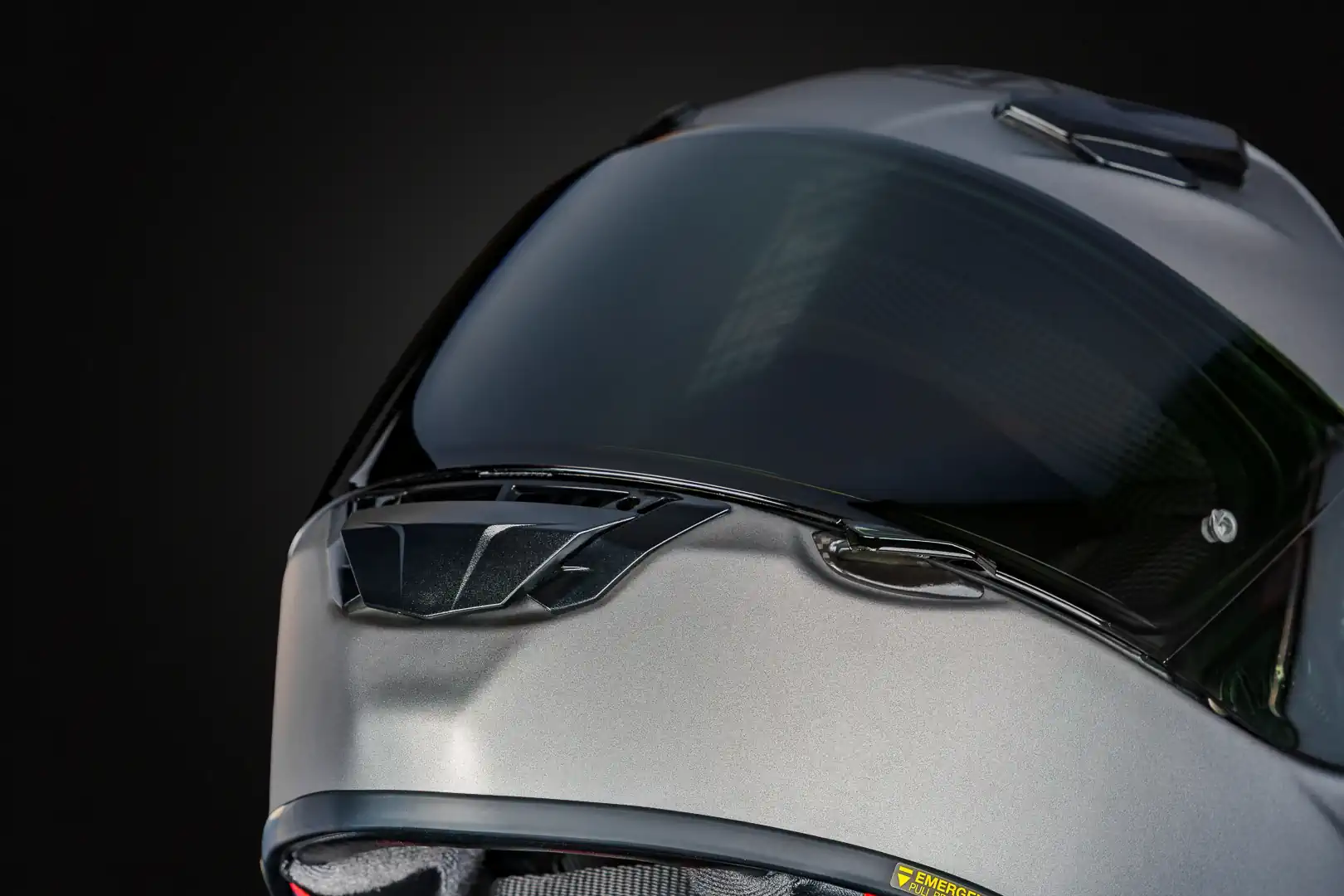
To that end, we now see the all-new venting elements discreetly recessed into the shell, with the more prominent RF-1400-inspired rear spoiler taking the lion’s share of visual attention this time around. Still, the lid displays a more streamlined profile.
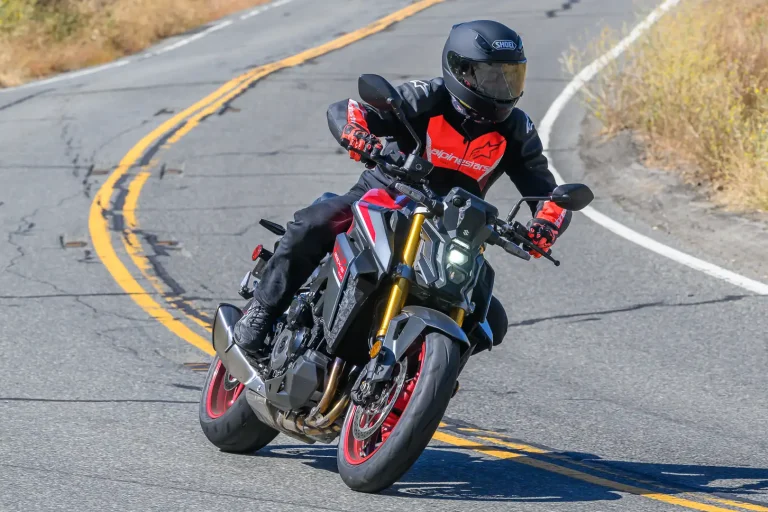
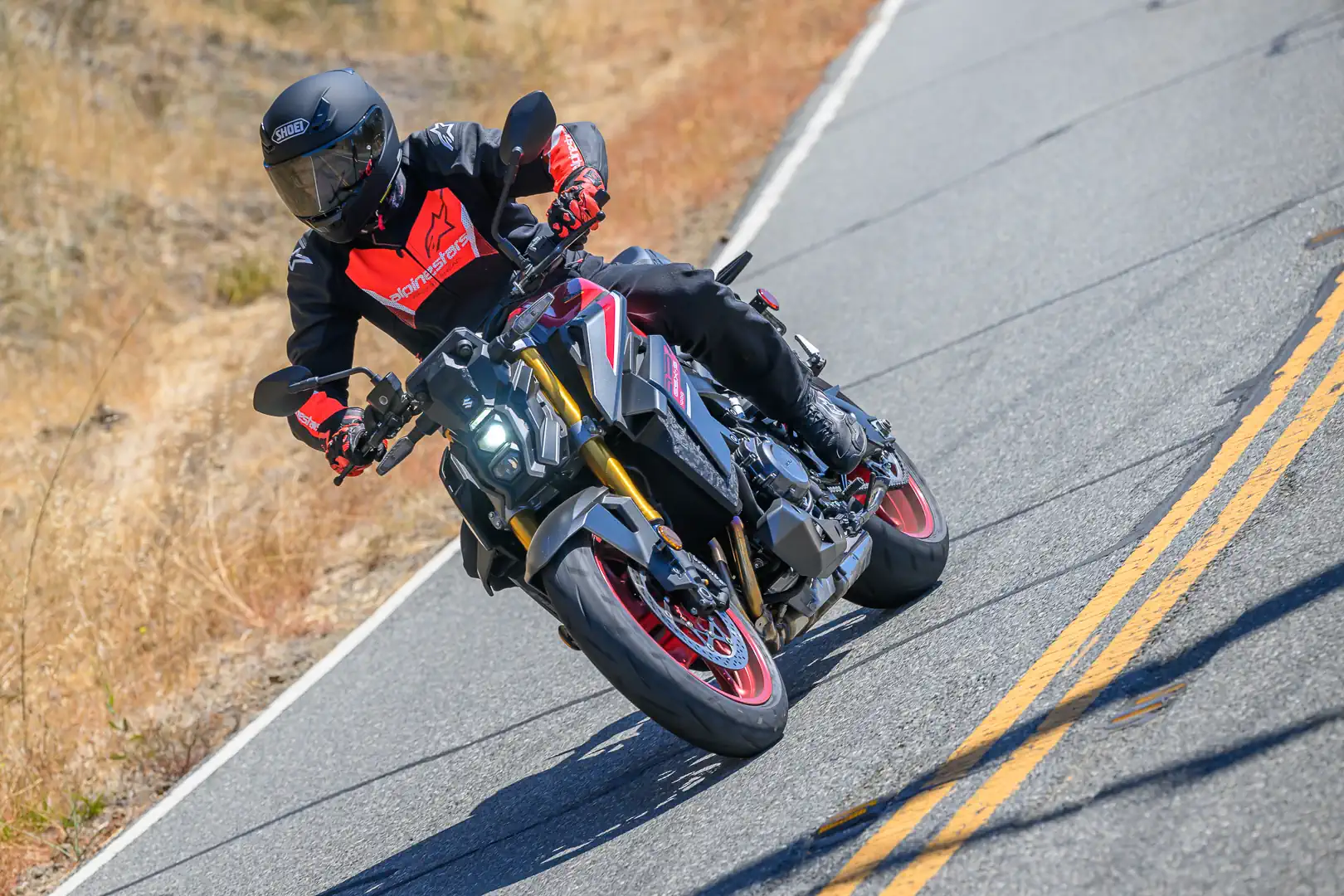
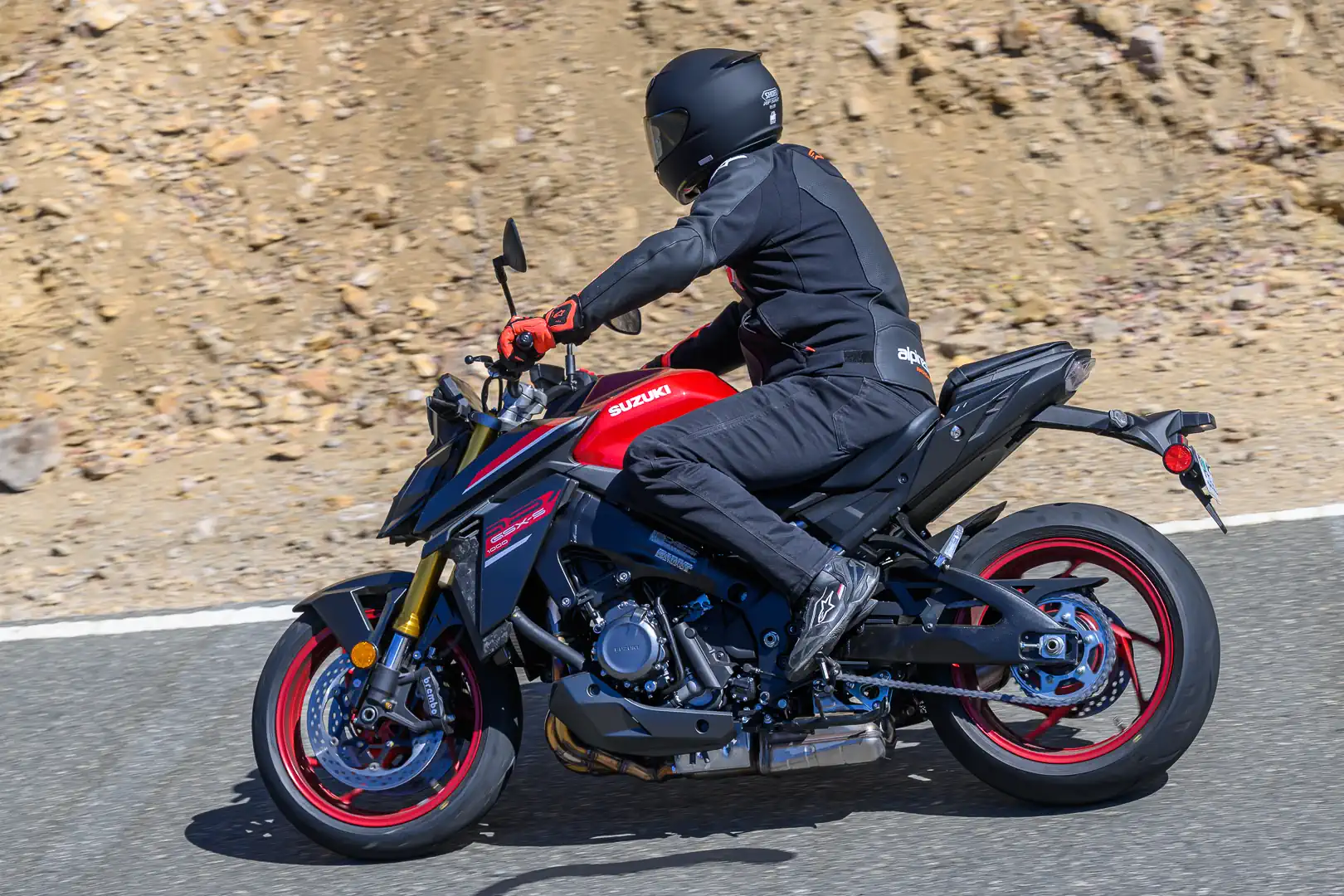
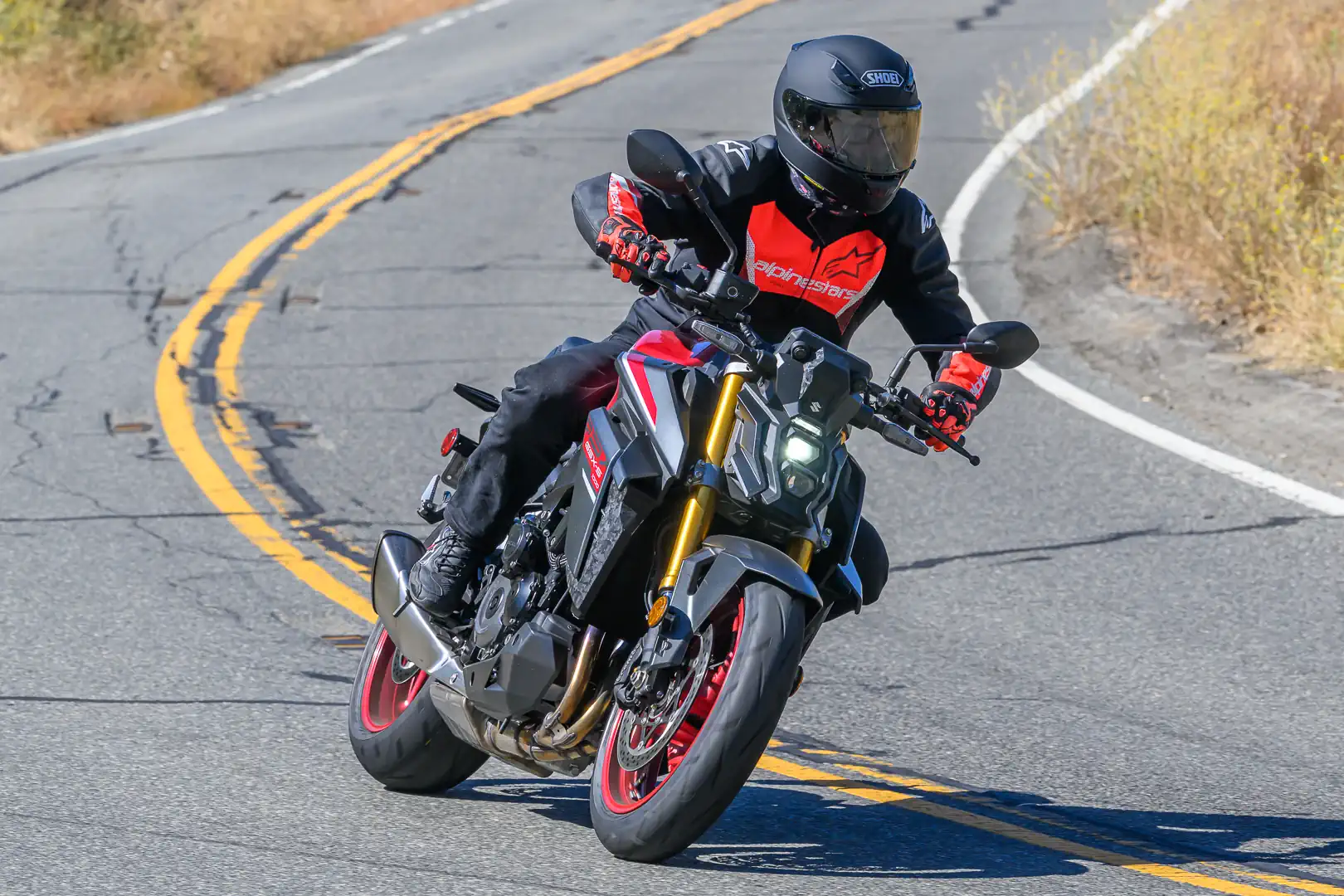
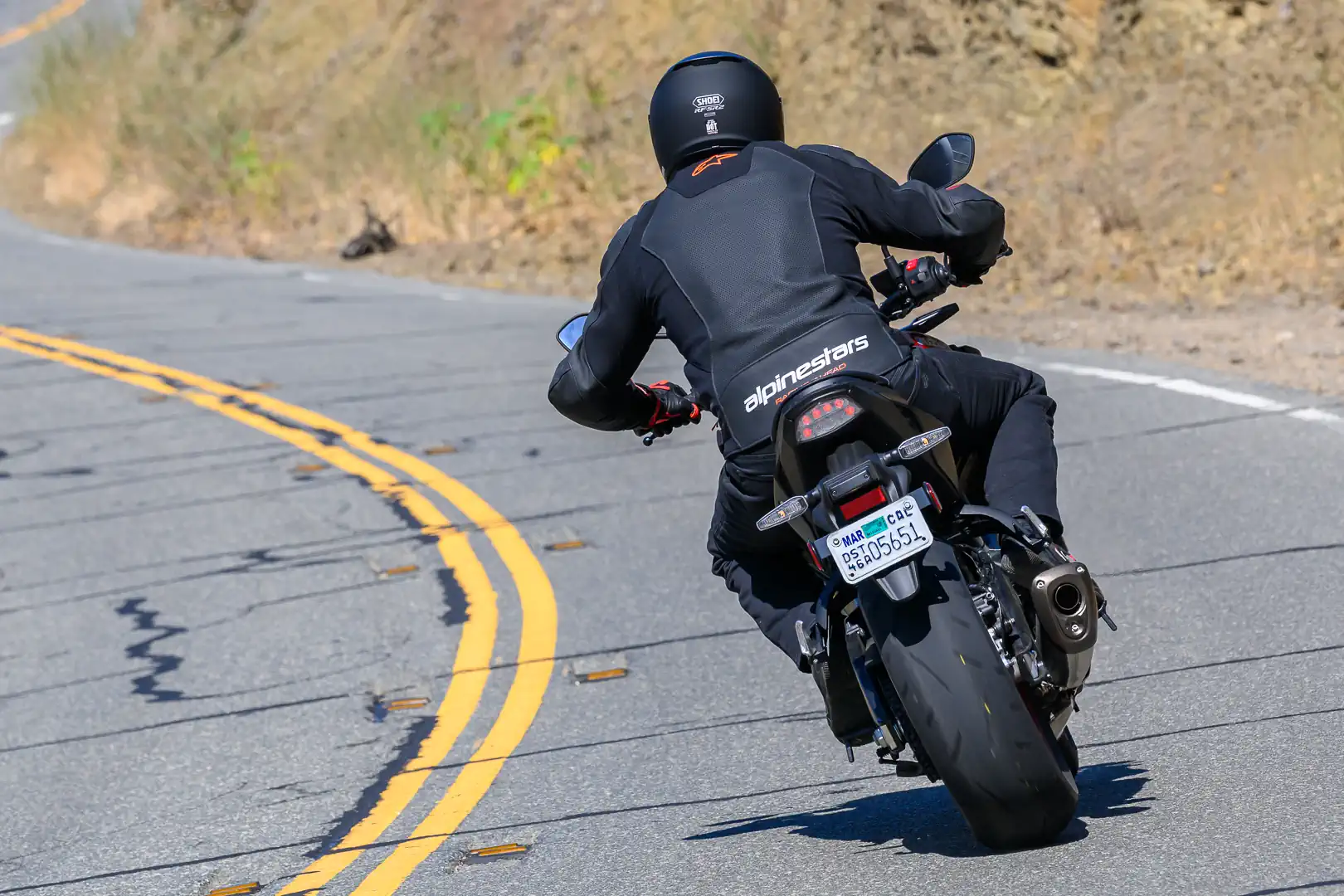
According to Shoei’s literature, the redesigned rear spoiler delivers approximately an 82 percent aerodynamic improvement over the prior-generation helmet. While it’s impossible to corroborate those numbers without the aid of a wind tunnel, we can put them to the test in the real world while riding liter-class bikes, including the naked 2026 Suzuki GSX-S1000 and fully faired 2027 Suzuki GSX-R1000R. Buffeting is limited, and over-the-shoulder head checks don’t translate into a massive increase in wind resistance. The spoiler and other subtle shell refinements help keep your head steady, especially on the naked GSX-S1000.
When sitting up like a prairie dog on the fully faired GSX-R1000R during freeway stints, the steady sensations remain, despite the windscreen directing air directly toward your helmet’s chin bar. Better yet, lift isn’t present to any significant degree at said cruising speeds, which Shoei suggests is another area of improvement. It isn’t quite as slippery as the brand’s racetrack-aimed helmets, though it never intended to be.
AIM+ Shell Construction and Weight
Shoei still relies on its proven AIM+ shell construction, also seen in the X-Fifteen, RF-1400, and VFX-EVO, though each helmet adapts that technology to its application and price point. For those curious, AIM+ stands for Advanced Integrated Matrix Plus Multi-Fiber, which translates to a blend of layered fiberglass and organic fibers.
Our size medium RF-SR2 unit weighed 3.54 pounds on our scale with chin curtain and breath guard installed, close to Shoei’s claimed 3.49 pounds, which is about the same as the Arai Regent-X. The Alpinestars Supertech R7 and AGV K6 S are about a half-pound lighter, with the Scorpion EXO-R1 Air midway between the Alpinestars/AGV duo and the Shoei/Arai pair. Regardless of its weight, the changes to the RF-SR2 prevent it from feeling heavy on the rider’s head, and its aero-derived slipperiness reduces neck fatigue during longer rides.
Snell M2025D and DOT Certification
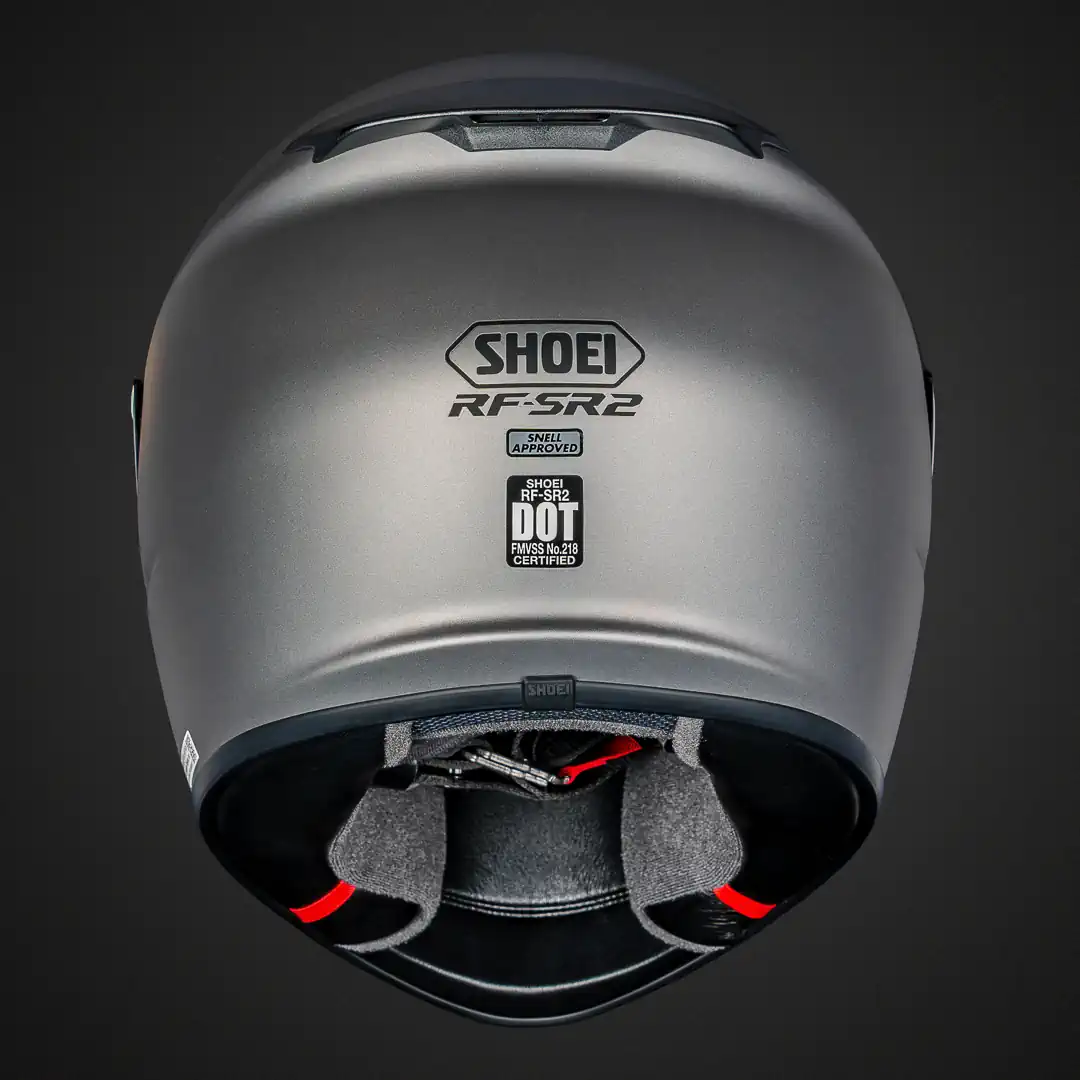
Because the RF-SR2 is a new design in the eyes of the law, Shoei sought fresh certification to meet our U.S. requirement, DOT FMVSS No. 218, as well as Snell’s latest M2025D standard. The updated Snell cert is compelling because it addresses oblique impacts and rotational forces, not just linear impacts alone. DOT standards have not been meaningfully updated in more than a decade and remain comparatively antiquated, since they don’t account for variables such as rotational forces required by other certifications (Snell, ECE, and FRHPhe-02).
Meanwhile, the latest Snell requirements represent a sizable jump over the testing protocols the original RF-SR was built around. There’s no ECE homologation for the RF-SR2, which tracks with the RF-SR series helmets being exclusive to our market.
Shoei RF-SR2 Price and Competition
Wisely, the Japanese brand isn’t abandoning what’s worked: the AIM+ construction and existing CWR-1 faceshield platform return, along with the four outer-shell-sizes approach to ensure the complete XS to XXL range fits riders as well as possible. In today’s ever-inflating marketplace, that deserves a round of applause. Both the outgoing RF-SR and the new RF-SR2 land at $500, though Shoei is discounting the RF-SR by $100 on its website at press time. The competition in this gateway premium helmet space is fierce, with the Alpinestars Supertech R7 ($680 MSRP), AGV K6 S ($639), Arai Regent-X ($660), and Scorpion EXO-R1 Air ($440) all vying for a stake.
Ventilation and Airflow
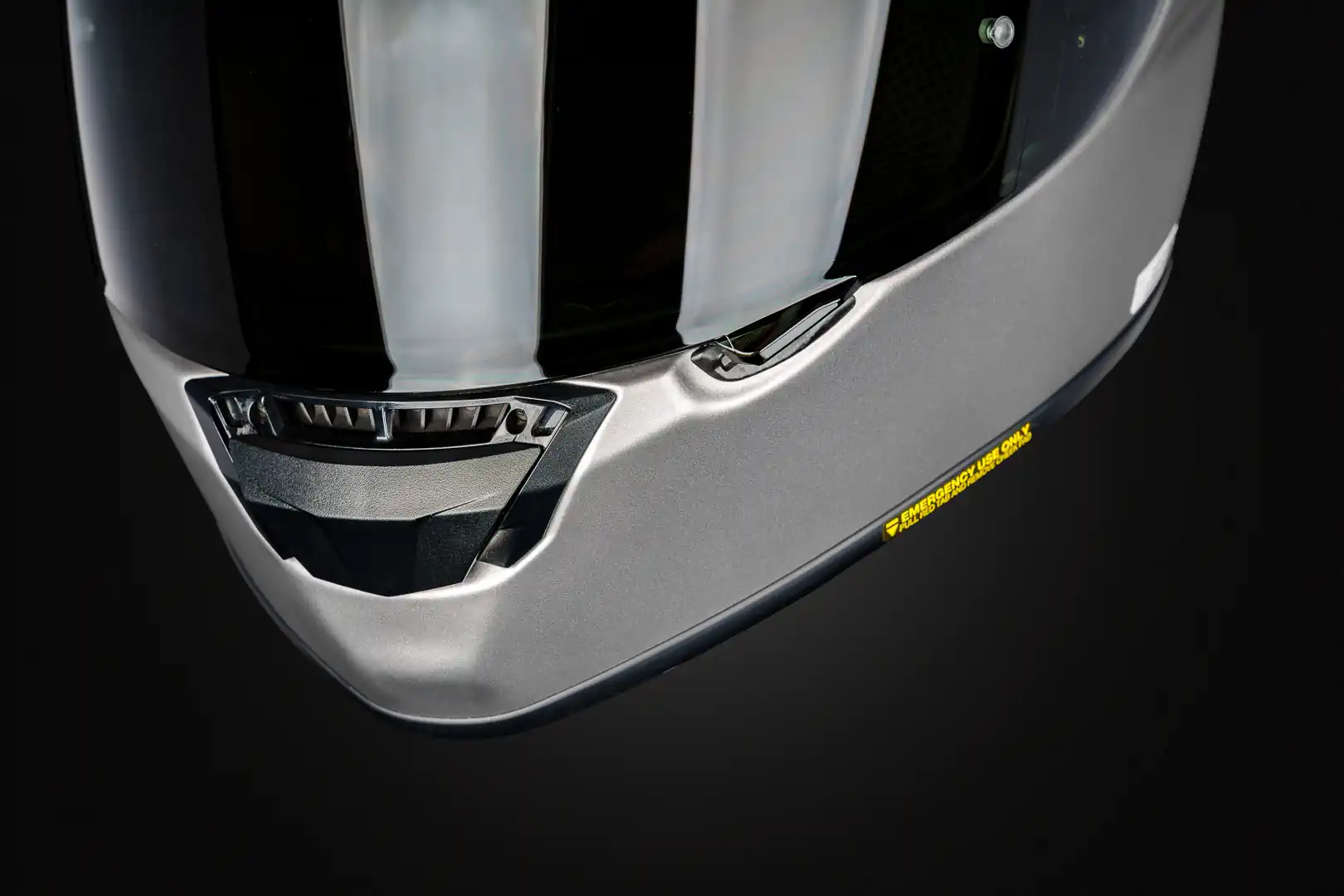
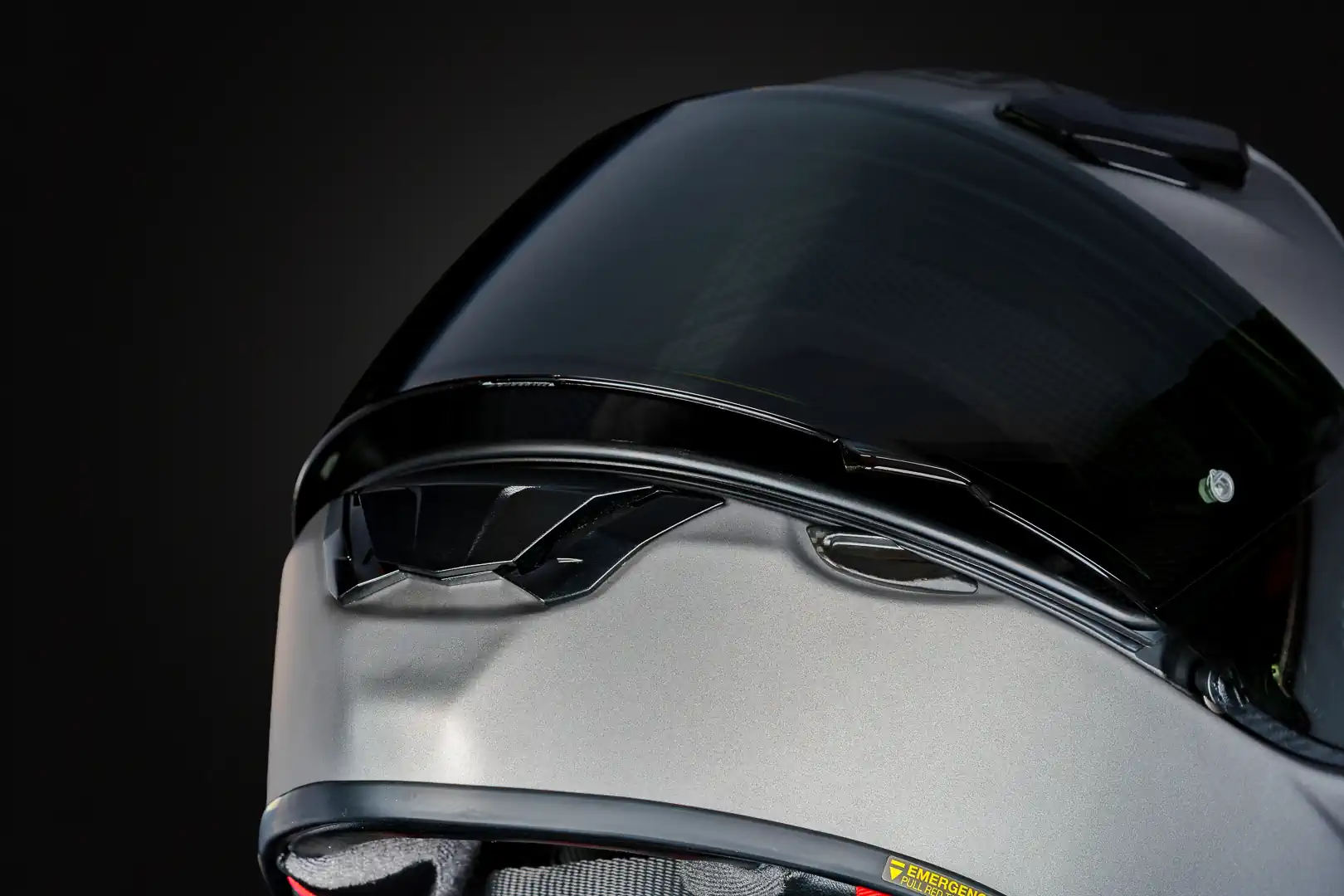
Ventilation is another substantial change. Shoei claims a 43 percent increase through the larger chin bar vent, which now features a handy half-open position. That half-open setting earns its keep on early-morning rides when you need to quickly defog your eyewear. The upper vents pull a notable amount of air through the dual-layer, multi-density EPS liner and interior padding, a 21 percent gain over the RF-SR by Shoei’s numbers. You can clearly feel positive airflow on your scalp while riding. What’s more, the redesigned vents are far easier to manipulate with a gloved hand.
Faceshield and Shield Operation
The faceshield is a direct carryover from the outgoing RF-SR, using the same proven CWR-1 shield and QR-E base plate as the defunct RF-1200 and X-Fourteen. Given the age of those helmets, they likely aged out of manufacturer-recommended use long ago. Fortunately, optional faceshields (smoke, mirrored, photochromic) are widely available at retailers. A clear faceshield is standard, while a Pinlock EVO anti-fog insert is provided.
Interestingly, the shield release tab still sits on the left-hand side, unlike the centrally located release buttons featured on Shoei’s latest road helmets. Shoei, along with AGV, Alpinestars and Bell, has moved toward central shield-locking mechanisms because they’re less likely to be hit during falls.
Interior, Fit, and Eyewear
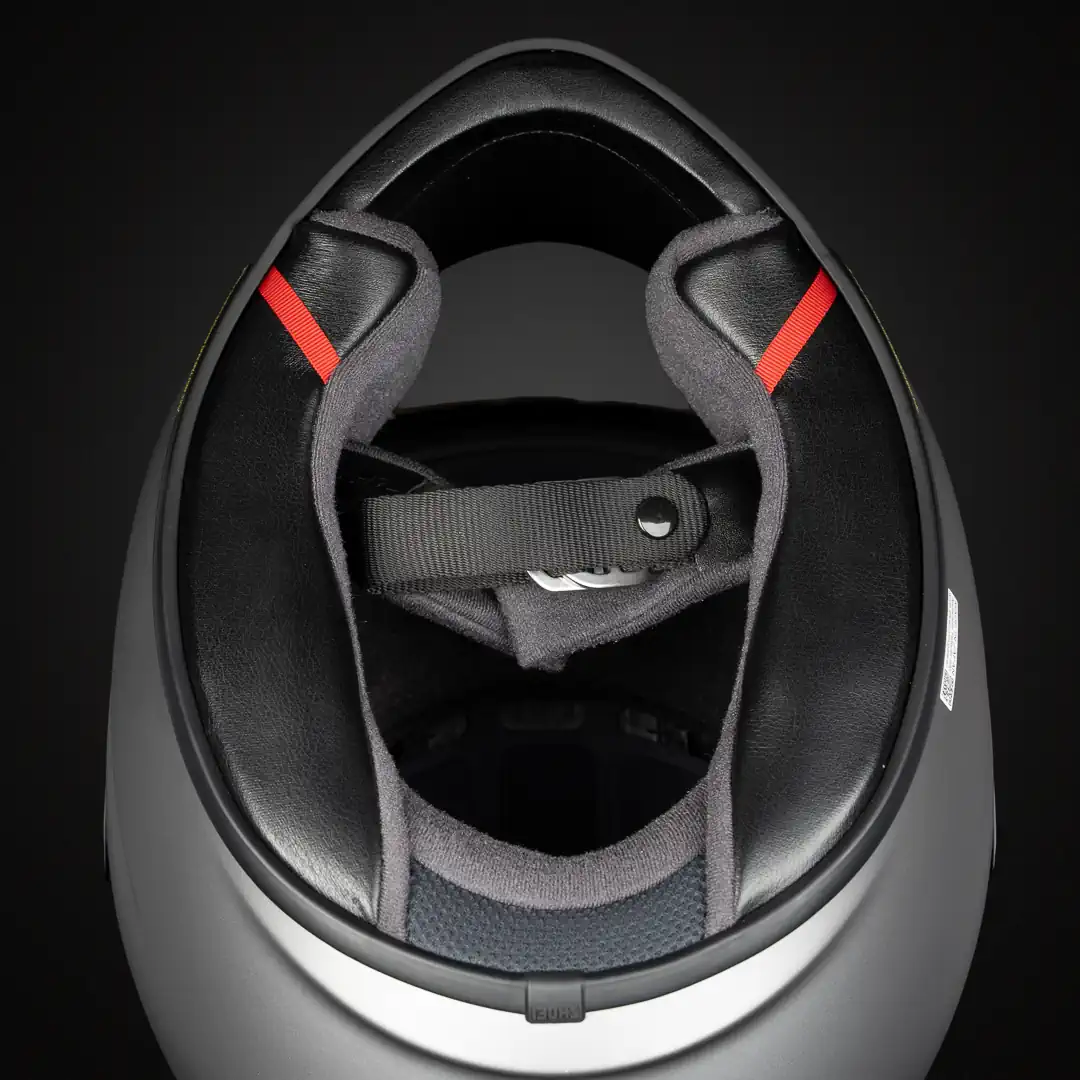
Moving to the interior, the Shoei RF-SR2 meets all the lofty expectations we have of the highly-respected brand, with class-leading comfort and quality that ring true on its “entry-level” road helmet. The sweat-wicking and washable pads are incredibly comfortable, which is where Shoei, along with fellow Japanese helmet maker Arai, tends to outshine the competition. As it’s the starting point into the brand’s street range, the luxuriously plush interior padding isn’t as customizable as that of the Hornet X2, RF-1400, or the almost infinitely adjustable X-Fifteen. Regardless, cheek and center pads are sold separately to help owners fine-tune fitment.
As a reminder, fit is deeply personal, so we recommend that readers who aren’t confident with sizing helmets themselves work with authorized retailers. The internal shape is Shoei’s familiar intermediate oval, the brand’s longtime North American fit, and doesn’t deviate from the RF-SR. It’s comfortable and snug.
Additionally, the Shoei Personal Fitting System (P.F.S.) is a service offered through authorized retailers that measures the rider’s head with a specialized device and then uses proprietary software to recommend the correct center pad thicknesses to ensure a perfect, customized fit. It is the most effective way to dial in helmet fit, whether that means curing hot spots, raising or lowering the helmet on your head, or adjusting snugness, to name a few variables. If you want to swap out cheek pads, that’s still on you.
For those who use corrective eyewear or sunglasses while riding, Shoei boasts an “eyewear-friendly design.” My thick-rimmed glasses slip into the RF-SR2 without creating nasty pressure points. Slipping the arms of my glasses in requires less effort than on the snugger-fitting RF-1400 or GT-Air 3.
Communications and Features
Speaker pockets and wire routing accommodate your preferred communication unit. Disappointingly, the RF-SR2 doesn’t offer the integrated SRL 3 Mesh Bluetooth Communication System by Sena setup found in the modular Neotec 3 and the full-face GT-Air 3. While that means you have to mount an external unit to the shell, you can pick whatever unit you like.
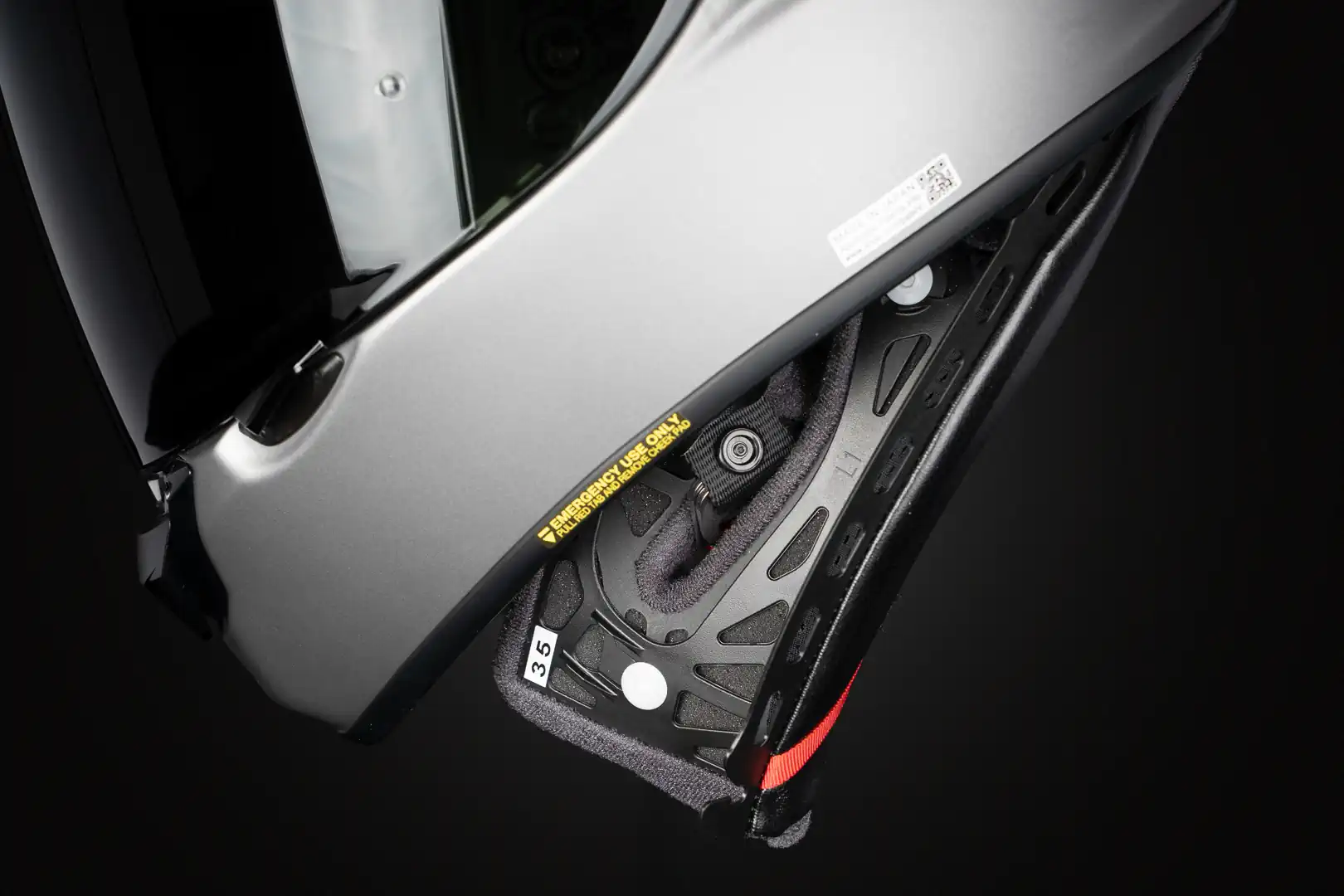
Rounding out the features, we see a quick-release system that lets first responders pull the cheek pads before removing the helmet from a rider, potentially reducing the risk of further injury during medical treatment. This is a common feature in helmets in this price range.
Per usual, Shoei backs the helmet with a five-year limited warranty from the date of purchase, or seven years from its original manufacturing date, whichever comes first. That’s also the time range recommended for replacing a helmet due to wear and aging.
Is the Shoei RF-SR2 Worth It?
Put it together, and the new Shoei RF-SR2 does what a gateway helmet is supposed to do. It gives new riders a legitimate reason to start their Shoei ownership here rather than saving toward something pricier. Meanwhile, experienced riders of other brands have a relatively low-stakes way to find out whether Shoei fit and build quality work for them. The ventilation and aerodynamic gains are real and noticeable on the road, summing up the main improvement points over the RF-SR2’s predecessor. Also, the certifications are current. As for the rest of it, it’s as we know it: premium comfort at a not-so-premium price tag of $500. It remains one of the more sensible ways into premium Japanese helmet construction, whether this is a rider’s first serious lid or a first Shoei.
Action photography by Don Williams
Shoei RF-SR2 Fast Facts
Sizes: XS-XXL
Shell sizes: 4
Outer shell: Layered fiberglass and organic fibers
Inner shell: Dual-layer, multi-density EPS
Measured weight: 3.54 pounds (size M) w/ chin curtain and breath guard
Faceshield: CWR-1 w/ QR-E base plate; Pinlock EVO lens included
Communications: Speaker pockets and wire routing; no integrated system
Our bike review this episode is the Yamaha MT-03. Do not underestimate this bike; you get a lot of motorcycle for your money! Associate Editor Kelly Callan rode the smallest MT for several weeks, and that included commuting on it. One of the things that impressed her, was how the MT-03 acted like a larger motorcycle. Kelly also spent some time chasing Editor Don Williams through the canyons when he was on the Yamaha MT-07—obviously a much larger machine. She tells us about how it all went.
* * * * *
We’re closing in fast on the 34th annual Biketoberfest, October 15–18, when all roads will lead to Teddy Morse’s Destination Daytona—the more than 100-acre motorcycle playground in Ormond Beach Florida. This week we get to hear all about it from Teddy Morse himself. With his trademark high energy and enthusiasm, he tells us all about his recently established Triketoberfest that happens the week before, and how the Destination Daytona complex turns into a full-throttle hub of demo rides, vendors, custom builds, live music, food trucks, shops, and nonstop pavilion energy. So, whether you’re on two wheels or three, whether you’re hunting parts or lining up a test ride; grab a cold one and soak up the energy and gorgeous Florida fall weather. This is one of the many Daytona Beach places where Biketoberfest feels like home. So don’t forget: make sure you download the Biketoberfest mobile App from Apple or Google Play or visit www.biketoberfest.org and we’ll see you there!
* * * * *
Our guest this episode is Greg Arnold, Mecum’s motorcycle auction director. He bought his first bike at eleven, joined the company in 2011, and has spent more than a decade helping turn this incredible event into the place collectors, consignors, and dreamers all show up. Next February 3rd through 6th, Mecum will—for the 36th time, bring the world’s largest vintage motorcycle auction back to South Point, Las Vegas. That’s over two thousand bikes over four days. Board-track racers, barn finds, customs, race iron, and especially, those incredible machines that make the room go quiet. Greg gives us insight into what it takes to make this event work so incredibly well, and if you’re interested in selling your pride and joy, what steps you have to take to make it happen.
* * * * *
Here’s quick reminder to check out our monthly digital magazine. It’s filled with everything you want to read on motorcycling, including some things you’ve probably not seen elsewhere. It’s absolutely free and you will find it on the Apple App Store and of course on Google Play as well.
Don’t forget to leave us your comments on our social media—we’re on all the usual platforms at Ultimate Motorcycling. We love hearing your feedback… so good or bad, please let us know what you think. If there’s something you’d like us to cover, we’d love to hear those ideas too!
We use cookies and browser activity on this website
Functional
Always active
The technical storage or access is strictly necessary for the legitimate purpose of enabling the use of a specific service explicitly requested by the subscriber or user, or for the sole purpose of carrying out the transmission of a communication over an electronic communications network.
Preferences
The technical storage or access is necessary for the legitimate purpose of storing preferences that are not requested by the subscriber or user.
Statistics
The technical storage or access that is used exclusively for statistical purposes.The technical storage or access that is used exclusively for anonymous statistical purposes. Without a subpoena, voluntary compliance on the part of your Internet Service Provider, or additional records from a third party, information stored or retrieved for this purpose alone cannot usually be used to identify you.
Marketing
The technical storage or access is required to create user profiles to send advertising, or to track the user on a website or across several websites for similar marketing purposes.