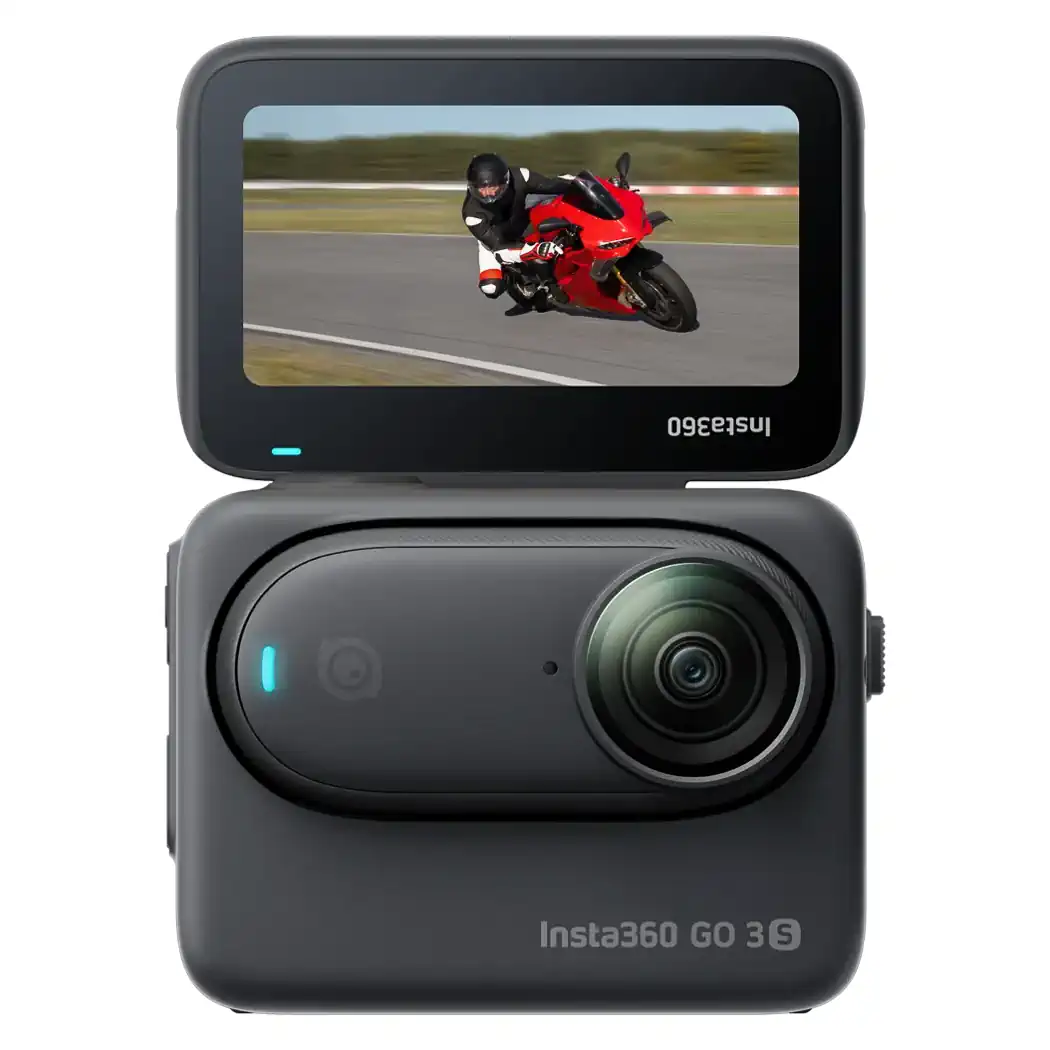
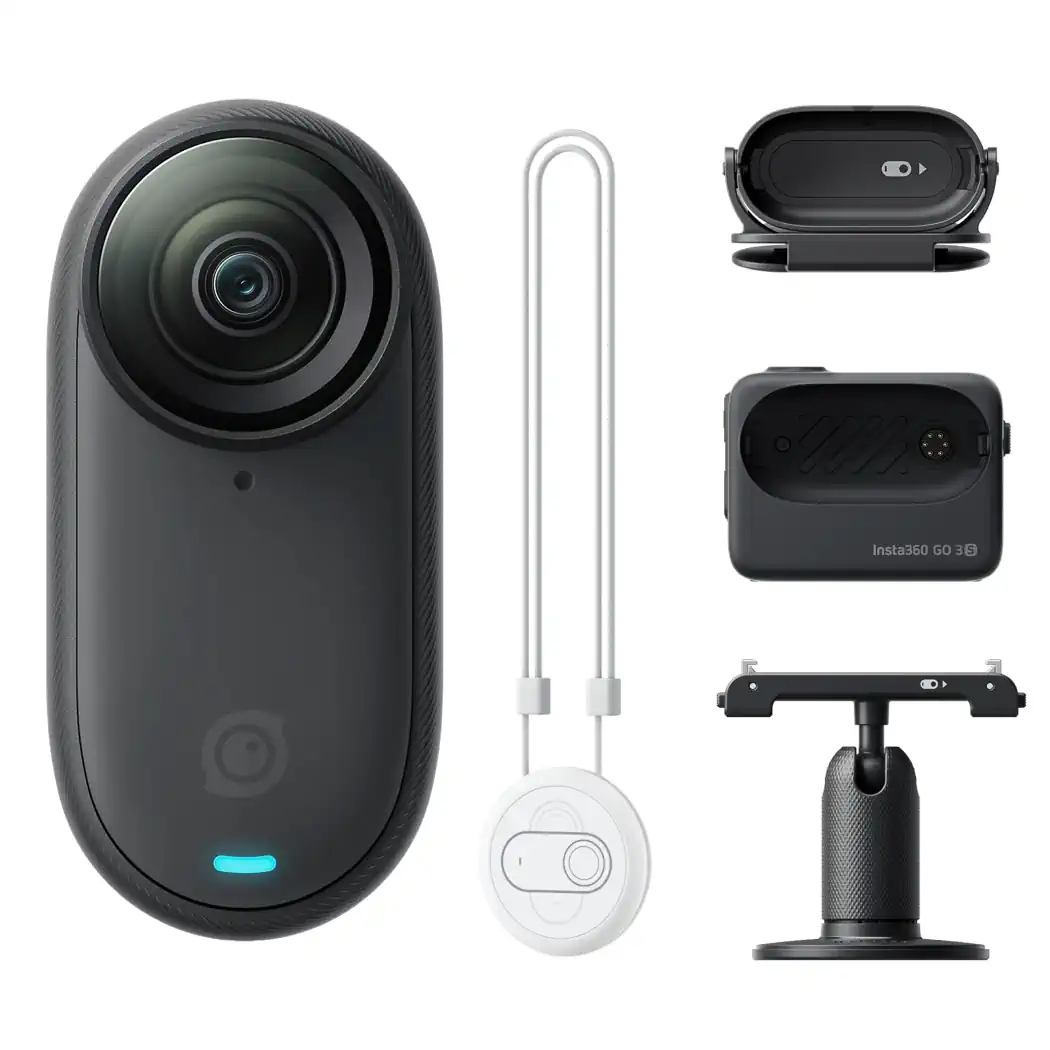
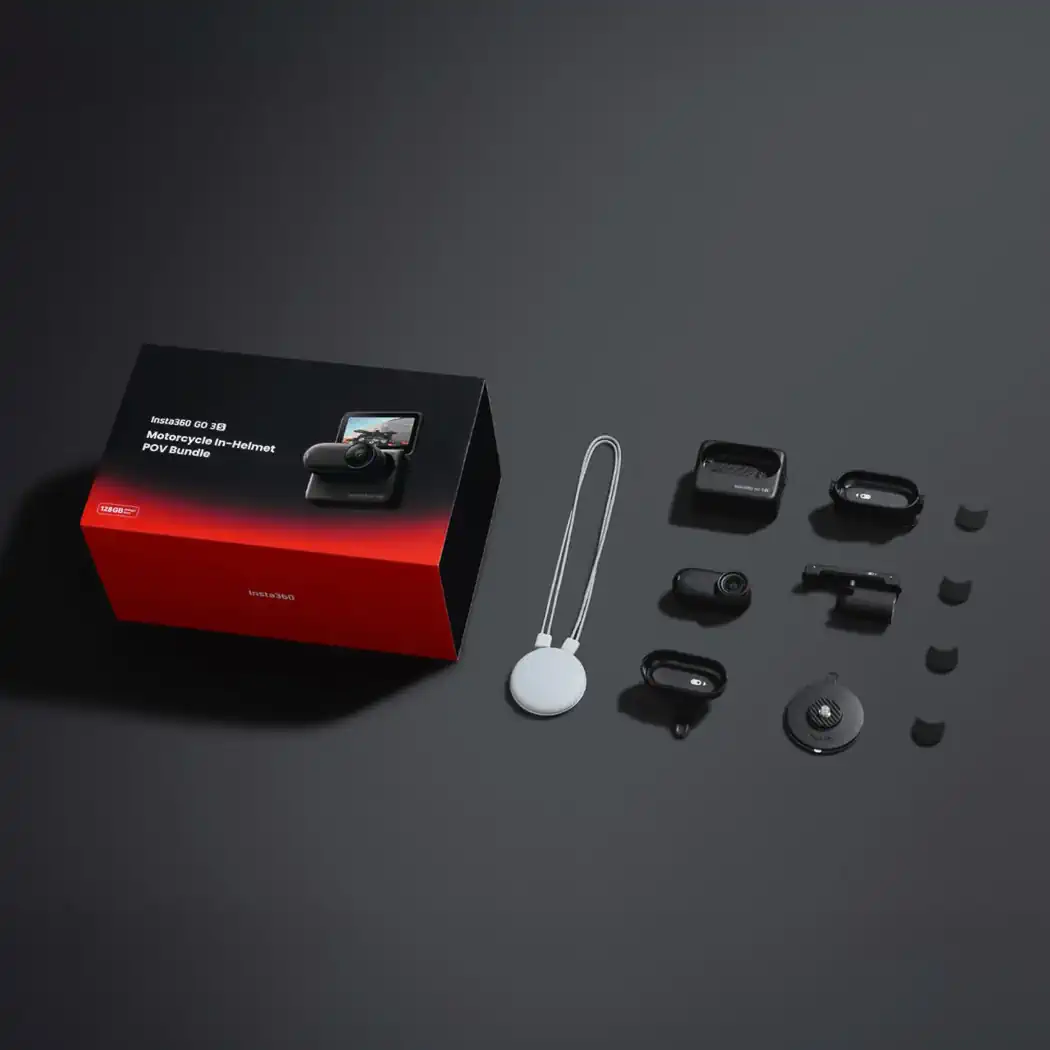
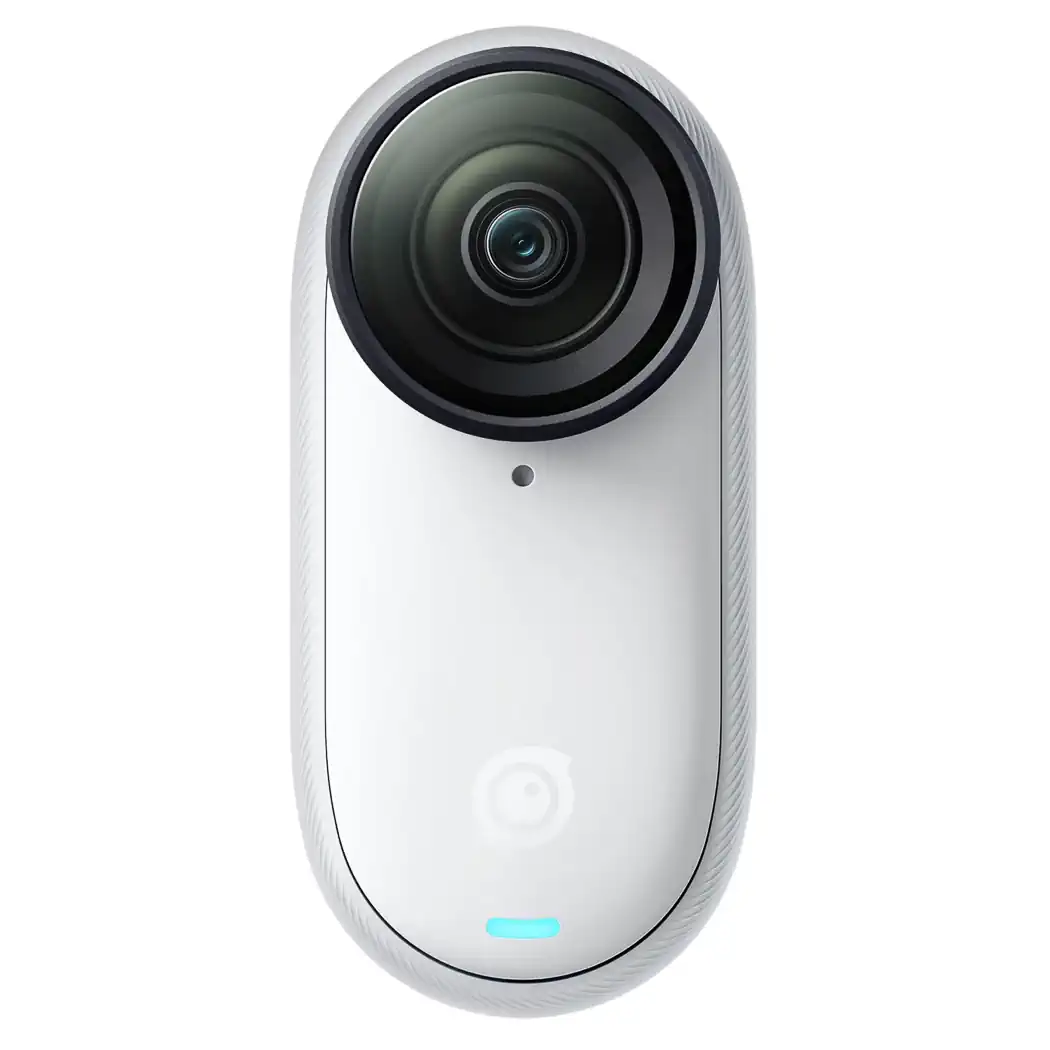
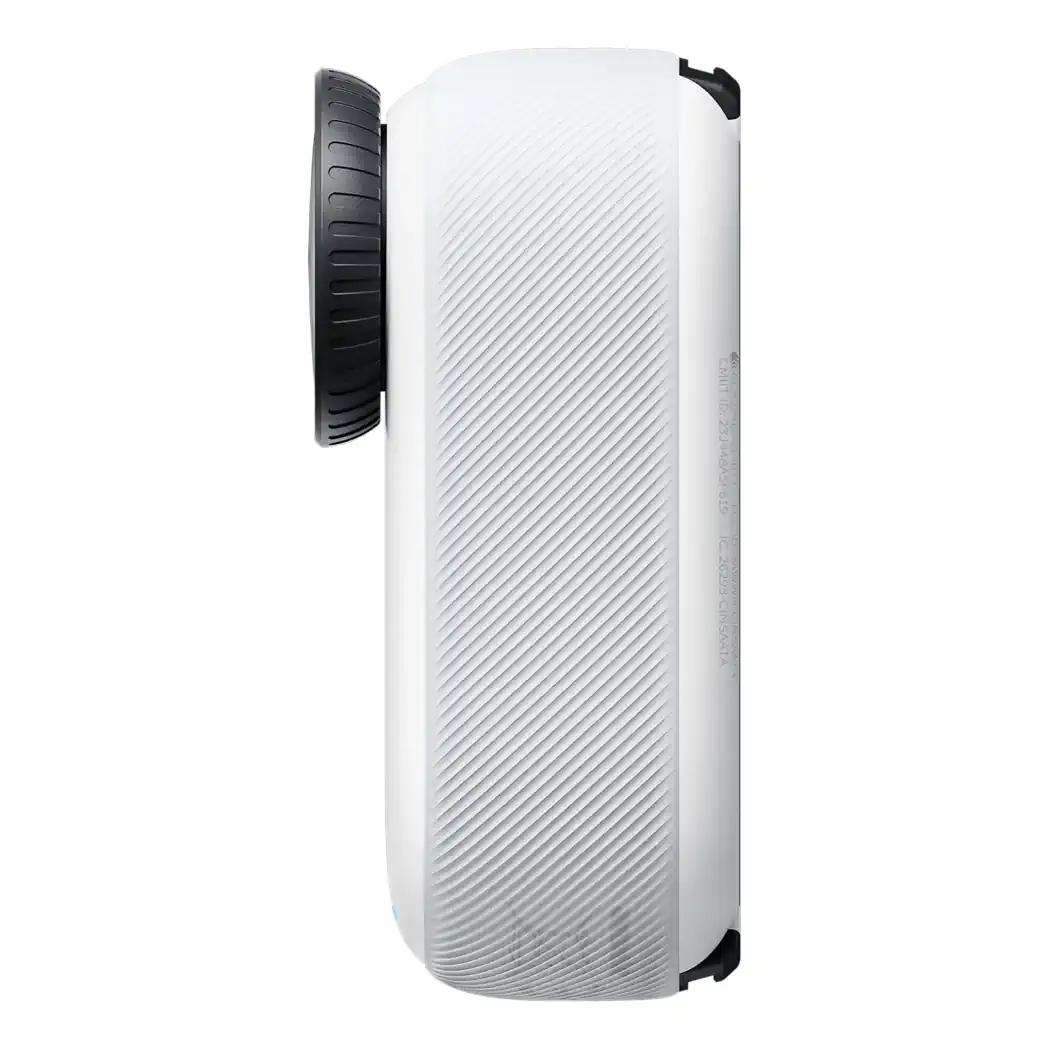
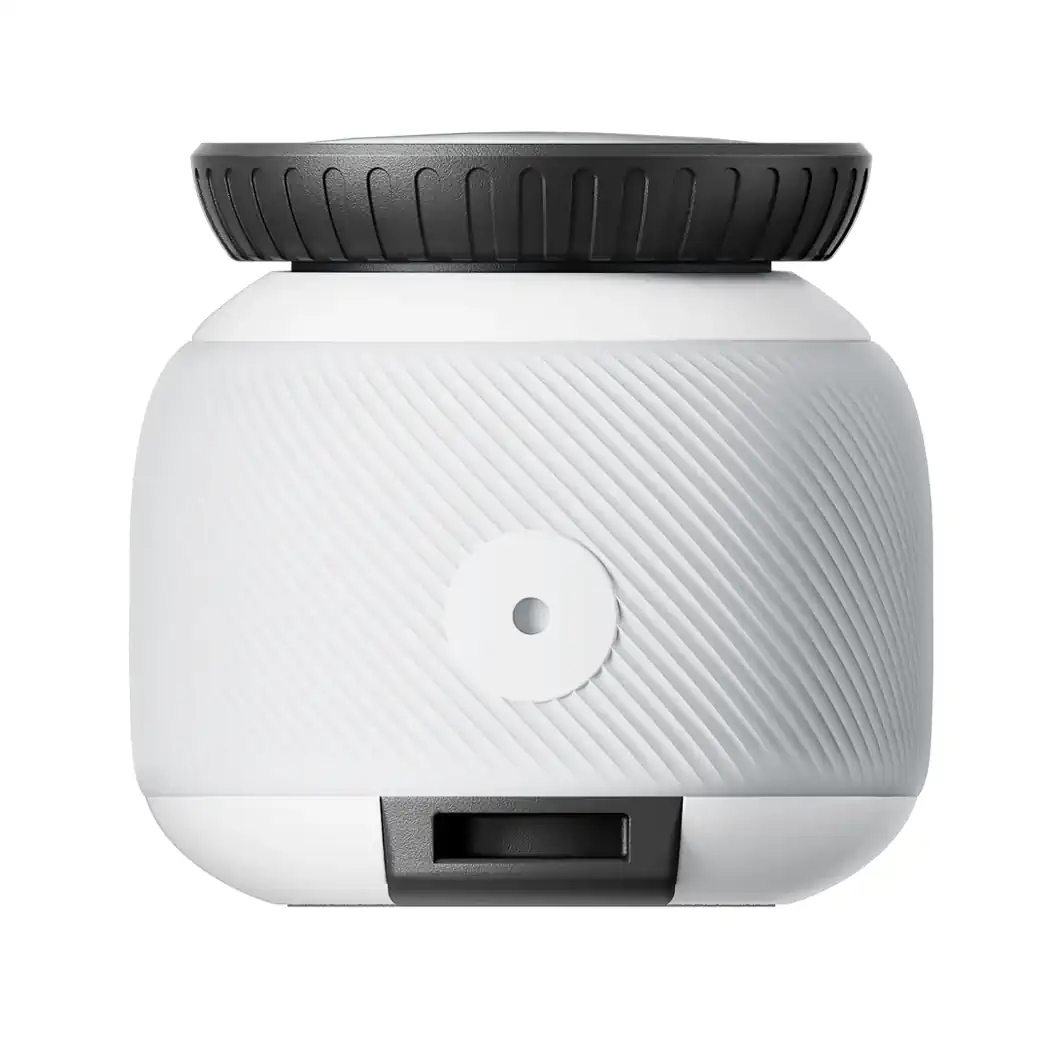
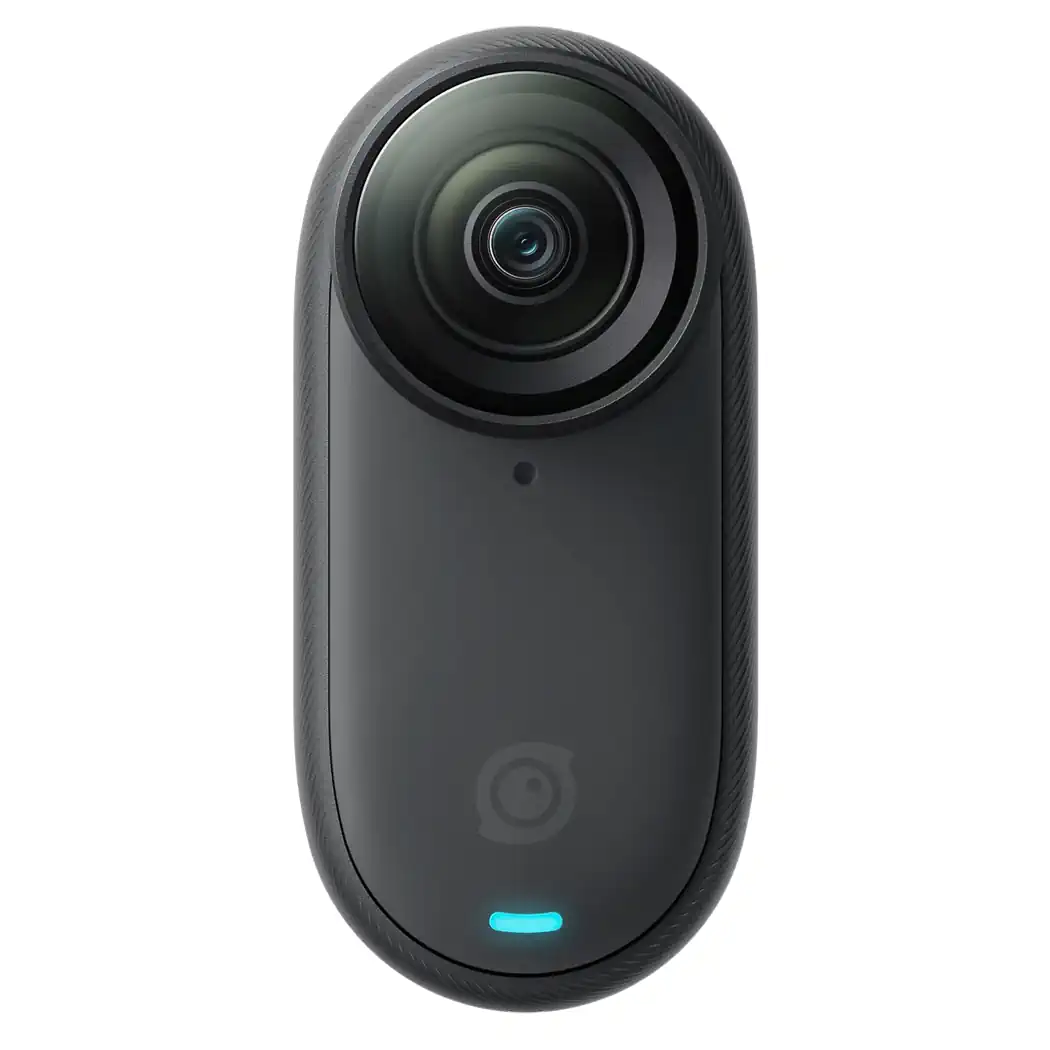
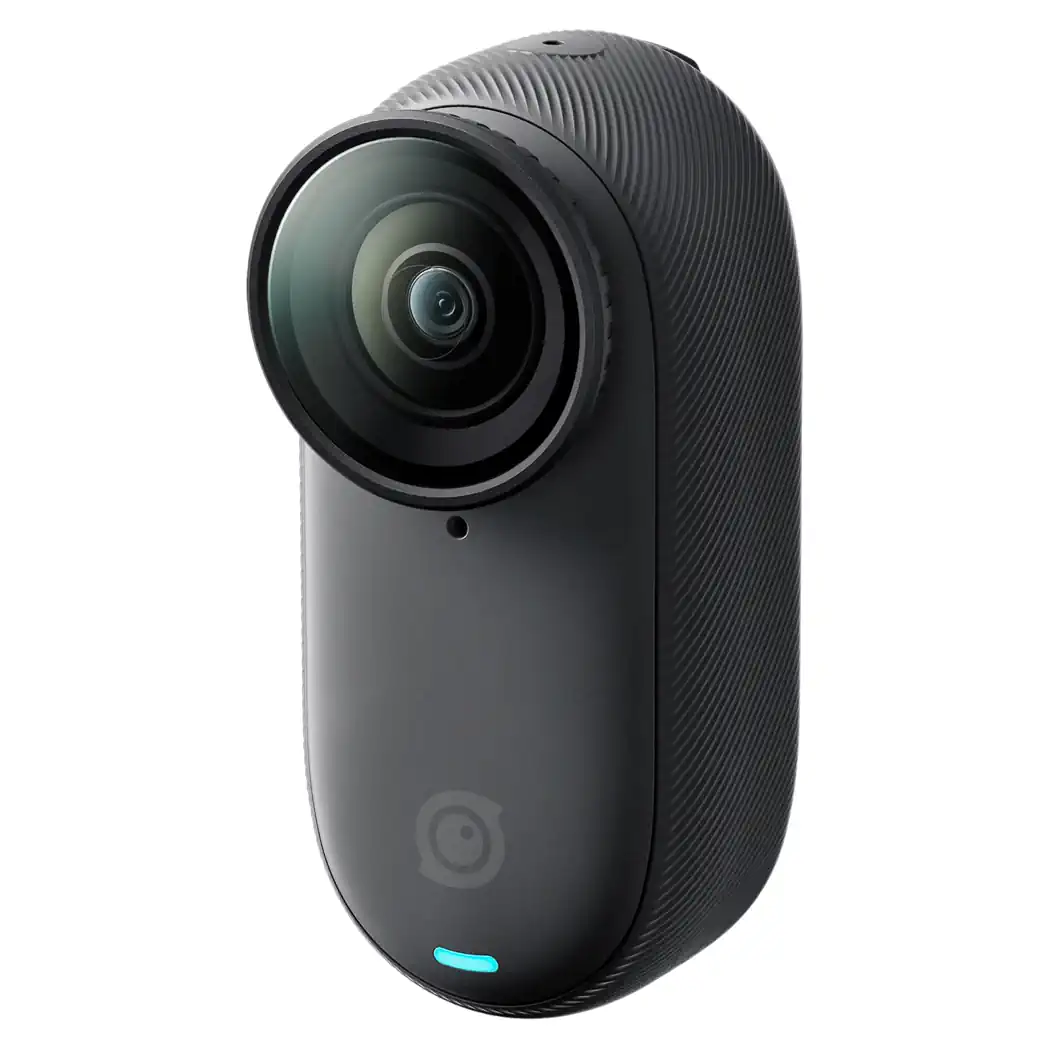
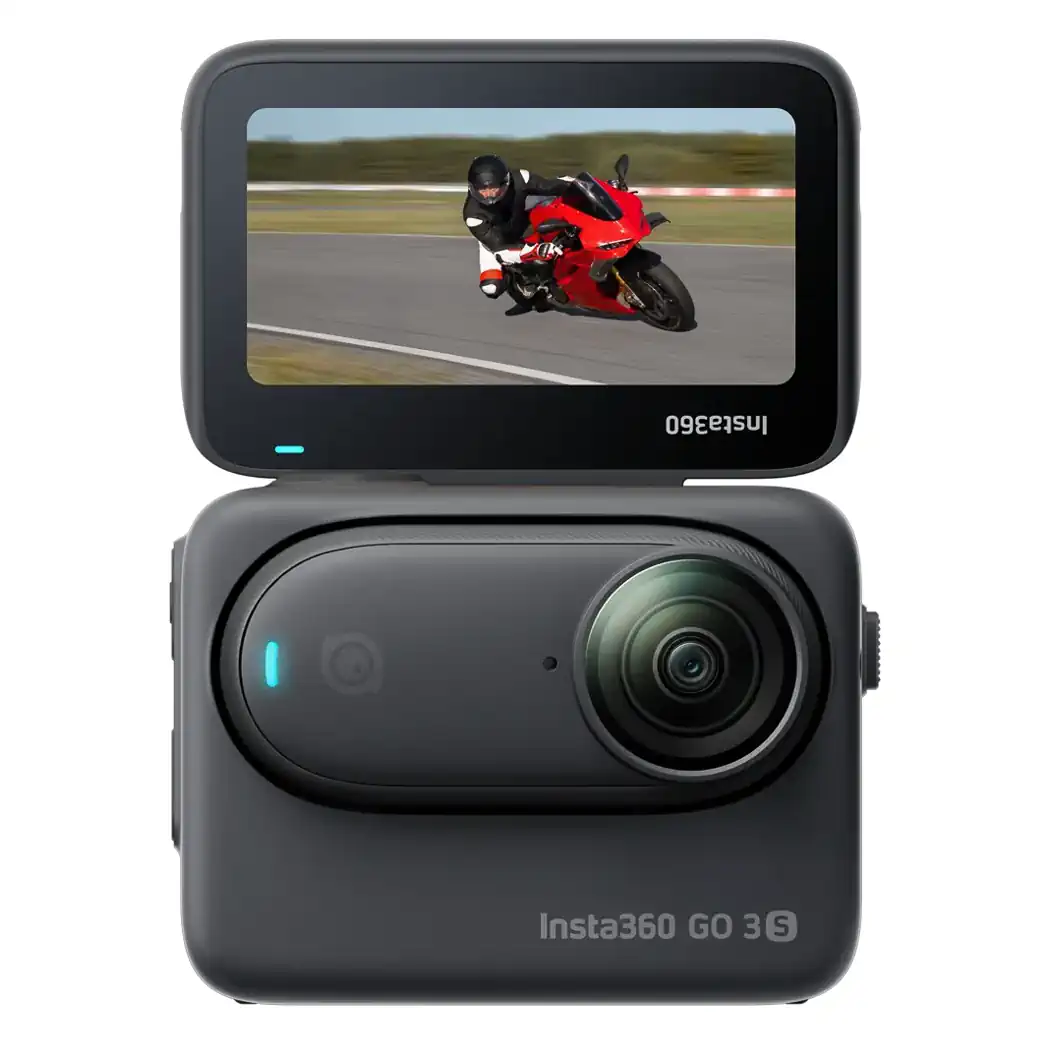
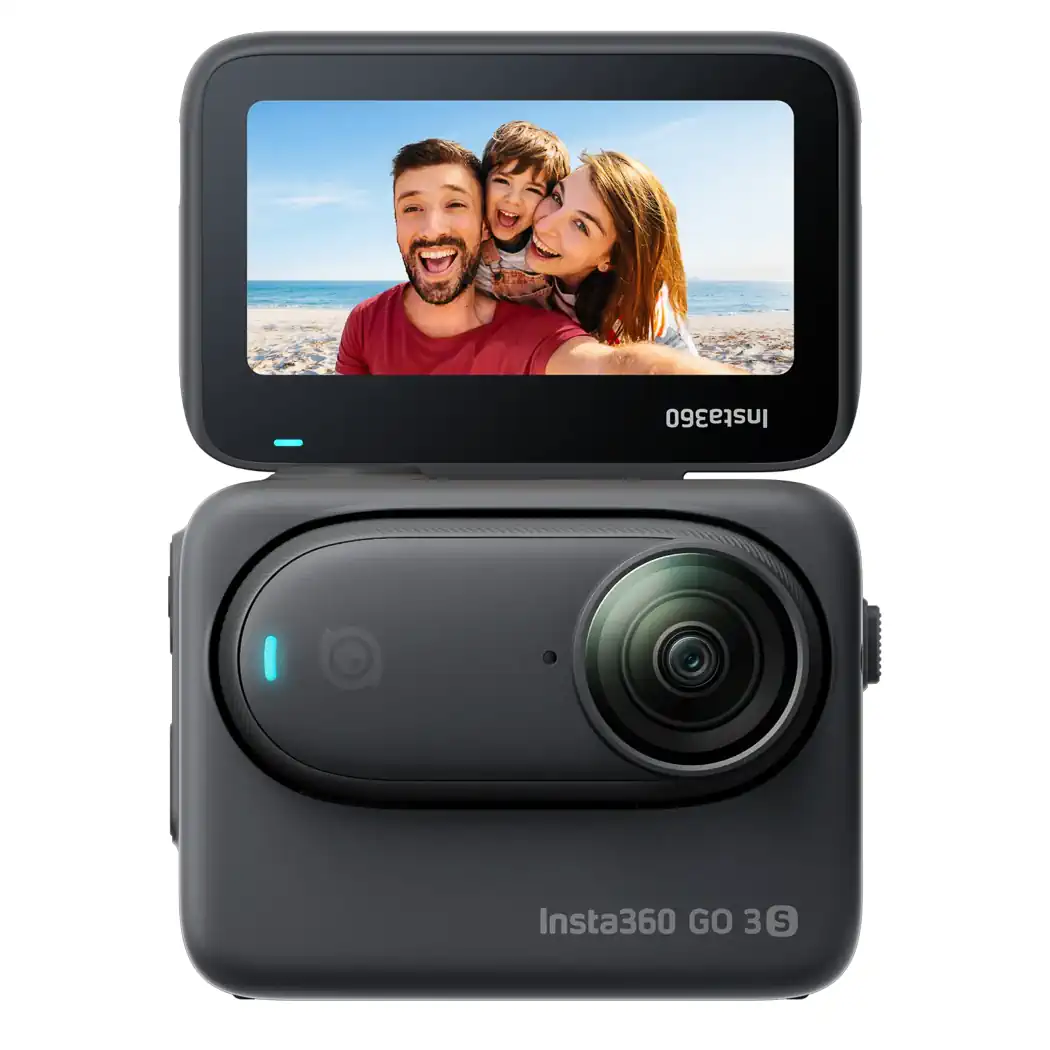
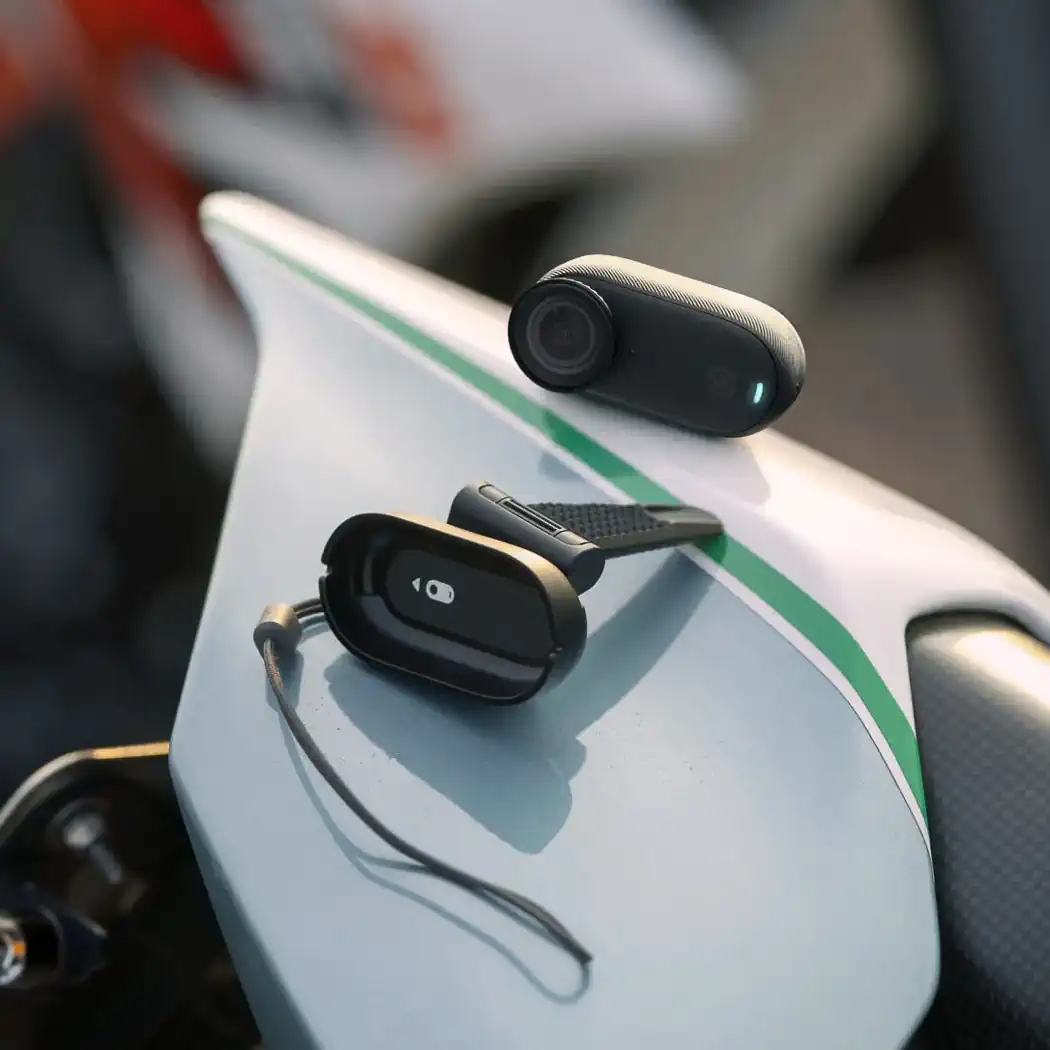
The Insta360 Go 3S is a thumb-sized modular action camera designed for discreet video or photo shooting. It updates the earlier Go 3 with 4K video, deeper waterproofing, and a few extra features while keeping the same compact magnetic form factor. Pricing starts at $380 for the Standard Bundle, which includes the essential $150 Action Pod. The Motorcycle POV Bundle has a $395 MSRP, and the Motorcycle In-Helmet POV Bundle is $400. The list price for the standalone Go 3S is $240.
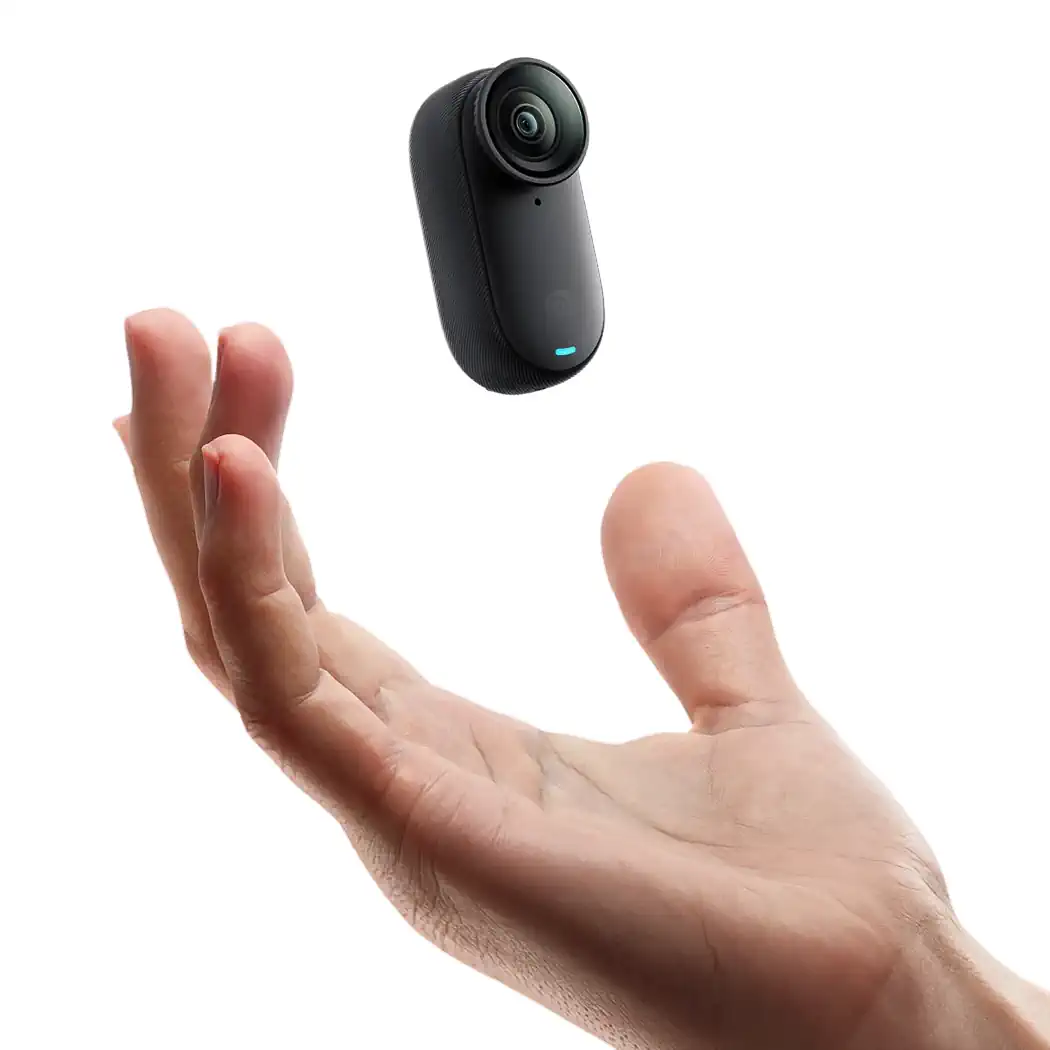
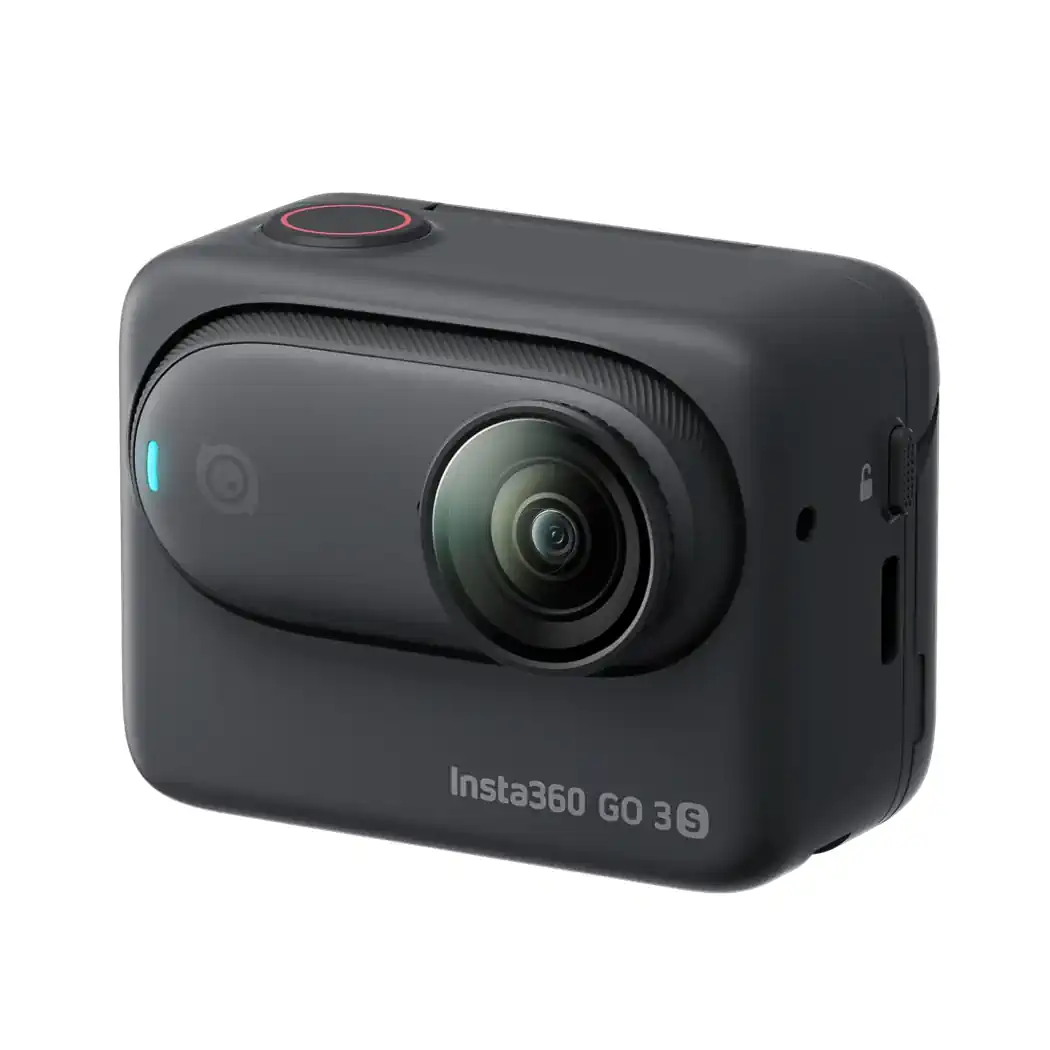
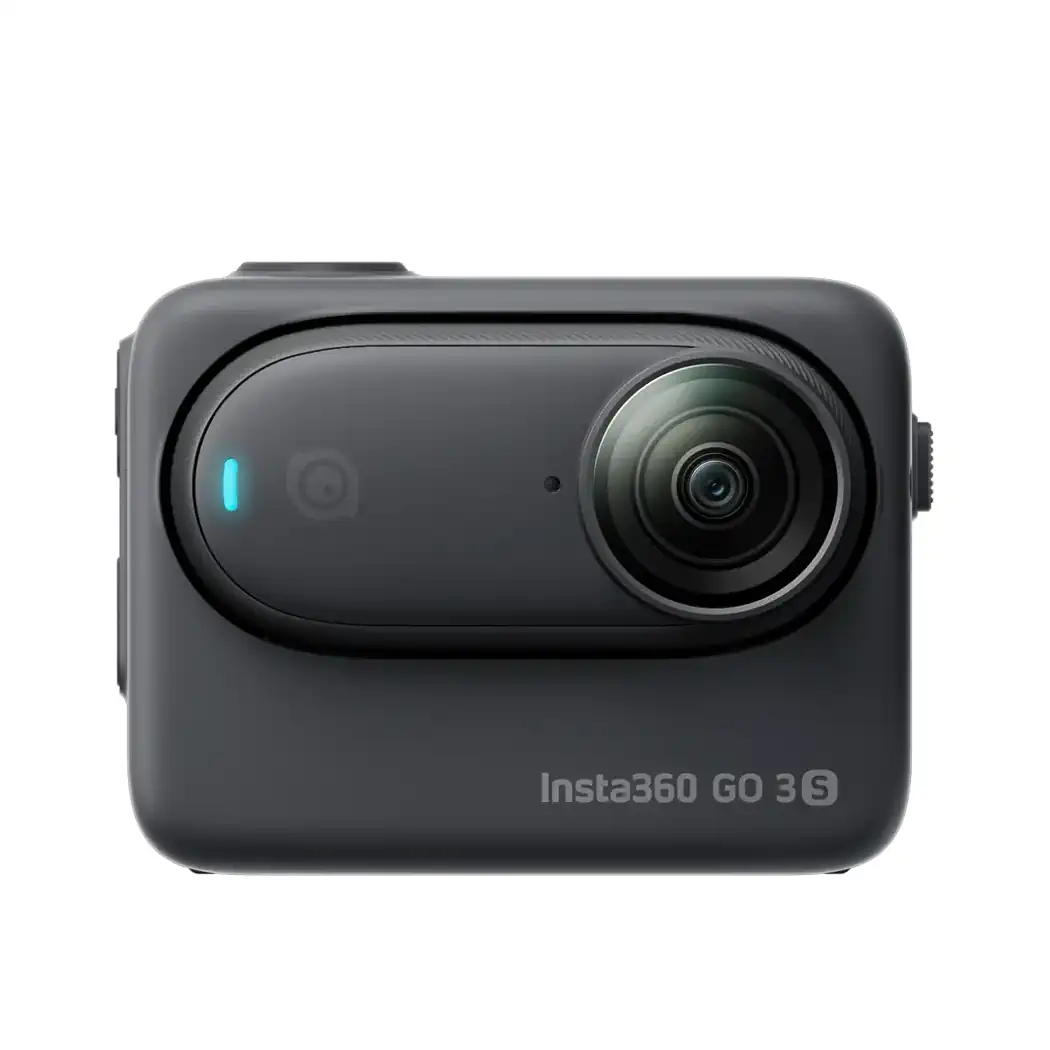
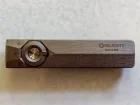
The Go 3S is small, light, and discreet. The camera module weighs a mere 1.4 oz. Because it is only an inch wide and two inches long, it’s easy to keep in your pocket and produce quickly for use. The lightweight, compact design makes it easy to hand-hold it upright or on its side for extended periods. If you use it clipped to clothing or on a pendant, almost nobody notices you’re recording.
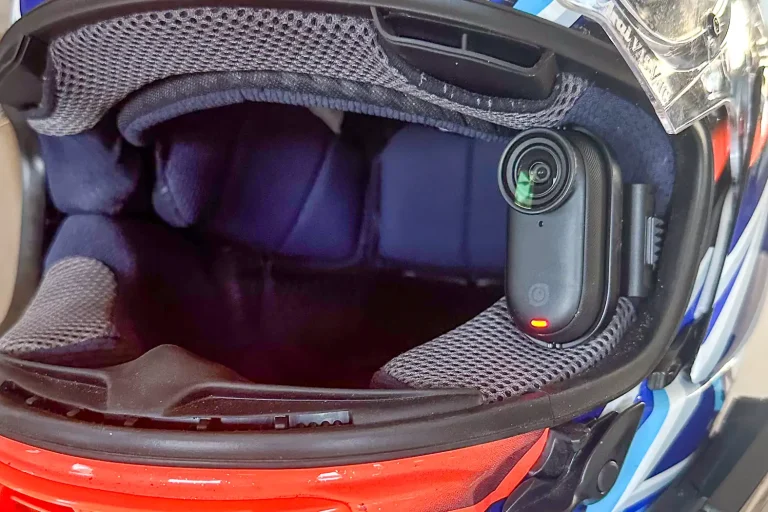
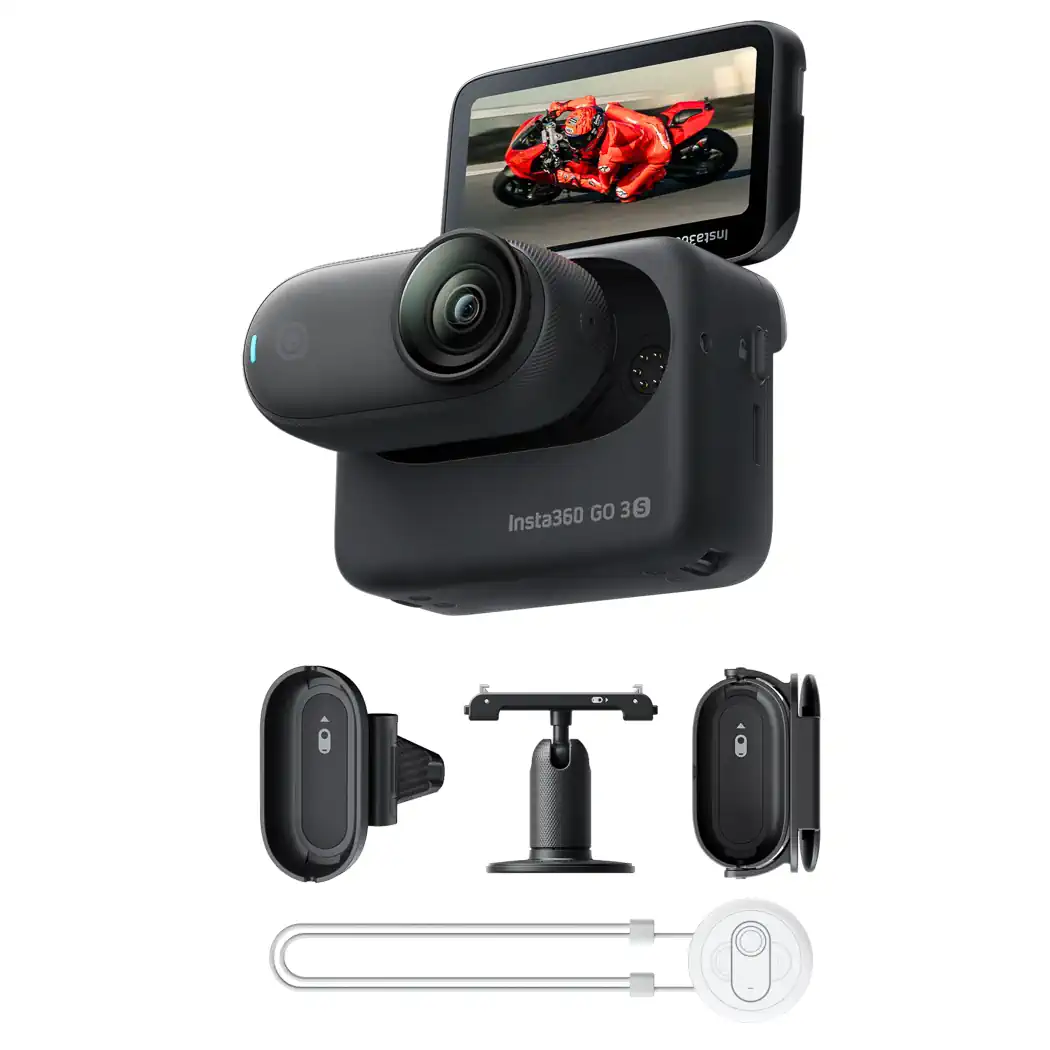
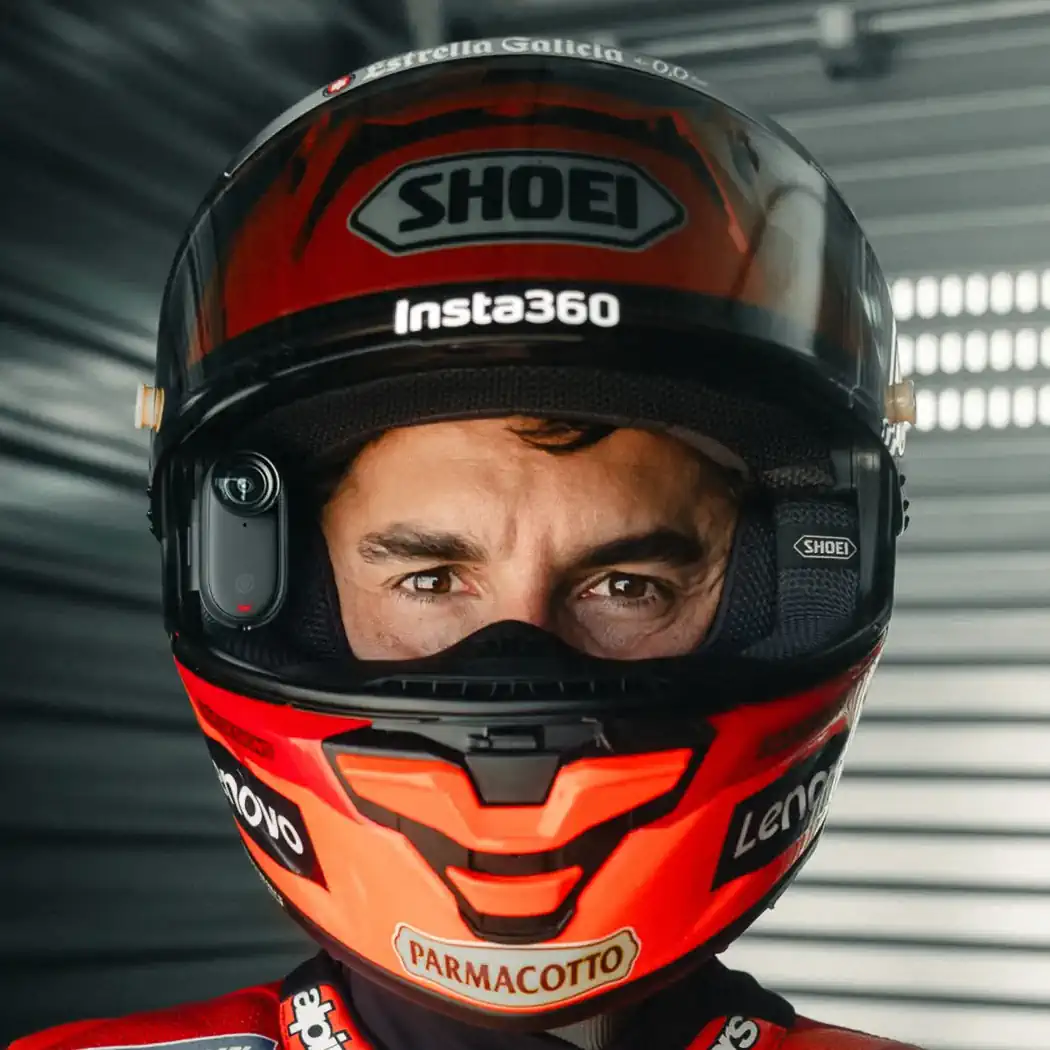
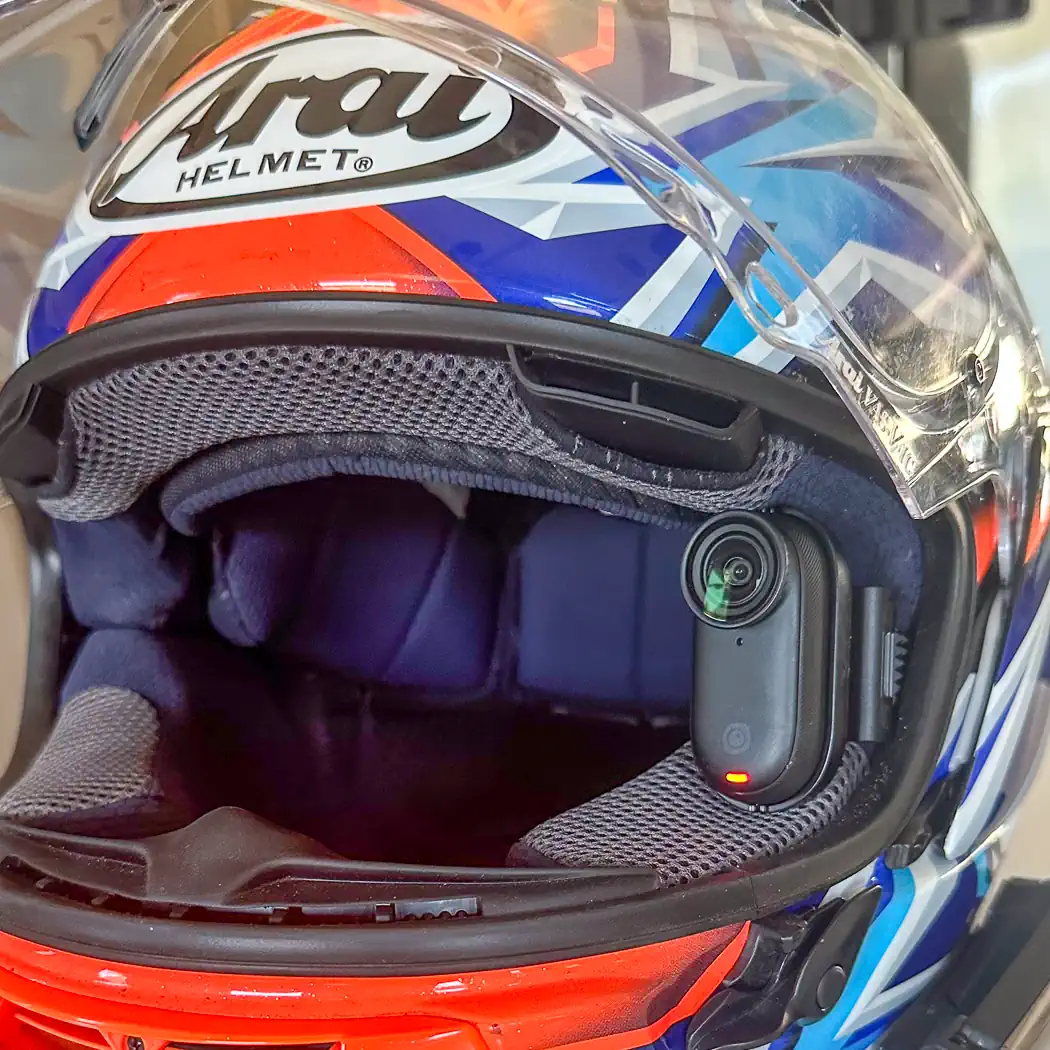
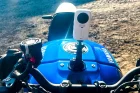
It offers several mounting options, making it truly versatile. Its magnetic body lets you use the standard bundle to clip it to clothing, a pendant, a bike, or a pivot stand. The small clip for the inside of a helmet is effortless to use and gives a true POV riding shot.
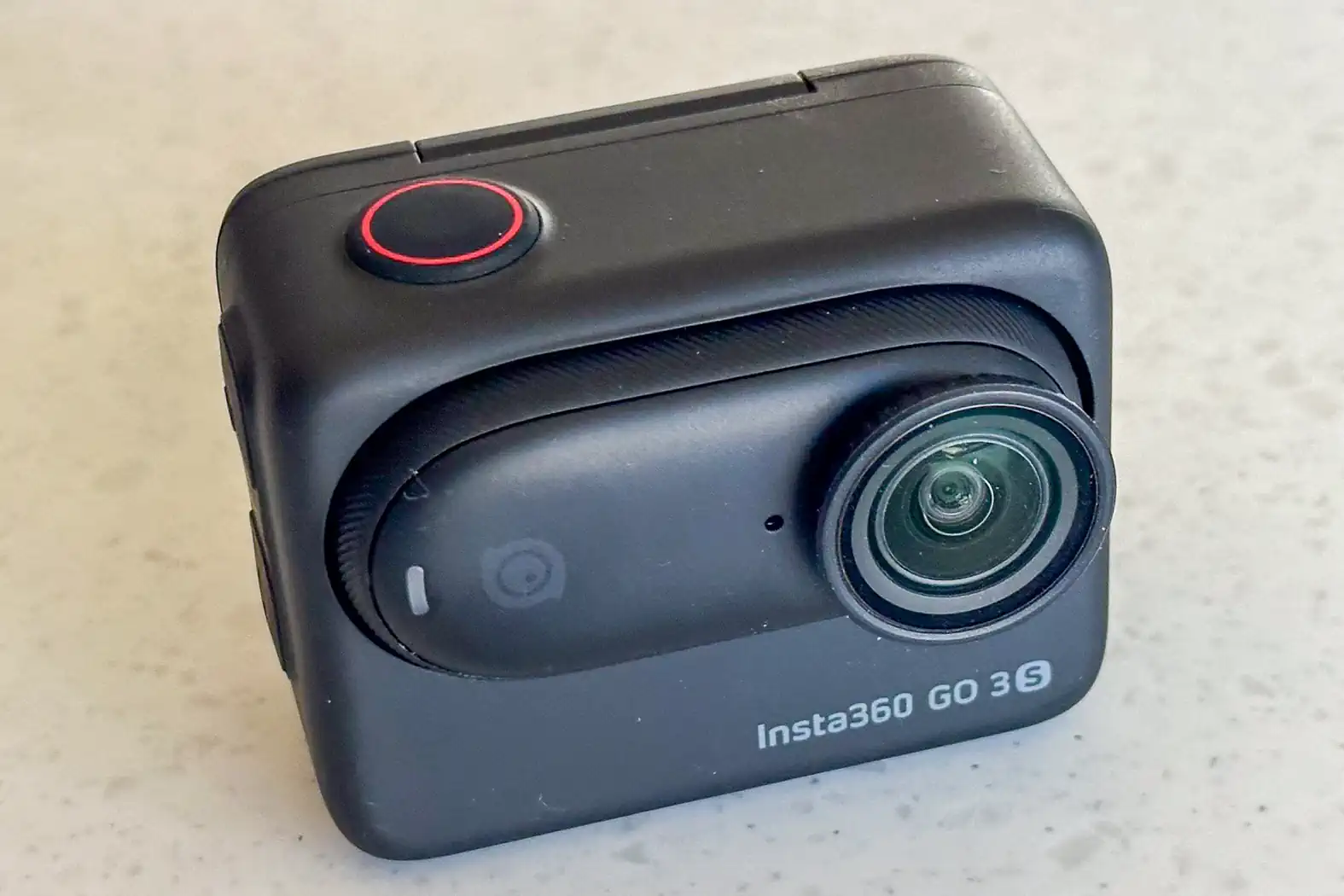
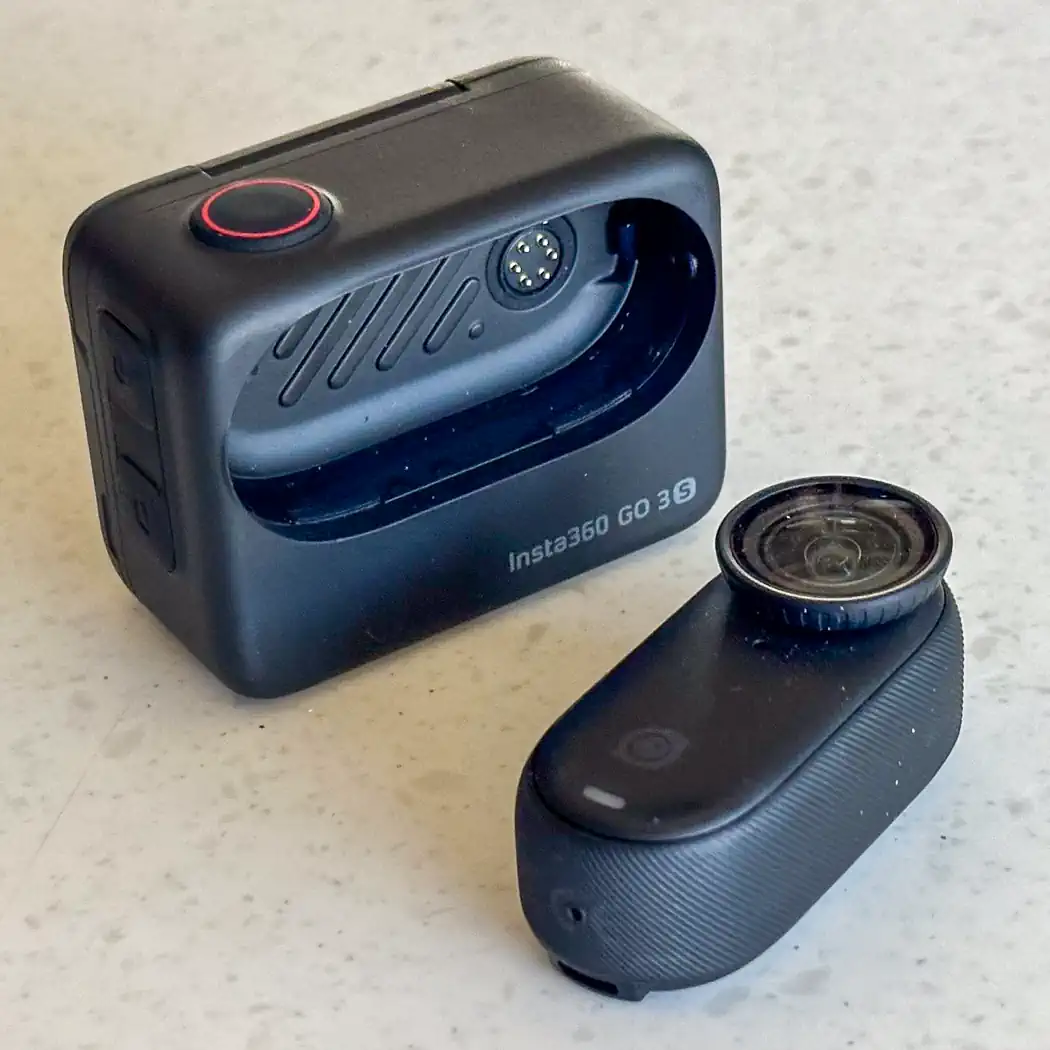
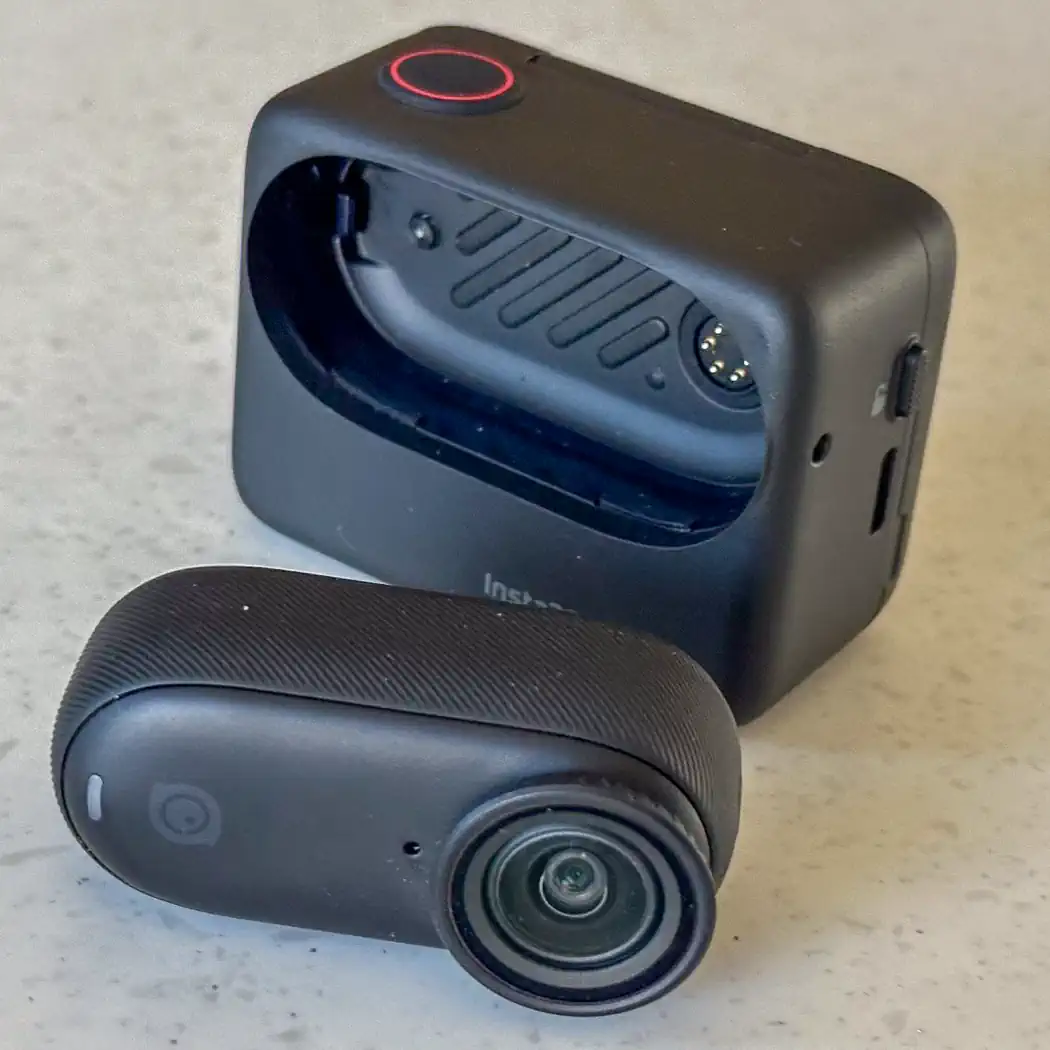
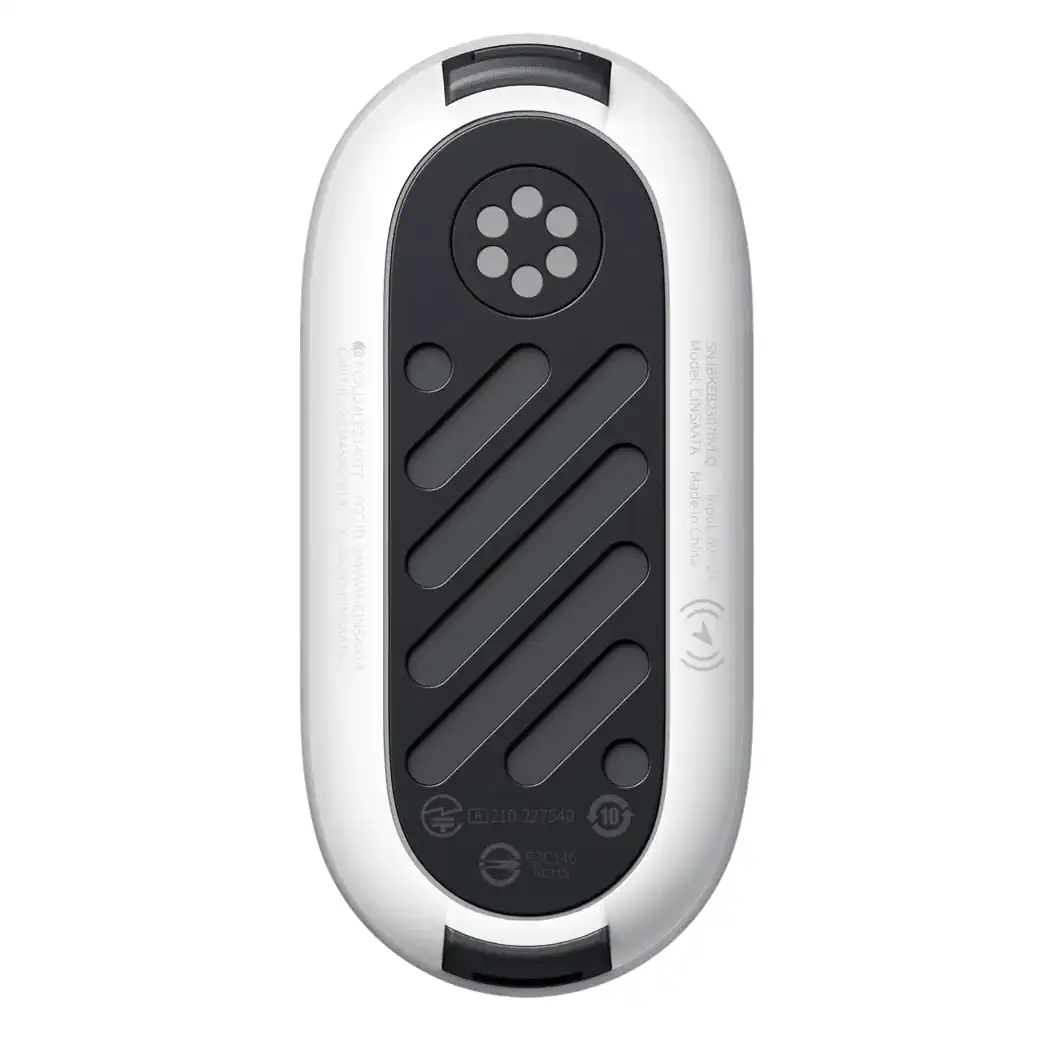
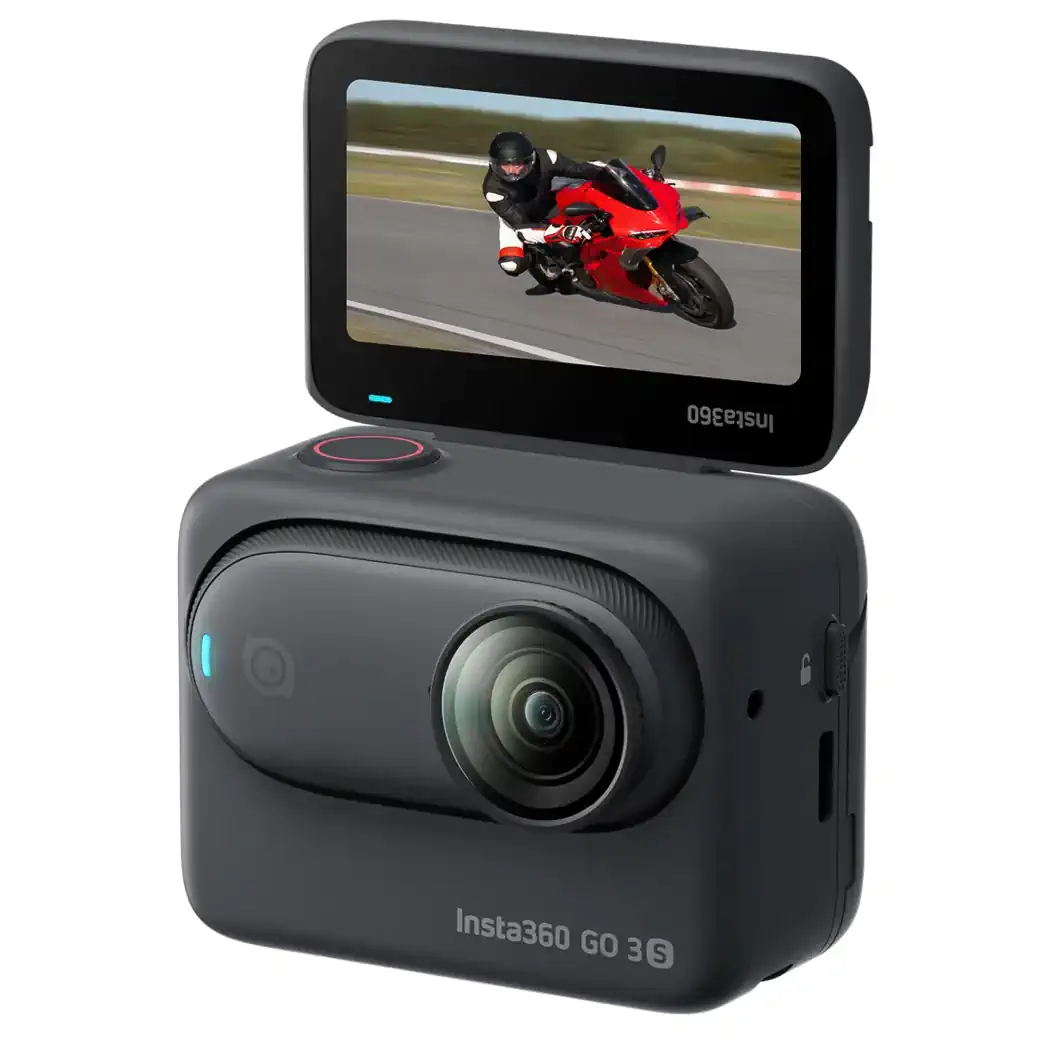
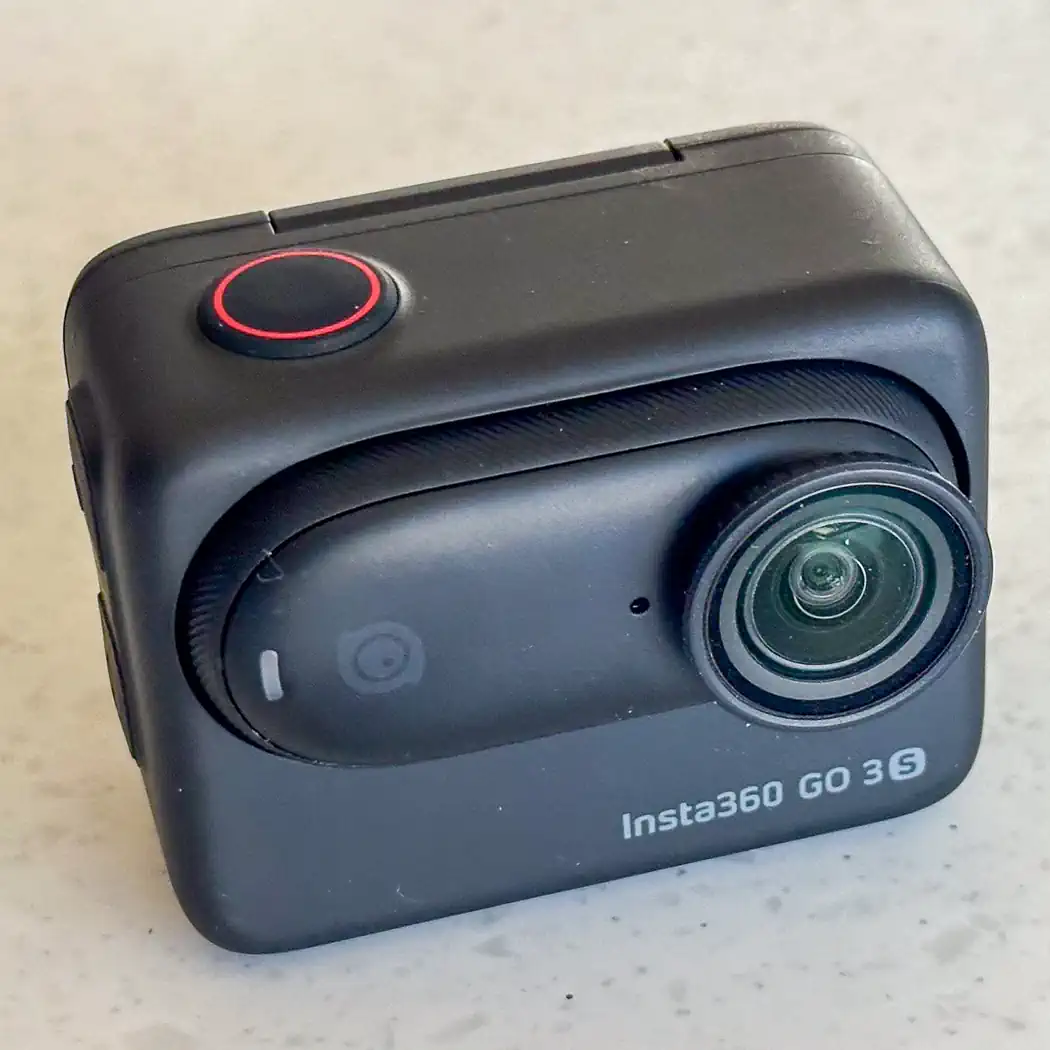
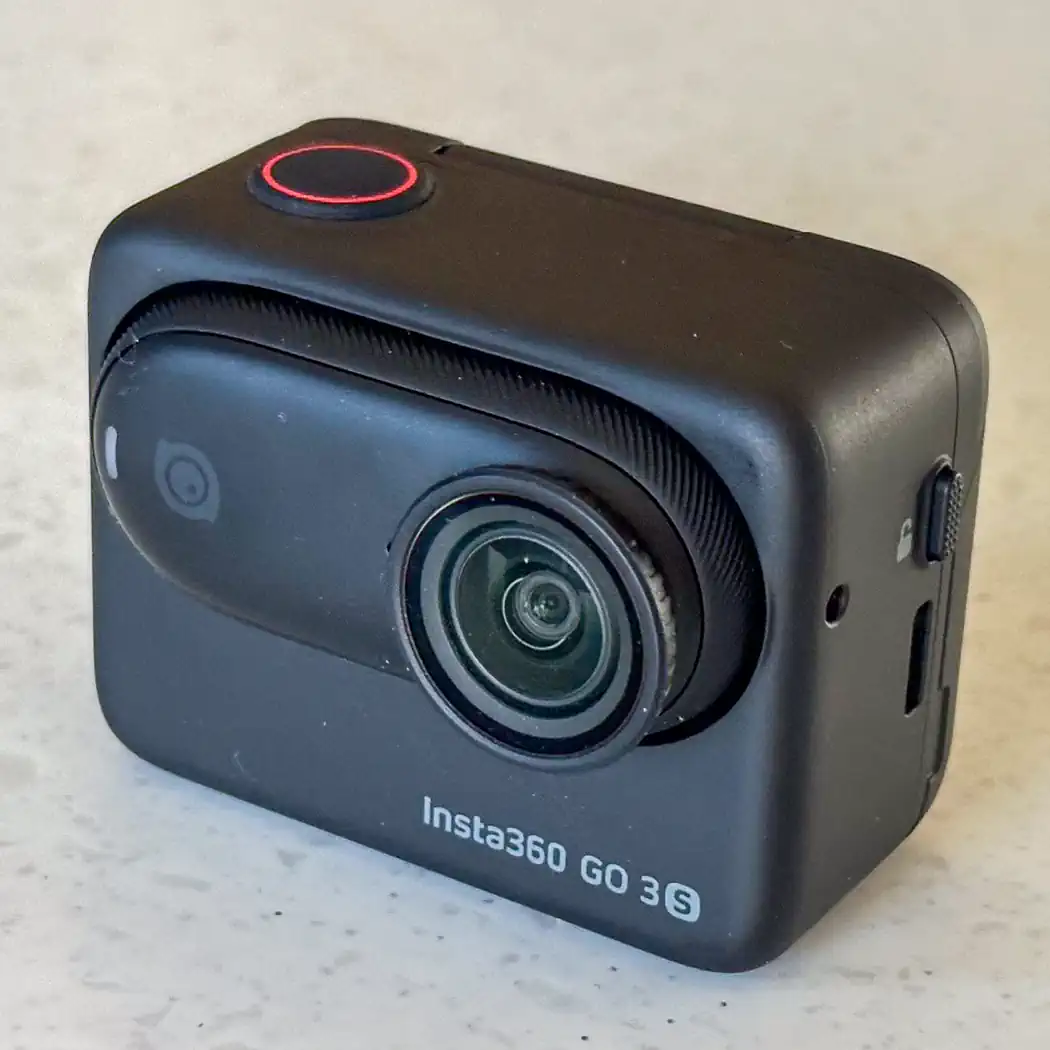
The Insta360 Go 3S magnetically mates with the Go 3S Action Pod, which has a flip-up screen. When together, the camera and Pod are about the size of a typical action camera unit. The camera magnet is strong and is securely held in the Pod, with zero risk of it falling out. To remove the camera, press the mechanical button on the side of the Pod to push the camera out far enough to pull it away from the Pod.
The camera and Pod are combined, yet separate units. The screen on the Pod shows whatever the camera sees, so even if the camera is detached from the Pod, you can still frame the picture/video using the Pod’s screen and change the camera modes. So, the Go 3S is one unit—and yet it is also two separate units. They can be used joined, or apart; whatever the camera sees and hears is wirelessly and remotely shown on the Pod screen. This can be very useful in certain circumstances.
The Pod also recharges the camera. Charging is via a USB-C cable; the Pod shows the charge levels of both the Pod and the camera. If the Pod is fully charged and the camera needs charging, simply place it in the Pod, and the Pod’s battery recharges the camera. So even out in the field, the camera always has plenty of life as long as you have the Pod with you.
Go 3S battery life is very acceptable without the Pod. Standalone runtime will be no more than 38 minutes at 1080p/30 fps. However, when docked in the Action Pod, battery life is dramatically extended, and at 30 fps I got a couple hours of footage. Power enters via USB-C. The Go 3S can be charged directly via the Go 3S Quick Reader ($45). The Quick Reader also transfers files to an external SD card without Wi-Fi and connects directly to your smartphone for editing.
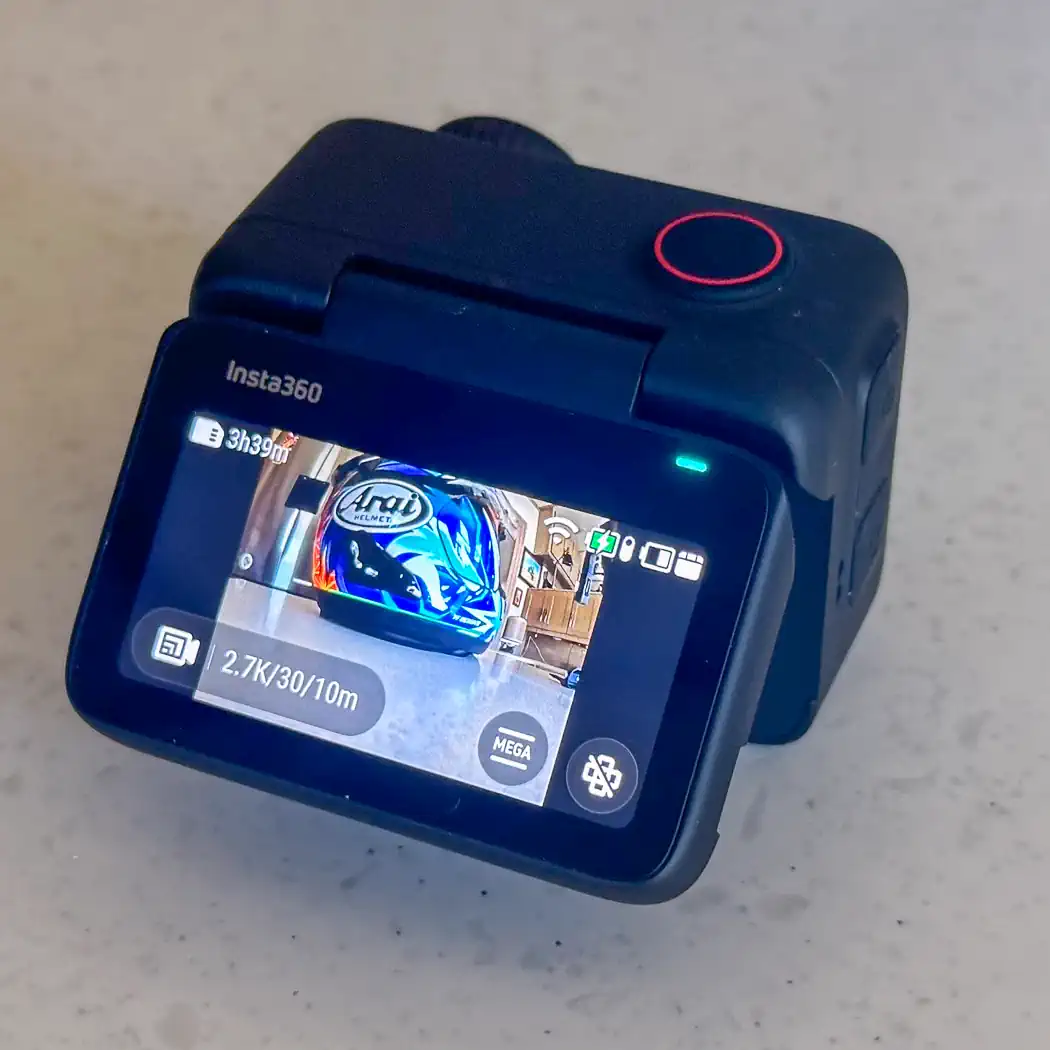
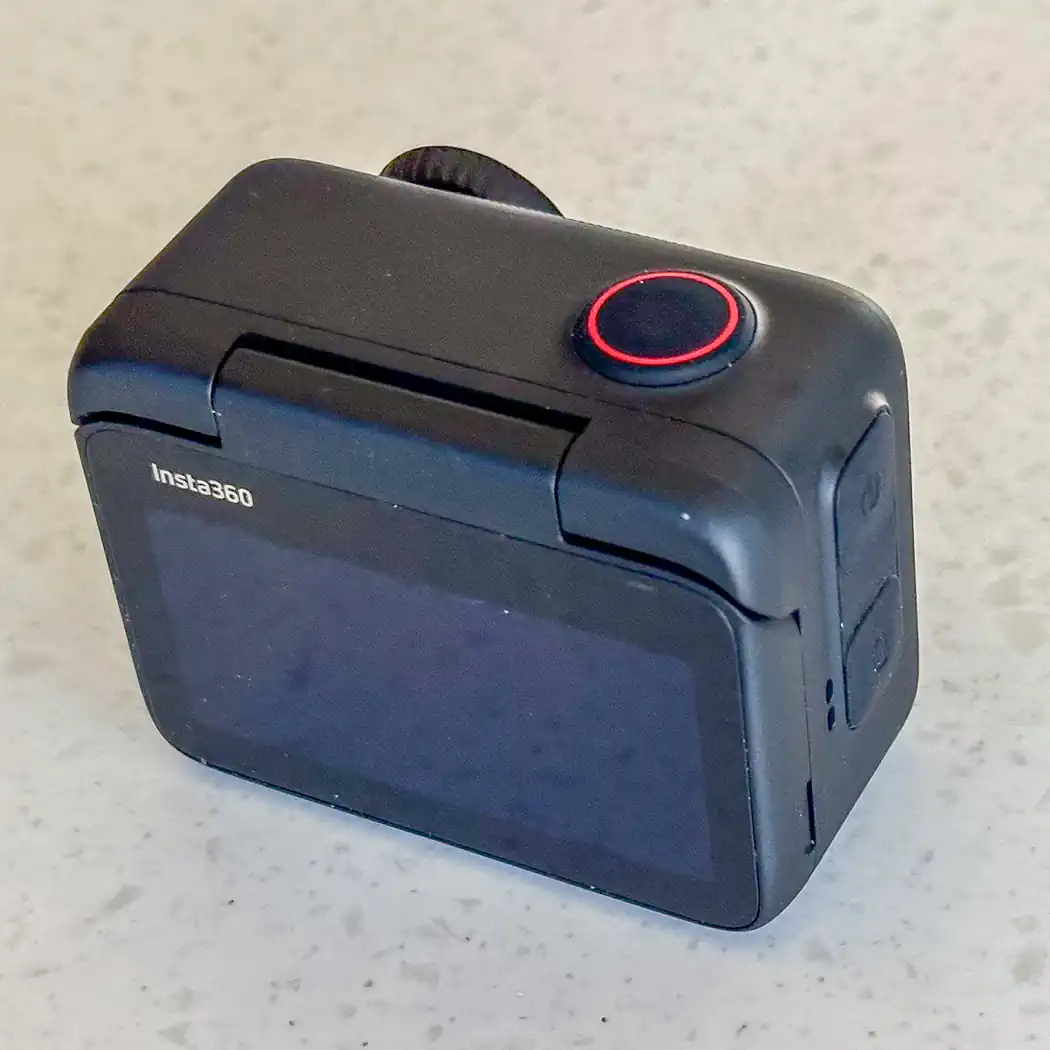
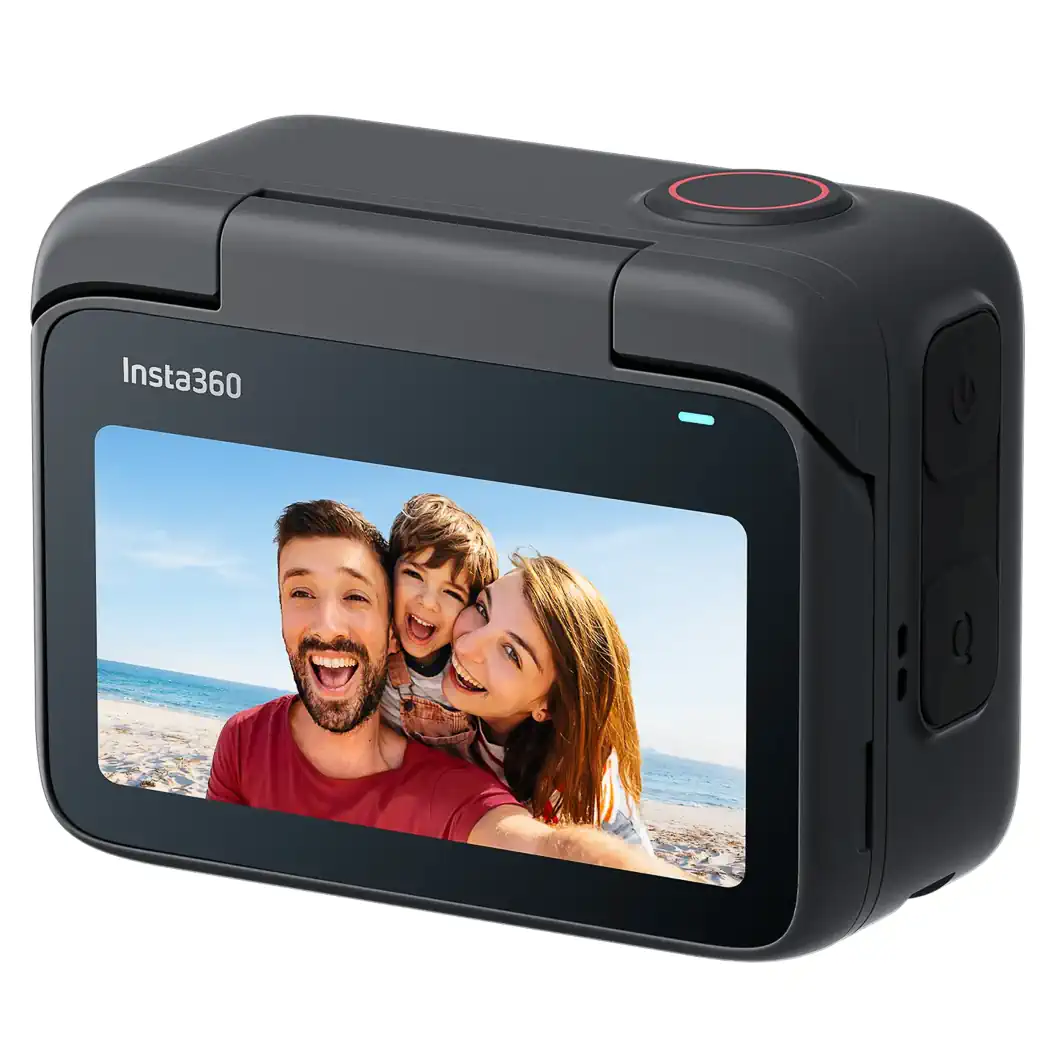
The flip screen on the Pod is hinged, so it can be easily tilted. The camera works either in the Pod or detached from it. If you’re recording with the camera in the Pod, no matter how you hold it, you can angle the screen so you see what you’re recording and frame your shot properly. There is a zoom function in the Pod, so options are available.
The camera and Pod each have a one-touch button to start and stop recording. Even if the camera and Pod are off, you can start recording instantly; there’s also a pre-recording option that automatically captures 10, 15, or 30 seconds of video before you press the shutter. So if you’re in a busy situation where you might need a quick reaction to capture something, you can simply raise the camera. Like all cameras, you have to be positive when using any button; it’s easy to miss. However, a red LED indicator lets you know whether the camera is recording. The camera can also be controlled by voice or gestures if those options are enabled.
The Pod also has two buttons on the side. The top button powers the device on and off; the lower button opens the Mode menu on the screen. There is a bewildering choice of modes and presets to choose from. There are multiple views, depending on the mode, including ActionView, MegaView, NarrowView, UltraWide, and Dewarp. By swiping the screen up, down, or to the side, a multitude of options, including Format, Aspect Ratio, and Timer, are revealed. Helpfully, there are screen tips for each one that explain what each choice or mode does or means, so you can quickly decide what you want to do.
The Go 3S shoots amazing video whether you’re using it Portrait-style or Landscape, and the picture automatically corrects whether it is upright or upside down. FreeFrame mode lets you shoot wide and choose aspect ratios later, which is handy for social media. 4K video at 30 fps makes for astonishing picture quality, and that’s the main upgrade over the Go 3’s 2.7K resolution. Additional options include 2.7K at up to 50 fps and 1080p at up to 200 fps for slow motion. Image quality is excellent in good light, and daylight 4K footage is sharper and cleaner than the Go 3, with improved color and dynamic range. Low-light performance is average, but it’s still more than usable.
Image stabilization is also incredibly impressive.Insta360’s FlowState electronic stabilization works. It is difficult to steady such a small, light device by hand, yet I found the footage was clean whether I was using it hand-held or in the helmet clip while riding.
The audio is just as impressive as the video. While there is no auxiliary mic input on the Go 3S, either hardwire or Bluetooth, that doesn’t faze the audio at all. Three choices of Wind Reduction, Stereo, and Direction Focus are available, and each one does what it’s supposed to do. The noise cancellation is outstanding. On the bike using the helmet clip, the audio was crisp and clear, with great engine sound and minimal wind noise. In an interview setting with lots of outside noise, the intrusion didn’t even make it onto the soundtrack, making the interview easy to listen to. I had been concerned about the audio quality during recording, and was amazed at what I heard during editing.
The camera is waterproof to 33 feet, but the Action Pod is only splash-resistant. This is double the depth rating of the Go 3, and useful for light water use without a case; just make sure to remove the Action Pod.
Storage is internal only. Models come with either 64 GB or 128 GB of built-in memory. There is no microSD slot, so capacity is fixed. Capacity was not an issue for me at all, as the 128 GB version is more than enough for a full day of recording at my pace. It’s easy to view clips in the Pod by swiping right and then deleting whatever you no longer need.
Transfer and edit work over Wi-Fi or USB-C. I prefer editing using the Insta360 desktop suite. It’s a super-easy, fast Wi-Fi transfer for large files. With the Pod, you can use a USB-C cable to transfer, but I didn’t bother. You can transfer to your phone and use the Insta360 editing software there, too.
Apple Find My support is built in, but there are limitations. Pair the camera through the Action Pod’s settings, and you can locate it in the Find My app, or make it beep. However, it only works while the camera still has charge, and it requires an Apple device running iOS 13 or later; there is no Android equivalent. Also, Find My is only for the camera and does not help locate a lost Action Pod.
I love the Insta360 Go 3S. While there are compromises over a full-size camera, few will notice the difference in picture quality on the internet. The Go 3S is an incredibly practical, remarkably versatile choice for anyone who wants a nearly invisible, lightweight, and easy-to-operate camera for a variety of situations. If you use the camera in the Action Pod, plenty of options are available and can be quickly chosen by swiping the flip-screen. The ability to shoot either in or out of the Pod and still remotely see what you’re recording on the Pod screen makes the Go 3S an astonishingly versatile and incredibly useful real-world still- or action camera.
Our bike review this episode is the Yamaha MT-03. Do not underestimate this bike; you get a lot of motorcycle for your money! Associate Editor Kelly Callan rode the smallest MT for several weeks, and that included commuting on it. One of the things that impressed her, was how the MT-03 acted like a larger motorcycle. Kelly also spent some time chasing Editor Don Williams through the canyons when he was on the Yamaha MT-07—obviously a much larger machine. She tells us about how it all went.
* * * * *
We’re closing in fast on the 34th annual Biketoberfest, October 15–18, when all roads will lead to Teddy Morse’s Destination Daytona—the more than 100-acre motorcycle playground in Ormond Beach Florida. This week we get to hear all about it from Teddy Morse himself. With his trademark high energy and enthusiasm, he tells us all about his recently established Triketoberfest that happens the week before, and how the Destination Daytona complex turns into a full-throttle hub of demo rides, vendors, custom builds, live music, food trucks, shops, and nonstop pavilion energy. So, whether you’re on two wheels or three, whether you’re hunting parts or lining up a test ride; grab a cold one and soak up the energy and gorgeous Florida fall weather. This is one of the many Daytona Beach places where Biketoberfest feels like home. So don’t forget: make sure you download the Biketoberfest mobile App from Apple or Google Play or visit www.biketoberfest.org and we’ll see you there!
* * * * *
Our guest this episode is Greg Arnold, Mecum’s motorcycle auction director. He bought his first bike at eleven, joined the company in 2011, and has spent more than a decade helping turn this incredible event into the place collectors, consignors, and dreamers all show up. Next February 3rd through 6th, Mecum will—for the 36th time, bring the world’s largest vintage motorcycle auction back to South Point, Las Vegas. That’s over two thousand bikes over four days. Board-track racers, barn finds, customs, race iron, and especially, those incredible machines that make the room go quiet. Greg gives us insight into what it takes to make this event work so incredibly well, and if you’re interested in selling your pride and joy, what steps you have to take to make it happen.
* * * * *
Here’s quick reminder to check out our monthly digital magazine. It’s filled with everything you want to read on motorcycling, including some things you’ve probably not seen elsewhere. It’s absolutely free and you will find it on the Apple App Store and of course on Google Play as well.
Don’t forget to leave us your comments on our social media—we’re on all the usual platforms at Ultimate Motorcycling. We love hearing your feedback… so good or bad, please let us know what you think. If there’s something you’d like us to cover, we’d love to hear those ideas too!
We use cookies and browser activity on this website
Functional
Always active
The technical storage or access is strictly necessary for the legitimate purpose of enabling the use of a specific service explicitly requested by the subscriber or user, or for the sole purpose of carrying out the transmission of a communication over an electronic communications network.
Preferences
The technical storage or access is necessary for the legitimate purpose of storing preferences that are not requested by the subscriber or user.
Statistics
The technical storage or access that is used exclusively for statistical purposes.The technical storage or access that is used exclusively for anonymous statistical purposes. Without a subpoena, voluntary compliance on the part of your Internet Service Provider, or additional records from a third party, information stored or retrieved for this purpose alone cannot usually be used to identify you.
Marketing
The technical storage or access is required to create user profiles to send advertising, or to track the user on a website or across several websites for similar marketing purposes.