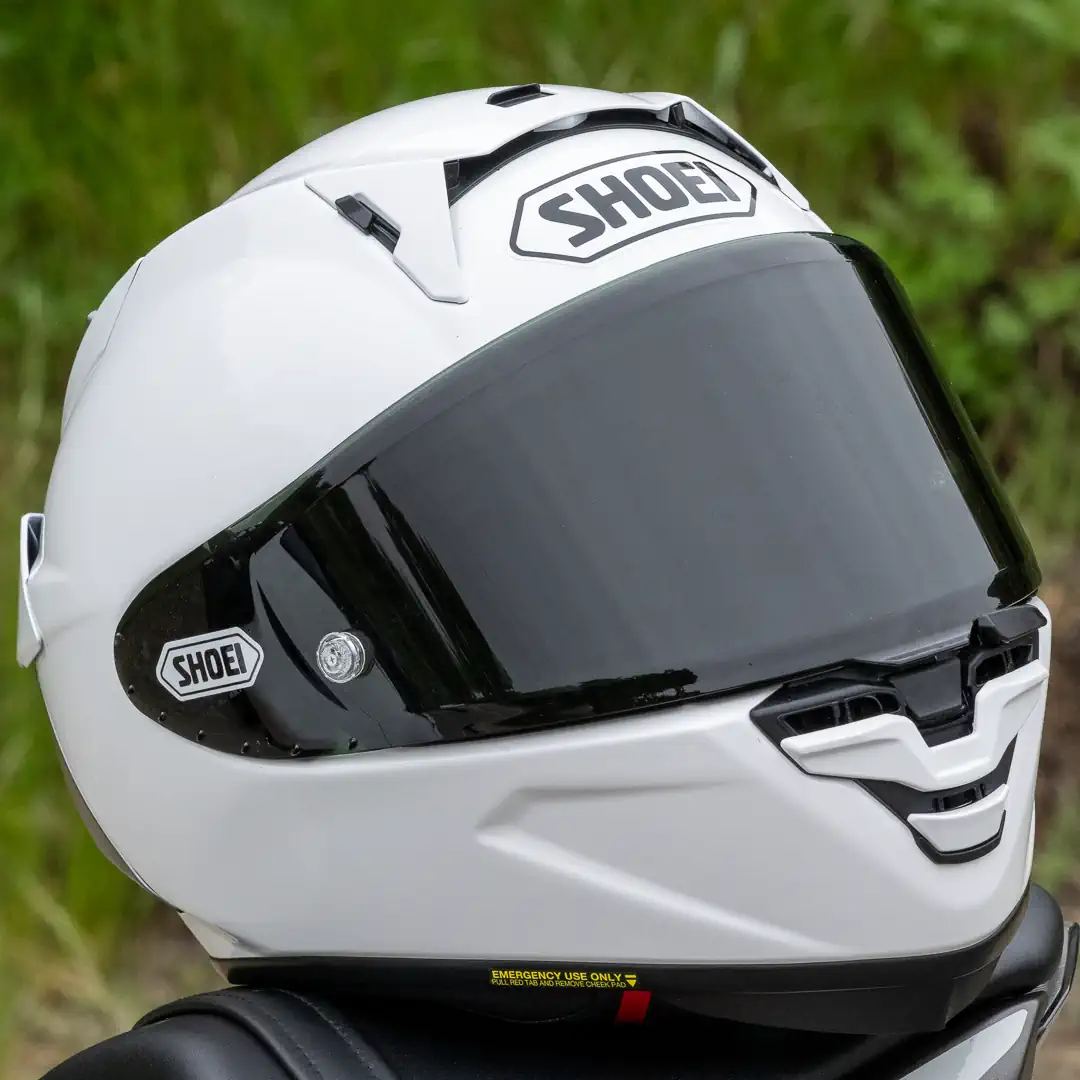
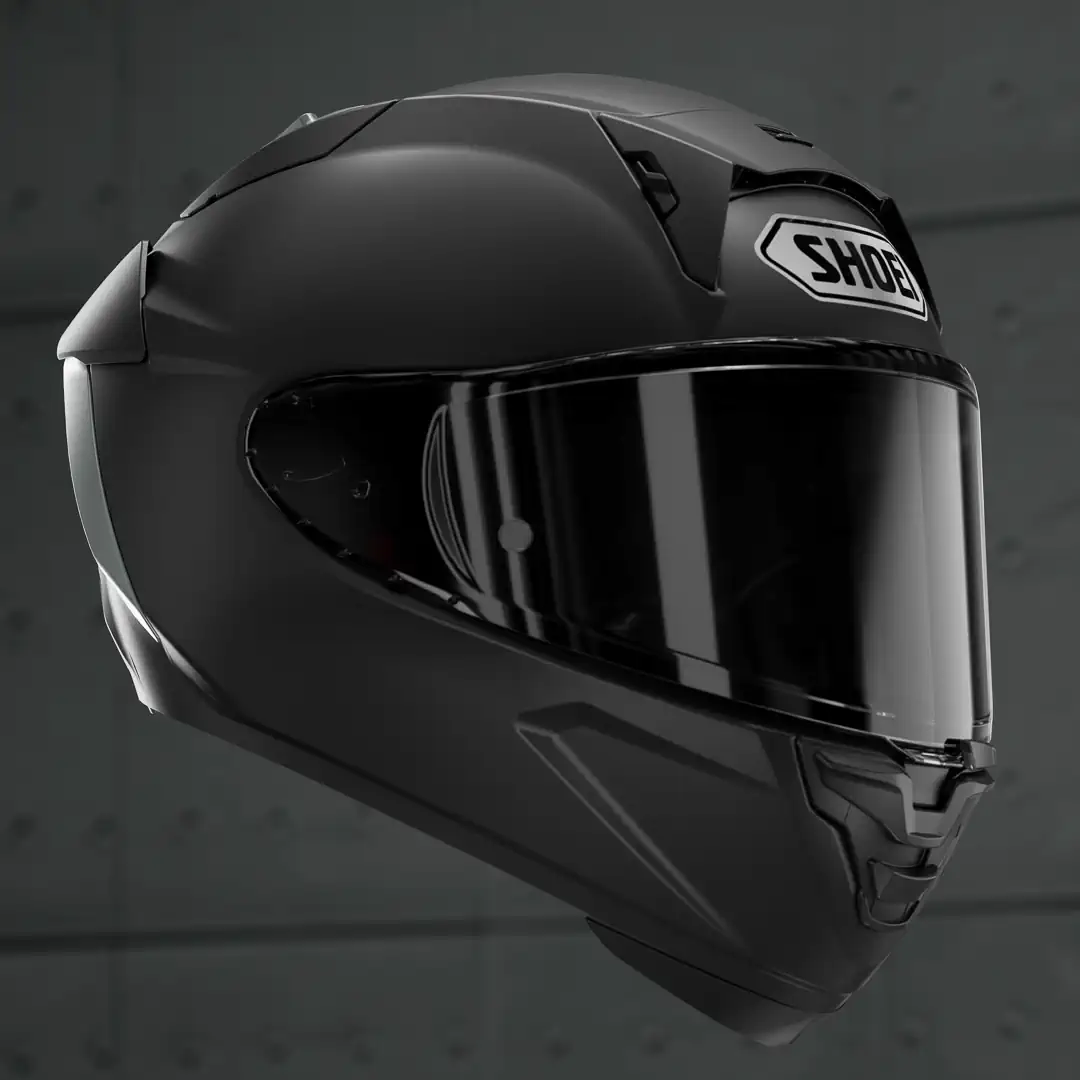
Progress in racing never stands still. Whether it’s teams uncovering gray areas in the rulebook or riders achieving speed through sheer willpower, any action that nudges man (or woman) and machine closer to the checkered flag is a step in the right direction in racing. Aerodynamics has influenced motorcycle design and performance since its inception, but the science of managing airflow is a discipline, nay a black art, unto itself. Aiding that heady arms race amongst winglet-laden World Superbike and MotoGP motorcycles of today are helmet manufacturers, and the Shoei X-Fifteen helmet is a race-proven lid that proudly proclaims improvements of the aerodynamic kind.
Replacing the highly regarded X-Fourteen was not a casual exercise, nor was it one that the premium Japanese helmet maker took lightly when it launched the X-Fifteen in 2023. The X-15’s predecessor spent years on the heads of world champions, club racers, and many a riding enthusiast with few complaints.
Rather than starting from scratch, Shoei uses that race-proven platform and builds on its strength. The mission was straightforward: improve aerodynamic efficiency, expand usable vision in aggressive riding positions, and boost cooling without compromising the safety architecture that made the X-Fourteen one of this scribe’s personal favorite lids. The result is not a minor stylistic update but a calculated evolution that feels engineered around real-world riding demands.
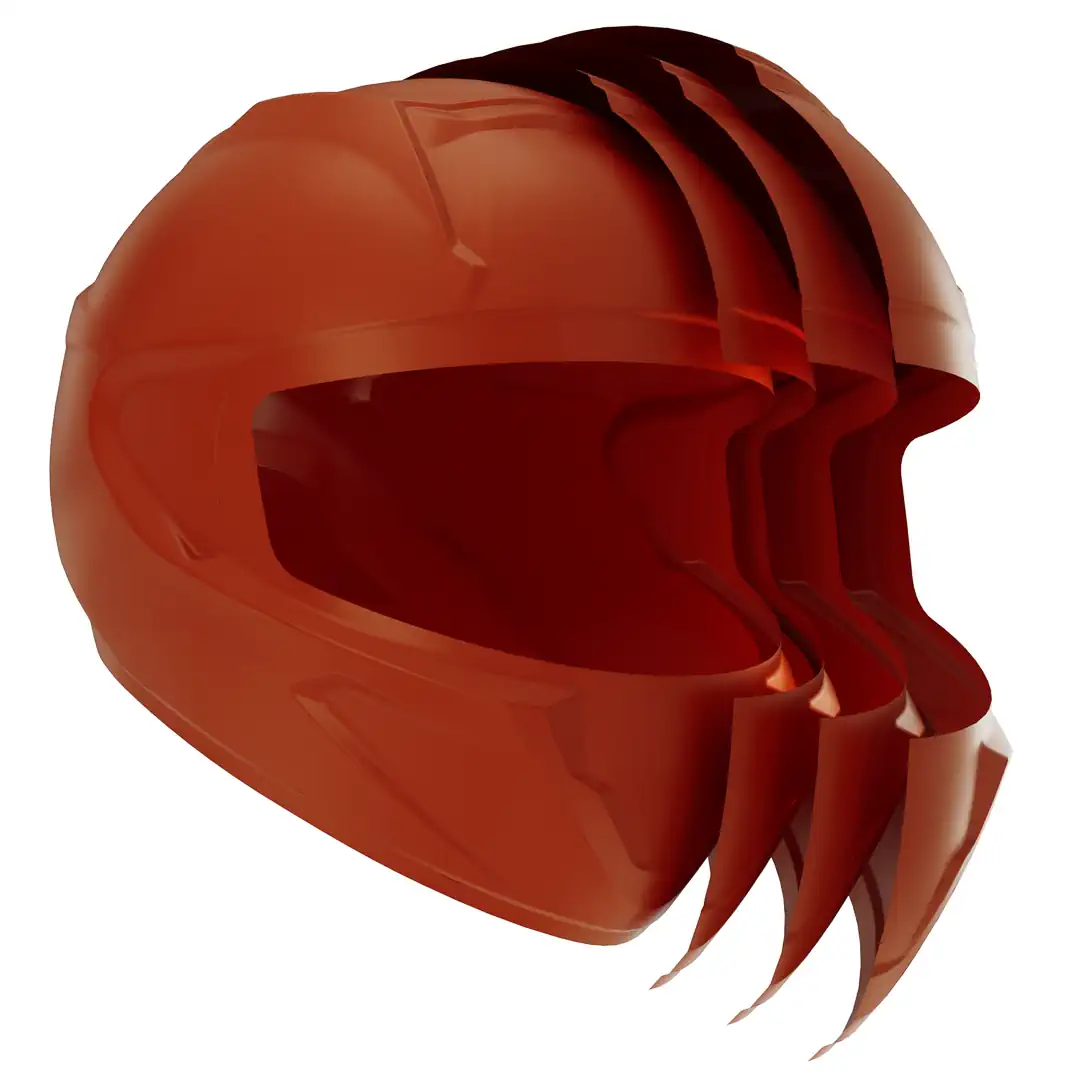
Aerodynamics sit at the core of the X-Fifteen’s tale, and, according to the brand, it took 150+ shell iterations to get there. Shoei’s internal wind tunnel testing shows a 6.1 percent reduction in drag and a 1.6 percent reduction in lift compared to the X-Fourteen.
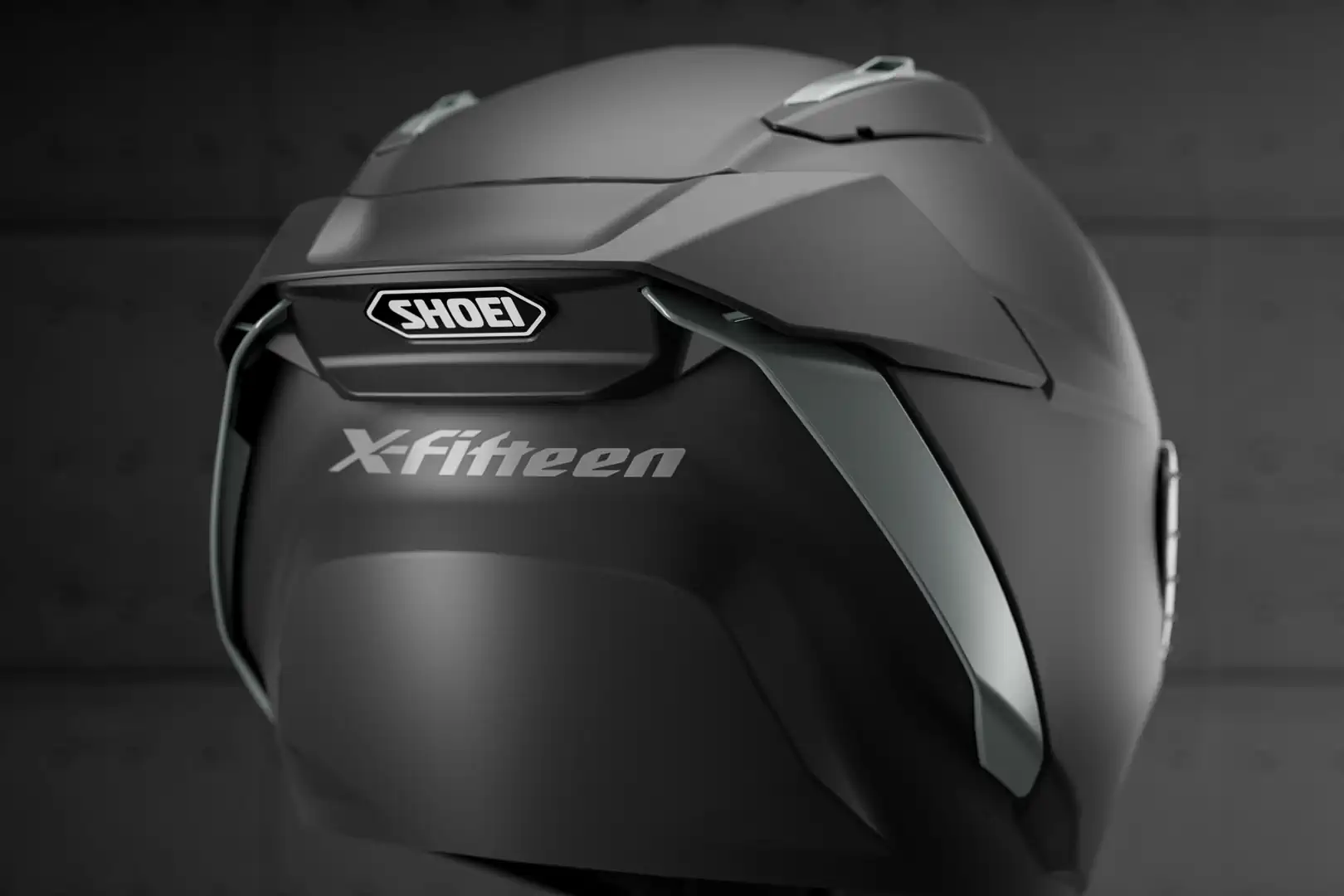
Peeking at the top of the shell reveals more defined edges along the upper lateral areas, said to guide airflow cleanly off the helmet rather than allowing it to tumble and create turbulence. Engineers reshaped the lower third of the lid, using a narrower profile from the chinbar to the revised rear stabilizer and flap to encourage greater stability, which it does.
Escalate TC-10 graphics.
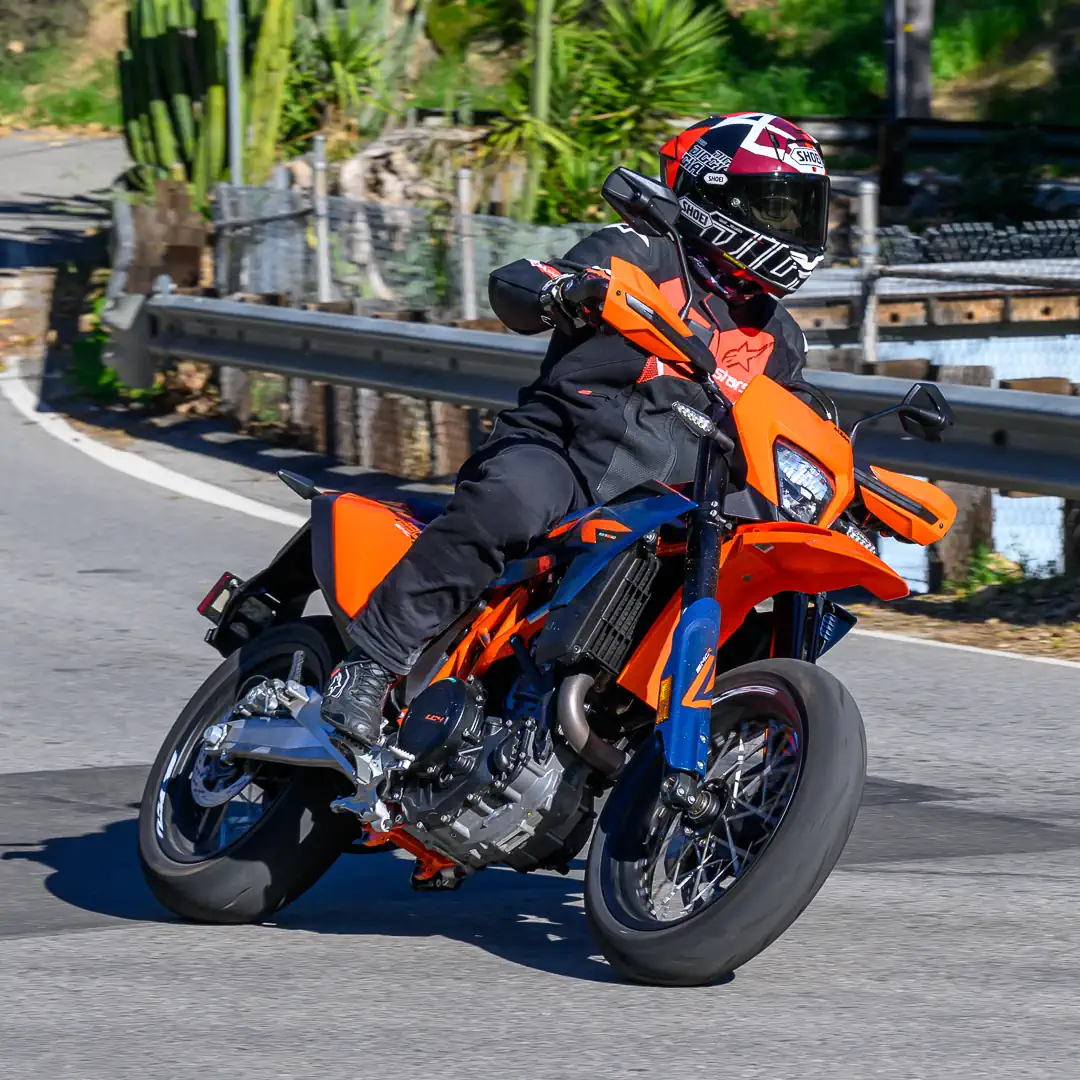
On the bike, those figures translate into less upward pull on the helmet at high speed and reduced side-to-side wandering when the wind hits from an angle. The effect is subtle at highway pace, becoming increasingly noticeable as speeds climb. There, the X-Fifteen feels calmer and more neutral, requiring less neck effort to hold a steady line of sight.
The brand’s internal testing regimen included chest-on-the-tank race tucks, upright riding, and partial lean positions, which pays off in the real world. When you check over your shoulder, shift body position mid-corner, or sit up hard on the brakes, the helmet transitions smoothly between airflow conditions rather than abruptly catching the wind.
Reading between the lines, it adds up to less neck fatigue while riding just about anything, especially burly naked bikes such as the mighty KTM 1390 Super Duke R Evo. In fact, the Shoei X-Fifteen is one of the most stable helmets I’ve used to date, narrowly bested by the Alpinestars Supertech R10. At the same time, other premium offerings like the Arai Corsair-X don’t offer nearly the same level of aerodynamic stability. The HJC RPHA 1N is an honorable mention in the stability department.
Beneath those aerodynamic refinements is Shoei’s longstanding Multi-Ply Matrix AIM+ shell construction. The AIM+ shell blends multiple layers of fiberglass with lightweight organic and high-performance fibers, creating a structure that balances rigidity with controlled flex. The helmet meets DOT standards for the U.S. market, ECE 22.06 for Europe, and Snell M2020R, placing it among the more thoroughly certified race-oriented helmets available. The Shoei X-Fifteen is FIM-certified and legal for professional racing, though that version is not typically offered in the United States.
Shell stiffness is a careful balance for helmet makers. It must absorb impact energy efficiently without becoming so rigid that it transmits excessive force to the head. The X-Fifteen continues to use four distinct shell sizes to accommodate a wide range of heads, spanning X-Small to XX-Large. As a nifty reminder, shell sizing and helmet sizing are two different things. A good spread of shell sizes helps maintain proportional sizing and consistent mass distribution across the range rather than forcing smaller heads into oversized outer shells.
The second line of defense against impacts is a multi-density EPS liner, another evolution of the X-Fourteen’s architecture. Different foam densities are strategically positioned around the head to tailor energy management across various impact zones. Segmenting the liner also allows Shoei to integrate complex internal air channels without sacrificing structural integrity. In the X-Fifteen, those channels are significantly deeper than before, growing from 6mm to 10mm, which directly supports the helmet’s upgraded ventilation performance.
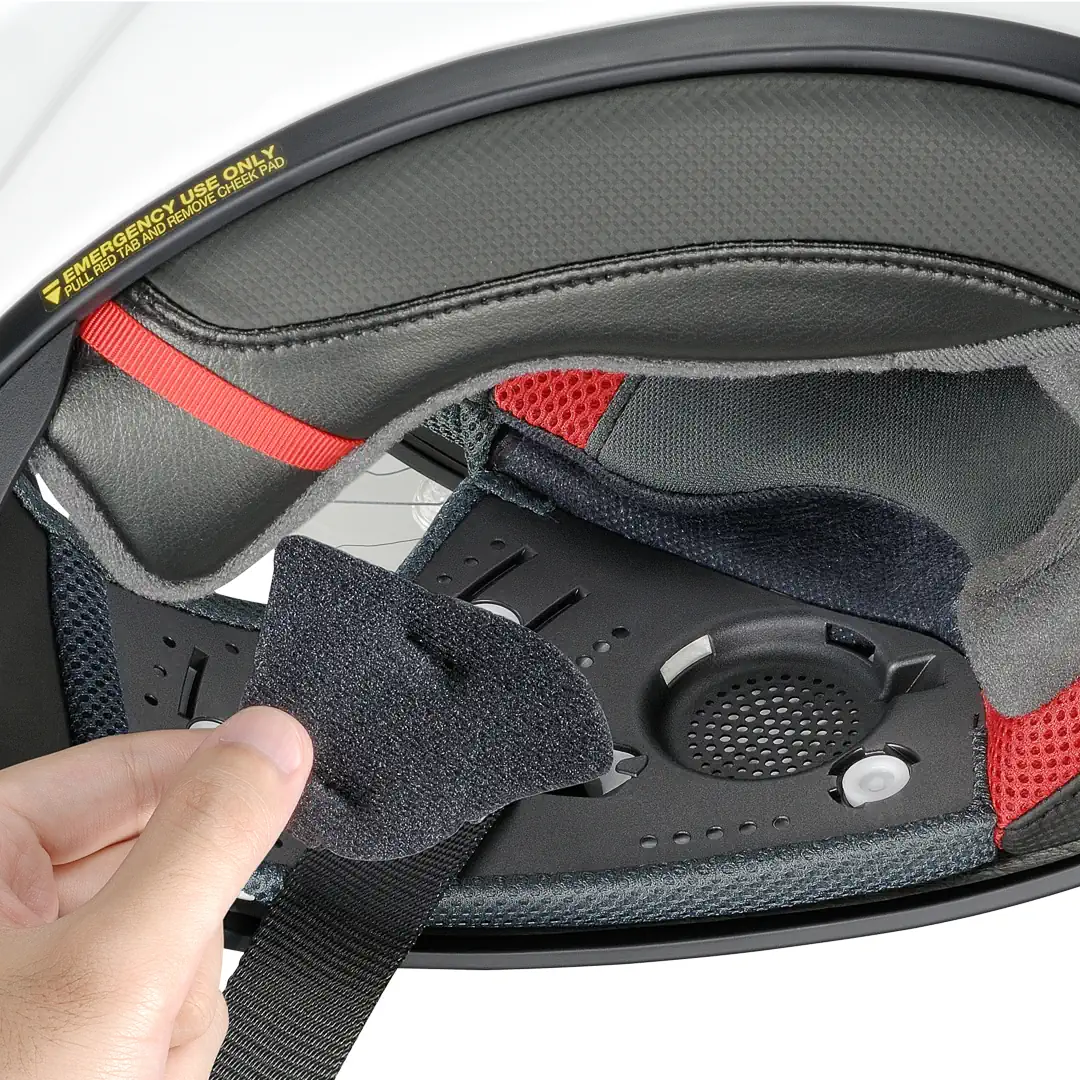
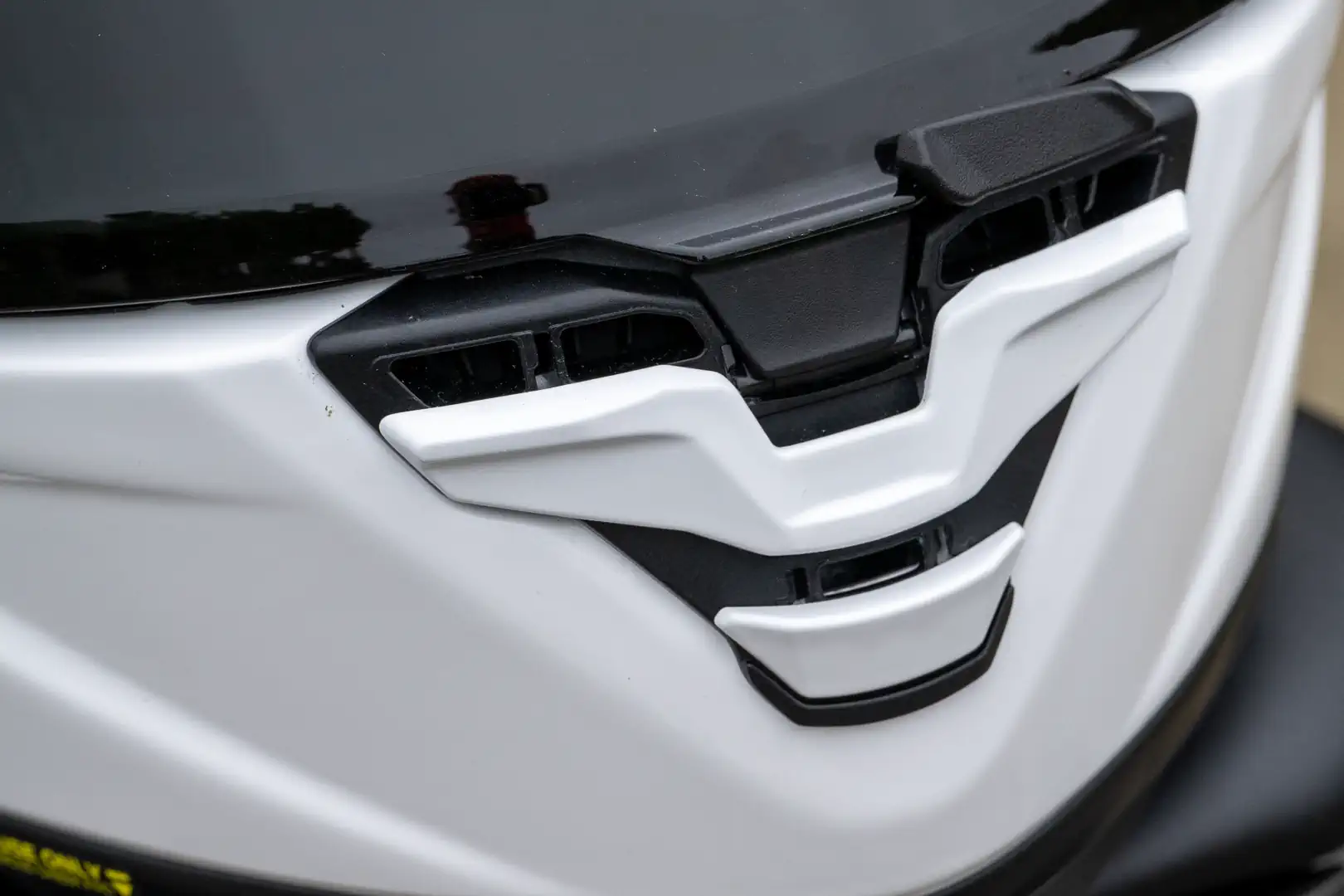
The Shoei X-Fifteen uses seven adjustable intake vents and six always-open exhaust outlets, positioned to exploit pressure differentials across the shell. Air enters through brow, forehead, and crown intakes, then travels through those enlarged EPS channels before being drawn out through the rear exhaust ports. Helping those venting efforts are the updated cheekpads, featuring 23 venting holes on either side that correspond with said channels.
At speed, there is a consistent flow over the scalp, helping manage heat buildup during long sessions. Even at a moderate pace, the system feels more active than the previous generation, with less stagnant air trapped inside the helmet. There is no downside in terms of venting, aside from the adjustment tabs in the crown area being a touch small for a gloved hand. Luckily, this is a race helmet; unless it’s raining, you’ll likely leave them open.
Vision is an all-important factor regardless of the environment, but it is invaluable in racing applications. Here, the X-Fifteen receives a meaningful upgrade with the recent CWR-F2R faceshield system. Those running an older X-Fourteen will need to pick up new accessory shields, as the older ones are not compatible.
The optically correct shield uses small vortex generators molded into the shield’s sides help manage airflow around the face shield area, contributing to reduced wind noise and improved aerodynamic stability. Shoei reworked the eyeport shape to provide an additional 5mm of upper field of view without altering the helmet’s fit. In practical terms, that gives riders a better view of corner exits and braking markers when they’re assuming an aggressive riding position.
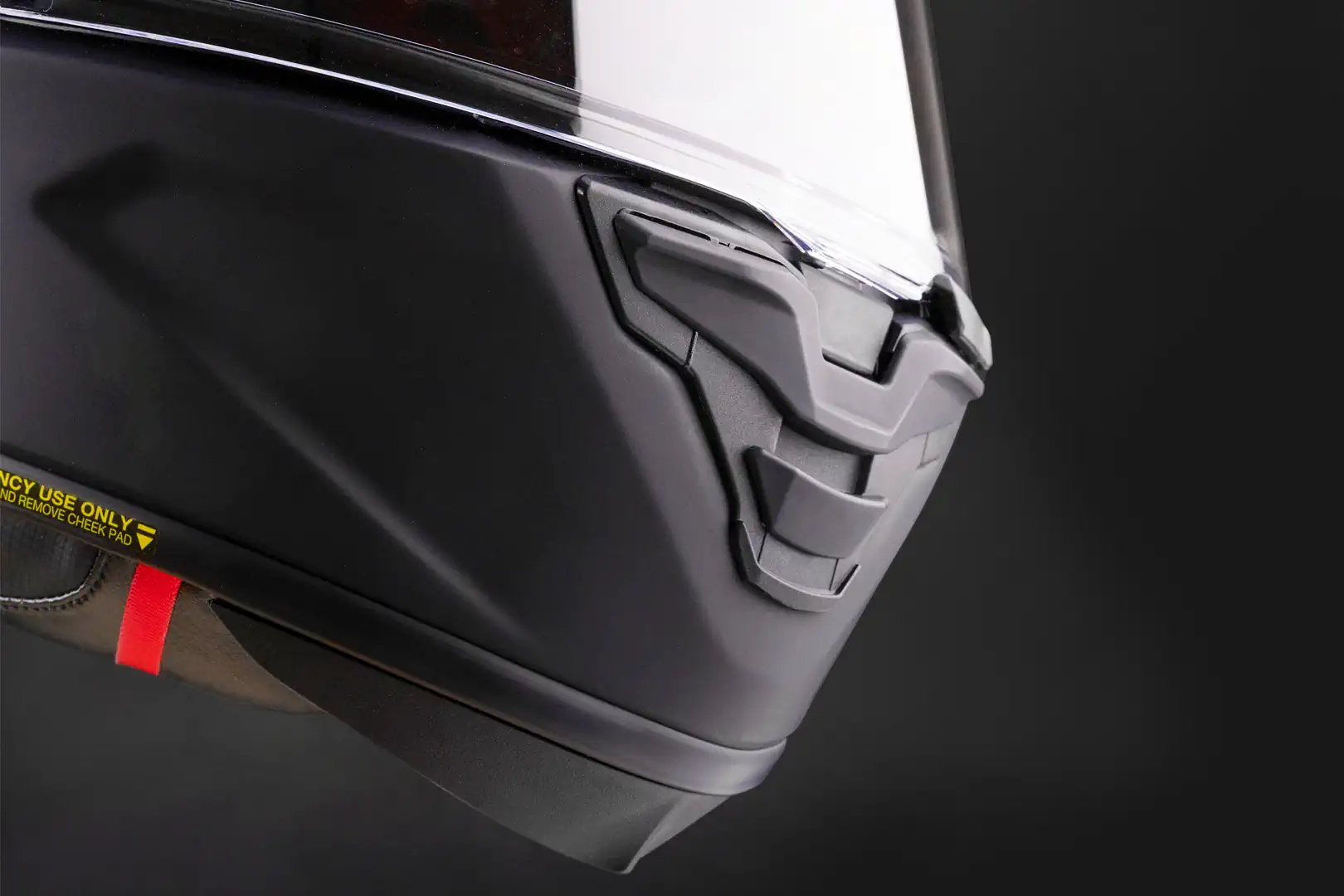
The base plate system for the CWR-F2R faceshield is the latest from the brand, featuring a flatter design and a trigger lock mechanism intended to help prevent the shield from detaching in a crash. Raising and lowering the shield is a little different these days, as the Japanese firm has moved to a two-stage shield-release button located in the center of the chinbar — it takes some getting used to if you’re coming from an X-Fourteen. Get used to it, because Shoei has adopted this release style for most of its current street-legal helmets.
Shield movement feels precise, thanks to detents in its range of motion, and there’s an additional lock for extra security when latched. Together, all these elements make the shield system feel purpose-built for high-speed use, where a faceshield lifting unexpectedly is more than a nuisance.
Fit, comfort, and construction are where the “premium” claims ring true. Much of that can be credited to the washable 3D Max-Dry Custom Interior System II, which continues Shoei’s emphasis on a tunable interior. The liner material is engineered to quickly disperse moisture, helping the helmet feel drier during aggressive riding. Airflow from the ventilation system works in tandem with fabric to prevent a clammy feel.
Nearly all padding can be swapped out for optional thicknesses, allowing riders to personalize crown, front, rear, or side fitment. In addition, each section features peel-away layers, enabling fine adjustments without purchasing separate pads. This modularity is especially valuable for riders who need a precise, secure fit over long stints.
The cheek pads build on a familiar Shoei concept, while adding more support. The surface area is increased compared to the X-Fourteen, giving the helmet a more planted feel around the jaw and lower face. At high speed, that added contact helps limit movement and keeps the helmet stable in turbulent air. For those who wear glasses or shades when riding, be aware that the X-15’s tighter race-ready nature means that eyewear fits snuggly, though it doesn’t create excruciating pressure points.
Shoei retains its patented cheek pad angle adjustment system, which allows the helmet’s orientation to be altered by up to four degrees. By slightly rotating the helmet, riders can optimize upward vision when tucked, working in harmony with the revised eyeport. Nifty stuff, eh? And it’s something that other top-tier helmet markers have integrated into their repertoire.
There are creature comforts that look beyond the confines of the racetrack, including pockets for communication system speakers. While this is a race and sport-oriented helmet first, Shoei wisely acknowledges the needs of the everyday street rider.
The head shape for the North American X-Fifteen remains an intermediate oval, accommodating a broad range of head shapes with a snug, race-oriented hold. Initial fit is intentionally tight, particularly through the cheeks. However, the materials break in gradually to a secure, comfortable feel without becoming loose. Again, riders can and should customize their interior padding to their liking. Those looking for extra precision can utilize with Shoei’s Personal Fitting System, a service that precisely measures the rider’s head to ensure a perfect fit.
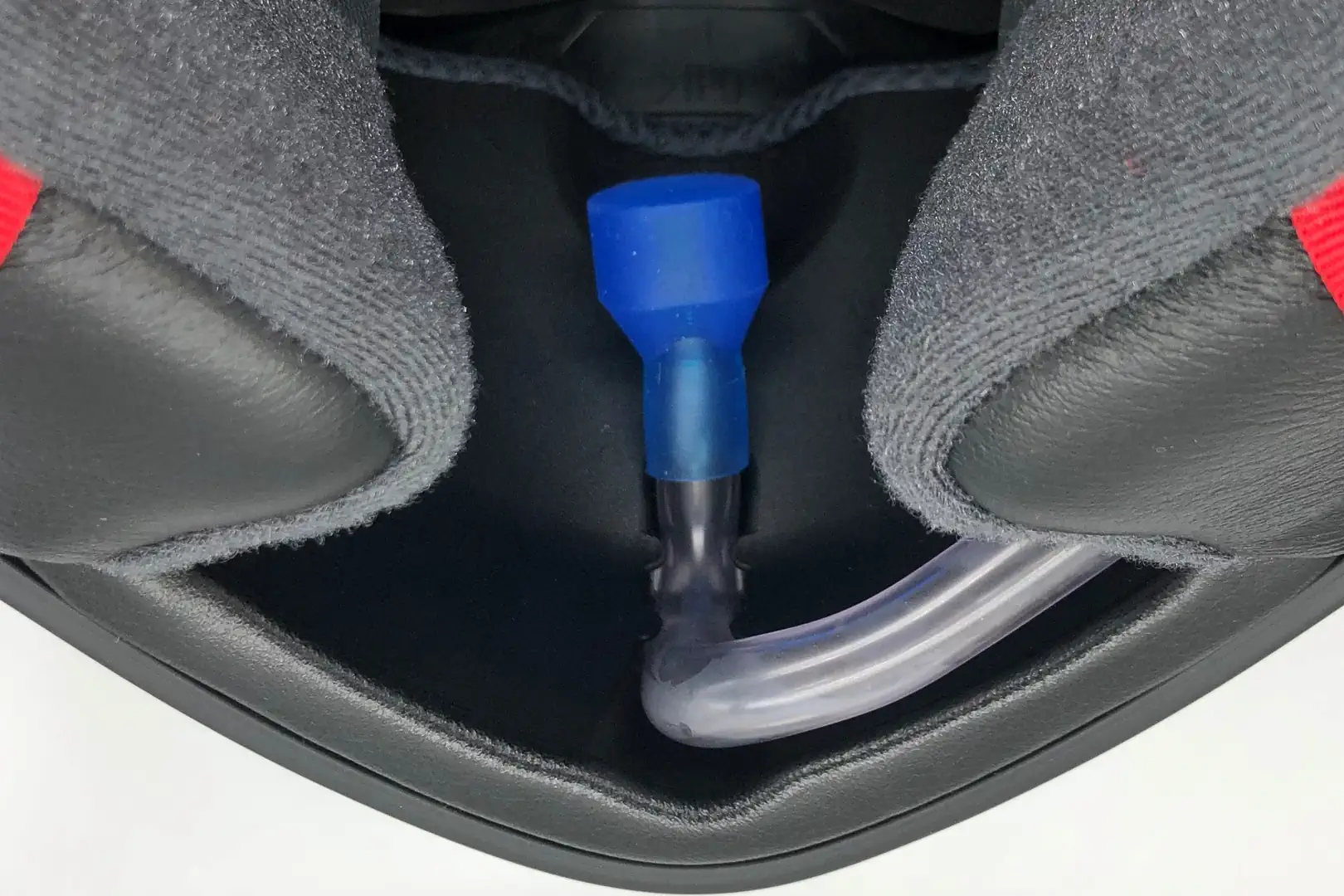
Shoei also integrates a hydration system channel in the chin bar area, designed to guide a drink tube into the helmet cleanly. For endurance racing or long, hot track days, or long sport rides, this feature simplifies staying hydrated without compromising fit.
Finally, the Emergency Quick Release System allows trained personnel to remove the cheek pads before removing the helmet, reducing risk of unintended neck injuries in the event of a crash.
Our Medium-sized X-Fifteen test helmet with all provided attachments installed (Pinlock, chin spoiler, breath guard) tips the scales at 3 pounds 13 ounces. While not the heaviest in the racing helmet segment, it is bested by the Arai Corsair-X, AGV Pista RR, Alpinestars Supertech R10, and HJC RPHA 1N. The saving grace is that the Shoei wears its weight well, offering superb balance when in the wind without notable buffeting or lift thanks to its aerodynamic advancements. Over a full day of riding, reduced aerodynamic strain can matter more than shaving a few grams from the scale.
There are, however, tradeoffs inherent in a race-focused design. The aggressive ventilation and aerodynamic shaping can produce noticeable wind noise at lower speeds, something that can be said of any race-derived helmet, frankly. We always advise riders to wear earplugs while riding. The firm interior fit, ideal for stability on track, may feel restrictive for short urban trips, so the Shoei RF-1400 may be a better option for less sport-oriented riders.
The premium materials, certifications, and engineering place the X-Fifteen at the higher end of the price spectrum. As of this writing, pricing for solids starts at $979, graphics at $1099, and signature models at $1149. While it isn’t cheap, the helmet is in the same MSRP ballpark as its competition.
The Shoei X-Fifteen is not shy about its priorities. It builds on the X-Fourteen’s race-bred foundation with measurable aerodynamic gains, a broader field of vision in extreme riding positions, more effective airflow, and an even more customizable interior. Core protective technologies, such as the AIM+ shell, multi-density EPS liner, EQRS system, and adjustable fit architecture, are refined rather than replaced. The result is a sport-riding helmet explicitly designed with those goals in mind, whether you’re hitting the canyons on a Sunday morning or the windscreen on your race bike reads #93 Marquez.
Action photography by Don Williams, Kevin Wing, et al Still photography by Don Williams et al
Our bike review this episode is the Yamaha MT-03. Do not underestimate this bike; you get a lot of motorcycle for your money! Associate Editor Kelly Callan rode the smallest MT for several weeks, and that included commuting on it. One of the things that impressed her, was how the MT-03 acted like a larger motorcycle. Kelly also spent some time chasing Editor Don Williams through the canyons when he was on the Yamaha MT-07—obviously a much larger machine. She tells us about how it all went.
* * * * *
We’re closing in fast on the 34th annual Biketoberfest, October 15–18, when all roads will lead to Teddy Morse’s Destination Daytona—the more than 100-acre motorcycle playground in Ormond Beach Florida. This week we get to hear all about it from Teddy Morse himself. With his trademark high energy and enthusiasm, he tells us all about his recently established Triketoberfest that happens the week before, and how the Destination Daytona complex turns into a full-throttle hub of demo rides, vendors, custom builds, live music, food trucks, shops, and nonstop pavilion energy. So, whether you’re on two wheels or three, whether you’re hunting parts or lining up a test ride; grab a cold one and soak up the energy and gorgeous Florida fall weather. This is one of the many Daytona Beach places where Biketoberfest feels like home. So don’t forget: make sure you download the Biketoberfest mobile App from Apple or Google Play or visit www.biketoberfest.org and we’ll see you there!
* * * * *
Our guest this episode is Greg Arnold, Mecum’s motorcycle auction director. He bought his first bike at eleven, joined the company in 2011, and has spent more than a decade helping turn this incredible event into the place collectors, consignors, and dreamers all show up. Next February 3rd through 6th, Mecum will—for the 36th time, bring the world’s largest vintage motorcycle auction back to South Point, Las Vegas. That’s over two thousand bikes over four days. Board-track racers, barn finds, customs, race iron, and especially, those incredible machines that make the room go quiet. Greg gives us insight into what it takes to make this event work so incredibly well, and if you’re interested in selling your pride and joy, what steps you have to take to make it happen.
* * * * *
Here’s quick reminder to check out our monthly digital magazine. It’s filled with everything you want to read on motorcycling, including some things you’ve probably not seen elsewhere. It’s absolutely free and you will find it on the Apple App Store and of course on Google Play as well.
Don’t forget to leave us your comments on our social media—we’re on all the usual platforms at Ultimate Motorcycling. We love hearing your feedback… so good or bad, please let us know what you think. If there’s something you’d like us to cover, we’d love to hear those ideas too!
We use cookies and browser activity on this website
Functional
Always active
The technical storage or access is strictly necessary for the legitimate purpose of enabling the use of a specific service explicitly requested by the subscriber or user, or for the sole purpose of carrying out the transmission of a communication over an electronic communications network.
Preferences
The technical storage or access is necessary for the legitimate purpose of storing preferences that are not requested by the subscriber or user.
Statistics
The technical storage or access that is used exclusively for statistical purposes.The technical storage or access that is used exclusively for anonymous statistical purposes. Without a subpoena, voluntary compliance on the part of your Internet Service Provider, or additional records from a third party, information stored or retrieved for this purpose alone cannot usually be used to identify you.
Marketing
The technical storage or access is required to create user profiles to send advertising, or to track the user on a website or across several websites for similar marketing purposes.