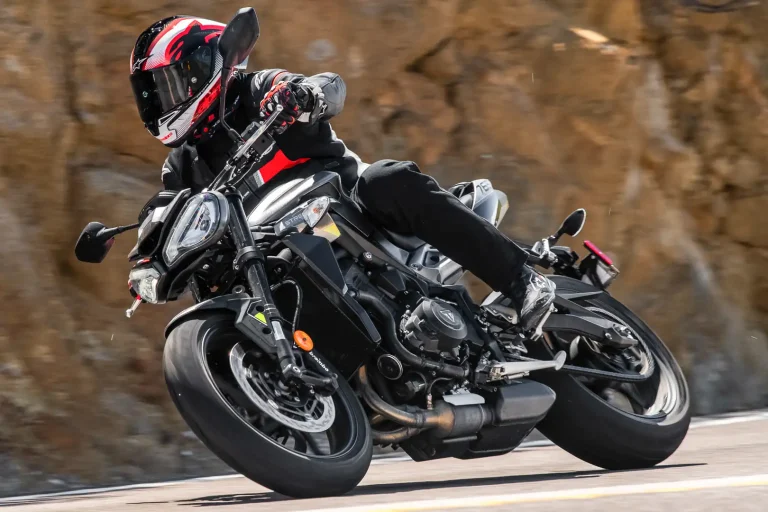
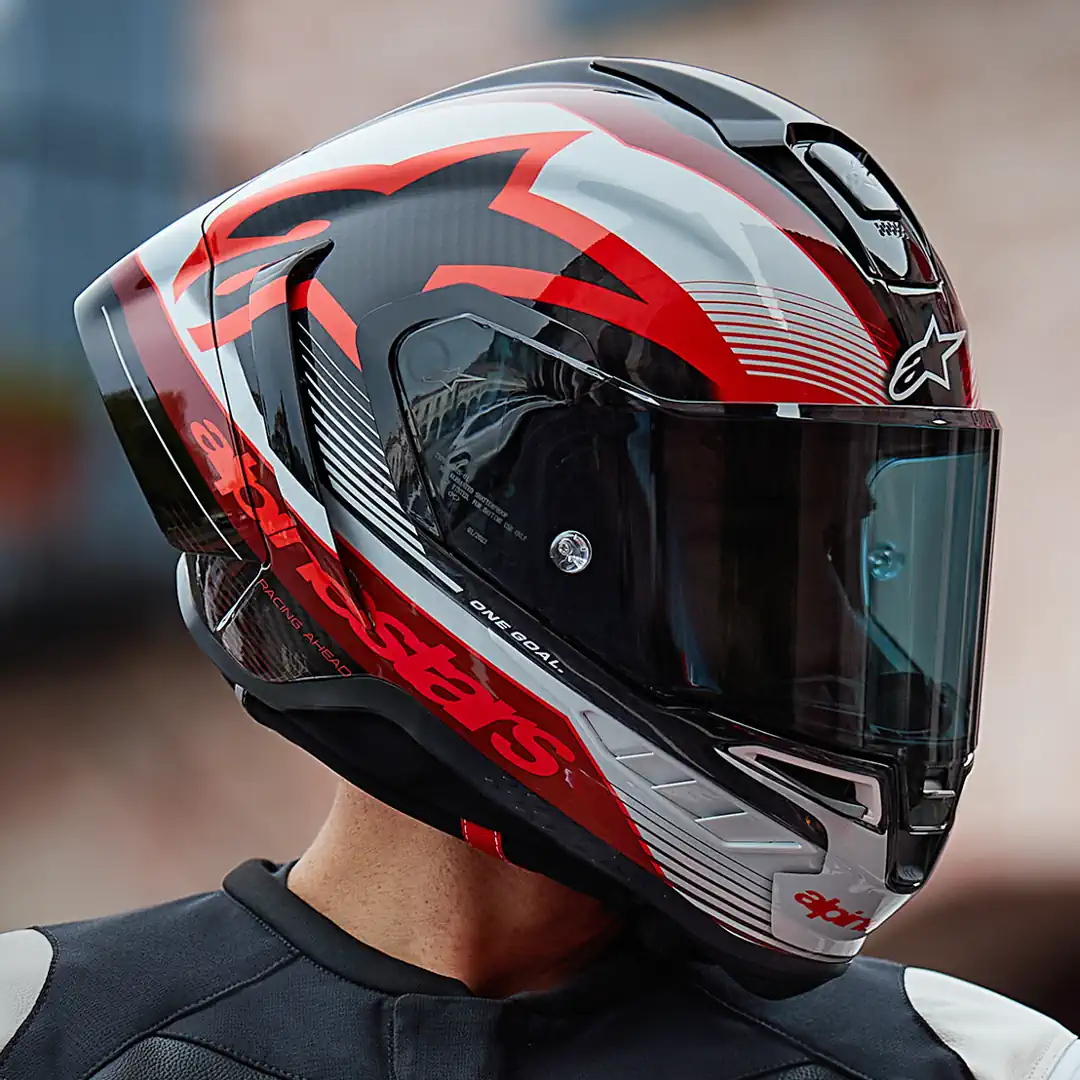
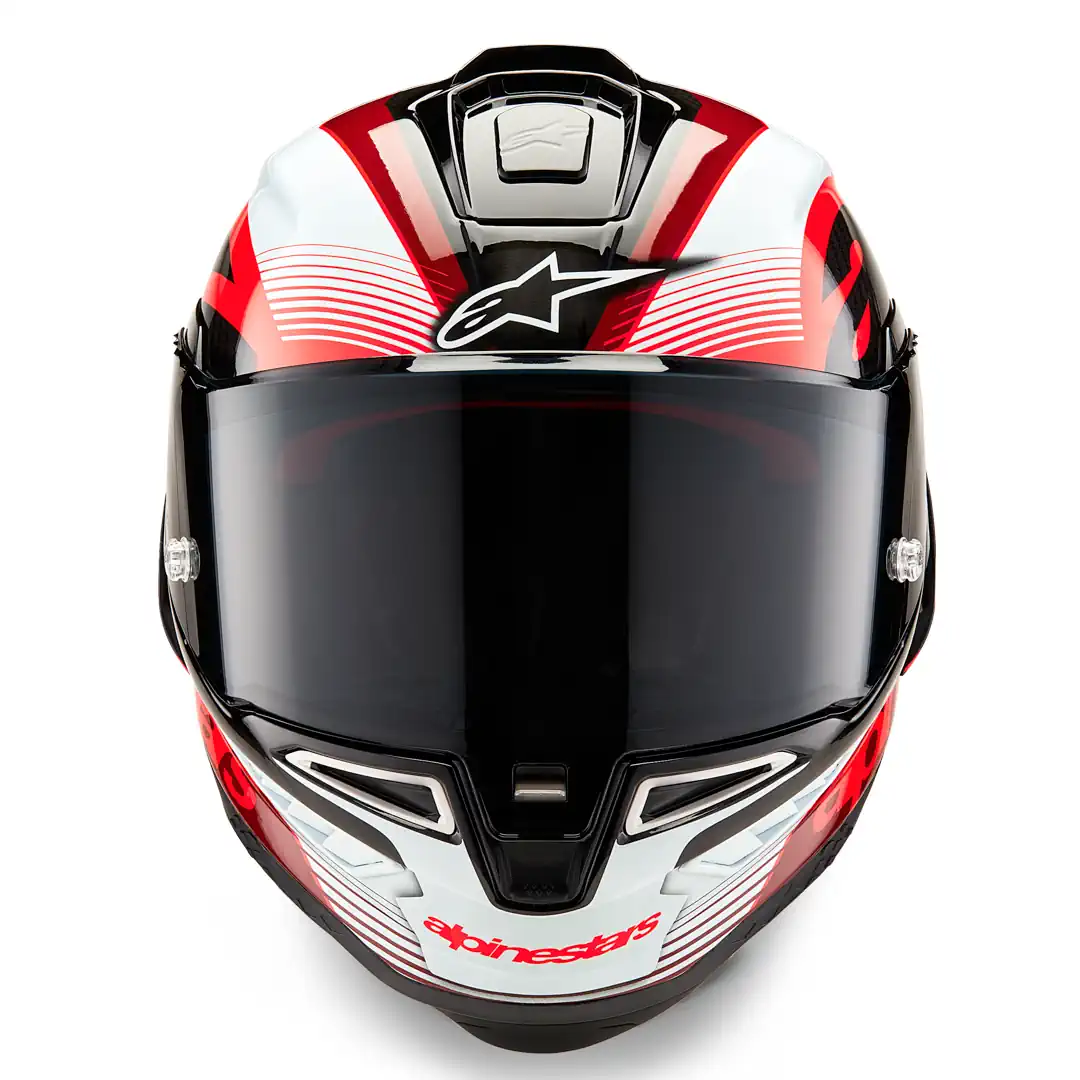
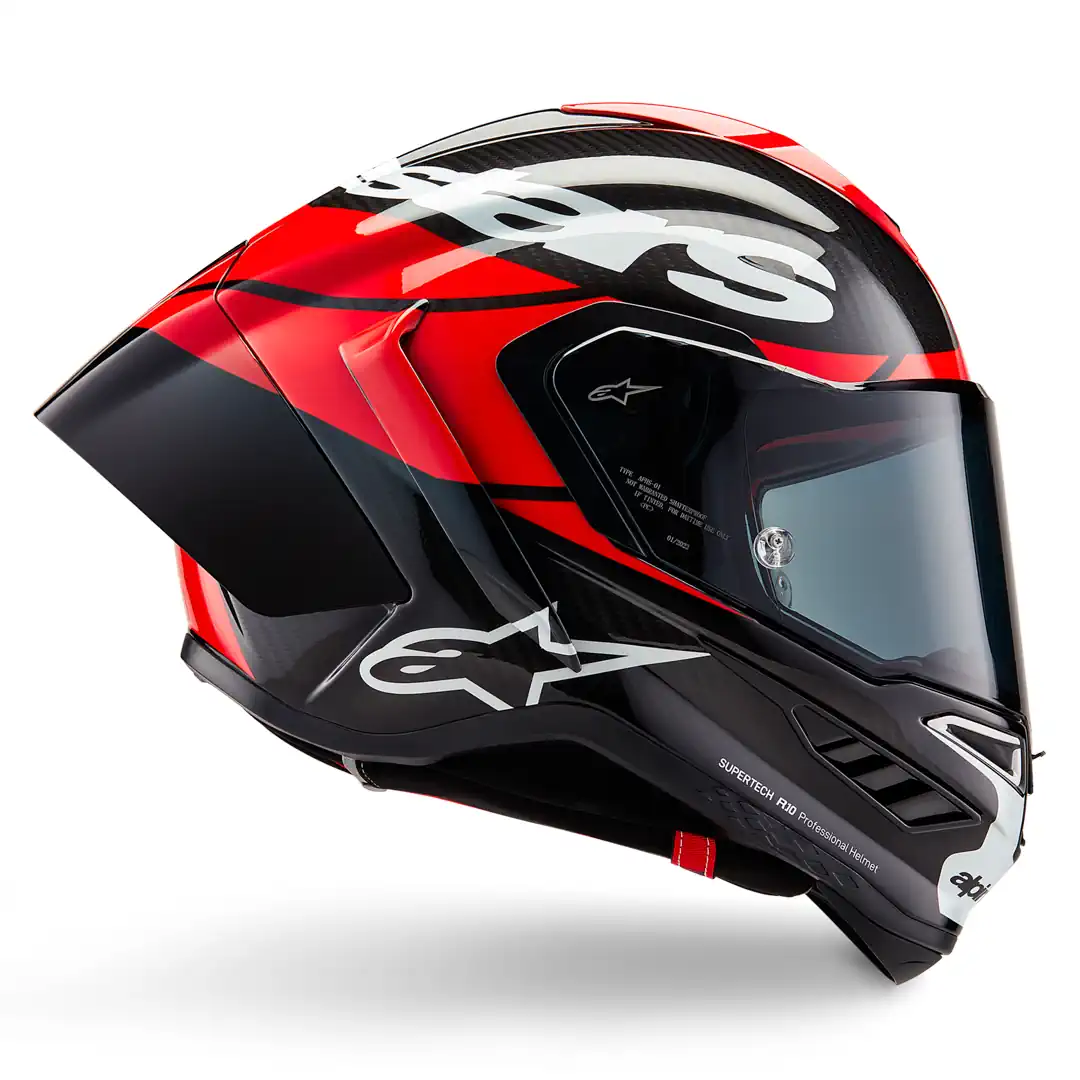
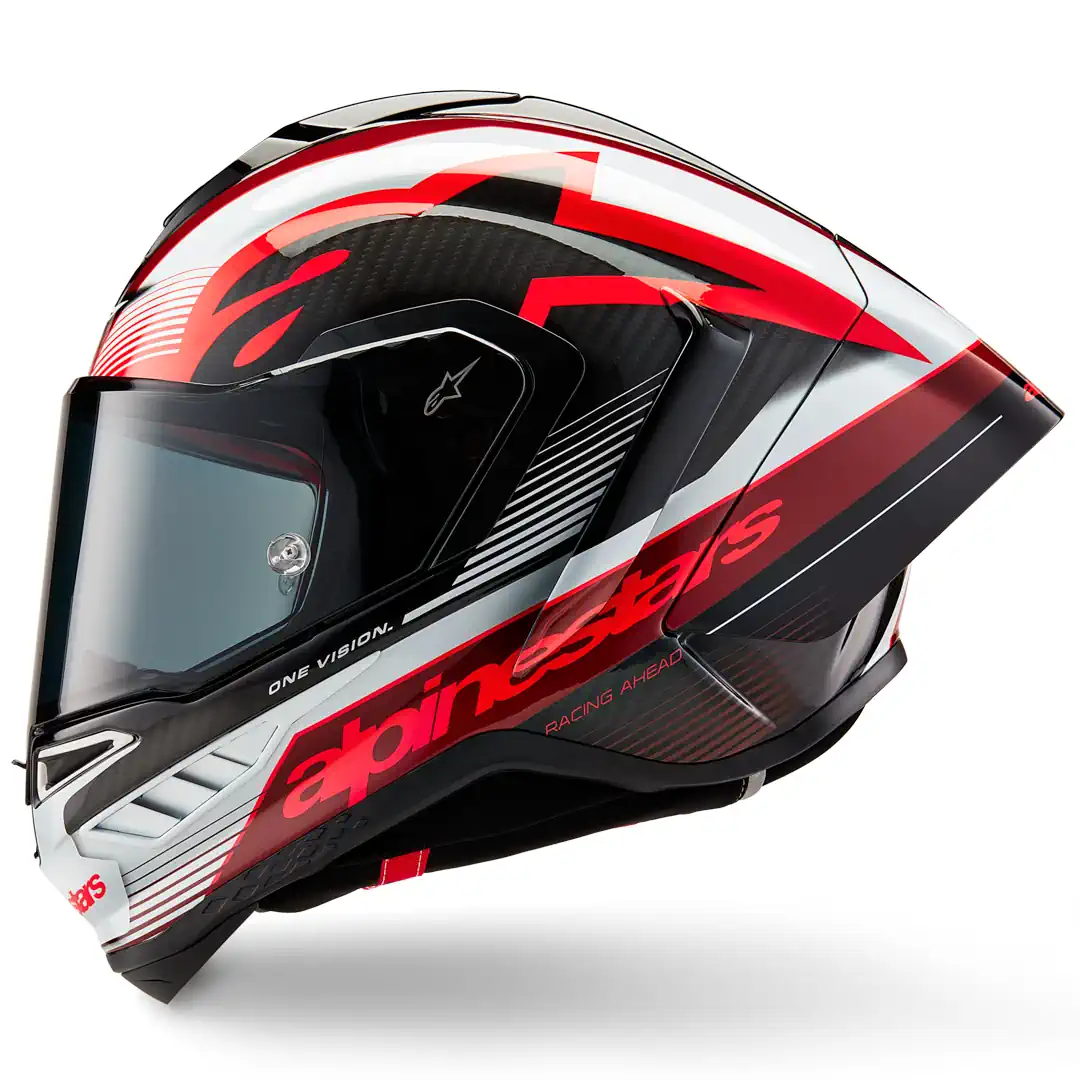
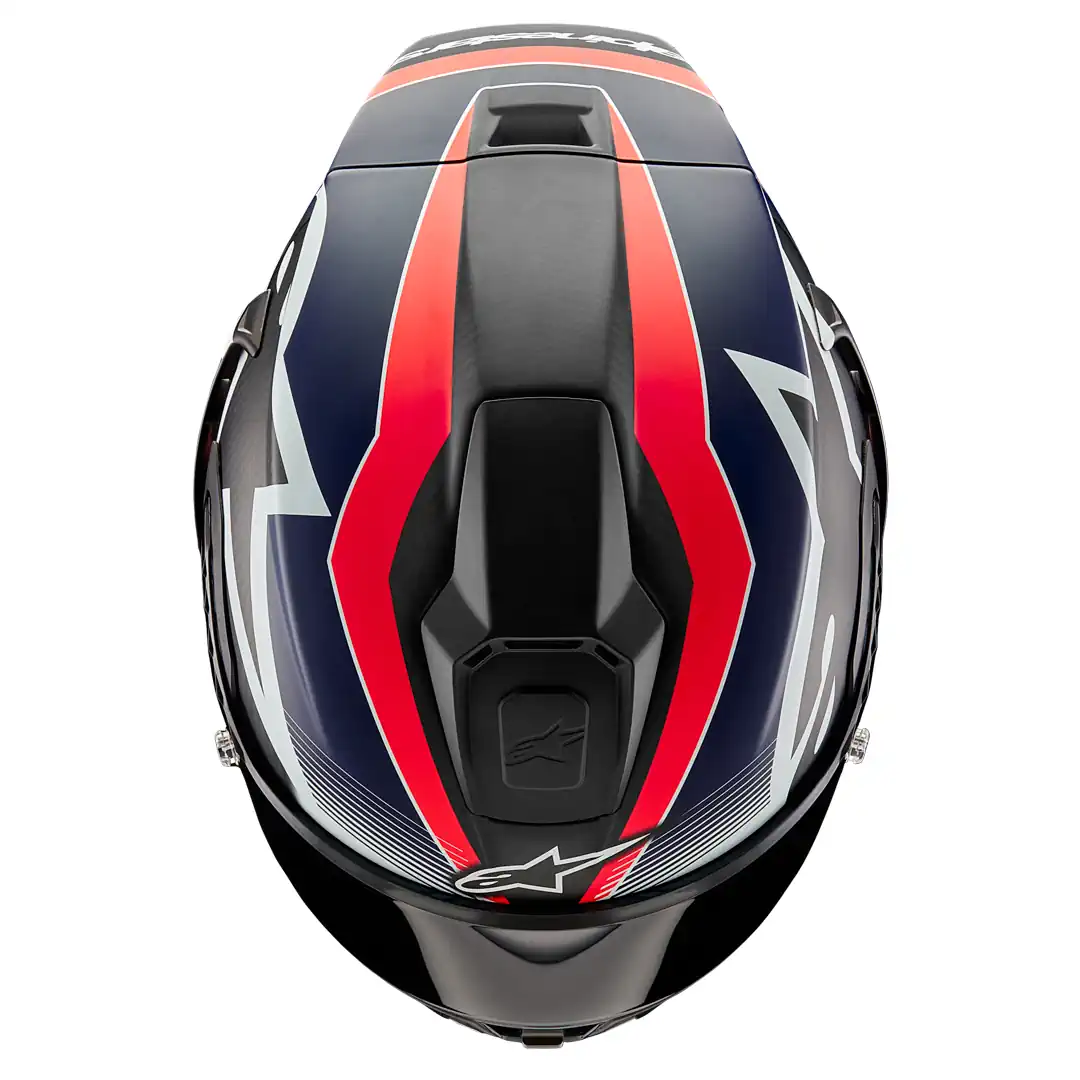
Alpinestars has been outfitting everyday riders and professional racers, nearly from the ground up, for more than six decades. By the time the Italian brand launched its first full-face street helmet in July 2023, it had already entered every other category and segment of rider protection: off-road helmets, suits, jackets, pants, boots, gloves, armor, knee braces, and its highly advanced Tech-Air airbag range. A full-face road helmet was the last bastion of protection that the Asolo-based engineers hadn’t added to its comprehensive portfolio, until the Alpinestars Supertech R10.
Alpinestars entered the helmet market by first heading off-road in 2018 with the Supertech M10, an off-road motocross lid that took roughly five years to develop and quickly cemented its position within the segment.
When the Supertech R10 arrived, it wasn’t a surprising debut, as much as it was the missing link within the brand’s protection ecosystem. That context matters because it explains why the R10 doesn’t appear to be Alpinestars’ first foray into the space and, in many ways, lives up to its premium positioning.
Engineers had already solved the harder problem of building a shell-and-liner system from scratch with the M10. The S-R10 builds directly on that groundwork, including the A-Head fitment system and the breakaway spoiler mount from its MX helmet development, which is applied to the R10’s spoiler. Still, there are no half measures when it comes to safety, especially for flagship products like the R10. It took about 10 years for Alpinestars to develop its full-face lid, using input from MotoGP stars Jorge Martín, Jack Miller, and Andrea Dovizioso to build one of the most aggressively aerodynamic helmets on the market today.
As always, protection starts with the exterior shell. The R10 uses a complex outer shell with two types of carbon fiber (3K high-density and uni-directional), along with aramid fiber and fiberglass, all bonded with high-end epoxy resin, in a three-pronged approach, with each pre-impregnated layer serving a distinct role.
Using pre-impregnated fiber tends to produce more consistent resin distribution than wet layup, resulting in fewer weak points across the shell. The outer carbon layer distributes impact energy across the surface, while the uni-directional layer underneath adds radial rigidity, resisting compression while still allowing some controlled deformation to bleed off force before it reaches the rider’s head.
Alpinestars states the shell exceeds ECE 22.06 requirements by 37 percent for linear impact and 65 percent for rotational impact, which tracks with what the layup suggests on paper. On that note, the R10 holds the rare distinction of being certified to ECE 22.06, DOT, and FIM standards simultaneously.
If you’re curious about the differences between the range-topping Supertech R10 and the more recently released Supertech R7, then read the full review here. However, the R7 uses a more conventional carbon/aramid/fiberglass shell construction to manage costs.
Four distinct shell sizes span the XS – 2XL range. That’s an important detail to note, since more shell sizes equate to a more accurate fit because Astars isn’t stretching one or two shells across several sizes with padding. The eight-piece, multi-density EPS (expanded polystyrene) liner underneath follows the same philosophy, with density varying by zone to tune impact absorption in the most critical areas.
Padded collarbone protection is built into the chin bar. Rather than letting the hard shell extend down toward the collarbone, Alpinestars extends the softer EPP (expanded polypropylene) liner beyond the shell edge in that area and wraps it in a flexible rubber compound. It’s a small detail that’s also shared with its more street-aimed sibling, the S-R7.
All that technology adds up, and our medium S-R10, with all accessories installed, tips the scales at a hair over 3.4 pounds. That’s six ounces lighter than the Shoei X-Fifteen, about the same as the Arai Corsair-X, and slightly heavier than the HJC RPHA 1N and AGV Pista GP RR. Still, weight is a single factor in the grand scheme of stability and wind resistance, which we’ll discuss momentarily.
Internal head shape is an intermediate oval for the North American market, aligning with Arai or Shoei in terms of fit. While we always remind readers that fit is highly personal, our medium-sized R10 proved to offer a pleasantly snug race fit with supportive cheek pads that avoided pressure points in the crown region. The liners use a sweat-wicking, antimicrobial, washable material that is quite plush, though the R10 doesn’t quite reach the luxury bar set by Japanese helmet makers Arai and Shoei. A note for my fellow bespectacled riders: if you wear glasses, Astars makes no accommodation for eyewear in the padding or EPS liners with the S-R10 or S-R7. While my thick-rimmed glasses work, they require finagling to fit comfortably without creating seriously uncomfortable pressure points.
Should you want to fine-tune the fit, the brand’s patented A-Head fitment system allows a great deal of customization. In short, it lets you adjust both the height (how deep the helmet sits on your head) and the forward-or-back tilt angle to optimize your vision depending on your riding position. Think about it: tilting the helmet upward helps reduce neck stress when in a fully tucked position, while angling comparatively lower is more beneficial on a more upright motorcycle. Despite the R10’s focus on racing, the internal padding still accommodates communication devices. That said, the R7 leans into that feature with its seamlessly integrated Alpinestars A-Connect system.
Aerodynamics is arguably the R10’s calling card, and it’s the area where Alpinestars has eked out wins against the competition. The X-Fifteen is a close second, but after wearing the Alpinestars lid while riding high-performance supersports, superbikes, and super-naked machines on track, few helmets deliver the stability and lack of wind resistance offered here.
On the road, where most R10s will be used, there are practical benefits to all that wind tunnel testing. There is less strain on the rider’s neck than helmets such as the Arai Corsair-X produce, and it doesn’t exhibit any uncomfortable lifting. All those aerodynamic winglets pay off even when checking over your shoulder during lane changes, as your head isn’t snapped back uncomfortably. While not the lightest in class, the R10’s slippery aerodynamics have a far more positive impact on the riding experience than those of lighter options.
Graphic helmets ship with two rear spoiler options: a standard and a longer race version (installed), both using the breakaway mount to reduce torque on the rider’s neck, a similar strategy used by Arai on all its helmets. Lateral winglets and turbulators molded into the top edge of the faceshield work in concert with the spoiler to manage airflow, and Alpinestars claims a 4.54 percent drag reduction when running the race spoiler and winglets together versus the base configuration.
Noise isn’t a massive factor in this scribe’s helmet reviews, since earplugs are firmly lodged in my ears when riding. With that disclaimer, my experience is that carbon fiber shells tend to resonate more than fiberglass or other composite alternatives, and that observation stands true with the R10.
Jumping from sound to ventilation isn’t much of a leap, as helmets that allow more circulation tend to be a bit louder. However, that’s a fair trade as airflow is a genuine strength for this race-ready lid. Eleven ports — seven intakes and four exhausts — are distributed across the chin bar, top, and rear of the shell. The central top vent uses a large slider that’s easy to operate even with a gloved hand, funneling plenty of air over the crown.
Two chin vents flank the shield lock mechanism. Each has a small tab for opening and closing, and a third central port below the shield lock routes air across the inside of the visor to fight fogging. The central chin vent is closed with a small rubber bung when not in use, and it’s worth noting that this piece is easy to misplace once removed. So, make the decision before venturing out. There is another quirk here: finding the half-open positions on the chin vents is a challenge while riding.
Meanwhile, rear extractor vents beneath the spoiler efficiently pull hot, humid air out, and the sheer volume of airflow is just as beneficial in traffic as it is at triple-digit speeds on the racetrack.
The faceshield is built solidly, with Alpinestars doing buyers a solid by including a clear and smoke shield. It’s ECE 22.06 homologated, Optical Class 1, and varies in thickness from 1.6mm at the edges to 2.6mm at the center, which helps it resist flex without adding unnecessary weight. A center-locking mechanism for the shield is becoming more common across all brands, as manufacturers have found that it prevents the shield from opening during crashes.
Vision beyond the viewport is massive, with Alpinestars citing an impressive 220 degrees of lateral and 57 degrees of vertical vision. Cutouts in the chin bar further enhance peripheral vision, especially when leaning. As always, each brand has its own way of using its tool-less mounting system, which works well once you understand it. Instead of explaining how to use any of the changeable functions, just check out these helpful guides.
Taken as a whole, the Alpinestars Supertech R10 is a carefully engineered sport lid that offers significant benefits for real-world riders on the road. Chiefly, Astars zeroed in on aerodynamics, which is especially apparent when the longer race spoiler is installed, and we don’t need to be Jorge Martín to enjoy its benefits.
At $1150 for solid colors, $1380 for graphic versions, and $1550 for Limited Edition graphics, the Supertech R10 is solidly in the premium bracket of helmets. It demands, just like its competition, a serious investment from riders who want to enjoy a precision fit, positive ventilation, and some of the best aerodynamic properties available in a helmet today.
Hello and welcome again to the Motos and Friends Podcast. This episode is brought to you by Leod Escapes.
* * * * *
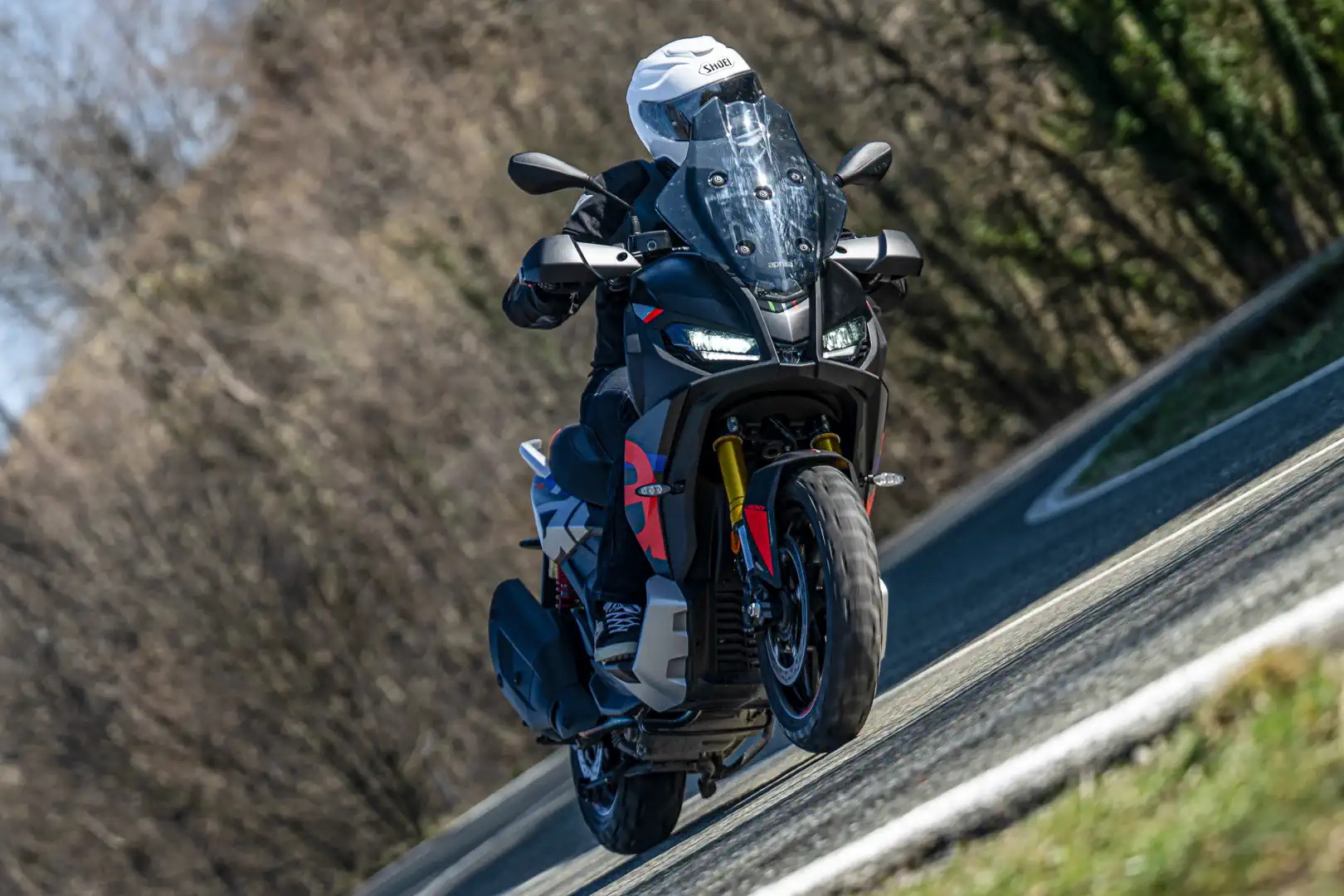
Aprilia is bringing a scooter to North America, and it’s one designed to appeal to adventure motorcyclists. The SR GT 400 is a mid-size scooter built around a steel motorcycle-style frame, a 399cc single, and off-road-ready hardware. It reaches US dealers as soon as this month. Don Williams and Kelly Callan spent some time riding the Aprilia and were surprised by what they discovered. Is this a real motorcycle or just a good-looking urban scooter?
* * * * *
Cat McLeod is founder and owner of Leod Escapes, the ultimate tour company for sport-minded motorcycle riders. Cat talks to us this segment about some of his amazing European experiences and tours that include of course, riding some amazing MotoGP tracks on new BMW S1000RRs. If you like what you hear, now is the time to book your trip of a lifetime, so visit LeodEscapes.com to find out more.
* * * * *
Our guest this episode is Terry Vance, the multiple Motorcycle and Motorsports Hall-of-Famer. Terry is of course the former professional motorcycle drag racer, team owner, and co-founder of the high-performance parts company Vance & Hines. Teejay Adams chats with Terry about his incredible career that includes being the first rider to hit 200 mph in the standing quarter-mile.
Having won this year’s MotoAmerica Mission King of the Baggers championship with Hayden Gillim riding the Vance & Hines factory Indian Challenger, and with Harley-Davidson’s recent withdrawal, Terry gives us his thoughts on where the series might go from here.
* * * * *
Here’s quick reminder to check out our monthly digital magazine. It’s filled with everything you want to read on motorcycling, including some things you’ve probably not seen elsewhere. It’s absolutely free and you will find it on the Apple App Store and of course on Google Play as well.
Don’t forget to leave us your comments on our social media—we’re on all the usual platforms at Ultimate Motorcycling. We love hearing your feedback… so good or bad, please let us know what you think. If there’s something you’d like us to cover, we’d love to hear those ideas too!
We use cookies and browser activity on this website
Functional
Always active
The technical storage or access is strictly necessary for the legitimate purpose of enabling the use of a specific service explicitly requested by the subscriber or user, or for the sole purpose of carrying out the transmission of a communication over an electronic communications network.
Preferences
The technical storage or access is necessary for the legitimate purpose of storing preferences that are not requested by the subscriber or user.
Statistics
The technical storage or access that is used exclusively for statistical purposes.The technical storage or access that is used exclusively for anonymous statistical purposes. Without a subpoena, voluntary compliance on the part of your Internet Service Provider, or additional records from a third party, information stored or retrieved for this purpose alone cannot usually be used to identify you.
Marketing
The technical storage or access is required to create user profiles to send advertising, or to track the user on a website or across several websites for similar marketing purposes.
Advertising helps us keep our content available for free, so adjusting your ad blocking settings will help us.
We appreciate your support!
i
How to Allow Ads on This Site
Depending on your setup, ads may be blocked by a browser extension, VPN, antivirus software, or other application. Here are some common ways to allow ads:
Browser Extensions (e.g., Adblock, uBlock, etc.)
Click the extension icon in your browser toolbar.
Look for an option like "Don't run on pages on this site" or "Pause on this site".
Save the change and refresh the page.
VPNs with Ad Blocking (e.g., NordVPN, Proton VPN, etc.)
Open your VPN app.
Go to settings or features.
Disable any ad blocking or tracking protection features.
Refresh the page.
Antivirus Software or Other Privacy Tools
Check for web protection, ad filtering, or browser privacy settings.
Click the power button to disable it for this site.
Refresh the page.
Not sure what's blocking ads? Look for tools with privacy or filtering features, or check your browser extensions. We only use respectful, non-intrusive advertising.