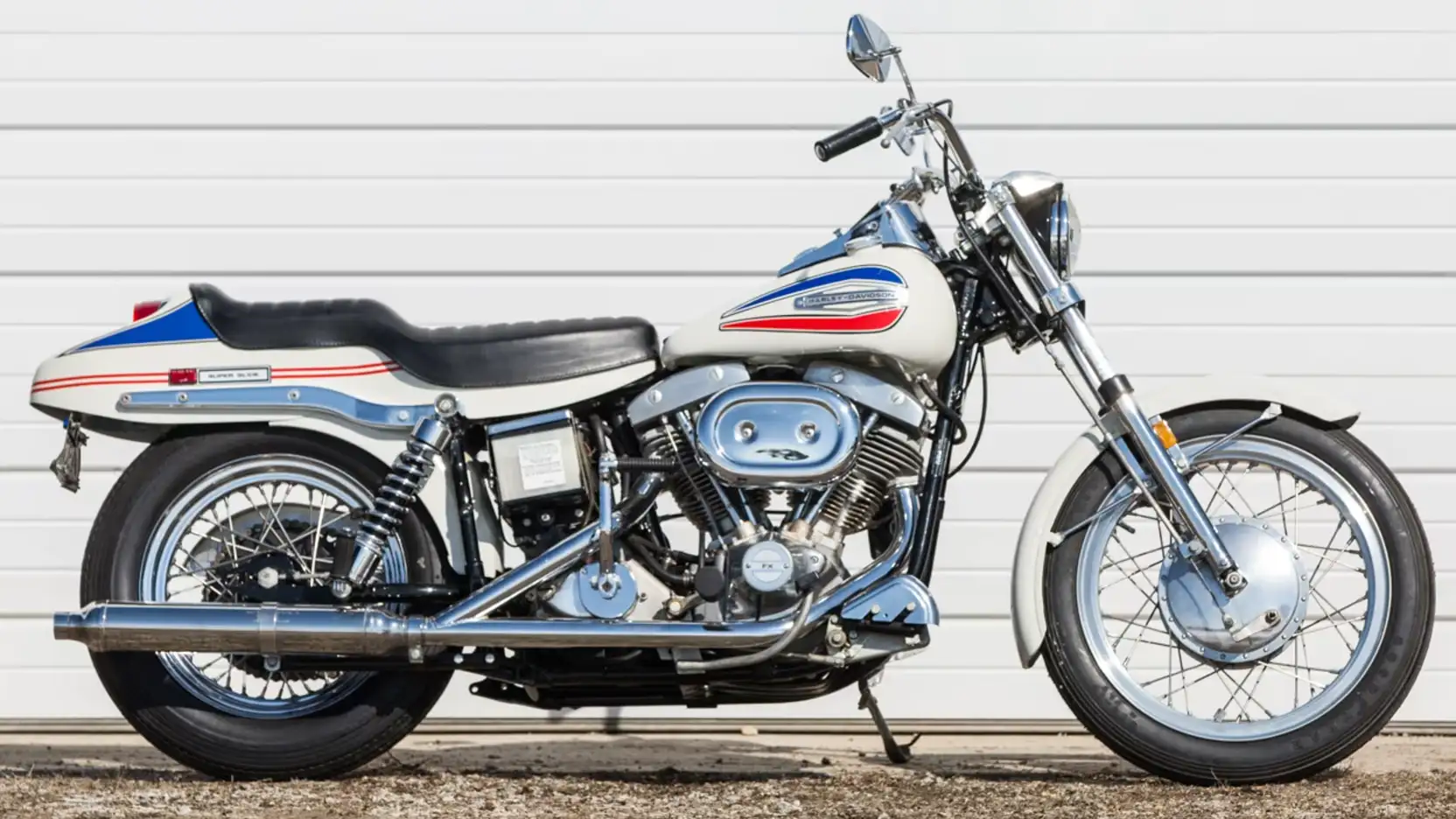
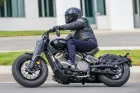
Few Harley-Davidsons ever made a first impression like the 1971 Super Glide. Willie G. Davidson created it by mating the big-twin frame and Shovelhead engine to the lighter Sportster front end. A production bike that is widely recognized as the first factory custom, the Super Glide extended H-D’s “Glide” lineage beyond the Hydra-Glide and Electra Glide. The 1971 original sported an enduringly controversial fiberglass “boattail” section. Early buyers rejected the appendage, and it was quickly amputated. The Super Glide carried on through Evolution and Twin Cam eras, finding a home in the Dyna family before it was unceremoniously dropped in 2014.
This 1971 Harley-Davidson Super Glide sold for $24,000 at a Mecum auction in 2015.
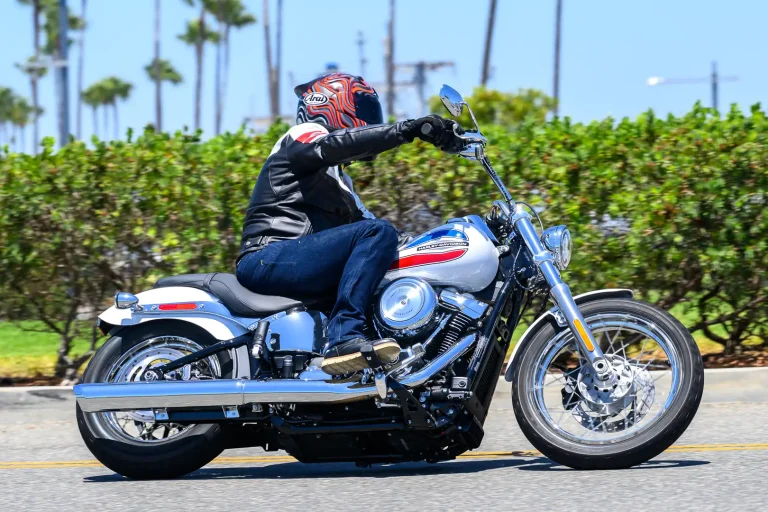
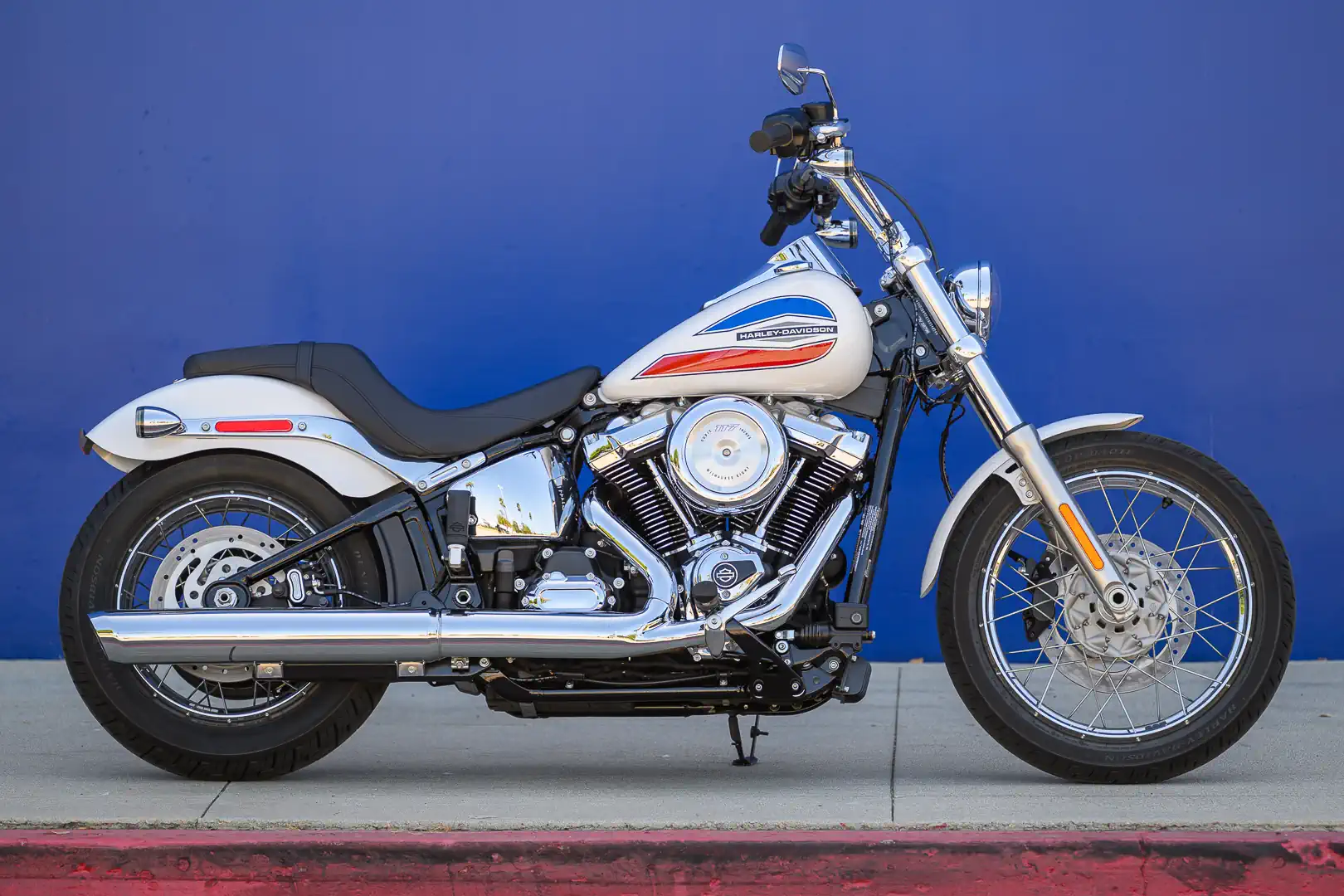
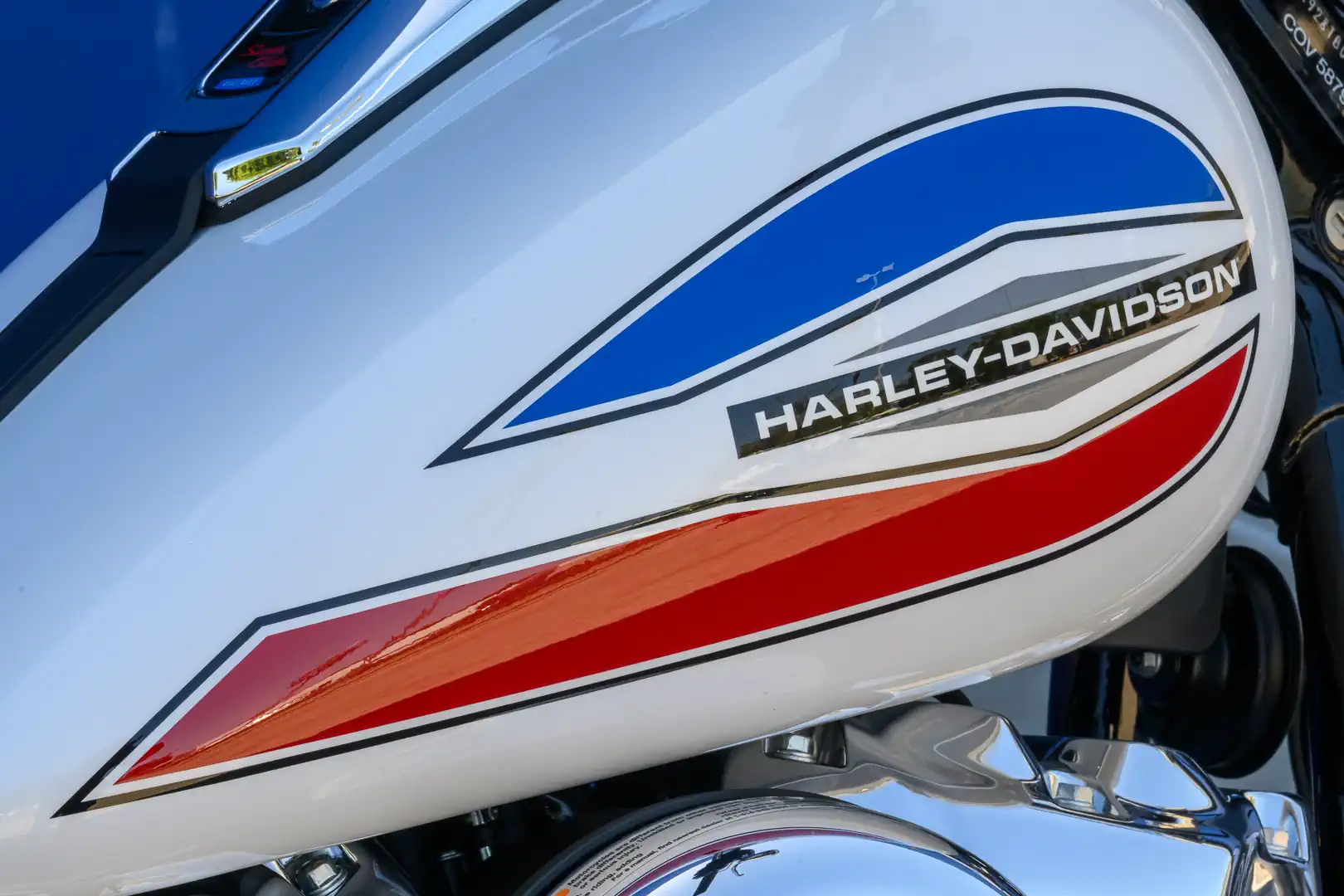
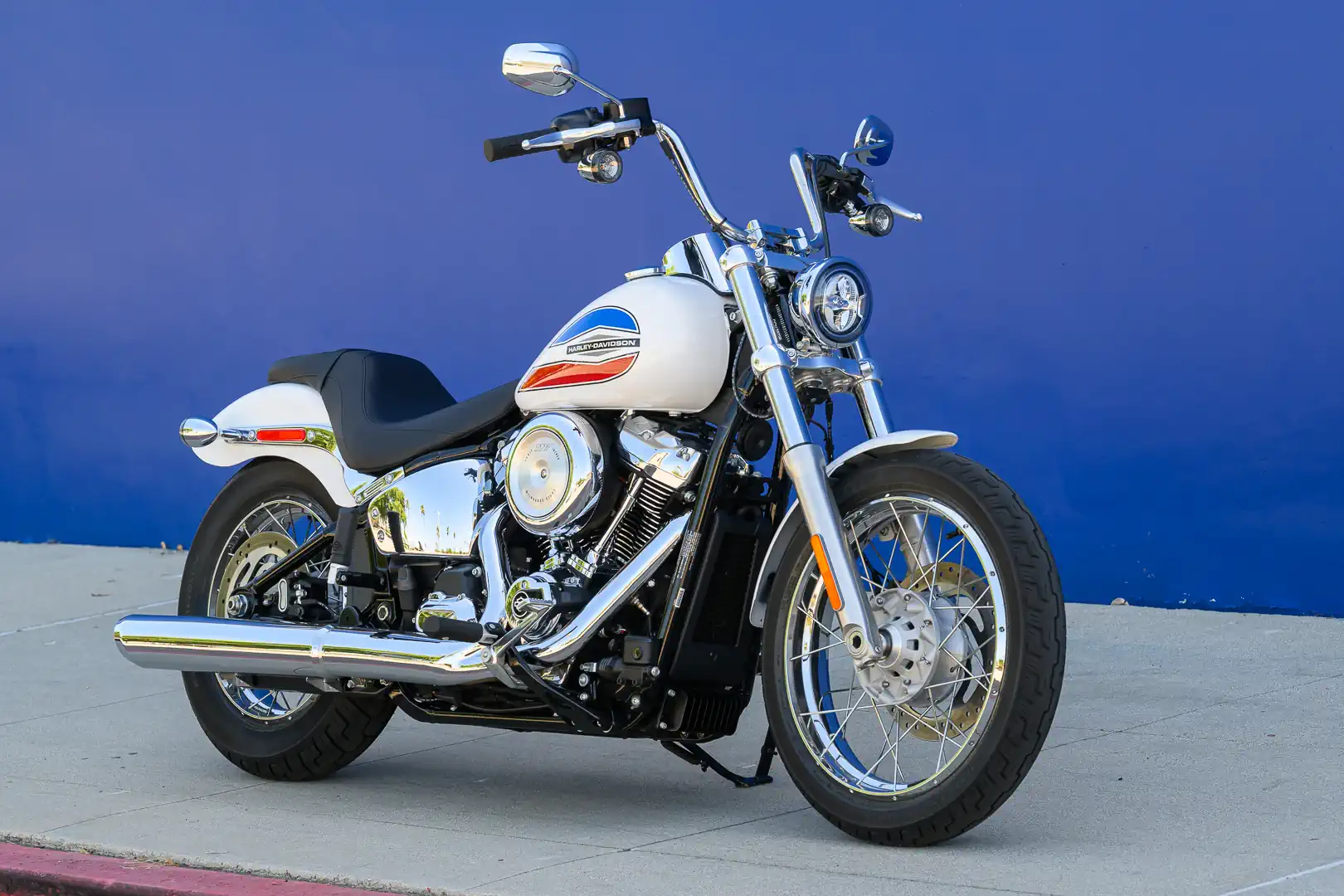
After a dozen years in limbo, the Super Glide is resurrected as a member of the Softail Cruiser family. The 2026 Harley-Davidson Super Glide arrives as a limited edition of 2500 units to celebrate the 250th anniversary of the United States of America. While the new Super Glide proudly wears the iconic red, white, and blue of the 1971 original, The Motor Company’s stylists considered reviving the boattail a bridge too far.
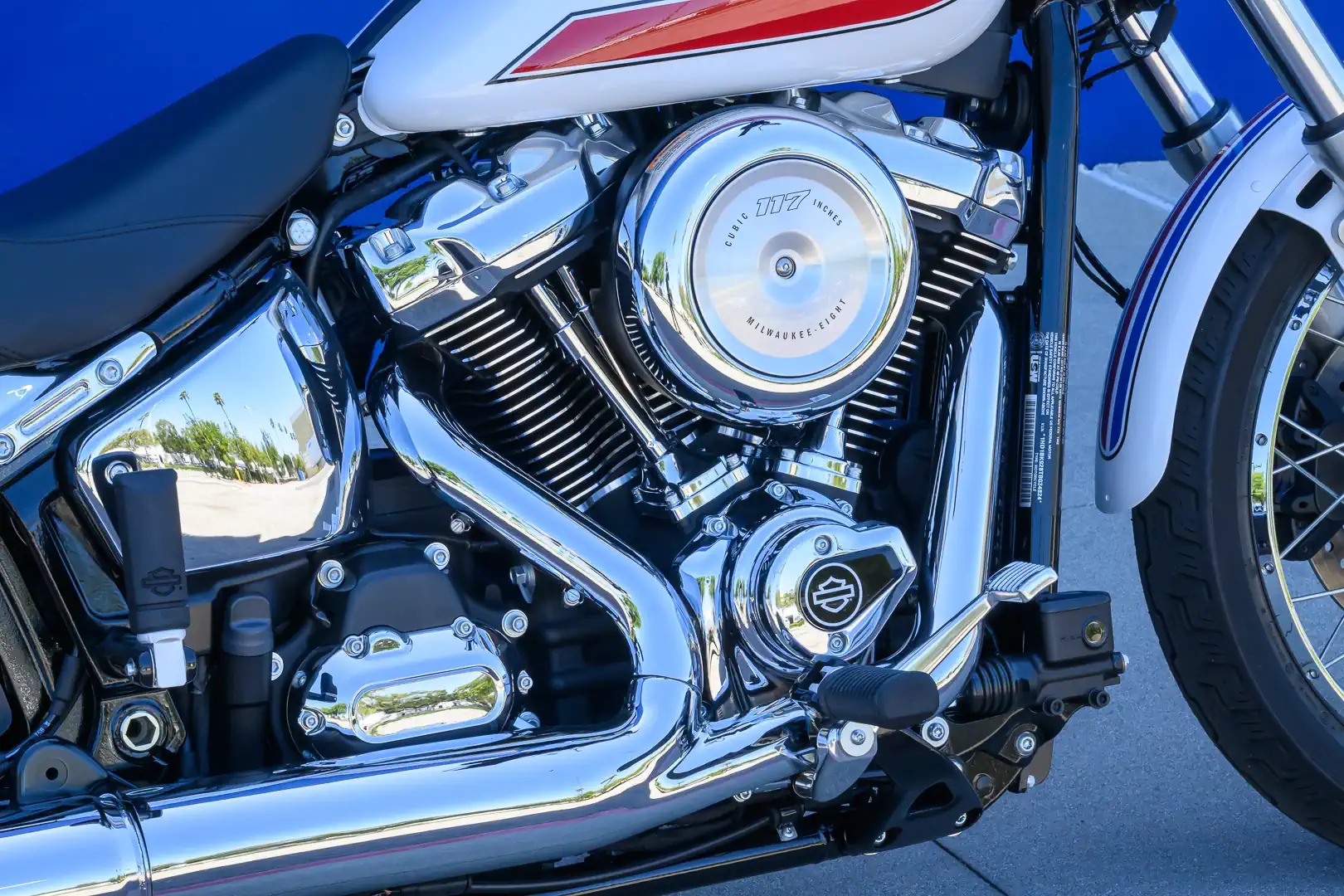
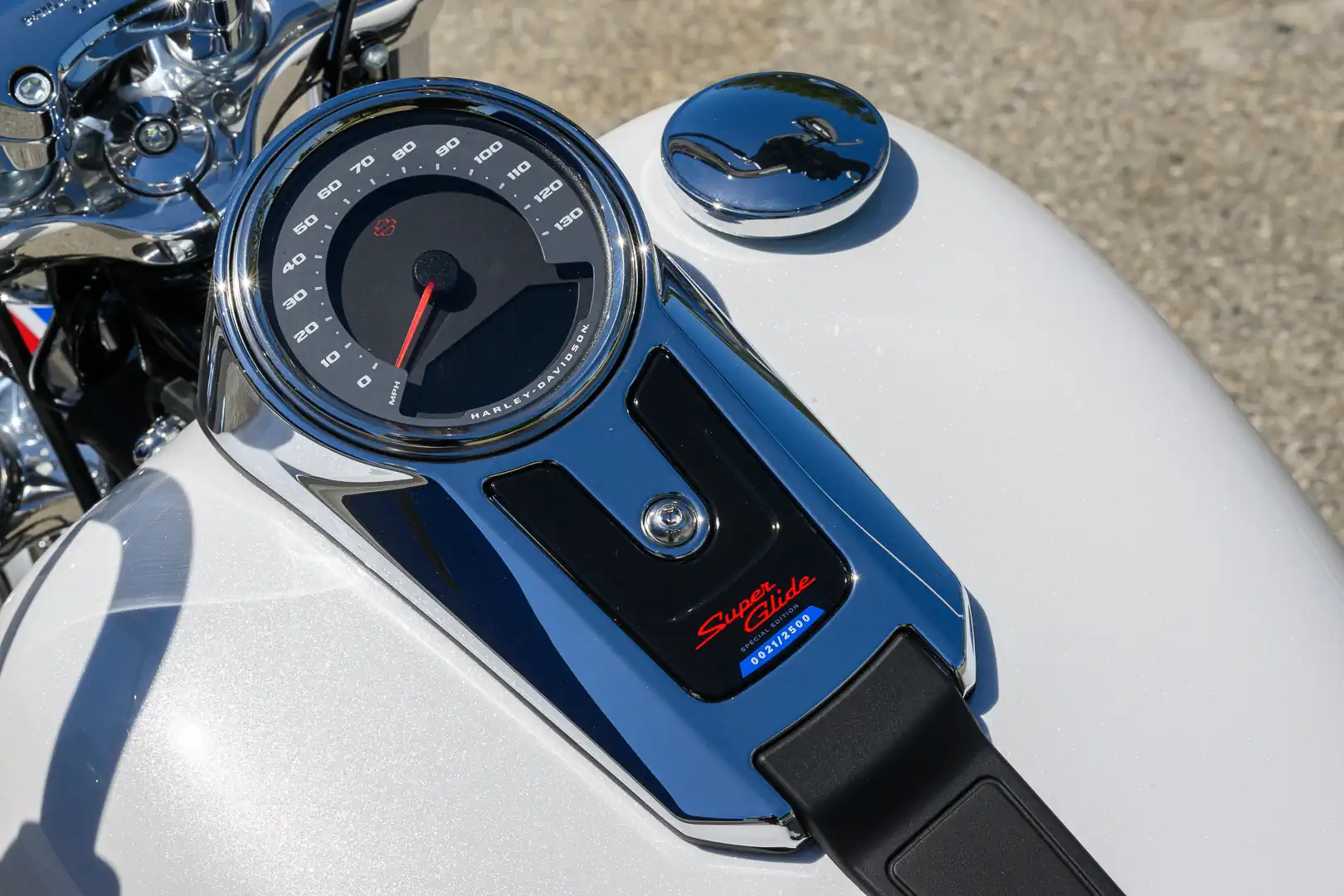
At its core, the 2026 Harley-Davidson Super Glide is an upgraded Street Bob. Mechanically, they’re the same bike, with an identical Milwaukee-Eight 117 Classic motor, Softail chassis, geometry, rim sizes, and Dunlop tires. For the one-grand upsell, you get tubeless wire-spoke wheels, a one-inch-larger tank-mounted dash, a tank that holds an additional 1.5 gallons, a substantial amount of chrome replacing black paint, the emotional appeal of the Class of ’71 paint, and some exclusivity. Right out of the box, the Super Glide is a rip-roaring deal at $15,999, the same price as the Street Bob with Chrome Two-Up trim and the standard Dark Billiard Gray paint.
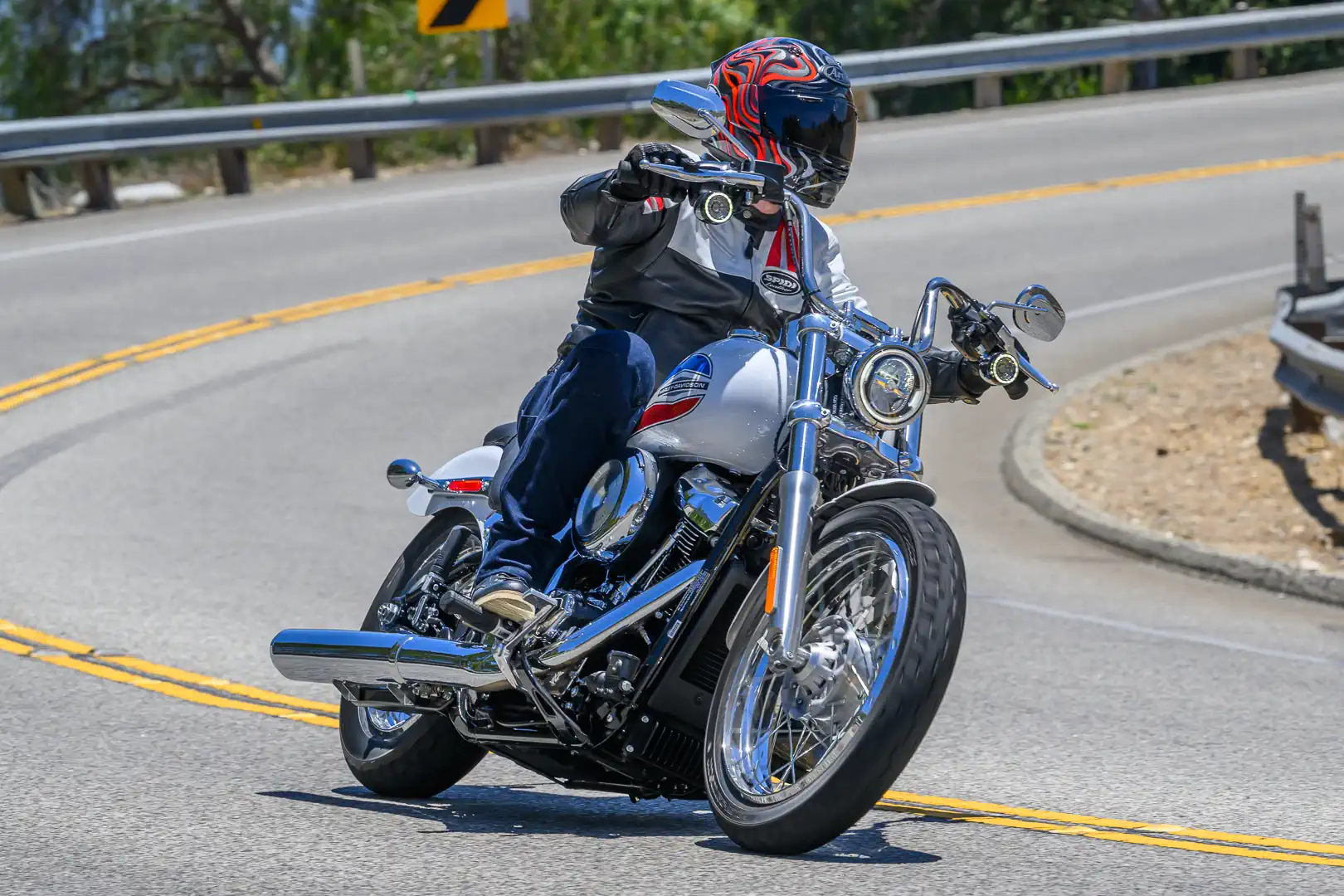
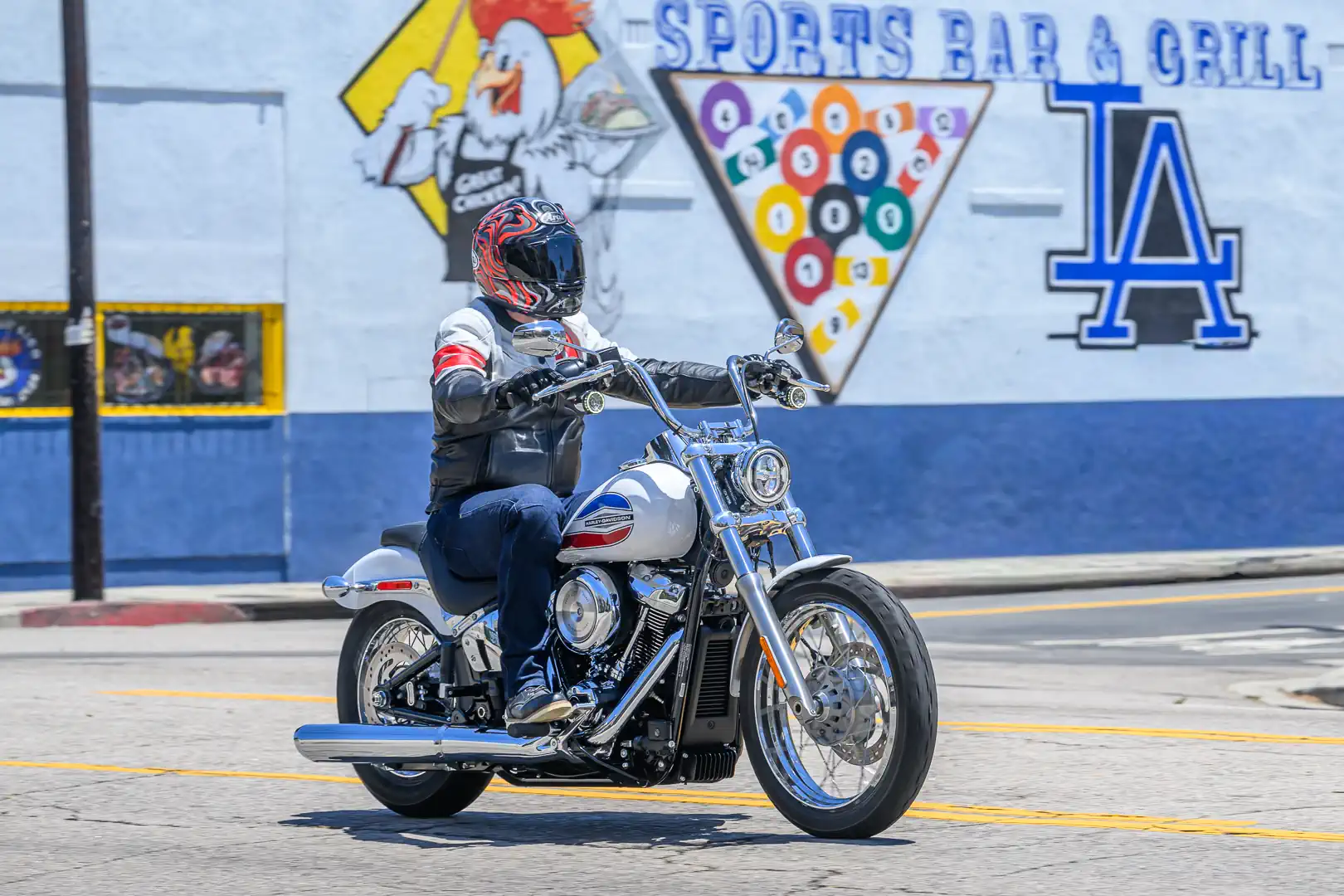
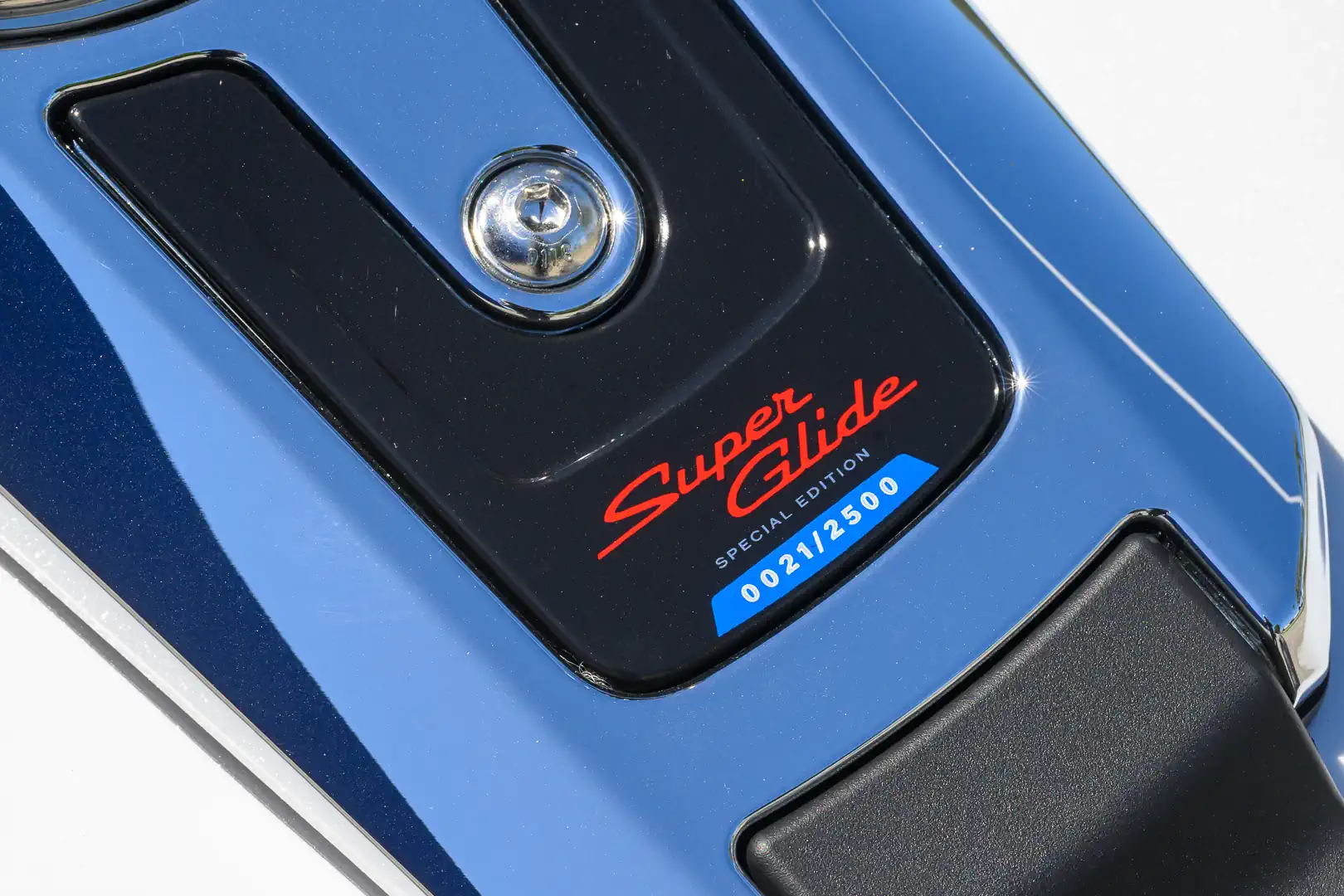
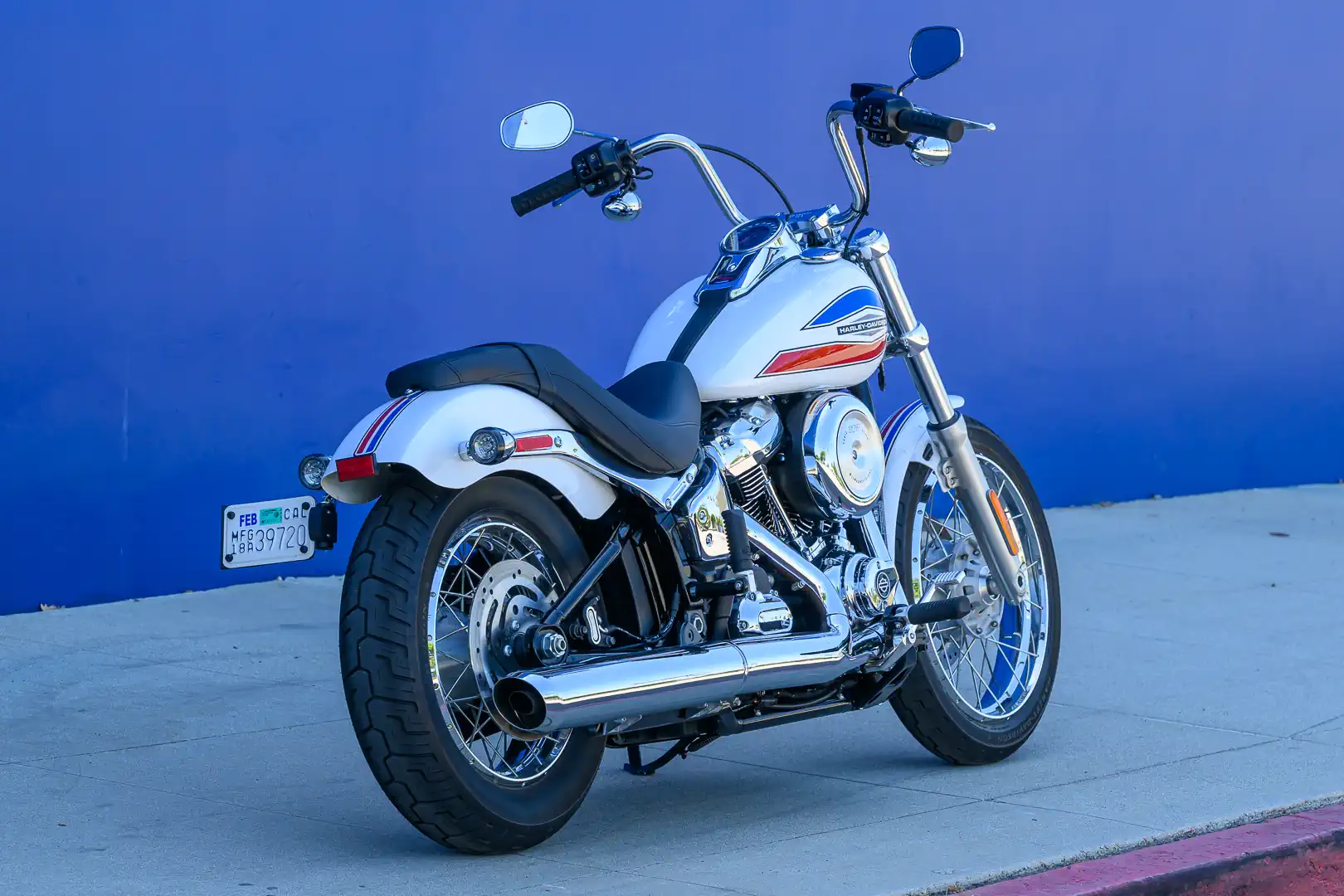
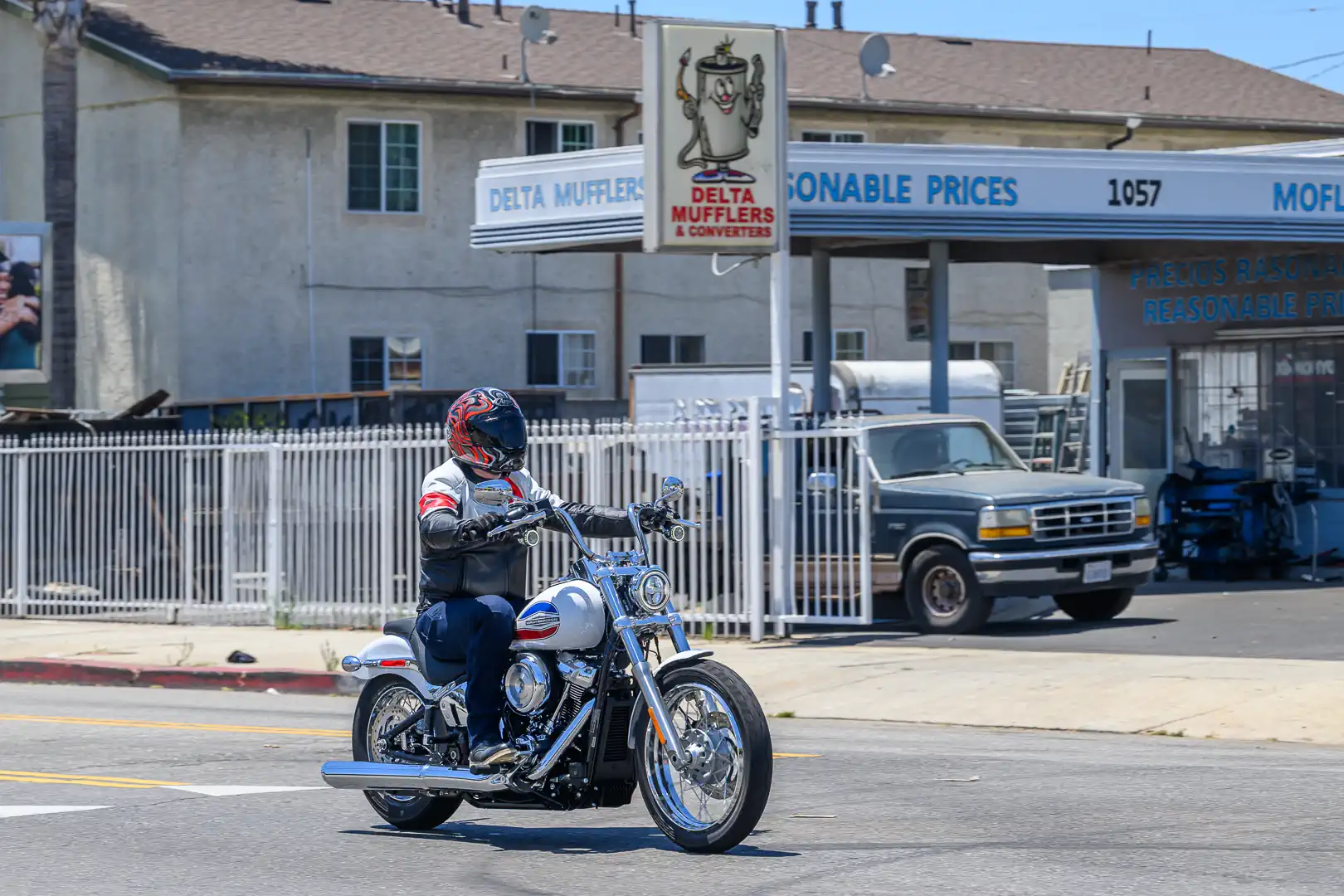
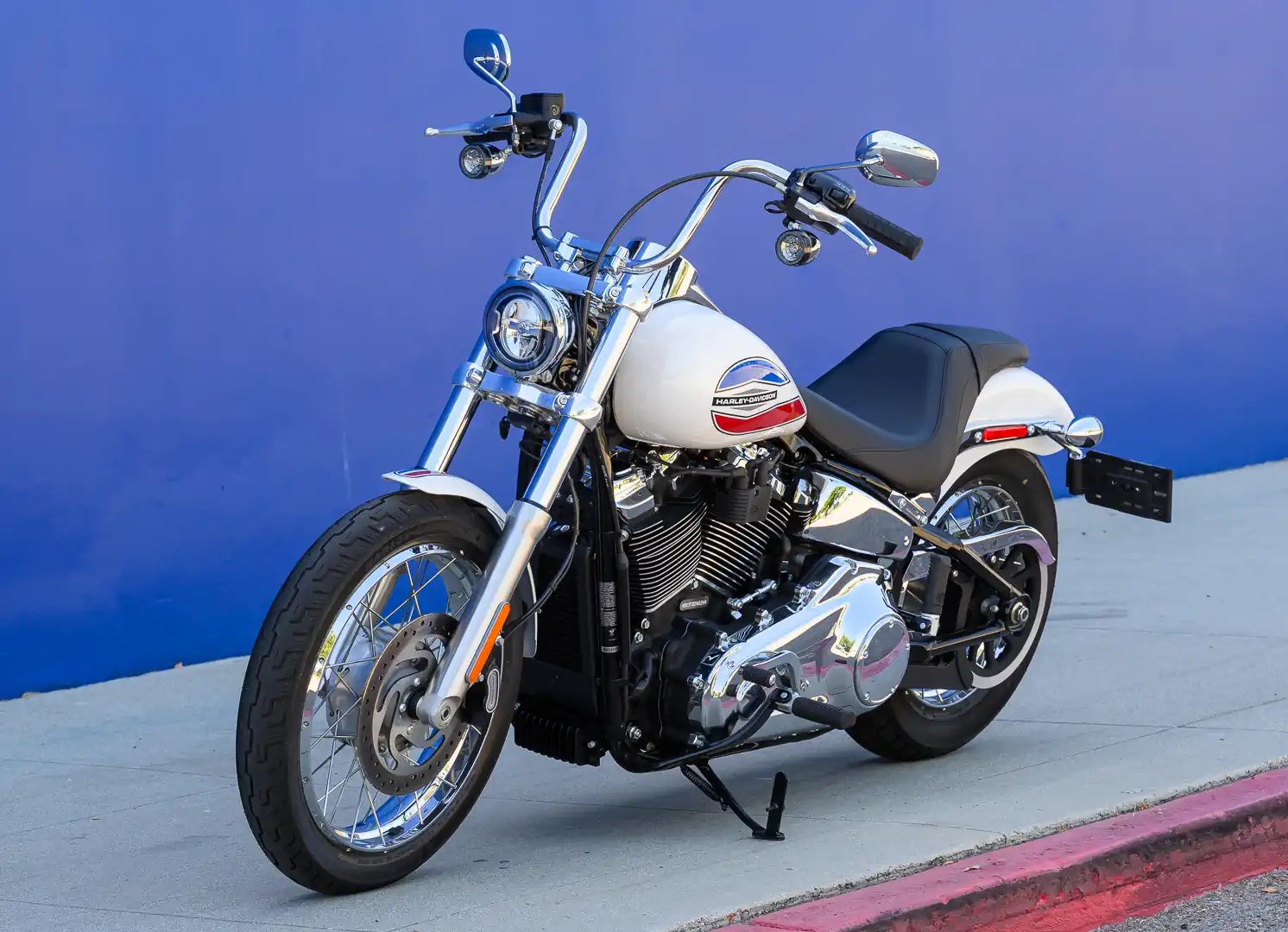
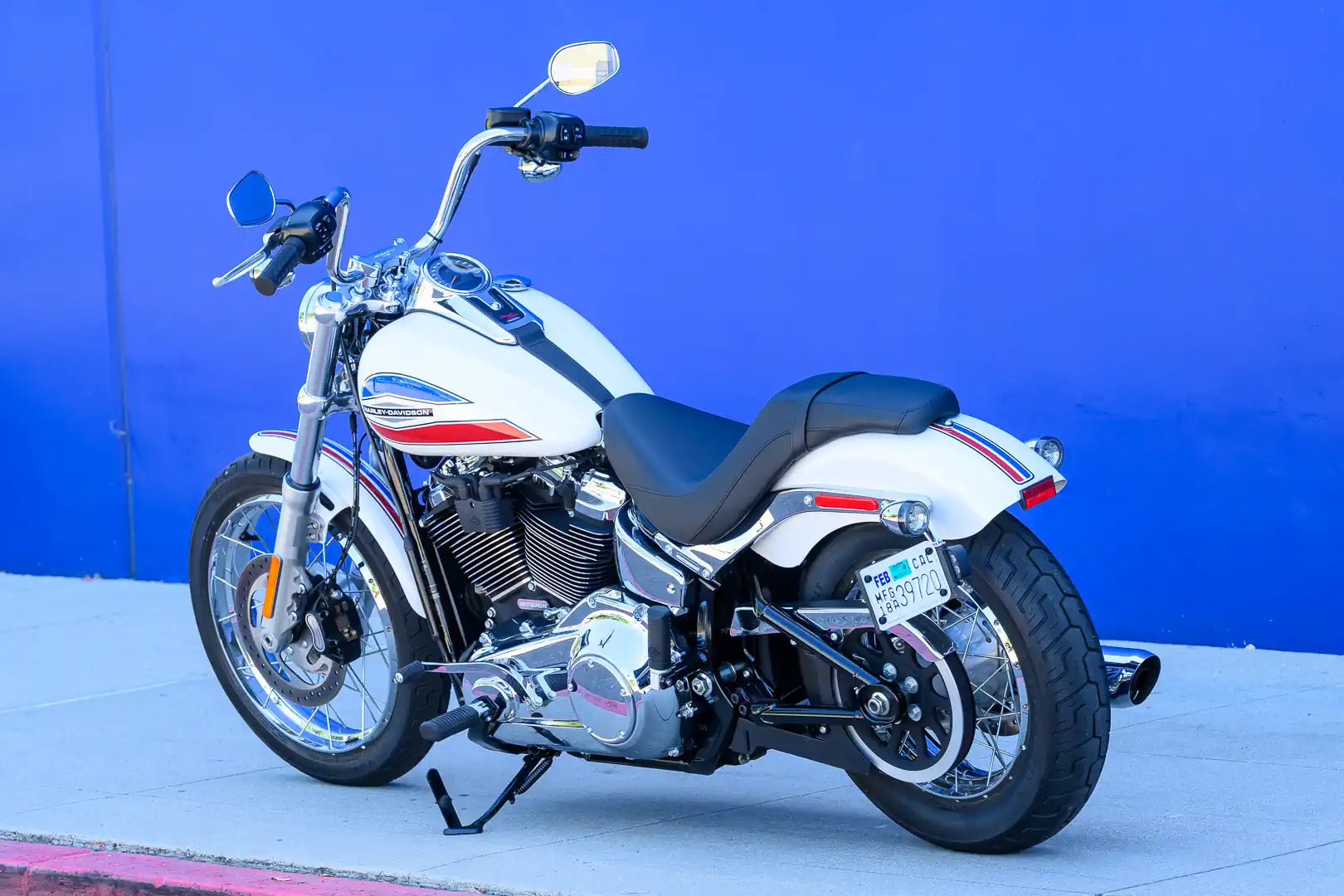
The 2026 Harley-Davidson Super Glide wears its heritage proudly. The lone finish is White Onyx Pearl enhanced by red and blue striping lifted from the 1971 original. Chrome does the rest of the talking. The mini-ape handlebar, engine covers, transmission cover, exhaust, wheel rims, air cleaner, side covers, fender struts, headlight, and turn signals all gleam. Each fuel tank console carries a serial number, one of 2500 built. Sunglasses aren’t included, but the Super Glide’s so bright, you gotta wear shades.
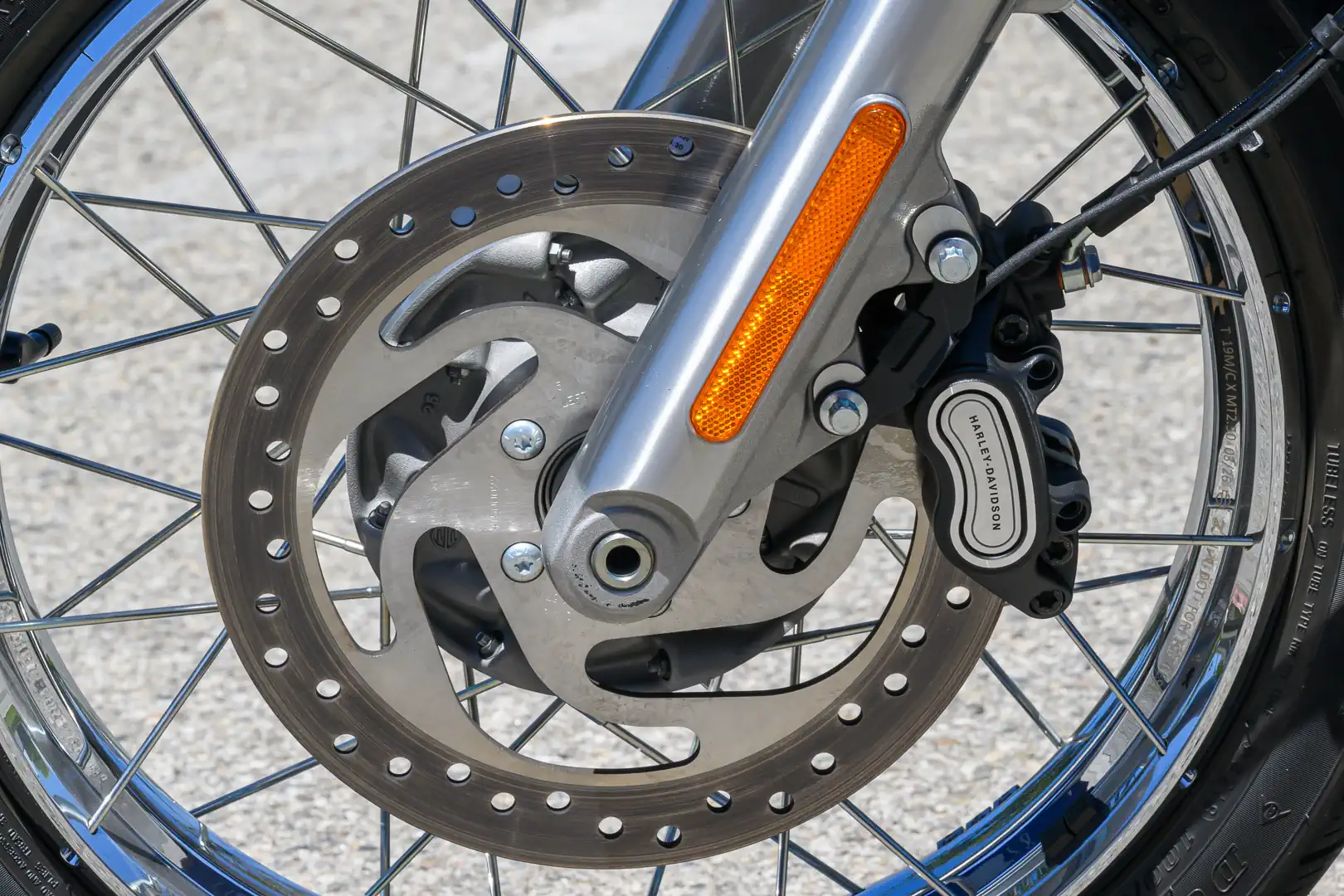
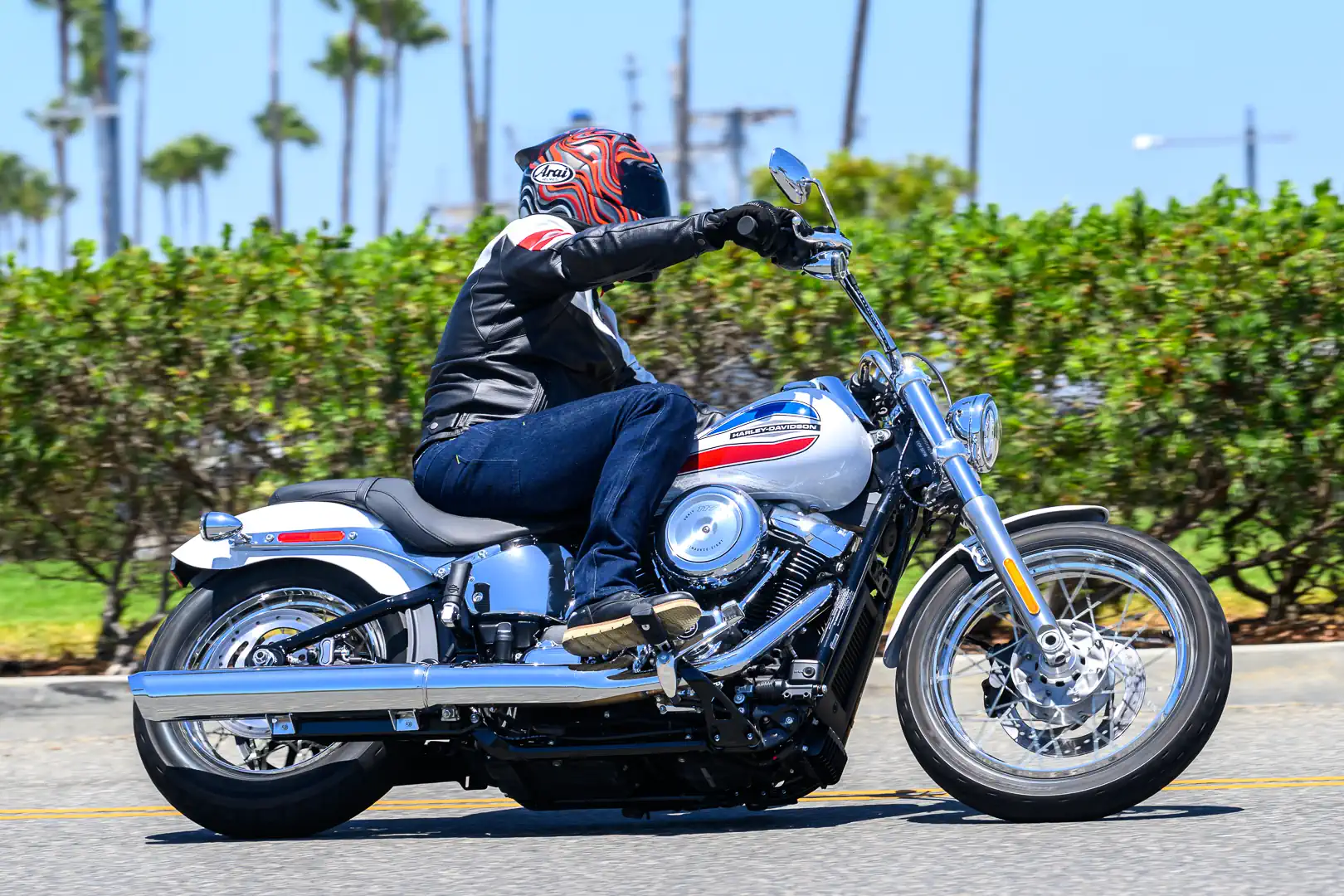
After the paint, the chrome mini-ape handlebar sets the attitude with a spacious fists-in-the-wind posture. The tubeless wheels pair bright aluminum hubs and chrome rims with wire spokes, and they come standard rather than as a pricey upgrade. The round chrome air cleaner cover doesn’t quite match the oval unit from 1971, and it’s a knee bumper. Shorter-inseam riders will be happier with the mid-control-dictated rider triangle than the lanky crowd. The mini-ape handlebar is adjustable, so you can dial in the reach to your taste.
The Milwaukee-Eight 117 in Classic tune serves up 120 lb-ft of torque at just 2500 rpm. The torque hits early and is impressively satisfying. The 98-horsepower peak comes at 4600 rpm, but ignore that number. Acceleration and feel are what the 117 Classic delivers, not an impressive dyno chart. On the freeway, the 117 pulls strongly to 100 mph, if you can take the windblast, so the horsepower output is more than adequate.
The 2026 Harley-Davidson Super Glide employs three ride modes: Sport, Road, and Rain. Each one remaps the power while quietly reshuffling engine braking, cornering ABS, and cornering traction control. All of it is standard, the kind of electronic safety net the riders of the original never even dreamed about.
Sport mode is the setting for an aggressively good time. In rural California, or anywhere the CHP is looking the other way, it begs to be uncorked. The throttle snaps the M8 117 awake, and the revs pile on fast. Downtown, it asks for some discipline, because there’s enough instant torque here to write your own ticket before you finish crossing an intersection. Reaching into that 120 lb-ft and cutting it loose is flat-out addictive, and one roll of the wrist through the canyons or away from a green light paints a grin on your face.
Road mode can help keep your license pristine. The padded-down throttle response means the revs build more slowly. However, we’re still talking about 120 lb-ft at 2500 rpm, so it’s always there for serious acceleration. The engine braking, ABS, and traction control changes from Sport to Road aren’t something you’re going to casually notice. More conservative nannying is fine when it’s not intrusive.
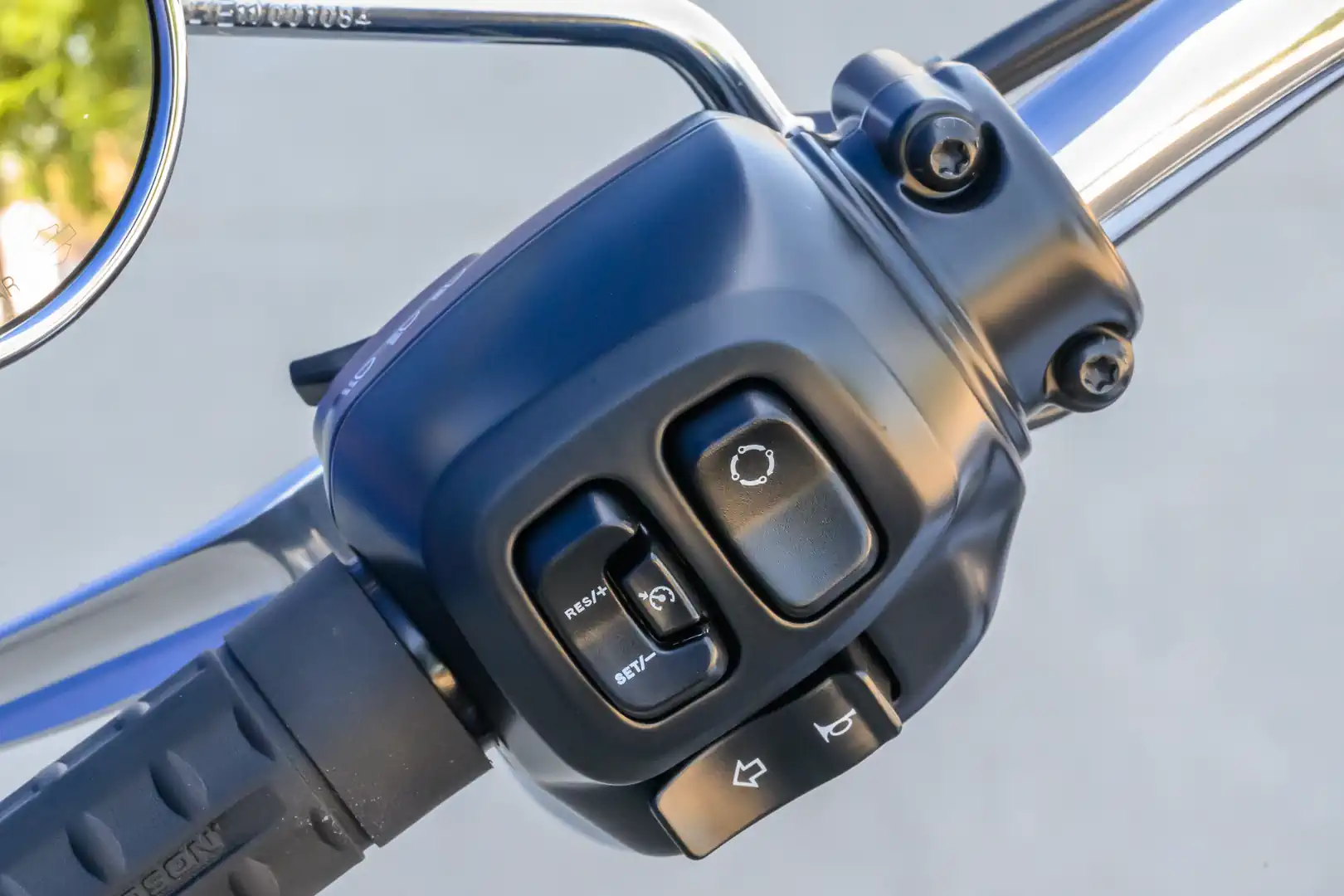
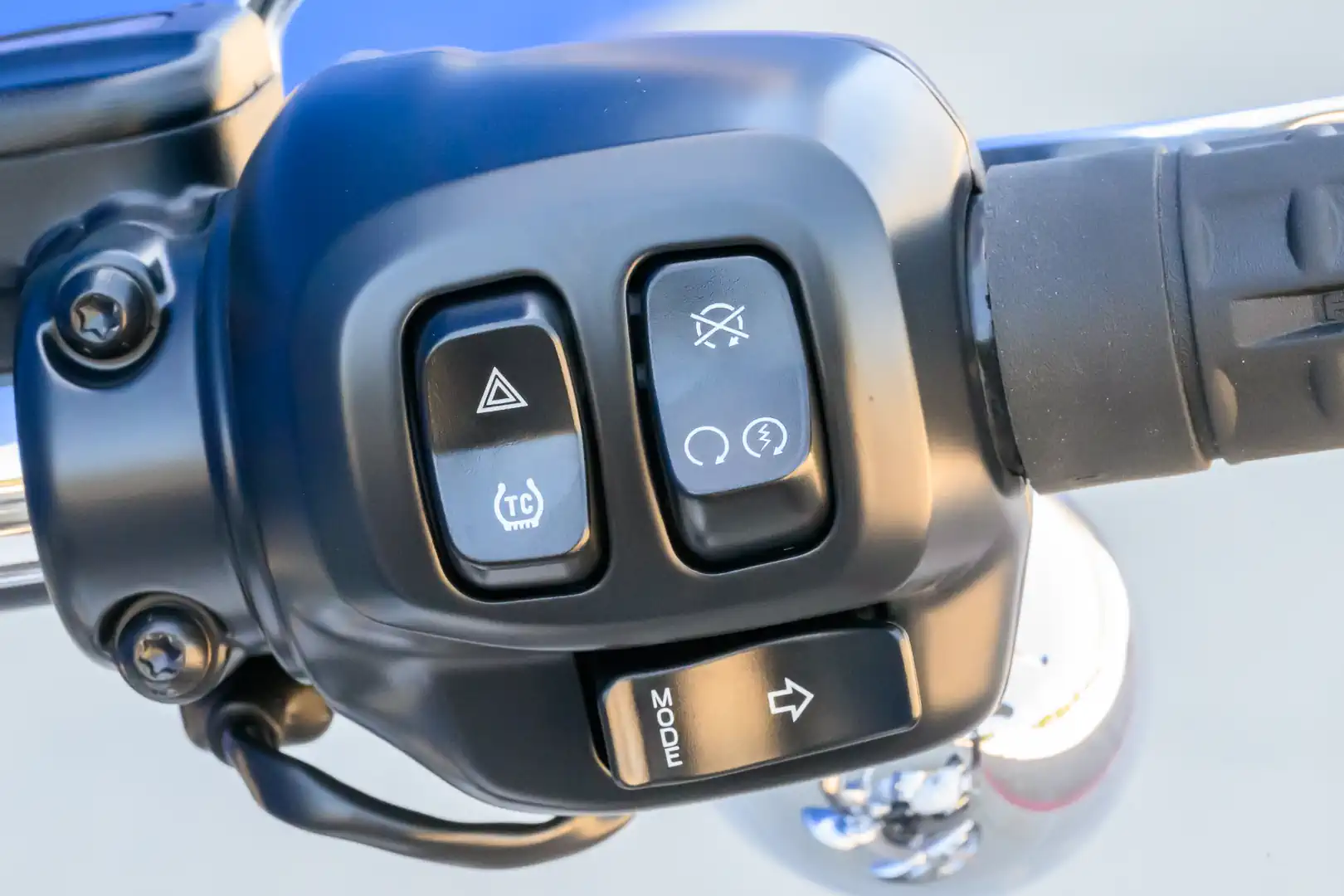
Despite its name, Rain mode is not only for the wet. It noticeably reduces throttle response and has a place in the worst traffic jams. Rain mode also goes all in on traction control and engine braking management, as it should. Helpfully, a mode button integrated into the right turn signal switch makes it easy to scroll through the modes.
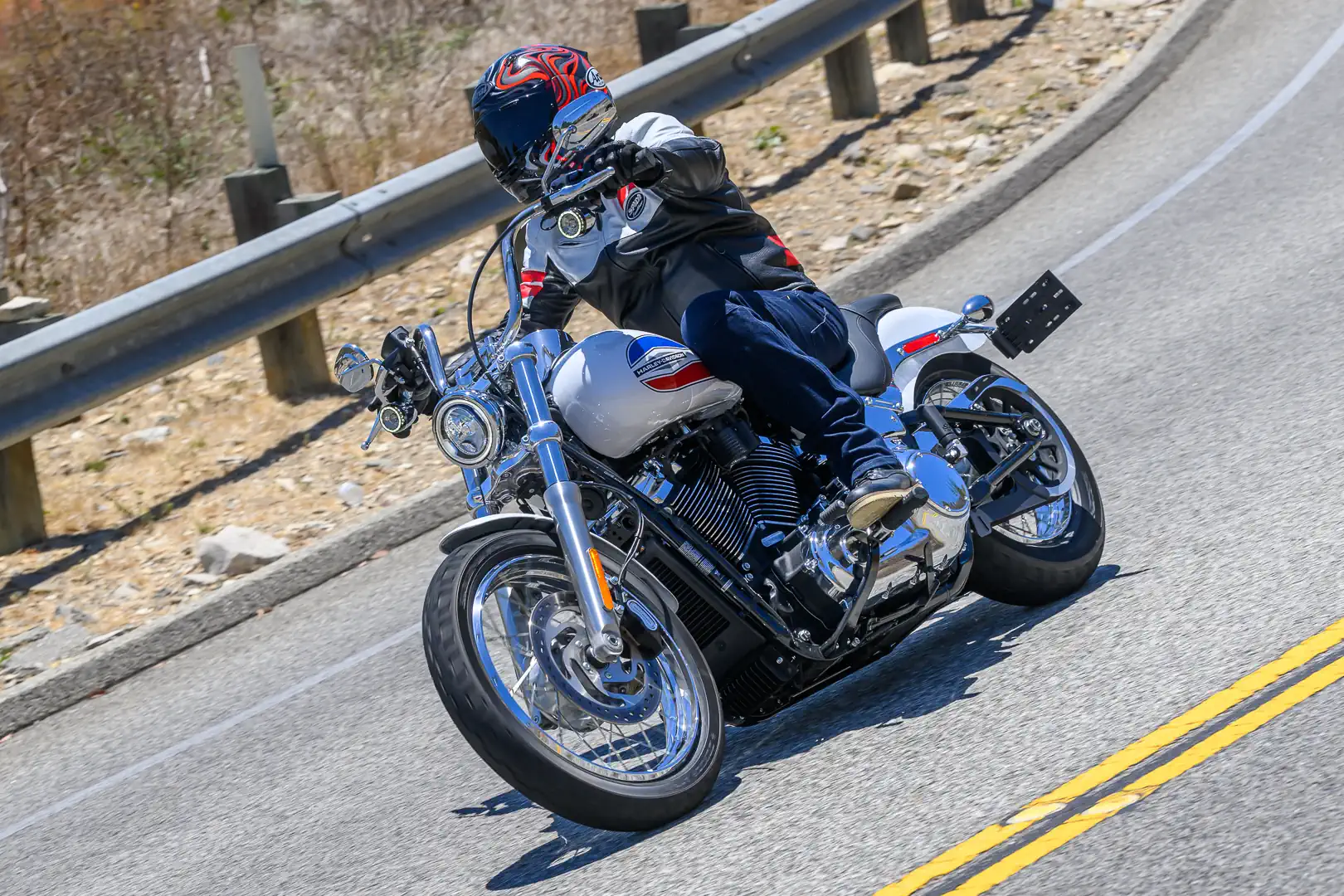
The Softail chassis rides firm, as a cruiser should. Fork travel is 5 inches, while the rear wheel swings across an arc of just 3.4 inches. The short rear-wheel travel shows up on overworked, under-maintained city streets. Otherwise, the Super Glide has a rough-and-ready feel to it that keeps it real. Potholes don’t hit as hard as they could, so it’s not a bad ride. The thick, stepped seat and plump Harley-Davidson-branded Dunlop D401s help soak up the worst of what the city has to offer. The shock’s spring preload is the only suspension adjustment, and it is reachable under the seat. Set it once and forget it.
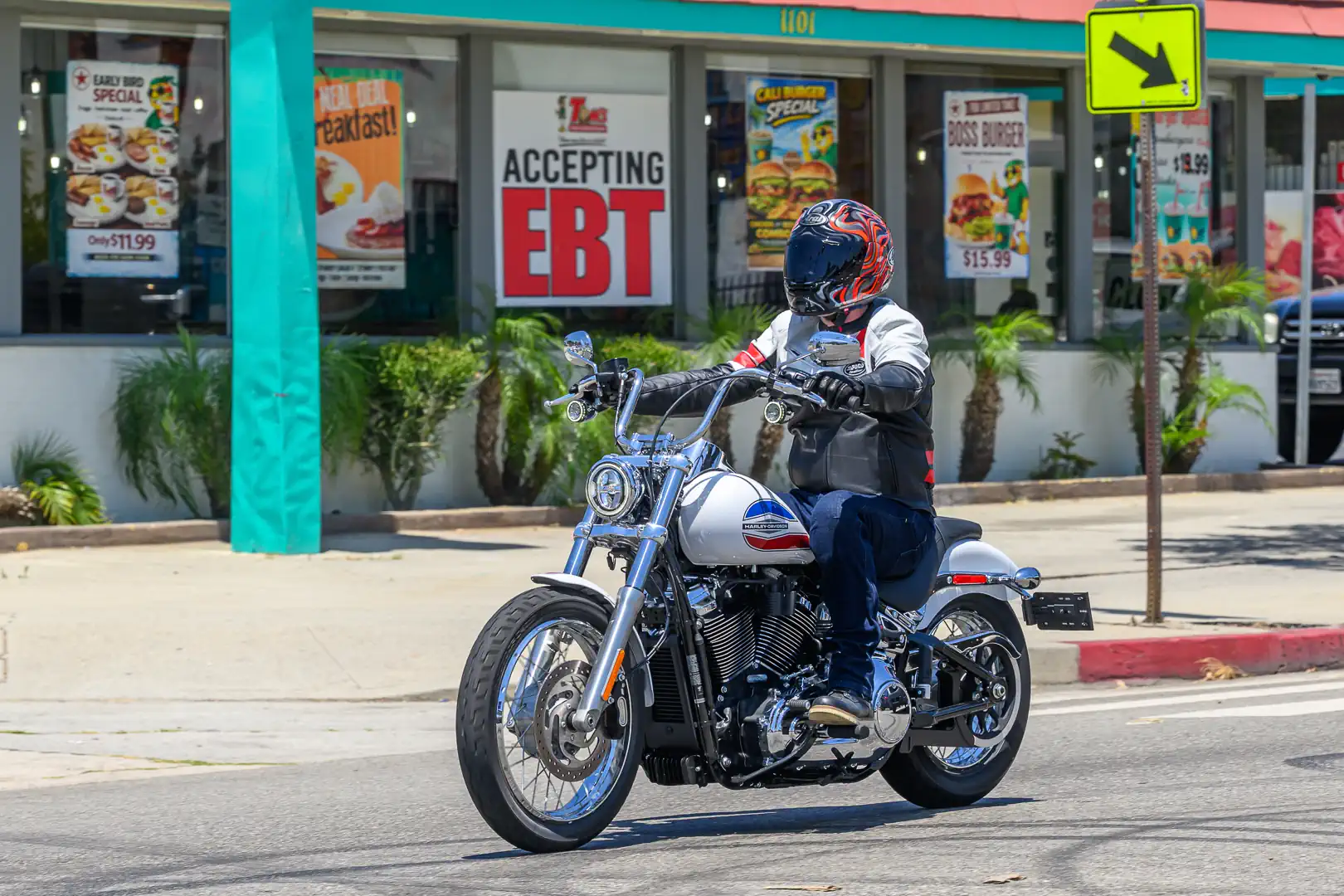
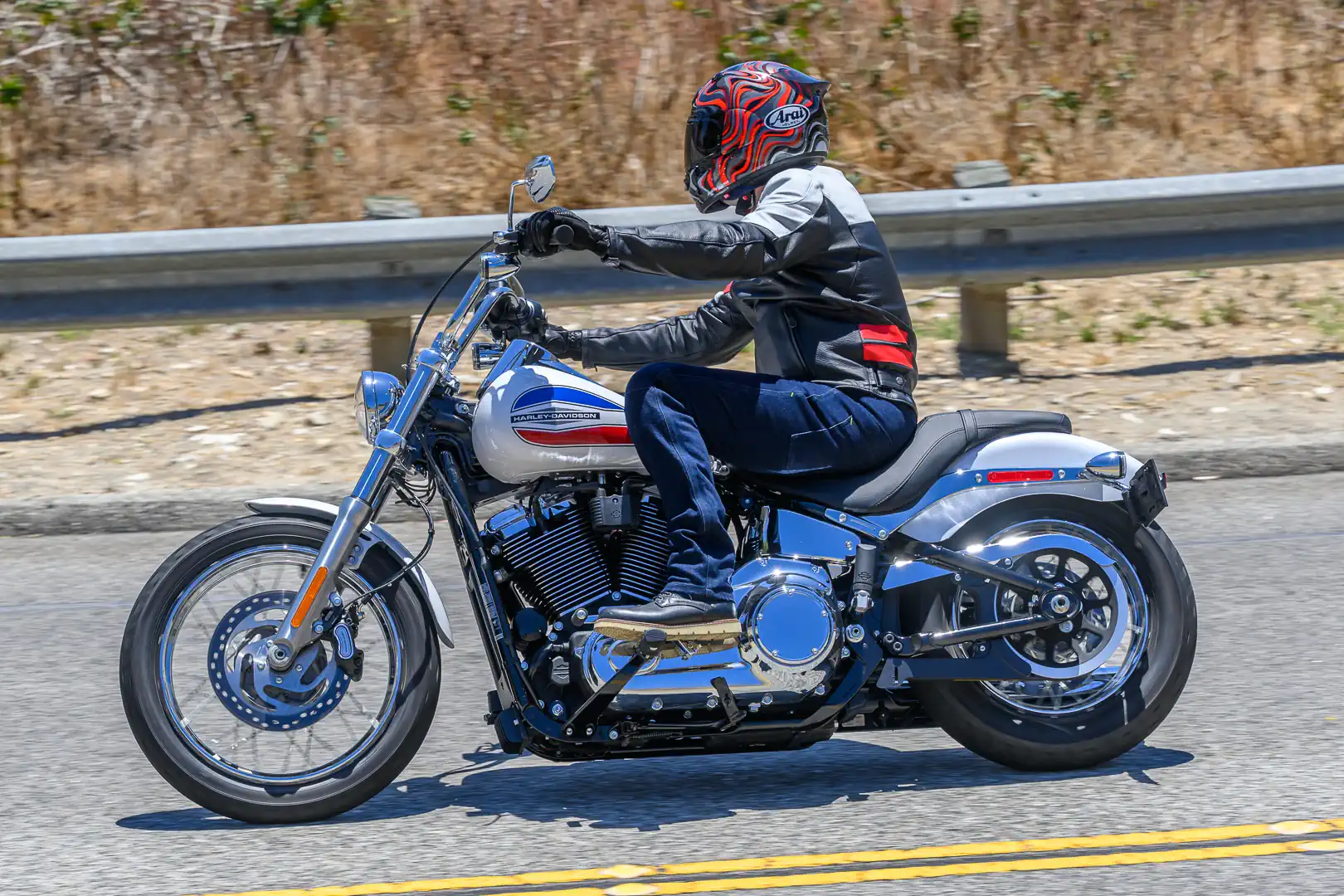
Whether in the twisties or making 90-degree turns in town, the Super Glide is steady. Cornering clearance is respectable thanks to the mid-mounted foot controls. The chassis geometry is relaxed, with a 64.2-inch wheelbase, 30 degrees of rake, and 6.2 inches of trail. Narrow tires, a 100/90 front and 150/80 rear, keep the steering light. LA’s famed Mulholland Drive is quite enjoyable on the 2026 Harley-Davidson Super Glide, and I never had issues with anyone coming up behind me.
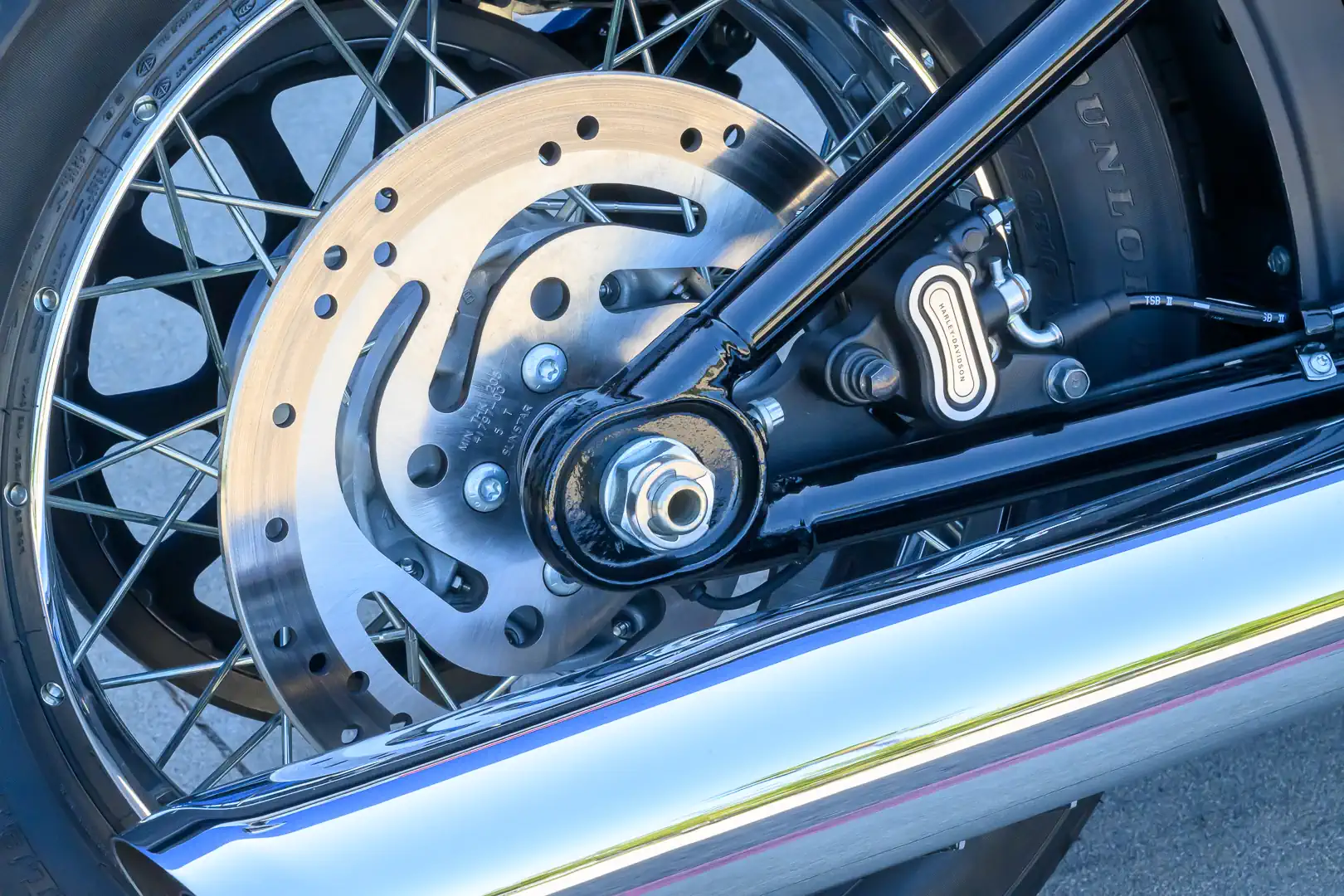
The brakes get the job done, though nothing more. The 292mm rear disc is my first choice for scrubbing speed, as the 19-inch front footprint is a bit narrow. The rear Dunlop, though narrow, has good feel while decelerating thanks to the rearward weight bias. The 300mm front disc, with its four-piston caliper, is there when you need additional braking power, particularly when two-up. Also, ABS is standard and unobtrusive in normal riding.
The rider interface is a mix of old and new. The console-mounted dash sits atop the 5-gallon teardrop tank. It is a 5-inch round housing with an analog-style speedometer over an LCD readout you scroll through with a button on the left switchgear. If you wear an open-face helmet, it’s easy to glance down and see the dash. However, if you’re wearing a full-face, you’ll be aiming your chin at your chest for dash checks. The latest Harley-Davidson Softail switchgear puts mode and traction control right at your thumbs, and the turn indicator switches are impressively rider-friendly.
A few more details round out the package. Lighting is all-LED, from the 5.75-inch headlamp with its signature ring to the combination rear lamp. There is a USB-C charging port at the front-left of the tank; a time-traveler from 1971 would look at it quizzically. If someone wants to ride on the back, the stepped seat offers real passenger accommodations. As with other current M8s, regardless of displacement, the clutch pull is noticeable in traffic even with the assist function.
At $15,999, the 2026 Harley-Davidson Super Glide is a lot of motorcycle for the money. It rides confidently and carries the 1971 look despite being a thoroughly modern cruiser. With only 2500 serialized examples available exclusively in the United States and Canada, it is both a collectible and a rider. For Harley-Davidson fans who want a piece of Willie G.’s legacy tied to America’s 250th, the Super Glide delivers while remaining a fun motorcycle to put plenty of miles on.
Hello and welcome again to the Motos and Friends Podcast. This episode is brought to you by Leod Escapes.
* * * * *
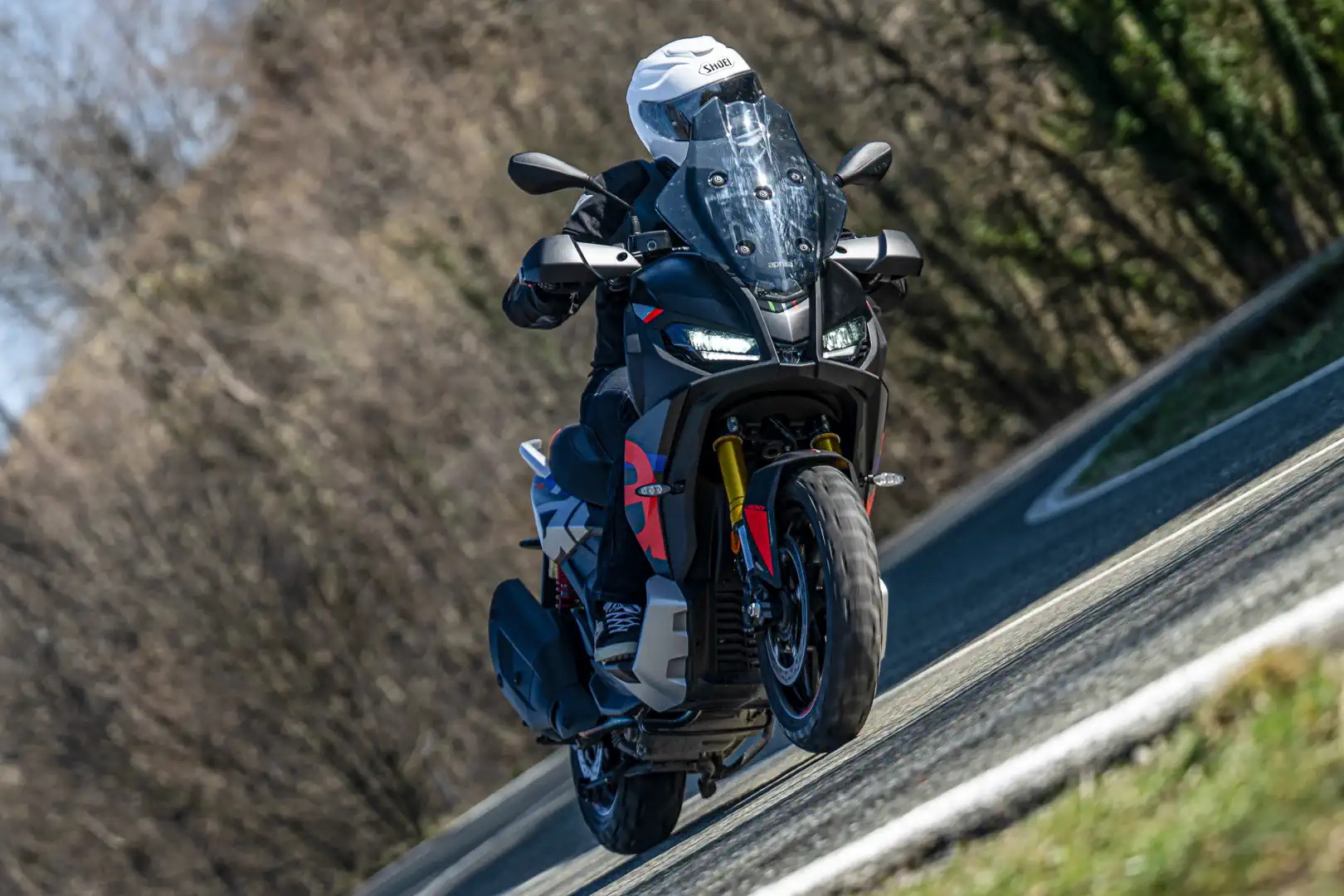
Aprilia is bringing a scooter to North America, and it’s one designed to appeal to adventure motorcyclists. The SR GT 400 is a mid-size scooter built around a steel motorcycle-style frame, a 399cc single, and off-road-ready hardware. It reaches US dealers as soon as this month. Don Williams and Kelly Callan spent some time riding the Aprilia and were surprised by what they discovered. Is this a real motorcycle or just a good-looking urban scooter?
* * * * *
Cat McLeod is founder and owner of Leod Escapes, the ultimate tour company for sport-minded motorcycle riders. Cat talks to us this segment about some of his amazing European experiences and tours that include of course, riding some amazing MotoGP tracks on new BMW S1000RRs. If you like what you hear, now is the time to book your trip of a lifetime, so visit LeodEscapes.com to find out more.
* * * * *
Our guest this episode is Terry Vance, the multiple Motorcycle and Motorsports Hall-of-Famer. Terry is of course the former professional motorcycle drag racer, team owner, and co-founder of the high-performance parts company Vance & Hines. Teejay Adams chats with Terry about his incredible career that includes being the first rider to hit 200 mph in the standing quarter-mile.
Having won this year’s MotoAmerica Mission King of the Baggers championship with Hayden Gillim riding the Vance & Hines factory Indian Challenger, and with Harley-Davidson’s recent withdrawal, Terry gives us his thoughts on where the series might go from here.
* * * * *
Here’s quick reminder to check out our monthly digital magazine. It’s filled with everything you want to read on motorcycling, including some things you’ve probably not seen elsewhere. It’s absolutely free and you will find it on the Apple App Store and of course on Google Play as well.
Don’t forget to leave us your comments on our social media—we’re on all the usual platforms at Ultimate Motorcycling. We love hearing your feedback… so good or bad, please let us know what you think. If there’s something you’d like us to cover, we’d love to hear those ideas too!
We use cookies and browser activity on this website
Functional
Always active
The technical storage or access is strictly necessary for the legitimate purpose of enabling the use of a specific service explicitly requested by the subscriber or user, or for the sole purpose of carrying out the transmission of a communication over an electronic communications network.
Preferences
The technical storage or access is necessary for the legitimate purpose of storing preferences that are not requested by the subscriber or user.
Statistics
The technical storage or access that is used exclusively for statistical purposes.The technical storage or access that is used exclusively for anonymous statistical purposes. Without a subpoena, voluntary compliance on the part of your Internet Service Provider, or additional records from a third party, information stored or retrieved for this purpose alone cannot usually be used to identify you.
Marketing
The technical storage or access is required to create user profiles to send advertising, or to track the user on a website or across several websites for similar marketing purposes.