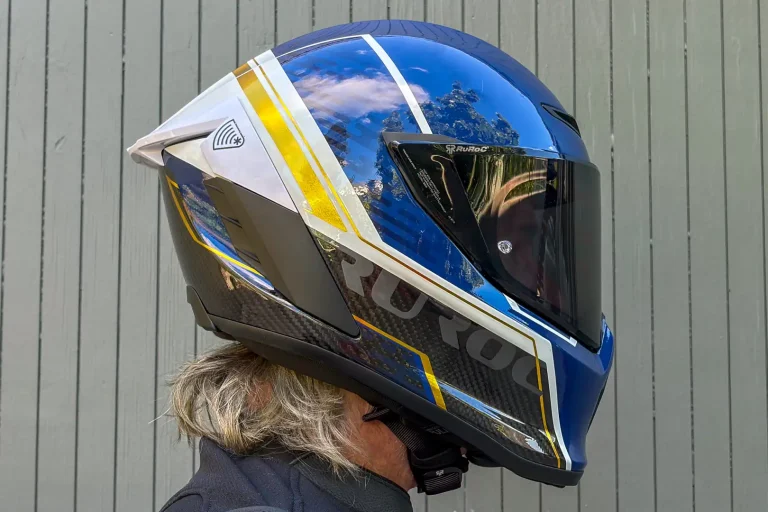
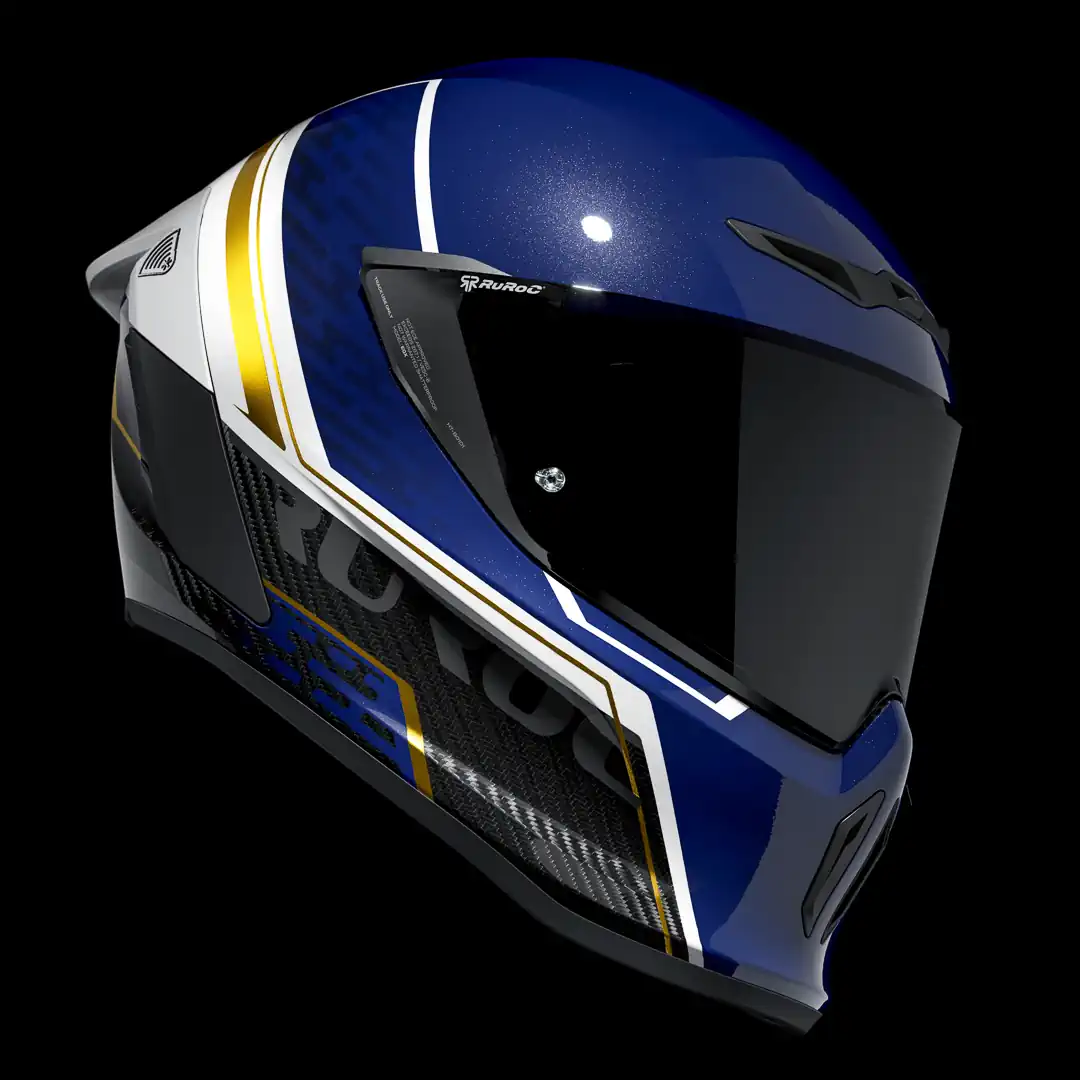
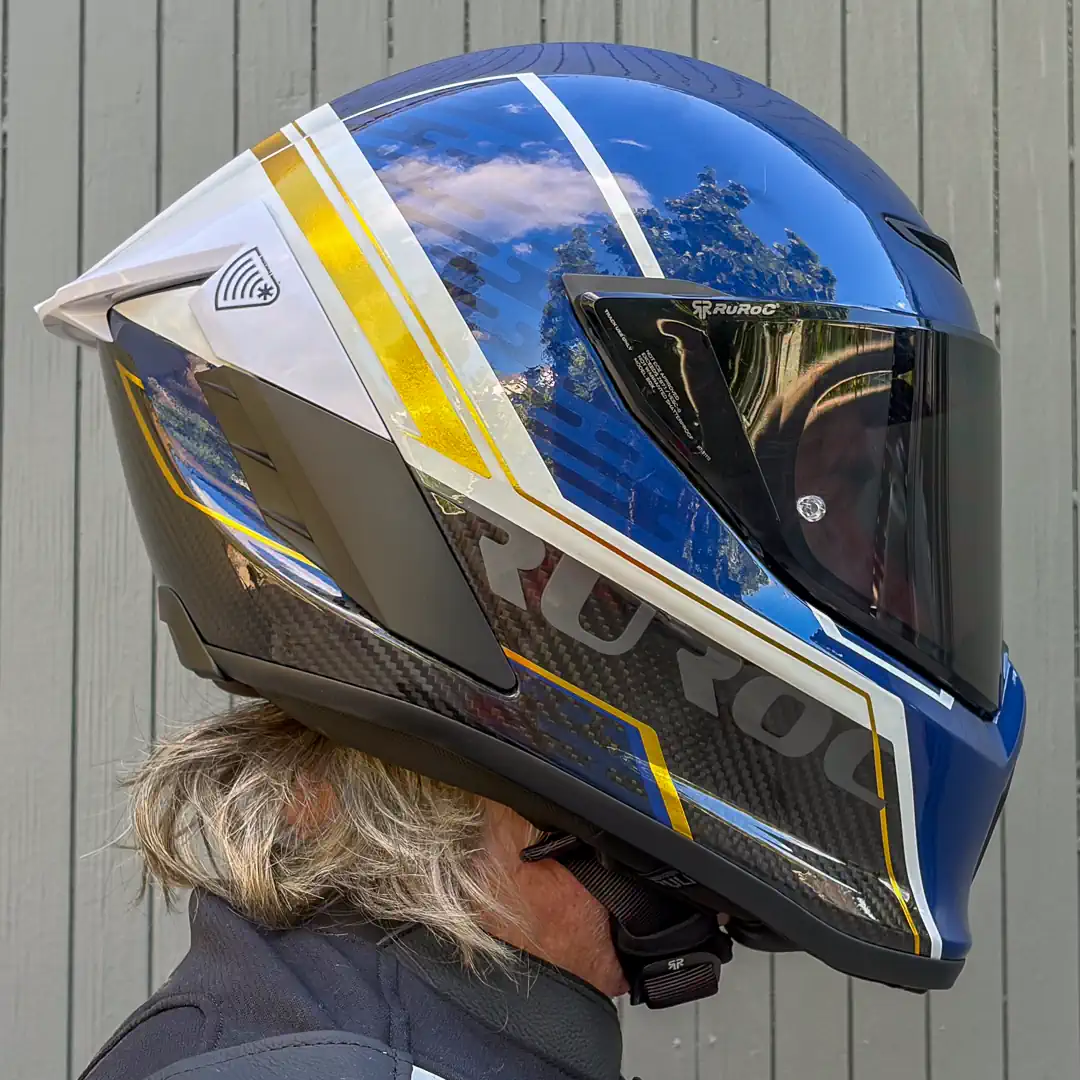
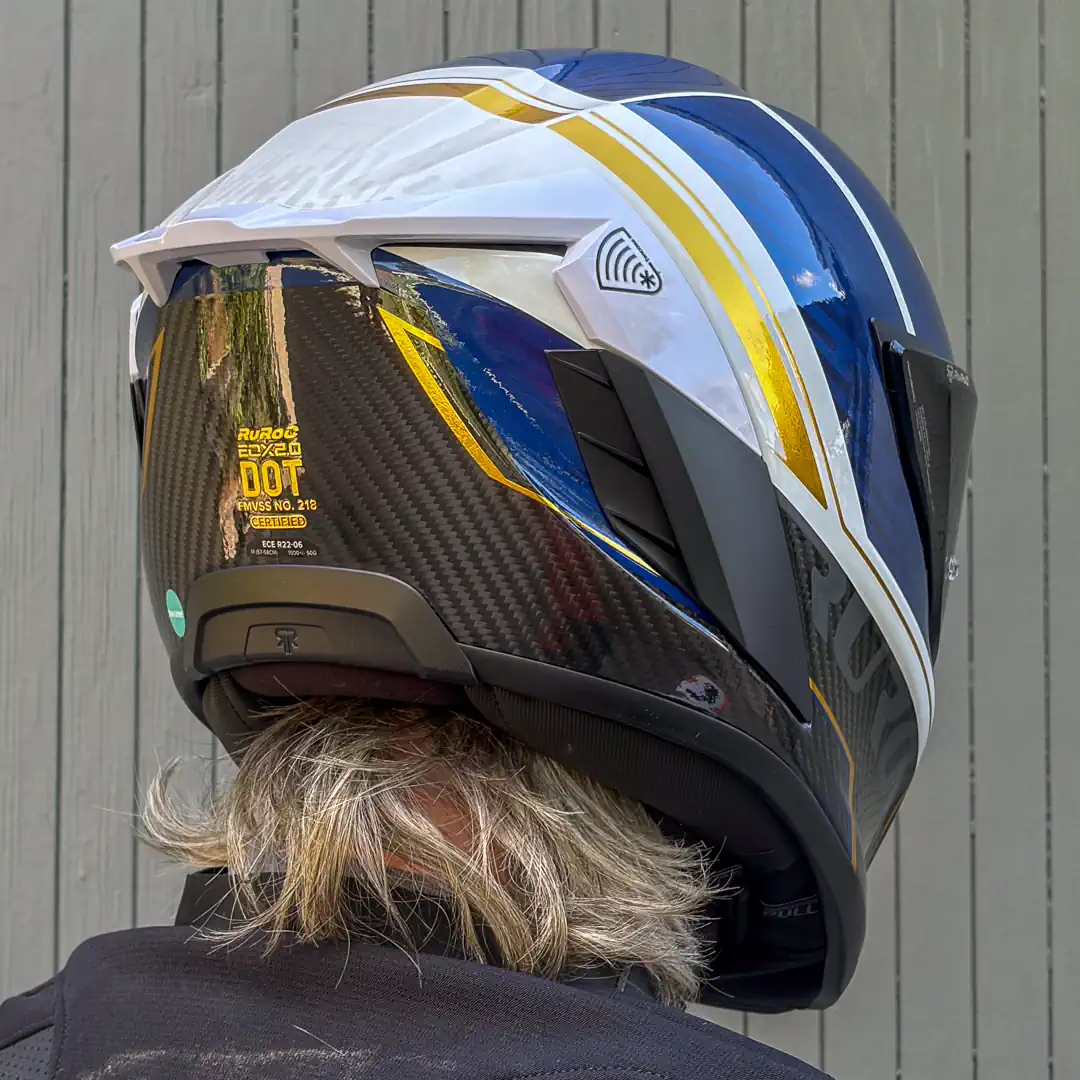
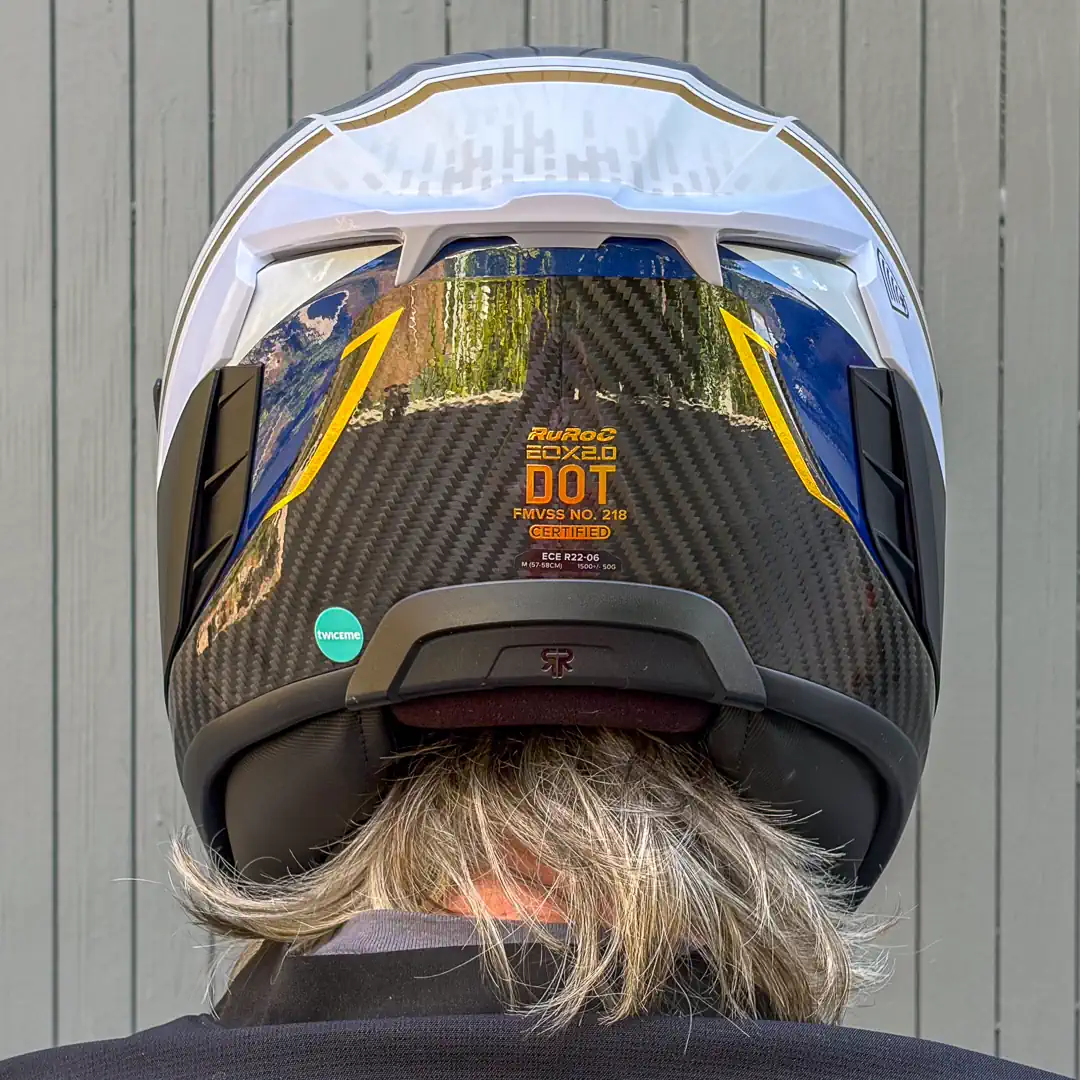
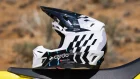
We were impressed when we tested the Ruroc EOX helmet last year. It felt good on the head, and the Ace Cafe graphics earned rave reviews wherever we rode. The new 2.0 is not a complete redo. The carbon fiber/Kevlar/nylon/fiberglass shell is unchanged, the Fidlock chin strap returns, and the $349 optional Cardo-based Shockwave Mesh communications system can still be easily added. The upgrade includes additional impact protection technology from Rheon, the Twiceme smart medical ID system, a redesigned Merino wool comfort liner, and an additional set of thicker cheek pads. The Ruroc EOX 2.0 also comes with a Pinlock 200 and a dark-smoke tinted faceshield to go with the standard clear shield. The base price has increased by $76 to $575, reflecting the addition of the Pinlock 200 ($39 value) and the extra faceshield ($65).
New Merino Wool Liner
When I put on the Ruroc EOX 2.0 helmet for the first time, it was apparent that the comfort liner is new, for two reasons: the Merino wool is plush, and it changes the fit. The EOX I tested ran small, so even though I’m a Medium, the Large fit perfectly. This time, the Large was too big, even with the thicker cheek pads installed. I exchanged it for a Medium, added the included thicker cheek pads, and the excellent fit I had with the original EOX returned. The new interior is more comfortable, making it a clear improvement, and the move to standard sizing is a good one.
Rheon Impact Protection Upgrade
Rheon is a strain-rate-sensitive polymer. Under normal riding conditions, it remains soft and flexible. We use Rheon body armor in jackets and have been quite impressed by its pliability.
However, when subjected to impact forces, it stiffens rapidly. This absorbs and dissipates linear and rotational impact energy.
Rheon is not mixed into or embedded within the EPS liner. Instead, it is integrated into the skull area of the comfort liner. A thin layer of Rheon material is built into the crown area of this headliner. It’s a secondary system that adds no significant bulk and does not alter the helmet’s fit or ventilation.
The EPS foam liner is the primary energy-absorbing structure. The Rheon liner manages a wider range of real-world crash scenarios than traditional foam can alone.
Ruroc and Rheon Labs describe the integration as placing Rheon directly into the headliner so that it works in collaboration with the existing EPS architecture.
Twiceme Medical ID System
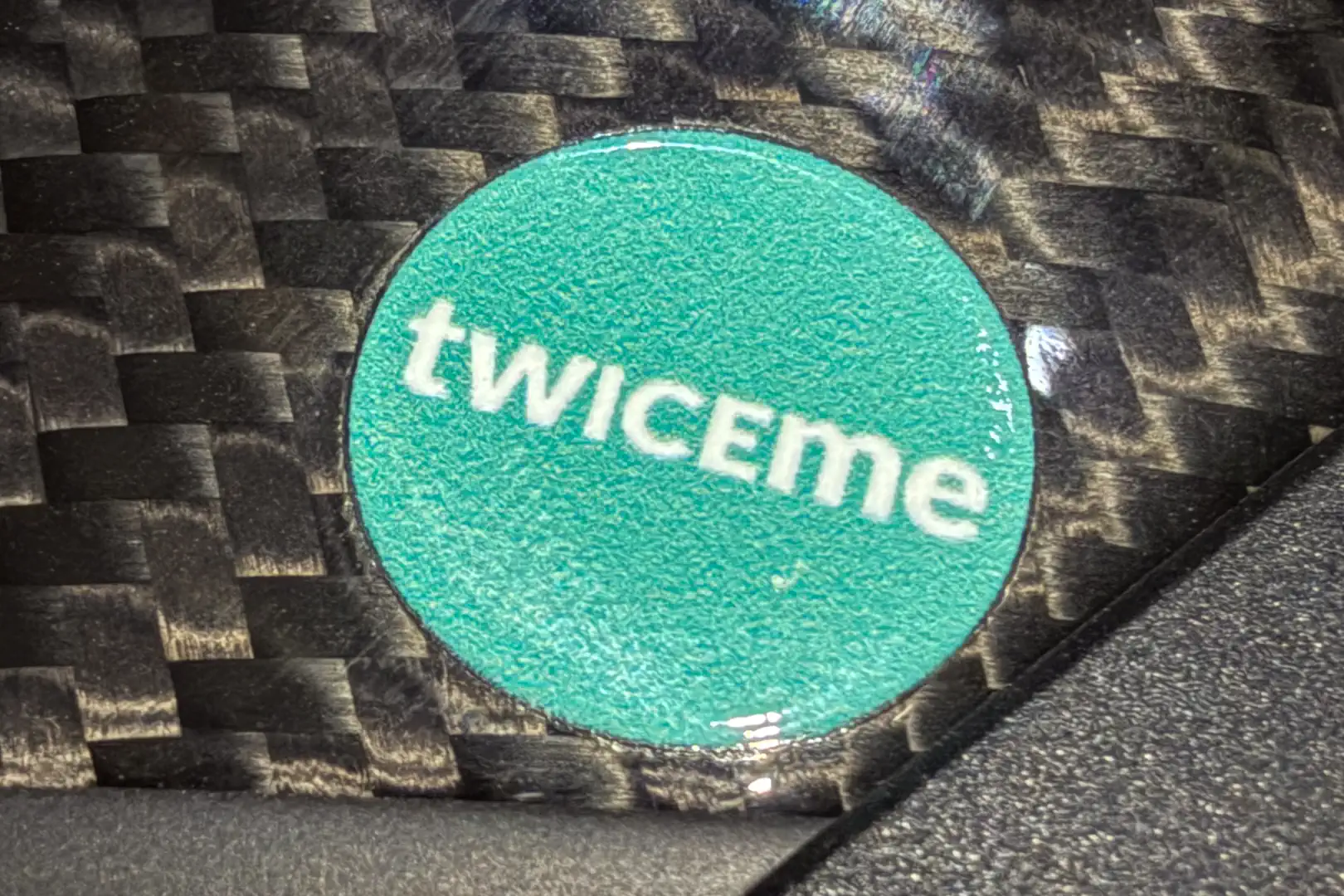
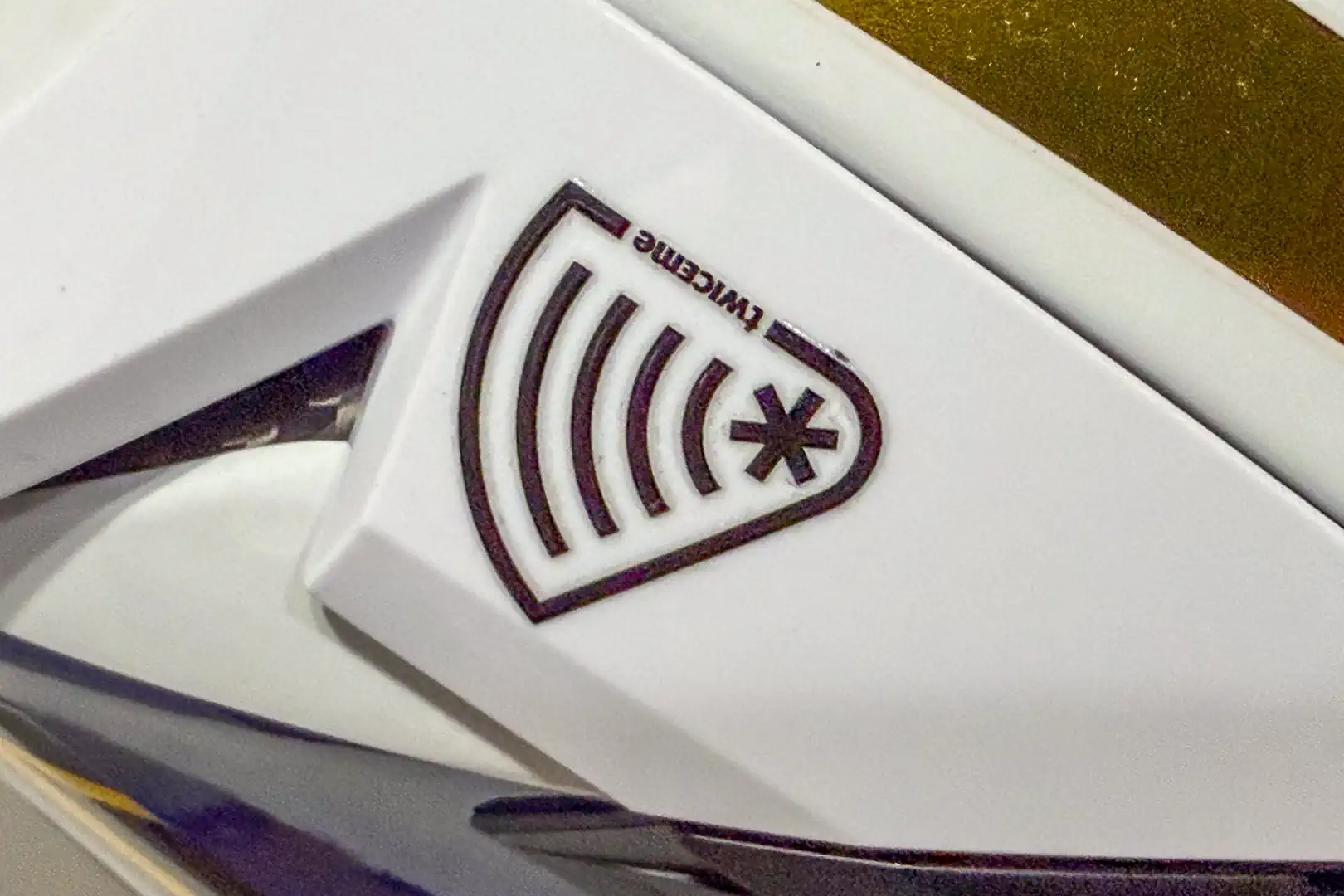
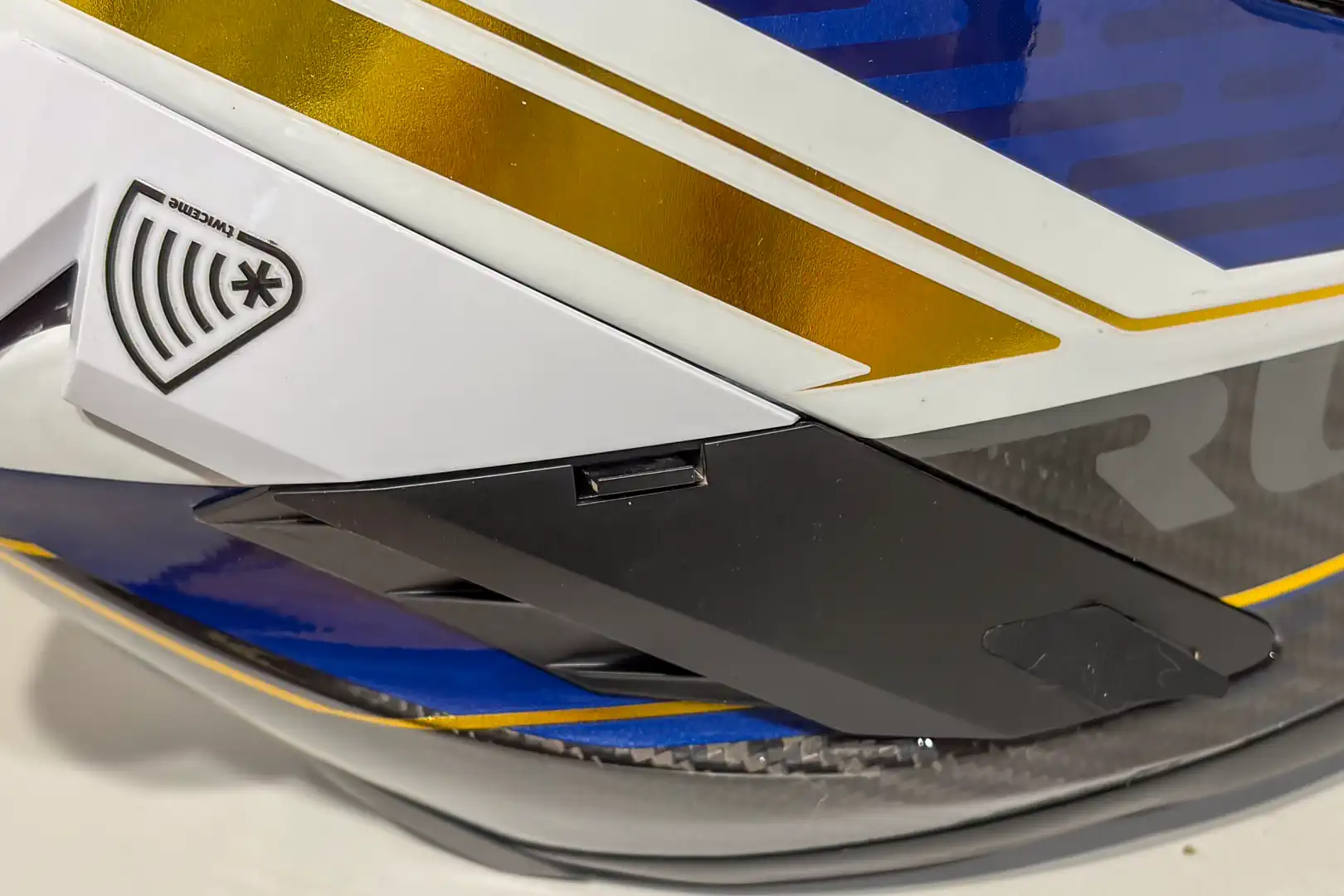
The EOX 2.0 includes a passive near-field communication (NFC) chip embedded under the Twiceme logo on the right side of the rear spoiler. The chip uses the same NFC standard found in contactless payment systems. It is zero maintenance, requiring no battery, no charging, and no ongoing power source. The system adds no measurable weight or aerodynamic effect once installed and does not alter the helmet’s structural or protective performance.
To get started, download the free Twiceme app (iOS or Android). Create a profile and enter Medical ID information. Available fields include name, date of birth, blood type, allergies, medical conditions, current medications, emergency contacts, organ donor status, pacemaker status, and other relevant details. You select which fields to include, and there’s no pressure to enter data you want kept private.
Register the helmet in the app by holding the phone against the Twiceme logo. Then upload the Medical ID data to the chip with a second tap. It’s as easy as it sounds. Once written, the information is stored on the chip.
Data is written locally to the chip during setup. It is not continuously synced to a cloud service. The chip does not track you or share your location. Data transmission only happens when the chip is actively scanned. There is no subscription fee, and no mandatory data collection beyond what the user chooses to upload.
In the case of an accident, any modern smartphone with NFC capability can detect and read the chip. No special app is required on the scanning phone for basic access, and the info is not password-protected. The process takes a few seconds and works whether the rider is conscious or not. Keep in mind that anyone with an NFC-equipped smartphone can walk up to your helmet, place the phone next to the Twiceme logo, and download the chip’s information.
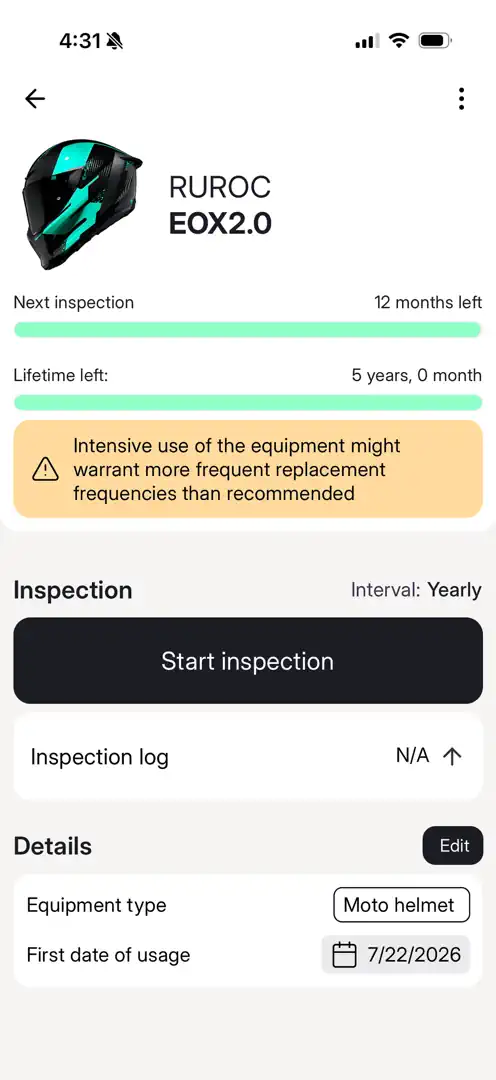
The Twiceme app also tracks the helmet’s service life. Using the same NFC chip, it logs your first ride date and then counts down Ruroc’s recommended five-year replacement window. It also prompts a yearly user inspection of the helmet, guiding you through the process step by step.
Optional features in the Twiceme app include Share Location, Get Back Timer, and Immobility Alert. These operate through the user’s smartphone sensors and GPS. The functions are independent of the helmet chip and must be enabled separately by the user.
Ruroc EOX 2.0 Review
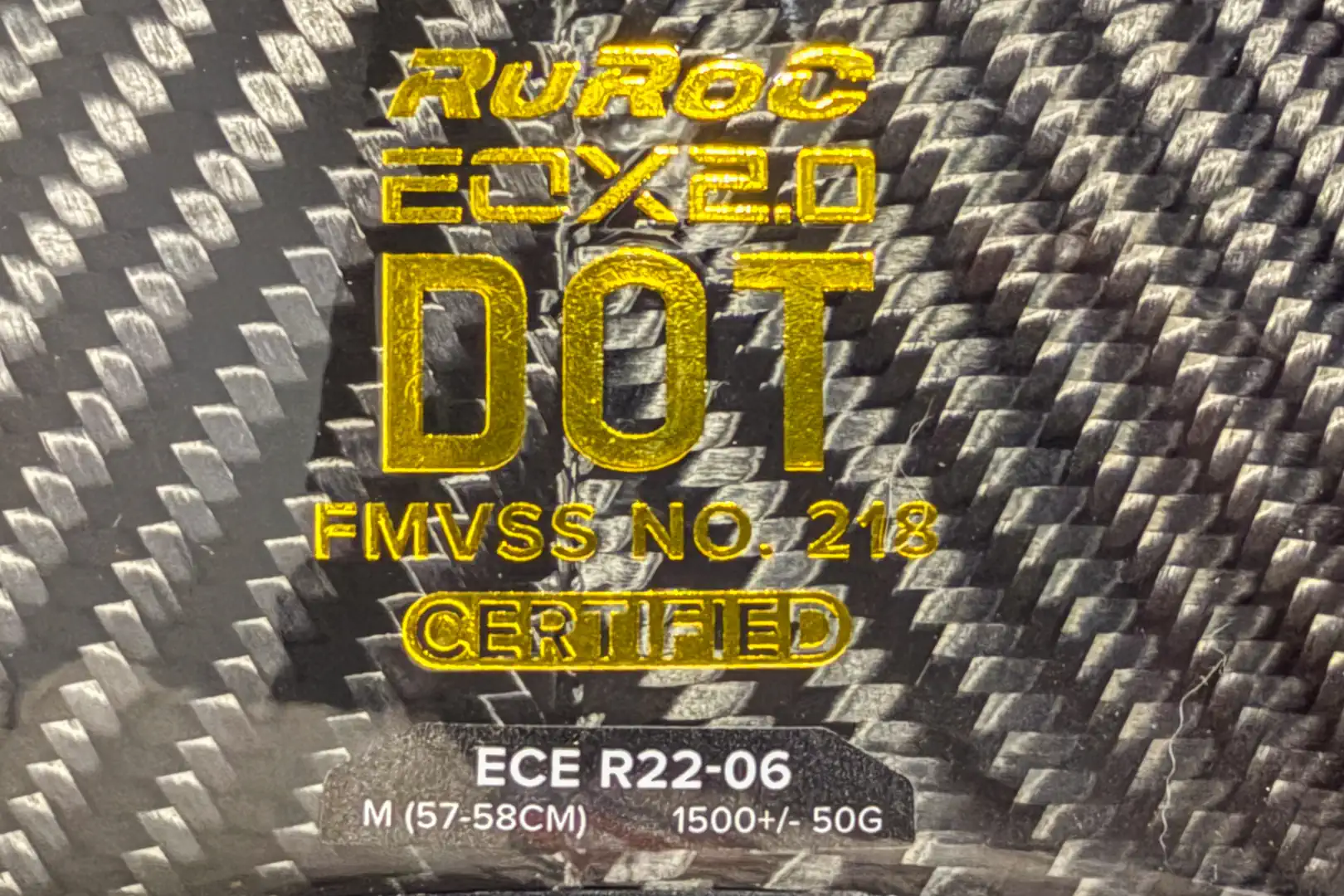
The outer shell is a proprietary Quad-Matrix composite of carbon fiber, Kevlar, nylon, and fiberglass. The same shell carries over unchanged to the 2.0, and is part of a system that earns DOT and ECE 22.06 certification.
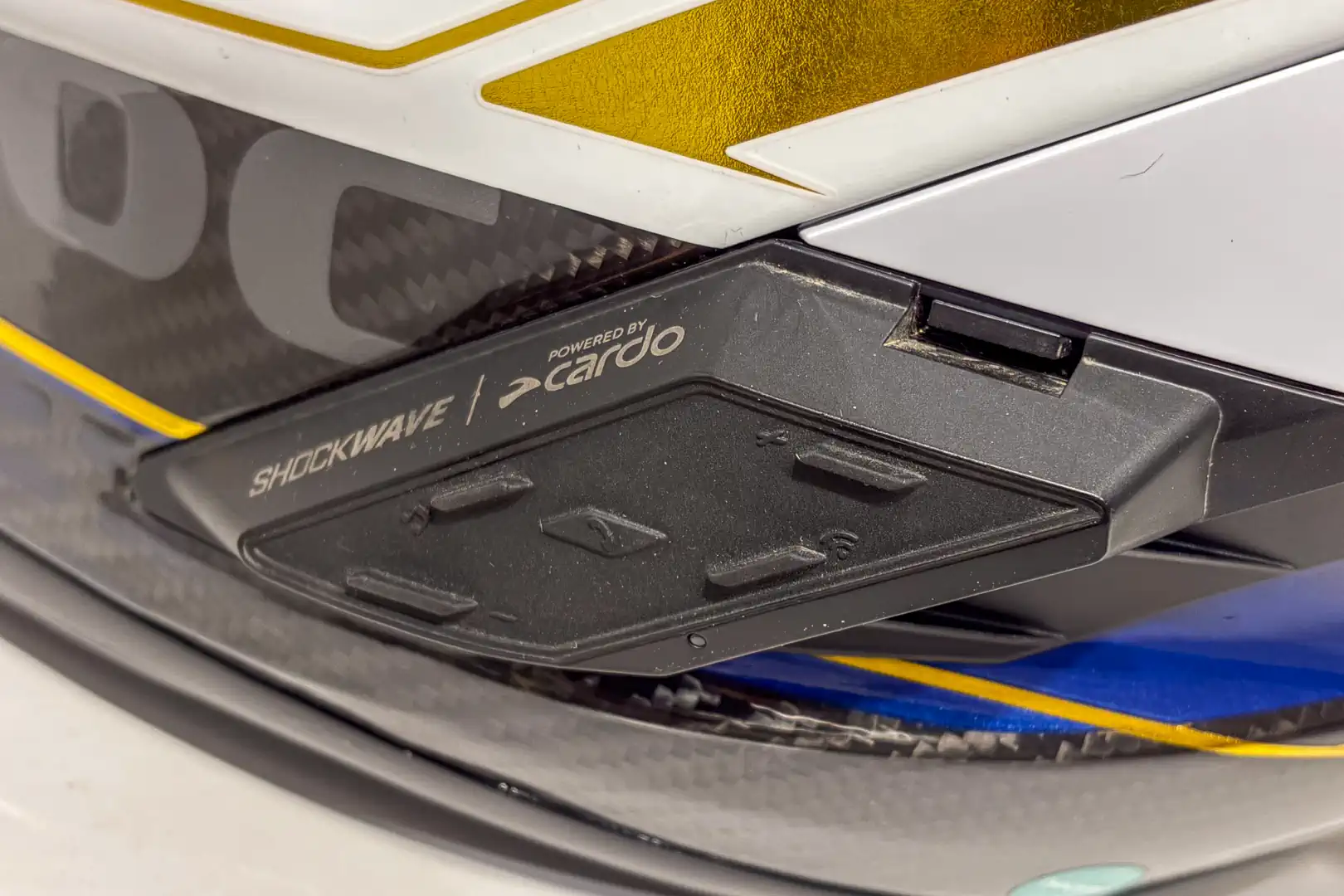
The EOX 2.0 is still semi-prewired for the Cardo-sourced Shockwave system. Installation of the unit remains straightforward. Position the speakers into existing pockets and attach the microphone to the pre-placed Velcro. The control unit and battery snap into molded receptacles on each side of the helmet. The battery covers a full day of mesh intercom use in our testing. Unfortunately, the rubbery cover for the battery’s USB-C charging port is reluctant to seat and seal the port.
Sound quality through the Harman Kardon speakers remains excellent with the new comfort liner. The system paired instantly with other Cardo mesh units, and we have a lot of them. If you use Cardo units, the four-button Ruroc layout requires a short learning period. The Bluetooth-only version is still available for riders who don’t need group mesh.
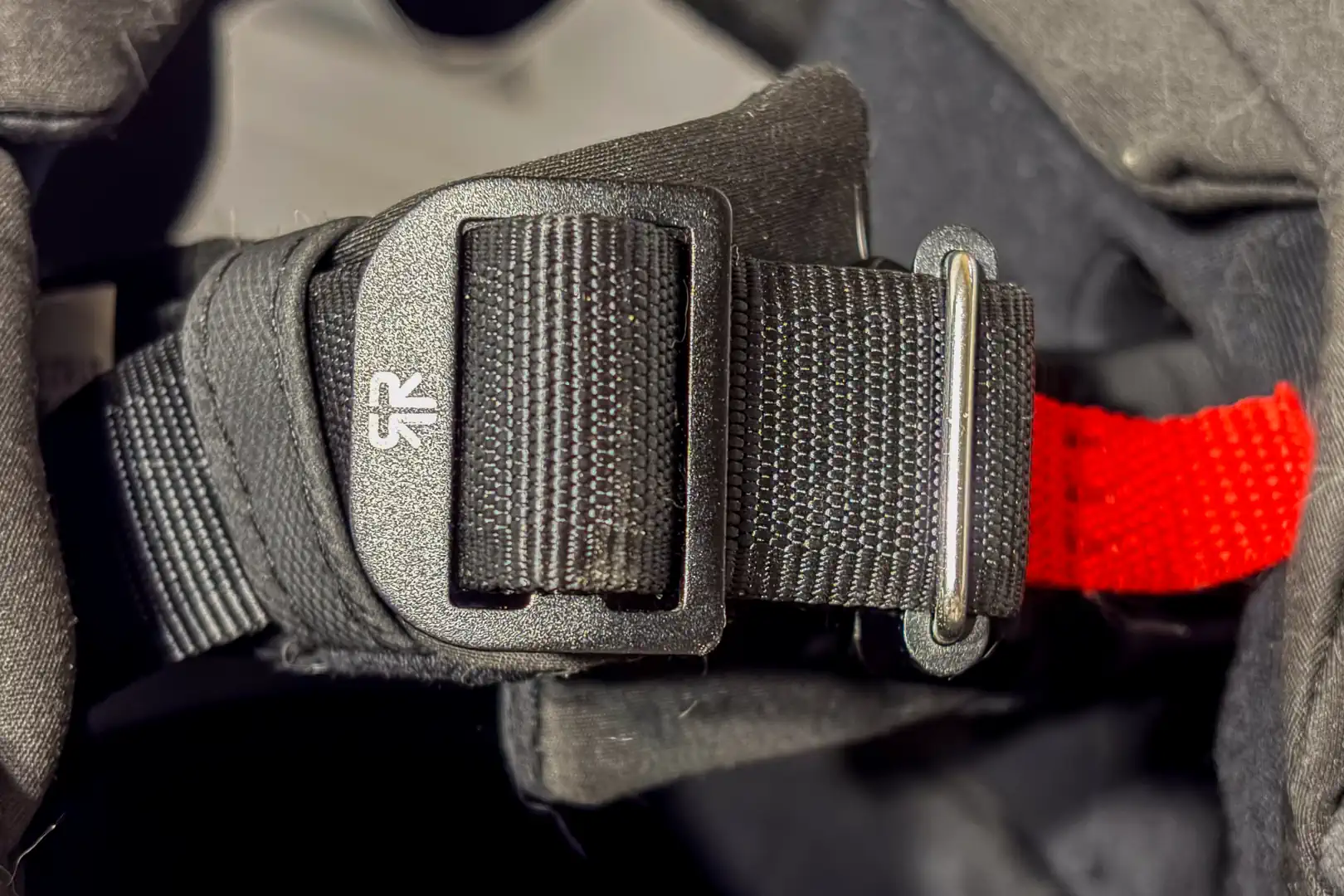
The Fidlock chin-strap system is unchanged. A metal D-ring slips over a magnetic hook. Chin strap length is adjusted by trial-and-error via a plastic buckle and stays put. After that, fastening and release are one-handed operations. There’s a steep learning curve, and it can be frustrating initially. However, once the motion is mastered, it is faster than a double D-ring, especially with gloves on. A firm tug confirms the strap is secure. Pulling the release tab drops it free with almost no effort.
The shell is well balanced. With the Shockwave unit installed, we noticed no shift in weight distribution or added drag when checking traffic over the shoulder at highway speeds. With the Mesh system fitted, the helmet weighs 3 pounds 8.6 ounces on our scale, which is lighter than an Arai Contour-X wearing a Cardo Packtalk Edge.
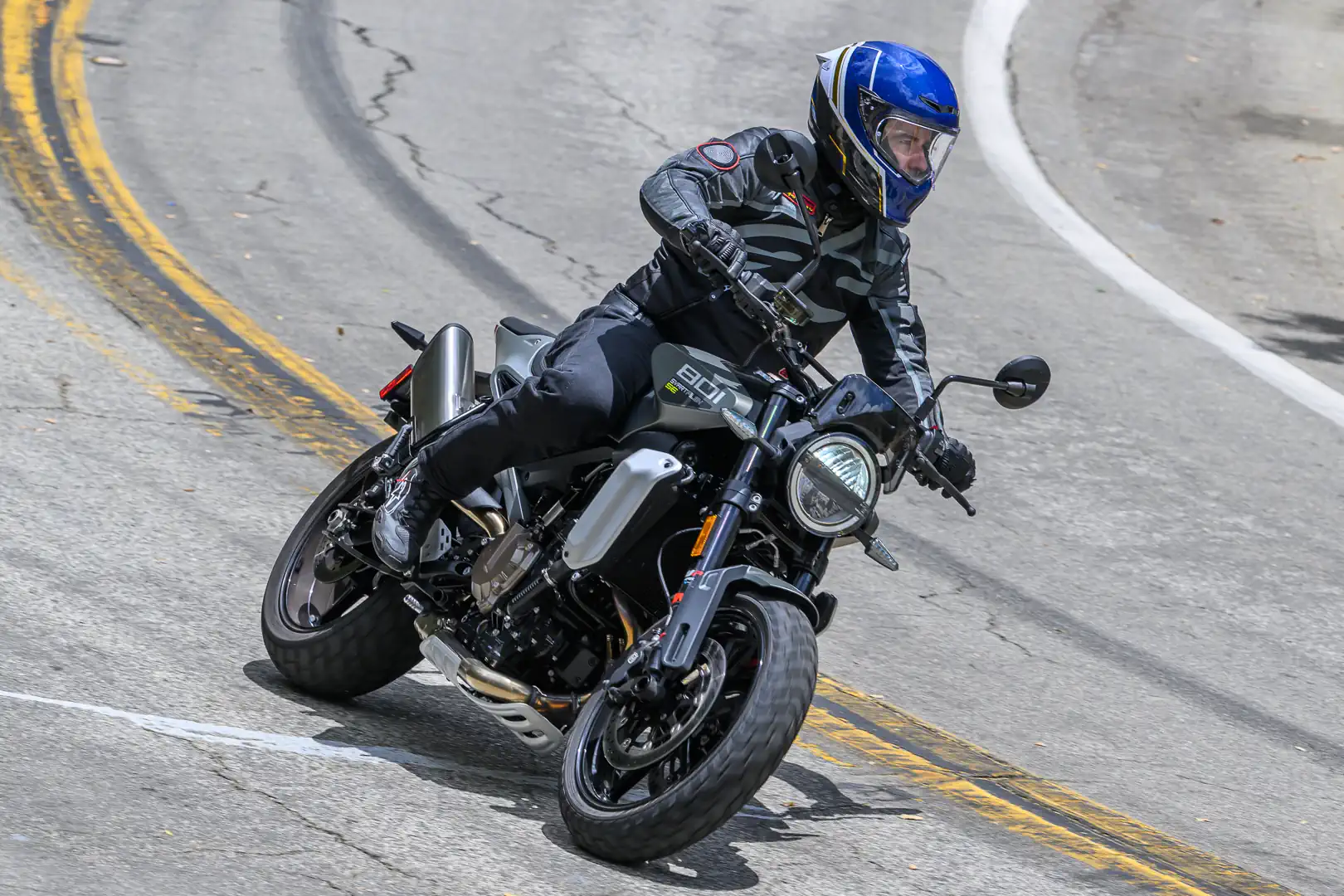
The aerodynamics of the Ruroc EOX 2.0 are excellent on a cruiser or motorcycle with a windshield. However, on naked bikes, multiple testers felt the helmet lifting on long freeway drones. We attribute that to the protruding chin bar spoiler catching air underneath it. Make sure the Fidlock chin-strap is snug. Fortunately, once you have it set, it’s set.
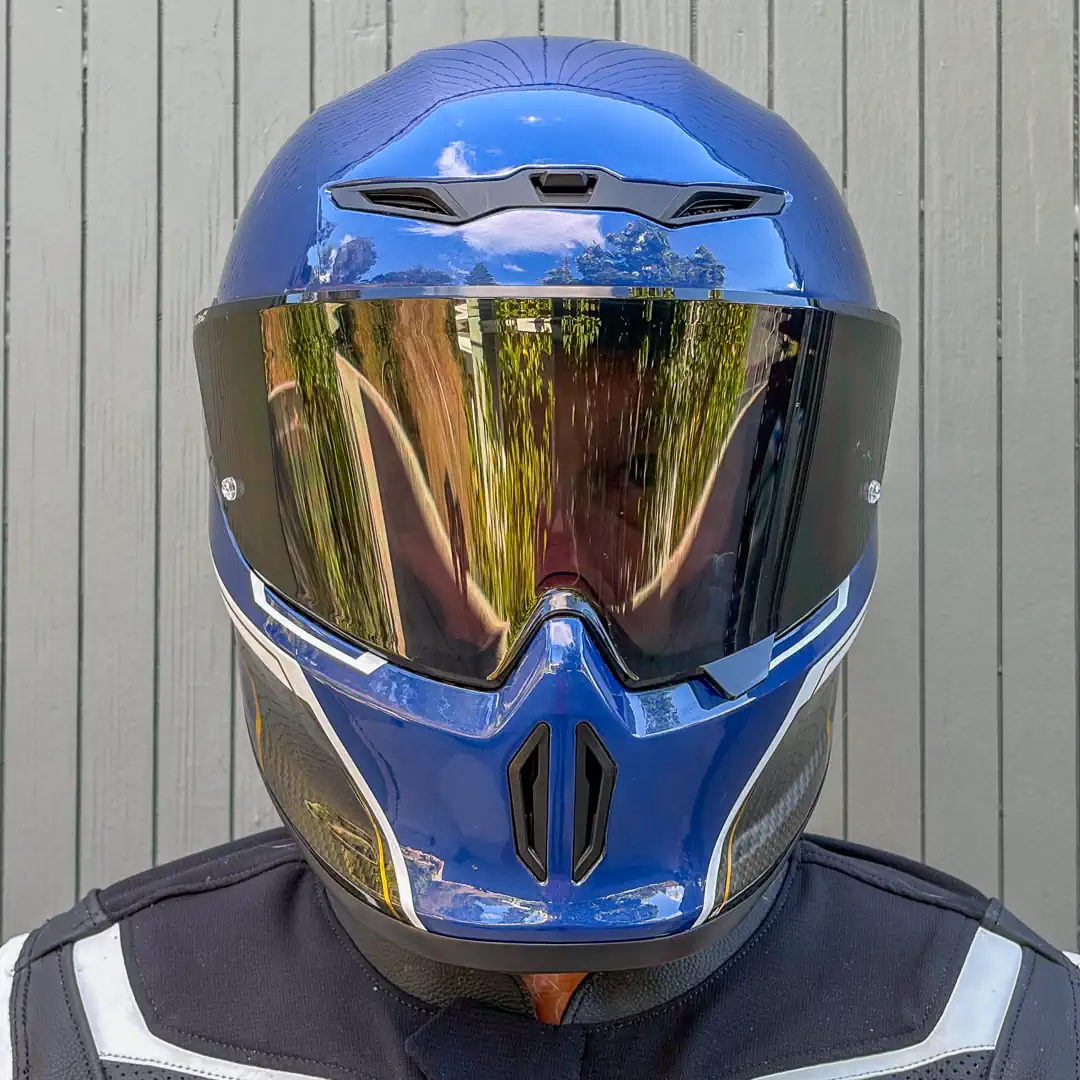
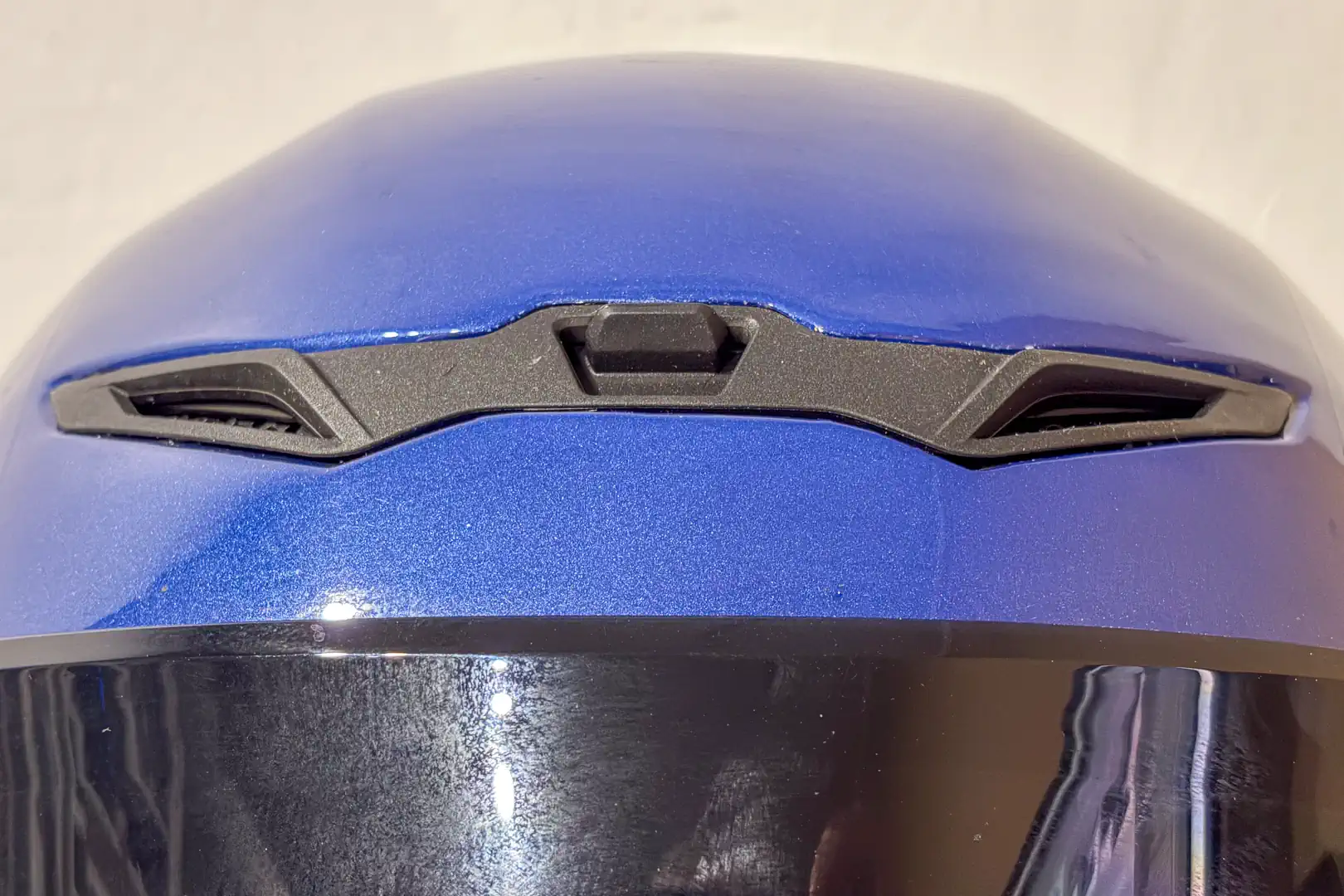
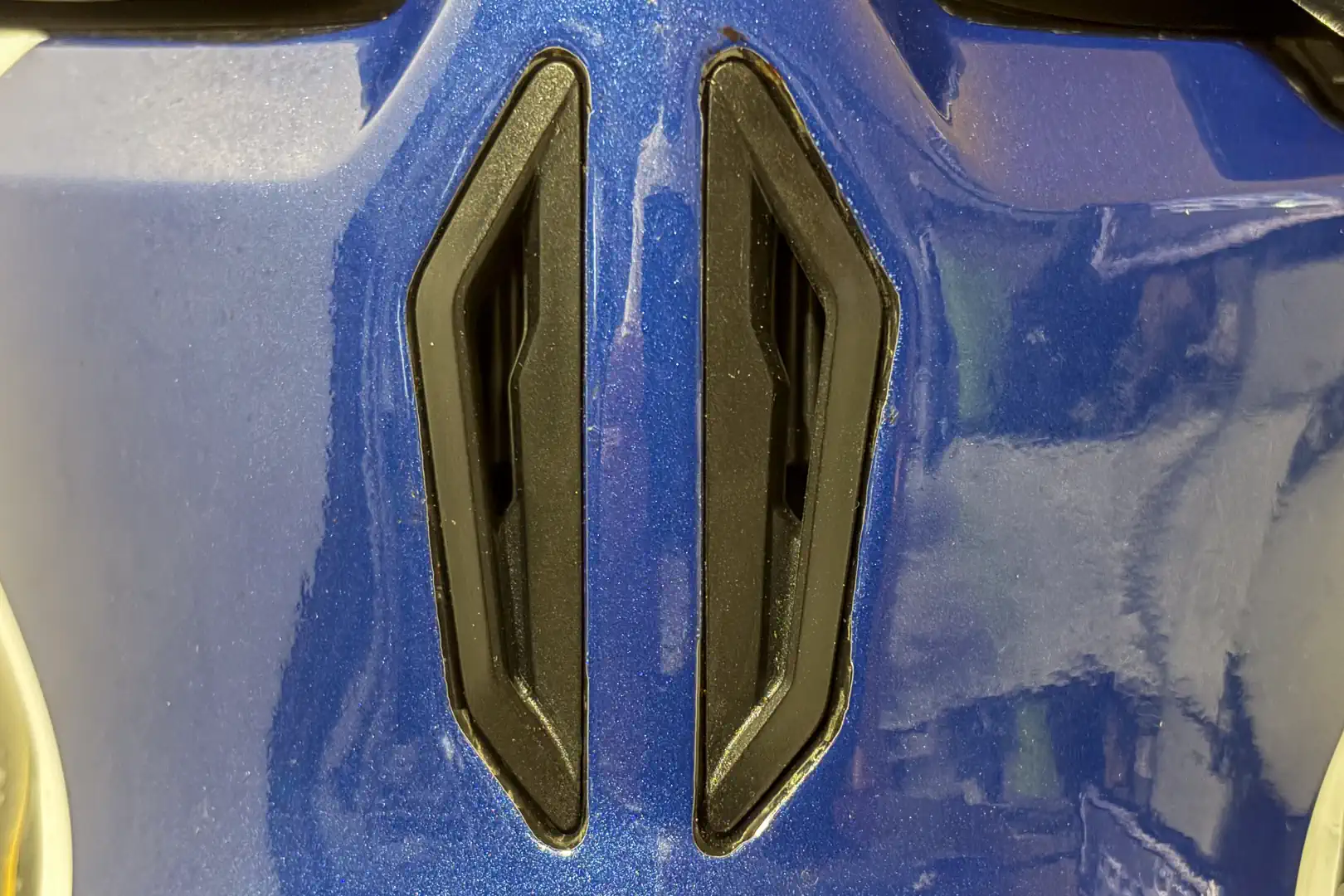
Airflow remains one of the helmet’s strong points. The two forehead vents move a noticeable amount of air across the scalp at almost any speed. A single switch between the vents opens or closes both at once and is easy to operate with gloves. Opening and closing the chin-bar vent is a hassle because the switch is inside the chin bar, behind the chin curtain.
Noise levels stay reasonable for a helmet of this shape, though head shape and riding position will always play a role.
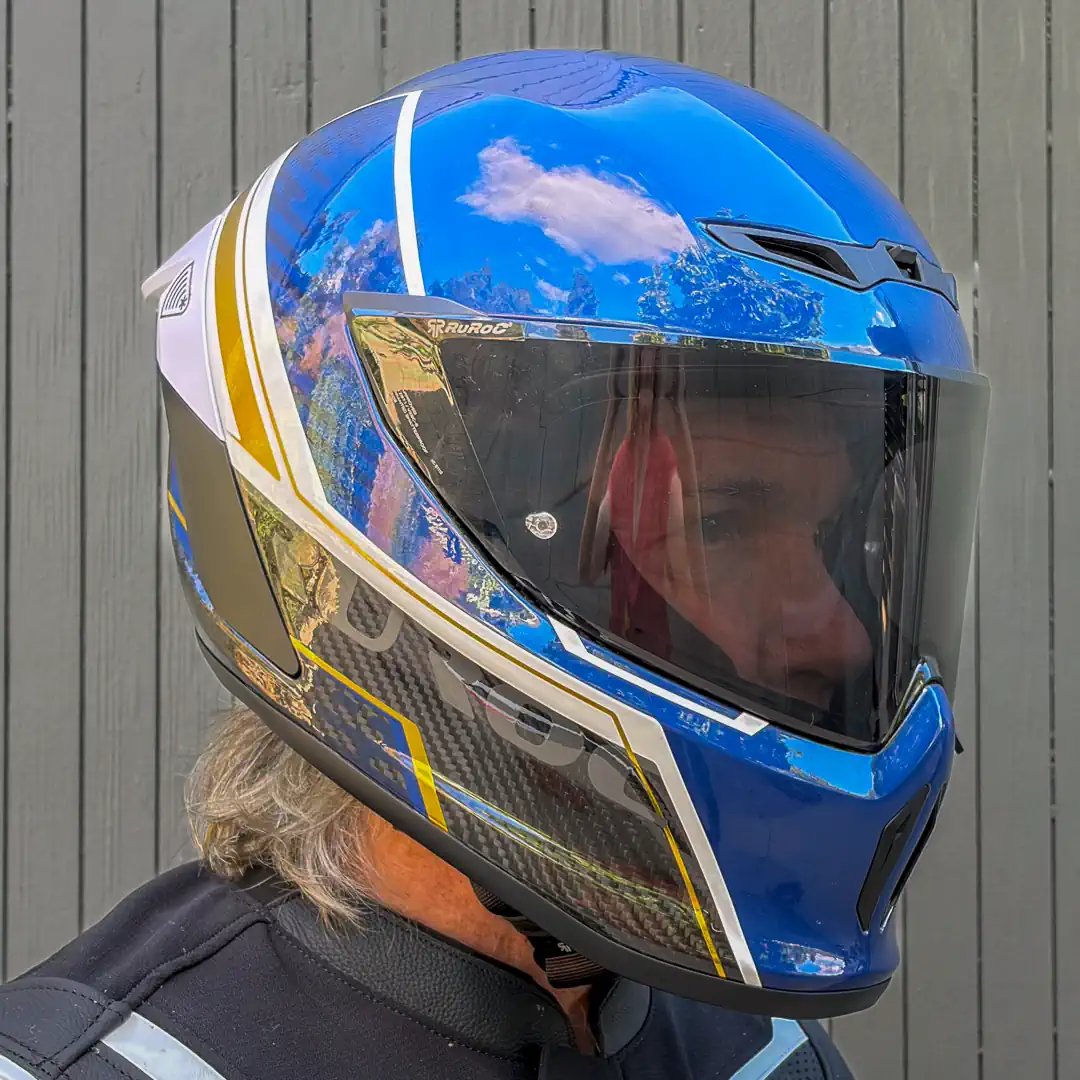
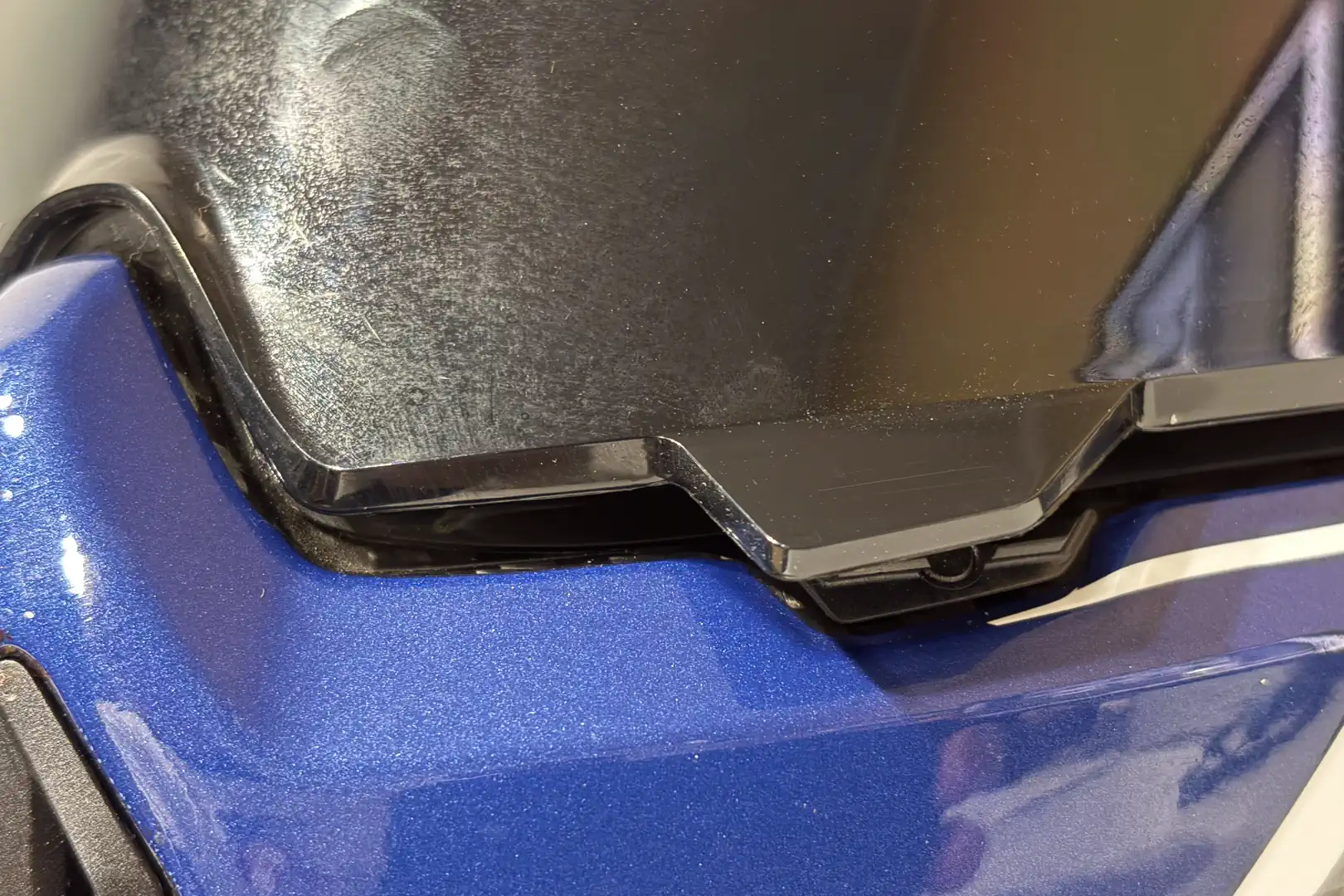
Both a clear and a dark smoke faceshield ship with the helmet, along with a Pinlock insert. The shields are optically clear and move through three positive detents, including a useful slightly open position for low-speed riding. Shield changes require no tools. Peripheral vision is good, though you can see the edge of the eye port when looking over your shoulder to change lanes. Also, a broad range of faceshield covers are available to give the EOX 2.0 even more of a custom look.
The core EOX platform already offered solid ventilation, good balance, easy intercom integration, distinctive styling, and dual US/Euro certification. While not as flashy as the Ace Cafe graphics we had on the EOX, the Regalia graphics on our 2.0 are quietly sophisticated and garnered compliments. The Ruroc EOX 2.0 keeps the EOX fundamentals and builds on them with the new liner, Rheon layer, and Twiceme chip.
Ruroc EOX 2.0 Fast Facts
Sizes: S – XL
Shell: Carbon fiber, Kevlar, nylon, and fiberglass composite
Certifications: DOT; ECE 22.06
Optional integrated communications: Shockwave Bluetooth (+$199); Shockwave Mesh Powered by Cardo (+$349)
Colors: 11 solids and graphics
Ruroc EOX Price: from $575 MSRP (As tested w/ Shockwave Mesh and Regalia graphic, $974)
In our first segment this episode Don Williams tries out his first e-clutch motorcycle: the new Honda CB750 Hornet. The Honda 750 is already an excellent motorcycle in its own right; it’s fast, and it handles beautifully. So, does adding the E-Clutch system to an already fabulous motorcycle really make any difference, or is this just an engineering exercise for the sake of it? Don Williams explains how the system works, and whether the E-Clutch is actually an upgrade.
* * * * *
We’ve talked recently about the upcoming Biketoberfest in a few weeks time, and for sure it’s a great party and social event for motorcycle riders everywhere. But we don’t want to leave you with the impression that’s all it is. So Brian Bentley—born and raised in Daytona Beach—takes us through a sample itinerary of how you could spend your four days plus at Biketoberfest. Truth is, there are a ton of things to do in the October sunshine, and Brian’s example itinerary will give you a lot of ideas. And don’t forget: make sure you download the Biketoberfest mobile App from Apple or Google Play or visit www.biketoberfest.org.
* * * * *
In our second segment this episode Arthur Coldwells chats with Tony Bracalente, founder of Ryder-Gear. Tony is a Navy veteran and was a nuclear engineer on submarines; he’s also a frequent track rider and racer. He founded Ryder-Gear as a result of his own track riding needs, and after friends kept asking him to help them out with what they needed, he eventually started the company. Tony’s interesting background and story-telling ability gives some insight into what it takes to improve motorcycle safety both on the track, and on the street.
* * * * *
Here’s quick reminder to check out our monthly digital magazine. It’s filled with everything you want to read on motorcycling, including some things you’ve probably not seen elsewhere. It’s absolutely free and you will find it on the Apple App Store and of course on Google Play as well.
Don’t forget to leave us your comments on our social media—we’re on all the usual platforms at Ultimate Motorcycling. We love hearing your feedback… so good or bad, please let us know what you think. If there’s something you’d like us to cover, we’d love to hear those ideas too!
We use cookies and browser activity on this website
Functional
Always active
The technical storage or access is strictly necessary for the legitimate purpose of enabling the use of a specific service explicitly requested by the subscriber or user, or for the sole purpose of carrying out the transmission of a communication over an electronic communications network.
Preferences
The technical storage or access is necessary for the legitimate purpose of storing preferences that are not requested by the subscriber or user.
Statistics
The technical storage or access that is used exclusively for statistical purposes.The technical storage or access that is used exclusively for anonymous statistical purposes. Without a subpoena, voluntary compliance on the part of your Internet Service Provider, or additional records from a third party, information stored or retrieved for this purpose alone cannot usually be used to identify you.
Marketing
The technical storage or access is required to create user profiles to send advertising, or to track the user on a website or across several websites for similar marketing purposes.