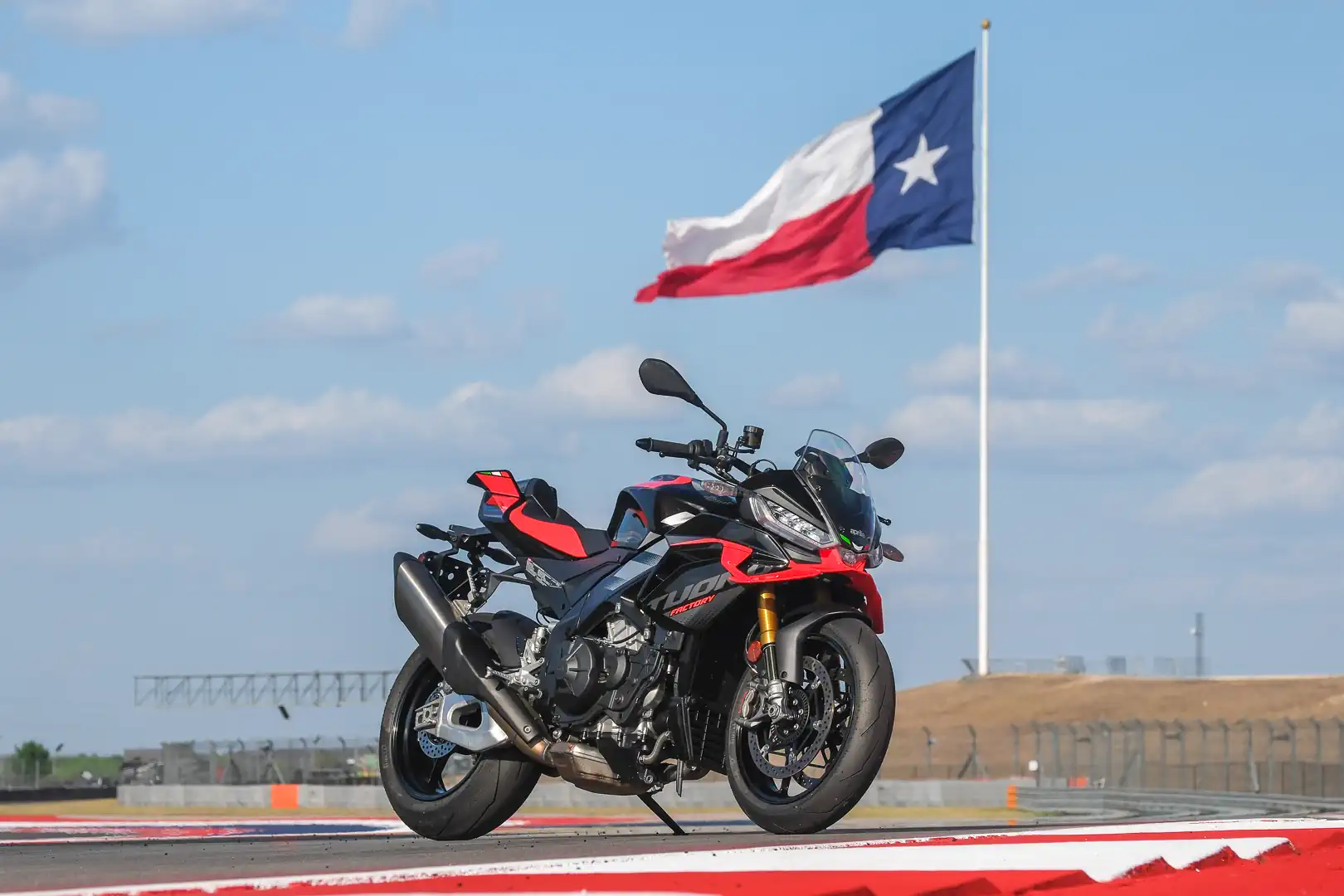
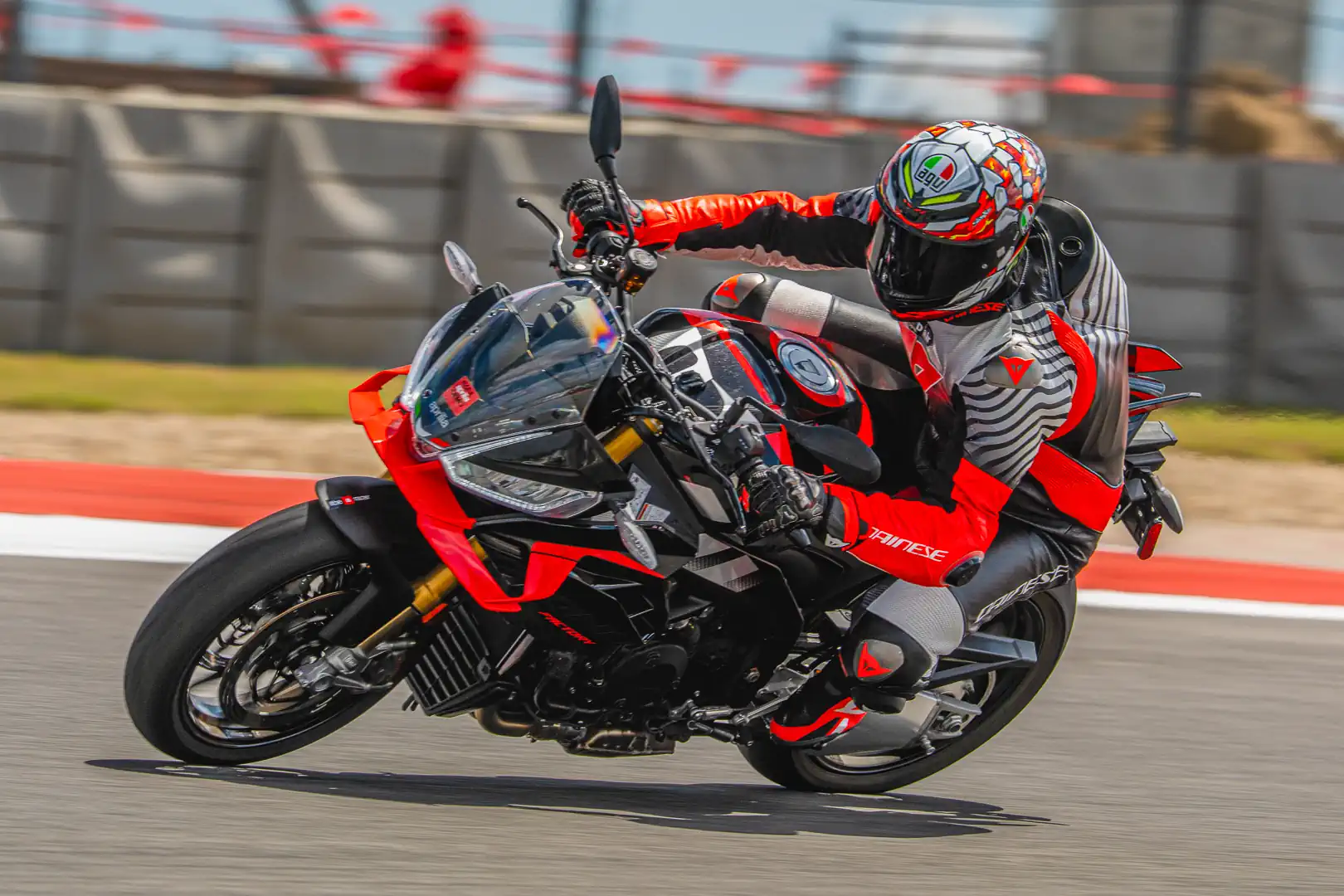
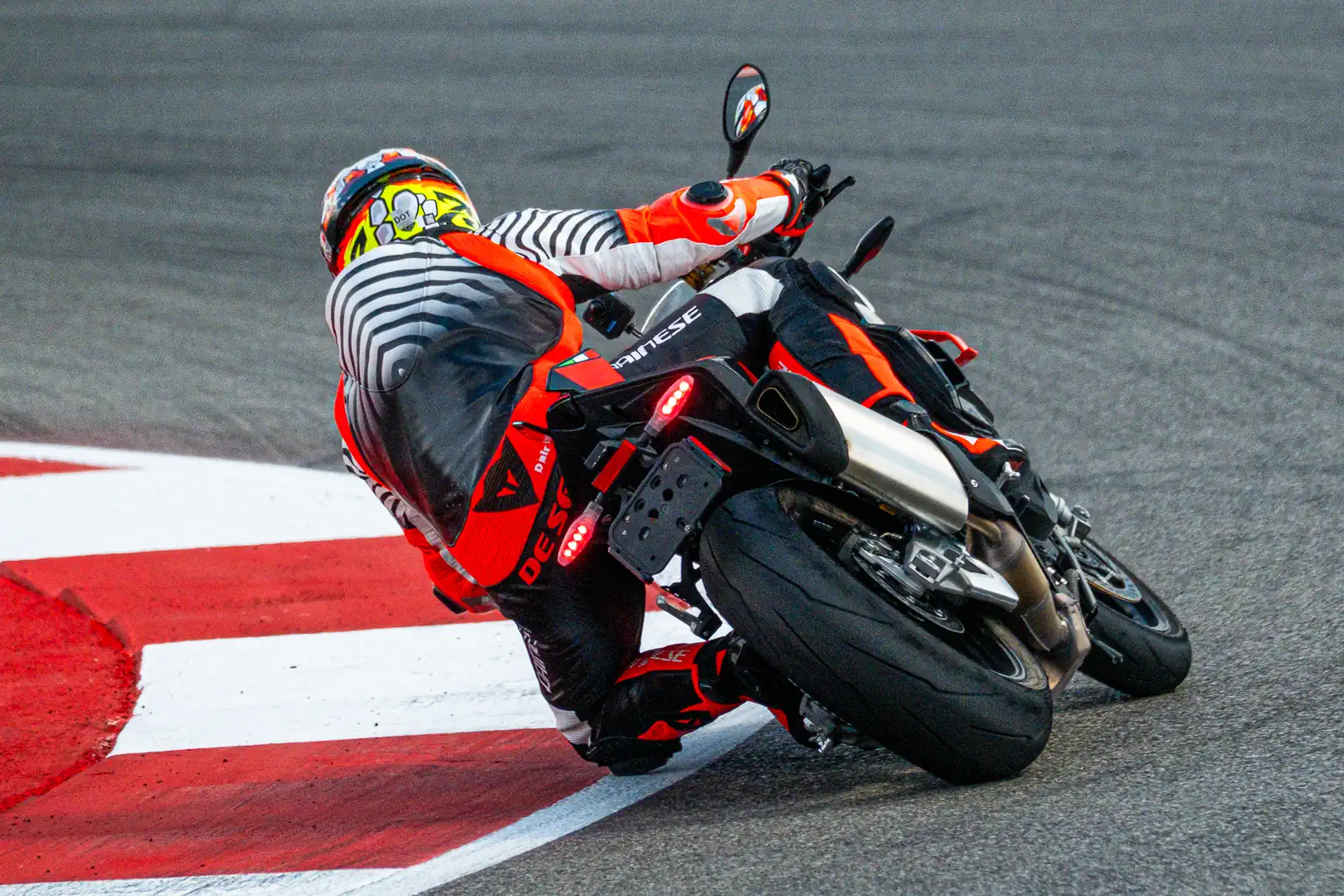
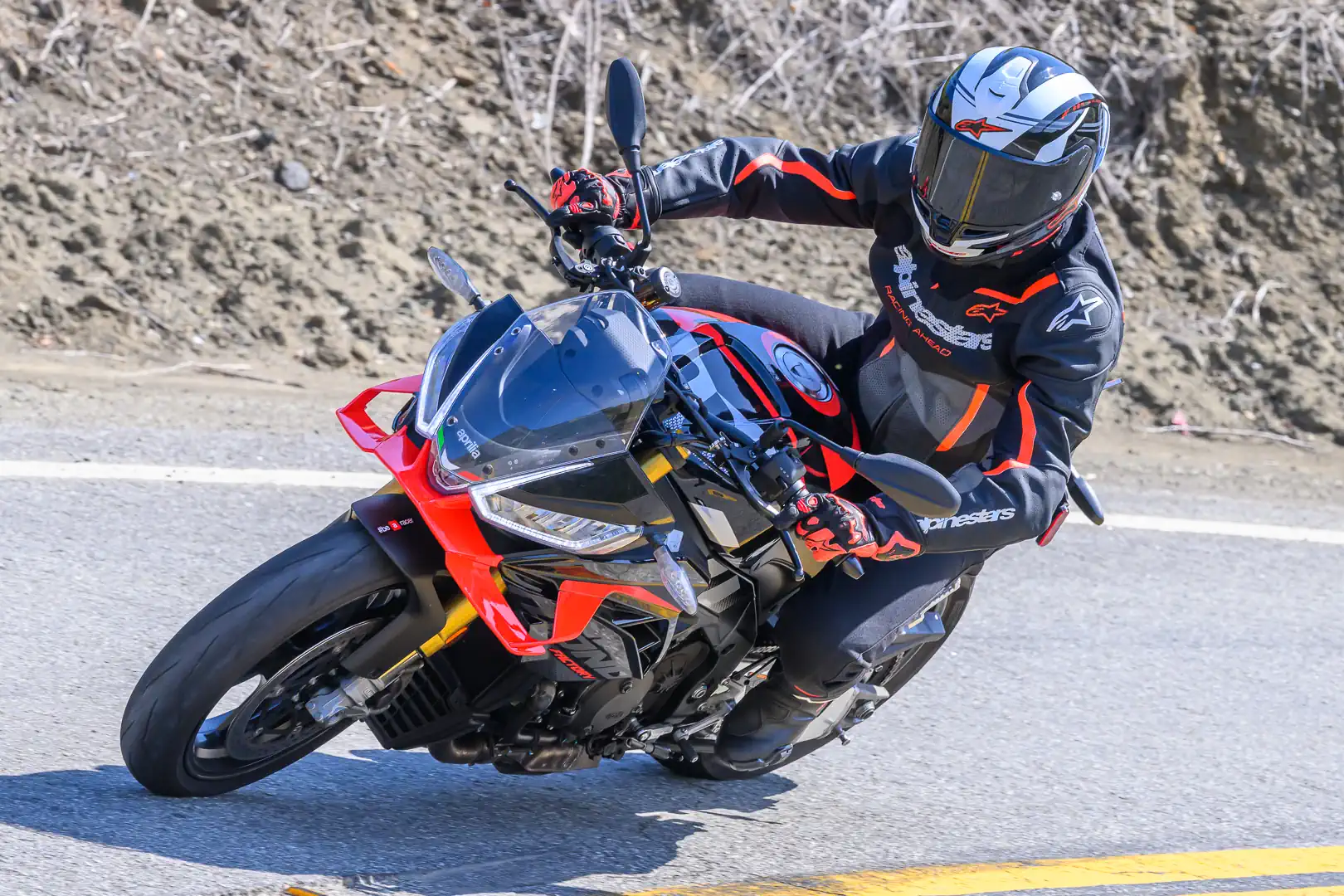
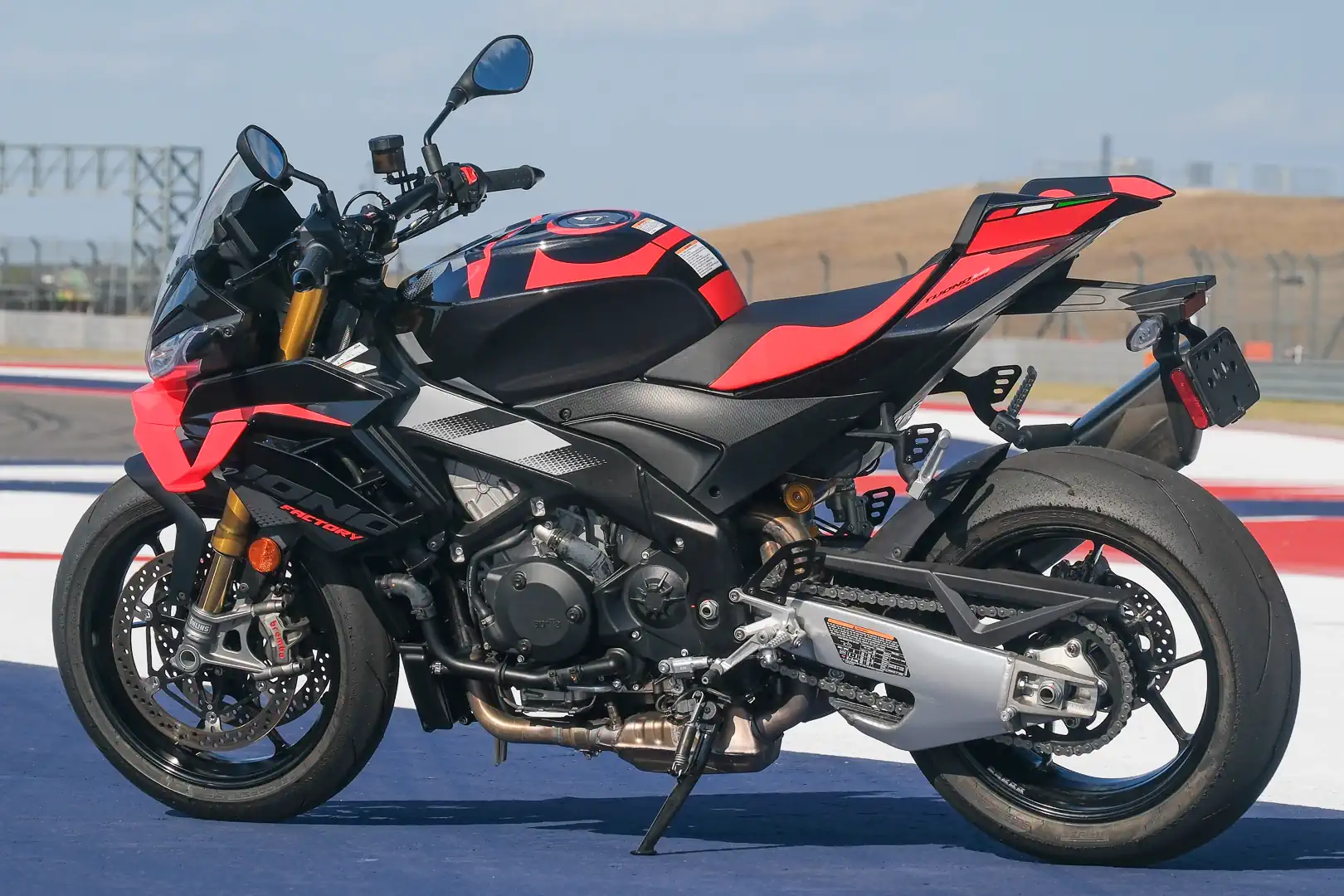
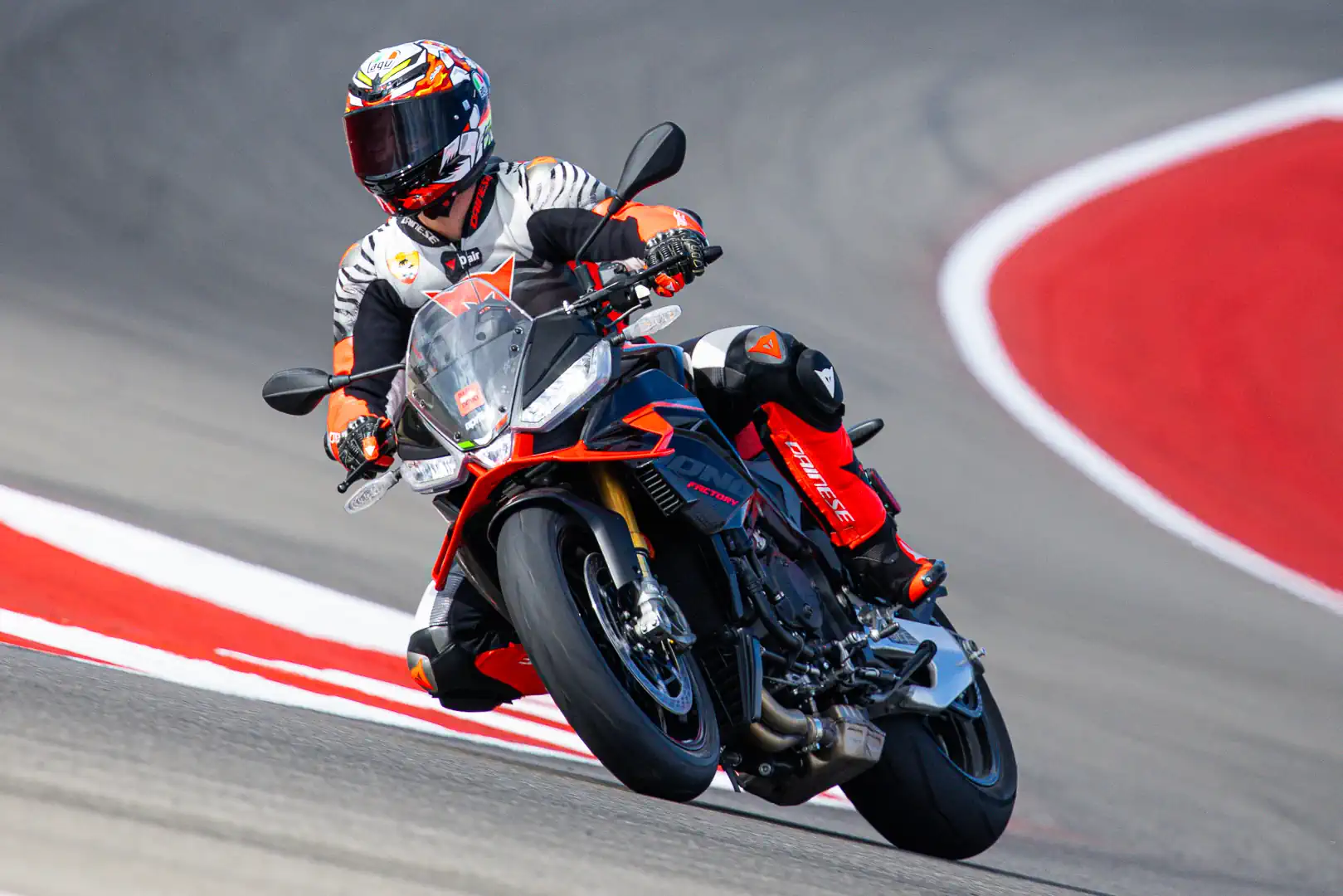
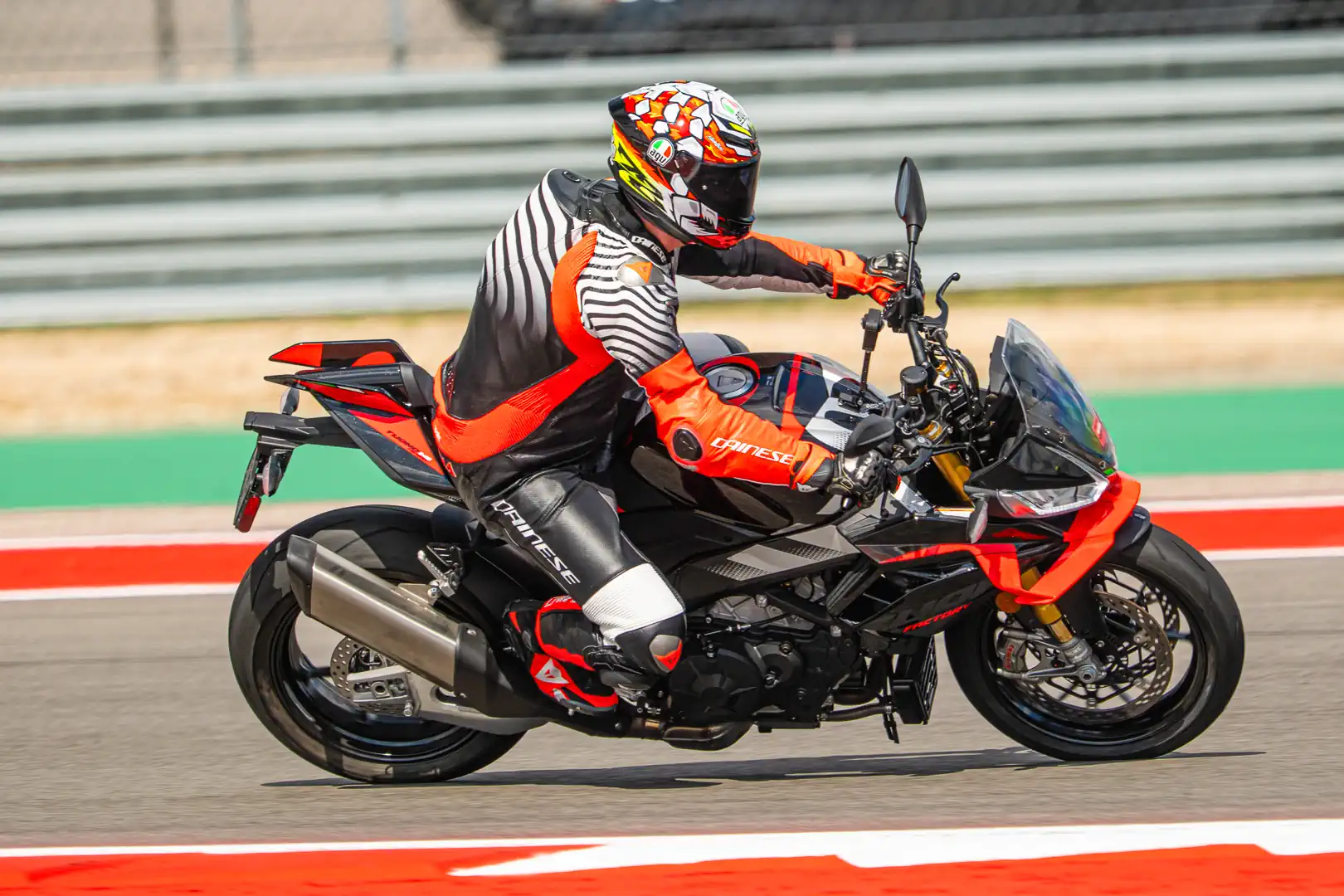
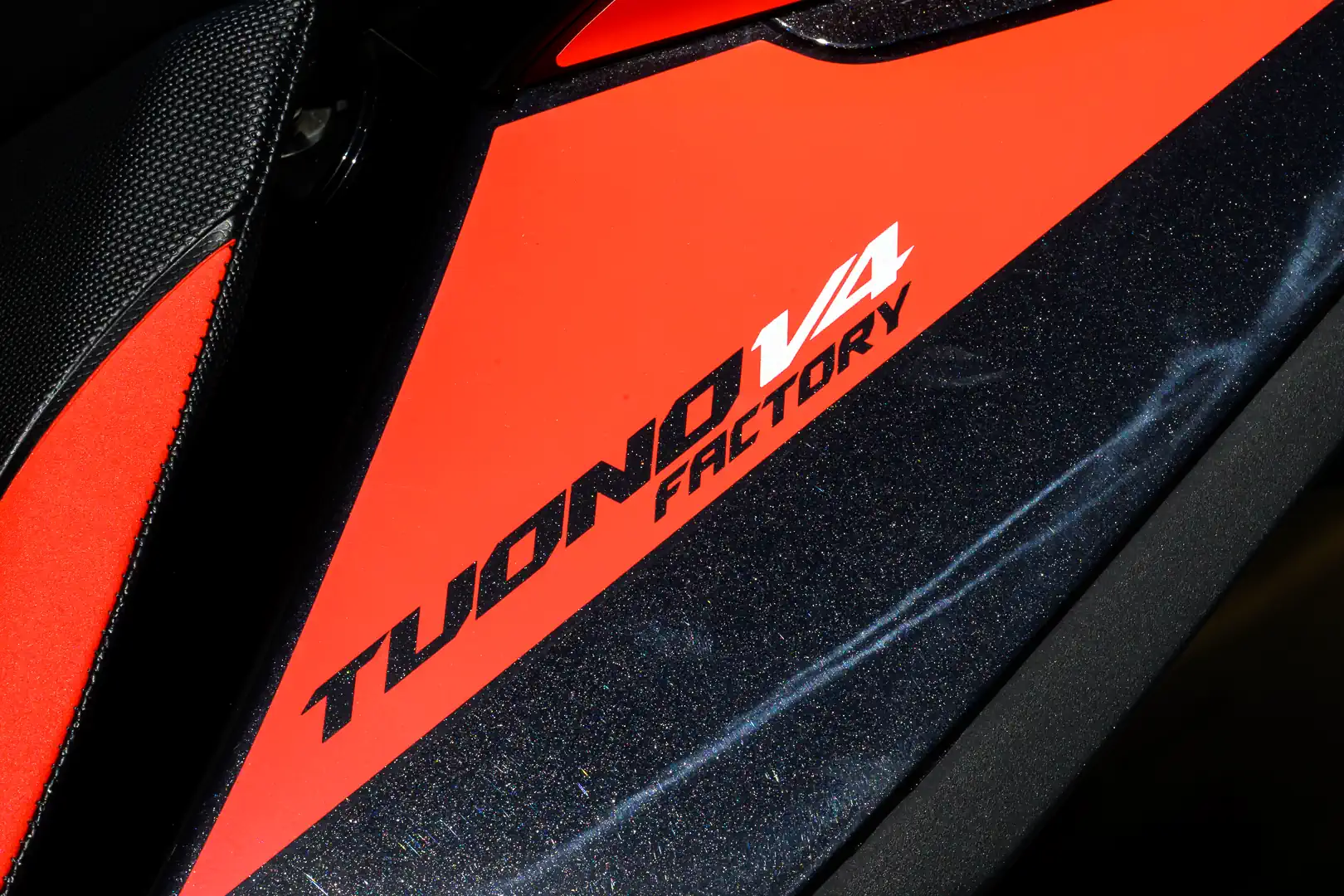
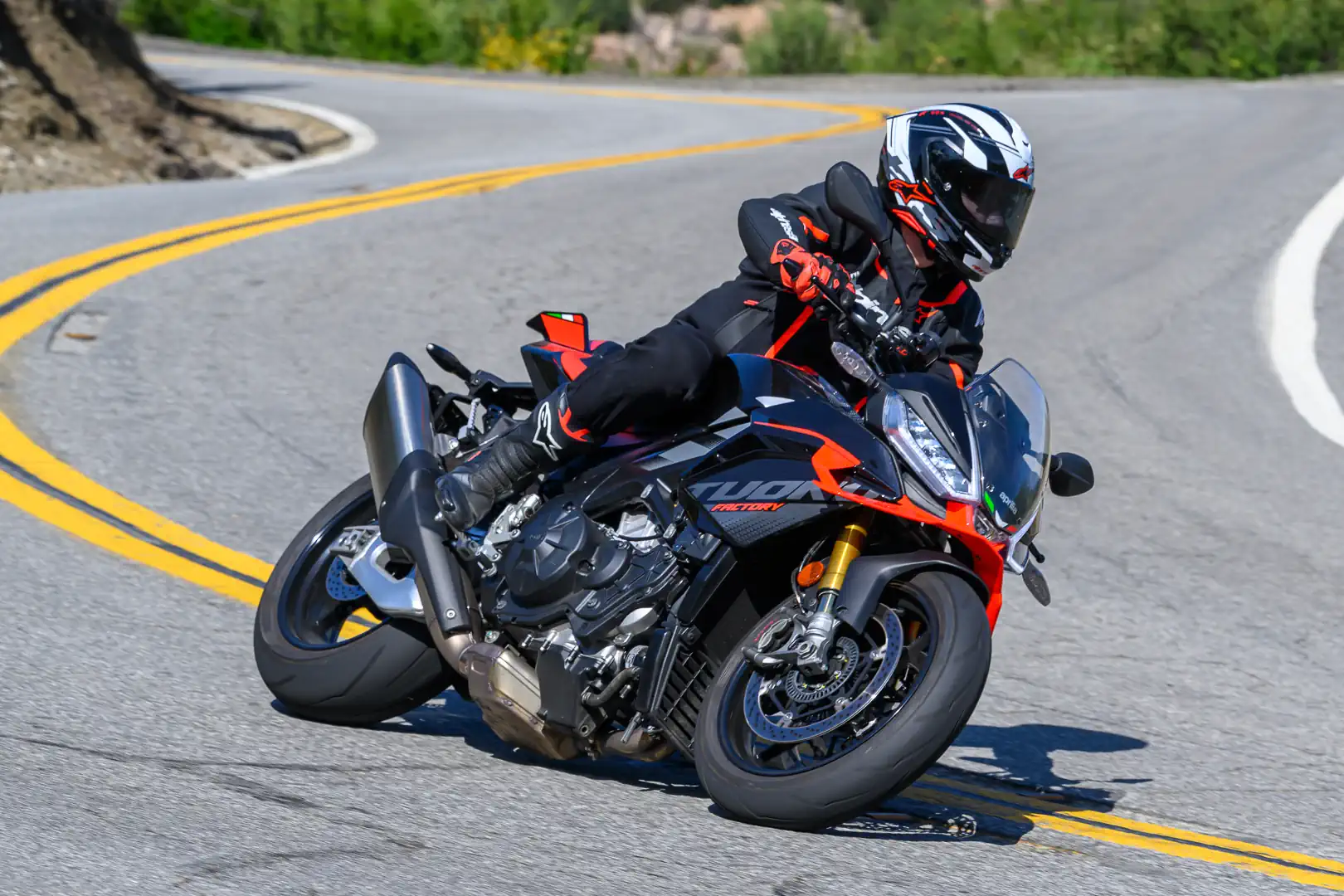
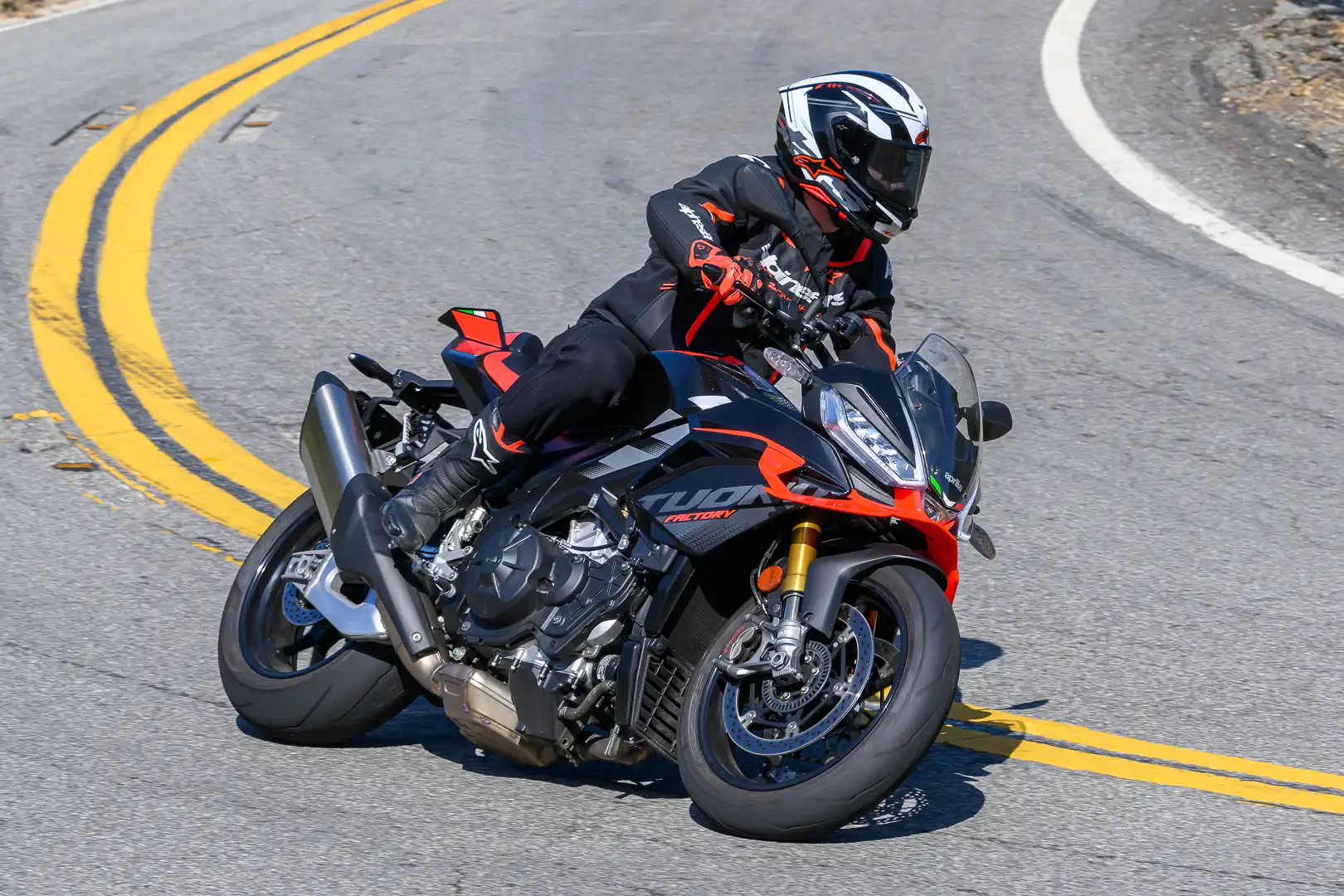
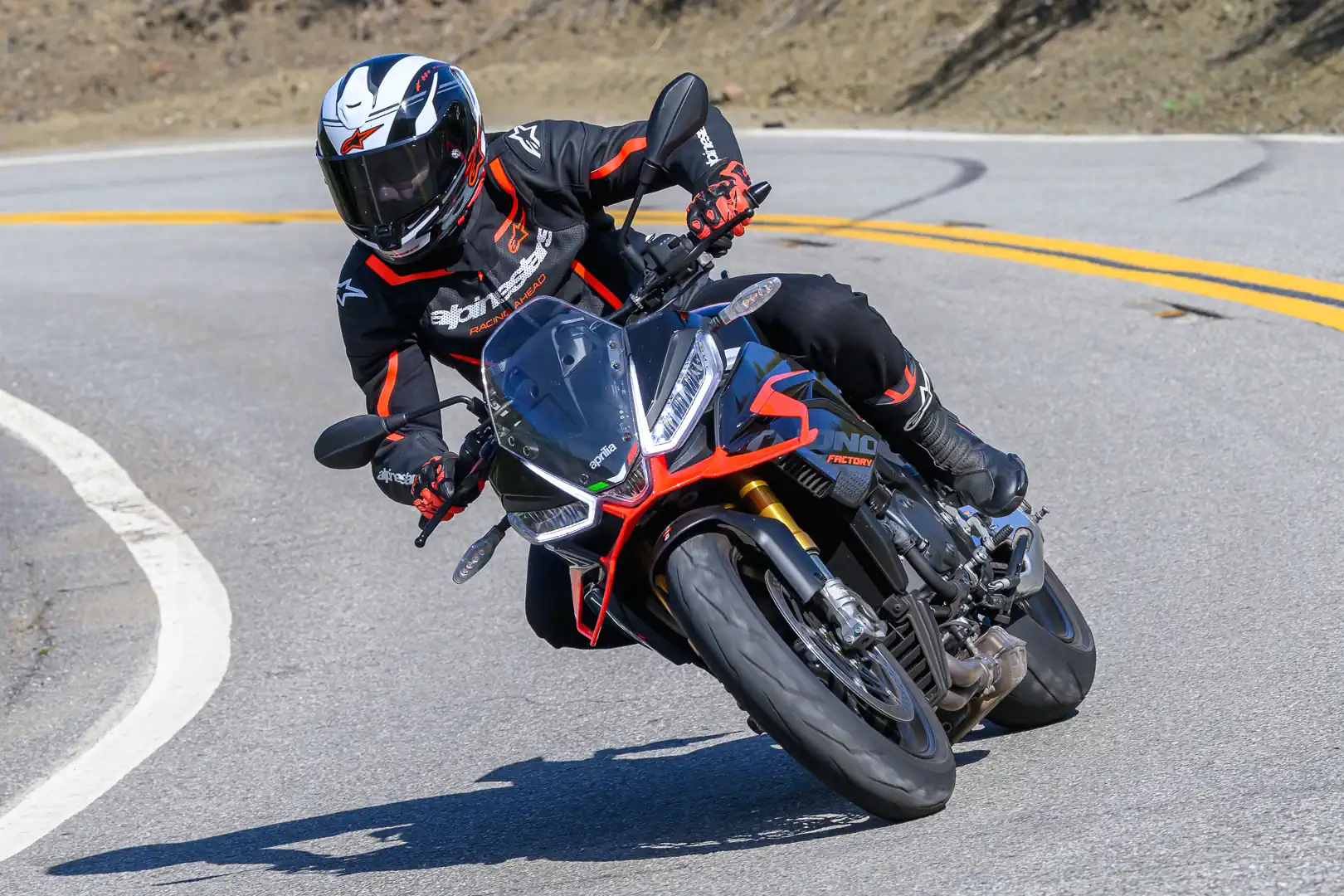
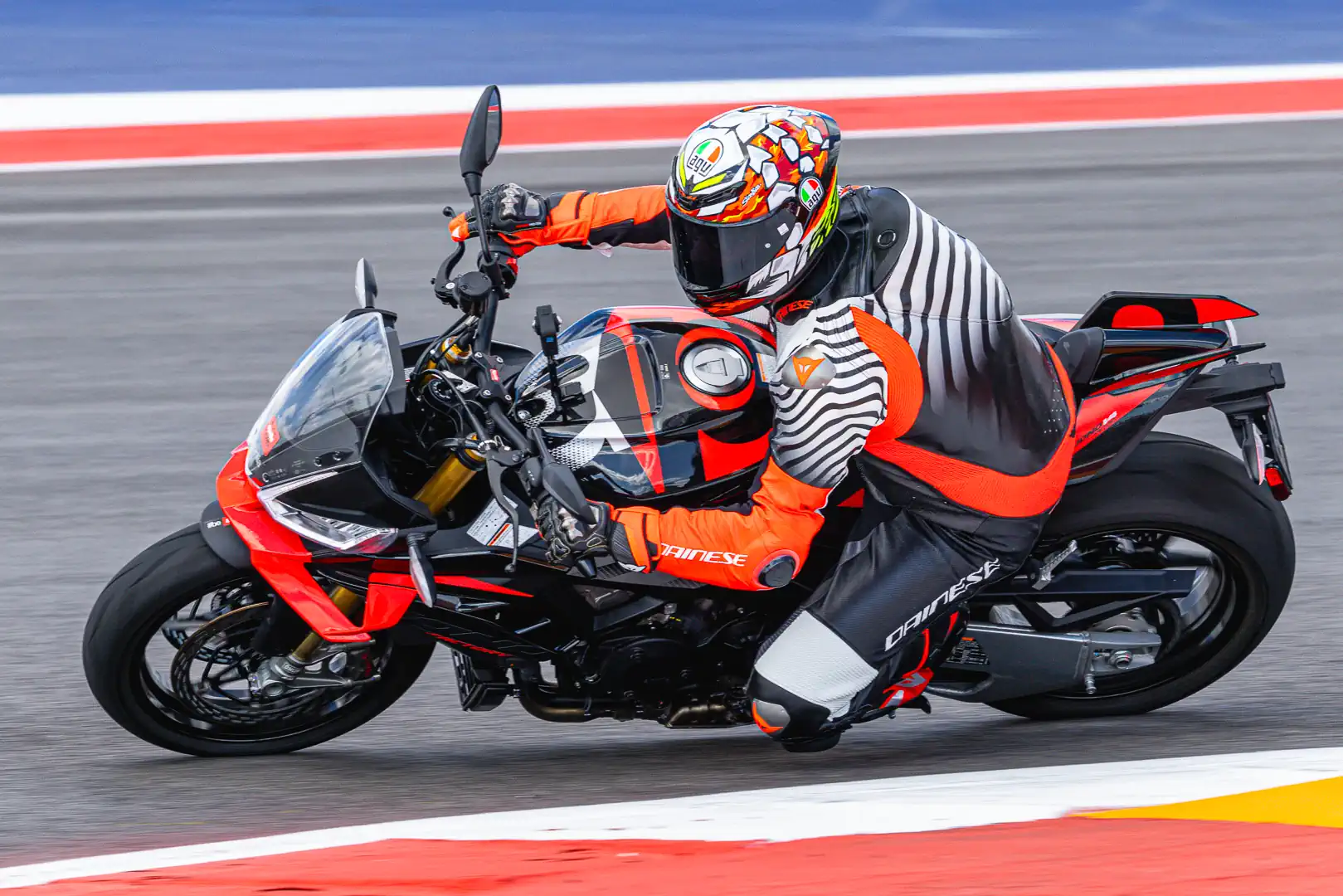
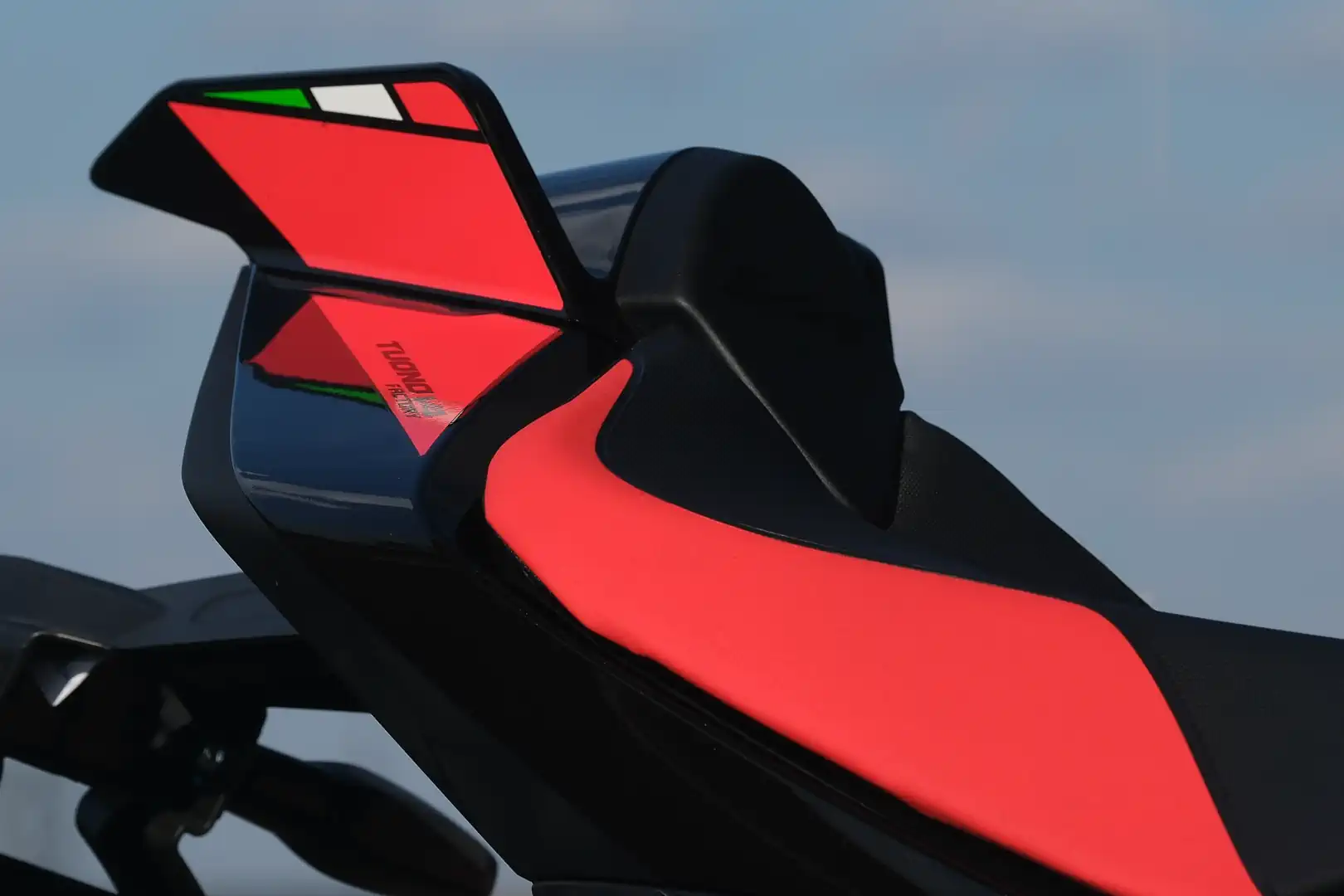
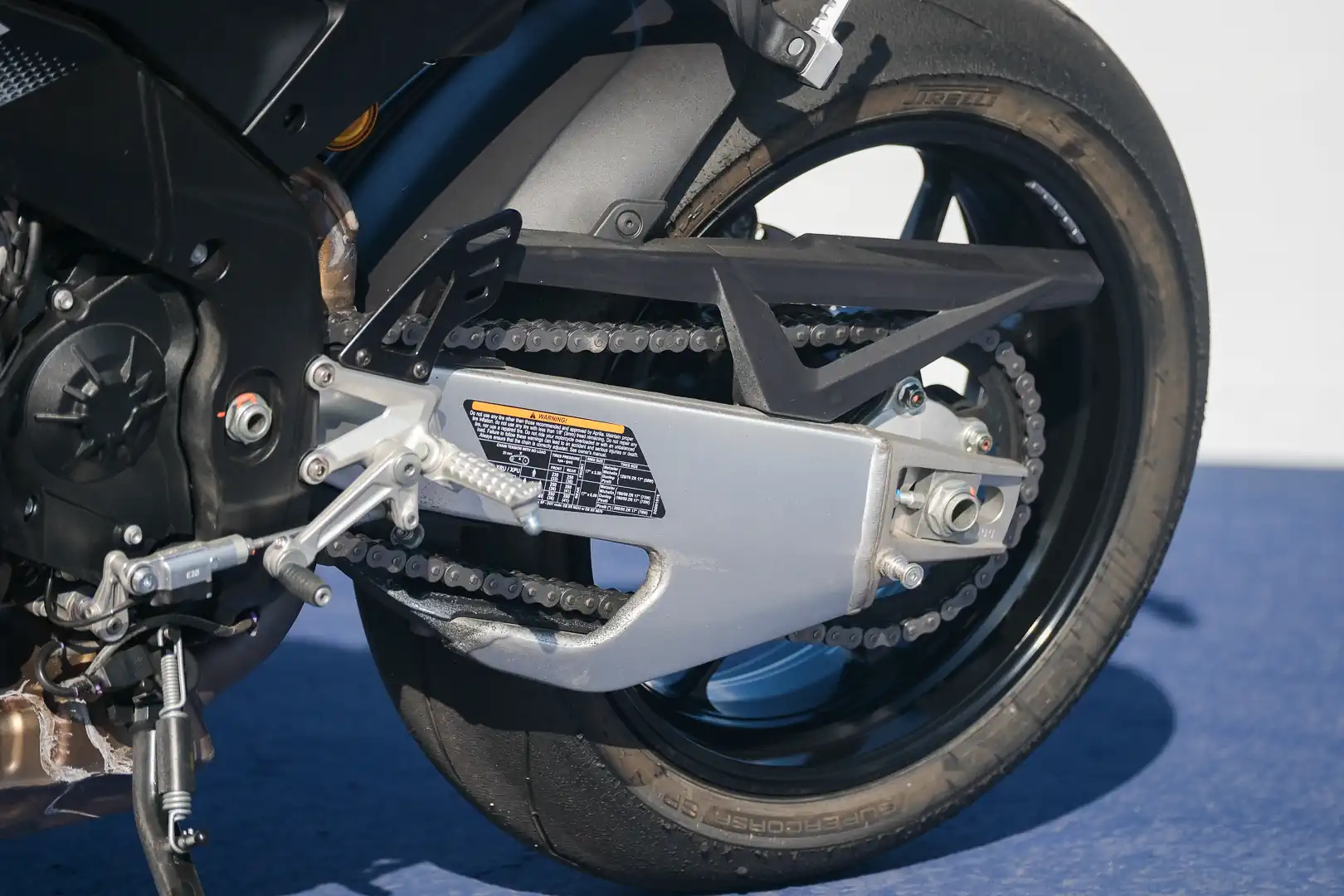
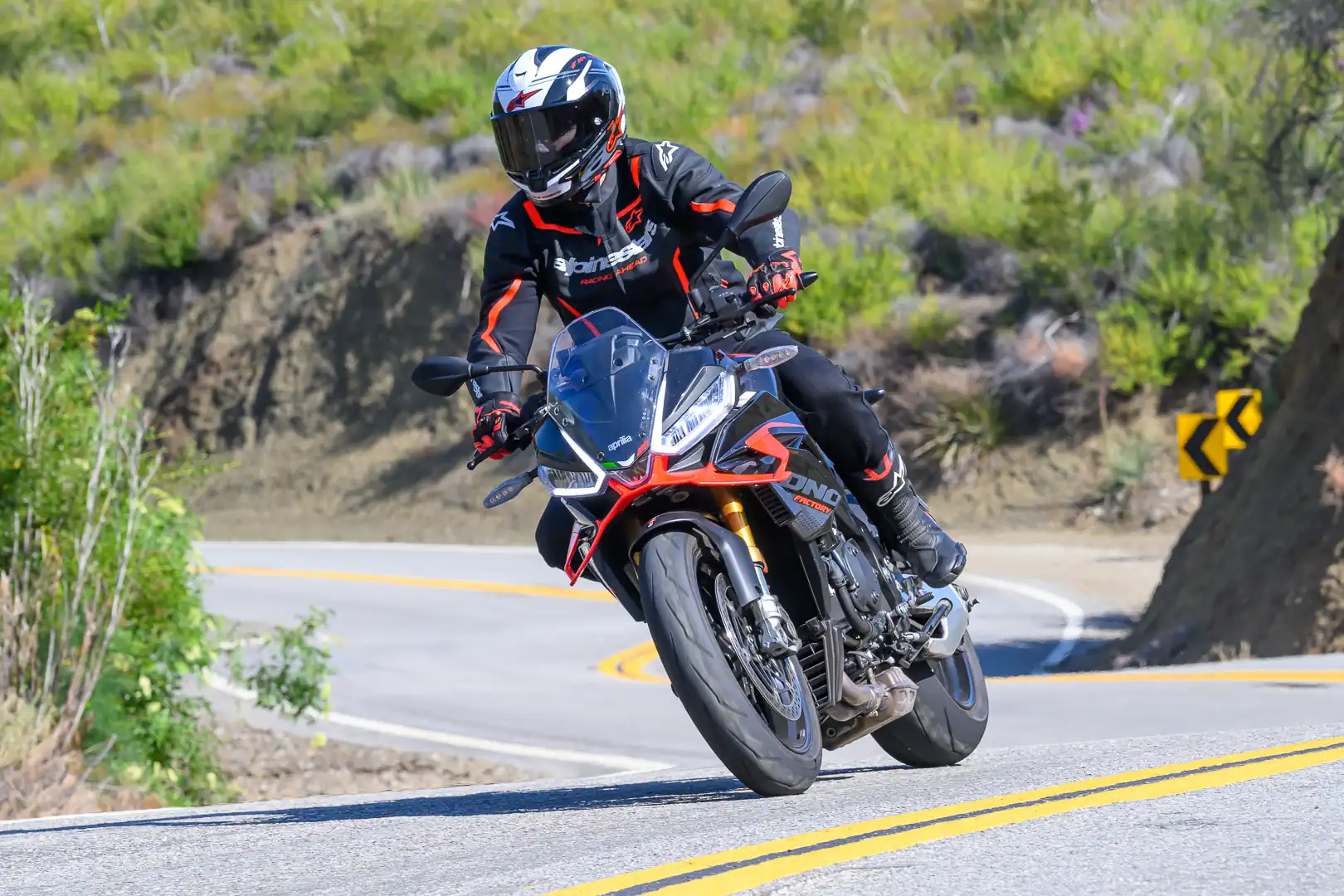
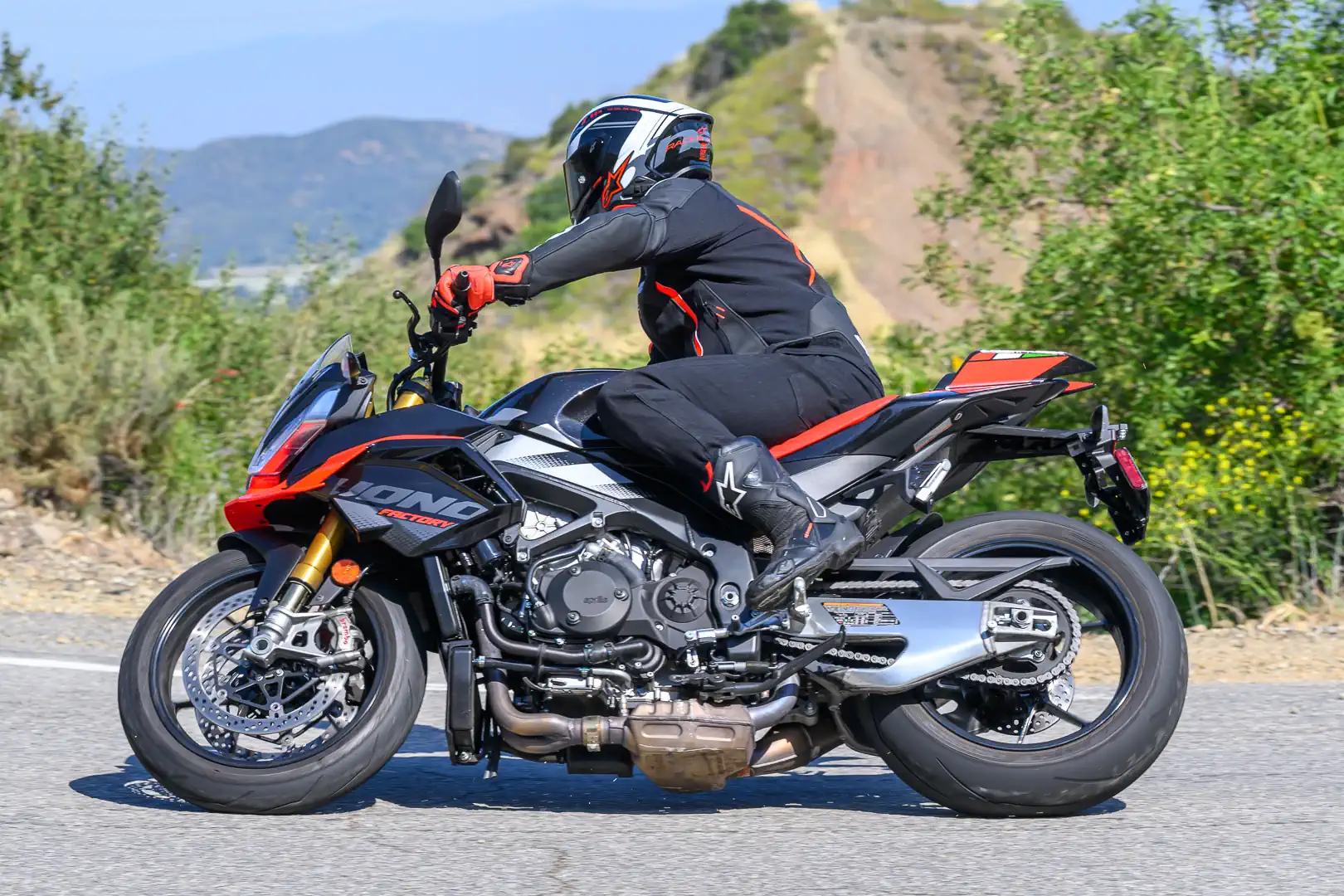
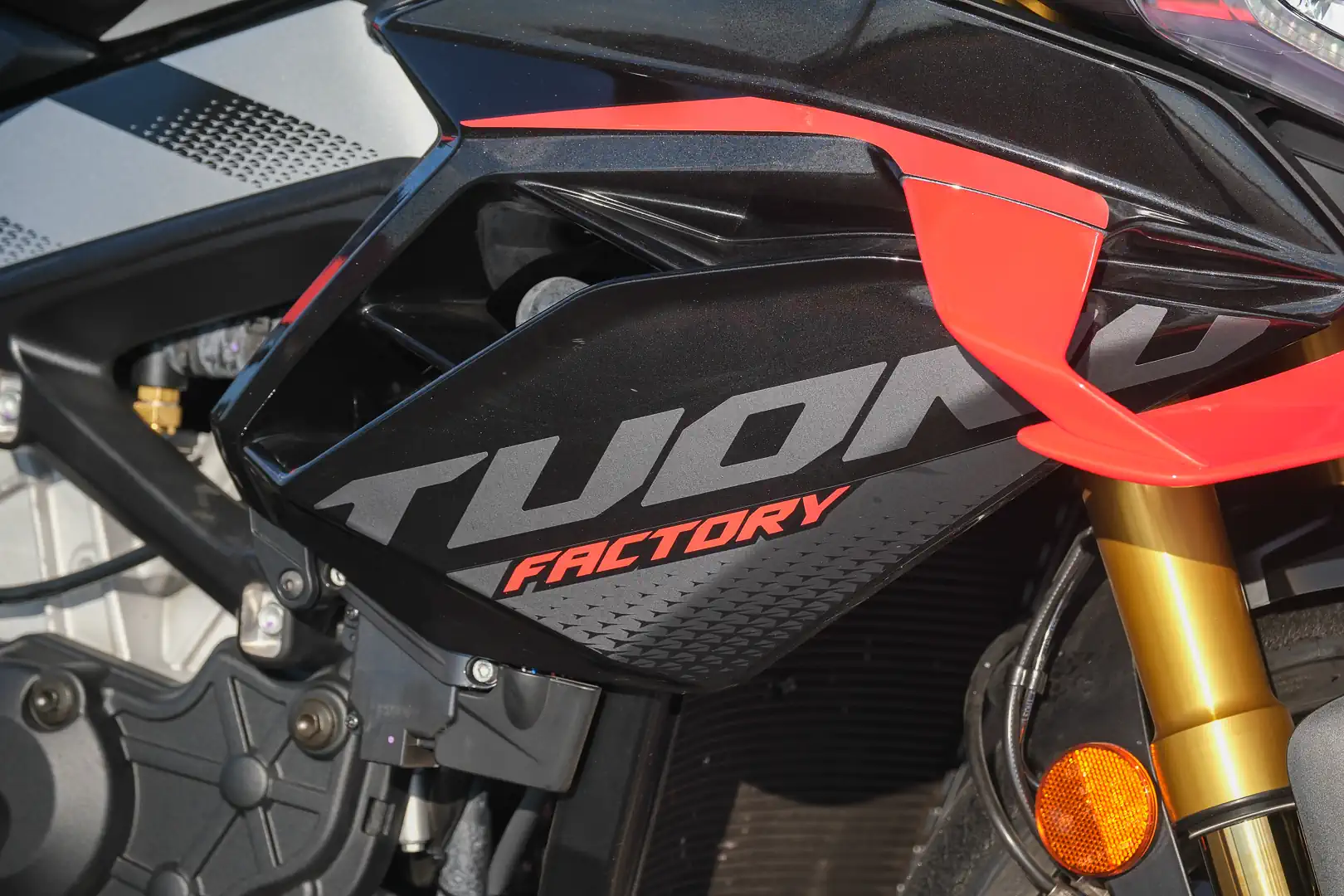
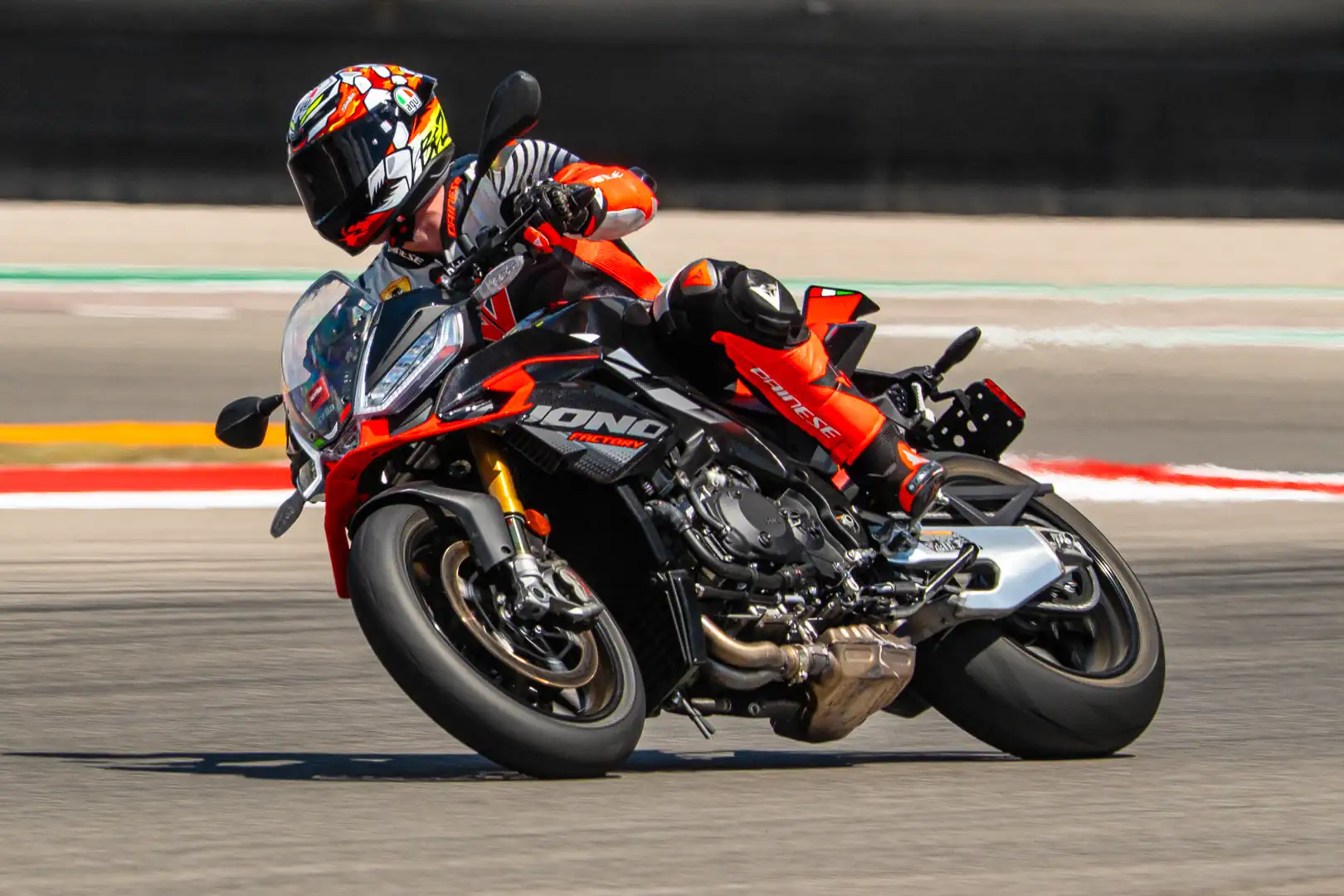
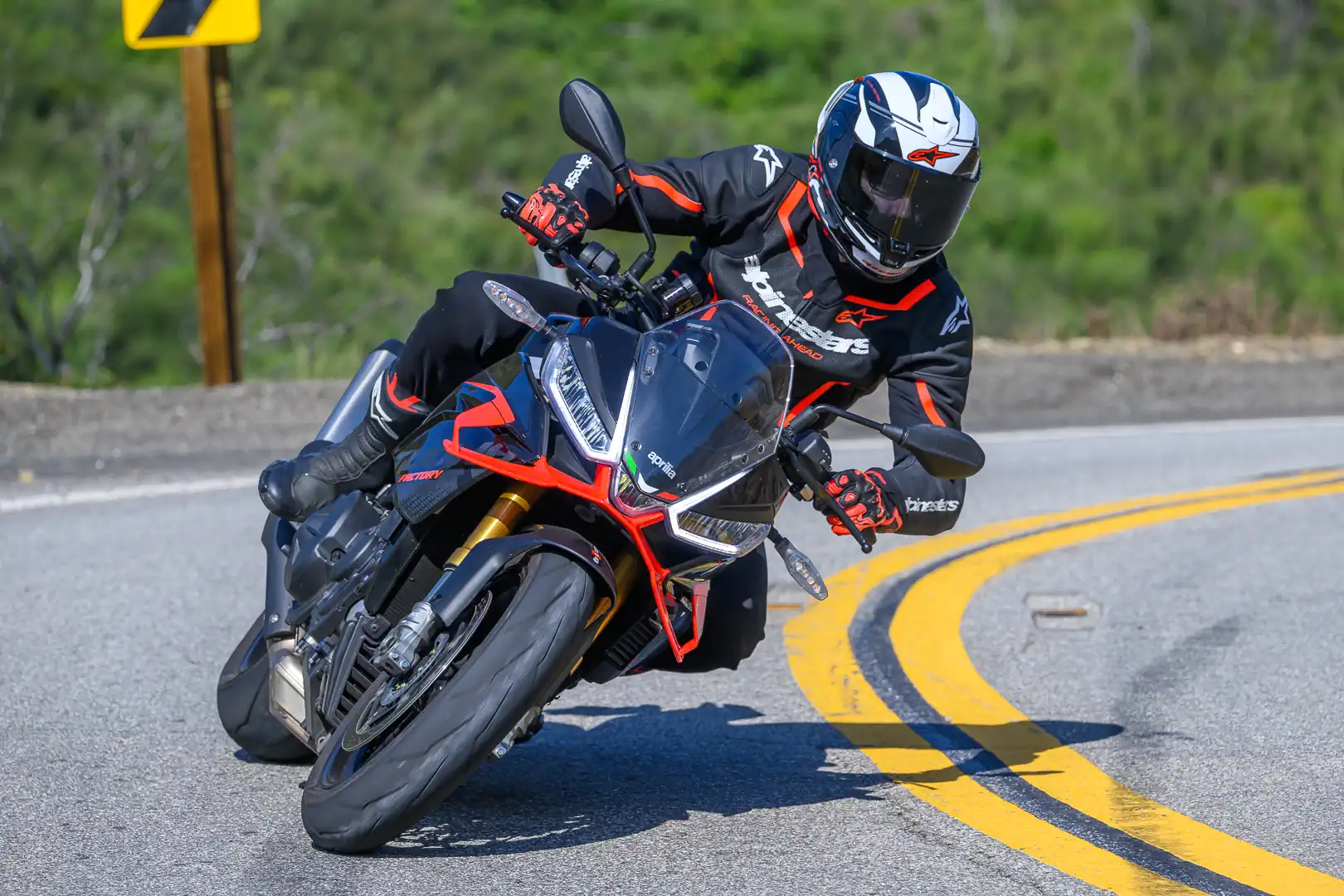
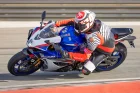
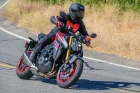
The 2026 Aprilia Tuono V4 Factory 1100 remains one of the purest expressions of excess in motorcycling, standing proudly as an example of two-wheeled wish fulfillment done right. There are no gimmicks, pangs of guilt, or disappointment in the Tuono V4 Factory; it is simply a damn good bike.
This year, Aprilia is rolling out a significant update for the Tuono V4, though it isn’t a thunderous from-the-ground-up revision, either. Displacement climbs from 1077cc to 1099cc through a longer stroke; output rises to a claimed 180 horsepower; the bodywork receives aerodynamic revisions inspired by Aprilia’s MotoGP program; and the electronics suite grows even more advanced with predictive rider aids and expanded customization options. Meaningful updates that don’t upset the careful balance Aprilia has created with its upright sportbike.
The Factory version of the Tuono V4 layers on prior-generation semi-active Öhlins Smart EC 2.0 suspension, six riding modes, launch control, slide control, and track-focused electronic adjustability. After putting on miles in Southern California canyons aboard the Tuono V4 Factory, and joining a star-studded paddock at Circuit Of The Americas during Aprilia Racer Days, there’s only one conclusion that riders can draw: this is still a hard bike to beat in one of the hottest segments.
The Tuono pioneered the supernaked formula in 2002, and it still feels like you’re getting away with something to this day. This machine’s premise remains beautifully ridiculous because it combines superbike-level performance with ergonomics that encourage you to use it. Dailying a Tuono is entirely within reason and would certainly make the commute far more entertaining, even if the mighty V4 is thirsty when ridden with intent. Unlike superbikes that always demand full commitment, the Tuono V4 knows when to take on a civilized personality at lower speeds, slice politely through traffic, and do it comfortably without taxing the rider. One quick throttle blip, and its RSV4-superbike DNA blasts to the forefront, revealing the pointed hypernaked we’ve all come to fawn over. This isn’t punctuated by a bipolar, Jekyll and Hyde riding experience, either. Its performance is clear-cut from the moment you hit the starter.
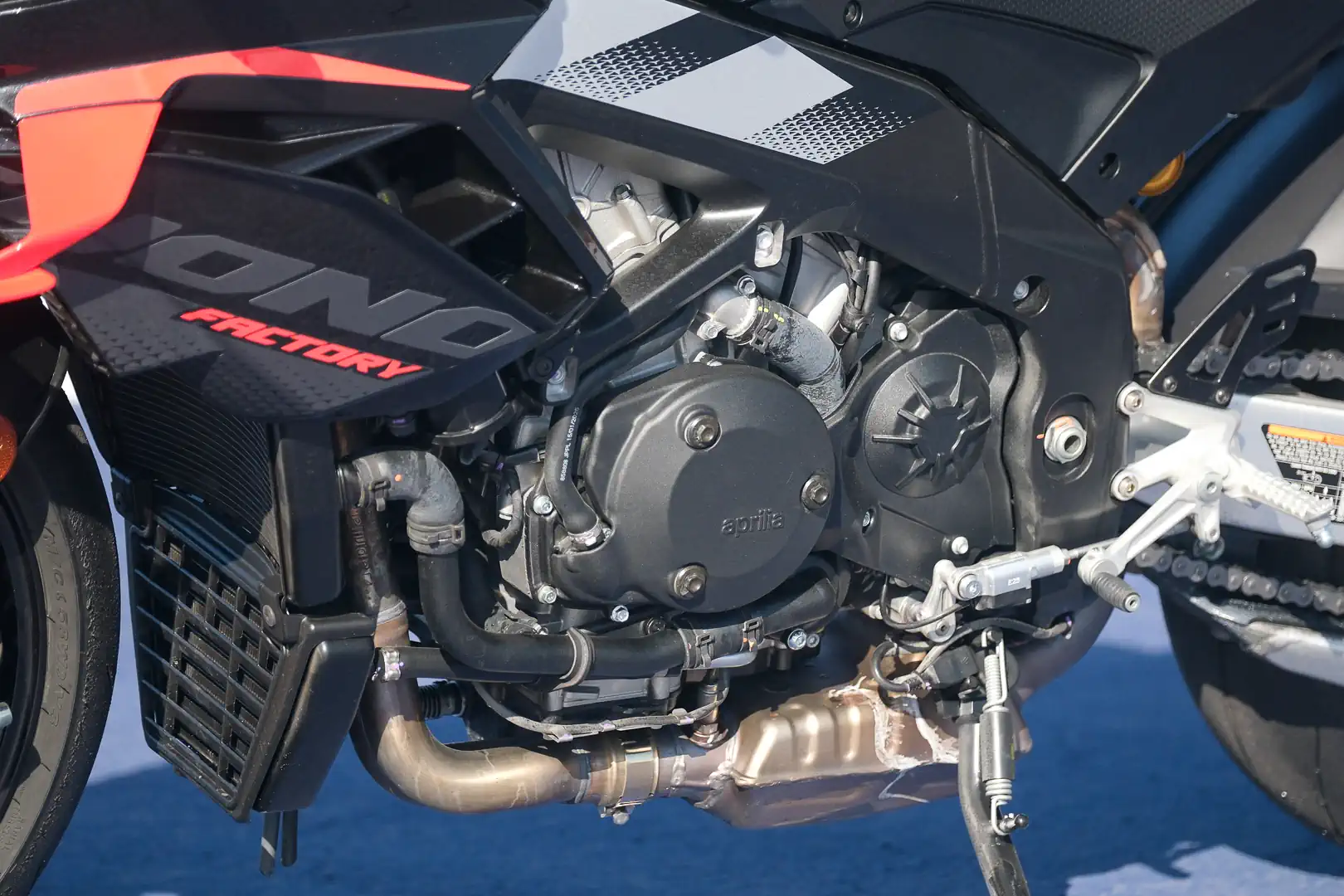
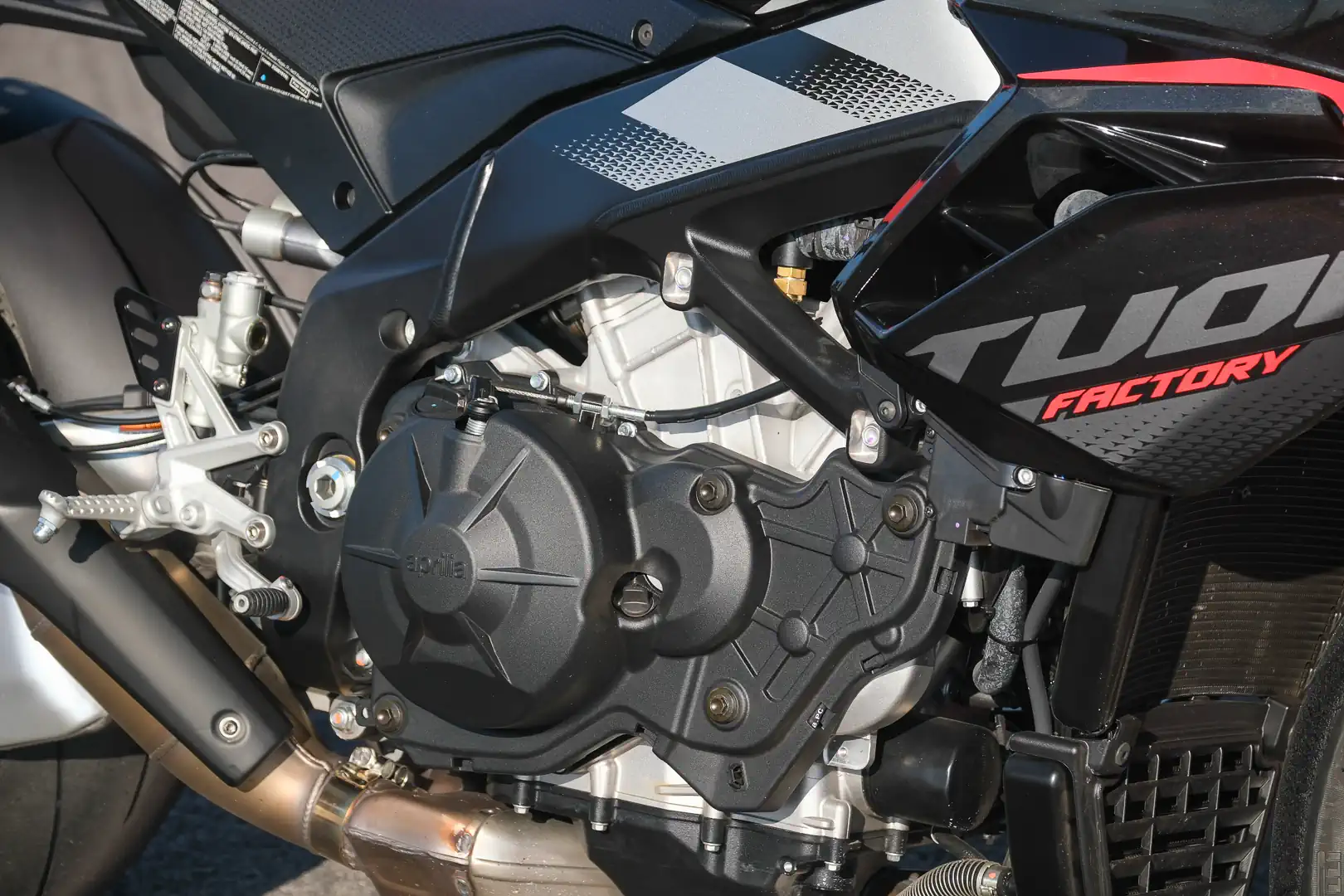
More is more: The V4 powerplant reaches for more refinement. Aprilia increased displacement to 1099cc by extending the stroke to 53.32mm, while retaining the existing 81mm bore shared with the RSV4. New 52mm throttle bodies arrive, pilfered from its superbike sibling, helping the 65-degree V4 raise its claimed figures to 180 horsepower at 11,800 rpm and 89 lb-ft of torque at 9650 rpm. Those numbers aren’t class-leading anymore, as fellow European competitors have blown past the 200 hp marker. However, the spec sheet matters less than what an engine actually does. More headroom seems to turn everything up a smidge, with its famed ever-present midrange putting in work on the street or when navigating COTA’s technical areas. That lightning-quick acceleration and well-tuned throttle response come in handy no matter what the environment. Its V4 responds with a rich, muscular punch that somehow feels smoother than prior generations.
Making 180 horsepower seem approachable is no small feat. Aprilia struck gold when it penned the blueprint of its mill way back in 2012. It has proven itself time and time again, while updates have only improved on the Tuono’s sultry, tractable power delivery. Although it doesn’t match the RSV4’s 220-hp peak output, that’s by design. The Tuono has employed, and still does, a more torque-focused engine strategy. That starts with a model-specific airbox, velocity stacks, cams, steel valves, different pistons, and shorter gearing, all of which ensure its endless roll-on power on public roads is supremely manageable. At COTA, the Tuono can leverage its massive grunt to its advantage over high-strung superbikes, often jumping them off the apex. Sure, an RSV4 will scamper away when talking top-end power, but that only matters in situations where it can be used.
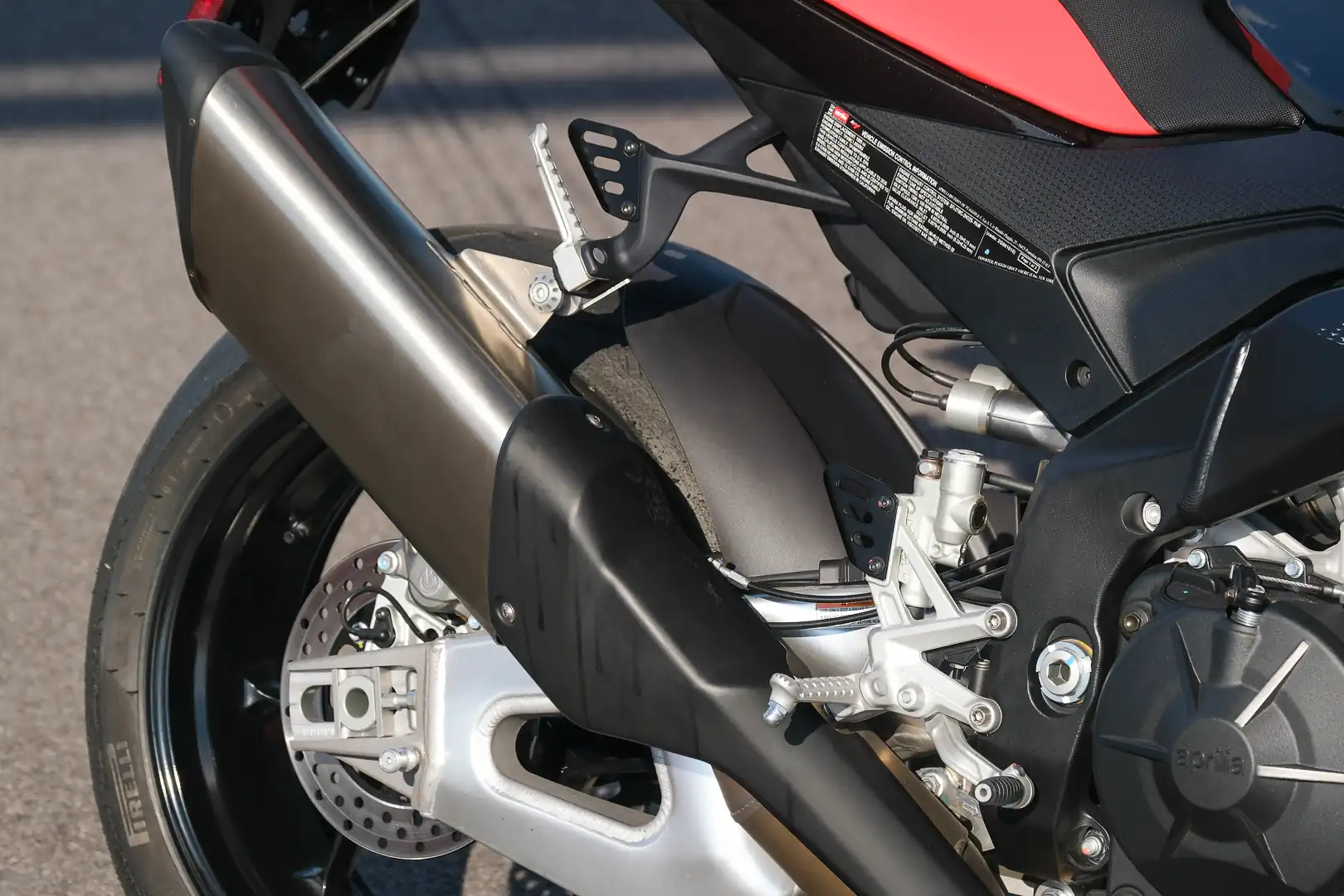
Sound is subjective, until it’s objective: Aprilia’s V4 powerplants make one hell of a racket. Some engines make power, others create atmosphere. Some do both. The Tuono delivers one of the most distinctive soundtracks in the industry, seemingly blending intake roar with an almost threatening bark at any rpm. Of course, Yamaha’s CP4 crossplane crankshaft inline-4 engines deserve a shoutout here, too. Even with Euro5+ emissions compliance and an updated exhaust system that relocated the catalytic converter to improve heat dissipation, the Ape retains its signature snarling sound, best sampled when running wide open down one of COTA’s two enormous straightaways.
The six-speed gearbox is as sturdy as ever. Aprilia’s sport platforms have traditionally done quite well with their standard bi-directional quickshifters, and the V4 Factory doesn’t spoil that tradition. Upshifts are positive and done with confidence at any time. Likewise, we can say the same for the downshifts, particularly when on the street. There are moments in ultra-hard racetrack braking zones when rapid-fire downshifts can spike the revs and cause some hesitancy. We’ll chalk it up to overrev protection, because the RSV4, with its higher redline, doesn’t exhibit the same traits. Still, unless you’re backing down from 6th to 2nd in quick succession, you’ll likely never notice this quirk.
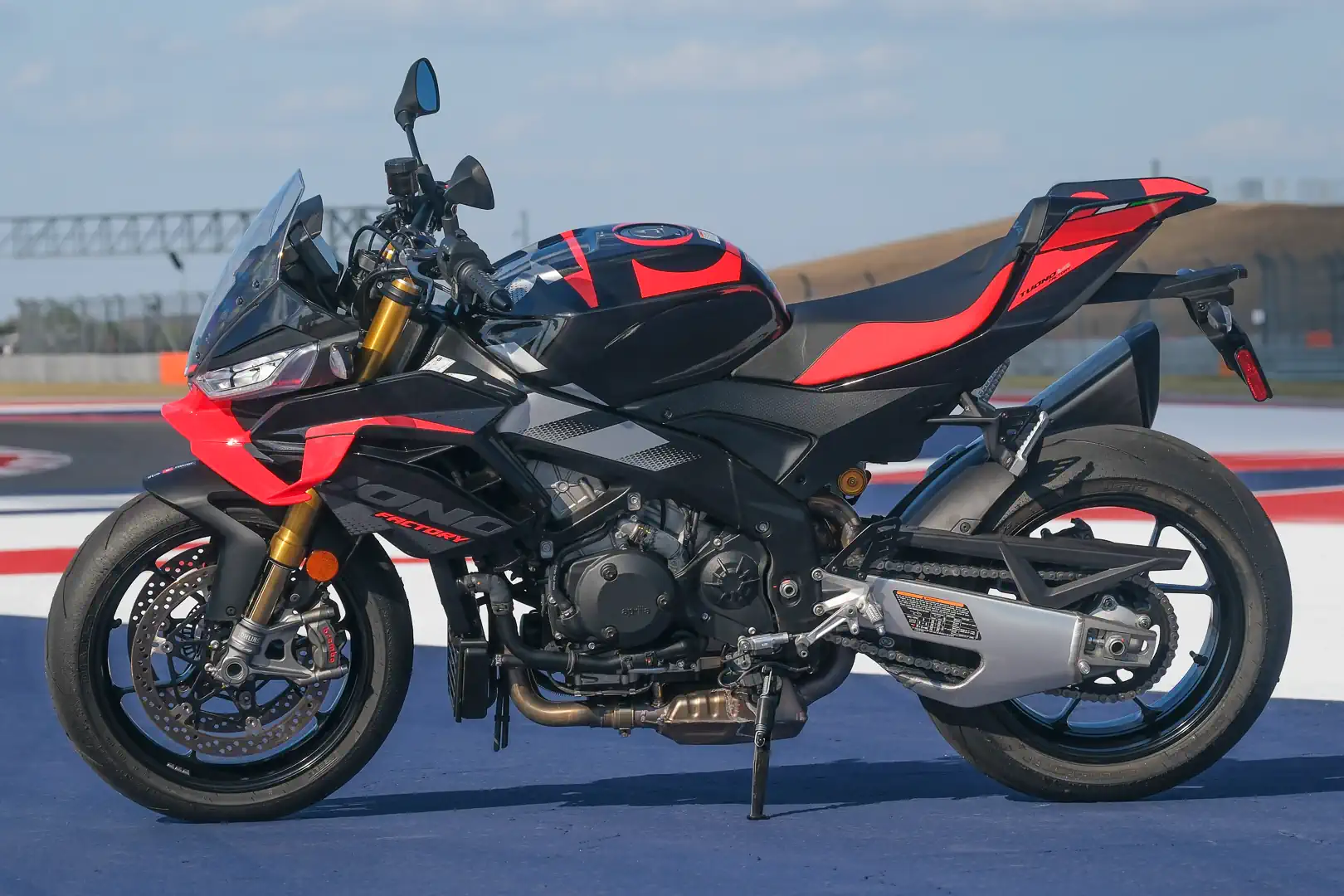
The Tuono is the most conservative in class in terms of its nudity, making the “naked bike” categorization one that required some imagination. These days, the Italian stallion is sporting a nude-from-the-waist-down style, which is the motorcycle-design equivalent of Donald Ducking. Thankfully, it leaves the engine exposed to the air for improved cooling. Doubling down on that goal, Aprilia has introduced new side fairings that direct hot air from the rider with positive results. It’s still a spicy meatball because a 1099cc V4 producing 180 hp cannot ignore thermodynamics, and larger radiator fans also help in that regard. Together, things cool off much faster while sparing pilots a noticeable amount of radiant heat.
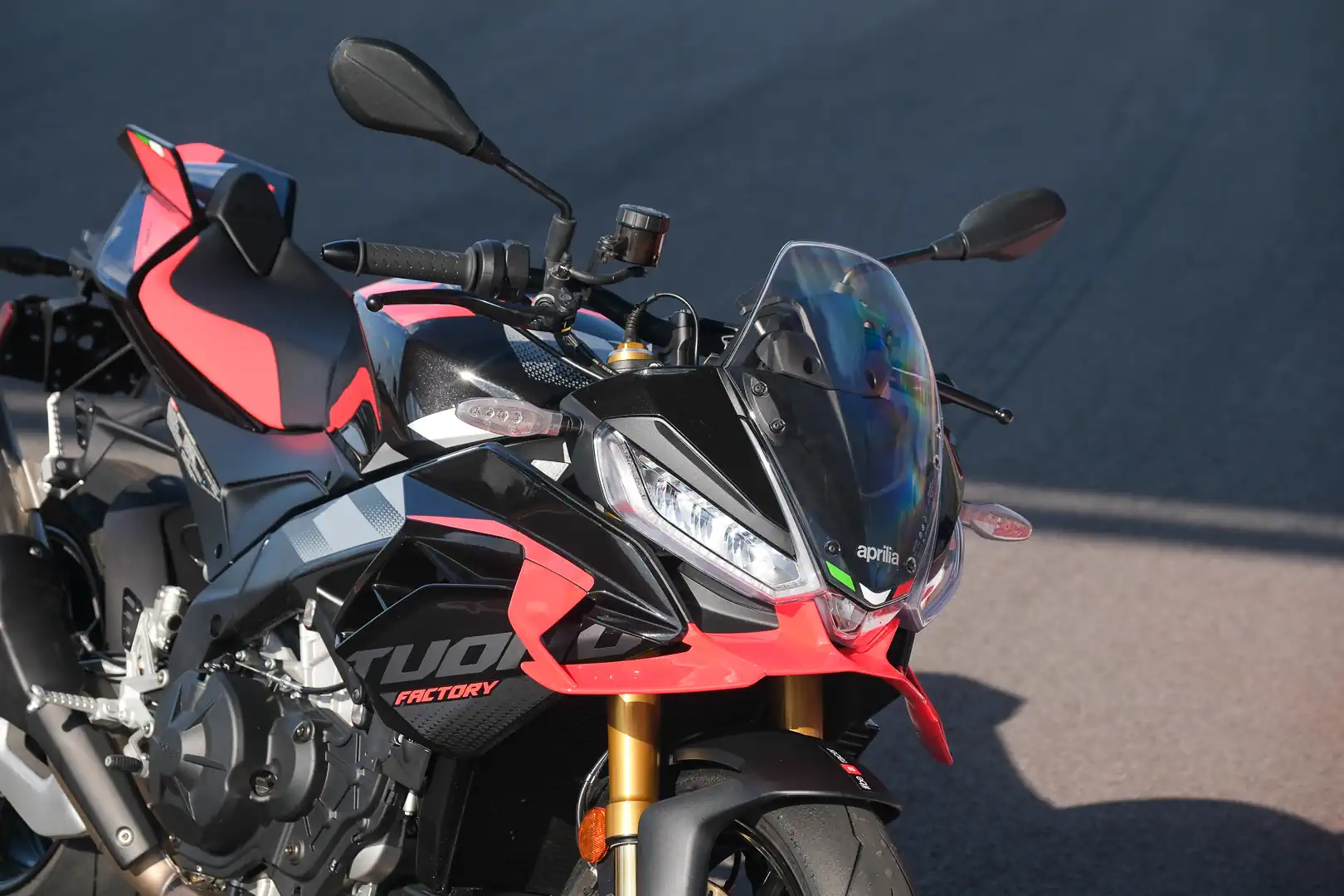
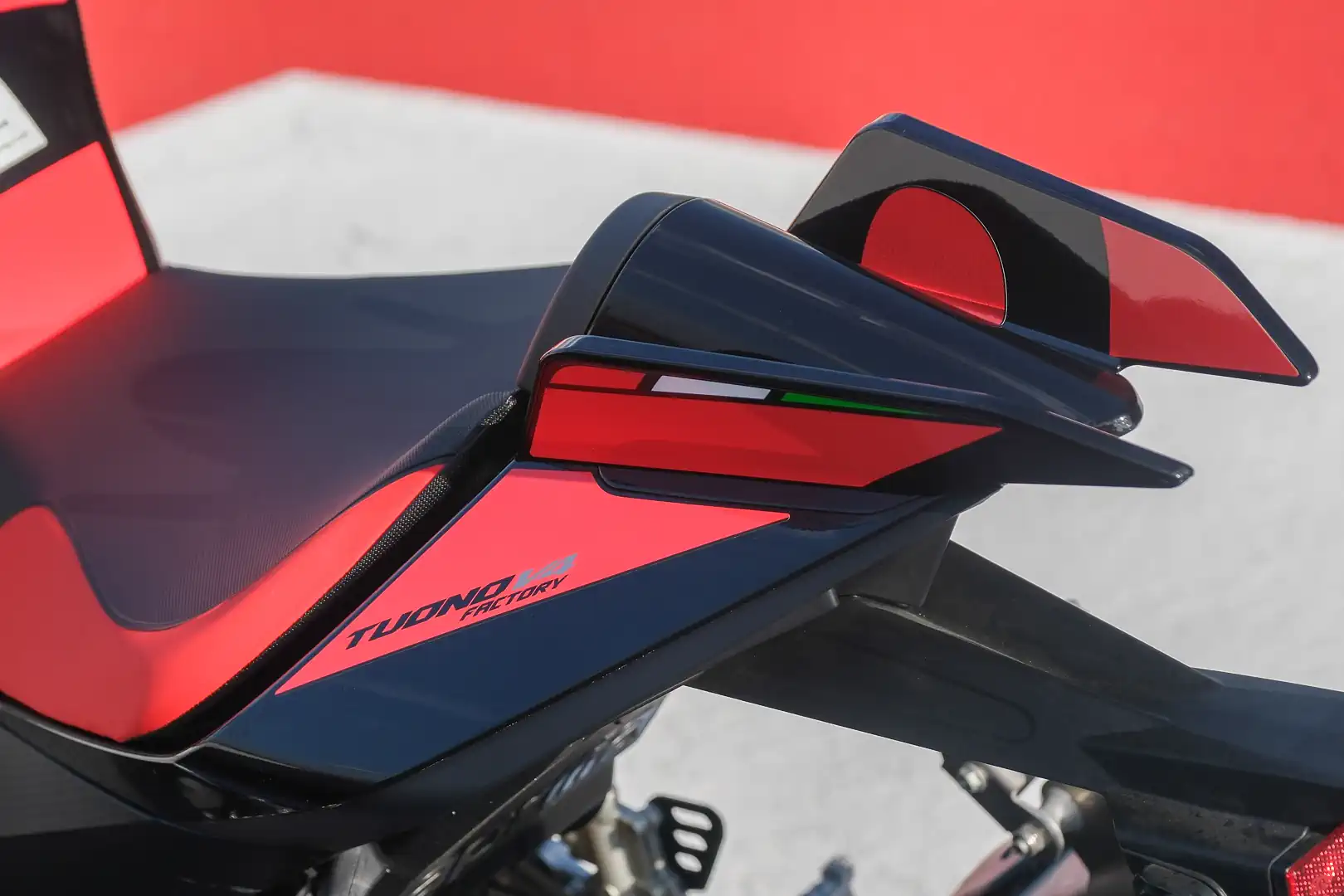
The reshaped fairings and MotoGP-inspired aerodynamic mustache contribute in several ways. According to brand literature, the winglet provides additional downforce, improving front-end stability and assisting with wheelie control. Following that up, the new windscreen encourages relief for the rider at freeway speeds. Physics exists, so the Tuono V4 won’t be as slippery as a fully-faired machine, but the plastic bits do support the cause.
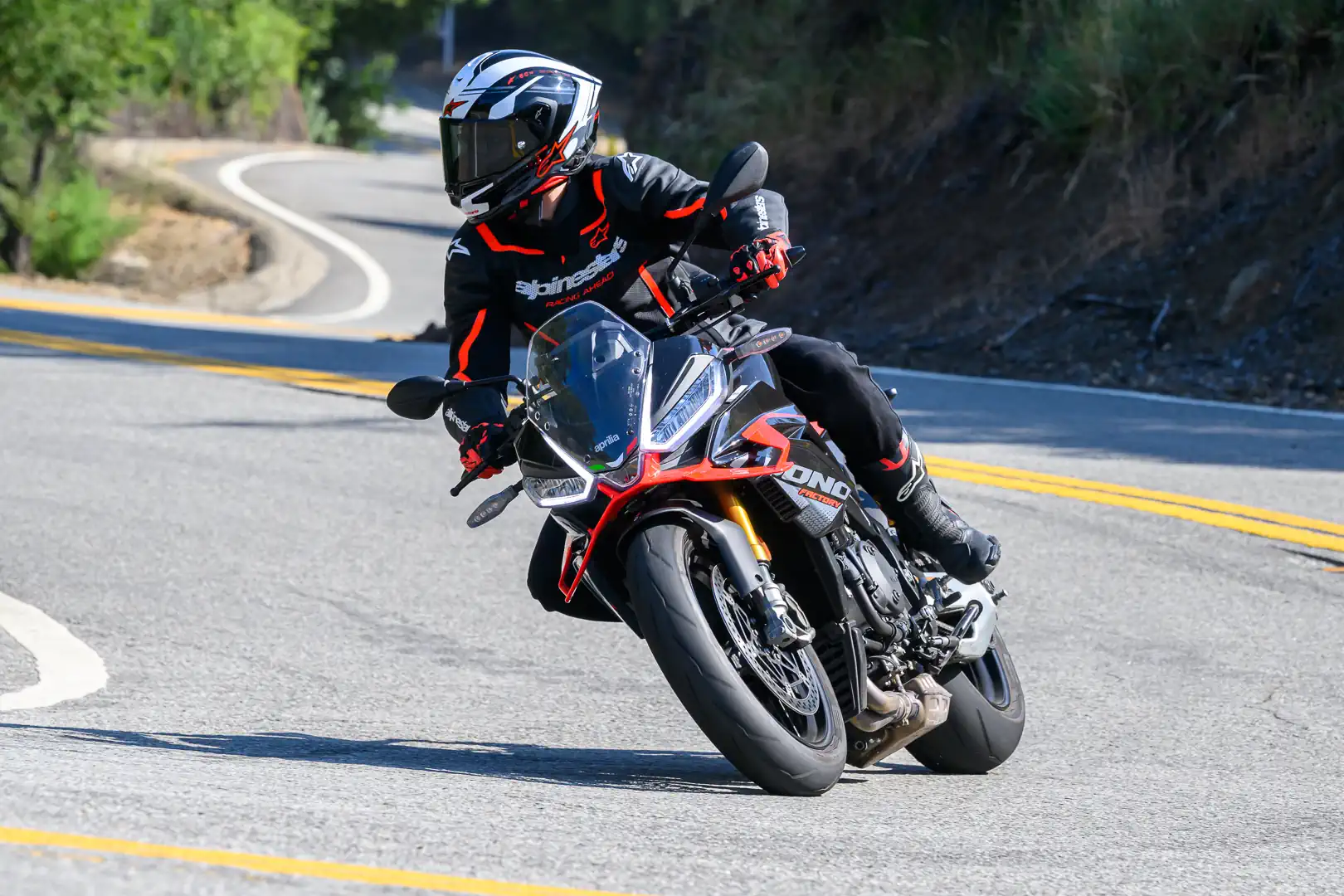
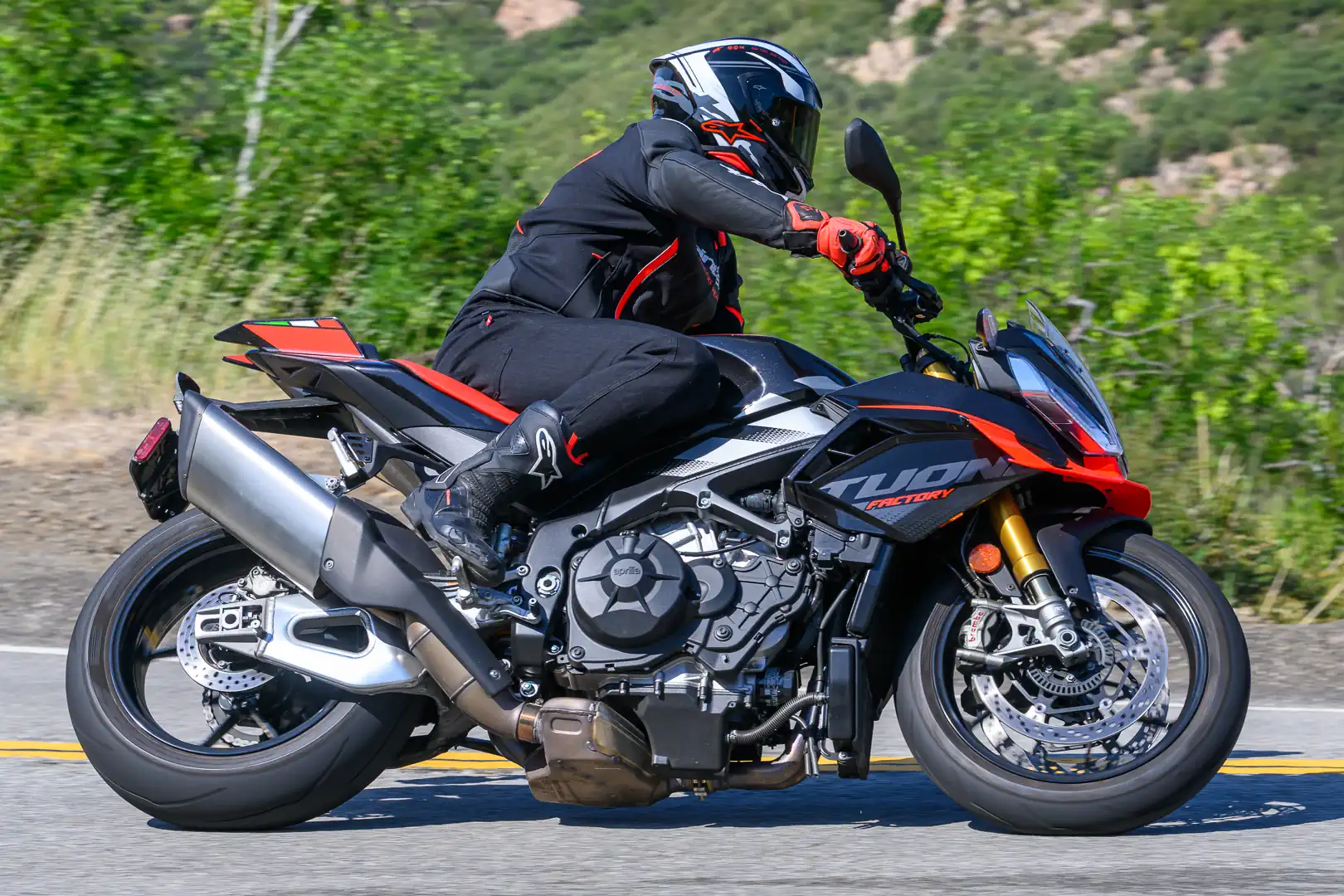
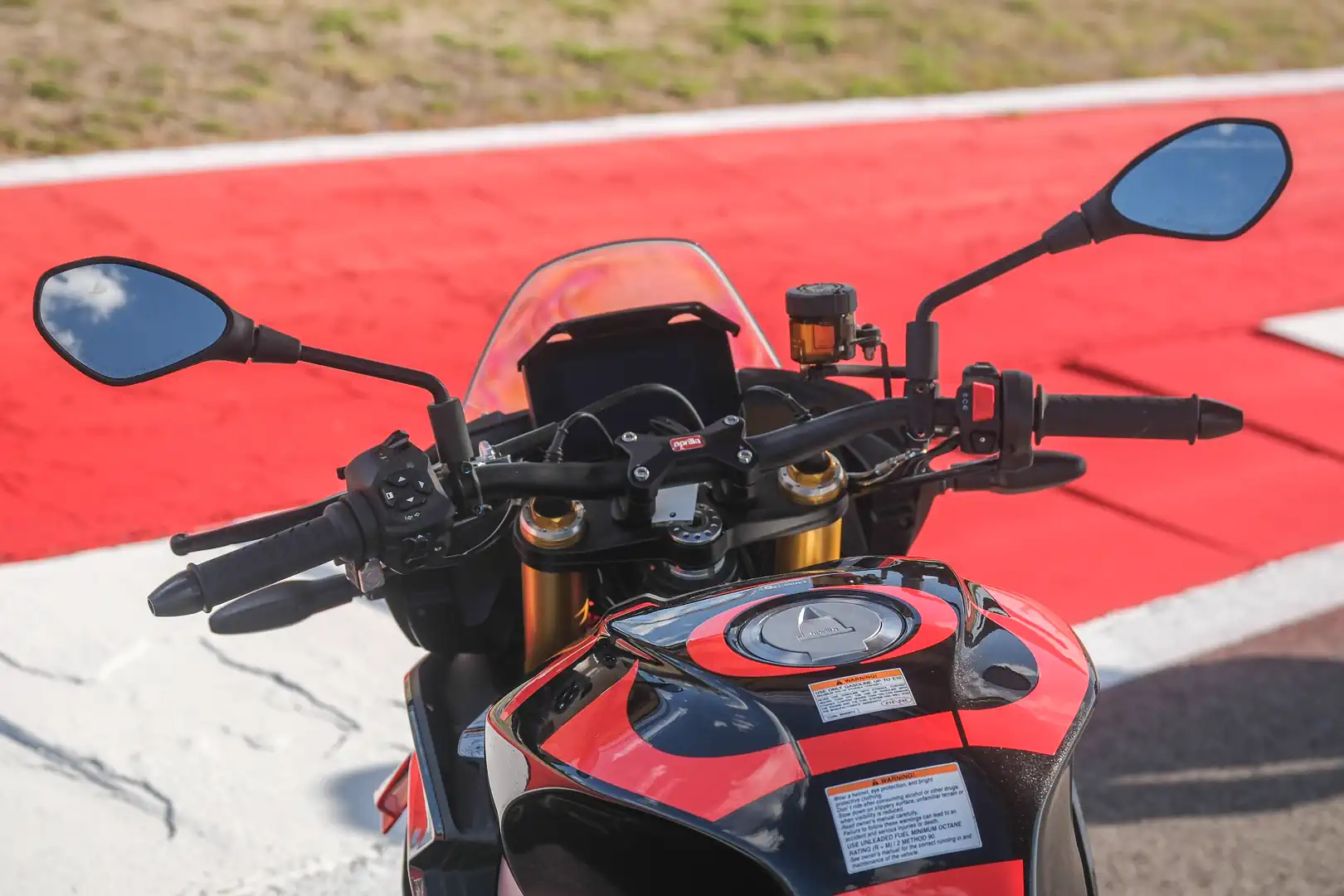
Comfort extends to the riding position. Casual, yet sporting, is a contradiction. Yet, it holds true when applied to a well-thought-out supernaked. The Tuono greets riders with its wide, riser handlebar, providing all the leverage you’ll ever need to usher it through curves while removing the strain brought on by conventional clip-on handlebars. Likewise, the rearsets are placed in a moderately athletic position that won’t fold you up and cause soreness after a full day’s work in the 33-inch-tall saddle. Helpfully, the RSV4-derived 4.9-gallon fuel tank provides loads of real estate to brace against while braking, and the sculpted Italian serves as a sturdy leg anchor when leaned over. It can handle the commuter rat race just as well as it can hit the racetrack, with a well-placed tank bag that leaves a sport-touring twinkle in its eye.
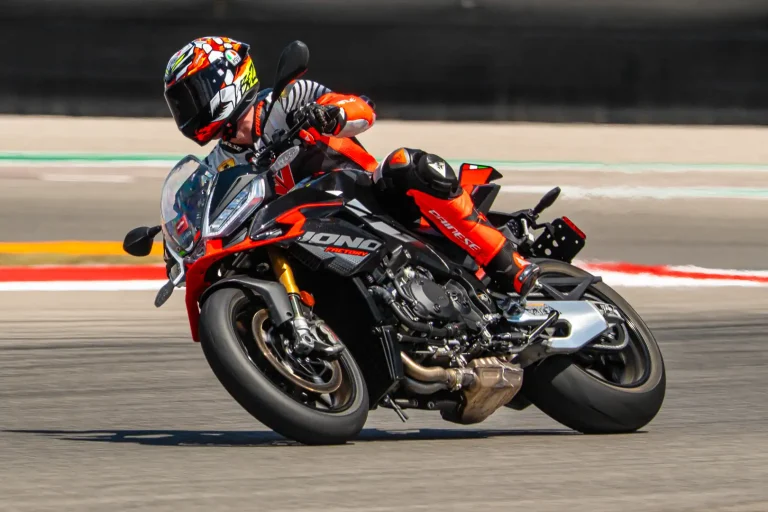
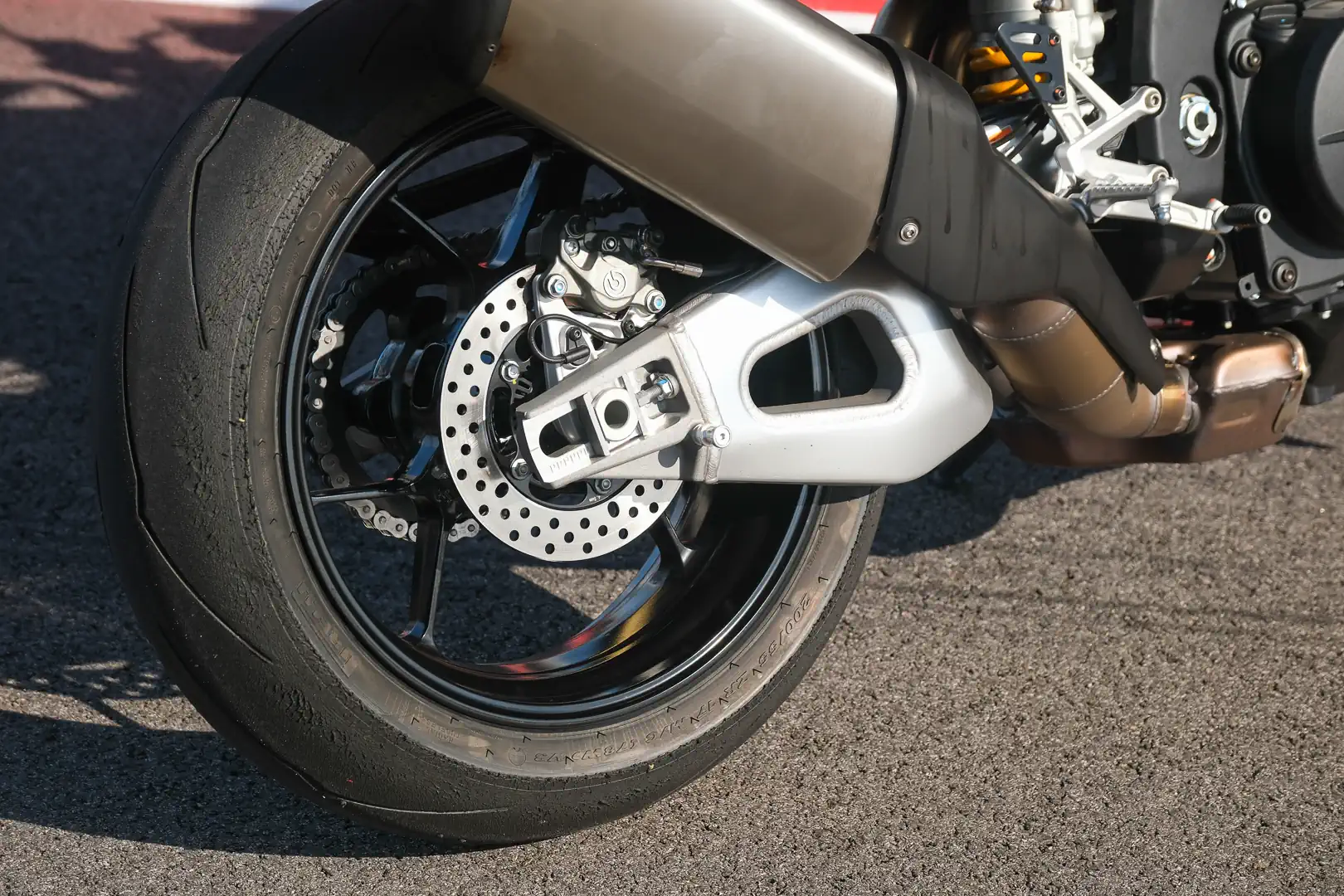
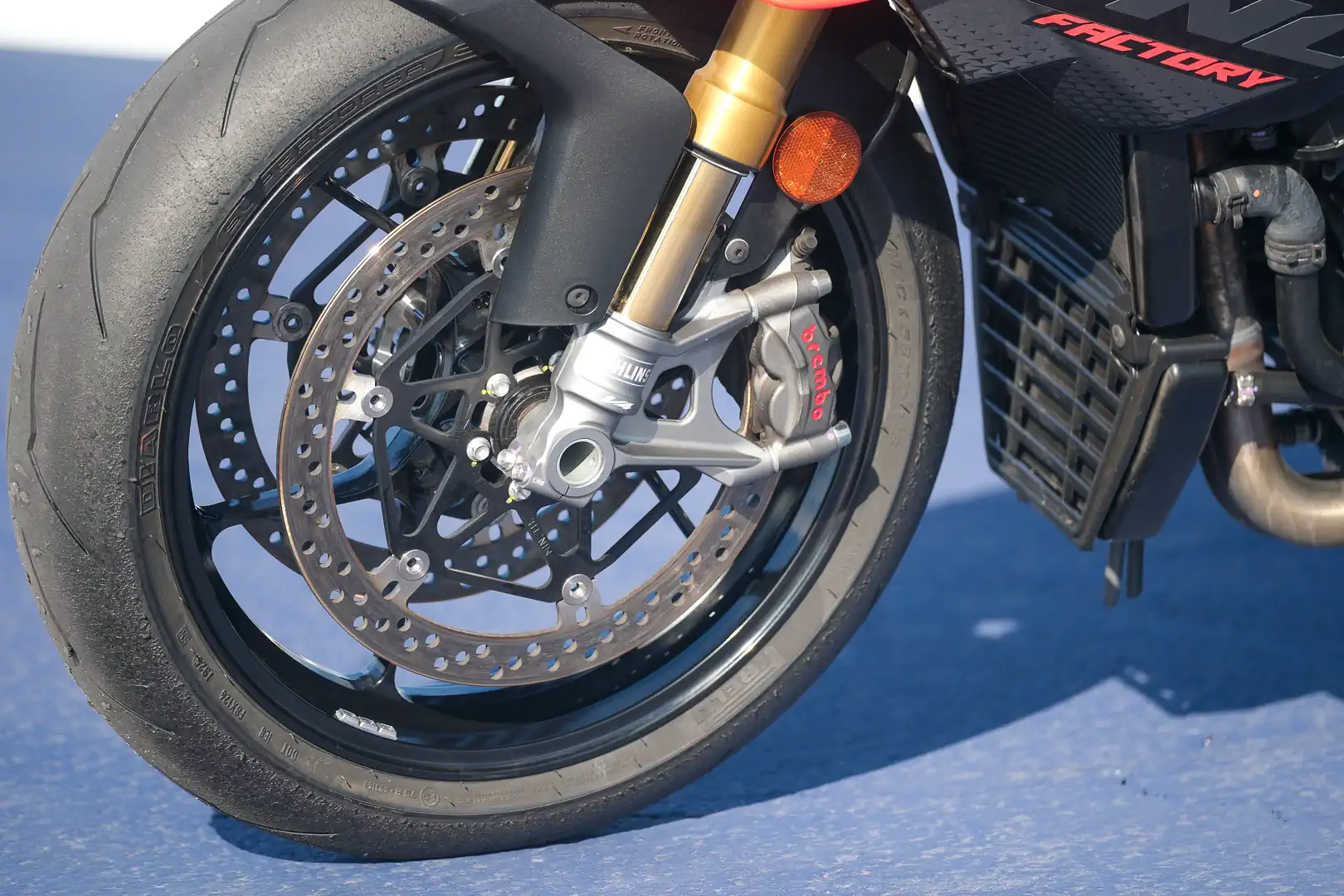
The chassis reprises its role with the results we hoped for. At 465 pounds ready to ride, the Tuono faces lighter, arguably more agile competition, including the BMW M 1000 R and the Ducati Streetfighter V4 S. Instead, the Tuono still reigns supreme with chassis confidence from its RSV4-derived twin-spar aluminum frame and swingarm, delivering some of the best front-end feedback in the business. COTA’s hair-raising layout is formidable, requiring a motorcycle that you absolutely trust when charging into turn 10. Even if the Esses (turns 3-5) require a little more steering input than competitors might, the way it tracks a confident line is stellar, more than making up for it. In the rear, it’s the same story. The Tuono hooks up superbly and encourages you to push harder on the sticky stock Pirelli Diablo Supercorsa SP V4 As for the street? Well, those attributes are only amplified at road-legal speeds.
Semi-active Öhlins Smart EC 2.0 suspension returns for another go at the Tuono V4 Factory. Carrying over from last year’s model is the same Swedish suspension, which is now a generation behind what’s on Ducati and Triumph competitors. However, it’s still great stuff, offering all the adjustment one could hope for with three fully adjustable riding modes. Moreover, Aprilia didn’t want to hike the MSRP any more than necessary; the base price is $19,799. Damping changes are done on the fly via the updated 5-inch TFT display, letting riders transform their steed from a sharp, racetrack-ready pony to a cushy commuter in a few button flicks. As always, it pays to adjust the semi-active units to your liking. Accurately configuring the Öhlins software makes the suspension feel natural in any environment, on the street or on the track.
New features and refinements come to the Tuono V4 Factory’s rider aid package. Fun tidbit: Aprilia introduced the first IMU-assisted rider aids aboard the 2011 Aprilia RSV4, when life was much simpler. Now, we’re working with multi-level traction control (adjusted via handy-dandy paddles on the bar), wheelie control, launch control, cornering ABS, engine braking adjustment, and, fresh to the list for this year, slide control. An increase in overall engine performance required algorithmic updates. Aprilia engineers took that as an opportunity to develop an adaptive, predictive algorithm specifically for wheelie and slide control. Essentially, the Tuono aims to anticipate problems before they arise. All the bells and whistles work as advertised on the racetrack, with said systems quietly working in the background without diluting what’s nothing short of a thunderous experience.
GPS-assisted corner-by-corner features are available as an option. While standard on the RSV4 Factory 1100, corner-by-corner TC, engine braking, and the high-end suspension adjustment are available as accessories on the Tuono V4 via the Aprilia MIA app. Sadly, we didn’t have the opportunity to test the systems due to the shared-bike environment at a trackday at COTA. However, the potential is real. Riders can dive deeper into setup by tailoring their bike in specific corners of a racetrack.
As usual, Brembo hardware delivers stopping power to the Tuono platform. We see the familiar Brembo M50 monobloc calipers and oversized 330mm discs deployed once again. That’s all hooked up to a matching Brembo radial master cylinder. Feel is as you’d expect from a kit of this caliber, though we’d be remiss not to point out that the RSV4 uses the latest and greatest Hypure calipers from the Italian brake manufacturer. Still, the M50 grippers work great, with the racetrack-friendly ABS settings never piping up prematurely at COTA. The IMU-based road modes watch your back nicely in more relaxed settings.
The supernaked category is a star-studded cast, no matter what end of the spectrum you’re looking at, yet the 2026 Aprilia Tuono V4 Factory 1100 still stands out. The Tuono V4 Factory succeeds by being true to itself, as it hasn’t been bullied into a horsepower war with fellow European competition. Instead, it has enjoyed a calculated evolution to enhance the traits we already love about the Tuono platform. The V4 continues to champion torque, the chassis is still one of the stoutest in the business, and the electronics continue to flatter riders. As important as that is, this machine still feels alive, fiery, and untamed, itching for dustups with superbikes in the canyons and on the track. It has been 24 years since the Noale factory unleashed the Tuono, and despite no longer being the objective spec-sheet leader, Aprilia still understands what makes a good naked bike: soul.
Track and static photography by Sam Bendall Street photography by Don Williams
Our bike review this episode is the Yamaha MT-03. Do not underestimate this bike; you get a lot of motorcycle for your money! Associate Editor Kelly Callan rode the smallest MT for several weeks, and that included commuting on it. One of the things that impressed her, was how the MT-03 acted like a larger motorcycle. Kelly also spent some time chasing Editor Don Williams through the canyons when he was on the Yamaha MT-07—obviously a much larger machine. She tells us about how it all went.
* * * * *
We’re closing in fast on the 34th annual Biketoberfest, October 15–18, when all roads will lead to Teddy Morse’s Destination Daytona—the more than 100-acre motorcycle playground in Ormond Beach Florida. This week we get to hear all about it from Teddy Morse himself. With his trademark high energy and enthusiasm, he tells us all about his recently established Triketoberfest that happens the week before, and how the Destination Daytona complex turns into a full-throttle hub of demo rides, vendors, custom builds, live music, food trucks, shops, and nonstop pavilion energy. So, whether you’re on two wheels or three, whether you’re hunting parts or lining up a test ride; grab a cold one and soak up the energy and gorgeous Florida fall weather. This is one of the many Daytona Beach places where Biketoberfest feels like home. So don’t forget: make sure you download the Biketoberfest mobile App from Apple or Google Play or visit www.biketoberfest.org and we’ll see you there!
* * * * *
Our guest this episode is Greg Arnold, Mecum’s motorcycle auction director. He bought his first bike at eleven, joined the company in 2011, and has spent more than a decade helping turn this incredible event into the place collectors, consignors, and dreamers all show up. Next February 3rd through 6th, Mecum will—for the 36th time, bring the world’s largest vintage motorcycle auction back to South Point, Las Vegas. That’s over two thousand bikes over four days. Board-track racers, barn finds, customs, race iron, and especially, those incredible machines that make the room go quiet. Greg gives us insight into what it takes to make this event work so incredibly well, and if you’re interested in selling your pride and joy, what steps you have to take to make it happen.
* * * * *
Here’s quick reminder to check out our monthly digital magazine. It’s filled with everything you want to read on motorcycling, including some things you’ve probably not seen elsewhere. It’s absolutely free and you will find it on the Apple App Store and of course on Google Play as well.
Don’t forget to leave us your comments on our social media—we’re on all the usual platforms at Ultimate Motorcycling. We love hearing your feedback… so good or bad, please let us know what you think. If there’s something you’d like us to cover, we’d love to hear those ideas too!
We use cookies and browser activity on this website
Functional
Always active
The technical storage or access is strictly necessary for the legitimate purpose of enabling the use of a specific service explicitly requested by the subscriber or user, or for the sole purpose of carrying out the transmission of a communication over an electronic communications network.
Preferences
The technical storage or access is necessary for the legitimate purpose of storing preferences that are not requested by the subscriber or user.
Statistics
The technical storage or access that is used exclusively for statistical purposes.The technical storage or access that is used exclusively for anonymous statistical purposes. Without a subpoena, voluntary compliance on the part of your Internet Service Provider, or additional records from a third party, information stored or retrieved for this purpose alone cannot usually be used to identify you.
Marketing
The technical storage or access is required to create user profiles to send advertising, or to track the user on a website or across several websites for similar marketing purposes.