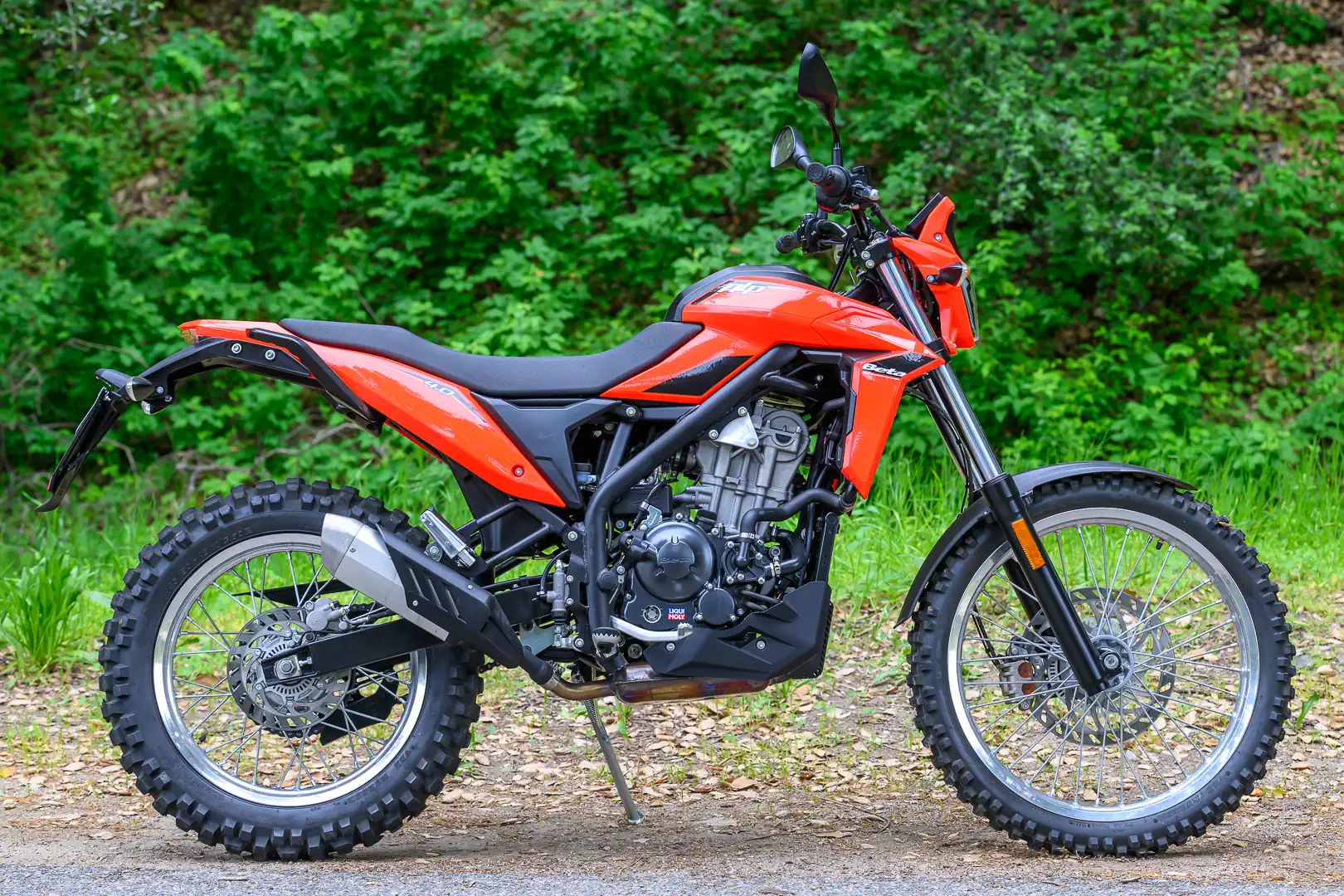
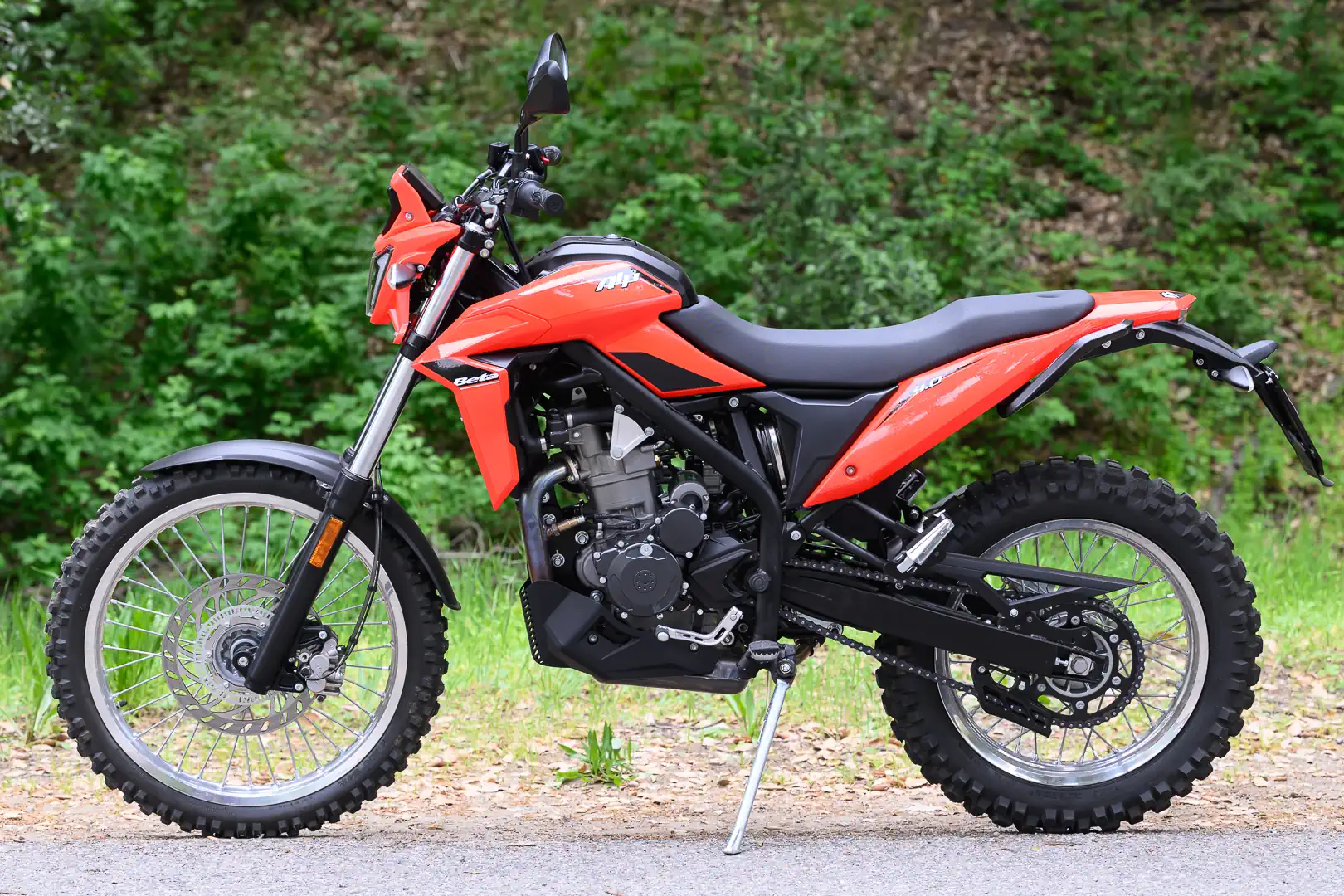
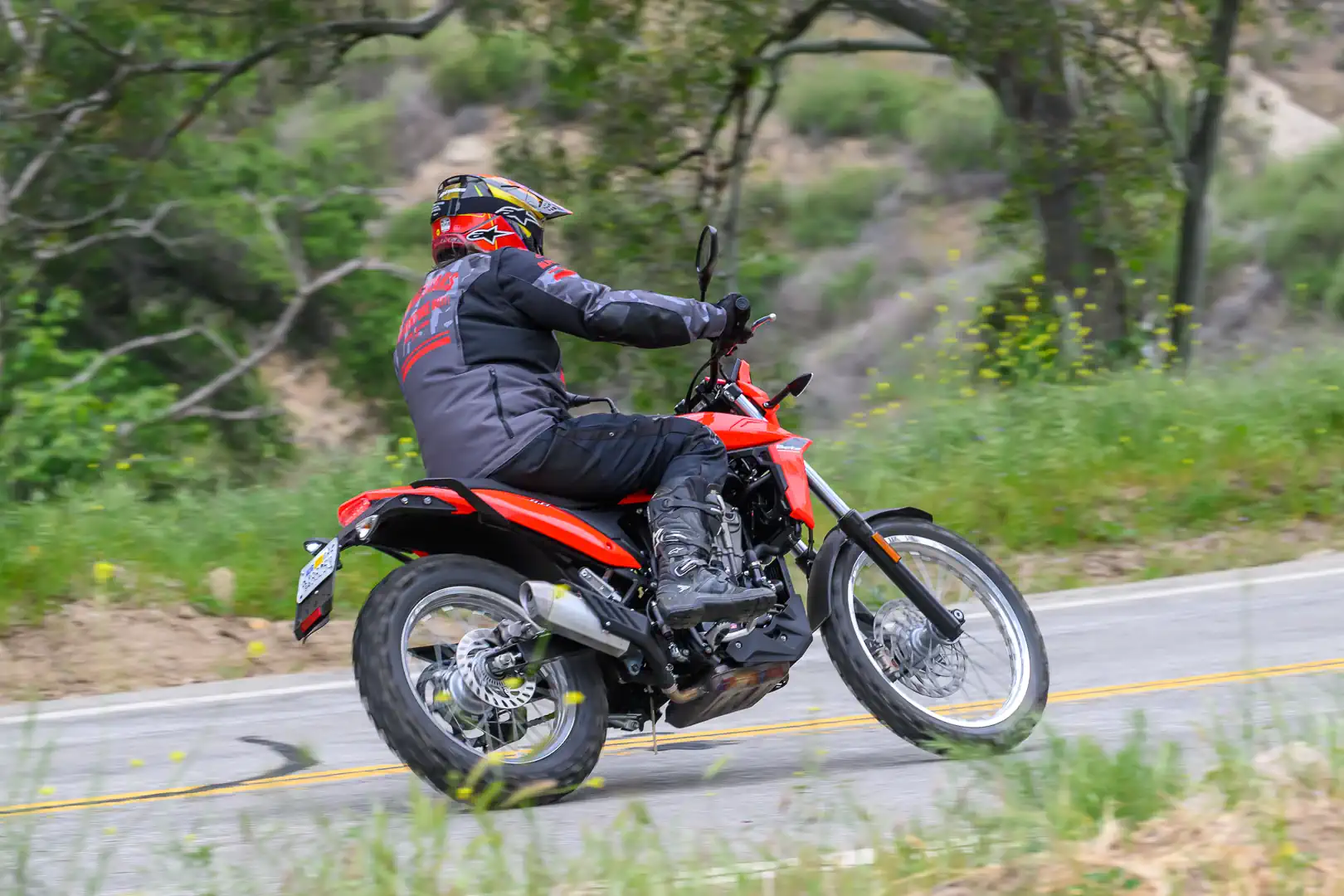
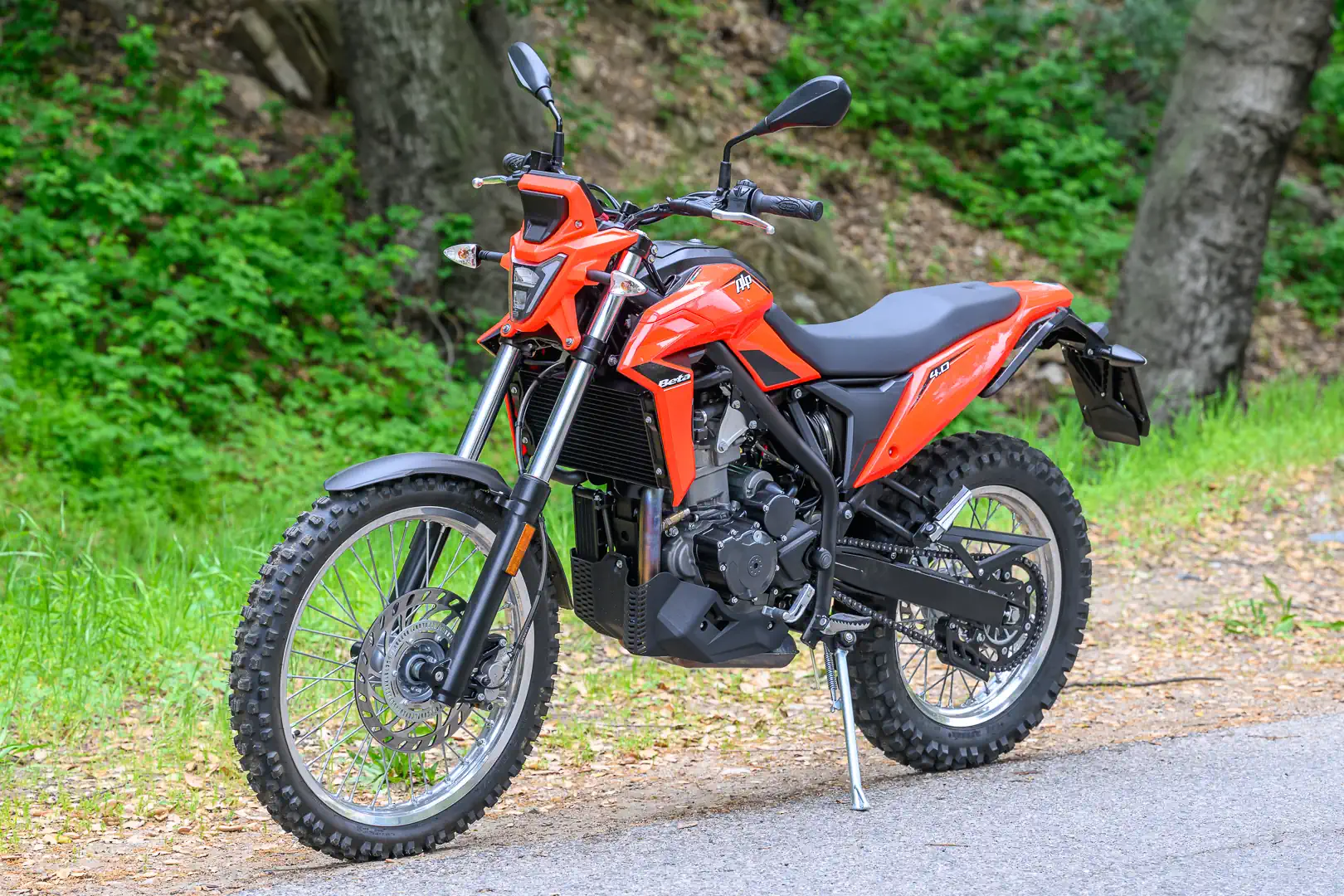
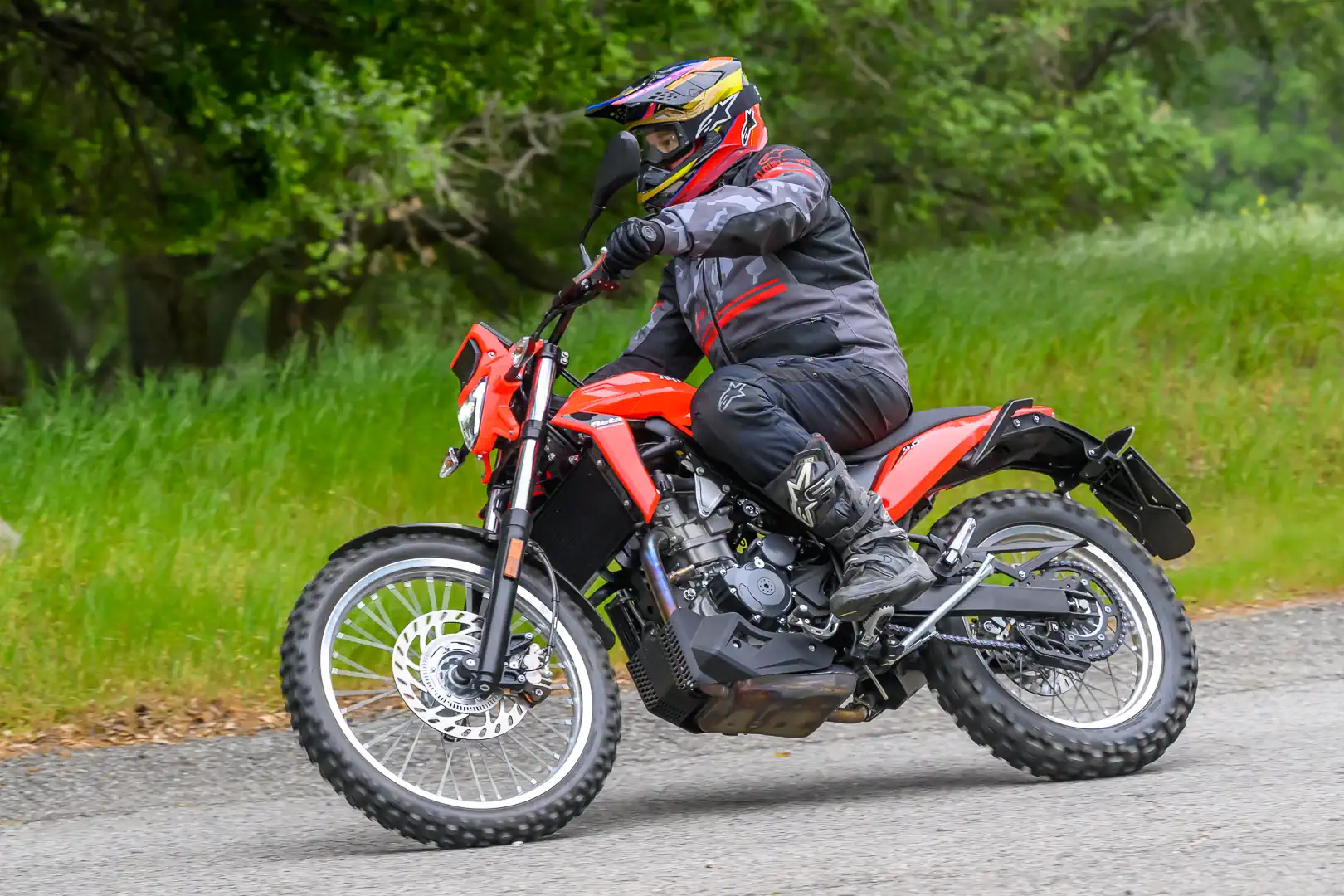
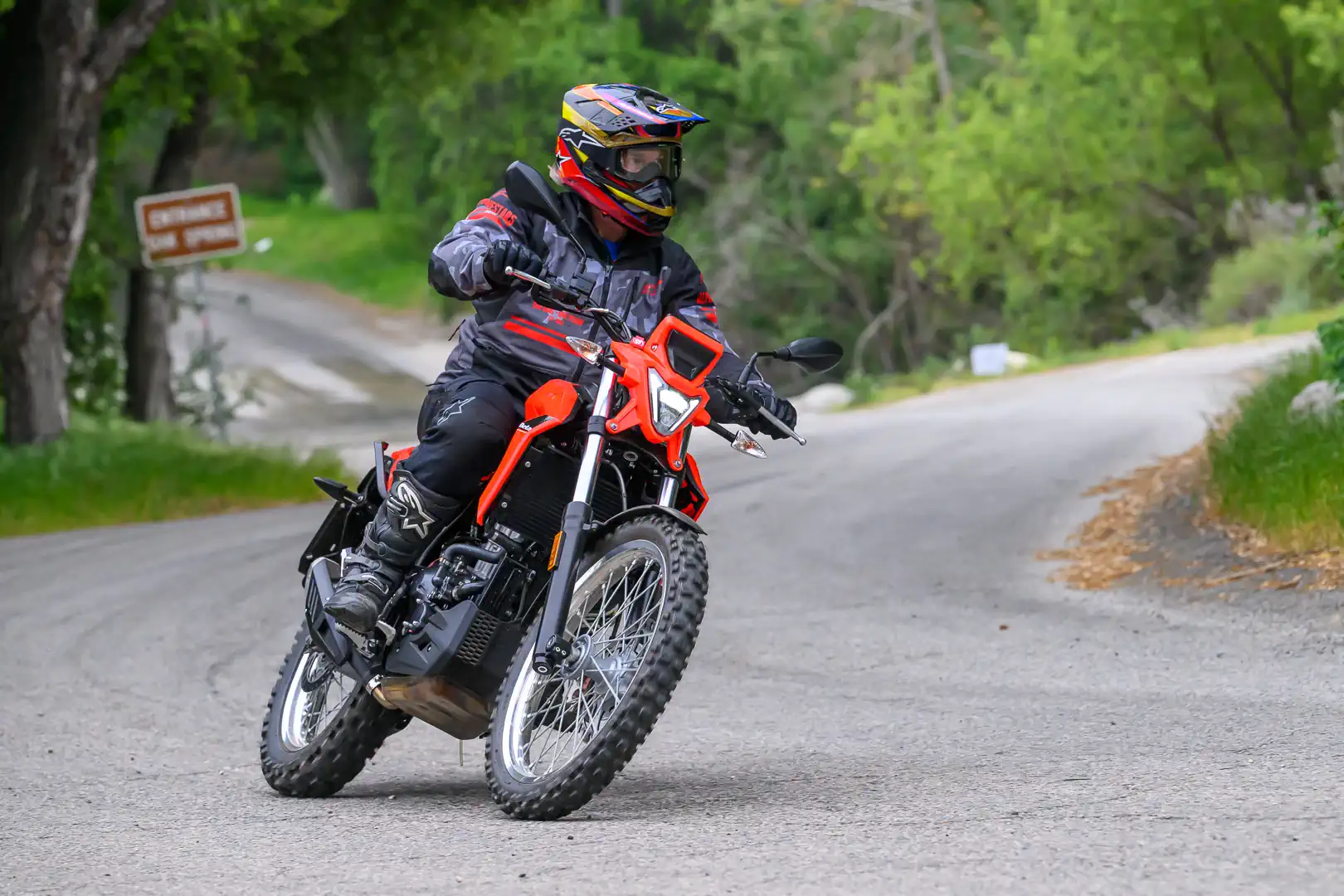
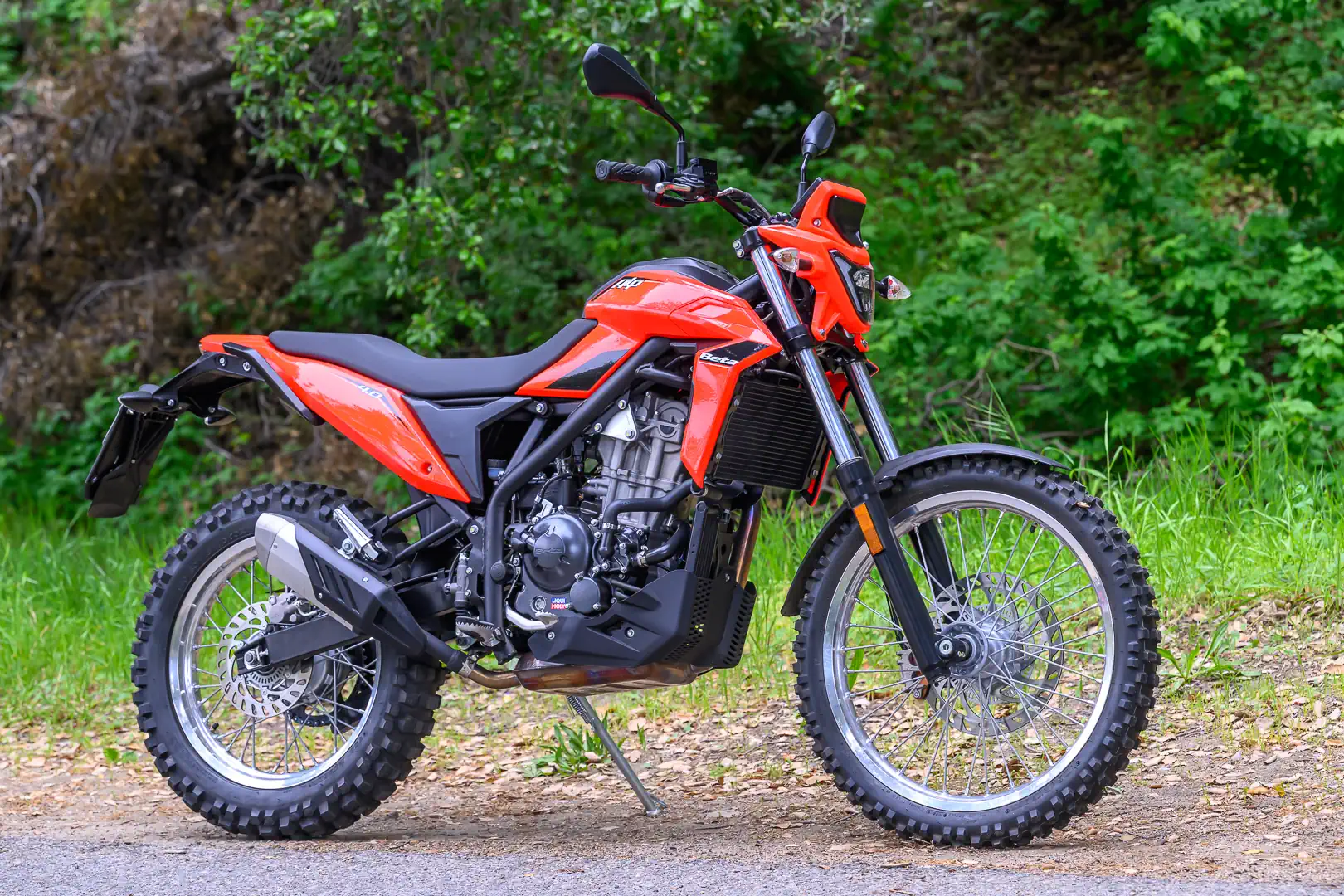
The Alp name returns to the United States with the new 2026 Beta Alp 4.0 and X. We have reviewed the X, which is an urban adventure motorcycle. Now, it’s time for the urban dual-sport 4.0. For those keeping score, Beta’s Alp name debuted in 1990 with a trials/trails hybrid dirt bike. The Alp evolved into a dual-sport bike, and Beta has sold versions of the Alp in Europe for more than 25 years, most of that time with an air-cooled Suzuki engine. Beta has redesigned the Alp around its own liquid-cooled 348cc single and is sending it to America as an affordable dual sport to compete with the likes of the Honda CRF300L and KTM 390 Enduro R. Here is what the Alp 4.0 is like to ride.
The 2026 Beta Alp 4.0 joins the marketplace in the middle of the small-bore adventure/dual-sport boom. The dual-sport category has split into two factions. You have the high-performance off-road dual sport bikes, including the Beta RS and KTM EXC-F lines, and more city-friendly offerings, such as the KTM 390 Enduro R, Honda CRF300L, and the Beta Alp 4.0. Both camps roll on 21-/18-inch wheelsets, so the affordable bikes start with the advantage that counts most. However, the budget bikes carry more weight and deliver less power in exchange for lower maintenance and about half the price. At $6790, the Alp 4.0 is a premium-priced motorcycle in its class, with an MSRP $1041 higher than the CRF300L and $741 more than the KTM 390 Enduro R. At the same time, the Alp is $5600 less expensive than the dirt-serious Beta 350 RS.
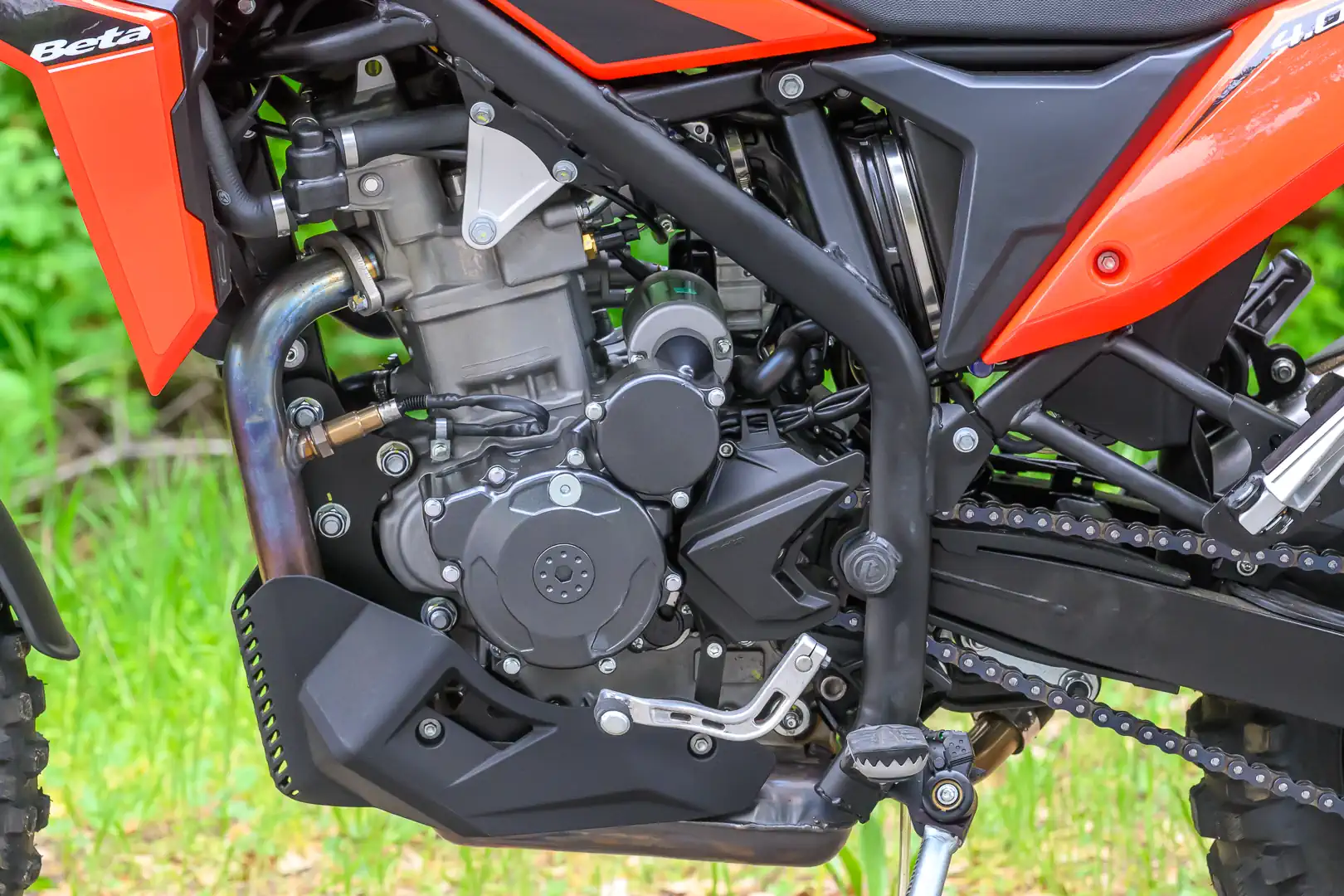
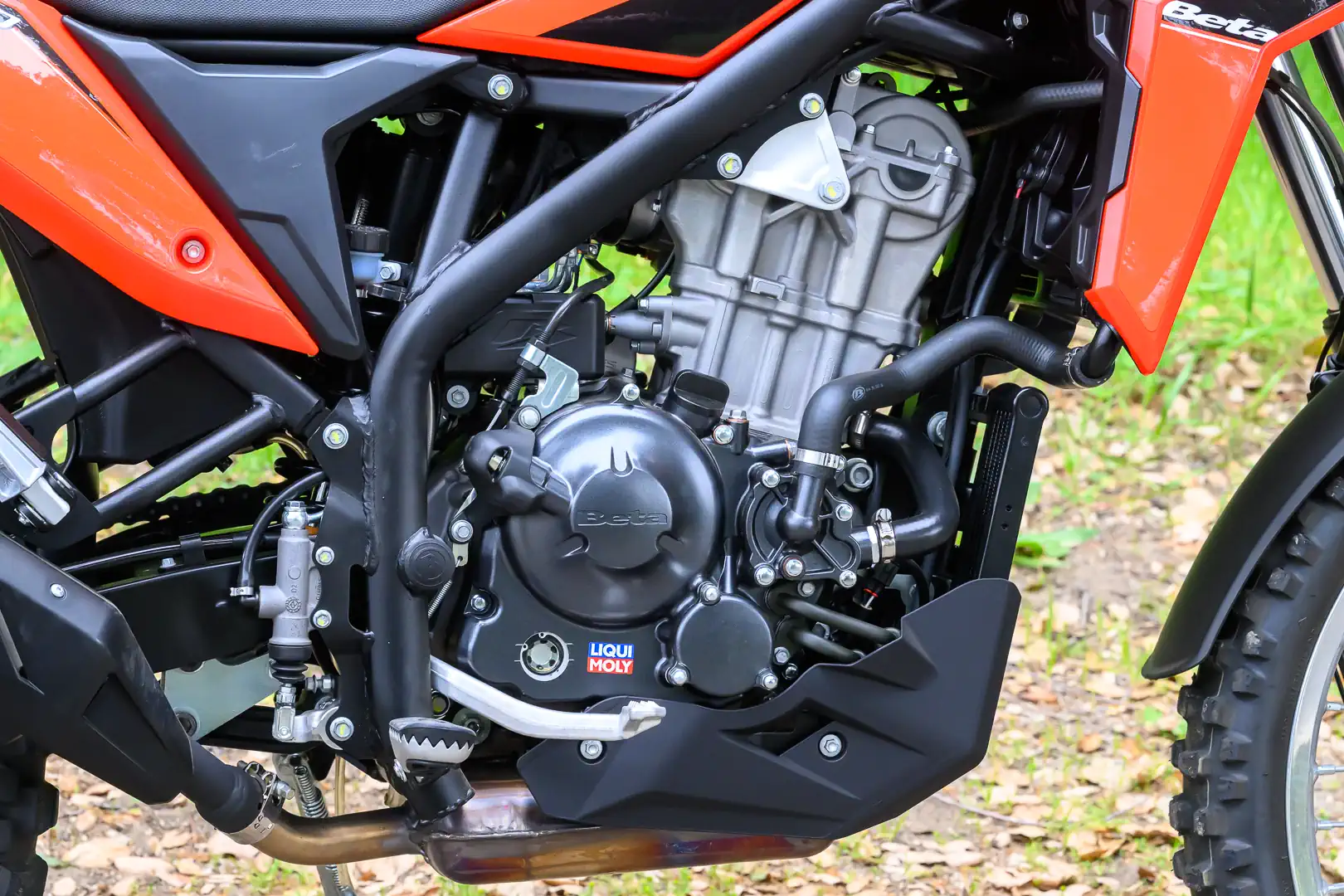
A new 348cc DOHC single replaces the air-cooled Suzuki DR350 motor that powered the Alp in Europe for nearly two decades. Bore and stroke are 84.5 x 62mm, and the four-valve head breathes through a 44mm throttle body; Beta claims a 35-horsepower peak at 9500 rpm. The engine is liquid-cooled and fuel-injected, with a six-speed gearbox. Beta says it tested the design for more than five years before settling on final specifications. The engine is designed in Italy and built in China by Zontes. With final assembly in Italy, the Alps sport an Italian VIN and many Italian-made parts.
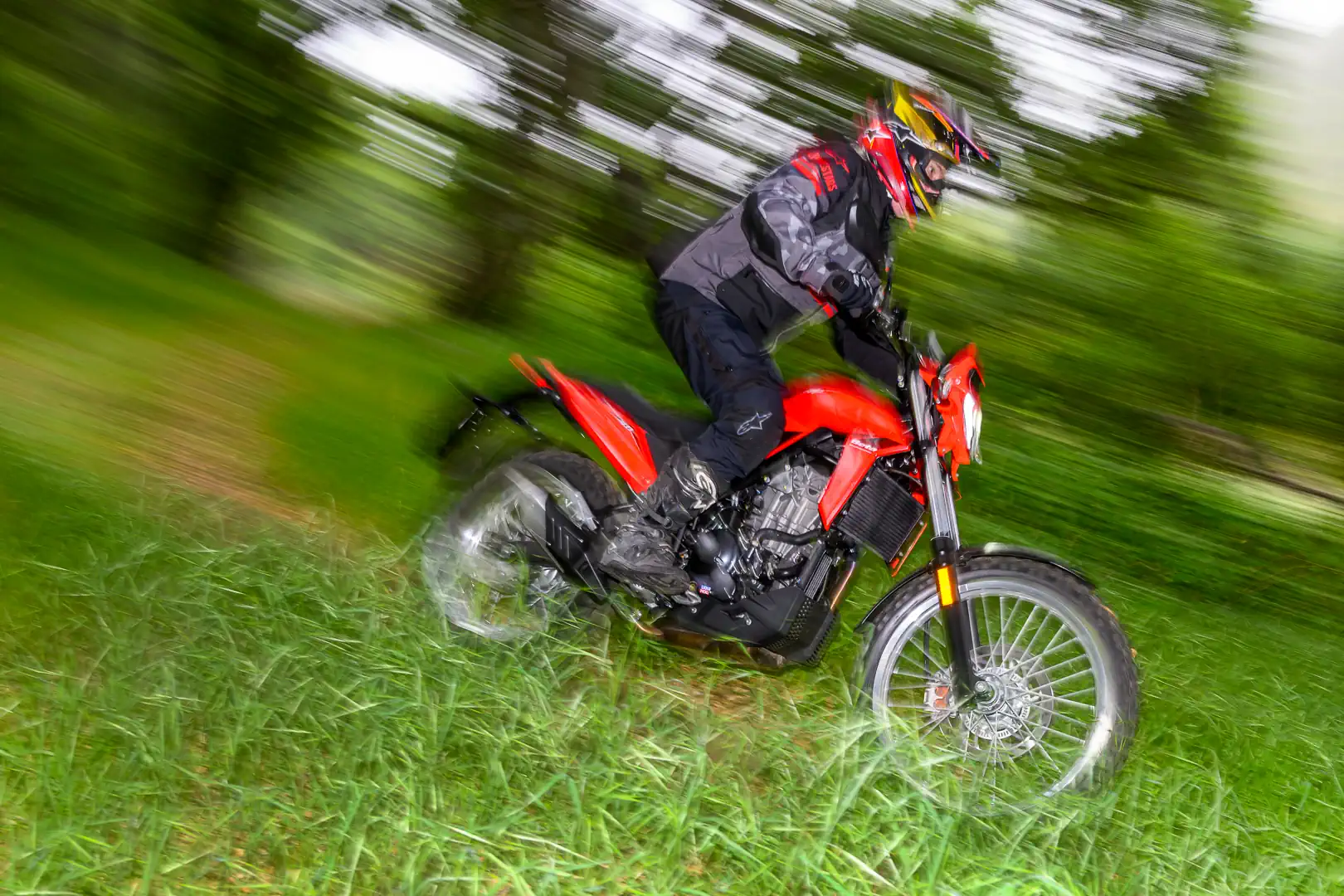
The Alp’s motor is torquey, yet happy to rev out. It pulls from low in the range and chugs along like a much larger single. You can rev the motor to 10,000 rpm, though you’re unlikely to ever do that. Short-shifting the smooth 6-speed transmission is the way to ride. However, despite the abundance of low-rpm torque, the throttle response is not snappy. A blip of the throttle moves you forward, but won’t loft the front wheel. As with other bikes in its class, get used to the front wheel banging into obstacles rather than floating over them. Compounding the power output is the fueling off idle. There is a hint of hesitation at very low rpm when you first crack the throttle from a standstill. Once the Alp is rolling, throttle response is consistent and predictable.
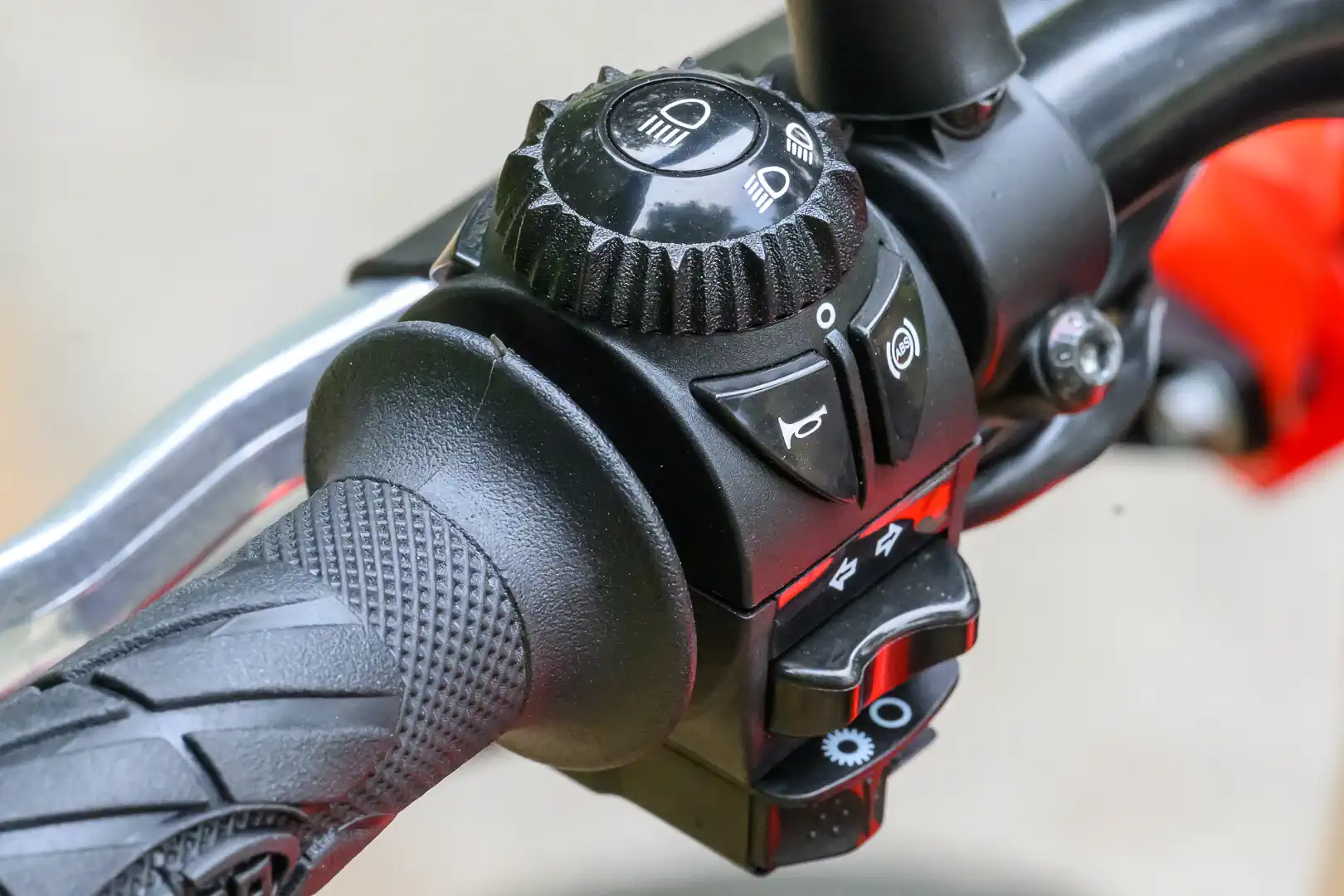
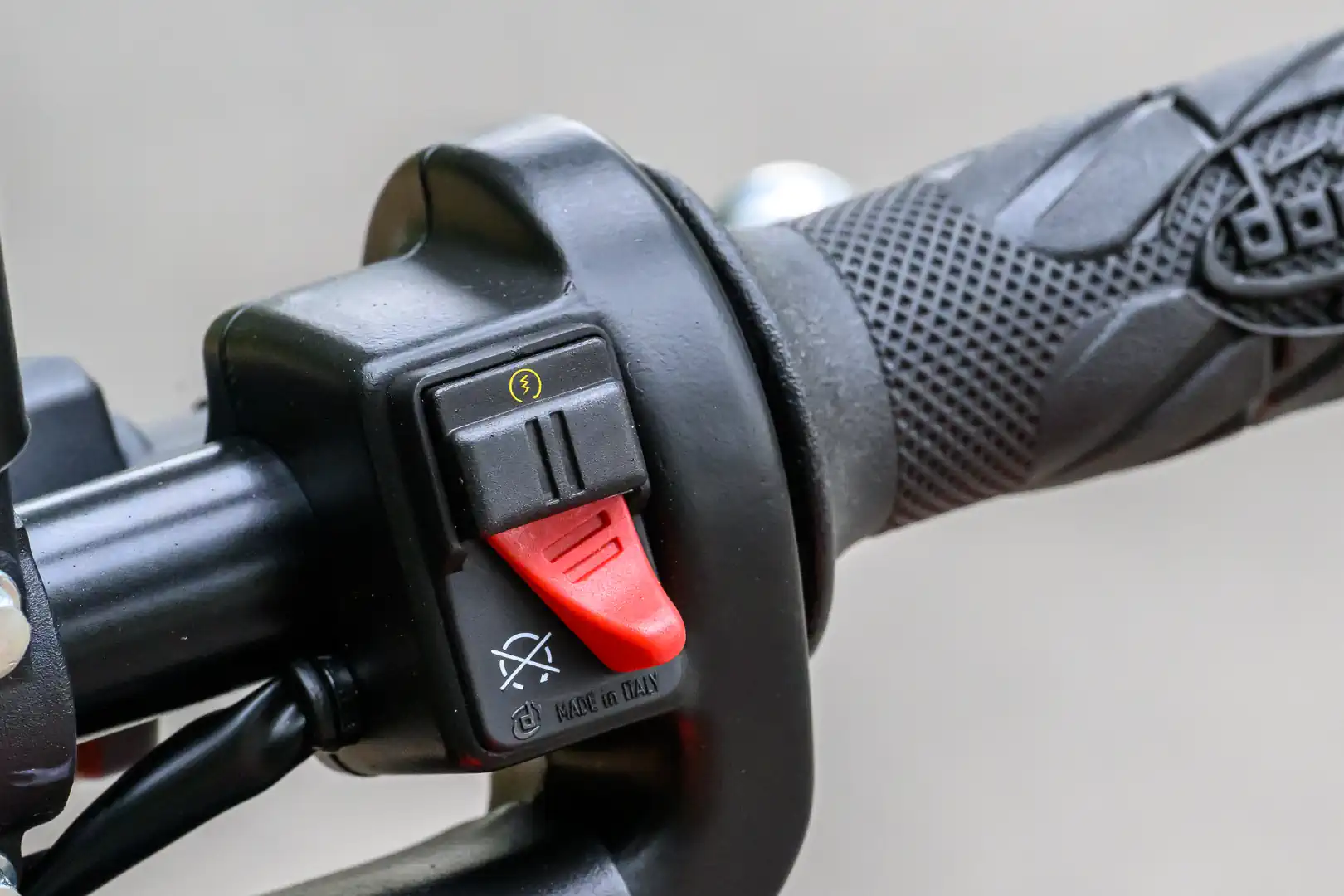
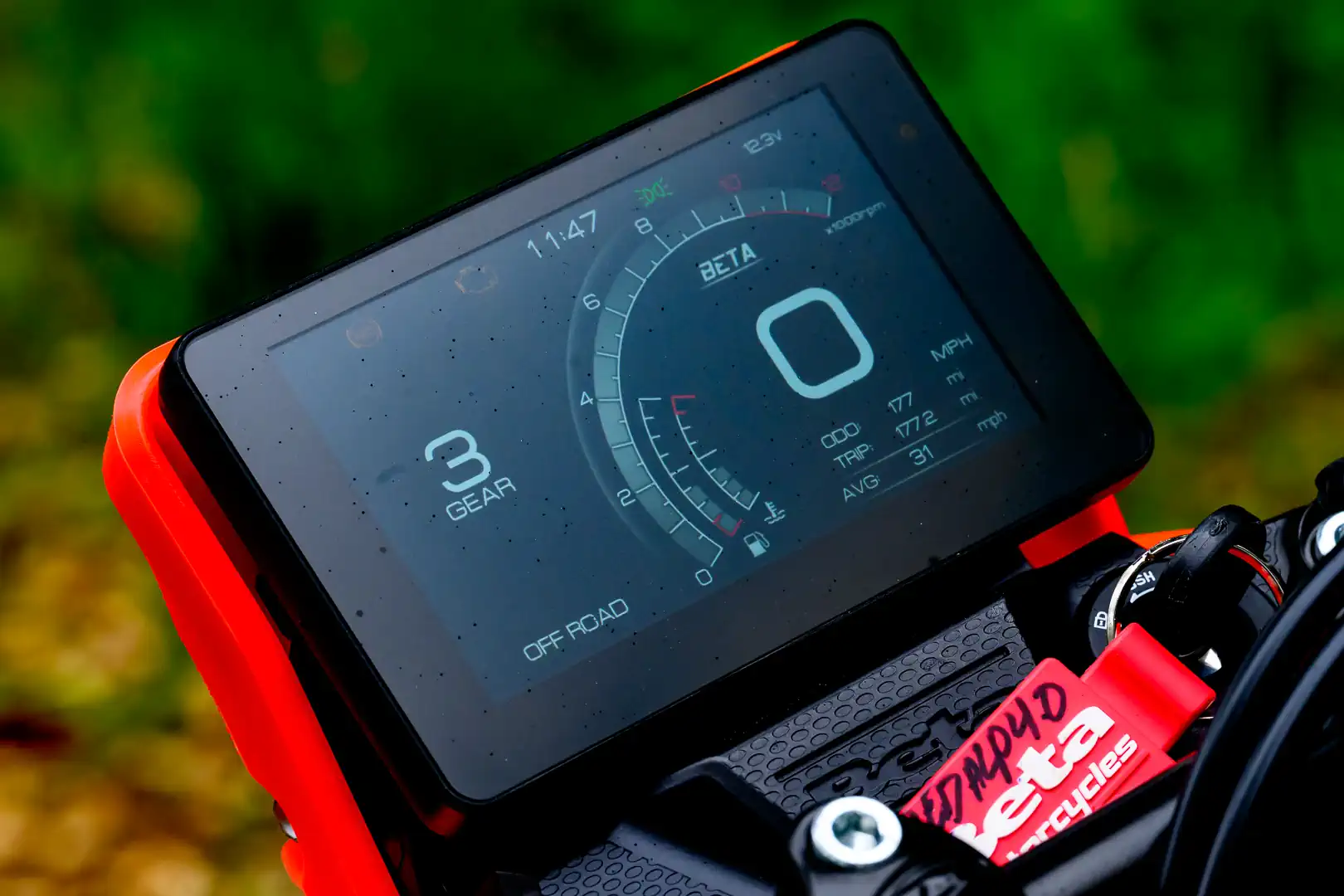
Two ride modes are standard, but they do not do what you might expect. A slide switch on the left handlebar toggles between Road and Offroad, and the TFT display confirms the choice. The two modes feel identical at the throttle, though Beta tells me that Road mode offers slightly better fuel economy. Instead, the mode change is about how the Bosch ABS behaves. In Road mode, a hard grab on loose gravel produces an initial bite and then a long release as the system backs off. Offroad recalibrates for reduced grip and stops the Alp far better in the dirt.
Switching off the ABS has a learning curve. Stop the Alp, move the selector to Offroad, then hold the ABS button until the dash symbol blinks slowly and release it. The symbol stays lit to confirm. Beta’s lawyers require that you come to a standstill to defeat the ABS. Flipping back to Road restores the system, and that works on the fly. ABS switches itself back on every time you turn the key off or use the kill switch. Develop the habit of stalling the motor for temporary stops. Off-road riders will be happy to know that the ABS is shut off for both wheels, not just the rear.
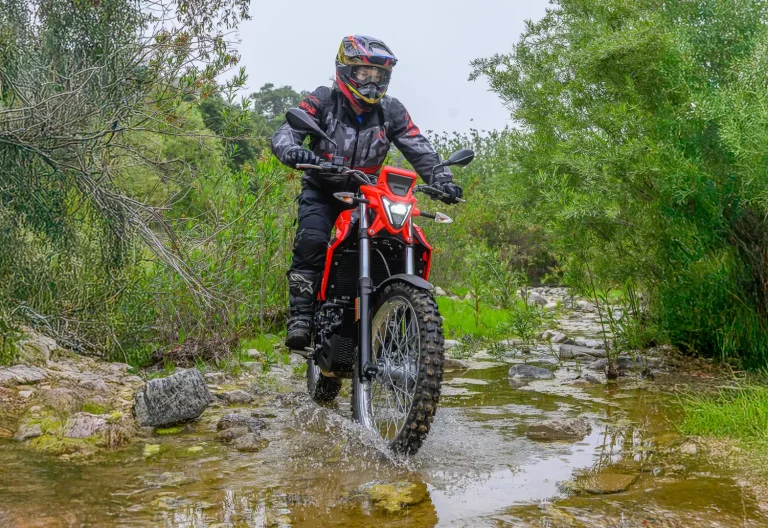
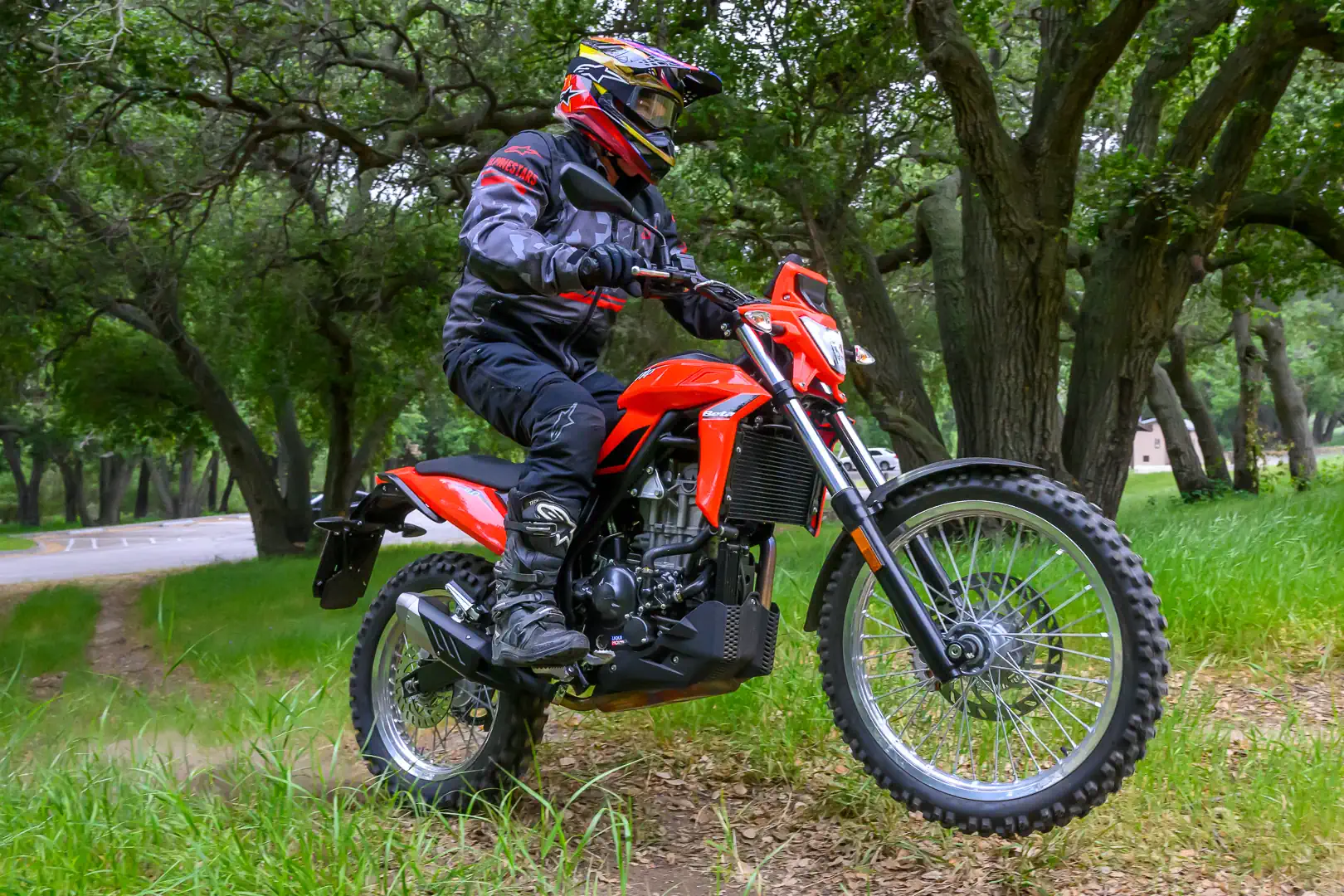
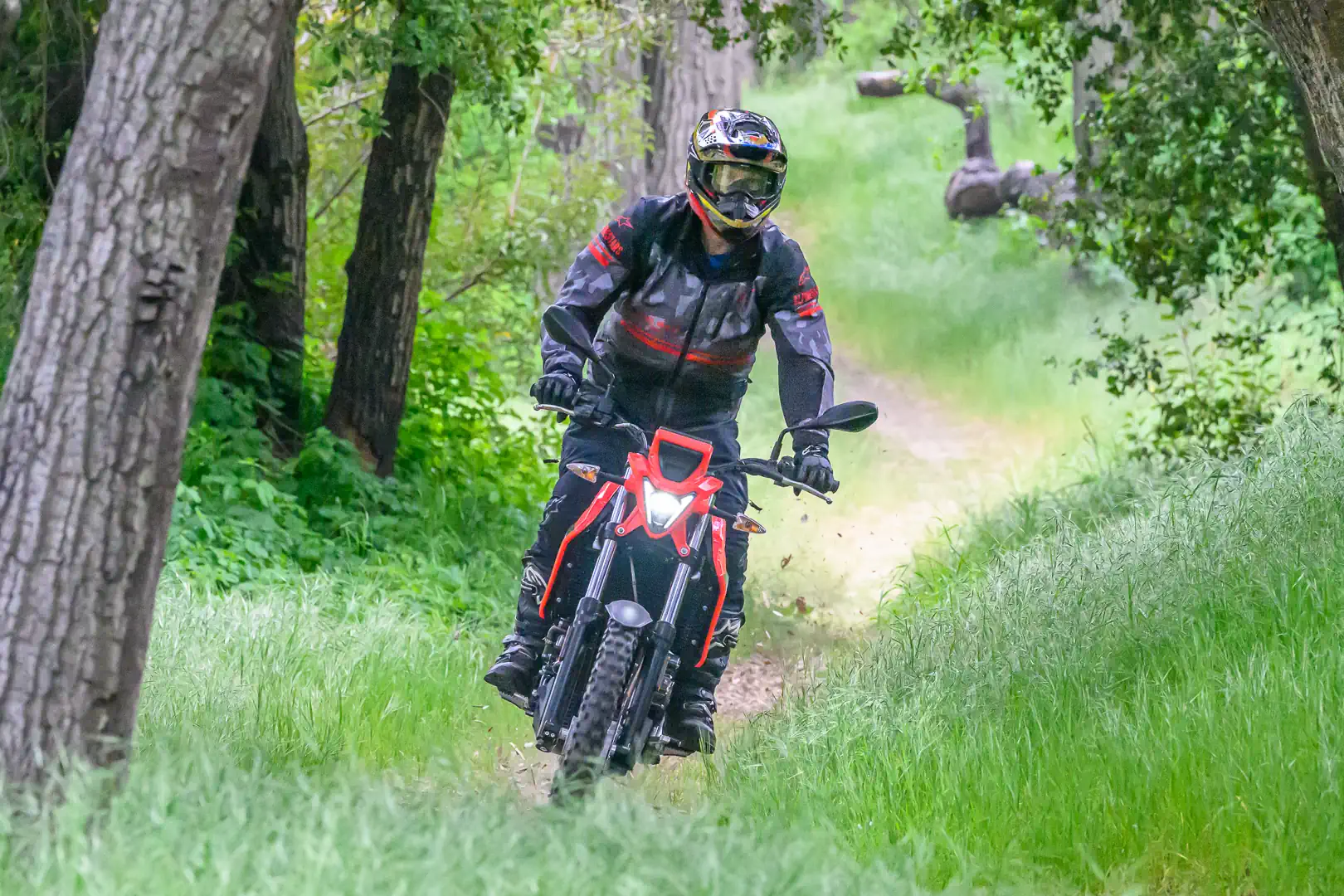
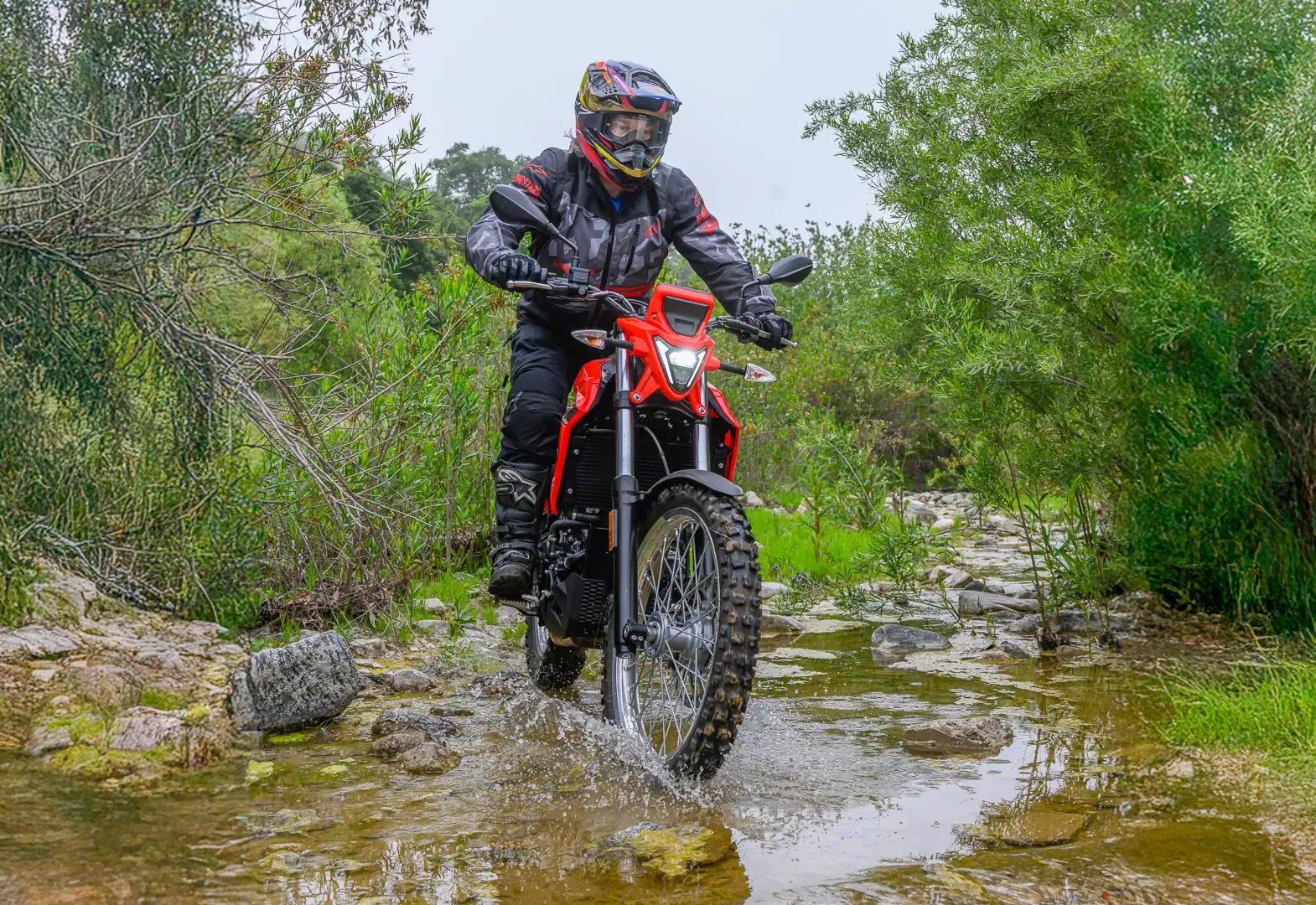
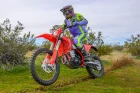
A low seat height, narrow chassis, and lightish weight make the Alp easy to ride. Lift the Alp off the sidestand, and it feels small. Take a seat, and with the suspension sag, you might find your boots flatfooting the ground. Stand on the pegs, and it shrinks further, riding more like a trials bike than a dual sport bike, which is exactly what the original Alp was. Loose surfaces become easy, and low-speed mistakes are forgiven. Ground clearance is 10.6 inches, which is good, as you’ll be rolling over obstacles rather than flying. The footpegs work well off-road after you yank the rubber inserts.
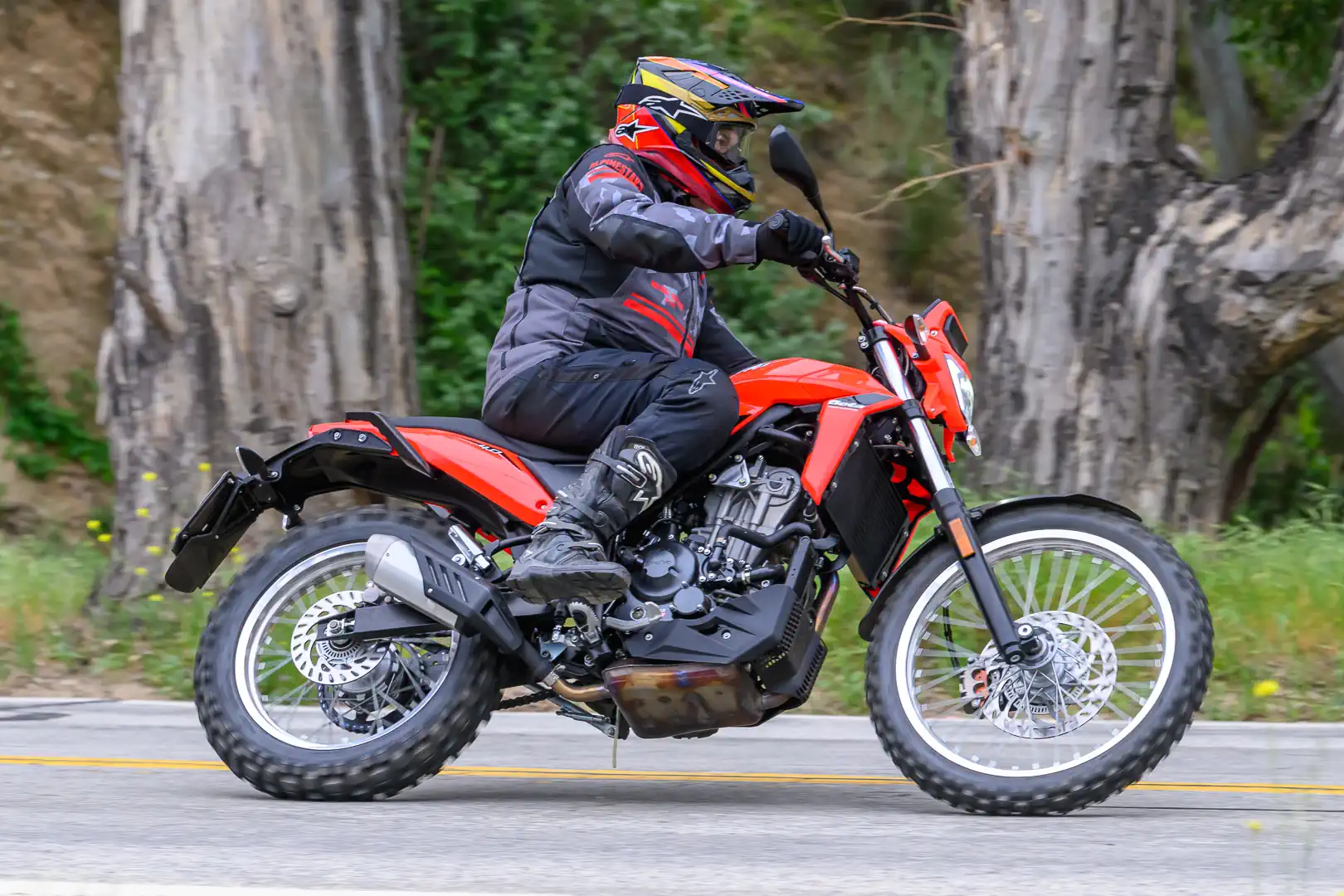
The influence of Beta’s trials department is unmistakable. The footpegs sit high for ground clearance, and the handlebar has a low bend. If you don’t like the reach, aftermarket bar risers are an easy and inexpensive ergonomic adjustment. The seat is long, lockable, and removable without tools, and passenger footpegs are standard. The saddle is midway between a dirt bike and an adventure bike. It’s great for trail riding, though on the hard and narrow side for longer pavement stints. For good measure, the front fender is low-mounted.
Suspension travel is short, and the settings are soft. The non-adjustable 43mm fork delivers 7.3 inches of travel, and the linkage-assisted shock gives 7.7 inches with spring preload as the only adjustment. Those are ADV numbers, rather than what we expect on a dual-sport bike. Still, the suspension works better than the numbers suggest, and it suits the relaxed dual-sporting the Alp was built for. Ride harder or carry more weight, and you will find the end of the stroke quickly. Beta does offer two fork spring-rate options ($250) and five shock spring-rates ($221) for personalization. High rollers can consider Beta’s $1390 accessory shock, which offers rebuildability, along with rebound-damping and spring-preload adjustment. The stock suspension has fixed damping at both ends.
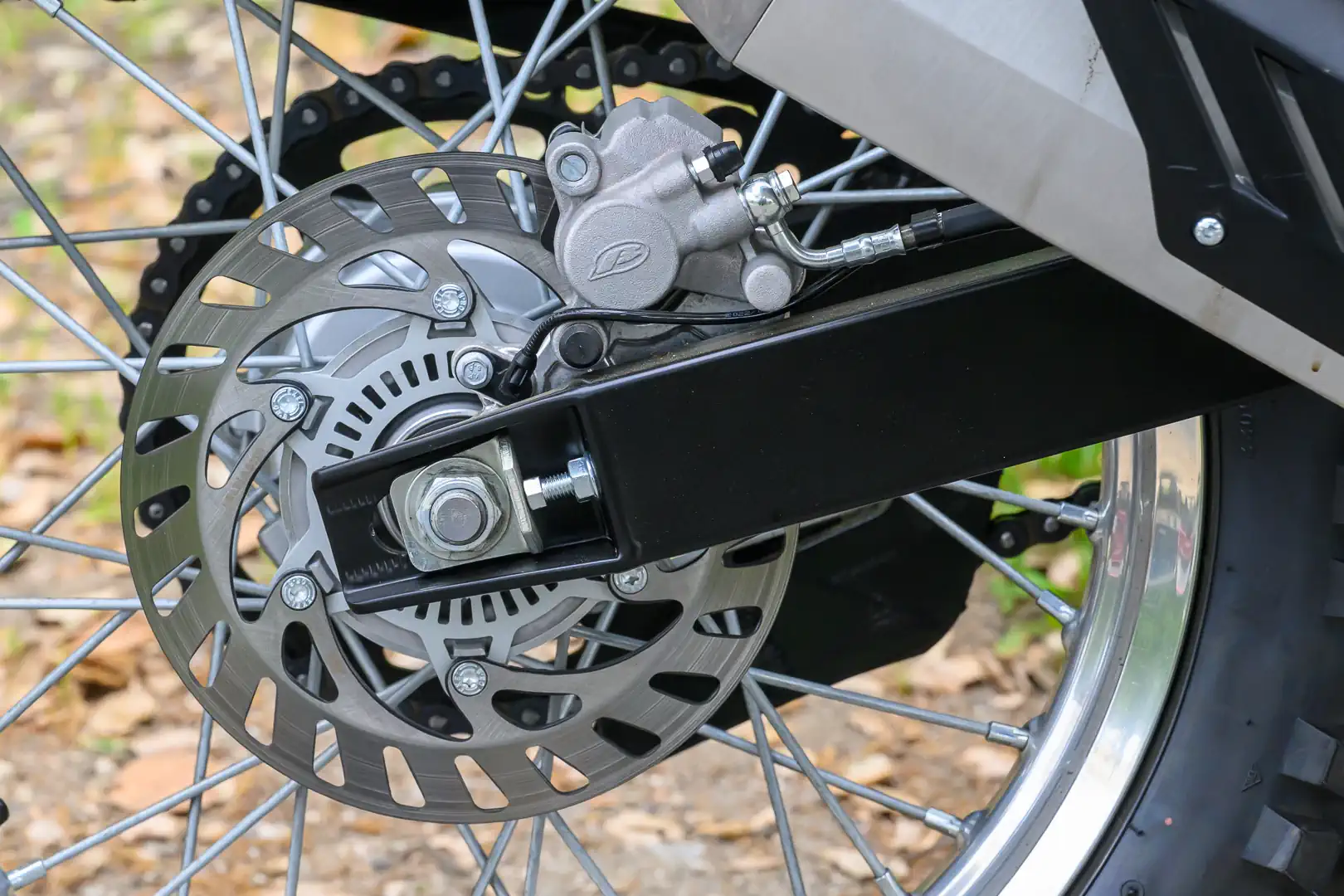
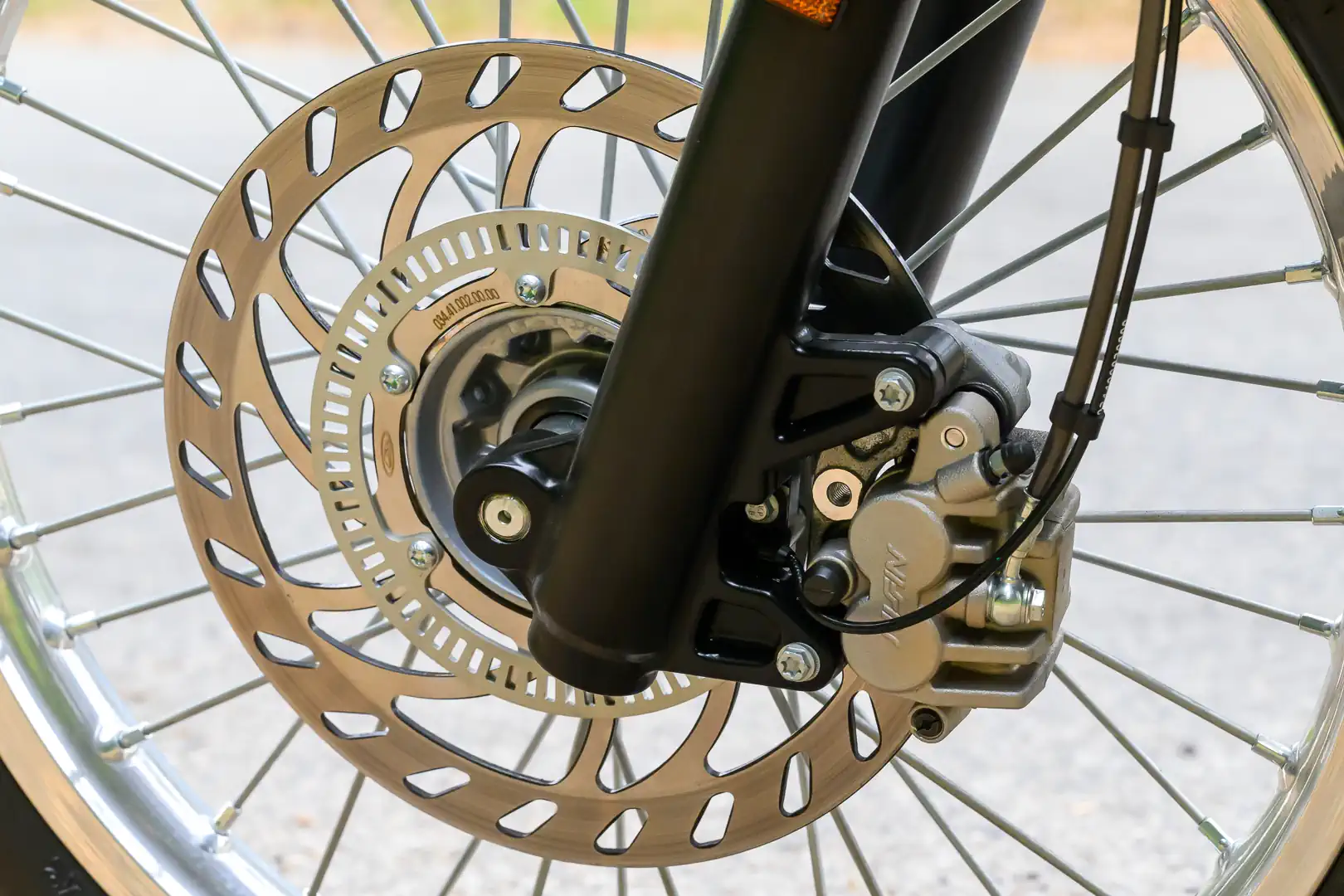
The braking is tuned for casual riding. A 290mm floating front disc with a Nissin caliper does the heavy lifting on the 2026 Beta Alp 4.0, and it’s backed by a 220mm rear disc with a Beta-branded caliper. Stopping power is more than adequate for the pace this dual-sport bike encourages, on pavement and off-road.
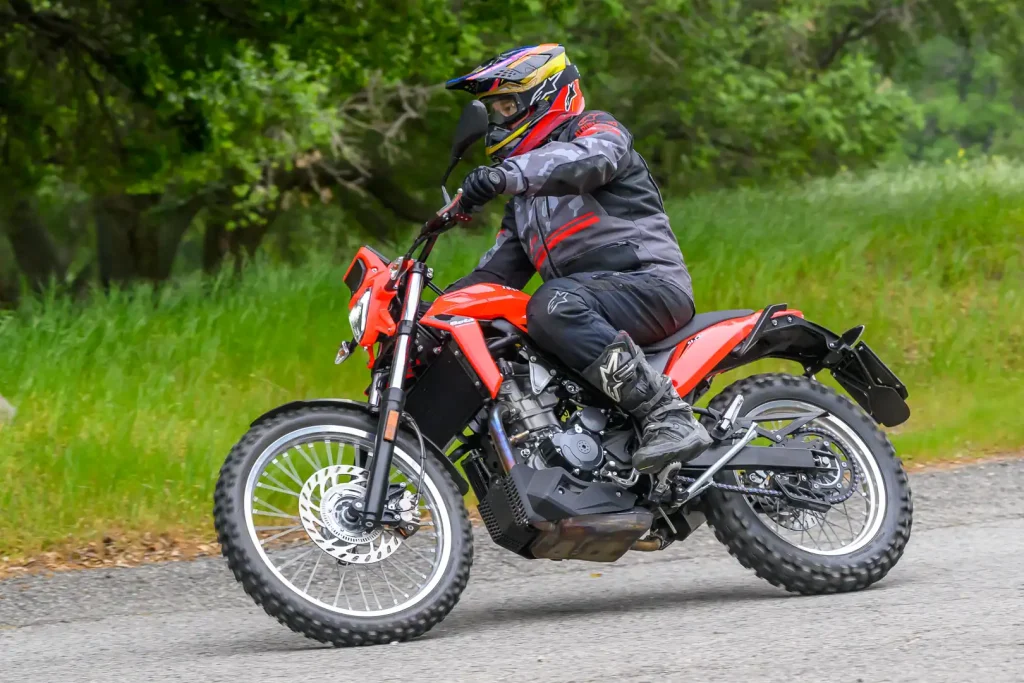
The street-legal Vee Rubber knobbies work well in the dirt. While Vee Rubber isn’t a name that quickly comes to mind for off-road tires, the 90/90-21 front and 140/80-18 rear VRM-147s provide excellent grip. Granted, the motor’s smooth power delivery helps, but they delivered on all the trails we tested. On pavement, you’ll want to take it easy on corners until you learn the limit, and you can attempt to enjoy the whine of the knobs when running in a straight line.
The Alp 4.0 has the power needed for 65 mph pavement runs. That means you’re not limited to short ribbons of pavement between trails. The motor’s vibration is manageable, and the chassis is stable at freeway speeds. There is no wind protection at all, so highway miles are fatiguing, especially if you decide to drone at the bike’s 80 mph top speed.
The TFT dash covers the basics, and the switchgear is uniquely Beta. The color display shows speed, rpm, gear position, fuel level, range, odometer, tripmeter, and there’s a clock. The switchgear takes some getting used to; check out the photo for evidence. LED lighting is standard, and the squared-off headlight with a wind-deflecting plastic nacelle makes the Alp 4.0 stand out.
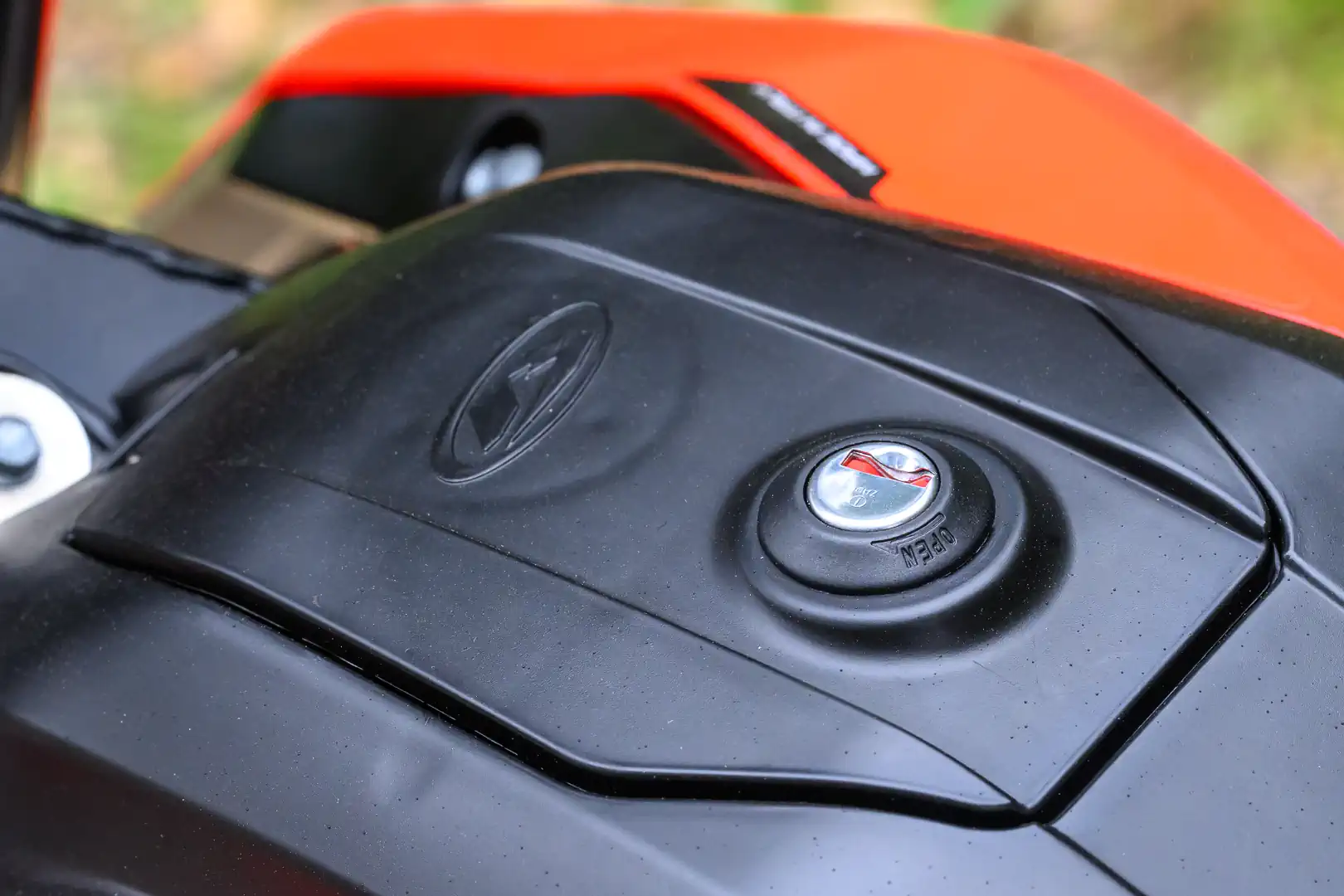
Putting gas in the Alp 4.0’s 2.9-gallon fuel tank is unnecessarily complex. The small filler cap is buried underneath a locking cover. Consider it a victory if you don’t spill any high-test. With an estimated fuel consumption of 67 mpg, you can theoretically get over 190 miles from a tank if you’re riding on pavement at a sensible speed. In the real world, budget for 130 miles between fill-ups, which isn’t bad.
The Beta accessory catalog for the Alp 4.0 is extensive. There’s a wide range of goodies, including racks, bags, windshields, seats, a skid plate, beefier footpegs, cleaner turn signals, and the suspension components mentioned earlier.
The 2026 Beta Alp 4.0 is a modern, city-friendly dual-sport bike. It is unintimidating around town, on gravel roads, and taking on non-technical singletrack. Smaller and newer riders will love it, though the Alp 4.0 works a smaller niche than the ADV-style X. While limited in its off-road capability, the 2026 Beta Alp 4.0 is an introduction to the dual-sport genre, and superb for urban and suburban off-pavement exploration.
Hello and welcome again to the Motos and Friends Podcast. This episode is brought to you by Leod Escapes.
* * * * *
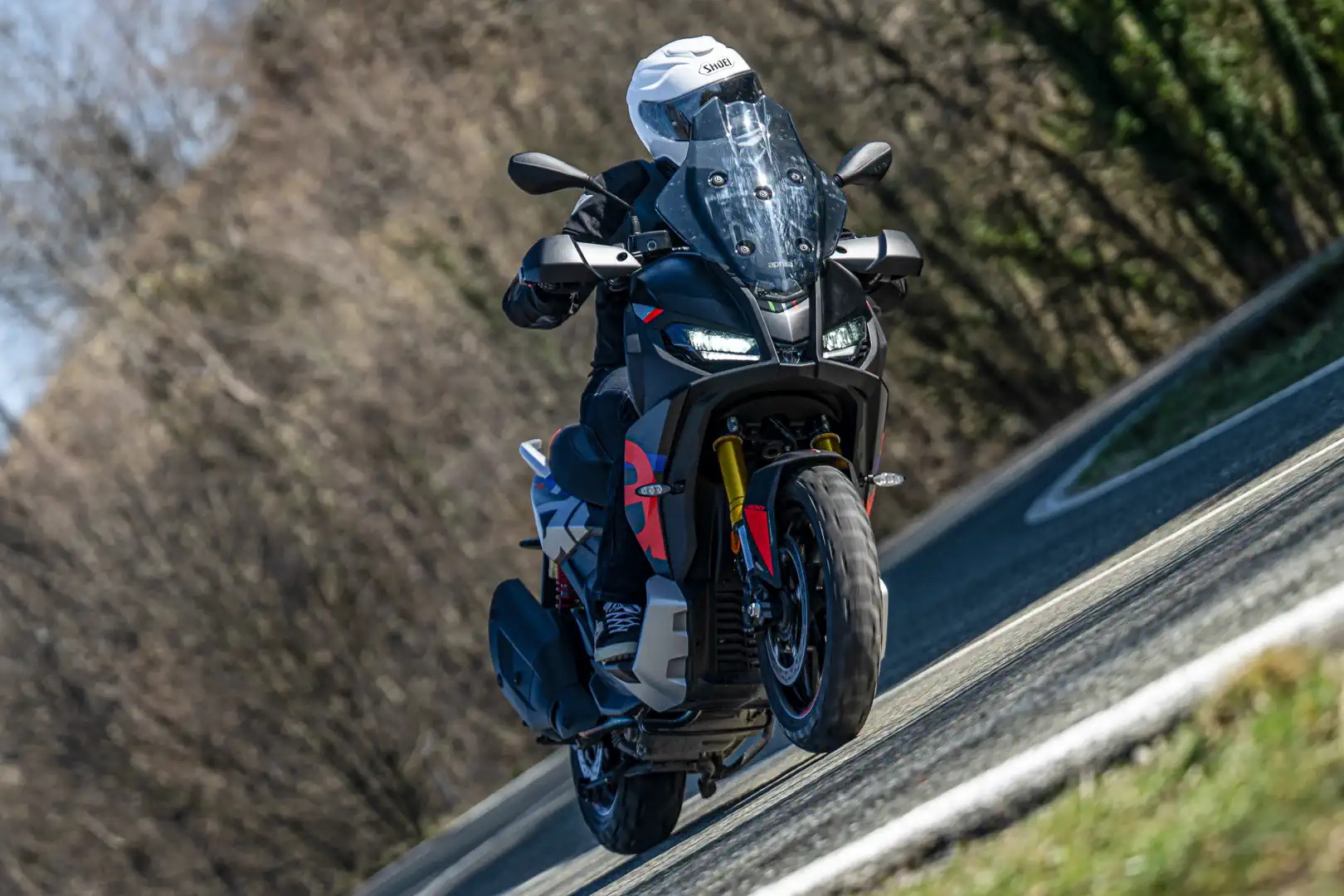
Aprilia is bringing a scooter to North America, and it’s one designed to appeal to adventure motorcyclists. The SR GT 400 is a mid-size scooter built around a steel motorcycle-style frame, a 399cc single, and off-road-ready hardware. It reaches US dealers as soon as this month. Don Williams and Kelly Callan spent some time riding the Aprilia and were surprised by what they discovered. Is this a real motorcycle or just a good-looking urban scooter?
* * * * *
Cat McLeod is founder and owner of Leod Escapes, the ultimate tour company for sport-minded motorcycle riders. Cat talks to us this segment about some of his amazing European experiences and tours that include of course, riding some amazing MotoGP tracks on new BMW S1000RRs. If you like what you hear, now is the time to book your trip of a lifetime, so visit LeodEscapes.com to find out more.
* * * * *
Our guest this episode is Terry Vance, the multiple Motorcycle and Motorsports Hall-of-Famer. Terry is of course the former professional motorcycle drag racer, team owner, and co-founder of the high-performance parts company Vance & Hines. Teejay Adams chats with Terry about his incredible career that includes being the first rider to hit 200 mph in the standing quarter-mile.
Having won this year’s MotoAmerica Mission King of the Baggers championship with Hayden Gillim riding the Vance & Hines factory Indian Challenger, and with Harley-Davidson’s recent withdrawal, Terry gives us his thoughts on where the series might go from here.
* * * * *
Here’s quick reminder to check out our monthly digital magazine. It’s filled with everything you want to read on motorcycling, including some things you’ve probably not seen elsewhere. It’s absolutely free and you will find it on the Apple App Store and of course on Google Play as well.
Don’t forget to leave us your comments on our social media—we’re on all the usual platforms at Ultimate Motorcycling. We love hearing your feedback… so good or bad, please let us know what you think. If there’s something you’d like us to cover, we’d love to hear those ideas too!
We use cookies and browser activity on this website
Functional
Always active
The technical storage or access is strictly necessary for the legitimate purpose of enabling the use of a specific service explicitly requested by the subscriber or user, or for the sole purpose of carrying out the transmission of a communication over an electronic communications network.
Preferences
The technical storage or access is necessary for the legitimate purpose of storing preferences that are not requested by the subscriber or user.
Statistics
The technical storage or access that is used exclusively for statistical purposes.The technical storage or access that is used exclusively for anonymous statistical purposes. Without a subpoena, voluntary compliance on the part of your Internet Service Provider, or additional records from a third party, information stored or retrieved for this purpose alone cannot usually be used to identify you.
Marketing
The technical storage or access is required to create user profiles to send advertising, or to track the user on a website or across several websites for similar marketing purposes.
Advertising helps us keep our content available for free, so adjusting your ad blocking settings will help us.
We appreciate your support!
i
How to Allow Ads on This Site
Depending on your setup, ads may be blocked by a browser extension, VPN, antivirus software, or other application. Here are some common ways to allow ads:
Browser Extensions (e.g., Adblock, uBlock, etc.)
Click the extension icon in your browser toolbar.
Look for an option like "Don't run on pages on this site" or "Pause on this site".
Save the change and refresh the page.
VPNs with Ad Blocking (e.g., NordVPN, Proton VPN, etc.)
Open your VPN app.
Go to settings or features.
Disable any ad blocking or tracking protection features.
Refresh the page.
Antivirus Software or Other Privacy Tools
Check for web protection, ad filtering, or browser privacy settings.
Click the power button to disable it for this site.
Refresh the page.
Not sure what's blocking ads? Look for tools with privacy or filtering features, or check your browser extensions. We only use respectful, non-intrusive advertising.