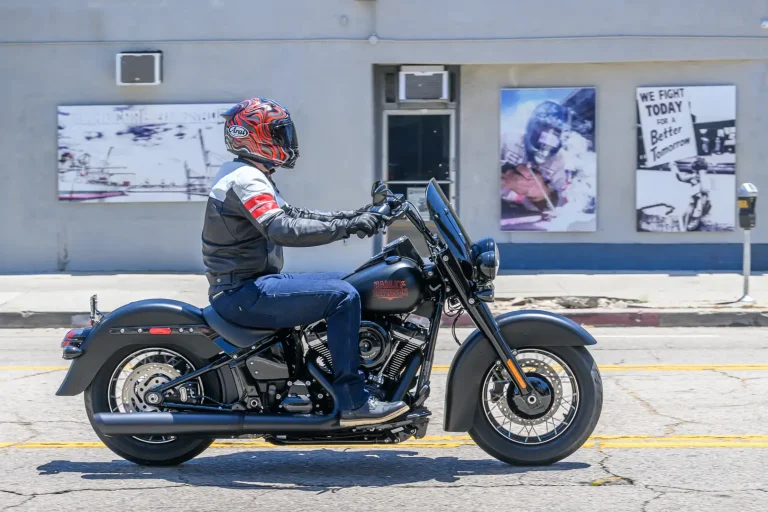
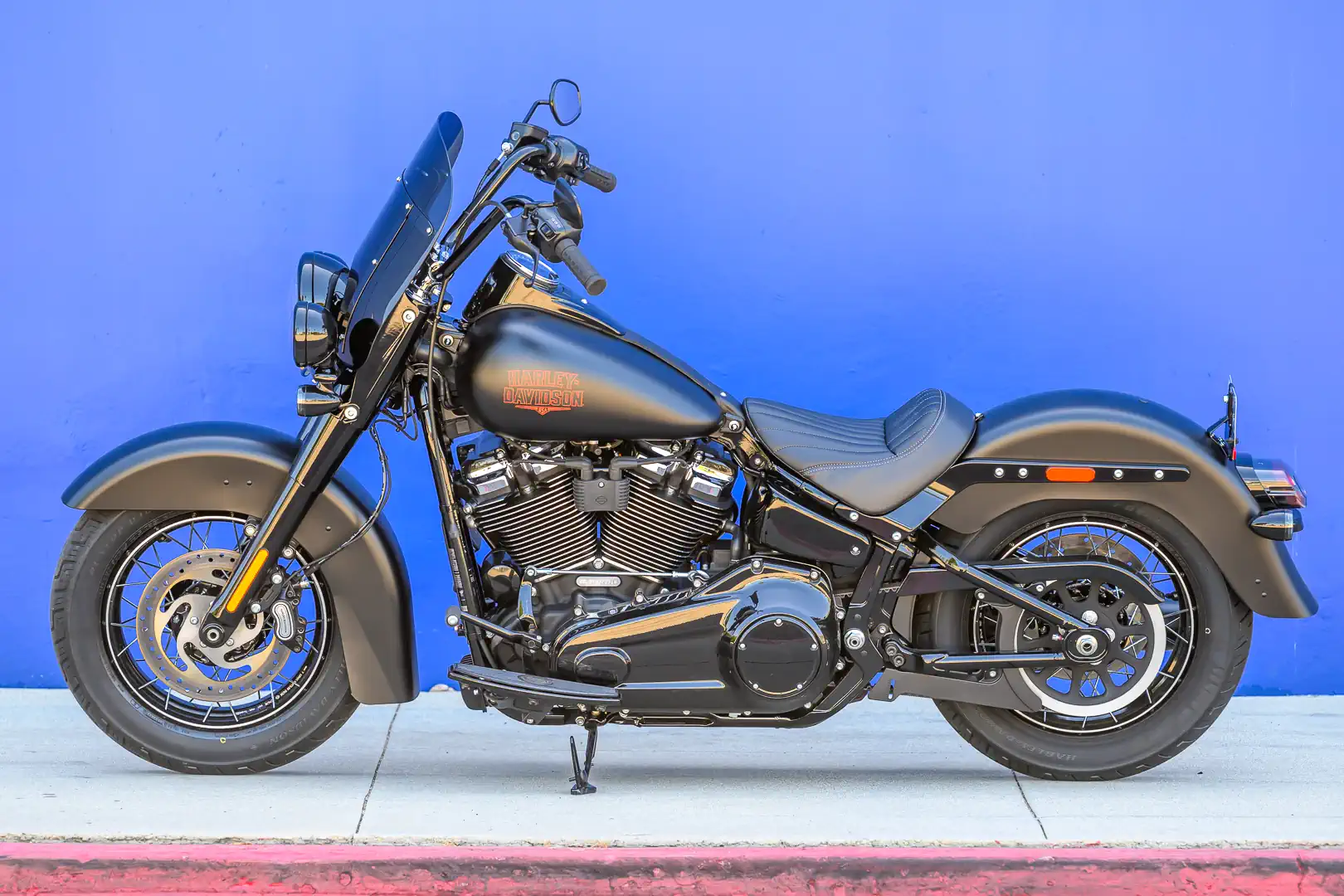
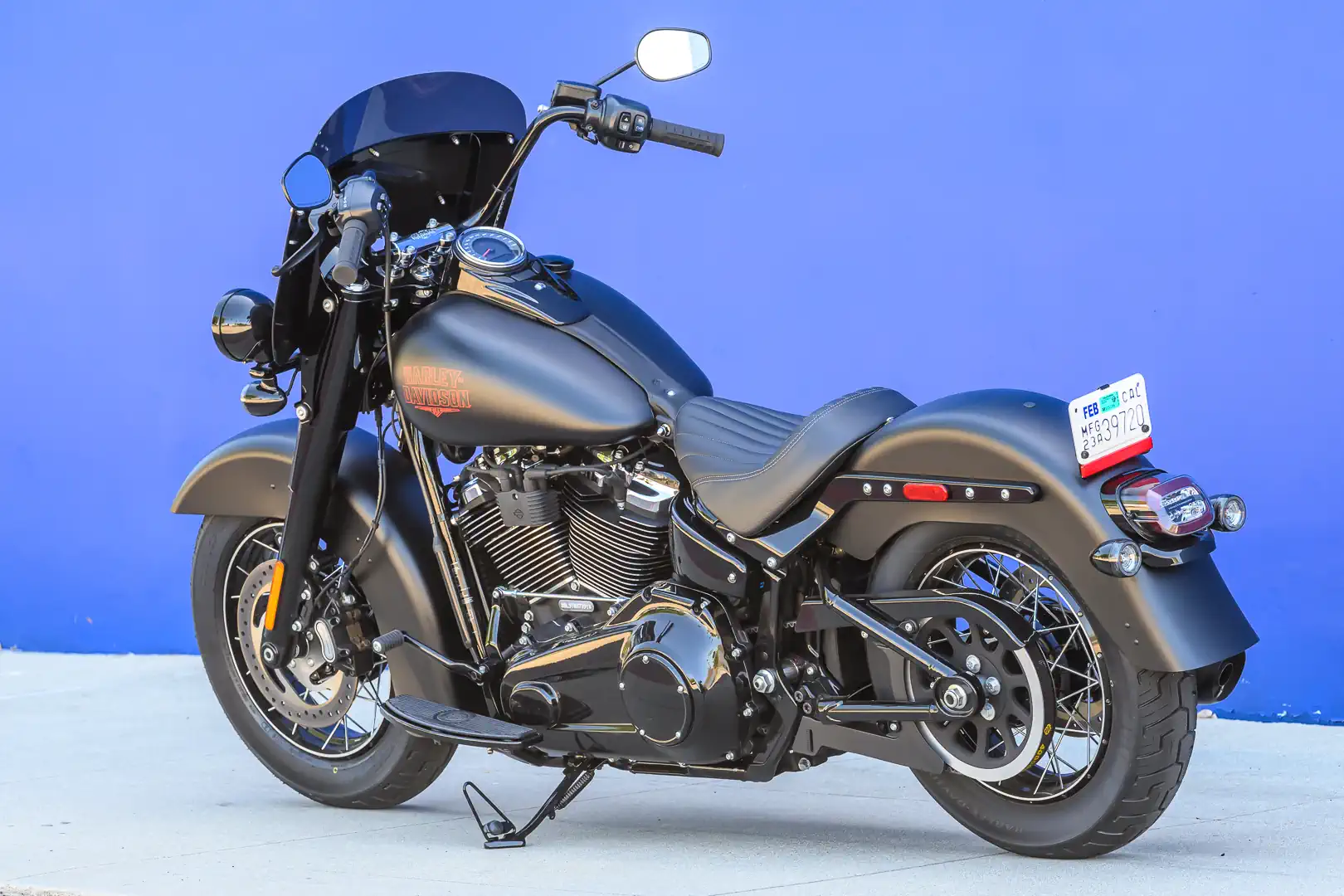
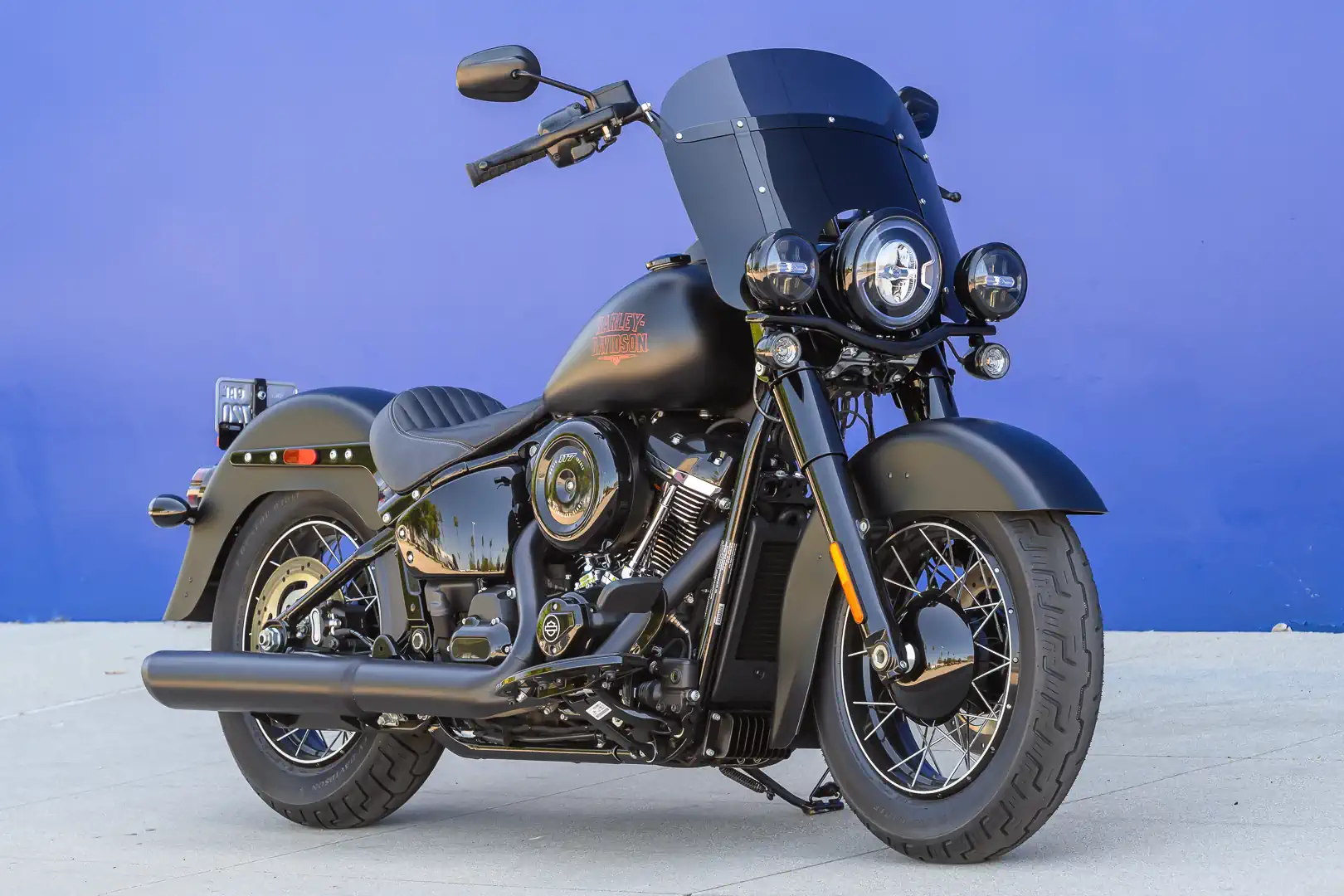
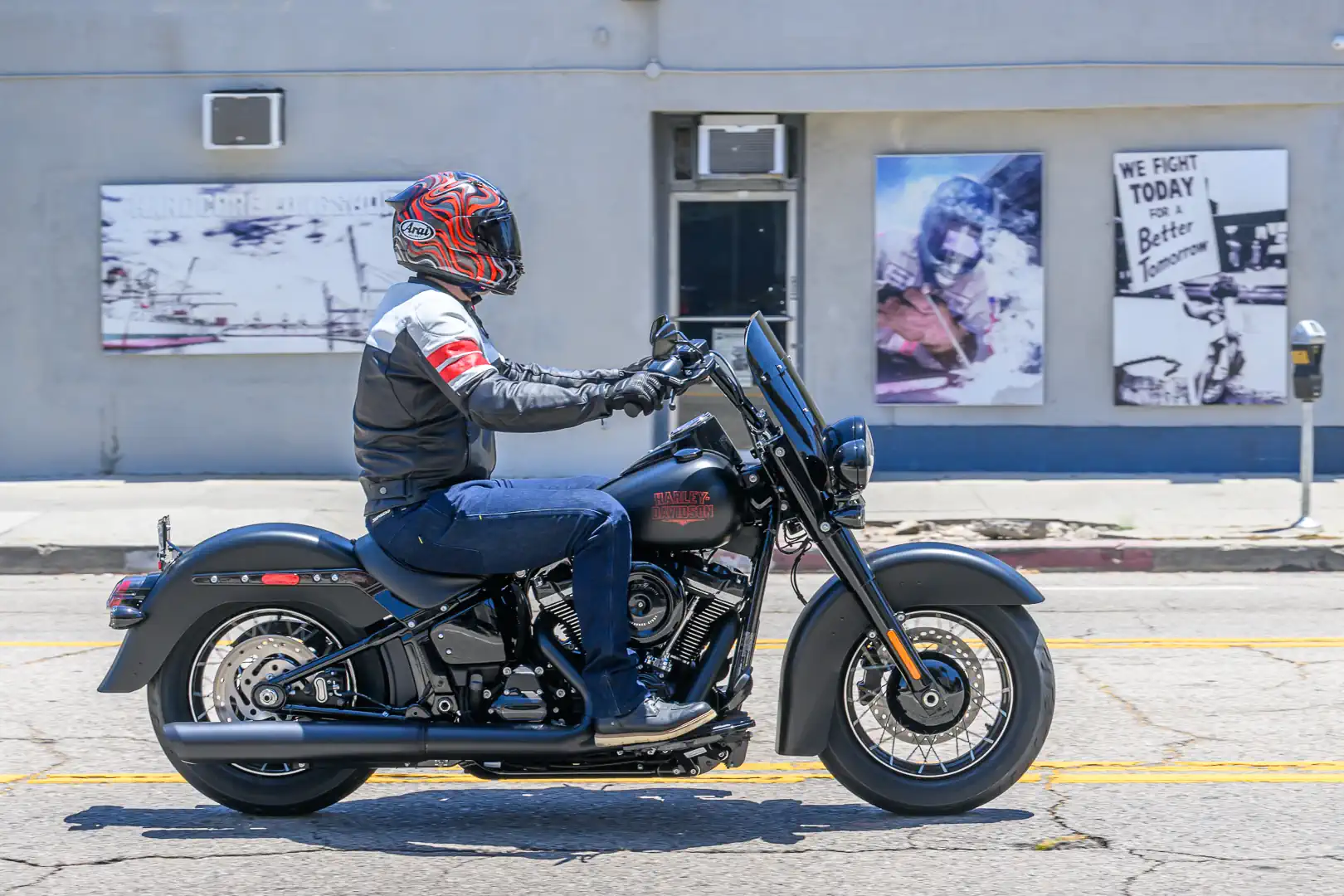
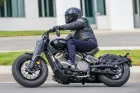
The 2026 Harley-Davidson Deadwood is the newest cruiser in the Softail lineup, and it arrives with a familiar recipe. Inspired by post-World War II GIs, Harley-Davidson took the Heritage Classic, lowered the rear end, chopped the windshield, fitted a solo seat, and painted nearly everything Denim Black. The name comes from the Black Hills town with an outlaw history of its own and a strong connection to the Sturgis Motorcycle Rally. All this happens with a $17,999 price tag. Let’s go riding and discover what the 2026 Harley-Davidson Deadwood is all about.
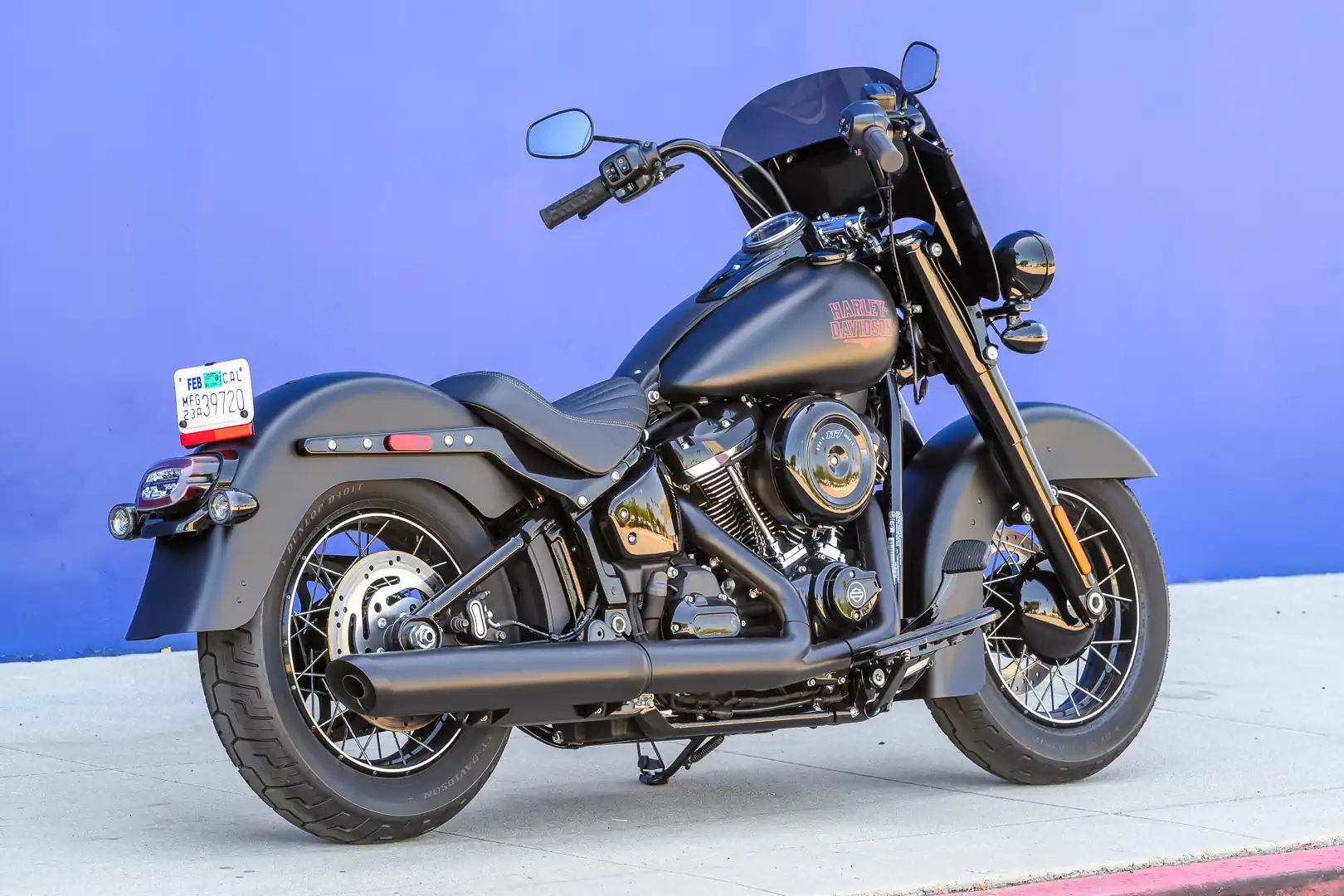
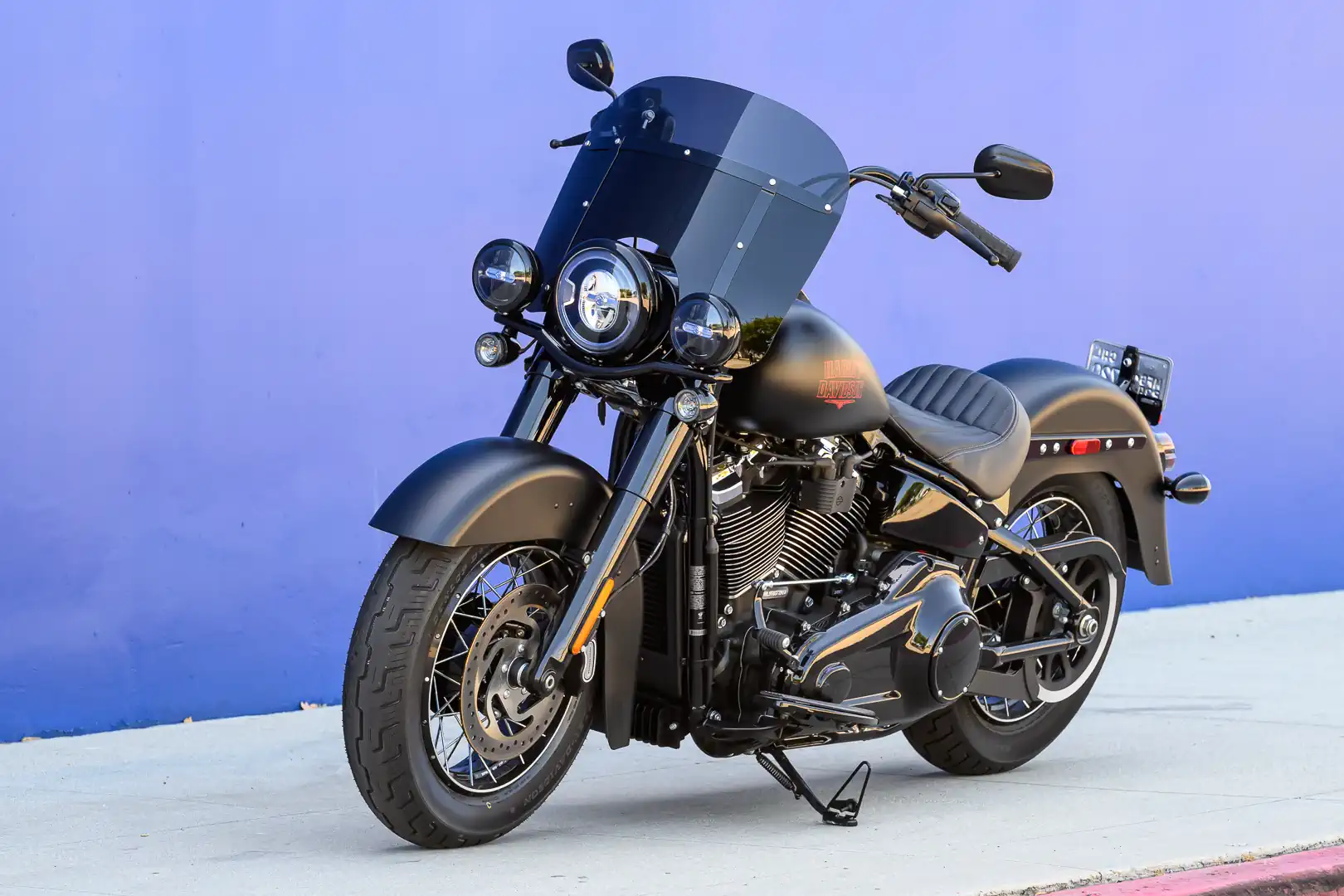
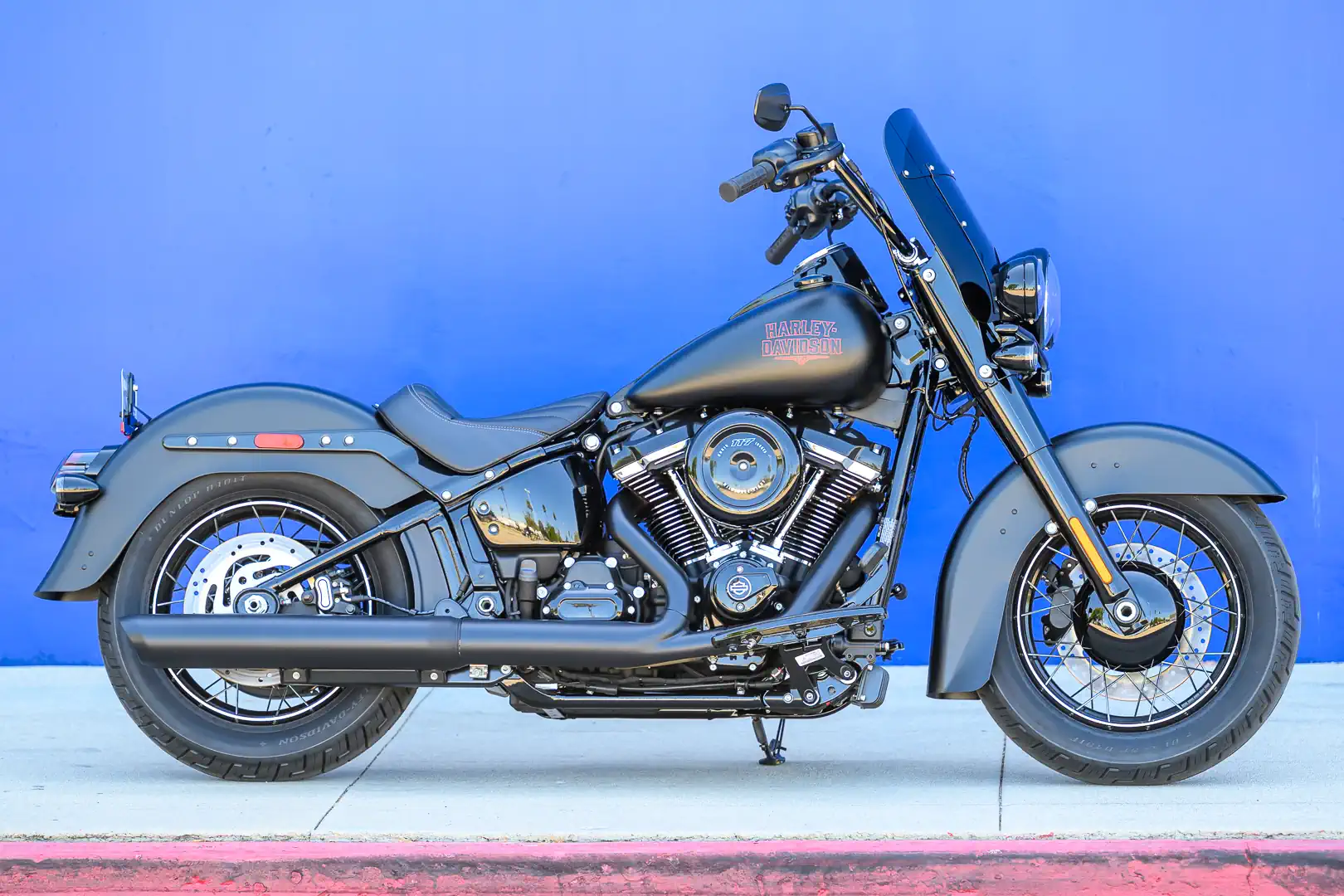
The 2026 Harley-Davidson Deadwood is a pared-down, rugged take on the Heritage Classic. The two share the Softail chassis, the Milwaukee-Eight 117 Classic engine, the 6-speed transmission, and the full electronics package. The Deadwood goes its own way with a solo seat, lowered rear suspension, a chopped windshield, wire-spoke wheels, and austere Denim Black paint with Black Trim. The Deadwood makes its public debut on August 7 at the Harley-Davidson event headquarters during the Sturgis Motorcycle Rally, but we’ve already put good miles on it in California.
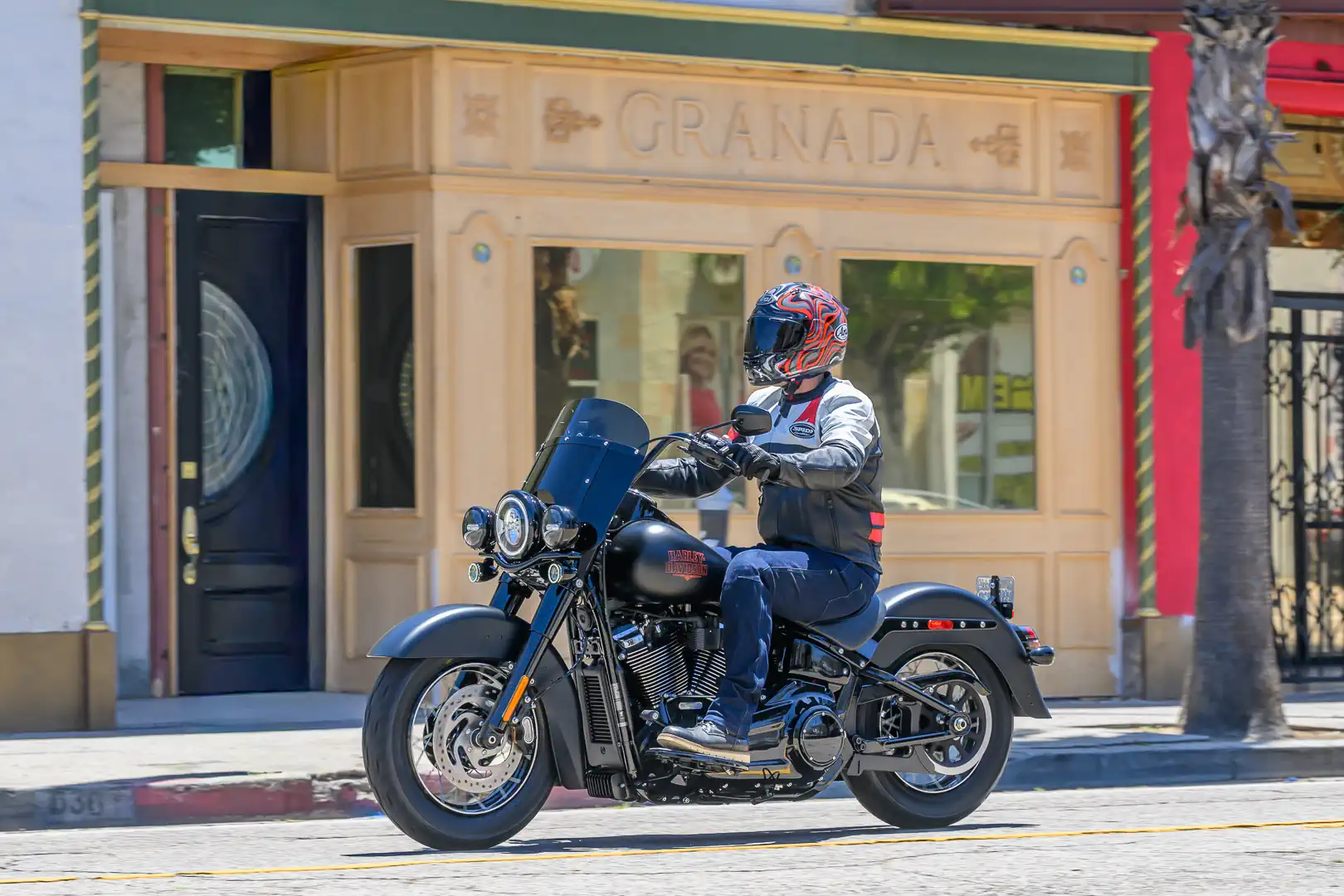
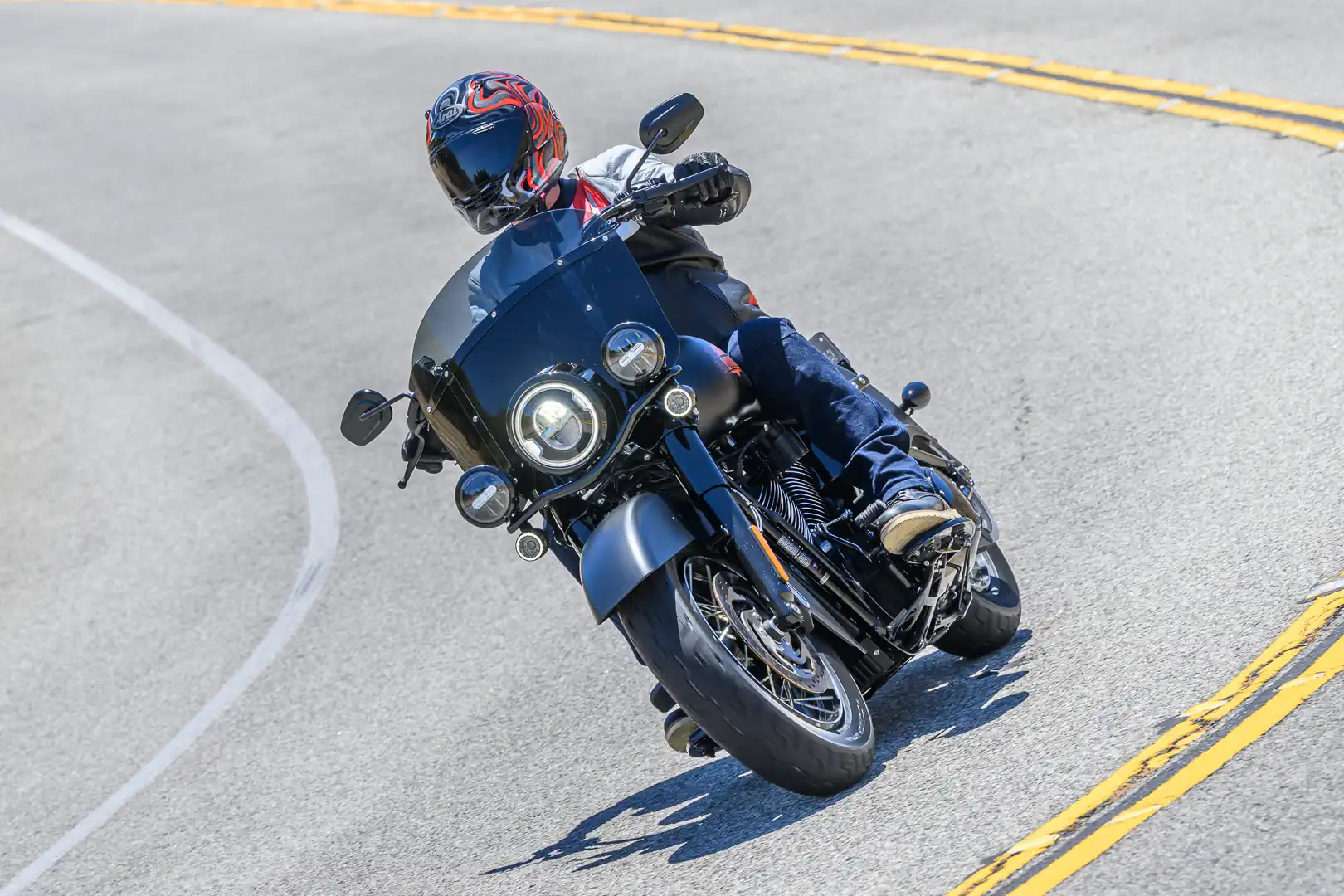
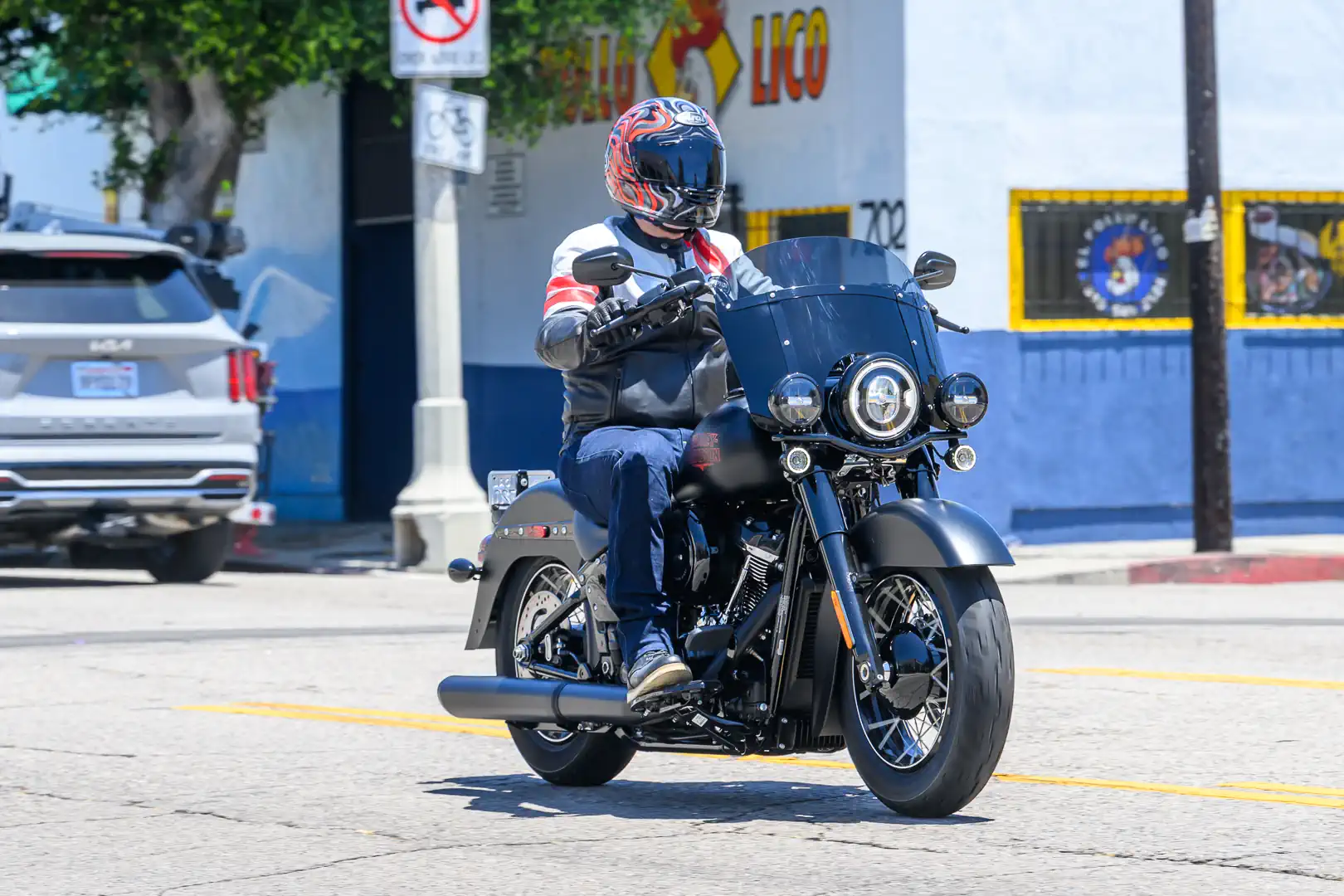
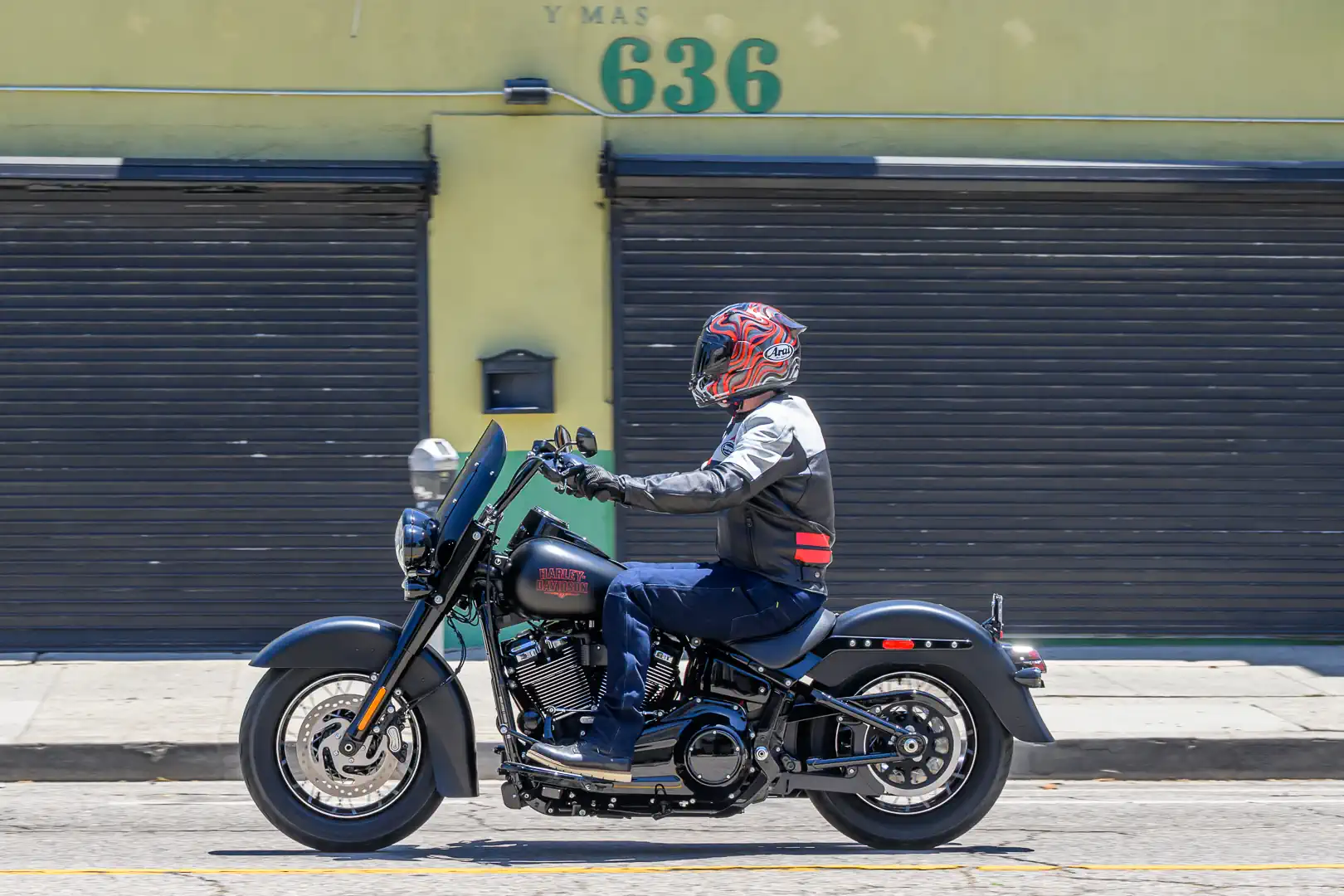
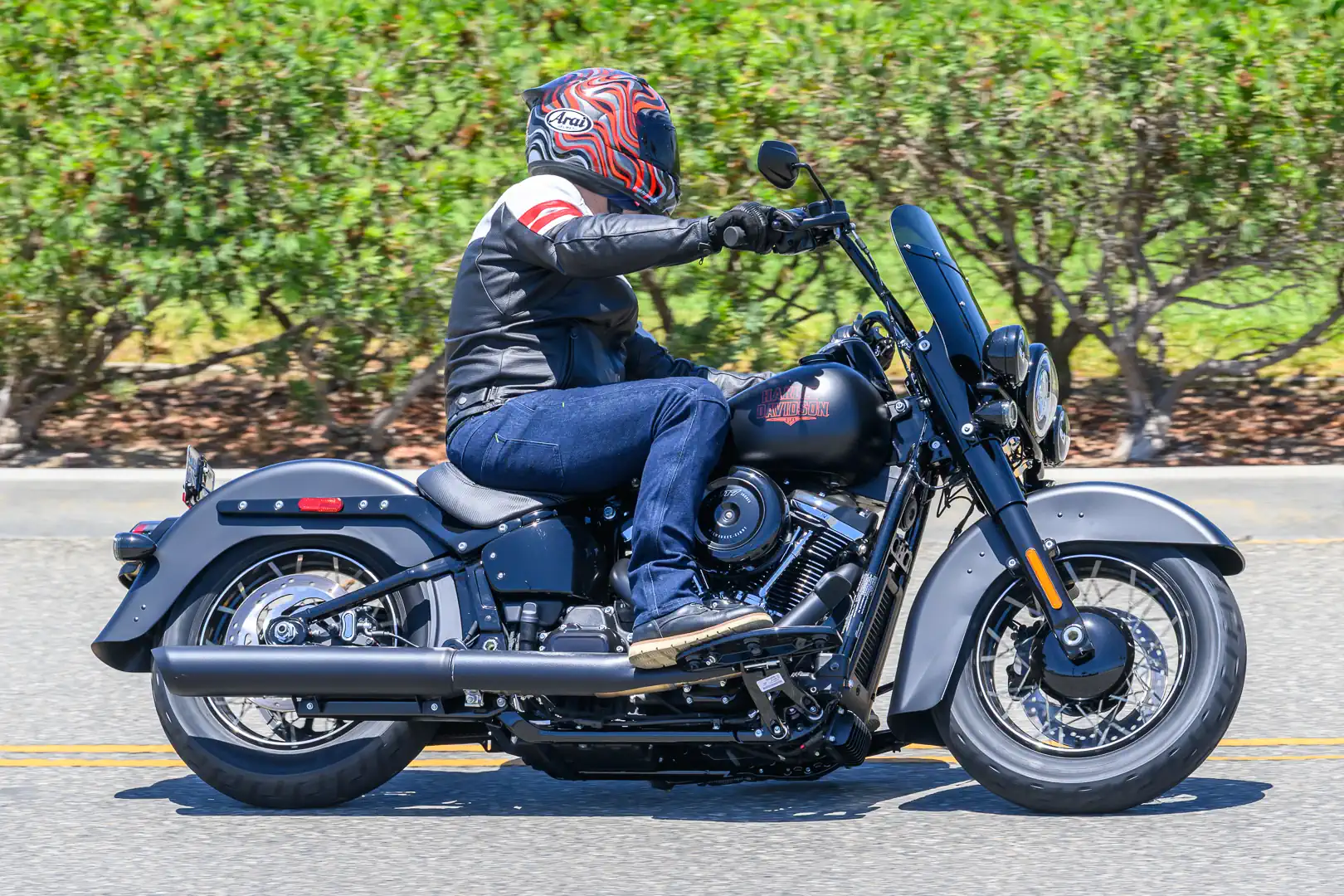
The Deadwood is one of the most comfortable motorcycles made. You can’t go wrong mimicking the ergonomics of the Heritage Classic. The bars have a natural rise, while the floorboards put your feet in a relaxed position. You can ride all day without getting stiff; just reposition your feet to keep kinks from developing in your joints. The chopped windshield is a big help on the freeway, though unnecessary when you’re riding around town. When you take it off — no tools needed — the Deadwood turns into a take-no-prisoners post-WWII bruiser. At 26.5 inches, the Deadwood offers one of the lowest seat heights in the 2026 Harley-Davidson lineup. The comfy tuck-and-roll solo seat exposes the rear of the bike, exploiting the hardtail look of the Softail chassis.
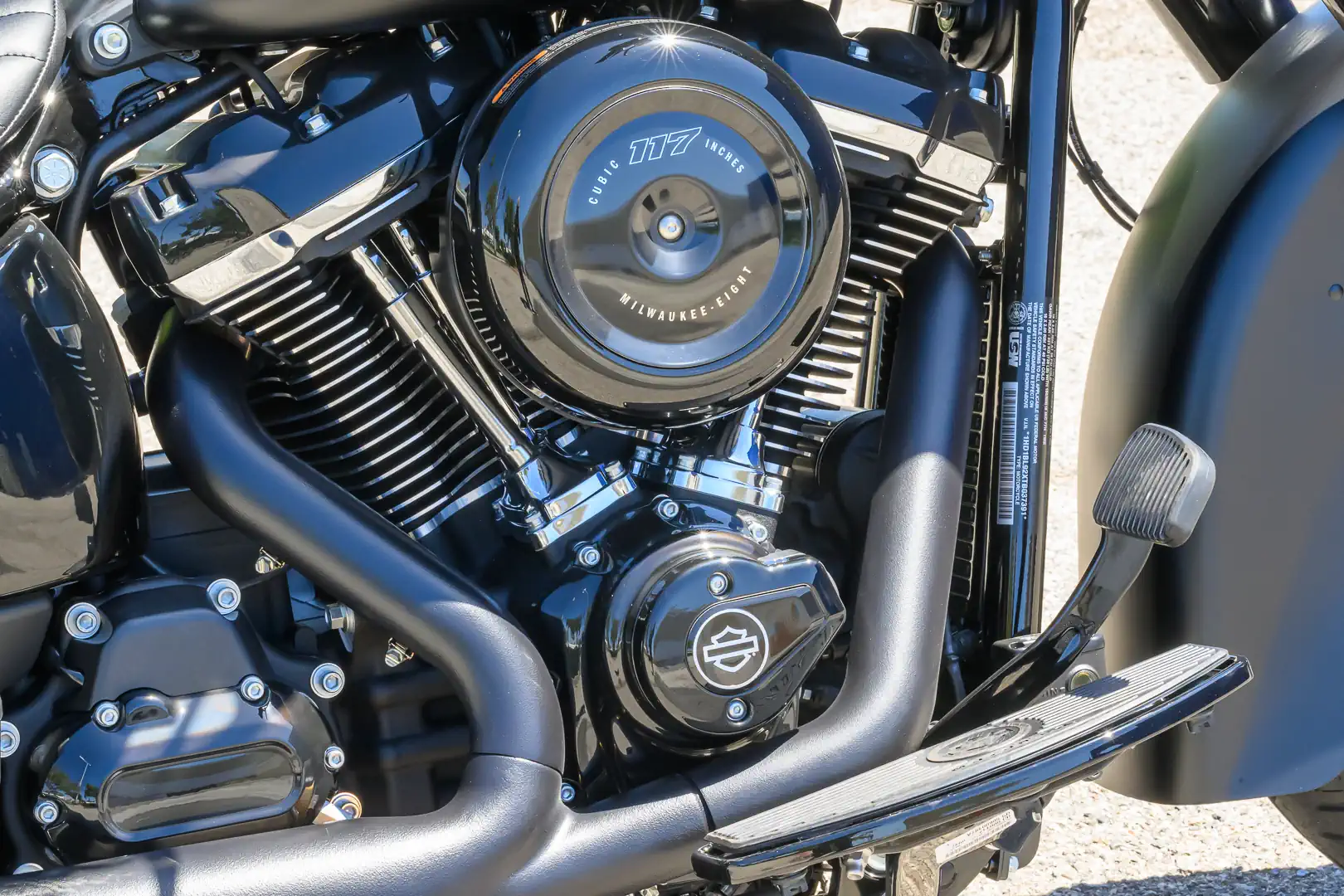
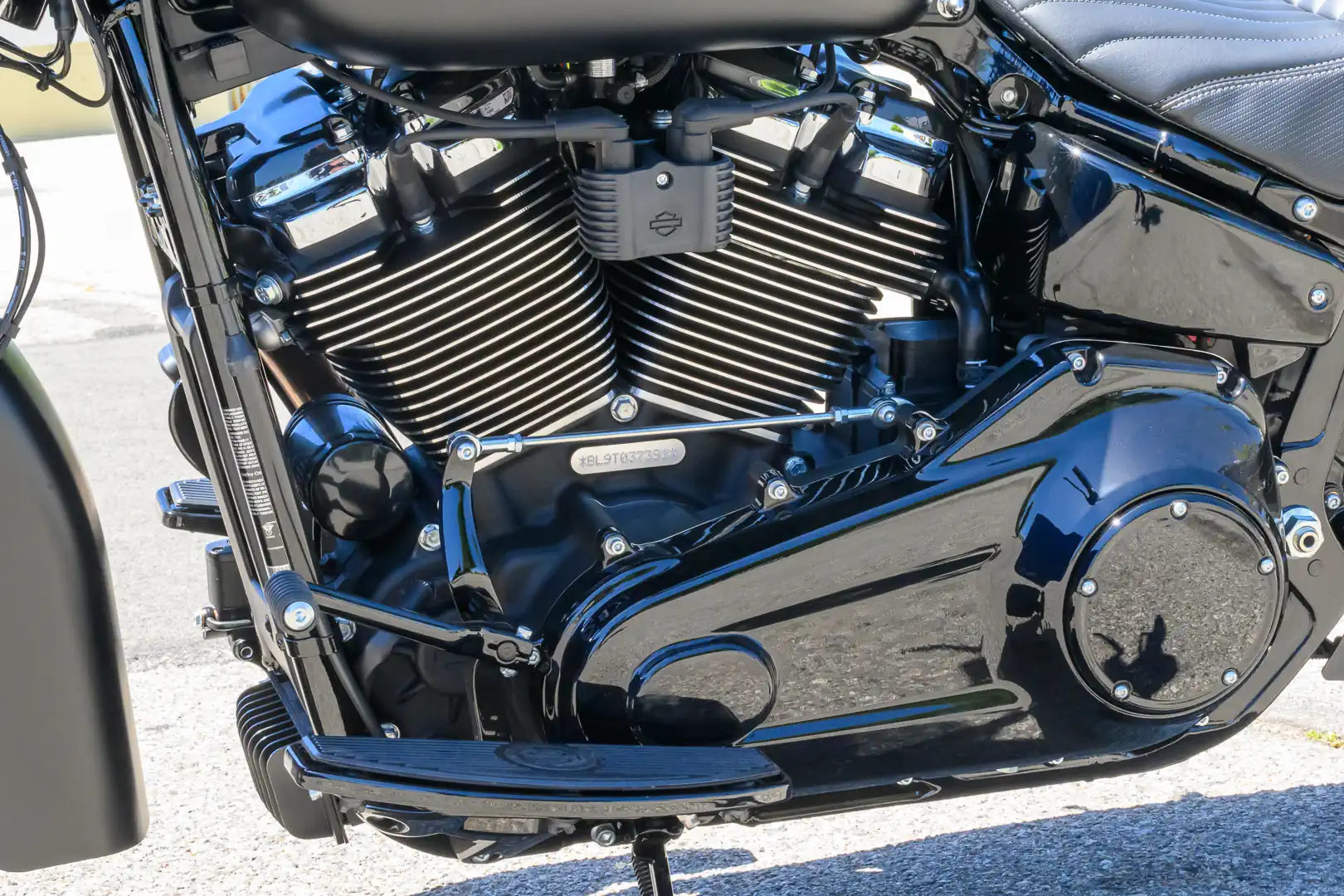
The Milwaukee-Eight 117 Classic is the most relaxed tune of Harley-Davidson’s 117. Peak torque is 120 ft-lbs at 2500 rpm, and the 1923cc V-twin tops out at 98 horsepower at 4600 rpm. Air and oil cooling team up to reduce the risk of overheating, which pays off in stop-and-go traffic on blistering days.
Low-rpm torque defines the Classic motor, compared to the more aggressive Custom and High Output variants. With those 120 ft-lbs arriving early, you get the pull you want in town, on the highway, and on back roads. The engine has a wonderful cadence at cruising speed, turning roughly 2000 rpm at 55 mph in 6th gear. The 98-horsepower peak is not the headline, though it is enough to push the Deadwood past 100 mph if you ask. This motorcycle is built around muscular acceleration and sound rather than a dyno chart. The familiar 6-speed Cruise Drive is its usual deliberate self, with sure shifts that you won’t make by accident.
Dual counterbalancers keep the 117 civil. Unwanted vibration doesn’t start intruding until around 80 mph, so you can stack on the miles in comfort. Around town and in the twisties, this is the smoothest version of the big Milwaukee-Eight yet.
The 2026 Harley-Davidson Deadwood gets the full IMU-informed Softail electronics package. Three ride modes are standard: Sport, Road, and Rain. Sport mode gives you the full power and the sharpest throttle response, and the engine spins up noticeably faster. Road mode is the around-town setting, with balanced power and smooth throttle response for reduced fatigue. Rain mode softens power delivery and adds electronic help when traction is limited. It also works well in the worst of LA traffic, where you want everything to happen slowly. The modes also change cornering ABS, traction control, and engine braking inconspicuously. In practice, engine braking is the change you are most likely to notice of those three, and only if you go looking for it.
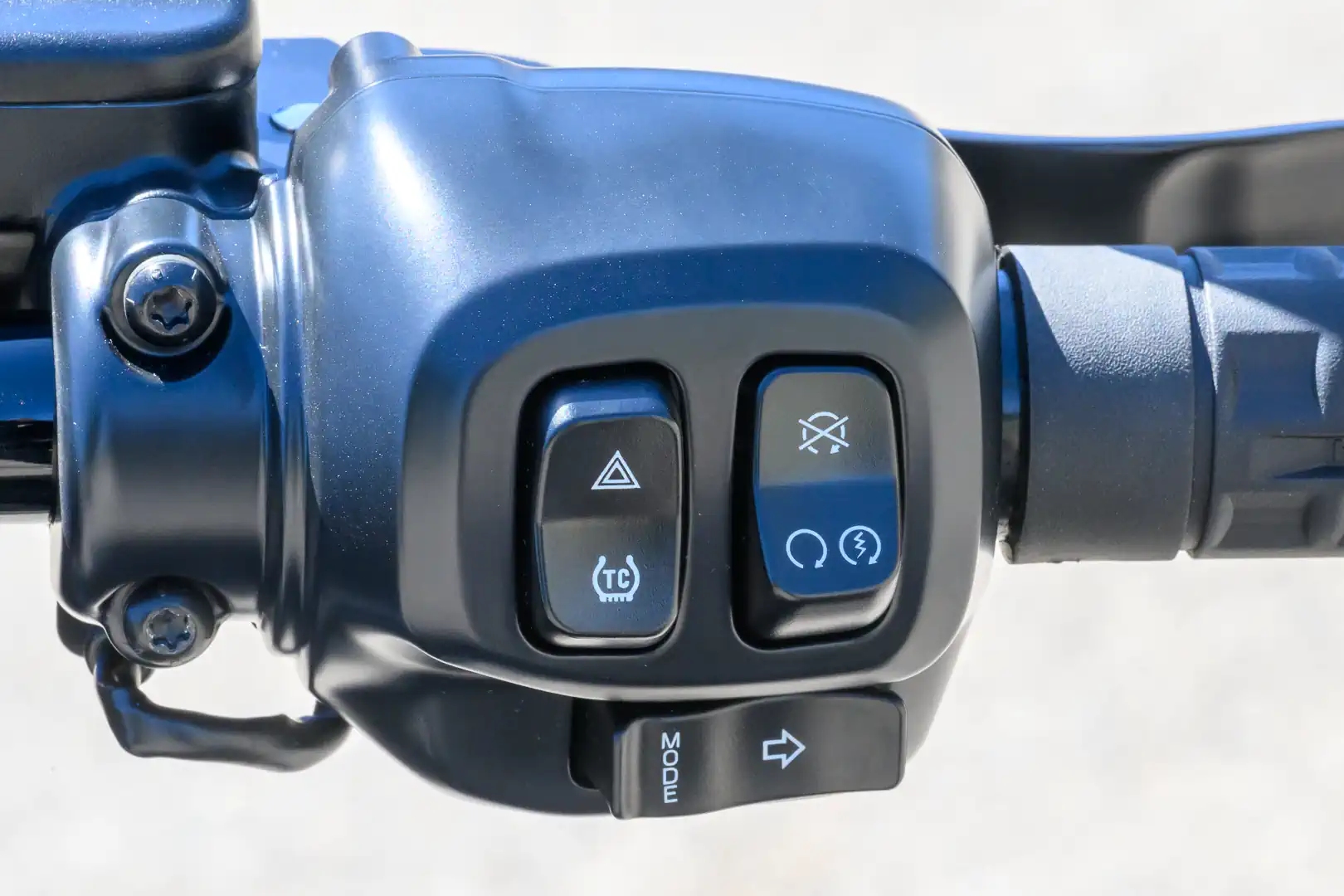
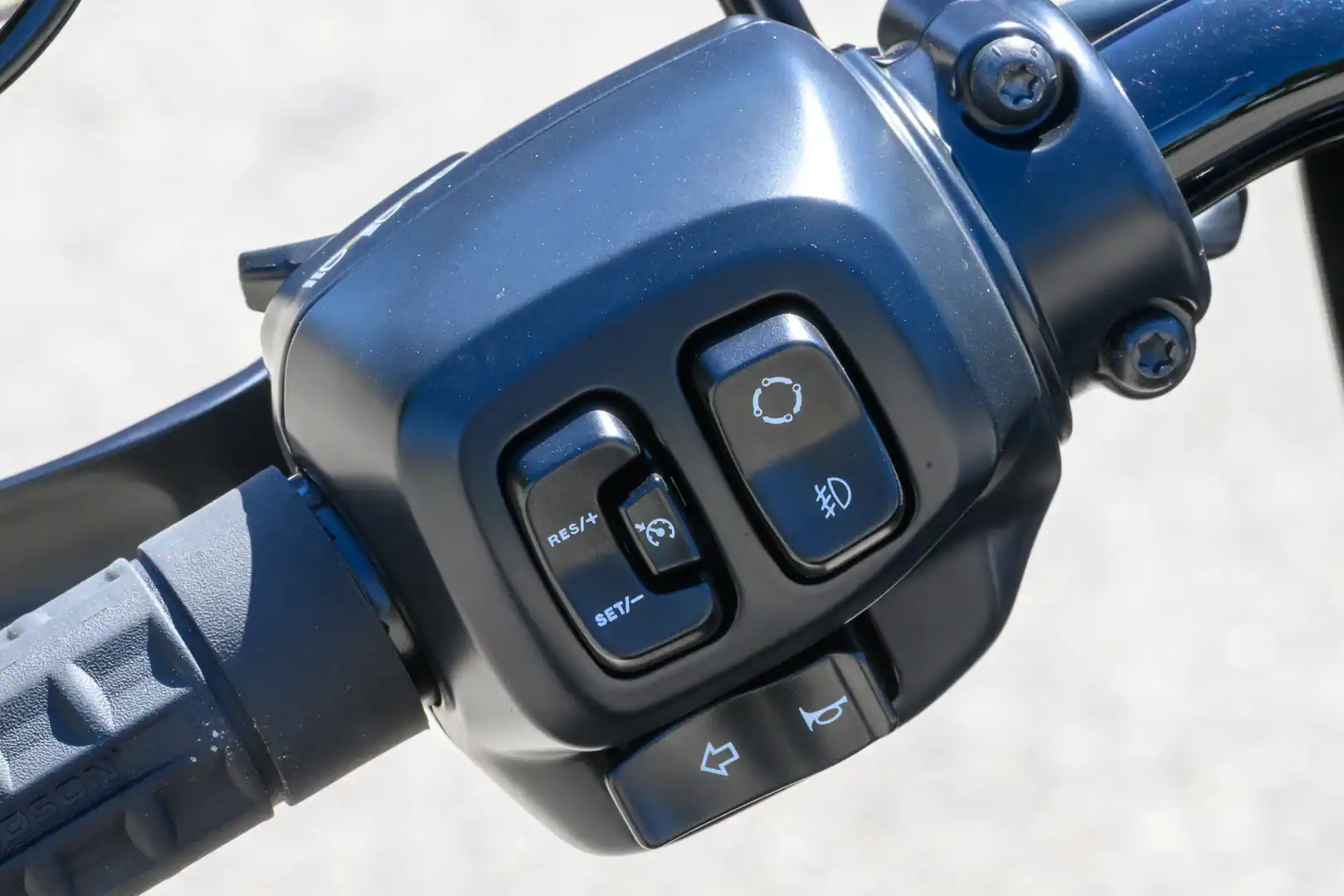
Changing modes is easy, and the latest Softail switchgear is the best ever from Harley-Davidson. The right-thumb turn-signal switch does double duty for changing modes. That sounds like an invitation for confusion, but in practice it’s not, and you can change modes on the fly. Traction control has its own button, so you can switch it off should you find yourself on a gravel road. The turn signal switches are pleasingly angular and easy to use. Cruise control is standard and simple to operate.
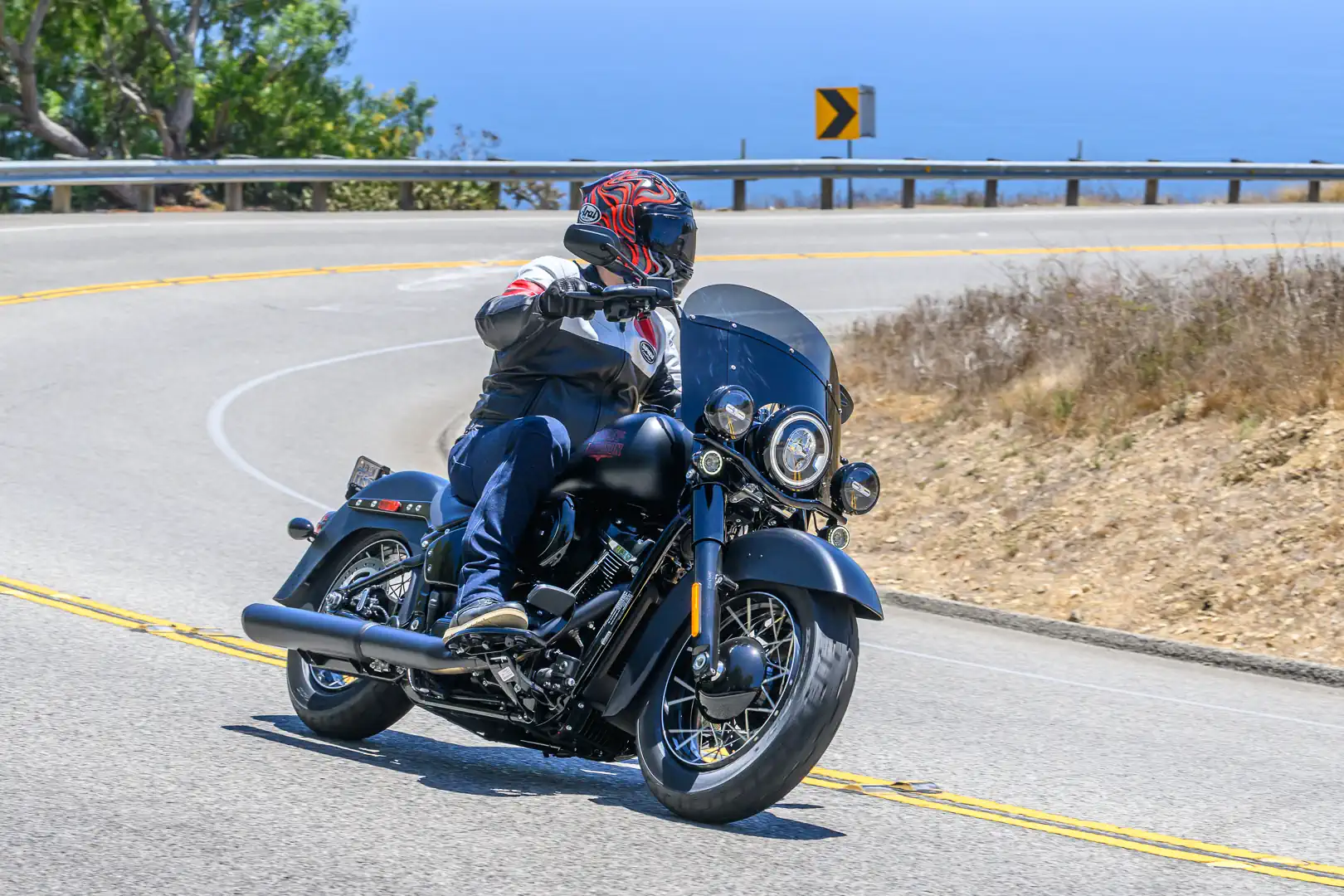
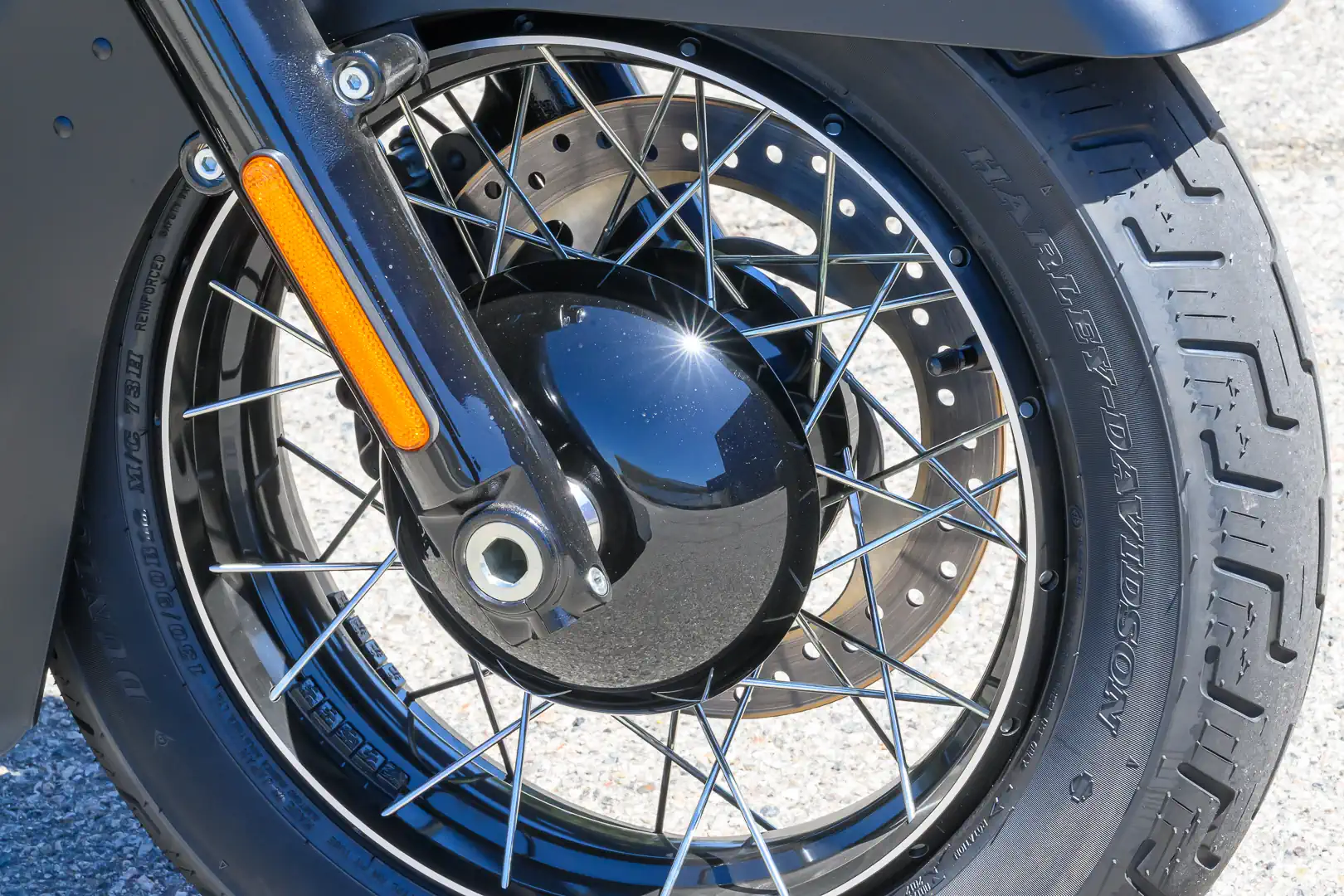
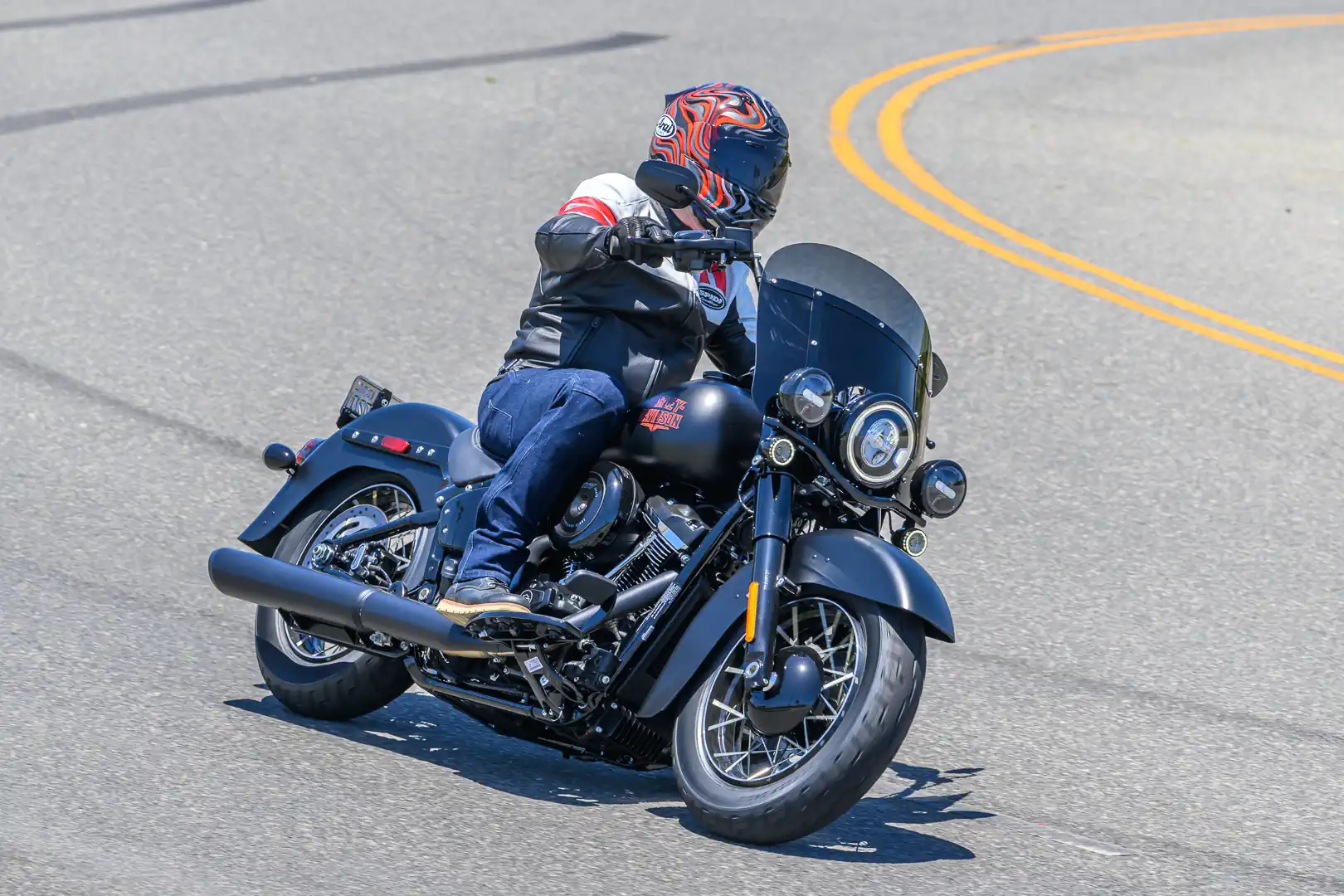
The Deadwood handles better than its looks suggest. Despite its solidly retro appearance, it’s a modern ride. Rake is 30 degrees, trail is 5.8 inches, and the wheelbase is 64.2 inches, all of which point to stability. Still, the Deadwood turns in with less effort than its geometry numbers imply, and holds a line with composure. The fat 16-inch wheels with 130/90 and 150/80 tires put down a good footprint at both ends. However, you can only push it so hard, as the floorboards touch down long before the tubeless Dunlop Harley-Davidson Series D401s run out of traction. Plenty of scrapes were left on hair-pinned Palos Verdes Drive East overlooking the Pacific Ocean. Tire pressure monitoring flags the pressures that the footprint depends on.
The suspension follows the Softail formula, though with a lowered rear end. The non-adjustable 49mm dual-bending valve Showa fork delivers 5.1 inches of travel. The hidden monoshock lets the rear wheel swing 3.4 inches, an inch less than the Heritage Classic. Shock-spring preload is the only adjustment, and it is reachable under the seat. Action is consistent, making the Deadwood predictable anywhere you ride it. The shorter rear wheel travel is most apparent on rougher city roads, so keep an eye out for potholes. Fortunately, the high-profile Dunlops will help prevent dented rims.
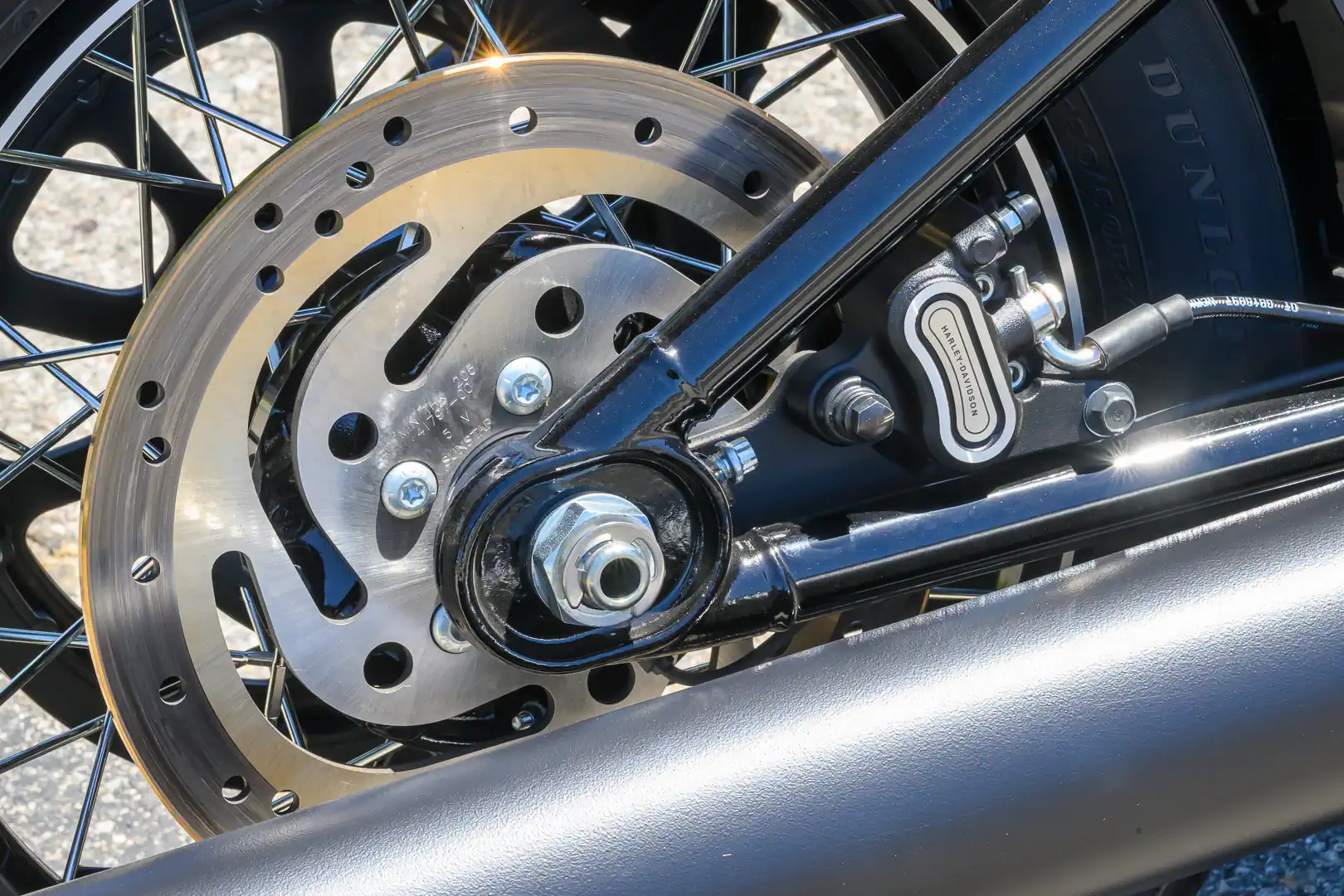
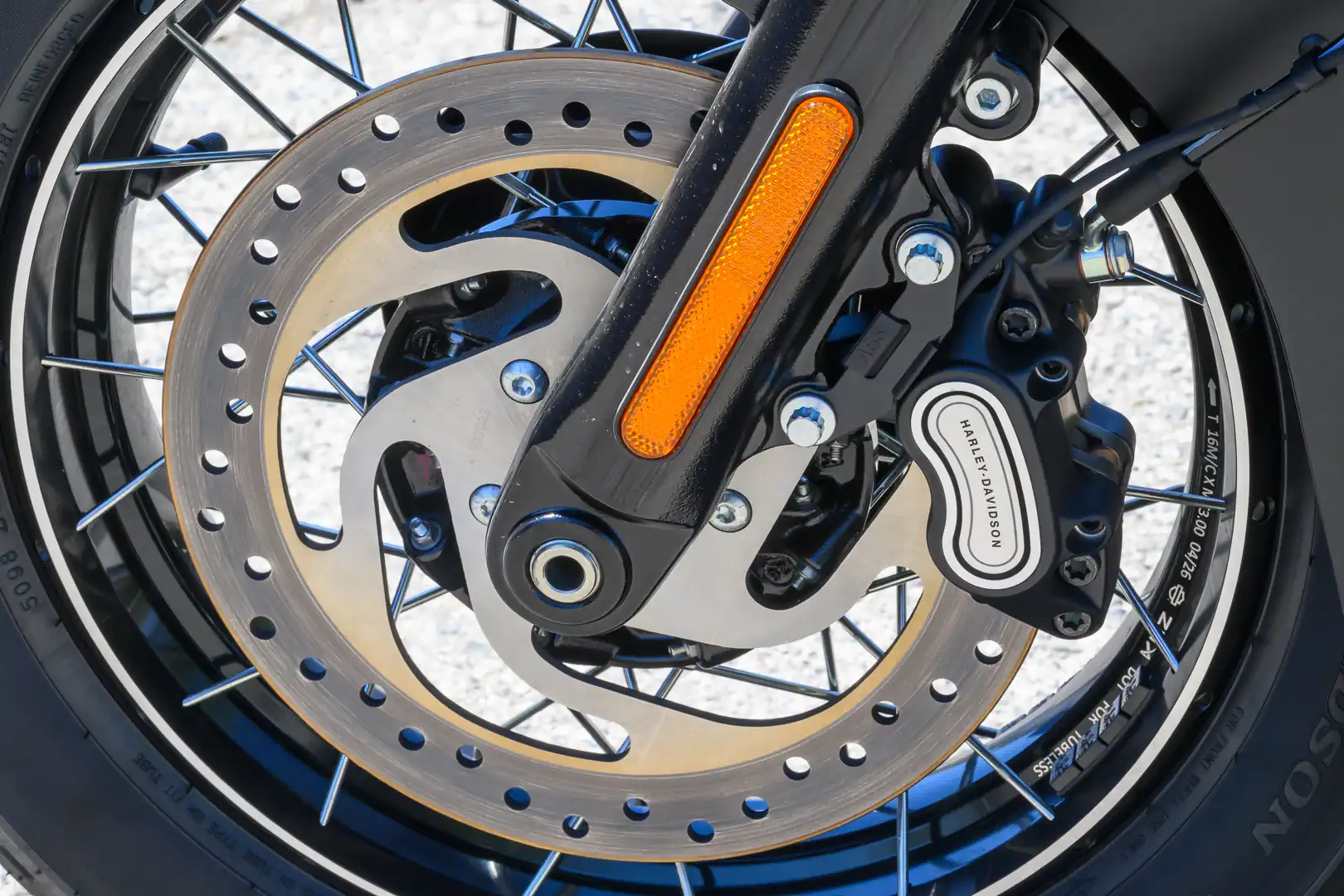
Braking hardware is adequate rather than ambitious. A single 300mm front rotor works with a four-piston fixed caliper, and a 292mm rear rotor uses a two-piston floating caliper. One front disc has plenty of work to do on a 686-pound motorcycle, though the Deadwood asks less of it than the heavier Heritage Classic does. Both ends contribute to slowing down, and the wide Dunlop footprint helps. The brakes get the job done for the Deadwood’s intended use.
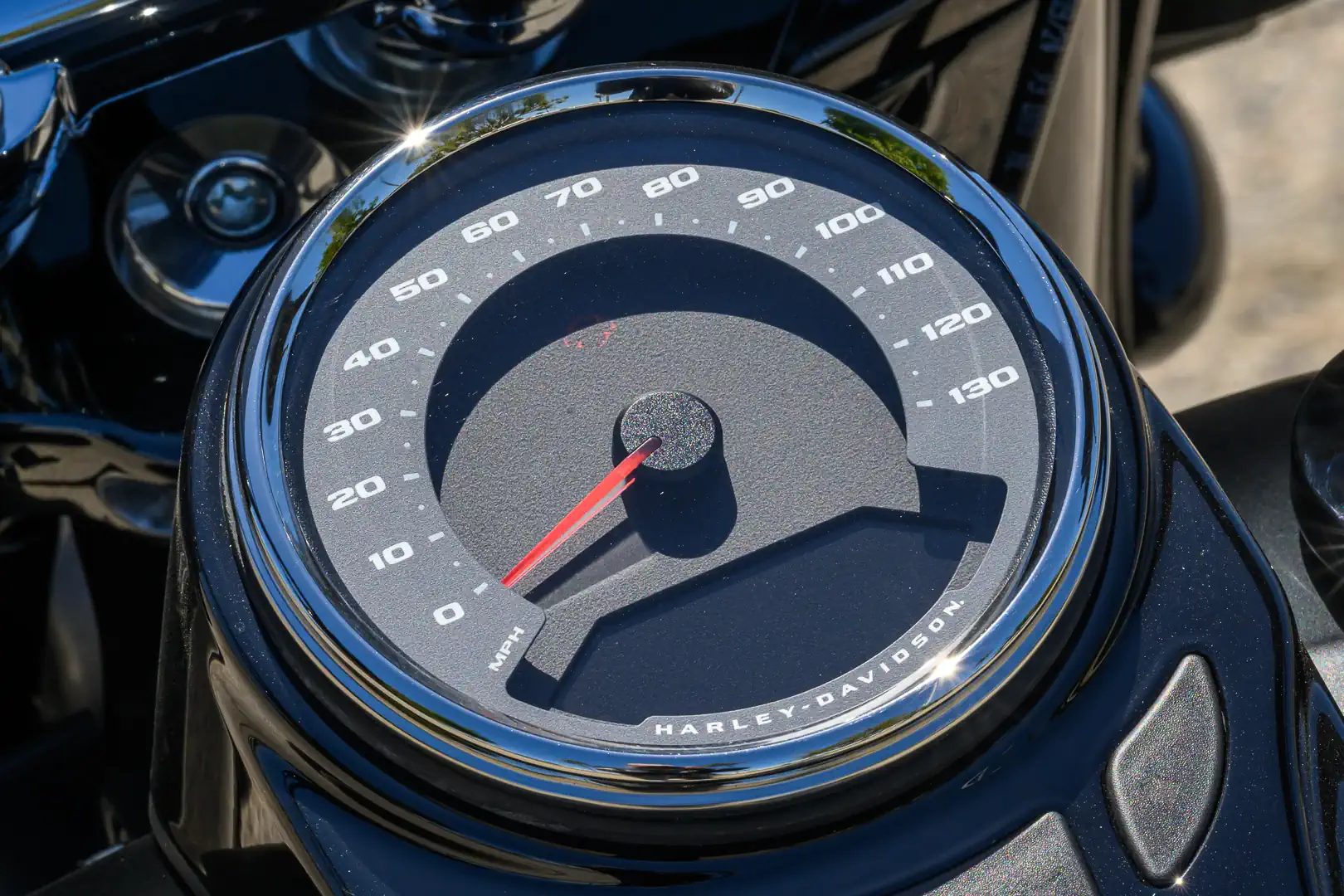
A 5-inch dash sits on a black console atop the fuel tank. An analog-style speedometer takes the top of the dial, with a multi-function LCD below it. The display covers gear position, odometer, fuel level, ride mode, heated gear, traction control, ABS, tire pressure, cruise control, clock, trip, range, and tachometer readings, though not at the same time. The tank-mounted location is traditional, though it does take your eyes farther from the road than a handlebar-mounted display would, particularly if you’re wearing a full-face helmet.
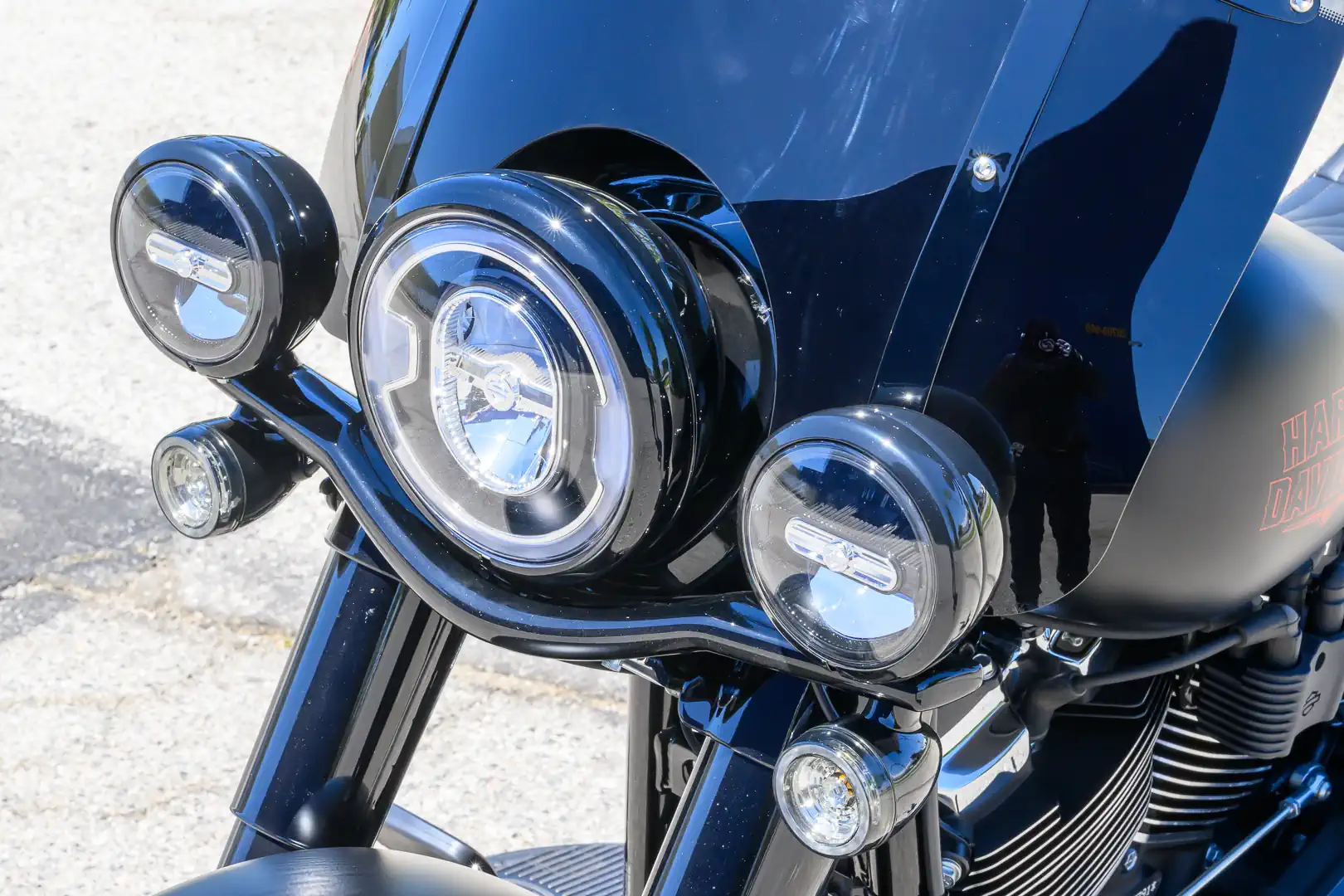
Lighting is all LED, and I love the triple-headlight look. The 7-inch headlamp has a position ring and is flanked by an iconic pair of LED auxiliary lamps. Bullet turn signals with cool round-rim running lights add to the impressive head-on appearance and functionality. The LED package improves illumination and helps other drivers see you, without compromising the vintage look. There’s also a USB-C charging port on the front left of the bike.
The 2026 Harley-Davidson Deadwood passes the head-turning test. I got my share of compliments, waves, nods, and smiles on the Deadwood. If you don’t need to carry cargo or a passenger, the Deadwood is a stylish alternative to the Heritage Classic. You give up two-up seating, chrome, an inch of rear suspension travel, and any choice of color. In exchange, you get a lower seat, less weight, a cleaner profile, the same Milwaukee-Eight 117 Classic engine and electronic rider aids, and $2000 more in your bank account. For a rider who wants post-war style with thoroughly modern functionality, the Deadwood makes a strong case at $17,999.
Hello and welcome again to the Motos and Friends Podcast. This episode is brought to you by Leod Escapes.
* * * * *
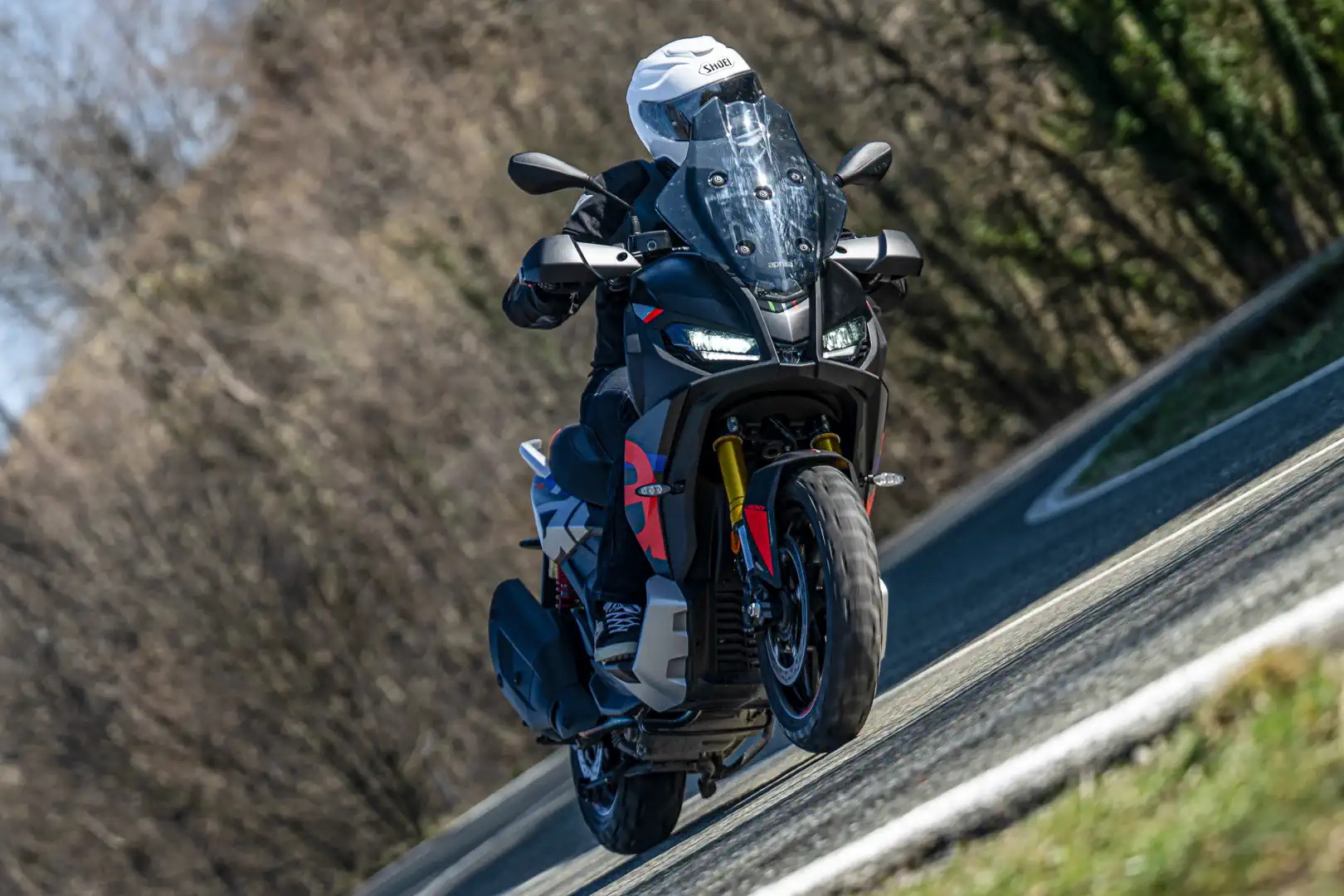
Aprilia is bringing a scooter to North America, and it’s one designed to appeal to adventure motorcyclists. The SR GT 400 is a mid-size scooter built around a steel motorcycle-style frame, a 399cc single, and off-road-ready hardware. It reaches US dealers as soon as this month. Don Williams and Kelly Callan spent some time riding the Aprilia and were surprised by what they discovered. Is this a real motorcycle or just a good-looking urban scooter?
* * * * *
Cat McLeod is founder and owner of Leod Escapes, the ultimate tour company for sport-minded motorcycle riders. Cat talks to us this segment about some of his amazing European experiences and tours that include of course, riding some amazing MotoGP tracks on new BMW S1000RRs. If you like what you hear, now is the time to book your trip of a lifetime, so visit LeodEscapes.com to find out more.
* * * * *
Our guest this episode is Terry Vance, the multiple Motorcycle and Motorsports Hall-of-Famer. Terry is of course the former professional motorcycle drag racer, team owner, and co-founder of the high-performance parts company Vance & Hines. Teejay Adams chats with Terry about his incredible career that includes being the first rider to hit 200 mph in the standing quarter-mile.
Having won this year’s MotoAmerica Mission King of the Baggers championship with Hayden Gillim riding the Vance & Hines factory Indian Challenger, and with Harley-Davidson’s recent withdrawal, Terry gives us his thoughts on where the series might go from here.
* * * * *
Here’s quick reminder to check out our monthly digital magazine. It’s filled with everything you want to read on motorcycling, including some things you’ve probably not seen elsewhere. It’s absolutely free and you will find it on the Apple App Store and of course on Google Play as well.
Don’t forget to leave us your comments on our social media—we’re on all the usual platforms at Ultimate Motorcycling. We love hearing your feedback… so good or bad, please let us know what you think. If there’s something you’d like us to cover, we’d love to hear those ideas too!
We use cookies and browser activity on this website
Functional
Always active
The technical storage or access is strictly necessary for the legitimate purpose of enabling the use of a specific service explicitly requested by the subscriber or user, or for the sole purpose of carrying out the transmission of a communication over an electronic communications network.
Preferences
The technical storage or access is necessary for the legitimate purpose of storing preferences that are not requested by the subscriber or user.
Statistics
The technical storage or access that is used exclusively for statistical purposes.The technical storage or access that is used exclusively for anonymous statistical purposes. Without a subpoena, voluntary compliance on the part of your Internet Service Provider, or additional records from a third party, information stored or retrieved for this purpose alone cannot usually be used to identify you.
Marketing
The technical storage or access is required to create user profiles to send advertising, or to track the user on a website or across several websites for similar marketing purposes.
Advertising helps us keep our content available for free, so adjusting your ad blocking settings will help us.
We appreciate your support!
i
How to Allow Ads on This Site
Depending on your setup, ads may be blocked by a browser extension, VPN, antivirus software, or other application. Here are some common ways to allow ads:
Browser Extensions (e.g., Adblock, uBlock, etc.)
Click the extension icon in your browser toolbar.
Look for an option like "Don't run on pages on this site" or "Pause on this site".
Save the change and refresh the page.
VPNs with Ad Blocking (e.g., NordVPN, Proton VPN, etc.)
Open your VPN app.
Go to settings or features.
Disable any ad blocking or tracking protection features.
Refresh the page.
Antivirus Software or Other Privacy Tools
Check for web protection, ad filtering, or browser privacy settings.
Click the power button to disable it for this site.
Refresh the page.
Not sure what's blocking ads? Look for tools with privacy or filtering features, or check your browser extensions. We only use respectful, non-intrusive advertising.