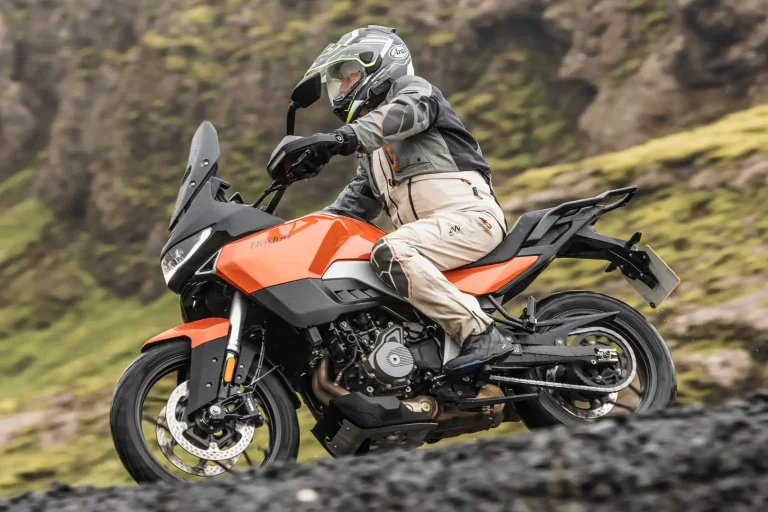
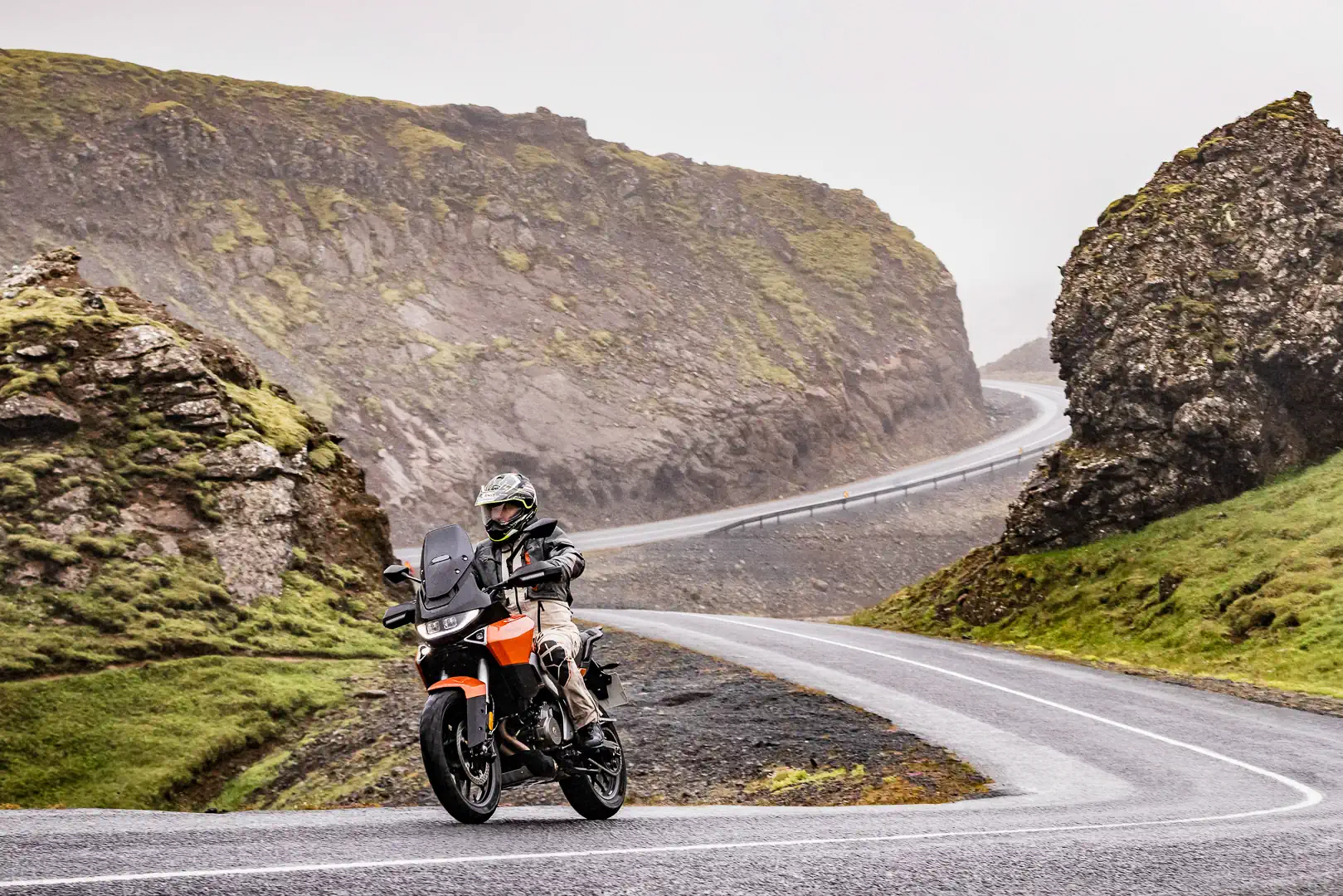
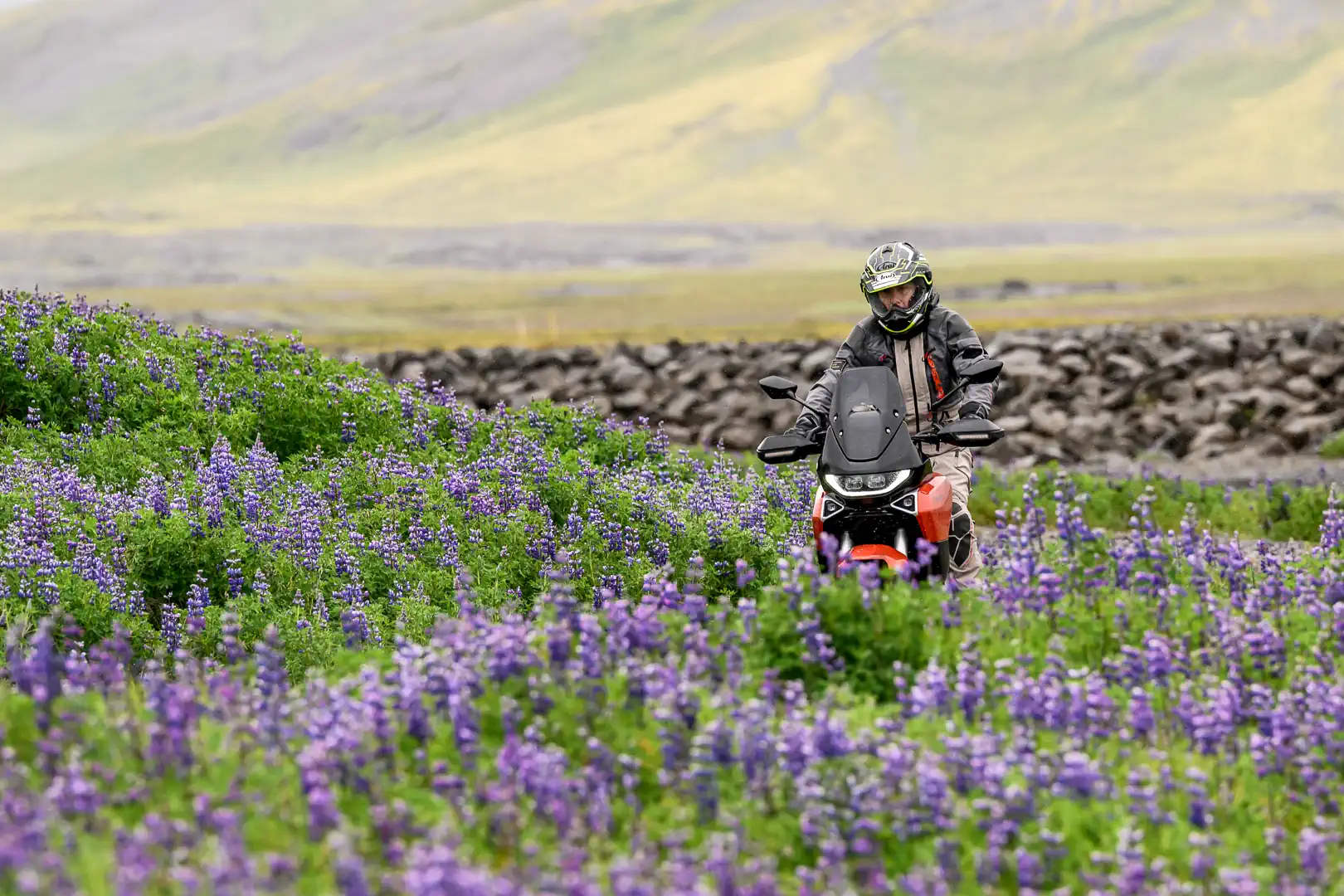
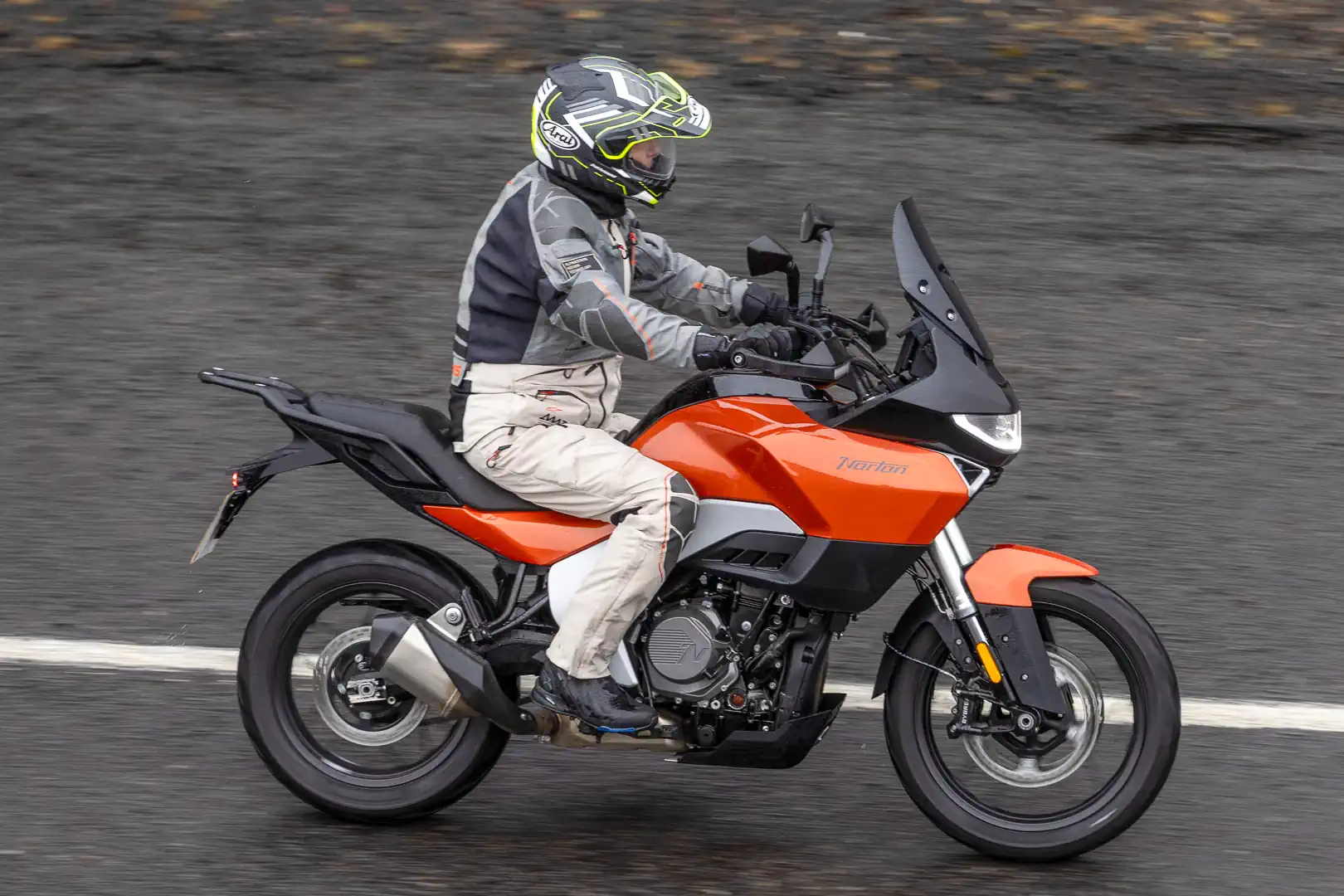
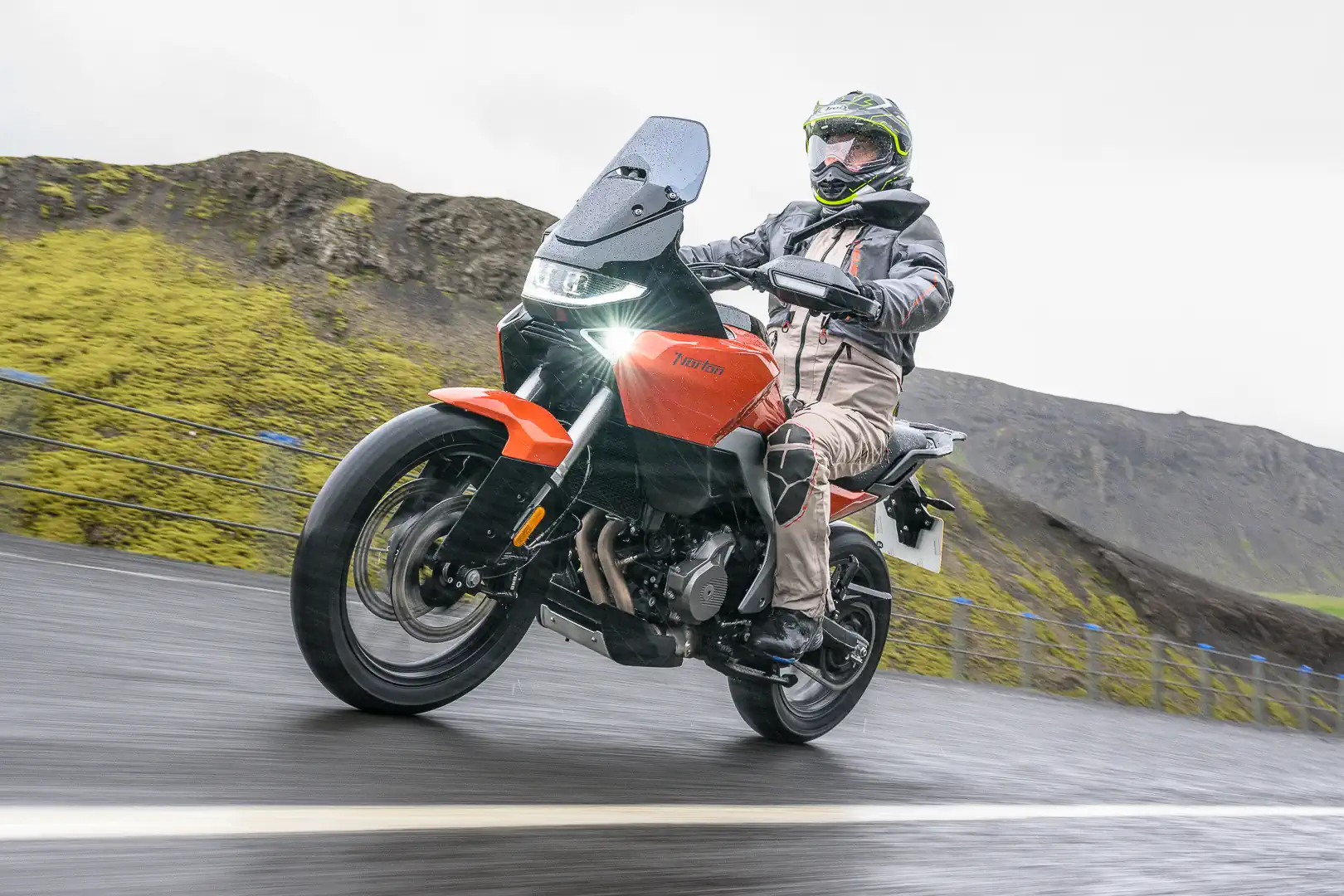
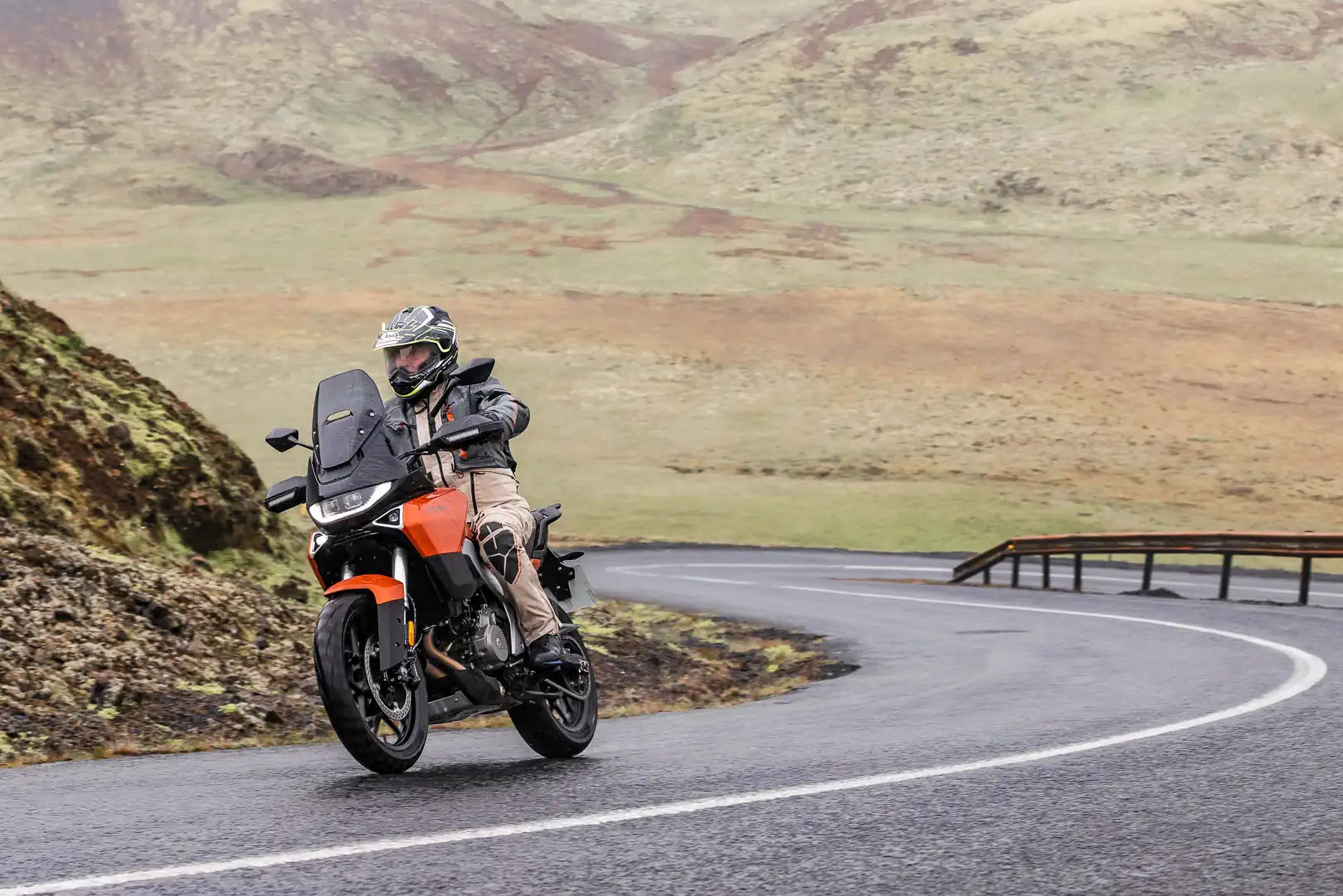
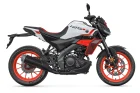
Unexpectedly, I found myself on a Boeing 737 MAX 8 flying to Iceland to ride the new 2027 Norton Atlas. It wasn’t just that I was flying seven hours and change in a plane I think of as a short-hop jet; I never expected to be riding a new Norton.
A Dozen Owners Since 1898
It has been a long and winding road for the Norton name. While that’s good in a riding context, it’s not great for business. Norton has had no fewer than a dozen owners since James Lansdowne Norton founded Norton Manufacturing Co. in 19th-century Birmingham, England.
Perhaps the closest I got to twisting a throttle on a Norton was shooting UM Founder Arthur Coldwells and the late Daniel Schoenewald, a noted Norton collector. They were riding Daniel’s own 2015 Norton Commando 961 Sport. I declined, as I don’t like riding someone’s personal bike for a variety of reasons. I will say that I was tempted, as it was a great-looking reinterpretation of the 1974 Norton Commando Interstate that Daniel had brought along for comparison.
Unfortunately, Norton Motorcycles (UK) Ltd. at Donington Hall, which built Daniel’s bike, ended up mired in financial misbehavior involving pension schemes, a shortfall of £10 million, the company’s collapse into administration in 2020, and three guilty pleas in Derby Magistrates’ Court by the brand’s owner two years later.
One might think that tawdry episode would poison the Norton name forever. However, TVS Motor Company had other ideas. The India-based motorcycle manufacturer bought the Norton assets for £16 million in 2020 and moved the Norton headquarters to Solihull, just seven miles from where the original Norton Manufacturing Co. did business over 125 years ago. A long and winding road, indeed.
After building a re-engineered V4SV superbike inherited from the previous owner in 2022 to get things rolling, Norton revealed all-new bikes at EICMA 2025. While they featured historic names, Manx and Atlas, they looked nothing like a classic Norton.
It was clear that TVS isn’t taking the retro route chosen by the reconstituted Triumph and BSA, two brands that were under the same ownership umbrella as Norton from 1973 to 1978. The Manx and Atlas were clean-sheet designs with lots of plastic and not the slightest hint of 1962, the last time both models were produced concurrently.
Meet Norton’s Owner, TVS Motor Company
Let’s now pivot to TVS Motor Company of Chennai, India.
TVS Motor Company is controlled by TVS Holdings, a listed holding company. In FY 2025-26, TVS Holdings reported consolidated revenue of ₹58,155 crore (approximately $6.1 billion). TVS Motor’s standalone manufacturing revenue was ₹47,270 crore (approximately $5.0 billion).
TVS Motor Company is the second-largest Indian-owned two-wheeler manufacturer. TVS’s sales of 5.67 million two-wheelers put it about 800,000 behind Hero MotoCorp and 1.35 million ahead of KTM owner Bajaj Auto.
TVS Motor builds mopeds, commuter and sport motorcycles, scooters, electric scooters, and three-wheelers at four plants: Hosur, Mysuru, and Nalagarh in India, and Karawang in Indonesia. Norton’s Solihull factory stands apart from that count. The TVS range runs from the XL 100 moped through the Jupiter and Ntorq scooters to the Apache sport line and the iQube electric scooter.
Under TVS Motor’s ownership, Norton designs and engineers its motorcycles in the Solar Park industrial area in Shirley, a town in the Metropolitan Borough of Solihull in the West Midlands, England. The Solihull factory hand-assembles the flagship Manx R. With that line at capacity, the Atlas is manufactured at TVS Motor’s Hosur plant in India.
The 2027 Norton Lineup
For 2027, Norton is offering two pairs of motorcycles.
A 1200cc V4 powers two Manx models: a naked, upright sportbike and a fully faired superbike. The Manx name was an obvious choice, reflecting Norton’s ability to dominate the 1950 Isle of Man TT with a bike powered by a DOHC, long-stroke, 499cc motor.
There is also an urban 450-class Norton, a 454cc single unveiled in Milan on November 2. It is as yet nameless, but Norton says sales begin in 2027.
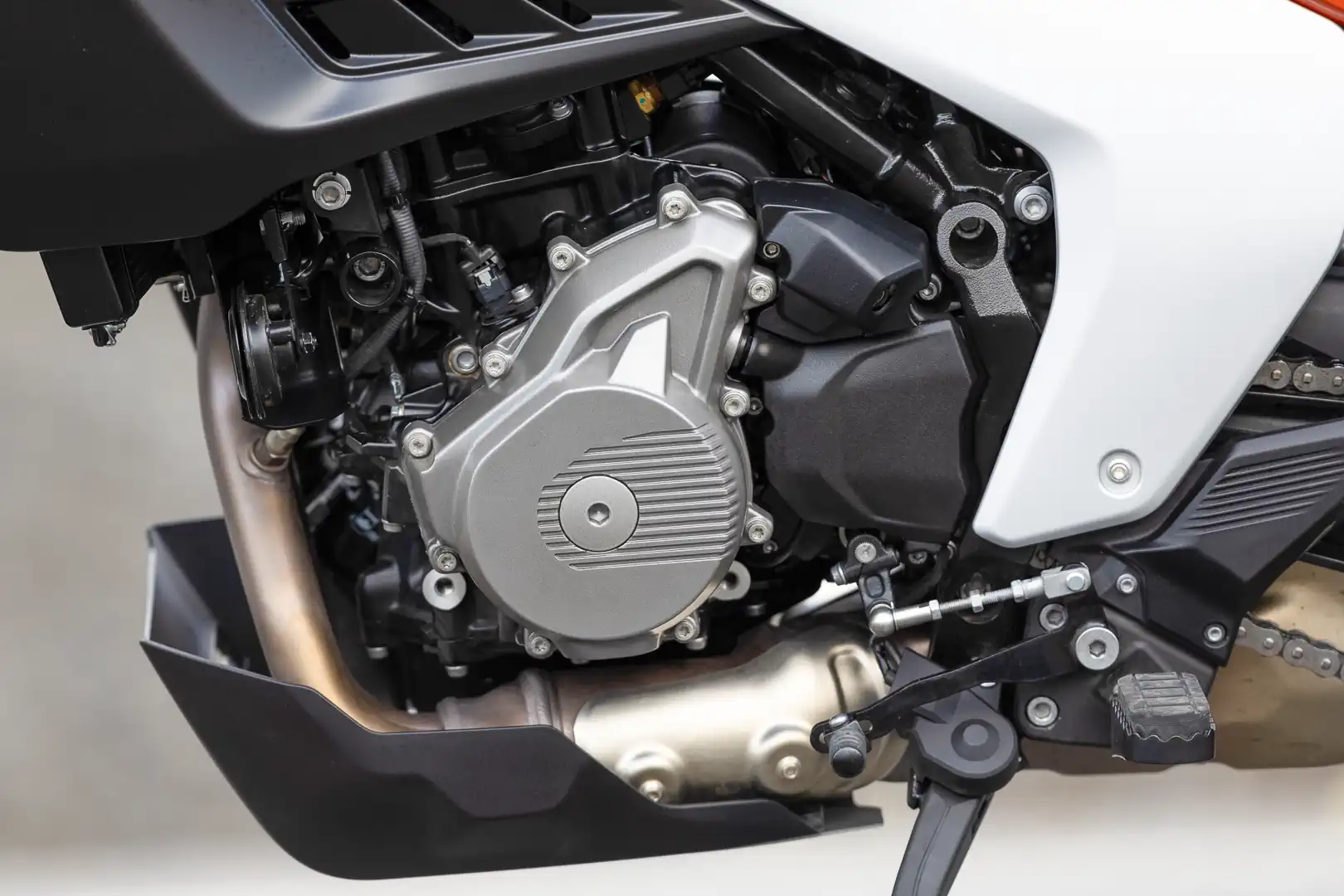
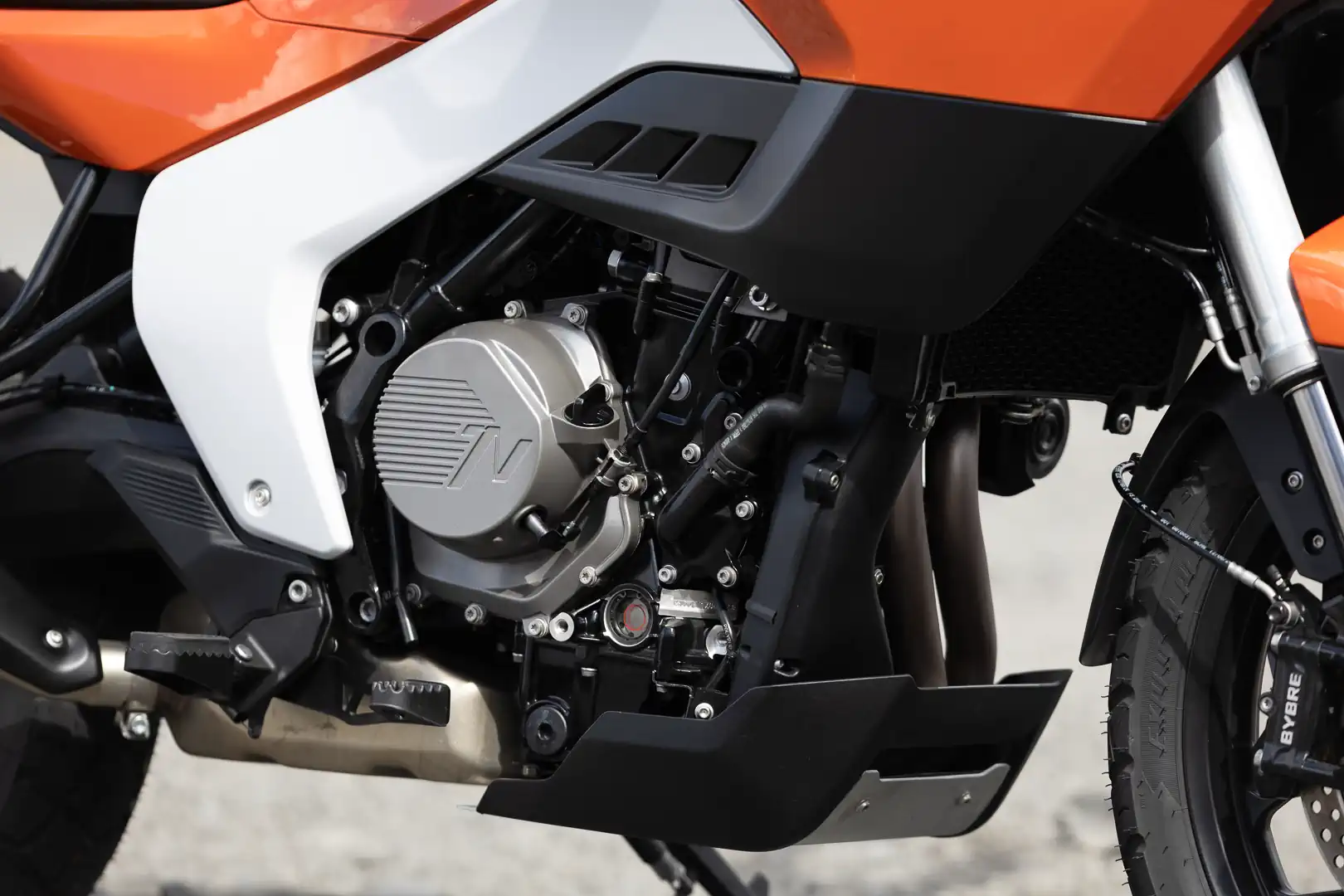
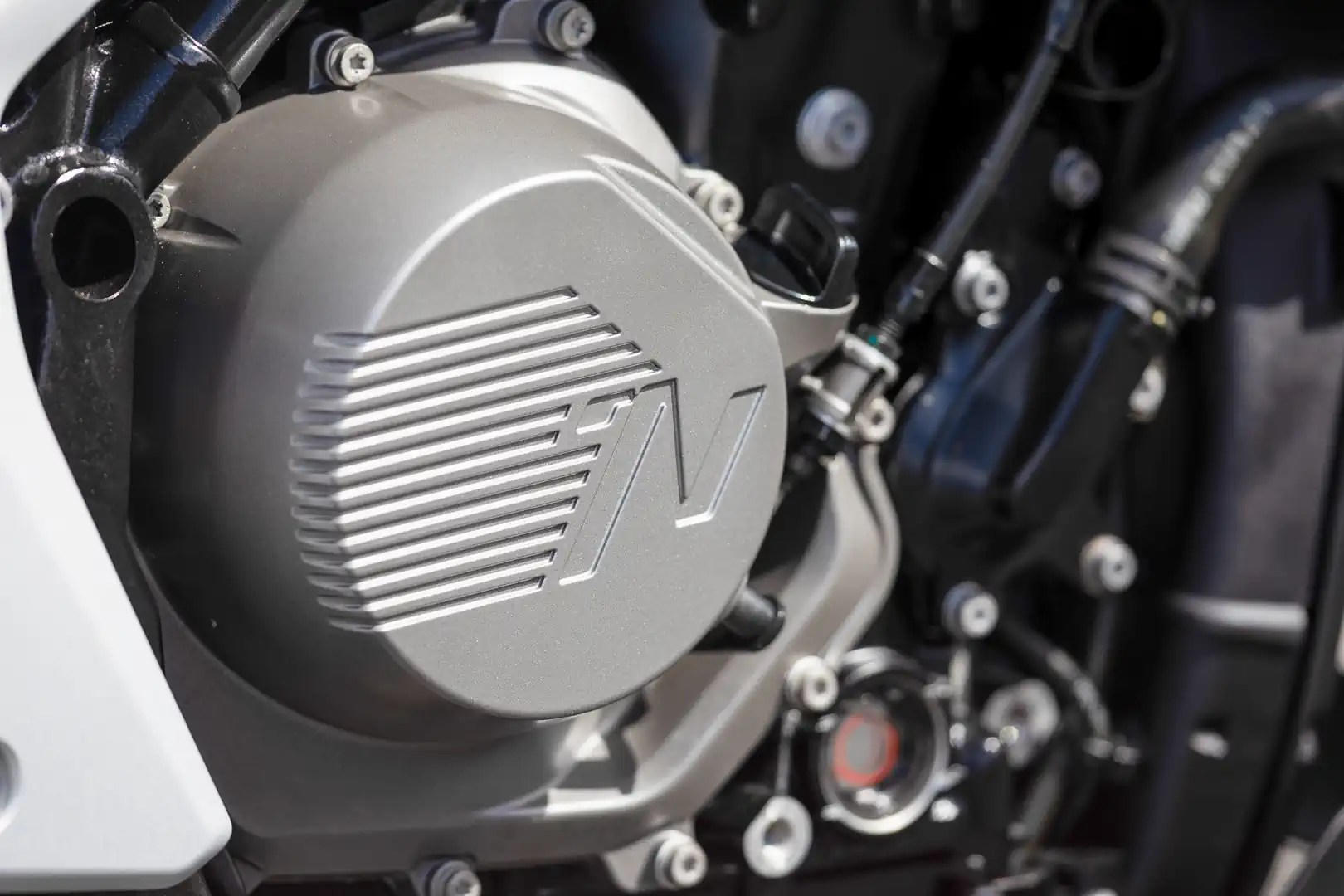
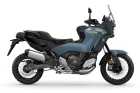
I’m flying to Iceland to ride the Atlas, named after Norton’s 750 touring twin of the 1960s. The 2027 Atlas is also a parallel twin, albeit a completely modern design, with a short-stroke, liquid-cooled, DOHC motor displacing 585cc. It’s an adventure bike that keeps a genuine nod to unpaved roads, courtesy of its 19-inch front wheel and longer-travel suspension. There will also be a road-focused Atlas GT on 17-inch wheels.
Iceland in July, Without the Sun
Iceland in July is supposed to be cool yet pleasant. There’s plenty of sun, as sunset and sunrise are only separated by a few hours. Sure, a cloud might blow through at some point and deliver some rain, but nothing too disruptive.
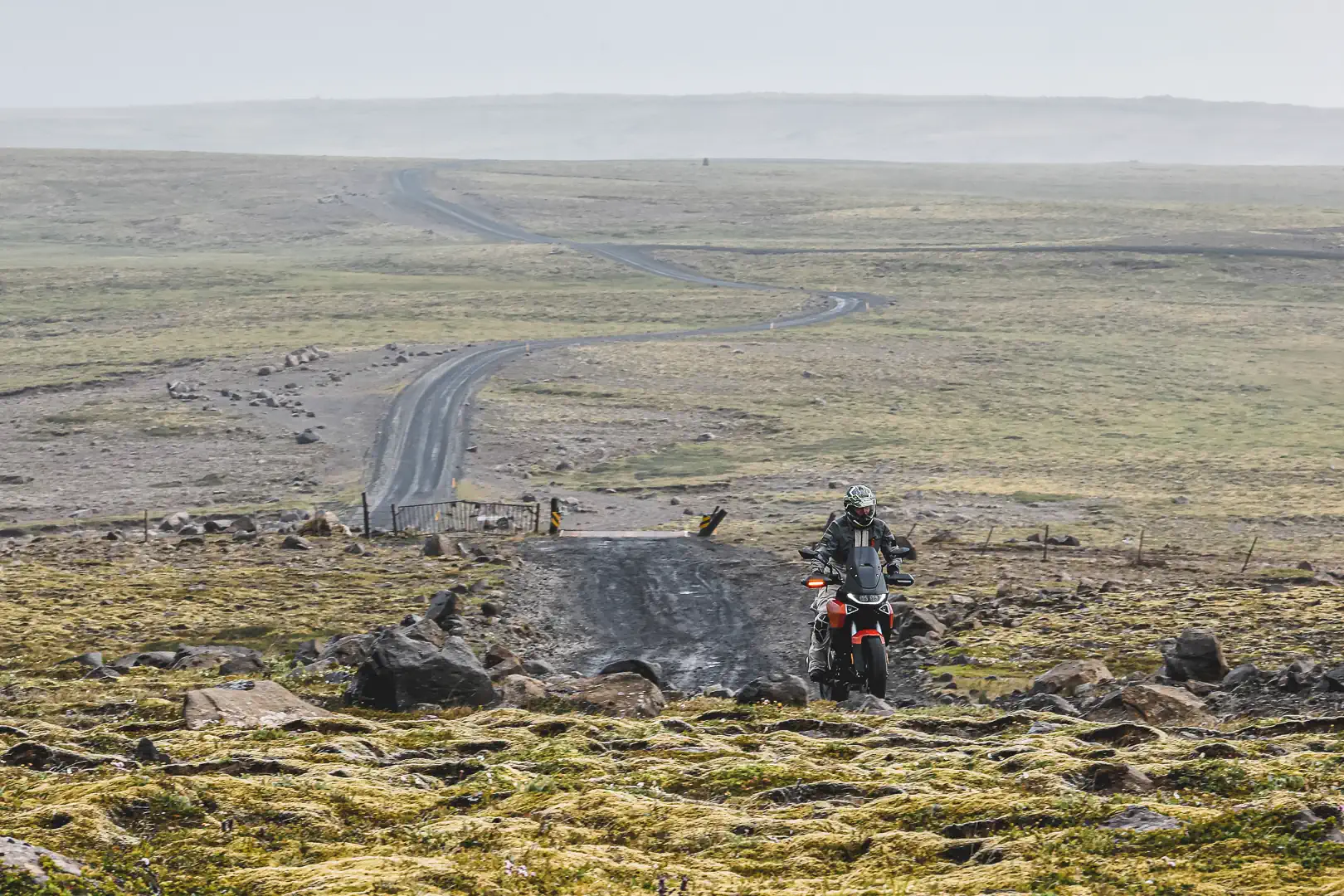
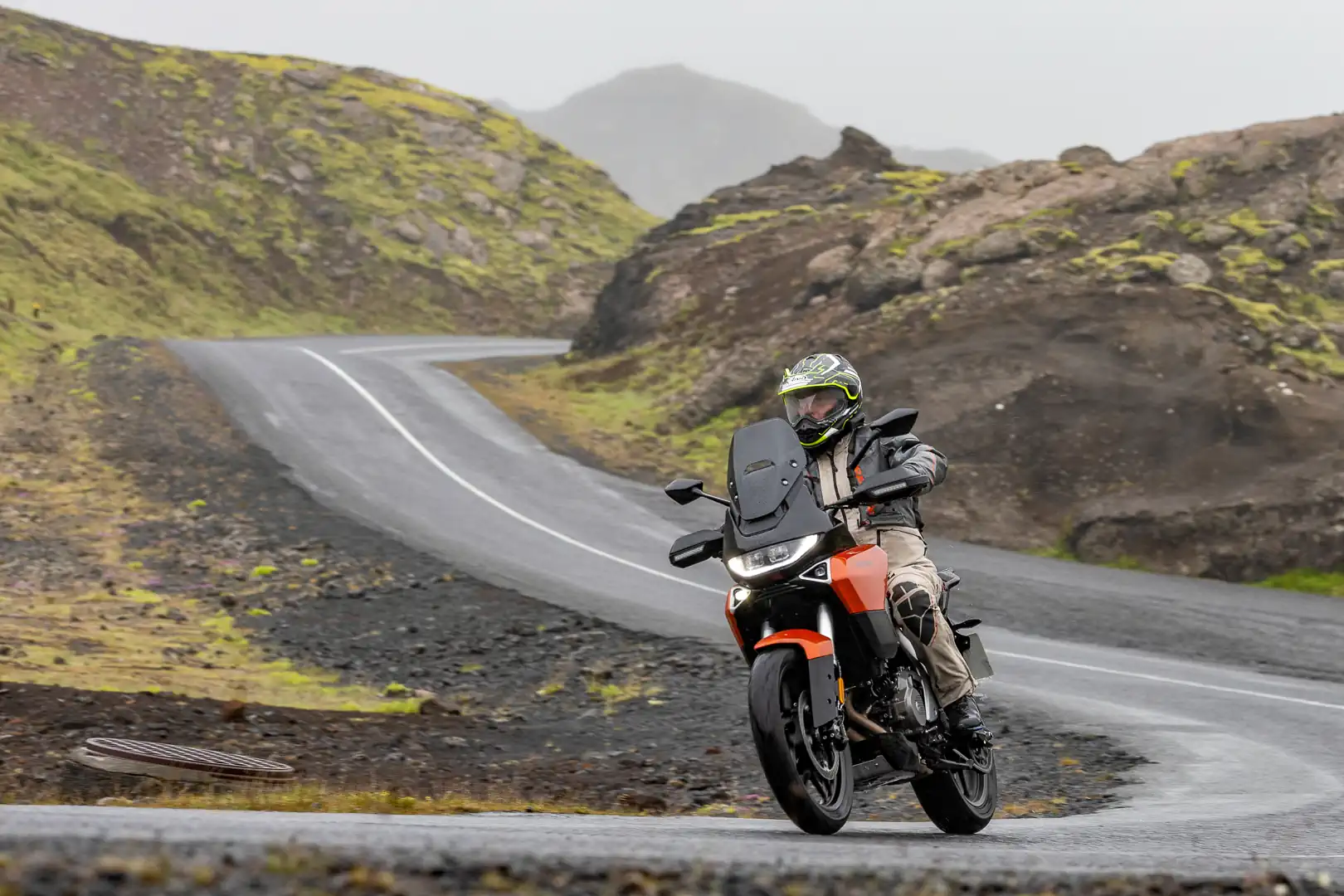
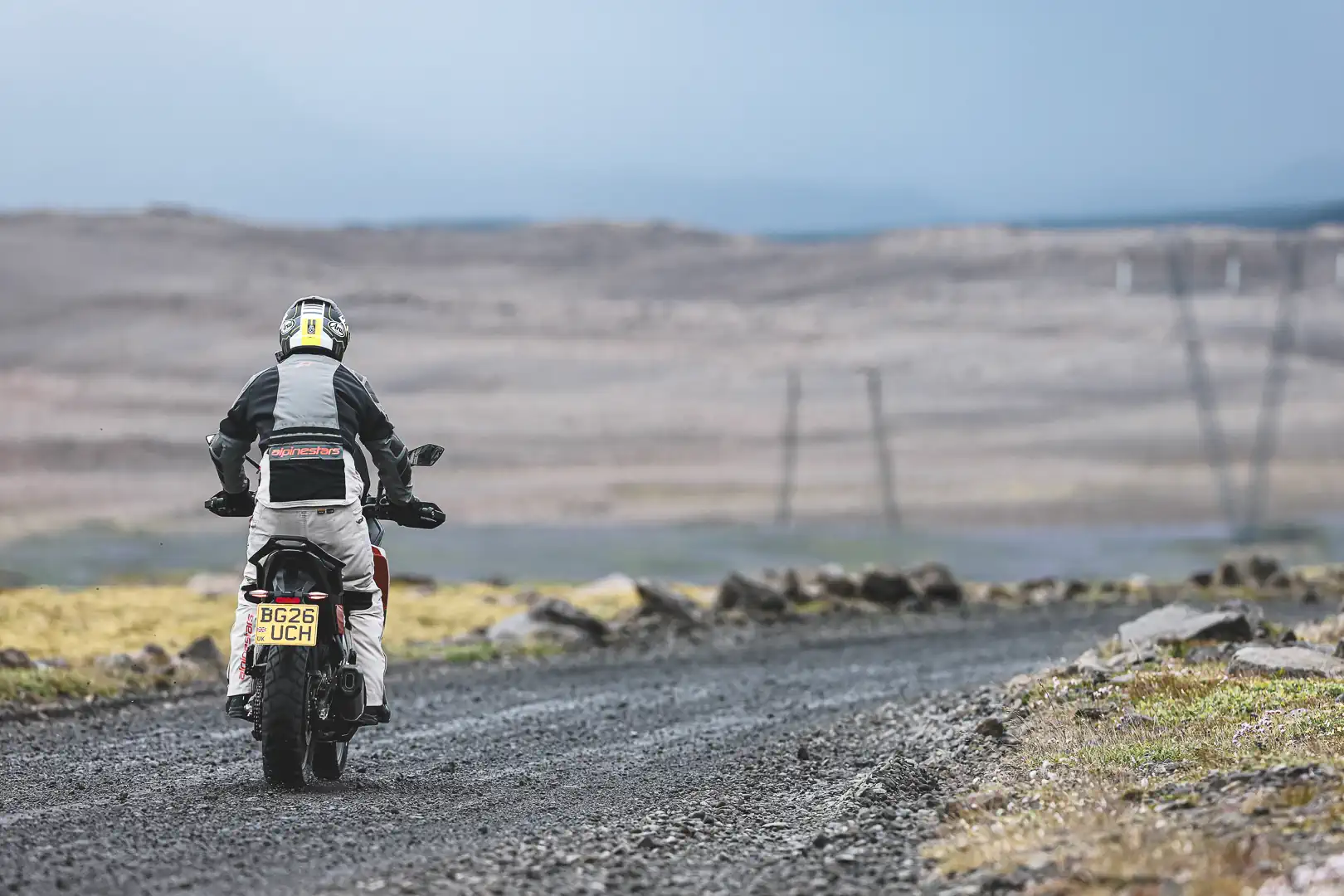
This July was different. Iceland was in the grip of constantly gloomy skies and hours of rain at a time. I was in-country for 50 hours and never saw the sun, though a couple of glimpses of blue sky appeared briefly on the afternoon I rode the Atlas. Almost all my time on the bike was spent on wet pavement or gravel roads, much of it in wind and rain. As a rider based in sun-drenched Southern California, I found these conditions prevented me from fully evaluating the Atlas. Also, the test bikes on offer were all pre-production models, and that turns out to be important.
My first impression of an in-person Norton Atlas at the 2026 AIMExpo left me uninspired, though a bit of it was my fault. With the Norton name, I expected something more Norton-like, and the Atlas could have had any brand name on it. If you’re looking for visual inspiration from the past, you’re not going to get it from the Atlas.
However, after hearing from the folks from India and the Norton factory, my interest was piqued. The name Atlas was about the spirit of the bike from the ’60s, not about reliving the era aesthetically. That Atlas was about travel and exploration in relatively primitive times. This 2027 Atlas reflects that inspiration, earning its keep as an adventure bike on a 19-/17-inch wheelset shod with Eurogrip Explo R Plus tires that nod toward off-pavement capability.
2027 Norton Atlas: A Closer Look
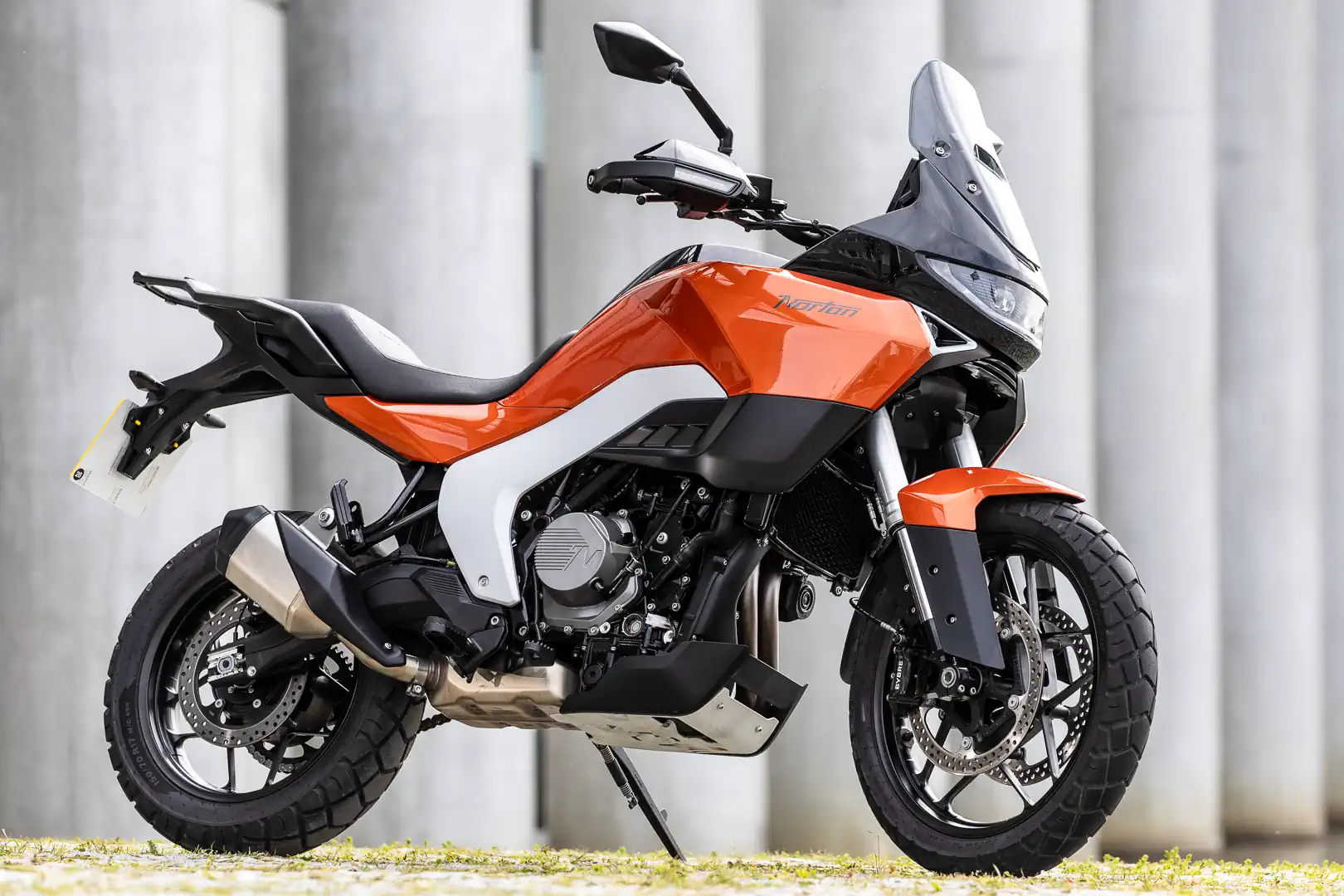
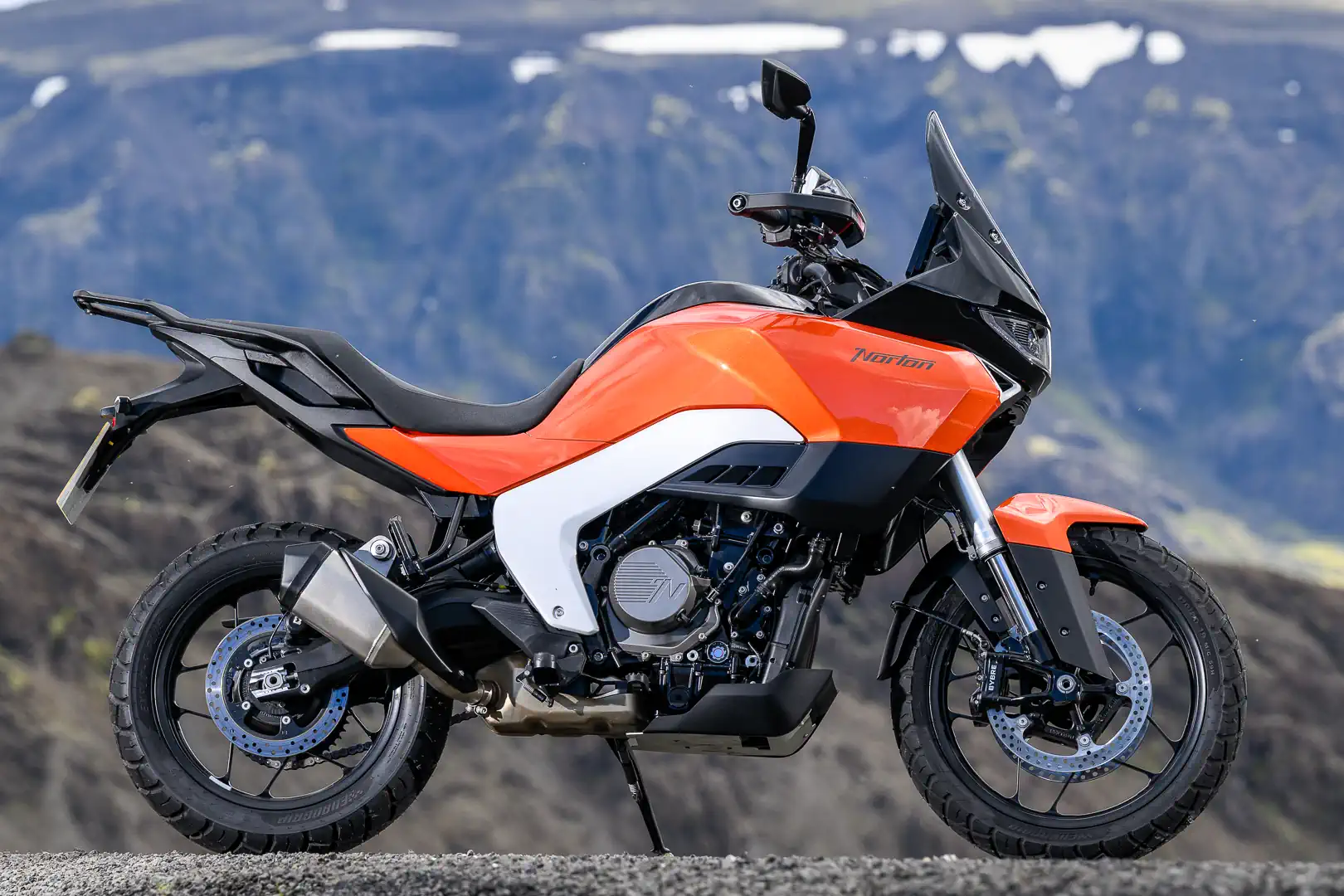
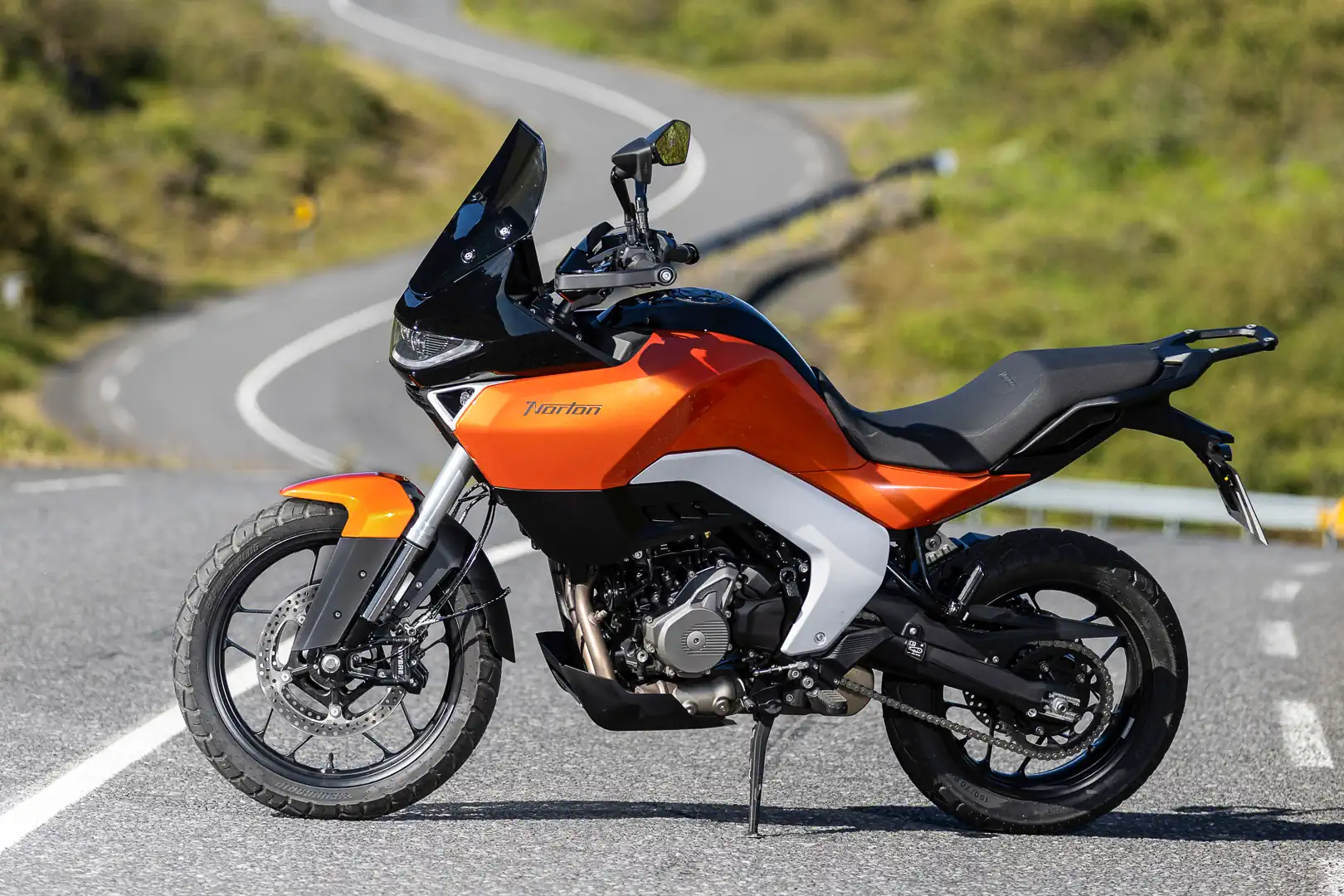
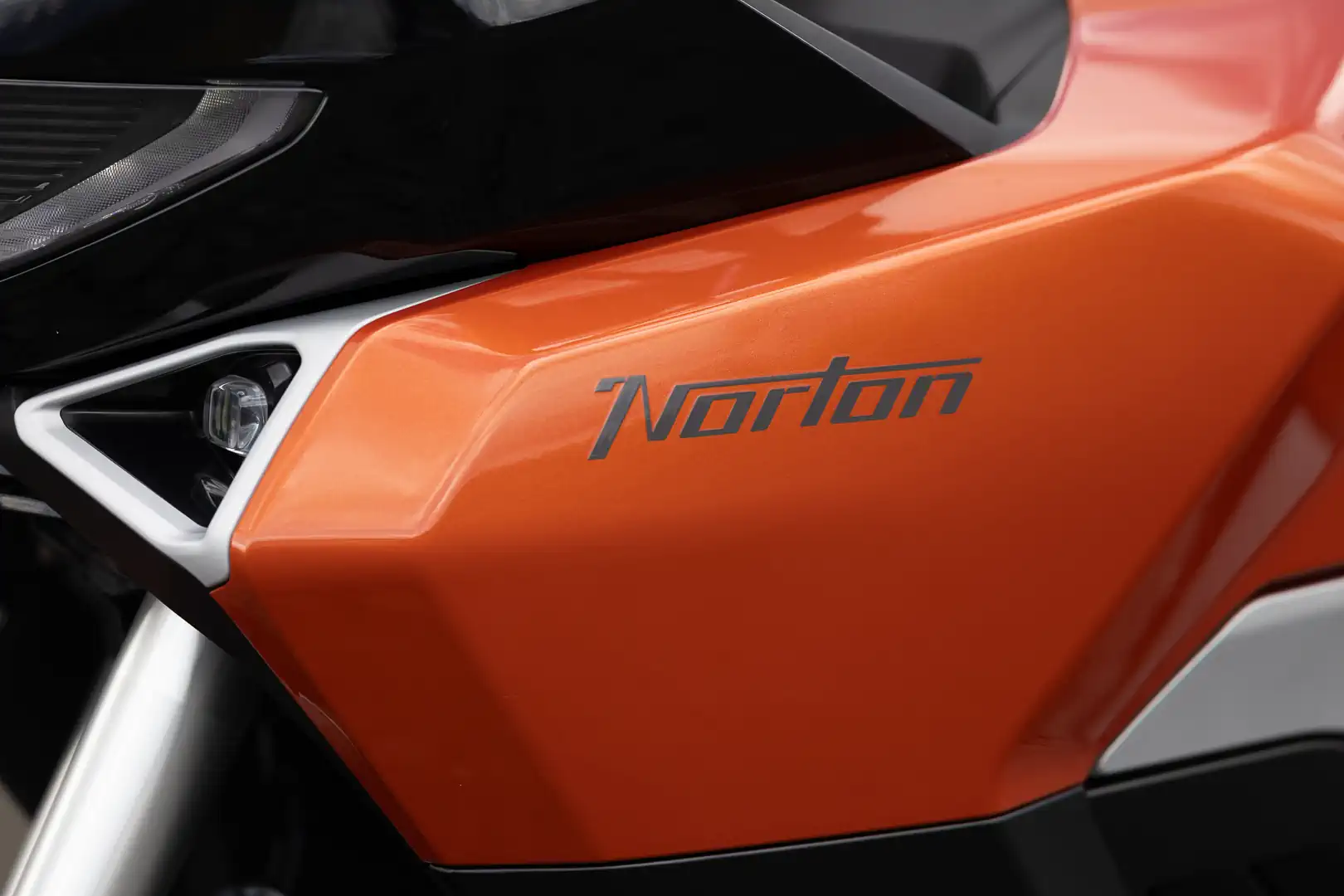
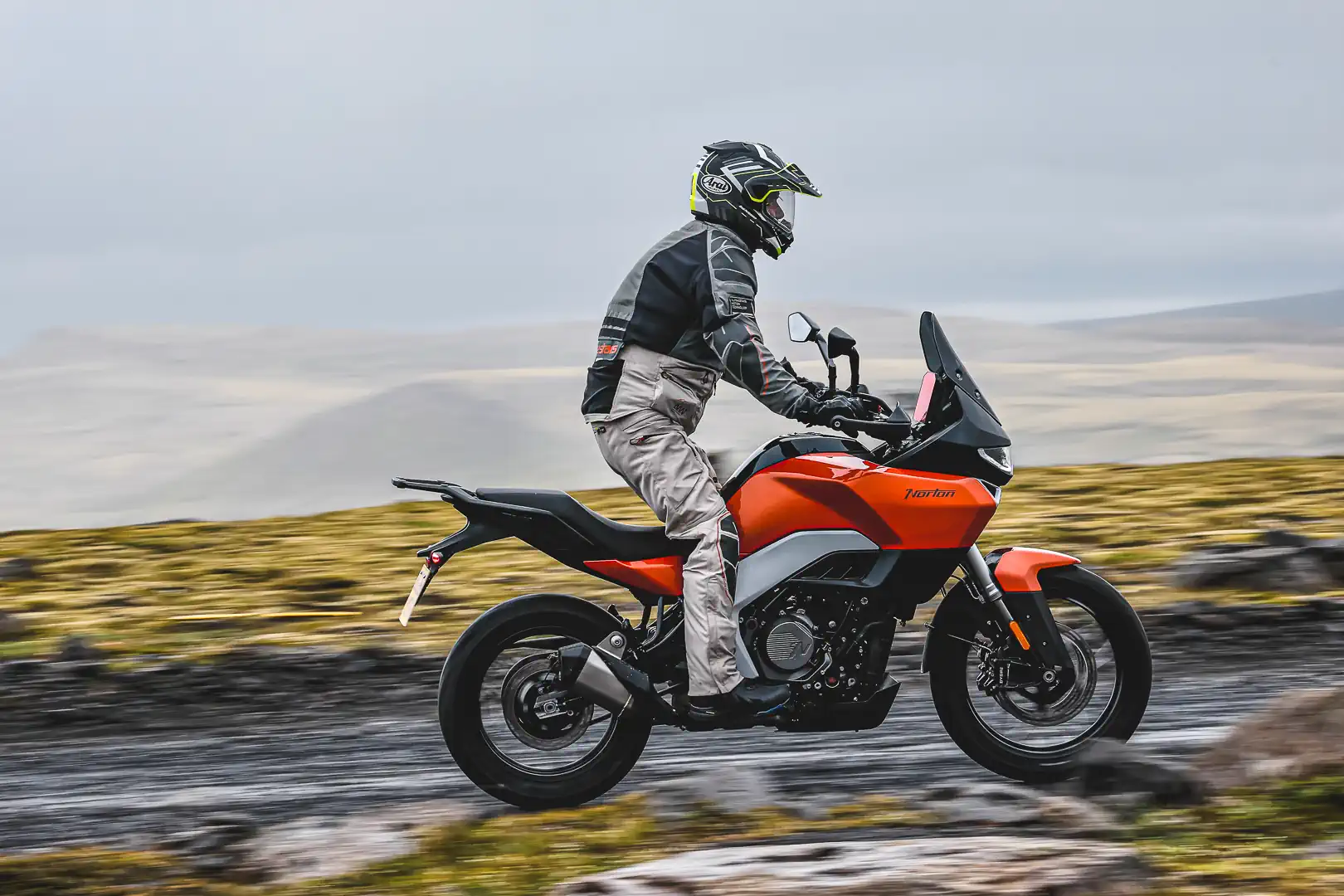
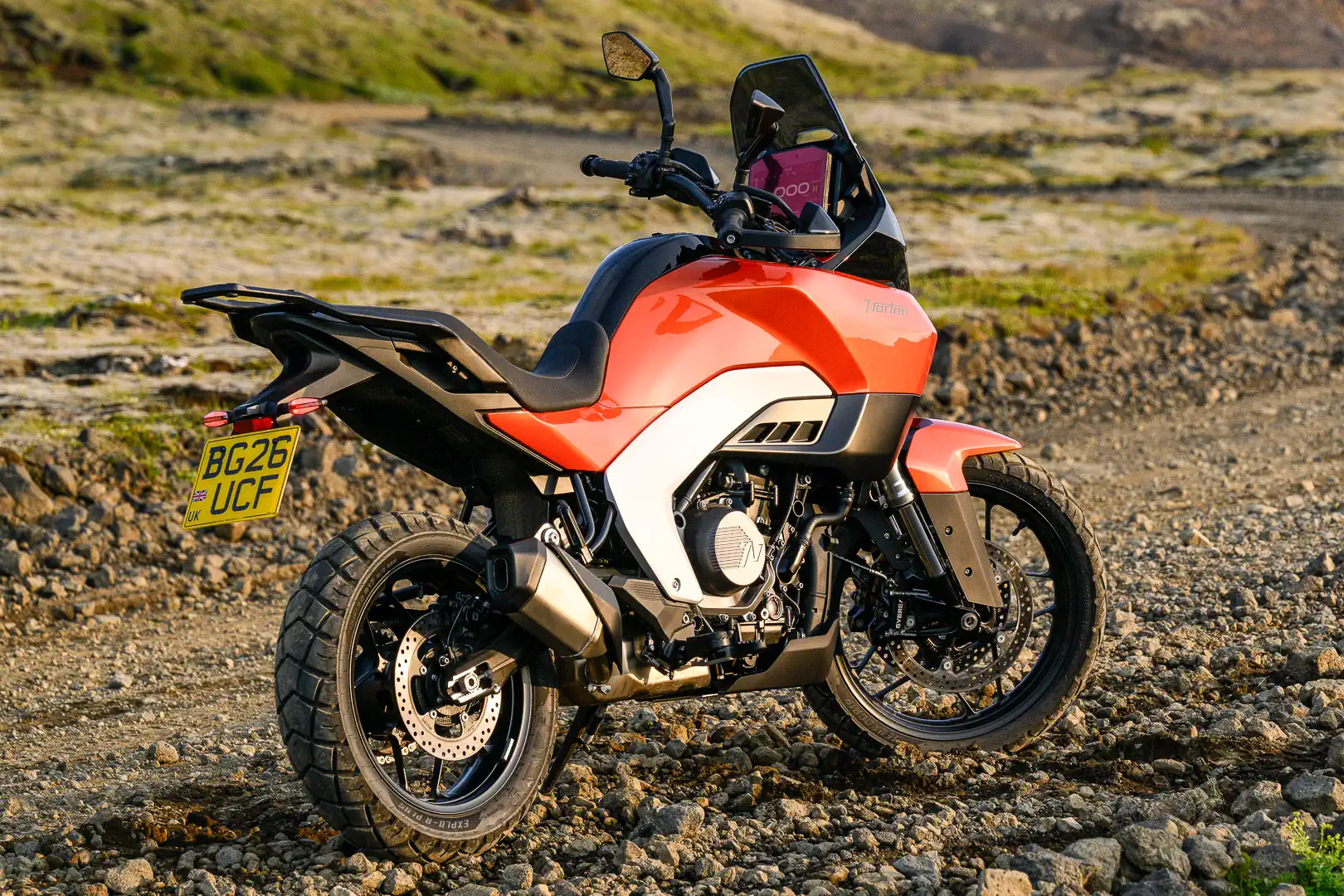
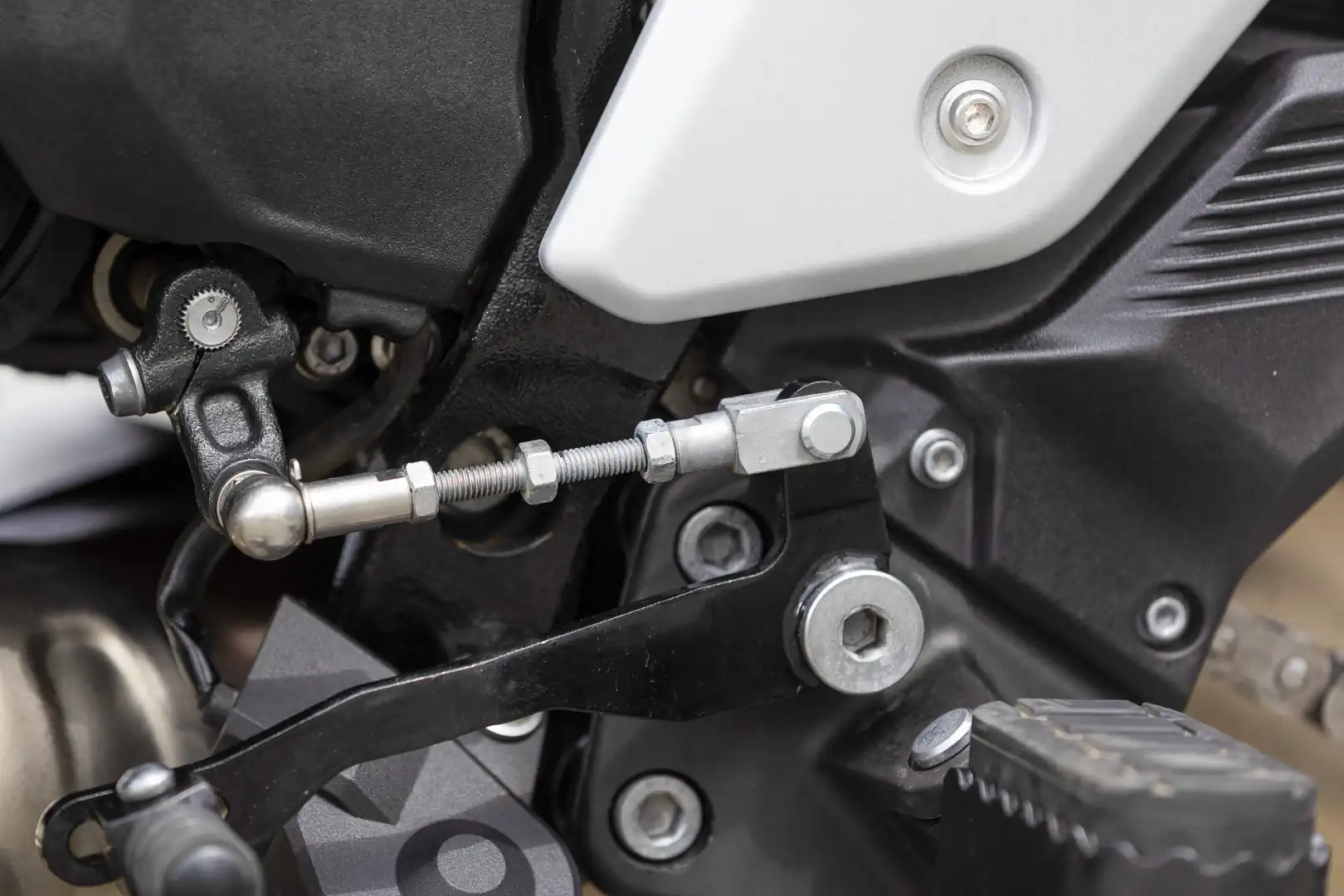
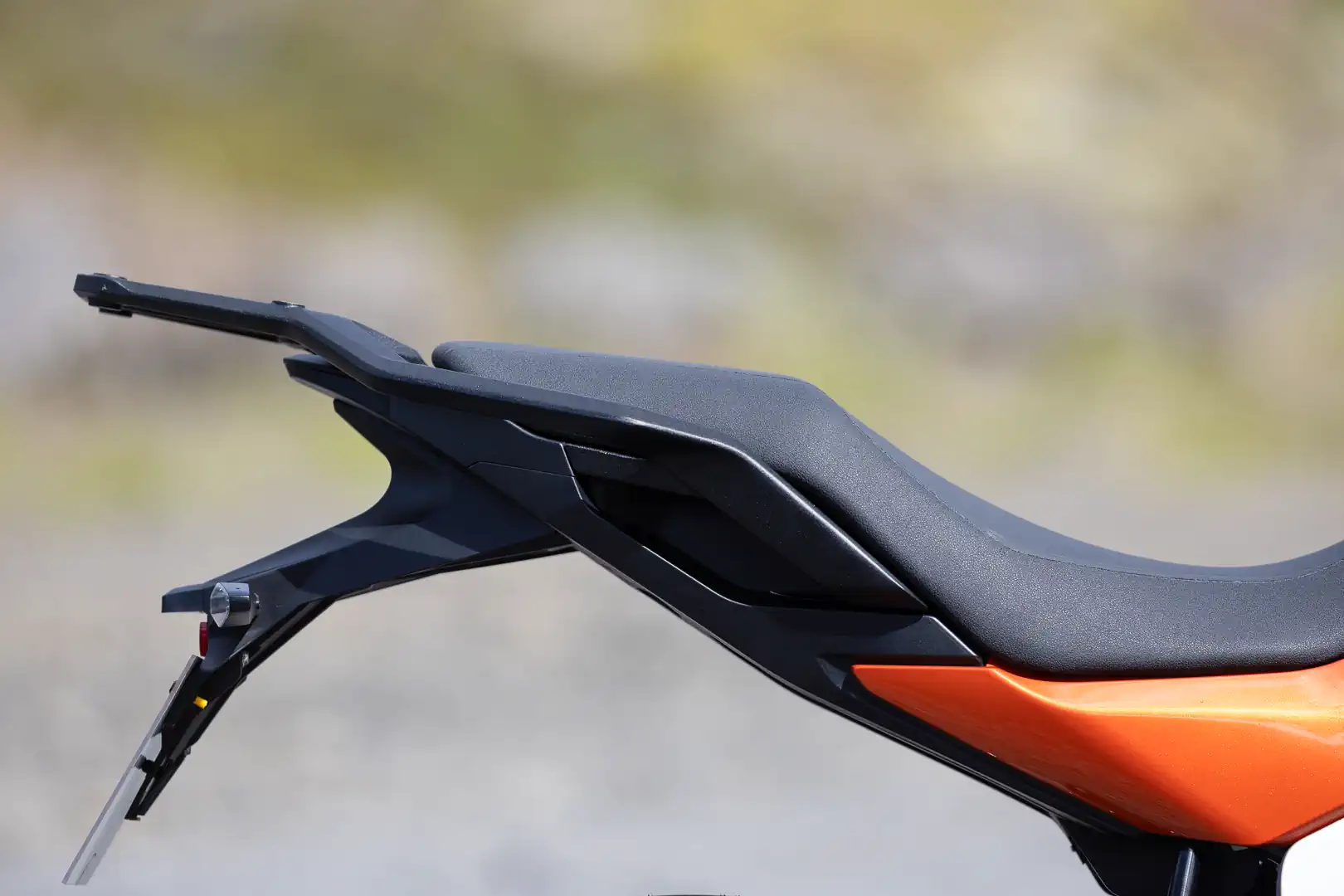
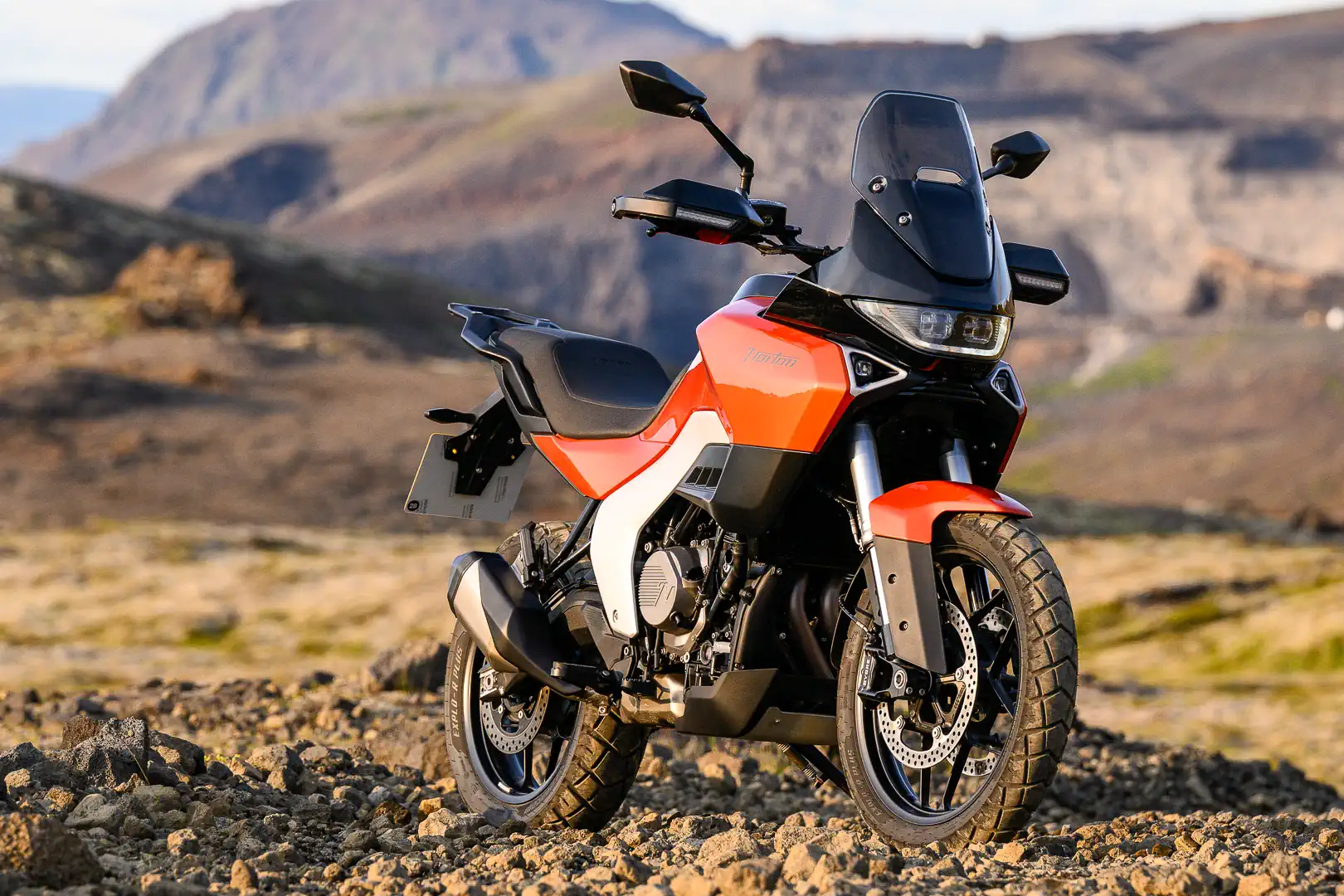
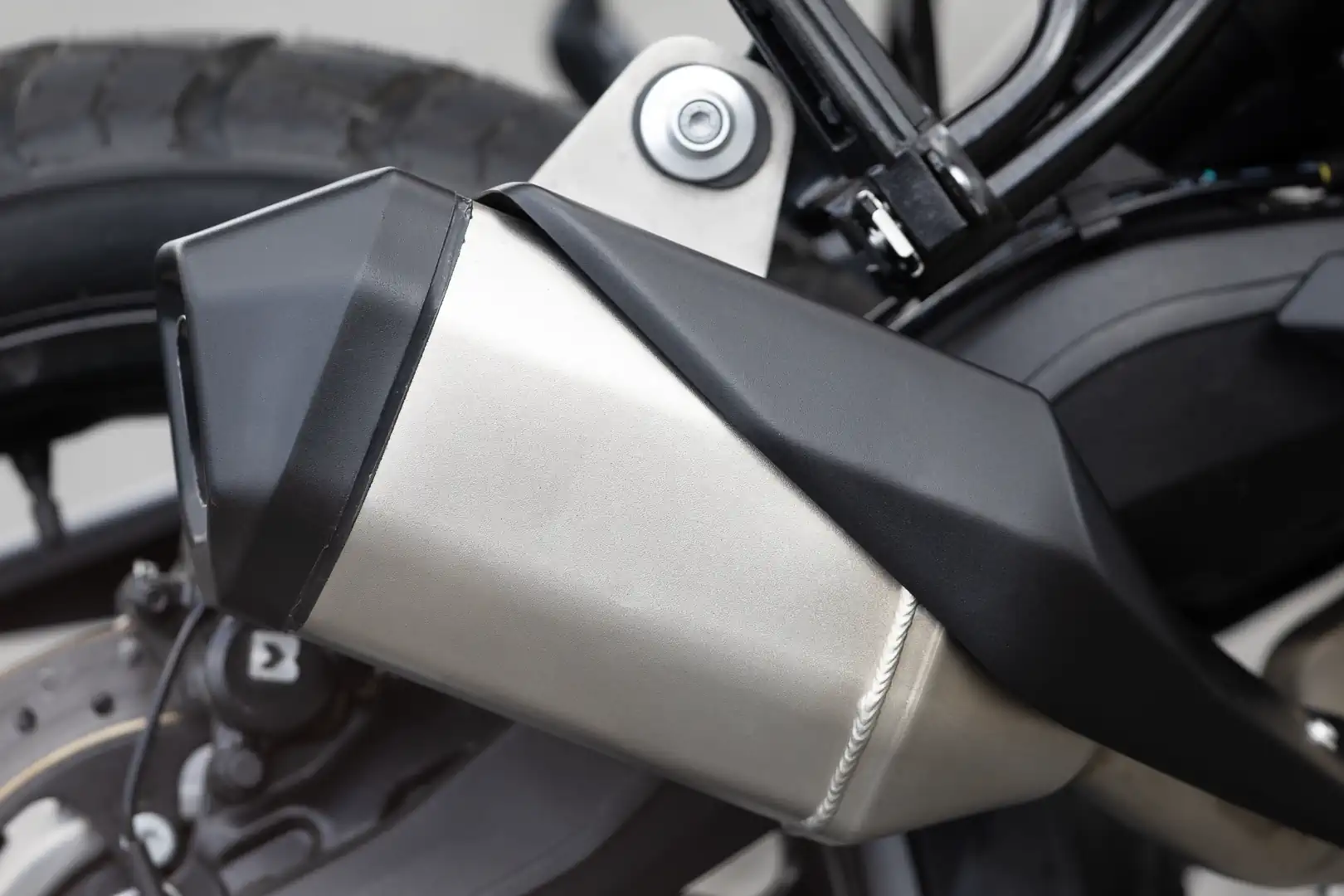
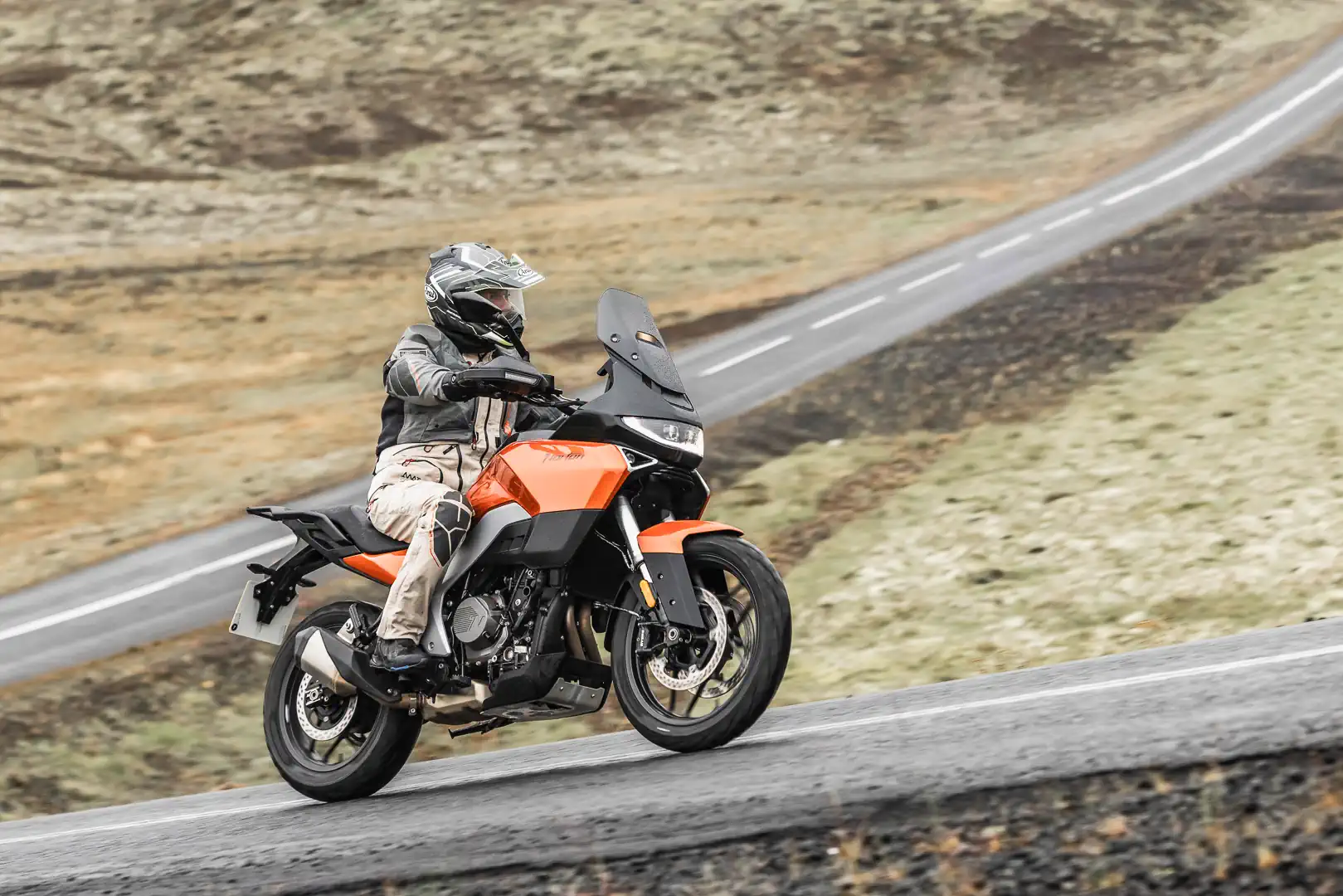
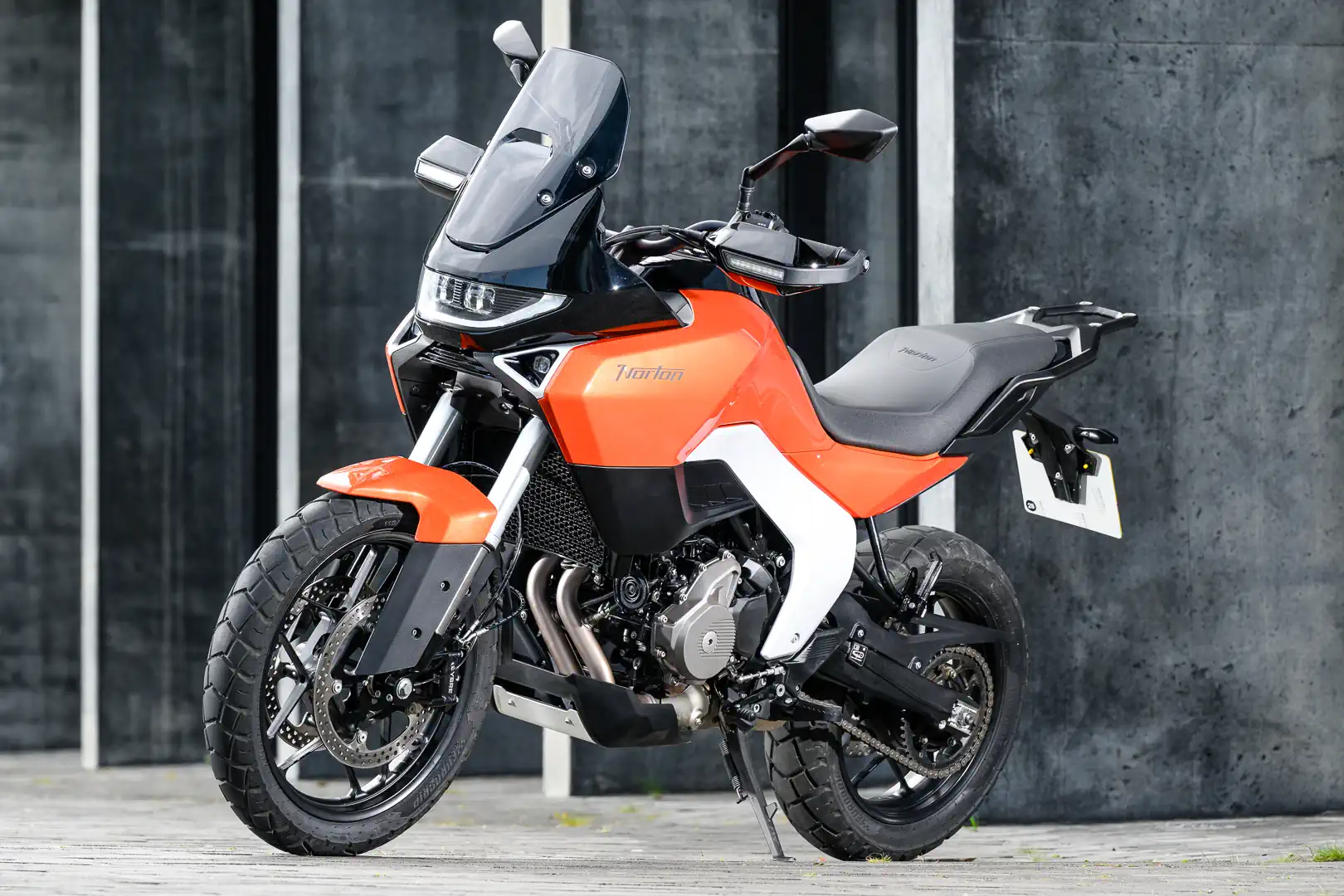
A closer look at the new Norton Atlas won me over further. The plastic looks great, especially around the 4.1-gallon fuel tank, though I would think twice about subjecting something so pretty and shiny to much off-road nastiness. Sure, the gray plastic panel that tries to imitate a twin-spar aluminum frame is a bit cheesy. Really, guys, there’s not a thing wrong with a steel trellis frame. The cast aluminum swingarm is nice, though painted black.
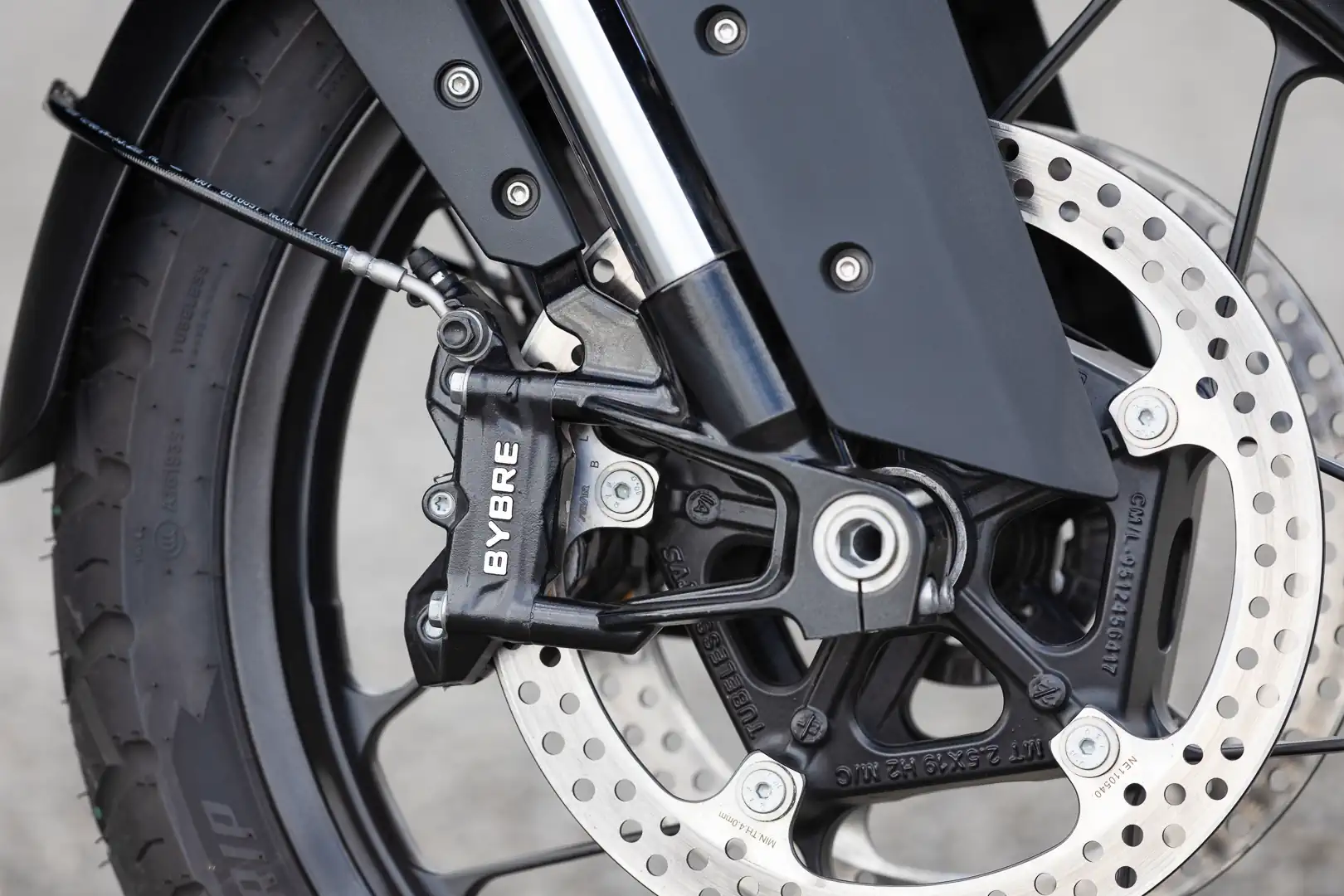
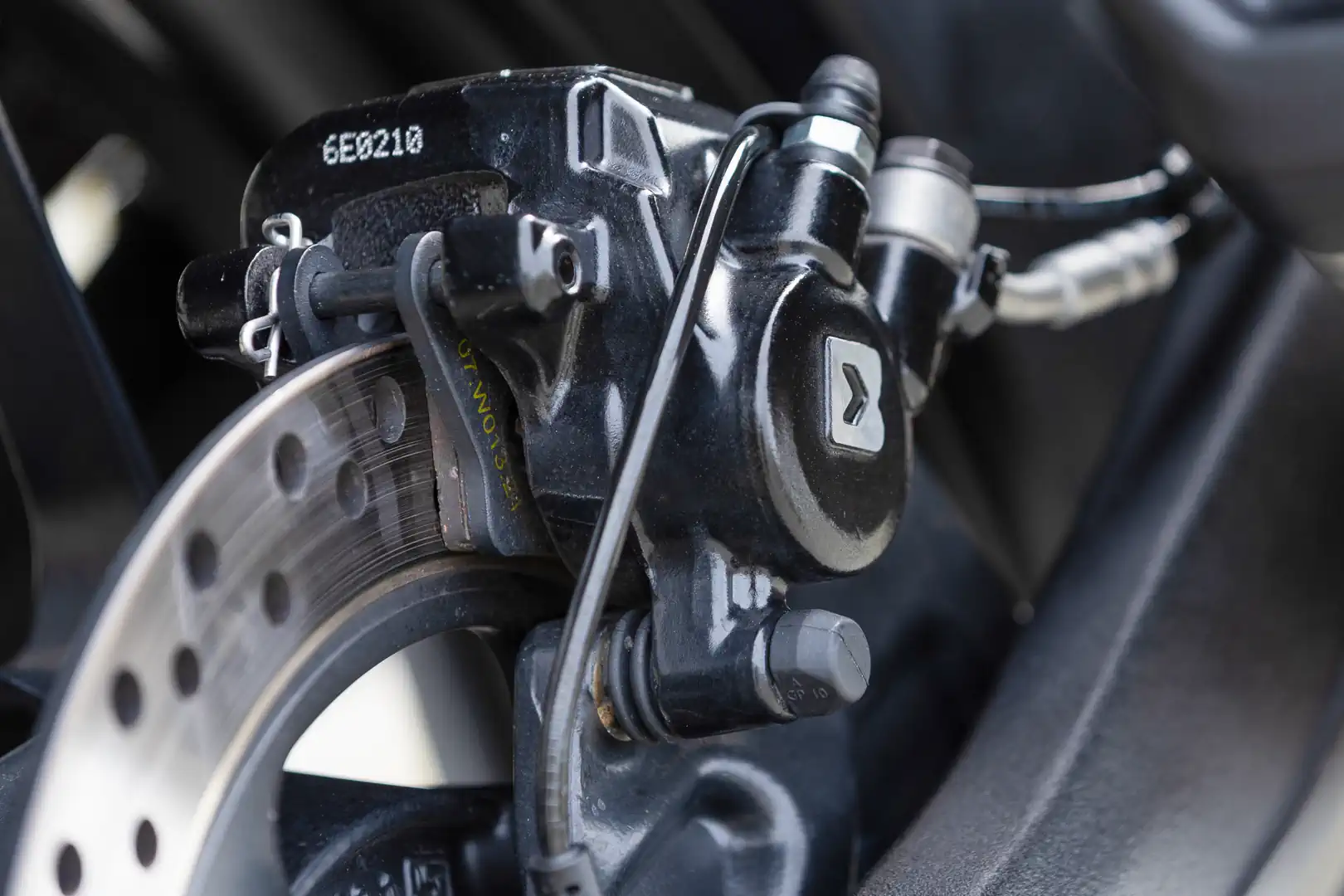
The inverted KYB fork looks good, and the wheels are adorned with discs gripped by Bybre calipers. A remote adjuster lets you easily set the shock’s spring preload to your liking, and damping is adjustable at both ends.
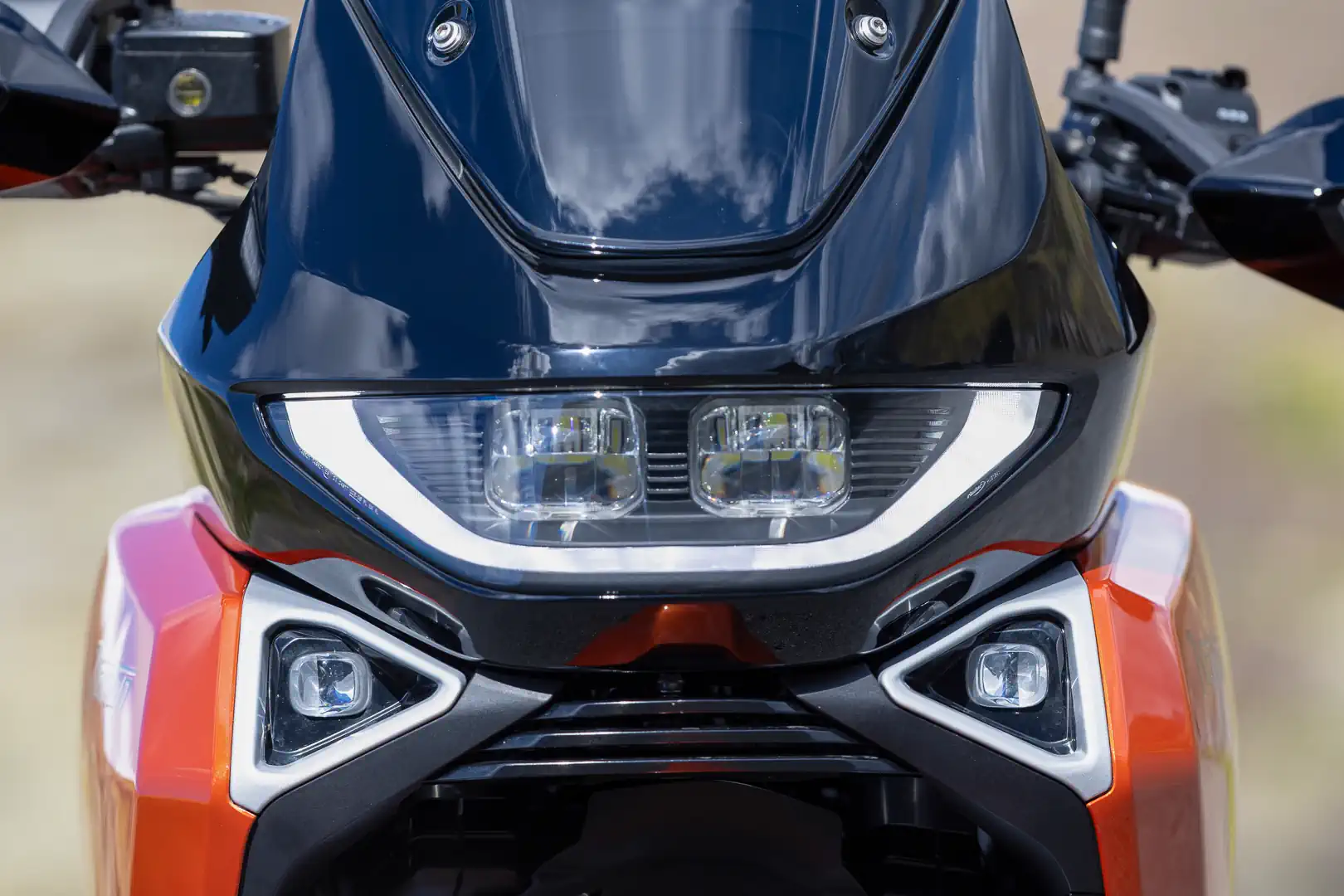
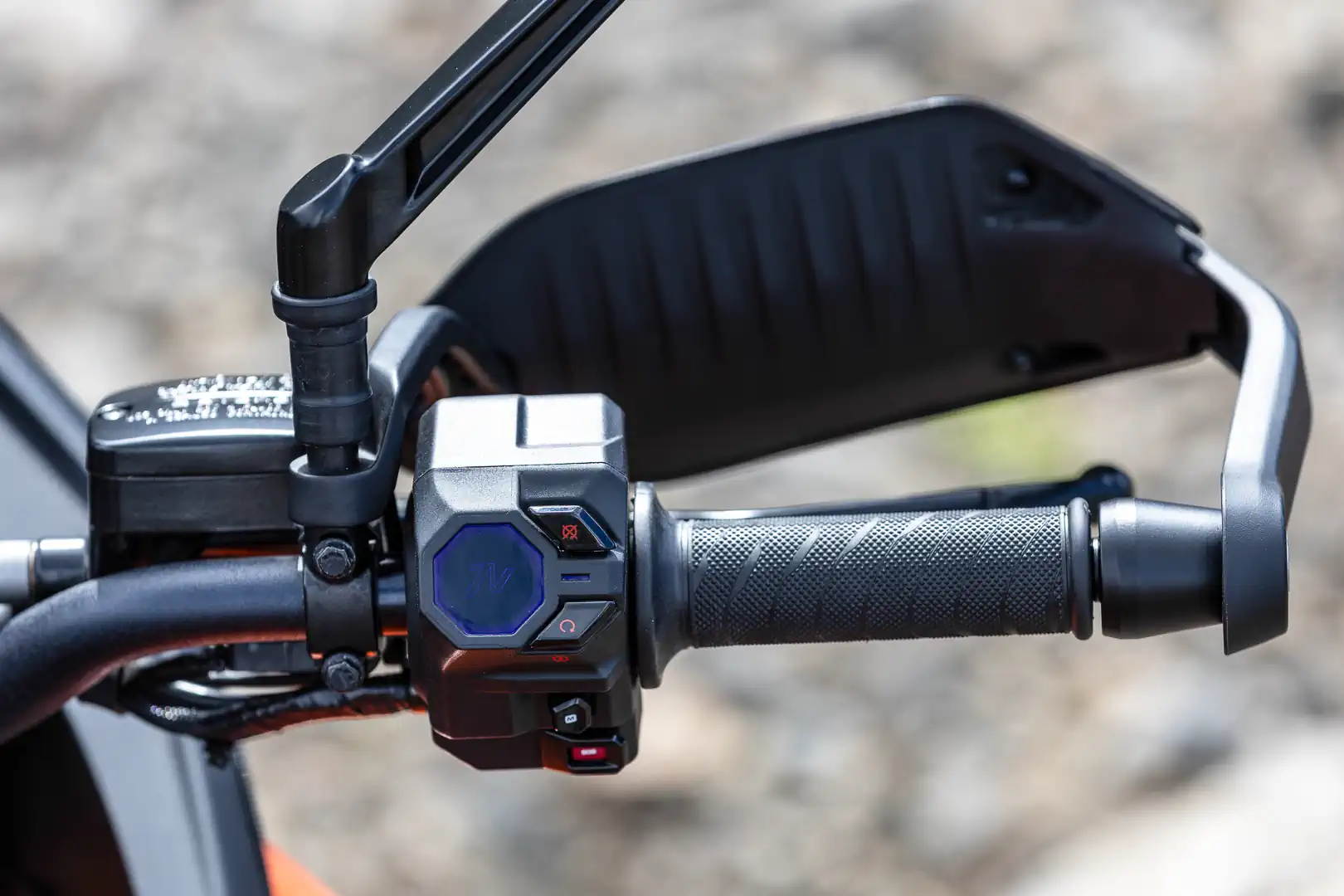
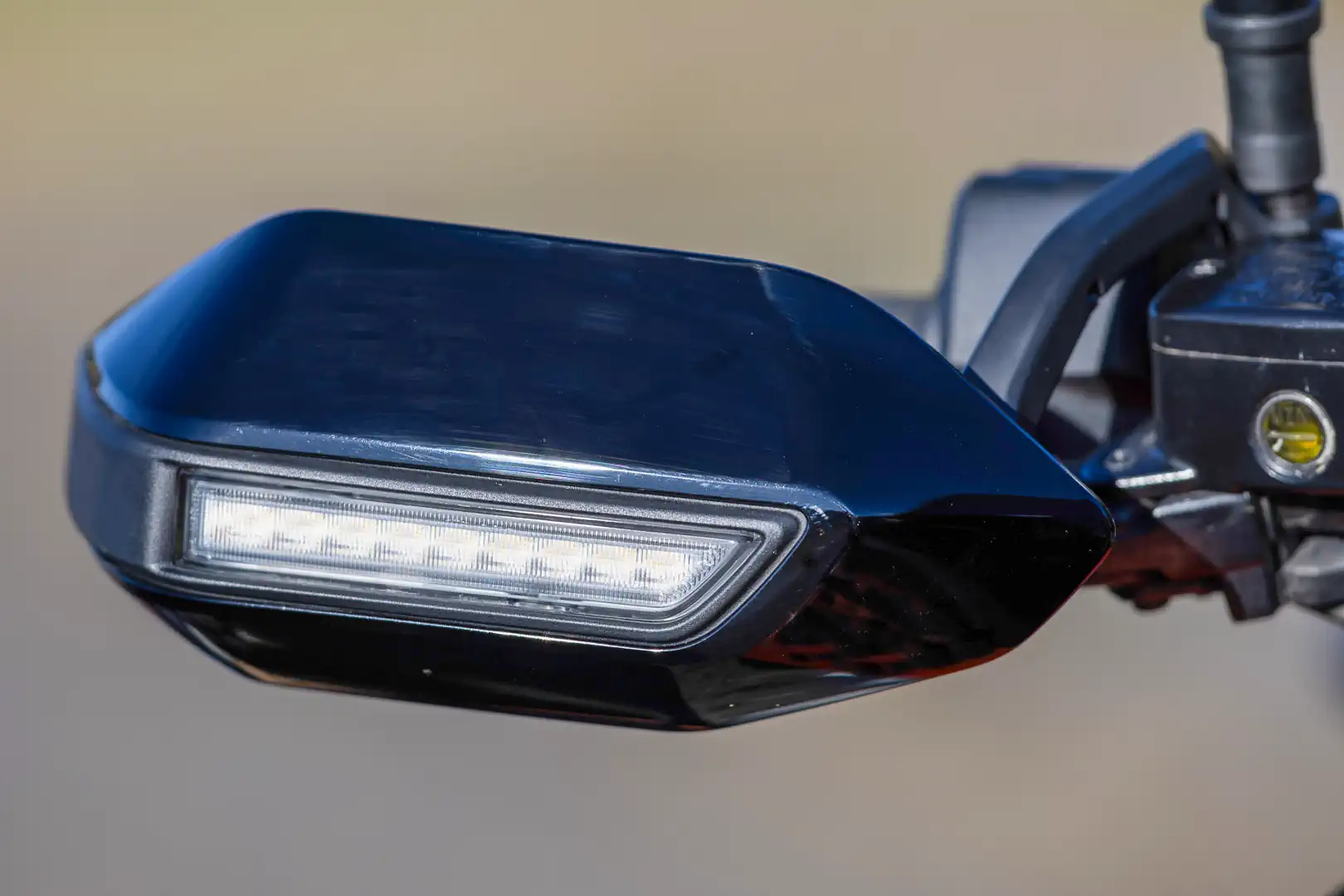
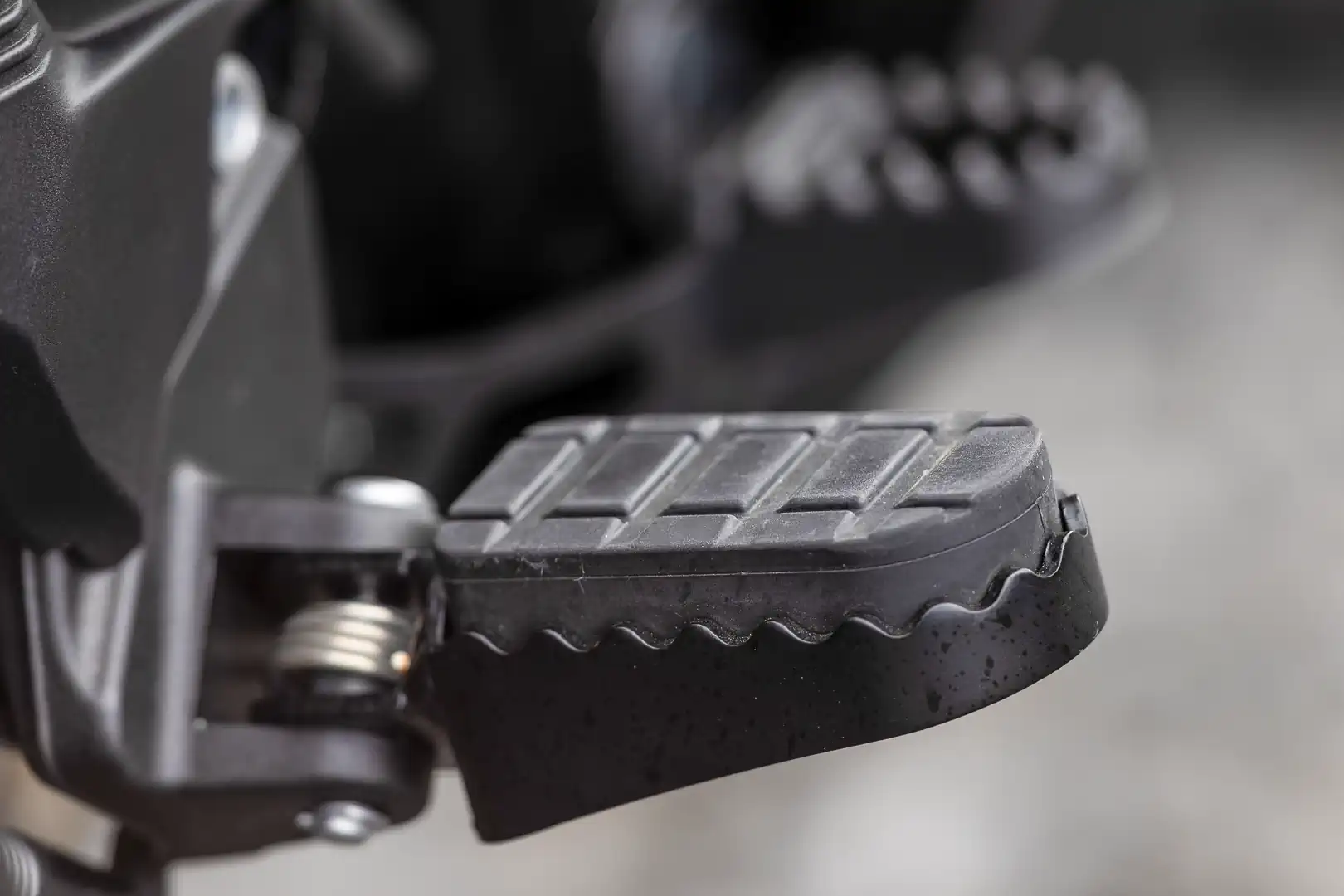
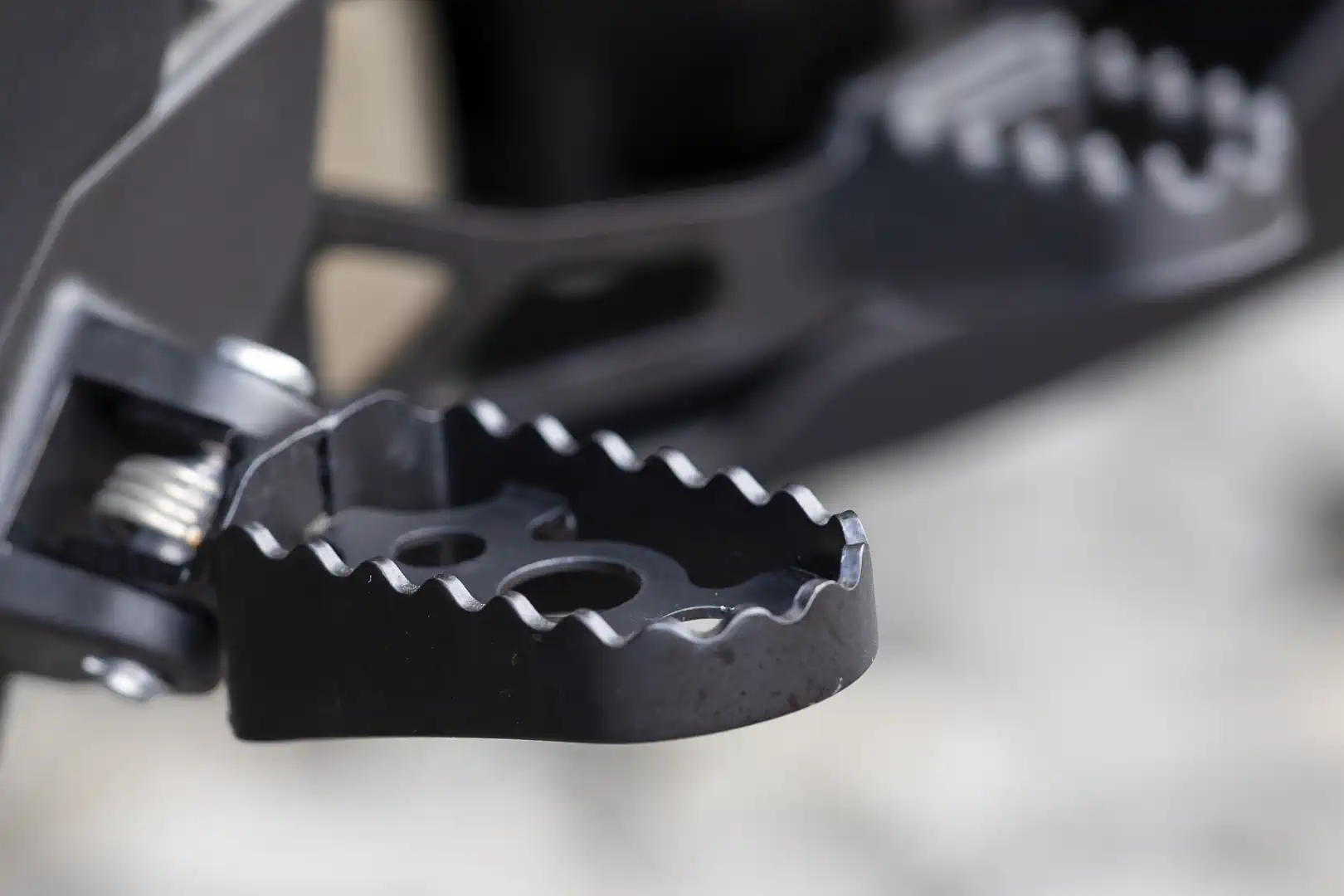
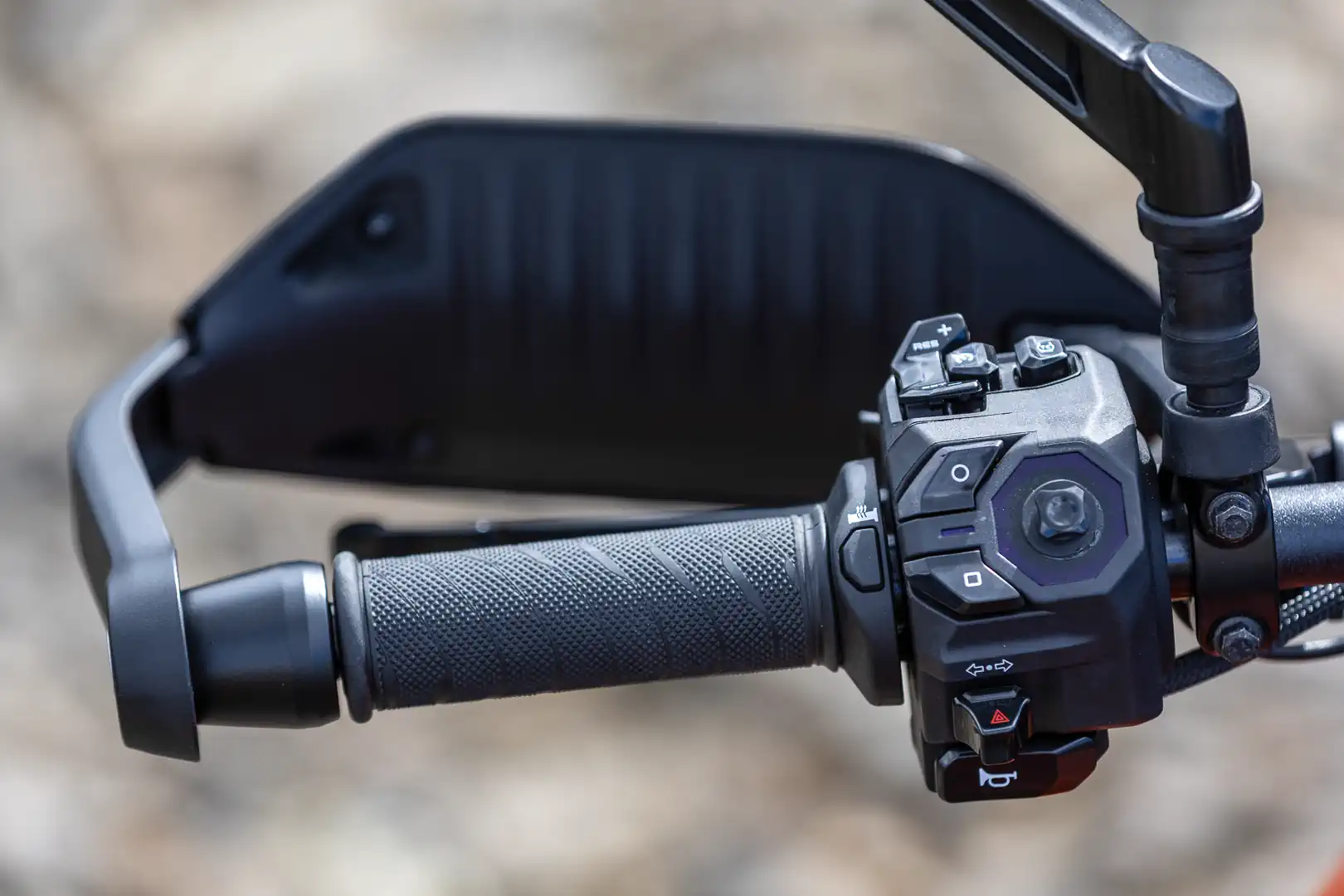
The headlight and running lights are top-notch. Turn indicators are built into the handguards, which is great for the street but a bit iffy if you plan on off-roading. The engine and the fork sliders have significant plastic protection, too. The footpegs have rubber inserts, which I ditched before the first off-road excursion. The falling rain made the decision even easier.
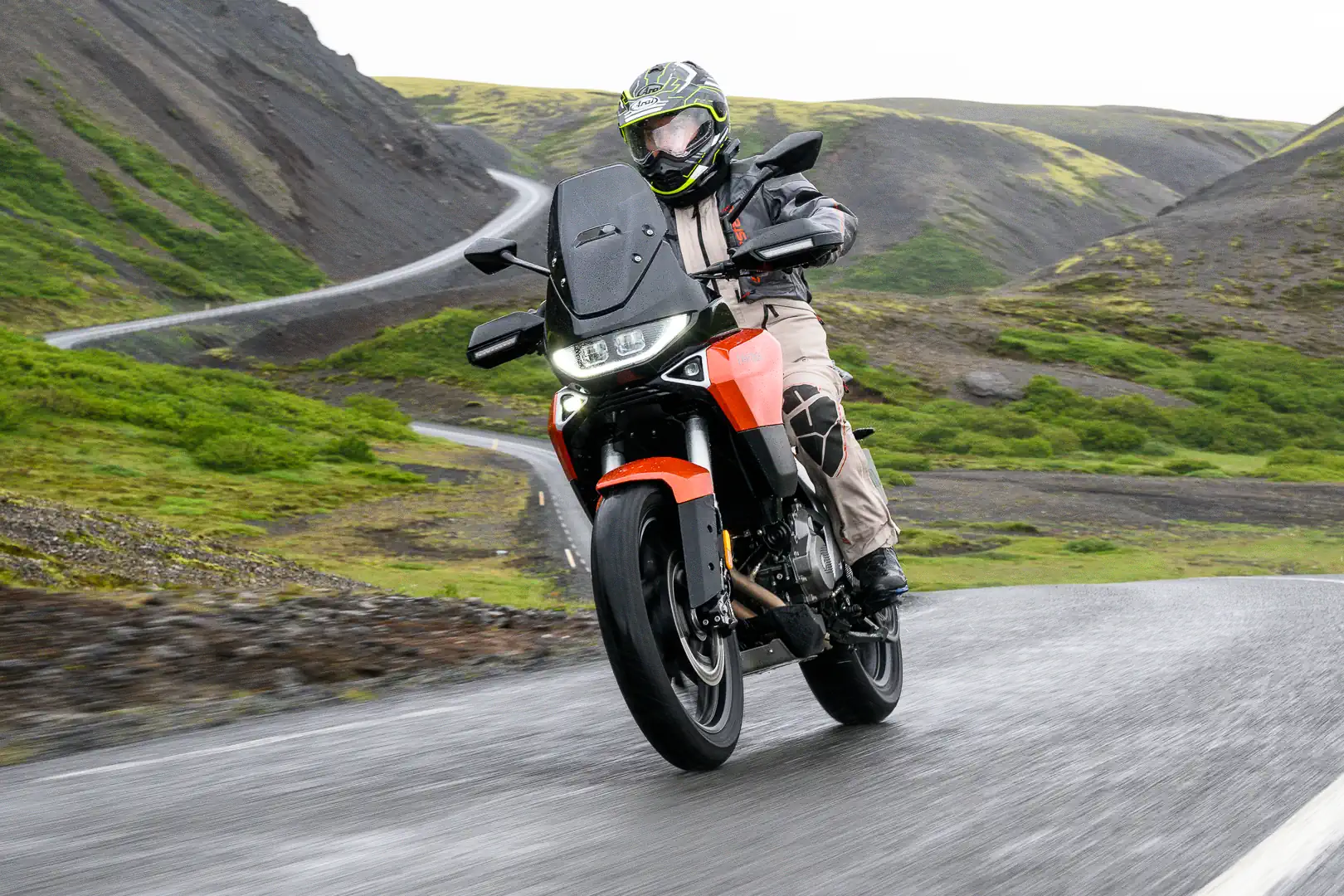
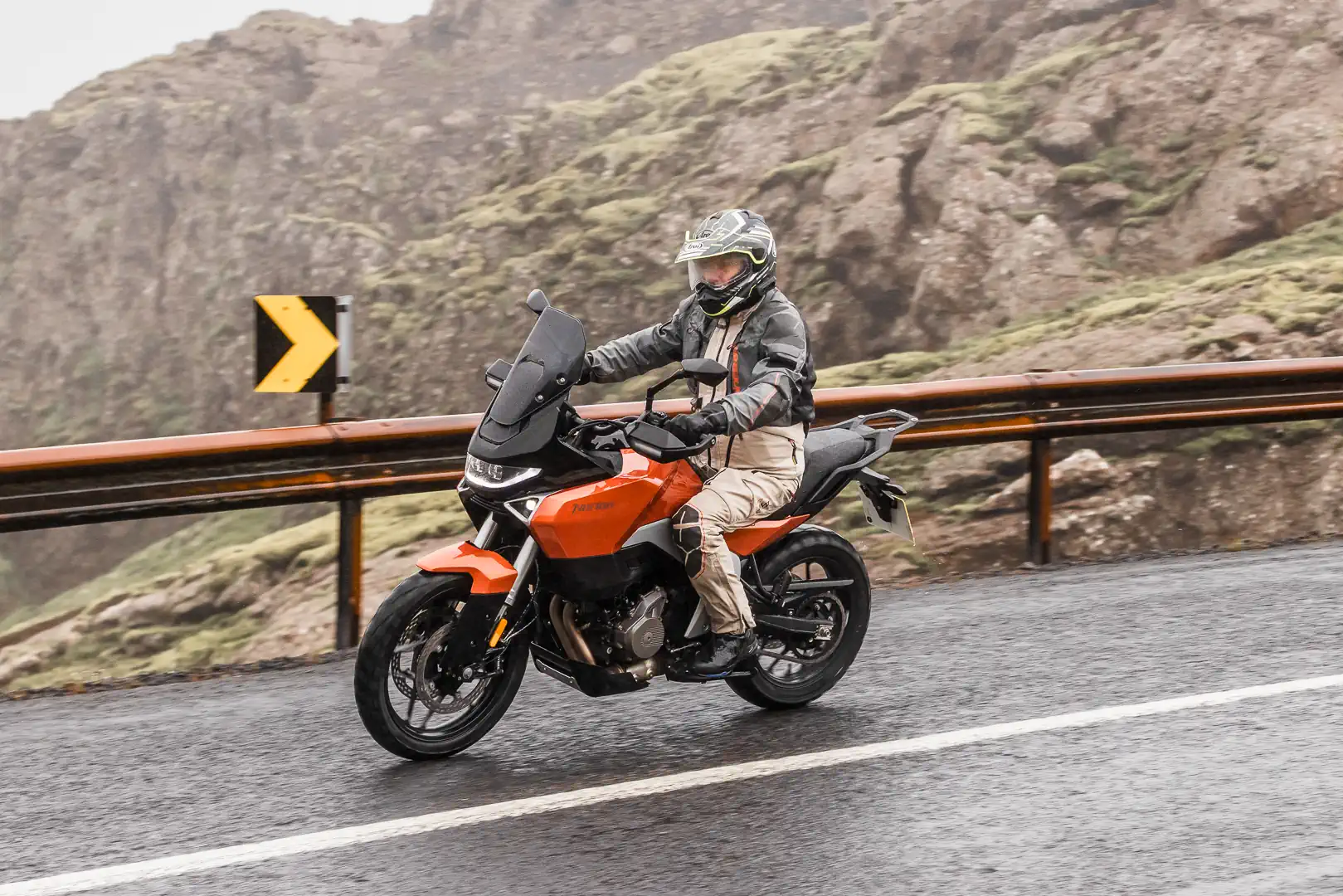
Ride day proved to be a mix of dreary and treacherous. Alternating rain, drizzle, and fog, with bouts of strong winds, is not ideal for evaluating anything other than how the Norton handles adversity.
Chassis and Tires in the Wet
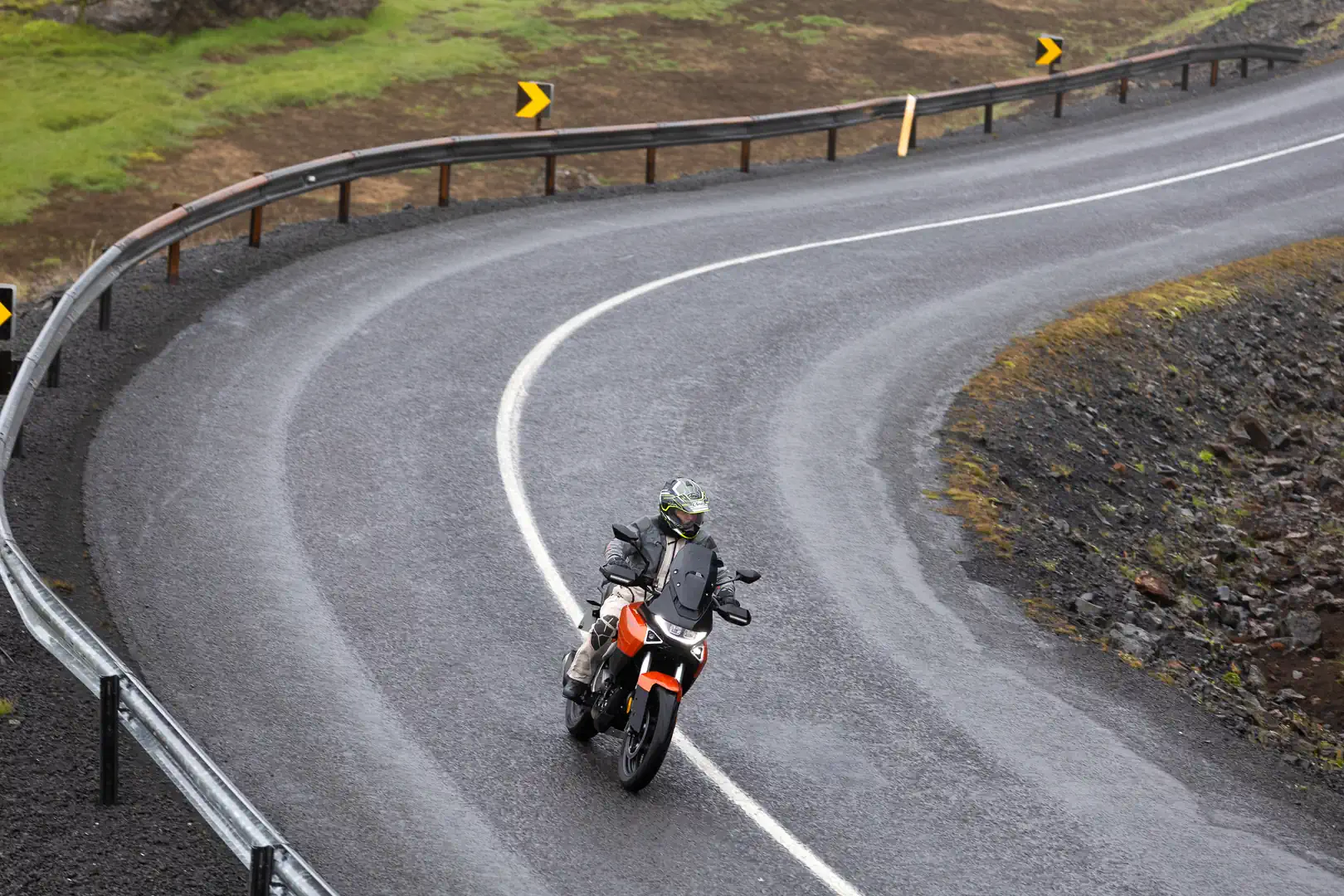
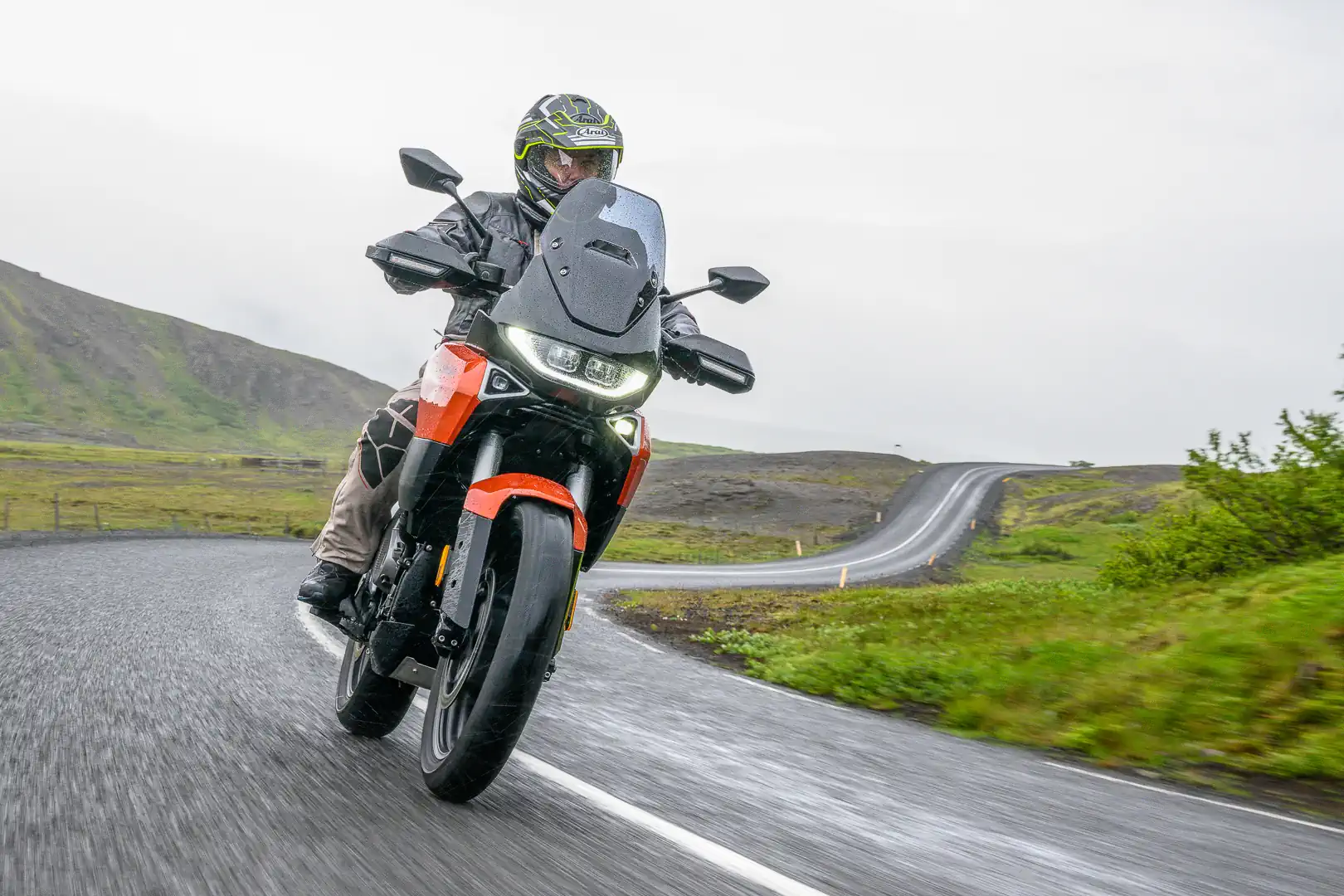
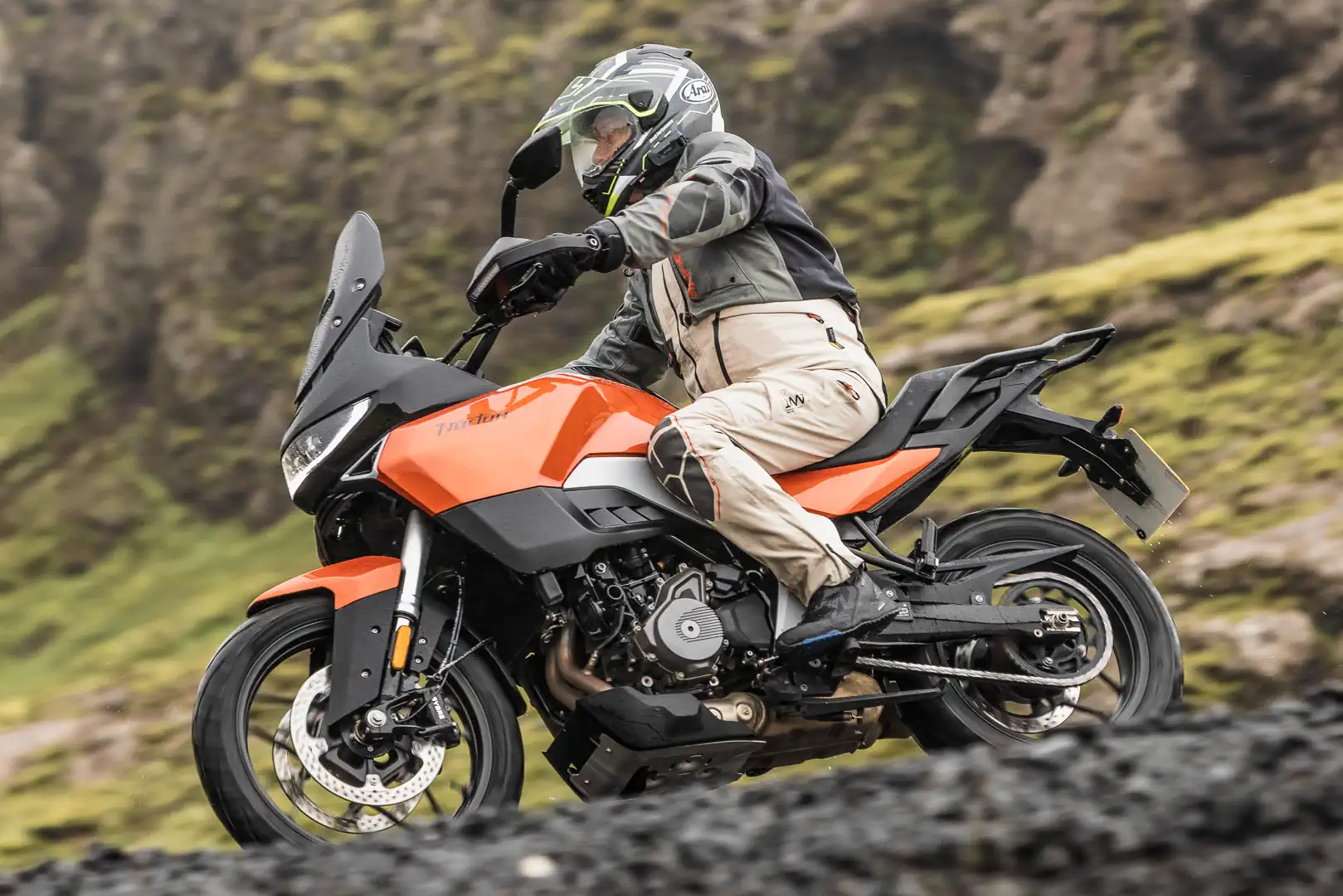
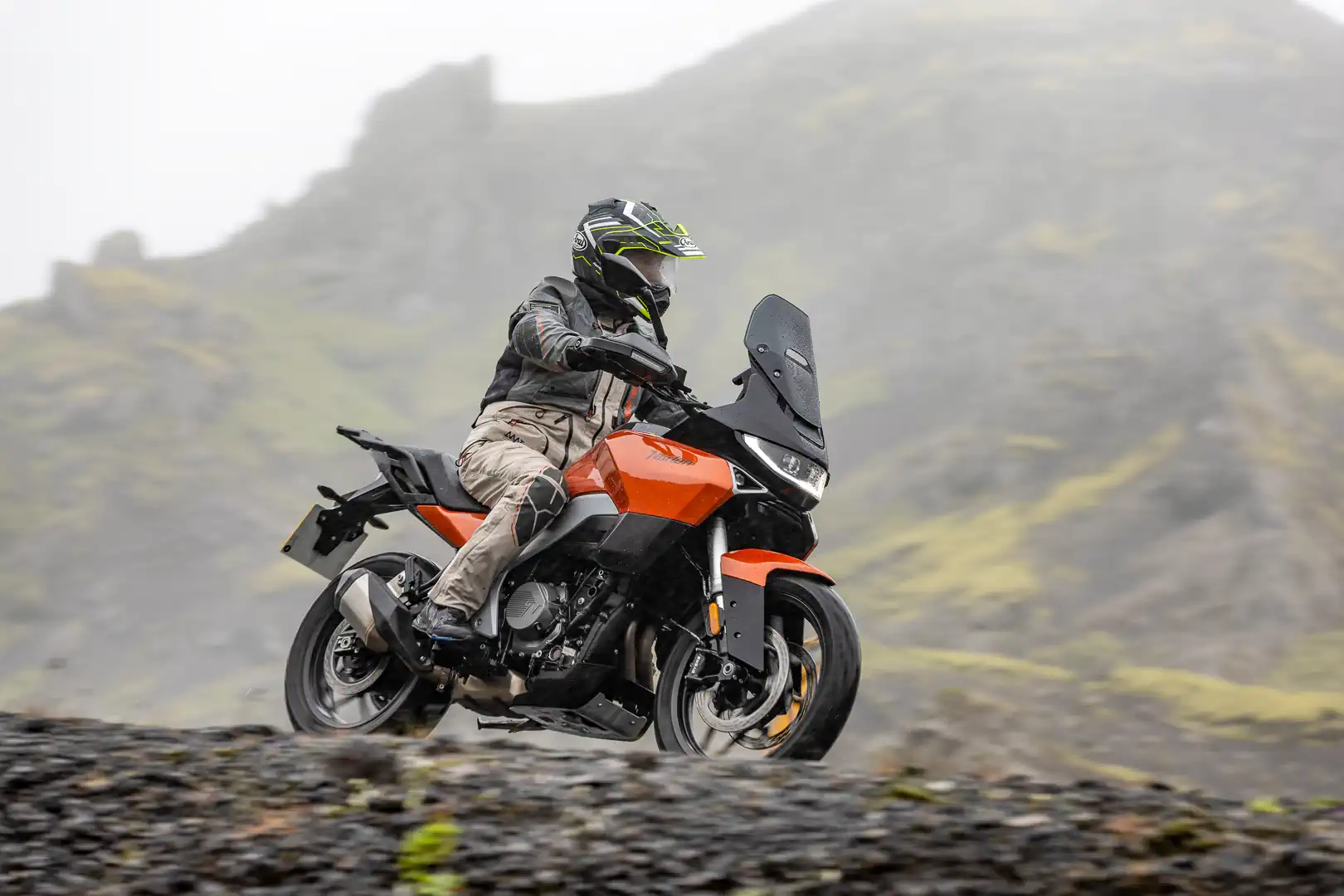
As it turns out, the chassis is well sorted. Riding Nesjavallaleið (Nesjavellir Route) next to the Nesjavallaæð hot-water pipeline in a brutal crosswind at high speeds on wet pavement would challenge any motorcycle. Yet, I never felt in jeopardy as I battled the elements while riding across the beautifully bleak landscape. Somehow, my Alpinestars gear kept me dry, if not fully warm. Handguards and a well-designed fairing did their best to fend off the elements, which were attacking from multiple angles. Heated grips are standard on the uprated Atlas Apex, and I was testing the base model.
Tires always play an important role in such a situation, and Norton has a secret weapon. Eurogrip is a TVS family company, a brand of TVS Srichakra. That makes it a corporate cousin of Norton’s owner, TVS Motor Company. Plenty of manufacturers work closely with a tire company. Not many can call one a relative. Riding mostly on wet pavement and wet, rocky, unpaved roads, I found the Explo R Plus tires never failed to inspire confidence.
Twisting roads on the way to the remote Ion Adventure Hotel’s Silfra Restaurant & Bar allowed the Norton Atlas’s chassis to score high points. The tires continued to grip, and the suspension provided stability in straight lines and corners. The 270-degree crank helps the twin find traction, with the Rain mode smoothing the throttle and traction control preempting wheelspin.
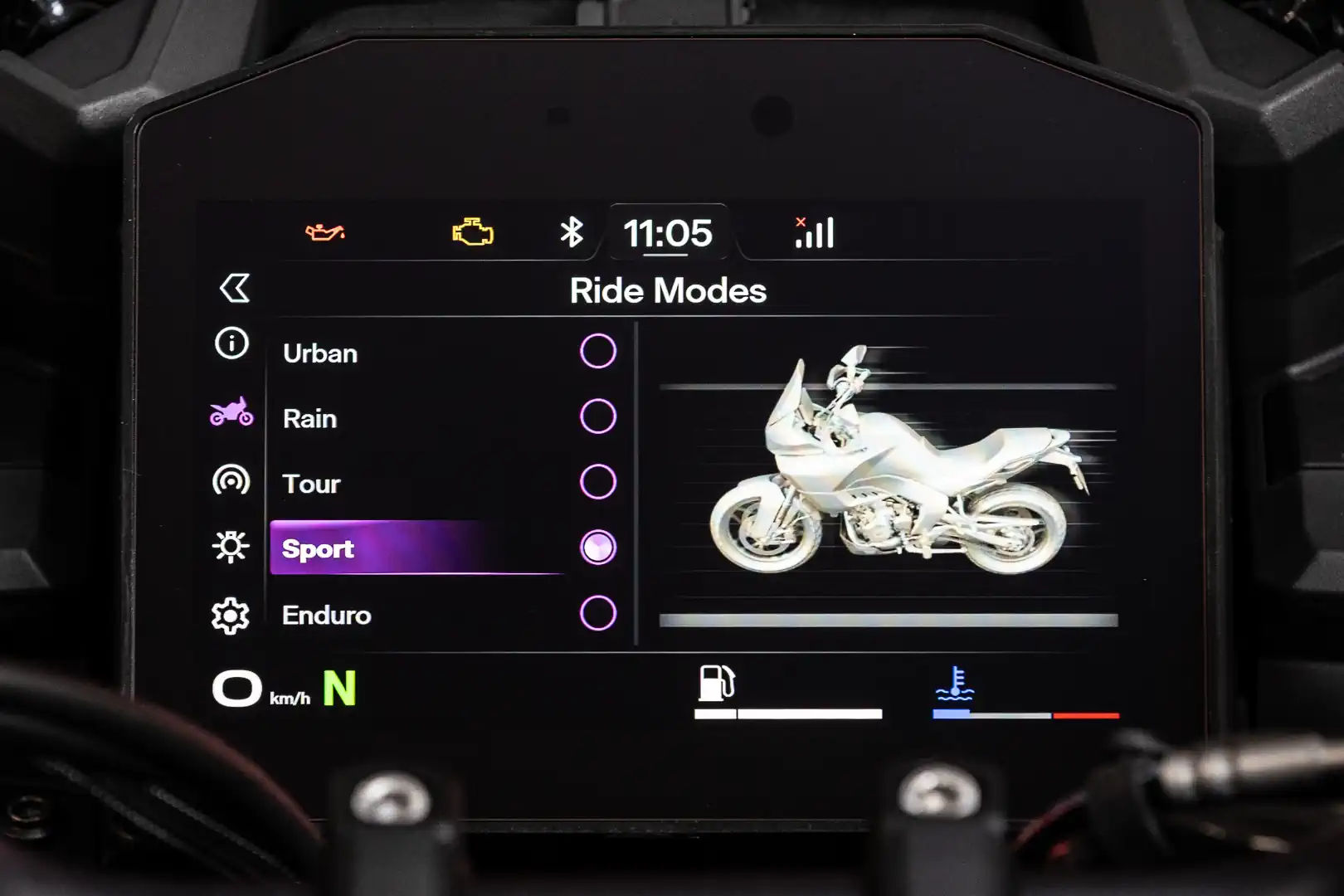
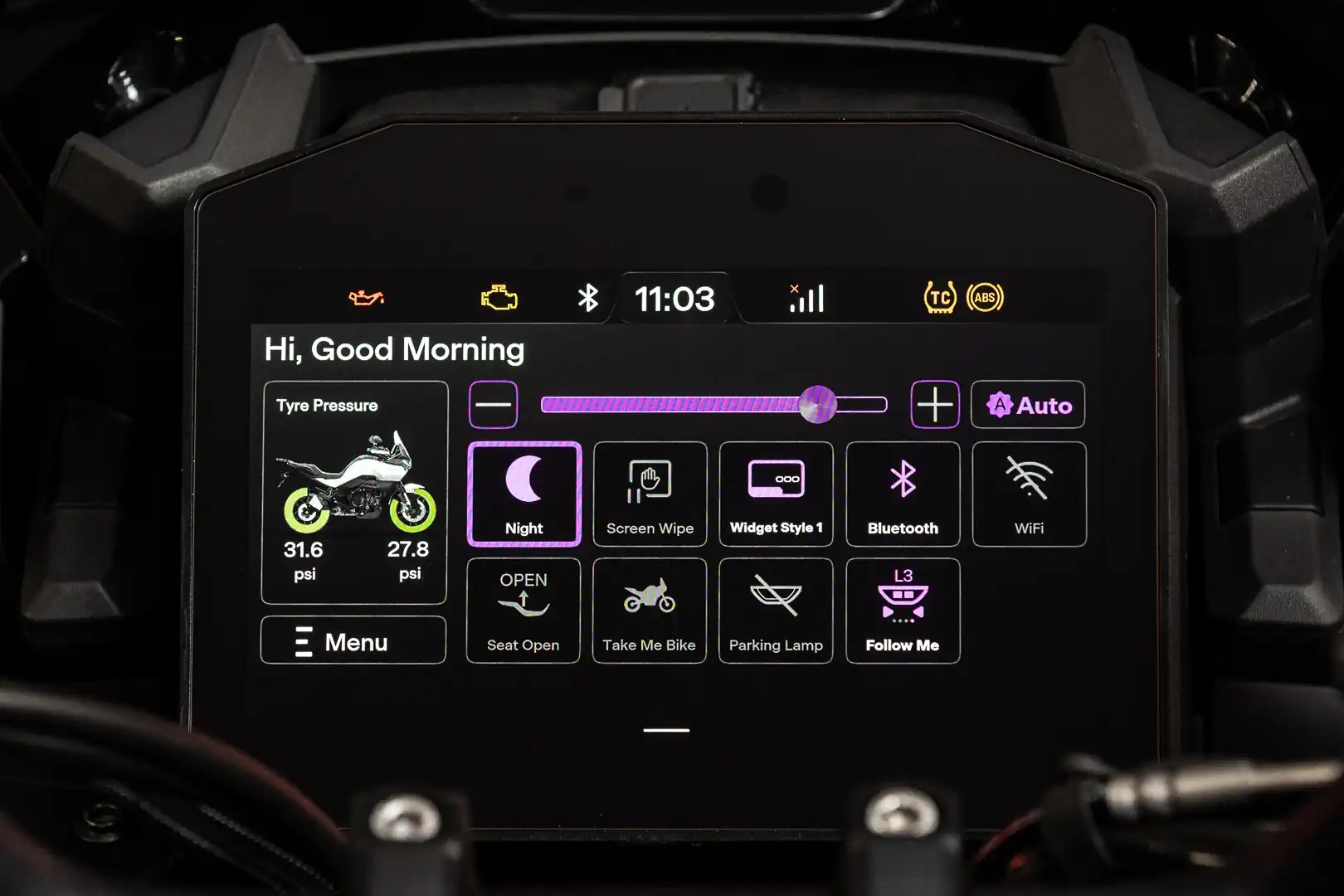
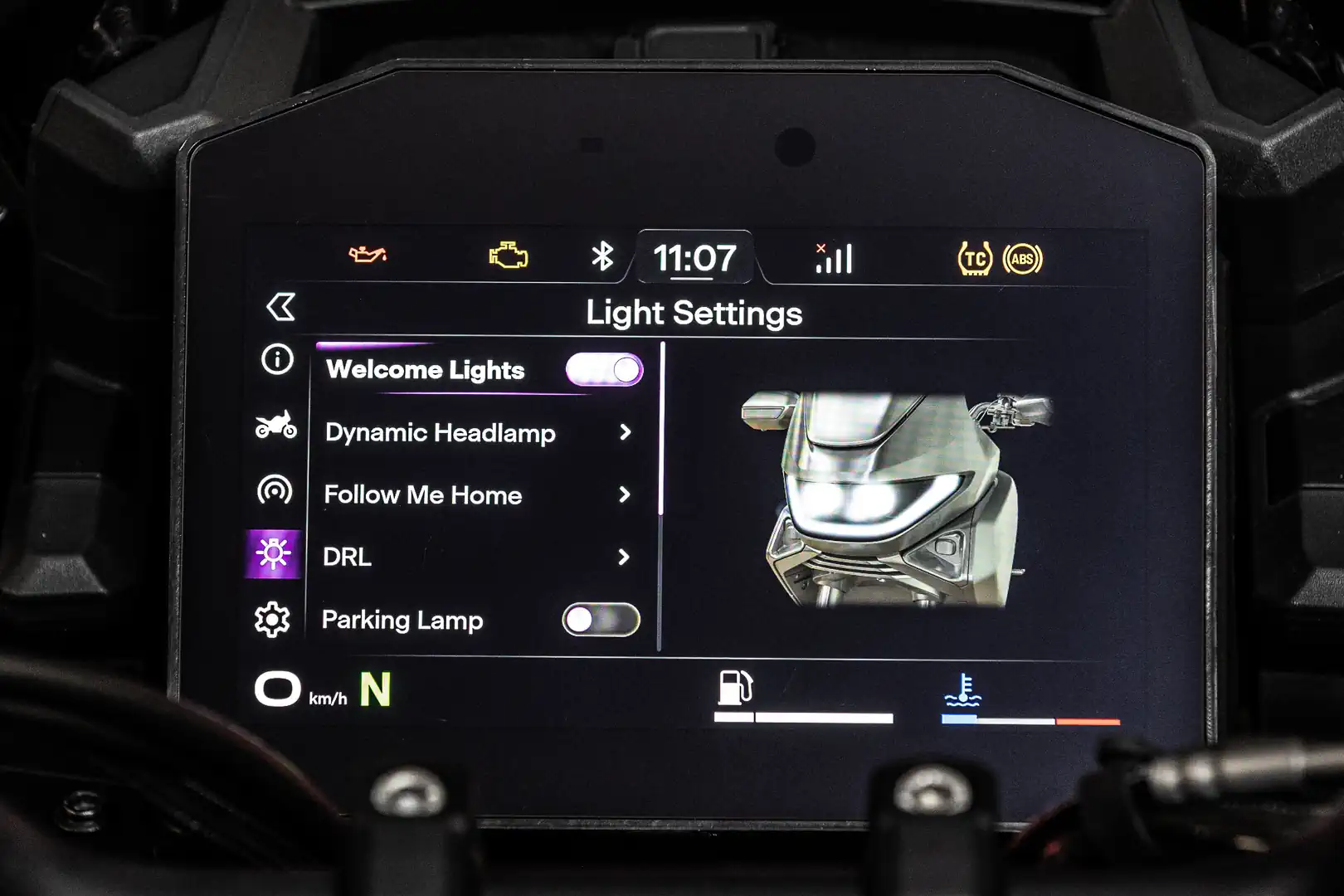
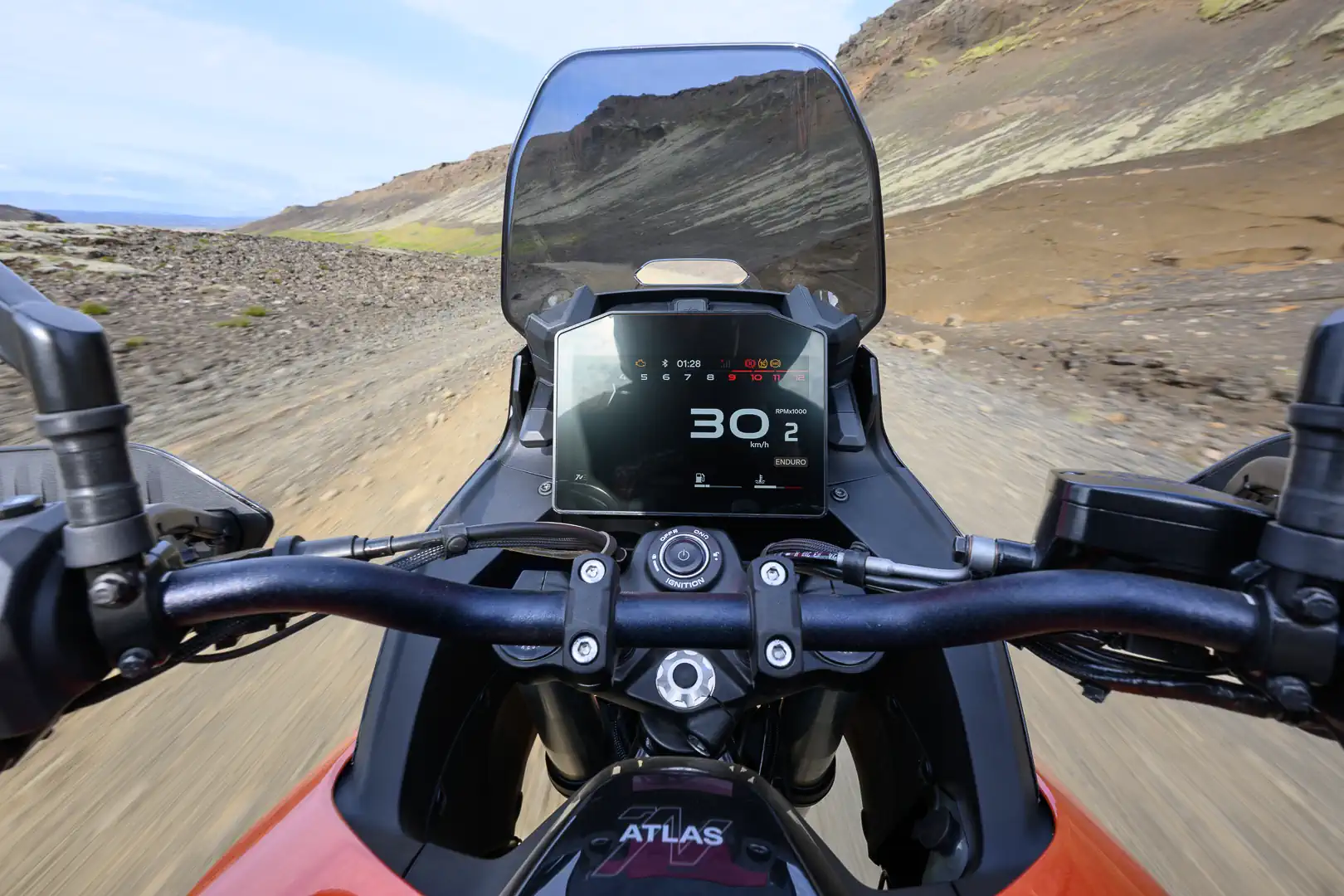
Considering its status as a mid-size adventure bike, the 2027 Norton Atlas has an impressive electronic aid system. There are five ride modes: Sport, Tour, Enduro, Urban, and Rain. Each has its own settings for throttle response, engine braking, traction control, and dual-channel ABS. Safety features include lean-sensitive ABS, traction control, and cruise control. Drag torque control, wheelie control, and rear wheel lift control join in the effort to protect the rider. It’s all controlled through a beautiful 8-inch TFT dash with smartphone pairing via the Norton Rider app. This adds navigation and the usual multimedia features, plus GoPro integration. A lot is going on.
The Ghost of Lucas
Fittingly, the Ghost of Lucas seemed to haunt these pre-production Norton Atlases.
Lucas Electrical components on classic British motorcycles earned a legendary reputation for unreliability. Infamously earning the nickname The Prince of Darkness, they had a tendency to leave riders stranded without lights or a spark. Built to a strict price point for Norton, Triumph, and BSA, the systems were vulnerable to vibration, corrosion, poor grounding, and aging insulation, which commonly produced failed stators, switches, voltage regulators, and wiring. While many original components still function decades later with proper maintenance, and some owners argue the reputation is exaggerated or worsened by later aftermarket copies, the moniker and the frustration it represents remain part of British motorcycle lore.
Perhaps the most alarming of the failures was the complete shutoff as I was accelerating out of a corner. It was in a spectacular portion of Nesjavallaleið, just before it terminates at Grafningsvegur efri.
When I say “complete shutoff,” I don’t mean the engine dying. In this case, it was as if someone had flipped a switch and shut off the motorcycle entirely. The engine stopped, the TFT screen went blank, and no power was running through the electrical system. The good news is that the bike restarted keylessly when I pushed the power button at a stop. The bad news is that mine wasn’t the only Atlas in my group to suffer this malady.
It wasn’t the only problem. The engine braking system would occasionally overcompensate for reduced traction. When the system is properly calibrated, an imperceptible addition of throttle keeps the rear wheel turning. Instead, the application of throttle was too enthusiastic, which is exactly what you don’t want when entering a wet corner. While it wasn’t enough to cause a crash, it was alarming. It did provide opportunities to test the Bybre calipers, dual-channel ABS, and Eurogrip tires, all of which came through with flying colors.
Although all the other electronic systems worked flawlessly, as intended, these packages must be perfect. One suspects all of the engineering teams assured the PR staff that the pre-production bikes would be finished by the time of the launch. However, sometimes deadlines are simply not met, and this was one of them.
Since Iceland, Norton says it has completed final engineering, calibration, and software validation, citing refinements to throttle response, the Apex’s combined braking, and the quickshifter before series production began. European deliveries started in September.
Off-Road and a Taste of Sport Mode
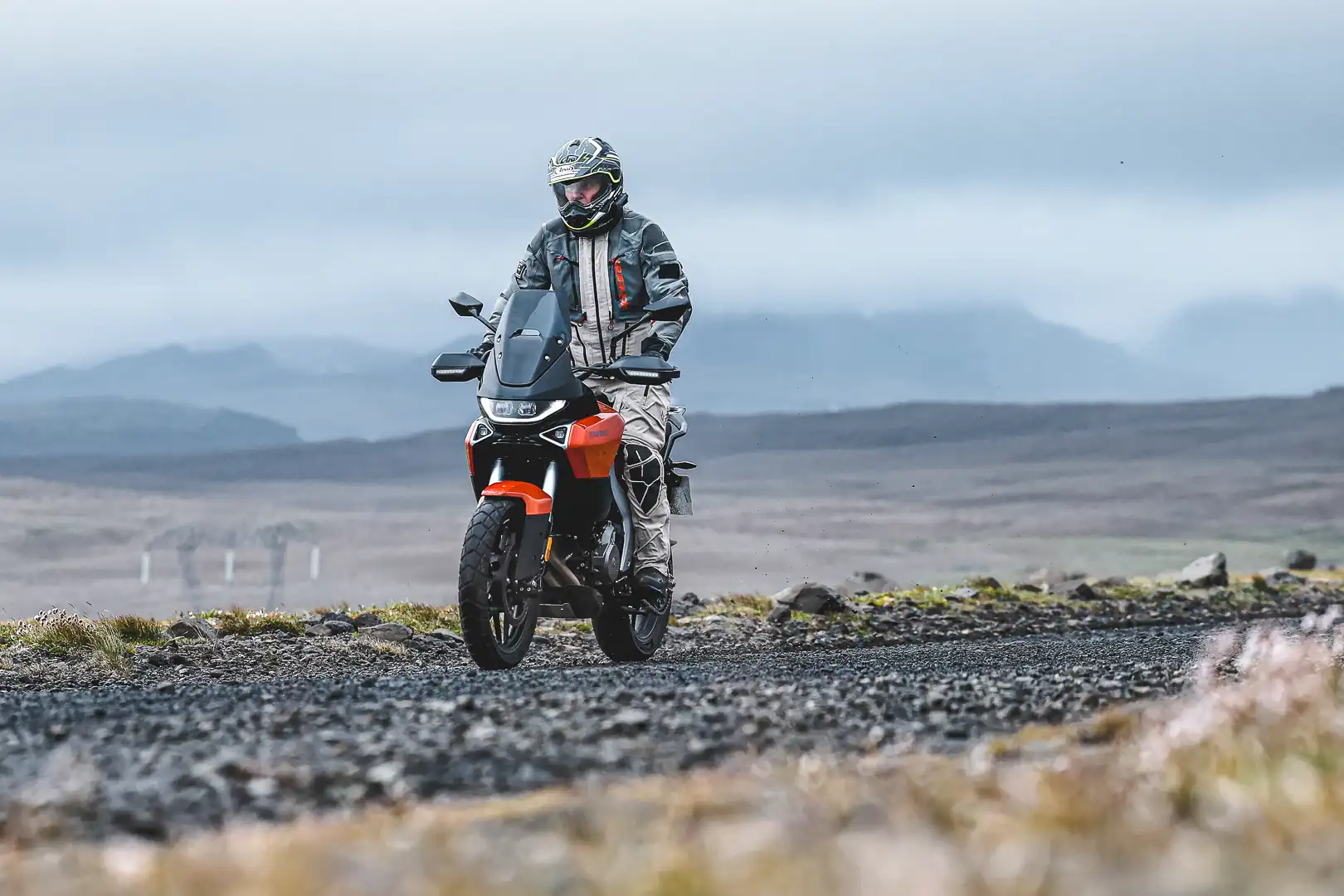
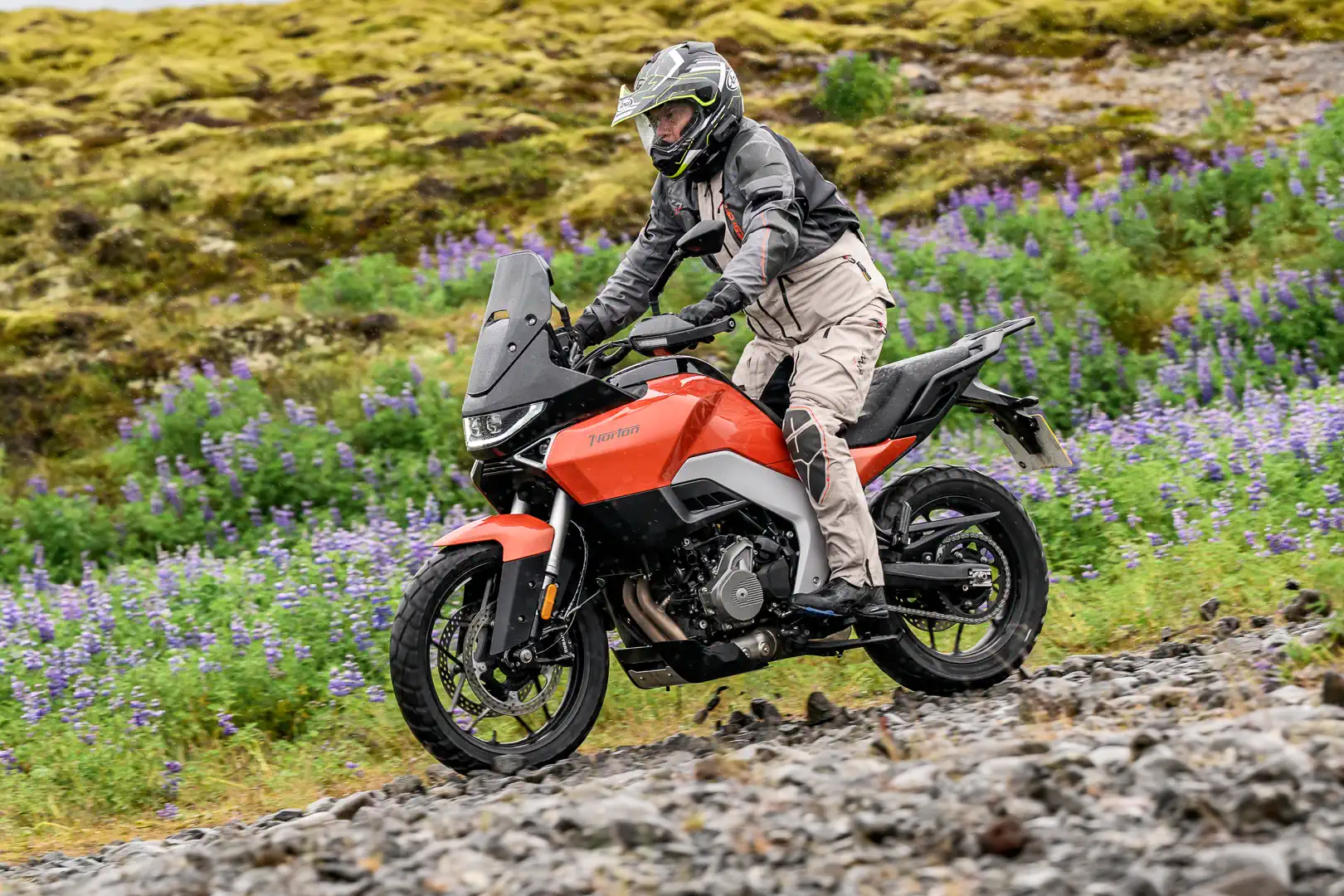
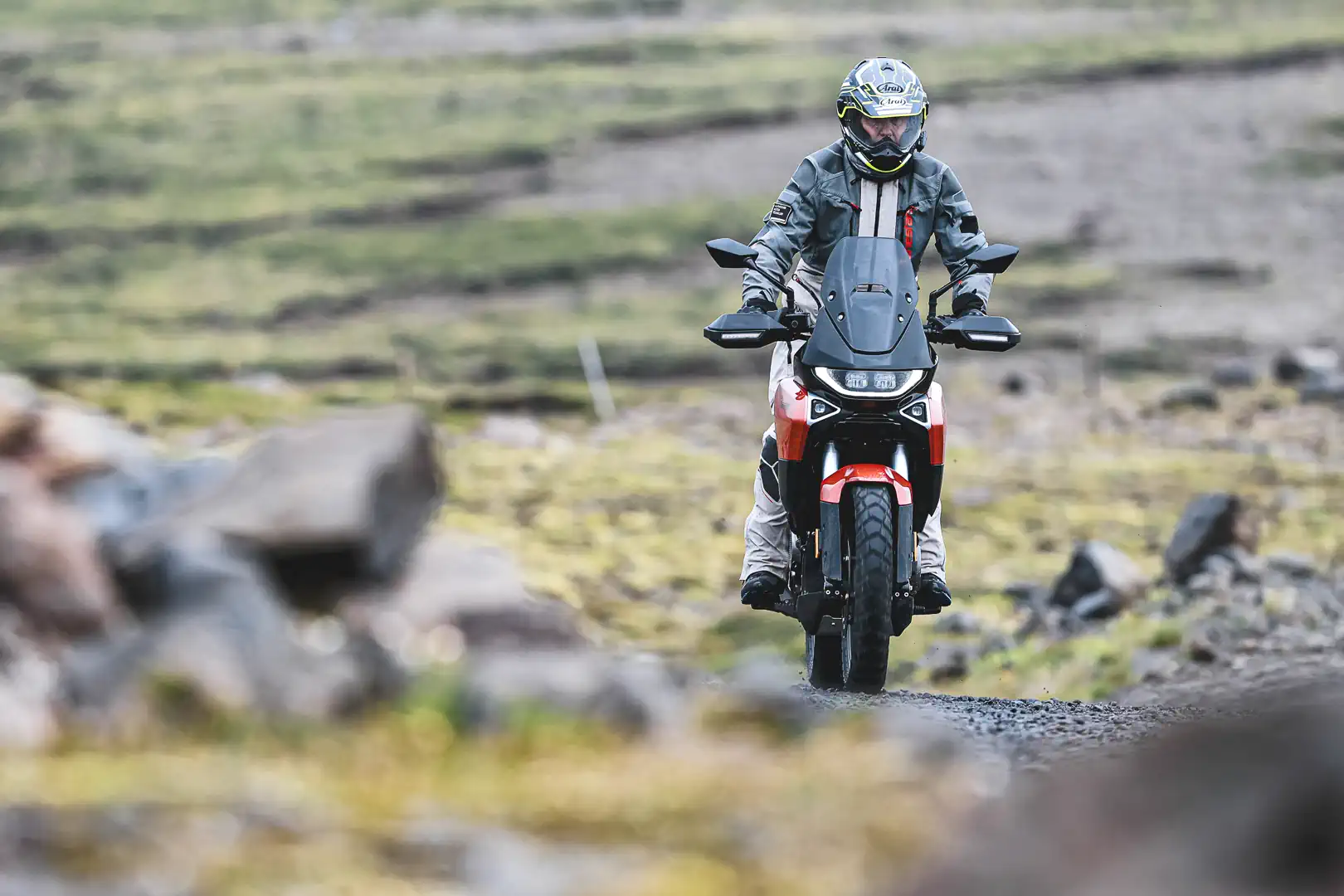
Off-road, the Atlas performed admirably. The Eurogrip tires provided confidence on the wet, rocky, unpaved, undulating roads of Iceland. The calibration of the KYB suspension was spot-on, and I was able to click the transmission up to 6th gear, even in the wet conditions. The Enduro mode is a success, with adaptive throttle response, medium engine braking, no traction control, and front-only, lightly applied ABS.
The rain subsided at the end of the day, and I got a tantalizing taste of Sport mode. The twin’s throttle response perked up, and the power delivery matched the handling of the Atlas on a twisty patch of dry road. My brief dry ride wasn’t enough to make a full determination of the bike’s sporting capability, but it left me encouraged after the earlier electronic problems.
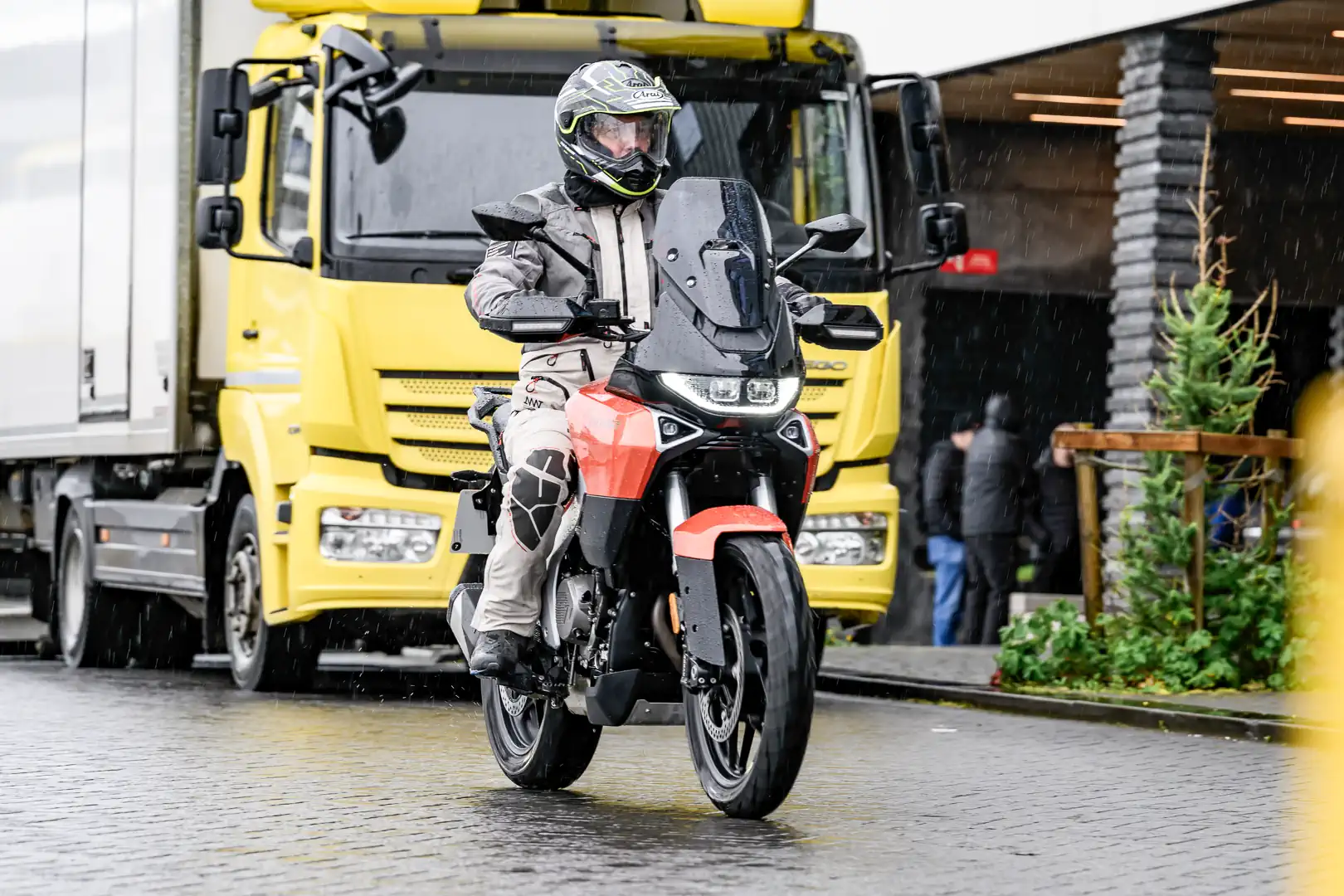
Back in downtown Reykjavík, Urban mode got a workout in some traffic. Urban mode is identical to Rain mode, except that the ABS is a tad less intrusive. There’s also a Tour mode, which I put almost no time on. It’s based on the Sport mode, but with maximum traction control and more active front-wheel ABS.
The launch of the 2027 Norton Atlas had to be frustrating for the rejuvenated brand. The weather was difficult, and the R&D of the electronics package was not finished. However, it seemed like the basic bones of a successful motorcycle were there. It took on difficult conditions and survived, while shining in those precious few dry moments. Sorting out my thoughts took a while, as tricky conditions are challenging for everyone. I’ve been promised a test bike as soon as production units are available, and I look forward to getting an authentic first impression of a finished product.
Photography by James Archibald, Stuart Collins, Brian Converse, and Chippy Wood
Benda motorcycles are beginning to make a ripple on US shores with four intriguing and competitive models, courtesy of its partnership with Keeway Group. We were impressed with the Napoleonbob 500 and have now gotten our gloves on the persuasive, entry-level 2026 Benda Chinchilla 300, with its modest MSRP of $4999. It would be difficult to design a more welcoming entry-level cruiser than this easy-handling, visually appealing boulevard bobber. Editor Don Williams and Associate Editor Kelly Callan discuss the Benda Chinchilla 300 and how it actually rode for them.
* * * * *
Our guest this episode is Jesse Merriman, Chief Technician for Jeremy McWilliams at the Arch Motorcycle racing project. Arch Racing was founded by Gard Hollinger and Keanu Reevs to compete in the Moto America Super Hooligan race series. Teejay Adams chats with Jesse about the Arch motorcycle and the challenges of extracting the absolute most from an air-cooled V-Twin racing engine and custom chassis.
* * * * *
Here’s quick reminder to check out our monthly digital magazine. It’s filled with everything you want to read on motorcycling, including some things you’ve probably not seen elsewhere. It’s absolutely free and you will find it on the Apple App Store and of course on Google Play as well.
Don’t forget to leave us your comments on our social media—we’re on all the usual platforms at Ultimate Motorcycling. We love hearing your feedback… so good or bad, please let us know what you think. If there’s something you’d like us to cover, we’d love to hear those ideas too!
We use cookies and browser activity on this website
Functional
Always active
The technical storage or access is strictly necessary for the legitimate purpose of enabling the use of a specific service explicitly requested by the subscriber or user, or for the sole purpose of carrying out the transmission of a communication over an electronic communications network.
Preferences
The technical storage or access is necessary for the legitimate purpose of storing preferences that are not requested by the subscriber or user.
Statistics
The technical storage or access that is used exclusively for statistical purposes.The technical storage or access that is used exclusively for anonymous statistical purposes. Without a subpoena, voluntary compliance on the part of your Internet Service Provider, or additional records from a third party, information stored or retrieved for this purpose alone cannot usually be used to identify you.
Marketing
The technical storage or access is required to create user profiles to send advertising, or to track the user on a website or across several websites for similar marketing purposes.
Advertising helps us keep our content available for free, so adjusting your ad blocking settings will help us.
We appreciate your support!
i
How to Allow Ads on This Site
Depending on your setup, ads may be blocked by a browser extension, VPN, antivirus software, or other application. Here are some common ways to allow ads:
Browser Extensions (e.g., Adblock, uBlock, etc.)
Click the extension icon in your browser toolbar.
Look for an option like "Don't run on pages on this site" or "Pause on this site".
Save the change and refresh the page.
VPNs with Ad Blocking (e.g., NordVPN, Proton VPN, etc.)
Open your VPN app.
Go to settings or features.
Disable any ad blocking or tracking protection features.
Refresh the page.
Antivirus Software or Other Privacy Tools
Check for web protection, ad filtering, or browser privacy settings.
Click the power button to disable it for this site.
Refresh the page.
Not sure what's blocking ads? Look for tools with privacy or filtering features, or check your browser extensions. We only use respectful, non-intrusive advertising.