Tires aimed at bagger and cruiser categories usually champion three things: mileage, mileage, and, you guessed it, more mileage. That philosophy is tough to argue against if you’re single-mindedly focused on getting the most distance out of your rubber. However, it also means that dry grip, wet traction, comfort, and handling performance must make big sacrifices. Well, that sort of approach won’t work for the Italian firm Pirelli, which has launched its new Pirelli Diablo Powercruiser, offering a new level of performance for today’s discerning bagger and cruiser enthusiast.
Whether we’re talking American V-twin baggers or custom builds, the collective cruiser landscape has radically changed in the past decade. Low and slow isn’t totally out, per se, yet it doesn’t make up the majority. These days, American V-twin manufacturers such as Harley-Davidson offer higher-performance models, including the Low Rider S and Low Rider ST siblings, equipped with modern inverted forks, upgraded rear suspension, and greater engine performance. Pushing the boundaries even further are the MotoAmerica King Of The Baggers-inspired CVO Road Glide ST and CVO Street Glide ST models, which bolt on premium suspension and braking hardware while also significantly raising the bar on engine performance.
Black, round, and will last a whole lot of miles may have met the bar way back when, but just as bikes have evolved, so, too, have rider tastes. Pirelli is no stranger to the cruiser market, with its longstanding Night Dragon series serving its segment since it was introduced in 2008. What makes the Diablo Powercruiser unique — not only among its peers, but within the Pirelli range — is that it’s the first cruiser-oriented product to join the racetrack-developed Diablo product line.
The Diablo moniker is assigned to the brand’s racing and sport-oriented tires. Pirelli has been the spec-tire provider in the FIM World Superbike Championship since 2004 and will become the spec-tire supplier in MotoGP in 2027, where Pirelli’s range-topping Diablo Superbike slicks will continue to be developed. For Pirelli, what’s learned at the racetrack almost always trickles down into its Diablo Superbike racing slicks or road-legal products like the Diablo Supercorsa SP series tire.
Pirelli wanted a fine slice of Americana during this first-ride test and brought journalists to The Great Smoky Mountains, a subrange of the Appalachian Mountains that straddles the Tennessee-North Carolina border. It’s a region chock-full of winding motorcycle-friendly routes, none more famous than US 129, otherwise known as the Tail of the Dragon. On an action-packed 11-mile stretch of highway, riders navigate 318 curves on what’s currently pristinely paved asphalt. Conditions were prime, with a balmy 75 degrees on the thermometer and not a drop of rain in the forecast. Unfortunately, that does mean we’ll hold all wet-related impressions for another day.
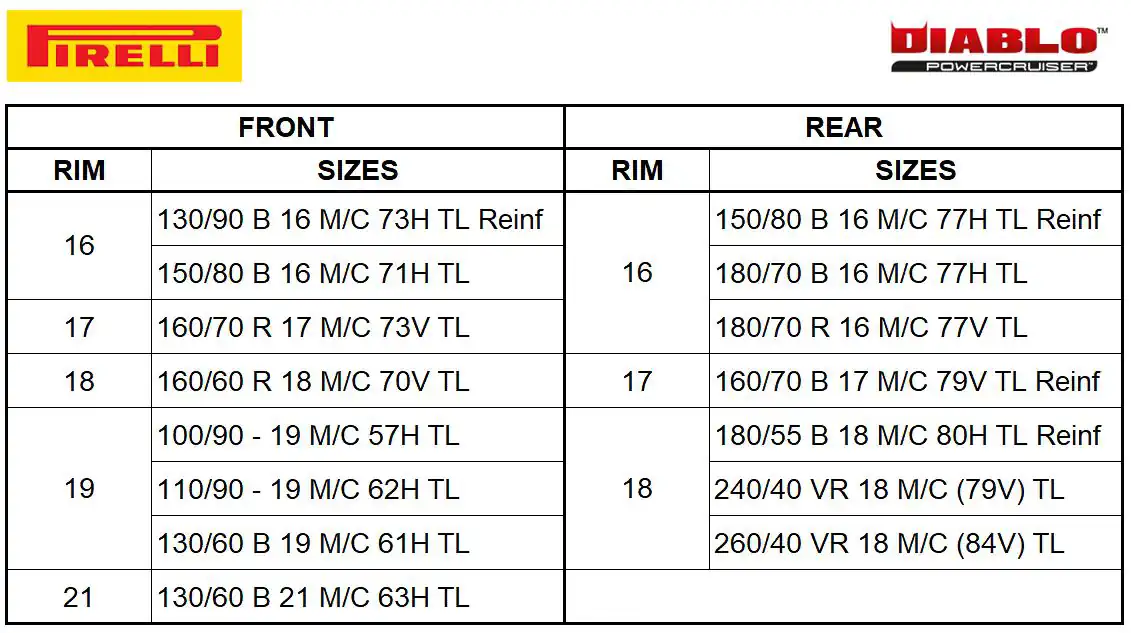
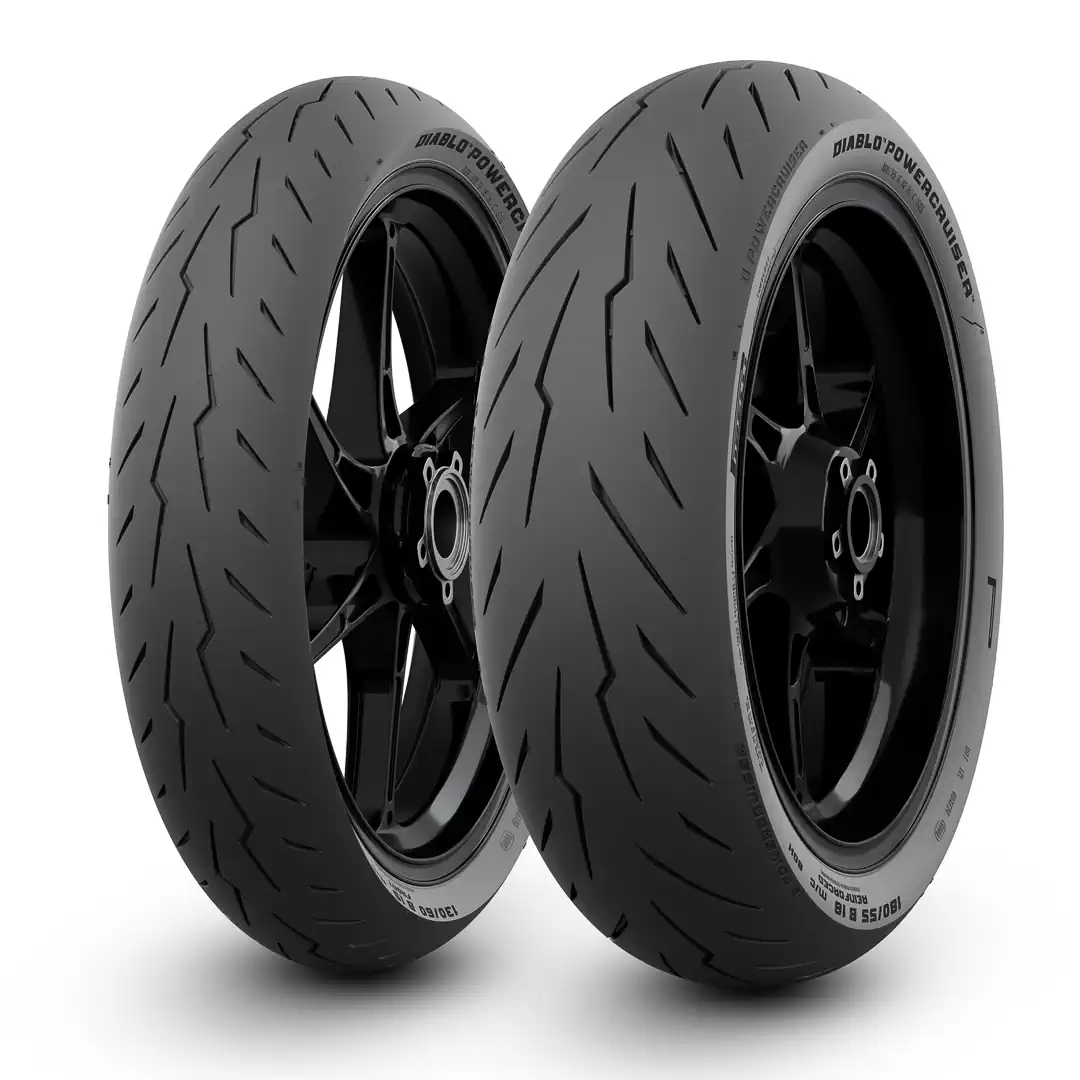
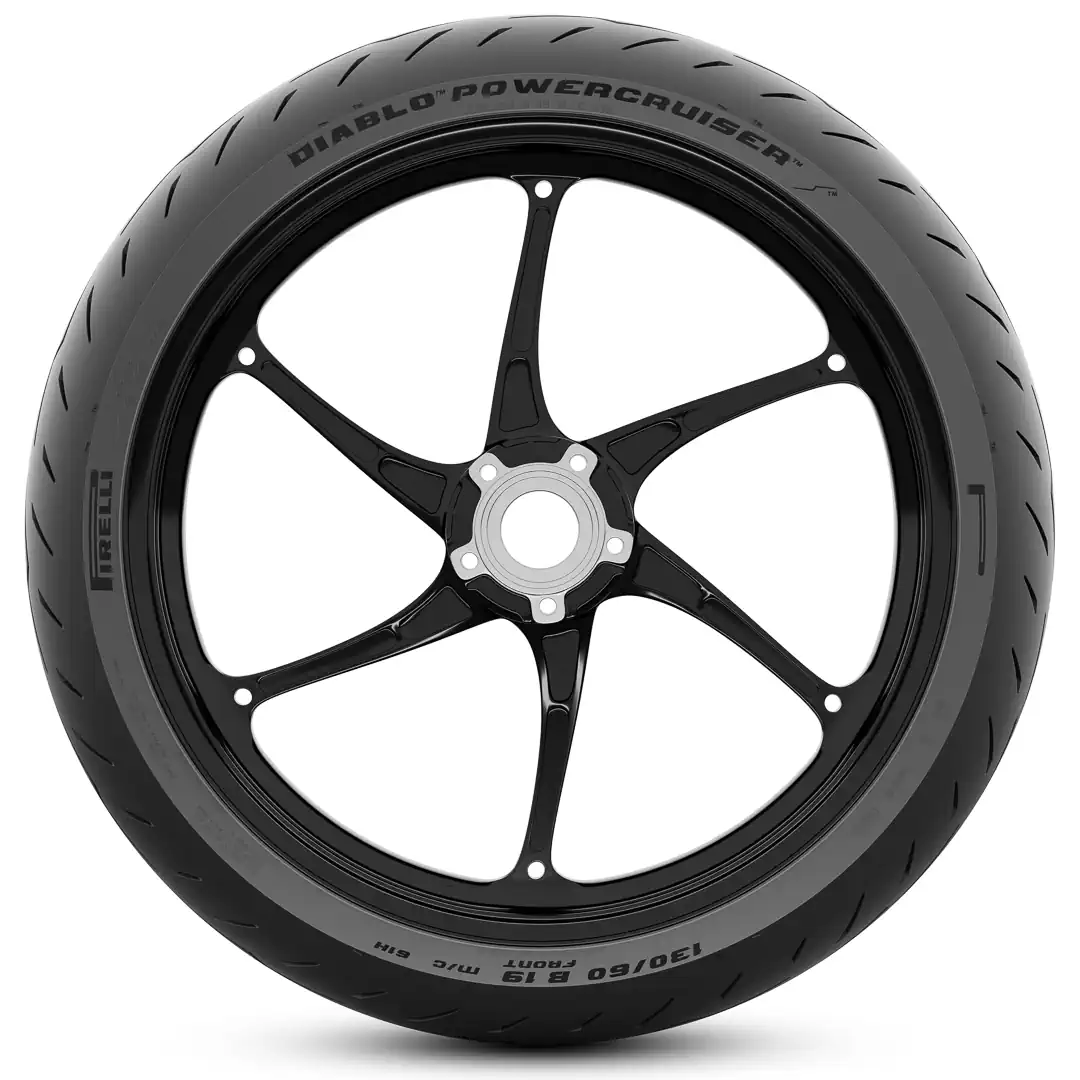
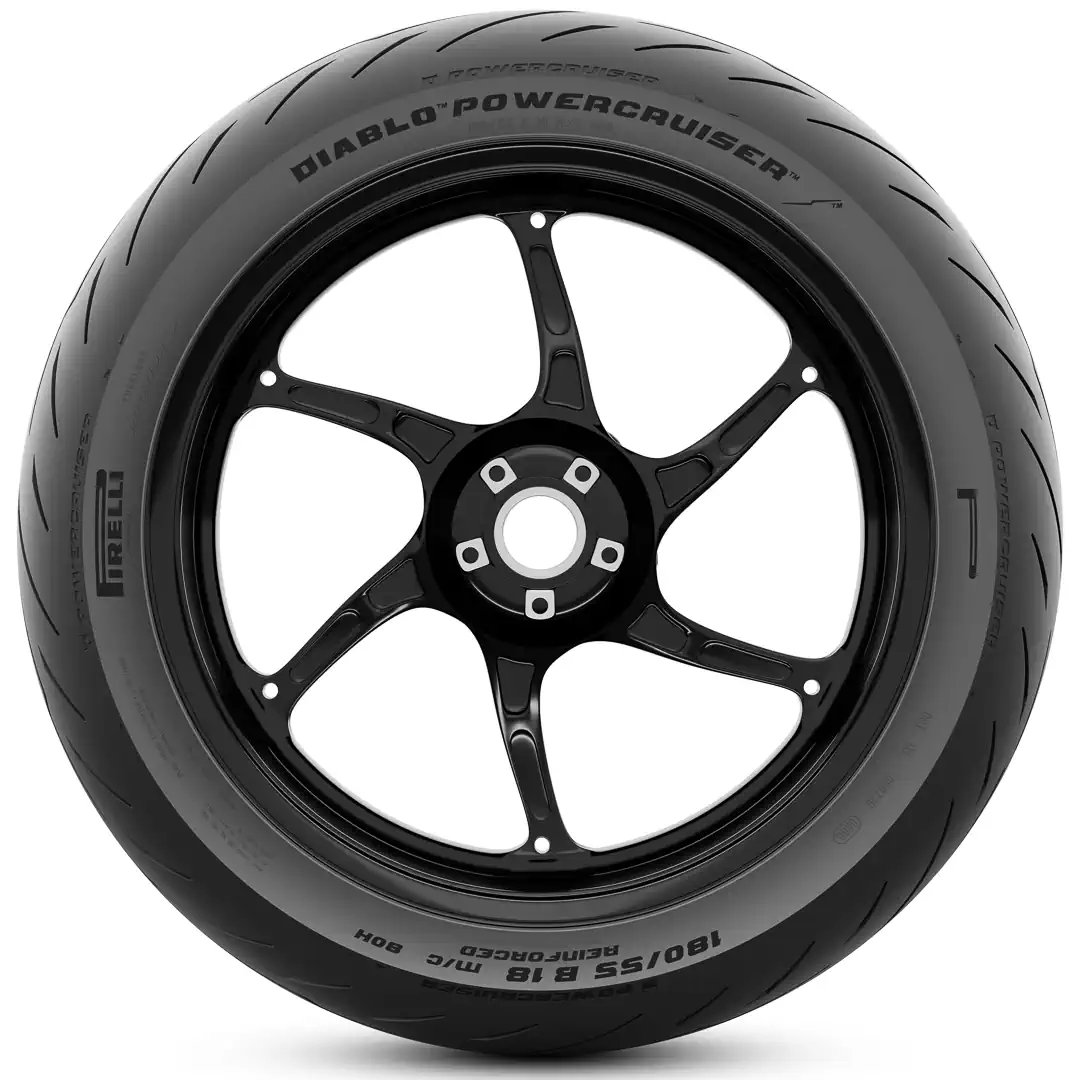
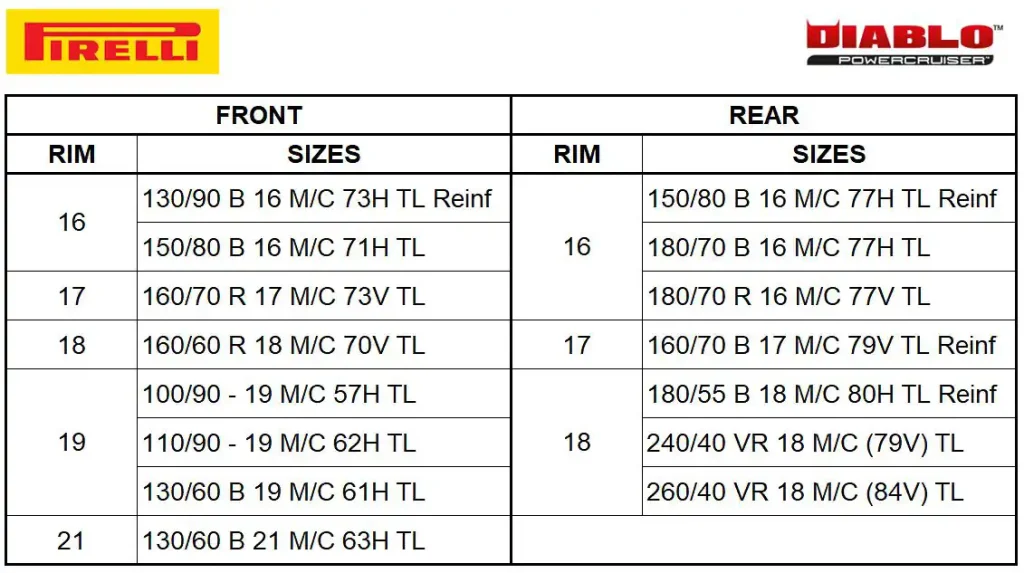
The Powercruiser tire offers a full range of sizes, covering most of the market nicely. Up front, sizes range from 16 to 21 inches, with radial construction and high-silica rubber. Out back, the lineup runs from the conservative 150/80 B16 to the massive, custom-friendly 260/40 VR18, with a mix of radial and bias-ply construction types depending on sizing.
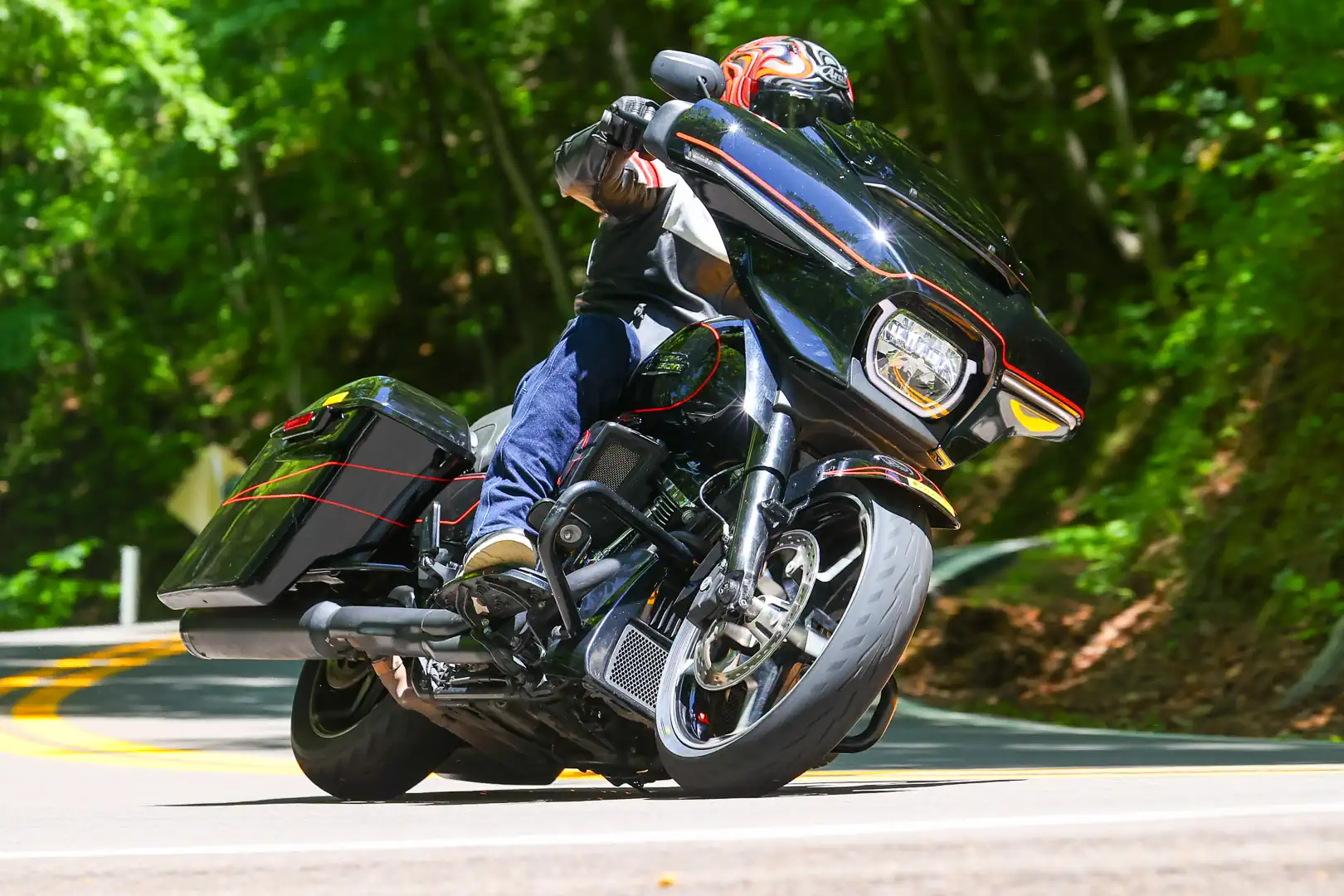
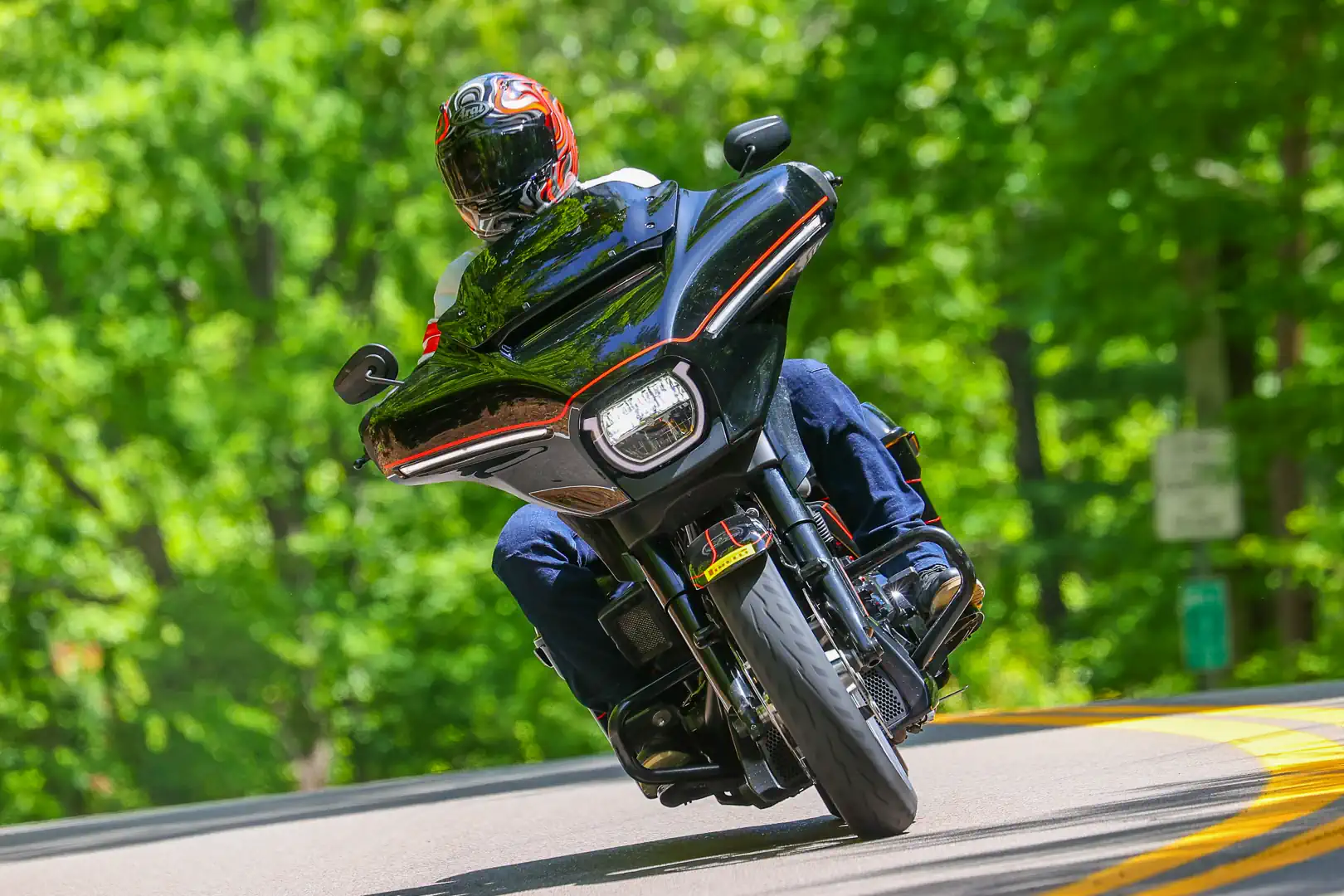
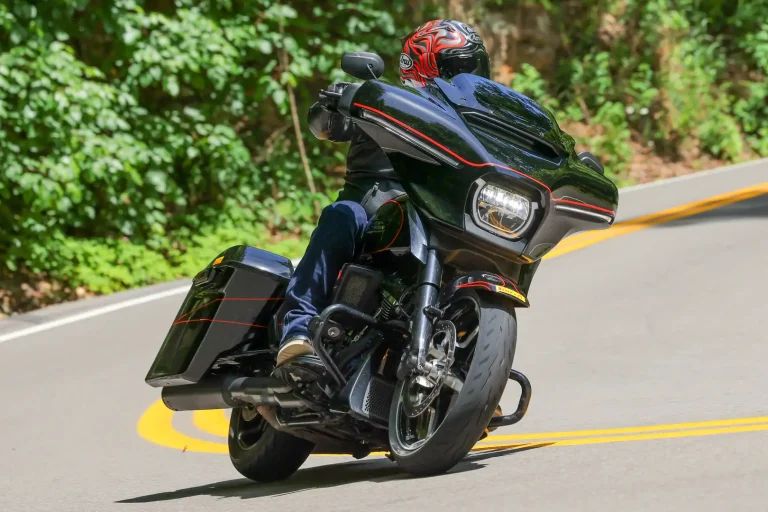
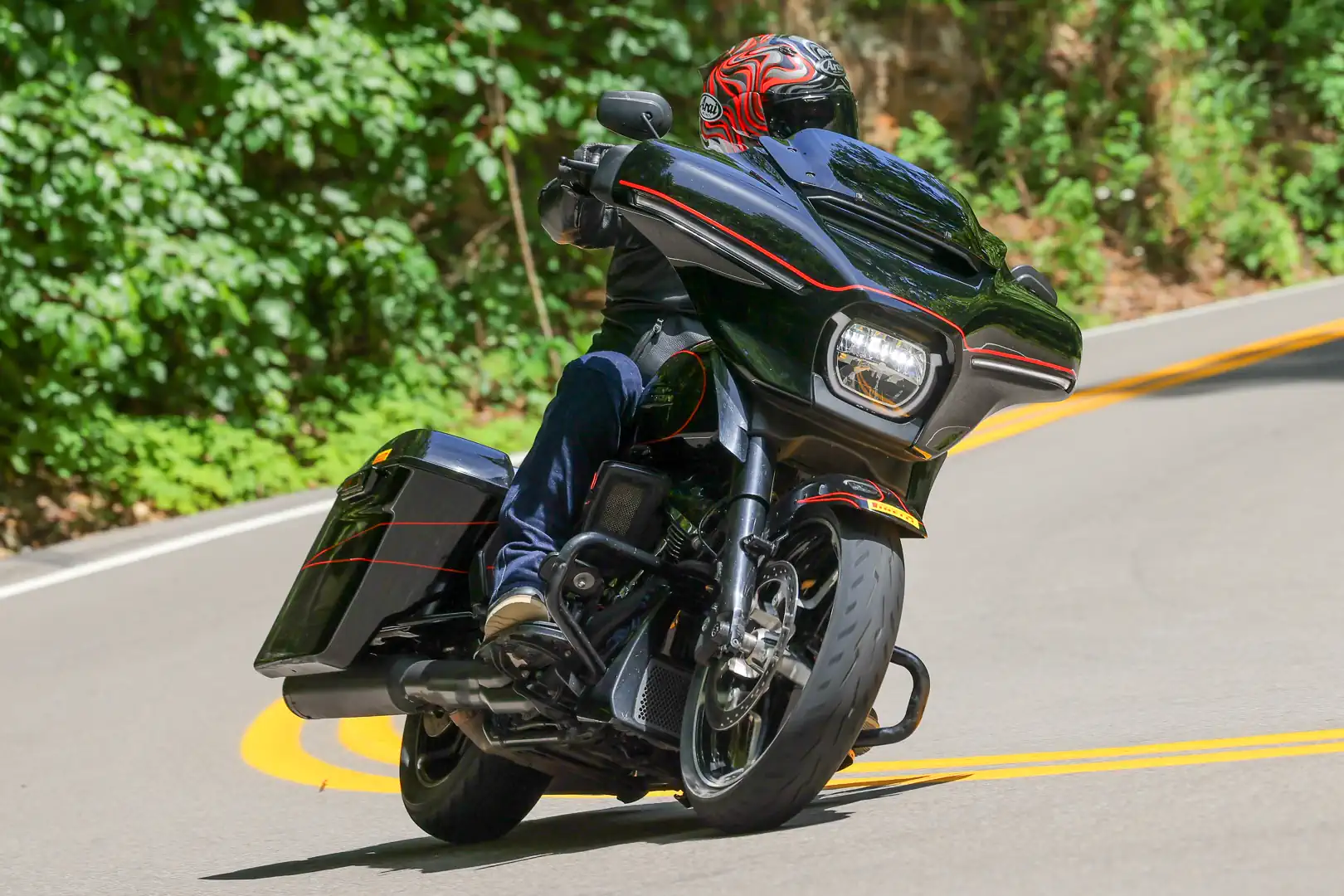
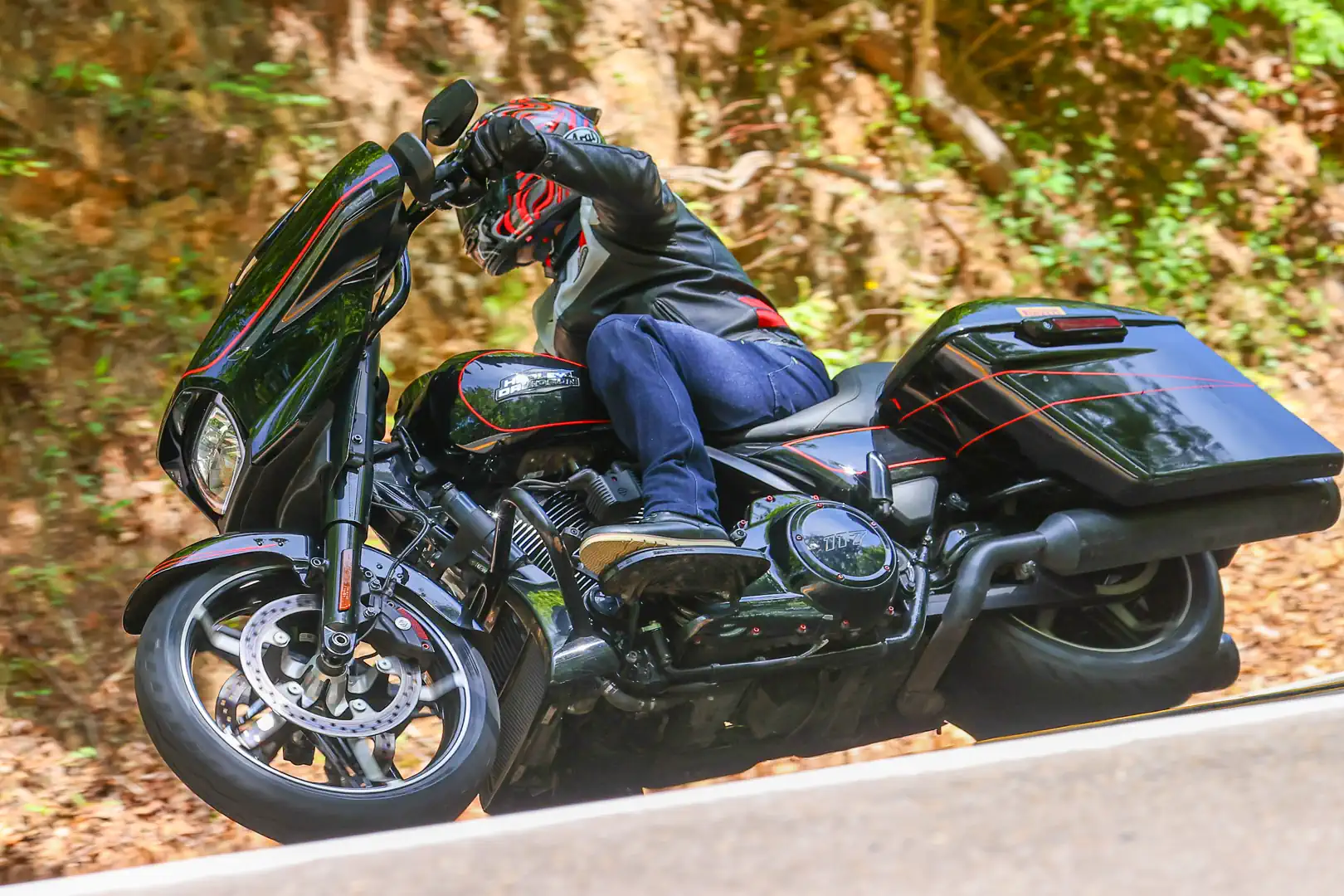
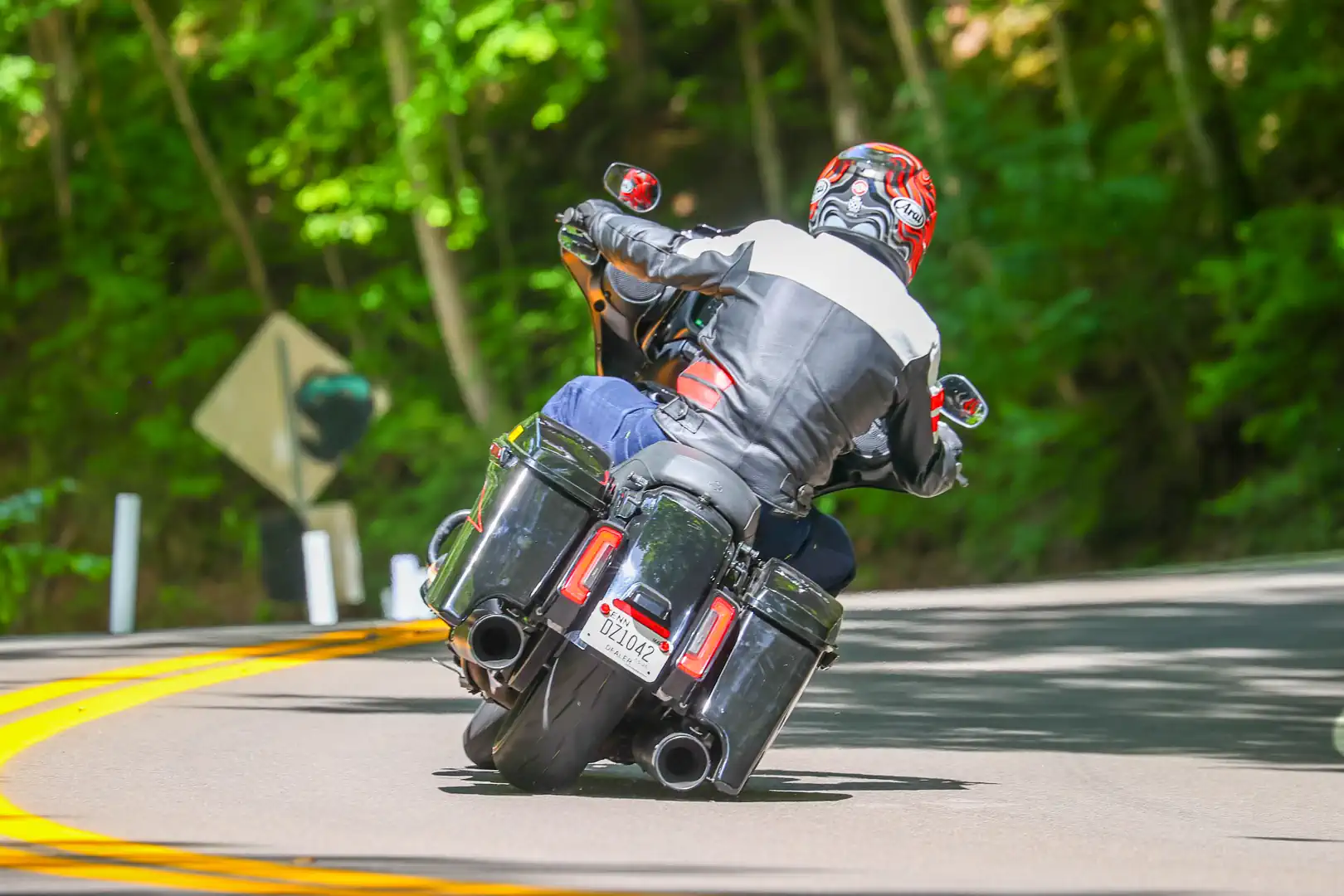
Our first stop on this test was to Smoky Mountain Harley-Davidson in Maryville, Tennessee. There, we secured our test machine for this story, a current-generation Harley-Davidson Street Glide mounted with fresh Diablo Powercruiser rubber. It’s a platform that this scribe is intimately familiar with, which made the differences in handling behavior immediately apparent.
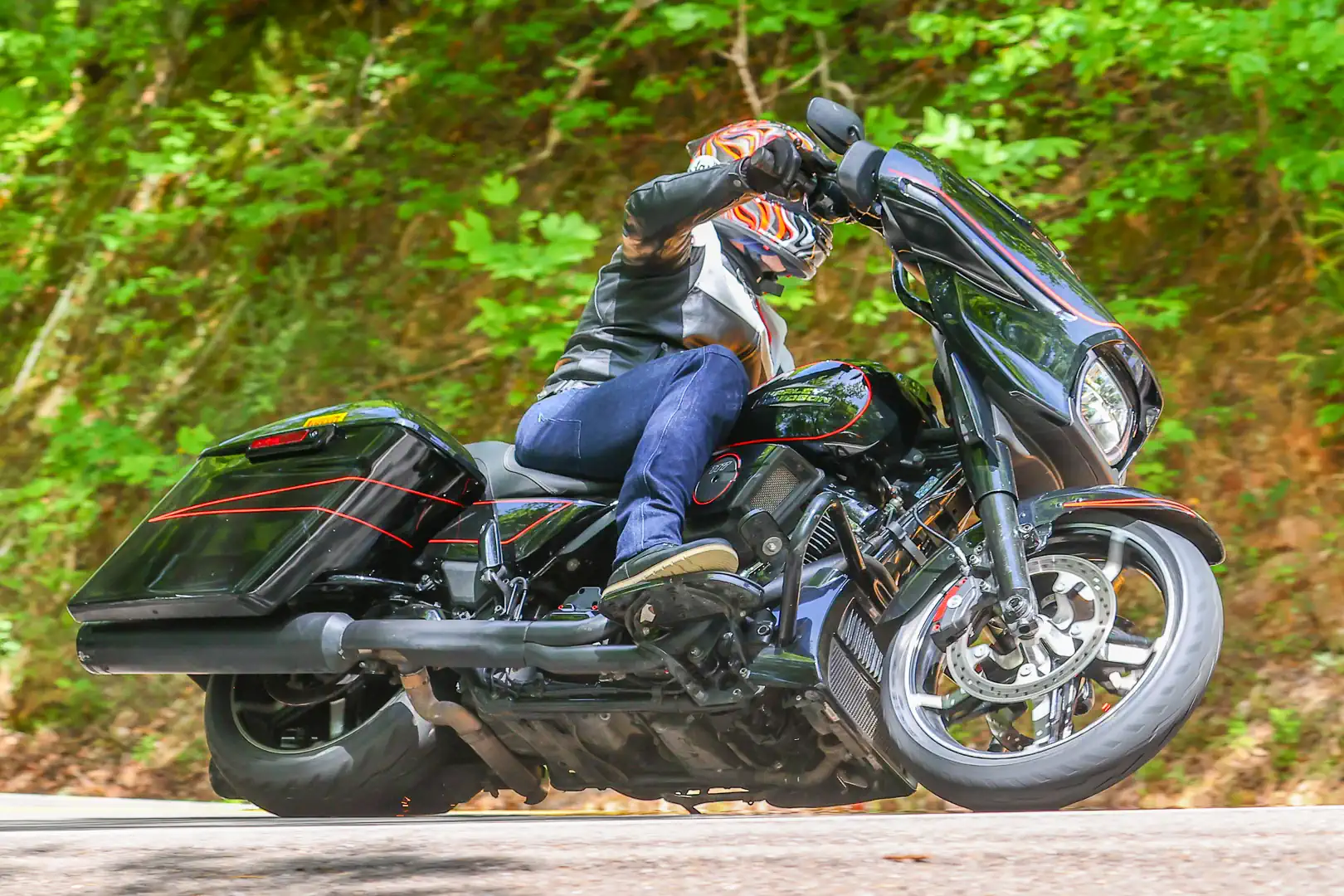
Baggers in this weight class tend to resist changes in direction, requiring deliberate counter-steering before they comply. With the Powercruiser fitted front and rear, the bike responds noticeably quicker, while also improving stability considerably. The effort required doesn’t disappear, but the SG’s quick-stepping abilities improve simply by swapping out rubber.
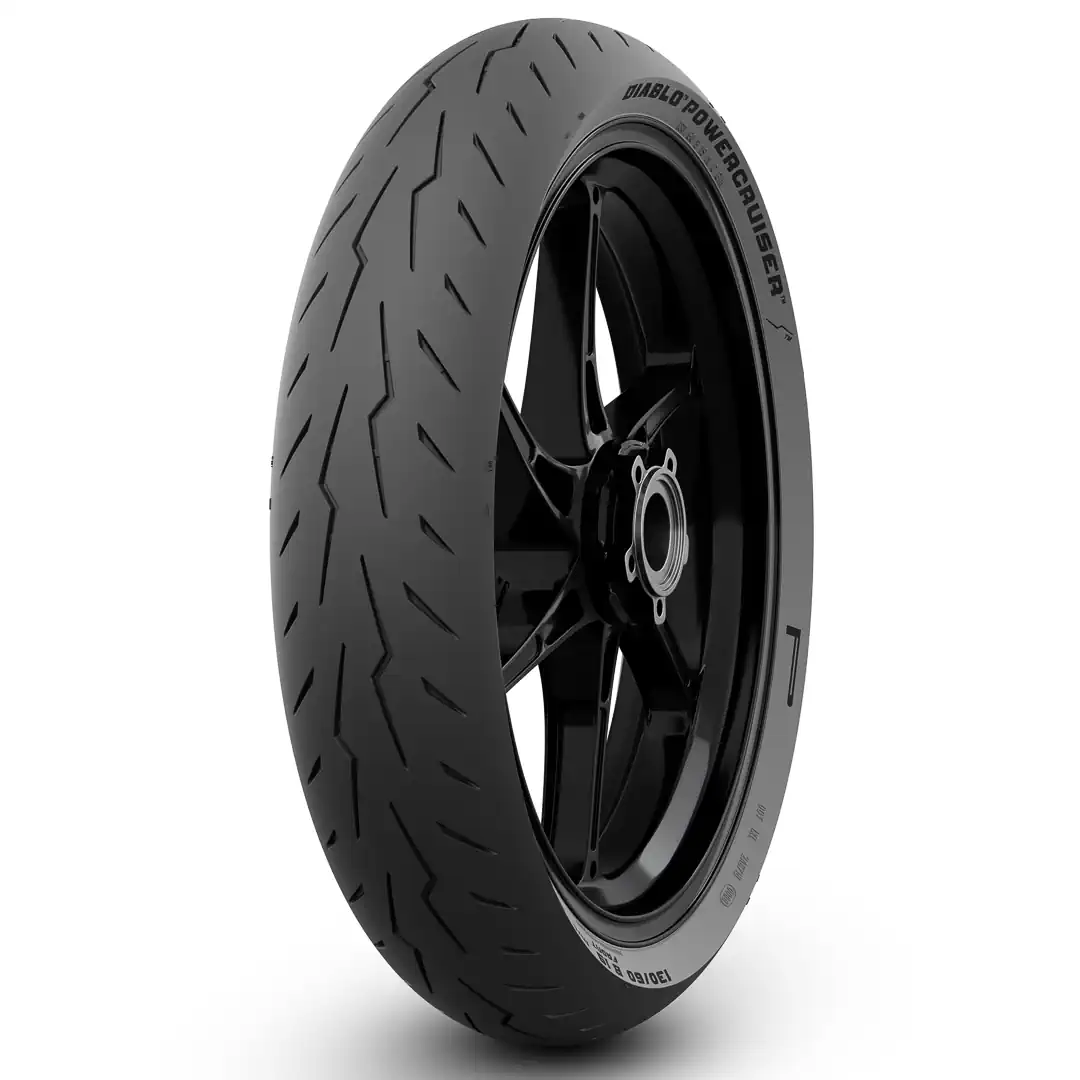
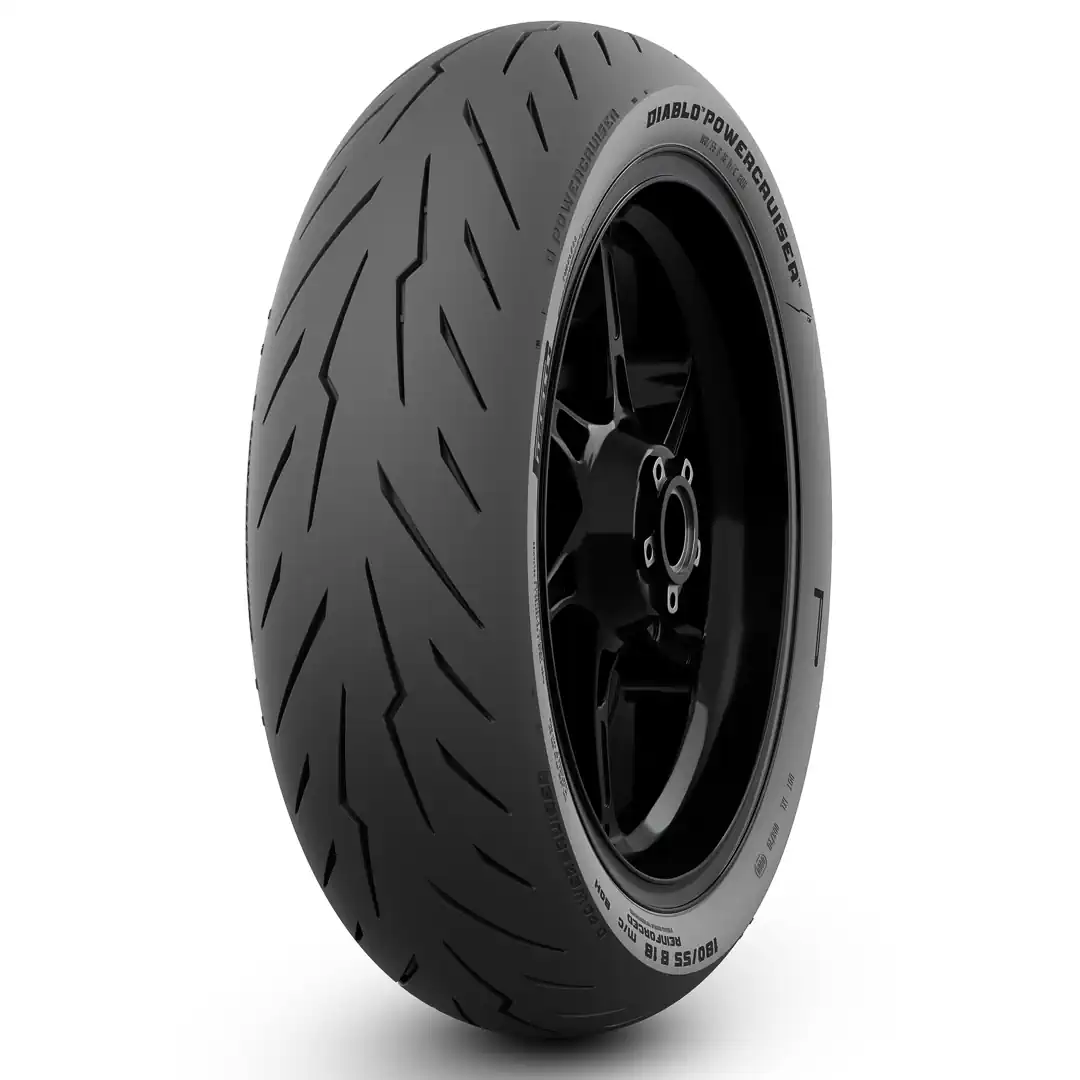
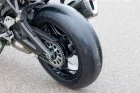
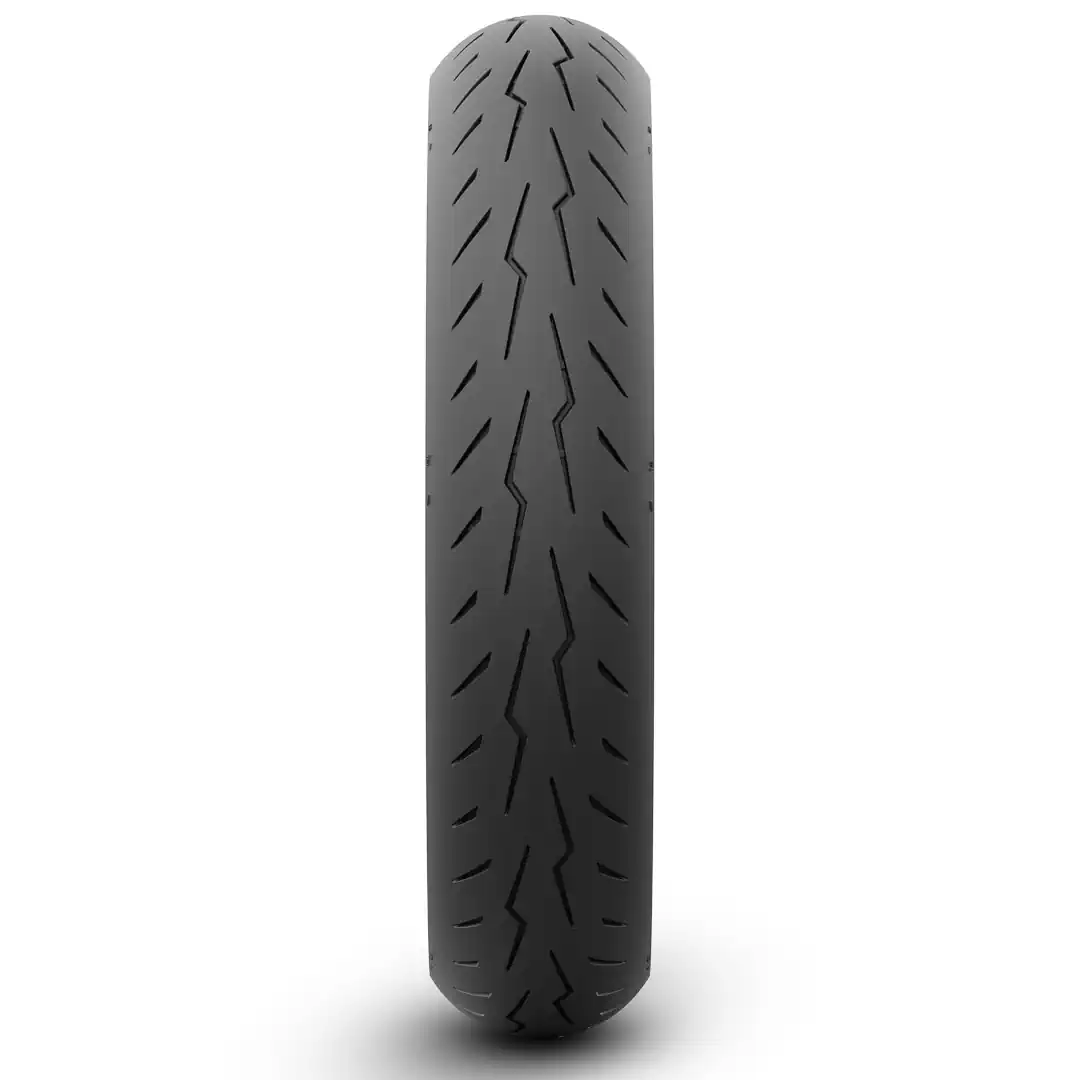
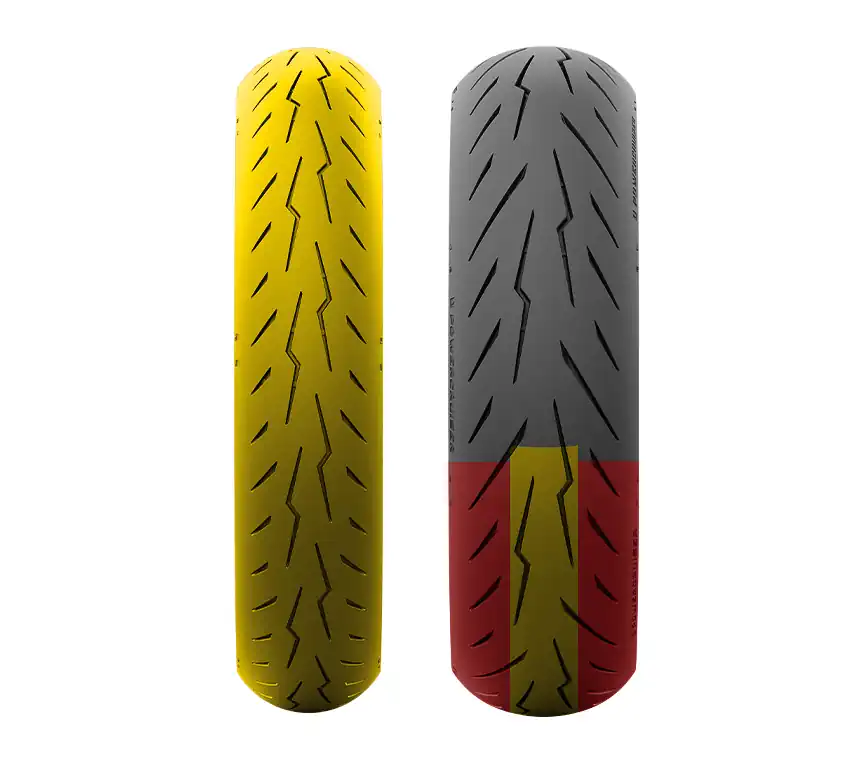
Pick up a Diablo Powercruiser, hold it next to its closest cruiser-market rivals, and the profile difference is seen plainly. The Powercruiser uses a noticeably more aggressive, steeper profile compared to the relatively flat, almost squared-off shapes that dominate this segment.
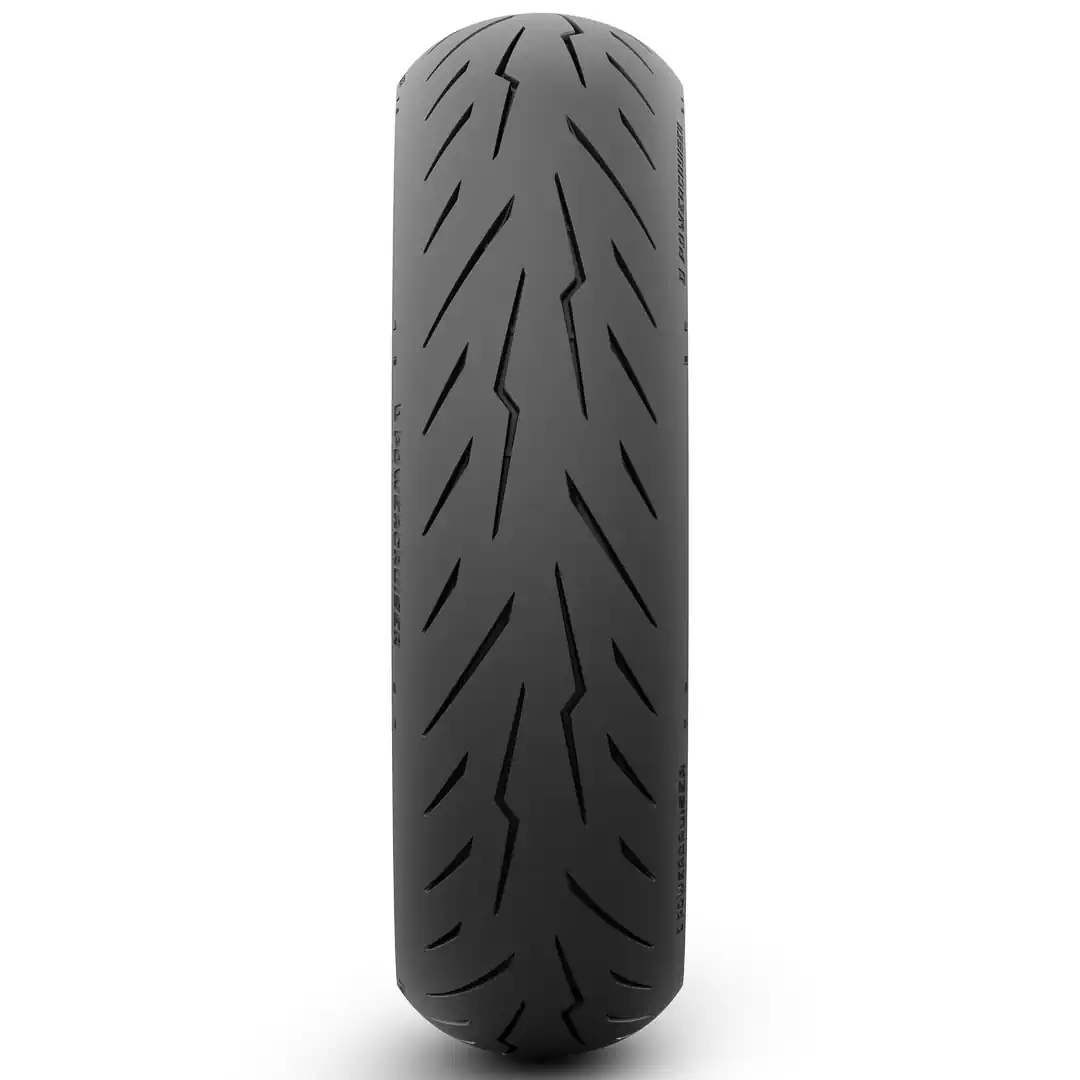
While that trait is most evident at the front, the rear is decidedly sportier than competitors that double down on stability with relatively flat designs. Baggers and cruisers are inherently stable thanks to their long, low-slung geometry, and Pirelli is moving in a more athletic direction. Even compared to the traditionally designed Night Dragon, the Powercruiser’s profile is more pointed at the center, transitioning to steeper shoulder sections, making it, in some ways, closer to a sport-touring tire.
The compound and construction strategies are where the Powercruiser departs most from its direct competition, simply because it isn’t taking a one-size-fits-all approach to engineering, and tire construction techniques vary by tire size. In effect, the brand wanted to help match your bike’s weight and handling requirements.
Here’s the breakdown: The front shares profiles across the board, though it is offered in radials with a zero-degree belt or bias-ply construction, depending on the size. Moving to the rear, we’ll find dual-compound radials featuring zero-degree belts alongside bias-ply variants. In addition, certain sizes may use cap-and-base technology, wherein a softer, grippier, silica-enriched outer “cap” compound wraps around a harder, more supportive “base” compound. Lastly, select rear tires combine conventional bias-ply construction and “mini sidewall,” meant to mimic stiffness properties above.
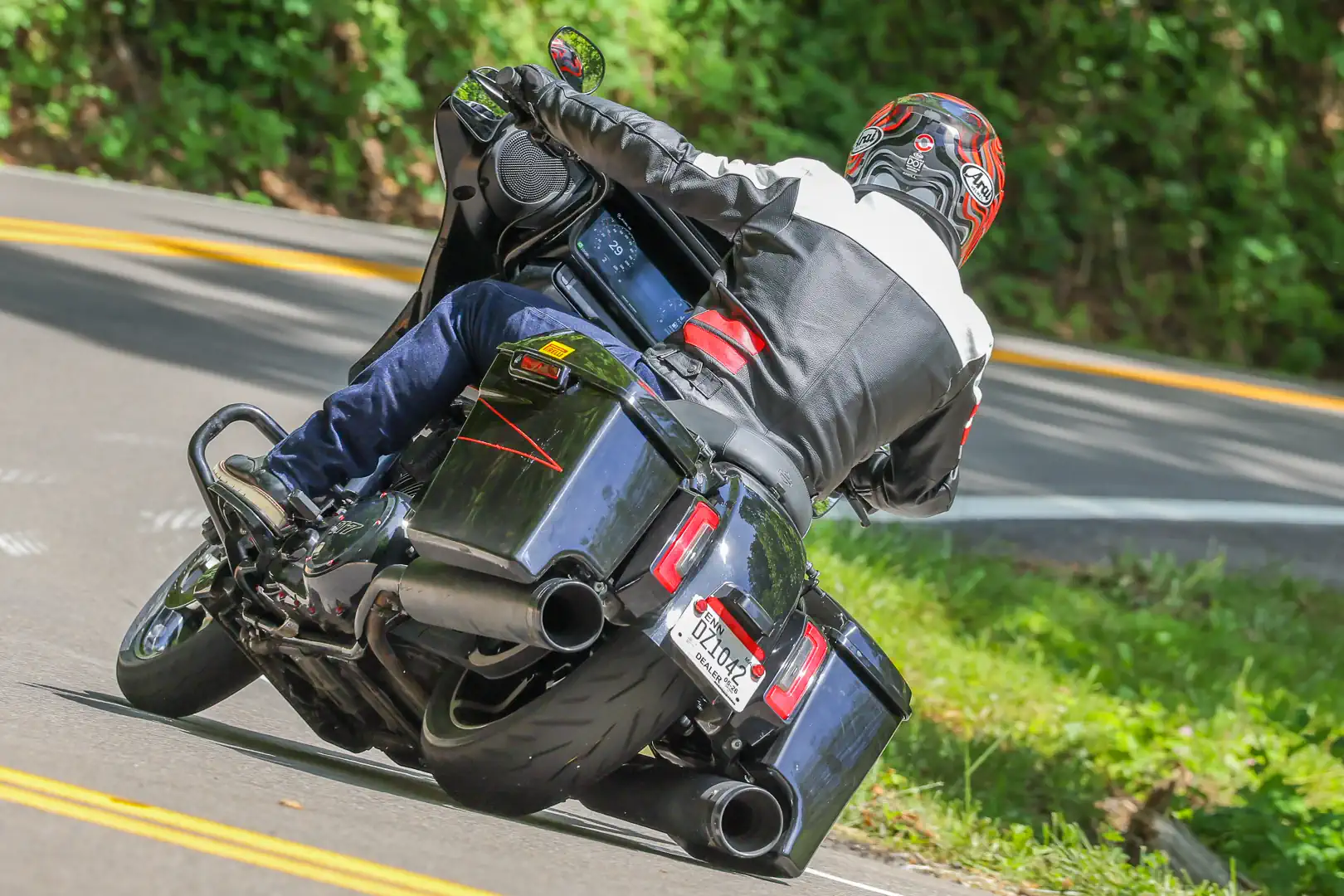
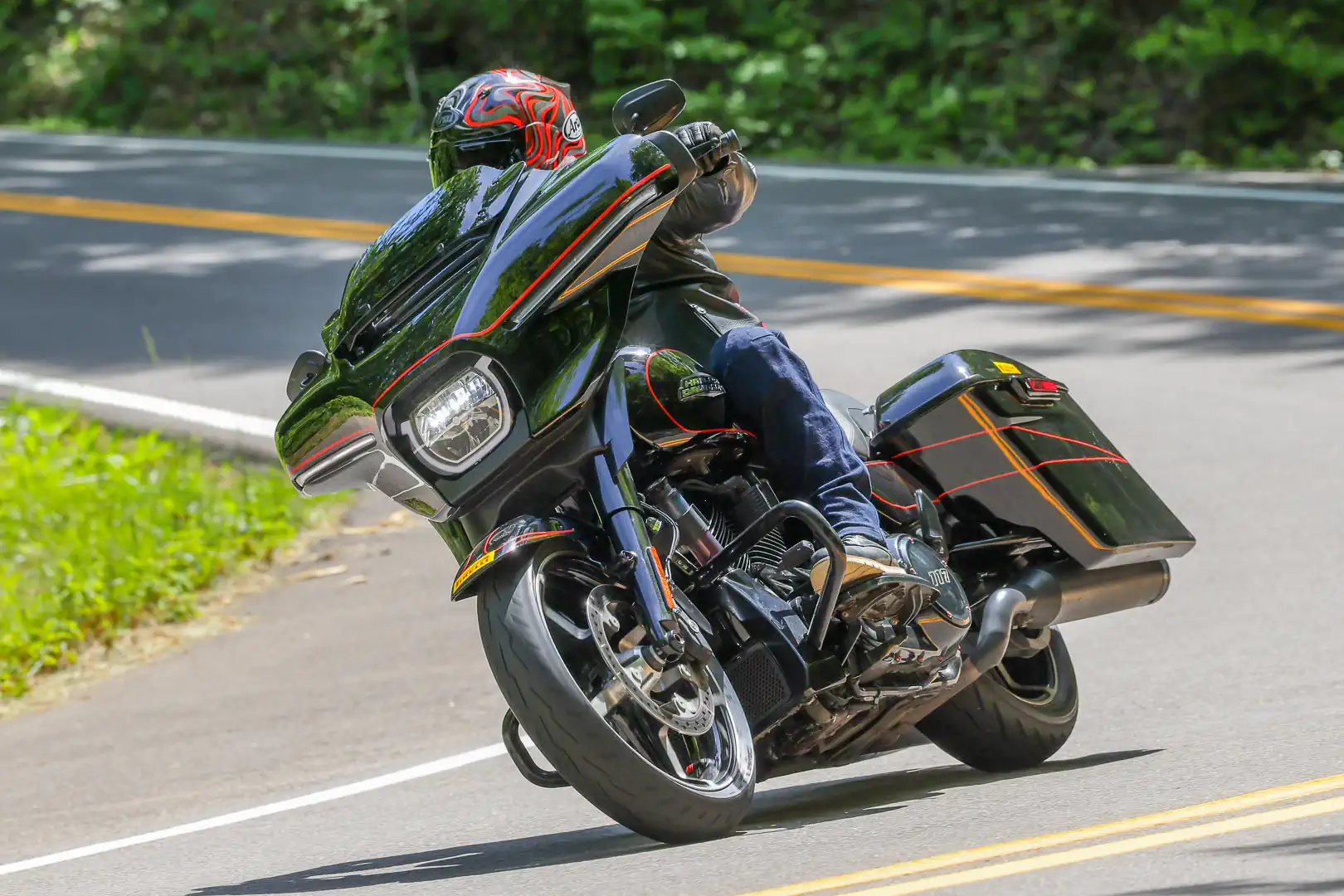
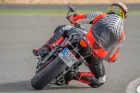
The H-D Street Glide uses bias-ply tires due to its weight, as does the Powercruiser when running the matching stock 130/60 B19 front and 180/55 B18 rear sizing. When leaned over, the Pirellis exude pure confidence, establishing an excellent foothold with a wide contact patch that doesn’t squirm or chatter, unlike the significantly stiffer competitors that can exhibit this while cornering. That higher grip level also makes the bike even more stable at corner entry, since both tires create positive traction. The SG holds its line with far better precision, encouraging higher lean angles. Bags were, in fact, draggin’ on the Dragon, folks.
Milan-based Pirelli is also drawing inspiration from the Diablo family, with a large, slick-tire shoulder zone for maximum rubber contact when cornering, considerably enhancing dry performance. The Milwaukee-Eight 117 is no slouch, producing 130 lb-ft of torque, and even with traction control disabled, the Street Glide feels completely planted thanks to loads of grip meeting the ground. On the practical side, the Central Flash lightning bolt tread pattern carries over from other Pirelli products, doing two things: promoting faster warm-up and water evacuation.
The Tail of the Dragon is one of the premier motorcycling roads in the United States, where its 318 curves demand your full attention. Aside from the improved edge grip and handling, what also stood out was the stability under braking when charging into one of the Dragon’s many dynamic turns.
A portion of the credit is owed to the more compliant carcass, which has paid off with improved ride quality and bump absorption. Taken together, a clear narrative forms: this is a new direction for the cruiser market, and one that offers immediate benefits on the big-inch heavyweights.
Staffers are quite transparent about what the Pirelli Diablo Powercruiser sets out to do and the compromises it must make to achieve it. When compared to its own Night Dragon, the brand openly admits sacrificing some mileage to take massive steps forward in dry performance, wet traction, comfort, handling, and stability.
Tire manufacturers are rightly tight-lipped when citing mileage, as it’s highly dependent on countless external factors, including tire pressure, motorcycle, road conditions, suspension, and riding style. Pirelli engineers were willing to cite that the Powercruiser only sacrifices roughly 10 percent peak mileage when compared to the Night Dragon. That’s a product known for racking up a decent run before hitting the wear indicators. If that’s all we’re giving up, then it’s more than a worthwhile trade for this kind of performance. Ultimately, we’ll need to get a set on review to answer mileage questions with any certainty.
The Pirelli Diablo Powercruiser makes a clear, reasoned argument for a different set of priorities in the cruiser segment. Mileage still matters, and Pirelli has not abandoned it. But the Powercruiser demonstrates that grip, handling, and rider confidence are equally legitimate things to engineer for, particularly as the bikes in this category continue their build toward genuine performance goals.
In our first segment this episode Don Williams takes us for a ride on arguably the most comfortable British take on the American cruiser: the Triumph Bonneville Speedmaster. It’s a superbly relaxed motorcycle in an equally relaxed state of tune, so while you shouldn’t be swayed by the “Speed” in its name, there’s a lot more to the Speedmaster than you might imagine.
* * * * *
Now here’s a really cool event you absolutely cannot miss—yes, we’re rapidly approaching the 34th Annual Biketoberfest Rally in Daytona Beach, sunny Florida.Biketoberfest this year runs October 15th through the 18th. Biketoberfest is all about the beautiful Florida weather, live music, the industry’s top vendors, bike shows, and motorcycle racing at Daytona International Speedway. And don’t forget, there are miles of spectacular rides along the famous A1A, the historic Main Street and the Ormond Beach Scenic Loop. There really is something for everyone here, and almost every event and attraction is free to attend. So, if you want a fun few days out in the Florida sunshine, Biketoberfest really is the place to be. Make sure you download the Biketoberfest mobile App from Apple or Google Play or visit www.biketoberfest.orgfor more details.
* * * * *
In our second segment this episode Teejay Adams catches up with World Cup Bagger racer, Archie McDonald who first came on this podcast last December. Whether you’ve watched any of the World Bagger Cup racing or not, you’ve likely heard of it. Despite a lot of initial skepticism, the Harley-Davidson Bagger World Cup really seems to have captured the racing public’s imagination. The Championship is now being led by Archie, and despite never having seen most of the tracks before, that he’s beating several very experienced and highly talented competitors, shows what an amazing talent he is. Archie is also extremely mature for his just 19-years of age, and sadly, in the last few months he’s had to grow up even faster after his older brother Toby took his own life in April. Archie brings us up to date with his racing for the Joe Rascal team, and he speaks candidly with Teejay about his brother and how Toby’s passing has affected him.
Fair warning: if you’re sensitive to this topic please be careful listening to this segment, and if you or someone you know is struggling with mental health, know that support is available. In the U.S., you can call or text 988 to reach the Suicide & Crisis Lifeline. In Australia, you can contact Lifeline at 13 11 14.
Here’s quick reminder to check out our monthly digital magazine. It’s filled with everything you want to read on motorcycling, including some things you’ve probably not seen elsewhere. It’s absolutely free and you will find it on the Apple App Store and of course on Google Play as well.
Don’t forget to leave us your comments on our social media—we’re on all the usual platforms at Ultimate Motorcycling. We love hearing your feedback… so good or bad, please let us know what you think. If there’s something you’d like us to cover, we’d love to hear those ideas too!
We use cookies and browser activity on this website
Functional
Always active
The technical storage or access is strictly necessary for the legitimate purpose of enabling the use of a specific service explicitly requested by the subscriber or user, or for the sole purpose of carrying out the transmission of a communication over an electronic communications network.
Preferences
The technical storage or access is necessary for the legitimate purpose of storing preferences that are not requested by the subscriber or user.
Statistics
The technical storage or access that is used exclusively for statistical purposes.The technical storage or access that is used exclusively for anonymous statistical purposes. Without a subpoena, voluntary compliance on the part of your Internet Service Provider, or additional records from a third party, information stored or retrieved for this purpose alone cannot usually be used to identify you.
Marketing
The technical storage or access is required to create user profiles to send advertising, or to track the user on a website or across several websites for similar marketing purposes.


 Pirtelli Diablo Powercruiser Tires Review Photo Gallery