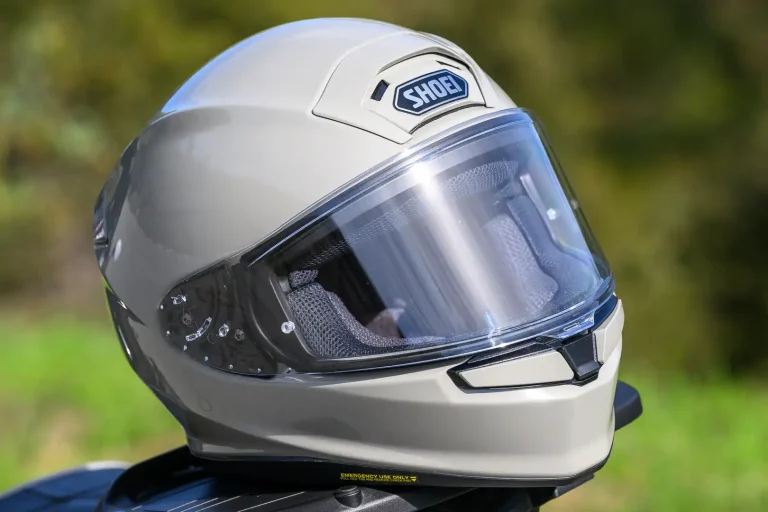
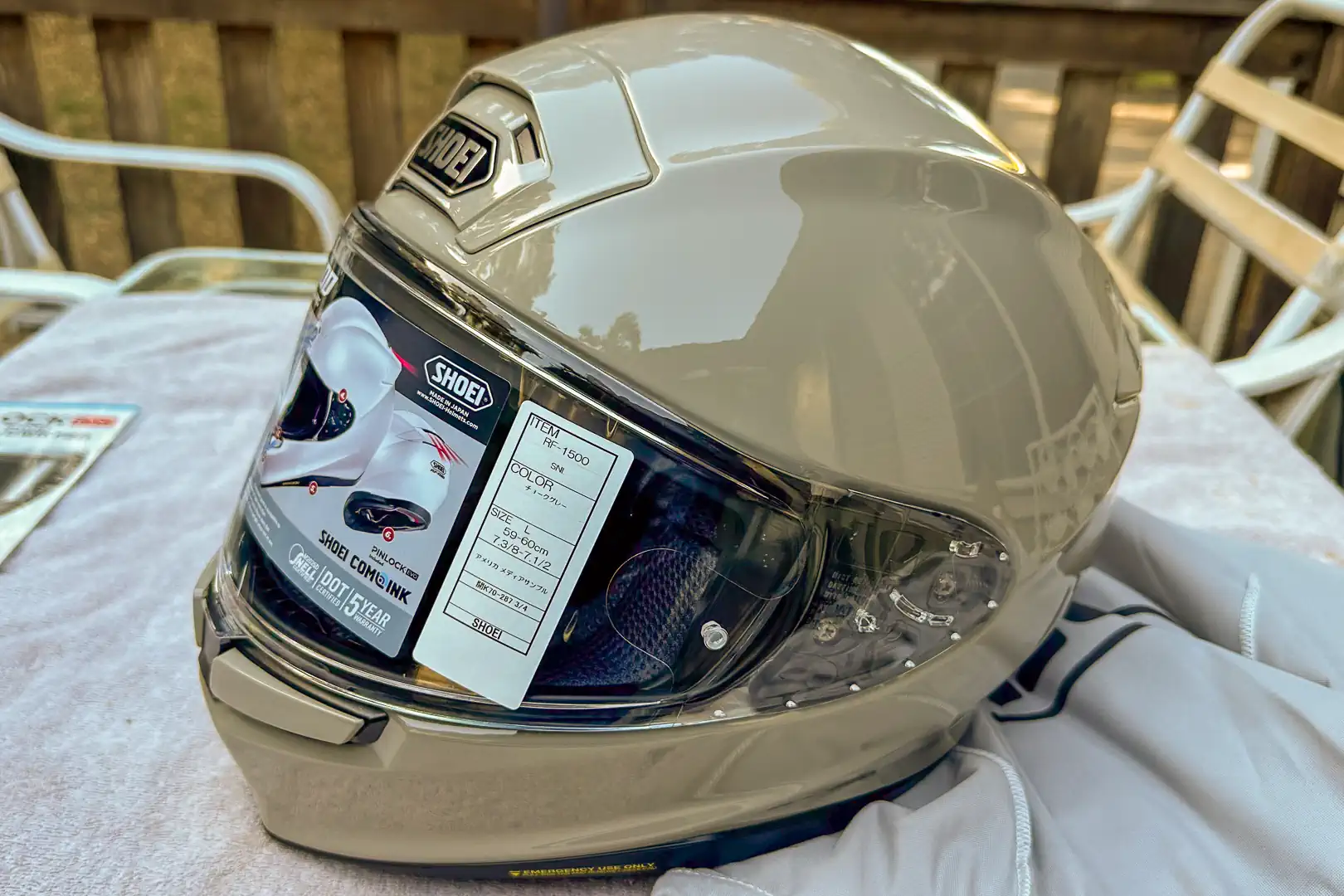
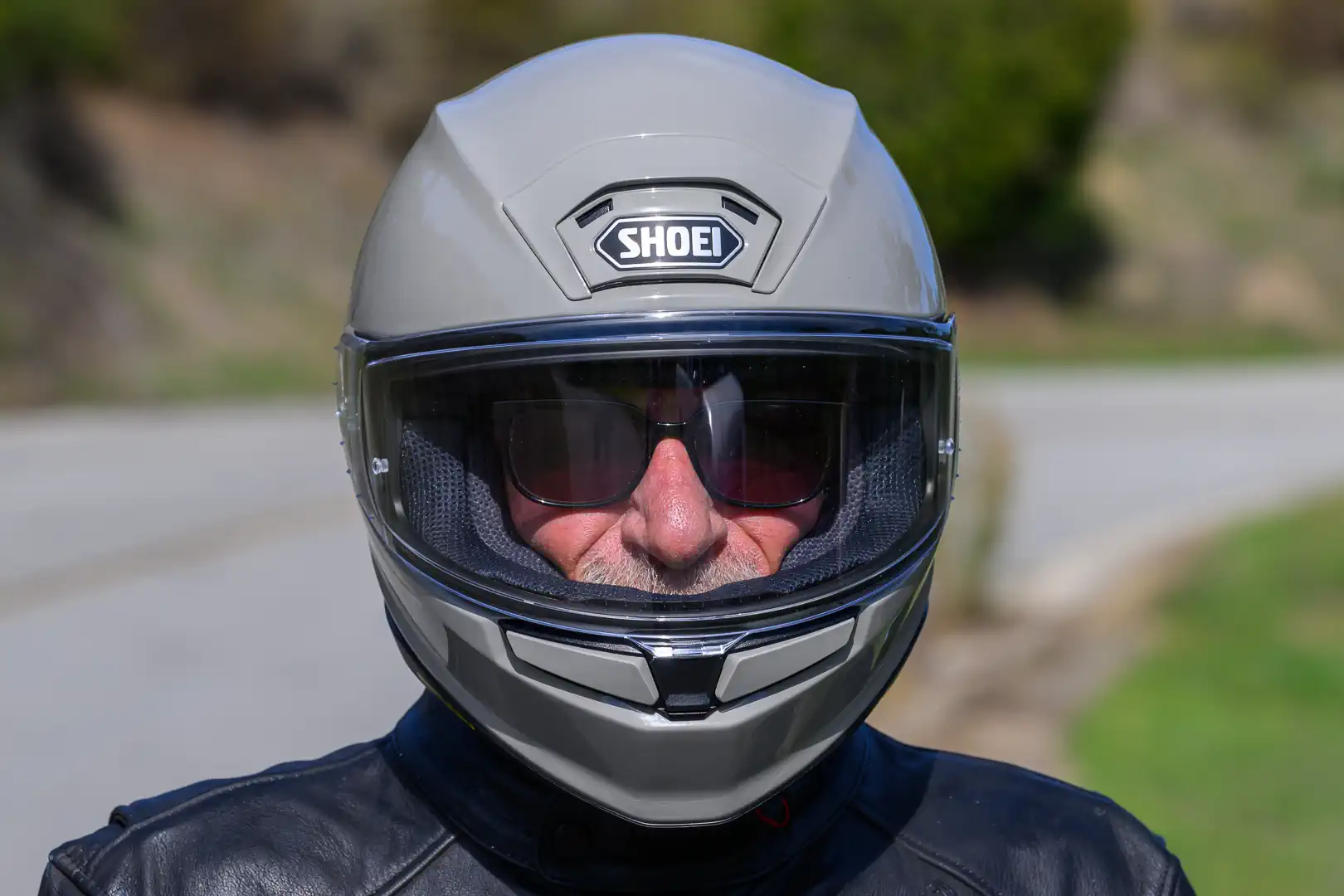
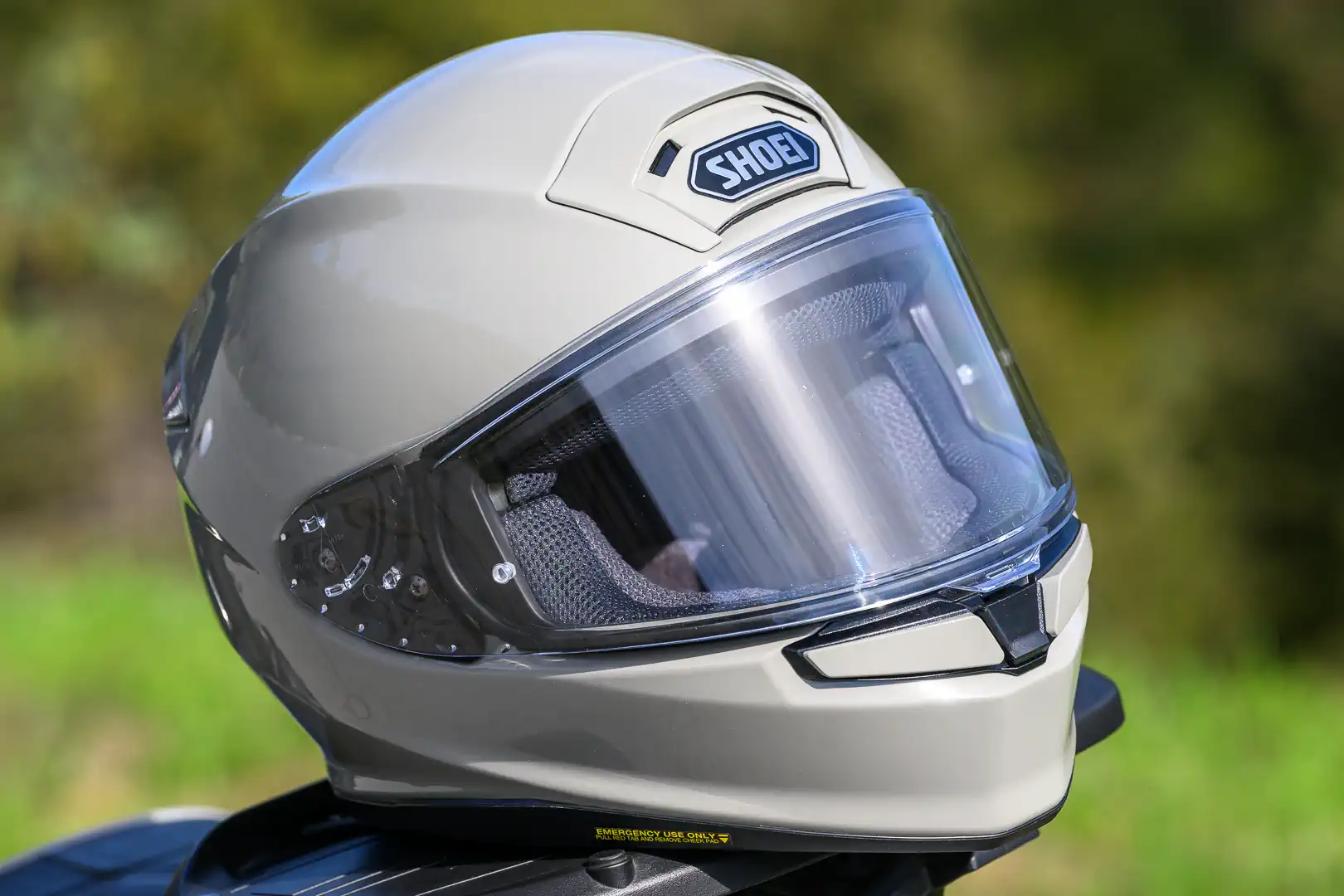
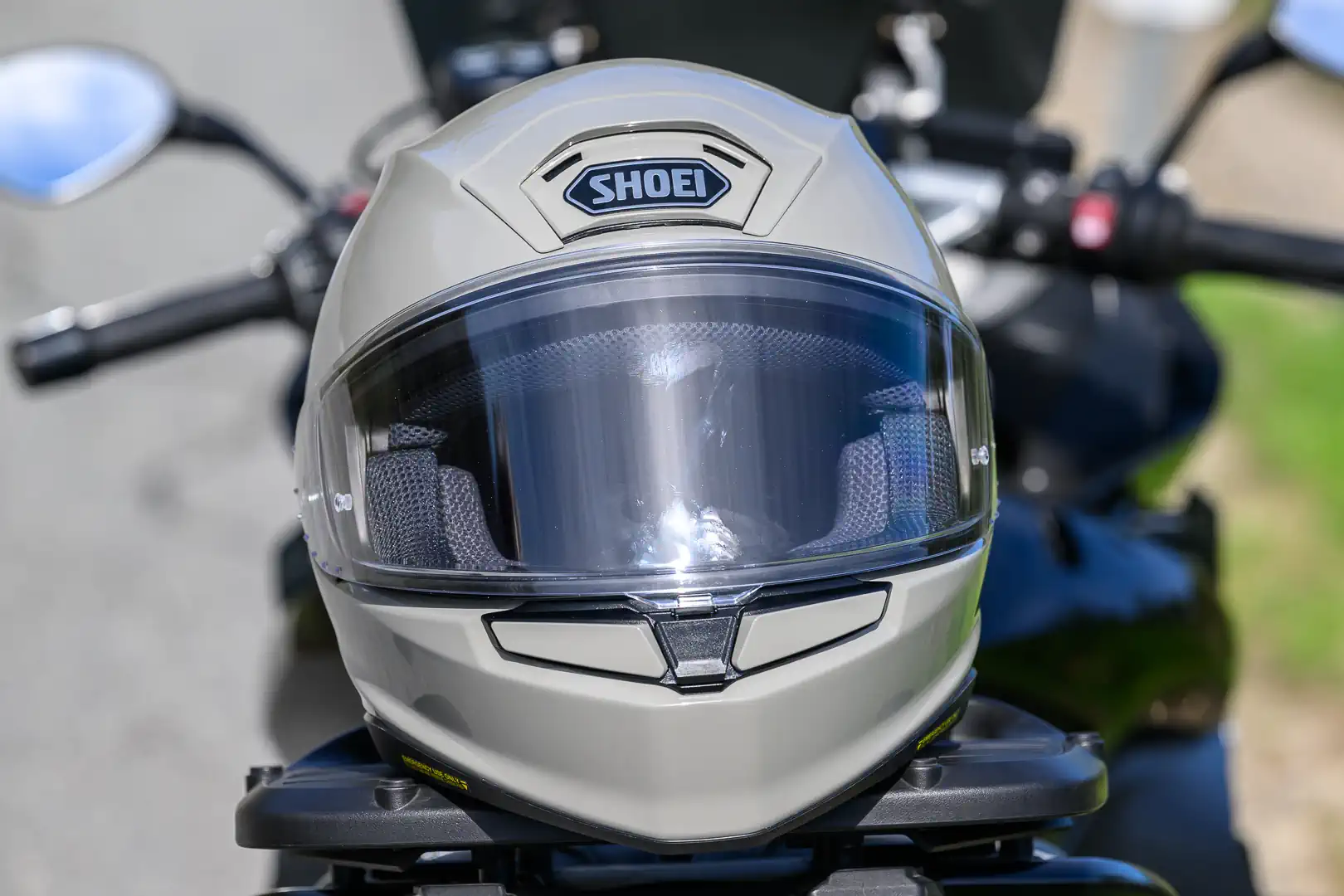
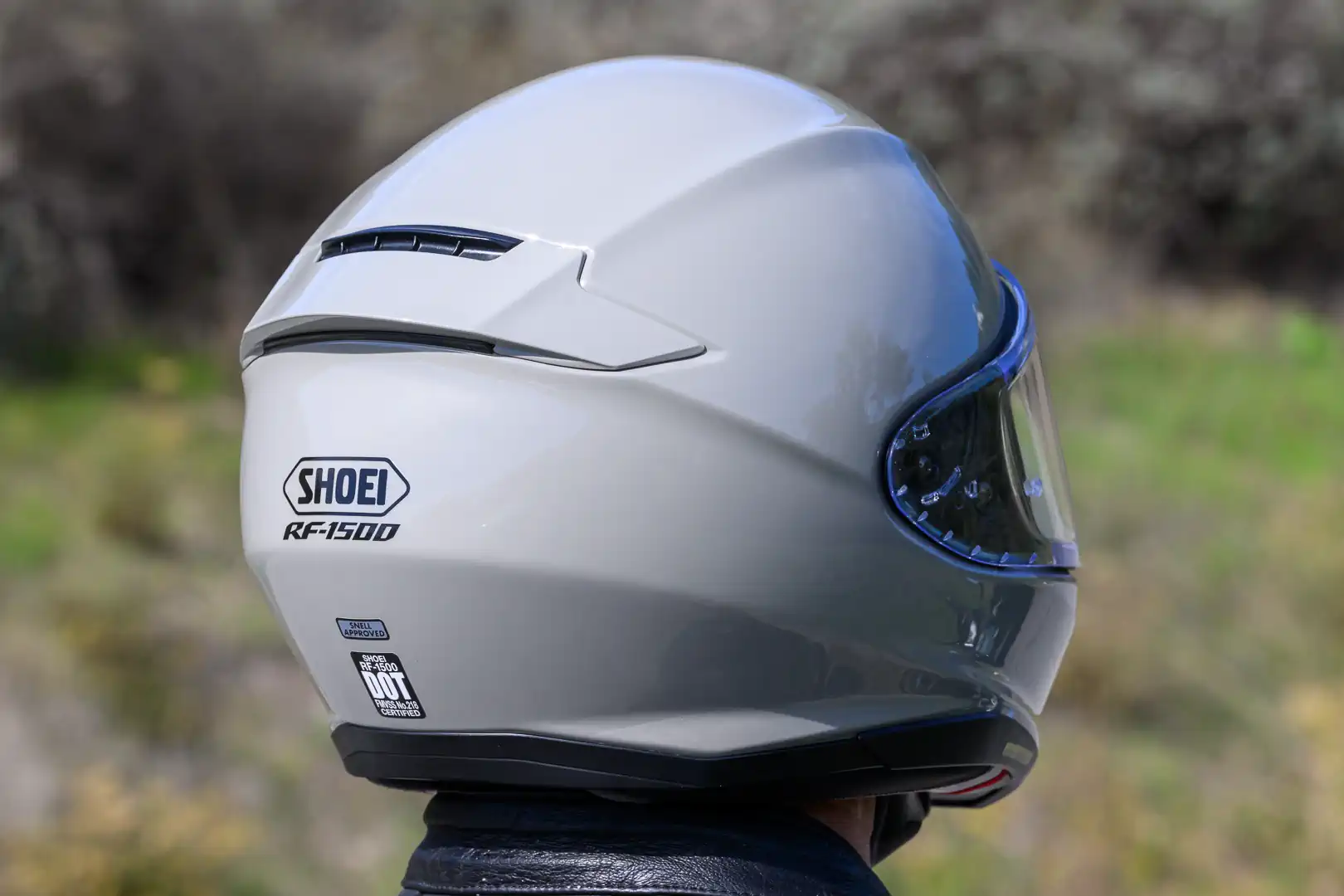
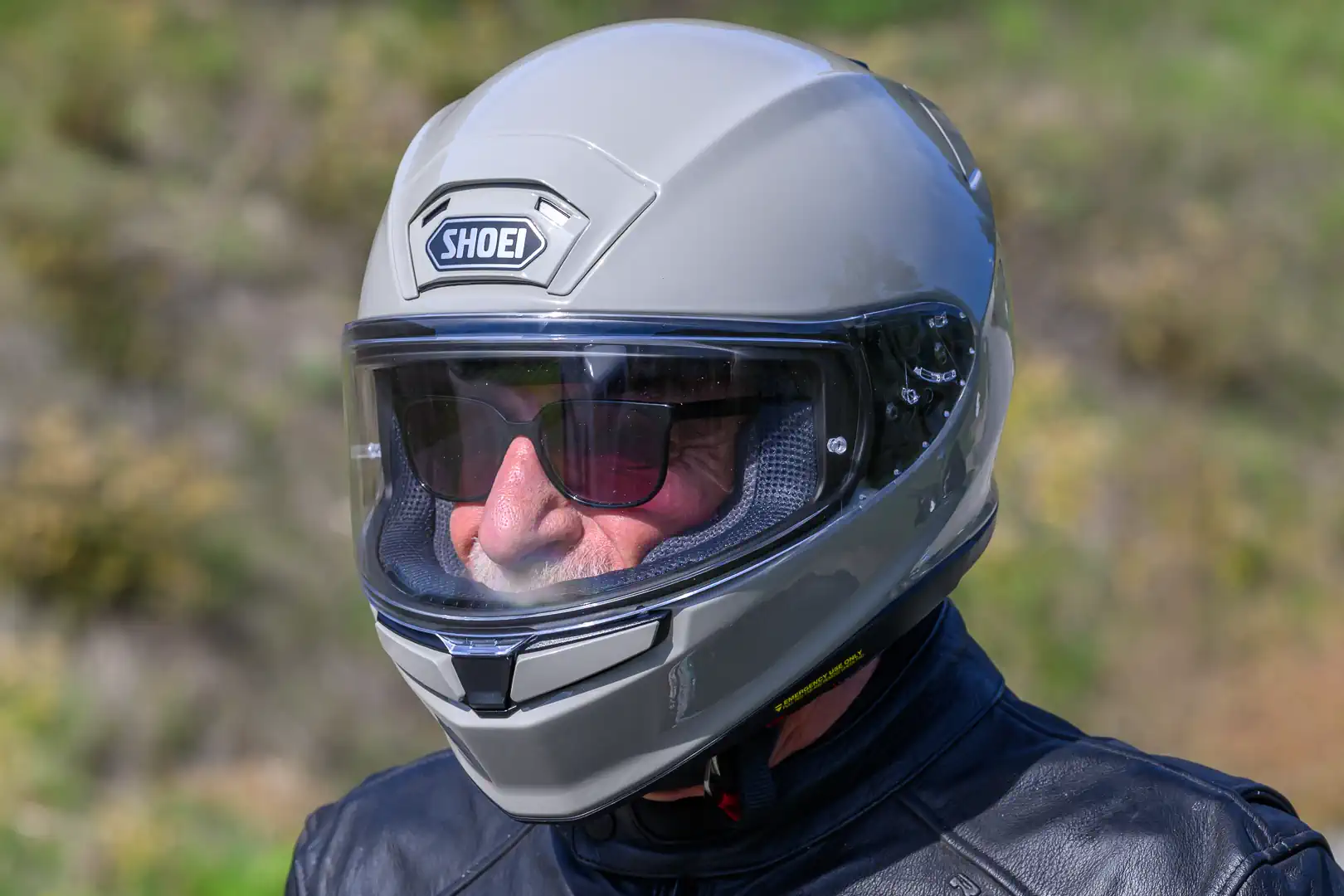
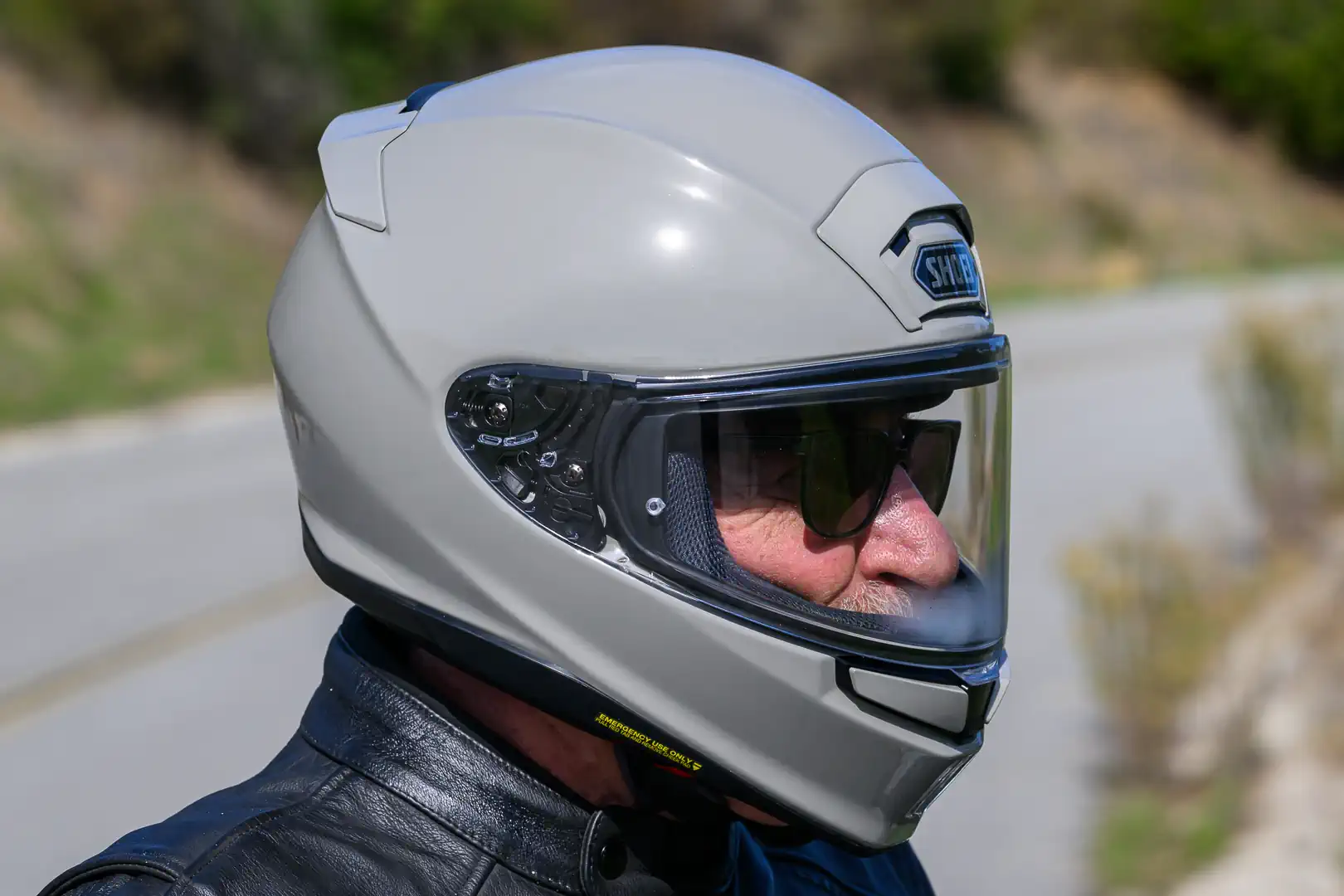
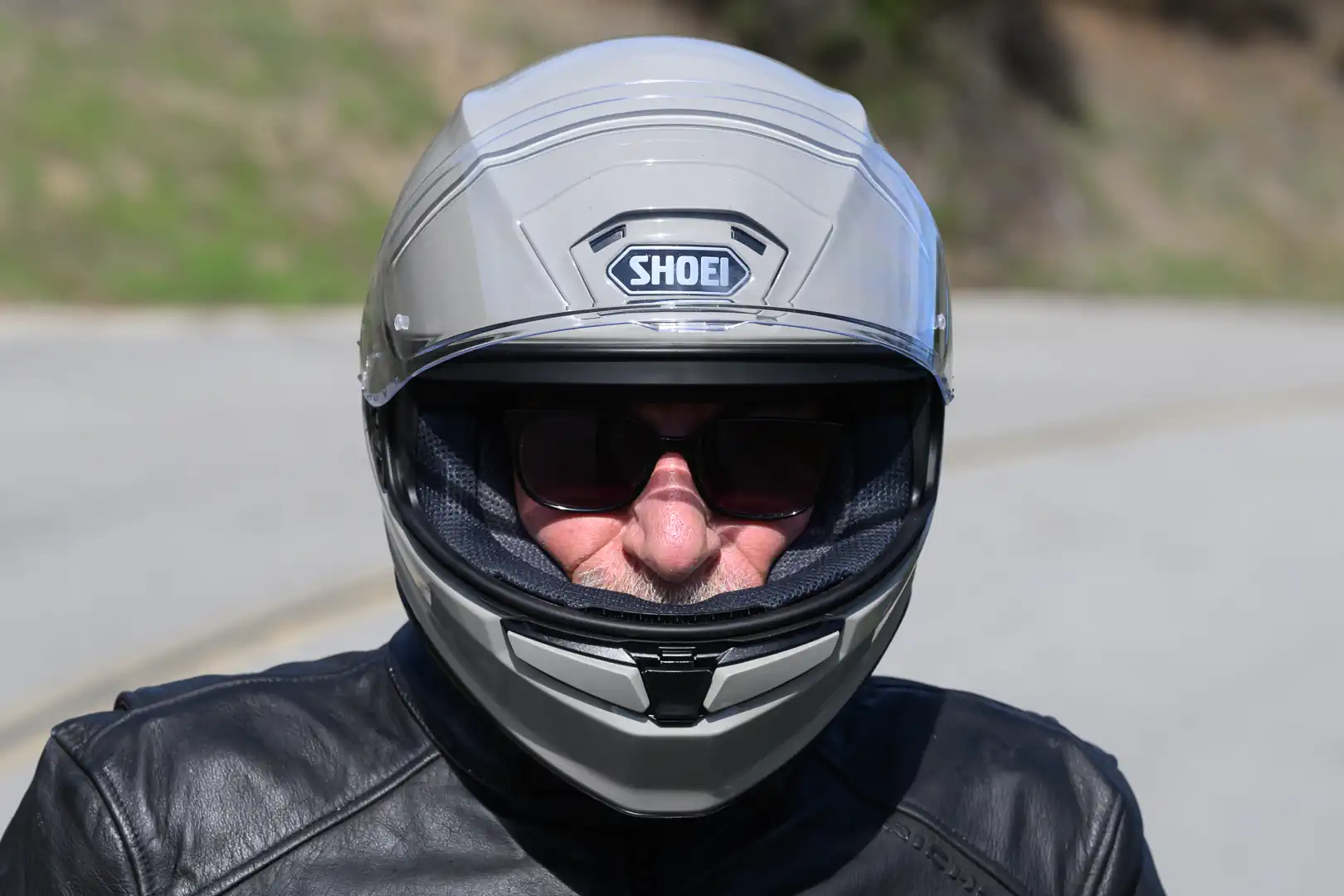
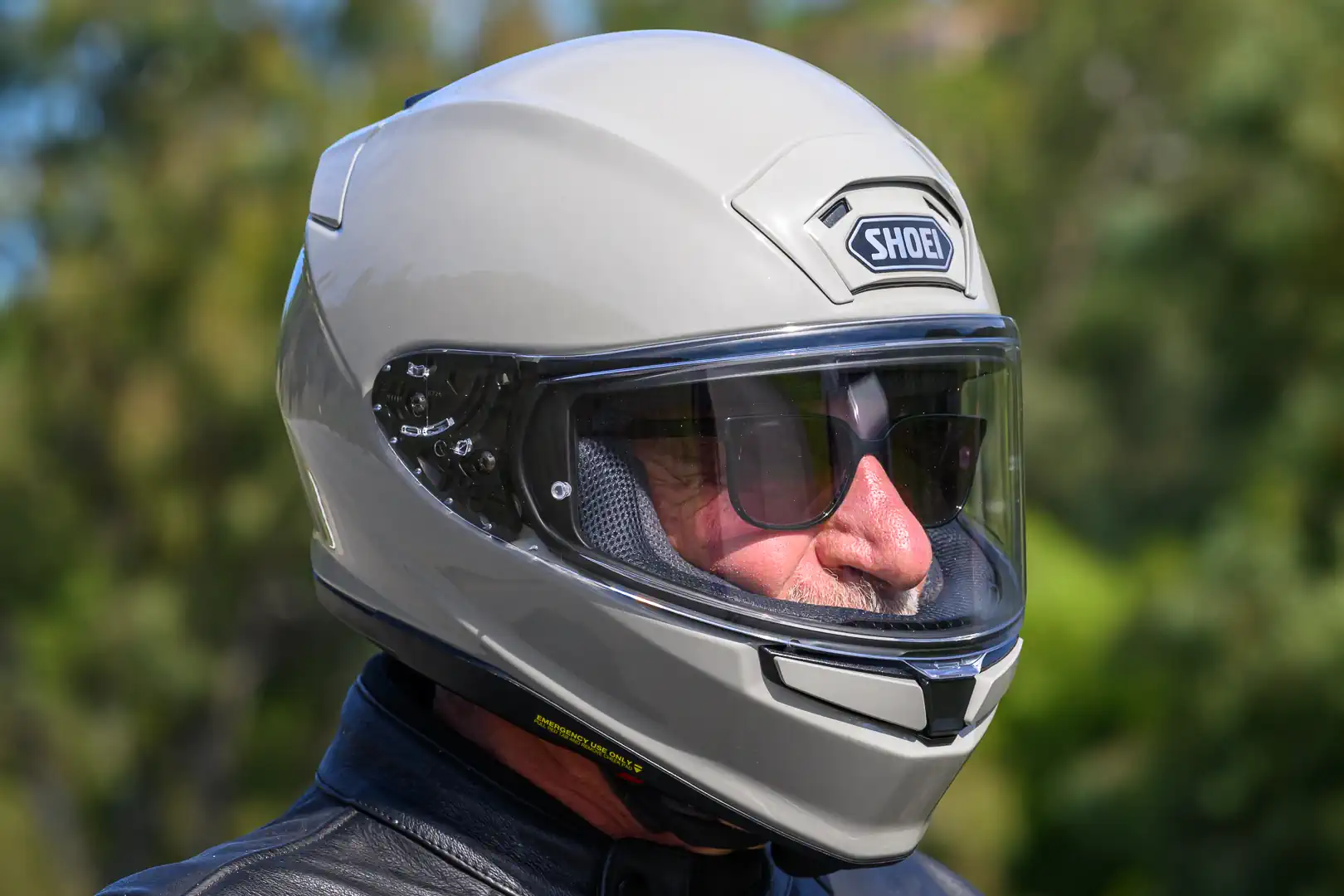
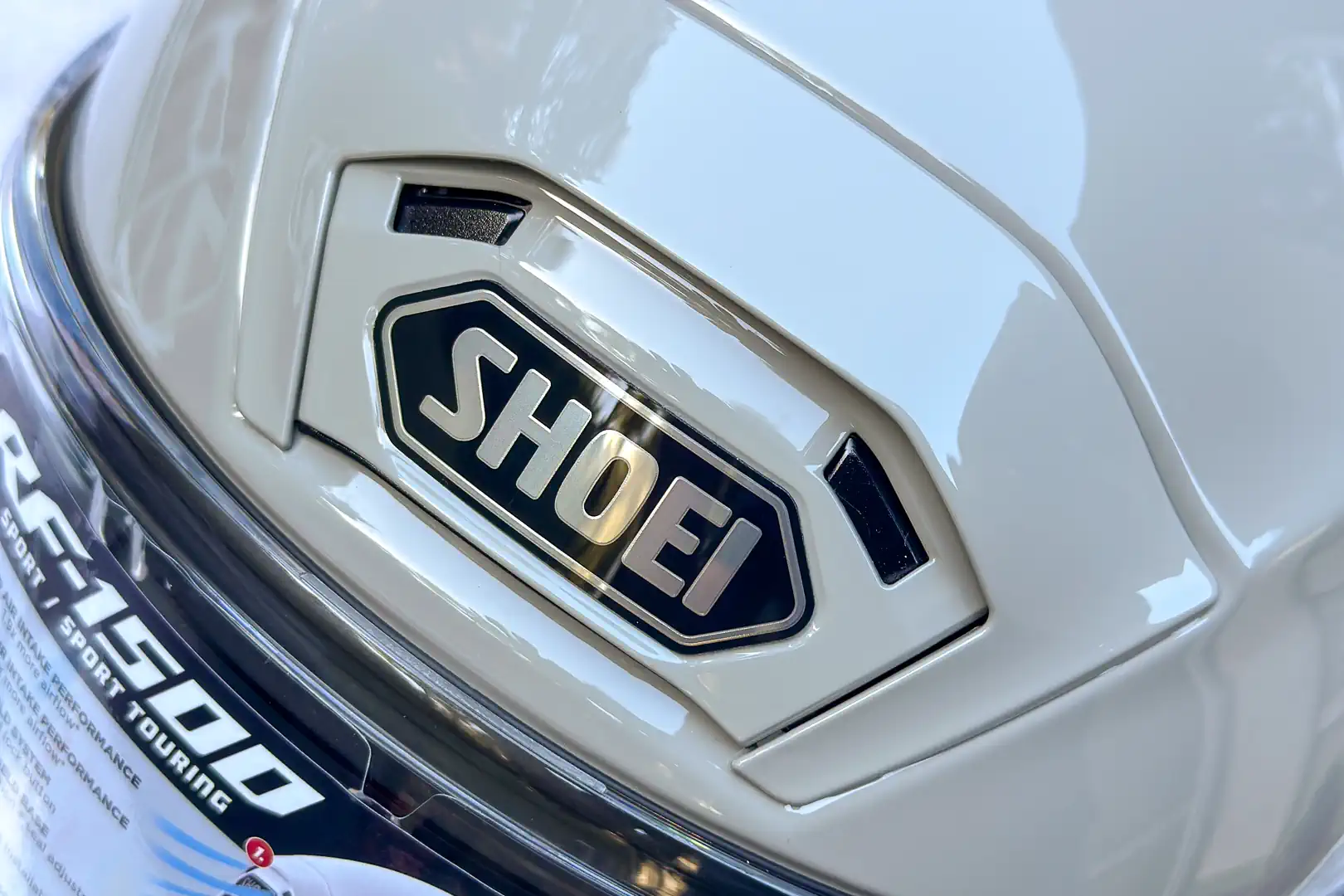
Upon unboxing the brand-new handcrafted Shoei RF-1500, it is obvious that the construction, finish details, and quality are excellent and typical of all the Shoei helmets I’ve seen over the years. The change to the overall design compared to the RF-1400 is immediately apparent. Let’s see if the difference is just skin deep, and go riding.
The RF-1400’s five-year run is a testament to the design, quality, and general acceptance of that helmet by riders and fans of the RF series. Shoei introduced the RF-101 in 1984, followed by a string of three-digit RF models before the RF-1000 in 2004, the RF-1100 in 2010, the RF-1200 in 2014, and then the RF-1400 in 2021. Over 40 years of refinement went into the RF-1500, and it shows.
Shoei claims it takes 65 workers, 26 steps, 5 layers of paint, and 11 inspections to put this helmet into my hands for its mission: street, touring, and sport riding. The RF-1500’s shell is comprised of six layers of fiberglass and organic fibers with a multi-density EPS liner comprised of different impact-absorbing sections, much like the outgoing RF-1400 model. Shoei says it increased shell thickness and updated the EPS construction in key areas, and a multi-faceted chinbar design with no lower shell cut lines adds chinbar strength. With all the layers and whatnot, the RF-1500 still weighs in at a competitive 3 pounds 13.5 ounces, or 1750 grams, on the Ultimate Motorcycling Official Postal Scale (L size).
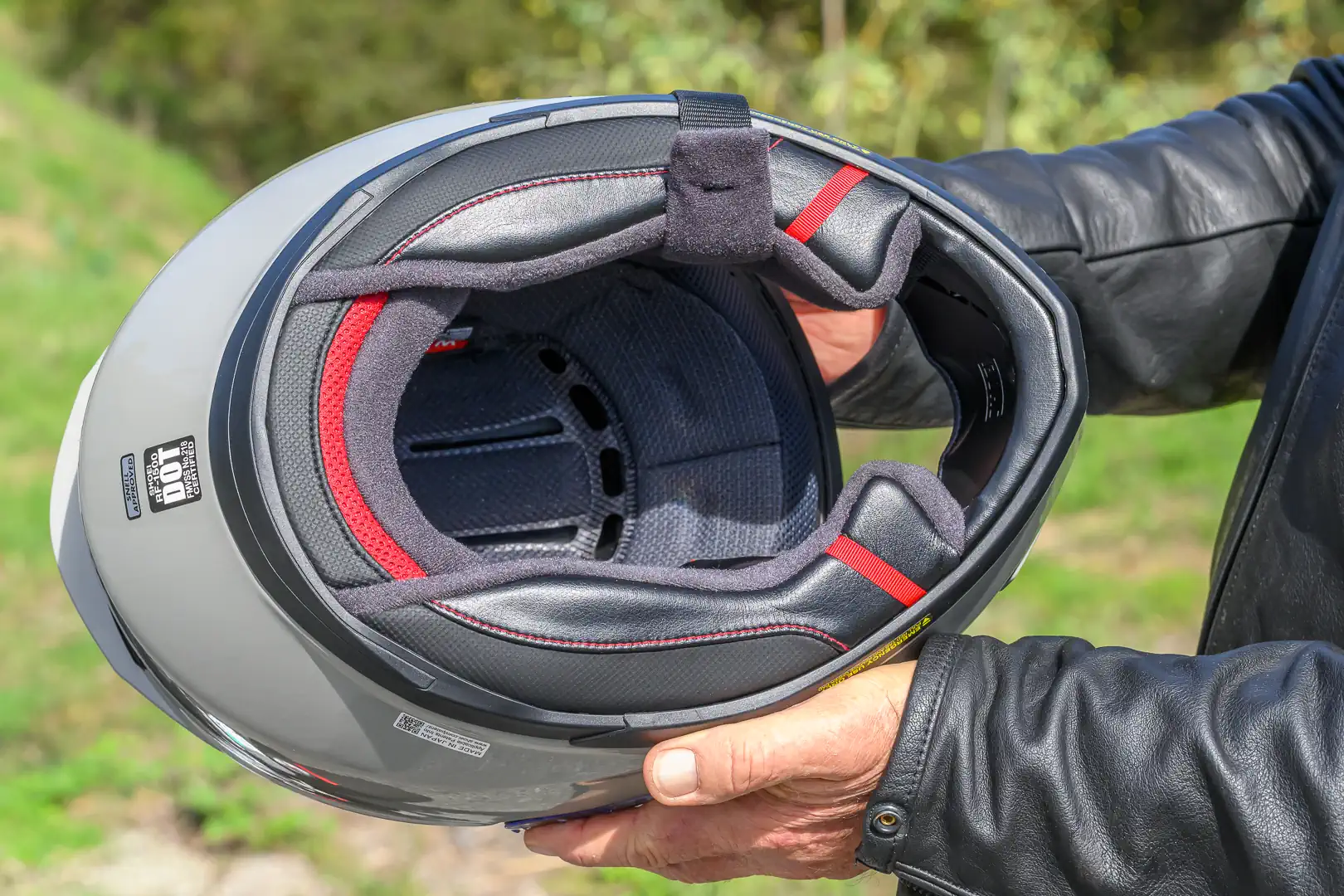
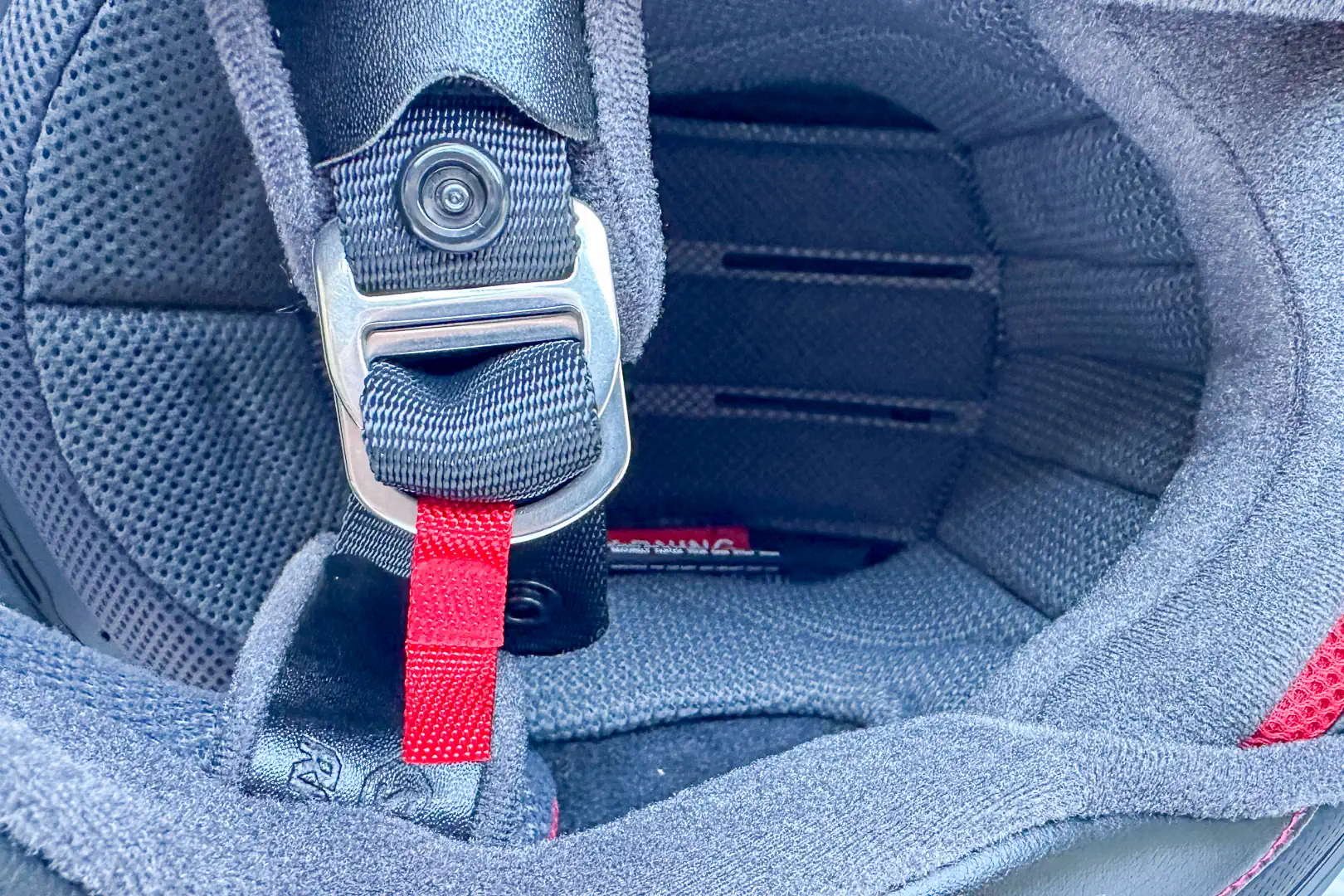
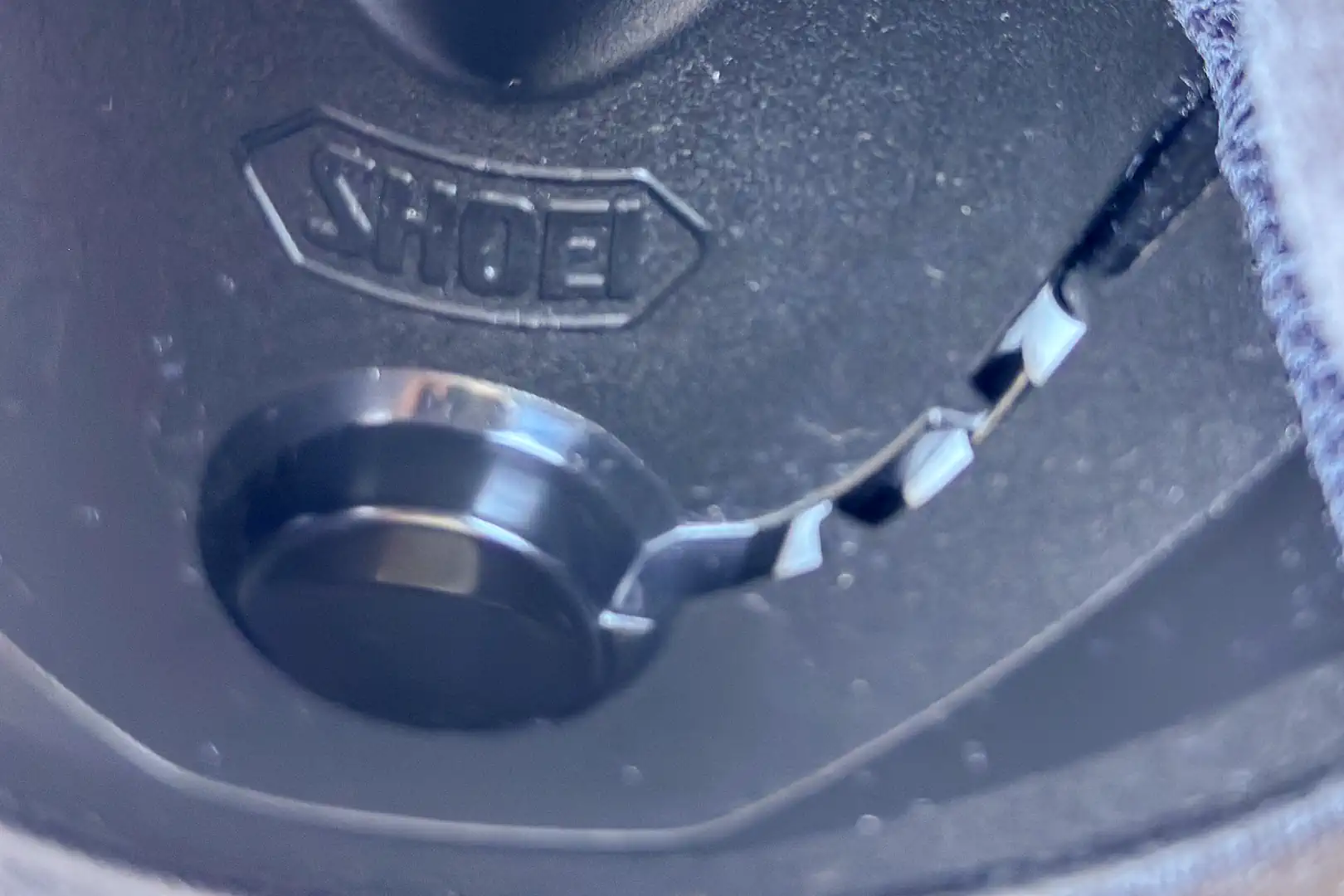
A peek inside reveals the same basic setup we’ve seen in recent years and the same construction, such as the configuration of the cheek pads, chin strap, and padding. The lining that goes over the top of the head and down the sides appears to be the same fabric as in Shoei’s Neotec 3 modular helmet. However, this corduroy-like material now extends around the circumference of the head, replacing the earlier smooth fabric and is likely to aid air circulation and comfort.
Shoei RF-1500 Styling, Vents, and Wind Noise
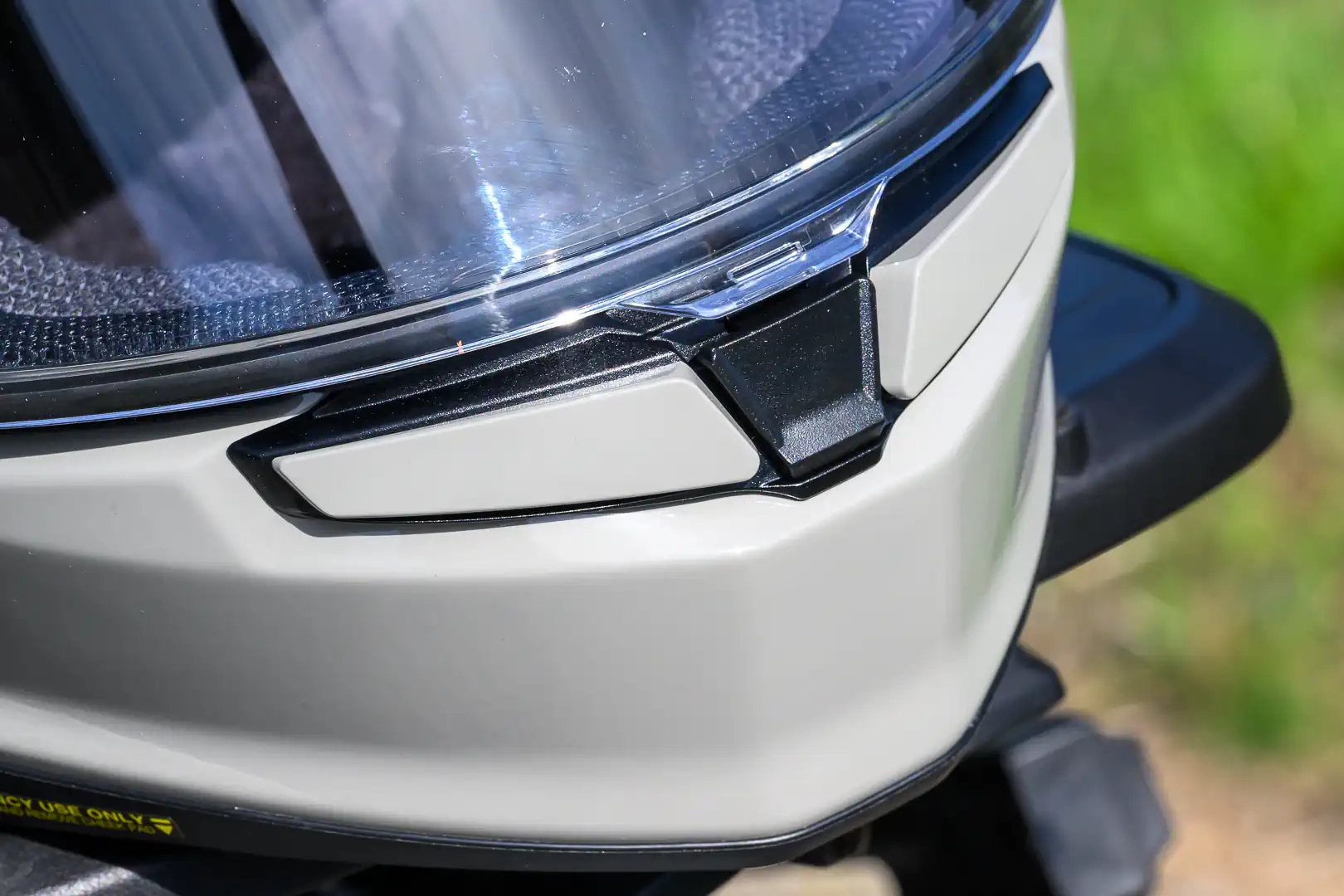
The new design of the helmet is flowing and smooth. I am attracted to the look, starting with the two chin vents that are wing-shaped and similar to those on the RF-1400 I reviewed in 2021.
However, now these two vents tilt open from the top rather than the typical slide-to-open. They are positioned on both sides of the faceshield lock release button, which looks similar to those on the RF-1400. Their lines or creases (Shoei calls them “rib lines”) flow into a flat area below them, then run around both sides in gentle compound curves toward the rear of the helmet. When opening and closing them at highway speeds, I sense they create a slight extra bit of noise. I am being a bit nitpicky here, as many helmets generate sound from this area.
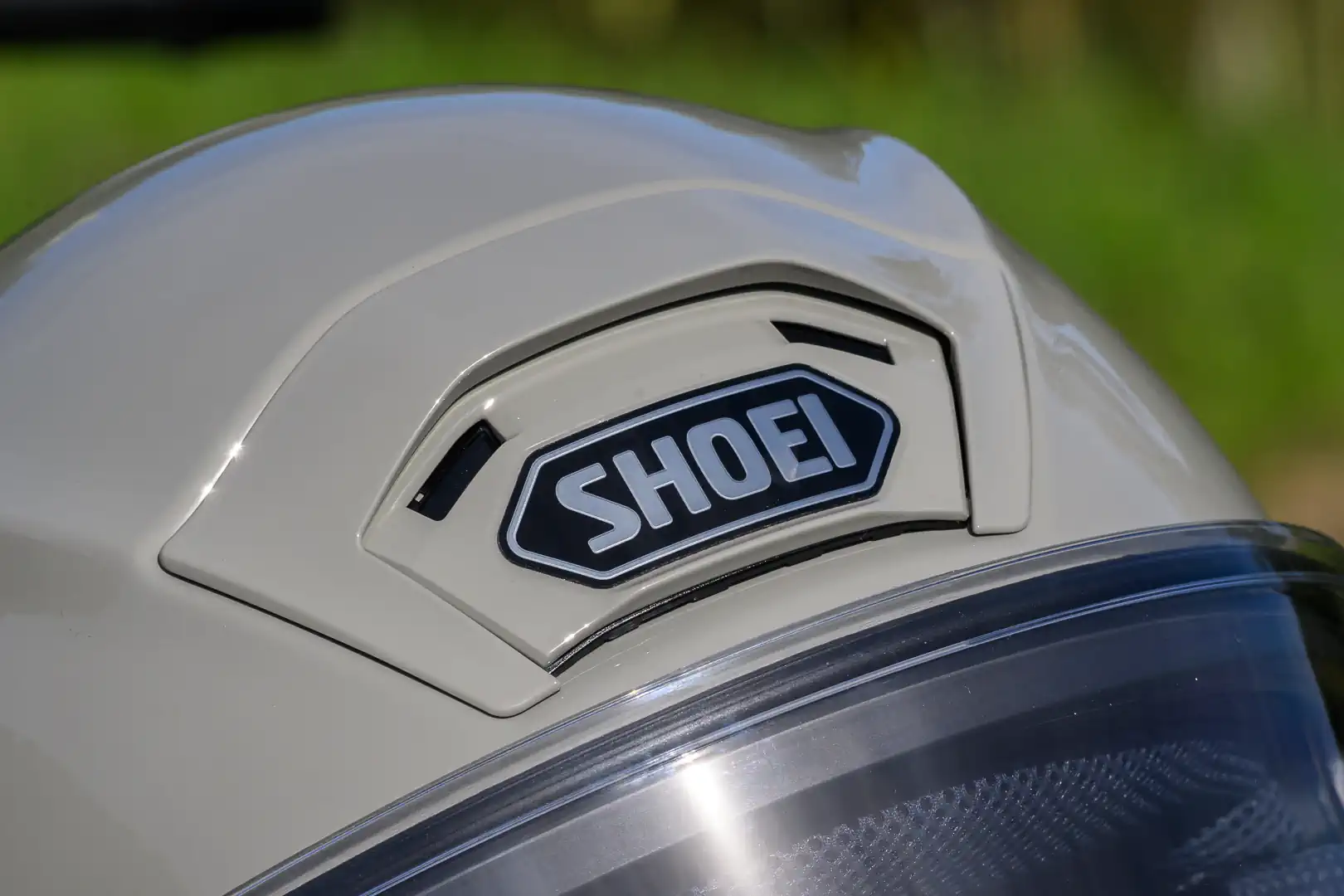
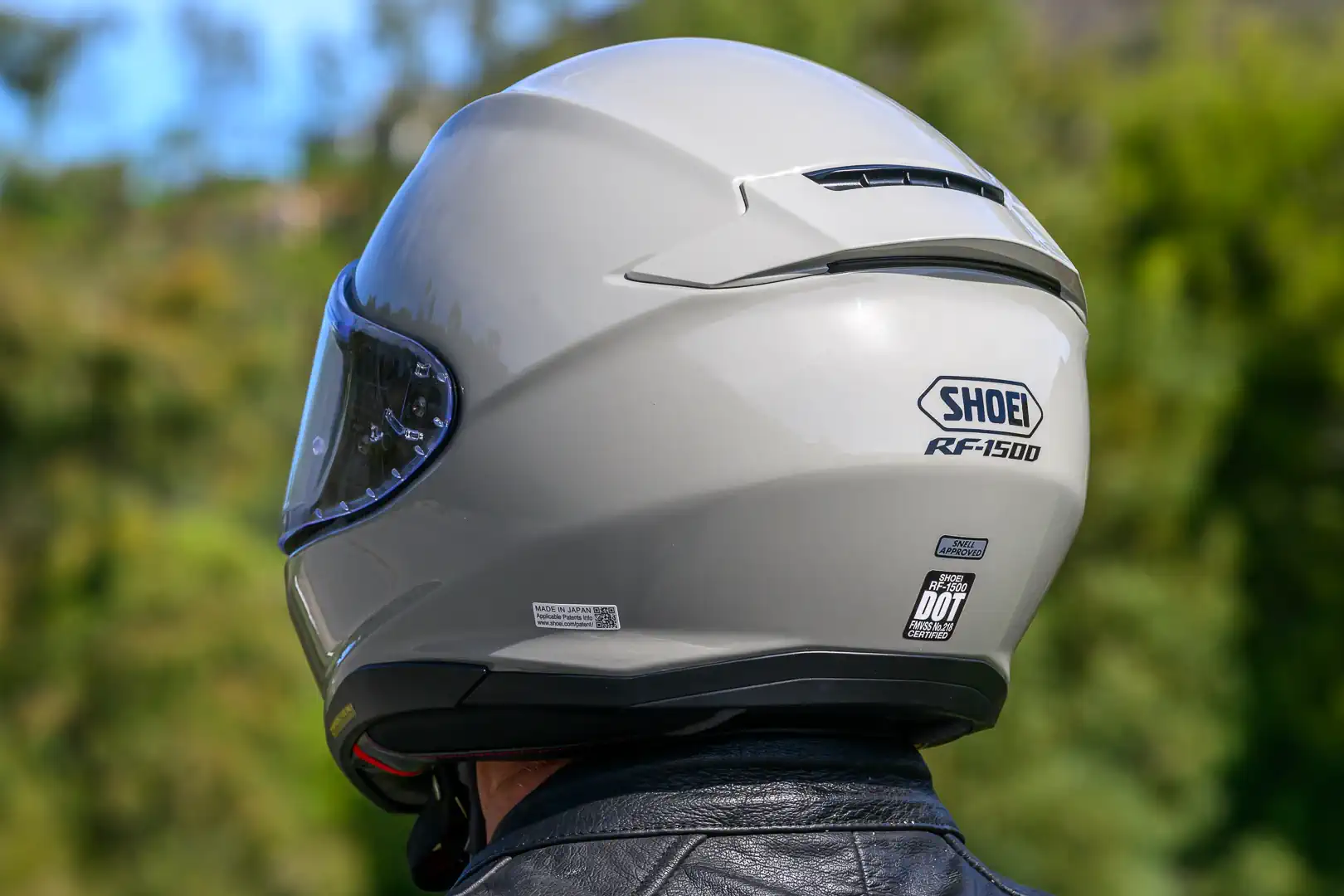
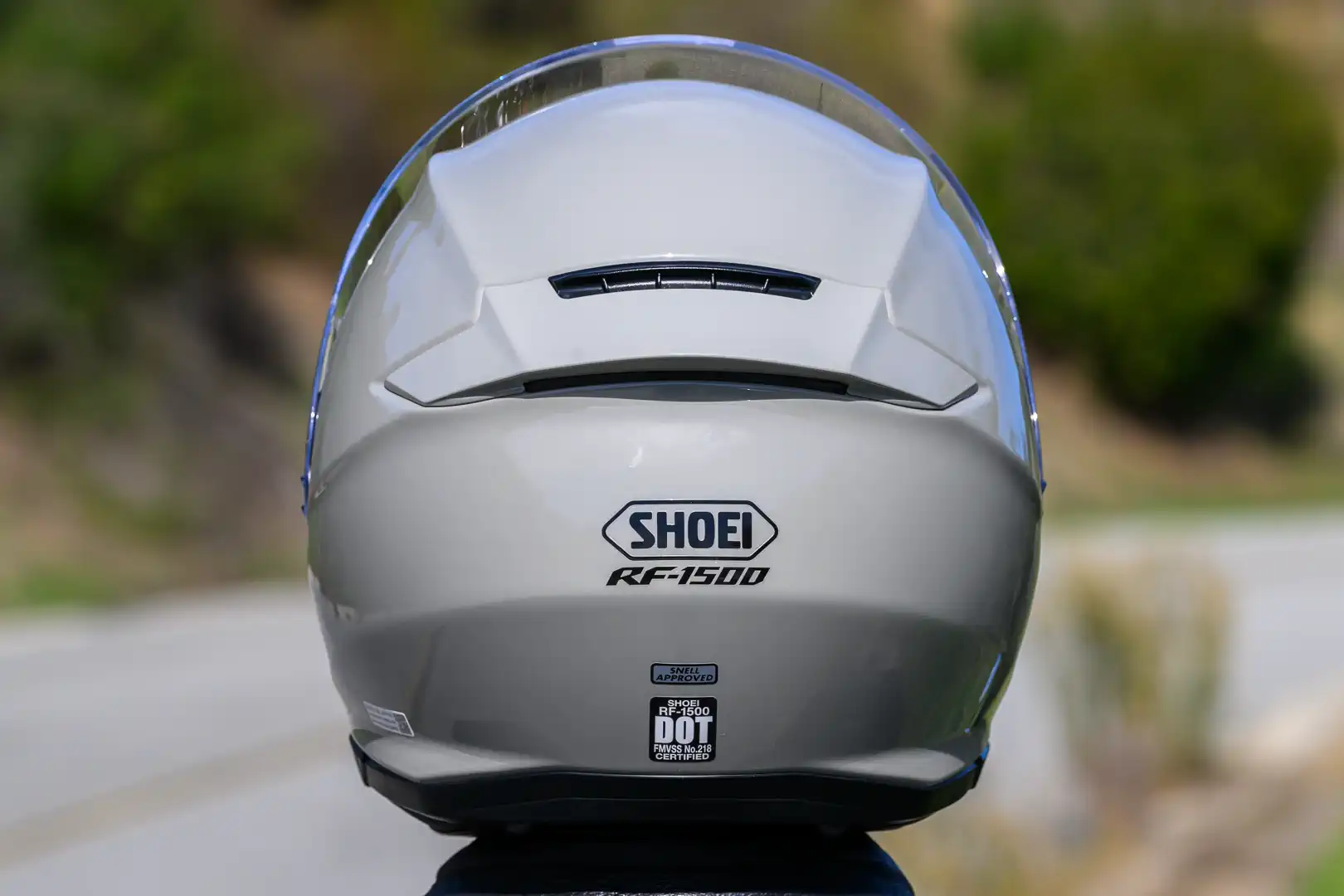
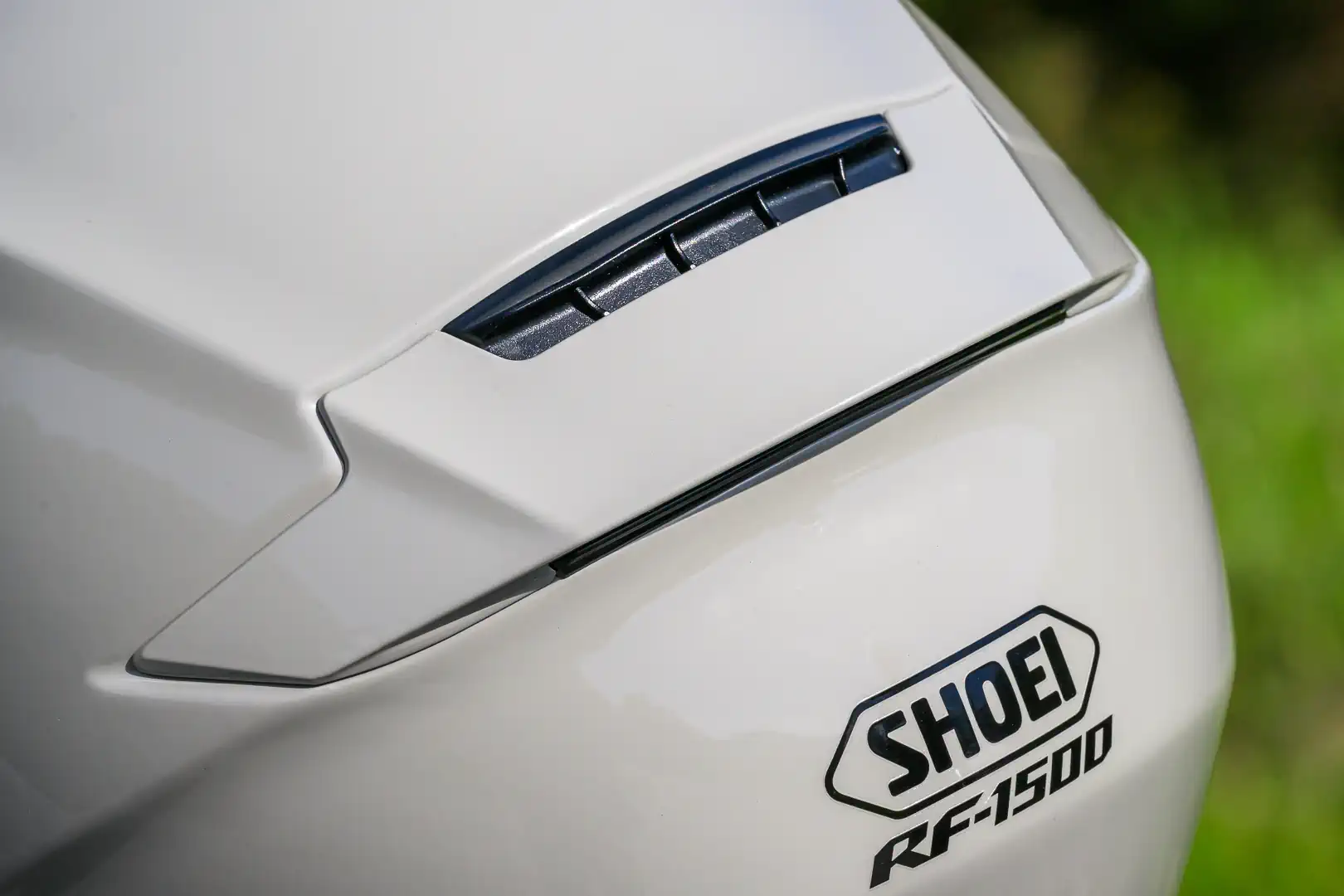
The two-position top vent is built into a unique, slight rectangular recess. This produces two design lines that extend back to the racy rear spoiler that has an exhaust vent built into the top section. This exhaust vent cannot be closed, as is typical. I like that the top vent is easy to slide open and closed. Its position is farther forward and a bit lower down the forehead than is typical of most top vents. I felt it vented more aggressively than most because it is more forward-facing.
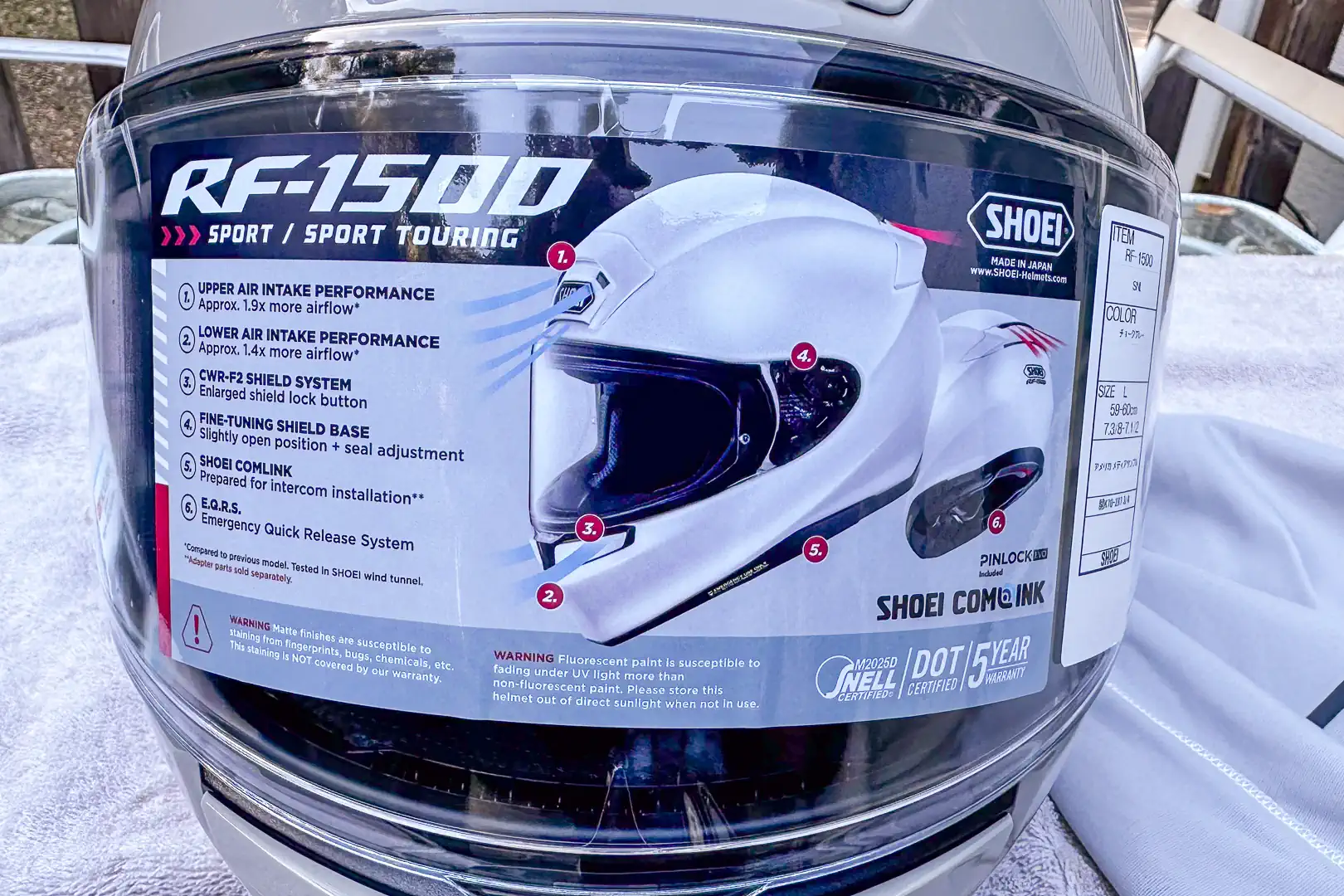
On the RF-1400, there were two auxiliary vents on either side of the main top vent, and they have been eliminated on the 1500. The new position and efficiency of the top vent are likely why. Shoei claims about 90% more airflow through the top vent and 40% more through the chin vents compared to the RF-1400.
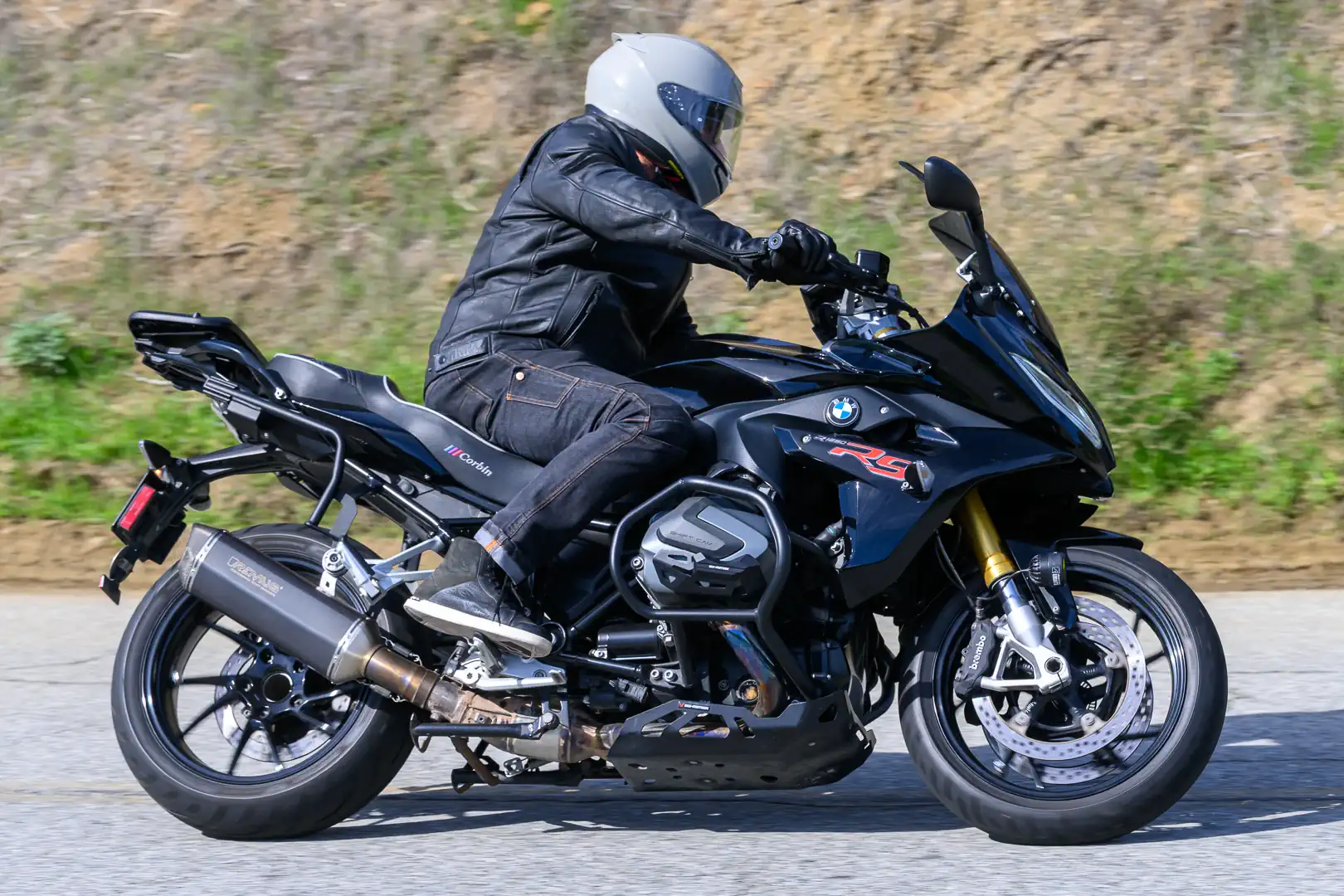
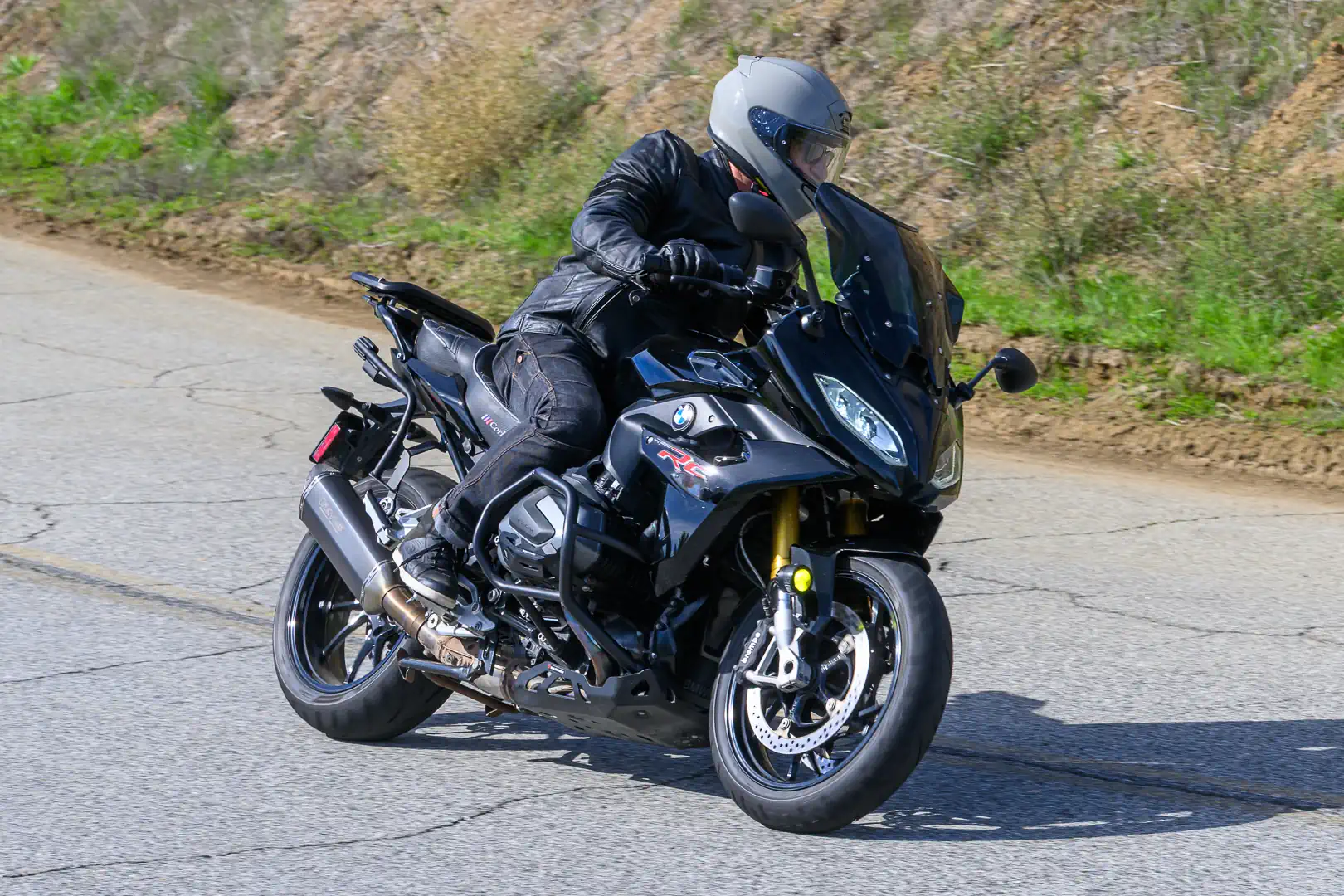
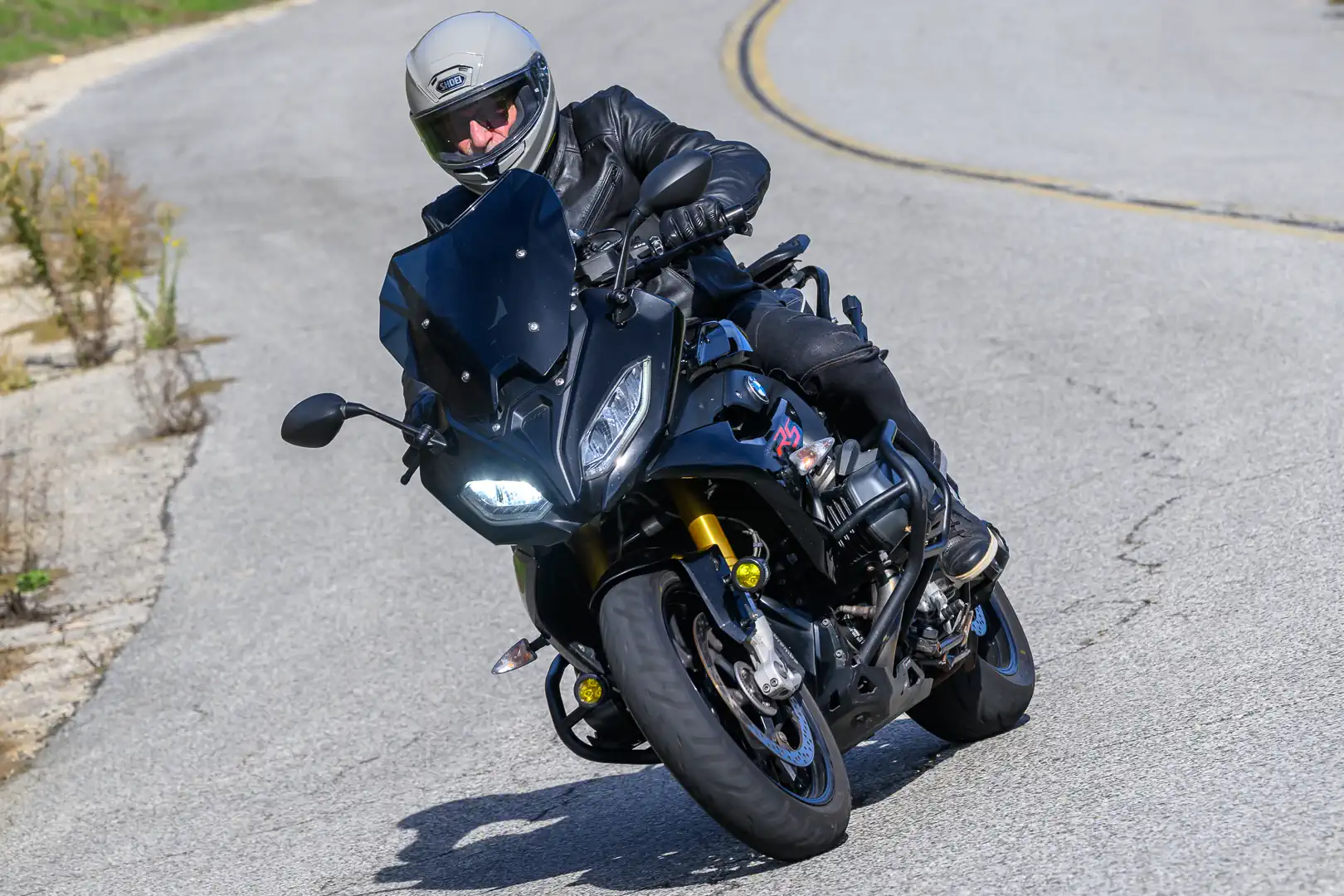
Also claimed, and hard for me to quantify, is a 13% reduction in lift and 3% reduction in drag versus the 1400. I did not experience any noticeable lift during my test rides, and what little drag was felt on a naked bike is typical of just about any premium helmet in the wind. I felt no buffeting, lift, pressure, or oscillation at any speed.
Shoei says the new shell aerodynamics and interior components help reduce unwanted noise. My ears sensed that ambient sound and wind noise levels are reduced somewhat compared to the outgoing model. Riders can usually benefit from wearing earplugs.
Interior, Sizing, and Fit
The cheek pads and chin strap appear unchanged. The chin strap closure retains the D-ring, and the cheek pads continue to use Shoei’s three-snap attachment to the side of the helmet. The flexible plastic strip to attach the lower edge of the cheek pads to the helmet lining with a downward and backward motion to lock it in carries over from recent models. I’m not a fan, as I’ve had my differences with these strips, but they do the job.
The interior components are covered in the 3D Max-Dry Interior System II, the same as the 1400, which I find luxurious and comfortable. This is moisture-wicking, fully removable for washing, and size-customizable.
I’m always an L size in Shoei, regardless of the model, and that hasn’t changed with the RF-1500. I’d call myself a medium-long oval, and I get a nice fit with equal pressure around the circumference of my head, with no pressure or hot spots; just a nice snug fit.
The RF-1500 is offered in seven sizes (XS – 3XL), using an industry-leading six shell sizes to optimize fit in a world of various head sizes and shapes. Only XS and S share a shell size. M, L, XL, 2XL, and 3XL all have their own shell size. Brilliant. To further personalize fit, Shoei has developed and offers its Personal Fitting System. Certified dealers can fine-tune fit through center pad customization. I haven’t tried this as I feel my fit is pretty much perfect out of the box.
CWR-F2 Faceshield and the City Position
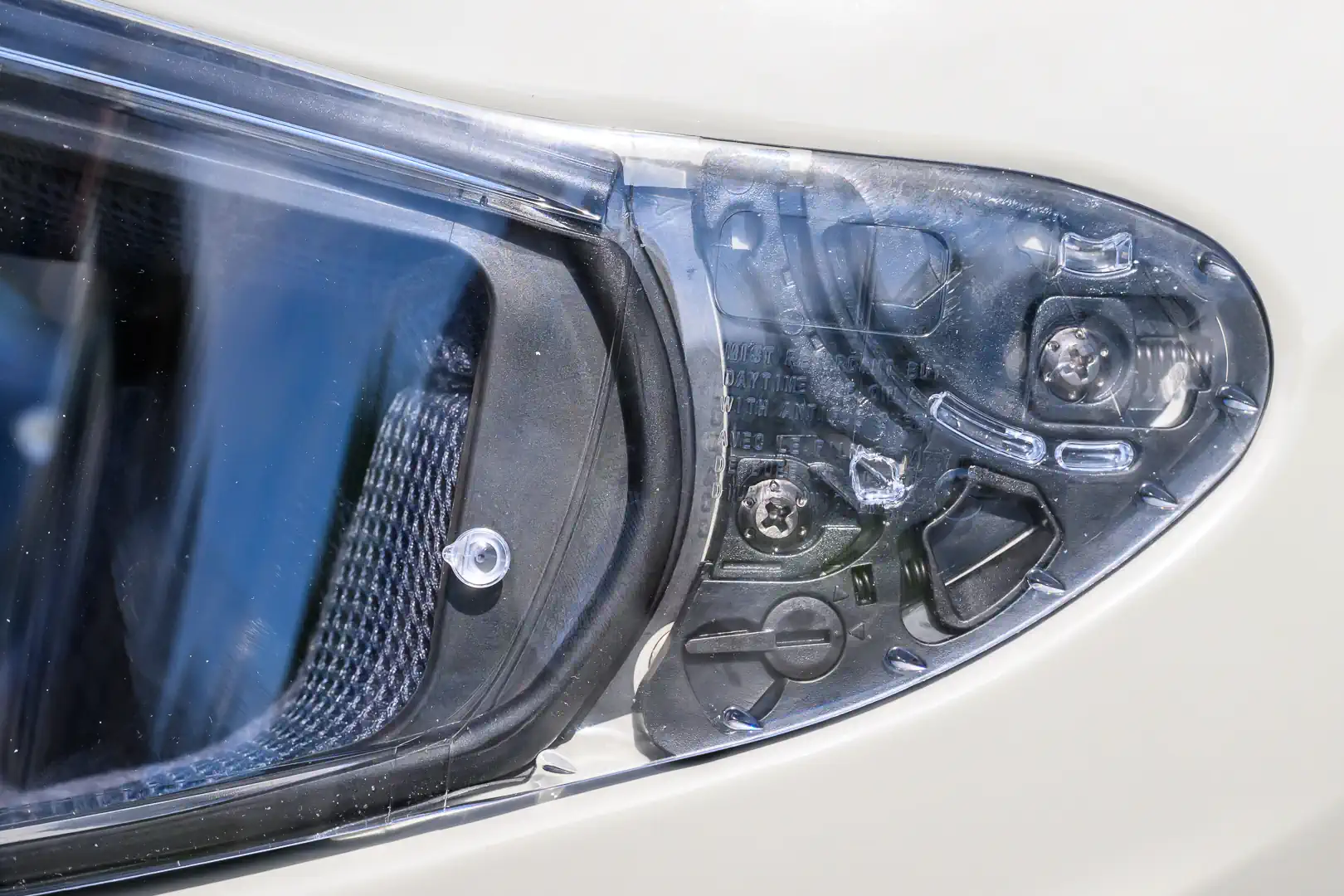
The RF-1500 shares the same CWR-F2 faceshield with RF-1400 and X-Fifteen helmets. There are lots of color choices, and the shield offers a 99% UV protection rating. A Pinlock Evo anti-fog lens is included. Shoei claims they have enlarged the center shield lock button, although it appears quite similar to that on the outgoing model, which I no longer have for comparison.
I like the way the faceshield locks down, as it did on the RF-1400. It is similar to the Neotec 3 and GT-Air 3, but with a larger, easier-to-find release, as well as a smoother lockup mechanism.
The ability to hold the faceshield in a slightly open position is something I greatly appreciate. I call it the “city” position, as there’s no generally accepted name for that feature. Many helmets’ first detent is too large, so there’s too much turbulence. I want a small crack to allow more airflow than just the chin vents, especially in warm weather. The city position in some other helmets does not have enough strength to stay open at highway speeds and often slams shut. The RF-1500 has the strength to stay open at any speed, and its micro detents allow for multiple variations of the city position; high marks for this.
RF-1500 Comms and Certification
The RF-1500 has what Shoei calls Comlink speaker pockets and wire routing, ready for easy installation of most popular helmet-to-helmet communication systems. Aside from the speaker pockets, I can see a cutout in the chinbar designed to snap in a proprietary-style microphone. What is missing is an external nacelle into which one would mount the main comm unit, as in the Neotec 3 or the GT-Air 3 and their SRL3 unit. Shoei says a communicator made specifically for the RF-1500 is coming in early 2027. It has hinted that the unit will clip directly onto the helmet shell with an adapter, rather than a conventional clamp or adhesive mount, and that Shoei will continue its relationship with Sena to produce it.
The RF-1500 is Snell M2025D-certified and exceeds DOT standards. A quick-release cheek pad system that helps emergency personnel remove a helmet after a crash is incorporated, a feature we expect in a premium helmet.
The Shoei RF-1500 is the logical and well-done successor to the RF-1400. It has been a pleasure to run this helmet over hill and dale. It’s comfortable, secure-feeling, relatively quiet, and good-looking — everything I like in a great motorcycle helmet. All that’s missing is an optional built-in communications device. High marks all around.
Shoei RF-1500 Specifications
Sizes: XS – 3XL
Weight: 3 pounds, 13.5 ounces (L, as tested)
Shell: AIM+ six-layer fiberglass and organic-fiber composite
Benda motorcycles are beginning to make a ripple on US shores with four intriguing and competitive models, courtesy of its partnership with Keeway Group. We were impressed with the Napoleonbob 500 and have now gotten our gloves on the persuasive, entry-level 2026 Benda Chinchilla 300, with its modest MSRP of $4999. It would be difficult to design a more welcoming entry-level cruiser than this easy-handling, visually appealing boulevard bobber. Editor Don Williams and Associate Editor Kelly Callan discuss the Benda Chinchilla 300 and how it actually rode for them.
* * * * *
Our guest this episode is Jesse Merriman, Chief Technician for Jeremy McWilliams at the Arch Motorcycle racing project. Arch Racing was founded by Gard Hollinger and Keanu Reevs to compete in the Moto America Super Hooligan race series. Teejay Adams chats with Jesse about the Arch motorcycle and the challenges of extracting the absolute most from an air-cooled V-Twin racing engine and custom chassis.
* * * * *
Here’s quick reminder to check out our monthly digital magazine. It’s filled with everything you want to read on motorcycling, including some things you’ve probably not seen elsewhere. It’s absolutely free and you will find it on the Apple App Store and of course on Google Play as well.
Don’t forget to leave us your comments on our social media—we’re on all the usual platforms at Ultimate Motorcycling. We love hearing your feedback… so good or bad, please let us know what you think. If there’s something you’d like us to cover, we’d love to hear those ideas too!
We use cookies and browser activity on this website
Functional
Always active
The technical storage or access is strictly necessary for the legitimate purpose of enabling the use of a specific service explicitly requested by the subscriber or user, or for the sole purpose of carrying out the transmission of a communication over an electronic communications network.
Preferences
The technical storage or access is necessary for the legitimate purpose of storing preferences that are not requested by the subscriber or user.
Statistics
The technical storage or access that is used exclusively for statistical purposes.The technical storage or access that is used exclusively for anonymous statistical purposes. Without a subpoena, voluntary compliance on the part of your Internet Service Provider, or additional records from a third party, information stored or retrieved for this purpose alone cannot usually be used to identify you.
Marketing
The technical storage or access is required to create user profiles to send advertising, or to track the user on a website or across several websites for similar marketing purposes.
Advertising helps us keep our content available for free, so adjusting your ad blocking settings will help us.
We appreciate your support!
i
How to Allow Ads on This Site
Depending on your setup, ads may be blocked by a browser extension, VPN, antivirus software, or other application. Here are some common ways to allow ads:
Browser Extensions (e.g., Adblock, uBlock, etc.)
Click the extension icon in your browser toolbar.
Look for an option like "Don't run on pages on this site" or "Pause on this site".
Save the change and refresh the page.
VPNs with Ad Blocking (e.g., NordVPN, Proton VPN, etc.)
Open your VPN app.
Go to settings or features.
Disable any ad blocking or tracking protection features.
Refresh the page.
Antivirus Software or Other Privacy Tools
Check for web protection, ad filtering, or browser privacy settings.
Click the power button to disable it for this site.
Refresh the page.
Not sure what's blocking ads? Look for tools with privacy or filtering features, or check your browser extensions. We only use respectful, non-intrusive advertising.