The modern superbike class is an arms race fought on several fronts. There’s still the battle for horsepower supremacy, fueling endless spec-sheet skirmishes on internet forums far and wide. Of course, the mid-2000s saw the rise of electronic rider aids, with engineers extracting as much fine-tuned control as possible from IMUs, sensors, and software. What has caused more than a few designers to burn the midnight oil as of late is the bold new frontier of MotoGP-inspired aerodynamics, or rather the challenge of integrating those aero-appendages into the already exceedingly complex superbike.
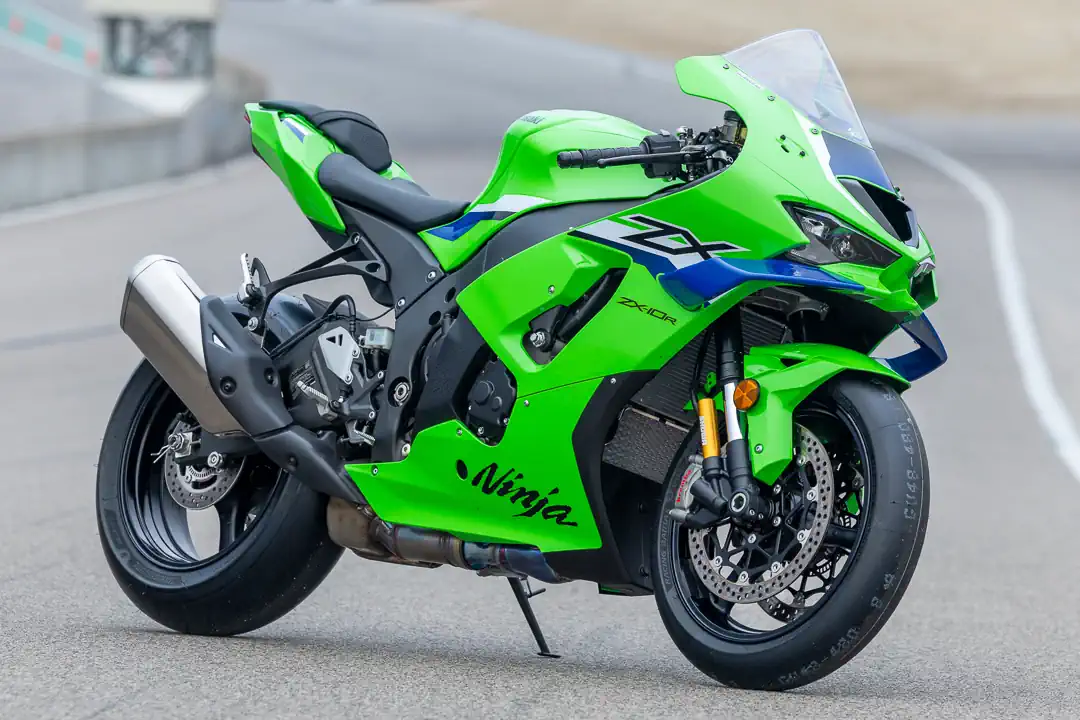
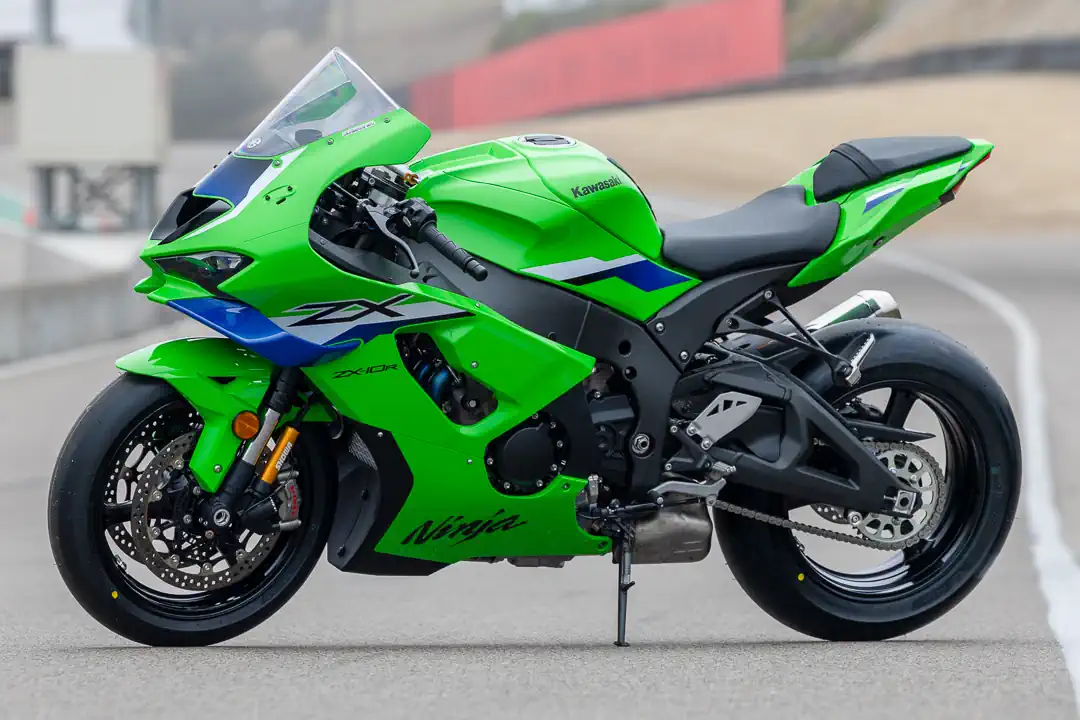
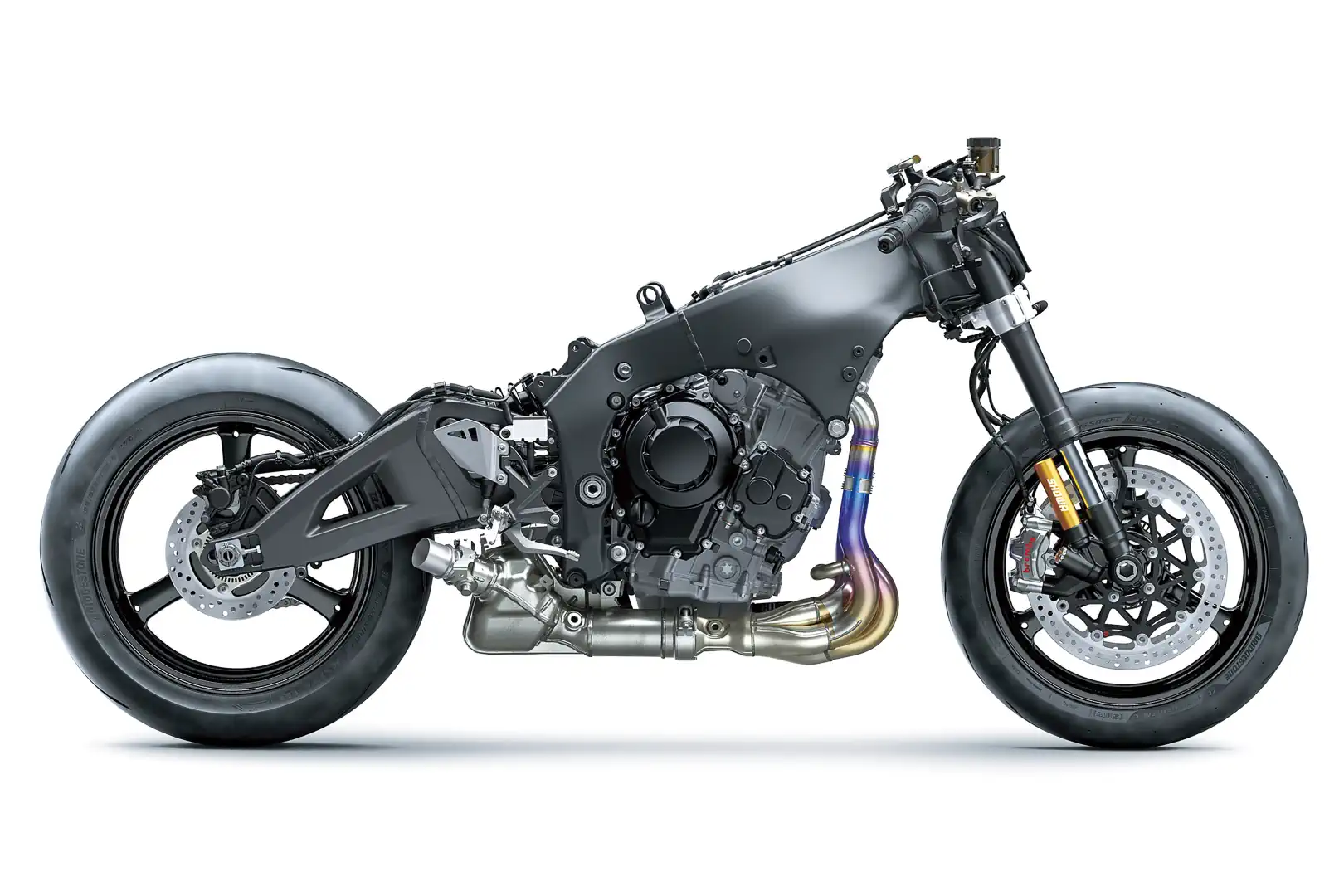
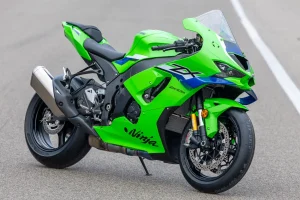
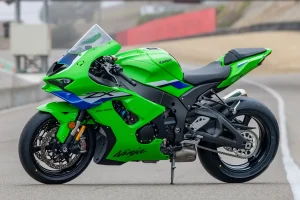
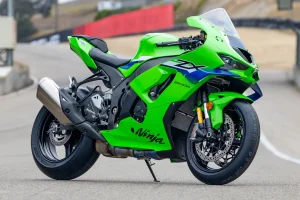
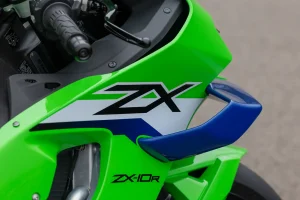
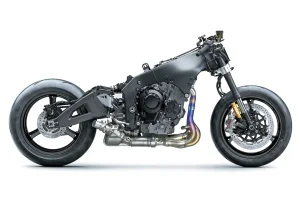
The 2026 Kawasaki Ninja ZX-10R is the latest to adopt winglets as part of this model-year refresh. The 998cc inline-4, aluminum twin-spar frame, and swingarm largely carry over intact, though with a few notable geometry tweaks. The bodywork’s side-mounted winglets, a repositioned ram-air intake, and 5-inch full-color TFT display are new to the party. Pricing starts at $16,999 for the non-ABS model and $17,999 with ABS.
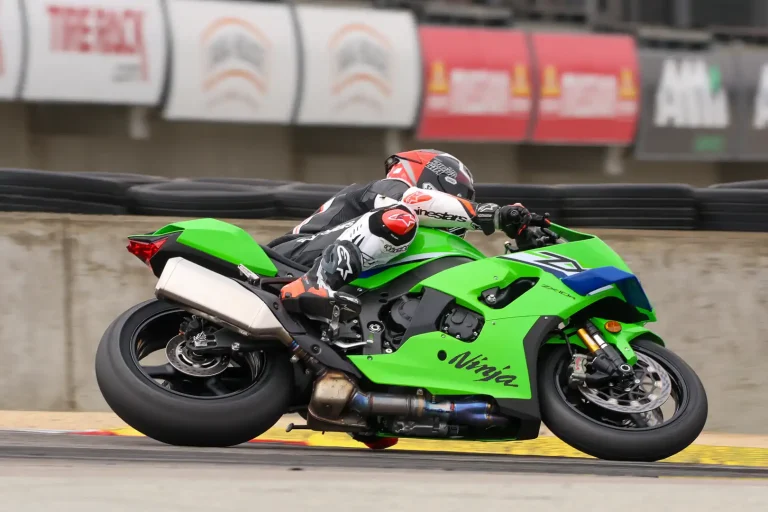
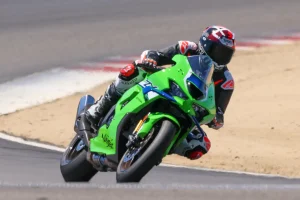
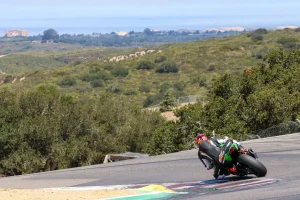
WeatherTech Raceway Laguna Seca made for a fitting proving ground, as its demanding 2.238-mile layout has some of the most dramatic elevation changes Stateside. To do that, we partnered with Volant Vivere, a West Coast-based track day organization that offers a true VIP experience with extended 30-minute sessions and a maximum of 20 riders per session. Volant’s approach to track days is designed to maximize quality track time so you can focus on your riding goals. Without further ado, let’s get on with the Fast Facts.
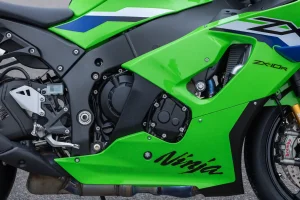
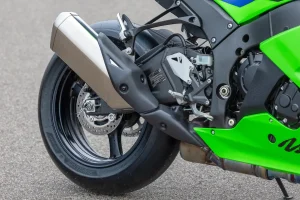
Under the new bodywork, the 998cc inline-four-cylinder screamer is still quite the beast. By the numbers, things look familiar: bore and stroke, and compression ratio values carry over without fanfare. The only tangible hardware changes are an updated catalyst and a second downstream O2 sensor to meet Euro5+ emissions requirements. Kawasaki cites 190 horsepower and 82.5 lb-ft of torque, which equates to about 170ish ponies at the rear wheel. The Kawi spools up with all the I4 spit and vinegar you could hope for, building into a solid midrange punch that comes in handy when winding on the power through Laguna’s many technical sections. The engine does make you work for it, and the noise-compliance lull in second gear is still prevalent, as is the case for a great many liter-class I4s in the United States. When the digital tachometer crests into the 12k range, power does flatten out.
The reported peak figures have dropped by a few points and invariably raise a conversation about tuning. Kawasaki revised last year’s claimed 196 horsepower and 83.9 lb-ft of torque numbers down to 190 horsepower and 82.5 lb-ft of torque. According to brand reps, that’s due to Euro5+ emissions, and we also have to factor in the dreaded EPA noise compliance. To wit, the ZX-10R’s fellow countrymen, which include the Suzuki GSX-R1000R, Honda CBR1000RR-R Fireblade SP, and Yamaha YZF-R1, are impacted to some degree. In stock trim, the ZX-10R is still a screaming I4 with useable midrange that winds out to lofty rpms. However, an ECU flash will undoubtedly unlock a lot of potential in the low-end, midrange, and top-end, which is where a short-stroke I4 engine shines brightest.
A full suite of rider aids is offered. The usual suspects return with multi-level traction control, engine brake management, launch control, bi-directional quickshifter, and riding modes. While not cited in official literature, something has changed: the quickshifter now performs flawlessly even when backing down into first gear aggressively at the slow-going Turn 11. TC is effective, though it can be repeatedly triggered in high-g sections like Turn 6 or while exiting the Corkscrew. Meanwhile, the wheelie control is particularly useful when whacking the throttle open onto the front straight. The front end lifts a bit high, but it’ll sort things out for you well enough. If there is a critique, it’s that these updated aids still have the same adjustability limitations as those launched in 2016 (though they’ve been updated repeatedly since then); TC and WC cannot be adjusted independently, unlike most of the competition.
Throttle connection remains a touch quirky on the ZX-10R. Things have progressed a long way from the early days of ride-by-wire systems. However, there’s still work to be done as initial roll-on can seem choppy, especially at lower rpm. Some of that blame can be aimed at the throttle mechanism, which has a bit of play before engaging in either direction. If that description seems odd, remember that cruise control requires the throttle to be over-rotated by a few degrees to be disengaged. Taken together, it means riders need to take extra care when getting back on the gas at critical moments. As with the peak horsepower figures, an ECU flash will help cure the abrupt initial input by a significant margin.
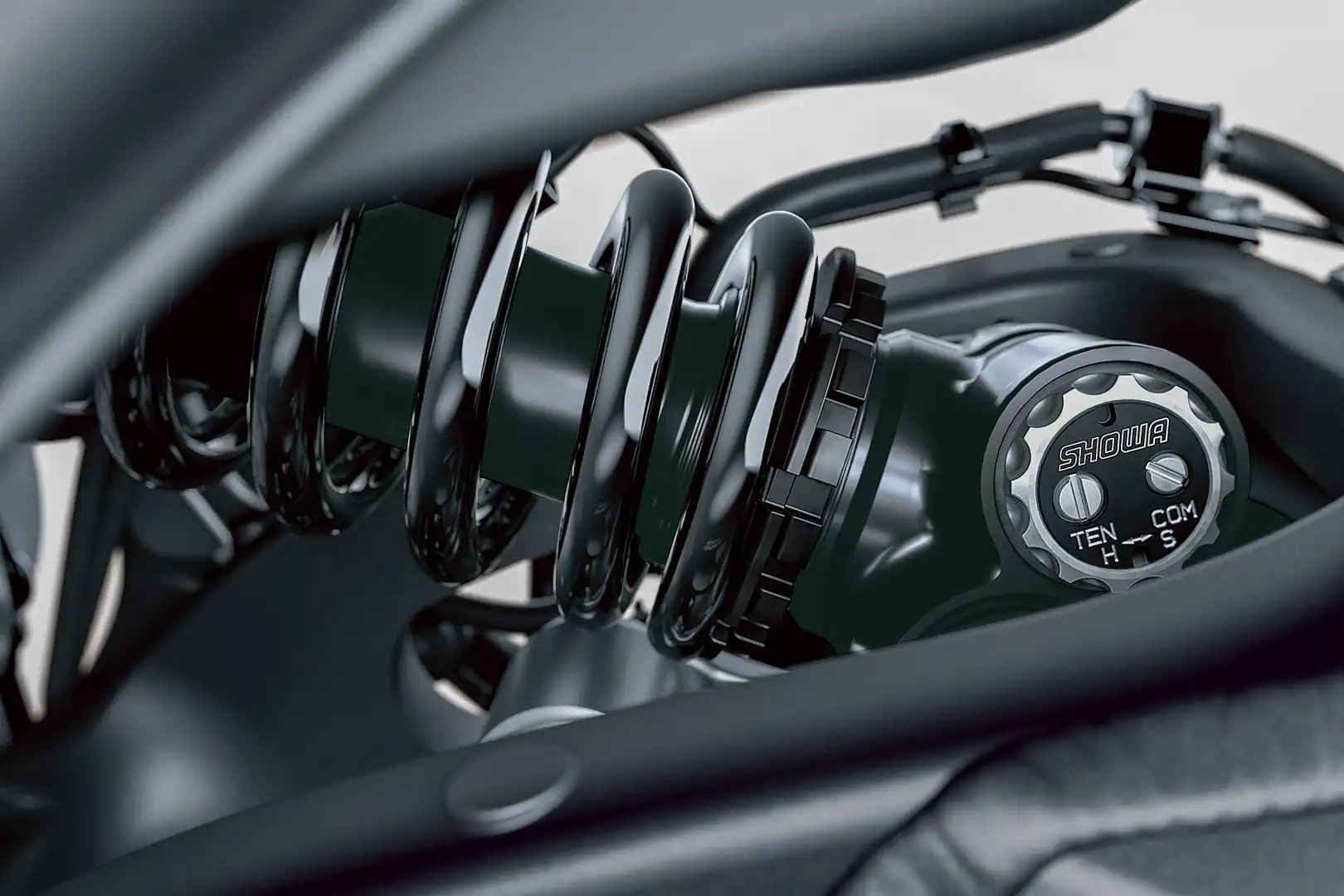
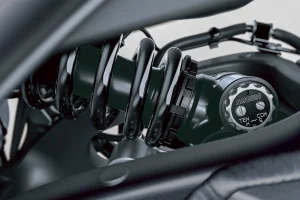
Geometry did more heavy lifting this year than any single new part, and we took it further for this test. Kawasaki raised the swingarm pivot by 2mm to improve anti-squat and drive traction, lowered the fork position in the triple clamps, softened the rear shock’s spring rate from 95 N/mm to 92.5 N/mm, and lengthened the shock linkage from 143.4mm to 162.0mm. The changes mentioned in Kawasaki’s literature are directly linked to managing the increased front-end downforce from the new winglets and seek stability by slacking the geometry a touch. For this test, we dug deeper by using the MotoSPEC Chassis Program to track our changes relative to stock. Remember, these numbers will differ from stock figures due to the way MotoSPEC measures data. So, we’ll reference these for the sake of this story.
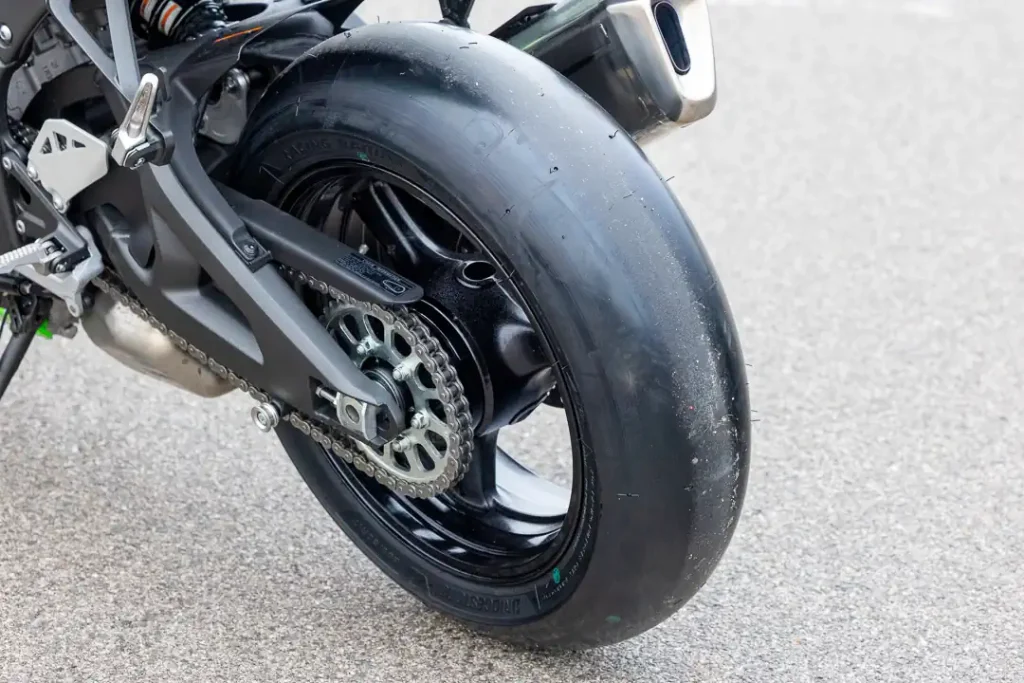
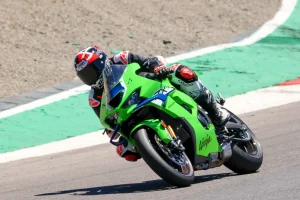
Our bike started the day with 5mm of shims at the rear shock. Even before we turned our first laps, Derek Keyes from Kawasaki R&D set us up with more aggressive geometry. He increased the rear ride height, slightly biasing the weight farther forward, tightening rake, and shortening trail. Doing so brought our bike more in line with the 2021-2025 ZX-10R stock figures, which handled well but certainly demanded rider input and translated to heavier steering. By day’s end, that shim stack grew to +8mm, which further steepened the rake and reduced trail. We wanted even more turn-in ability, as the ZX-10R’s stout chassis has stability to spare for my mere mortal hands. Combined with the taller 200/60 rear slick we were running, our changes created a far more agile bike.
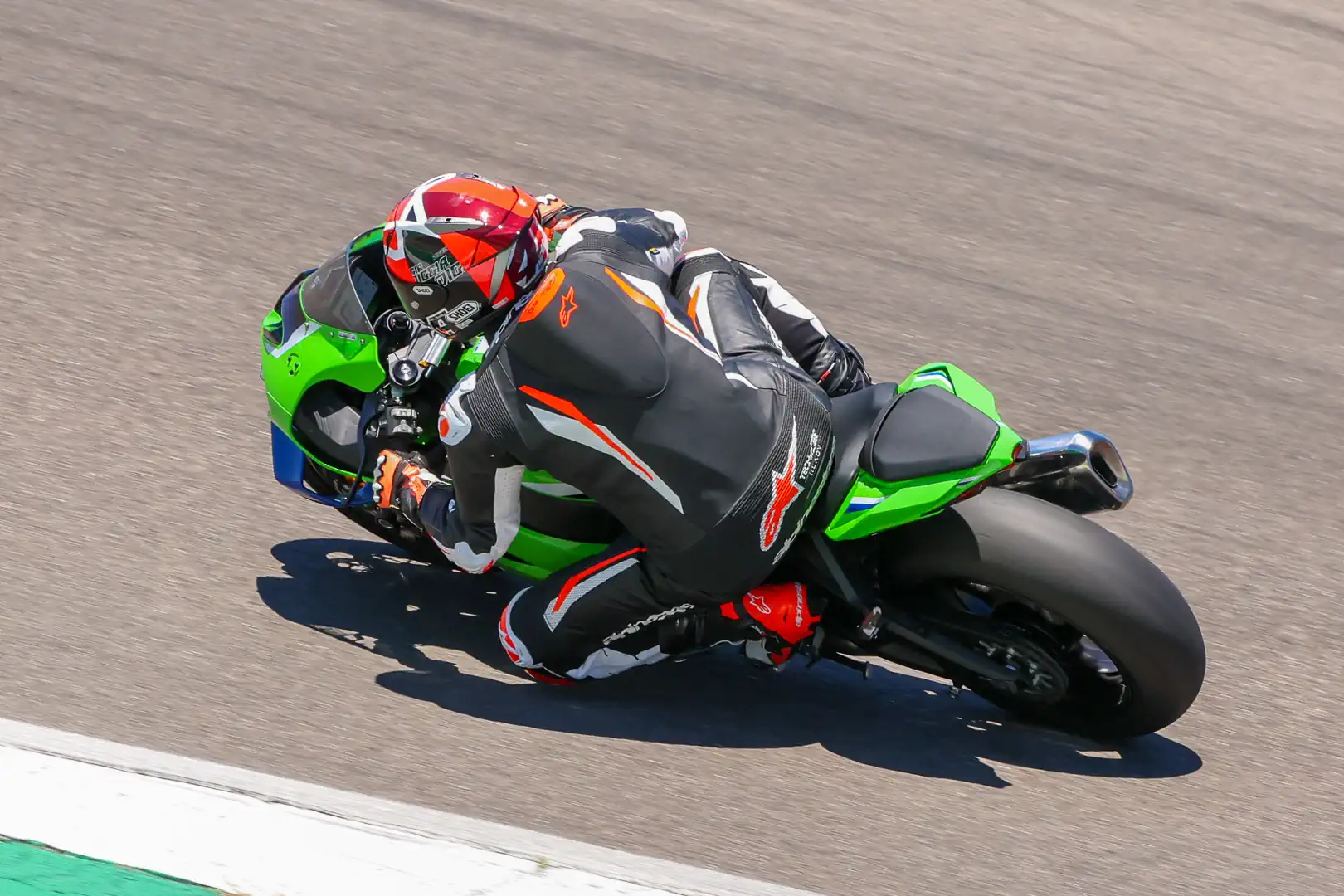
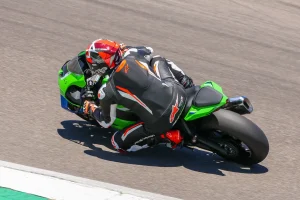
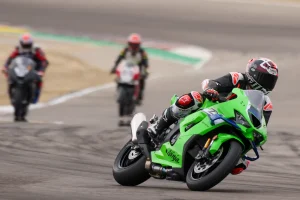
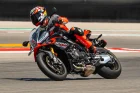
Cornering confidence comes with a small price of admission. Laguna asks a lot of any motorcycle. Such is the case when facing sections like the demanding, downhill Rainey Curve. There, the ZX-10R tracked a composed line and never felt like it was hunting for grip, even when loading the fully adjustable Showa suspension. In fact, our shock setup actively sacrifices grip to bias weight forward and improve turn-in rates. It’s a machine that benefits from steering inputs to get it pointed in the right direction, and once done, slices past apexes with precision. The Kawi may ask more of the rider initially, especially when going into Turn 2, but rewards the pilot with confidence that is tough to shake.
Trust us, you can do all this, too. Having a trained, professional tech wrenching on your bike might seem like stuff relegated to professionals and ultra-wealthy trackday enthusiasts. If you’re serious about track riding or club racing, adjusting shock shim stacks and raising and lowering the fork is as commonplace as turning the clickers on your suspension. Graves Motorsports maintains a close working relationship with Kawasaki Motors Corp., U.S.A., and has developed a boatload of race- and track-ready components, including shims, ECU tunes, full exhaust systems, and more.
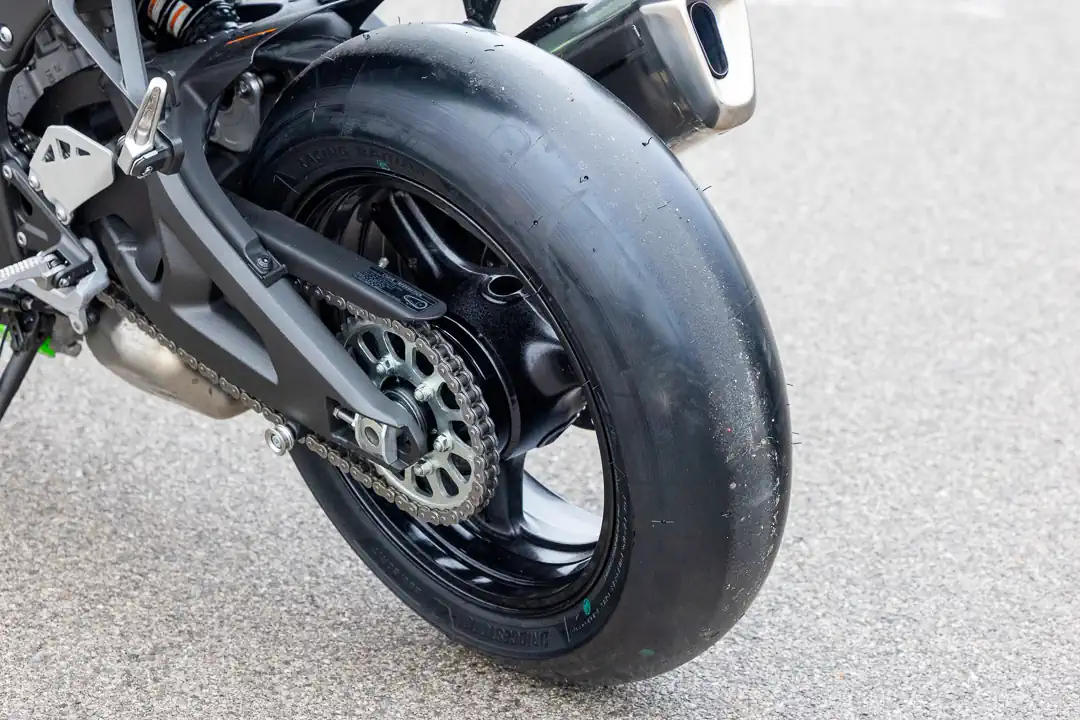
You’ll find Bridgestone Battlax Racing Street RS12 tires in stock trim; we opted for Bridgestone Racing Battlax V03 slicks. Those who want an aggressive street-legal tire will not be disappointed with the OEM-fitted RS12; in fact, they easily hang at a track day. However, we opted for a soft-medium compound front and a soft compound rear for our ZX-10R test machine. All of Kawasaki’s positive attributes gleam with Bridgestone’s latest slicks installed, featuring technology gleaned from the ultra-demanding FIM Endurance World Championship. The new V03 profiles accentuated the Kawi’s handling, while new rubber compounds provided incredible grip that worked well on Laguna Seca’s asphalt, which can be inconsistent with traction. Even better, the feeling and feedback are remarkable; not too much squish when braking and certainly not overly firm, either. After a full day of riding, the B-Stones were ready for plenty more laps.
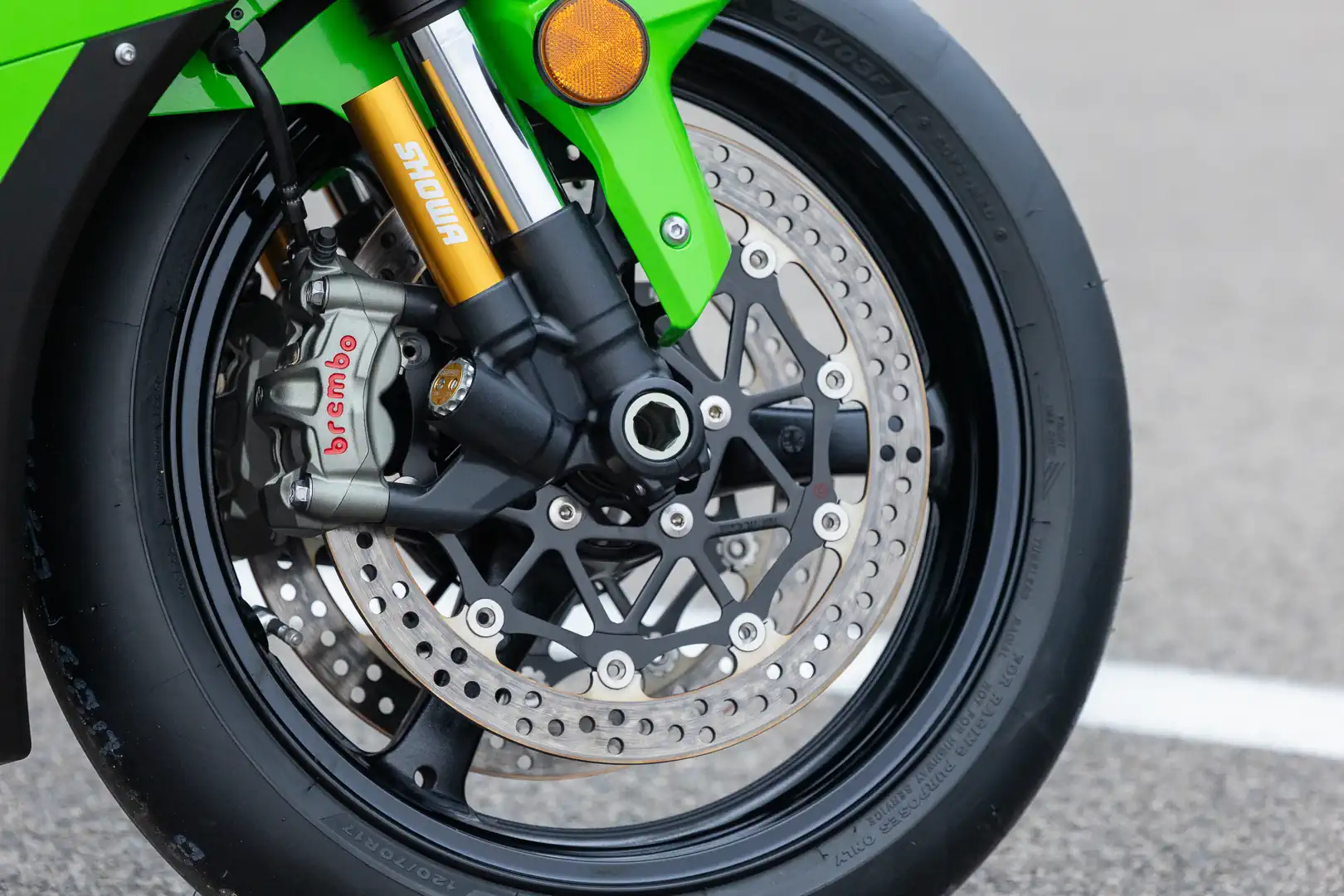
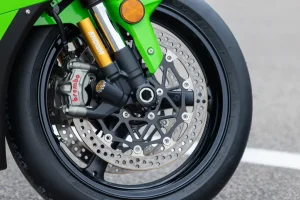
Proven Brembo braking hardware remains bolted to the green machine. Stopping power comes in the form of Brembo M50 calipers and oversized 330mm rotors. Feel at the radial master cylinder is decent, with gains to be had by swapping out the rubber brake hoses for steel-braided lines, which just so happen to be standard on the pricier, up-spec WSBK-homologated ZX-10RR. Still, they haul the 458-pound machine to a halt quickly. Would the latest and greatest from Brembo help? Likely yes, but this isn’t bad stuff, either.
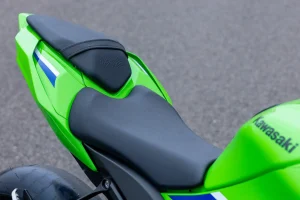
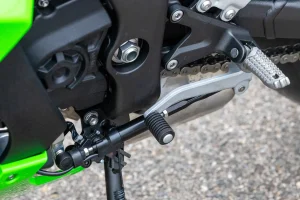
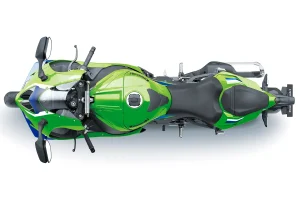
The race-bred ZX-10R cockpit could work out well for you, depending on your size. Team Green’s superbike isn’t a small machine, though once you’re sat in the 32.5-inch-high saddle, it can feel a bit snug for my 5-foot-10 frame. The ergos are the result of relatively high footpegs combined with somewhat narrow clip-on handlebars, both of which can be easily swapped out for adjustable aftermarket units. If you happen to be on the shorter side, these observations may not apply to you, as fit is always subjective. However, what holds true regardless of your dimensions is the shapely 4.5-gallon fuel tank, which provides a stable anchoring position when braking or cornering.
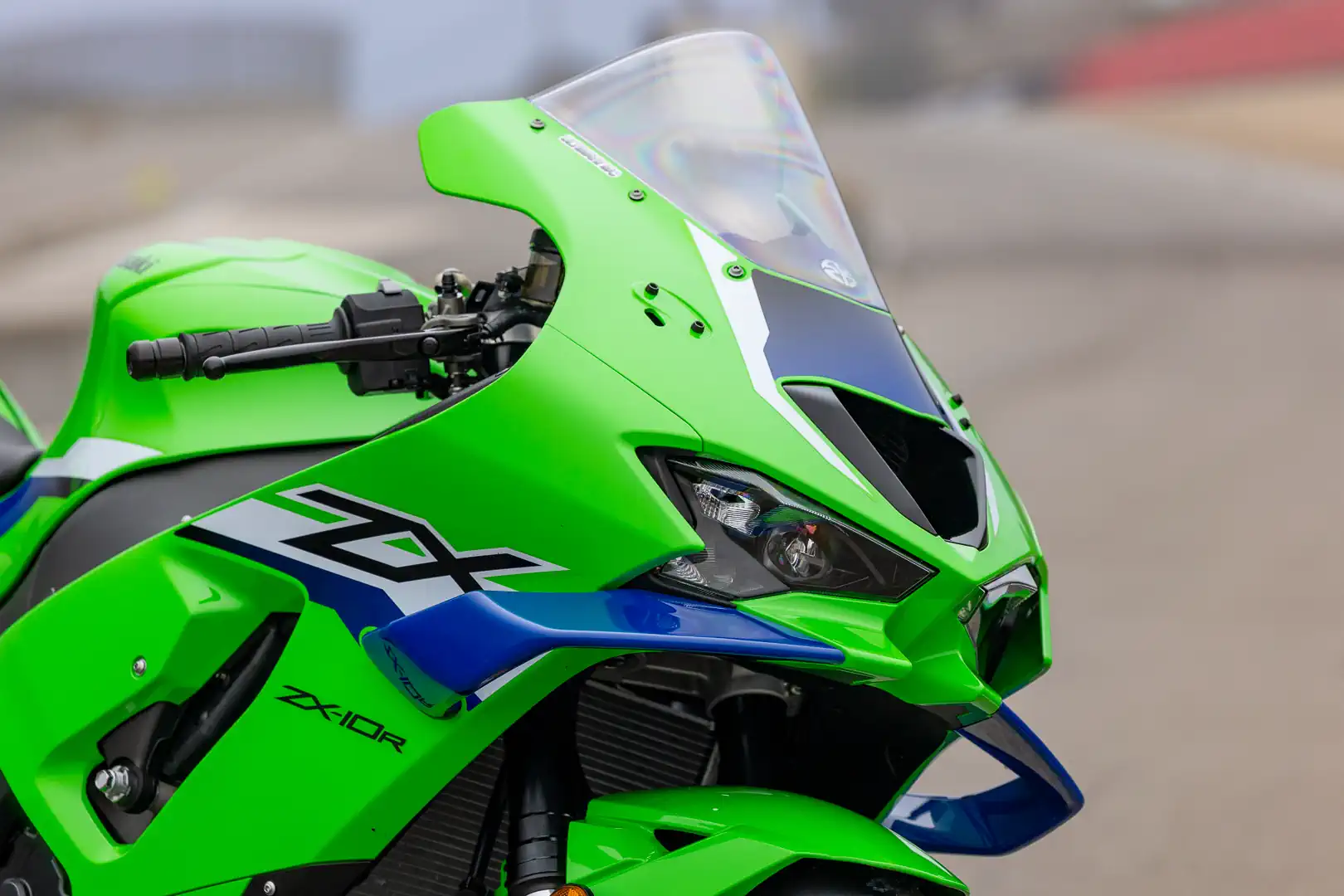
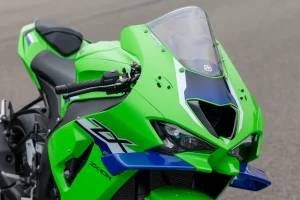
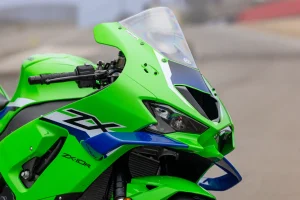
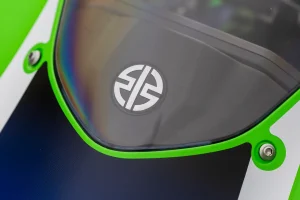
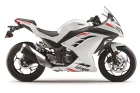
Aggression is at the forefront in terms of looks this year. For 2026, the bodywork is reshaped with sharper ZX-6R-inspired front-end styling, a repositioned ram-air intake, and side-mounted aerodynamic winglets that Kawasaki claims add 25% more downforce with only a 0.3% drag penalty. We didn’t run a back-to-back test against outgoing bodywork, so it’s hard to say with certainty how much of the stability felt at speed comes from the wings themselves versus the day’s suspension and ride-height changes. Either way, the manufacturer’s claimed numbers are worth taking at face value, and the sharper face gives the bike a noticeably different presence than its predecessor.
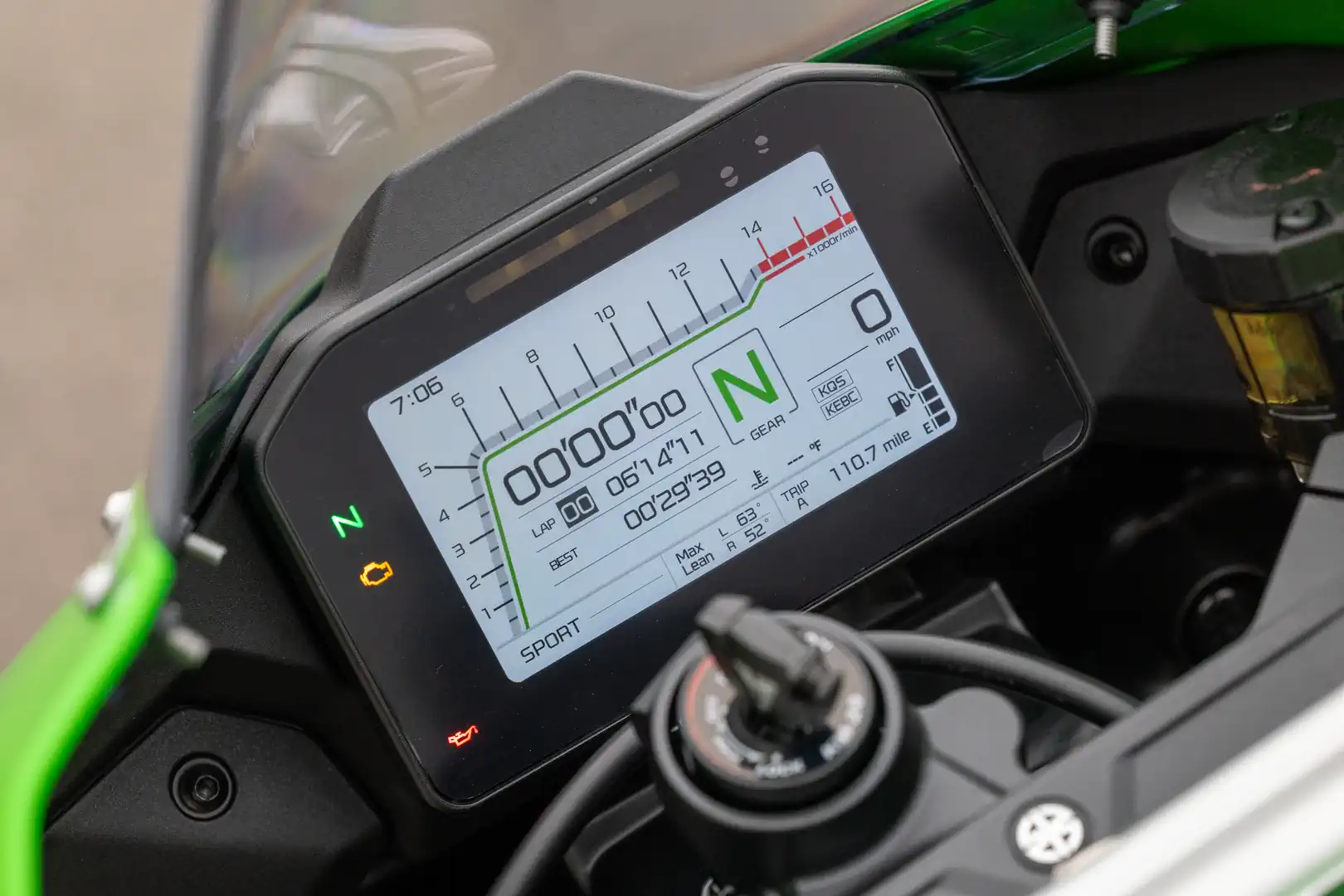
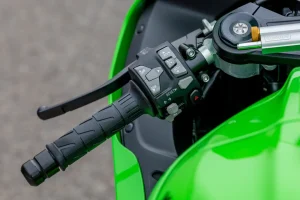
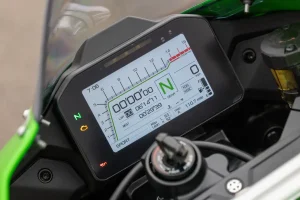
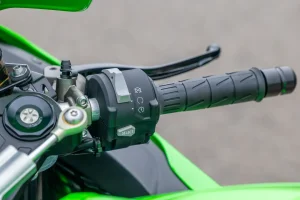
The 5-inch TFT display replaces the previous 4.3-inch unit. In short, it’s bigger, better, brighter, and easier to read. Kudos, Kawasaki. Glancing at rpm or gear position is easy enough, while the new dash adds a more cohesive feel to the whole affair. One longstanding gripe that owners will overcome with use is the unintuitive button sequencing. It requires a long press for some actions, short for others, and things aren’t entirely clear when switching modes or navigating menus.
Value has become one of the 2026 Kawasaki Ninja ZX-10R’s strongest selling points. At $16,999 for the non-ABS model tested here, the ZX-10R undercuts nearly all its liter-bike rivals, save for the base-model Suzuki GSX-R1000 ($16,399). What you’re getting is a seriously potent package with its eminently capable chassis and stout engine. Its electronics suite trails several European and Japanese competitors in adjustability, the throttle can be persnickety at times, and an ECU flash would allow the screamer to reach its full potential. While these things are true, they are quite correctable in nearly all cases. Even in stock trim, the latest ZX-10R offers high-revving inline-4 thrills for a price that most of the competition can’t begin to beat.
Action photography by Oxymoron Photography Static photography by Nic de Sena
Studio photography courtesy of Kawasaki
Hello and welcome again to the Motos and Friends Podcast. This episode is brought to you by Leod Escapes.
* * * * *
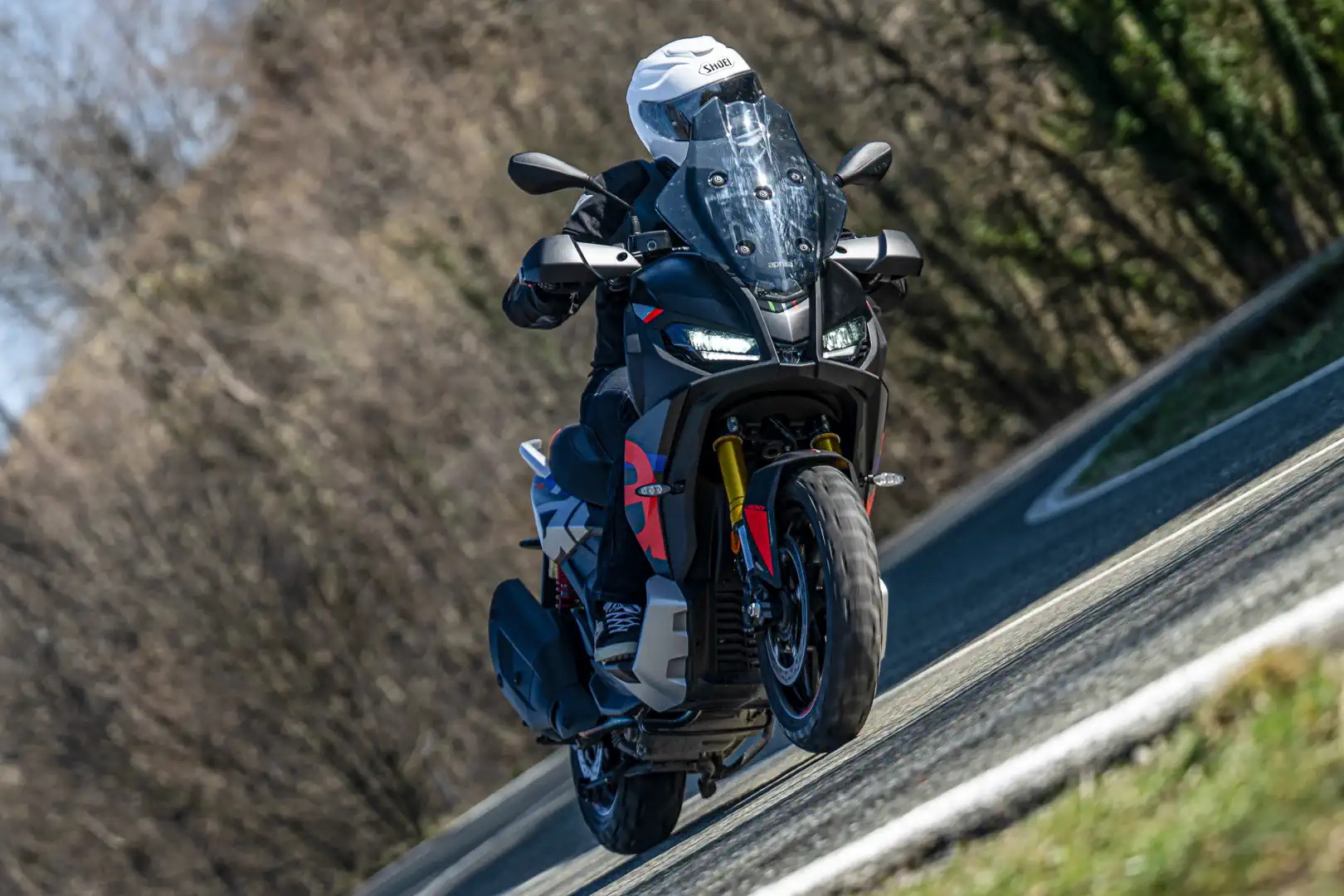
Aprilia is bringing a scooter to North America, and it’s one designed to appeal to adventure motorcyclists. The SR GT 400 is a mid-size scooter built around a steel motorcycle-style frame, a 399cc single, and off-road-ready hardware. It reaches US dealers as soon as this month. Don Williams and Kelly Callan spent some time riding the Aprilia and were surprised by what they discovered. Is this a real motorcycle or just a good-looking urban scooter?
* * * * *
Cat McLeod is founder and owner of Leod Escapes, the ultimate tour company for sport-minded motorcycle riders. Cat talks to us this segment about some of his amazing European experiences and tours that include of course, riding some amazing MotoGP tracks on new BMW S1000RRs. If you like what you hear, now is the time to book your trip of a lifetime, so visit LeodEscapes.com to find out more.
* * * * *
Our guest this episode is Terry Vance, the multiple Motorcycle and Motorsports Hall-of-Famer. Terry is of course the former professional motorcycle drag racer, team owner, and co-founder of the high-performance parts company Vance & Hines. Teejay Adams chats with Terry about his incredible career that includes being the first rider to hit 200 mph in the standing quarter-mile.
Having won this year’s MotoAmerica Mission King of the Baggers championship with Hayden Gillim riding the Vance & Hines factory Indian Challenger, and with Harley-Davidson’s recent withdrawal, Terry gives us his thoughts on where the series might go from here.
* * * * *
Here’s quick reminder to check out our monthly digital magazine. It’s filled with everything you want to read on motorcycling, including some things you’ve probably not seen elsewhere. It’s absolutely free and you will find it on the Apple App Store and of course on Google Play as well.
Don’t forget to leave us your comments on our social media—we’re on all the usual platforms at Ultimate Motorcycling. We love hearing your feedback… so good or bad, please let us know what you think. If there’s something you’d like us to cover, we’d love to hear those ideas too!
We use cookies and browser activity on this website
Functional
Always active
The technical storage or access is strictly necessary for the legitimate purpose of enabling the use of a specific service explicitly requested by the subscriber or user, or for the sole purpose of carrying out the transmission of a communication over an electronic communications network.
Preferences
The technical storage or access is necessary for the legitimate purpose of storing preferences that are not requested by the subscriber or user.
Statistics
The technical storage or access that is used exclusively for statistical purposes.The technical storage or access that is used exclusively for anonymous statistical purposes. Without a subpoena, voluntary compliance on the part of your Internet Service Provider, or additional records from a third party, information stored or retrieved for this purpose alone cannot usually be used to identify you.
Marketing
The technical storage or access is required to create user profiles to send advertising, or to track the user on a website or across several websites for similar marketing purposes.