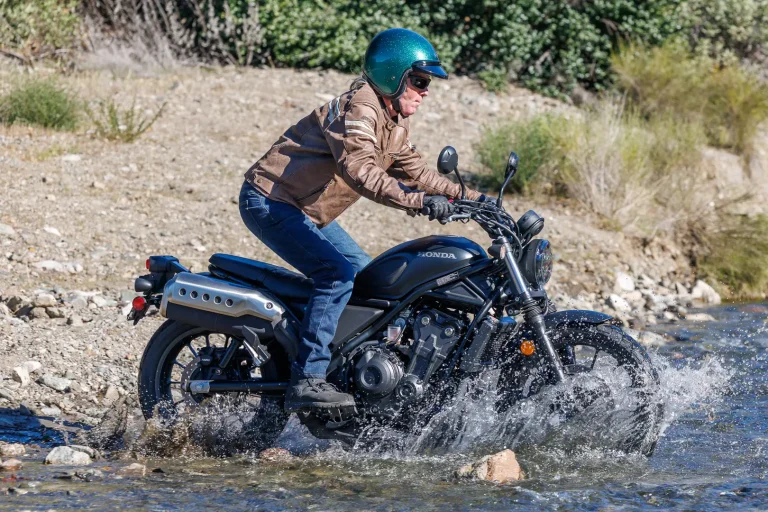
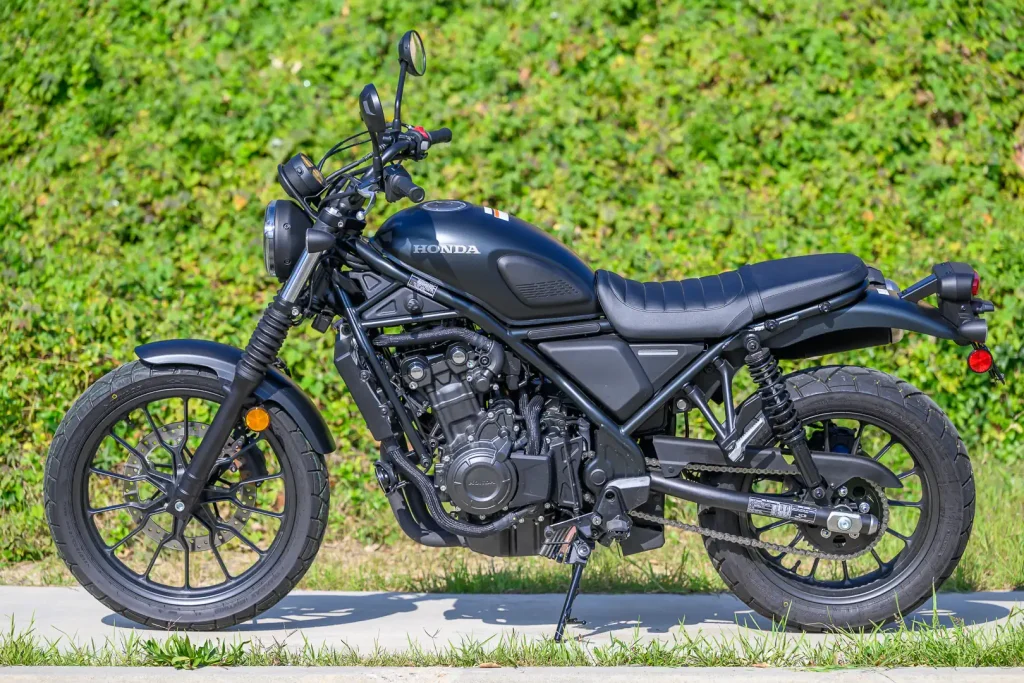
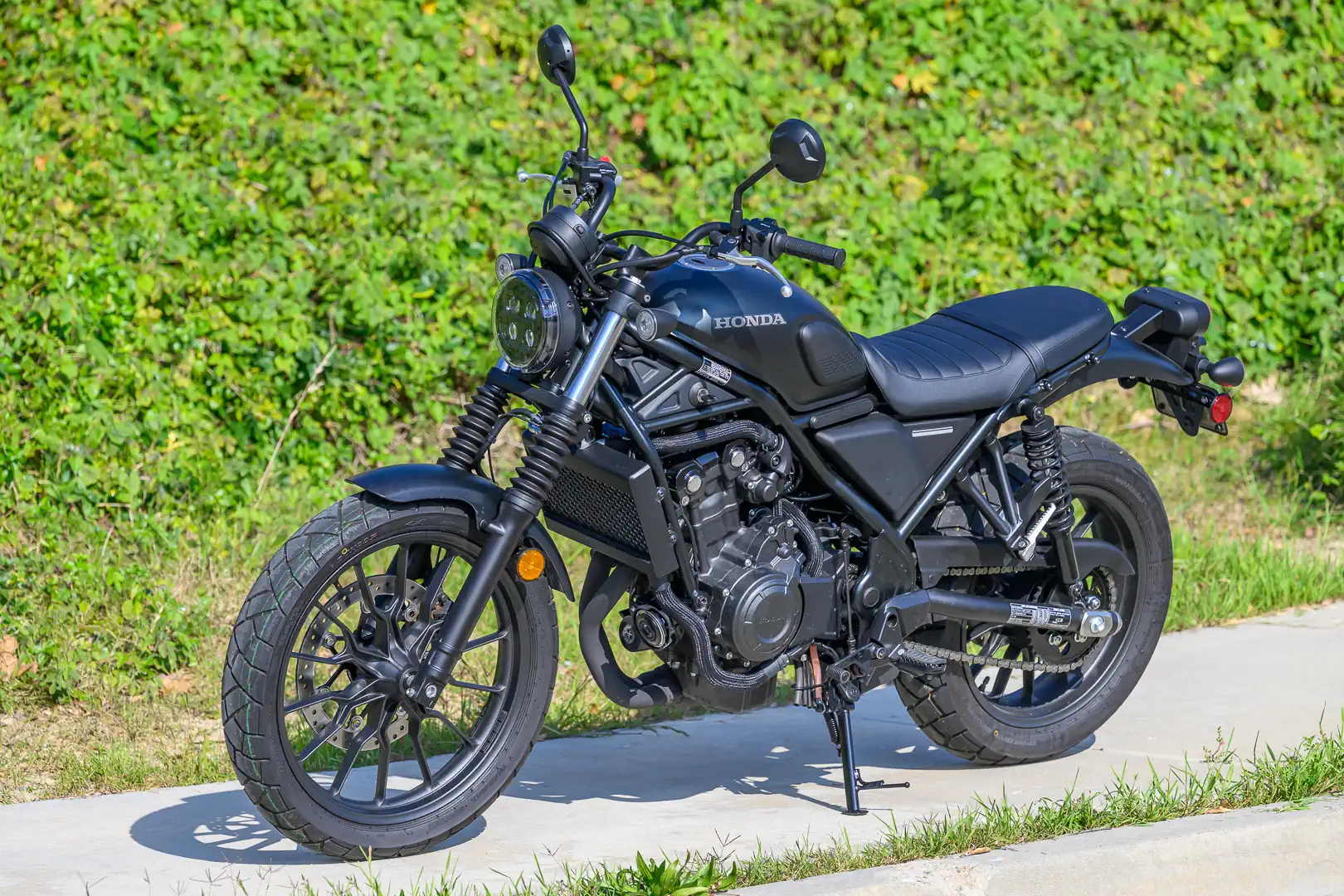
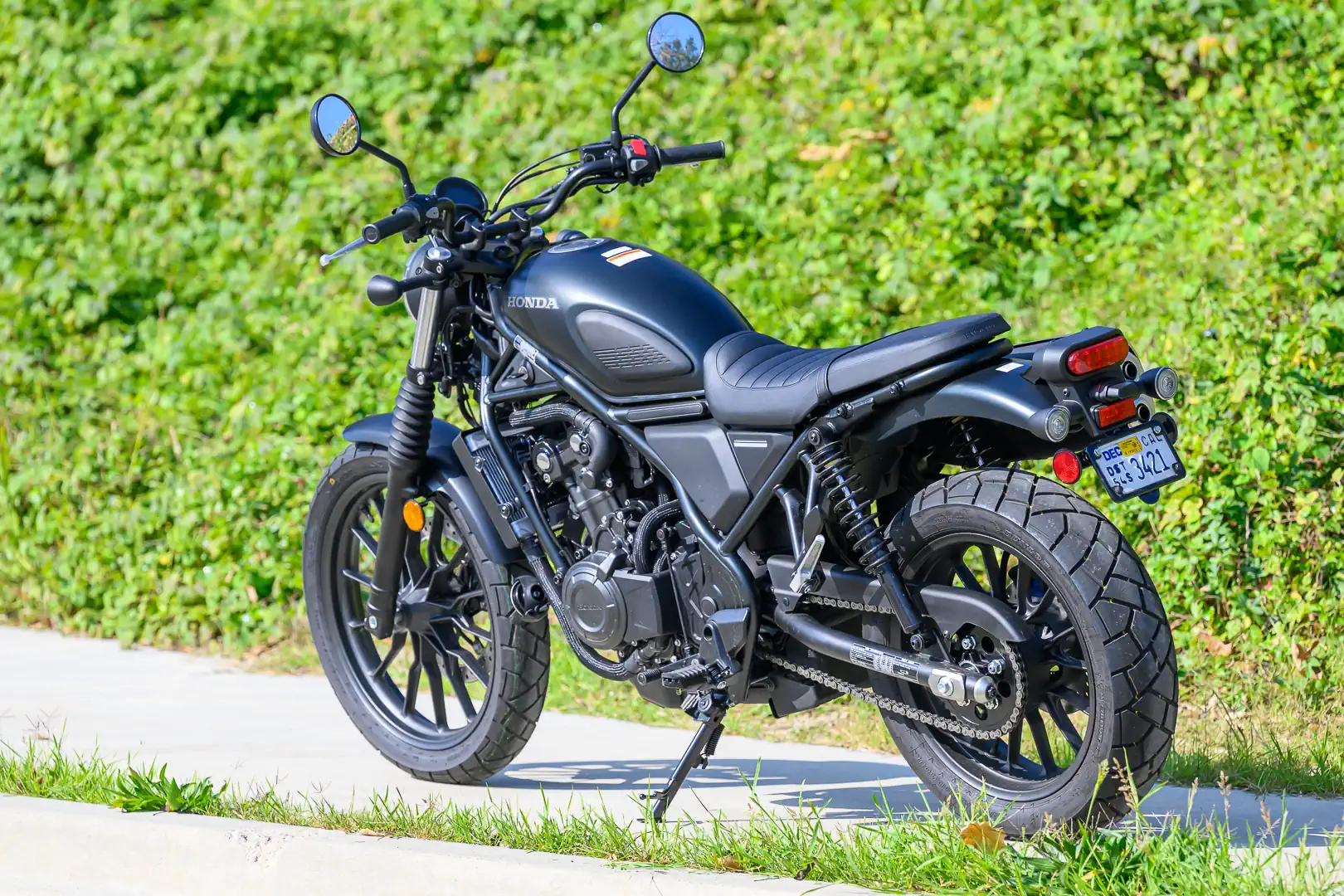
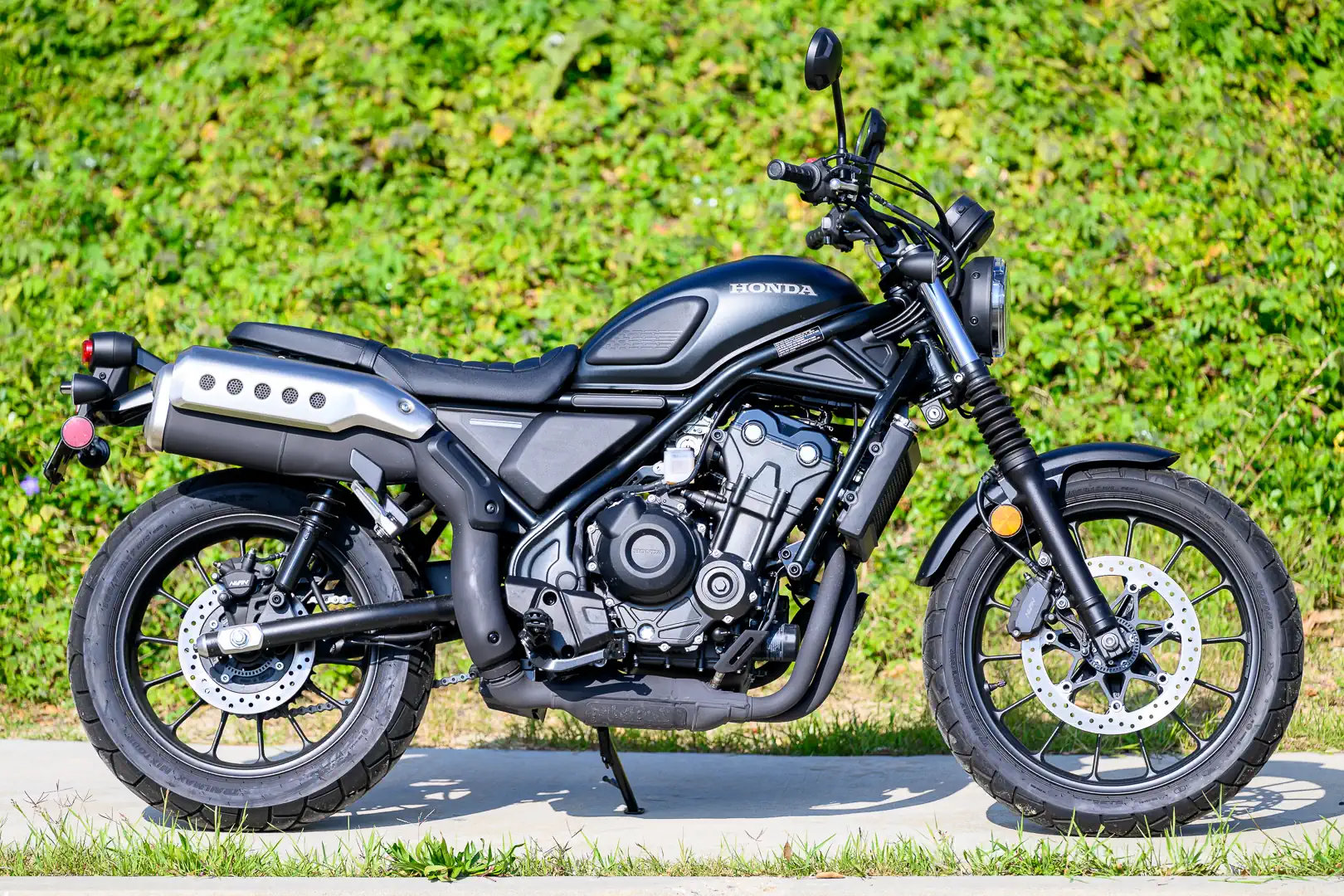
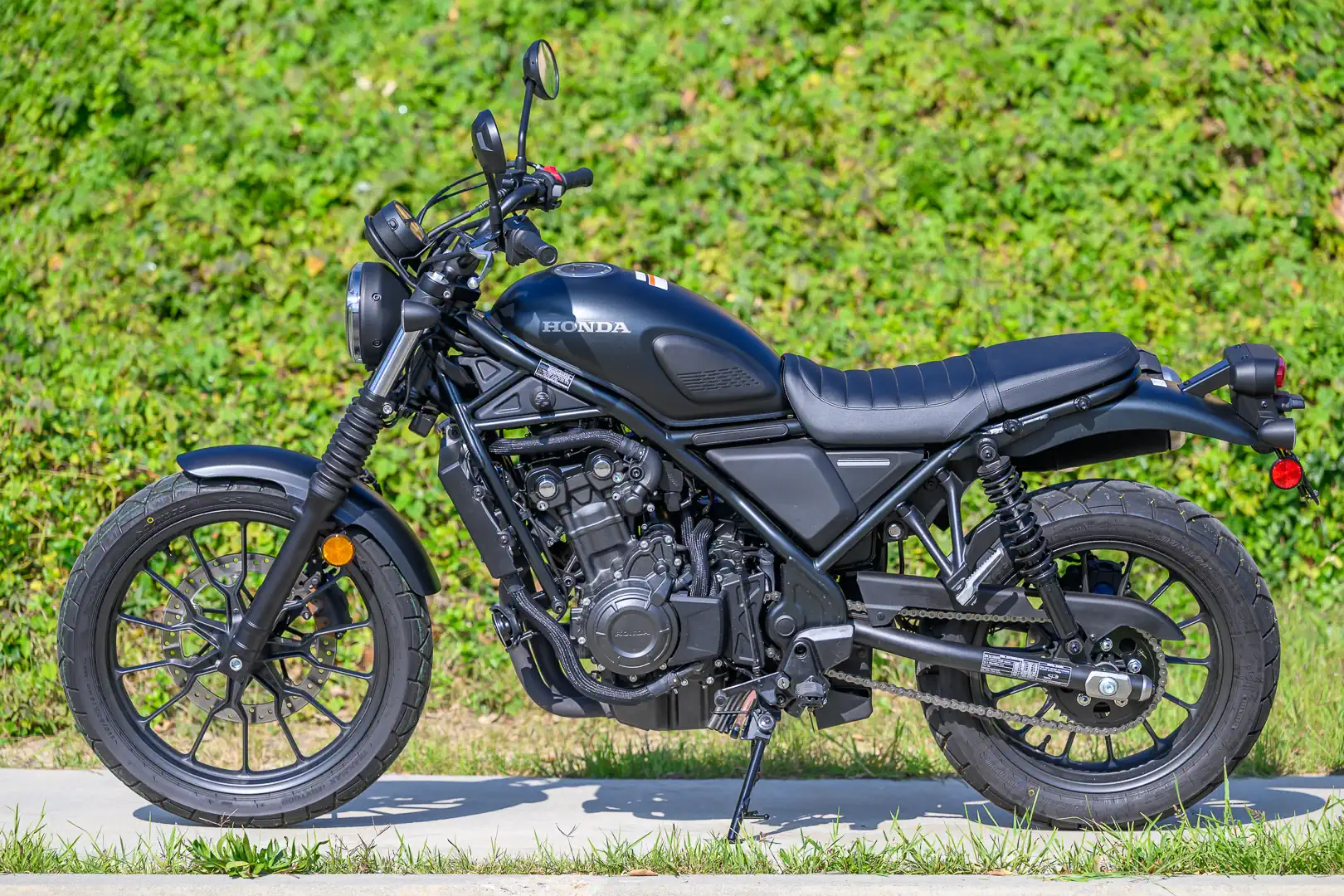
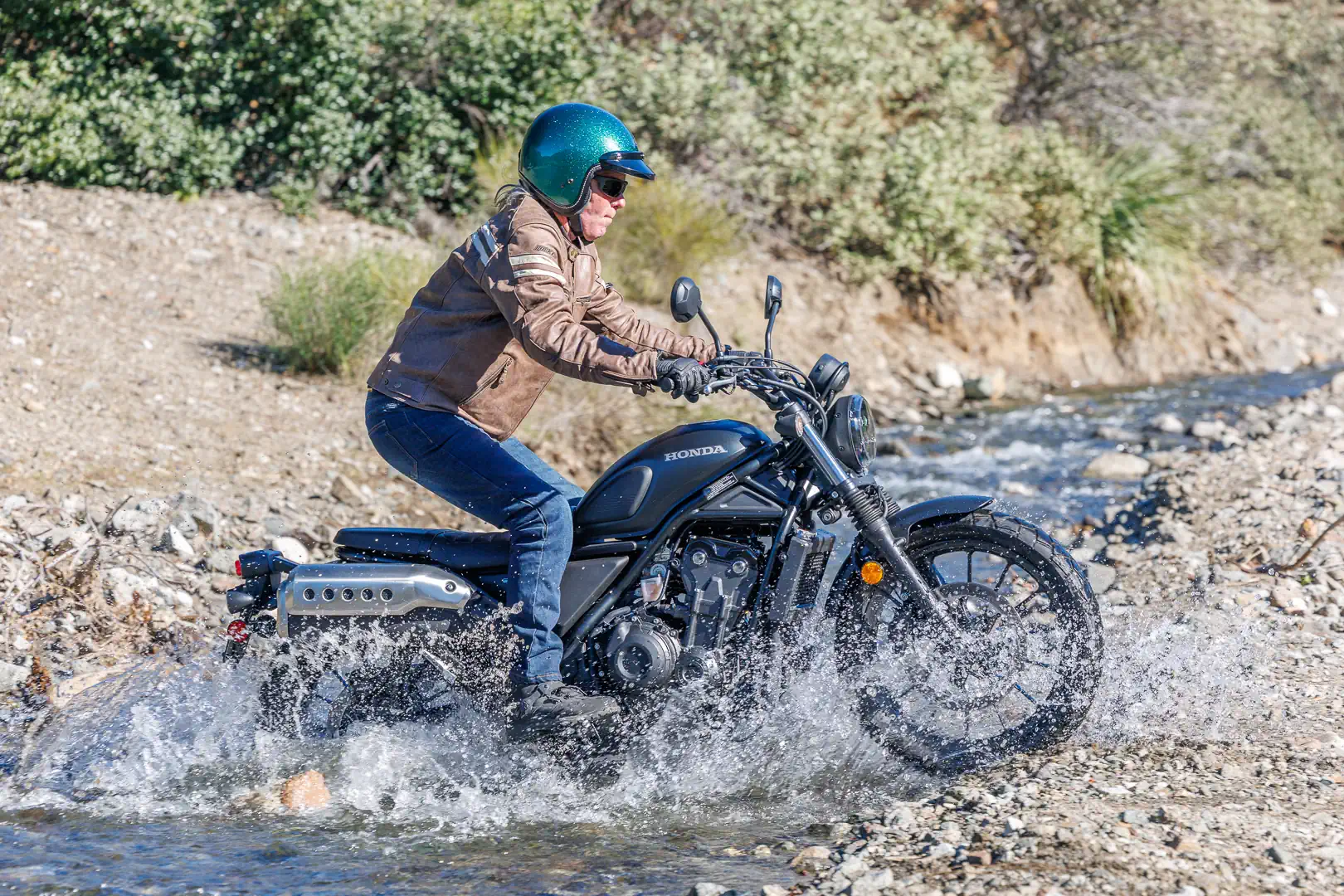
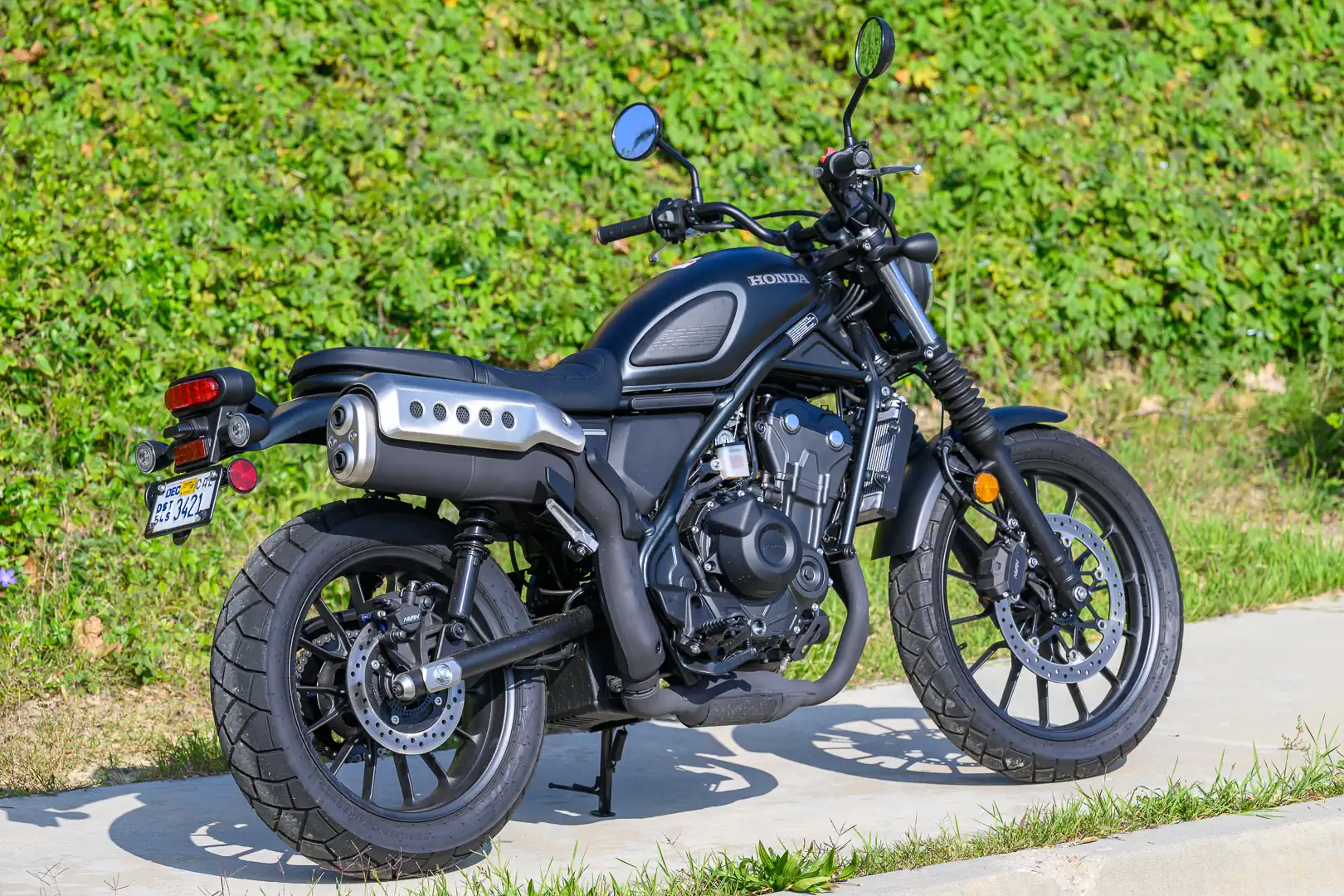
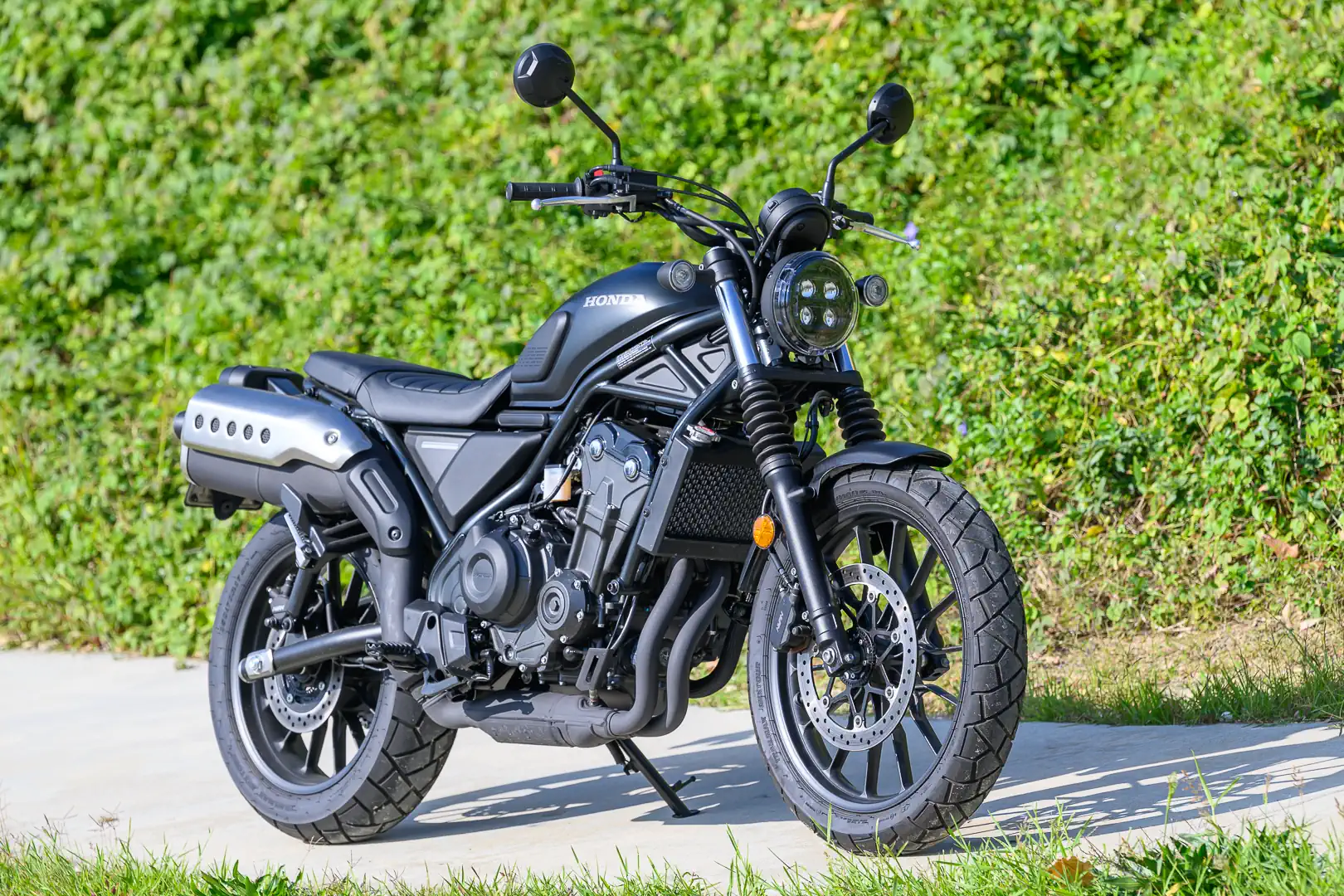
The 2026 Honda SCL500 doesn’t pretend to be a dirt bike, and it doesn’t need to. Honda’s little scrambler is one of the easiest, most likable motorcycles you can buy for around seven grand, and a rolling lesson in where the whole genre came from.
The SCL500 is a genuinely interesting little machine. However, before I get to the bike, indulge me, because this motorcycle carries a huge backstory. You can’t fully appreciate the 2026 Honda SCL500, or any scrambler, for that matter, without knowing where scramblers came from.
First, What Even Is a Scrambler?
A scrambler is what happens when you take a street bike and turn it into something you can ride in the dirt. It’s not a purpose-built off-road machine, and it never was. Manufacturers started with a road bike and made it work better off the pavement: high pipes to clear obstacles, dirt-track-style tires, wider bars, and maybe a slightly higher front fender. Buyers stripped off whatever they didn’t need when they went racing. The scrambler is the ancestor of everything we now call a dual-sport or an adventure bike. It was the original “street bike that can handle some dirt.”
A Quick, Opinionated History
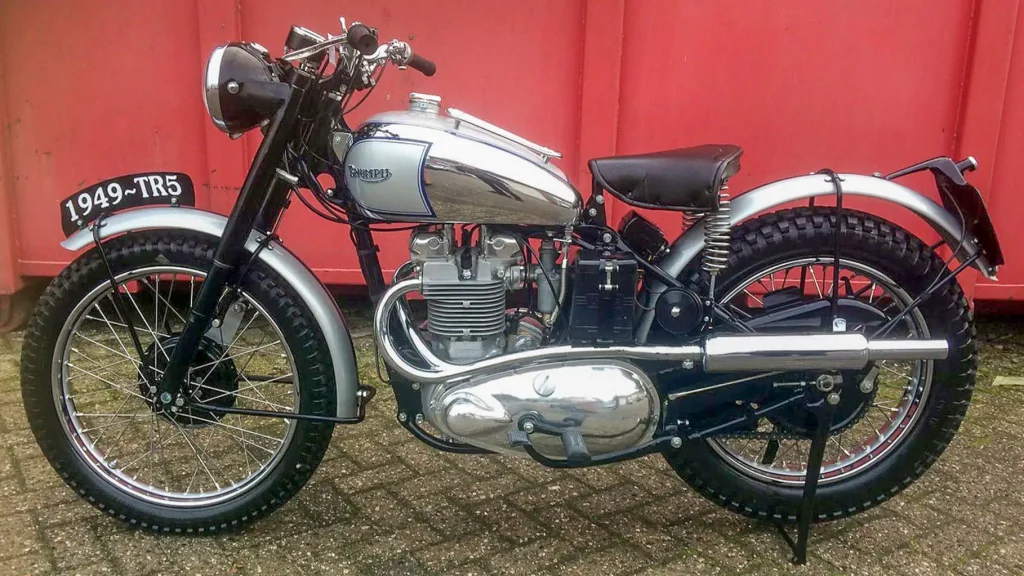
The bike most people point to as the first real scrambler is the 1949 Triumph TR5 Trophy, a 500cc twin. People threw on wider bars, raised the pipes, and went racing, and that template served riders for a long, long time. Through the 1950s, other British bikes got the same treatment, though it was a niche market.
1949 Triumph TR5 Trophy.
Out in the deserts of the Southwest you might be on a big four-stroke, quite often a twin. The 1956 Triumph TR6 Trophy defined the desert sled concept. Many iconic races were won on the big twin, including the Catalina Grand Prix and the Barstow-to-Vegas Hare & Hound.
The scrambler concept exploded in the 1960s. More and more people realized you could race a motorcycle off-road, and they needed bikes to do it. The Japanese took the idea and ran with it.
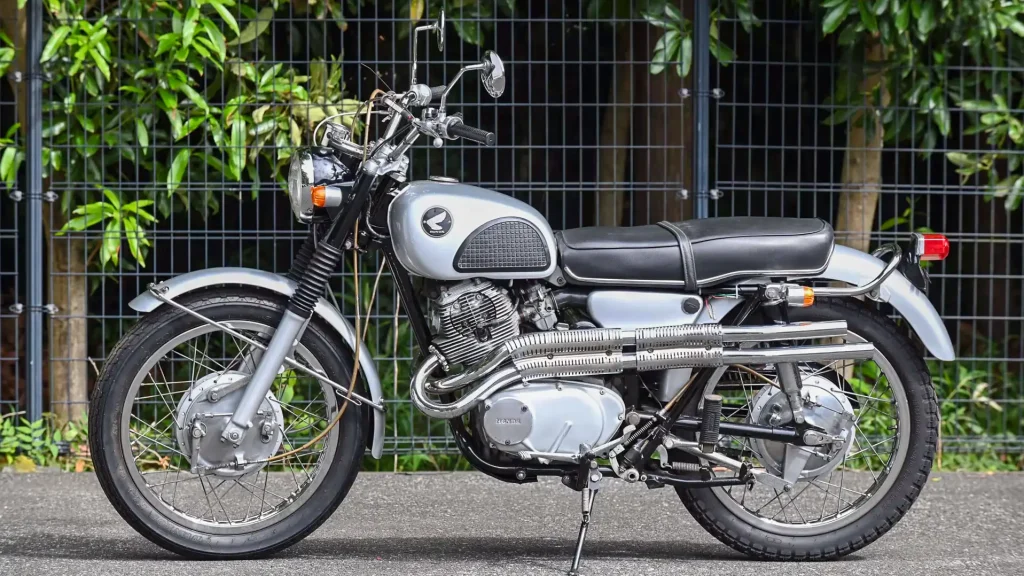
1962 Honda CL72.
Honda kicked things off in 1962 with the CL72 250, following it up with the CL77 305. Even riders with no interest in dirt liked the CLs’ competitive look, and that drove sales. It also didn’t hurt that the Hondas quickly earned a reputation for reliability.
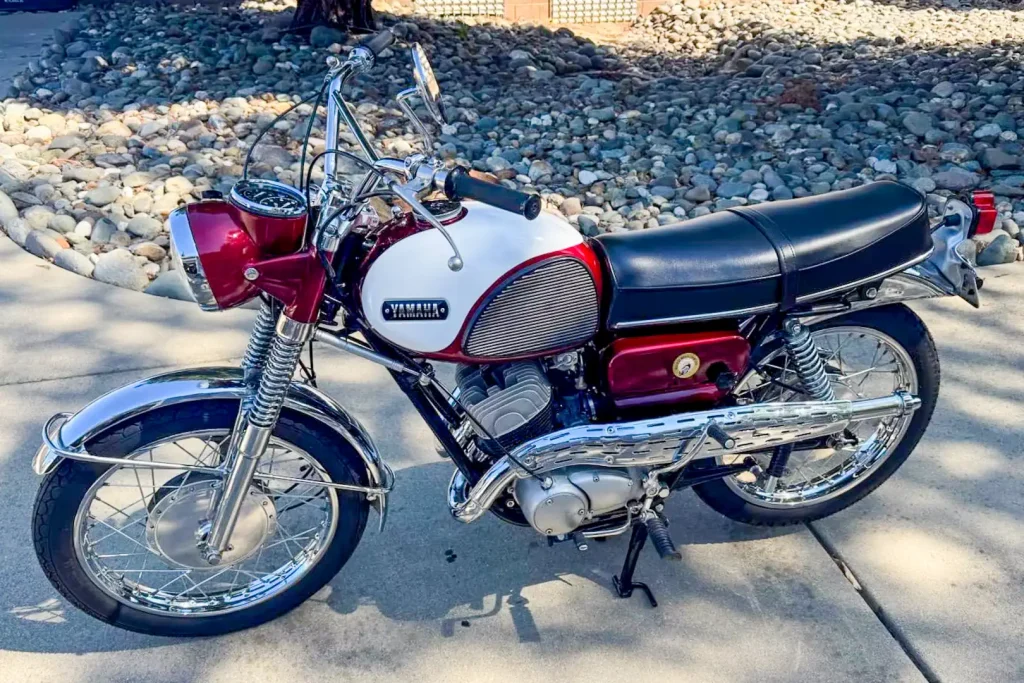
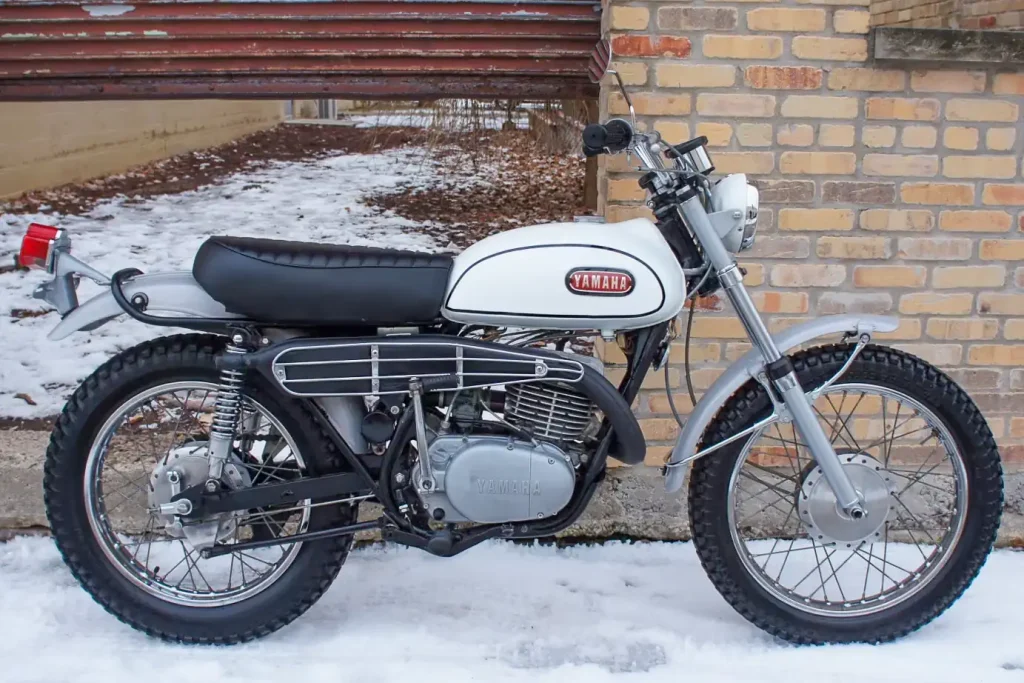
1965 Yamaha YDS3C Big Bear Scrambler.
Then the two-stroke crowd showed up. In 1965, Yamaha rolled out the legendary YDS-3C Big Bear Scrambler, an up-pipe 250 twin that people raced. Named after an iconic race in Southern California’s San Bernardino National Forest, the Big Bear Scrambler served as a legitimate off-road competition bike for its time.
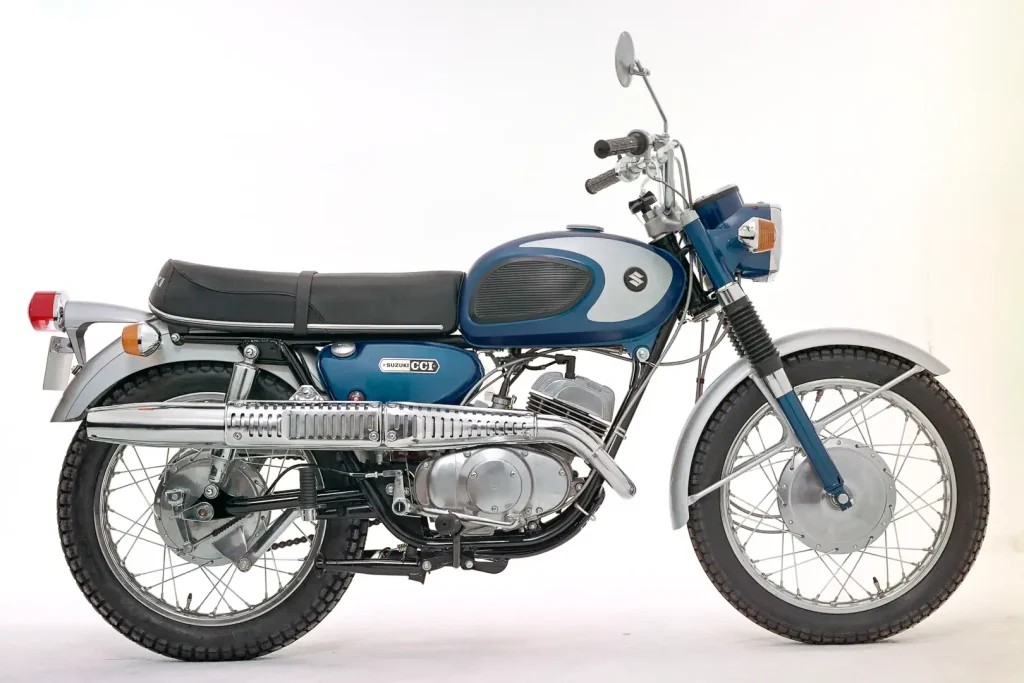
1967 Suzuki Scrambler TC250.
In 1967, Suzuki converted the X6 Hustler 250 street bike into the Scrambler TC250. With up-pipes, a tire swap, and a set of high bars, the two-stroke street twin was ready to go off-road.
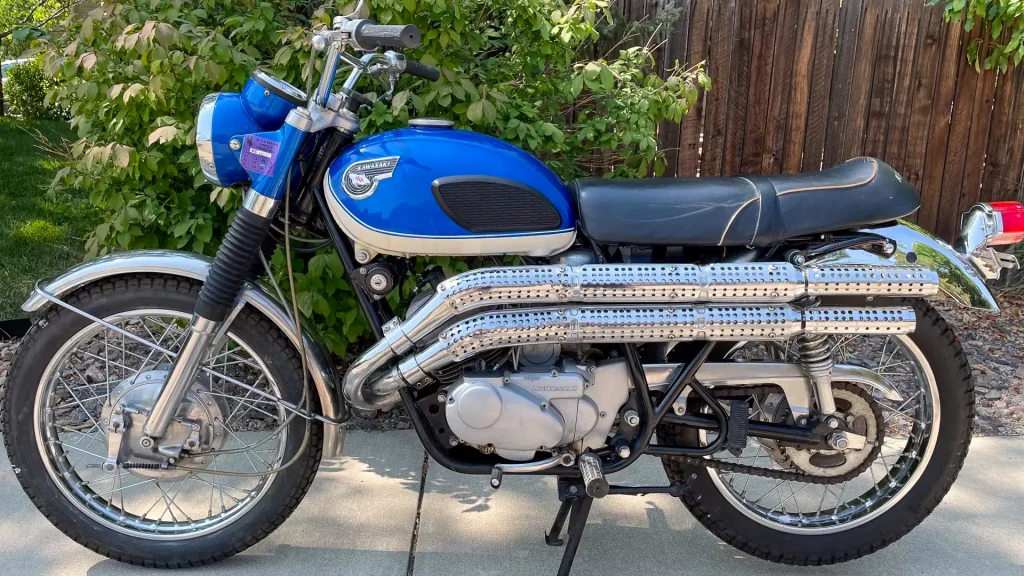
1968 Kawasaki Samurai 250 SS.
The same year, Kawasaki joined the party with the Samurai 250 SS. Now that’s a great name for a motorcycle. The marketing department understood that the name helps sell a bike, and the Samurai paved the way for the Ninja.
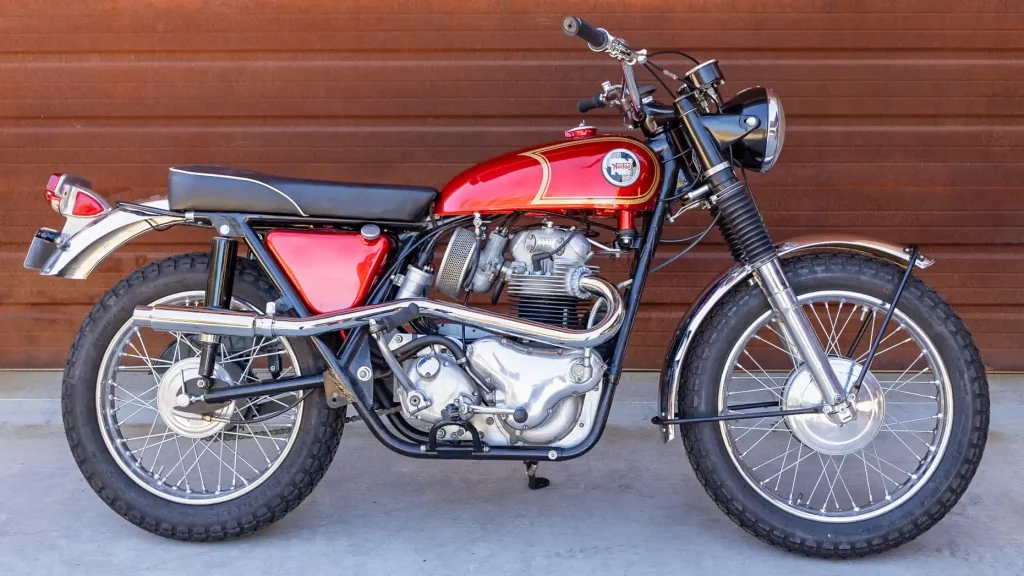
The English struck back in 1967 with the Norton P11. A 750 four-stroke twin, it followed the now-established formula with up-pipes, an off-road handlebar, and tires that worked better in the dirt, while steering clear of true knobbies.
1967 Norton P11.
And then, suddenly, the scrambler craze started dying.
In 1968, Yamaha released the DT-1, the pioneering dual-sport bike. It performed far better off-road than any scrambler because it was lighter and handled better. It ranks with the Honda CB750 for sheer importance in the history of motorcycle development. The entire concept of the modern dual-sport bike traces straight back to it.
1968 Yamaha DT-1.
Once you could buy a purpose-built, lightweight off-road motorcycle that combined performance and dependability, there was no reason to lug a heavy four-stroke twin into the desert. The scrambler concept’s raison d’être evaporated.
When the scrambler genre went extinct in the mid-1970s, almost nobody missed it.
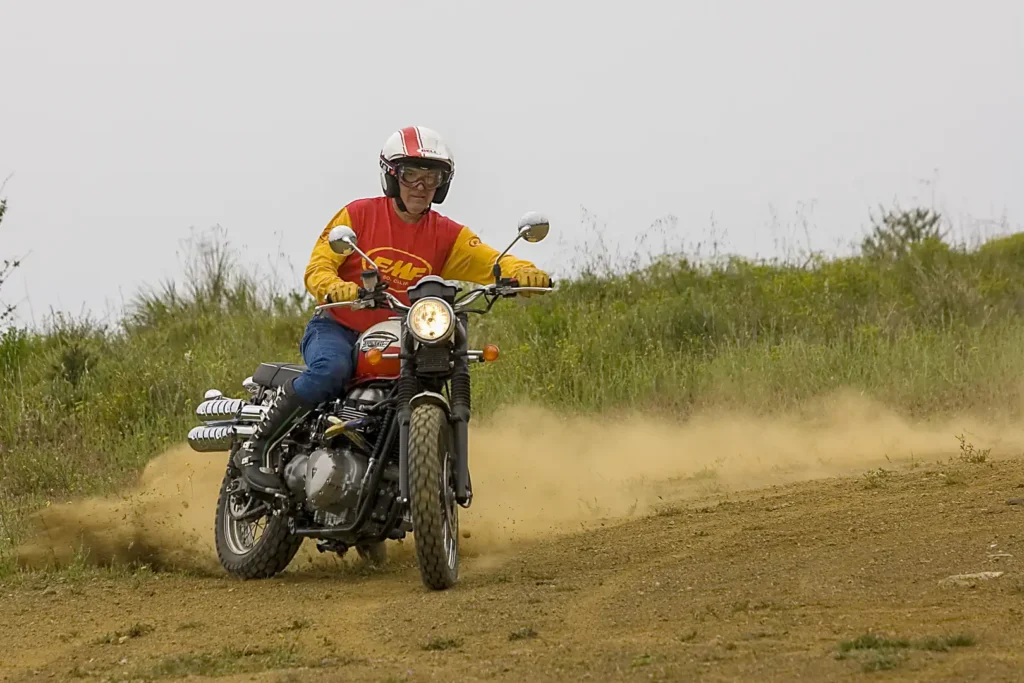
Fast-forward to about 2006, when Triumph revived the idea with the Scrambler. It was Bonneville-based, with the requisite up-pipes and MX handlebar. It sold itself as a style-and-nostalgia retro bike, but I had other ideas.
Editor Don Williams pitching the 2006 Triumph Scrambler sideways in Malibu. Photograph by Kevin Wing.
When I told the Triumph press rep that I was going to put knobbies on the 2006 Triumph Scrambler test bike and enter a desert race, she nearly had a heart attack. I was told in no uncertain terms that it was a street bike and not intended for off-road riding, let alone competition.
That’s the modern scrambler in a nutshell. Most of today’s versions are street bikes wearing the look, though some motorcycles, notably the Triumph Scrambler 1200 variant, are designed to take on the dirt with aplomb.
Cruiser Turns Off-Roader
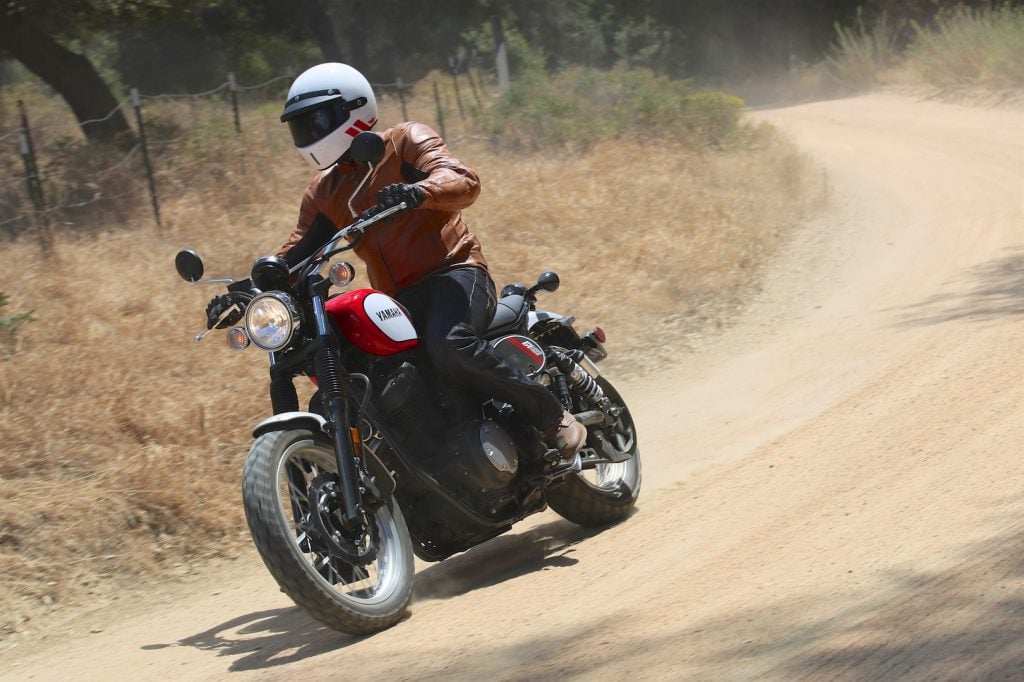
When Yamaha took a shot at the retro scrambler market with the 2017 SCR950, it was done with an unorthodox approach. Instead of basing it on, say, the MT-07 street bike, which would be period-appropriate, Yamaha modified the Bolt 950 V-twin cruiser.
It was a novel idea, and one that flopped. By 2019, the SCR950 had disappeared before I even had a chance to ride one!
Nic de Sena checks out the short-lived Yamaha SCR950. Photograph by Brian J. Nelson
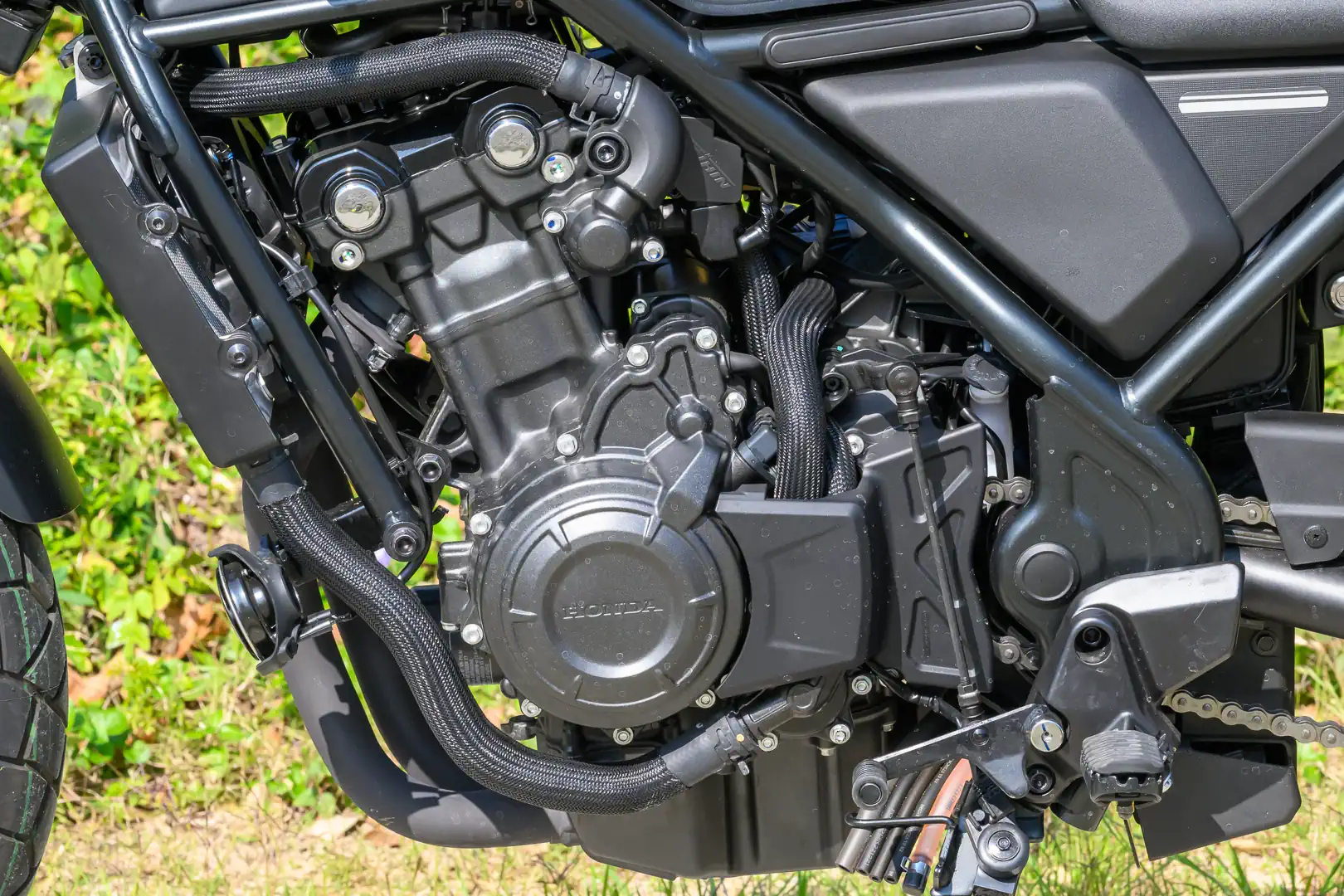
Which brings us, finally, to the Honda SCL500. You might have expected Honda to lead the scrambler revival, given that it invented the Japanese scrambler. Instead, the Japanese juggernaut arrived in 2023 with the SCL500, which followed Yamaha’s formula. The SCL500 is derived from the Rebel 500 cruiser chassis rather than the CB500F naked, upright sport bike.
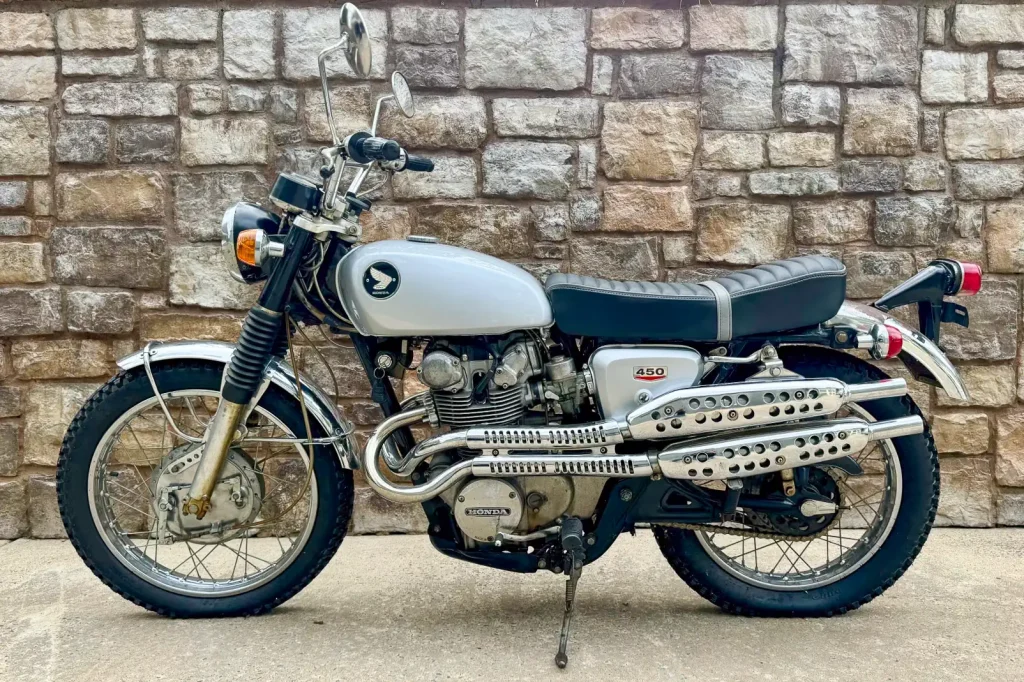
Throughout my time with this bike, I kept in mind the Honda CL450 that was sold from 1968 to 1974. Why? Well, they’re the closest Honda has in displacement at 445cc and 471cc, and both are DOHC parallel twins.
1968 Honda CL450.
The CL450 was actually the least “scrambler-y” of Honda’s scramblers. It was a big bike, derived from the CB450 (aka Black Bomber). The CB450 was a pivotal motorcycle in its own right: a DOHC twin when the British twins still sported pushrods.
Despite being Honda’s flagship for the second half of the 1960s, the CB450 didn’t have the impact of the CB750 that followed in 1969. Regardless, the CB450 and CL450 showed Japan could build a highly complex mass-production motor to high reliability standards.
Engine and Drivetrain
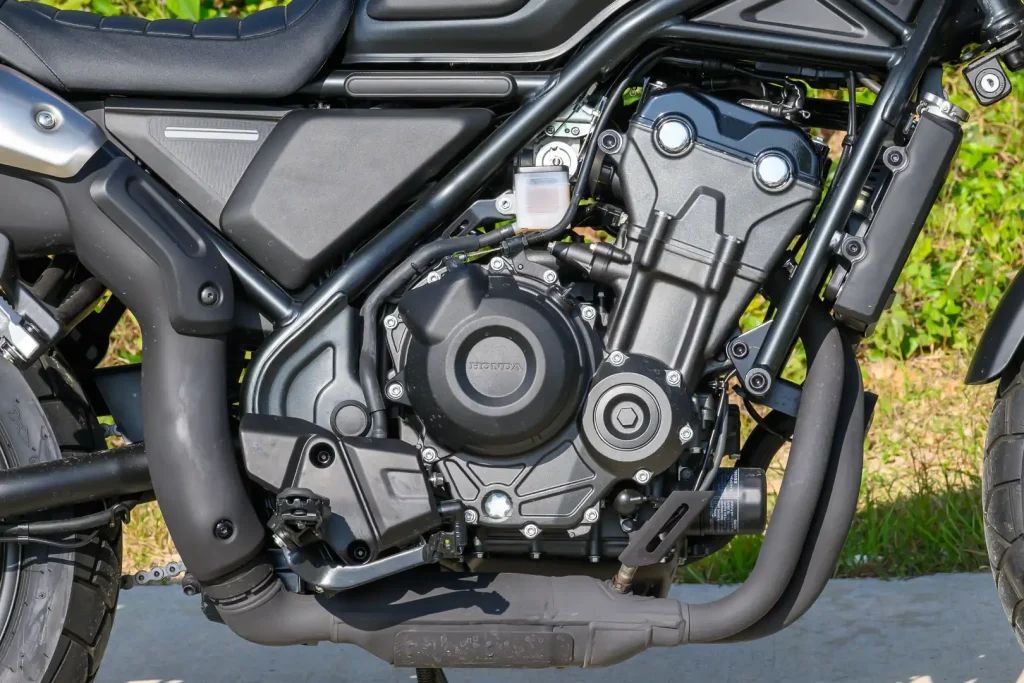
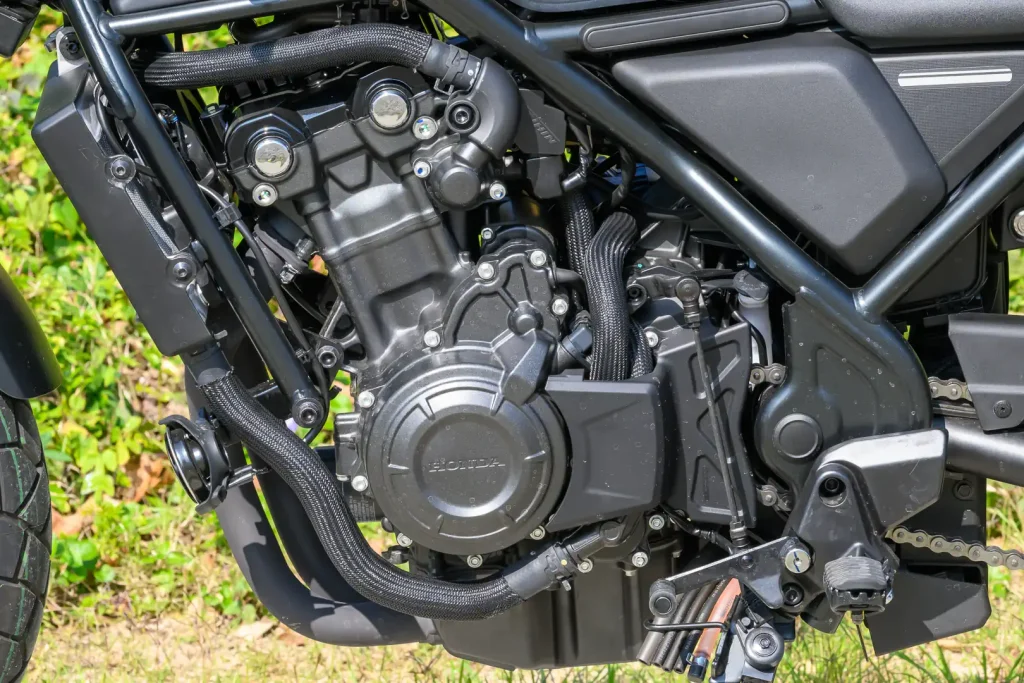
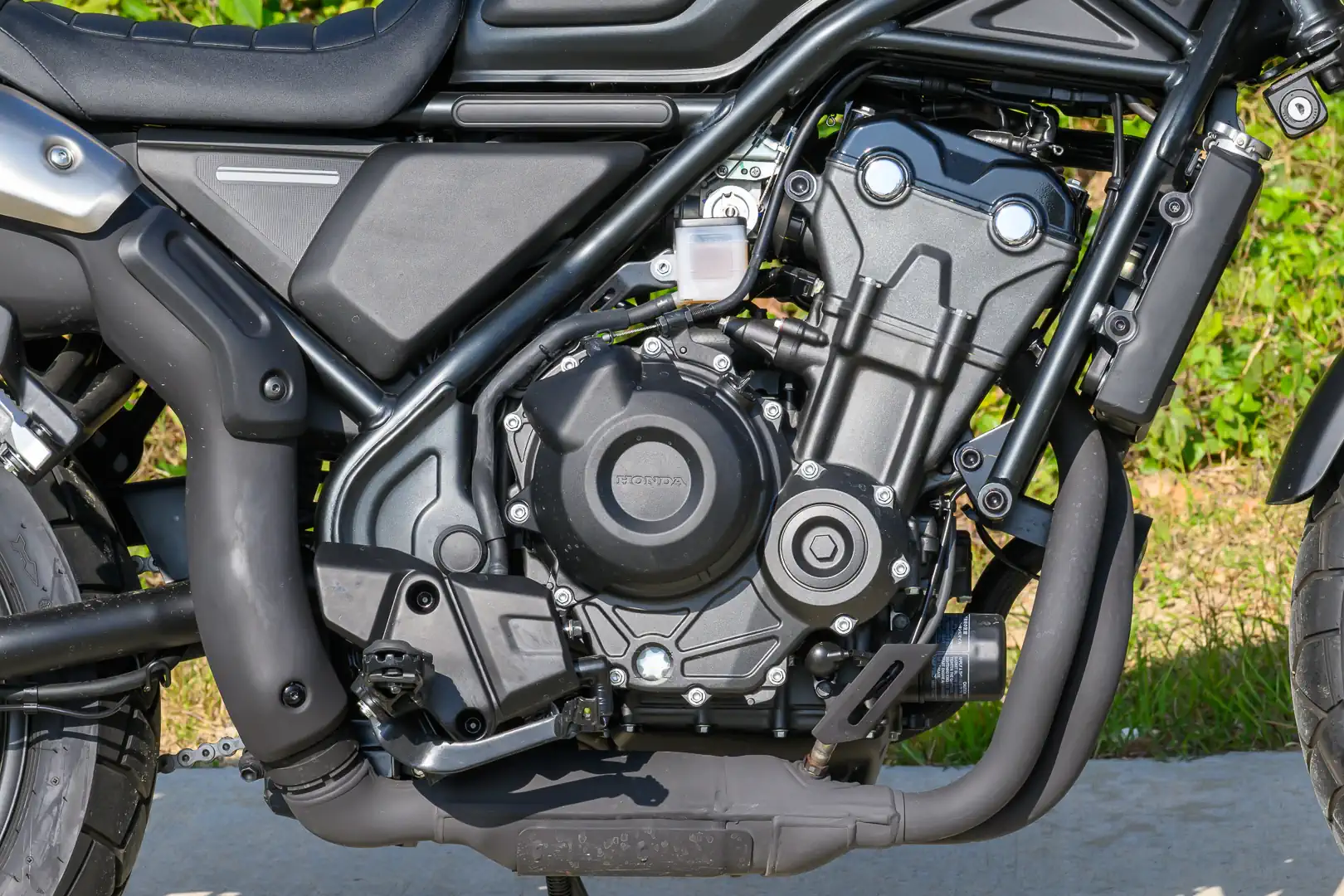
The SCL500 runs the same 471cc, liquid-cooled, fuel-injected parallel twin that’s done such good work in the Rebel 500 cruiser, CB500F naked standard, CBR500R faired sportbike, and CB500X/NX500 adventure bike. Nearly square in bore and stroke, the powerplant isn’t built to be revved to the moon. Instead, it’s a moderate, friendly motor with strong low-rpm torque and a smooth, linear delivery.
Now compare that to the old CL450. That was a high-revving, oversquare, air-cooled, carbureted screamer that you had to wind out to around 9000 rpm to extract roughly 45 horsepower. The peak power numbers between the two bikes aren’t that far apart, though figures may have been a bit inflated in the 1960s. The CL450 made a bit more torque than you might anticipate, around 29 lb-ft, compared to the SCL500’s 32 lb-ft peak.
That doesn’t tell the whole story because the Honda SCL500 puts its grunt down low where you actually use it, while the CL450 made you work for everything. The SCL’s EFI and electronic ignition replace the stone-age carb and battery-and-coil of the CL, and we can all be thankful for that. Also, the SCL500 has a 6-speed gearbox with an assist and slipper clutch, compared to the 5-speed transmission and basic clutch in the Honda CL450. Both bikes top out around 100 mph.
Chassis, Suspension, and Brakes
The SCL500 uses a tubular steel frame derived from the Rebel 500, with a new subframe to carry that tall, flat scrambler seat. The suspension is where the gap with the CL450 really opens up: 5.9 inches of travel up front and 5.7 inches at the rear, on a 41mm fork and twin preload-adjustable shocks. The CL450 had something like four inches up front, so we’re talking nearly a 50 percent increase. Remember, the quality of the action is far, far superior on the SCL500, so it’s not just about the quantity of travel.
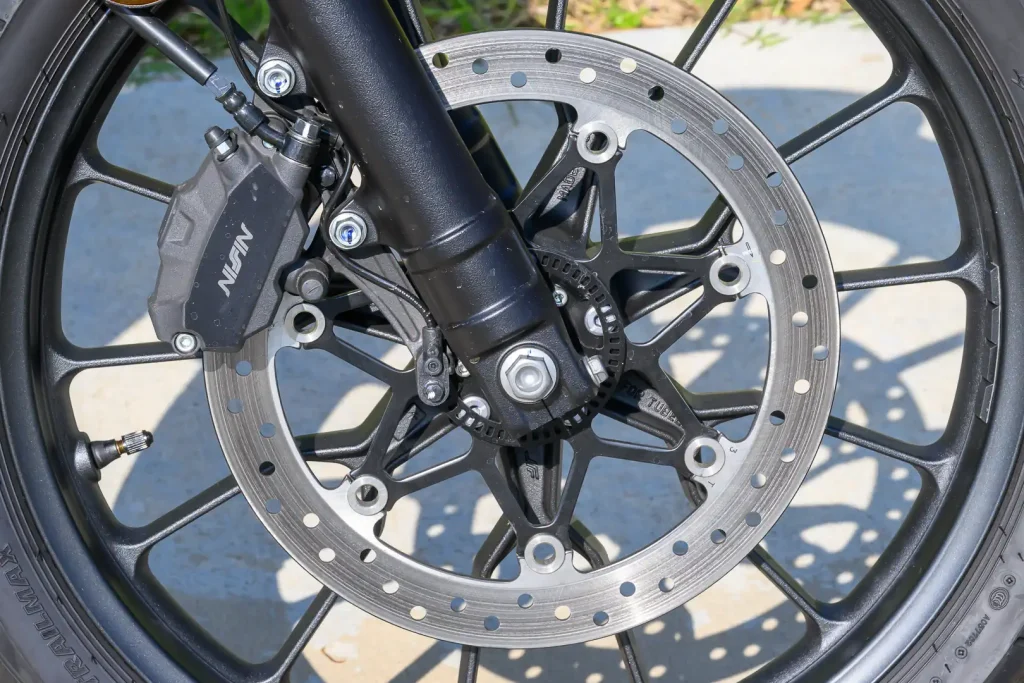
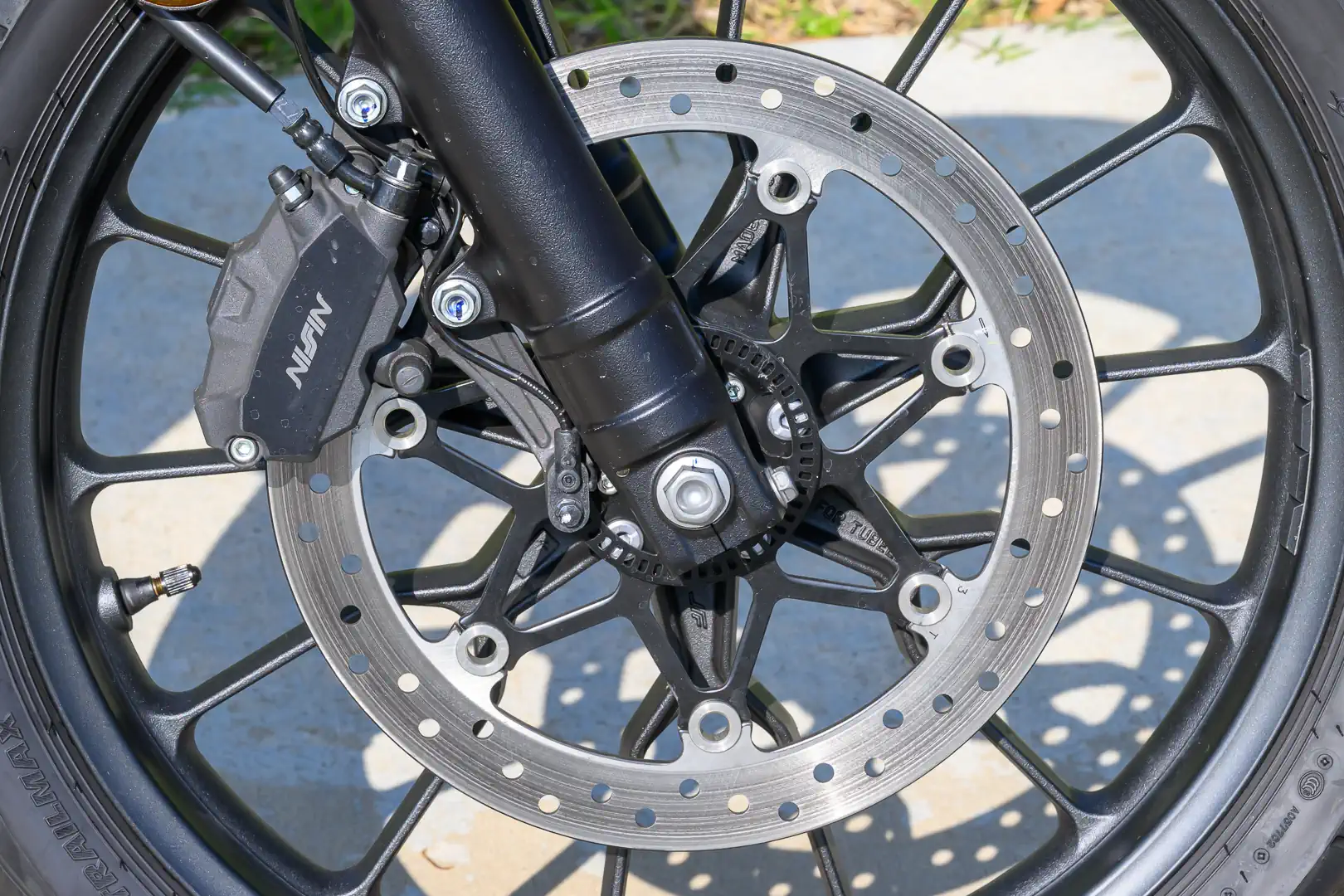
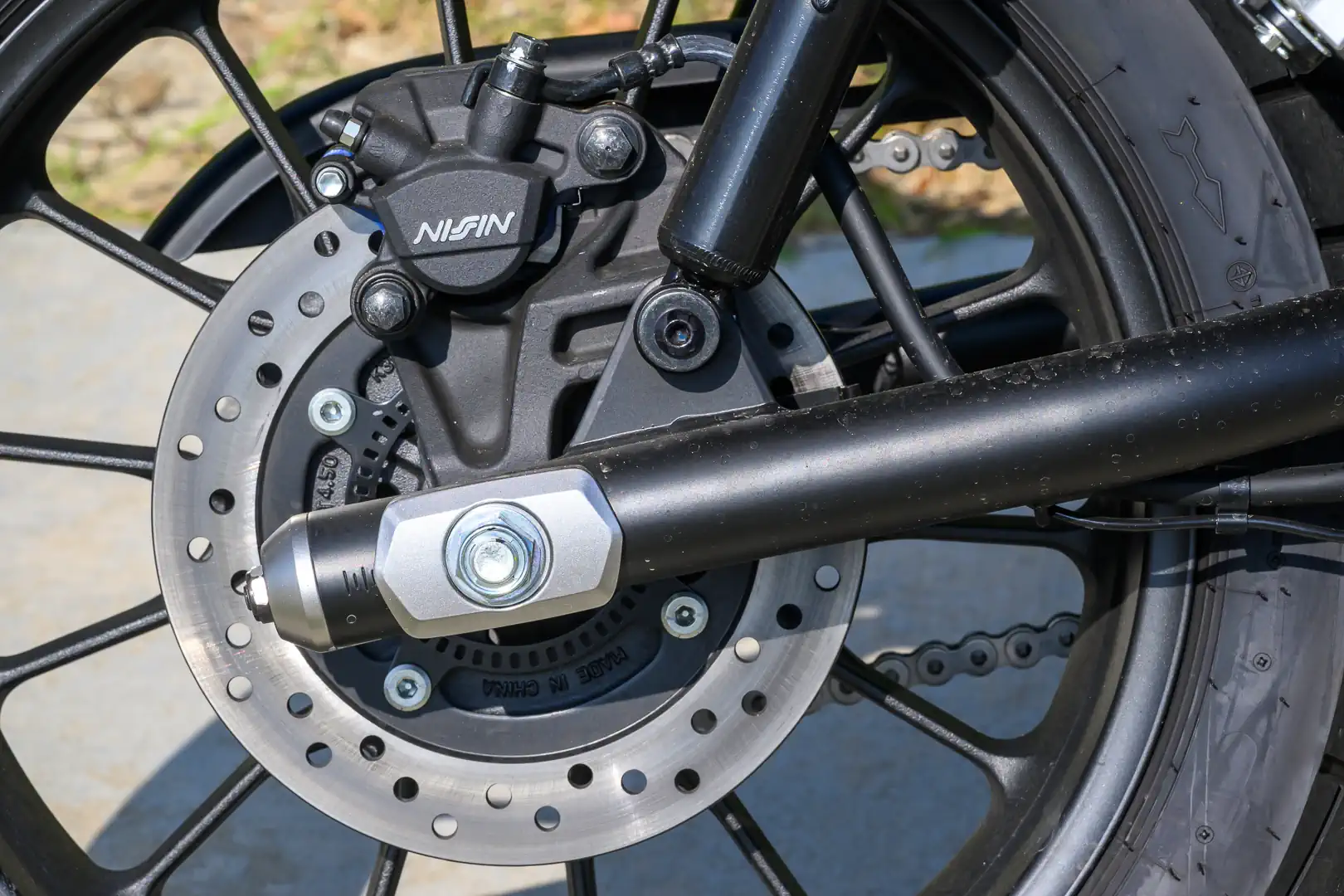
Brakes are another night-and-day difference. The SCL500 gets a 310mm front disc and a 240mm rear, both with ABS. The CL450 had drums. The SCL replaces the CL450’s 19-/18-inch wheel combo with the now-traditional 19-/17-inch pairing. Tires obviously get a huge upgrade, and are now tubeless.
Seat heights and curb weights offer interesting comparisons. You would expect the ancient CL450 to have a lower seat height due to its shorter-travel suspension. Instead, the SCL500’s 31.1-inch seat height is about an inch lower than the CL450. The CL450 hit the scales at 406 pounds with its 2.4-gallon fuel tank filled, compared to 425 pounds for the SCL500 with 3.2 gallons aboard after a fill-up.
Going Riding
This is where the comparison ends. I’ve never ridden a CL450, though I wouldn’t pass up the opportunity if one arose. Regardless, we’re all well aware of how many advances there have been in 60 years, so the SCL500 is superior in every way on the street or in the dirt.
The SCL500 is one of Honda’s appliance motorcycles. That’s a bit of a backhanded compliment, granted, but it’s not unusual for Hondas. An appliance does exactly what you expect. You push the button on a blender, and it blends, perfectly, every time. You know precisely what you’re going to get, so I swung my leg over the SCL500’s seat expecting competent and forgettable.
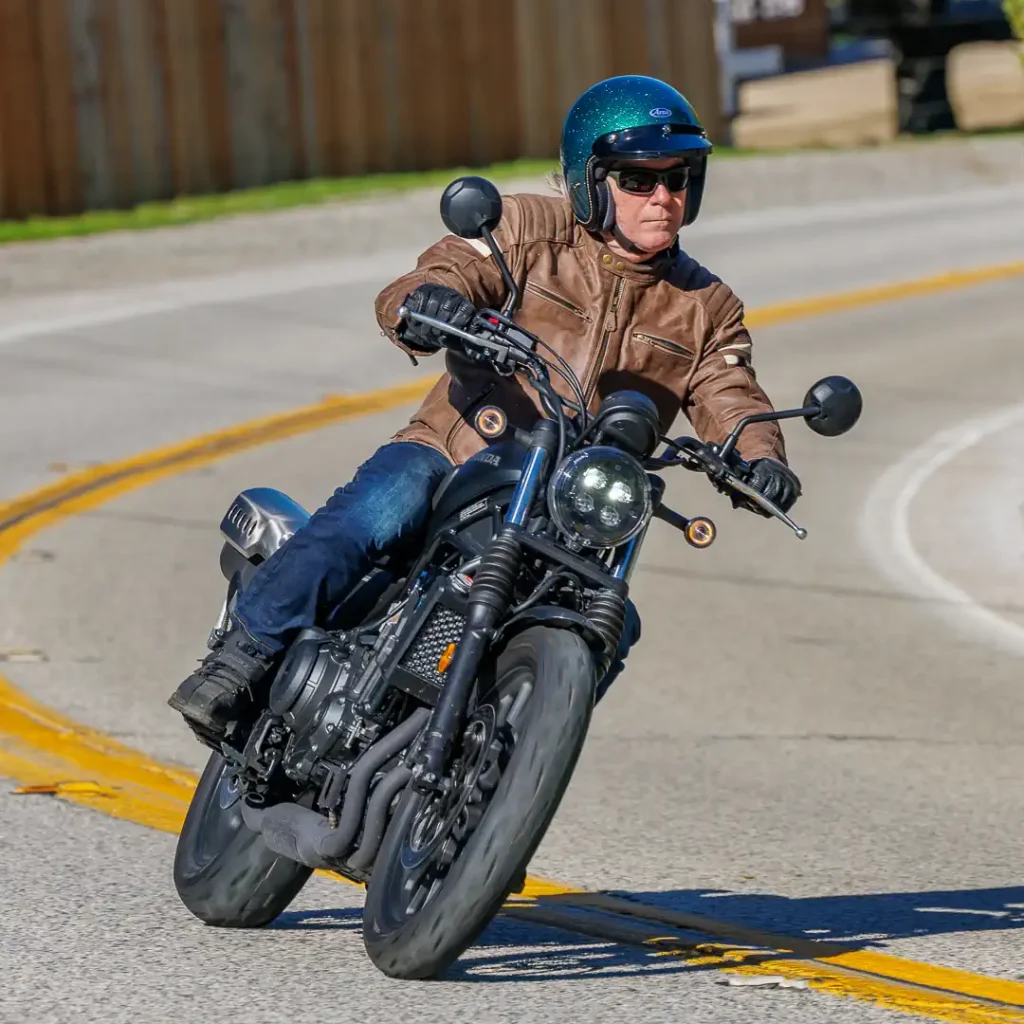
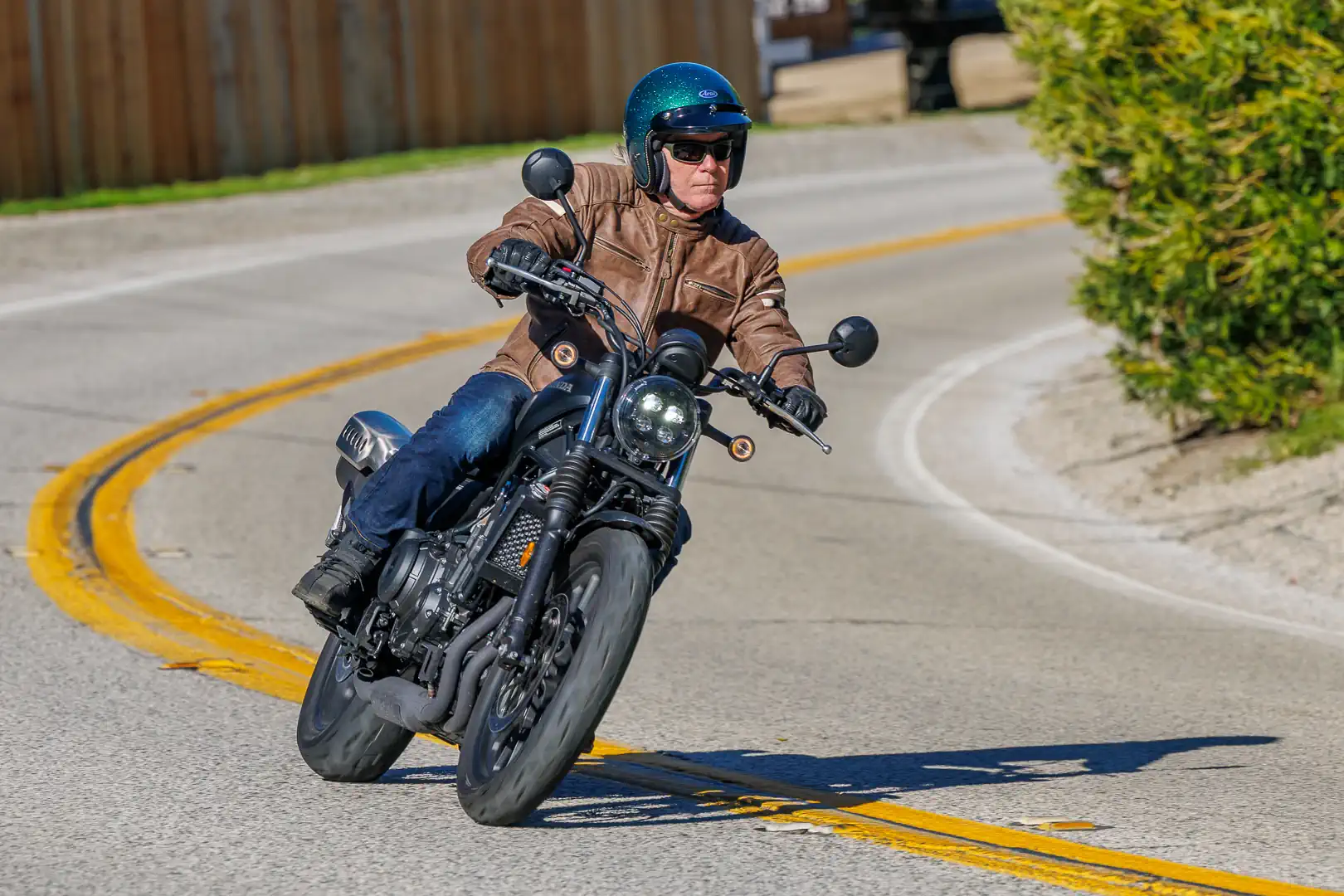
Regardless, the 2026 Honda SCL500 won me over. I scrambled everywhere around Los Angeles: up, down, and across the Hollywood Hills; on Chevy Chase Drive from Pasadena to Glendale; into the Angeles National Forest (not always on pavement); and onto the freeways when I had to. The SCL turned out to be plain fun.
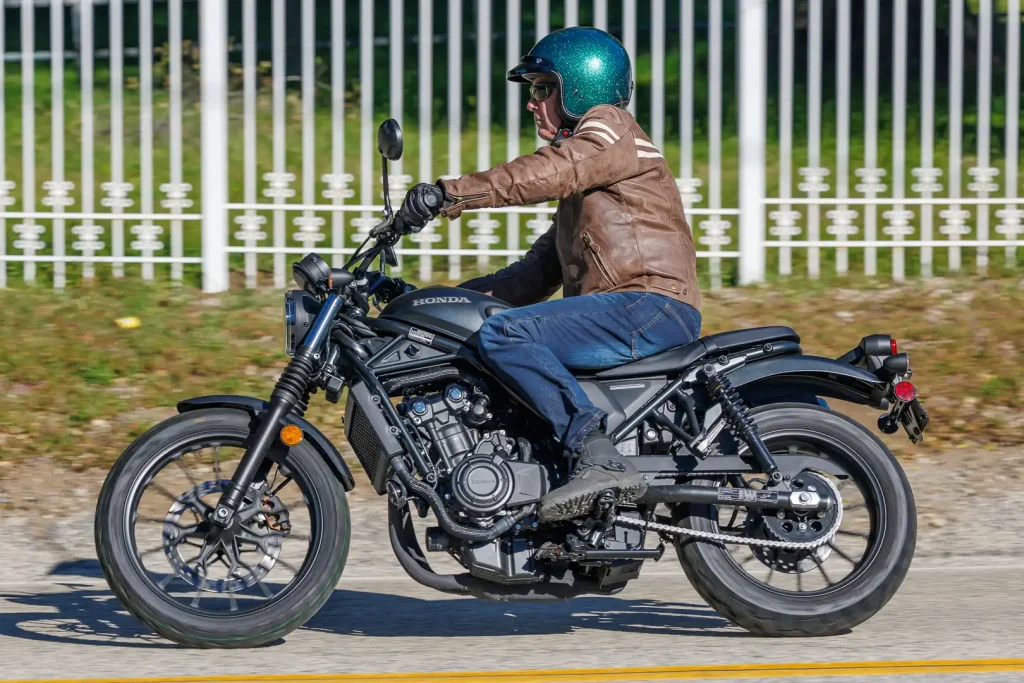
The riding position is just right. It’s not sport or aggressively off-road, and it’s nothing like a cruiser. It’s as standard as can be. You sit on it, and the relationship between the seat, the pegs, and the grips is immediately comfortable and natural. That’s harder to engineer than it sounds, and it’s a big part of why the bike disappears underneath you.
Handling works the same way. The SCL500 is as neutral as it gets. Sure, if you push it hard, you’ll find handling quirks, with most of them coming from the adv-style Dunlop Trailmax Mixtour 19-inch front tire. However, should you find yourself complaining about the chassis or motor, it’s time to simply trade up to a more specialized ride that suits your needs. All-arounders will wonder what you’re fussing about.
The Honda SCL500 is fun in a way that doesn’t demand anything of you. You stop thinking about shifting, clutching, and the throttle, because it all happens instinctively. With those extra brain cycles, you start looking at details on buildings, that house on the corner you never noticed, or that almost-hidden dirt path. You get to enjoy the pure experience of riding, rather than managing it.
The power delivery is mild enough that a newer rider won’t feel overwhelmed. Yet, there’s plenty there to pull cleanly away from a stop and leave the cars behind. As a fuel-injected modern twin used in sportbikes, a cruiser, and an adventure bike, albeit in different tunes, the DOHC motor has exactly the power it needs and includes no drama when delivering it.
The suspension deserves a special notice. With almost six inches of travel at both ends, the SCL500 simply does not care about bad pavement; that’s a huge part of the scrambler appeal. Broken roads, speed bumps, the kind of potholes that would jolt you on a sportier bike: it soaks them up. Still, it’s not plush. Hit a hard, square-edged obstacle, and you’ll feel it. Regardless, the damping and spring rates are well sorted out for its mission. The SCL is comfortable without feeling sloppy.
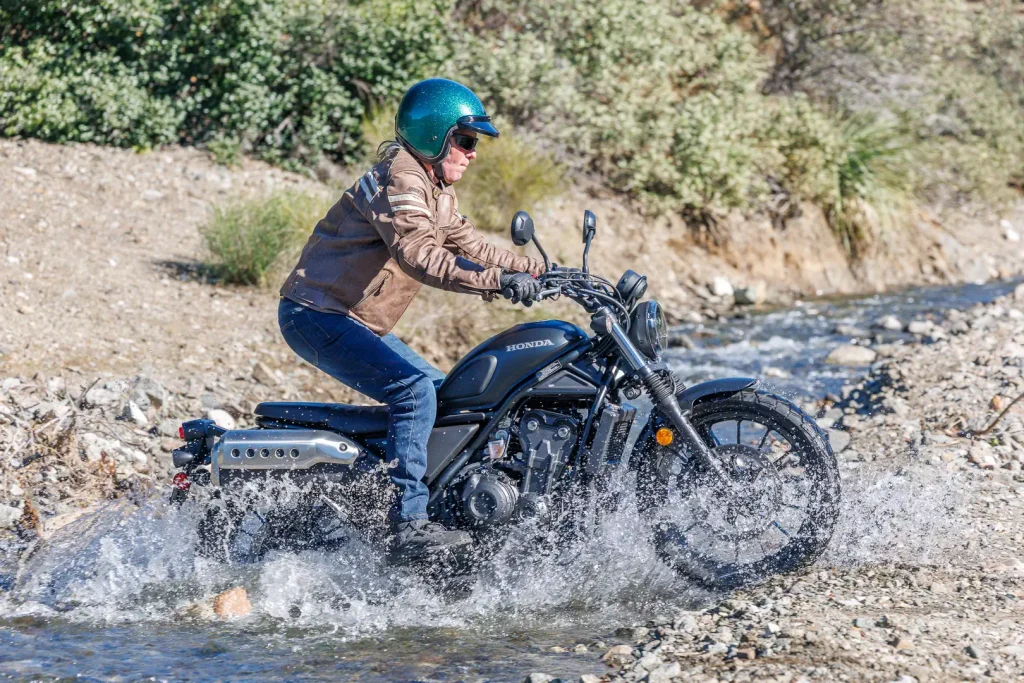
Being a scrambler, I couldn’t resist investigative spins in the dirt. The Dunlops are good on the road, and fine in urban dirt if you ride with confidence and don’t push your luck. We have all seen the insane things professional racers can do with a stock bike like the SCL, so the sky’s the limit if you have the talent and bravery. For the rest of us, take it easy and enjoy the off-road portion of your ride.
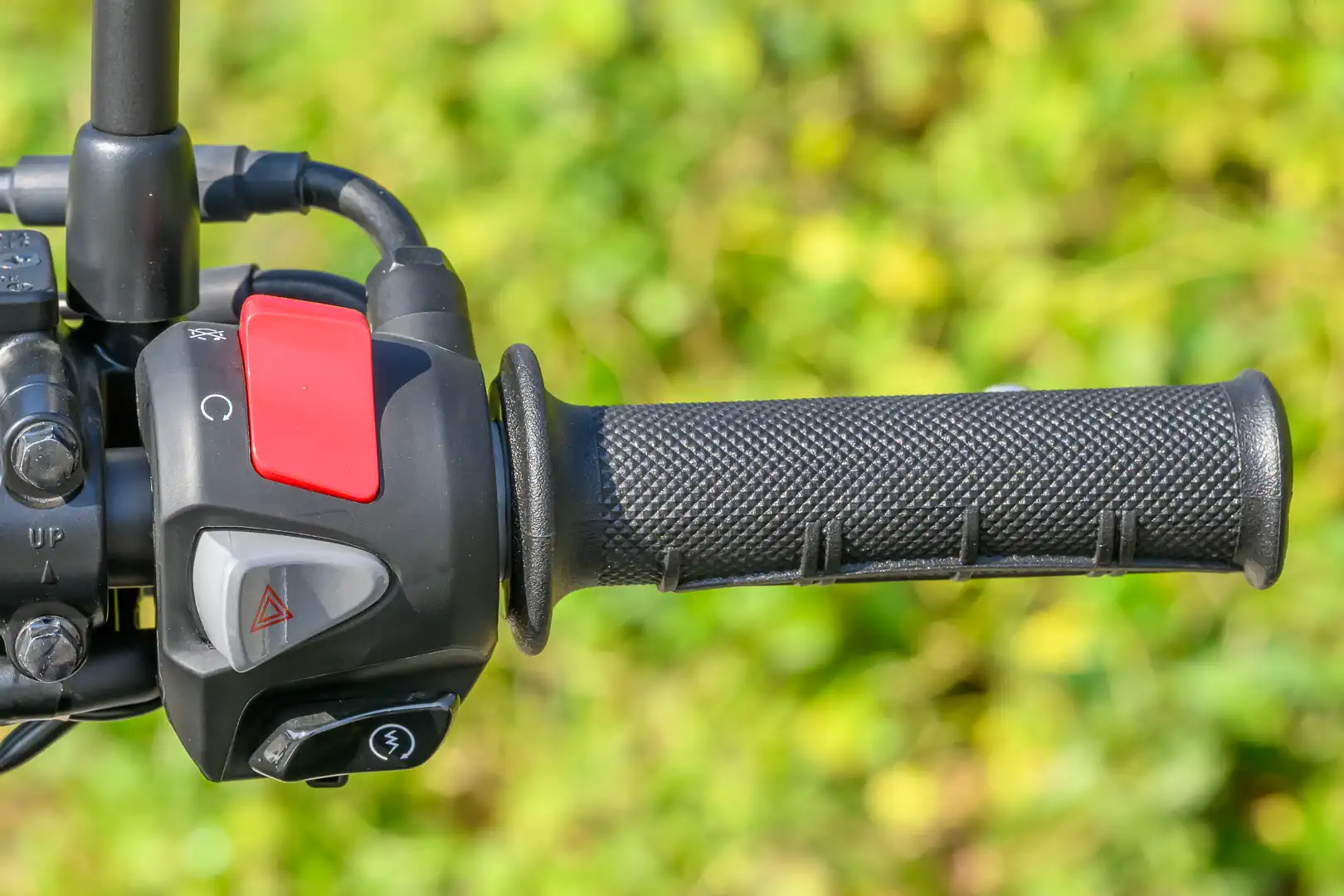
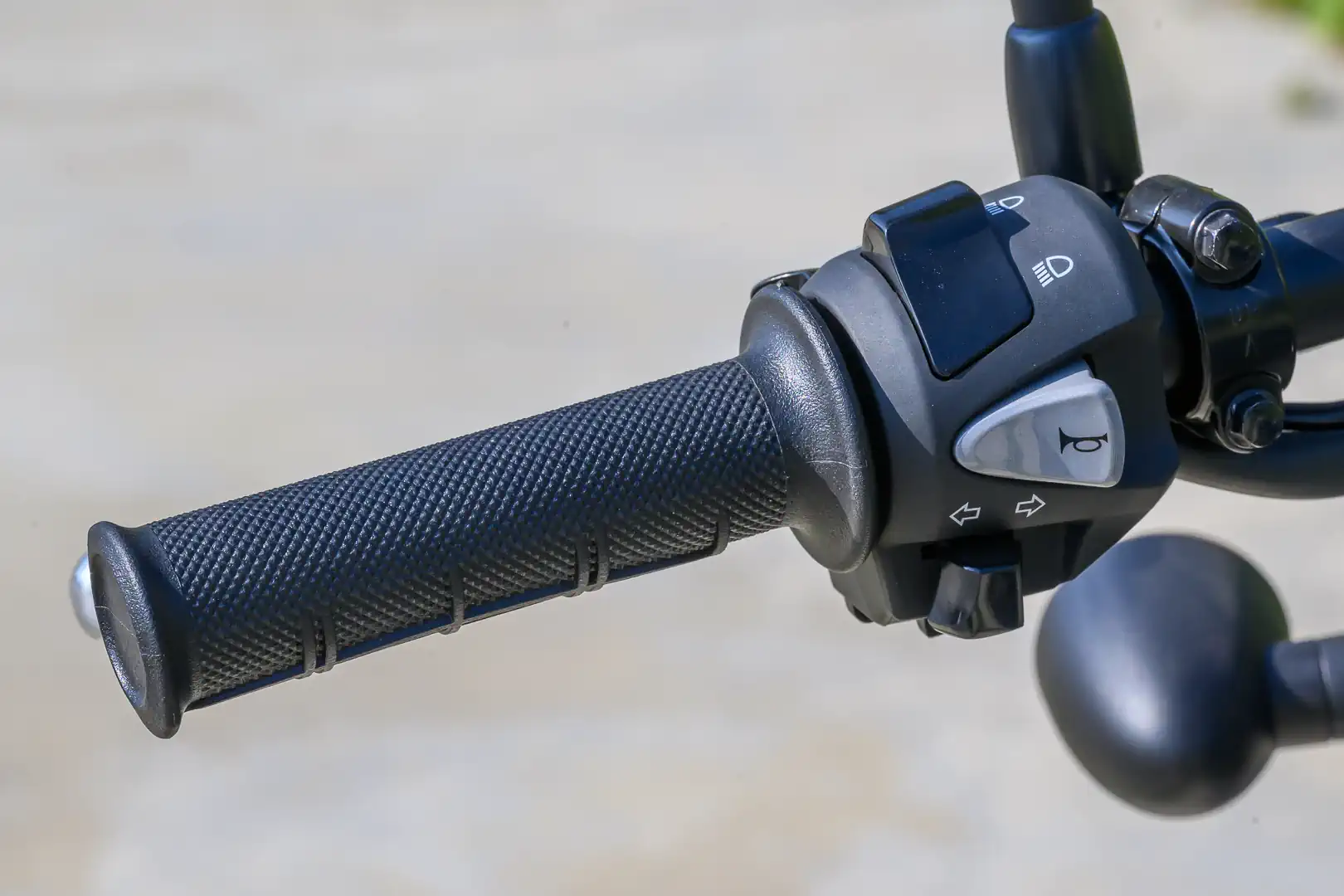
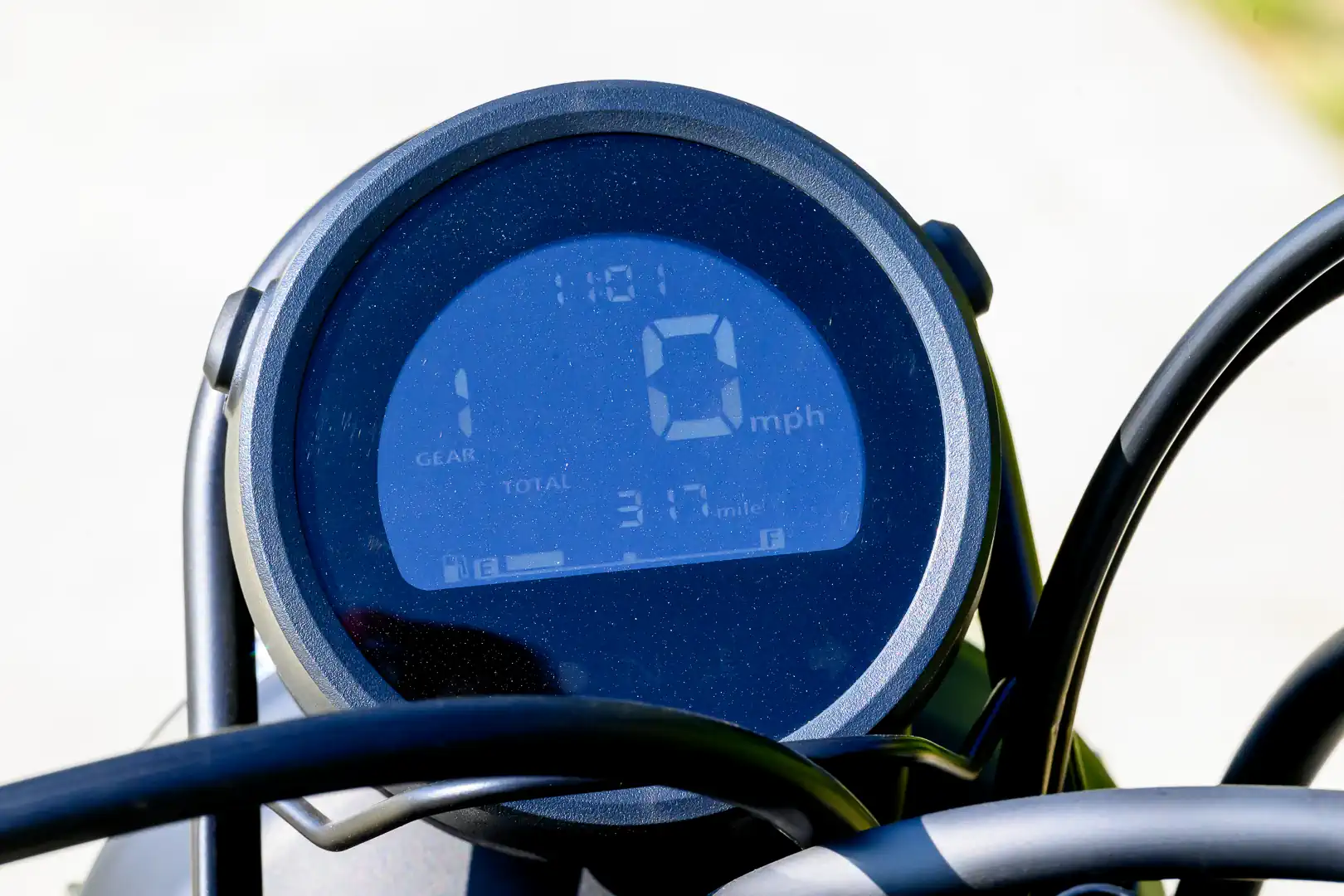
The switchgear all works as intended, with no learning curve. The retro-round LCD dash is on the cheap side in the TFT era, and make sure you turn up the brightness. Excellent rearview mirrors make the bike a great commuting companion, and it’s a great urban bike.
The One Styling Caveat
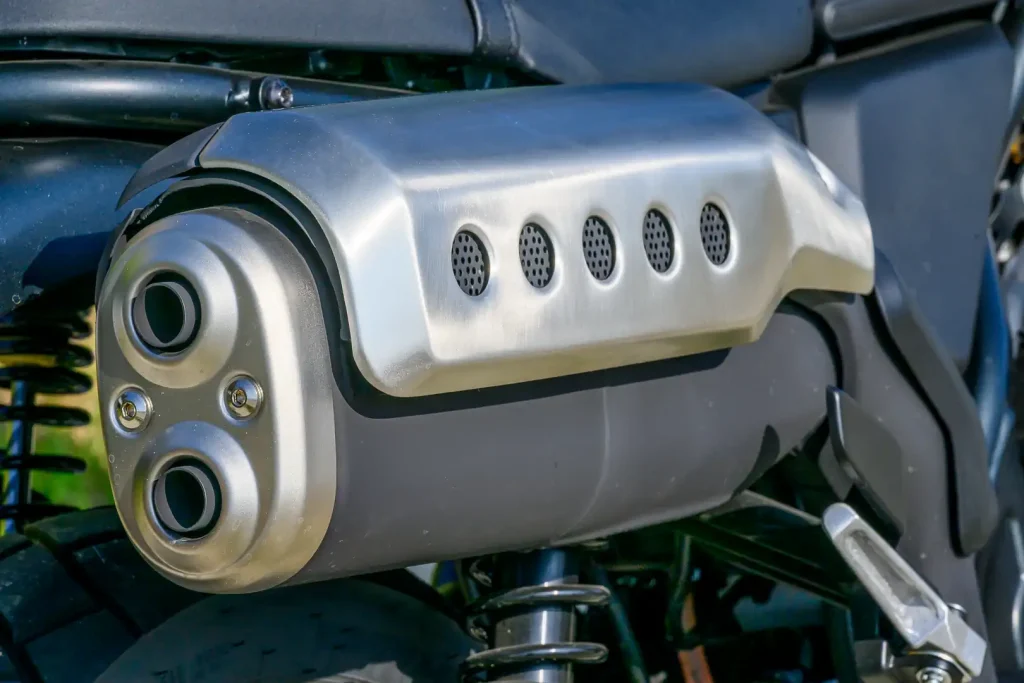
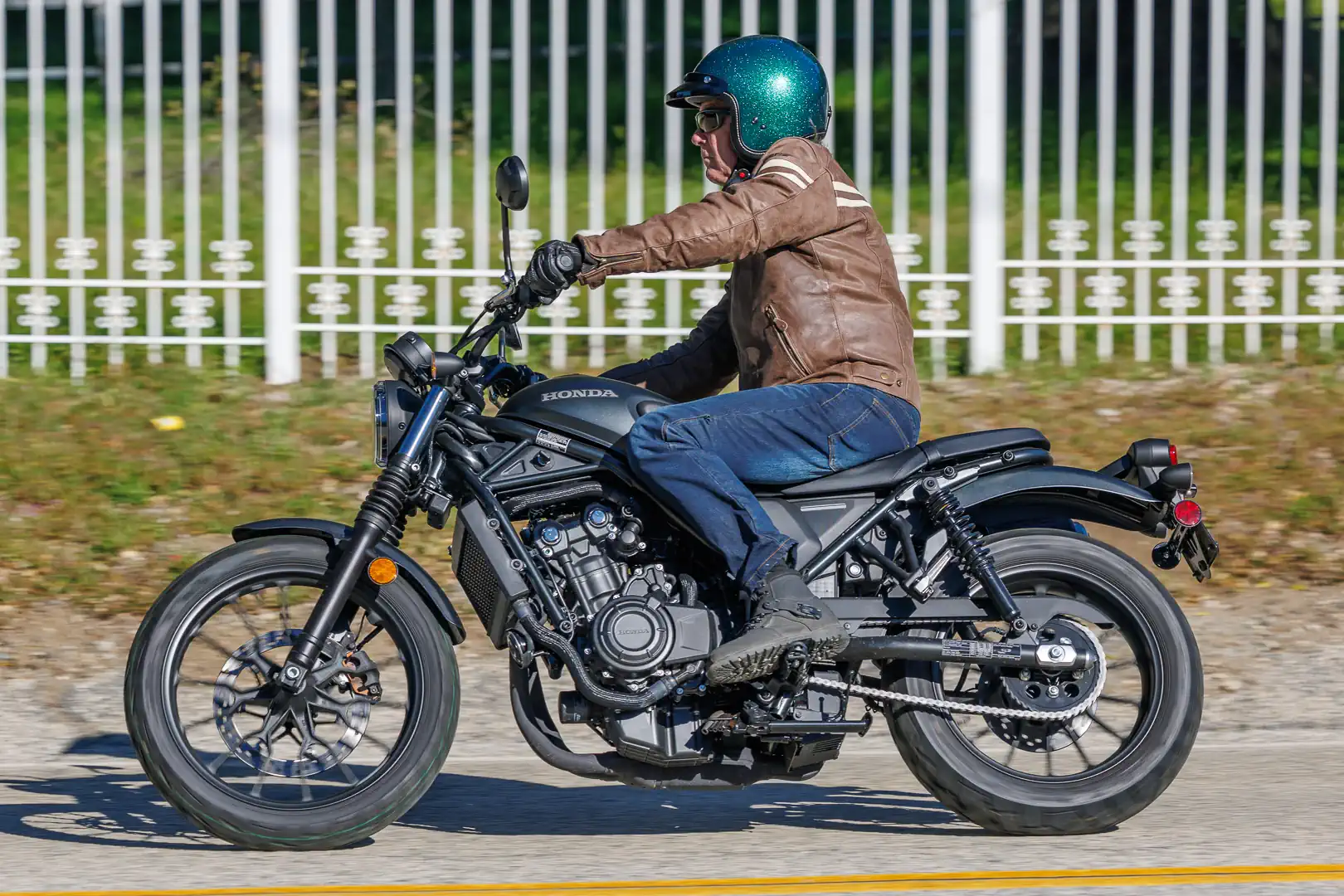
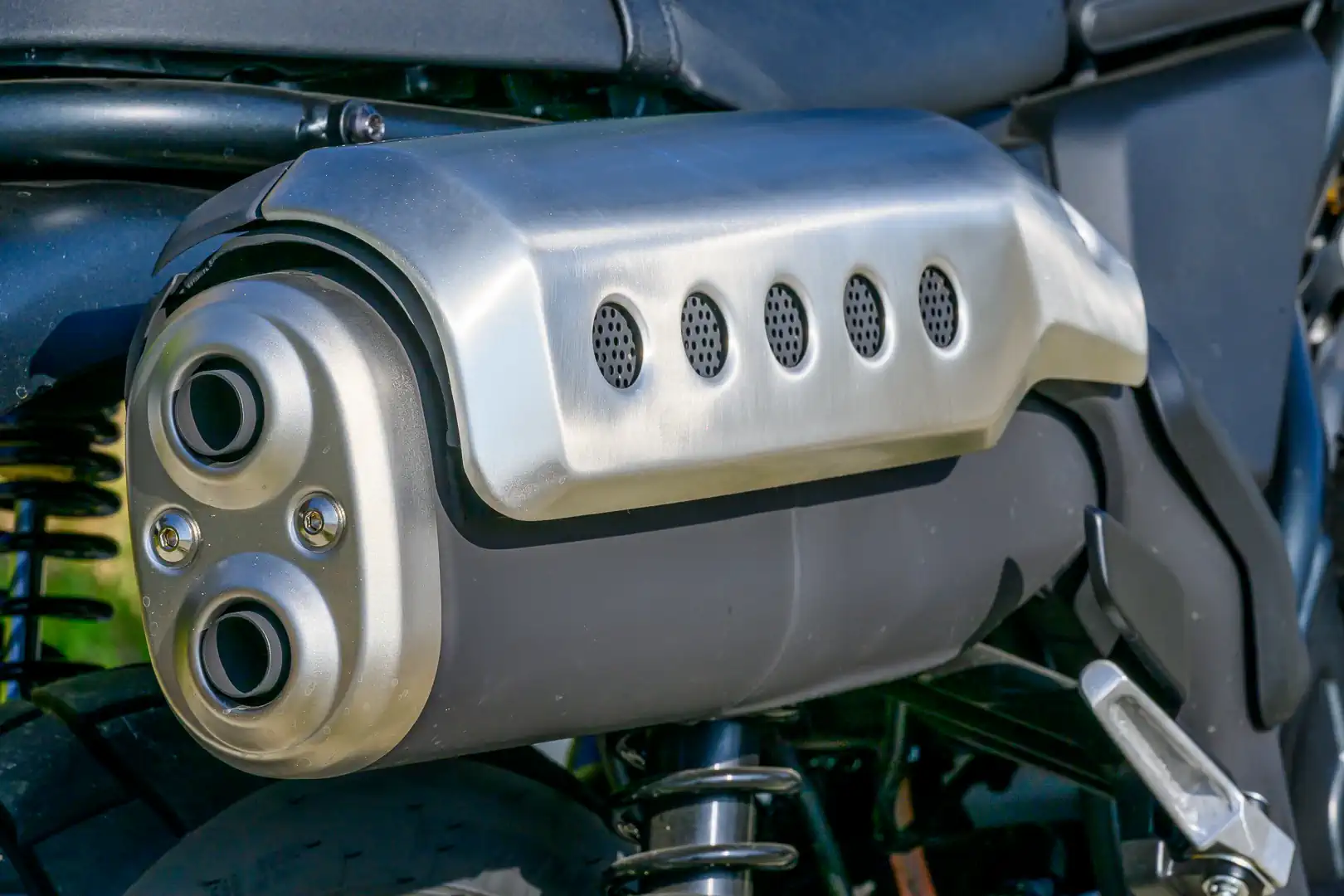
If I have a real complaint, it’s about the styling of the exhaust, which reminds me how shallow I can be. The classic scrambler signature is a high pipe. Unfortunately, it’s the hardest thing to pull off today because of emissions standards. The Triumph Scrambler 900 manages a properly high exhaust, but the rider pays an ergonomic price. Honda avoids that by running the exhaust under the frame and picking it up at the back into a long muffler. It is reminiscent of Honda SL dual-sport bikes of the late 1960s and early 1970s, so there’s precedent for this, even if it wasn’t a scrambler.
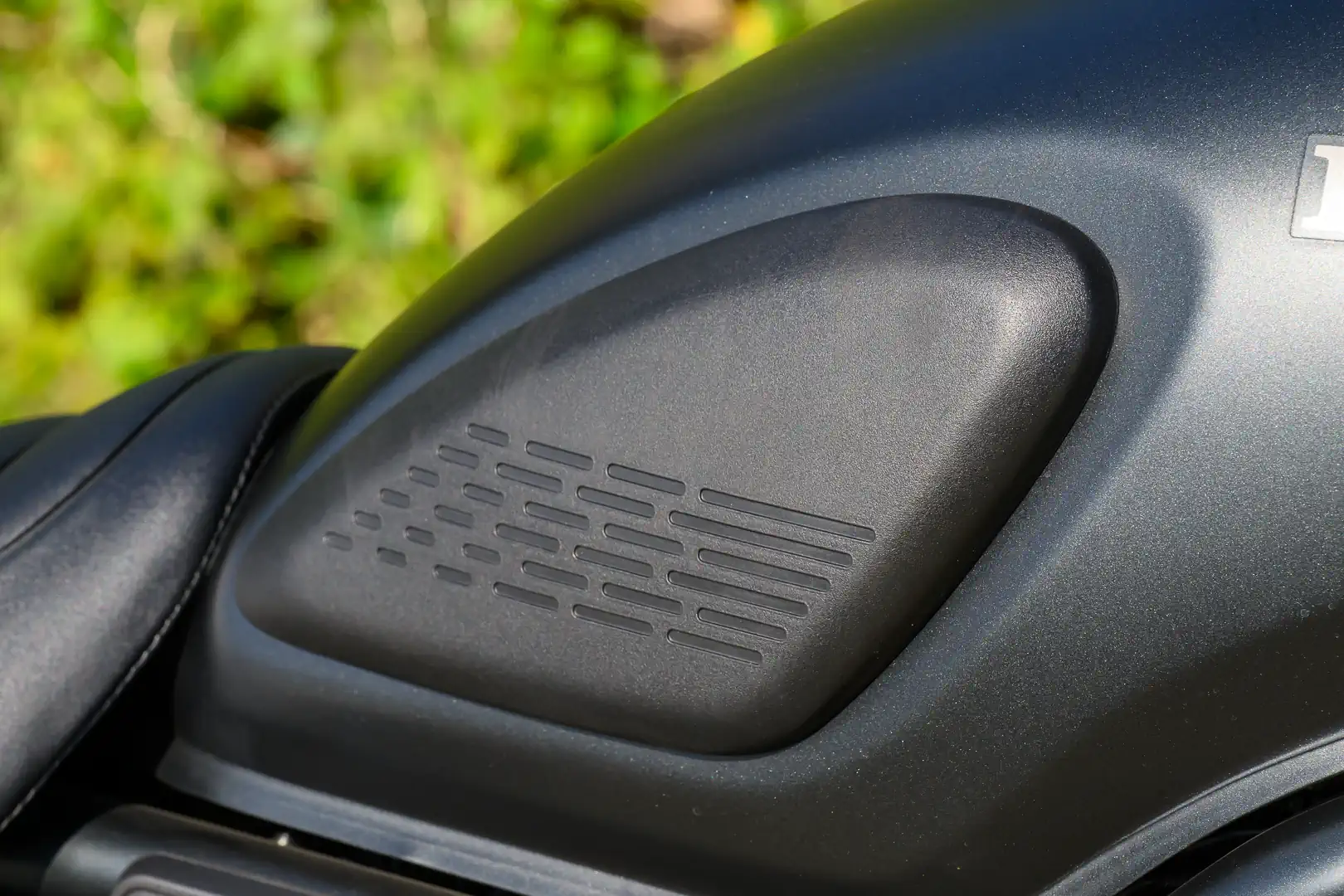
The upshot is that the 2026 Honda SCL500 doesn’t look quite as “scrambler cool” as the Triumph or the Hondas it is descended from. I haven’t been able to find an aftermarket up-pipe for the SCL, so it simply may not be practical. Regardless, it’s a styling quibble on a motorcycle that is otherwise just plain fun to ride, and I’ll take how well it works over a prettier pipe that gets in the way and can roast my leg. On the upside, the tank has the rubber knee pads, which are era-perfect.
Then vs. Now: The Value Story
Here’s what genuinely surprised me. Run the numbers on that old CL450. Adjusted for inflation, the CL450 was a $9000 motorcycle. The 2026 SCL500 is a buck under $7000. For two grand less, in real terms, you get liquid cooling, fuel injection, ABS, a six-speed with a slipper clutch, and dramatically better suspension and brakes. So, the next time someone tells you motorcycles only ever get more expensive, point them at this bike. Seven thousand dollars buys you a motorcycle worth celebrating.
Final Conclusion
I’m glad I finally got to ride the Honda SCL500; it only took me three years to get around to it. Sure, the SCL500 is one of Honda’s do-everything appliances. However, beyond that, it’s a characterful, easy, genuinely fun appliance, and it feels a little like a time machine in the best way. For $6999, it’s a wonder bike, and proof that you can get a motorcycle worthy of love for sensible money. The original iteration of the genre made sense for less than a decade. Yet, it has an enduring appeal that resonates over 60 years later. Scramblers have succeeded against all odds. The 2026 Honda SCL500 is the latest chapter in that story, and it’s a good one.
2026 Honda SCL500 photography by Nic de Sena.
Vintage scrambler photographs courtesy of Mecum Auctions.
Other photography as noted.
Hello and welcome again to the Motos and Friends Podcast. This episode is brought to you by Leod Escapes.
* * * * *
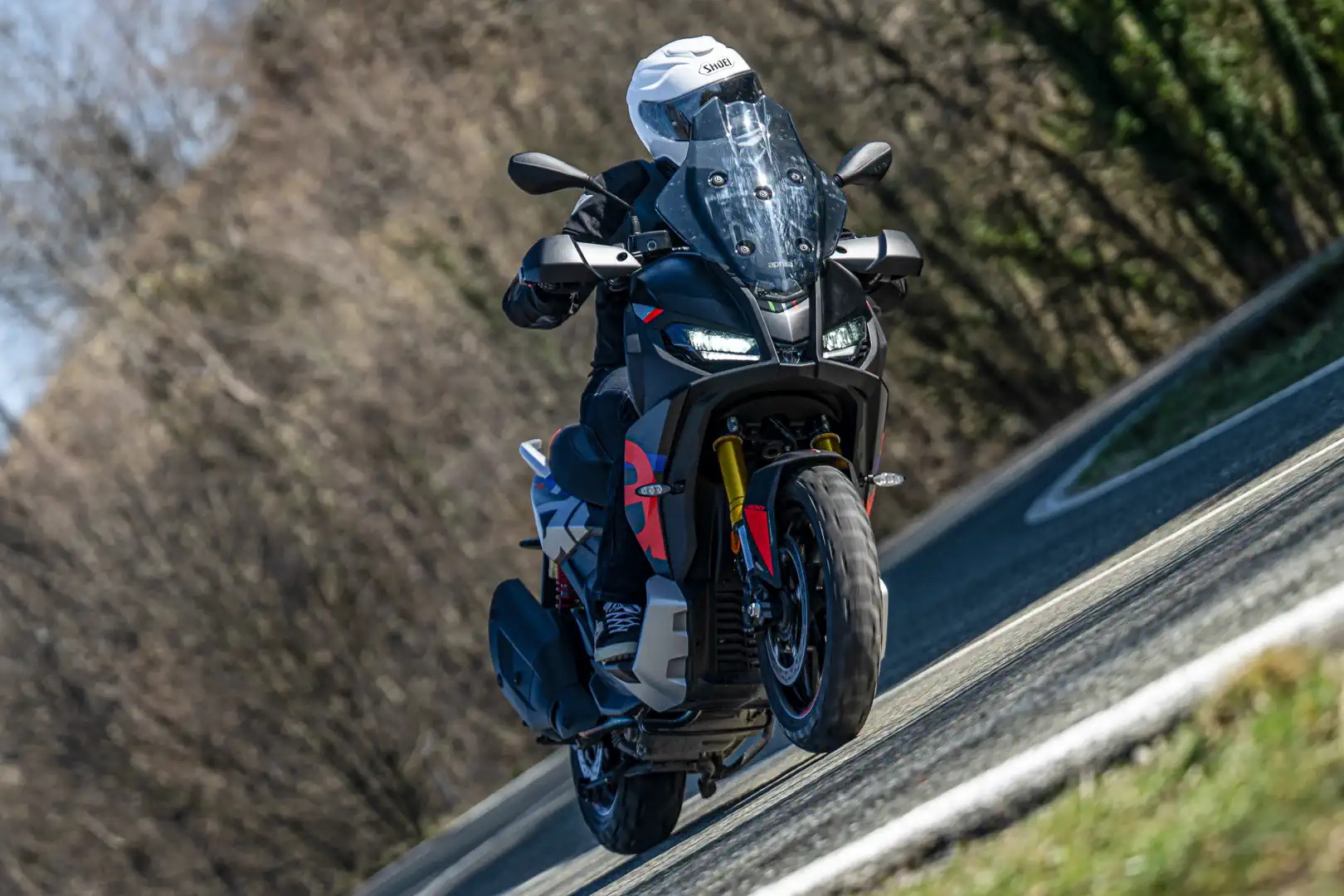
Aprilia is bringing a scooter to North America, and it’s one designed to appeal to adventure motorcyclists. The SR GT 400 is a mid-size scooter built around a steel motorcycle-style frame, a 399cc single, and off-road-ready hardware. It reaches US dealers as soon as this month. Don Williams and Kelly Callan spent some time riding the Aprilia and were surprised by what they discovered. Is this a real motorcycle or just a good-looking urban scooter?
* * * * *
Cat McLeod is founder and owner of Leod Escapes, the ultimate tour company for sport-minded motorcycle riders. Cat talks to us this segment about some of his amazing European experiences and tours that include of course, riding some amazing MotoGP tracks on new BMW S1000RRs. If you like what you hear, now is the time to book your trip of a lifetime, so visit LeodEscapes.com to find out more.
* * * * *
Our guest this episode is Terry Vance, the multiple Motorcycle and Motorsports Hall-of-Famer. Terry is of course the former professional motorcycle drag racer, team owner, and co-founder of the high-performance parts company Vance & Hines. Teejay Adams chats with Terry about his incredible career that includes being the first rider to hit 200 mph in the standing quarter-mile.
Having won this year’s MotoAmerica Mission King of the Baggers championship with Hayden Gillim riding the Vance & Hines factory Indian Challenger, and with Harley-Davidson’s recent withdrawal, Terry gives us his thoughts on where the series might go from here.
* * * * *
Here’s quick reminder to check out our monthly digital magazine. It’s filled with everything you want to read on motorcycling, including some things you’ve probably not seen elsewhere. It’s absolutely free and you will find it on the Apple App Store and of course on Google Play as well.
Don’t forget to leave us your comments on our social media—we’re on all the usual platforms at Ultimate Motorcycling. We love hearing your feedback… so good or bad, please let us know what you think. If there’s something you’d like us to cover, we’d love to hear those ideas too!
We use cookies and browser activity on this website
Functional
Always active
The technical storage or access is strictly necessary for the legitimate purpose of enabling the use of a specific service explicitly requested by the subscriber or user, or for the sole purpose of carrying out the transmission of a communication over an electronic communications network.
Preferences
The technical storage or access is necessary for the legitimate purpose of storing preferences that are not requested by the subscriber or user.
Statistics
The technical storage or access that is used exclusively for statistical purposes.The technical storage or access that is used exclusively for anonymous statistical purposes. Without a subpoena, voluntary compliance on the part of your Internet Service Provider, or additional records from a third party, information stored or retrieved for this purpose alone cannot usually be used to identify you.
Marketing
The technical storage or access is required to create user profiles to send advertising, or to track the user on a website or across several websites for similar marketing purposes.
Advertising helps us keep our content available for free, so adjusting your ad blocking settings will help us.
We appreciate your support!
i
How to Allow Ads on This Site
Depending on your setup, ads may be blocked by a browser extension, VPN, antivirus software, or other application. Here are some common ways to allow ads:
Browser Extensions (e.g., Adblock, uBlock, etc.)
Click the extension icon in your browser toolbar.
Look for an option like "Don't run on pages on this site" or "Pause on this site".
Save the change and refresh the page.
VPNs with Ad Blocking (e.g., NordVPN, Proton VPN, etc.)
Open your VPN app.
Go to settings or features.
Disable any ad blocking or tracking protection features.
Refresh the page.
Antivirus Software or Other Privacy Tools
Check for web protection, ad filtering, or browser privacy settings.
Click the power button to disable it for this site.
Refresh the page.
Not sure what's blocking ads? Look for tools with privacy or filtering features, or check your browser extensions. We only use respectful, non-intrusive advertising.