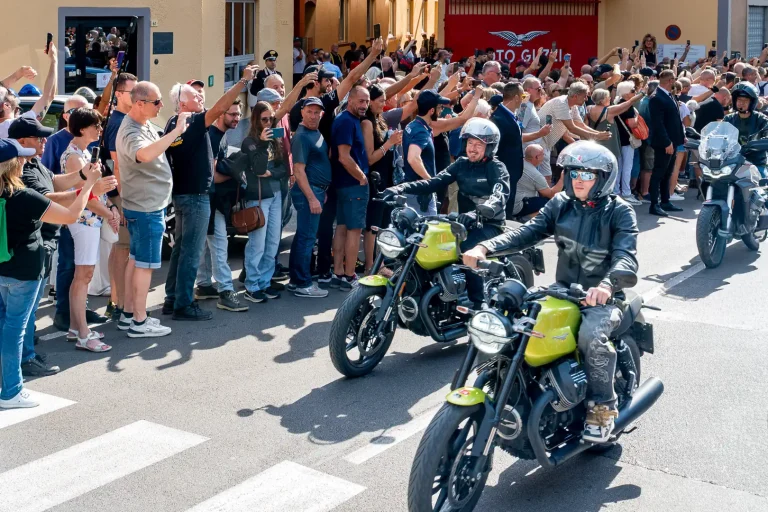
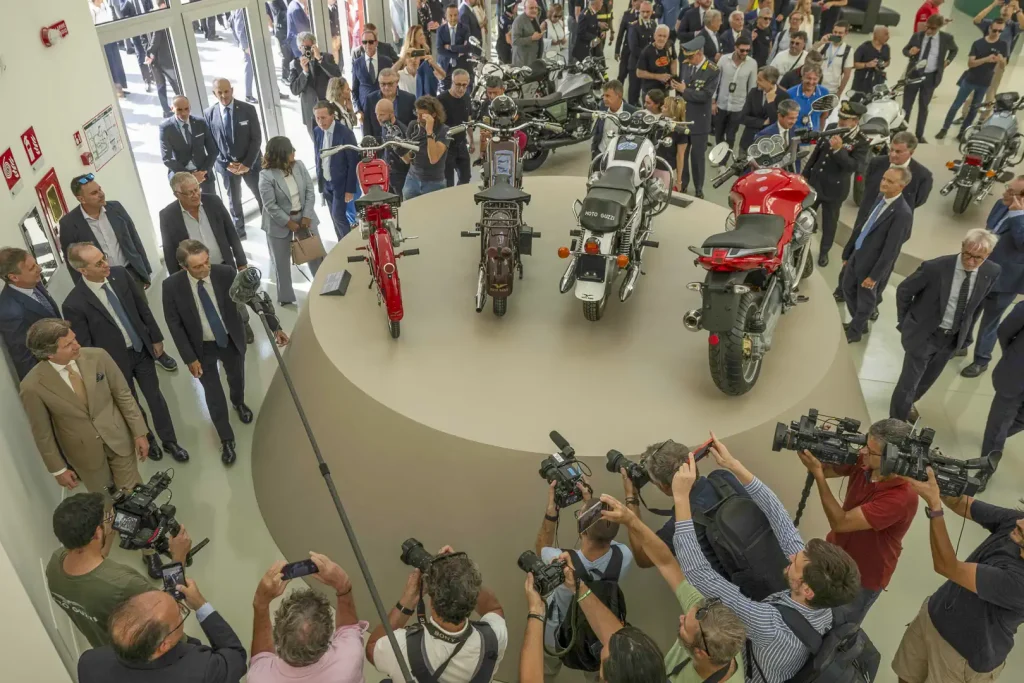
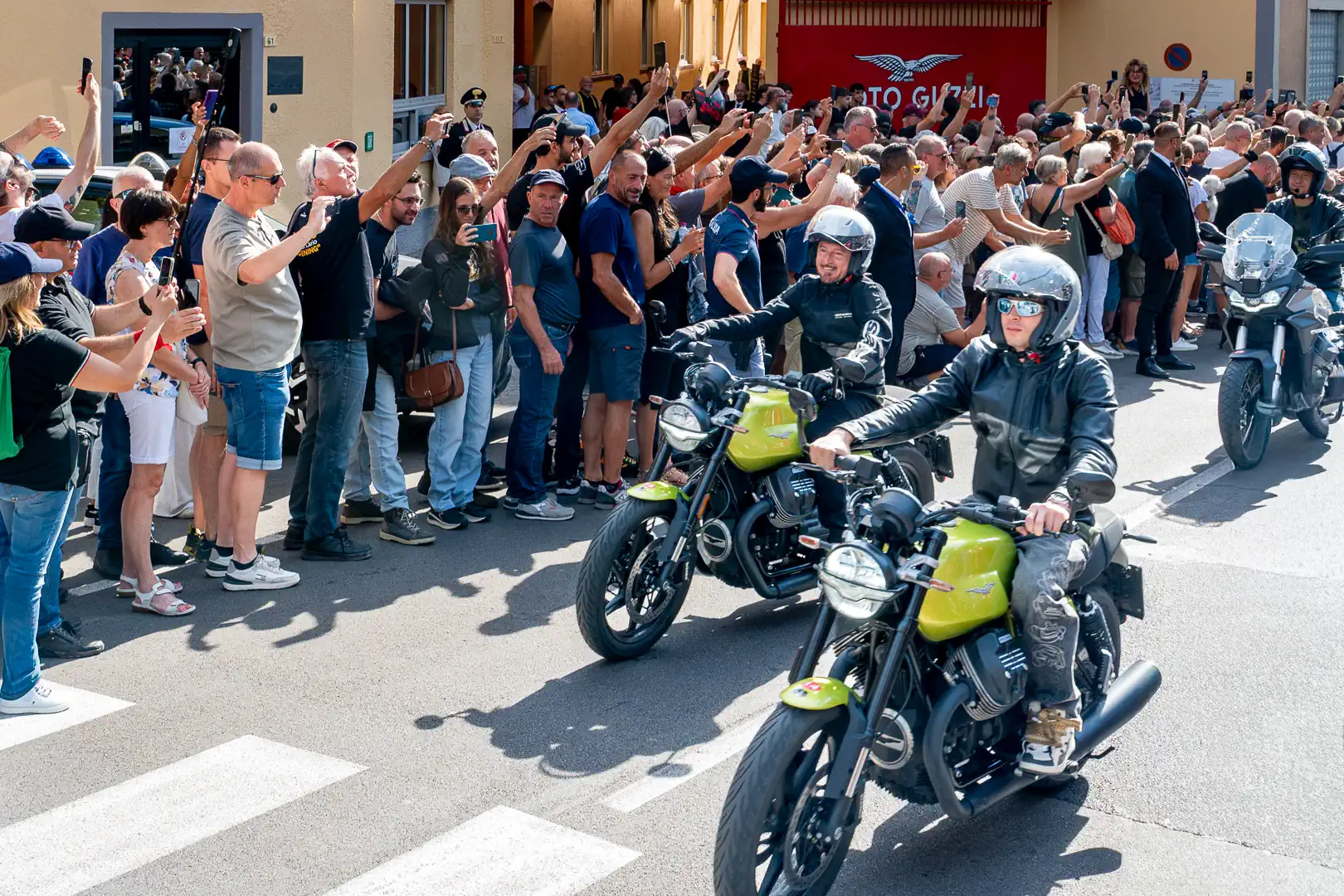
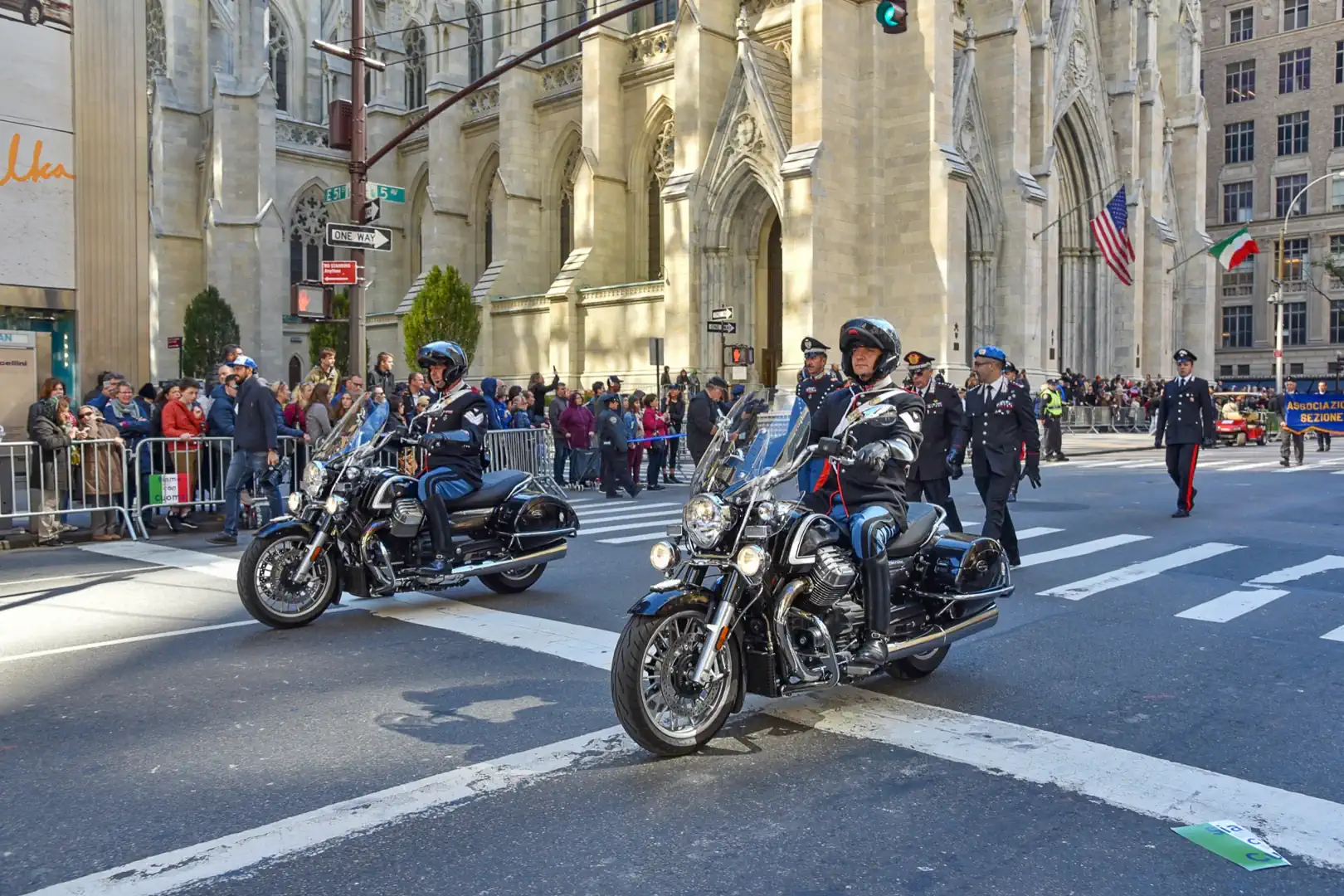
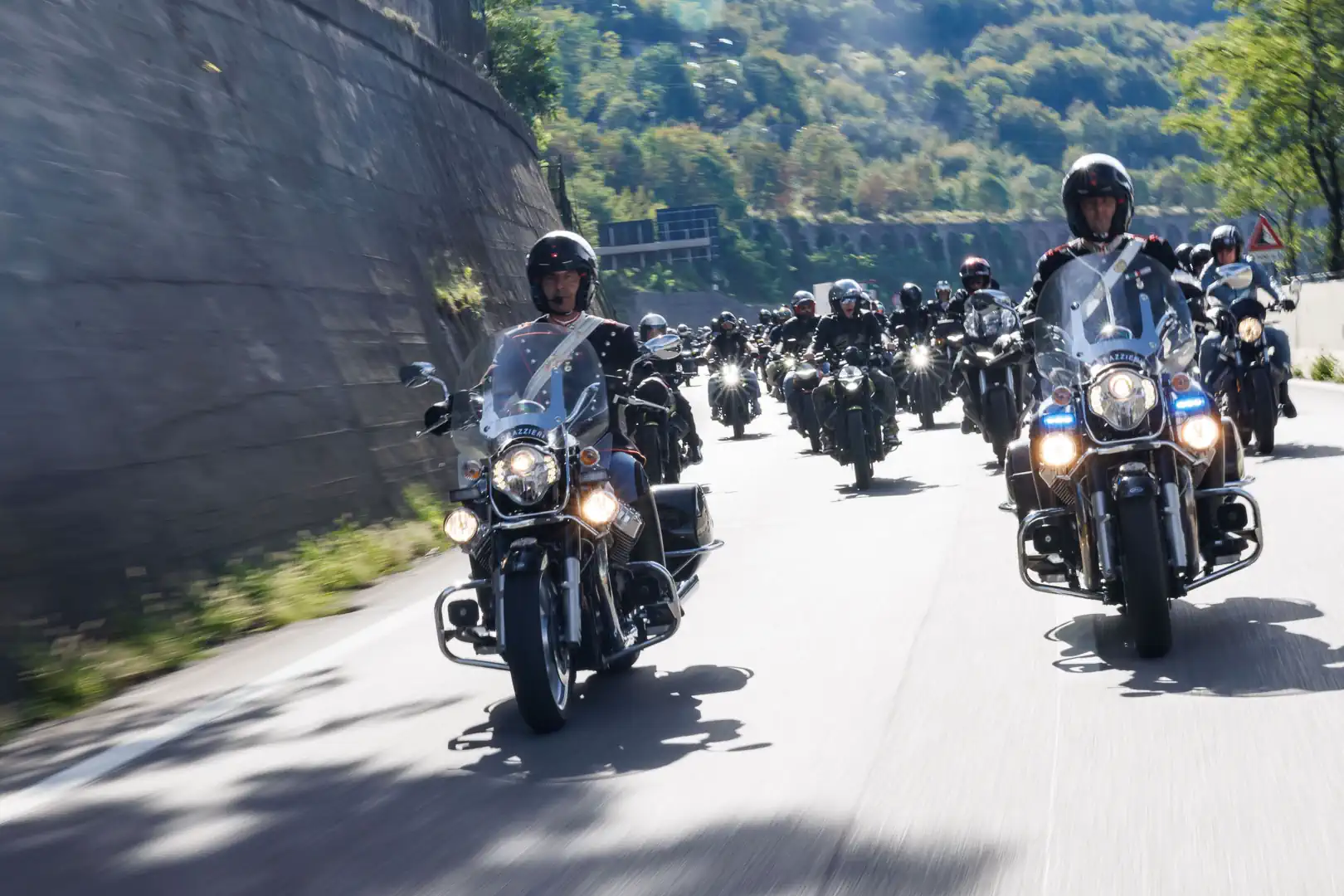
Marco Bezzecchi leads Max Biaggi and Jorge Martín at Moto Guzzi World Days 2026.
0:00
▶
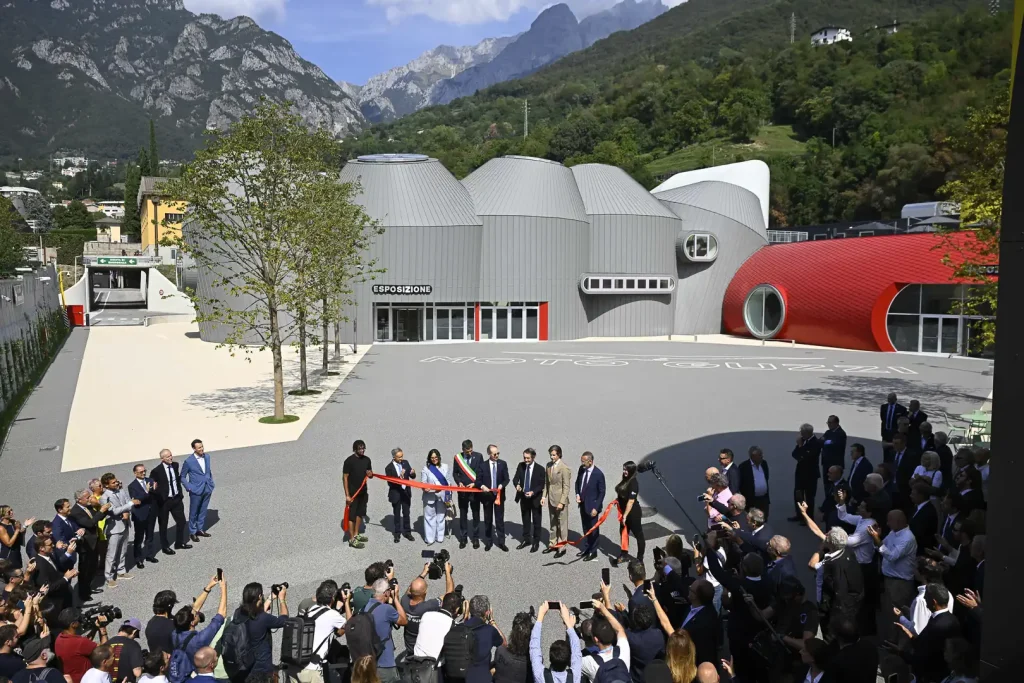
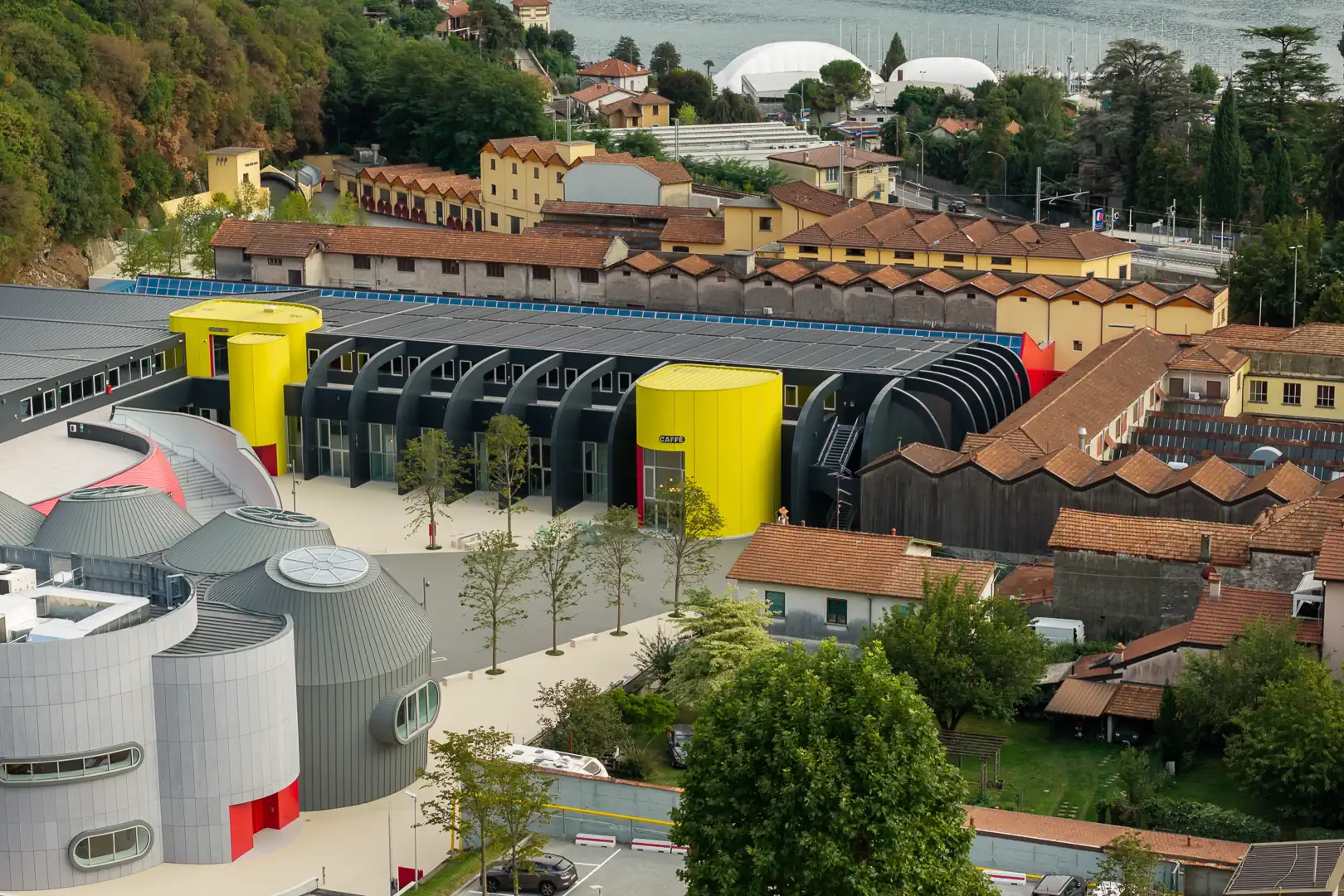
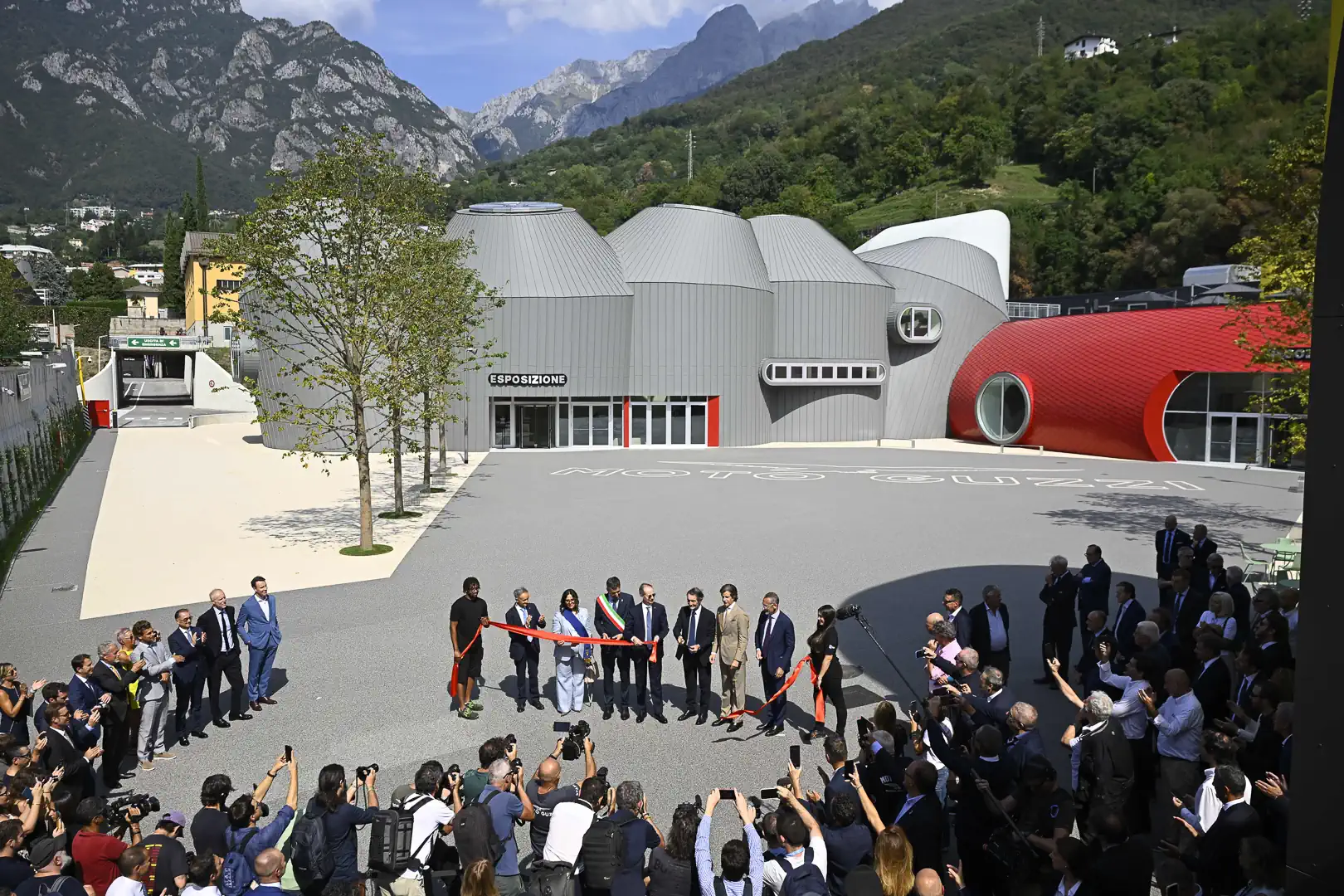
Moto Guzzi opened a new factory and museum at its home in Mandello del Lario, Italy, this month, capping almost five years of construction and an investment the Piaggio Group puts at over €50 million. The opening came in the brand’s 105th year and one day before the start of Moto Guzzi World Days. The four-day rally drew more than 60,000 people to the small town on the Lecco shore of Lake Como.
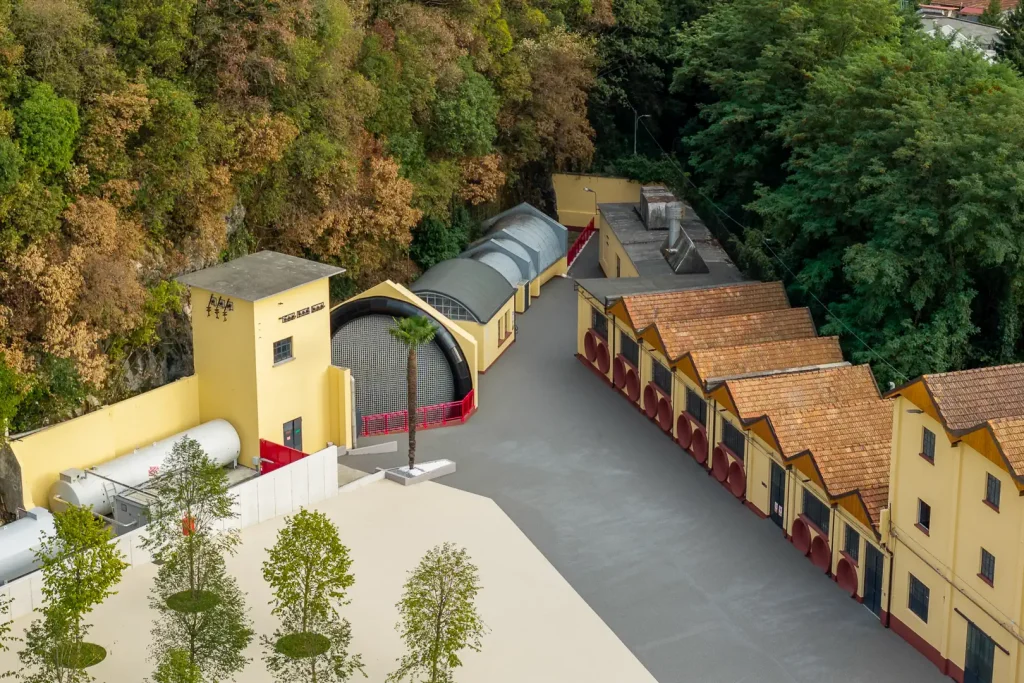
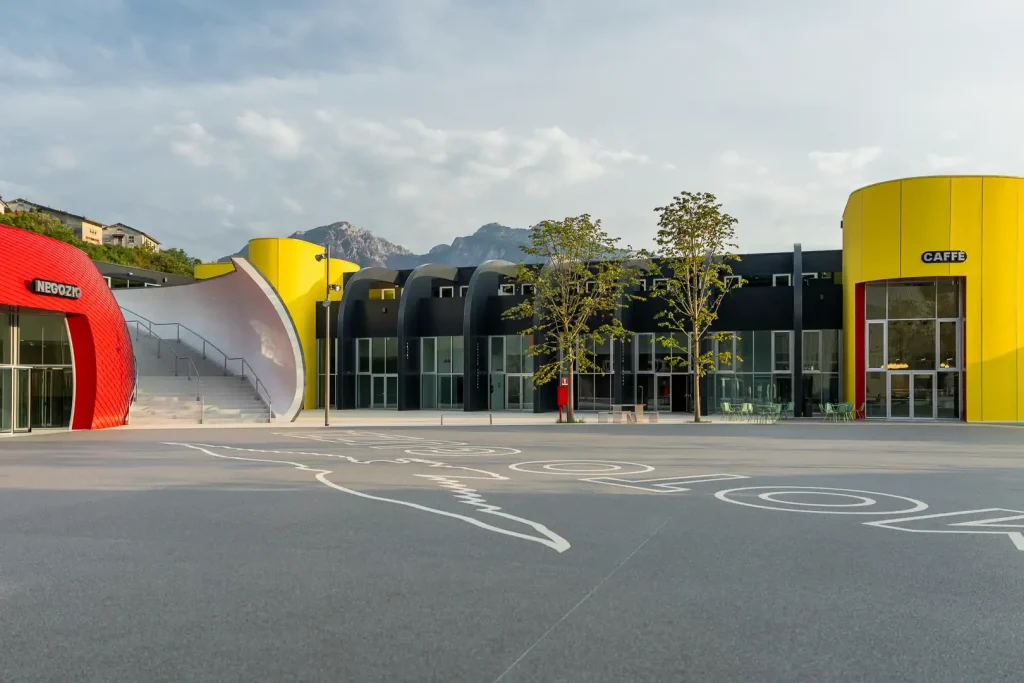
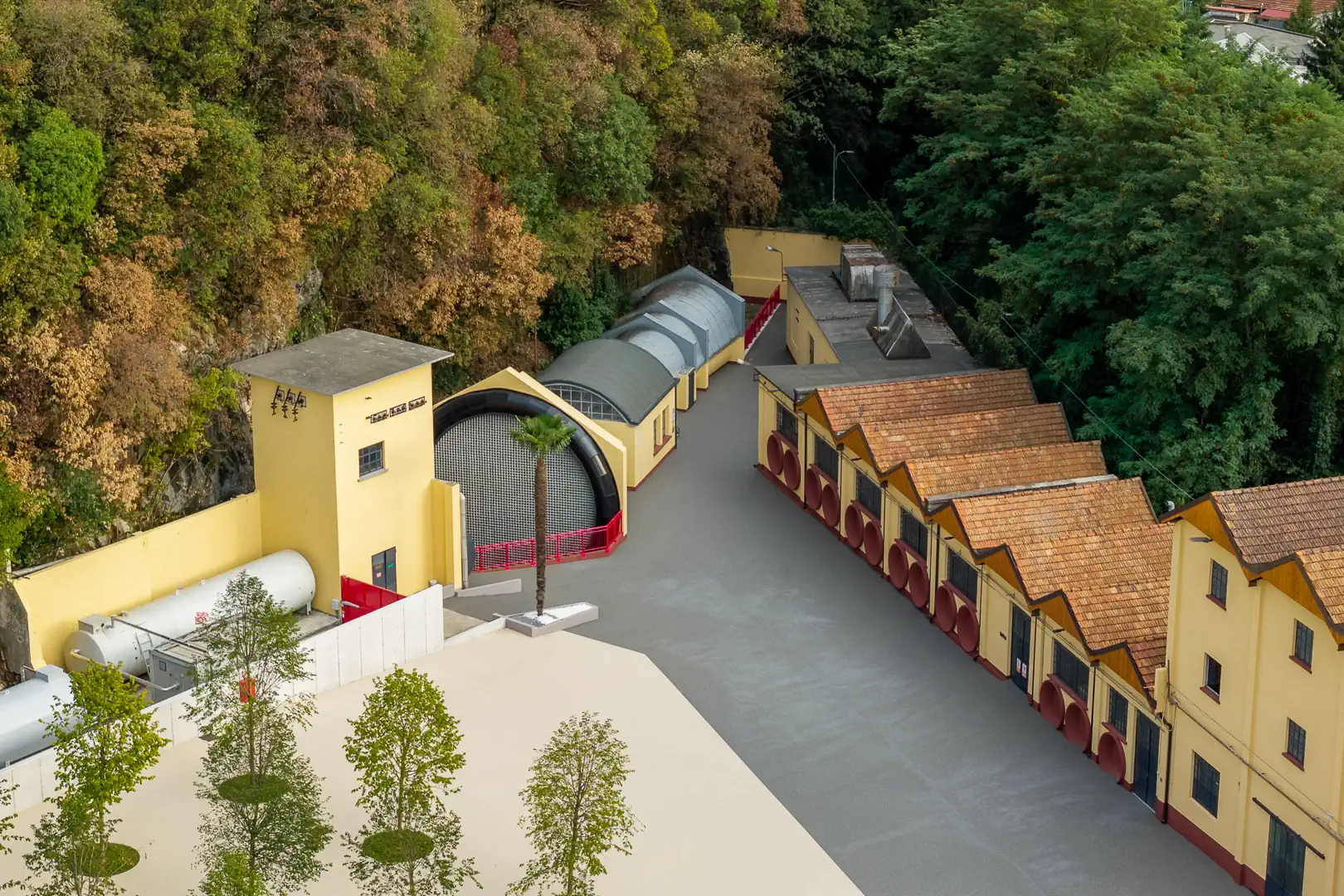
The engine plant and the museum are new buildings inside the original factory perimeter. The rest of the Moto Guzzi compound was reworked around them. One of the oldest structures on the property, the 1950 wind tunnel, was restored rather than replaced.
Same Address, Same Red Gate
Moto Guzzi has built motorcycles on the same piece of ground in Mandello del Lario since 1921, when Carlo Guzzi and Giorgio Parodi set up the factory there. The company itself was founded that year in Genoa, though Mandello has always been where the bikes are made. The company says production there has never stopped.
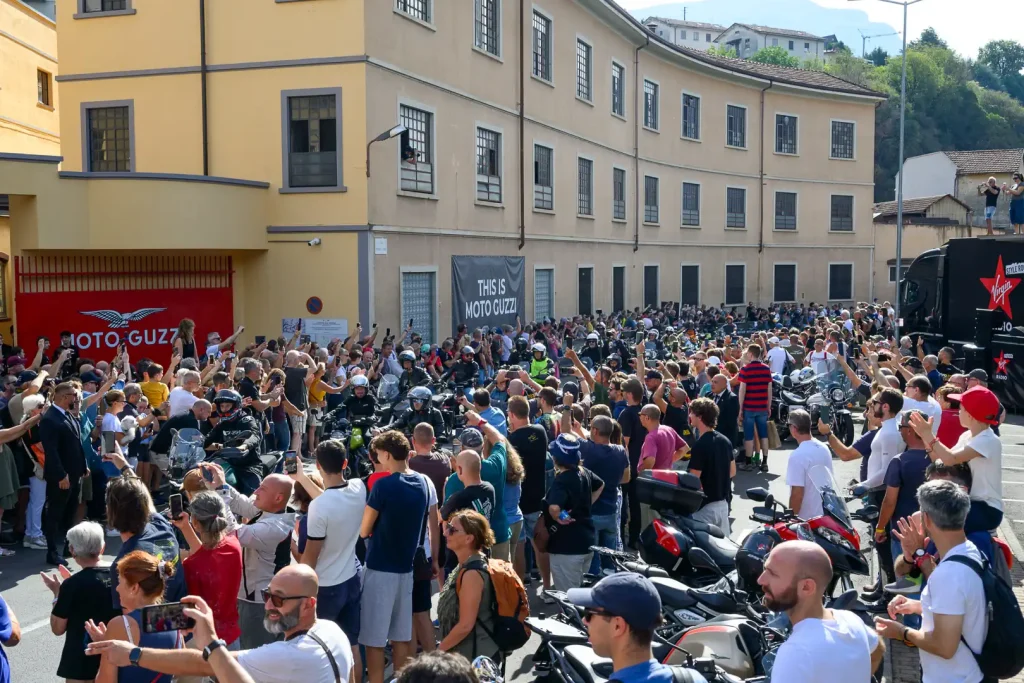
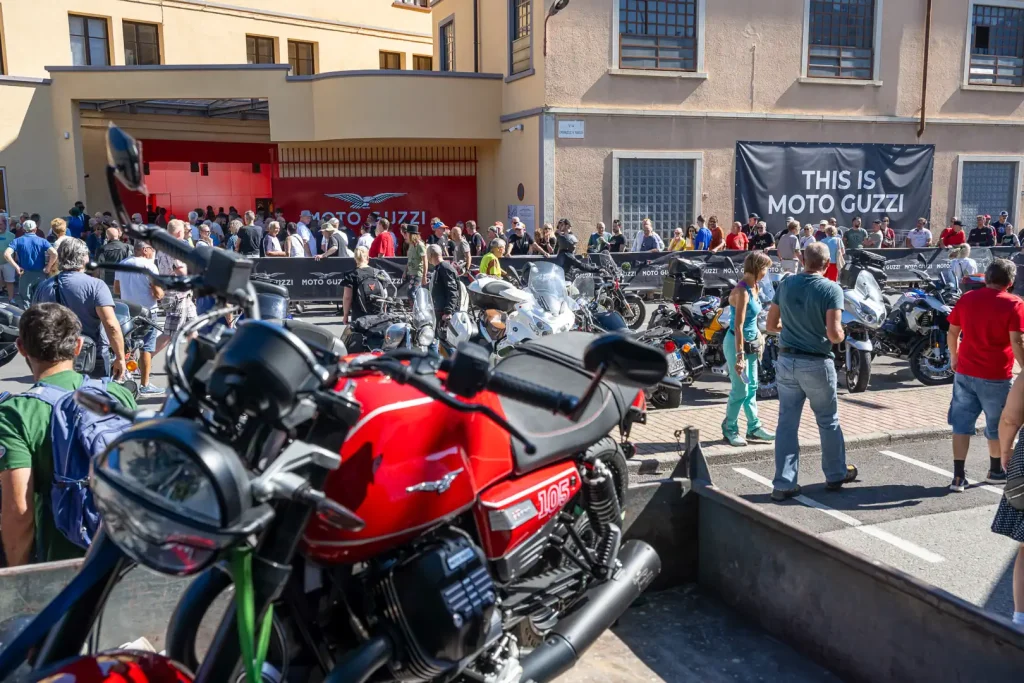
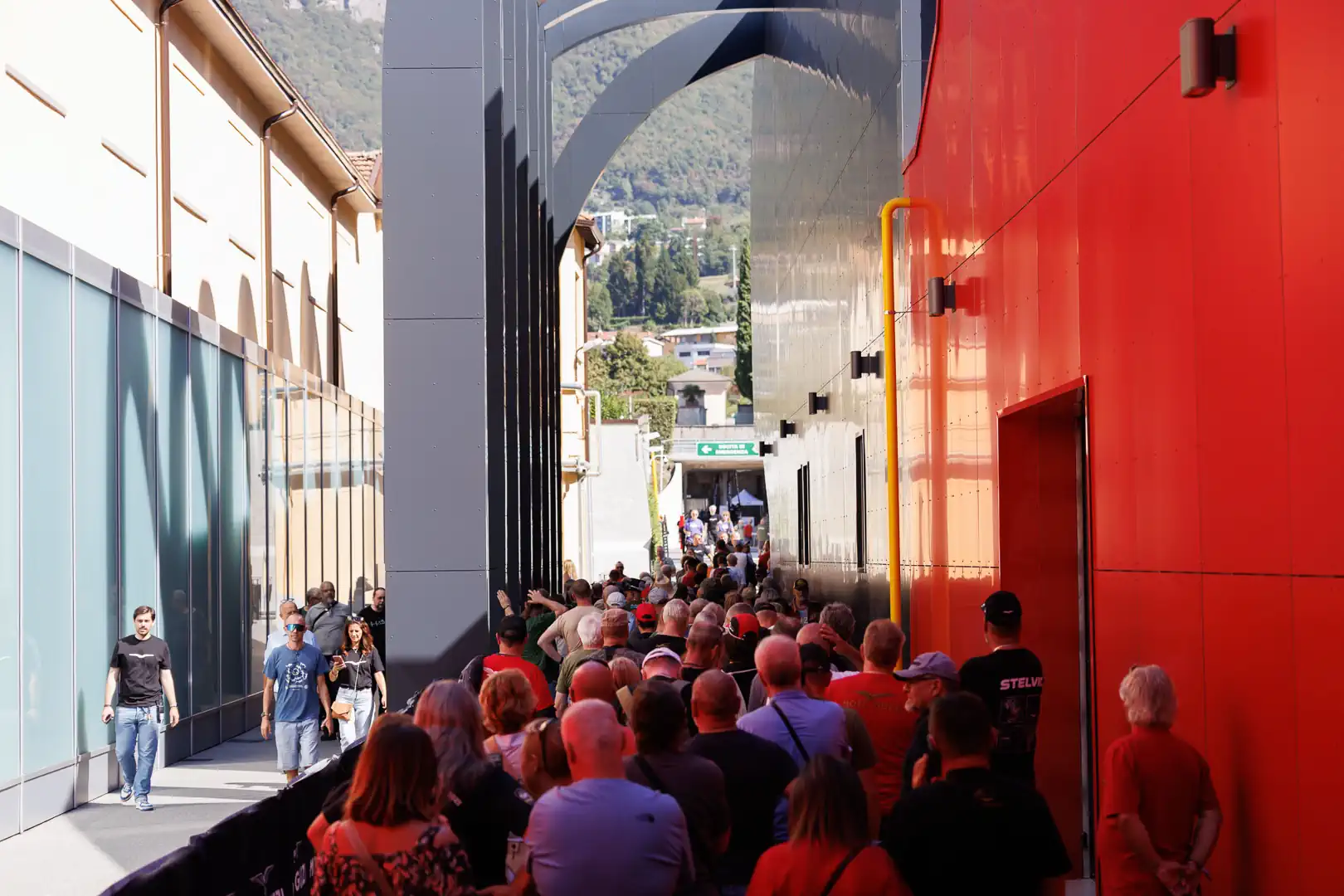
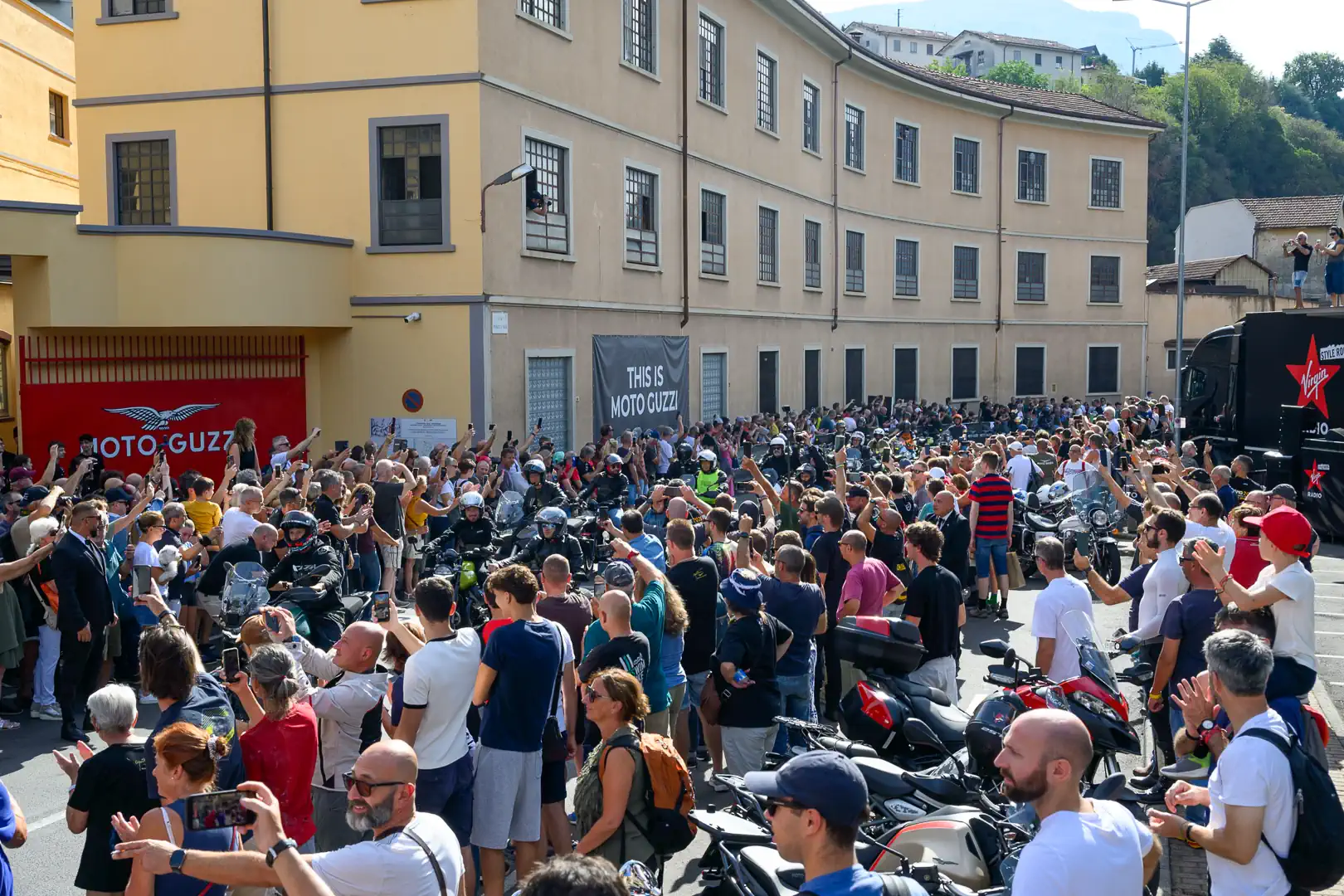
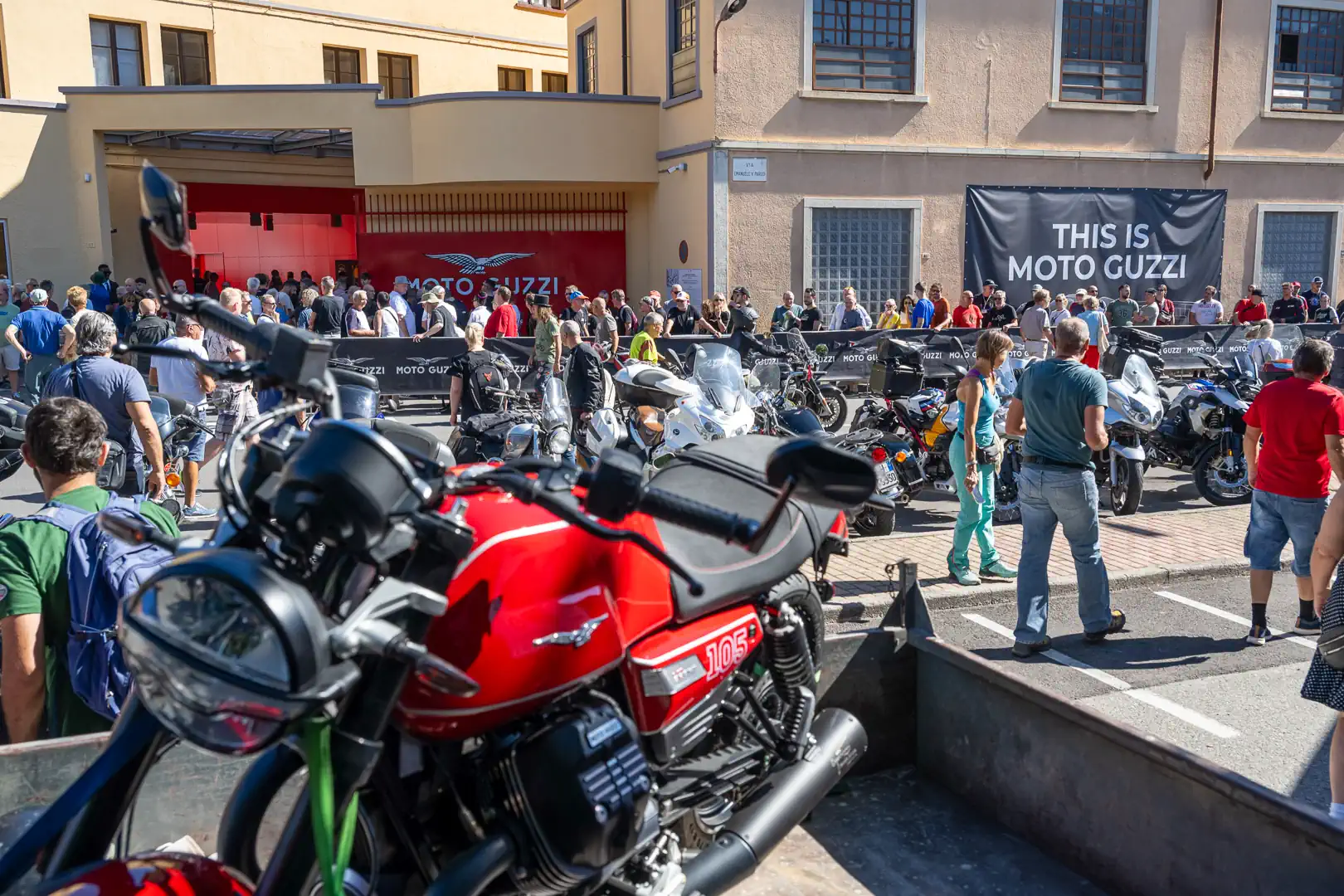
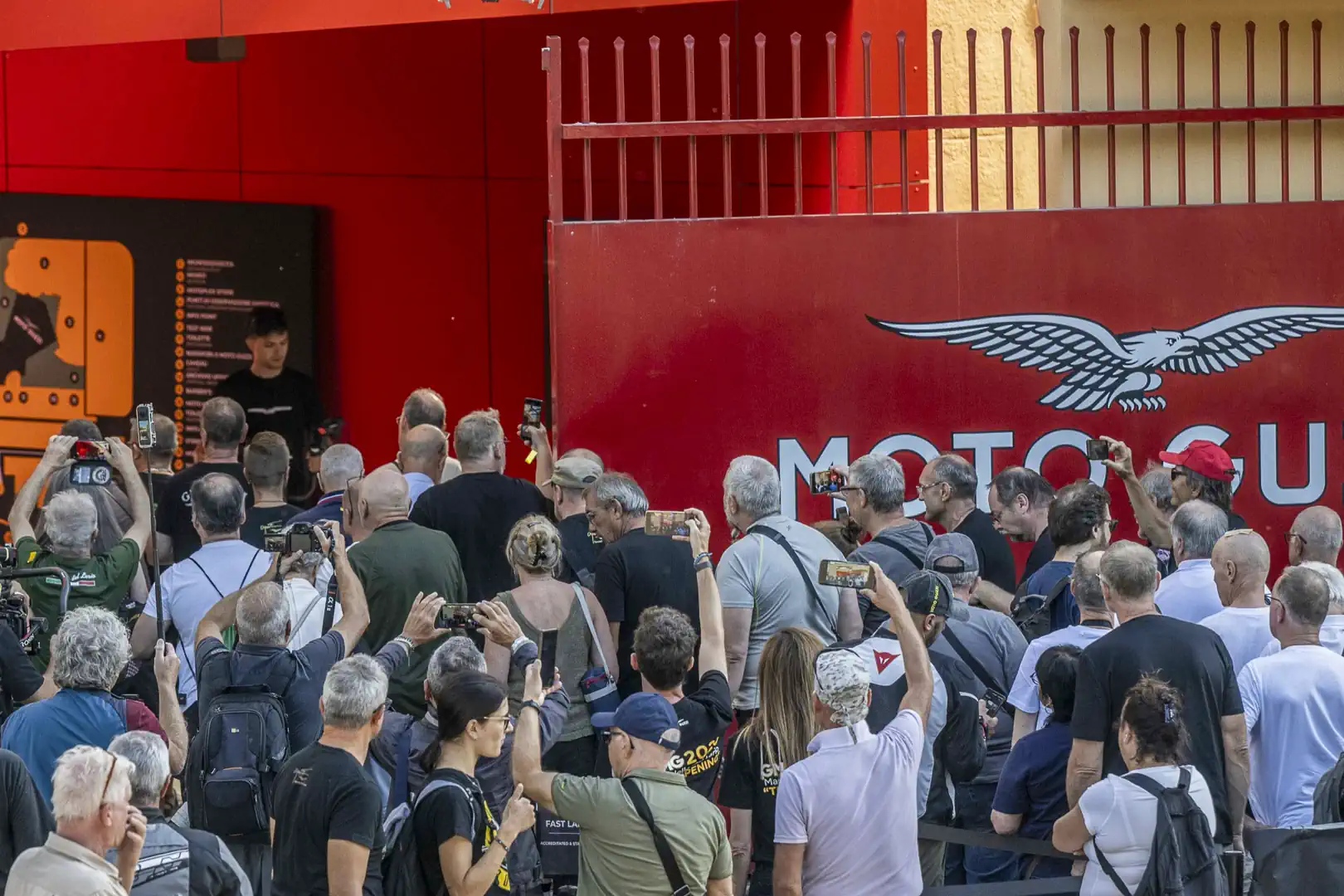
The new complex sits within the factory’s original perimeter. The red gate on Via Parodi, the entrance that has greeted workers, engineers, and riders since 1921, stays where it is. Piaggio describes the gate as a place of pilgrimage for riders from all over the world, and it was through that gate that the first crowds entered the renewed compound.
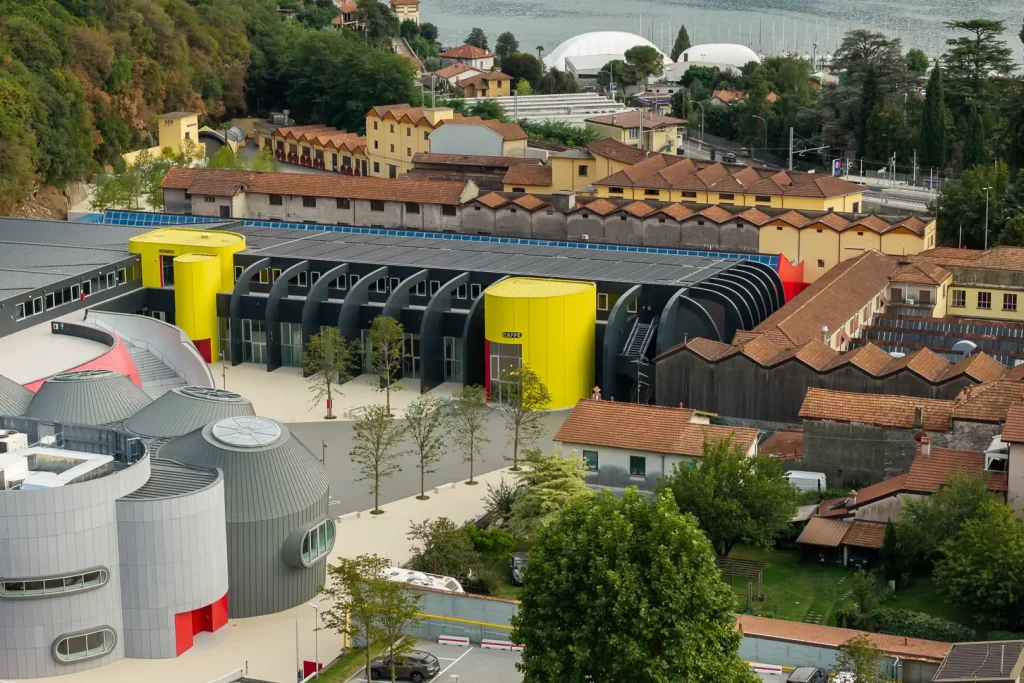
Beyond the gate, the site was, in Piaggio’s words, “transformed completely but harmoniously.” Moto Guzzi is unusually insistent on one point: this is not a refurbishment of a historic factory.
The Factory: Bigger, Automated, and Built for 30,000 Bikes a Year
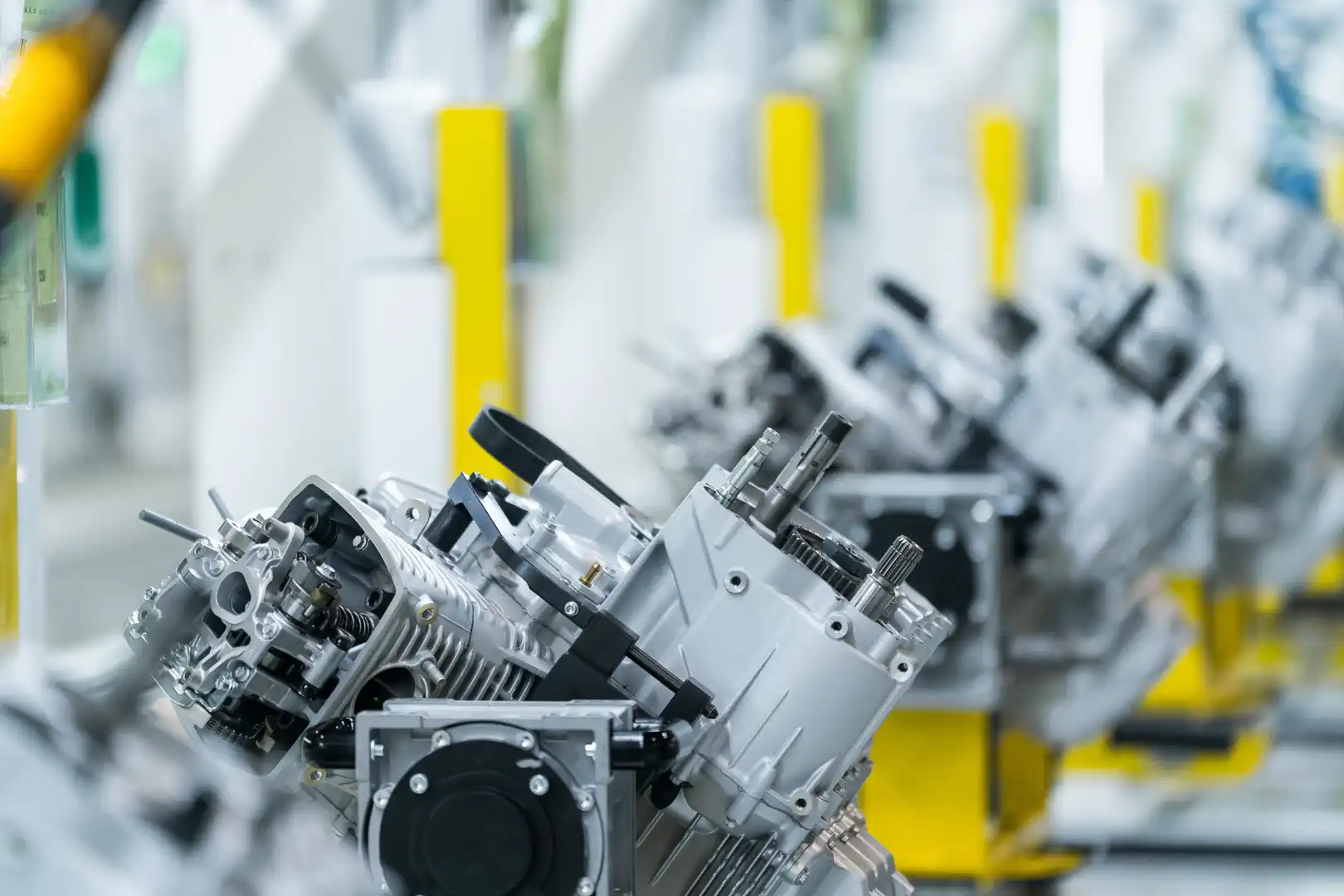
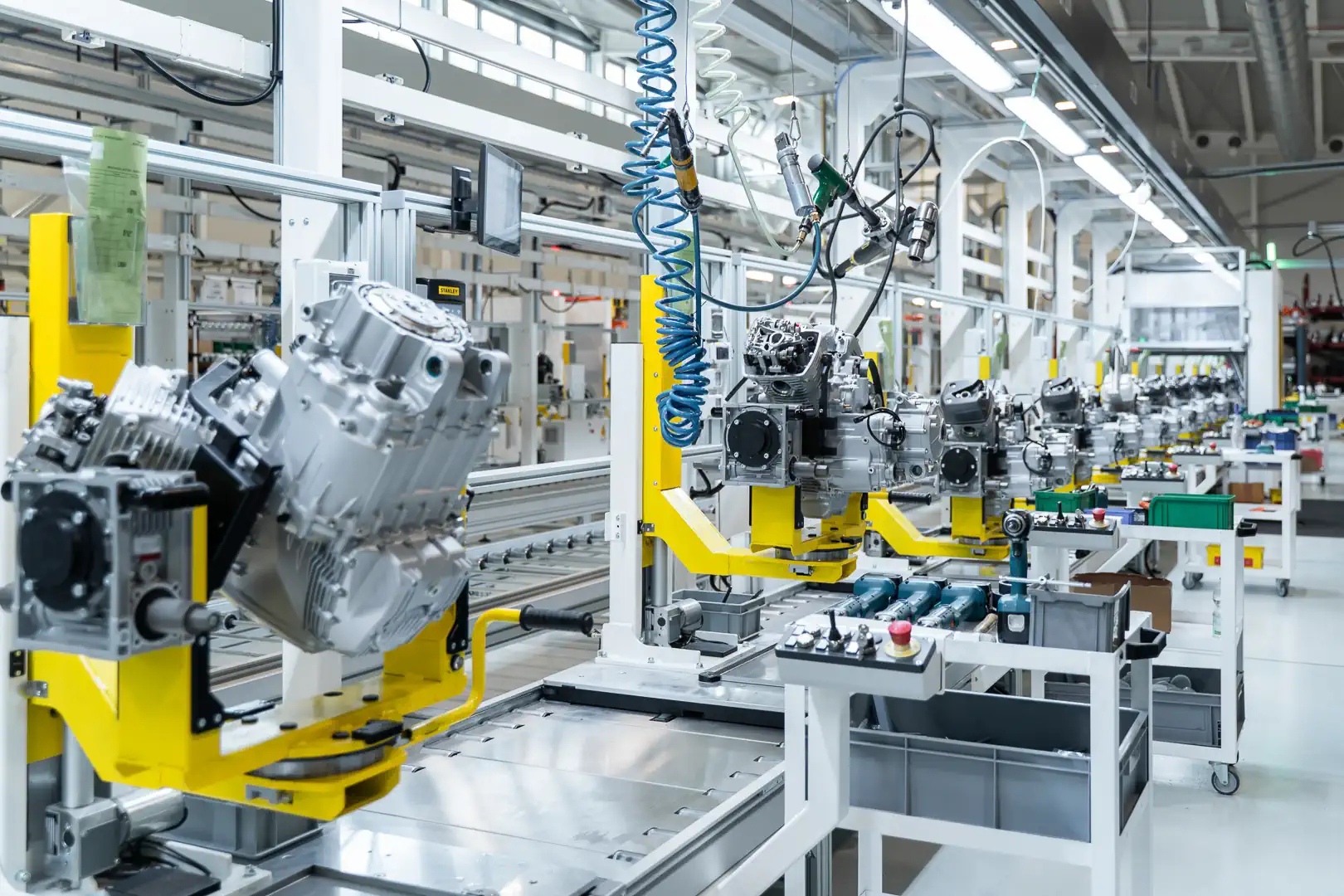
The construction added nearly 60,000 square feet of new industrial buildings, bringing the total factory floor to over 400,000 square feet. The company also added another 4,100 square feet of office space. Piaggio says the expansion raises production capacity to over 30,000 motorcycles a year.
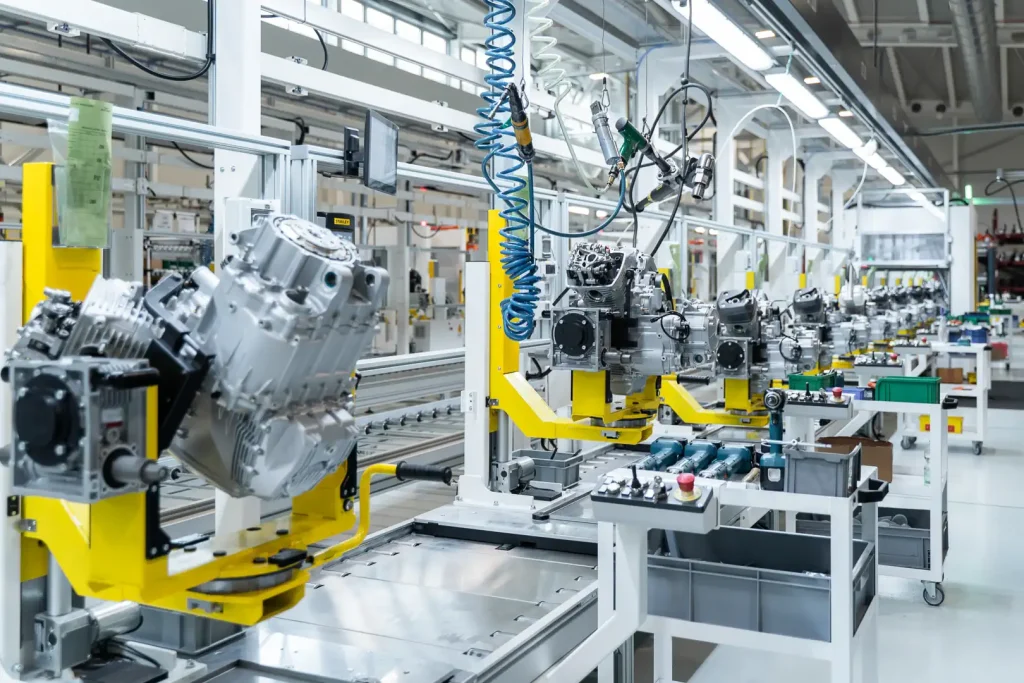
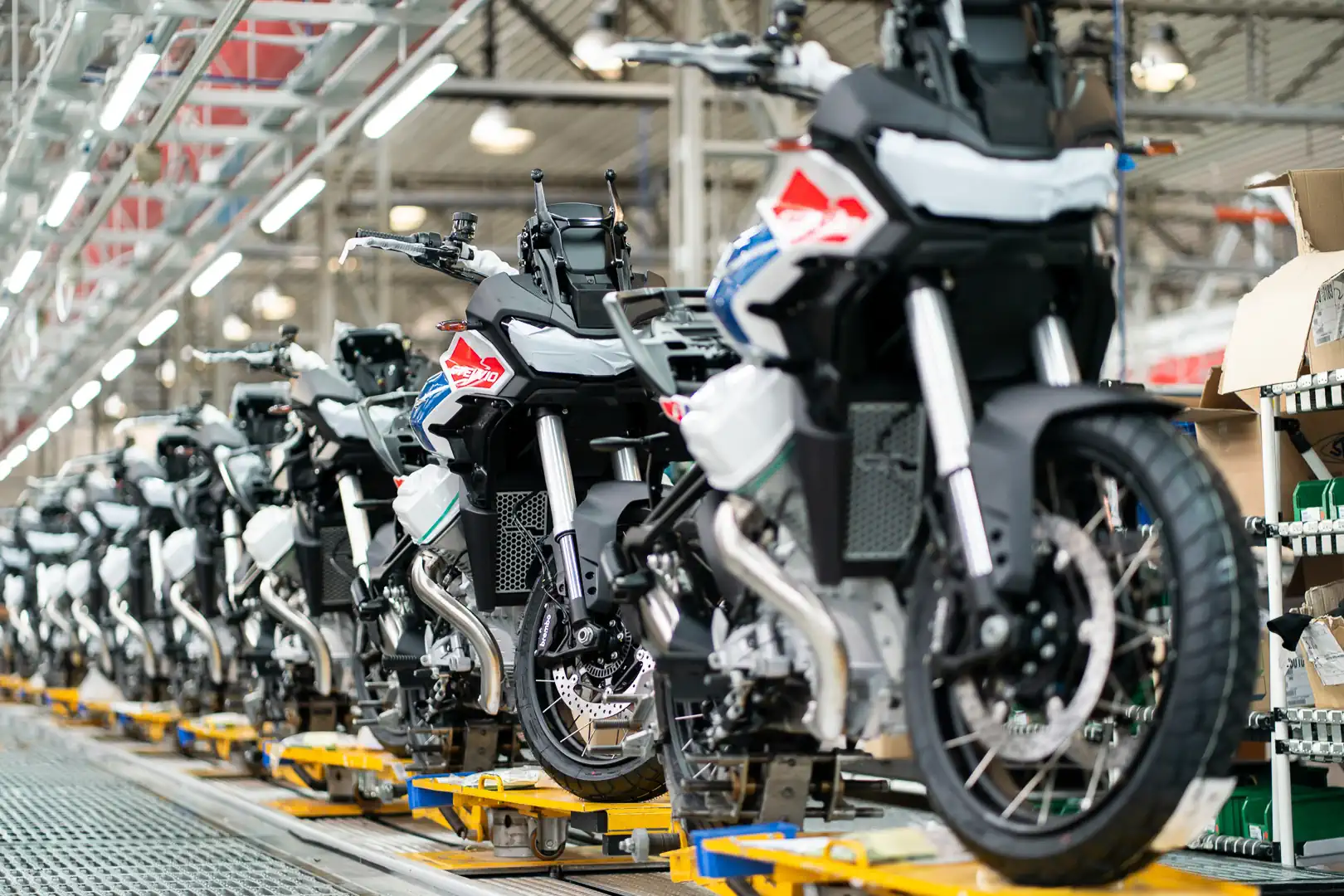
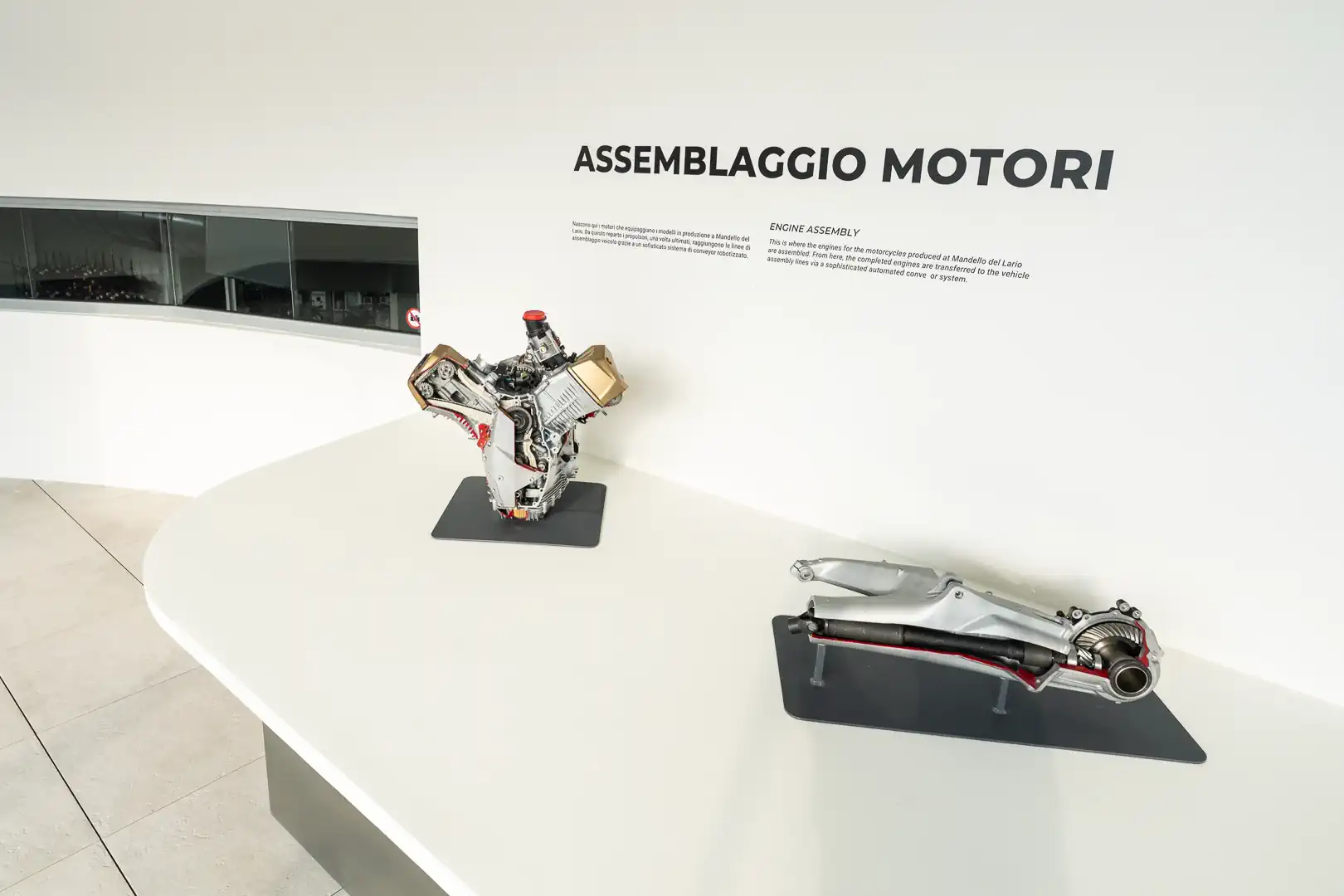
The heart of the new plant is the engine shop. It is in a completely new structure, rather than in reworked older buildings. A fully robotized conveyor system links the engine shop to the final motorcycle assembly plant. The company calls its automated assembly lines “latest generation.”
At the end of the assembly line, finished motorcycles are handed over to ground drones for the trip to final testing. The drones are called Kilo, and they come from Piaggio Fast Forward (PFF), the Piaggio Group’s robotics subsidiary in Boston. PFF is the same outfit that developed the radar-based rider-assistance system on the Stelvio. Piaggio says the drones keep the physical demands on workers to a minimum and improve safety on the floor.
The building itself was designed with energy use in mind. It carries about 14,000 square feet of photovoltaic panels, and is laid out to make the most of natural light.
For future Moto Guzzi owners, the takeaway is that the V7, V85, V100 Mandello, and Stelvio will continue to come out of Mandello, but now from a plant with much more capacity and automation.
The Museum: A New Building, the Same Collection, and a Window on the Line
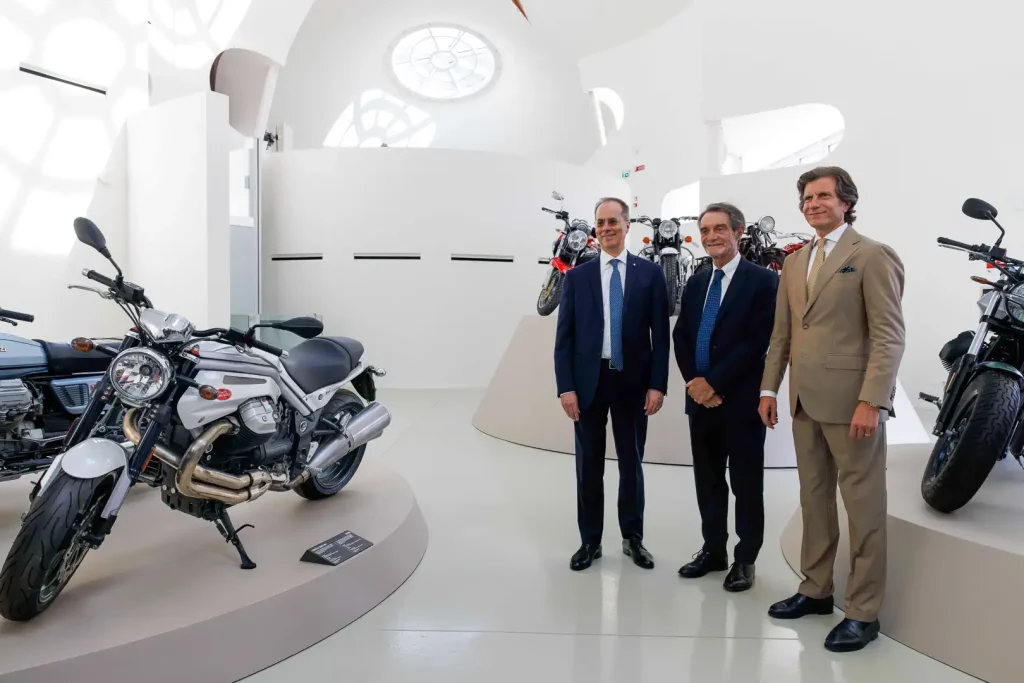
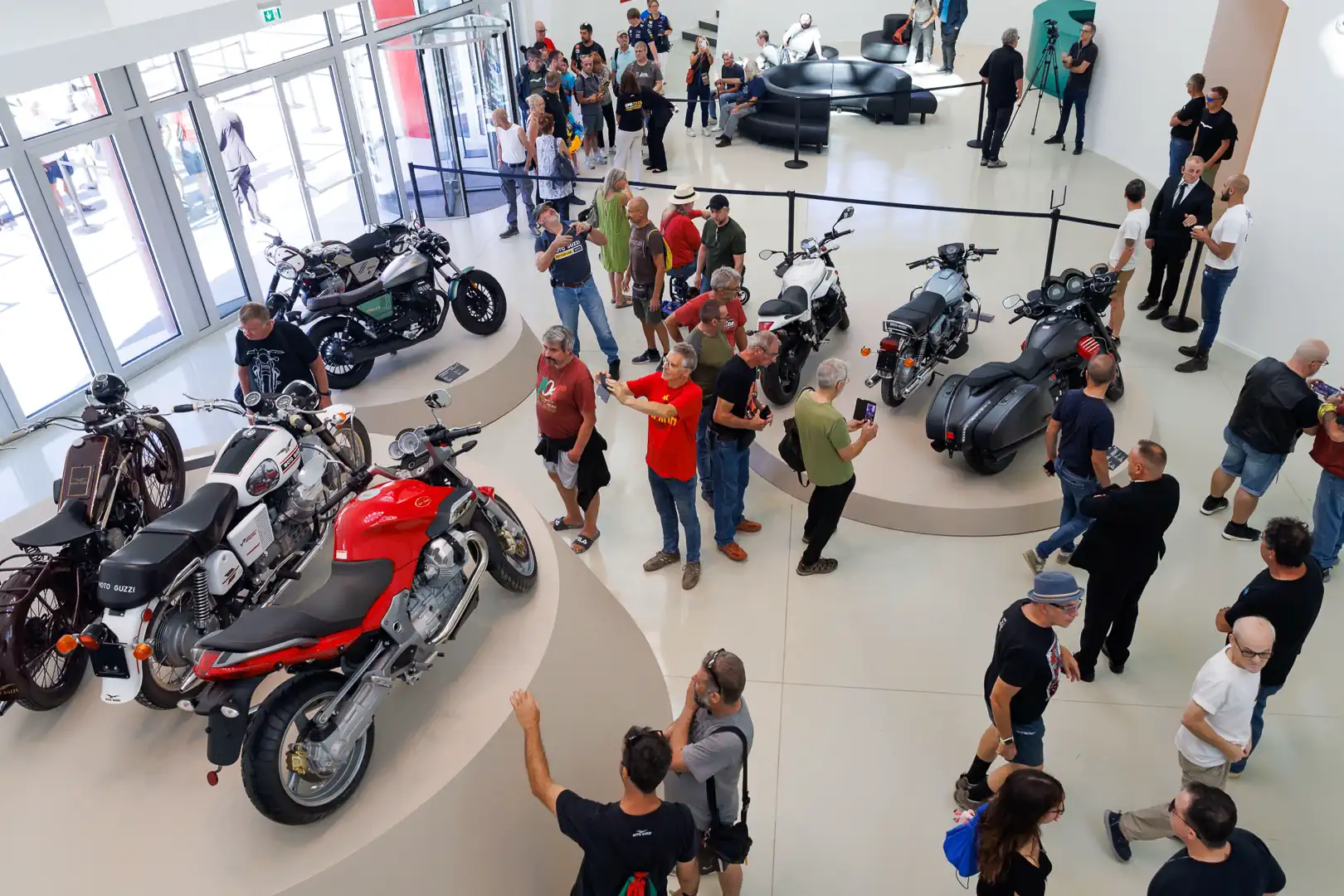
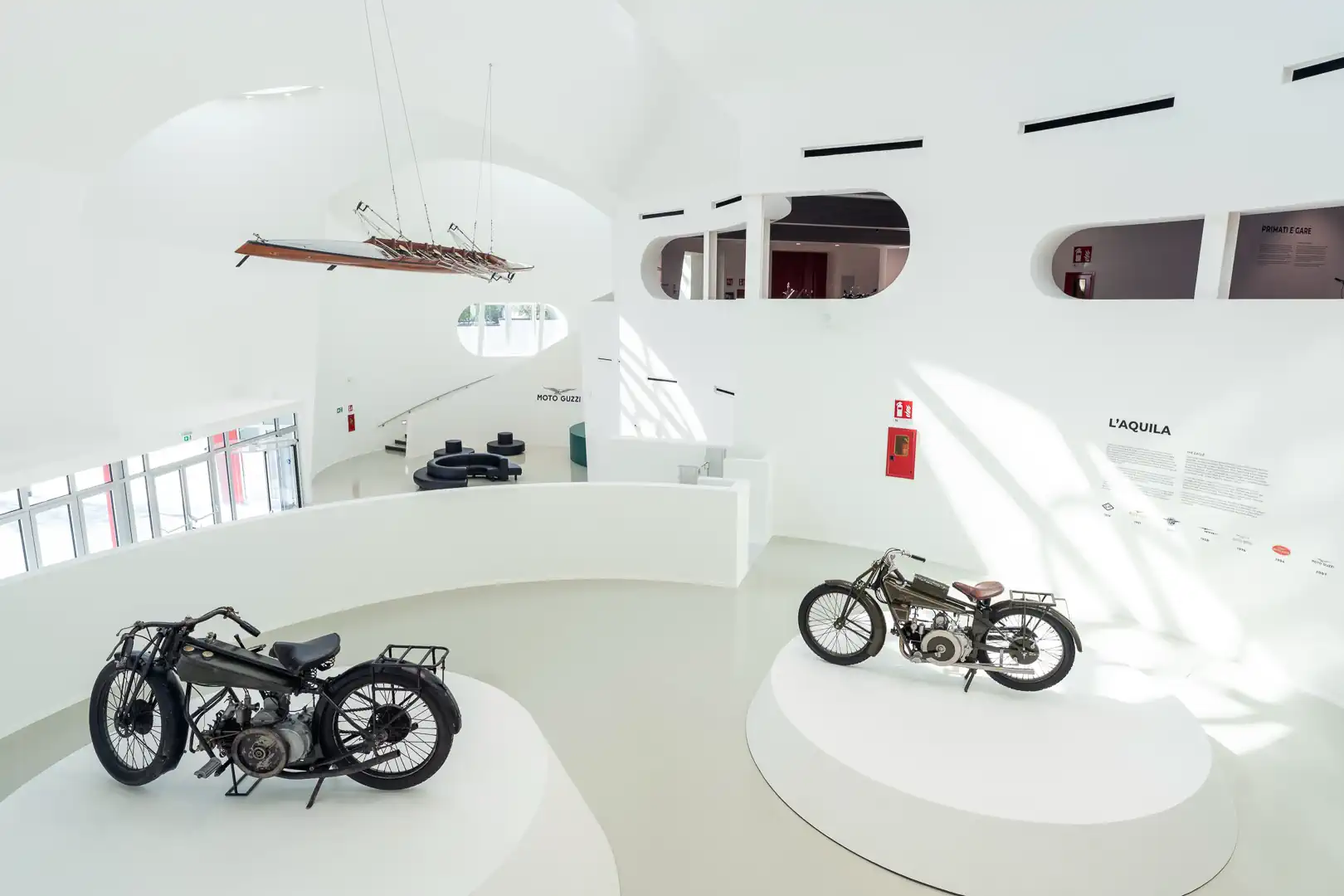
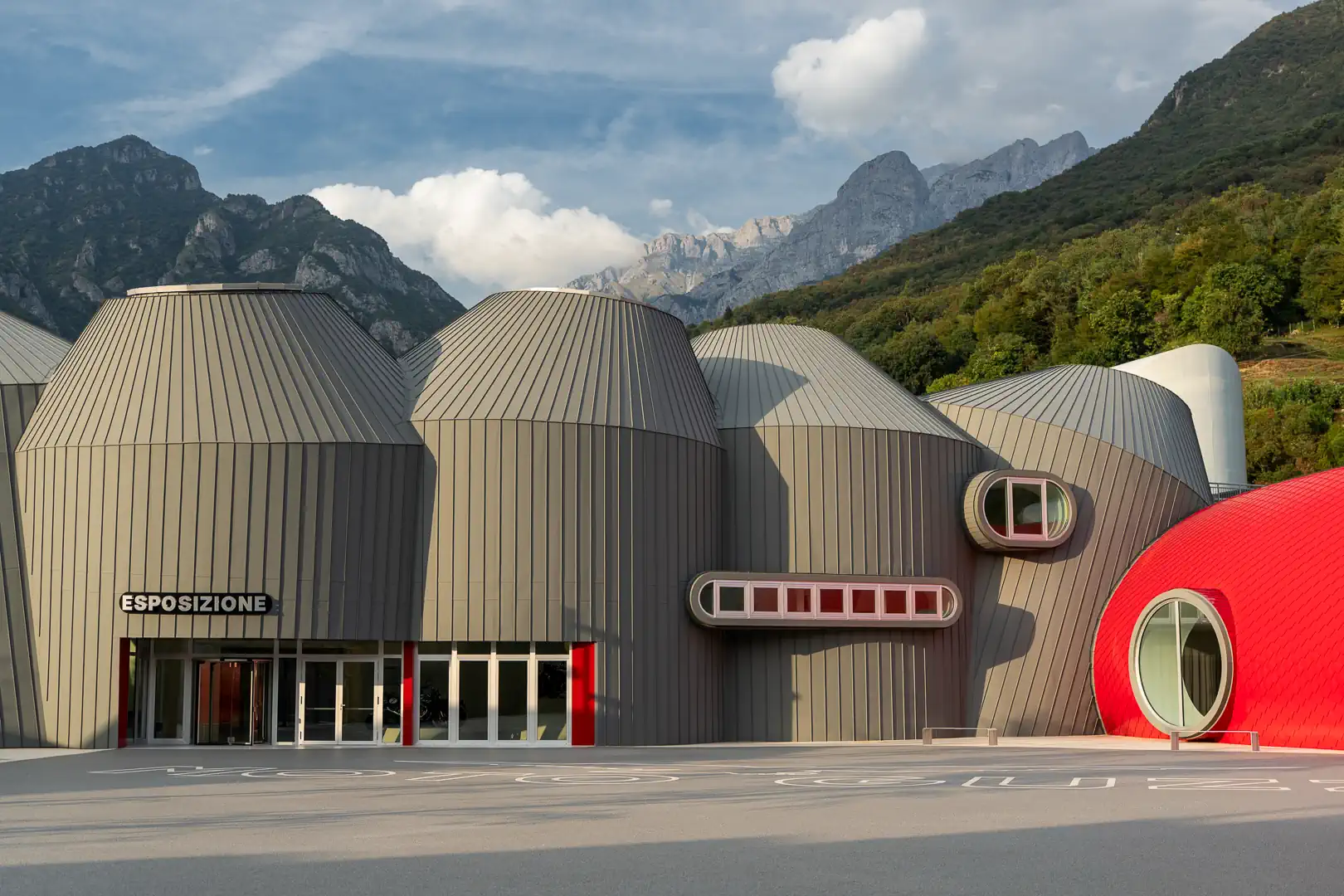
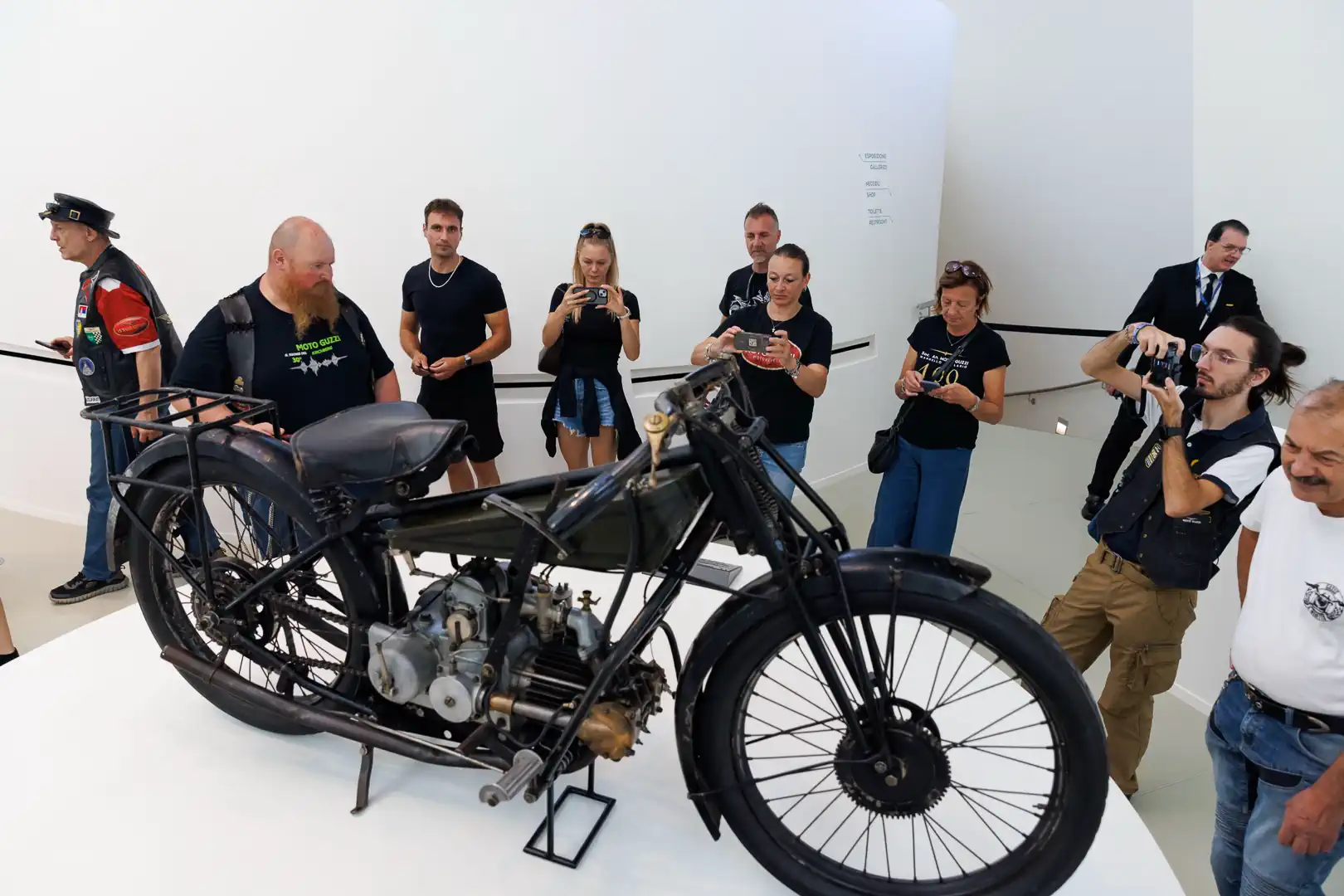
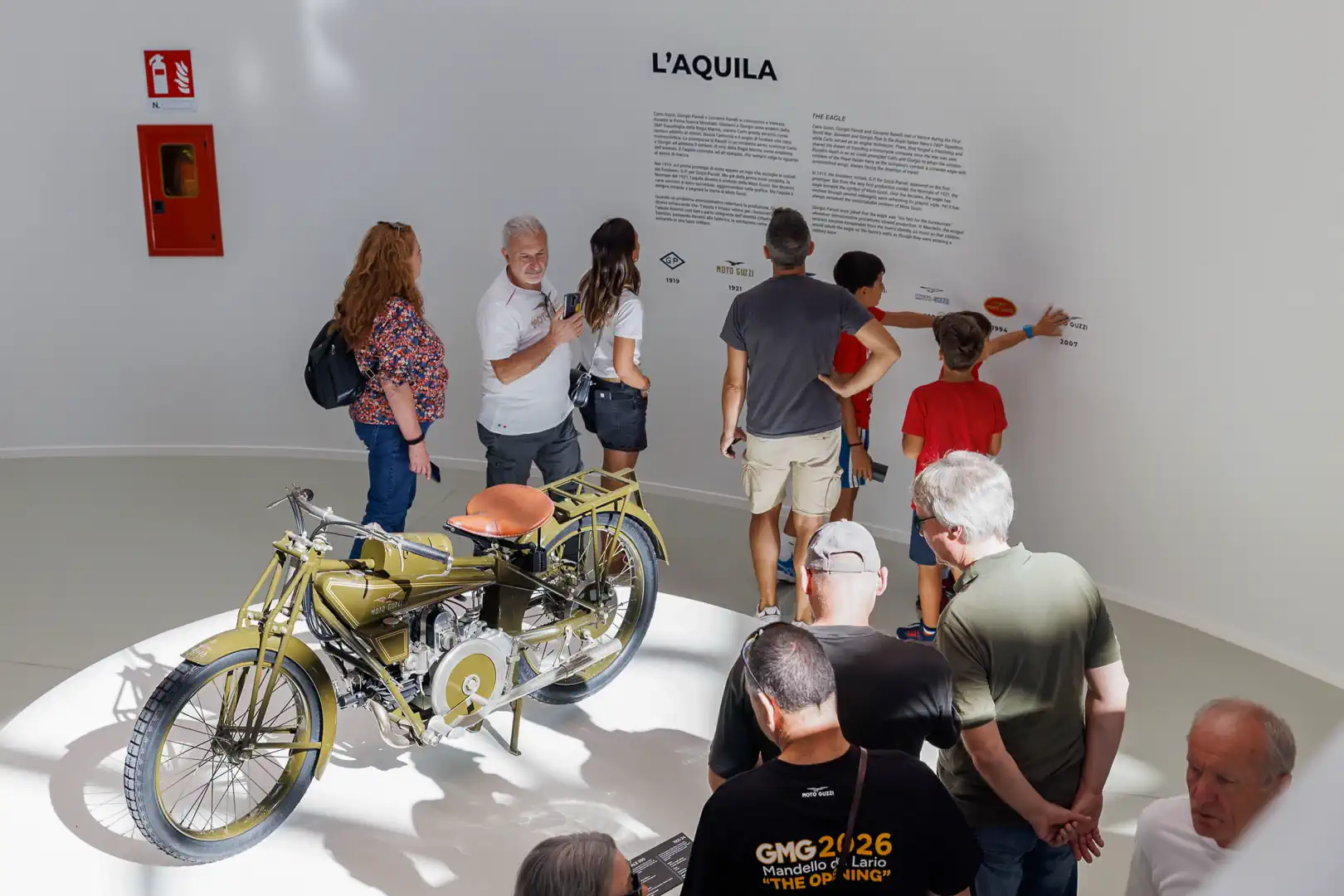
The Moto Guzzi Museum has moved into a new 32,000-square-foot building next door to the factory. Piaggio describes the premises as “entirely new.”
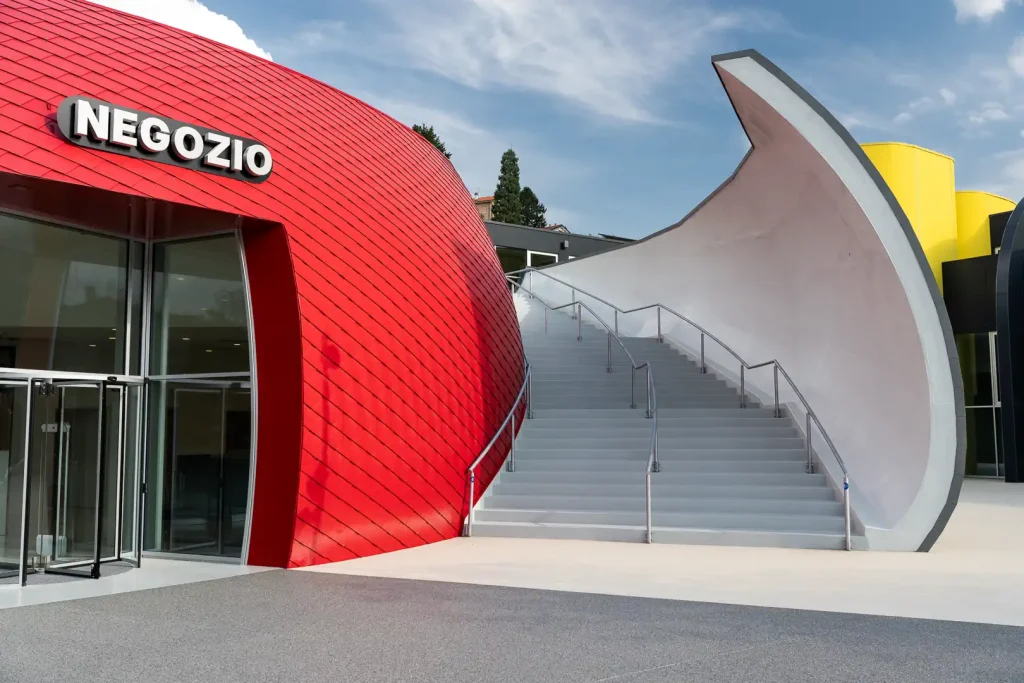
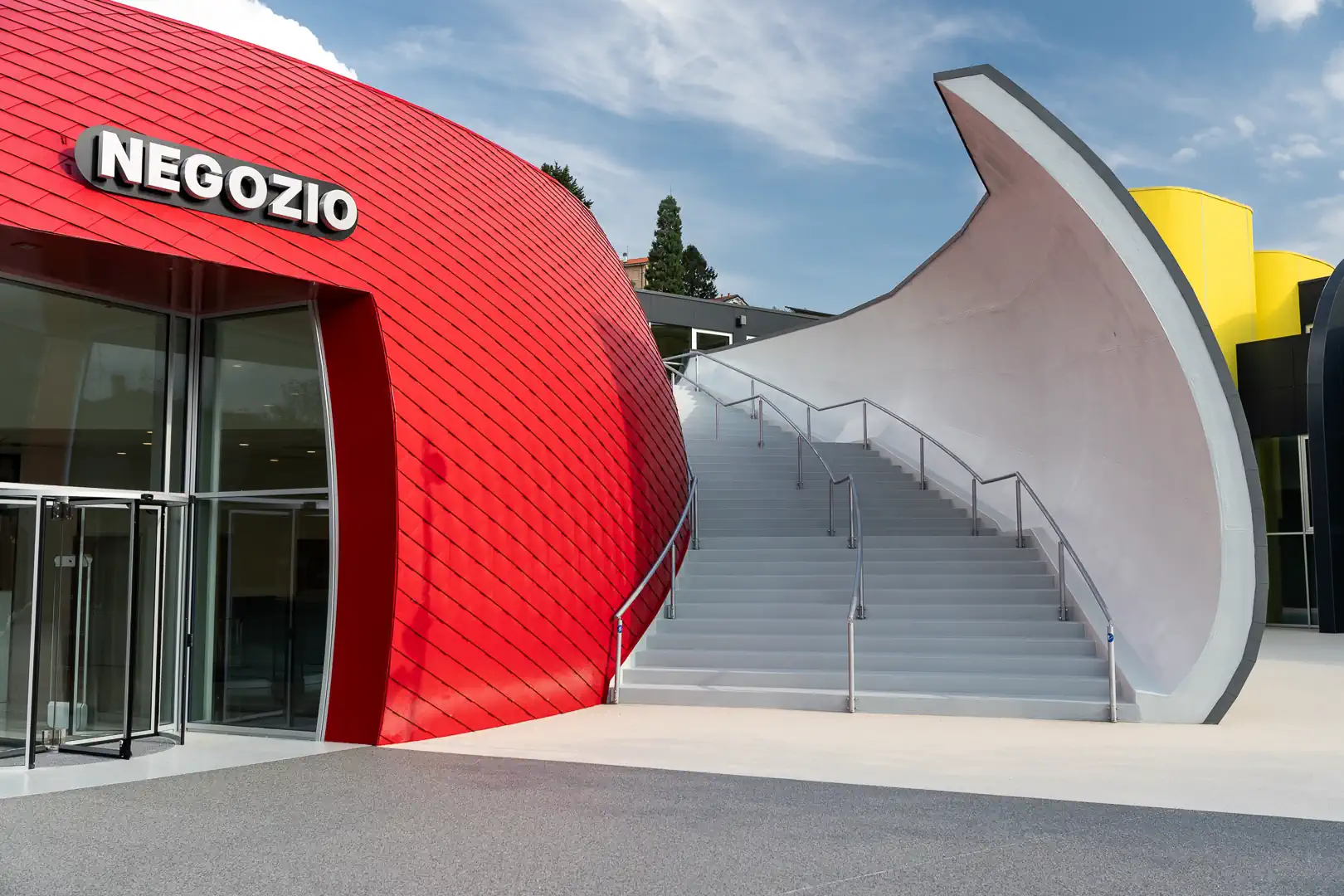
Architect Greg Lynn used the technical, metallic look of Moto Guzzis as the building’s starting point. Many of the shapes and finishes in the exhibition halls echo details on the motorcycles, and the halls are designed to be flooded with light off the lake and the foothills of the Alps.
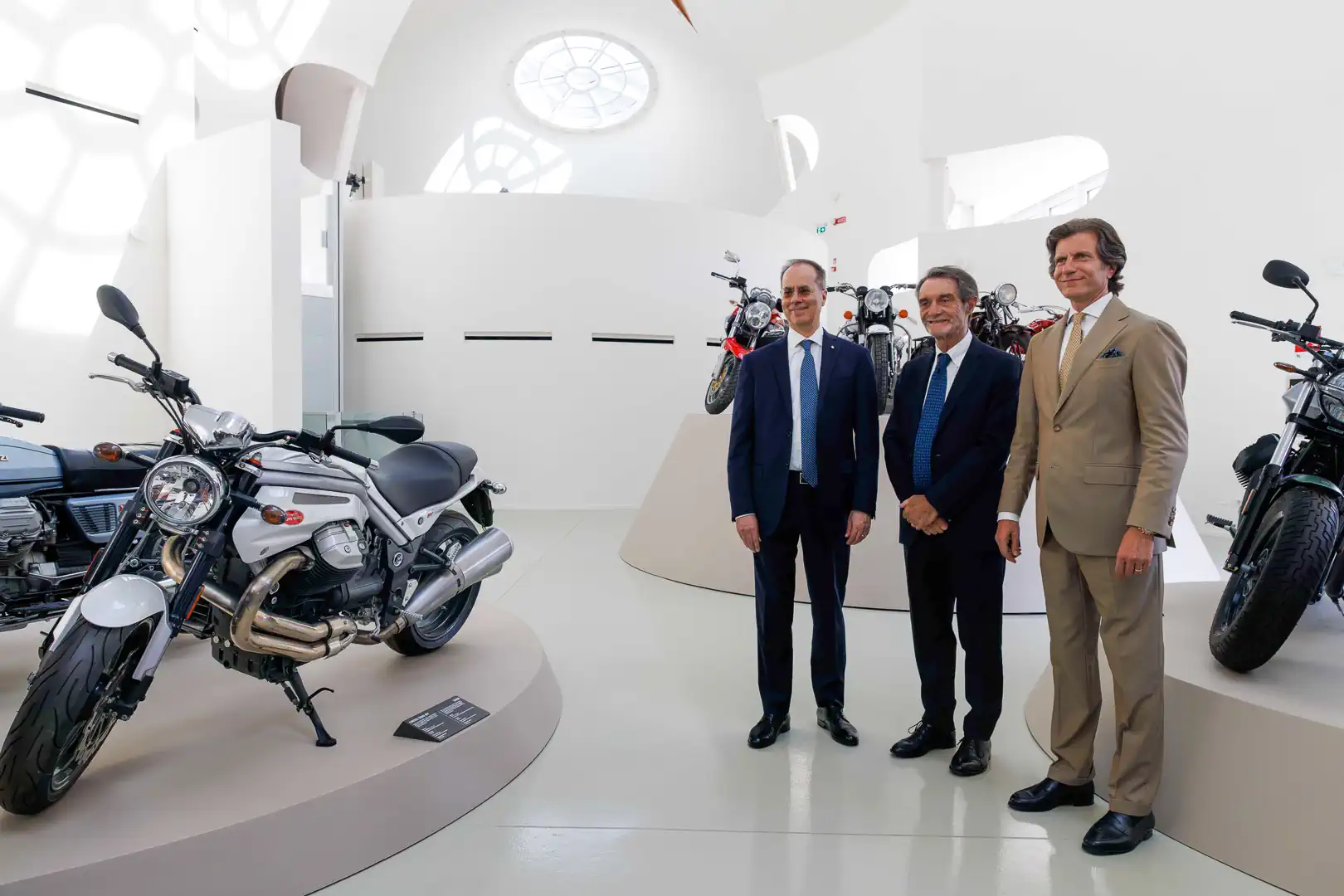
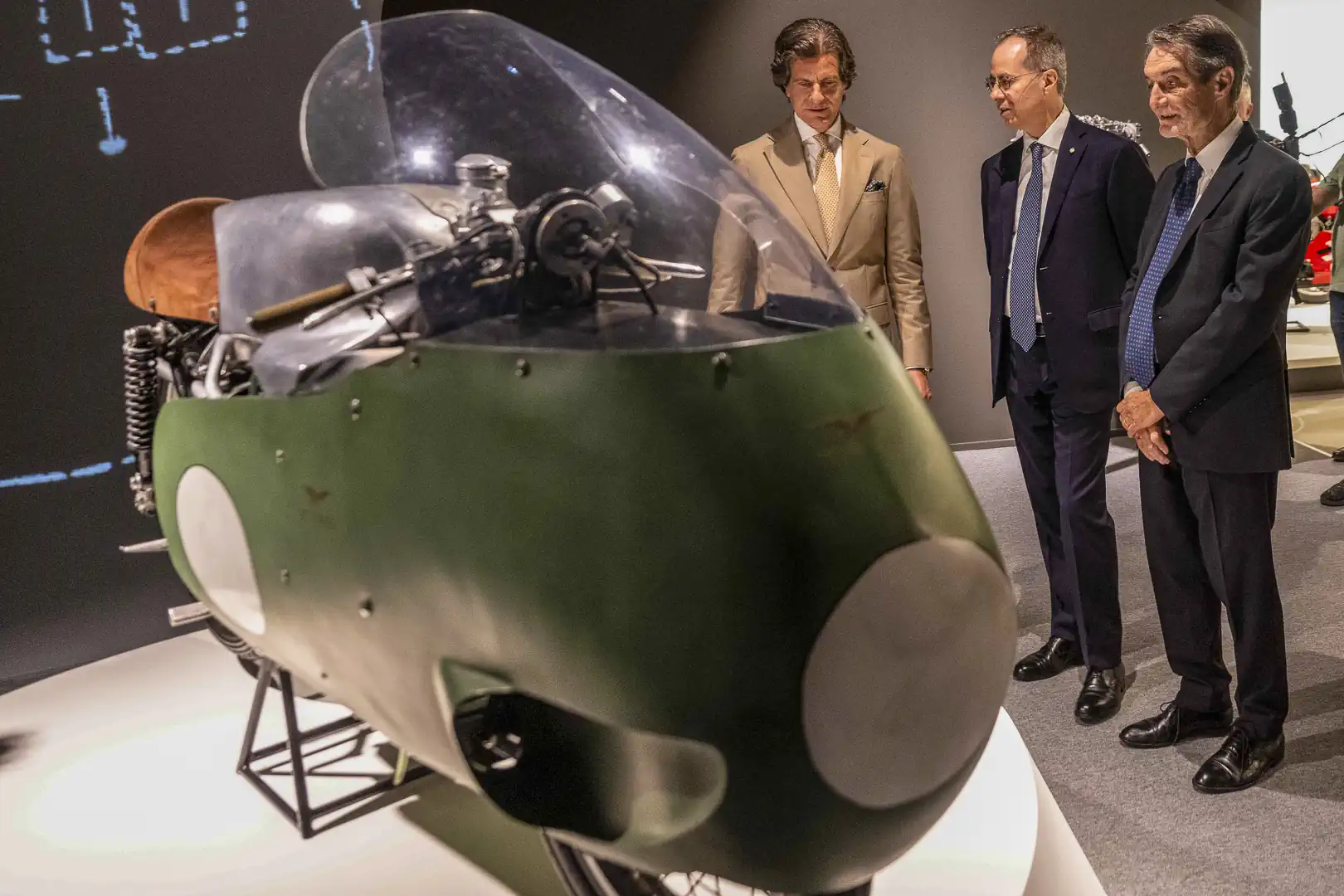
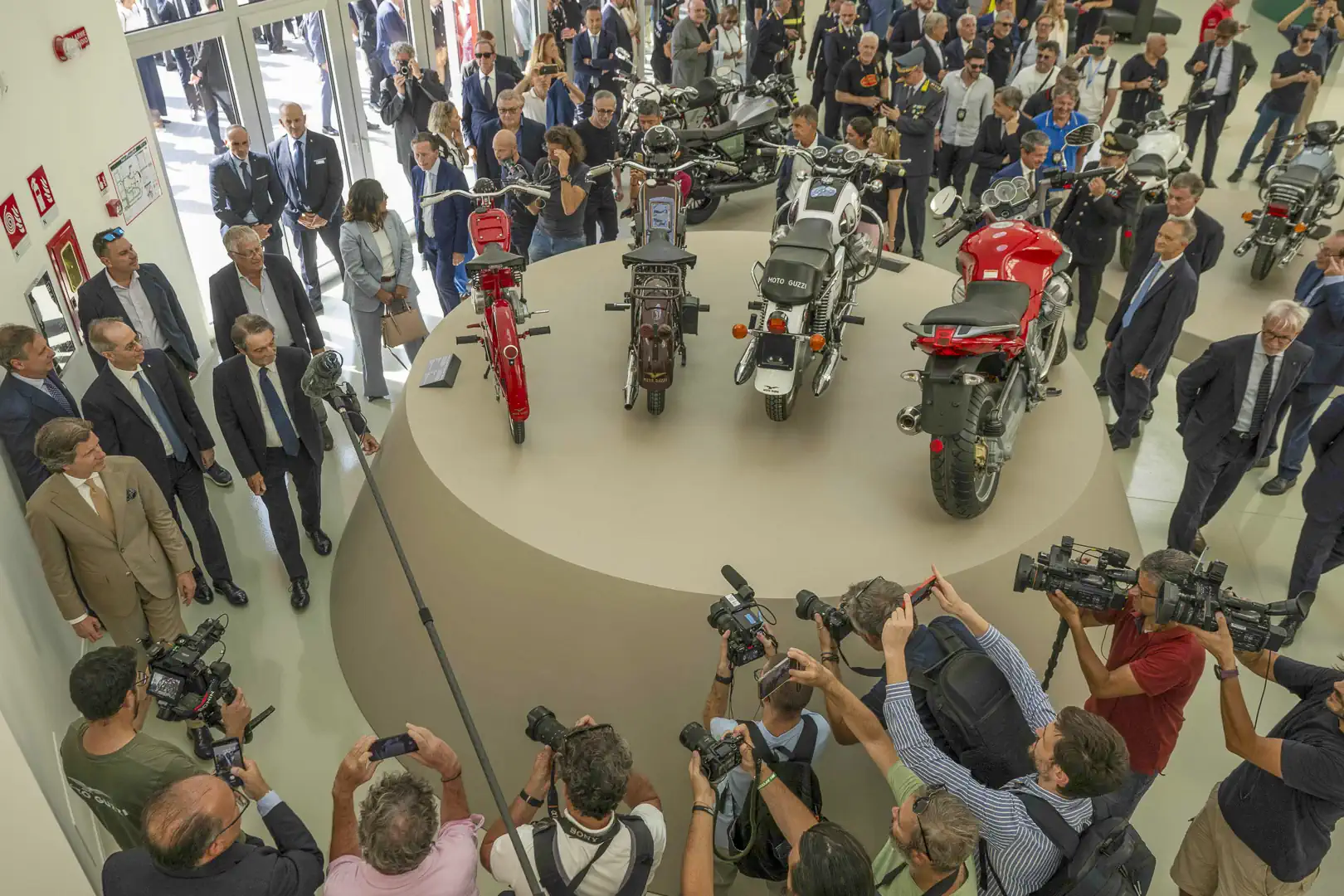
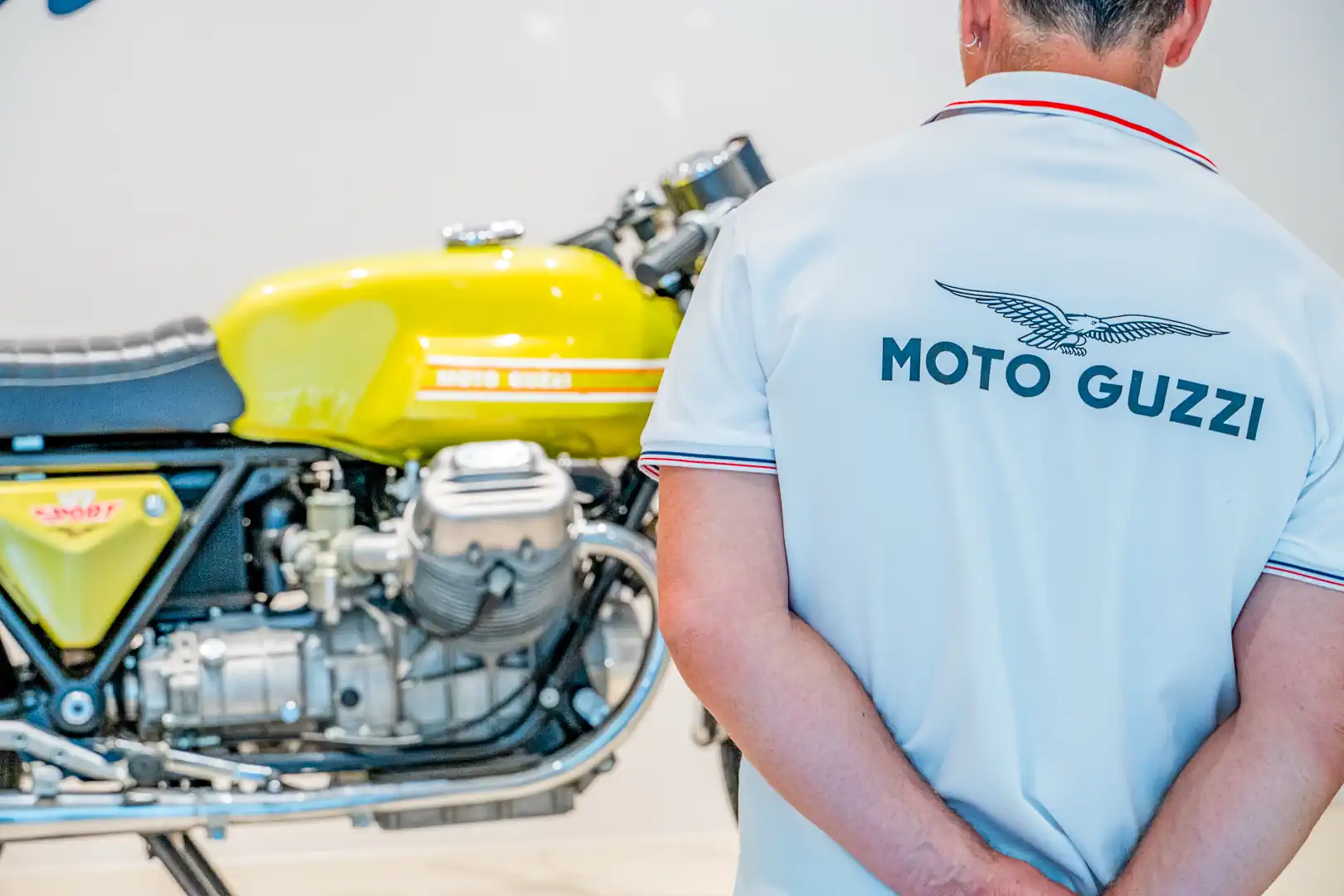
The collection exceeds 160 restored motorcycles. It starts with the G.P., the one-off 1919 prototype whose initials stand for Guzzi and Parodi, and runs through to the current range.
In between are the road bikes that made the brand’s name, along with the race bikes responsible for eight FIM Road Racing World Championships for riders and six constructors’ titles for Moto Guzzi. The factory withdrew from Grand Prix racing at the end of 1957.
The exhibits are grouped into themed sections covering cinema, racing, travel, the arts, and military and police motorcycles. This lets visitors follow a century of change in society, technology, and design through the bikes.
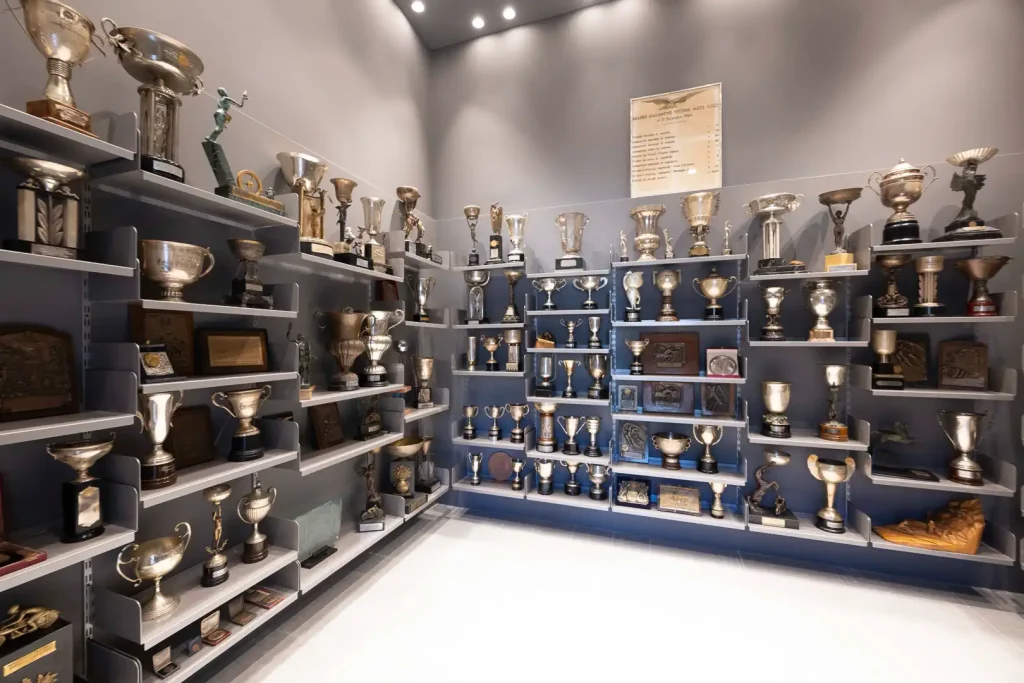
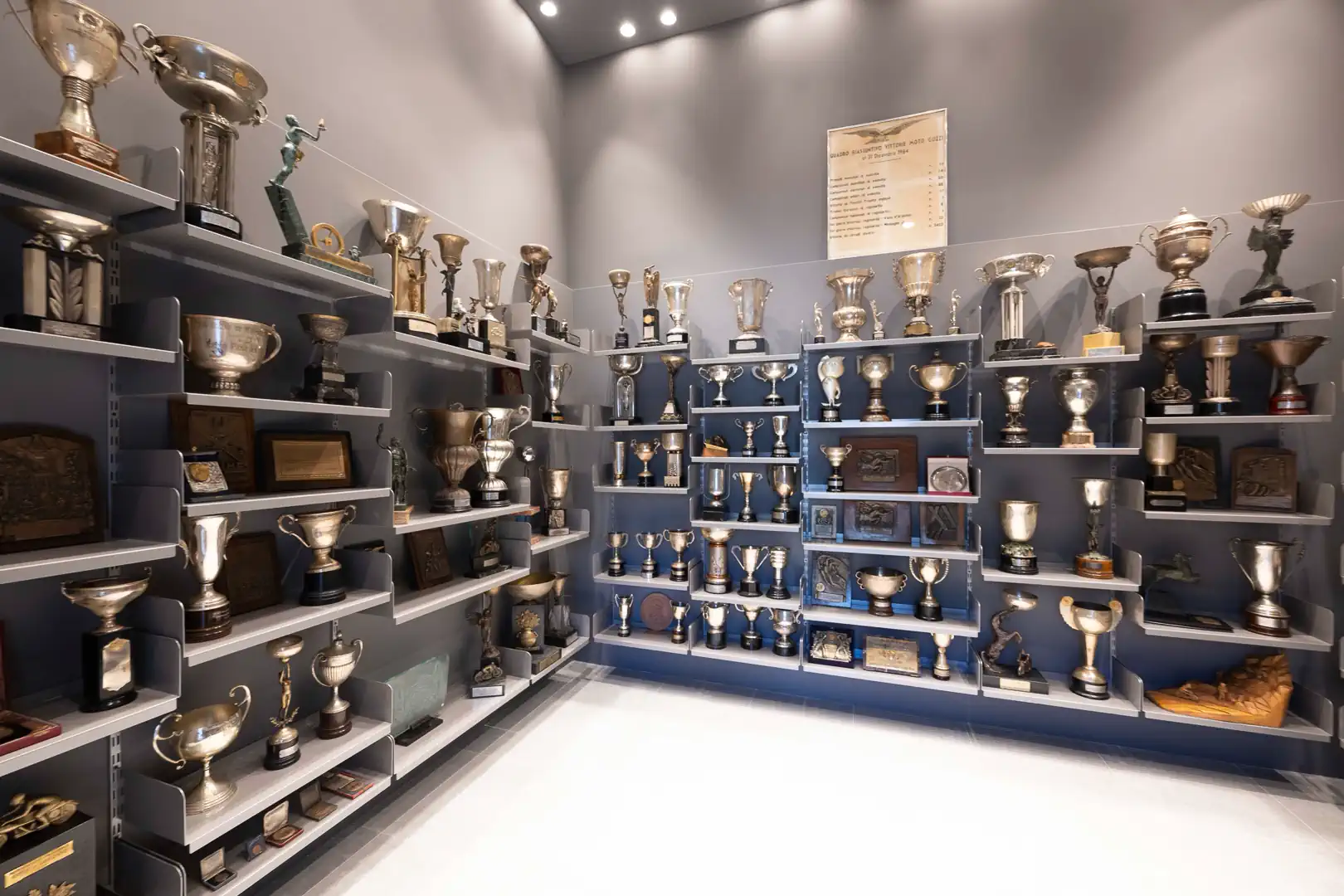
During the opening weekend, the biggest crowds beyond the main halls visited the trophy room. It’s a vault holding every trophy Moto Guzzi has won in competition.
The Historical Register area and the Restoration Workshop, both aimed at owners of older Guzzis, also drew crowds. The company’s official archive was also open to visitors.
The feature that most clearly separates this from the old museum is a window onto the new assembly lines. Visitors walking the collection can watch motorcycles being built, tying the brand’s past to its present.
The Public Spaces: A Wind Tunnel, a Piazza, and Two Squares Full of Trees
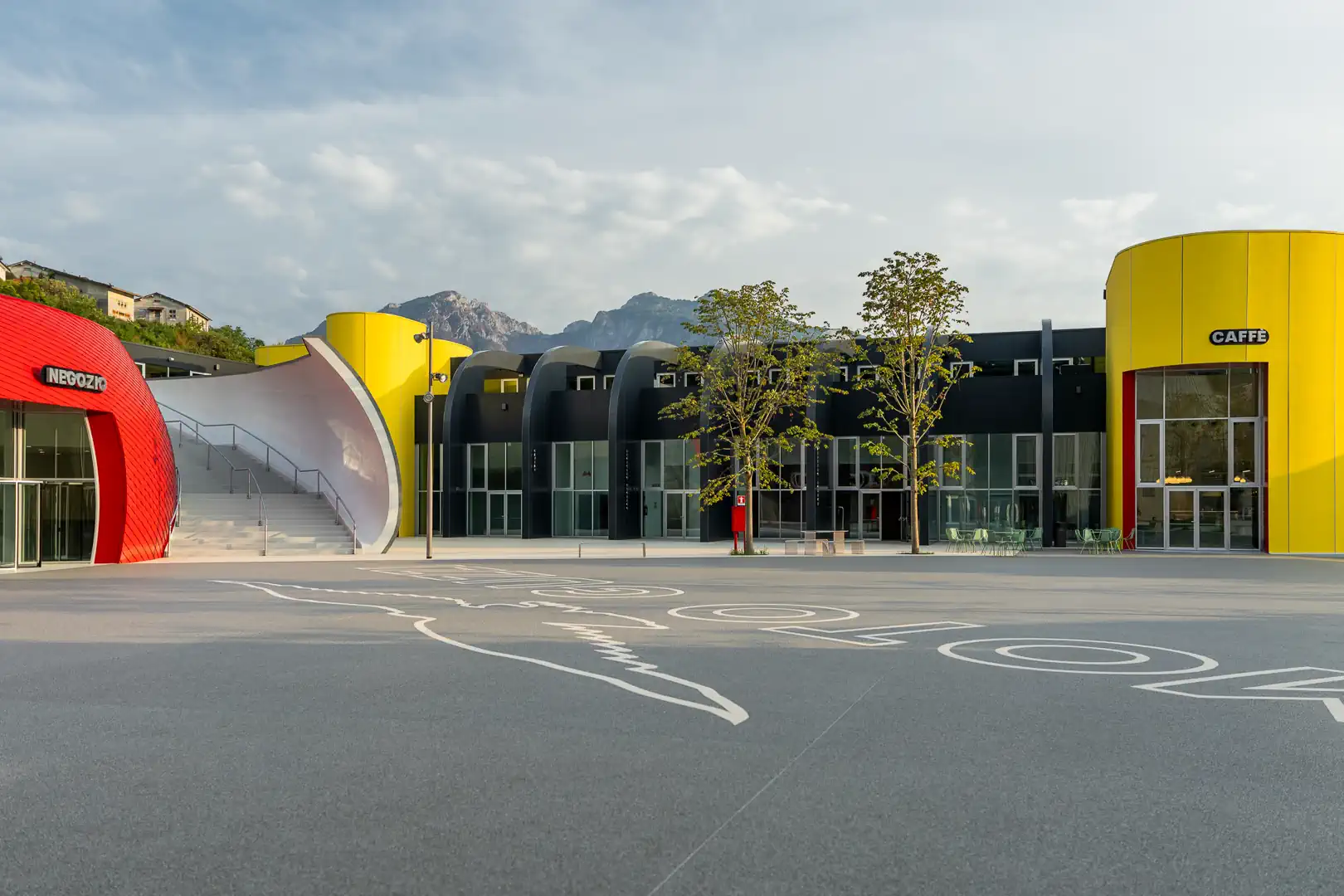
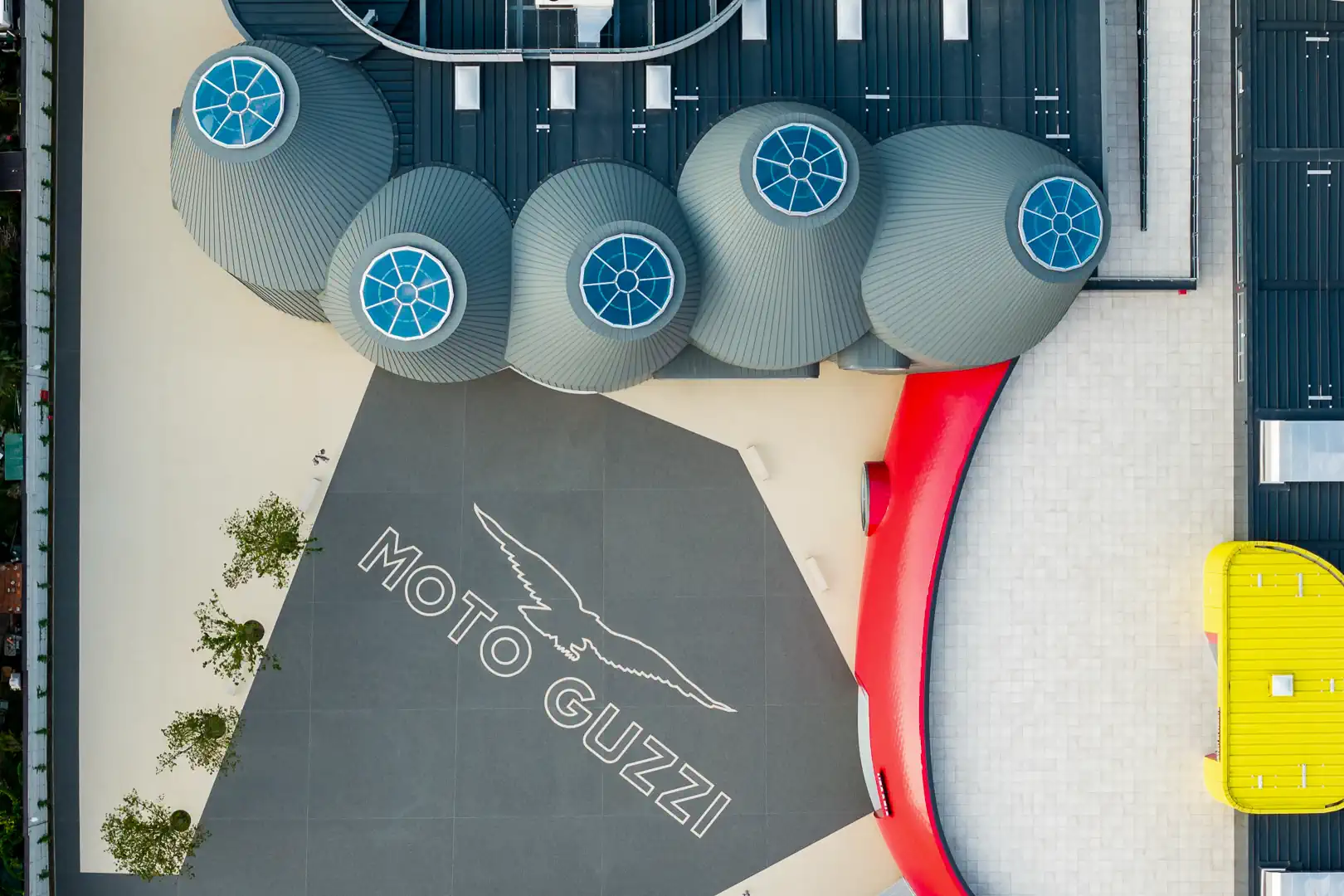
The third piece of the project is the ground between the buildings. The 45,000-square-foot outdoor area has two squares lined with 35 mature trees. A promenade connects them, and a walkway offers views of the factory in full operation.
At the center is a large piazza with a mosaic of the Moto Guzzi eagle, visible from a raised terrace. The eagle has been the company emblem since the beginning. Carlo Guzzi and Giorgio Parodi took it from the emblem of the Regia Marina, the Italian navy, in memory of their friend Giovanni Ravelli. Ravelli and Parodi had flown together as navy pilots in World War I, and Ravelli was to have been a partner in the company before he died in a test flight in 1919.
The most historic restored structure is the Galleria del Vento, the wind tunnel. Giuseppe “Naco” Guzzi, Carlo’s brother, designed and built it in 1950. Moto Guzzi says it was the first wind tunnel built by a motorcycle manufacturer.
Riders sat on the bikes inside the test chamber while controlled airflow passed over them. The tunnel contributed to the signature dustbin fairings of Moto Guzzi’s GP bikes that dominated the 1950s.
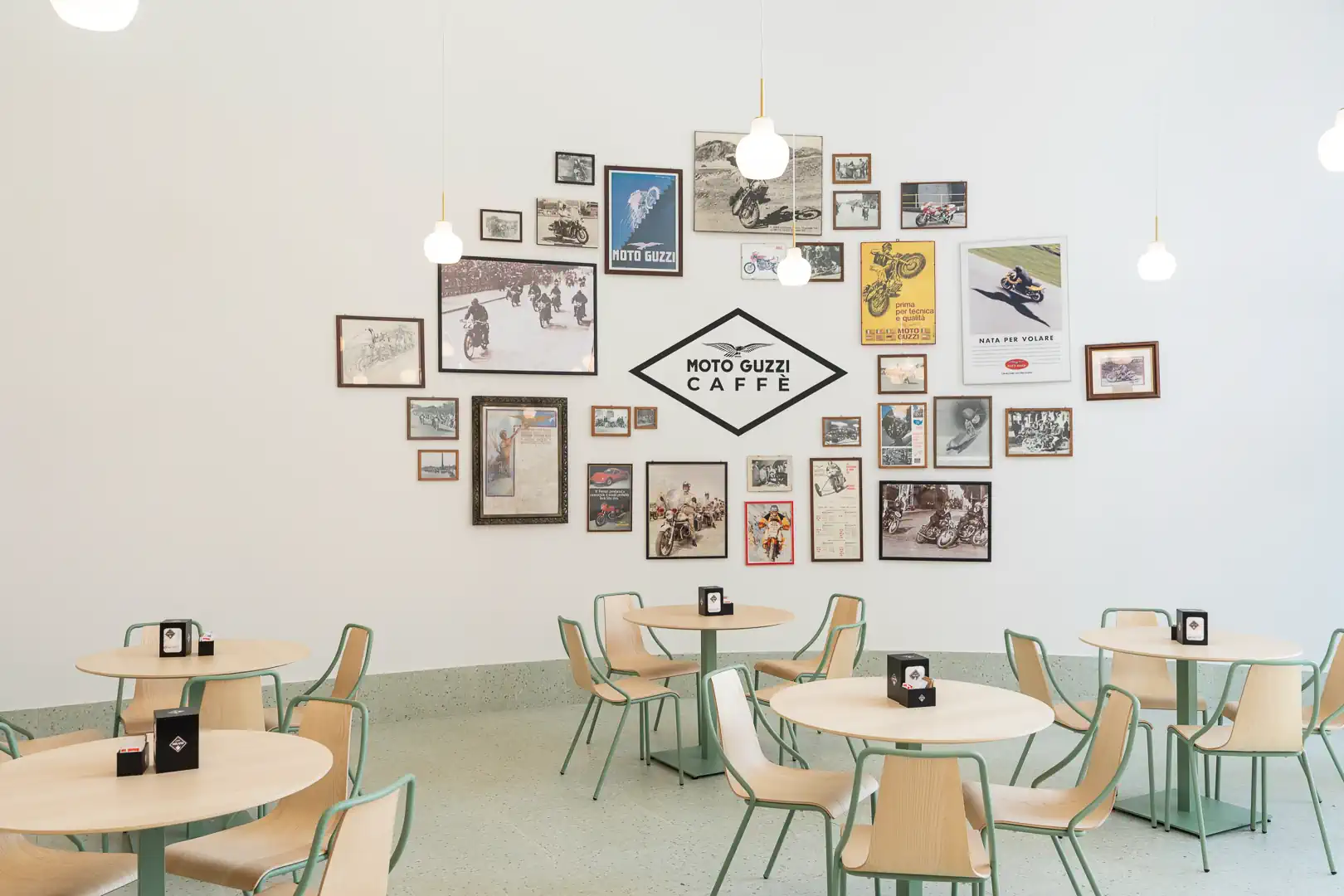
Indoors, the public side of the facility includes a large Motoplex Store, a café, workshop and event spaces, and a new auditorium. The indoor public spaces take up about 13,000 square feet.
Who Designed It
A team led by Greg Lynn, an American architect, designed and engineered the entire complex, both the factory and museum. Lynn is a professor at the UCLA School of the Arts and Architecture, a member of United States Artists, and a trustee of the Canadian Centre for Architecture. He won the Golden Lion at the Venice Architecture Biennale in 2008 and an architecture award from the American Academy of Arts and Letters.
Lynn is also known beyond architecture for the Ravioli Chair in the Museum of Modern Art’s permanent collection in New York and for design work with Swarovski, Alessi, and Vitra. Time named him one of the 100 most innovative people of the 21st century, and Forbes listed him among the ten most influential architects in the world.
Piaggio Group CEO Michele Colaninno calls Lynn a friend. Colaninno’s quote from the opening provides the company’s perspective on the new campus: “It is with great pride and a touch of madness that, after almost five years of hard work and an investment of over €50 million, we are launching the new chapter in the life of Moto Guzzi. The project has involved a complete transformation of the factory and the museum, and is the brainchild of Greg Lynn, a friend and internationally renowned architect, with whom we have worked to fuse metal and robots, silence and art. This was a by-no-means-easy challenge, which, together, we have successfully completed. Moto Guzzi is one of the world’s best-loved and iconic motorbike brands. Anyone who rides a Moto Guzzi is riding through over a century of Italian history, with all our memories and all our hopes for the future.”
Lombardy Region President Attilio Fontana attended the formal inauguration, along with Piaggio Group Executive Chairman Matteo Colaninno and Michele Colaninno. Piaggio has owned Moto Guzzi for nearly 22 years.
Moto Guzzi World Days 2026
Moto Guzzi World Days, known as GMG (Giornate Mondiali Guzzi), ran September 3 through 6. It was billed in advance as the largest edition in the event’s history, with most attendees arriving by motorcycle. Over the four days, the site enjoyed 40,000 visits, and the museum recorded almost 30,000 admissions.
The factory gates opened at 10 a.m. each day for museum and wind tunnel tours, the archive opened at noon, and test rides across the full range began at 2 p.m. About 600 riders sampled a V7, V85, V100 Mandello, or Stelvio. Members of The Clan, the company’s owners club, could bring their own Guzzis to the in-house workshop for a service and tune-up. A Virgin Radio stage at the entrance ran live programming every day, with guests talking racing, travel, and adventure.
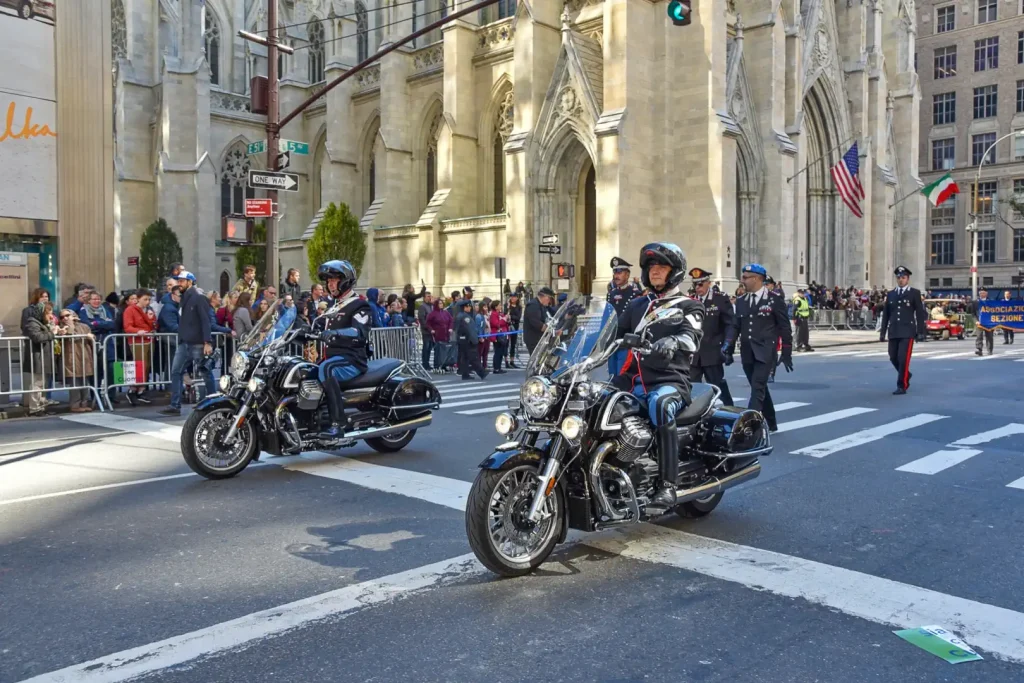
Saturday, September 5, was parade day. Riders gathered in Lecco with 1,500 Moto Guzzis from every era for a morning ride to Mandello. Leading them were the Corazzieri, the Italian president’s honor guard, on their official California 1400s. Behind the Corazzieri came Aprilia Racing MotoGP riders Marco Bezzecchi and Lorenzo Savadori, along with four-time 250cc World Champion Max Biaggi, all on Guzzis. The parade arrived at the factory between two rows of spectators. From the stage, the full Aprilia Racing team, including 2024 MotoGP World Champion Jorge Martín and Aprilia Racing CEO Massimo Rivola, greeted the crowd. Piaggio put Saturday’s attendance in Mandello at nearly 30,000.
Five Bikes Painted to Match the Building
Moto Guzzi used the opening to unveil a 105th Anniversary edition of the Stelvio, Stelvio PFF Rider Assistance Solution, V100 Mandello, V85 Strada, and V7 Stone. The livery is gray, with a glossy pearlescent finish that the company says was chosen to evoke the industrial, metallic look of the new complex. Yellow accents are picked up from the finishes at the Mandello site. A 105th Anniversary graphic runs vertically along both sides of the tank, and the number 105 replaces the eagle badge; the same graphic appears on the rear rim, and the seat gets a stylized eagle and contrasting yellow stitching. The edition goes on sale in October and will be offered only until the end of 2027. Pricing has not been announced.
Rebuilt, Not Relocated
Add it up, and Moto Guzzi marked its 105th year by rebuilding its home rather than moving it. The bikes still roll out past the red gate on Via Parodi, now from a plant rated for 30,000 a year, with a museum next door that looks in on the line. Tens of thousands of Moto Guzzisti showed up to see it in the first four days. And from October, anyone who wants a piece of the occasion can buy a new Moto Guzzi painted to match the building.
Photography by Alberto Cervetti, Mattia Negrini, Gigi Saodano, Marco Zamponi et al
New Moto Guzzi Factory and Museum Photo Gallery
Marco Bezzecchi leads Max Biaggi and Jorge Martín at Moto Guzzi World Days 2026.
Hello and welcome again to the Motos and Friends Podcast. This episode is brought to you by Leod Escapes.
* * * * *
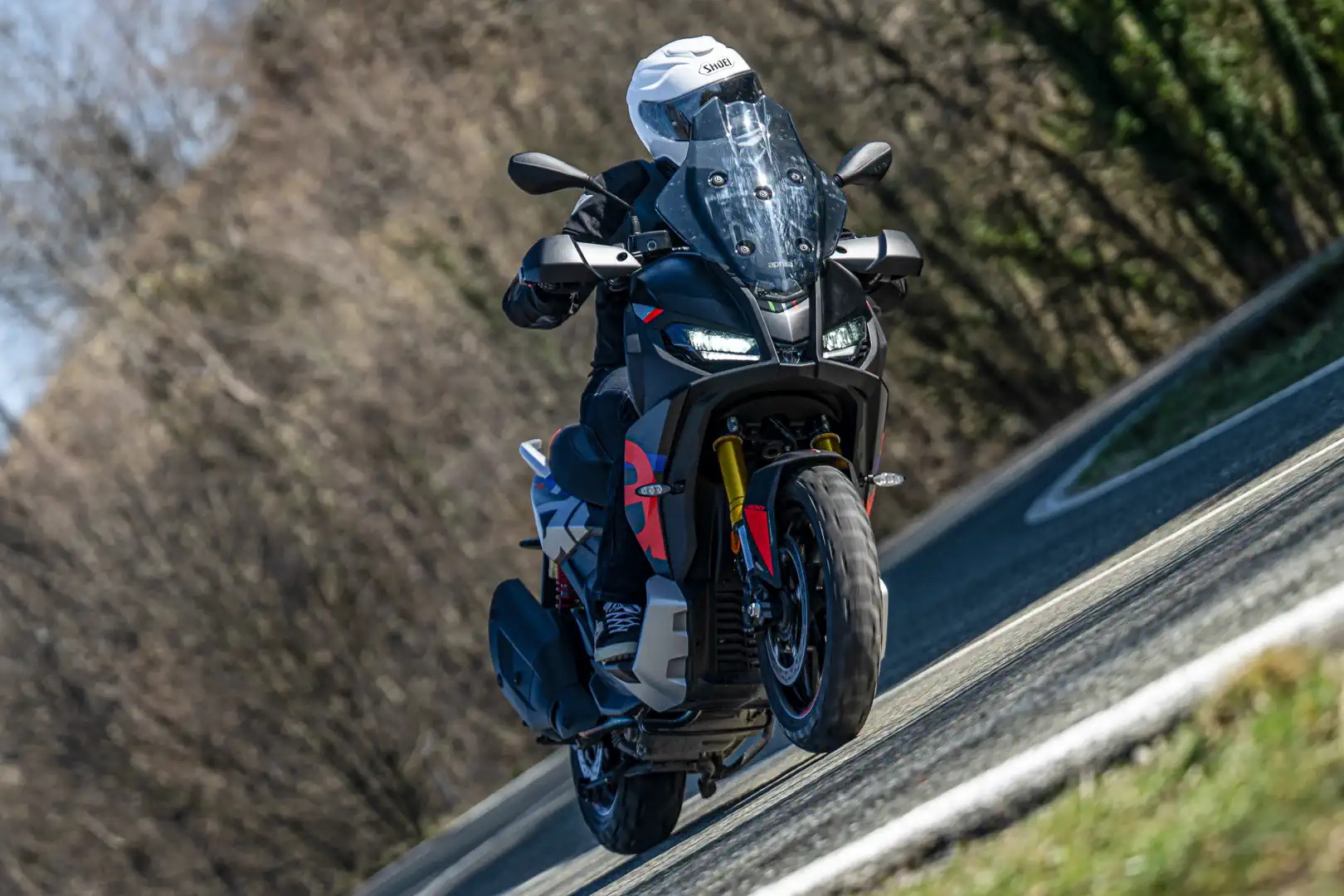
Aprilia is bringing a scooter to North America, and it’s one designed to appeal to adventure motorcyclists. The SR GT 400 is a mid-size scooter built around a steel motorcycle-style frame, a 399cc single, and off-road-ready hardware. It reaches US dealers as soon as this month. Don Williams and Kelly Callan spent some time riding the Aprilia and were surprised by what they discovered. Is this a real motorcycle or just a good-looking urban scooter?
* * * * *
Cat McLeod is founder and owner of Leod Escapes, the ultimate tour company for sport-minded motorcycle riders. Cat talks to us this segment about some of his amazing European experiences and tours that include of course, riding some amazing MotoGP tracks on new BMW S1000RRs. If you like what you hear, now is the time to book your trip of a lifetime, so visit LeodEscapes.com to find out more.
* * * * *
Our guest this episode is Terry Vance, the multiple Motorcycle and Motorsports Hall-of-Famer. Terry is of course the former professional motorcycle drag racer, team owner, and co-founder of the high-performance parts company Vance & Hines. Teejay Adams chats with Terry about his incredible career that includes being the first rider to hit 200 mph in the standing quarter-mile.
Having won this year’s MotoAmerica Mission King of the Baggers championship with Hayden Gillim riding the Vance & Hines factory Indian Challenger, and with Harley-Davidson’s recent withdrawal, Terry gives us his thoughts on where the series might go from here.
* * * * *
Here’s quick reminder to check out our monthly digital magazine. It’s filled with everything you want to read on motorcycling, including some things you’ve probably not seen elsewhere. It’s absolutely free and you will find it on the Apple App Store and of course on Google Play as well.
Don’t forget to leave us your comments on our social media—we’re on all the usual platforms at Ultimate Motorcycling. We love hearing your feedback… so good or bad, please let us know what you think. If there’s something you’d like us to cover, we’d love to hear those ideas too!
We use cookies and browser activity on this website
Functional
Always active
The technical storage or access is strictly necessary for the legitimate purpose of enabling the use of a specific service explicitly requested by the subscriber or user, or for the sole purpose of carrying out the transmission of a communication over an electronic communications network.
Preferences
The technical storage or access is necessary for the legitimate purpose of storing preferences that are not requested by the subscriber or user.
Statistics
The technical storage or access that is used exclusively for statistical purposes.The technical storage or access that is used exclusively for anonymous statistical purposes. Without a subpoena, voluntary compliance on the part of your Internet Service Provider, or additional records from a third party, information stored or retrieved for this purpose alone cannot usually be used to identify you.
Marketing
The technical storage or access is required to create user profiles to send advertising, or to track the user on a website or across several websites for similar marketing purposes.
Advertising helps us keep our content available for free, so adjusting your ad blocking settings will help us.
We appreciate your support!
i
How to Allow Ads on This Site
Depending on your setup, ads may be blocked by a browser extension, VPN, antivirus software, or other application. Here are some common ways to allow ads:
Browser Extensions (e.g., Adblock, uBlock, etc.)
Click the extension icon in your browser toolbar.
Look for an option like "Don't run on pages on this site" or "Pause on this site".
Save the change and refresh the page.
VPNs with Ad Blocking (e.g., NordVPN, Proton VPN, etc.)
Open your VPN app.
Go to settings or features.
Disable any ad blocking or tracking protection features.
Refresh the page.
Antivirus Software or Other Privacy Tools
Check for web protection, ad filtering, or browser privacy settings.
Click the power button to disable it for this site.
Refresh the page.
Not sure what's blocking ads? Look for tools with privacy or filtering features, or check your browser extensions. We only use respectful, non-intrusive advertising.