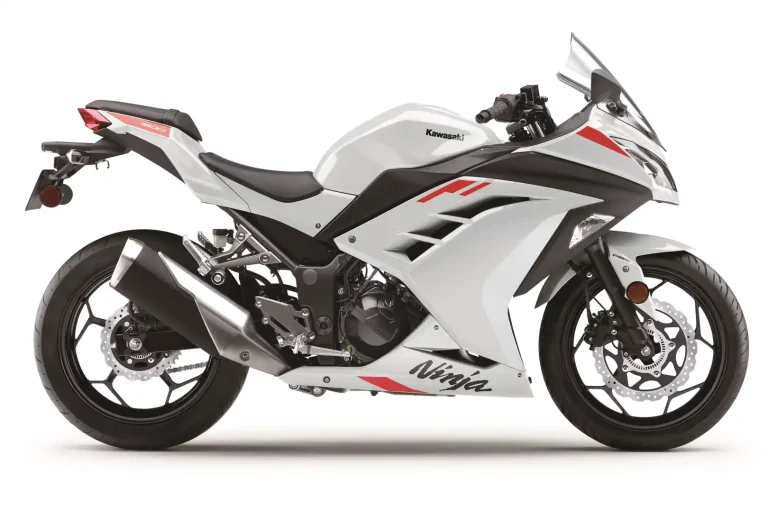
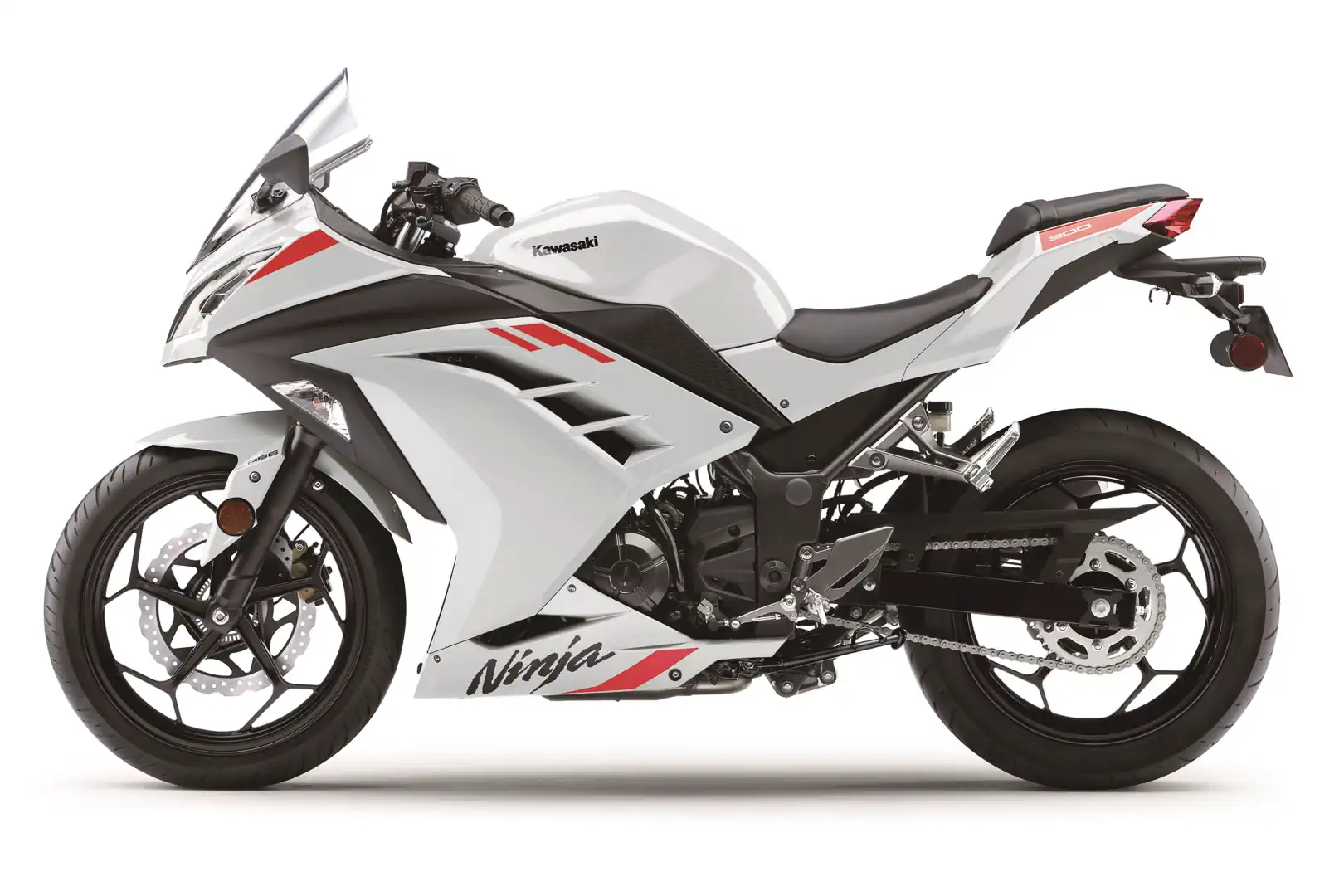
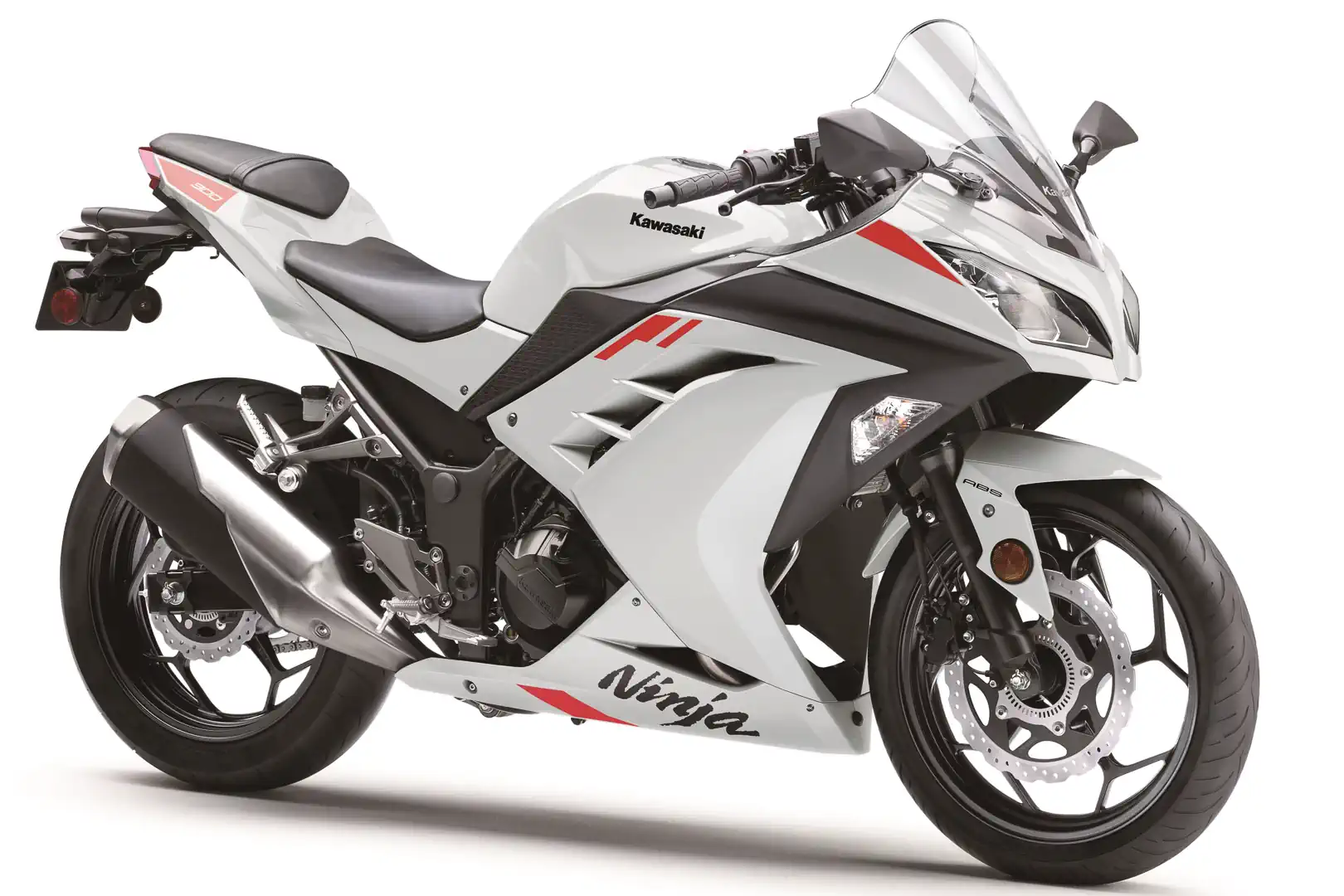
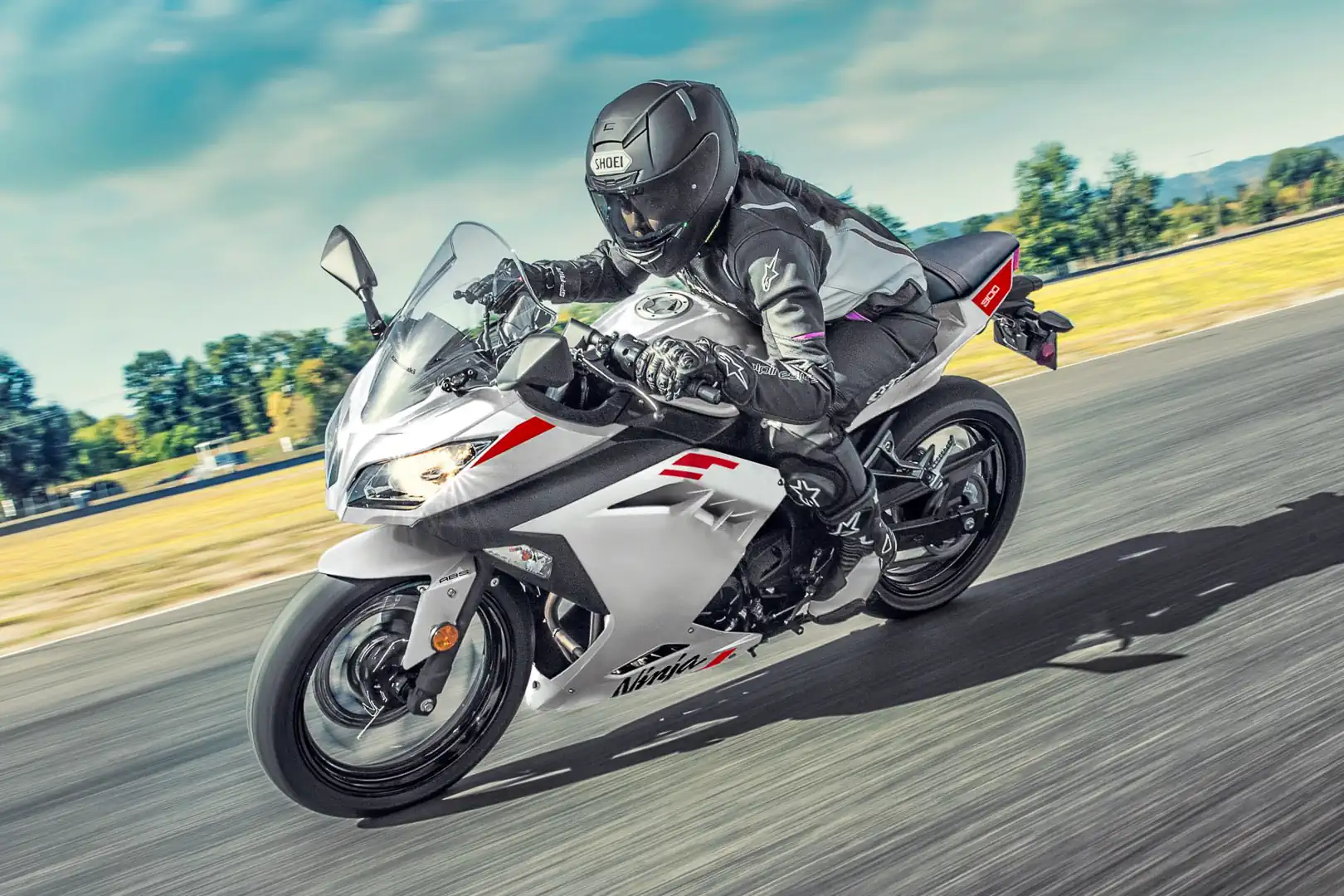
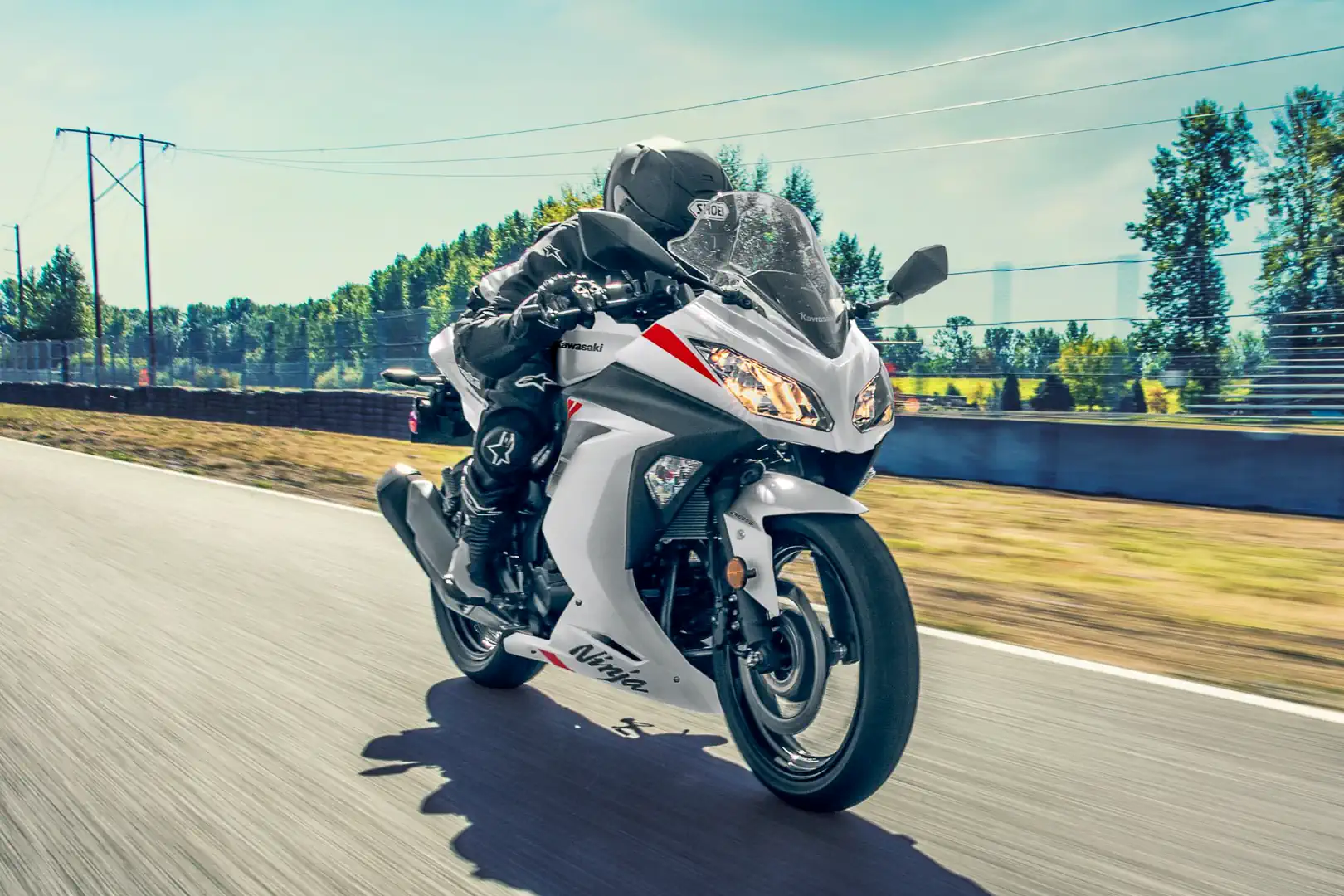
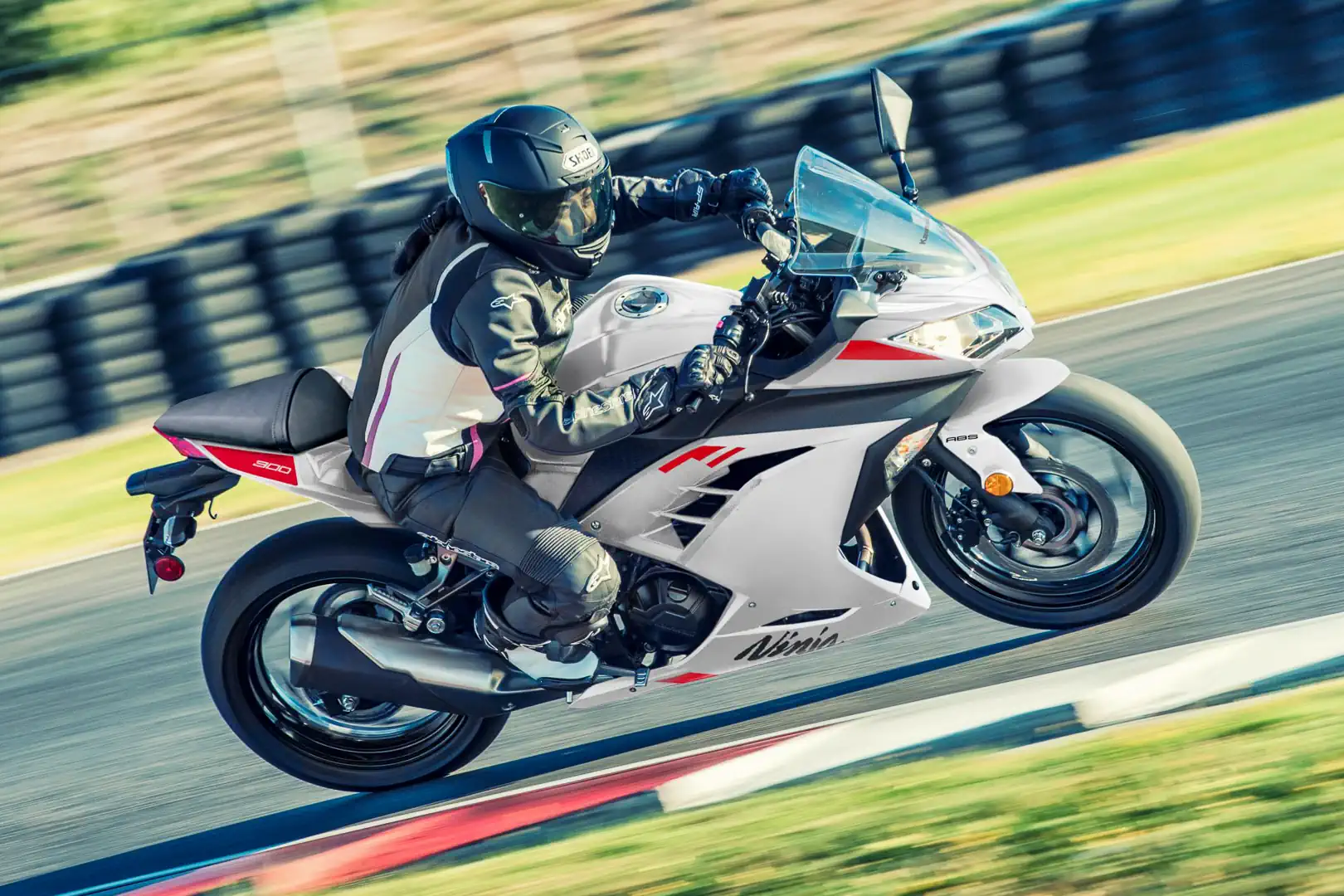
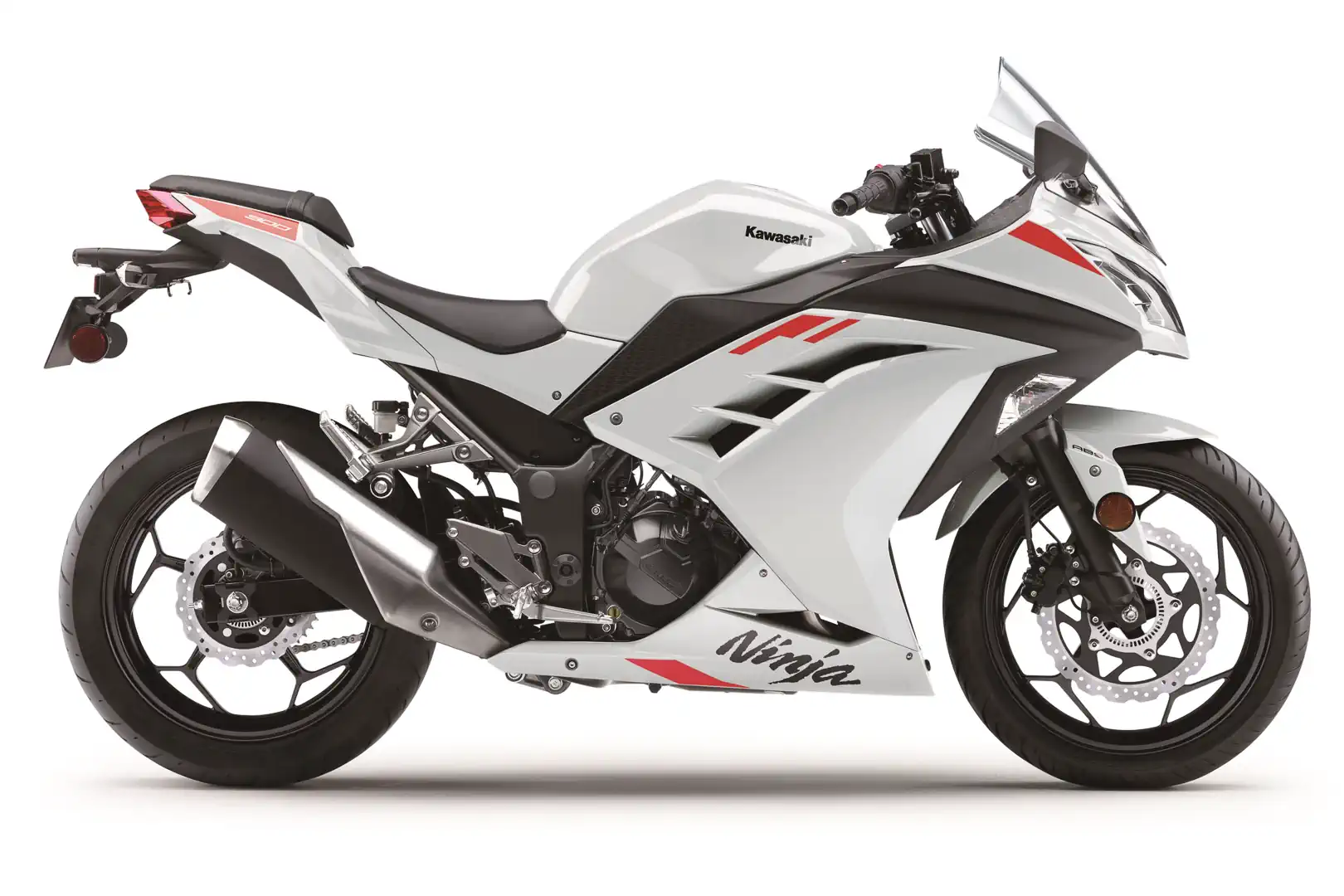
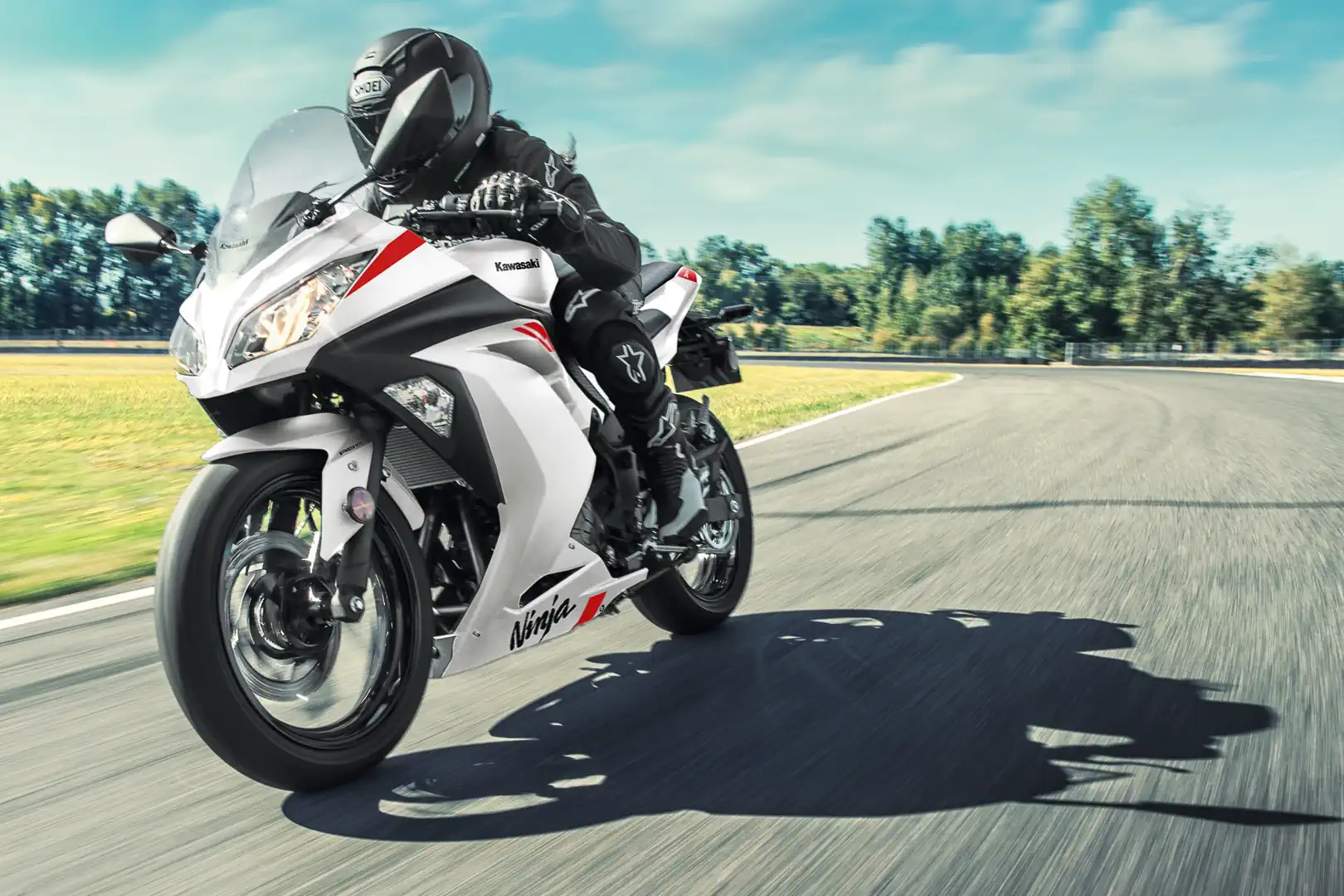
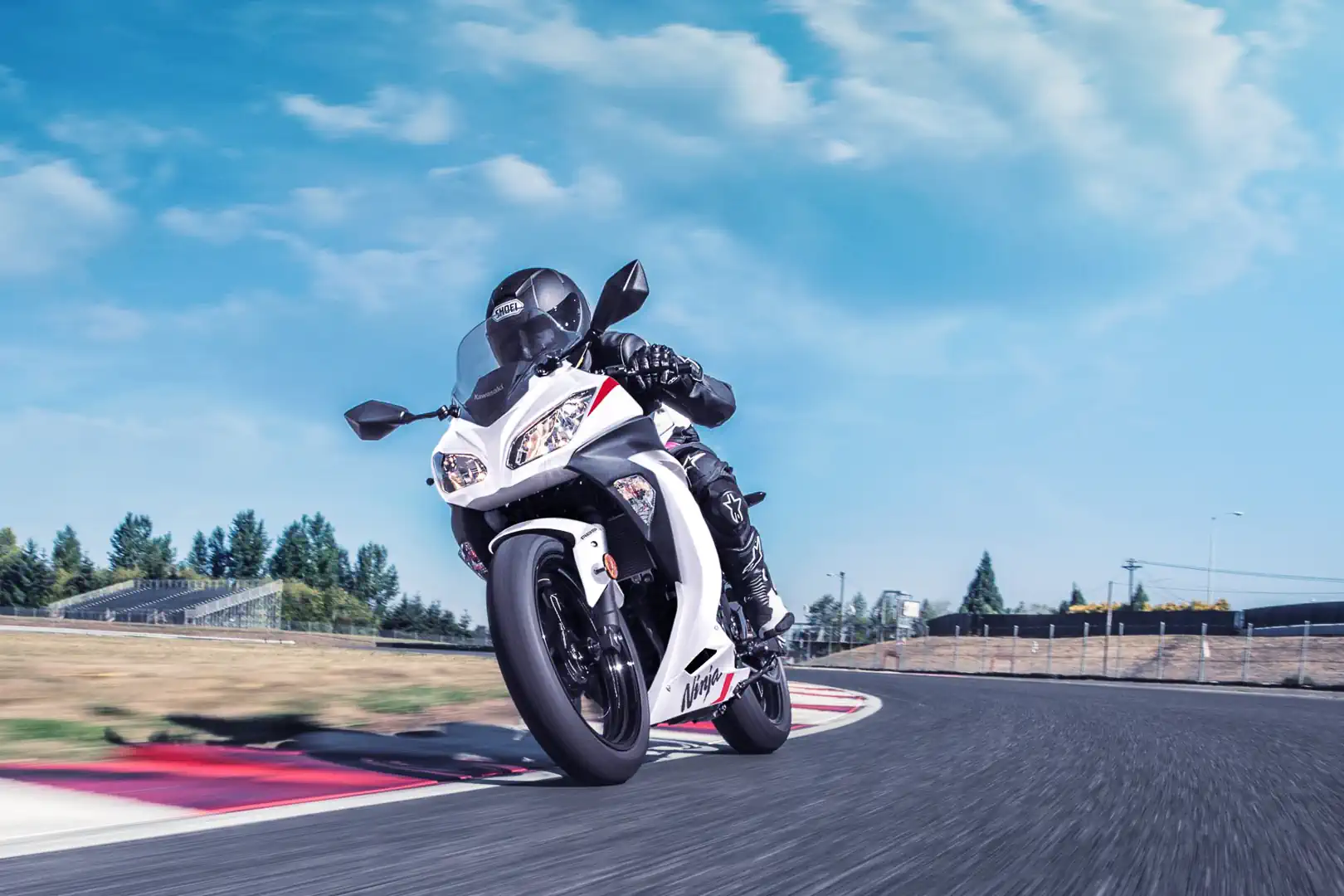
Kawasaki is reintroducing a familiar face into its Ninja family after a nine-year absence from North American showrooms. Joining the entry-level ranks for model year 2026 is the Ninja 300, which debuted in the United States in 2013, serving as an upgrade over the long-running Ninja 250. The 300 remained in the domestic lineup through 2017, where it was replaced with the all-new Ninja 400. When the Ninja 400 itself was superseded by the Ninja 500 in 2024, a gap opened at the bottom of Kawasaki’s sportbike range. In a case of “What’s old is new again,” the 2026 Kawasaki Ninja 300 ABS fills that space, returning as the most accessible point into the Ninja sportbike family with an MSRP of $4999.
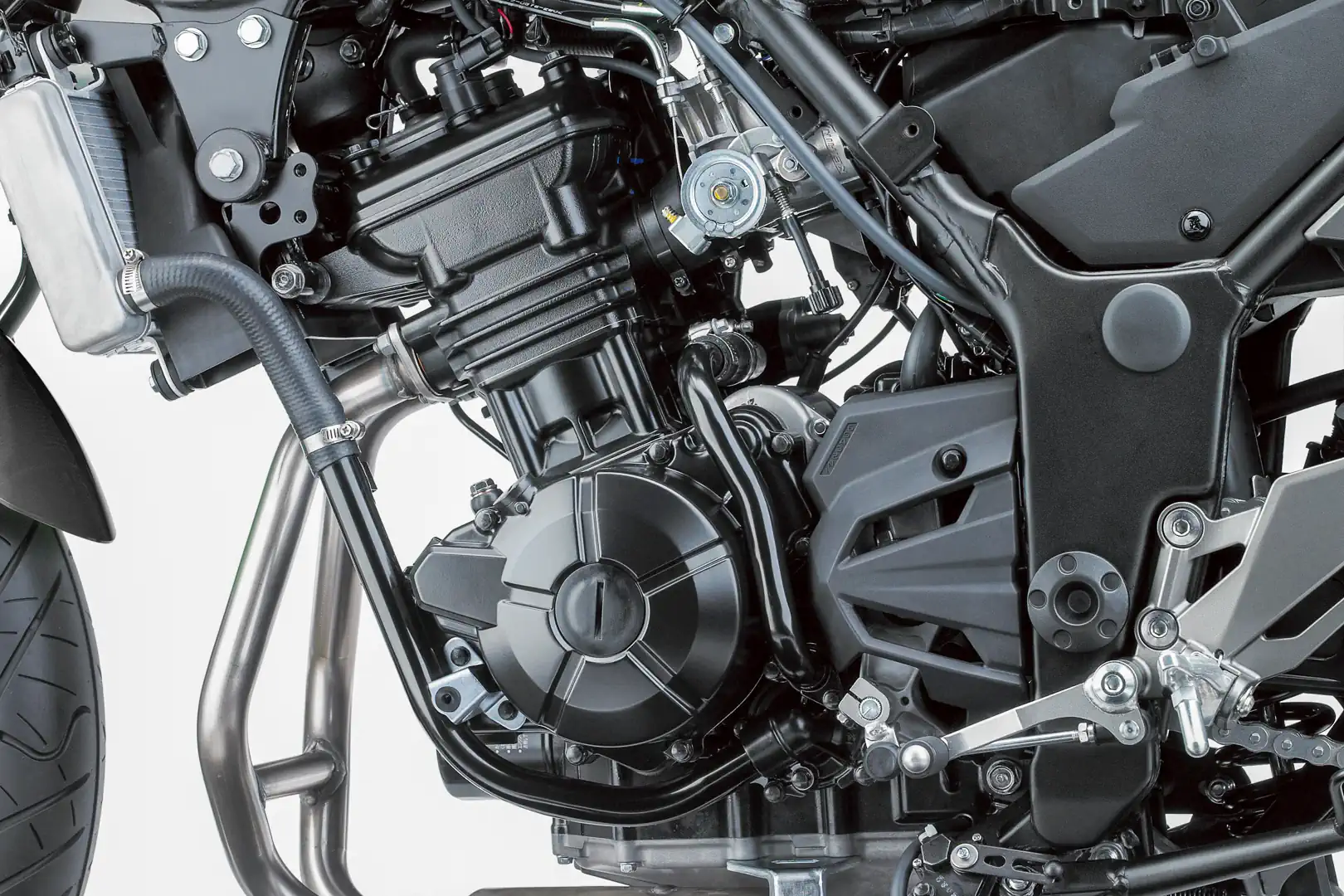
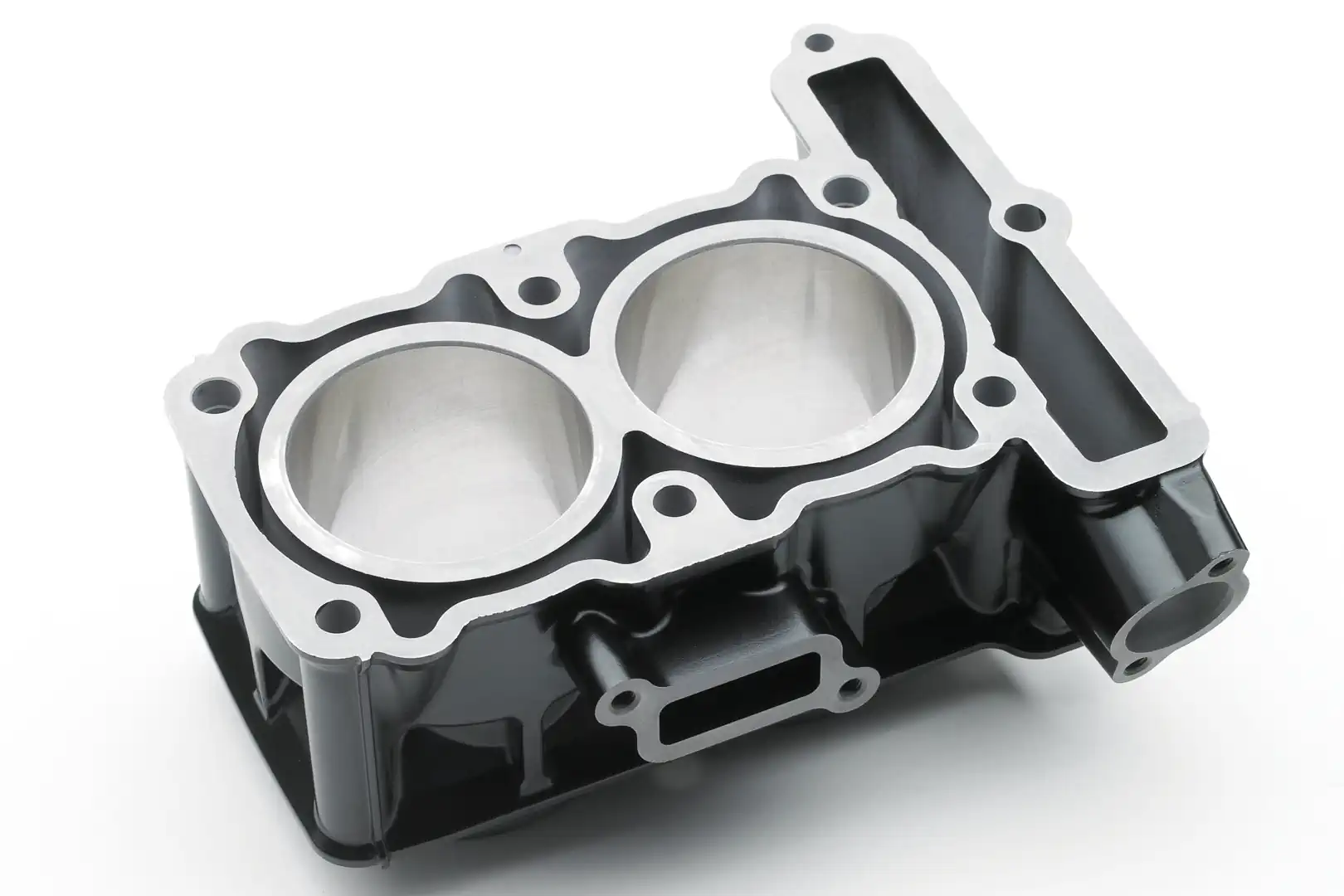
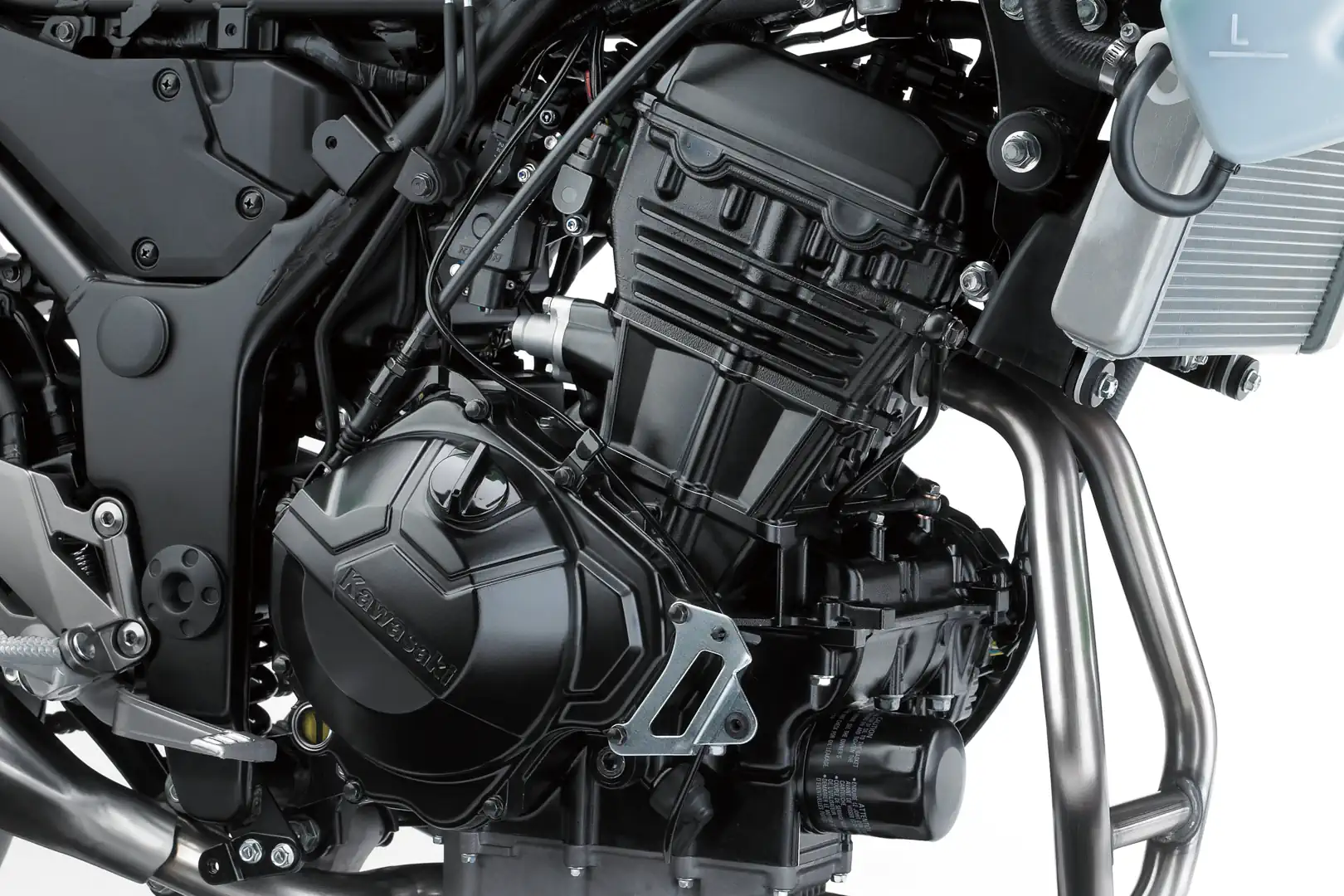
The Ninja 300 returns with its 296cc liquid-cooled parallel-twin engine. The beginner-friendly Ninja’s powerplant is just as we remember it when it launched over a decade ago, using the same 62.0 x 49.0mm bore and stroke, along with its 10.6:1 compression ratio. Kawasaki cites 39 horsepower at 11,000 rpm and 19 lb-ft of torque at 10,000 rpm. With a redline of 13,000 rpm, it’s a rev-happy 296cc DOHC powerplant for new riders to explore. It still uses a two-part strategy for smoothness, with an internal balancer shaft to reduce vibrations and rubber mounts at select engine-mounting points.
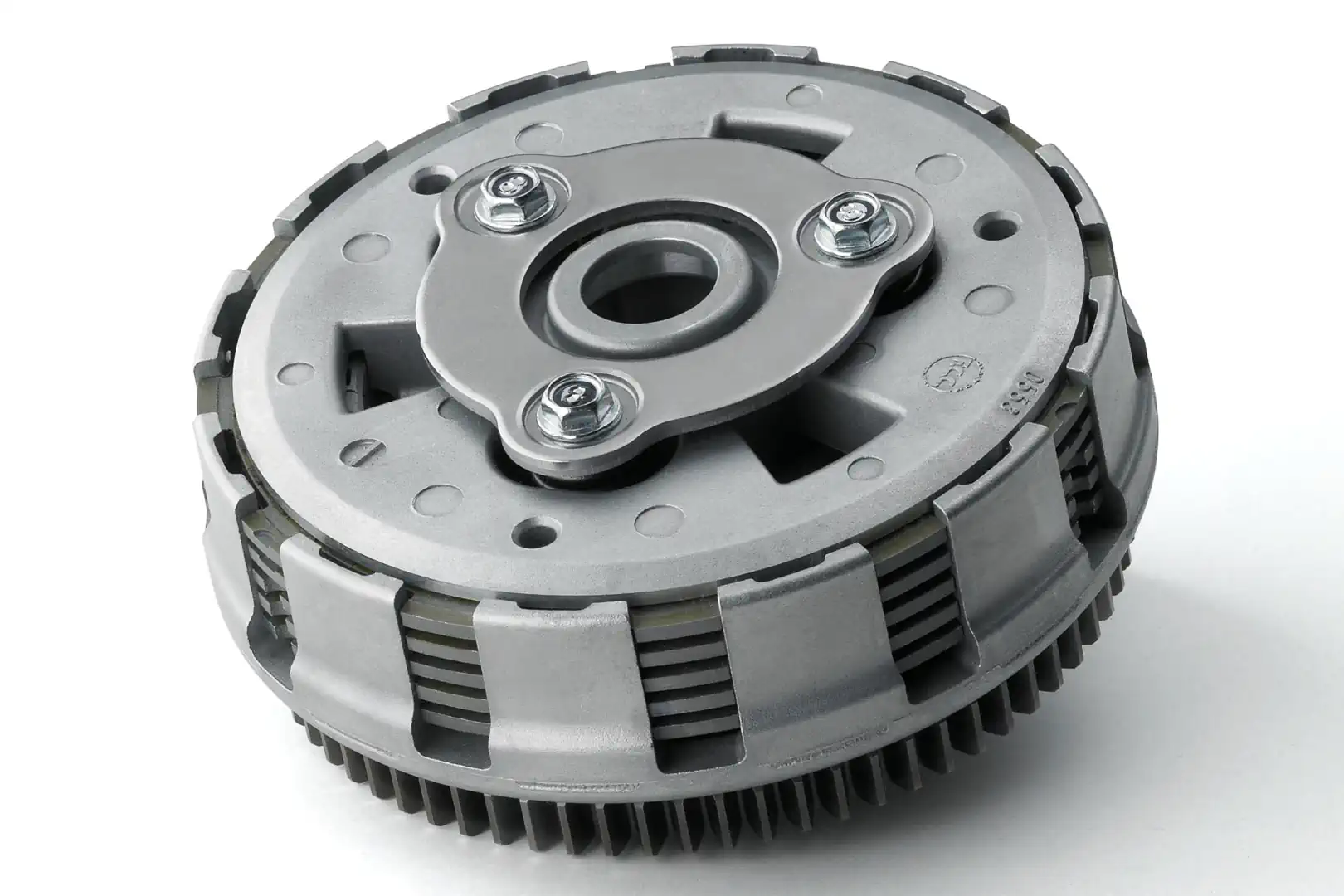
An assist-and-slipper clutch is standard equipment in the 6-speed gearbox. Kawasaki engineers haven’t altered the transmission, sticking with its reliable gearbox that offers positive shifts across the board. New riders will also appreciate the light clutch pull, facilitated by the assist-and-slipper clutch, which helps reduce rear-wheel hop during rough, high-rpm downshifts, keeping the chassis stable. If you’re new to motorcycling and investigating the Ninja 300 as your first machine, then know that both are positive things.
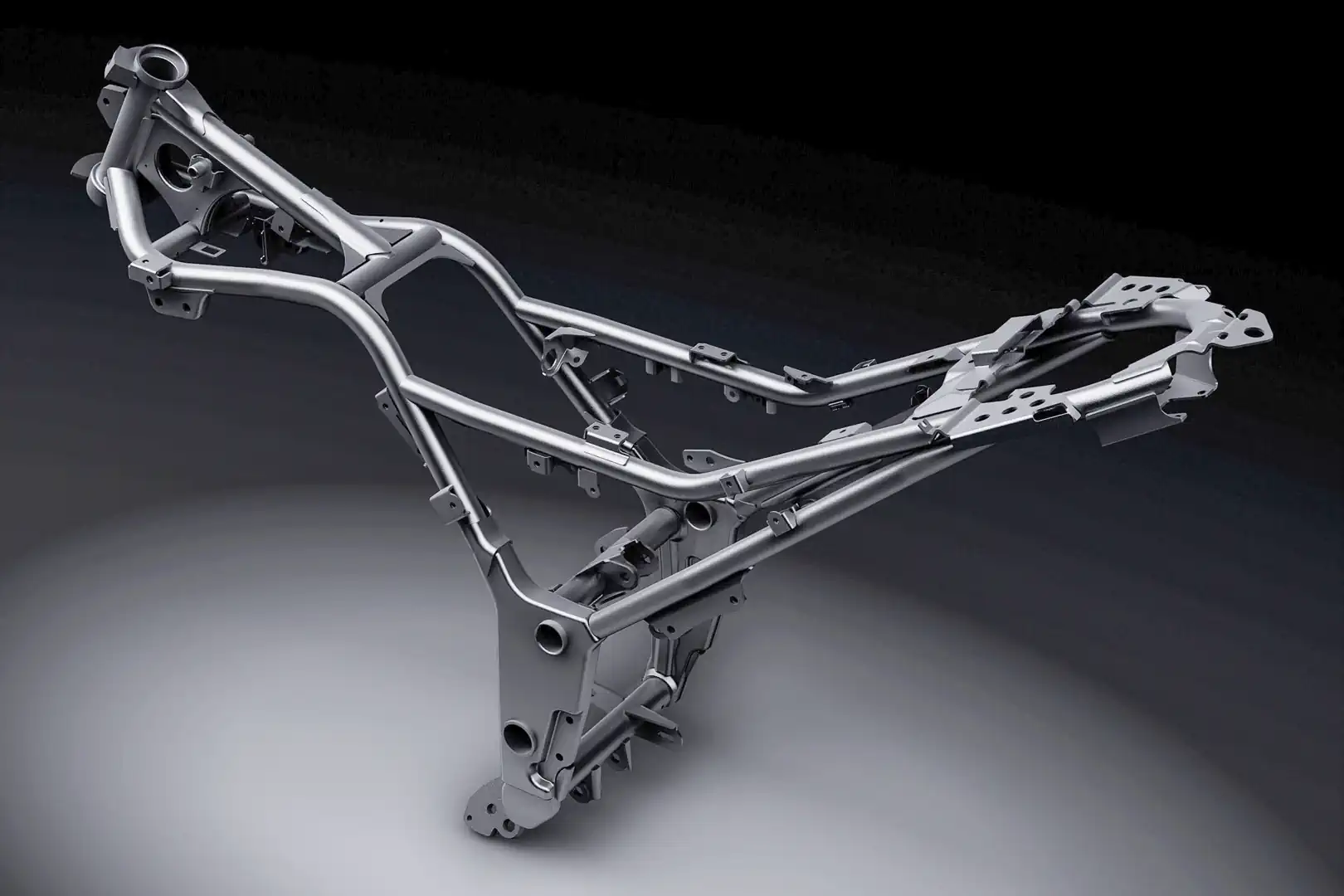
Sportbike dimensions are still part and parcel of the Ninja 300 chassis. Coming back for another tour of duty are the steel-tube diamond frame and steel swingarm that heavily influenced the Ninja 400 and its subsequent sibling, the Ninja 500. Likewise, the non-adjustable 37mm traditional fork and the five-step preload-adjustable, linkage-equipped shock intend to help carry a new generation of riders into their riding careers.
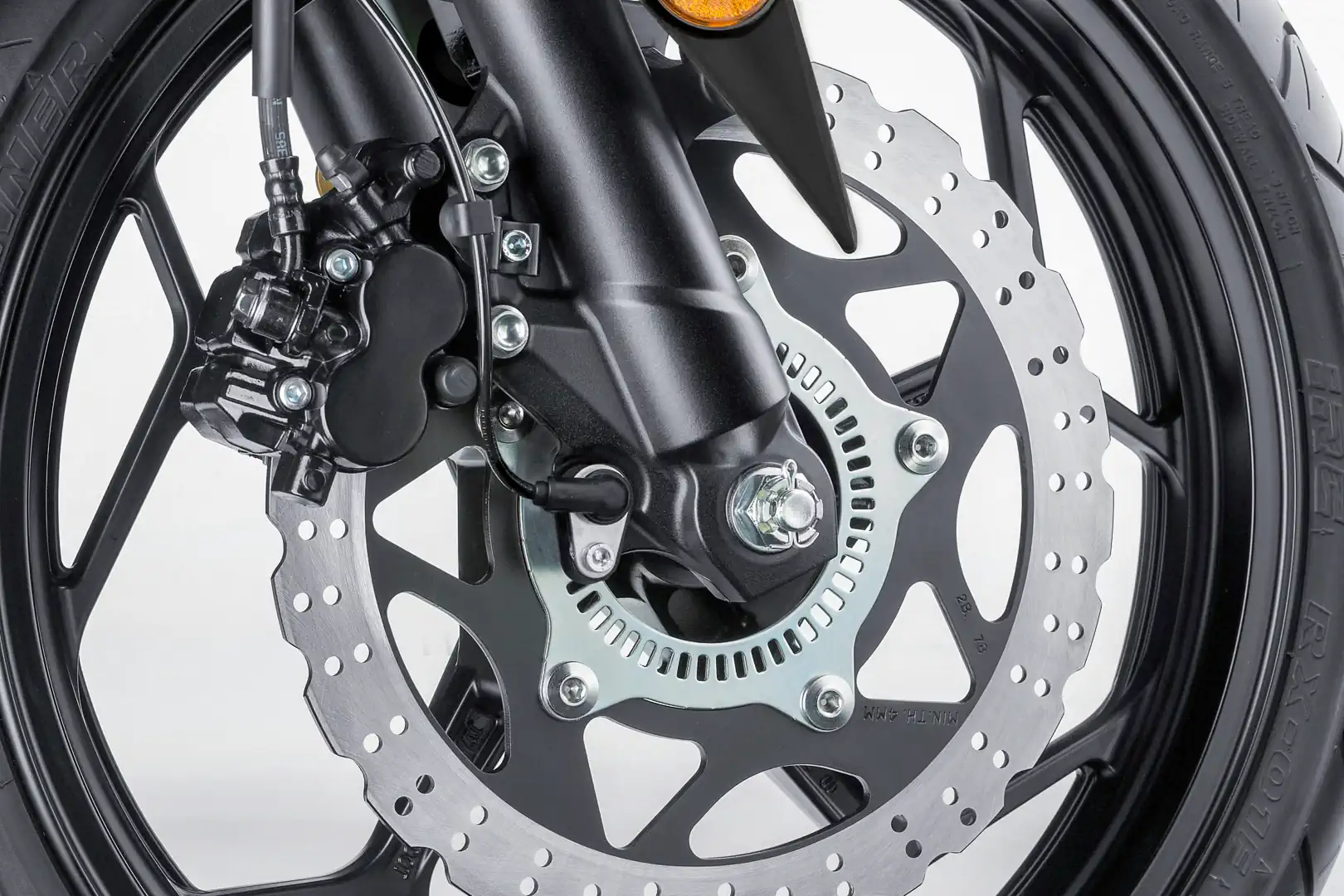
Basic braking hardware will get the job done, but standard ABS is the biggest update yet. The brakes are among the many carryover components for the Ninja 300. The 290mm front and 220mm rear petal discs each get a 2-piston caliper. New to the party is the inclusion of ABS as standard, which was optional the first go-round.
The cast alloy wheels and tire sizes support a sport initiative. Equipped with ten-spoke wheels, the littlest Ninja uses common sizes within the lightweight sportbike class, with a 110/70-17 front and 140/70-17 rear tire. Tire options for low-displacement sportbikes have come a long way since the Ninja 300’s debut in 2013, with most mainstream brands such as Bridgestone, Dunlop, Continental, Michelin, Metzeler, and Pirelli all offering performance-oriented rubber.
Ergonomics favor versatility over a committed supersport riding position. Wide, raised handlebars pair with a slightly forward-canted seat to create a relatively neutral riding position that suits commuting, sport riding, and more. The Ninja 300, or Ninjette as it’s known in some circles, features a slim overall design that will help shorter riders reach the ground when sitting on the 30.9-inch-tall saddle. It also features an ample 4.5-gallon fuel tank that should give the 300 a range of over 200 miles per tank.
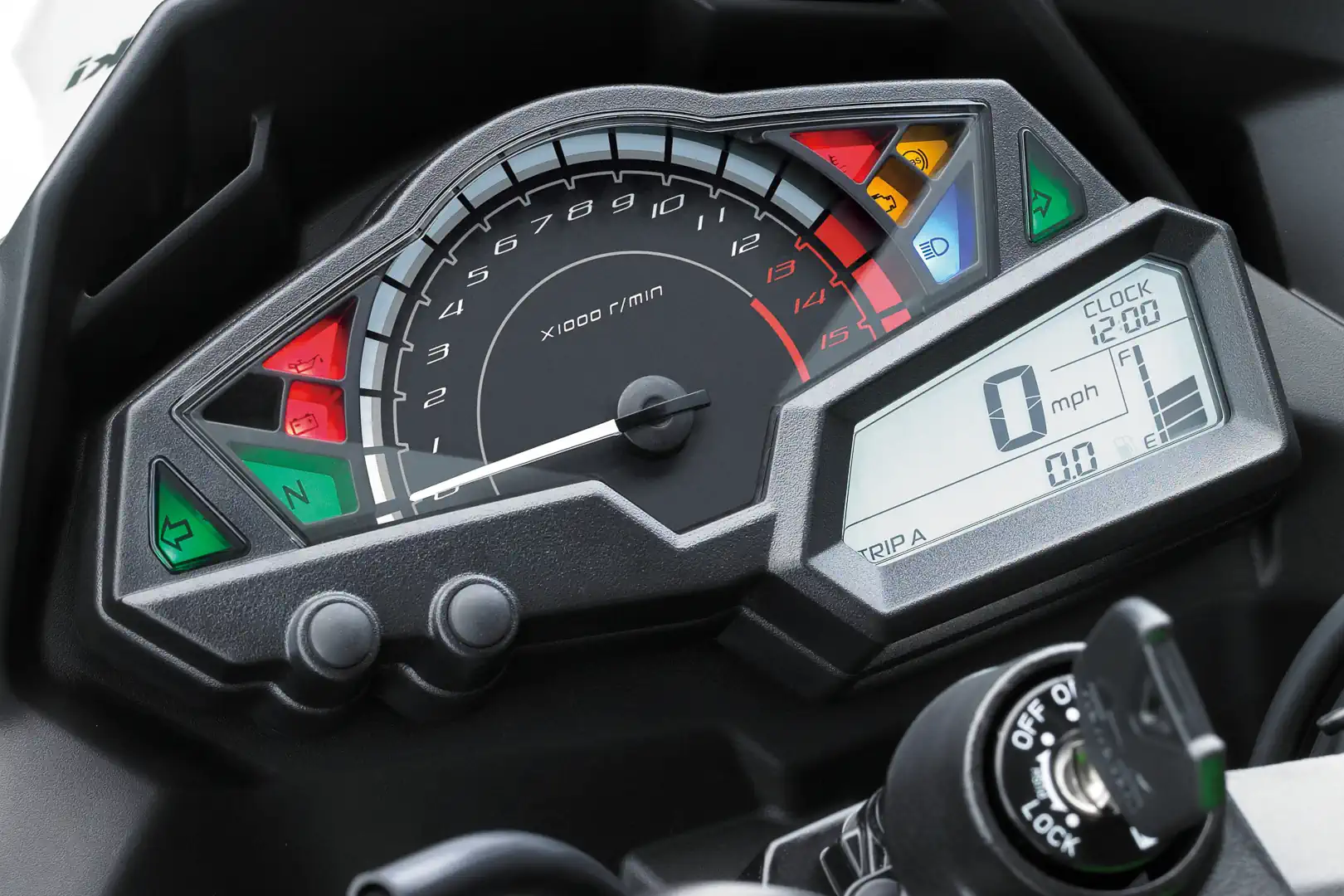
Some updated bodywork is where the 2026 model most visibly departs from its predecessor. The 2026 version receives revised large-volume fairing panels, a larger floating-style windscreen mounted via mirror-stay bolts only (just like the Ninja 500), and a redesigned, compact front fender. Kawasaki also went for a slippery look by reducing the amount of mounting hardware throughout the bodywork. The dash mixes an analog-style tachometer with a corner-set LCD screen and an array of warning lights.
The 300 gained four pounds during its hiatus. However, it’s still a lightweight at 388 pounds with the voluminous tank filled.
Here’s some perspective on the $4999 list price for the 2026 Ninja 300 ABS: When the Ninja 300 ABS debuted in 2013, it had a $5499 MSRP. Adjusted for inflation, that’s $7795 in 2026 dollars. The new edition should be at your local Kawasaki dealer right now.
2026 Kawasaki Ninja 300 ABS Specifications
ENGINE
Type: Parallel twin
Displacement: 296cc
Bore x stroke: 62.0 x 49.0mm
Maximum power: 39 hp @ 11,000 rpm
Maximum torque: 19 lb-ft @ 10,000 rpm
Valvetrain: DOHC; 4 valves per cylinder
Fueling: EFI w/ two 32mm throttle bodies
Compression ratio: 10.6:1
Transmission: 6-speed
Clutch: Wet multiplate w/ slip and assist functions
Final drive: Sealed chain
CHASSIS
Frame: Diamond-style steel-tube w/ steel swingarm
Front suspension; travel: Non-adjustable 37mm fork; 4.7 inches
Hello and welcome again to the Motos and Friends Podcast. This episode is brought to you by Leod Escapes.
* * * * *
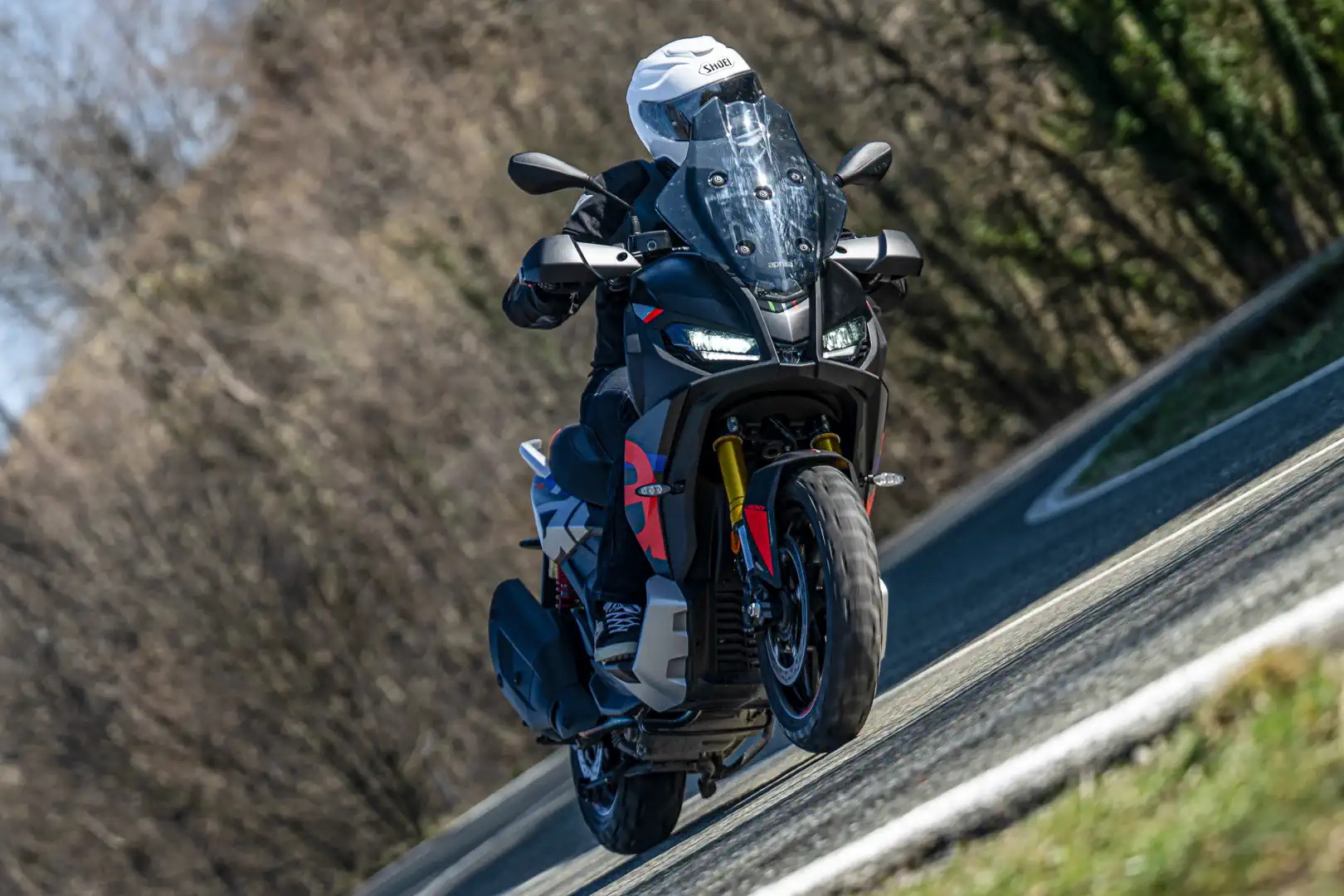
Aprilia is bringing a scooter to North America, and it’s one designed to appeal to adventure motorcyclists. The SR GT 400 is a mid-size scooter built around a steel motorcycle-style frame, a 399cc single, and off-road-ready hardware. It reaches US dealers as soon as this month. Don Williams and Kelly Callan spent some time riding the Aprilia and were surprised by what they discovered. Is this a real motorcycle or just a good-looking urban scooter?
* * * * *
Cat McLeod is founder and owner of Leod Escapes, the ultimate tour company for sport-minded motorcycle riders. Cat talks to us this segment about some of his amazing European experiences and tours that include of course, riding some amazing MotoGP tracks on new BMW S1000RRs. If you like what you hear, now is the time to book your trip of a lifetime, so visit LeodEscapes.com to find out more.
* * * * *
Our guest this episode is Terry Vance, the multiple Motorcycle and Motorsports Hall-of-Famer. Terry is of course the former professional motorcycle drag racer, team owner, and co-founder of the high-performance parts company Vance & Hines. Teejay Adams chats with Terry about his incredible career that includes being the first rider to hit 200 mph in the standing quarter-mile.
Having won this year’s MotoAmerica Mission King of the Baggers championship with Hayden Gillim riding the Vance & Hines factory Indian Challenger, and with Harley-Davidson’s recent withdrawal, Terry gives us his thoughts on where the series might go from here.
* * * * *
Here’s quick reminder to check out our monthly digital magazine. It’s filled with everything you want to read on motorcycling, including some things you’ve probably not seen elsewhere. It’s absolutely free and you will find it on the Apple App Store and of course on Google Play as well.
Don’t forget to leave us your comments on our social media—we’re on all the usual platforms at Ultimate Motorcycling. We love hearing your feedback… so good or bad, please let us know what you think. If there’s something you’d like us to cover, we’d love to hear those ideas too!
We use cookies and browser activity on this website
Functional
Always active
The technical storage or access is strictly necessary for the legitimate purpose of enabling the use of a specific service explicitly requested by the subscriber or user, or for the sole purpose of carrying out the transmission of a communication over an electronic communications network.
Preferences
The technical storage or access is necessary for the legitimate purpose of storing preferences that are not requested by the subscriber or user.
Statistics
The technical storage or access that is used exclusively for statistical purposes.The technical storage or access that is used exclusively for anonymous statistical purposes. Without a subpoena, voluntary compliance on the part of your Internet Service Provider, or additional records from a third party, information stored or retrieved for this purpose alone cannot usually be used to identify you.
Marketing
The technical storage or access is required to create user profiles to send advertising, or to track the user on a website or across several websites for similar marketing purposes.
Advertising helps us keep our content available for free, so adjusting your ad blocking settings will help us.
We appreciate your support!
i
How to Allow Ads on This Site
Depending on your setup, ads may be blocked by a browser extension, VPN, antivirus software, or other application. Here are some common ways to allow ads:
Browser Extensions (e.g., Adblock, uBlock, etc.)
Click the extension icon in your browser toolbar.
Look for an option like "Don't run on pages on this site" or "Pause on this site".
Save the change and refresh the page.
VPNs with Ad Blocking (e.g., NordVPN, Proton VPN, etc.)
Open your VPN app.
Go to settings or features.
Disable any ad blocking or tracking protection features.
Refresh the page.
Antivirus Software or Other Privacy Tools
Check for web protection, ad filtering, or browser privacy settings.
Click the power button to disable it for this site.
Refresh the page.
Not sure what's blocking ads? Look for tools with privacy or filtering features, or check your browser extensions. We only use respectful, non-intrusive advertising.