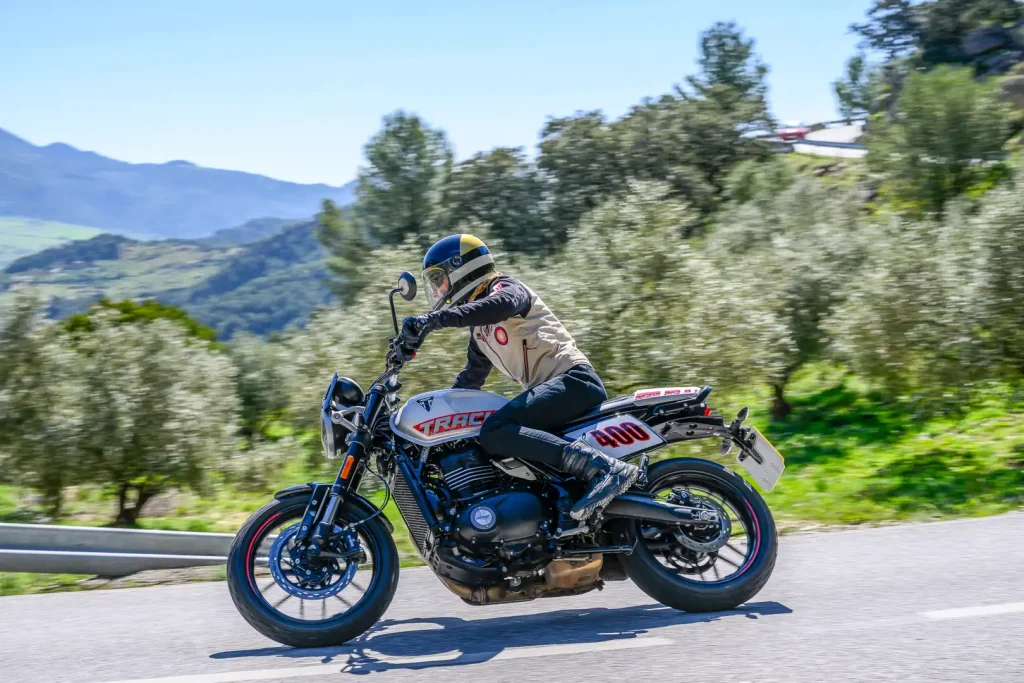
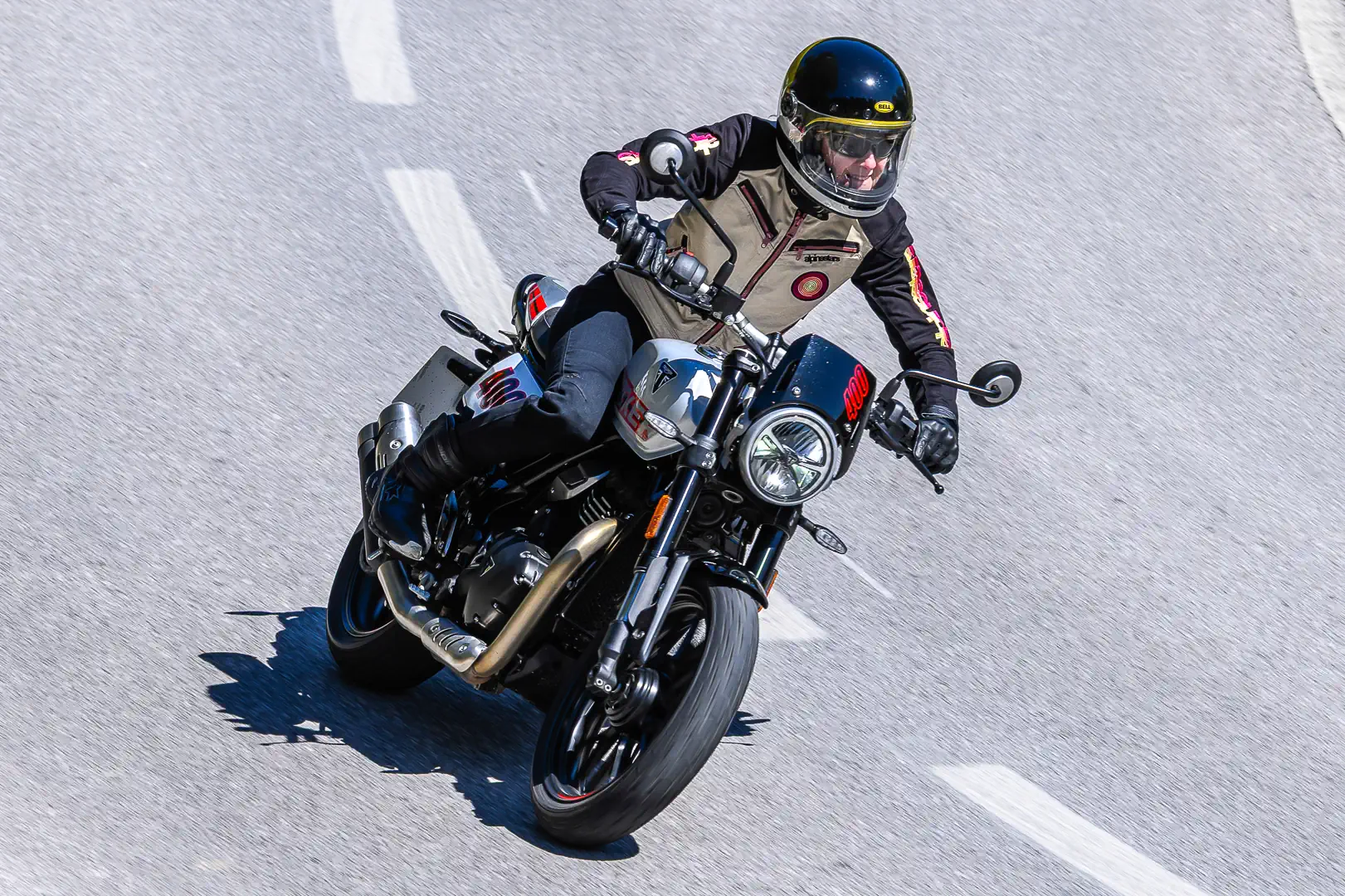
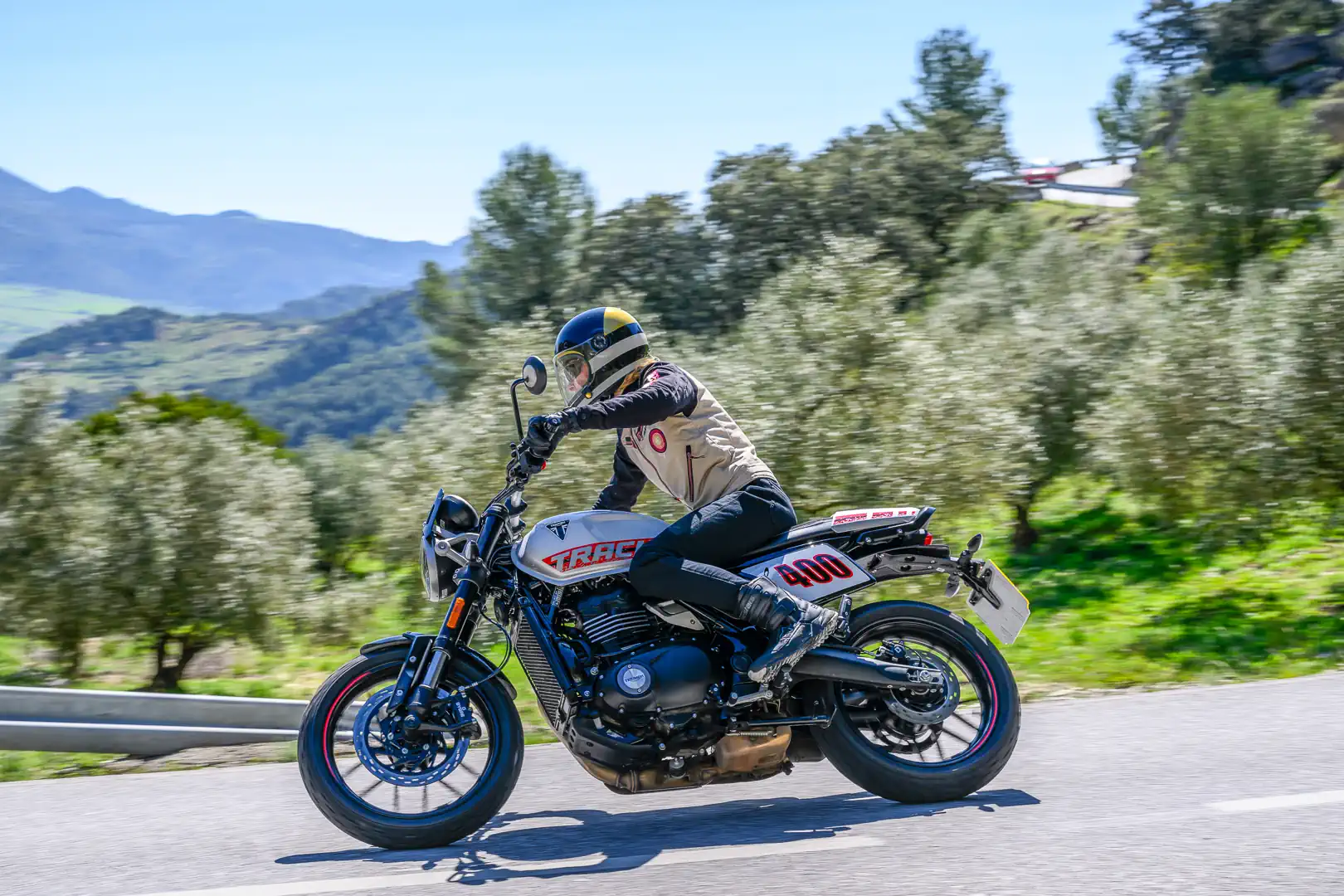
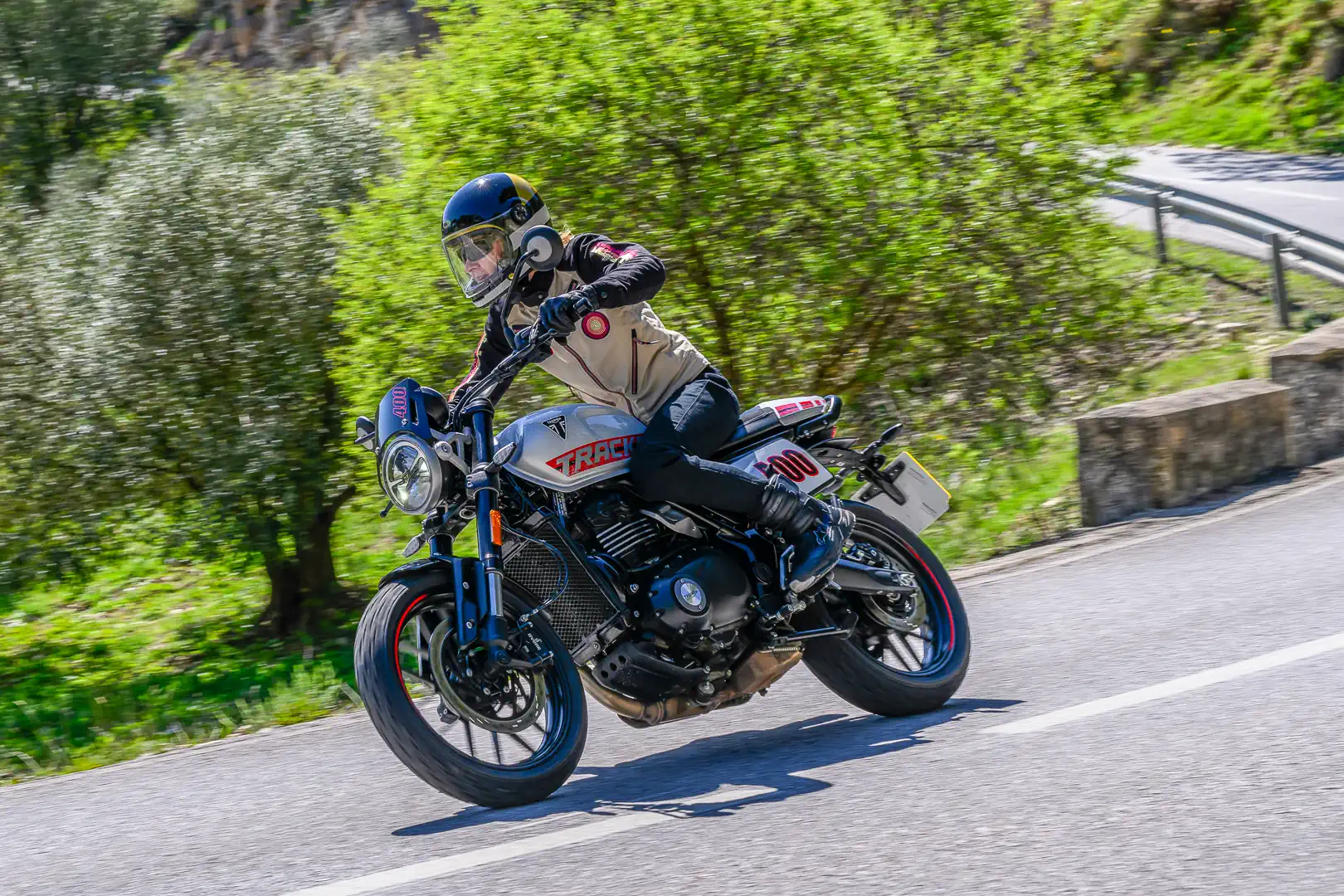
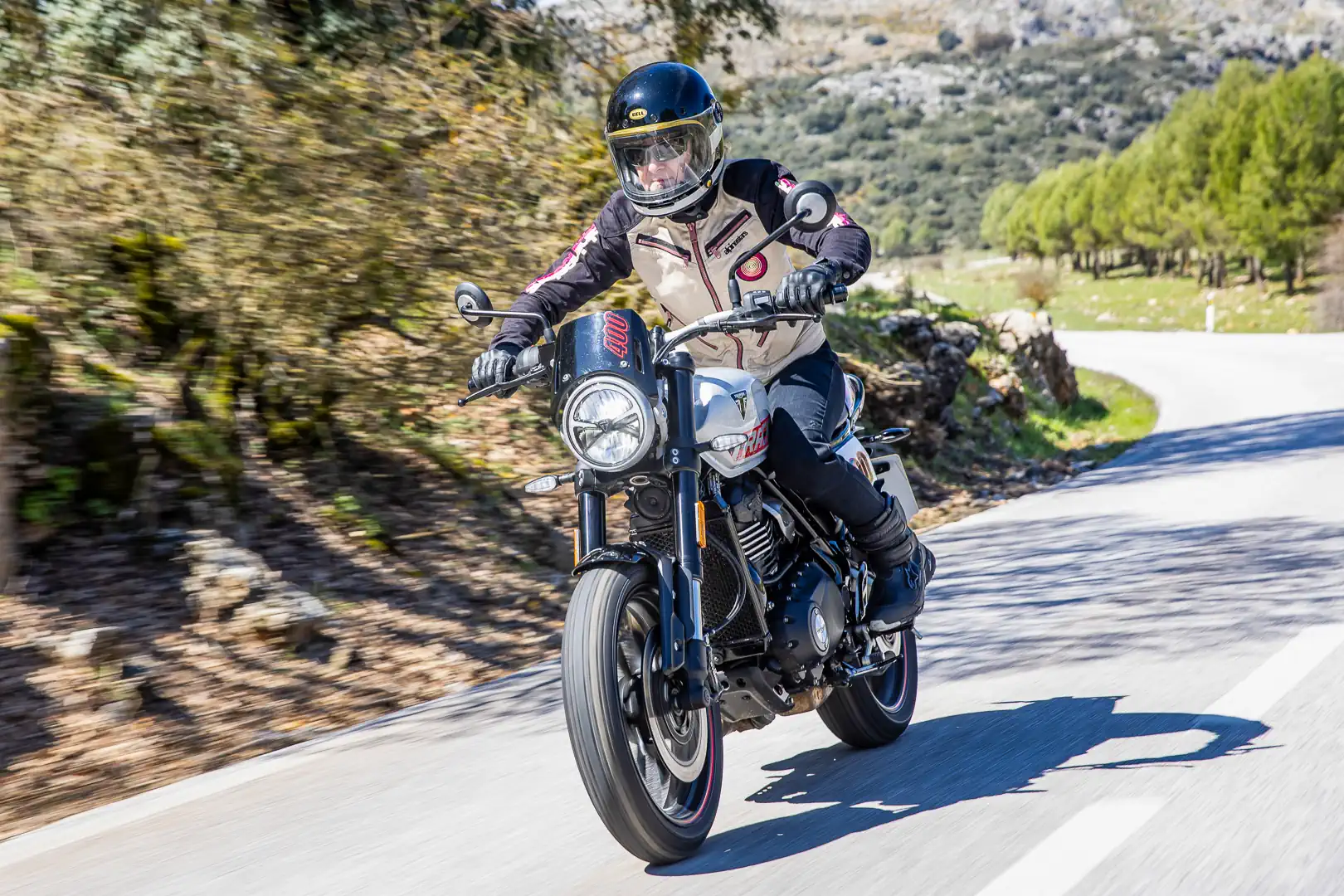
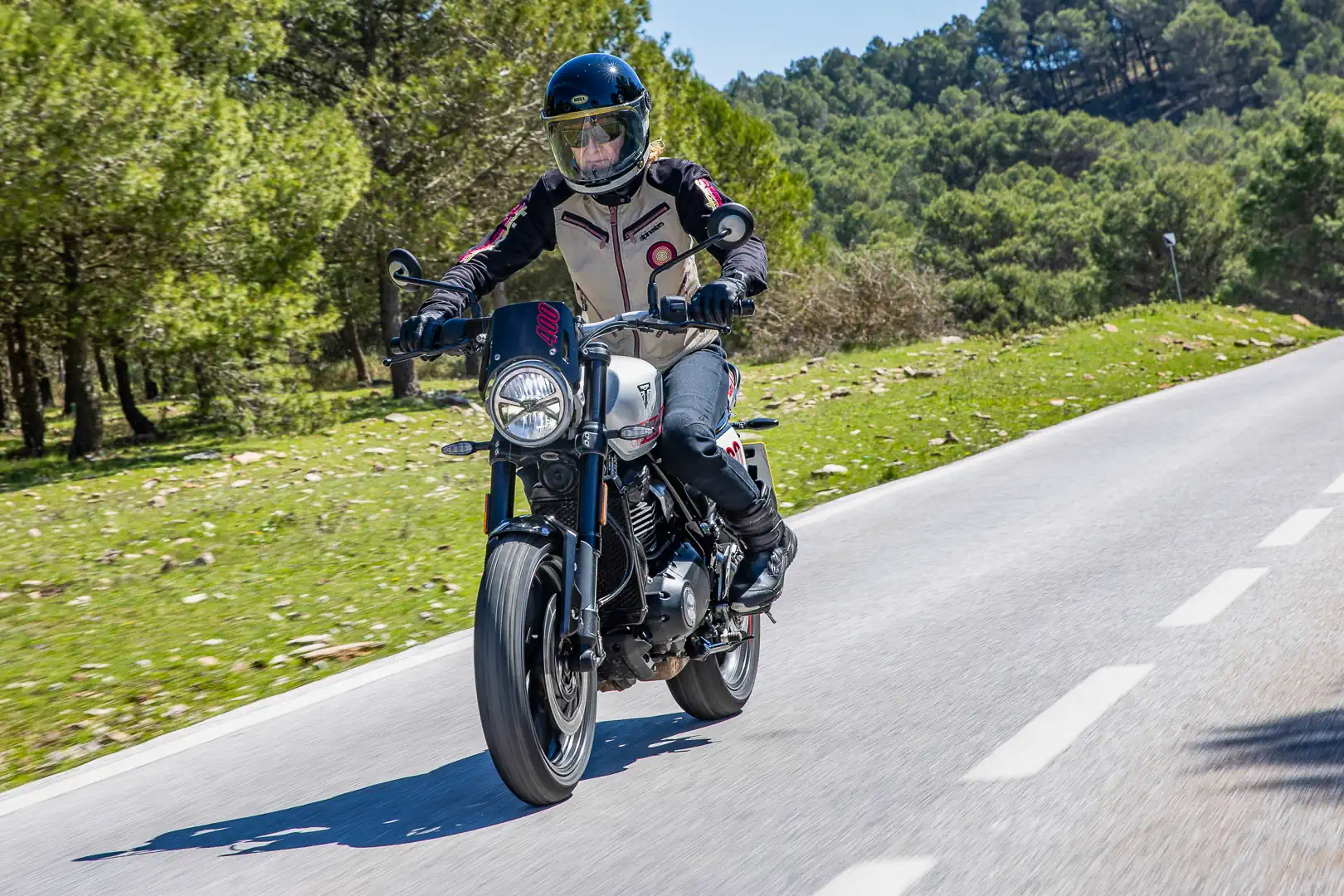
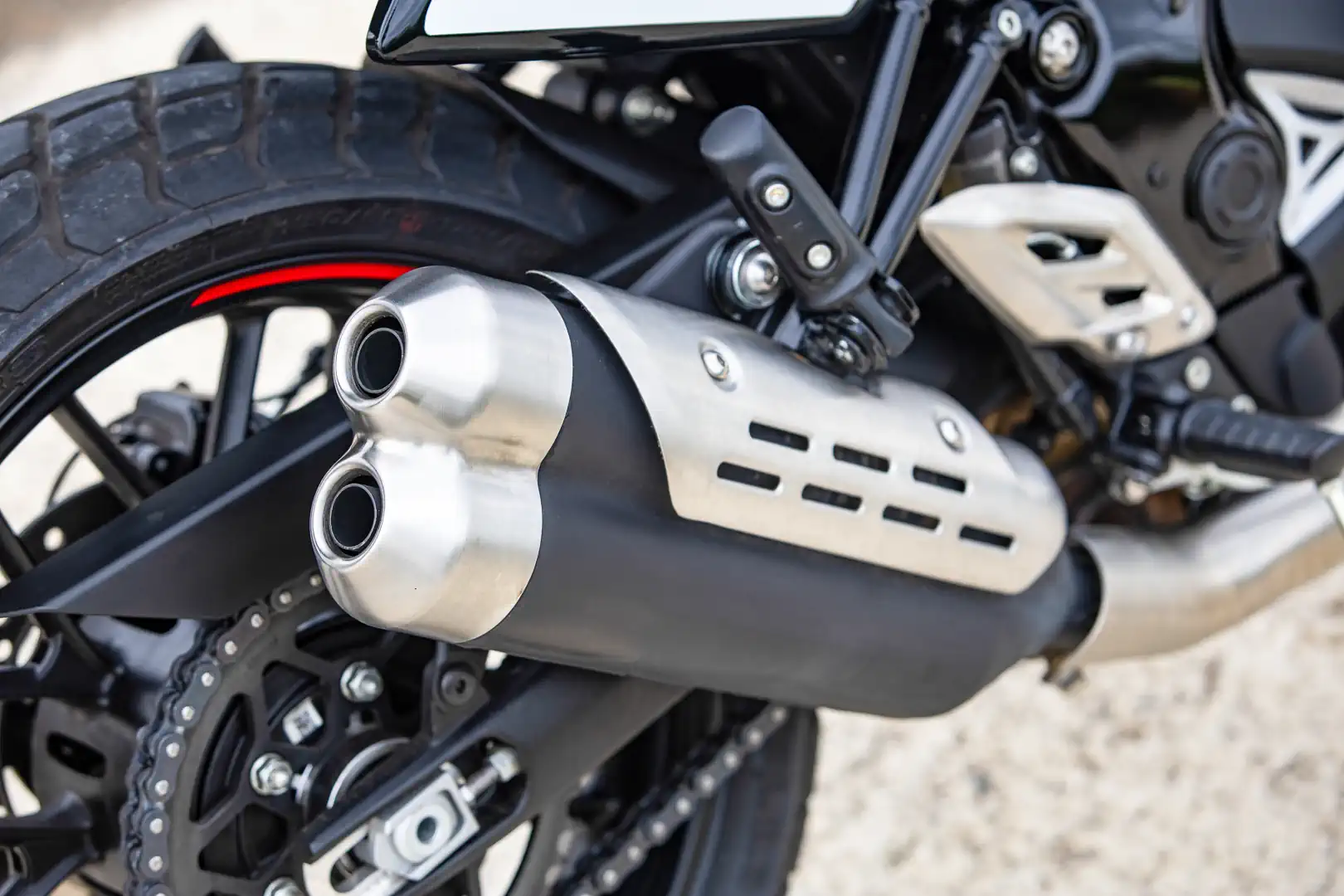
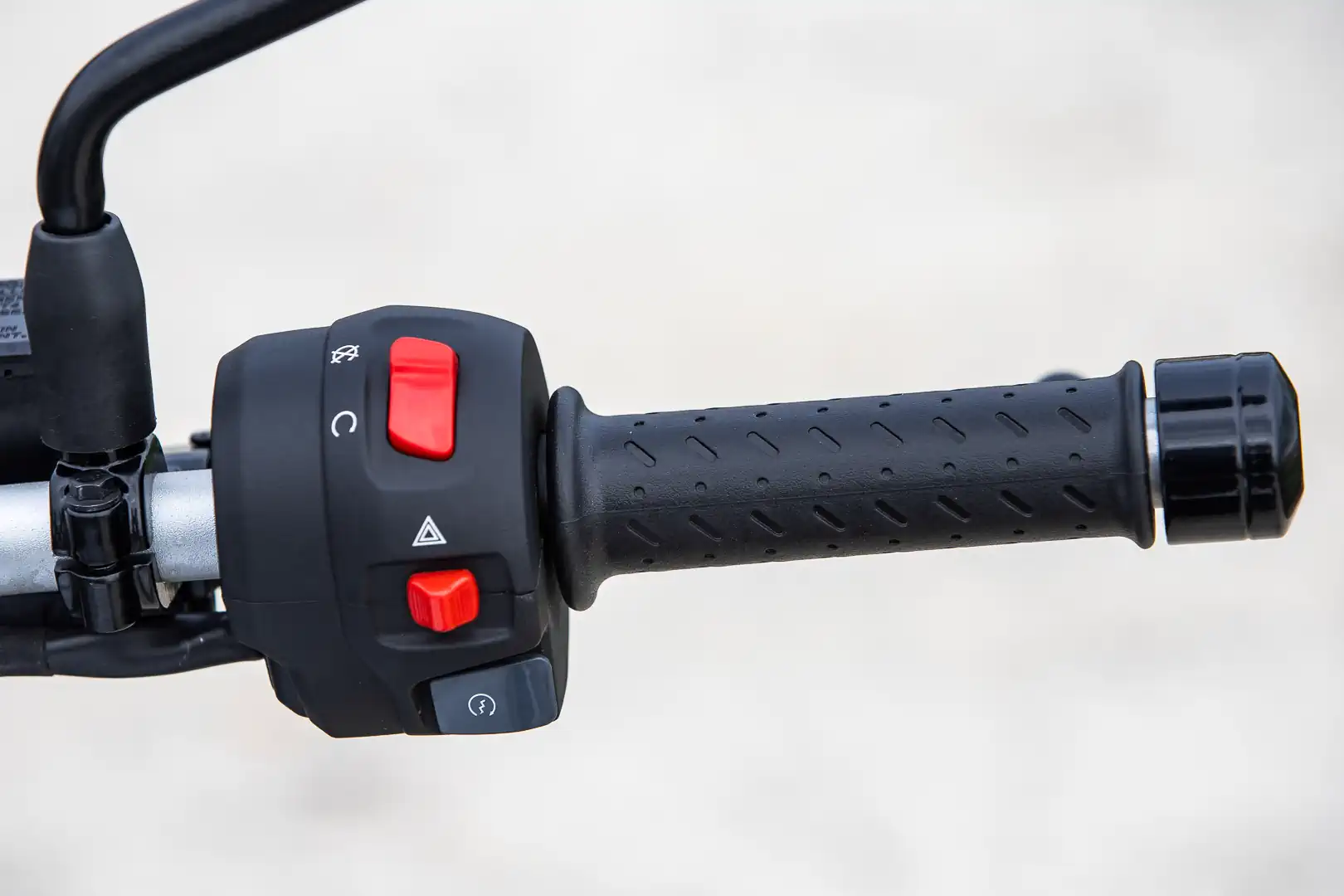
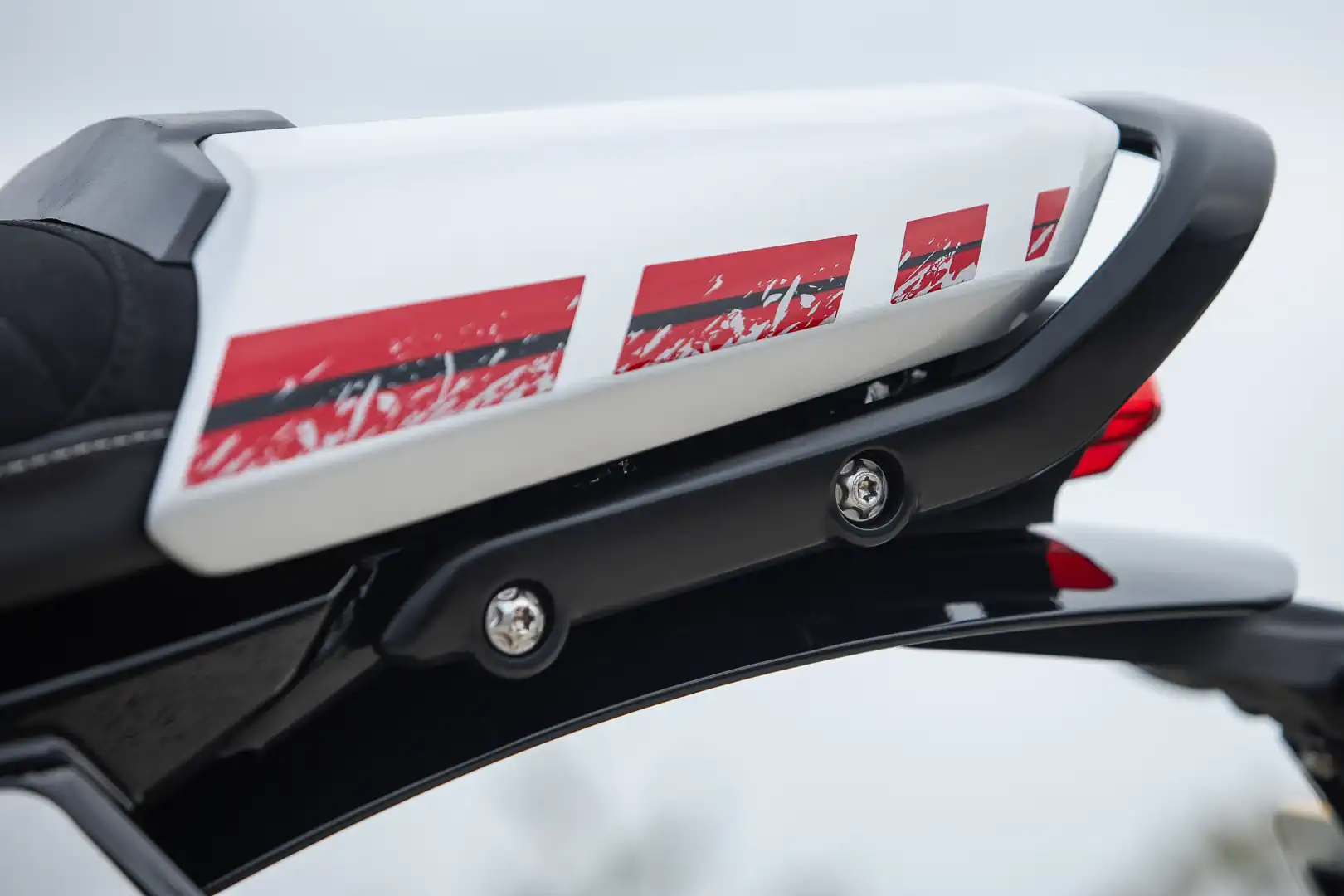
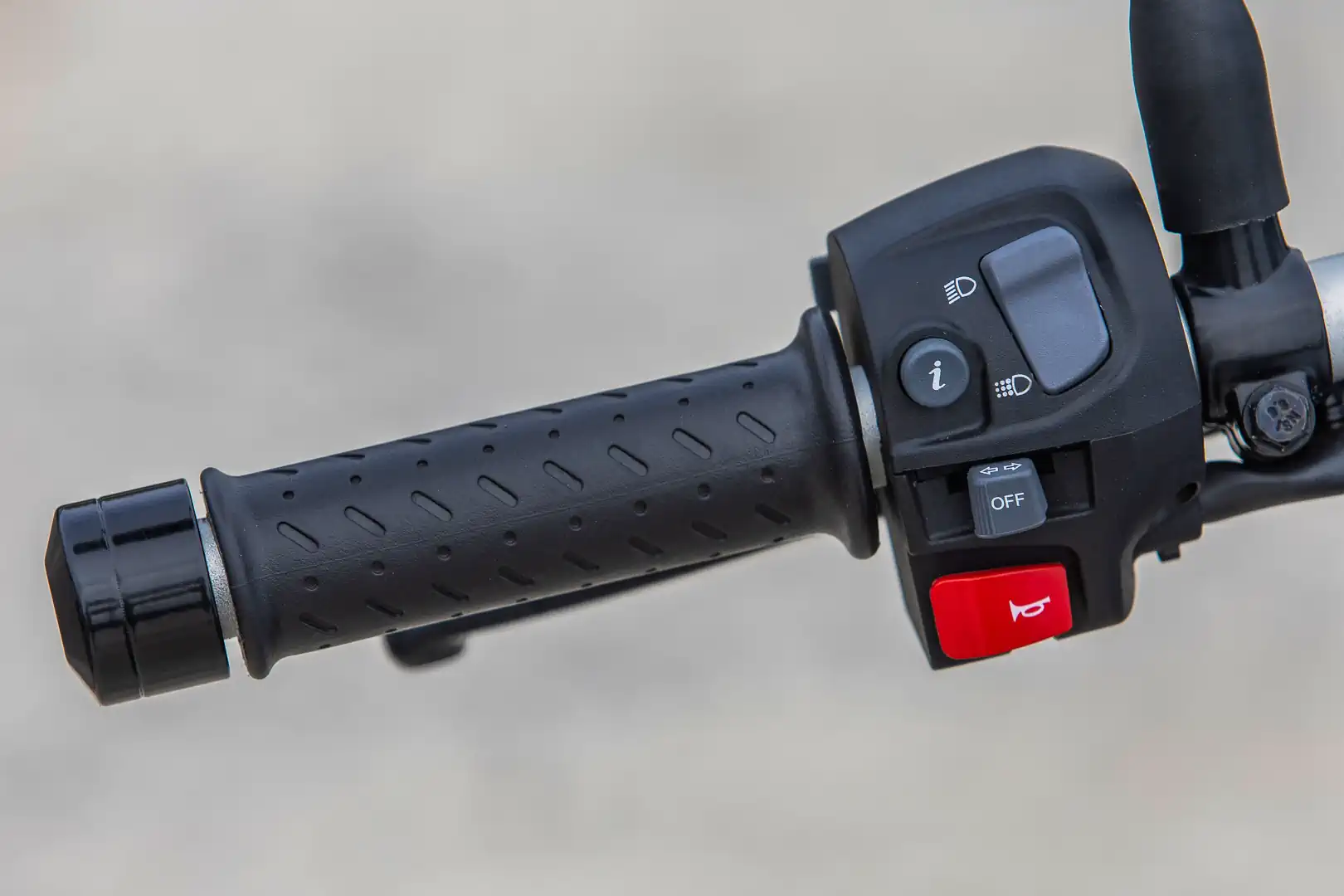
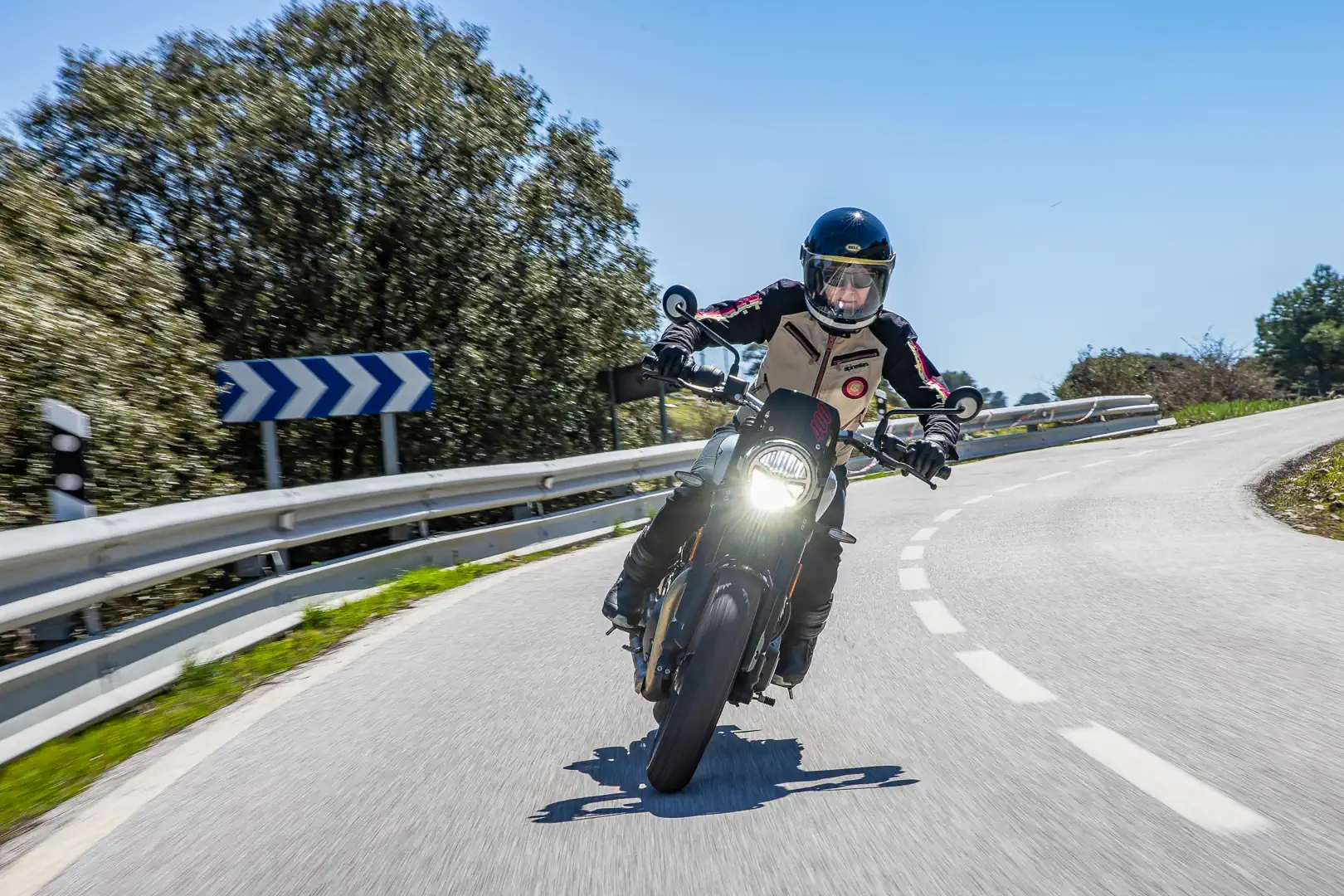
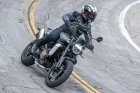
They say you can’t judge a book by its cover, but the cover is what grabs your attention and makes you pick it up. When I first saw the 2027 Triumph Tracker 400, the latest addition to Triumph’s Modern Classics 400 family, my mind immediately conjured images. How cool would I look on this bike as my urban commuter companion? How much fun would this be on a Friday night downtown scramble, or for weekend sprints on the outskirts of town? The Tracker’s rowdy, purposeful look had me hooked, so I set off for Spain to ride it.
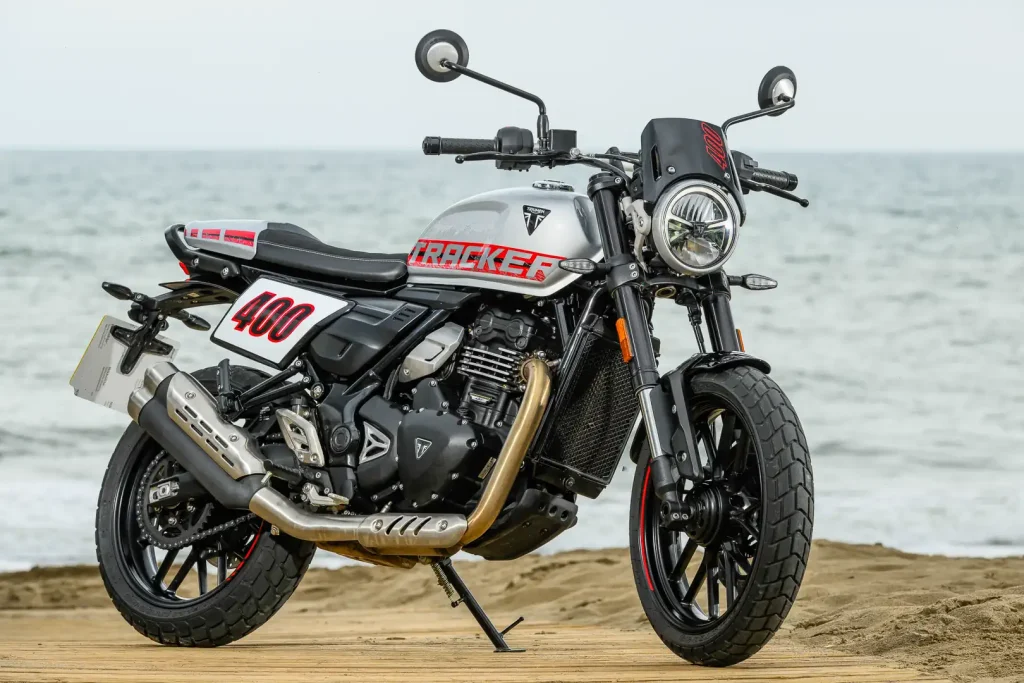
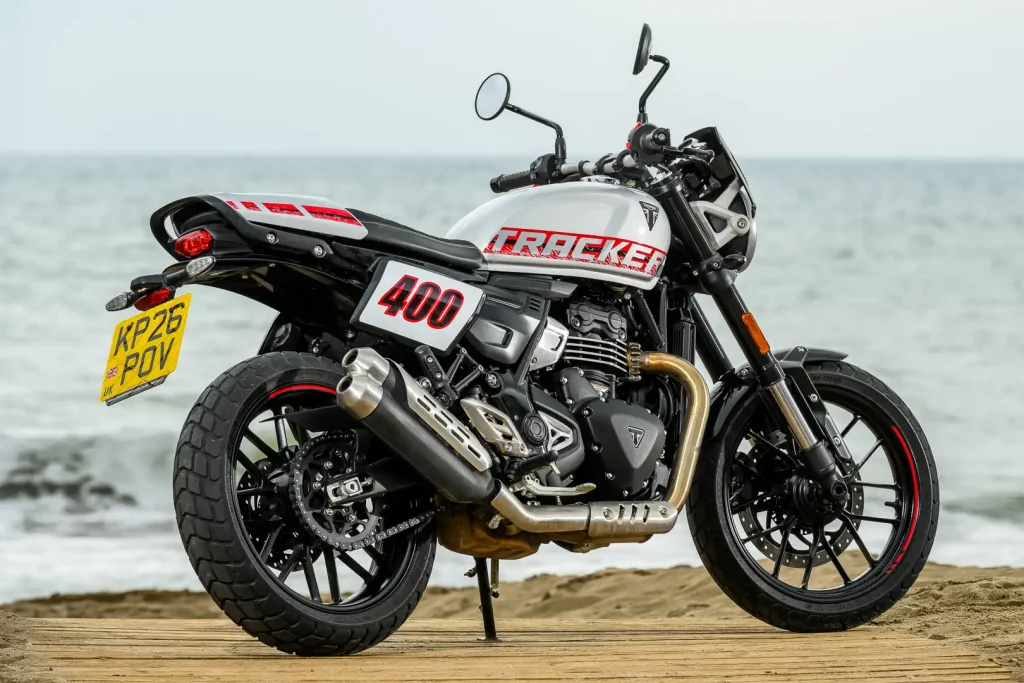
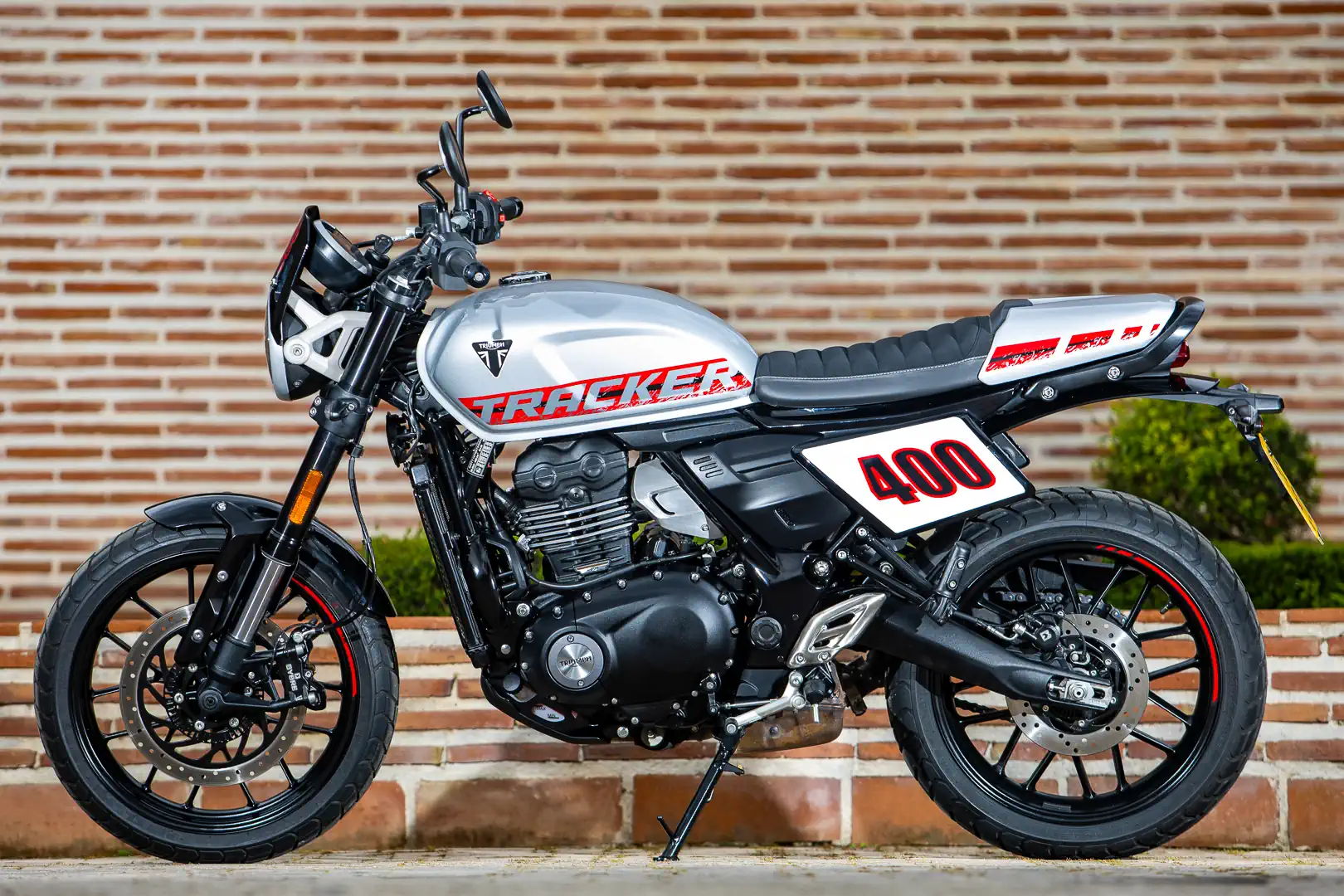
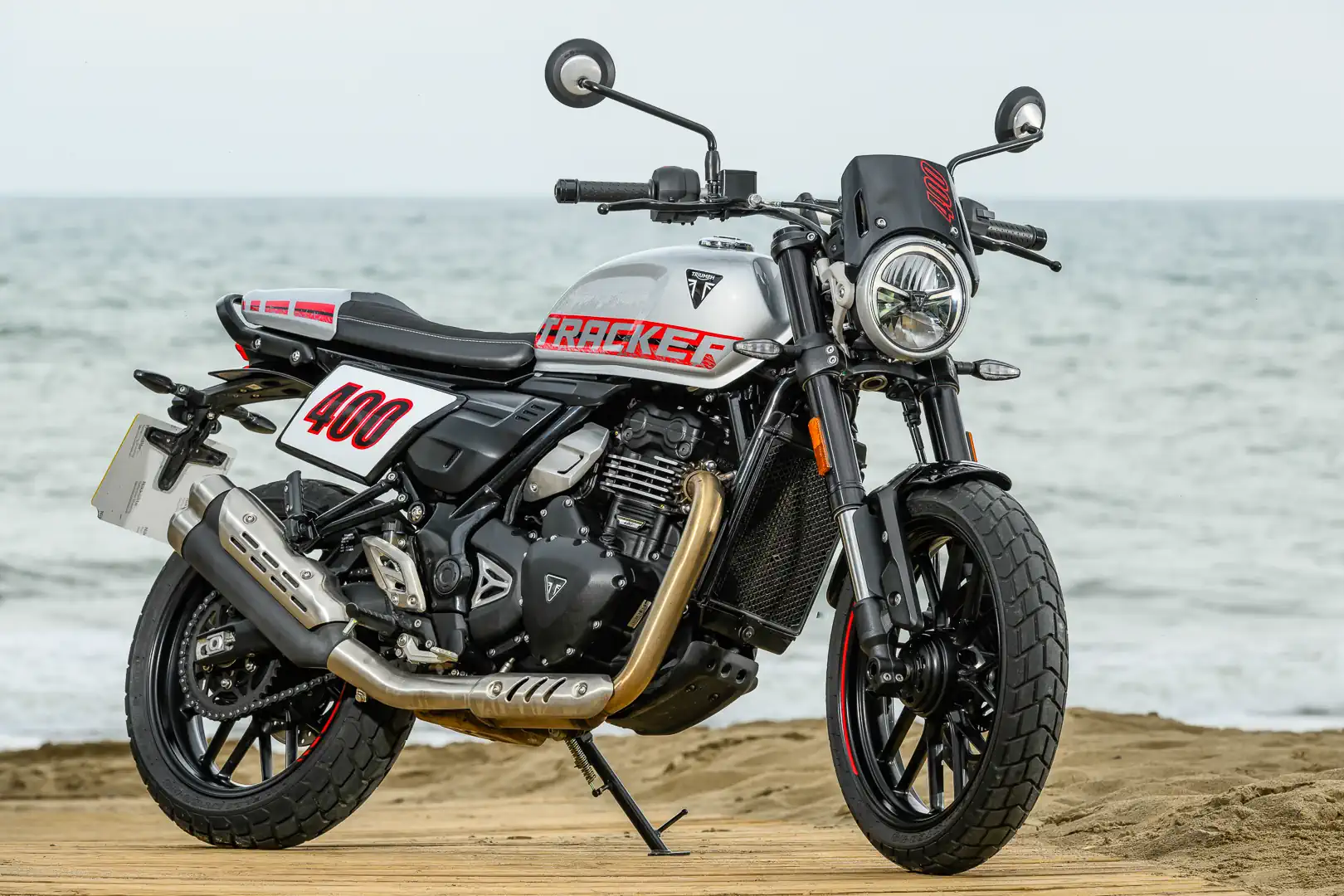
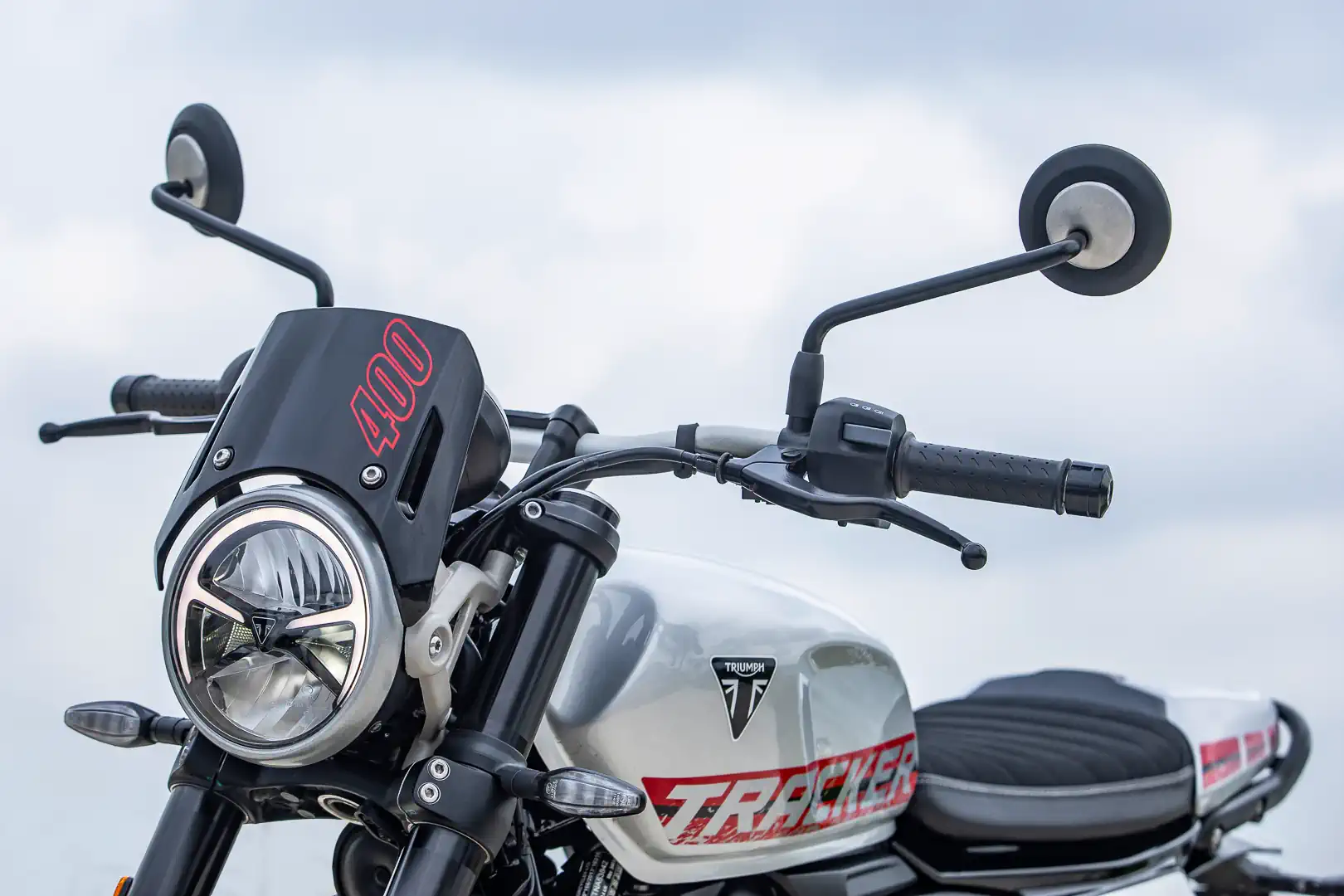
The 2027 Triumph Tracker 400 creates an instantly distinctive image with its gritty flat-tracker styling. While flat track racing may be an American creation, Triumph has every right to borrow the aesthetic. The British company campaigned successfully on dirt tracks in the AMA Grand National series, albeit on twins, through the 1960s and early ’70s, winning three championships. The Tracker carries that history and offers it to a new generation of riders.
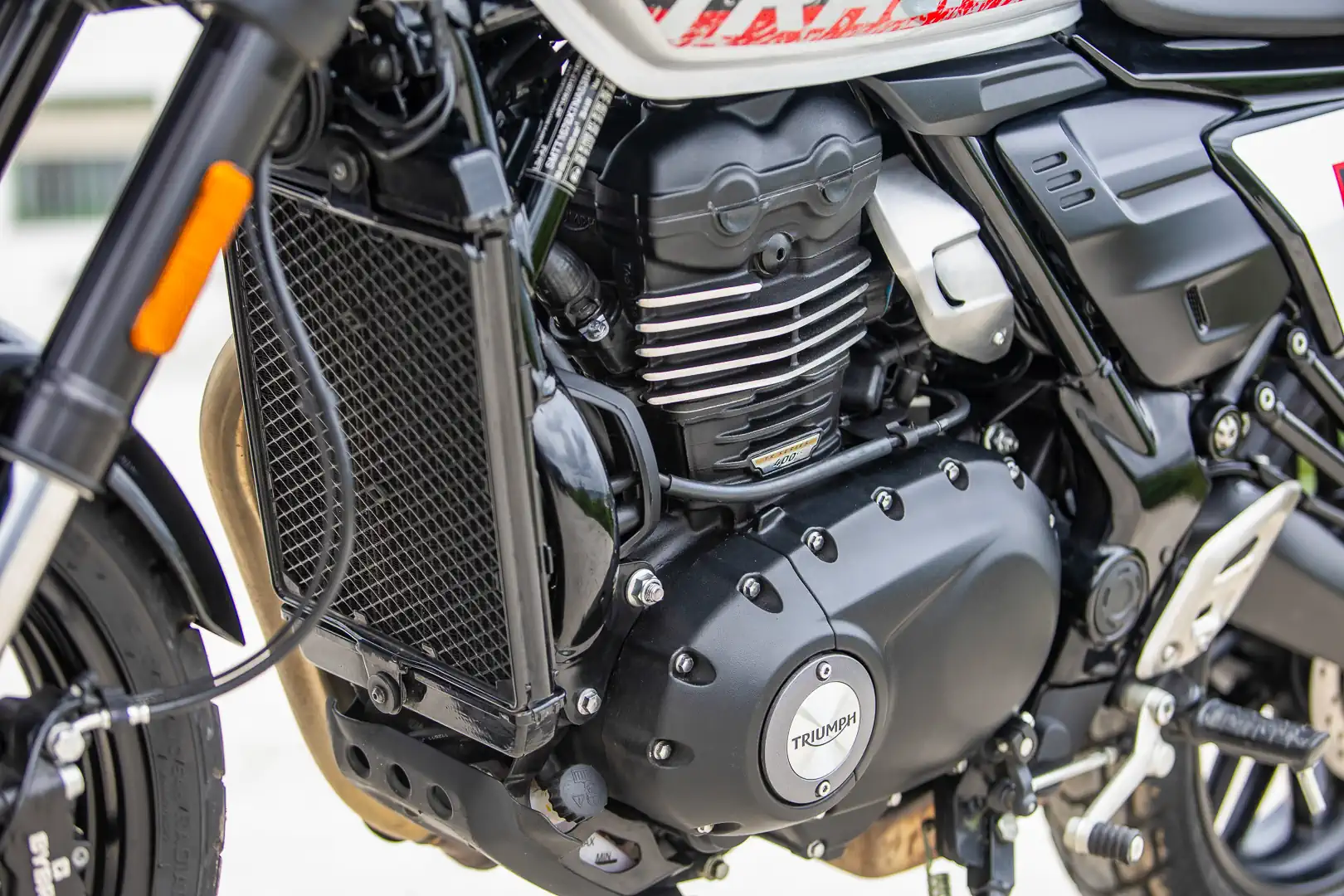
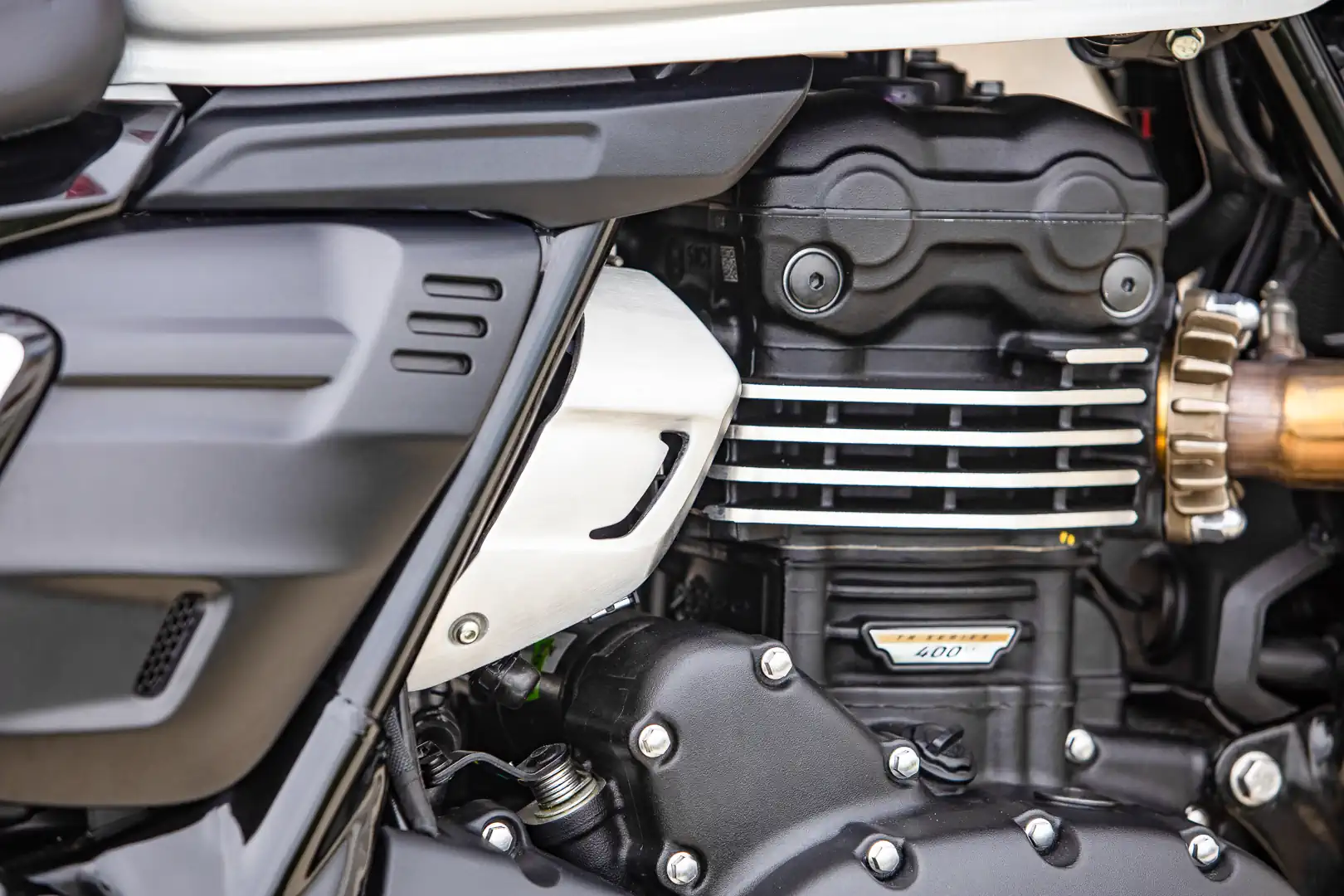
The latest iteration of the TR-series engine delivers additional power and higher revs. A revised intake cam profile and a new engine tune give the liquid-cooled 398cc DOHC single five percent more power than the Speed 400, peaking 1000 rpm higher. This lets you keep the throttle twisted past 9000 rpm when you’re feeling aggressive, and ensures you won’t get overrun on a busy urban freeway. The broad torque curve keeps the ride easy and satisfying around town. It has the same 28 lb-ft of torque as the rest of the 400 lineup, with usable pull from 3000 rpm to the torque peak at a lofty 7500 rpm. Shifting is smooth and precise across the six-speed gearbox, helping you make the most of the powerband.
Basic modern electronics keep the ride simple and provide a safety net for novice riders. A 400cc entry-level bike doesn’t need power modes or complex electronics. The dual-channel ABS boosts the confidence of riders of just about all skill levels. You can disengage traction control if you want to dirty up the tires for a more authentic flat-track look. The slip-and-assist clutch reduces fatigue around town and smooths abrupt downshifts, contributing to the Tracker’s approachable nature.
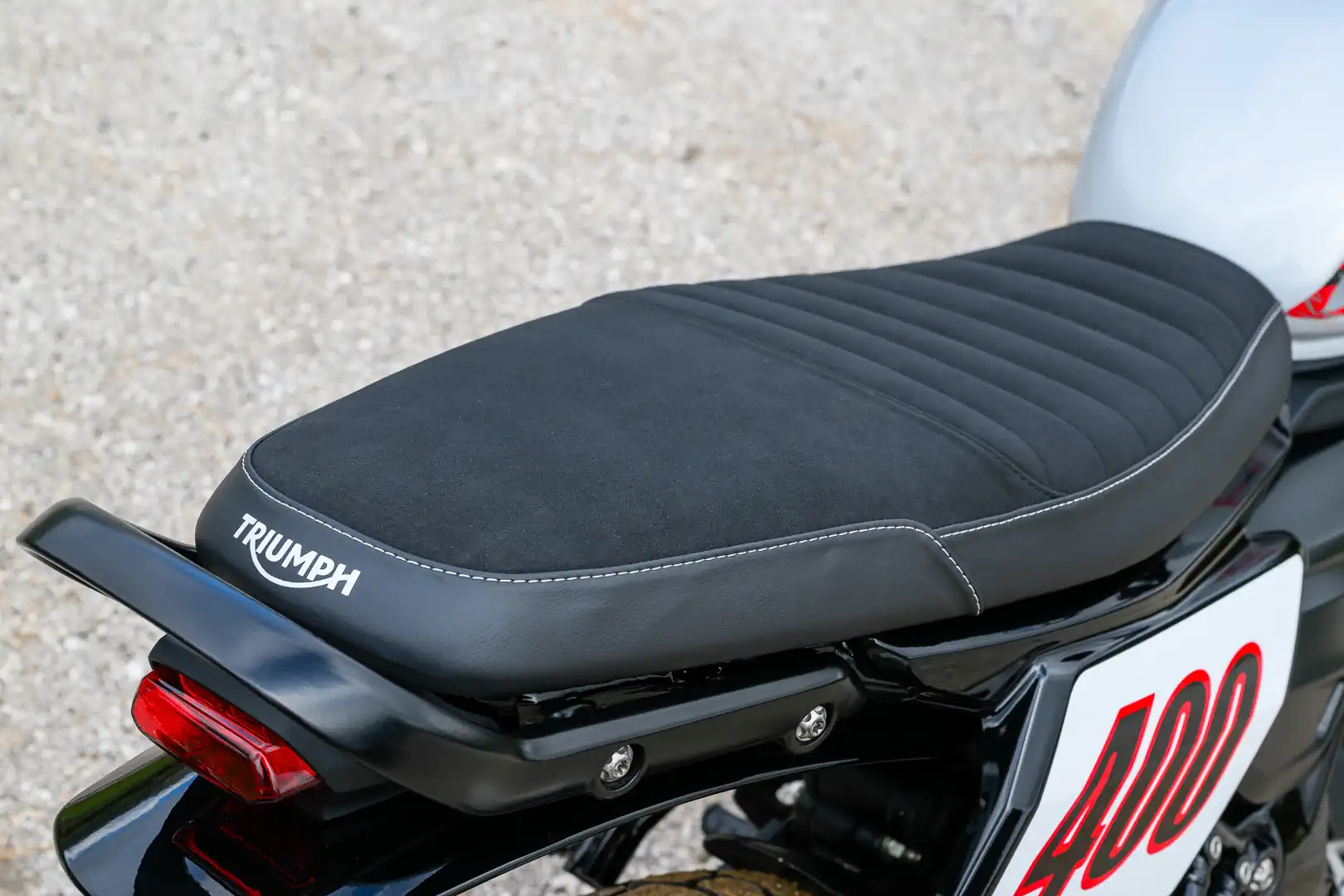
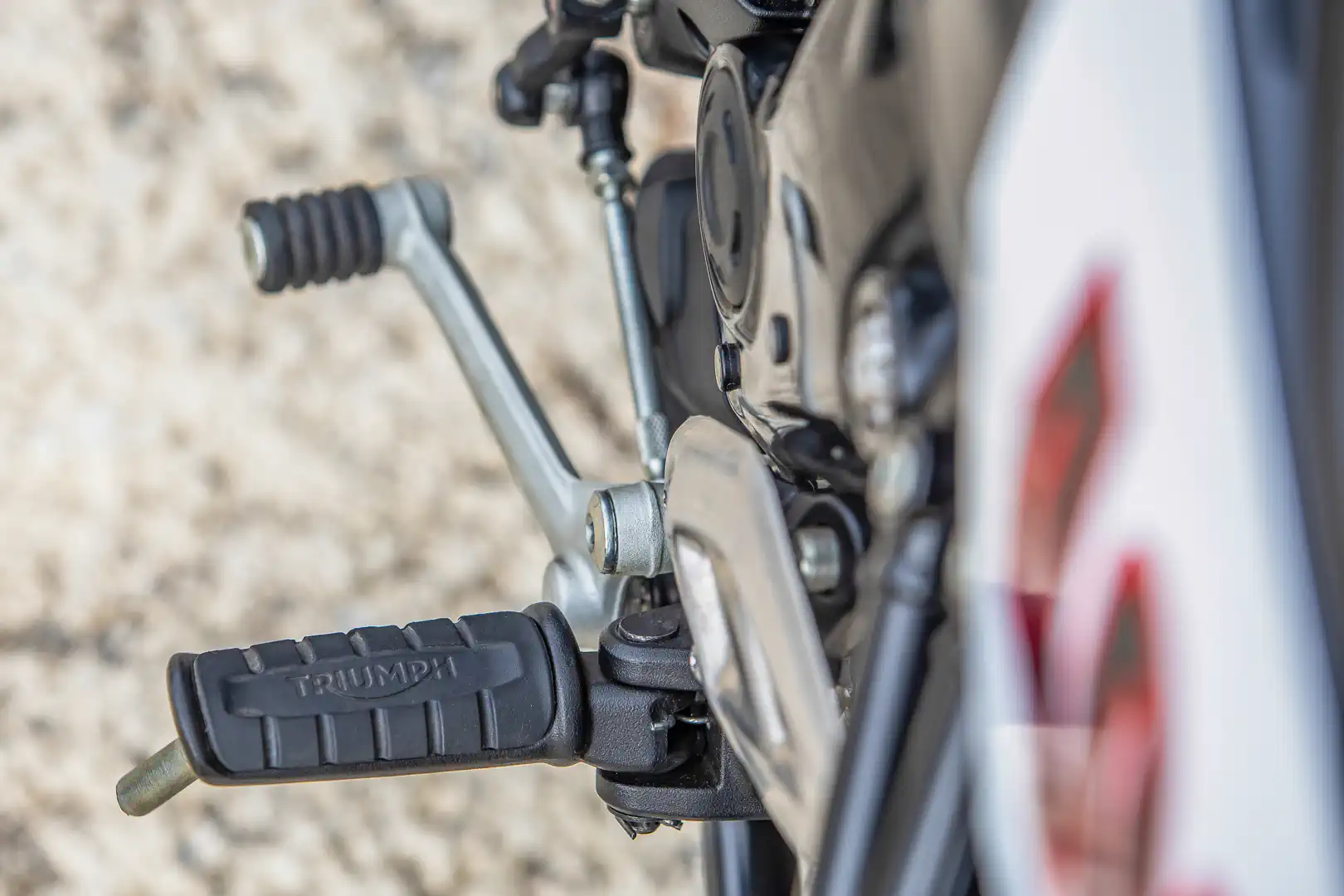
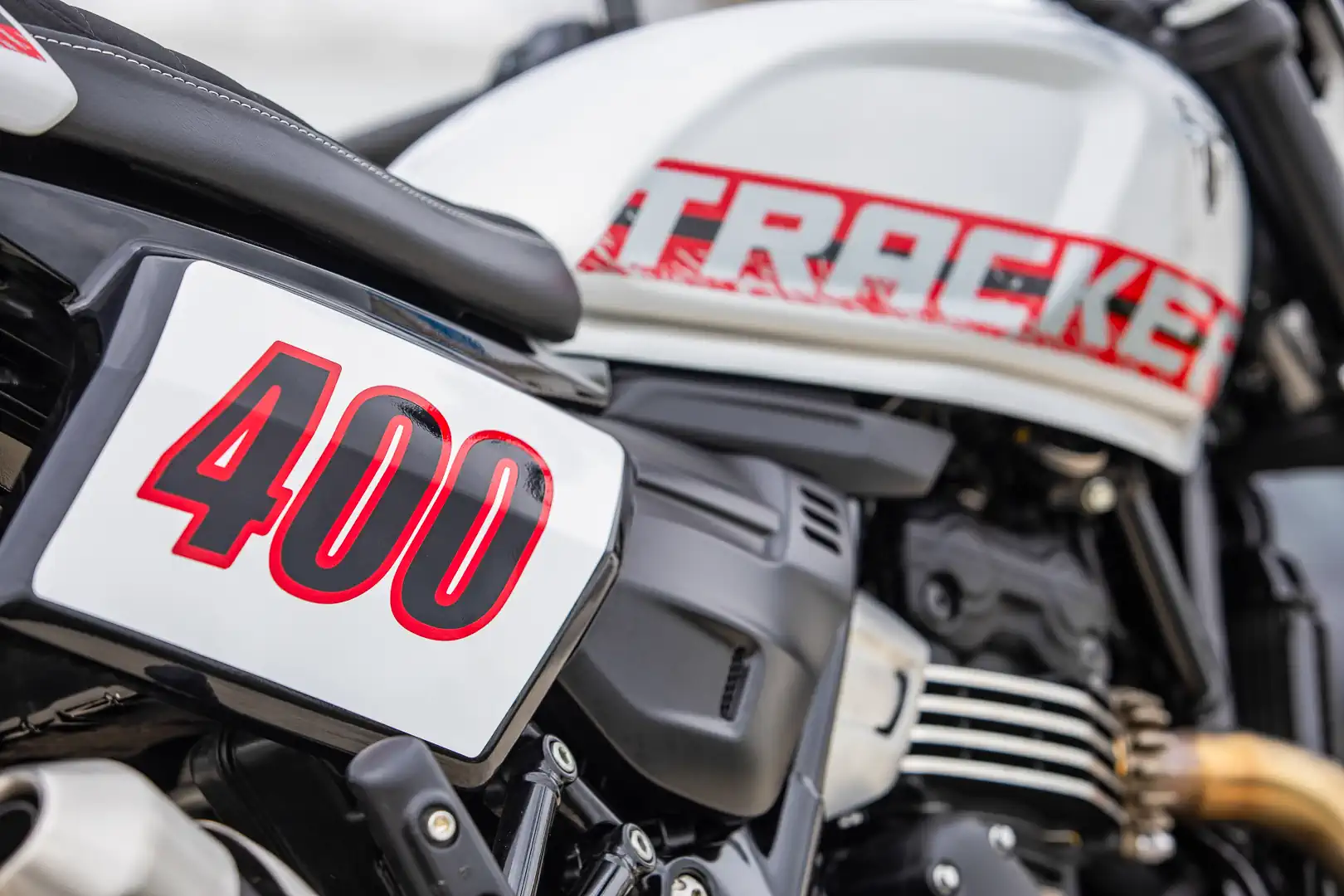
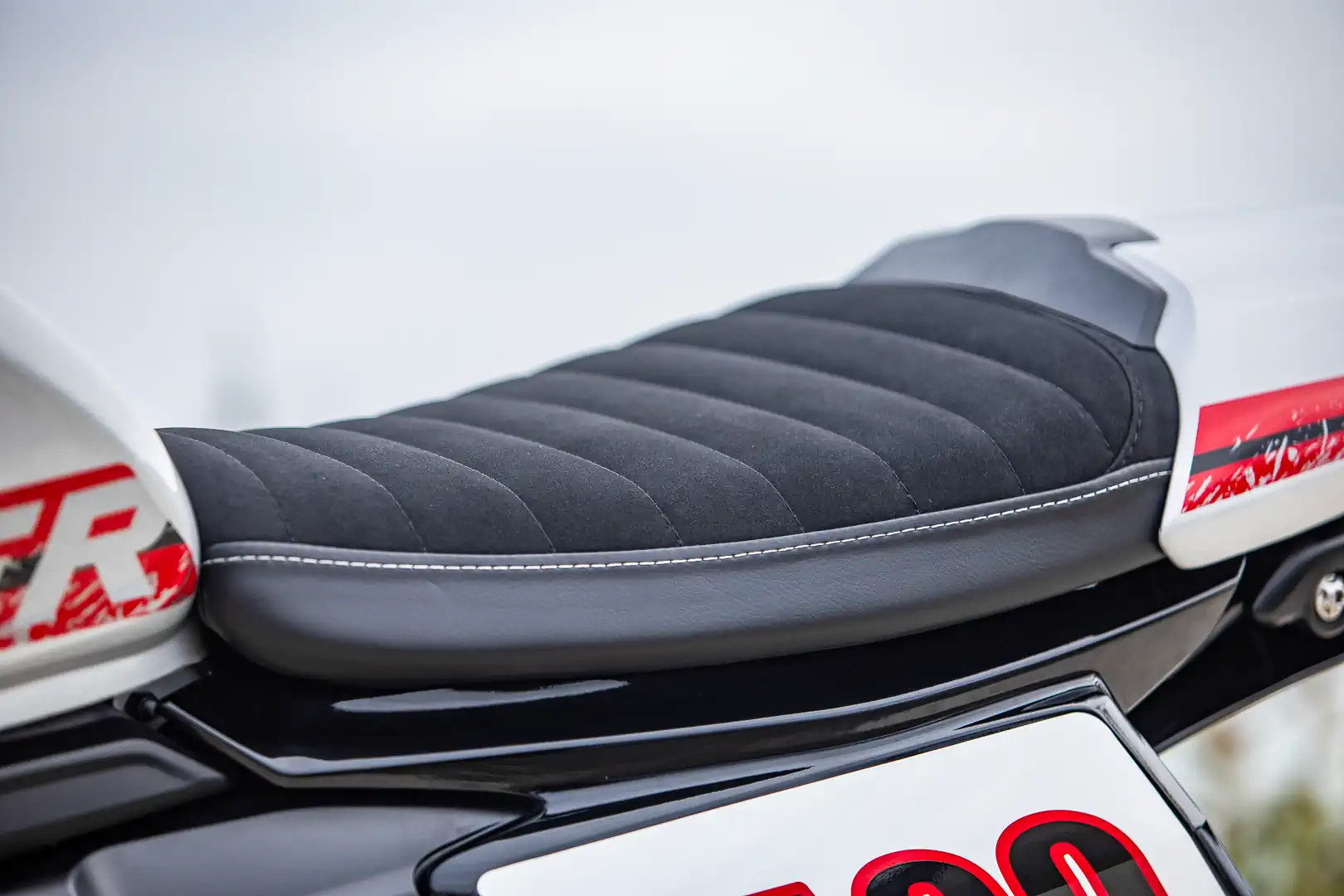
Ergonomics and styling cues say, “Elbows up!” You may have no intention of sliding your Tracker 400 around a dirt oval. Still, the moment you swing your leg over the ribbed seat and grab the wide, flat handlebar, your elbows naturally come up, and your body instinctively feels a competitive pull. The riding position is not extreme, but it’s intentional, with footpegs sitting slightly higher and farther back than on the Speed. Your knees fall perfectly into the sculpted cutouts on the tank, and the solo seat image invites no tag-alongs. With the bold number plates and faux-scratched racing stripe across the tank, the Tracker invokes a scrappy run on the other side of the tracks.
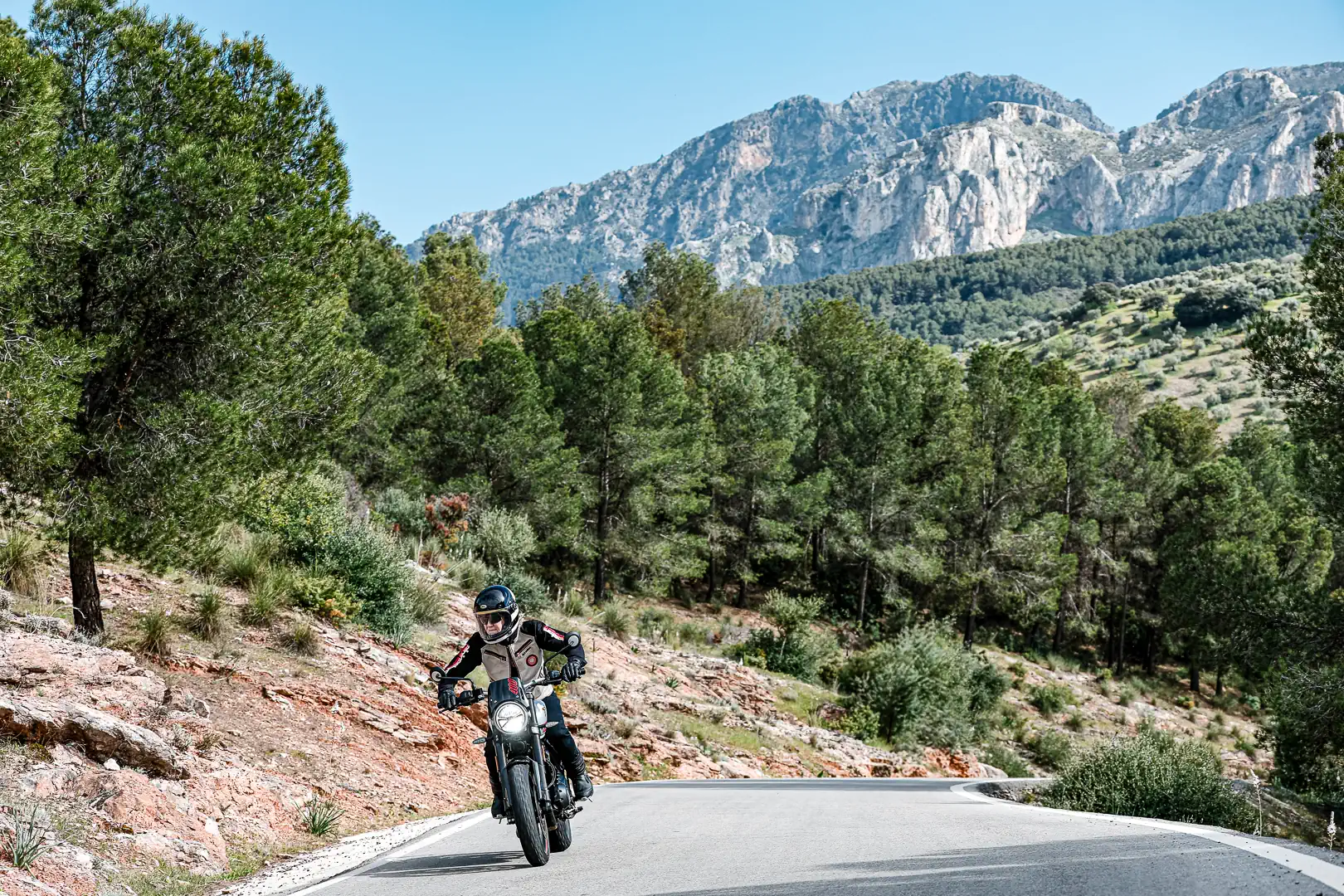
With the same suspension components as the Speed 400, the Tracker works well in both urban and rural settings. The Showa Big Piston fork has 5.5 inches of travel, while the shock manages 5.1 inches of rear-wheel travel. You can’t tinker with the settings except for the shock spring preload, but that’s okay. The well-calibrated damping does a fine job soaking up the worst of real-world road conditions and delivers a forgiving ride around town. When speeds pick up on winding backroads, the front end doesn’t feel soft or wallowy.
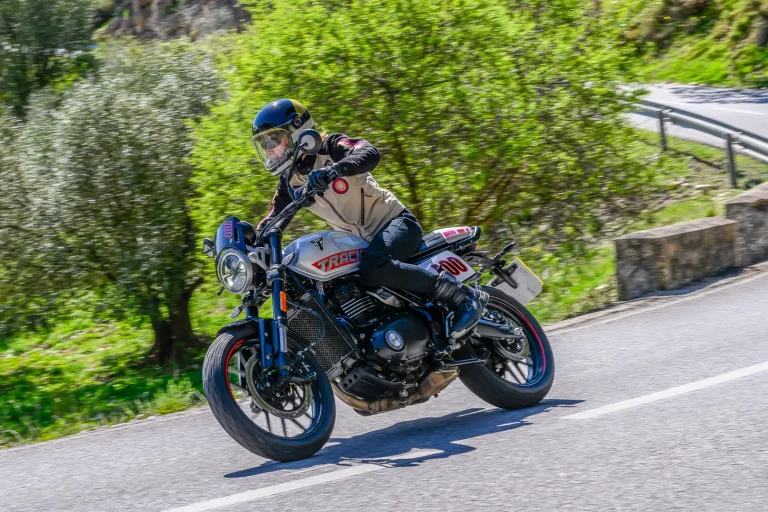
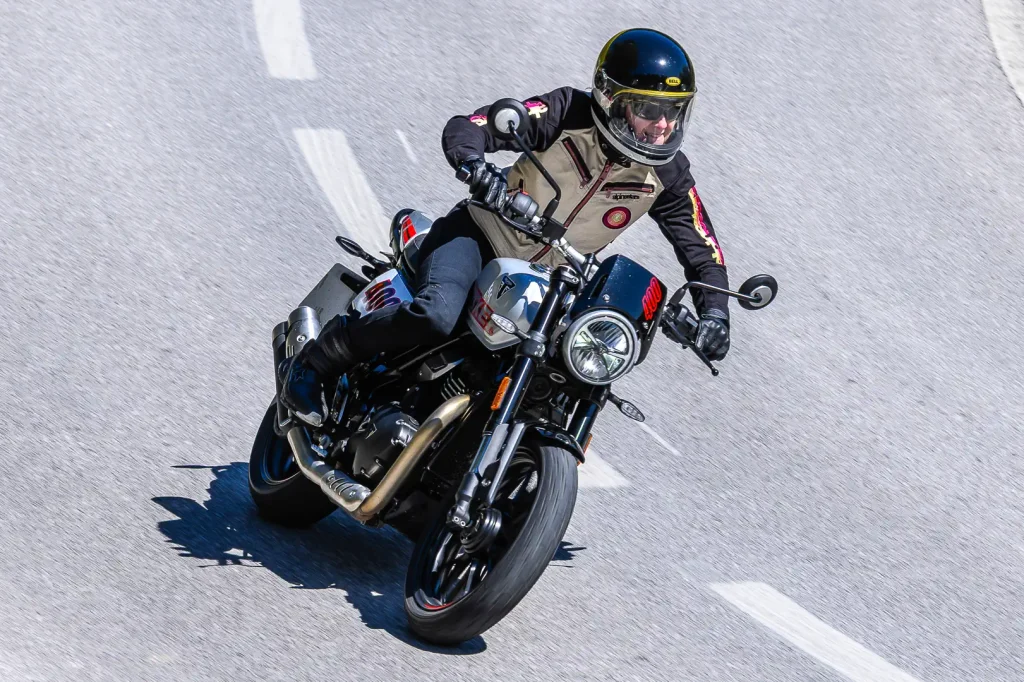
Geometry details give the Tracker its impressive handling. As with most siblings, the Triumph 400s share a lot. From engine and frame to suspension and brakes, the shared DNA is easy to spot. Still, they aren’t identical twins. Compared to the Speed and Thruxton 400s, the Tracker has a shorter wheelbase, steeper rake, and longer trail, which makes a fascinating difference in handling. The Tracker is quick-steering, yet there’s no hint of nervousness, and the chassis is reassuringly stable. With the wide handlebar and commanding seating position on a grippy, thick-foam seat, confidence flows and fuels one’s inner shenanigan tendencies.
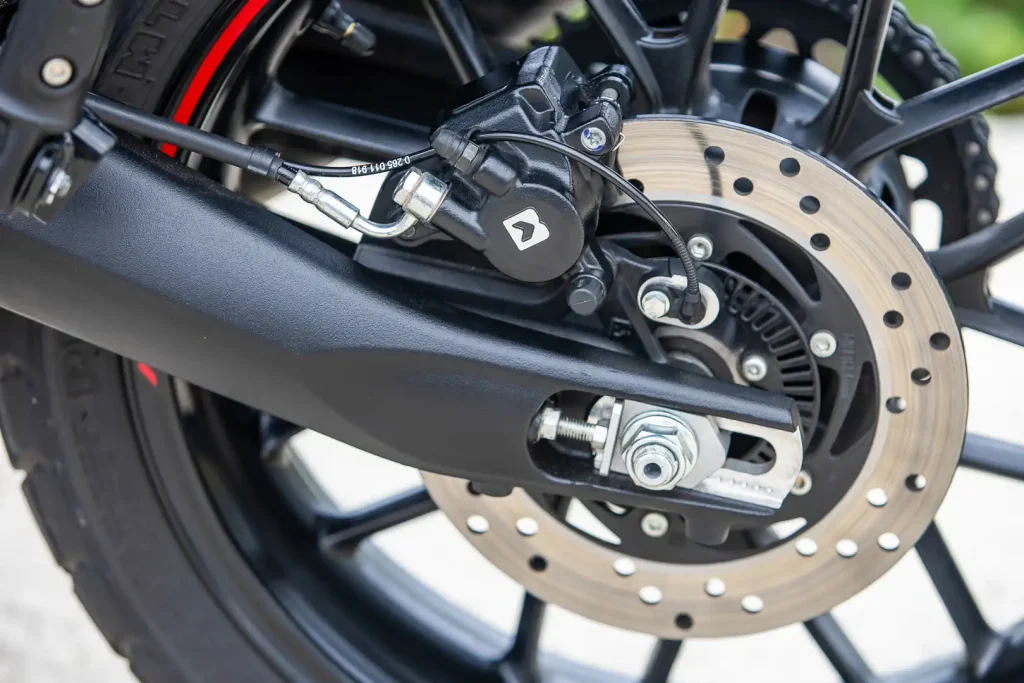
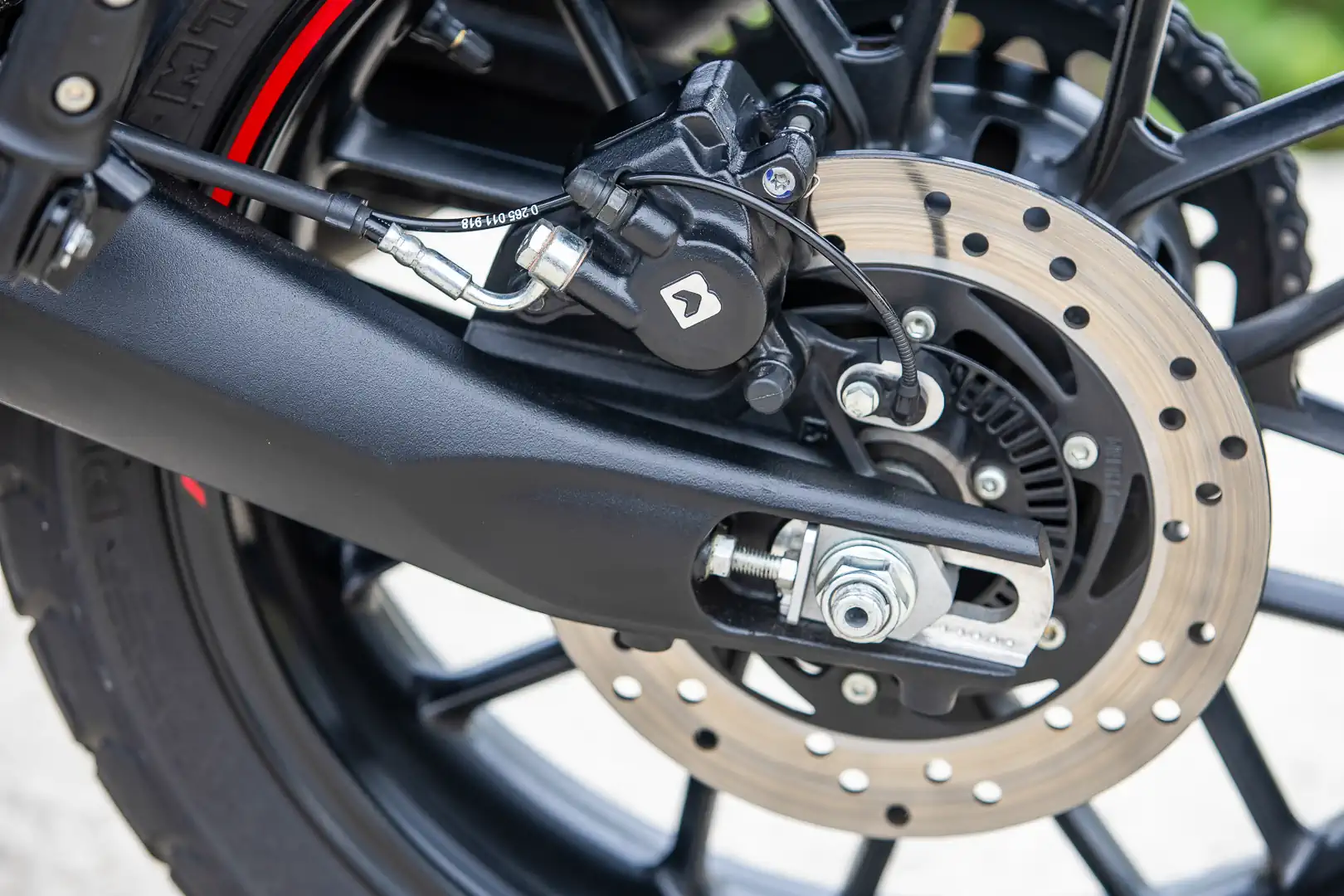
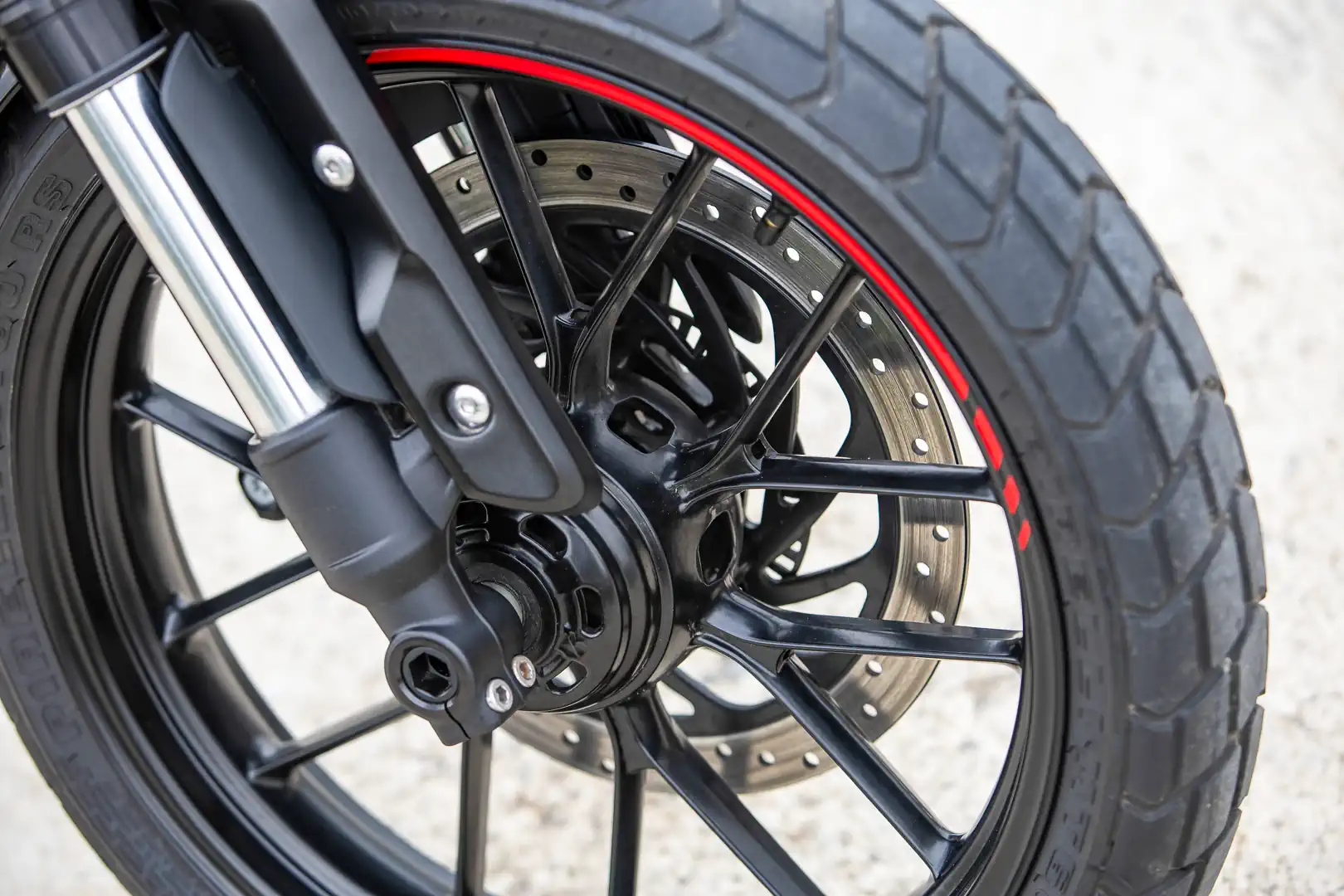
Bybre calipers, ABS, and Pirelli tires deliver a secure braking package to the Tracker’s expected audience. Novice riders will appreciate the soft initial engagement of the four-piston, radially mounted caliper on the 300mm front disc. An authoritative squeeze of the lever extracts additional power to slow the 381-pound bike. The brake pedal offers useful feel and appropriately soft engagement for slow-speed stops or rapid deceleration. Suffice to say, an enthusiastic ride will not be hobbled by inadequate braking. The block-pattern Pirelli MT 60 RS tires suit the Tracker’s image while providing a secure footprint on asphalt, where it should spend most of its time. Although the retro-scrambler tires can handle light off-road excursions, this is still a street bike. Dual-channel Bosch ABS is at the ready, though rarely necessary.
Practical while looking like a ruffian, the Tracker 400 makes a fun urban commuter bike. The bike shines around town, from slower speeds to enthusiastic rev counts. Smooth, torquey power that rolls on easily and predictably keeps the ride chill, but a firm twist of the throttle delivers brisk performance when you need to take evasive action or seize an available opportunity. The wide handlebar makes it easy to maneuver through changing conditions, though it is a slight compromise for tight lane splitting. The real fun of the Tracker is looking cool without having to ride like a hooligan.
You don’t need to lean aggressively into those handlebars when heading into the office. The 400 has the power and revs to run freeway speeds and do battle with aggressive drivers, though you will feel the windblast of the near-naked bike. Vibration from the thumper creeps into the grips and pegs as you start to exceed the expressway’s speed limit, so stick to shorter commutes in real traffic. With a claimed 65 mpg and a 3.4-gallon tank, the Tracker should deliver 200 miles between fill-ups. The 10,000-mile/one-year service interval keeps maintenance costs low and reduces downtime.
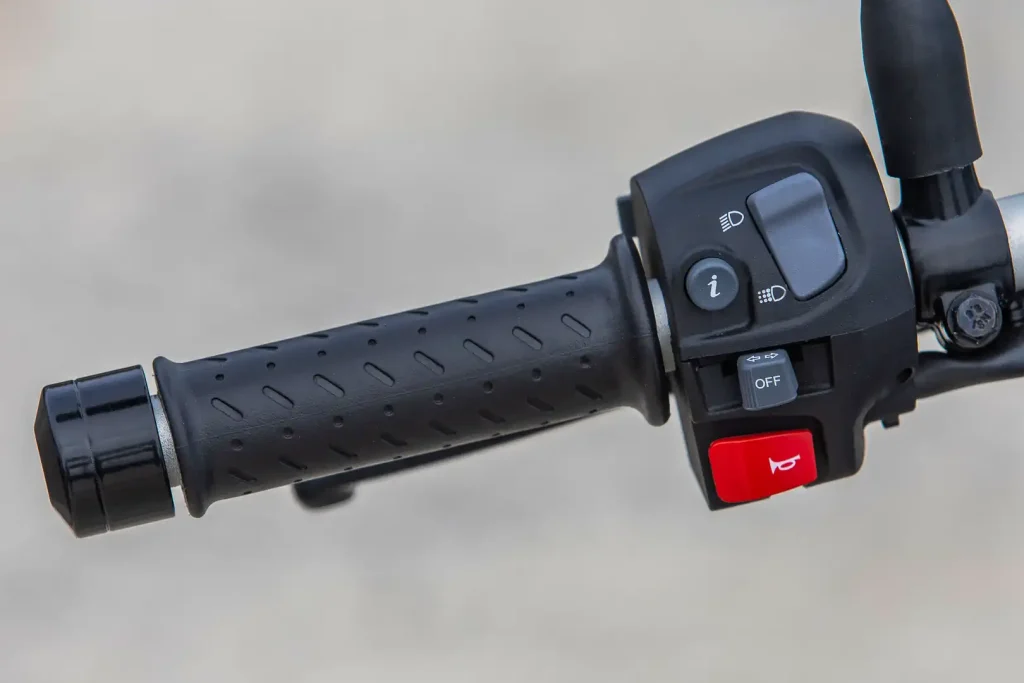
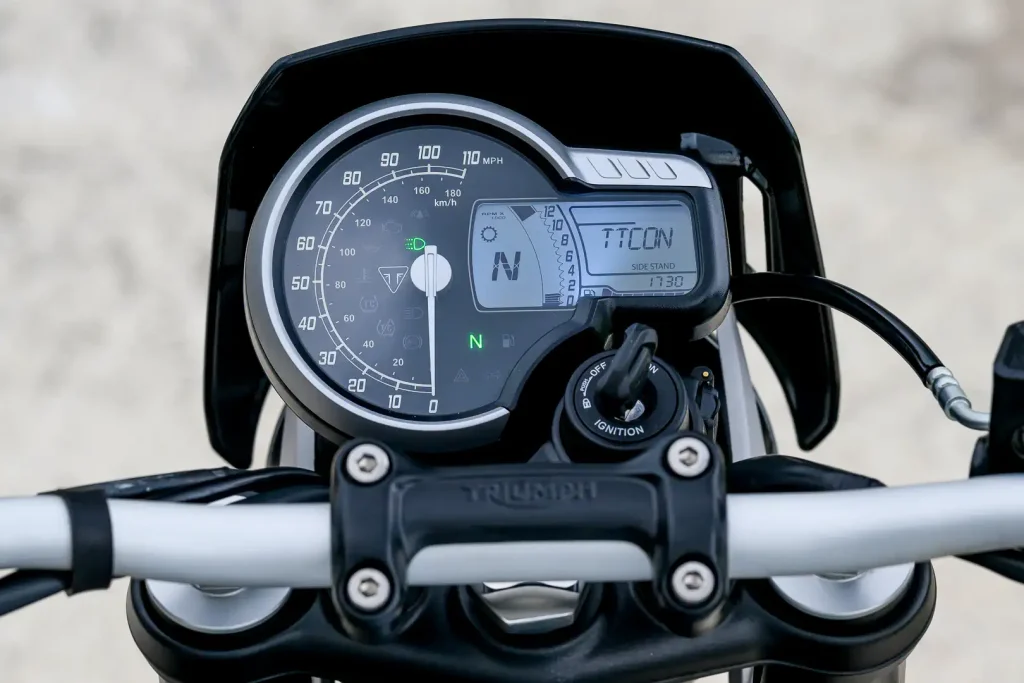
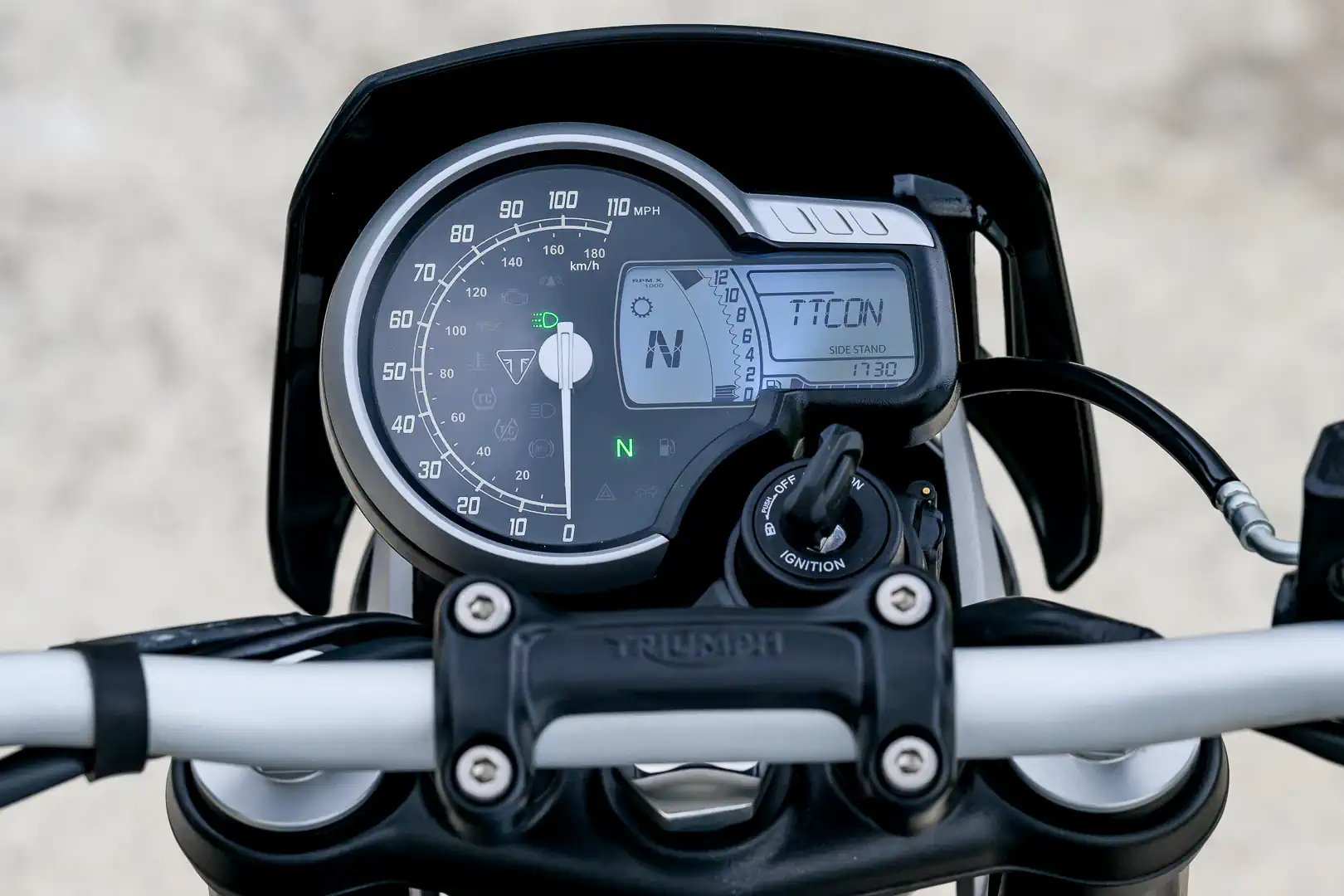
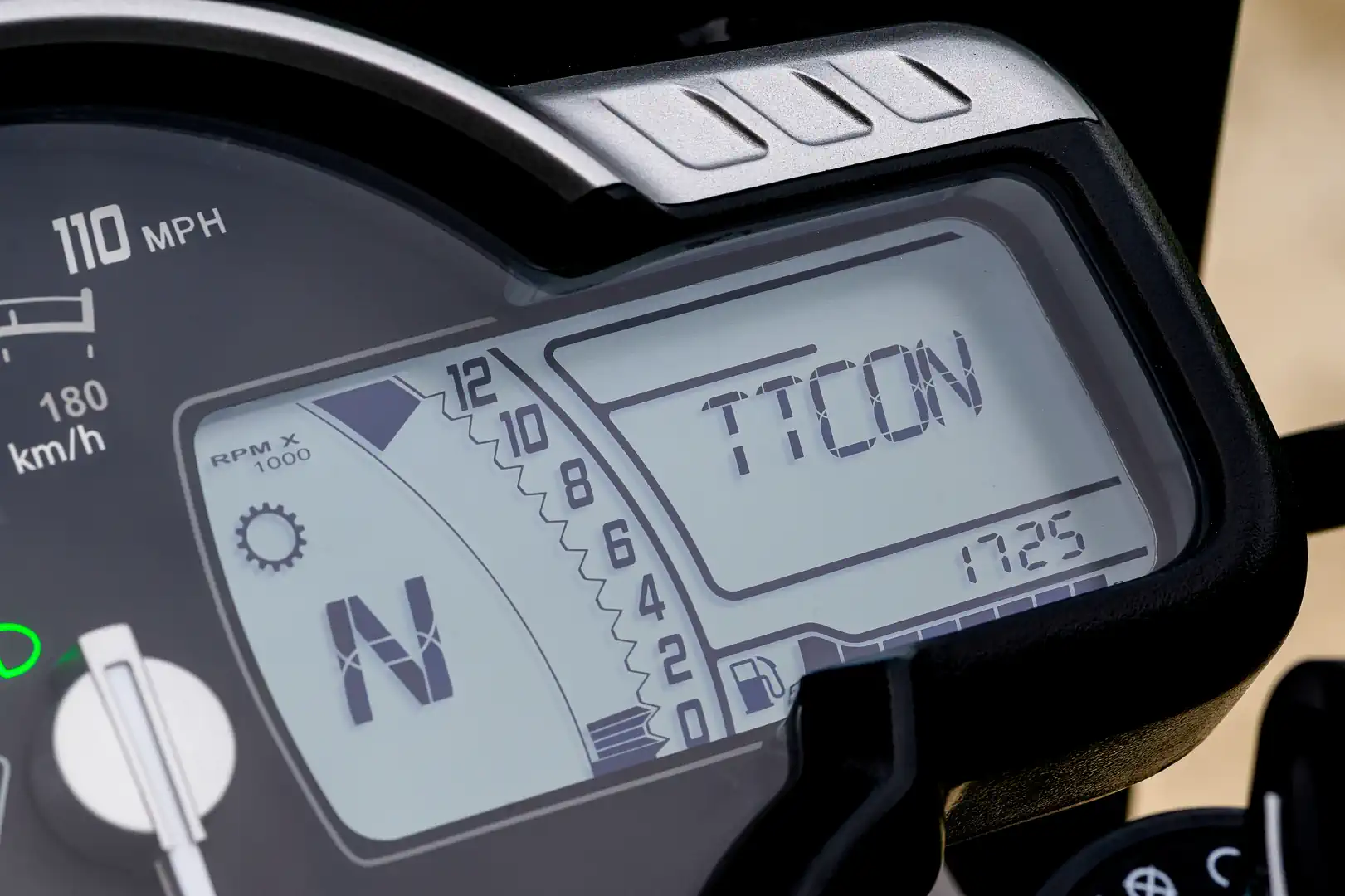
Triumph’s combined analog/LCD dash is practical and easy to read. It’s the same basic dash across the Triumph 400 lineup and gets the job done. An analog-style speedometer is the focal point, with an LCD inset on the right side. Along with the always-visible gear indicator, tach, clock, and fuel gauge, you can scroll through additional data via the i button on the left switchgear. If you dig through the menu, you can deactivate traction control. You’ll only want to do that if you’re taking a zip down a dirt road.
Triumph has been on a roll with the entry-level bikes in their Modern Classics lineup, and the 2027 Tracker 400 may be its best offering yet. It’s masterfully packaged with attitude and style, and capable of raucous fun. It has the same upgraded TR-series engine as the sport-focused Thruxton, and offers more welcoming ergonomics. The Tracker won’t intimidate enthusiastic novice riders, nor will it hobble experienced riders who know how to exploit the motor and chassis. It’s perfect for around-town or commuter riding. With an approachable $5995 MSRP for the Phantom Black paint job, and another $100 for the eye-catching Racing Yellow or Aluminum Silver colorways, the 2027 Triumph Tracker 400 effortlessly blends style, budget, and practicality.
Our bike review this episode is the Yamaha MT-03. Do not underestimate this bike; you get a lot of motorcycle for your money! Associate Editor Kelly Callan rode the smallest MT for several weeks, and that included commuting on it. One of the things that impressed her, was how the MT-03 acted like a larger motorcycle. Kelly also spent some time chasing Editor Don Williams through the canyons when he was on the Yamaha MT-07—obviously a much larger machine. She tells us about how it all went.
* * * * *
We’re closing in fast on the 34th annual Biketoberfest, October 15–18, when all roads will lead to Teddy Morse’s Destination Daytona—the more than 100-acre motorcycle playground in Ormond Beach Florida. This week we get to hear all about it from Teddy Morse himself. With his trademark high energy and enthusiasm, he tells us all about his recently established Triketoberfest that happens the week before, and how the Destination Daytona complex turns into a full-throttle hub of demo rides, vendors, custom builds, live music, food trucks, shops, and nonstop pavilion energy. So, whether you’re on two wheels or three, whether you’re hunting parts or lining up a test ride; grab a cold one and soak up the energy and gorgeous Florida fall weather. This is one of the many Daytona Beach places where Biketoberfest feels like home. So don’t forget: make sure you download the Biketoberfest mobile App from Apple or Google Play or visit www.biketoberfest.org and we’ll see you there!
* * * * *
Our guest this episode is Greg Arnold, Mecum’s motorcycle auction director. He bought his first bike at eleven, joined the company in 2011, and has spent more than a decade helping turn this incredible event into the place collectors, consignors, and dreamers all show up. Next February 3rd through 6th, Mecum will—for the 36th time, bring the world’s largest vintage motorcycle auction back to South Point, Las Vegas. That’s over two thousand bikes over four days. Board-track racers, barn finds, customs, race iron, and especially, those incredible machines that make the room go quiet. Greg gives us insight into what it takes to make this event work so incredibly well, and if you’re interested in selling your pride and joy, what steps you have to take to make it happen.
* * * * *
Here’s quick reminder to check out our monthly digital magazine. It’s filled with everything you want to read on motorcycling, including some things you’ve probably not seen elsewhere. It’s absolutely free and you will find it on the Apple App Store and of course on Google Play as well.
Don’t forget to leave us your comments on our social media—we’re on all the usual platforms at Ultimate Motorcycling. We love hearing your feedback… so good or bad, please let us know what you think. If there’s something you’d like us to cover, we’d love to hear those ideas too!
We use cookies and browser activity on this website
Functional
Always active
The technical storage or access is strictly necessary for the legitimate purpose of enabling the use of a specific service explicitly requested by the subscriber or user, or for the sole purpose of carrying out the transmission of a communication over an electronic communications network.
Preferences
The technical storage or access is necessary for the legitimate purpose of storing preferences that are not requested by the subscriber or user.
Statistics
The technical storage or access that is used exclusively for statistical purposes.The technical storage or access that is used exclusively for anonymous statistical purposes. Without a subpoena, voluntary compliance on the part of your Internet Service Provider, or additional records from a third party, information stored or retrieved for this purpose alone cannot usually be used to identify you.
Marketing
The technical storage or access is required to create user profiles to send advertising, or to track the user on a website or across several websites for similar marketing purposes.