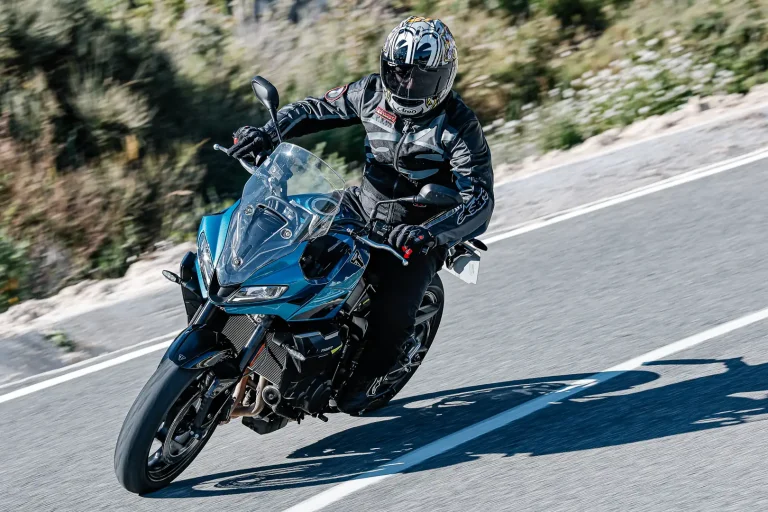
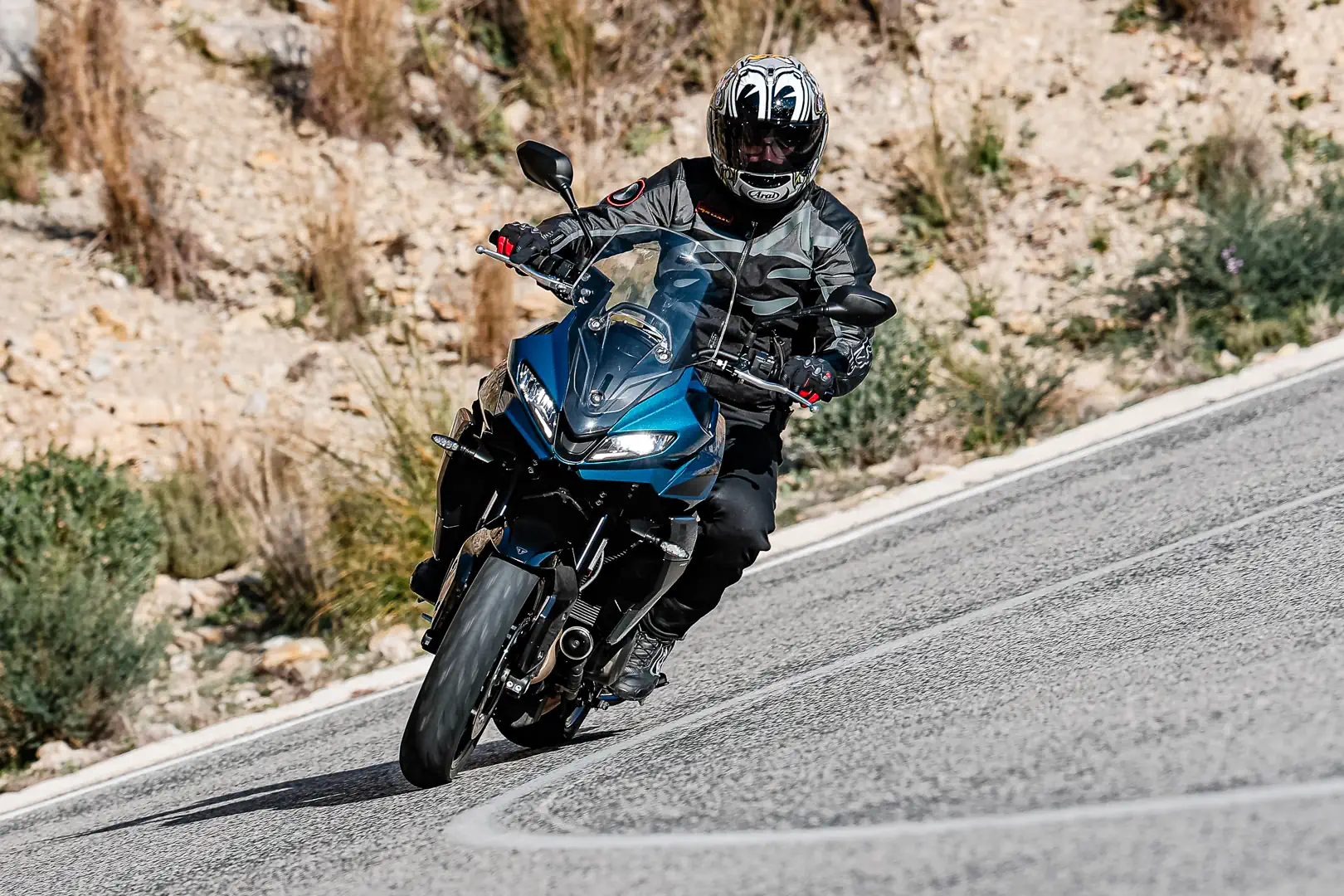
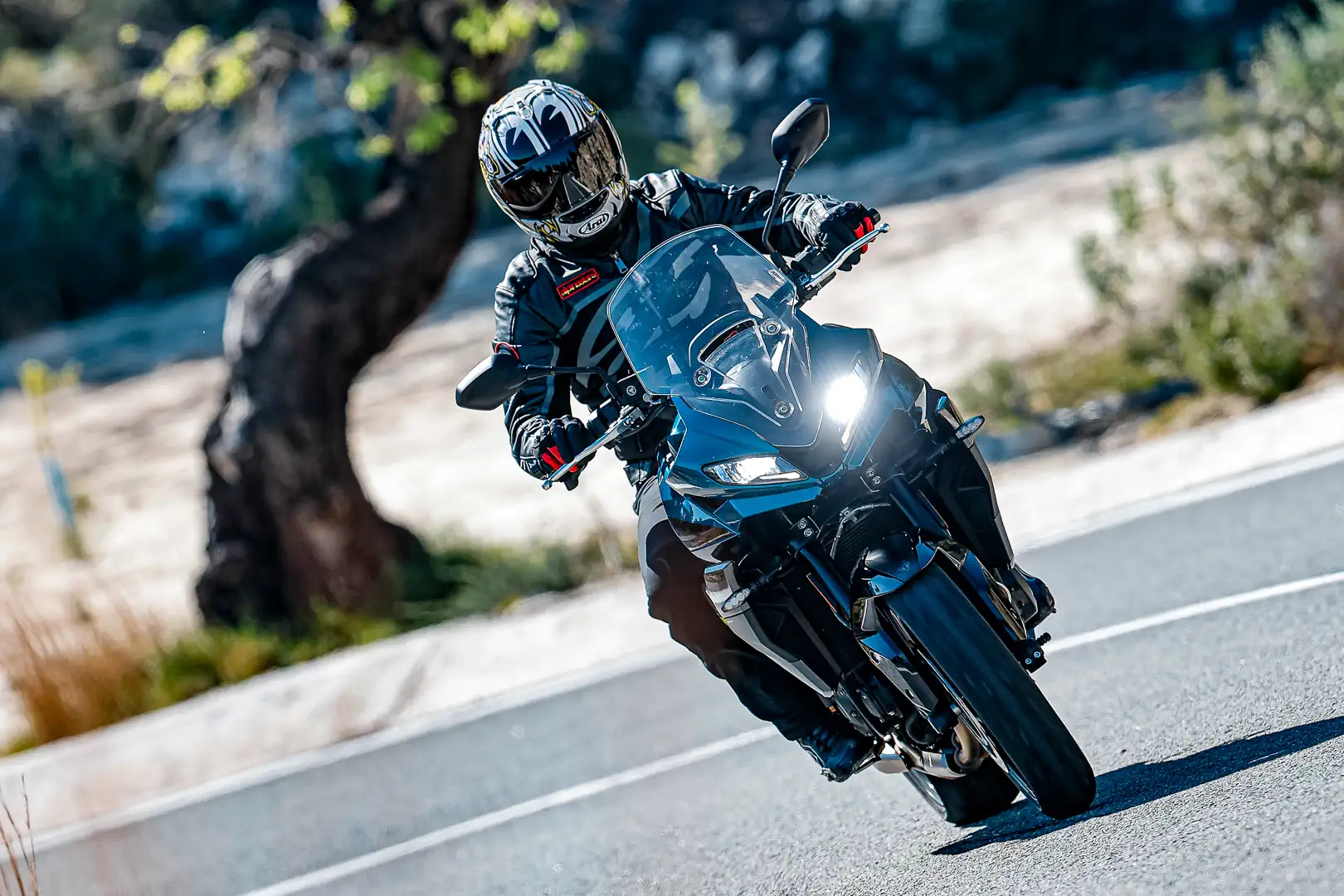
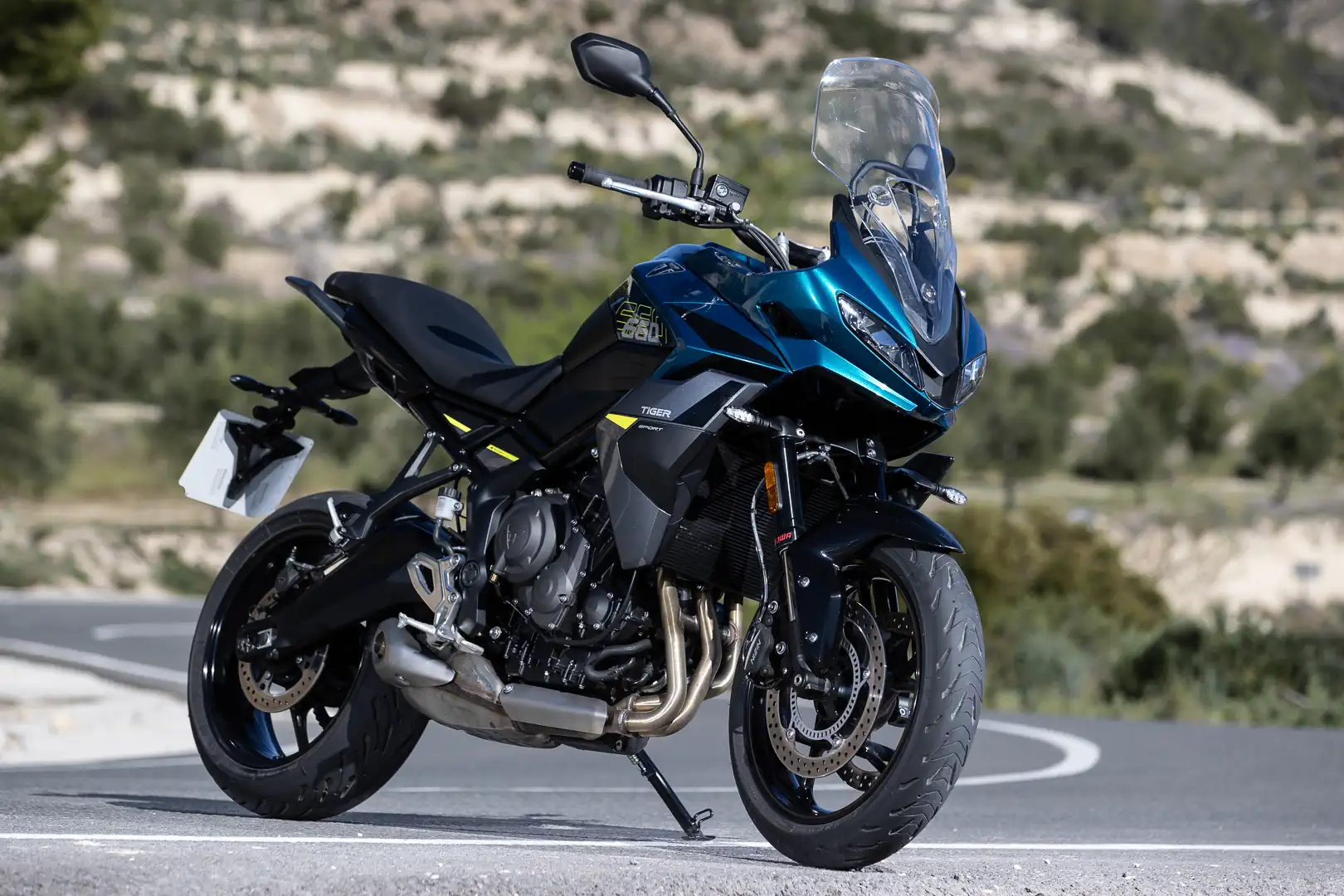
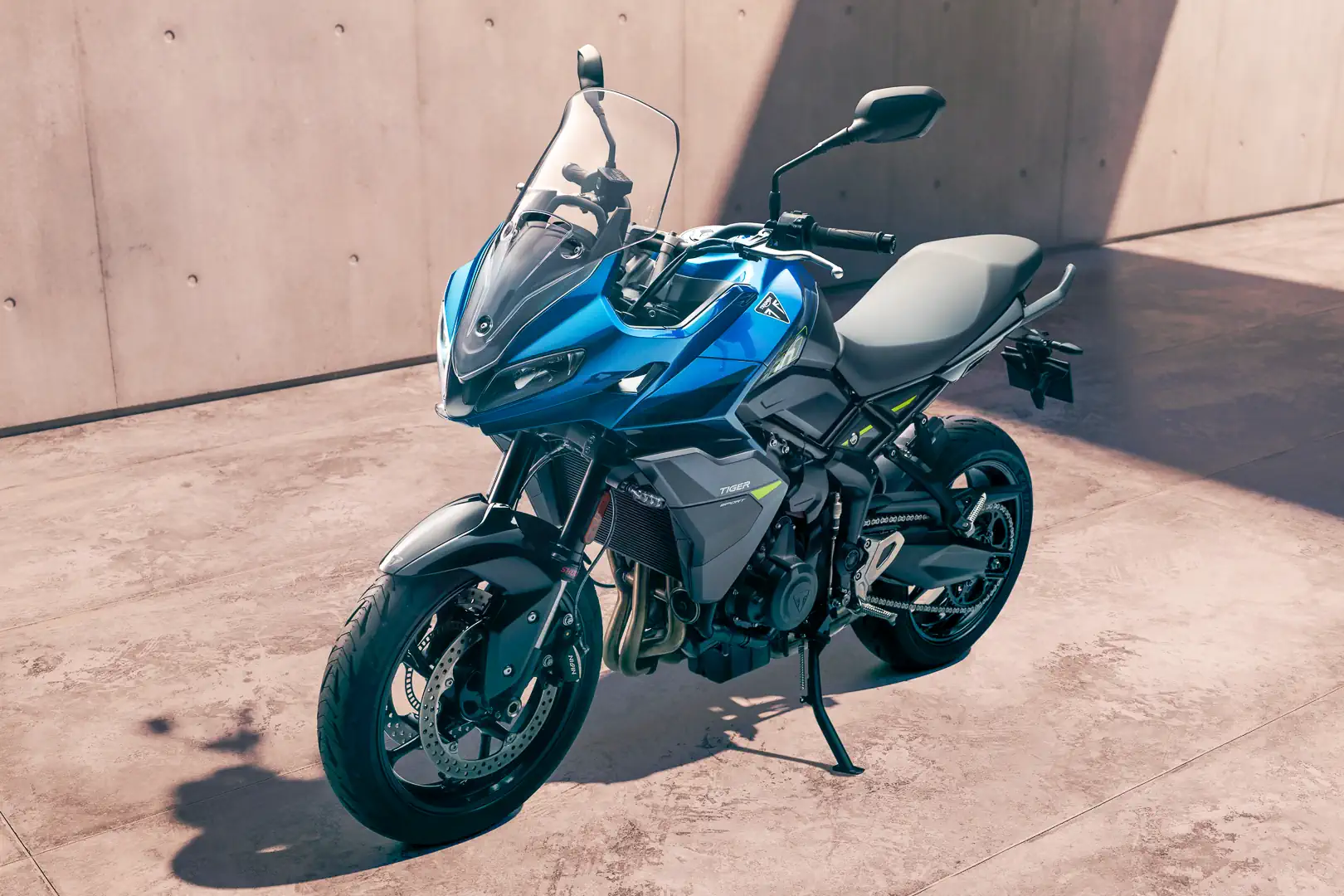
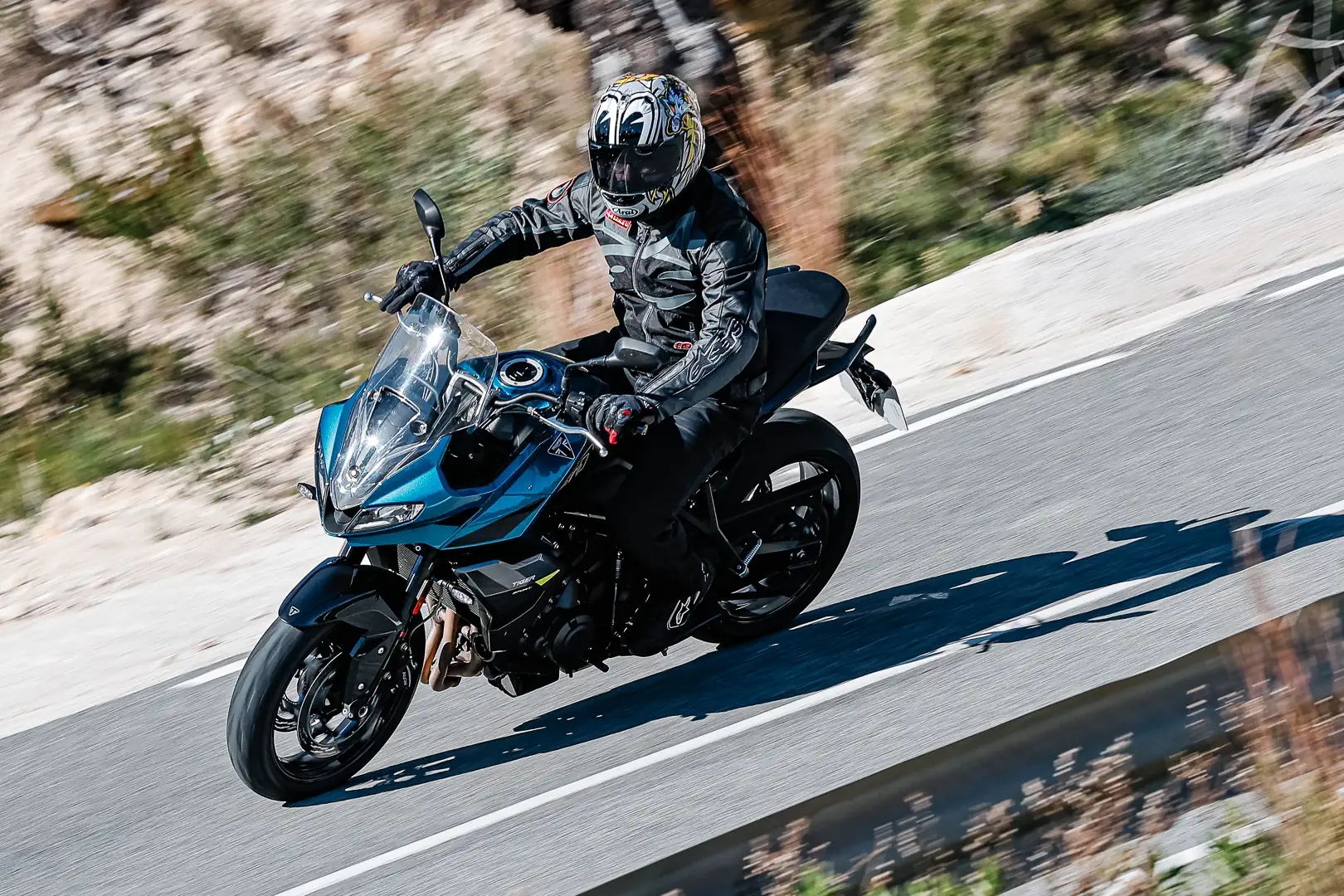
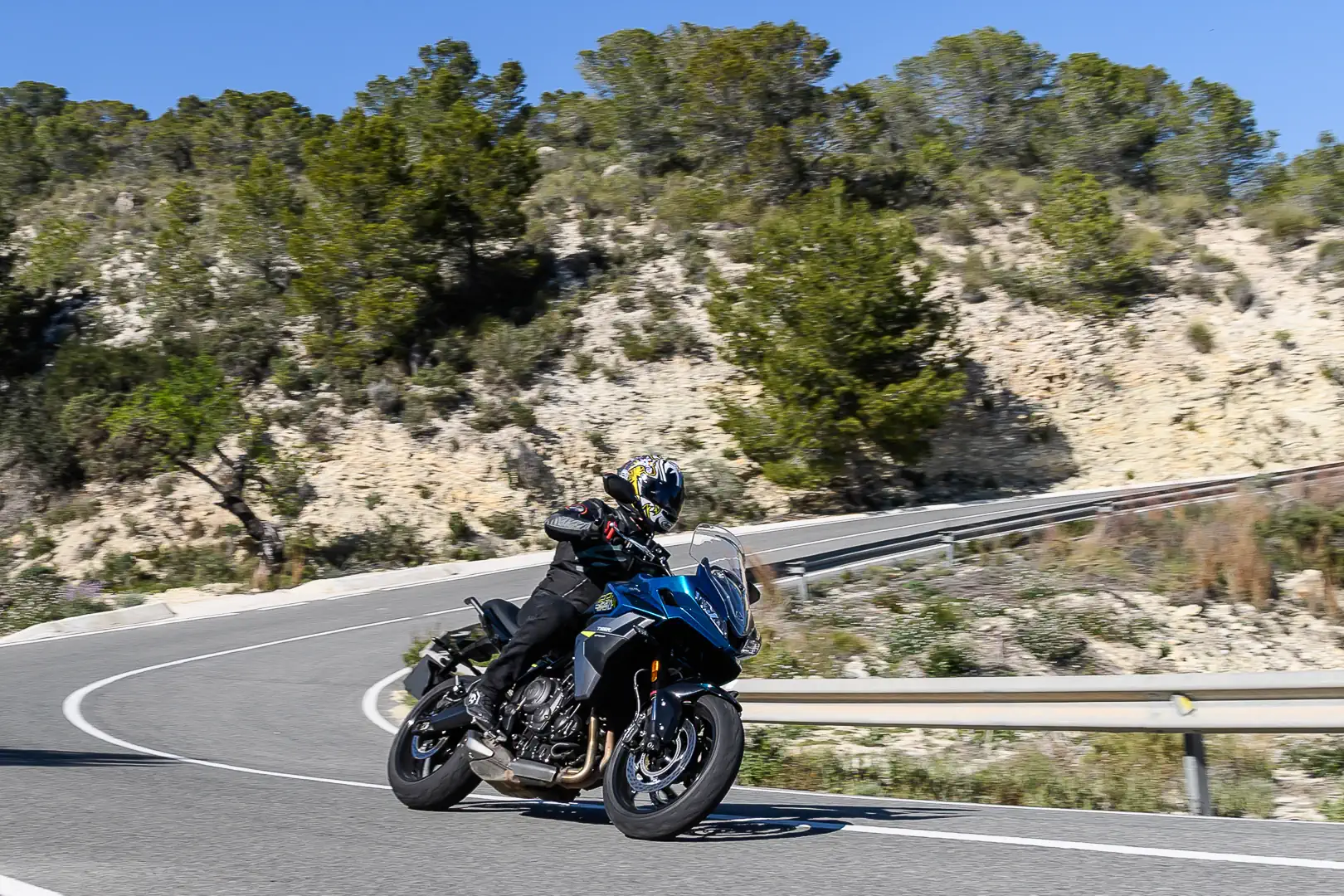
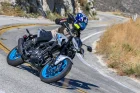
The 2026 Triumph Tiger Sport 660 occupies a well-defined sweet spot in the middleweight sport-touring class, targeting riders who need a machine that can handle the weekday commute without complaint, then willingly take on a weekend canyon run or a loaded two-up touring stretch.
For 2026, it receives the most significant update in its short history: the same higher-output 659cc inline-triple borrowed from the Daytona 660, now shared with its naked sibling, the Trident 660, pushing output to 94 horsepower and 50 lb-ft of torque. New bodywork, a larger 4.9-gallon fuel tank, chassis refinements, and remote spring-preload adjustment for the shock round out most of the changes. Starting at $10,445 in the United States, the Tiger Sport 660 remains one of the more accessibly priced sport-tourers on the market. We got our hands on it while exploring Spain’s scenic Mediterranean coast, just outside Benidorm, to find out what the updates add up to. Now, let’s get on with the Fast Facts.
The new Tiger Sport’s powerplant brings with it the same spirited, free-revving character that the British marque has championed in its triples. Now boasting an additional 14 horsepower, which certainly moves the needle in this 465-pound sport-touring-clad middleweight, the TS 660 now has a little extra gumption wherever you are in the powerband.
Things kick off with an inviting low-end torque that won’t shock riders new to the fold or moving up the ranks. In fact, one could see how twin-powered competitors will likely pick the Tiger’s pocket off the line. What stands out with the new tune, though, is the easily accessible midrange might. As long as the revs sit midway on the tachometer, you’ll always have enough solid punch to pass traffic or leap off a canyon apex. When the exciting top end kicks in, the 660 stands out from the class herd.
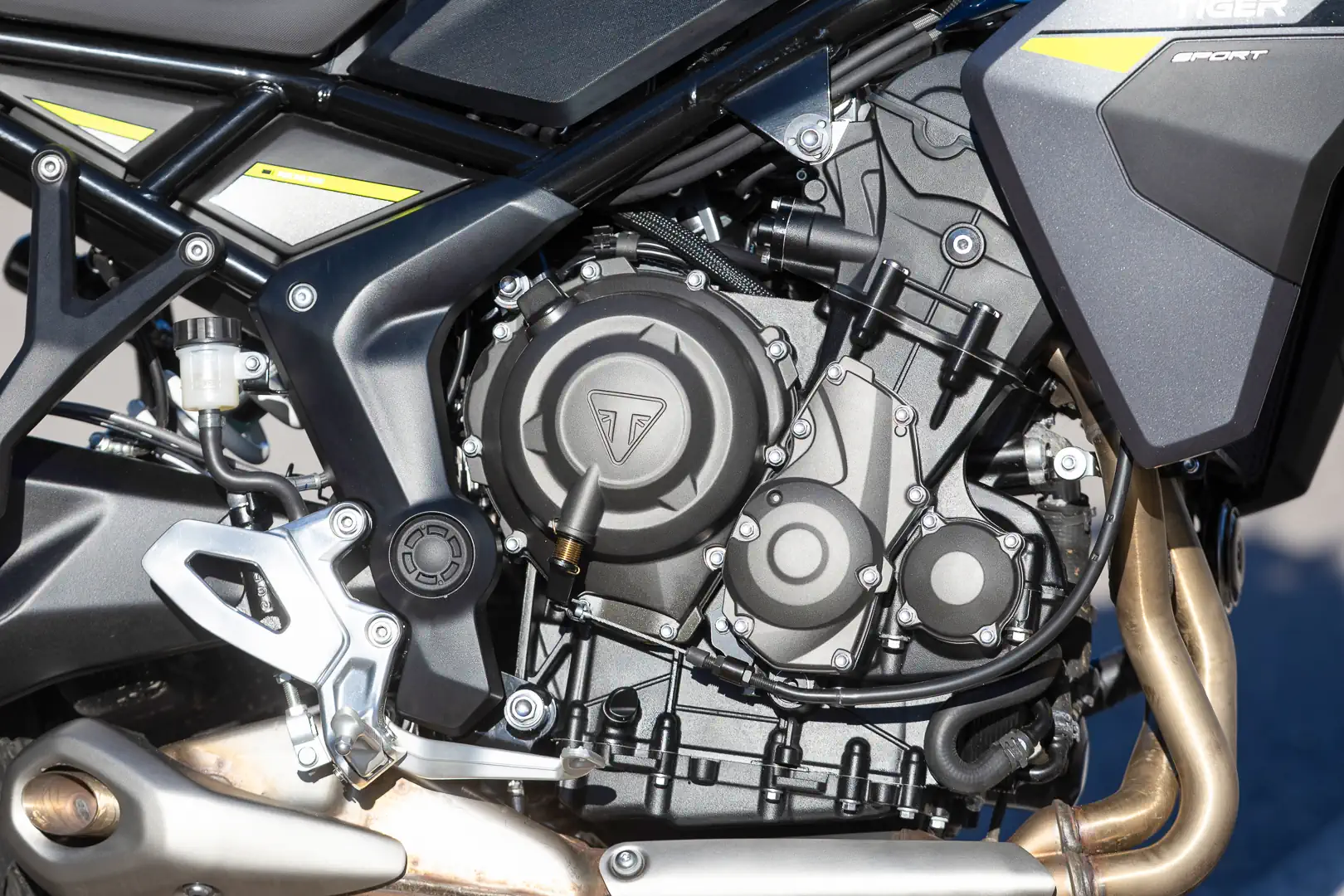
That extra engine punch is the result of meaningful hardware upgrades. Three individually operated 44mm throttle bodies replace the previous single-body setup, a move that optimizes ride-by-wire tuning, which, for the record, is well-calibrated. Other performance-enhancing changes include a revised cylinder head with larger exhaust valves and a higher-lift cam profile, a larger front-mounted airbox, and a reworked 3-into-1 exhaust header with underslung exhaust. Not only does that help explain the higher 94 peak horsepower and 50 lb-ft of torque, but it also accommodates a higher 12,650 rpm redline. The result is a broader, more engaging powerband than the outgoing model, and if all this sounds familiar to readers, it should. This is essentially the same engine as the Daytona 660.
New gearbox ratios to fit the sport-touring role. The six-speed transmission is as sorted as it ever was, as is the standard up/down quickshifter. Aside from starting and stopping, you won’t need to mess with the cable-actuated slip-and-assist clutch too often once underway. What matters here is that engineers have massaged internal ratios a touch compared to the Daytona 660 transmission, creating an overdrive with its top cog. It works, as highway speeds mean you’re sat smack in the middle of the midrange, enjoying the triple’s soothing hum.
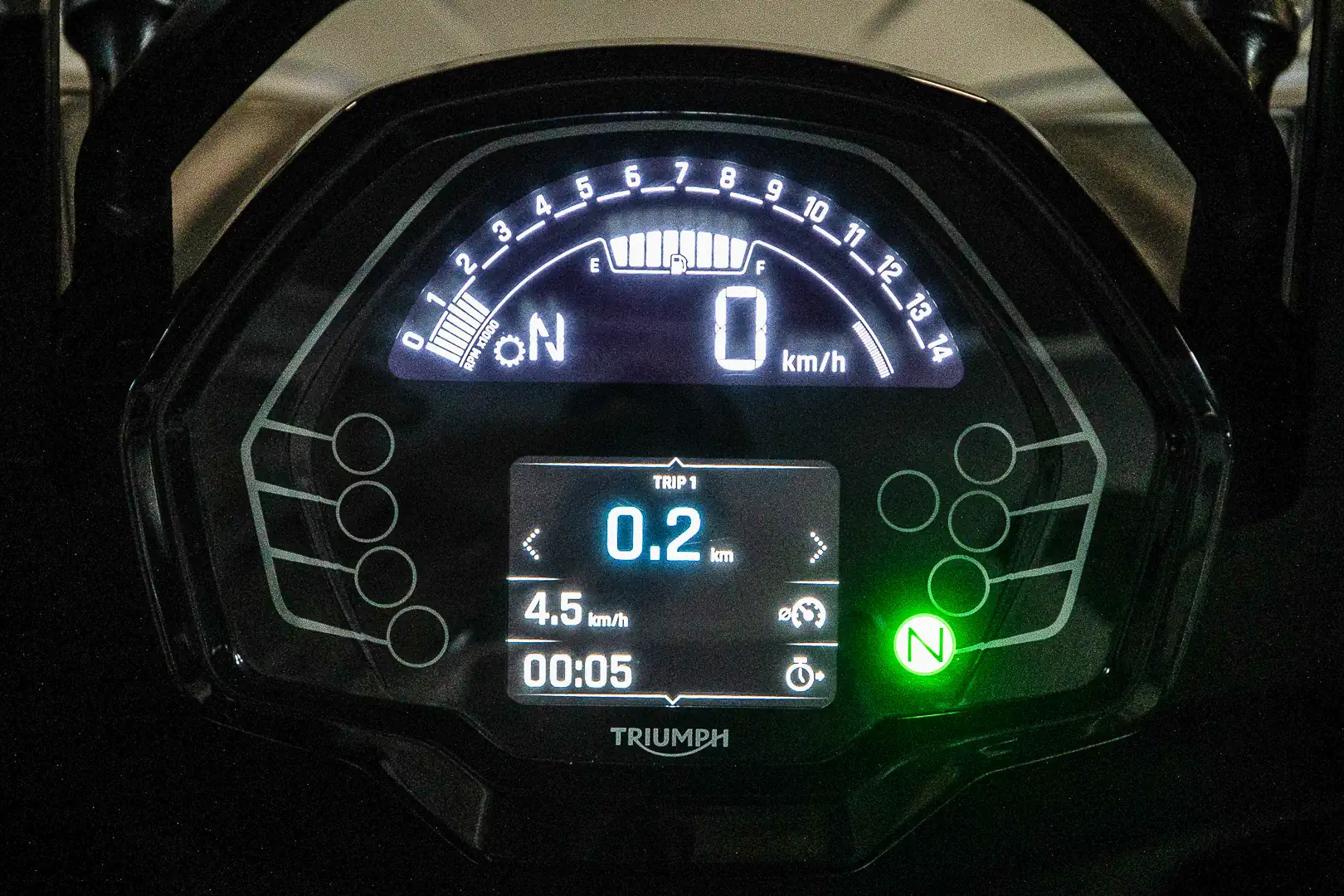
The simple hybrid TFT/LCD instrument panel is your gateway to the TS 660’s updated electronics package. As before, we’re still working with three individual ride modes: Rain, Road, and Sport, ramping up aggression in that order. Said modes dictate the revised throttle response, lean-angle-sensitive traction control, and cornering ABS settings. Bluetooth connectivity accommodates all the usual features, including turn-by-turn navigation, call management, and much more. Yet, the market has progressed to the point where large-scale full-color TFT displays are becoming the norm, and this TFT/LCD combo dash isn’t quite up to snuff with competitors such as the latest Kawasaki Versys 650. The good news is that it’s all functional.
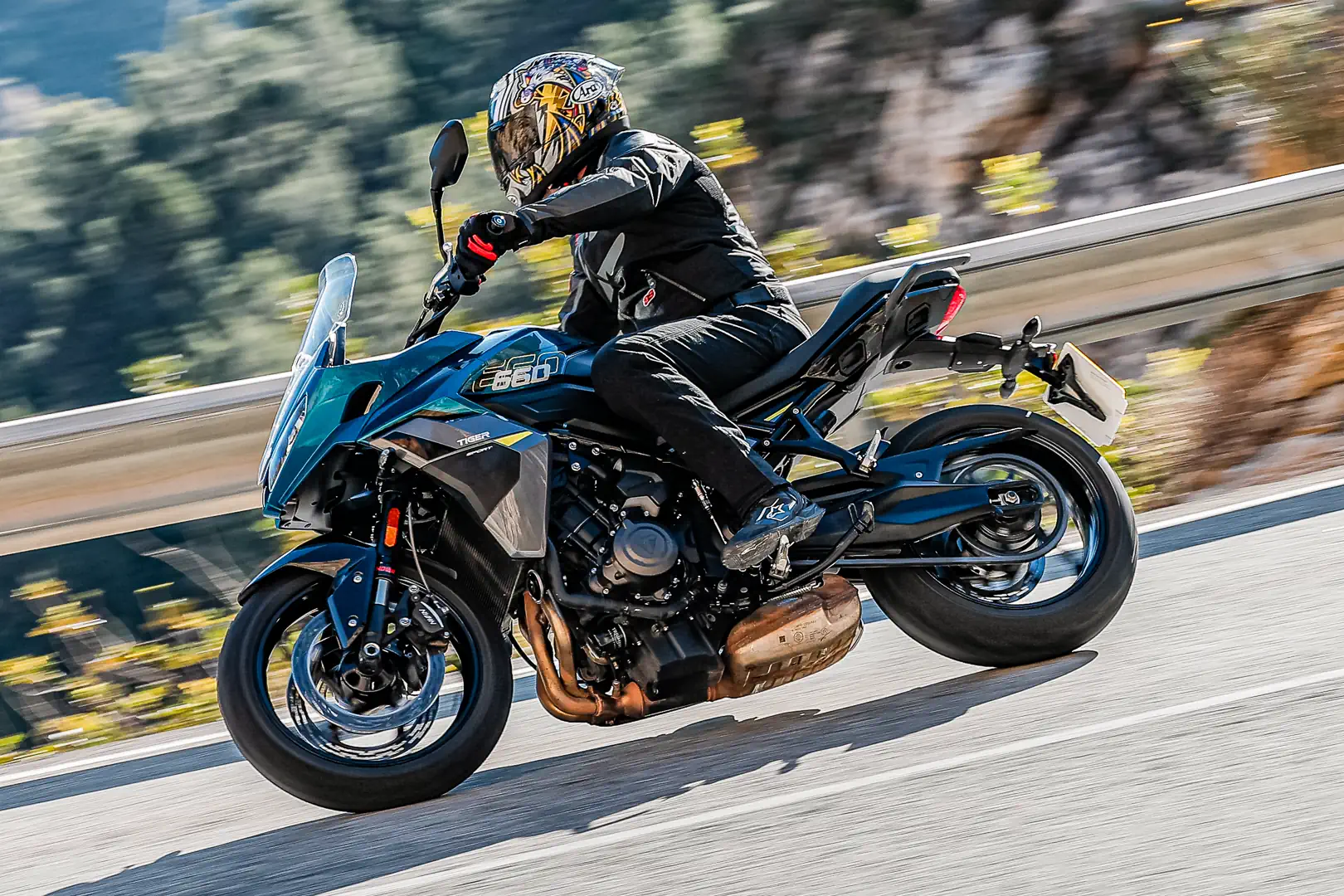
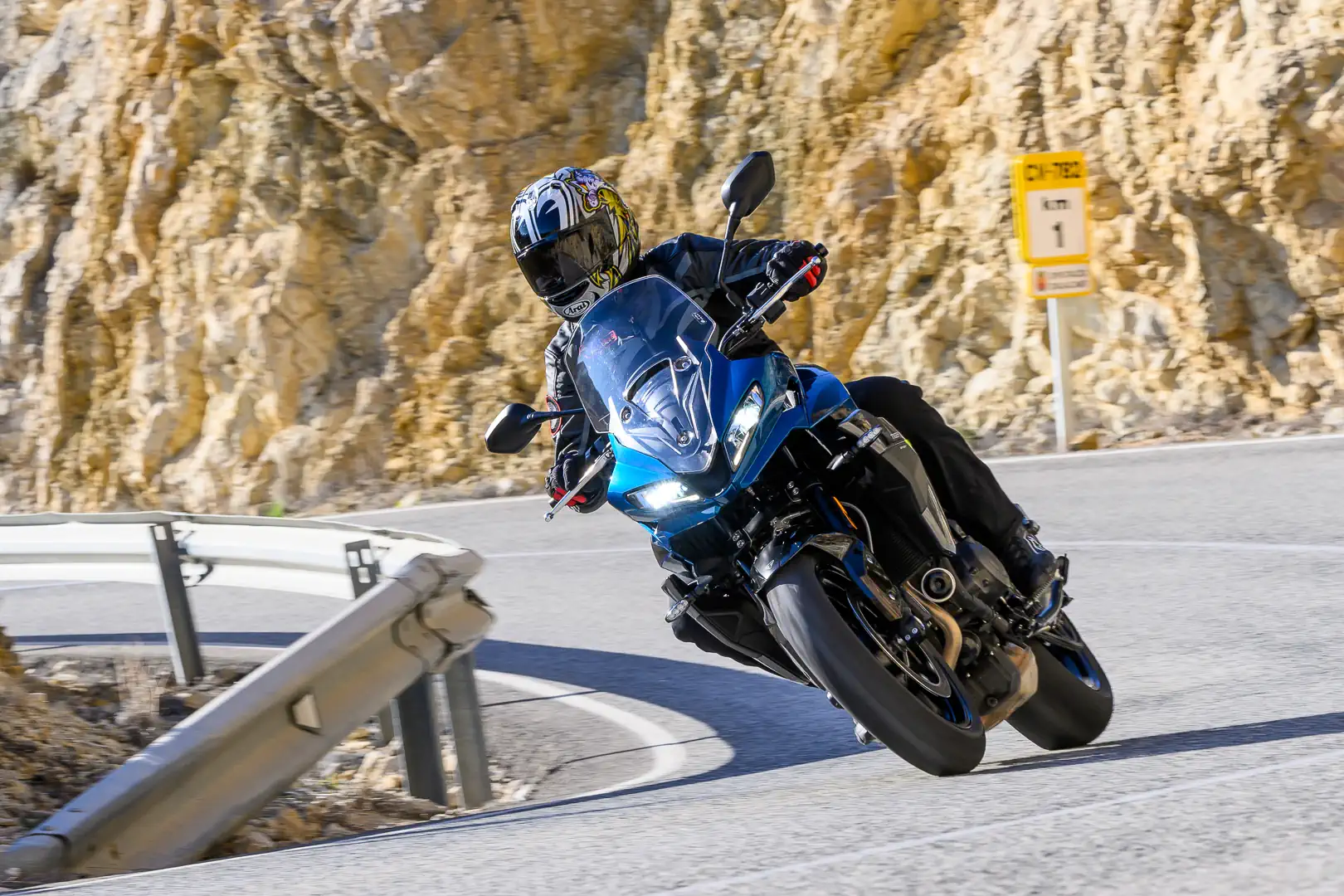
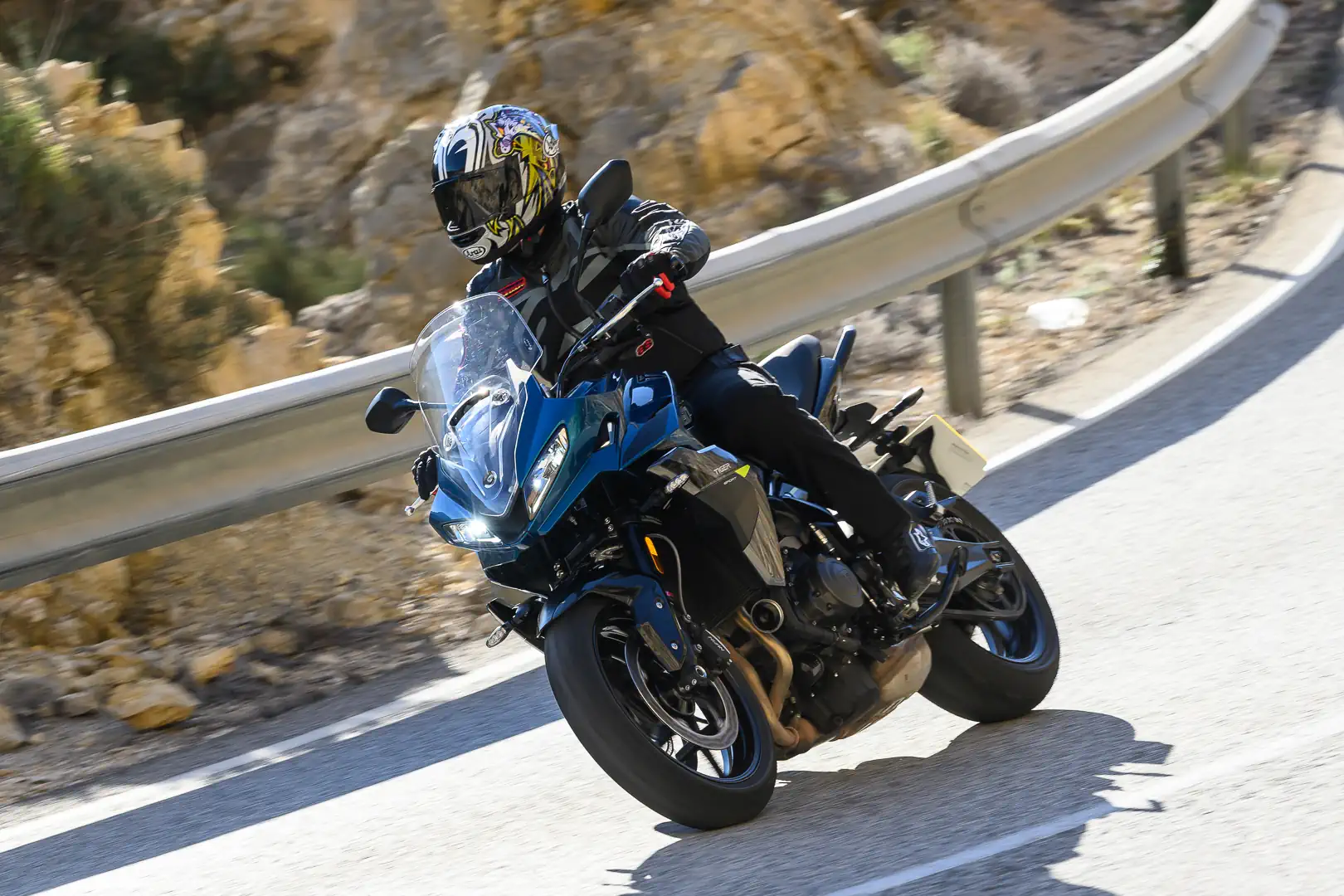
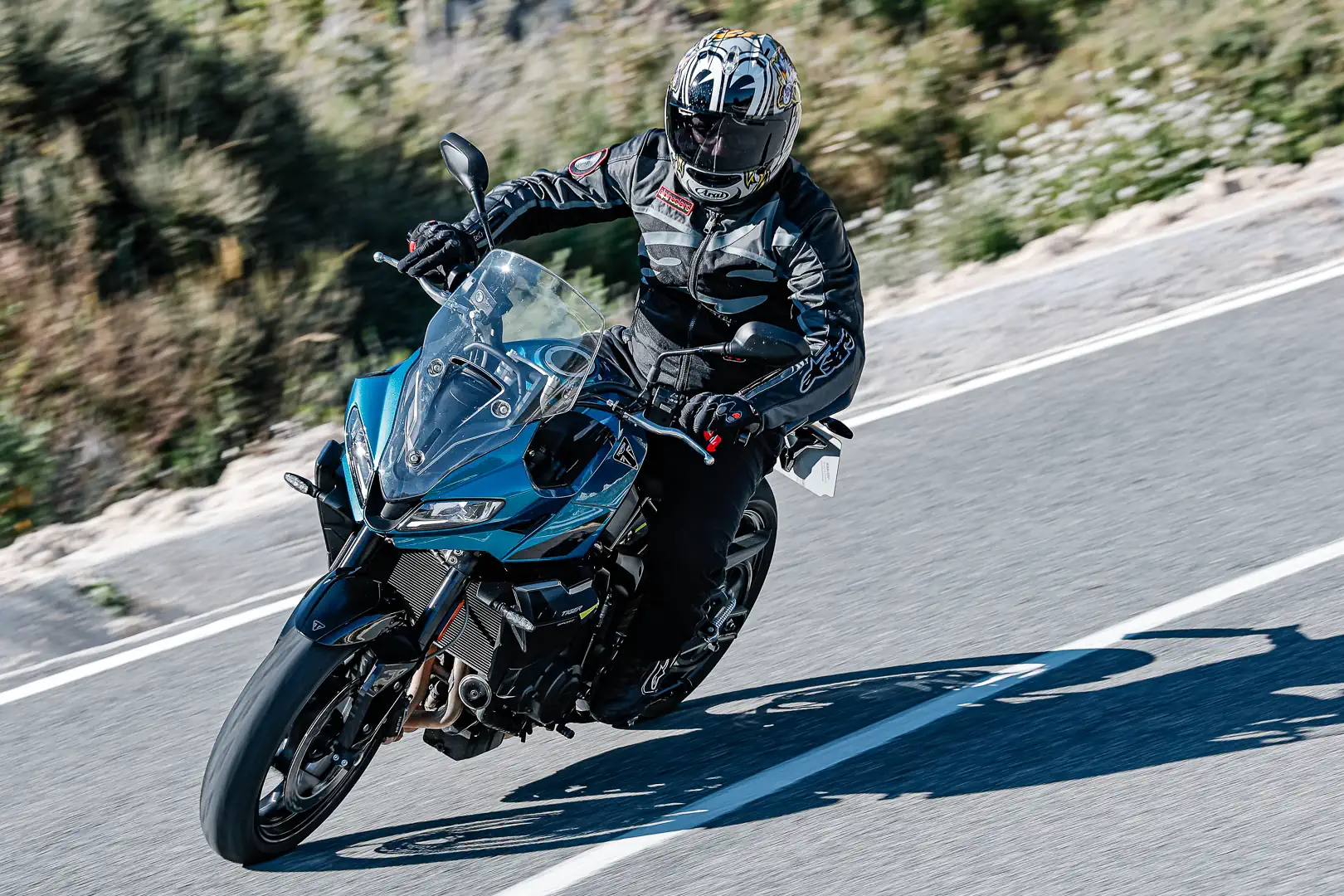
In fairness, no one would blame you for mistaking the Trident 660’s chassis for the Tiger Sport 660’s bones, but there are some key differences between the models. Sure, engineers ran with the Trident’s tubular-steel frame and steel swingarm concept when expanding it into what we see here, so handling characteristics are reminiscent of their predecessors. However, the Tiger Sport prioritizes stability over its naked Trident cousin, using a model-specific swingarm to extend the wheelbase, creating a sport-touring-minded stance. In doing so, it uses steeper rake and rail figures so that the Tiger’s step isn’t slowed. It prefers a bit of input through the handlebar to get it pointed in the right direction, maintaining its steadiness with the help of the reliable Michelin Road 5 tires. Yet, there are a few caveats to all this that require diving into the suspension.
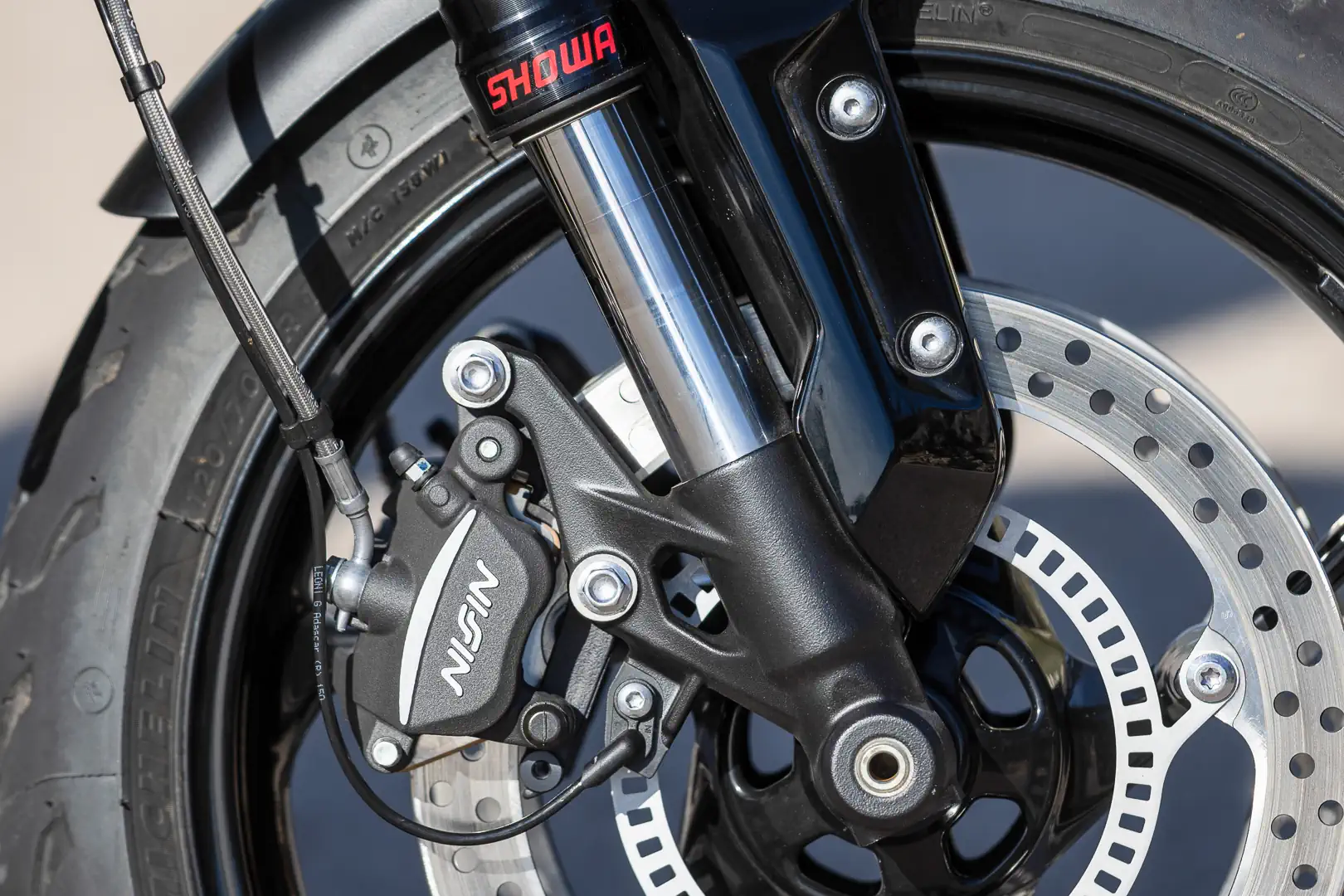
Nearly six inches of Showa-suspended wheel travel at each end facilitates this ADV-style sport-touring mission. The non-adjustable Showa BPF fork returns, while the shock gains a handy remote spring-preload adjuster. Together, they use their generous ADV-inspired travel and generally soft setup to soak up any rough stuff that crosses the Tiger’s path, exuding loads of comfort. It’s simply a peach bopping around town and highway cruising. When things pick up in the canyon, or you’re faced with an emergency-braking situation, that’s when the Showa fork will dive under the Tiger Sport 660’s 465-pound curb weight. Reaching for the nifty spring-preload adjuster and giving it a few turns helps the bike keep a better attitude. The quick workaround is to use a heavy dose of rear brake to help manage weight transfer, whether that be under braking or keeping settled mid-corner.
Despite that tendency, the Tiger can keep up with the big boys and grips the road confidently when in the right hands. Triumph is sticking by the overall cushy setup, as it encourages chassis compliance; there’s logic to it. Think of it this way: it takes less input to get a reaction out of a bike that isn’t running firmed-up suspenders, which will be appreciated by riders coming into the fold. When a pilot does have the experience to negotiate the plushy ride, then nothing will hold you back in the canyons. Here’s the thing: the trail-braking pro tip doesn’t benefit newer riders who haven’t honed those skills. A more egalitarian fix would be to increase spring rates and damping to better manage movement through the stroke, which we can all appreciate regardless of where we are in our motorcycling journey.
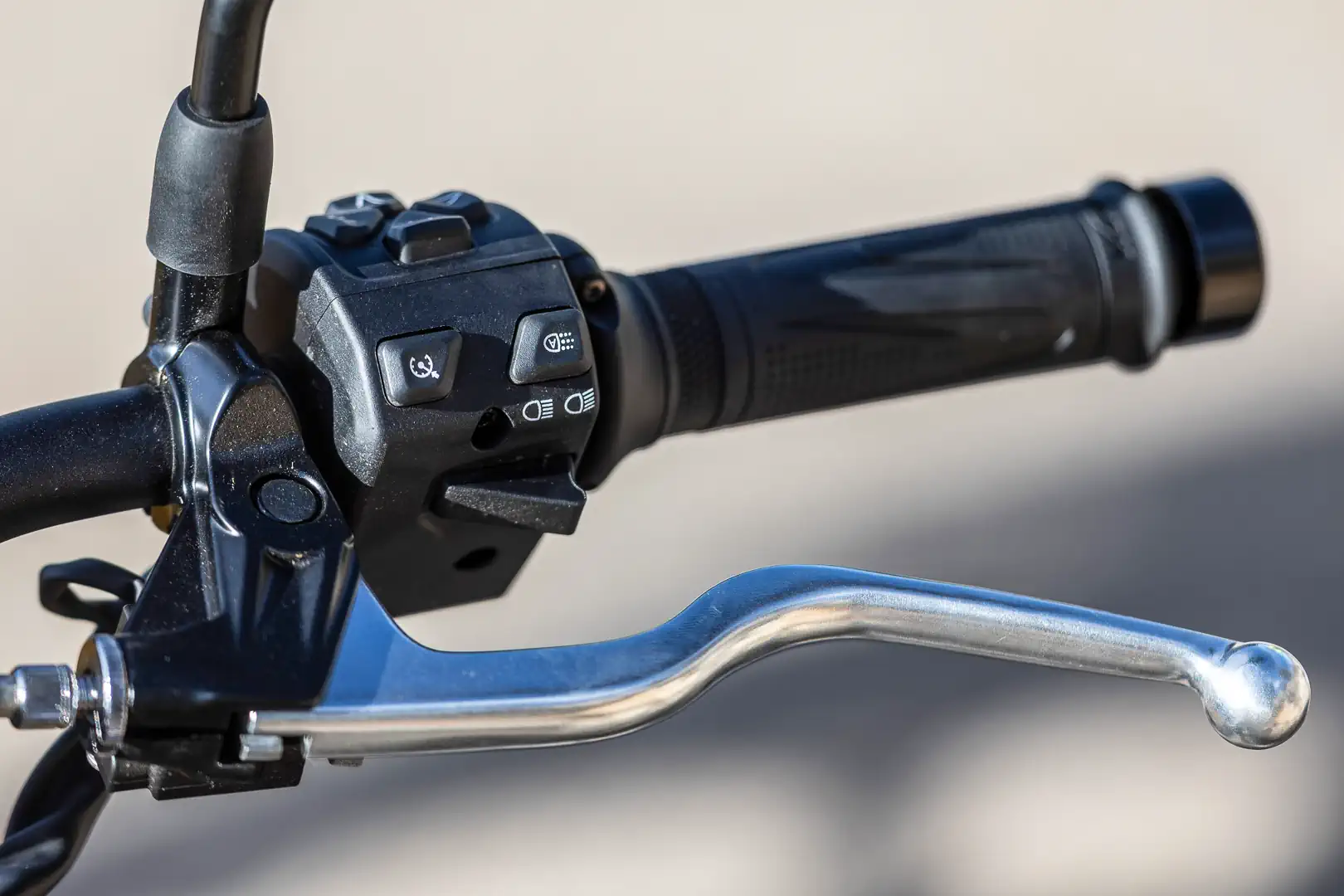
Nissin braking equipment returns for another bite at the cherry. Simple axial-mounted hardware gets the job done, and the feel at the adjustable lever is as unintimidating as can be. There’s no harsh initial engagement to spook anyone here. However, saltier veterans will likely want a bit more from their stoppers — namely, outright feedback. They’re entirely workable, so that’s nothing to get worked up about. What does raise eyebrows is the overeager ABS intrusion. Hold onto the brakes, and you’ll get it stopped plenty quick. Just like the Trident 660, using both brakes simultaneously eases the electronic intervention, though never truly circumvents it.
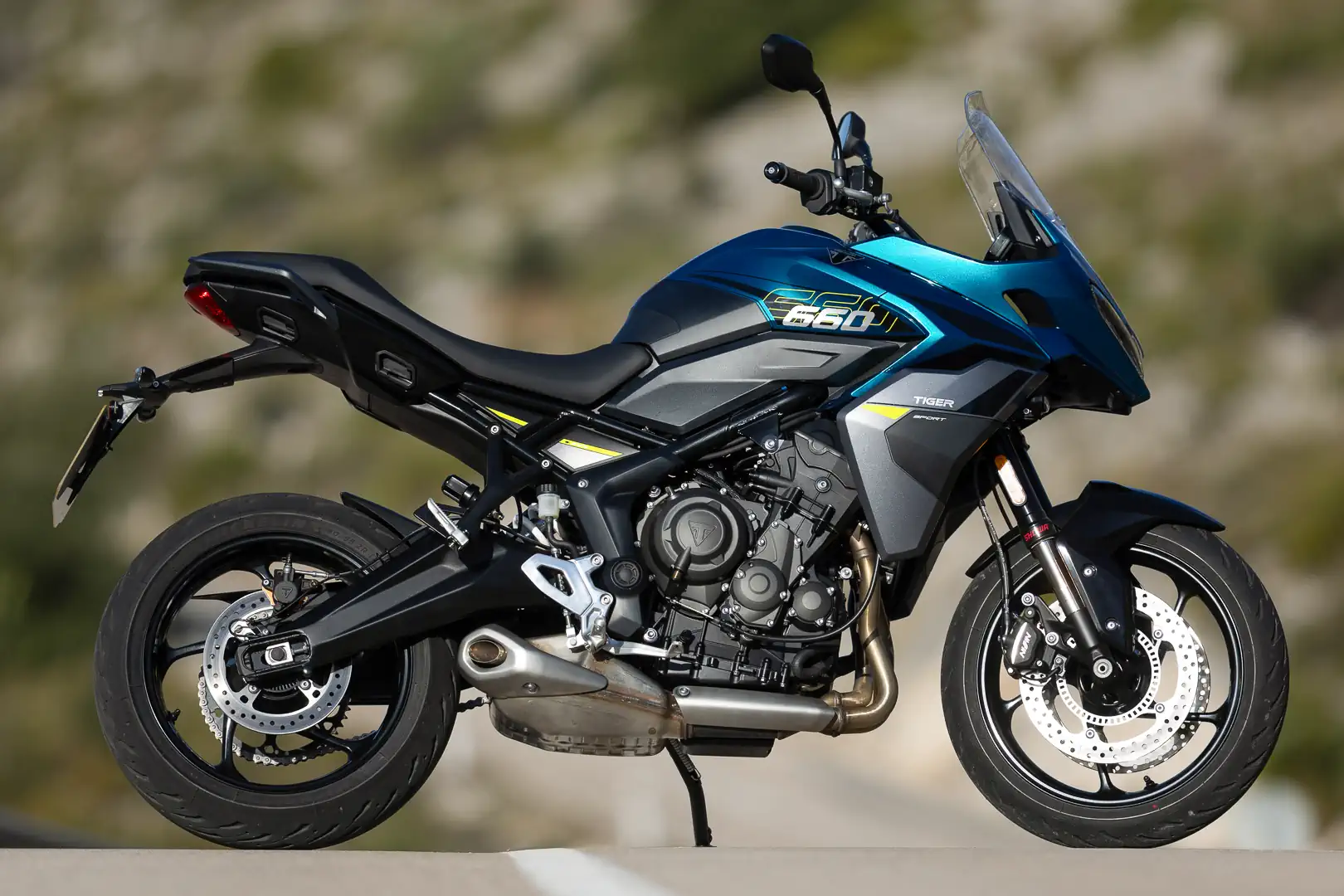
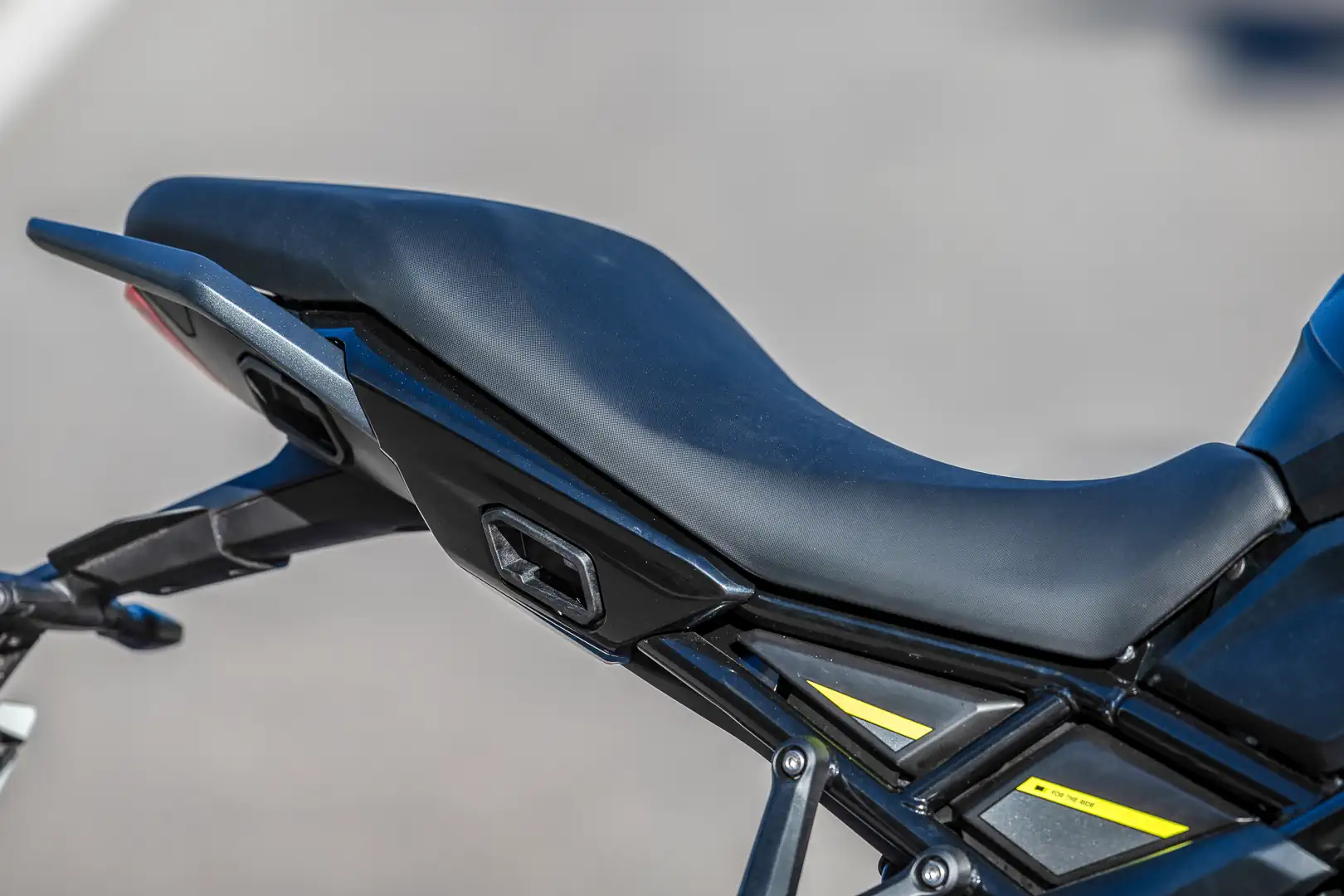
Whether you’re on quick sprints or racking up massive miles, the Tiger Sport 660 takes care of you when it comes to comfort. There’s no point in messing with a winning formula, since the rider triangle is carried over directly into the 2026 variant. Sitting on the 32.9-inch saddle gives the sensation of being on a tall perch, per the design brief, yet it isn’t too high for those with shorter inseams. That’s because Triumph strives for thin midsections on its bikes. So, while that number is on the higher end for a road-going bike, my 32-inch inseam reaches the ground with room to spare. A casual reach to the grips and ample legroom are also noteworthy, as are the standard handguards and manually adjustable windscreen. Slapped in the low position, wind buffeting isn’t too bad.
Speaking of distance, the fuel tank is larger this year. Triumph added nearly a half-gallon of fuel capacity, bringing the total to 4.9 gallons of go juice. Using the 58 mpg claimed consumption figure as a reference point, that brings us to a theoretical 282-mile range. Naturally, the mileage you extract from the 660 will vary depending on how spirited you ride. As always, our respective ranges can be filed firmly under “It depends.”
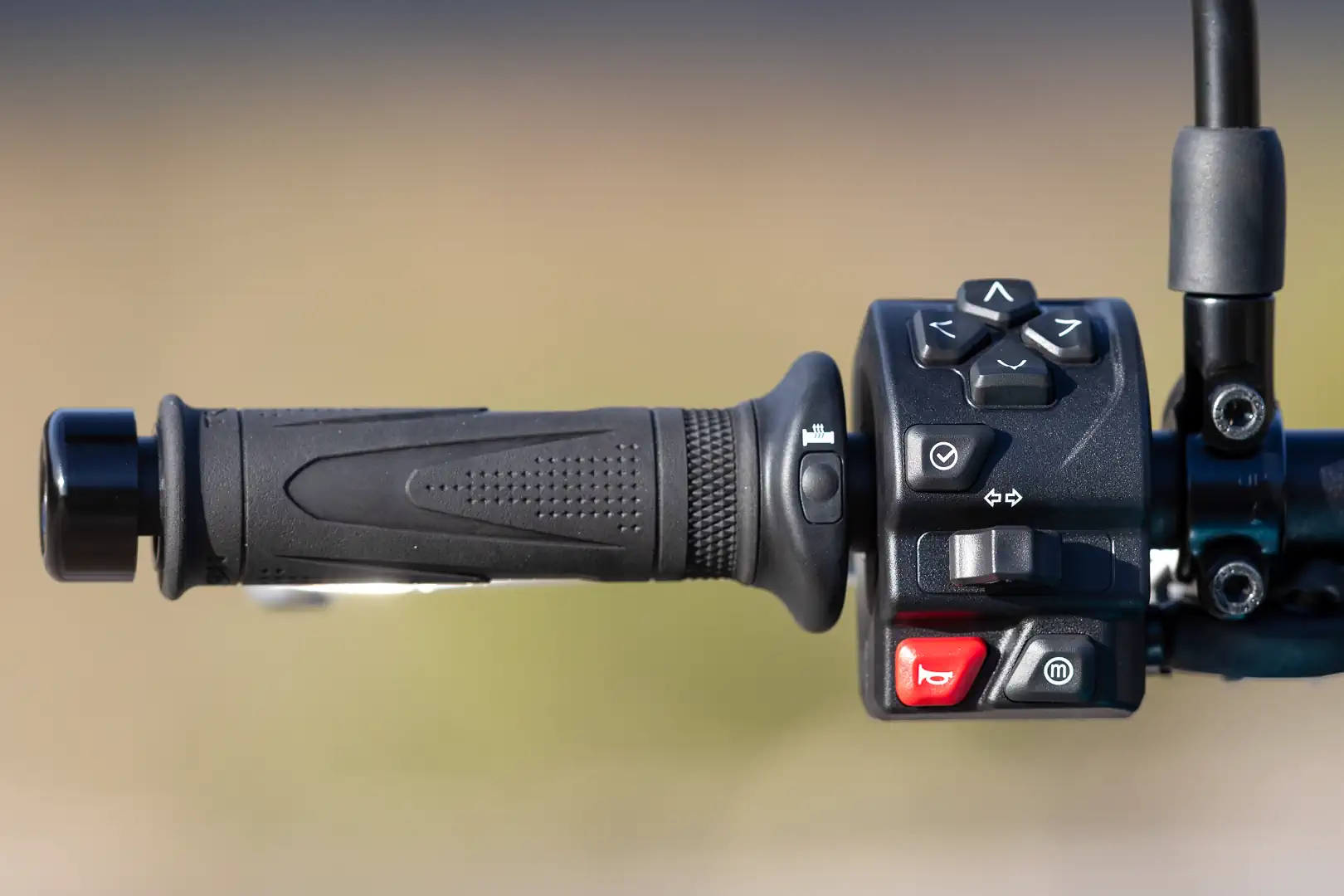
For those who want even more flexibility, Triumph offers plenty of additional accessories. Let’s start with the low-seat option, which drops the perch an inch to 31.9 inches. Again, don’t get hung up on the spec sheet number, because the stand-over width is quite slim. Heated grips are a pricey $305 option. Triumph has made it easy to add panniers, thanks to factory-integrated luggage mounts, which deserve an approving nod. The catch is that you’ll need to pay $805 for said 57-liter luggage and another $165 for the color-coded pannier infill panels. That deserves a few disapproving tut-tuts on a sport-touring bike. Triumph is hardly the only offender, but it does feel a bit like buying a hamburger and being charged extra for the bun.
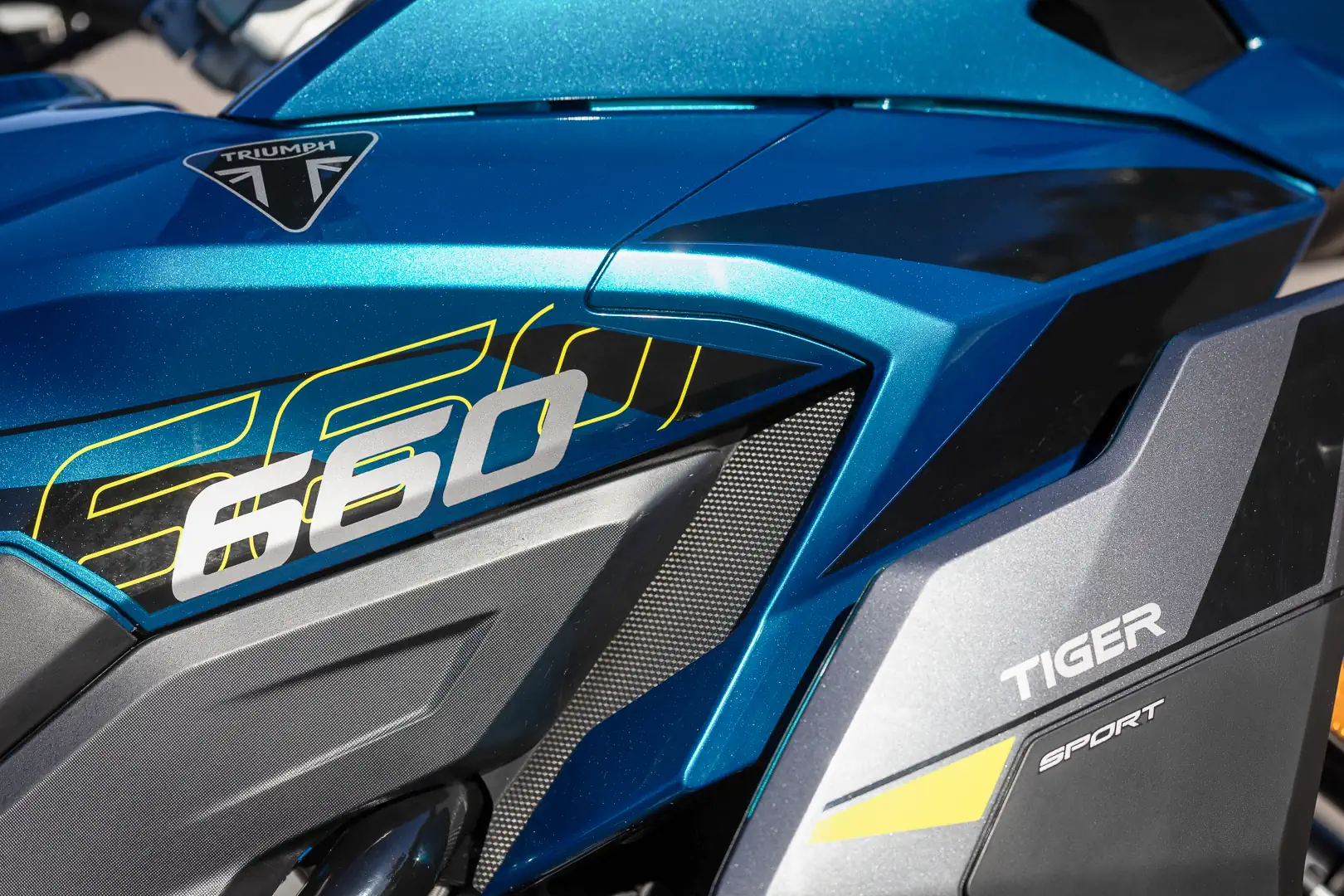
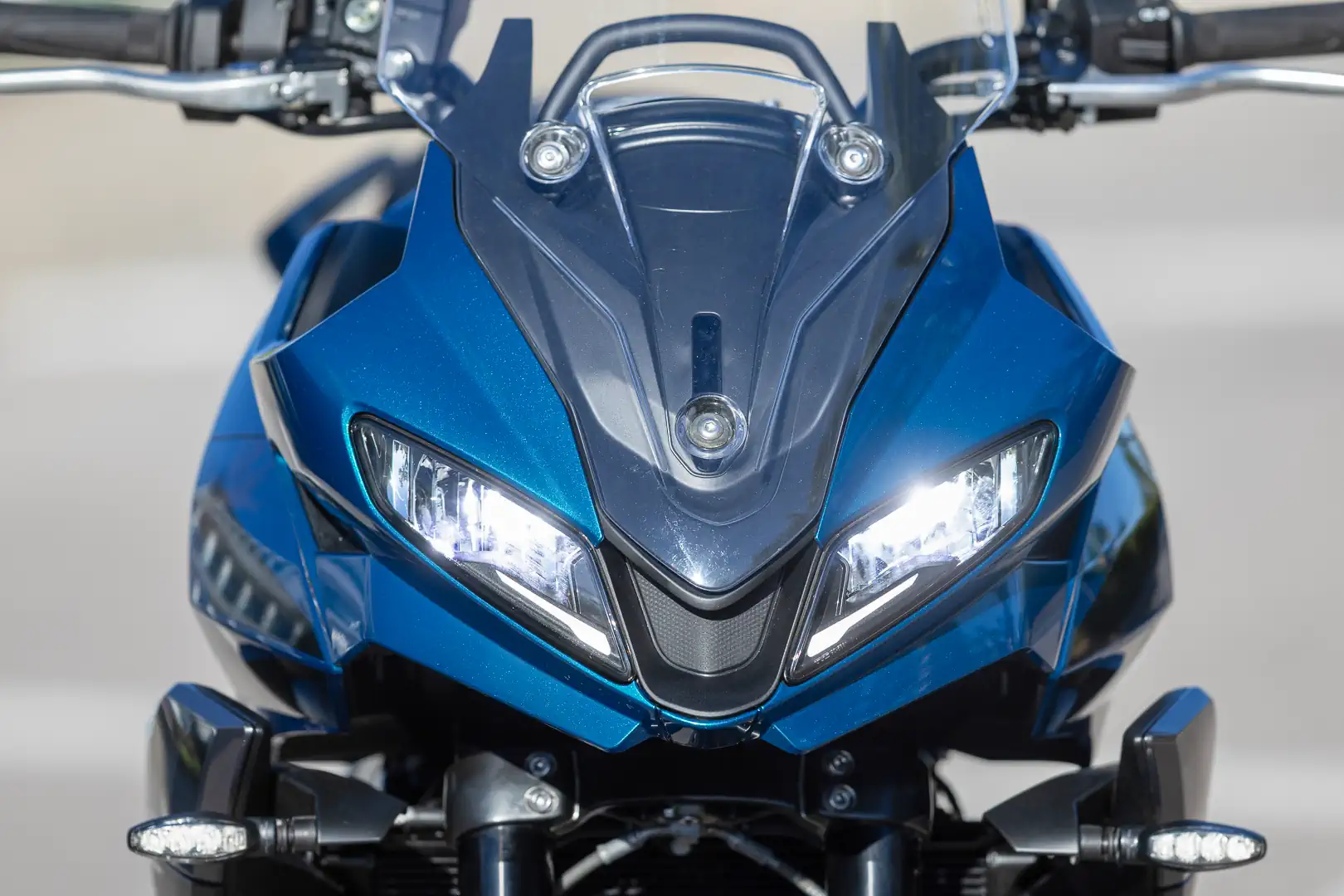
New bodywork gives the 2026 Tiger Sport 660 a sharper appearance. Angular side panels, revised radiator cowls, and a redesigned visage are also said to improve wind deflection. I’ll bite, as it is cozy nestled in the seat. A duo of two-tone color schemes is offered: Interstellar Blue/Mineral Grey and Silver Ice/Intense Orange. We’ll let readers make their minds up about what they prefer. What is tangible is Triumph’s commitment to fit and finish, routing cables and wiring to maintain a thoroughly clean look throughout the machine.
A do-it-all middleweight: that’s the 2026 Triumph Tiger 660’s story. The engine upgrade is the headline act, and it delivers. Additional power output and responsiveness pay dividends when mounted in this ADV-sport-tourer, adding something extra while still respecting the skills of newer riders. Chassis and ergonomics carry over with only incremental refinements, catering to the intended audience. On that note, a bit more spring and damping wouldn’t hurt for those looking to push in the canyons, add luggage, carry a passenger, or any combination of the above. Not unlike its nudist cousin, overzealous ABS is the only discernible electronic bugbear. At $10,445 sans panniers, it continues to offer one of the more compelling value propositions in the true middleweight sport-touring class, particularly for riders who want a lively triple-cylinder-powered motorcycle chockablock full of versatility.
Our bike review this episode is the Yamaha MT-03. Do not underestimate this bike; you get a lot of motorcycle for your money! Associate Editor Kelly Callan rode the smallest MT for several weeks, and that included commuting on it. One of the things that impressed her, was how the MT-03 acted like a larger motorcycle. Kelly also spent some time chasing Editor Don Williams through the canyons when he was on the Yamaha MT-07—obviously a much larger machine. She tells us about how it all went.
* * * * *
We’re closing in fast on the 34th annual Biketoberfest, October 15–18, when all roads will lead to Teddy Morse’s Destination Daytona—the more than 100-acre motorcycle playground in Ormond Beach Florida. This week we get to hear all about it from Teddy Morse himself. With his trademark high energy and enthusiasm, he tells us all about his recently established Triketoberfest that happens the week before, and how the Destination Daytona complex turns into a full-throttle hub of demo rides, vendors, custom builds, live music, food trucks, shops, and nonstop pavilion energy. So, whether you’re on two wheels or three, whether you’re hunting parts or lining up a test ride; grab a cold one and soak up the energy and gorgeous Florida fall weather. This is one of the many Daytona Beach places where Biketoberfest feels like home. So don’t forget: make sure you download the Biketoberfest mobile App from Apple or Google Play or visit www.biketoberfest.org and we’ll see you there!
* * * * *
Our guest this episode is Greg Arnold, Mecum’s motorcycle auction director. He bought his first bike at eleven, joined the company in 2011, and has spent more than a decade helping turn this incredible event into the place collectors, consignors, and dreamers all show up. Next February 3rd through 6th, Mecum will—for the 36th time, bring the world’s largest vintage motorcycle auction back to South Point, Las Vegas. That’s over two thousand bikes over four days. Board-track racers, barn finds, customs, race iron, and especially, those incredible machines that make the room go quiet. Greg gives us insight into what it takes to make this event work so incredibly well, and if you’re interested in selling your pride and joy, what steps you have to take to make it happen.
* * * * *
Here’s quick reminder to check out our monthly digital magazine. It’s filled with everything you want to read on motorcycling, including some things you’ve probably not seen elsewhere. It’s absolutely free and you will find it on the Apple App Store and of course on Google Play as well.
Don’t forget to leave us your comments on our social media—we’re on all the usual platforms at Ultimate Motorcycling. We love hearing your feedback… so good or bad, please let us know what you think. If there’s something you’d like us to cover, we’d love to hear those ideas too!
We use cookies and browser activity on this website
Functional
Always active
The technical storage or access is strictly necessary for the legitimate purpose of enabling the use of a specific service explicitly requested by the subscriber or user, or for the sole purpose of carrying out the transmission of a communication over an electronic communications network.
Preferences
The technical storage or access is necessary for the legitimate purpose of storing preferences that are not requested by the subscriber or user.
Statistics
The technical storage or access that is used exclusively for statistical purposes.The technical storage or access that is used exclusively for anonymous statistical purposes. Without a subpoena, voluntary compliance on the part of your Internet Service Provider, or additional records from a third party, information stored or retrieved for this purpose alone cannot usually be used to identify you.
Marketing
The technical storage or access is required to create user profiles to send advertising, or to track the user on a website or across several websites for similar marketing purposes.