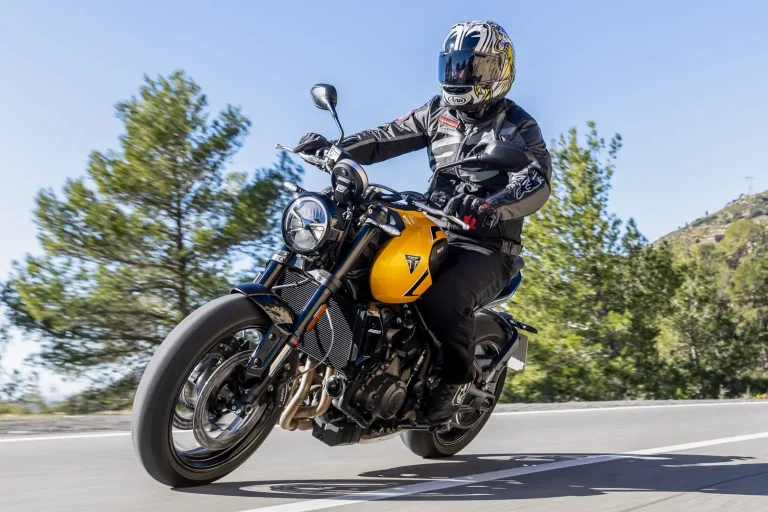
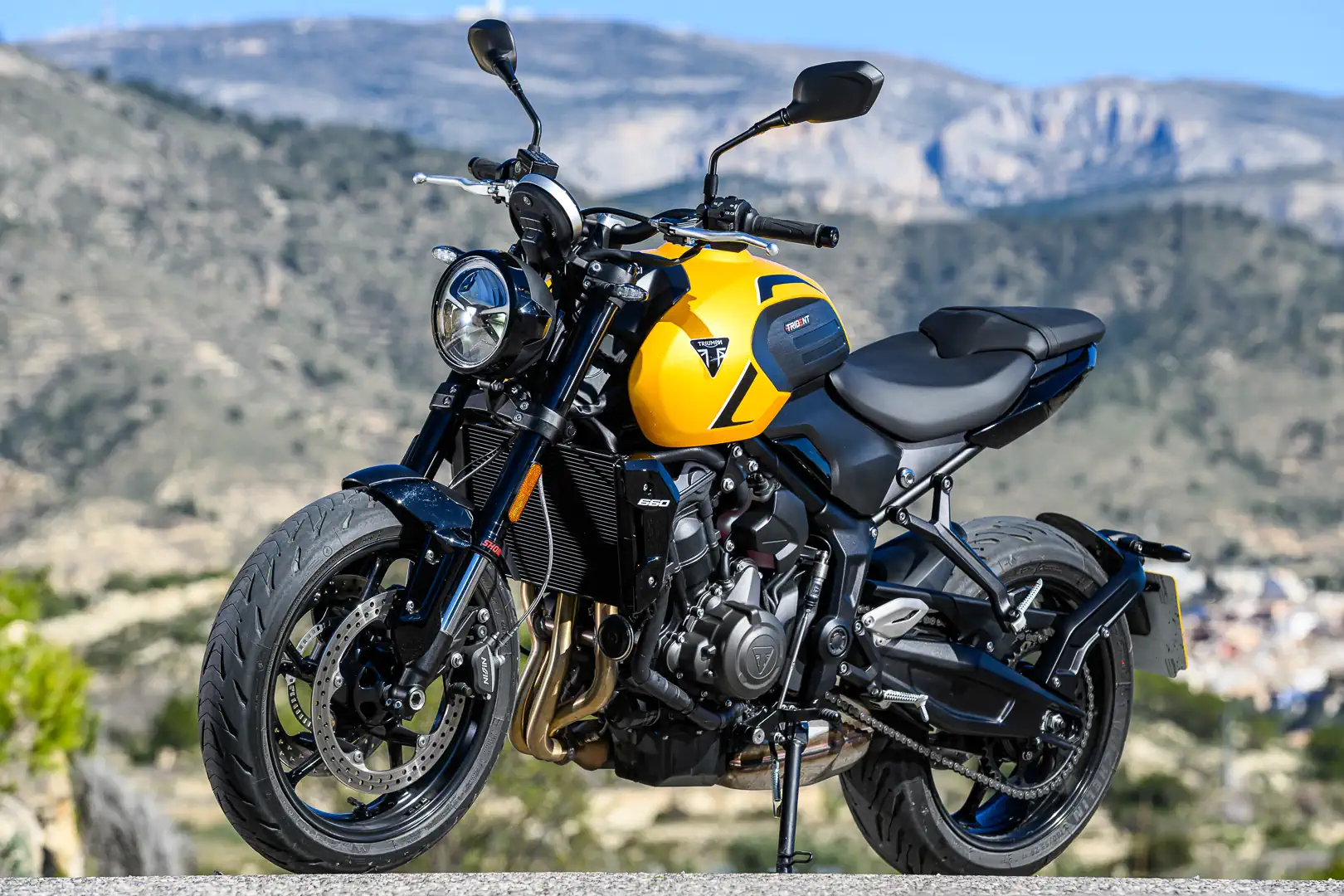
Triumph’s middleweight roadster enters 2026 with mechanical revisions that go beyond skin deep and, heck, it’s got a few of those, too. Built around the 659cc inline-three launched in the Daytona 660, Trident 660’s peppier mill aims to sharpen performance without sacrificing its hallmark accessibility. Tested on the winding roads of Andalusia, Spain, the updated Trident is familiar at first contact. Yet, its added performance, revised shock, and expanded technology package add new notes to what is one of the strongest contenders in the massive middleweight category. Now, without further ado, it’s time for the Fast Facts.
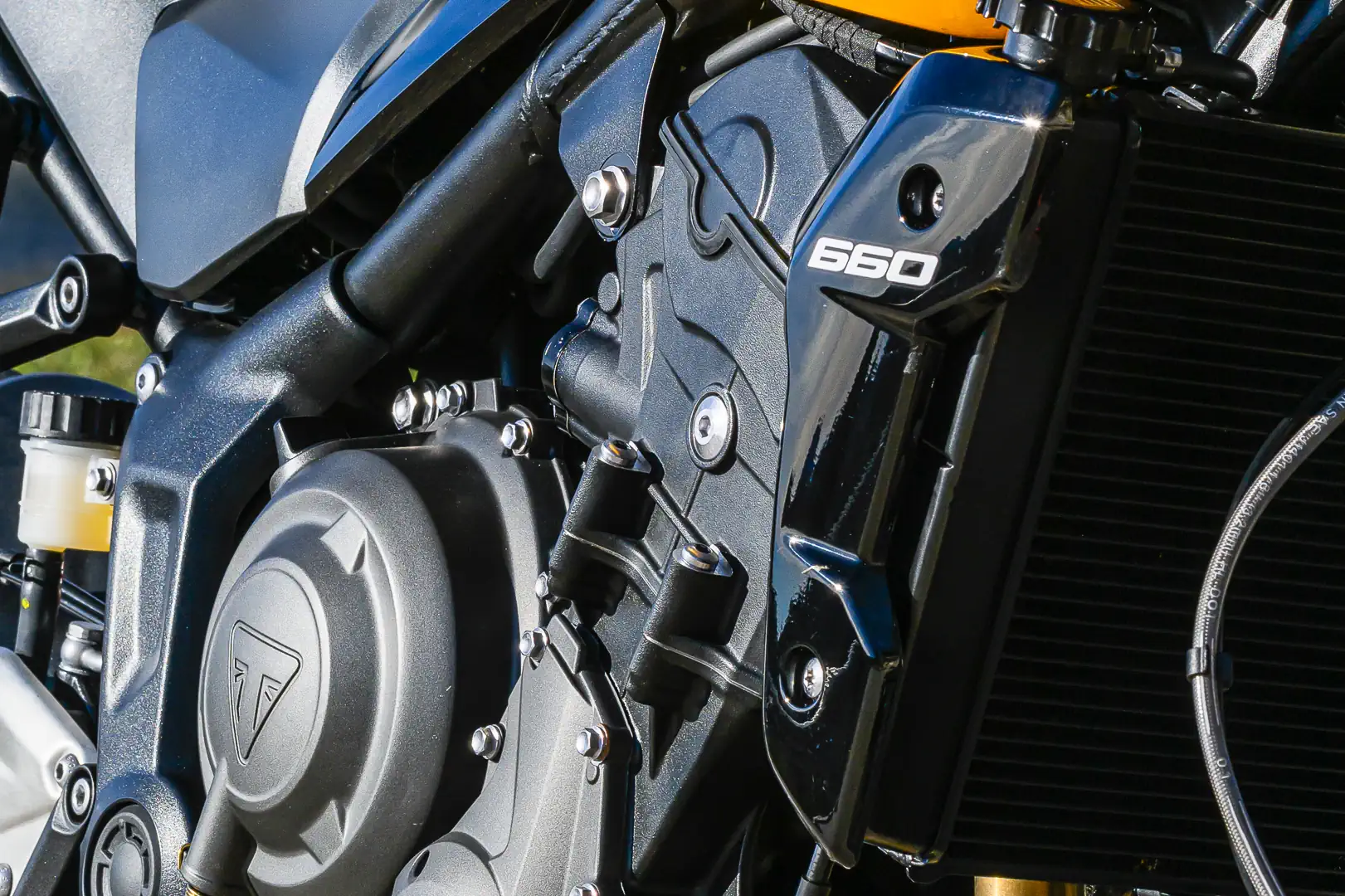
The Daytona 660–derived triple gives the Trident a stronger, more energetic personality without sacrificing usability. The motor benefits from the Daytona development, including revised tuning, three 44mm throttle bodies replacing the previous single unit, a larger airbox, a reworked cylinder head with larger exhaust valves, a higher-lift cam profile, and cooling-system revisions to manage the heat of increased performance. Output rises to 94 horsepower with torque rated at 50 lb-ft, while the redline climbs to 12,650 rpm. In all, the Trident 660 gained about 14 ponies over the previous generation, and that’s nothing to sneeze at.
A rev-happy howler from end-to-end, this middleweight triple eggs on riders to explore the powerband from end-to-end. The Trident’s mill still wields its smooth power delivery and searing exhaust note expertly, charming riders all over the map with solid torque. What also remains is truly effervescent midrange, yet everything seems a tick stronger as peak horsepower grows appreciably. Stacked against comparably sized twin-cylinder-powered rivals, it might not have the same off-the-line punch, though it makes up for it with a rewarding pull all the way through the top-end, giving it a unique character in this class. You get the same great traits as before, with a little extra oomph when sprinting around town, charging in the canyons, or cruising comfortably at freeway speeds.
Gearbox changes are also part of the 2026 program. Triumph staffers were keen to note that the internal transmission ratios on the Trident’s pilfered engine have been updated, with a 6th gear that’s longer than the Daytona 660’s, effectively creating a sort of overdrive. In addition, the Trident 660 uses longer final-drive gearing simply because it doesn’t need to use every available rpm the same way the sporty cousin does. It’s a way for engineers to make things distinctive with shared engine platforms, too. Switching gears is a cinch with the standard bi-directional quickshifter, which does its best work when the revs are high.
Updated electronics refine aspects of the riding experience, though certain features lean into conservative limits. Refreshed electronics are part of the 2026 package, supported by a ride-by-wire throttle and a six-axis IMU enabling reworked cornering ABS and traction control. The same trio of riding modes (Sport, Road, and Rain) still informs the throttle maps and lean-angle-sensitive traction control settings. On that note, the larger throttle bodies refined the Trident’s power delivery, though there’s still a hint of snatch when first cracking it open. A quick wrist calibration is all it takes to overcome that quirk, while TC doesn’t balk at hard riding. Meanwhile, ABS nannying is heavy-handed, engaging prematurely with telltale lever pulsing. You’ll stop, but it’s disconcerting. Combining front and rear brakes helps mitigate the problem when you’re riding with intent, as does braking earlier and lighter, yet neither approach will totally sidestep the issue.
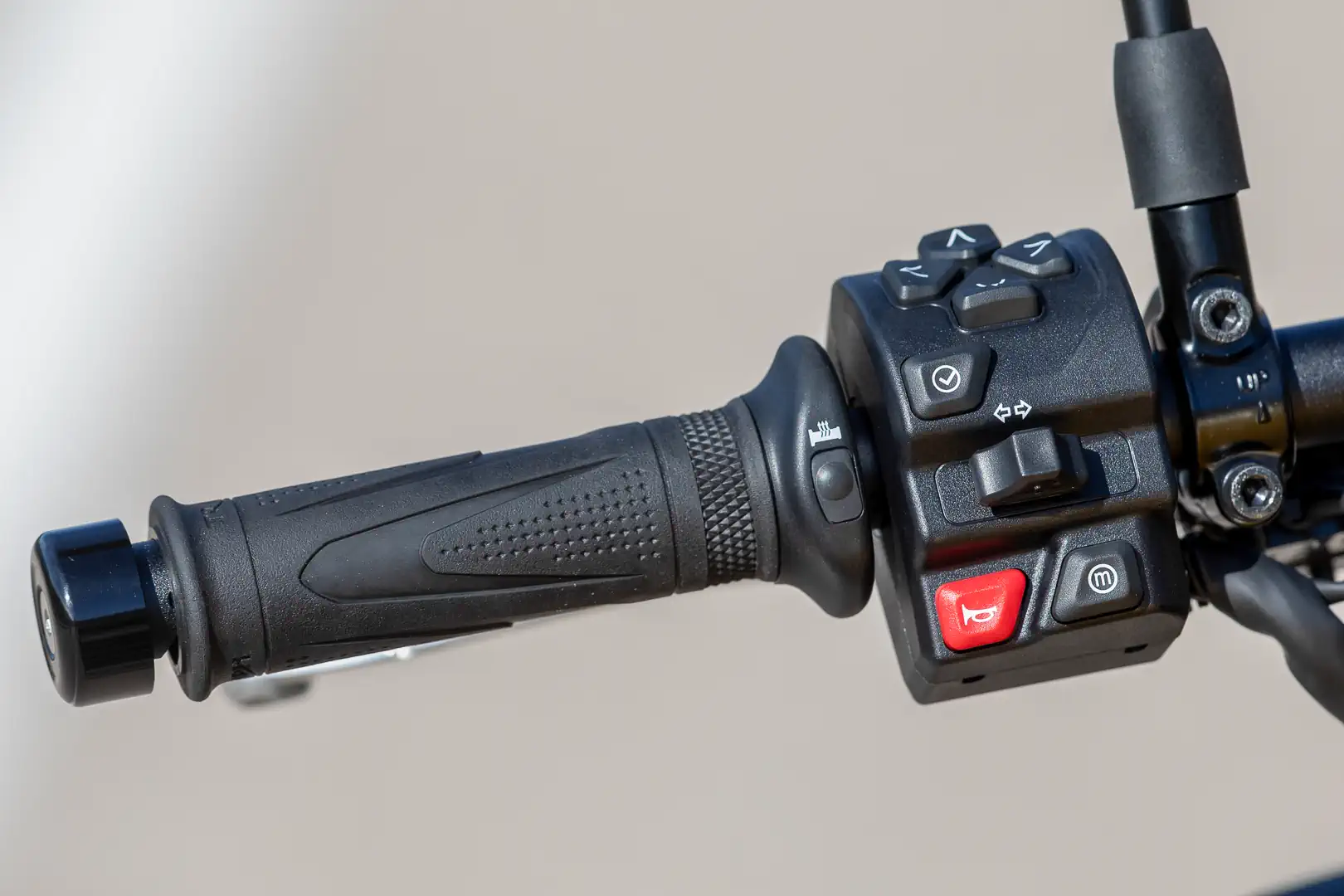
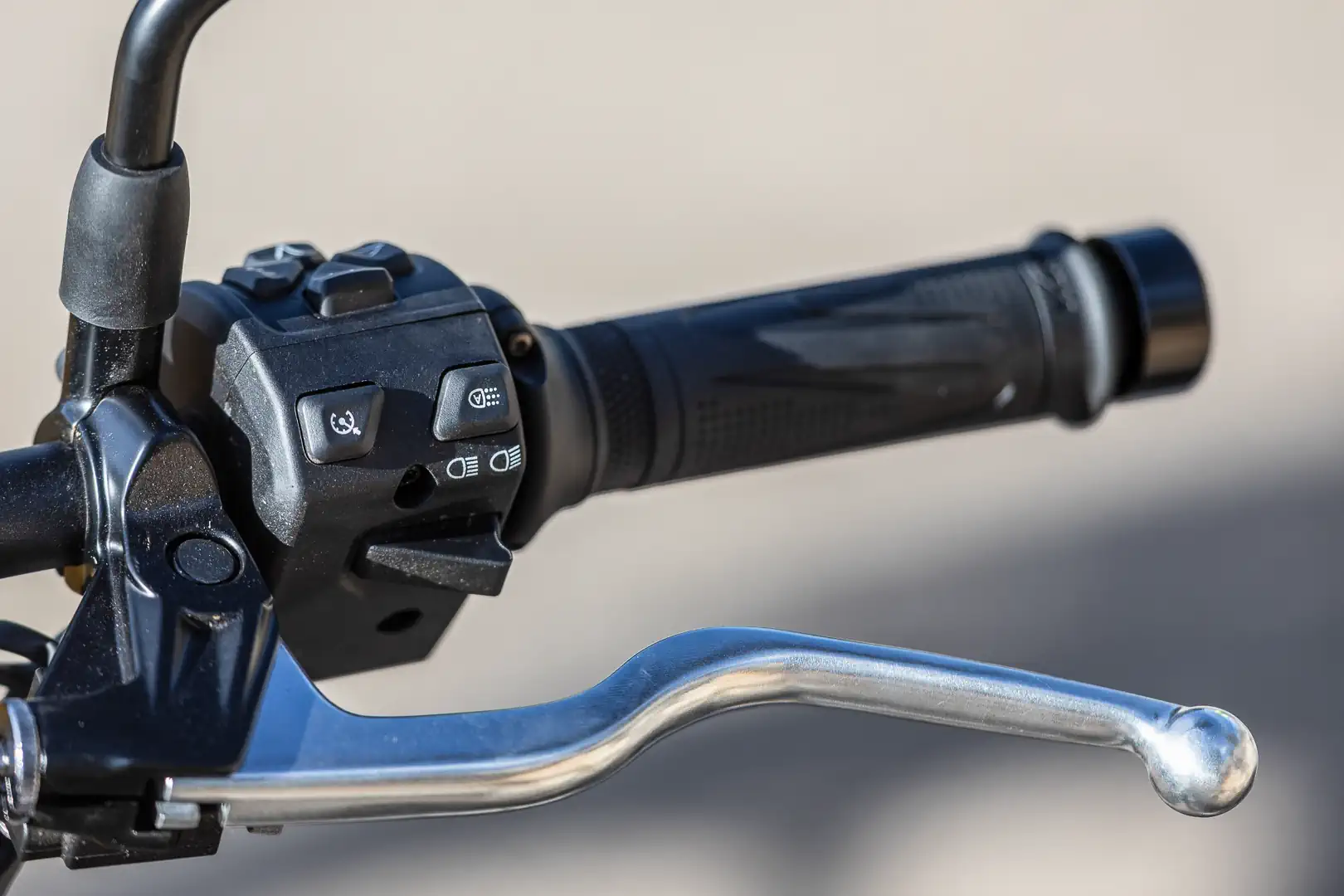
When it comes to peripheral tech, the Trident doesn’t go overboard. The round TFT/LCD dash is still an easy piece of equipment to live with. Still, there is a part of me that acknowledges the Trident’s competition has raised the bar, and its quaint dash feels a little dated when measured against what’s offered on the latest Suzuki GSX-8S, Honda CB750 Hornet, or Yamaha MT-07. The switchgear and interface make diving into the menu easy, and cruise control is now standard. Plus, all the usual connectivity features are available to those who want to partake in that level of nerddom.
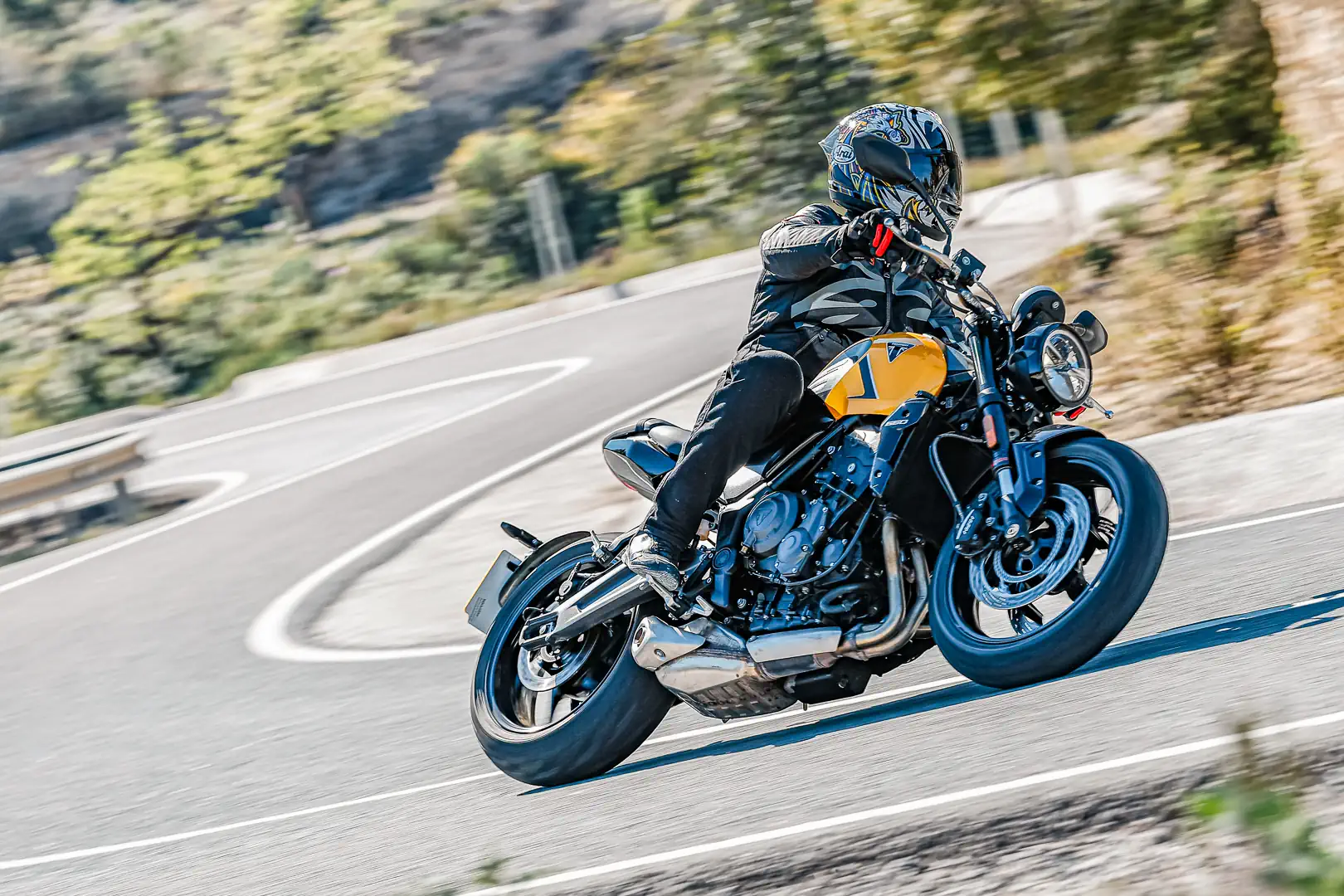
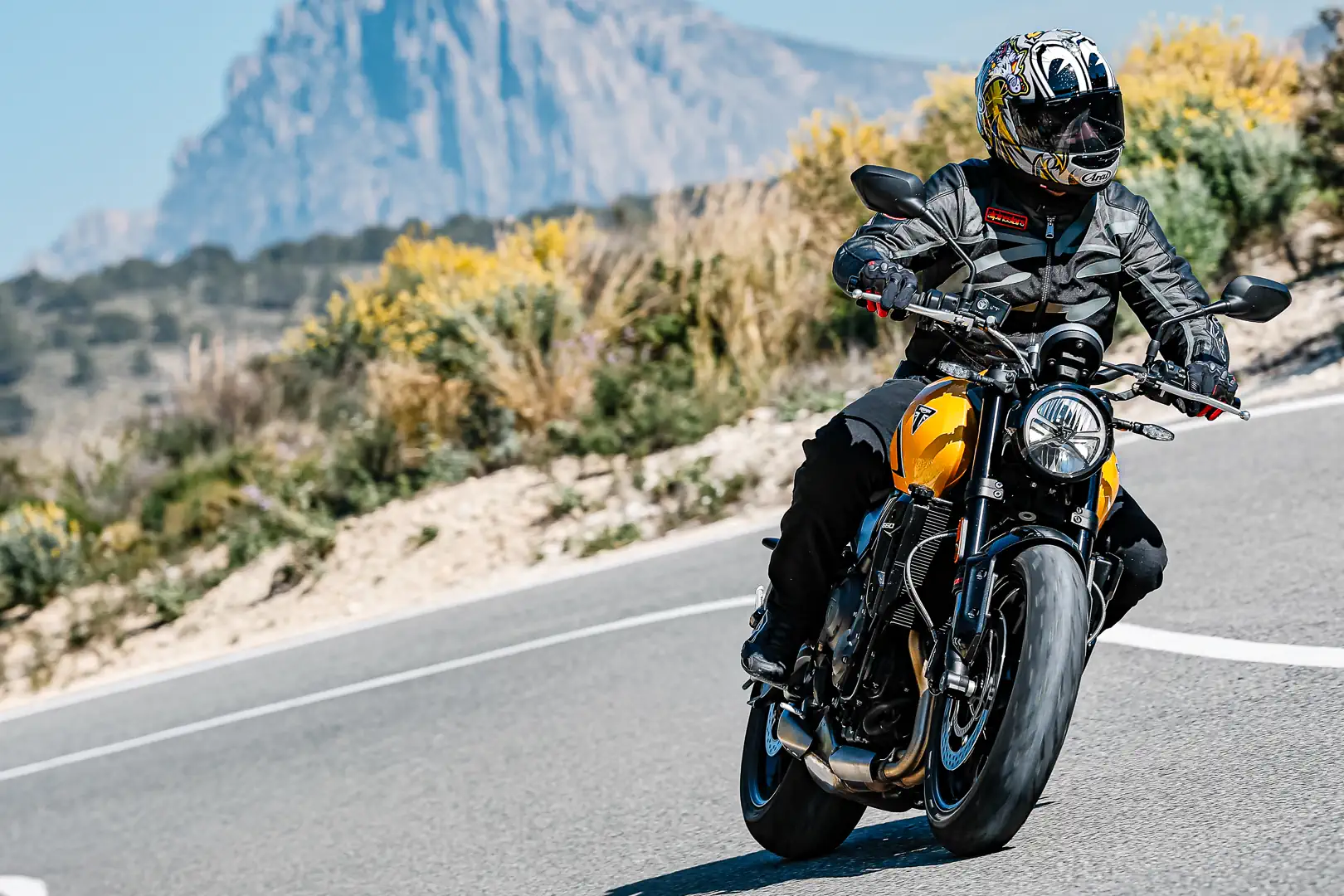
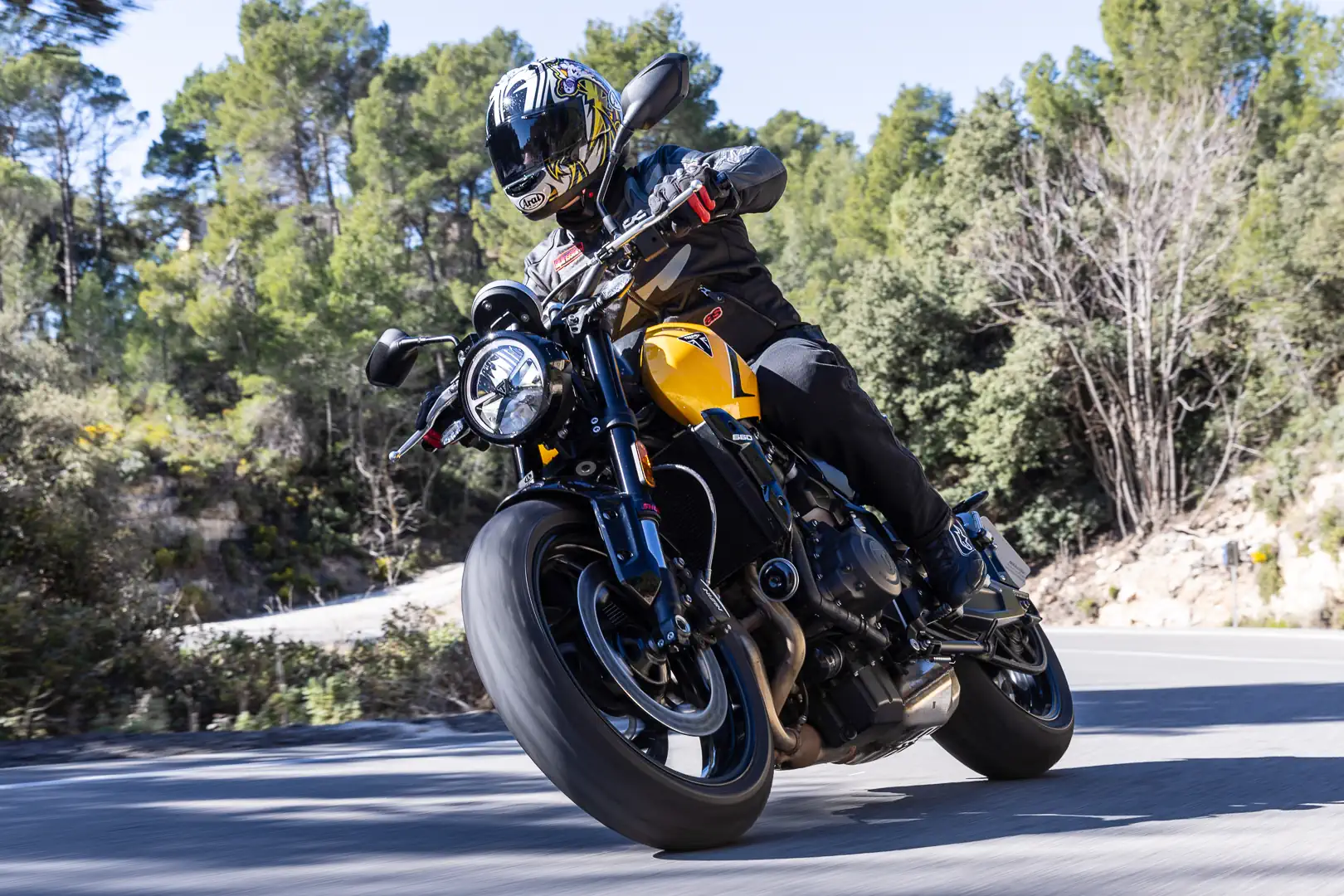
Subtle chassis revisions and new suspension maintain the Trident’s agility while improving composure. Put simply, the geometry is identical when comparing spec sheets; the only difference is that the frame accommodates the trio of throttle bodies. So, the winning Trident recipe isn’t changed. The non-adjustable Showa SFF-BP fork returns with its street-smart setup, letting riders push at a decent clip without becoming uncomfortable on rough roads. Meanwhile, the headline suspension factoid is a new Showa shock, which adds rebound damping adjustment to the existing preload functionality. In addition, Triumph engineers upped the spring rate to help keep all 430 pounds of Triumph Trident on the level. She’s quite a beaut when leant over on the reliable Michelin Road 5 rubber, underscoring the neutral, unintimidating handling that’s made this steed a success for Triumph.
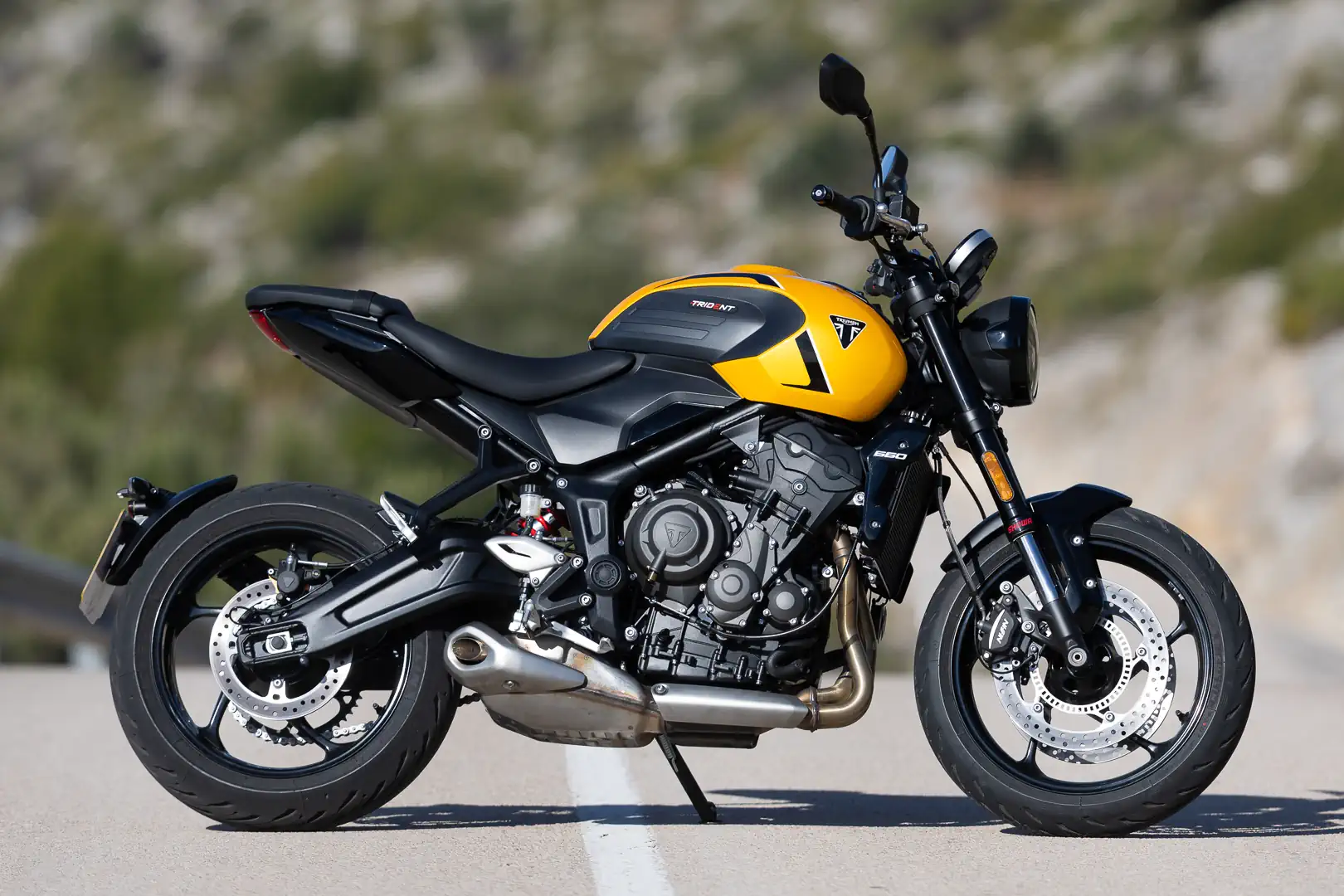
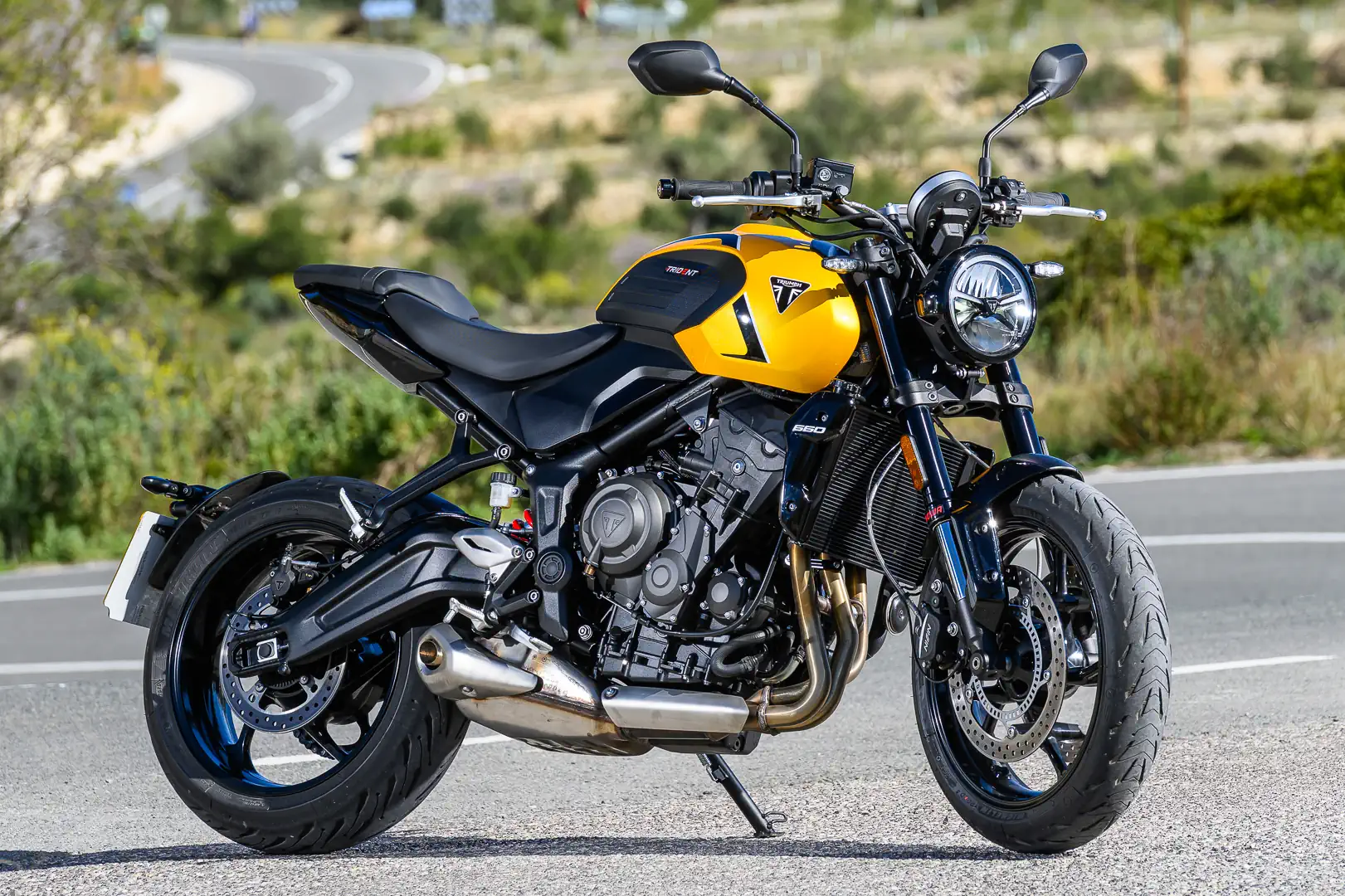
Nissin braking components deliver predictable stopping power aimed at real-world riders. The Japanese brake firm is tapped once again, seeing its identical hardware appearing on the Trident and Tiger Sport 660 models. Here’s what you get: an axial master cylinder, steel braided lines to axial-mounted calipers, and 310mm front rotors. Viewed through a more discerning, experienced rider’s perspective, the brake feel isn’t as robust as we’d hope for a machine so adept at scooting through curvy roads. However, its soft initial bite won’t shock those who are moving up the ranks. Because this is a true middleweight motorcycle, those getting into the sport, moving up, or returning to the riding ranks are likelier buyers, and that’s who Triumph hopes to please with these stoppers. Look, everything has its place; the Street Triple 765 RS is probably more your speed if you’re among the steely-eyed sport-riding folk.
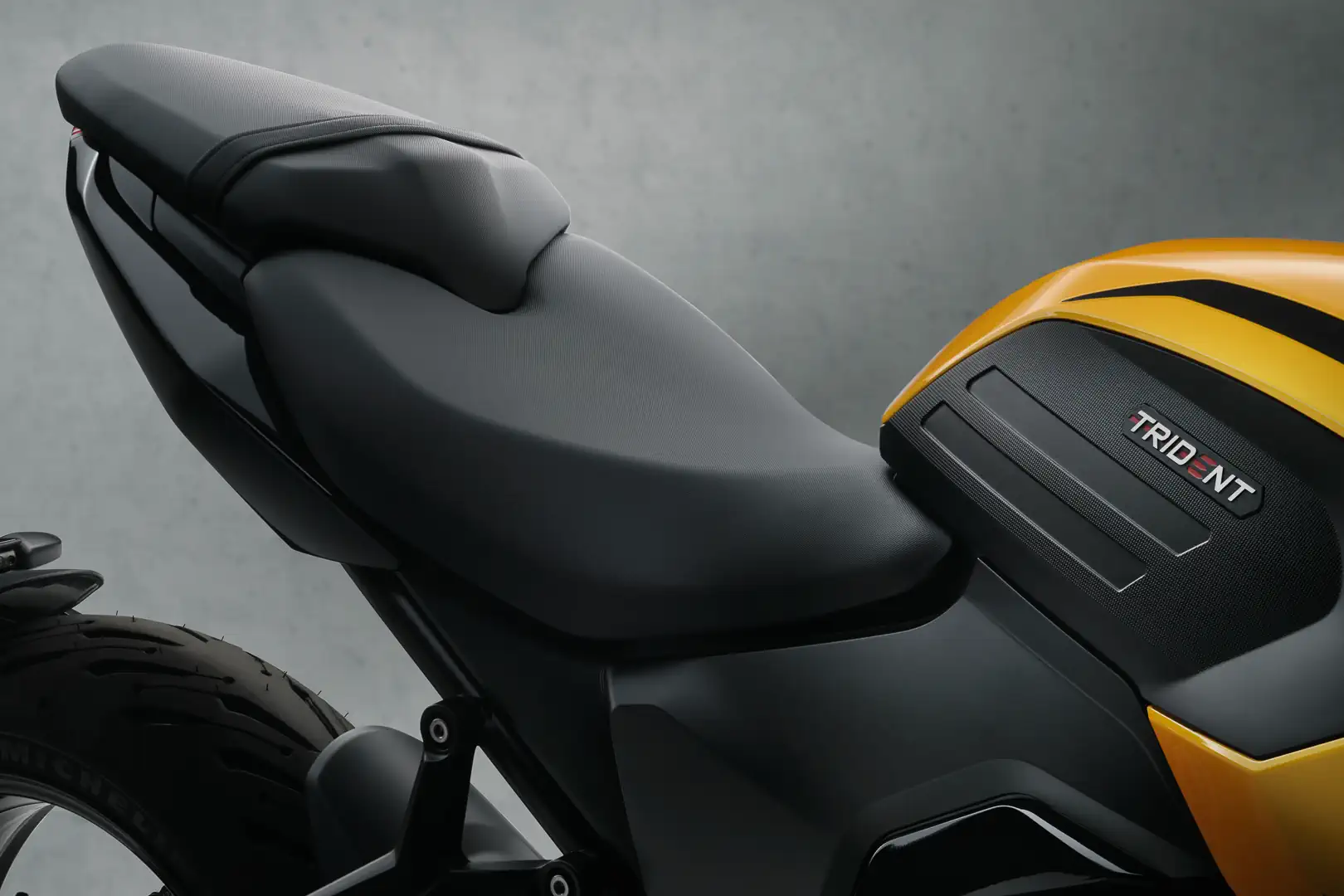
A casual, upright riding position is what makes the Trident 660 and its ilk so appealing. Triumph engineers pride themselves on a narrow stand-over width, which is an interesting way of saying they don’t like a lot of bulk between the rider’s knees. There are a few tweaks in 2026, starting with a new two-piece 31.9-inch-high saddle. Functionally, it’s the same as before, and riders can opt for a slick solo cowl to replace the passenger seat. The wider handlebar makes whatever inputs you add to the grips mean that much more. We’ve still got plenty of room, and despite the Trident 660 being a svelte machine overall, the cockpit isn’t cramped for my 5-foot-10 frame.
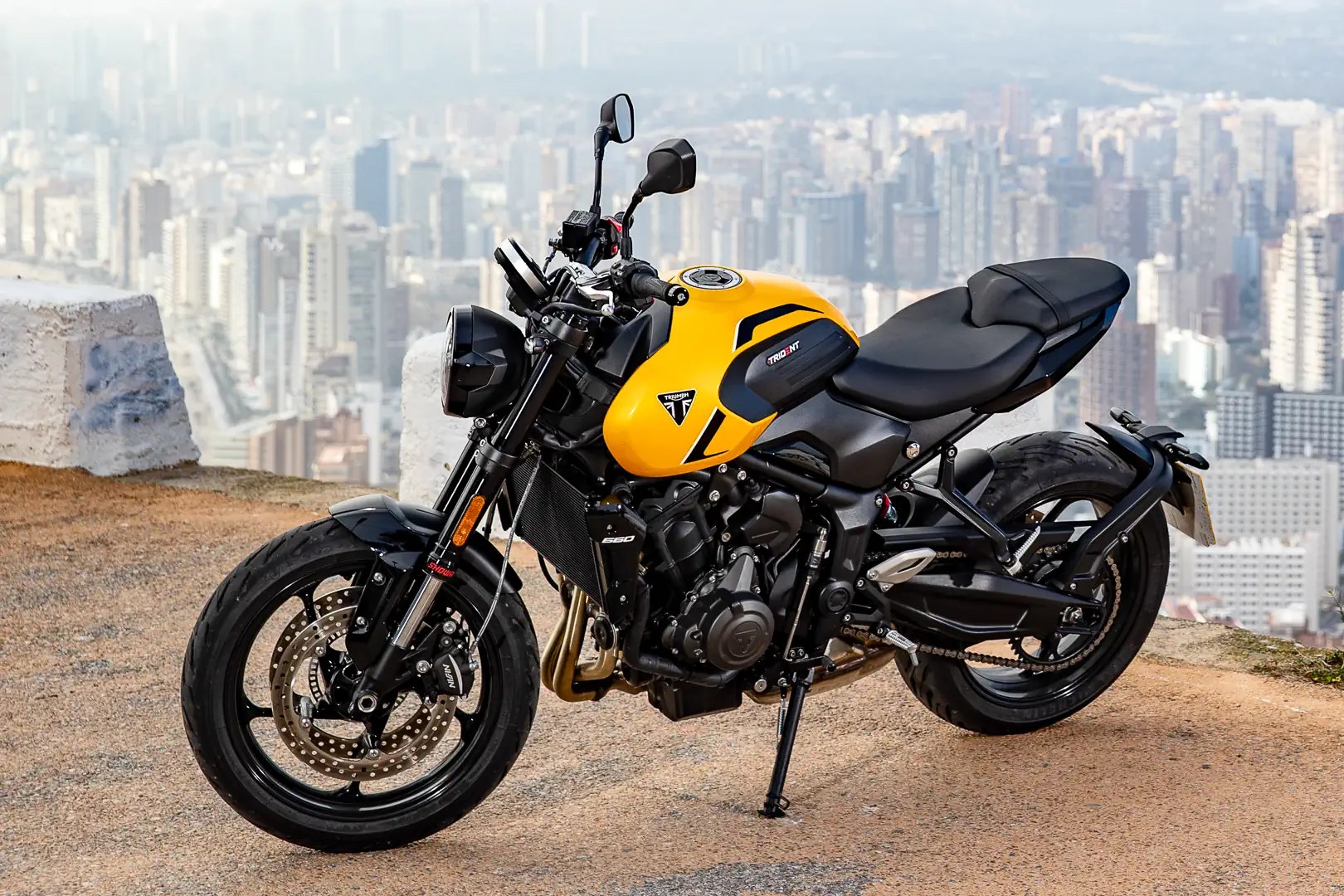
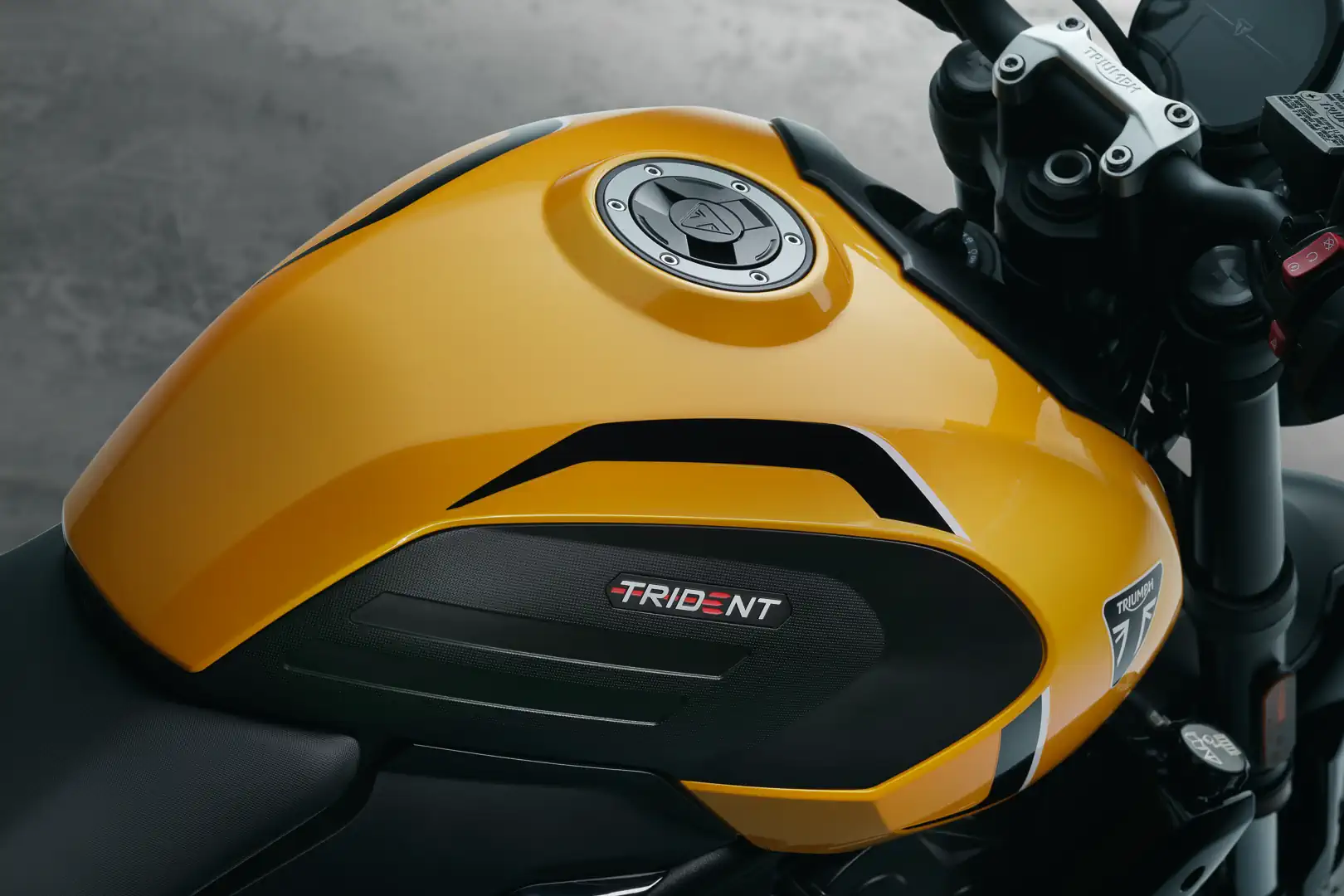
The Trident 660’s style is modern with a few classic touches, though not quite Modern Classic. New bodywork elements underscore the Trident’s positioning within the British marque’s overall lineup. It’s smack in the middle between anything with the classic Bonneville name slapped on it or Street/Speed Triple’s space-age “take me to your leader” aesthetics. The resculpted fuel tank, with its knee cutouts, tells that story most accurately, and what shines through is the brand’s commitment to detail. It keeps a tidy appearance with wiring and cables neatly routed. We’re only getting the interesting colorways here, too, with Cosmic Yellow and Stone Grey finding their way to Stateside dealerships. Better yet, we won’t be paying a surcharge for said color options.
In a class where buyers are spoiled for choice, the 2026 Triumph Trident 660 makes its arguments on accessibility and genuine capability. Price means a lot in the middleweight category, as it attracts new, young, and returning riders to the mix. At $8995, the Trident 660 does quite a lot for not that much, in the grand scheme of things. The chassis is capable, comfort is high, and the extra sprinkle of performance from the triple still achieves harmony, which should continue to attract the masses. 2026 didn’t reinvent the Trident; it simply improved on what made the original a success. Yes, the hyperactive ABS is a bother, though it can be lived with; fortunately, that’s its biggest offense. The rest of the updates only serve to make it even more engaging, no matter where you are on your motorcycling journey.
Our bike review this episode is the Yamaha MT-03. Do not underestimate this bike; you get a lot of motorcycle for your money! Associate Editor Kelly Callan rode the smallest MT for several weeks, and that included commuting on it. One of the things that impressed her, was how the MT-03 acted like a larger motorcycle. Kelly also spent some time chasing Editor Don Williams through the canyons when he was on the Yamaha MT-07—obviously a much larger machine. She tells us about how it all went.
* * * * *
We’re closing in fast on the 34th annual Biketoberfest, October 15–18, when all roads will lead to Teddy Morse’s Destination Daytona—the more than 100-acre motorcycle playground in Ormond Beach Florida. This week we get to hear all about it from Teddy Morse himself. With his trademark high energy and enthusiasm, he tells us all about his recently established Triketoberfest that happens the week before, and how the Destination Daytona complex turns into a full-throttle hub of demo rides, vendors, custom builds, live music, food trucks, shops, and nonstop pavilion energy. So, whether you’re on two wheels or three, whether you’re hunting parts or lining up a test ride; grab a cold one and soak up the energy and gorgeous Florida fall weather. This is one of the many Daytona Beach places where Biketoberfest feels like home. So don’t forget: make sure you download the Biketoberfest mobile App from Apple or Google Play or visit www.biketoberfest.org and we’ll see you there!
* * * * *
Our guest this episode is Greg Arnold, Mecum’s motorcycle auction director. He bought his first bike at eleven, joined the company in 2011, and has spent more than a decade helping turn this incredible event into the place collectors, consignors, and dreamers all show up. Next February 3rd through 6th, Mecum will—for the 36th time, bring the world’s largest vintage motorcycle auction back to South Point, Las Vegas. That’s over two thousand bikes over four days. Board-track racers, barn finds, customs, race iron, and especially, those incredible machines that make the room go quiet. Greg gives us insight into what it takes to make this event work so incredibly well, and if you’re interested in selling your pride and joy, what steps you have to take to make it happen.
* * * * *
Here’s quick reminder to check out our monthly digital magazine. It’s filled with everything you want to read on motorcycling, including some things you’ve probably not seen elsewhere. It’s absolutely free and you will find it on the Apple App Store and of course on Google Play as well.
Don’t forget to leave us your comments on our social media—we’re on all the usual platforms at Ultimate Motorcycling. We love hearing your feedback… so good or bad, please let us know what you think. If there’s something you’d like us to cover, we’d love to hear those ideas too!
We use cookies and browser activity on this website
Functional
Always active
The technical storage or access is strictly necessary for the legitimate purpose of enabling the use of a specific service explicitly requested by the subscriber or user, or for the sole purpose of carrying out the transmission of a communication over an electronic communications network.
Preferences
The technical storage or access is necessary for the legitimate purpose of storing preferences that are not requested by the subscriber or user.
Statistics
The technical storage or access that is used exclusively for statistical purposes.The technical storage or access that is used exclusively for anonymous statistical purposes. Without a subpoena, voluntary compliance on the part of your Internet Service Provider, or additional records from a third party, information stored or retrieved for this purpose alone cannot usually be used to identify you.
Marketing
The technical storage or access is required to create user profiles to send advertising, or to track the user on a website or across several websites for similar marketing purposes.