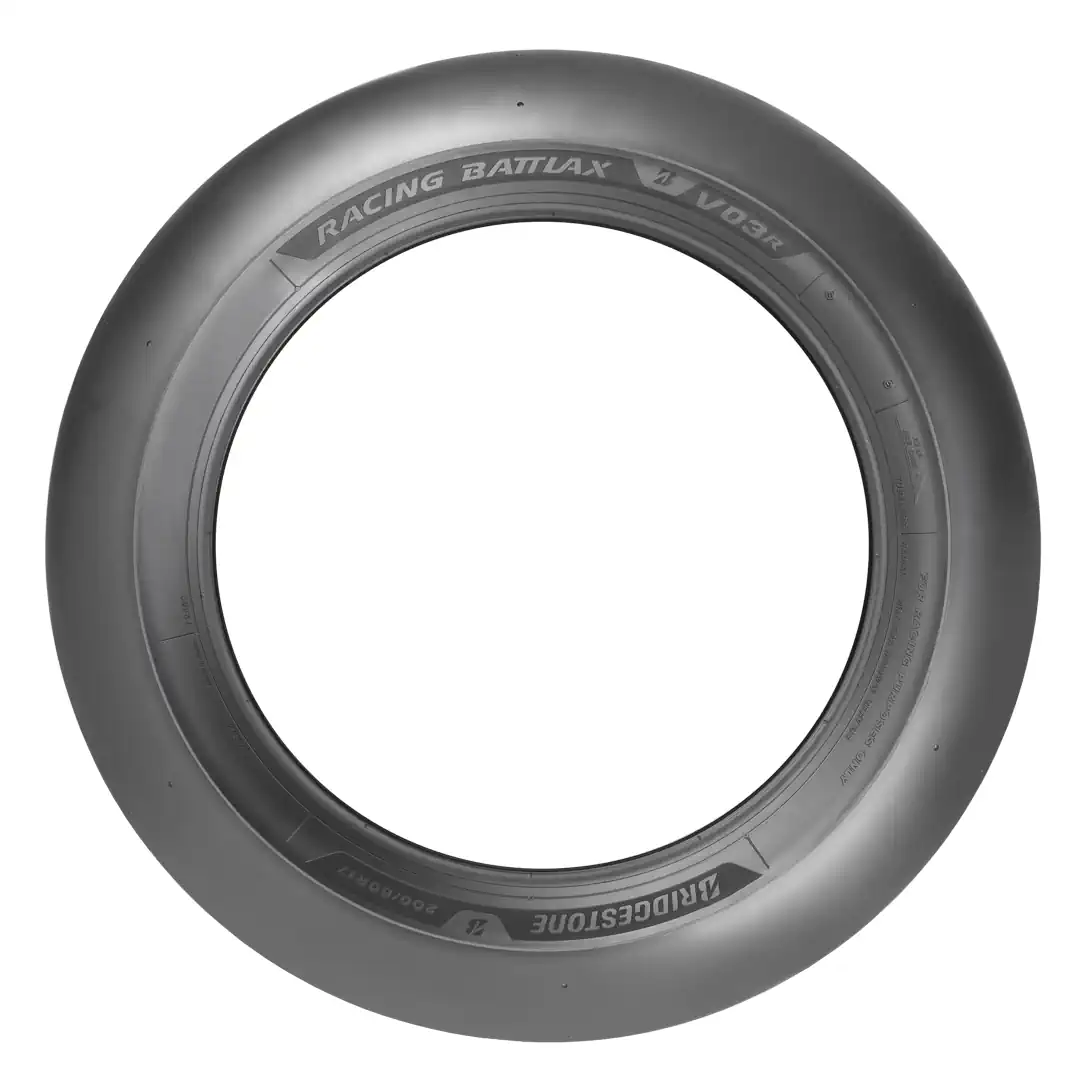
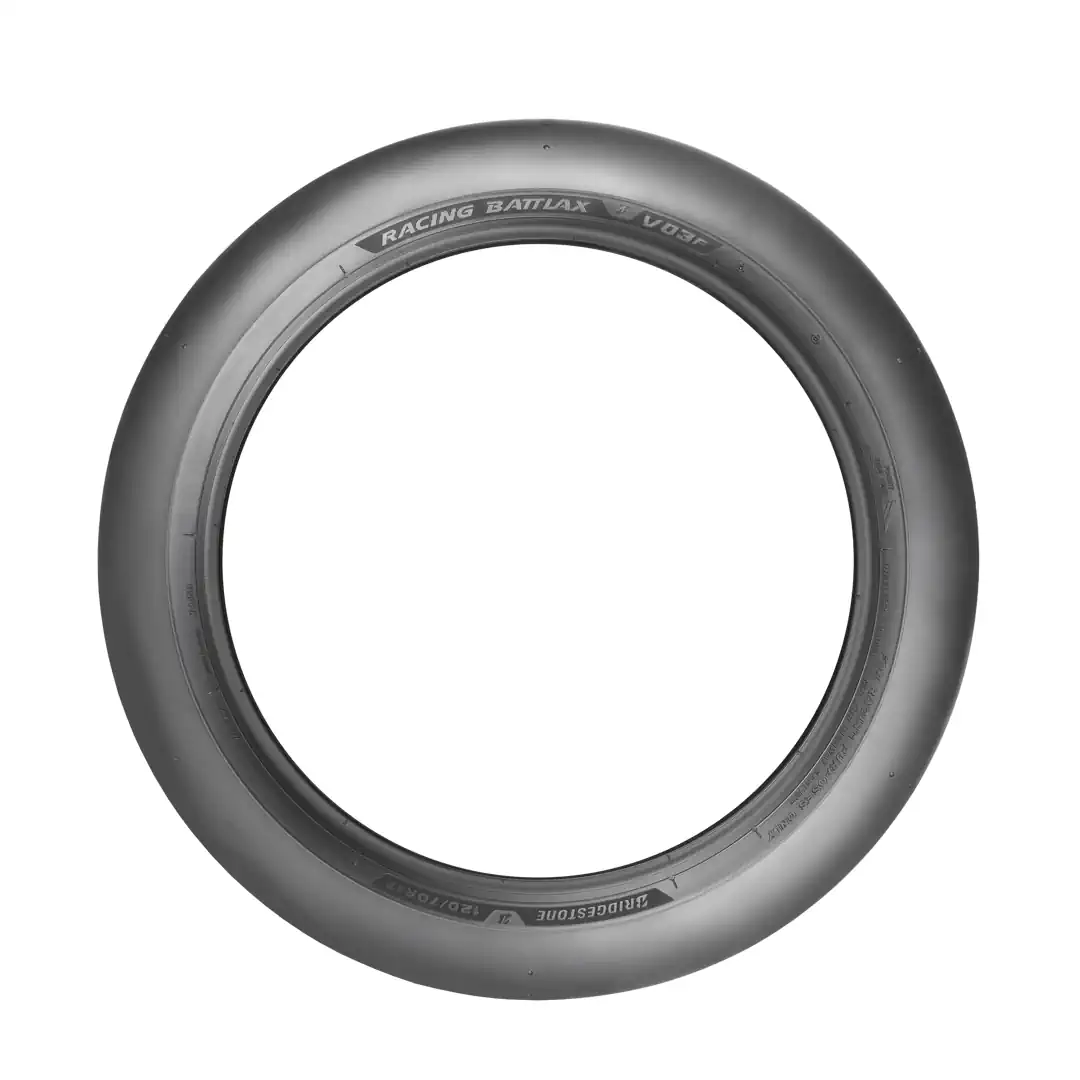
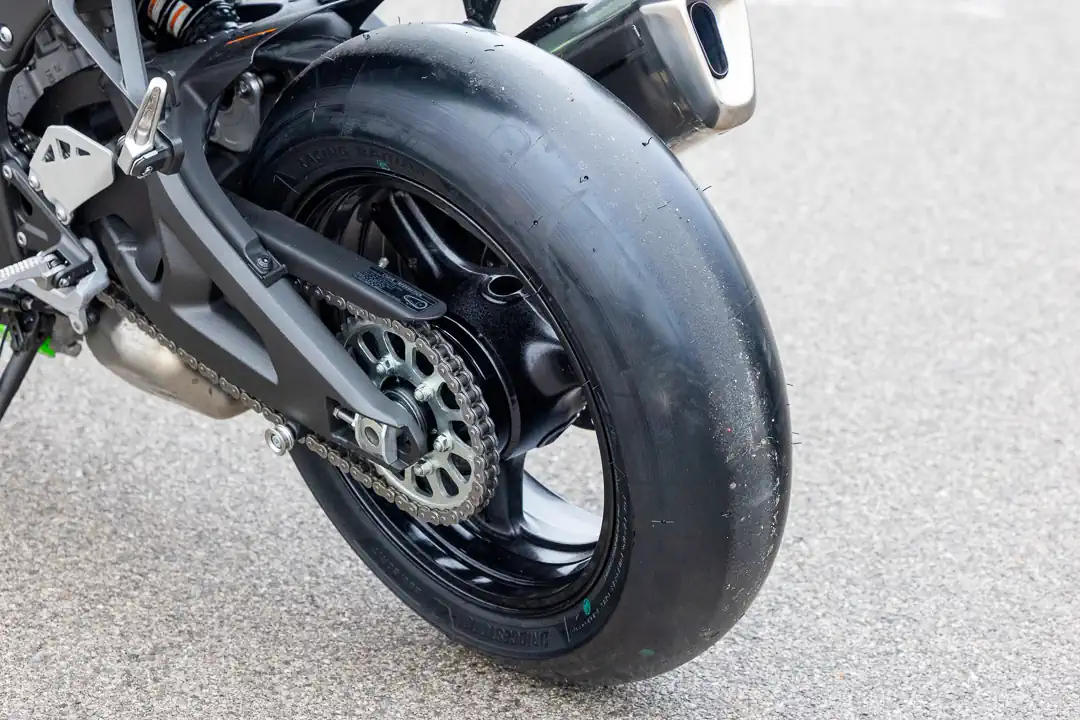
Bridgestone’s longstanding Racing Battlax V02 slick earned a strong reputation among club racers and trackday riders for its excellent grip, durability, and feedback. That’s basically the holy trinity when discussing tires, and the V02 set a high bar for its successor. The new Bridgestone Racing Battlax V03 slick rolls on that foundation, carrying with it hard-earned R&D from its recent consecutive five-year title streak in the FIM World Endurance Championship, lest we forget the brand’s time as MotoGP’s exclusive tire producer from 2009 to 2015. You don’t have to be vying for a factory ride to use the Japanese brand’s latest slicks, as these are designed for true professionals and mere mortals like us.
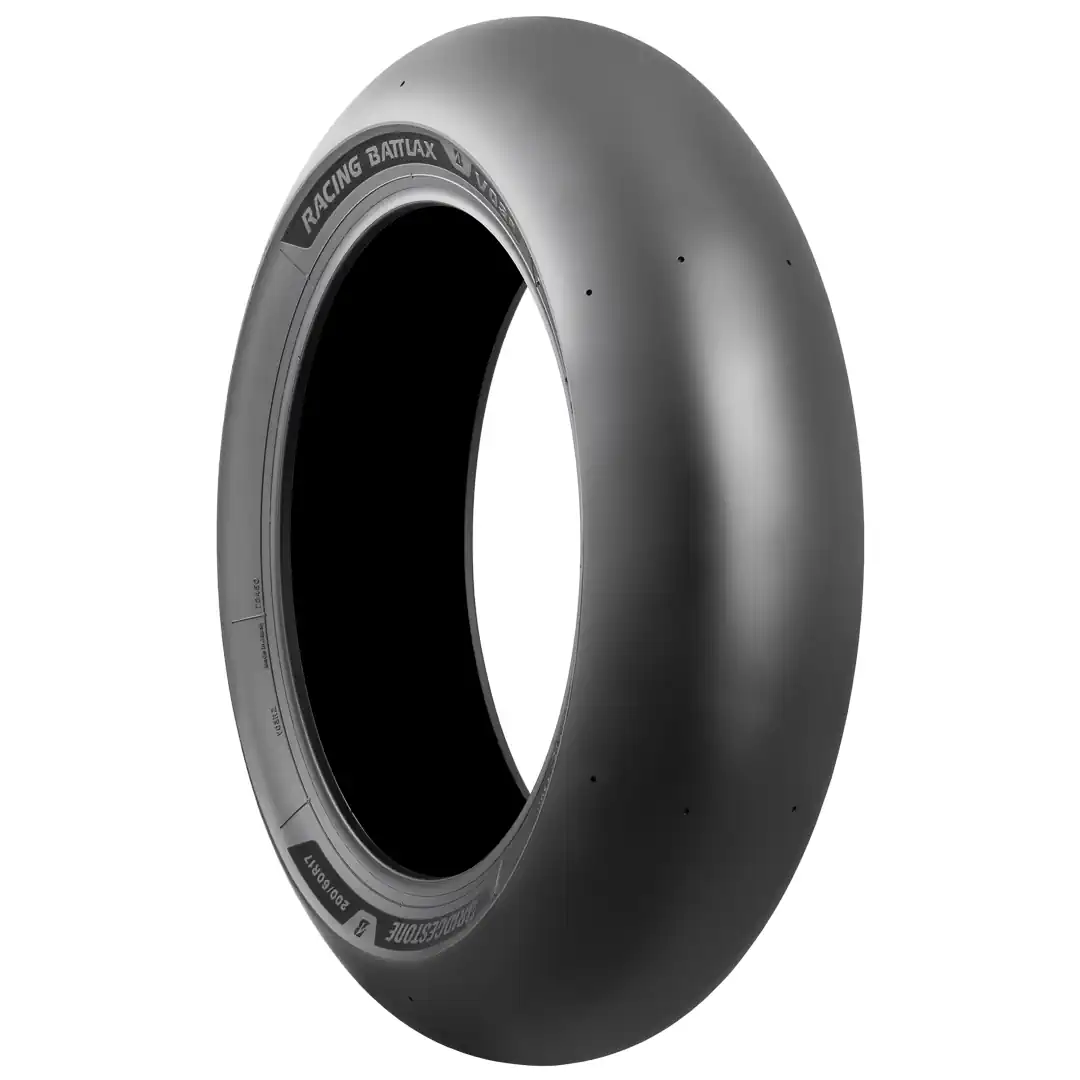
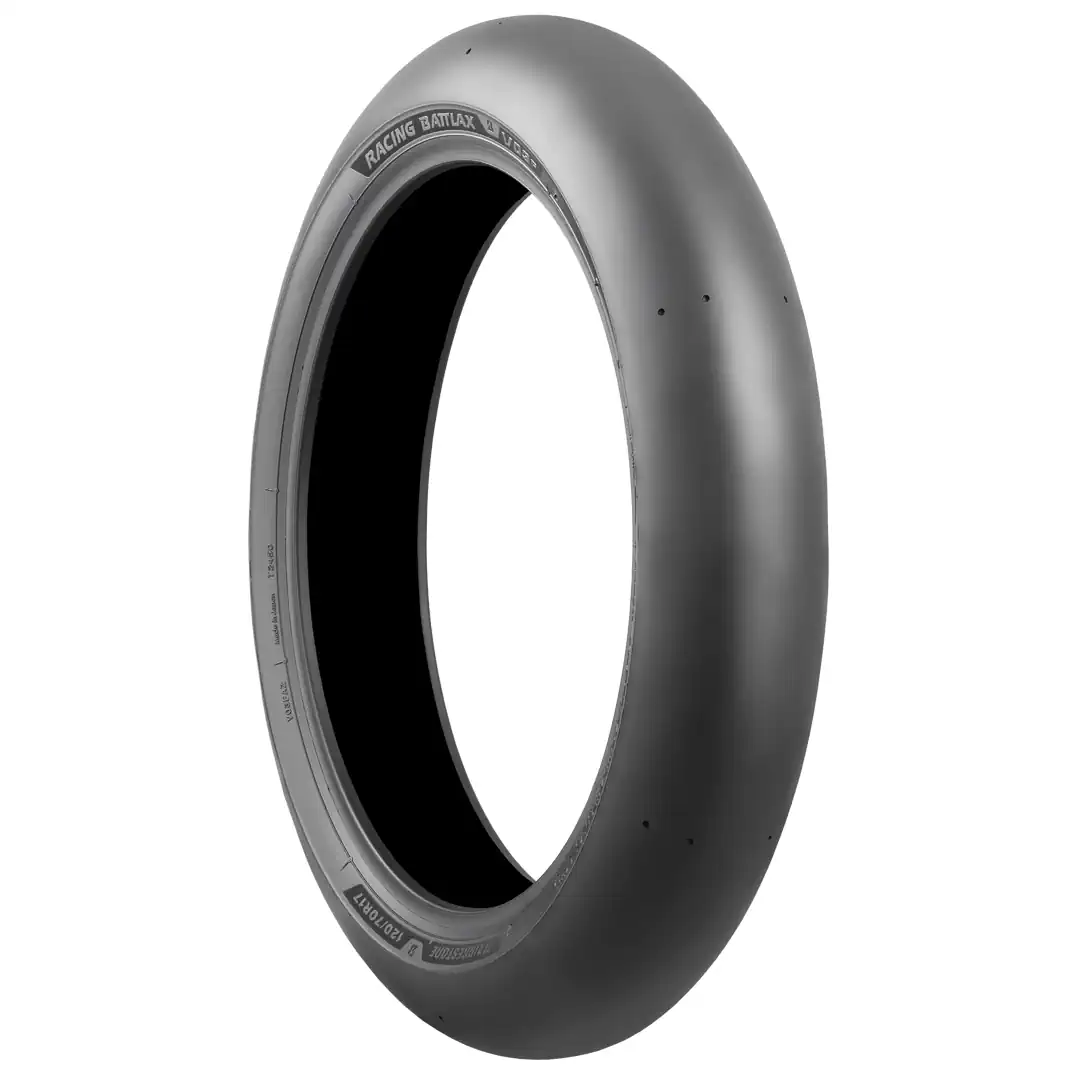
As it stands, front and rear tire sizing is aimed at liter-bike offerings, with only a 120/70 R17 front and 200/60 R17 rear. While sizing options do leave lightweight and middleweight sportbikes out in the cold, Bridgestone’s intent is to focus its range-topping slick products on machines that place the most demands on tires with high cornering loads, hard braking forces, and the most aggressive acceleration phases. Bridgestone says a slightly narrower 190/60 rear, which can be spooned onto Supersport machinery, is pending for the 2027 retail year.
However, the possibilities expand with respect to compounds. Soft and Soft-Medium are available for the front. There are three rear tire choices: Soft, Medium, and the new Sprint. The Sprint is an ultra-soft, high-grip Sprint compound, designed to stack up against the Pirelli Diablo Superbike SCX or Dunlop Sportmax Slick R3. Longevity isn’t the goal of the Sprint option, though staffers were adamant that you’ll have a solid step up in peak grip over the other compounds.
Bridgestone built the V03 around a handful of specific changes, so calling it an all-new tire wouldn’t be accurate. Let’s consider it more of an engineering evolution. The first step is a reshaped front profile with a less aggressive crown. Compared with the outgoing V02, the front tire’s crown has been widened, increasing the tire shoulder width on each side by a few millimeters to enhance edge grip and stability. Brand reps say that shape change increases the front contact area by 5% and evens out contact pressure, resulting in a more solid contact patch and improved wear.
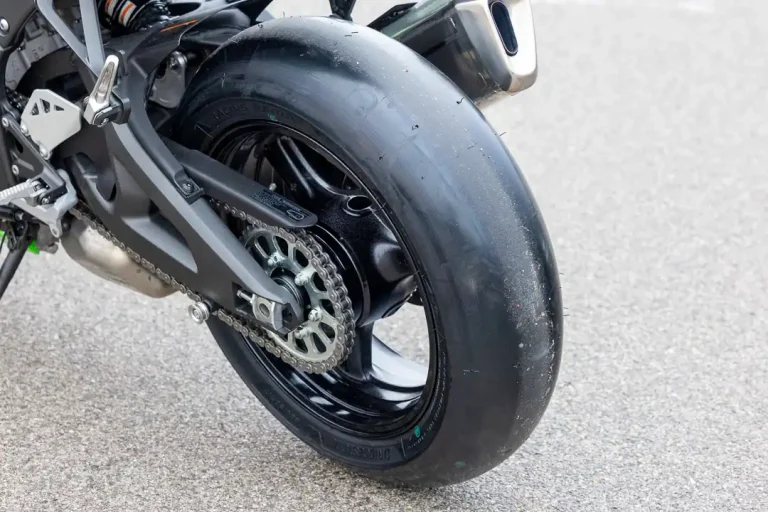
The rear V03 slick follows a similar design direction to the front, increasing its outer diameter by a few millimeters and marginally upping its overall width. Yet, engineers also wanted to balance the newfound stability at the front by slightly increasing the rear profile to make it taller than its predecessor. Still, the changes prove fruitful, with Bridgestone citing a 6% increase in total contact patch. Put simply: more rubber is meeting the road, no matter which end of the bike we’re discussing.
The changes go beyond skin-deep with the V03, as Bridgestone has reworked the rubber compounds to improve grip and wear resistance. Engineers cite a new molecular compound approach as responsible for improved asphalt bite by allowing the rubber to mold more effectively into the porous surface.
For us, that means both the front and rear tires can provide better traction. As is always the case with tire manufacturers, Bridgestone kindly provided reference numbers to illustrate these improvements: claimed lap-time gains of 1.9% with the Sprint rear and 1.3% with the Soft rear, compared with the V02.
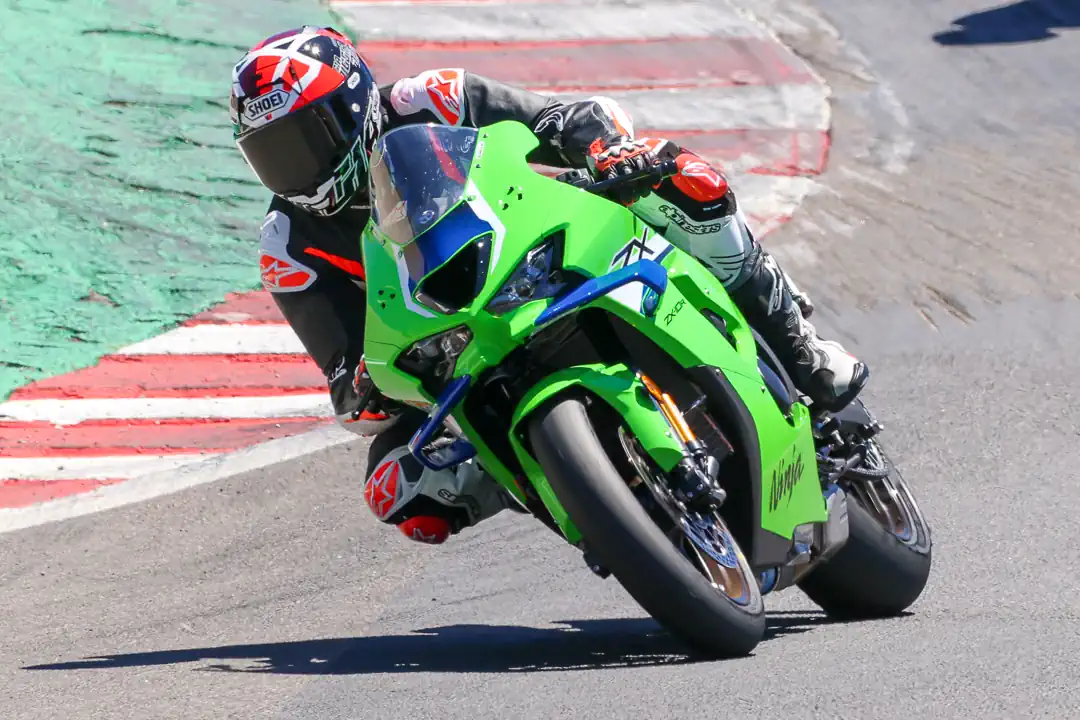
To put these race-ready slicks to the test, we headed off to the legendary WeatherTech Raceway Laguna Seca. Its 11 turns are some of the most dynamic we have Stateside, with loads of time spent on the edge of the tire. Special thanks to the folks at Volant Vivere for allowing us to join their premium event where participants get lengthy 30-minute sessions to maximize their time on track.
Typically, tire tests mean we’re experiencing the tires at or near their peak performance, often only getting a few sessions on a set with manufacturers swapping out for fresh rubber faster than factory race teams. Our goal for this test was to use a single Soft-Medium front and Soft rear tire combination for the entire day to understand wear better.
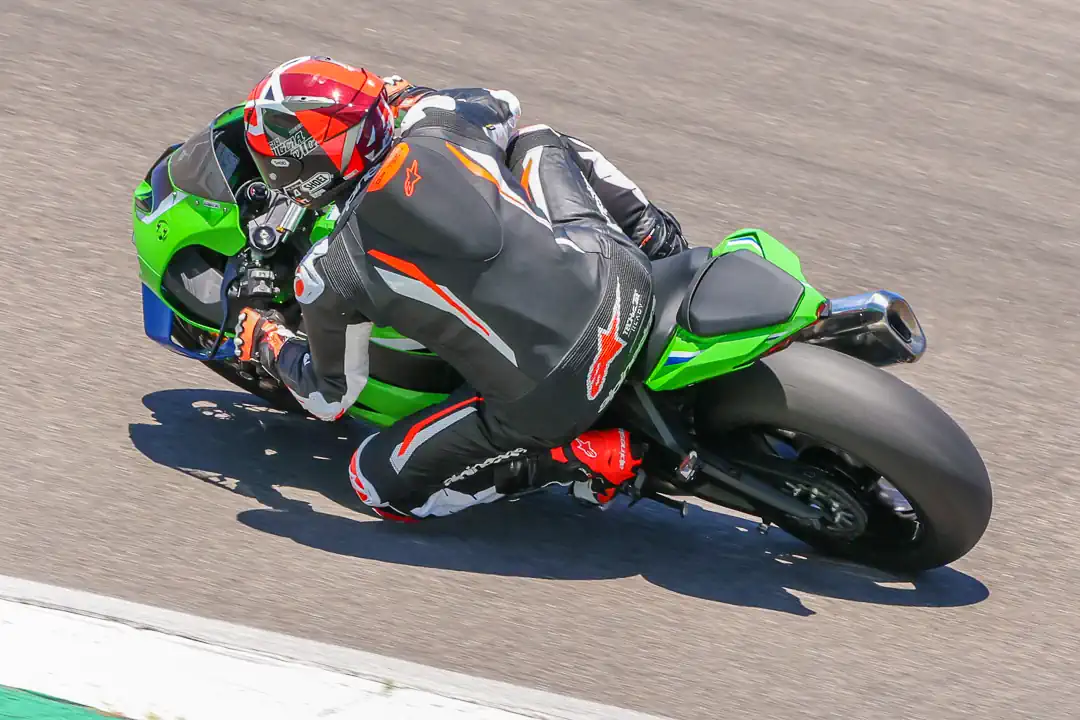
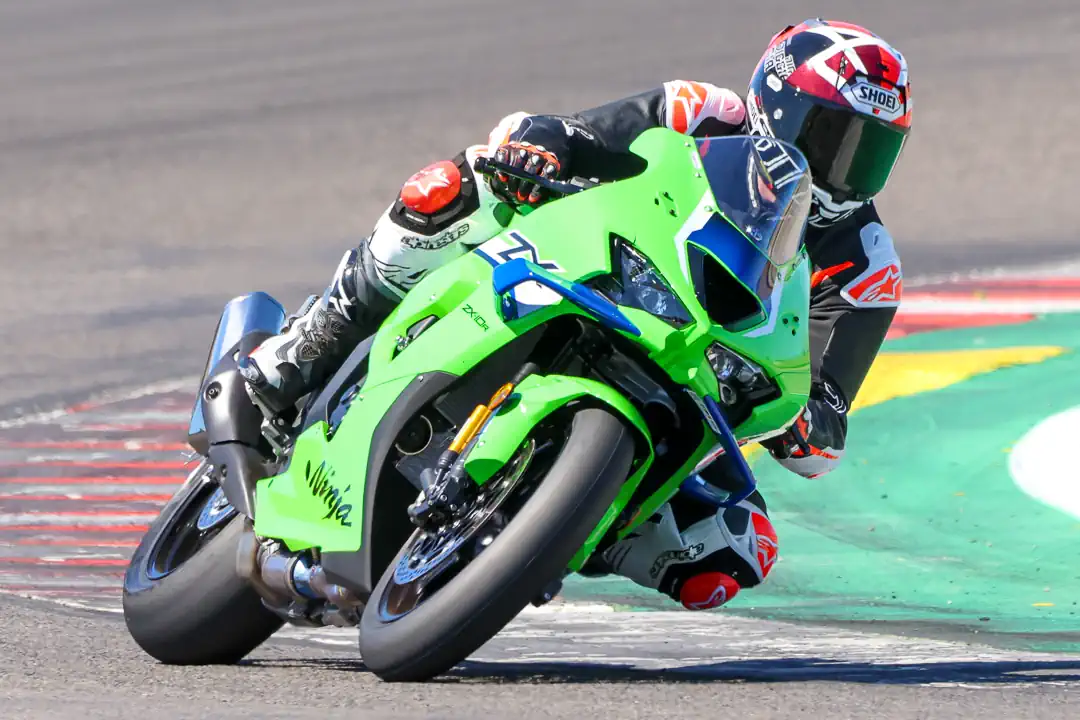
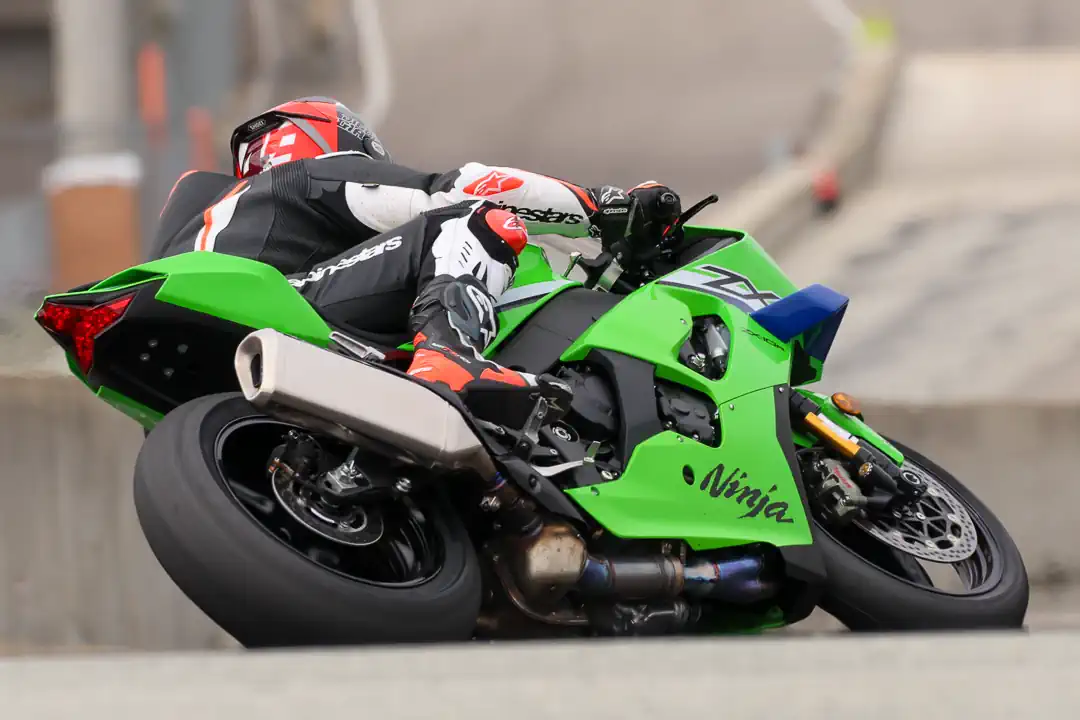
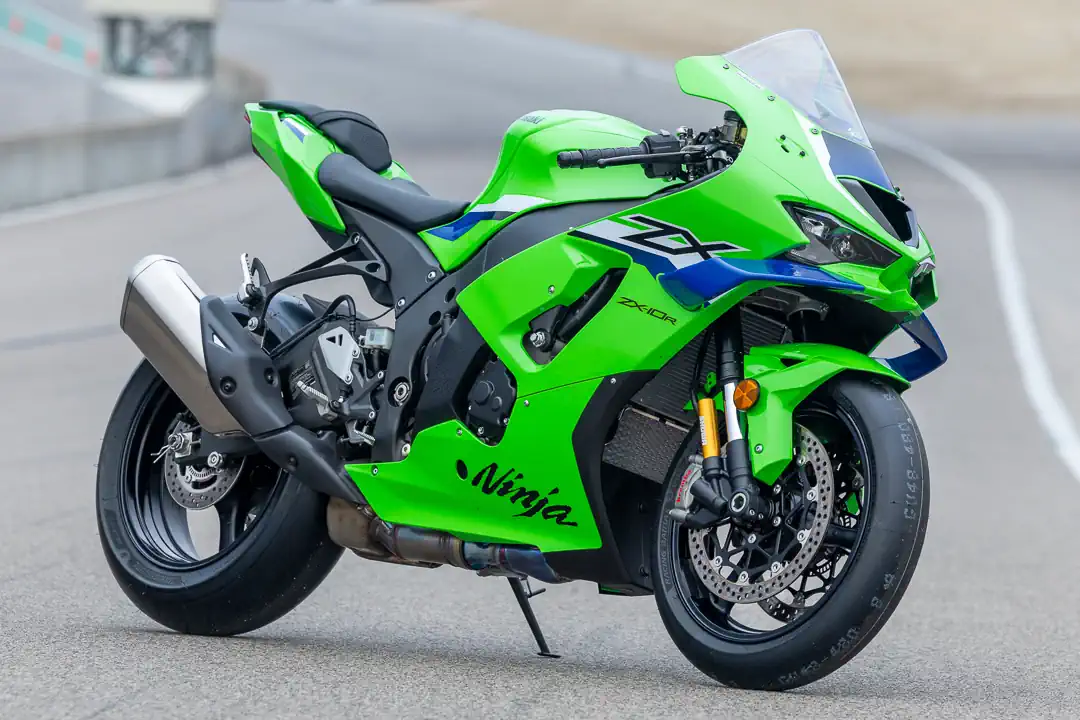
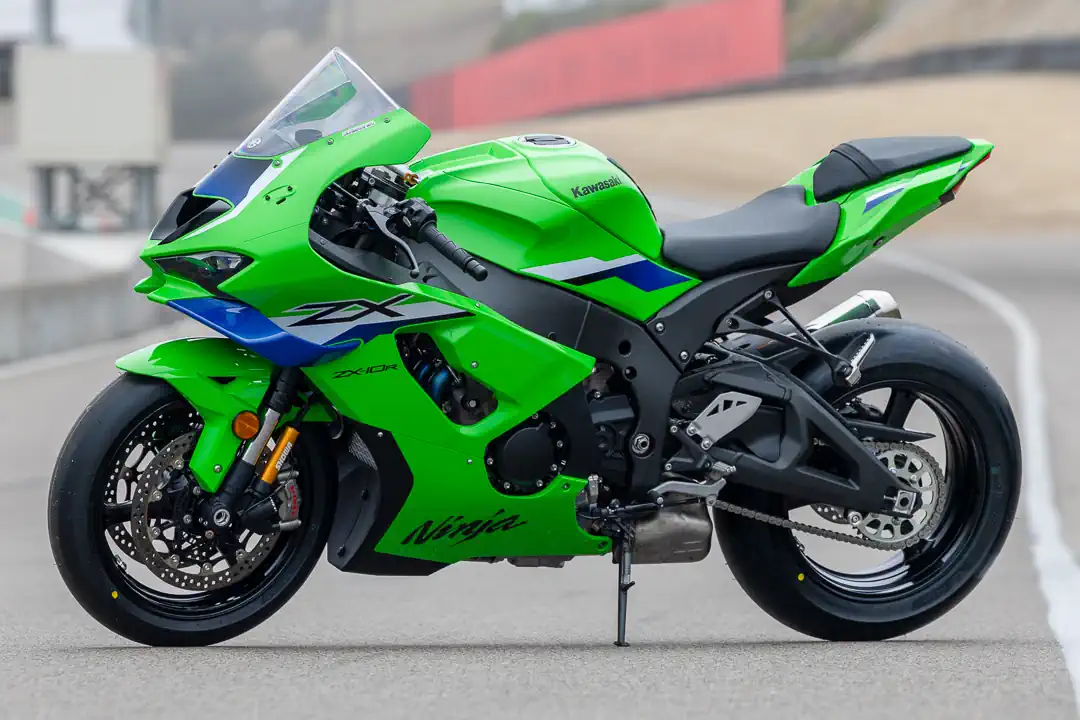
Our test mule was no donkey, either, as we put a shiny new 2026 Kawasaki Ninja ZX-10R through its paces. Laguna Seca’s weather can be fickle, but we had prime conditions with ambient highs of 68 degrees, while morning sessions were predictably chillier and in the high 50s.
The recommended hot tire pressure range for the 120/70 front is 31.9-33.4 psi, while the rear range sits between 24.6 and 27.5 psi. As always with slicks, a quality set of tire warmers is required, and Bstone strongly encourages a full one-hour heat soak before initial use.
On track, the larger front contact patch and reworked compound translate into massive confidence, which matters at a fast, flowing, corner-speed-favoring circuit such as Laguna Seca. The overall feel from the V03 (front or rear) splits the difference between softer Pirelli race tires and notably firmer Dunlop or Michelin slicks. Bridgestone’s carcass-construction philosophy hasn’t fundamentally changed, and the balance it strikes is one riders have come to value. All tire manufacturers have their own unique characteristics in terms of squish, and it comes down to preference.
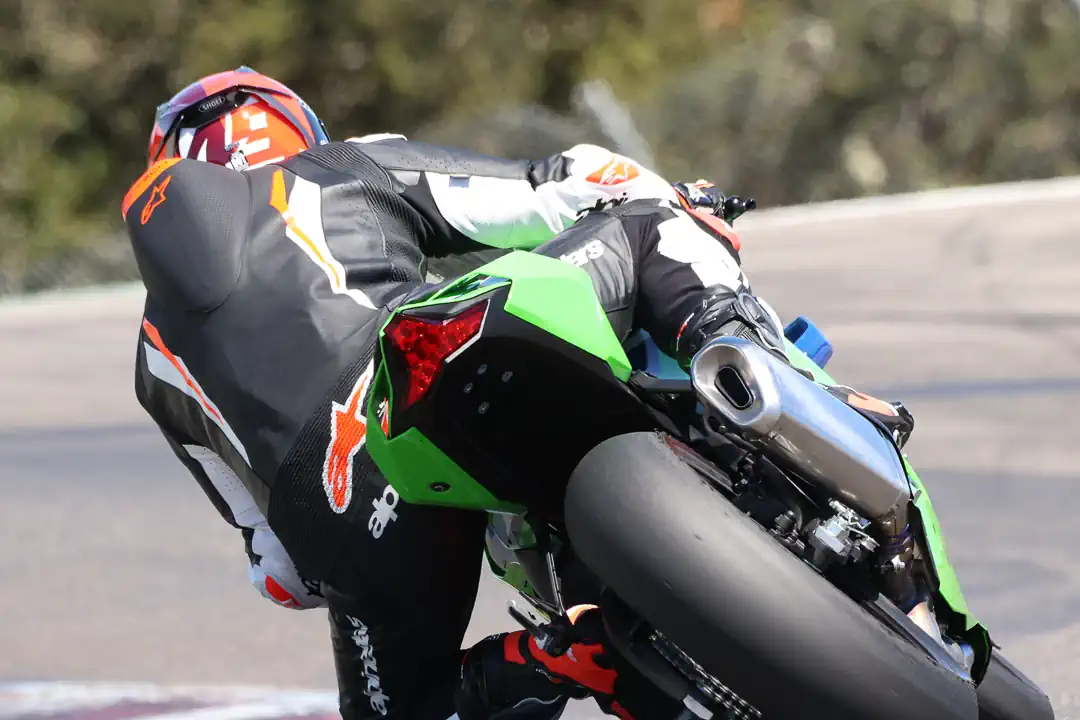
Still, the Bridgestone philosophy results in a supple yet supportive tire, one that doesn’t deform excessively under load or cause undue chatter. Turn-in is quick, and the edge grip that follows exudes pure confidence, which certainly helps when barreling into Rainey Curve. Meanwhile, the rear hooks up incredibly well without fail. That balance proved essential when negotiating the high-speed, flowing sections of Laguna Seca, and again when working through Turn 11, where the asphalt is a bit nasty near the apex.
The front tire is impressive, yet the rear deserves special attention. The Soft rear’s grip is outstandingly strong, particularly during opening sessions when the rubber is freshest. That grip can begin to push the front during initial throttle opening, sending you slightly wide. When dealing with liter-bike horsepower, a touch of wheelspin can be helpful when getting the bike turned, all the way through to the corner exit. Given that I’m not setting MotoAmerica Superbike lap times, you’ll have to scale those statements to your skill.
What it did mean was adjusting my lines to better use the available traction, adopting a point-and-shoot approach in areas such as Turn 2. It also opened up more geometry possibilities since confidence in these tires is so high. By continually raising the rear ride height, we shifted the ZX-10R’s chassis setup to reduce rear grip for sharper handling. At no point did that feel like a compromise, because there was traction to spare throughout the day.
Without a direct back-to-back comparison to the outgoing V02, it’s difficult to say definitively how the updated profiles change overall character. Taking the Bridgestone technical briefing at face value, we can look at it this way: the less aggressive crown shape and larger diameter should translate to a more stable tire under braking and through mid-corner, with a small reduction in outright handling agility, though suspension or geometry adjustments typically recover it. In our case, they certainly did.
A single set of Soft-Medium front and Soft rear tires covered the entire trackday, roughly seven full sessions, with excellent wear at both ends. Tire wear always comes down to a mix of factors, including pressure management, asphalt abrasiveness, suspension setup, weather conditions, and rider skill level. For a once-a-year club racer like me, or a dedicated trackday rider putting in a similar number of sessions, both tires had plenty of life remaining at the end of the day. Again, that will depend on you, your bike, conditions, and other factors. That said, they wore quite well.
The lofty claims that all tire manufacturers make about a new product generation always raise an eyebrow, yet technological advances often make those claims a reality. Bridgestone is living up to its own hype here. What Bridgestone has done with its latest Racing Battlax V03 slick is nothing short of impressive, delivering arguably some of the highest available grip in this niche category, while leveraging the brand’s established balanced approach.
Action photography by Oxymoron Photography Track static photography by Nic de Sena Studio photography courtesy of Bridgestone
Bridgestone Racing Battlax V03 Review Photo Gallery
The 2026 Harley-Davidson Deadwood is the newest cruiser in the Softail lineup, and it arrives with a familiar recipe. The Motor Company took the Heritage Classic, lowered the rear end, chopped the windshield, fitted a solo seat, and painted nearly everything Denim Black. The name comes from the Black Hills town with an outlaw history of its own and a strong connection to the Sturgis Motorcycle Rally. Don Williams goes riding and discovers what the 2026 Harley-Davidson Deadwood is all about.
* * * * *
Speaking of rallies, here’s one you absolutely cannot miss—yes, we’re rapidly approaching the 34th Annual Biketoberfest Rally in Daytona Beach, sunny Florida.Biketoberfest this year runs October 15th through the 18th. We take a few minutes to chat with Lori Campbell-Baker and Brian Bentley from the Daytona Beach Area Convention & Visitors Bureau. Biketoberfest is all about the beautiful Florida weather, live music, the industry’s top vendors, bike shows, and motorcycle racing at Daytona International Speedway. And don’t forget, there are miles of spectacular rides along the famous A1A, the historic Main Street and the Ormond Beach Scenic Loop. There really is something for everyone here, and almost every event and attraction is free to attend. So, if you want a fun few days out in the Florida sunshine, Biketoberfest really is the place to be. Make sure you download the Biketoberfest mobile App from Apple or Google Play or visit www.biketoberfest.orgfor more details.
* * * * *
Keith Code founded the California Superbike School in 1980, and it has subsequently grown to be the largest motorcycle track training school in the world. Teejay Adams is an experienced rider, but has still found that she has hangups and limitations to her riding. So, she called Keith’s son Dylan, who now runs the Superbike School with his wife Lara. Teejay went to the 2-day school at the Ridge racetrack in Washington state recently, and absolutely loved it. She tells us exactly what she found out and how it has helped her riding.
* * * * *
Here’s quick reminder to check out our monthly digital magazine. It’s filled with everything you want to read on motorcycling, including some things you’ve probably not seen elsewhere. It’s absolutely free and you will find it on the Apple App Store and of course on Google Play as well.
Don’t forget to leave us your comments on our social media—we’re on all the usual platforms at Ultimate Motorcycling. We love hearing your feedback… so good or bad, please let us know what you think. If there’s something you’d like us to cover, we’d love to hear those ideas too!
We use cookies and browser activity on this website
Functional
Always active
The technical storage or access is strictly necessary for the legitimate purpose of enabling the use of a specific service explicitly requested by the subscriber or user, or for the sole purpose of carrying out the transmission of a communication over an electronic communications network.
Preferences
The technical storage or access is necessary for the legitimate purpose of storing preferences that are not requested by the subscriber or user.
Statistics
The technical storage or access that is used exclusively for statistical purposes.The technical storage or access that is used exclusively for anonymous statistical purposes. Without a subpoena, voluntary compliance on the part of your Internet Service Provider, or additional records from a third party, information stored or retrieved for this purpose alone cannot usually be used to identify you.
Marketing
The technical storage or access is required to create user profiles to send advertising, or to track the user on a website or across several websites for similar marketing purposes.