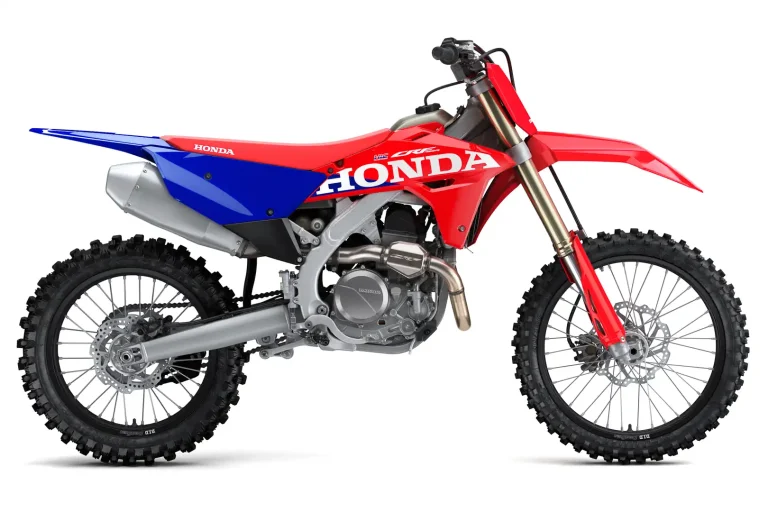
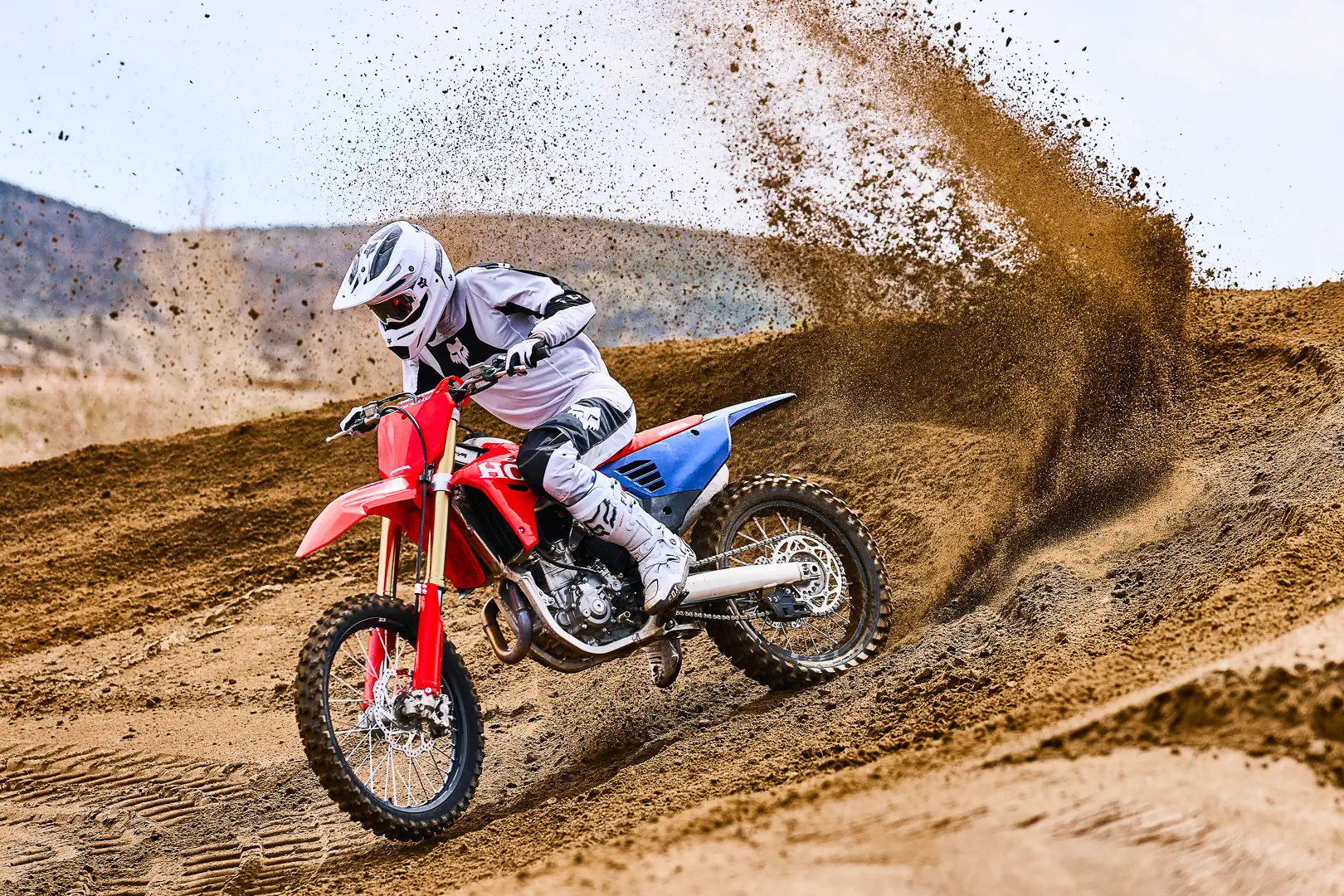
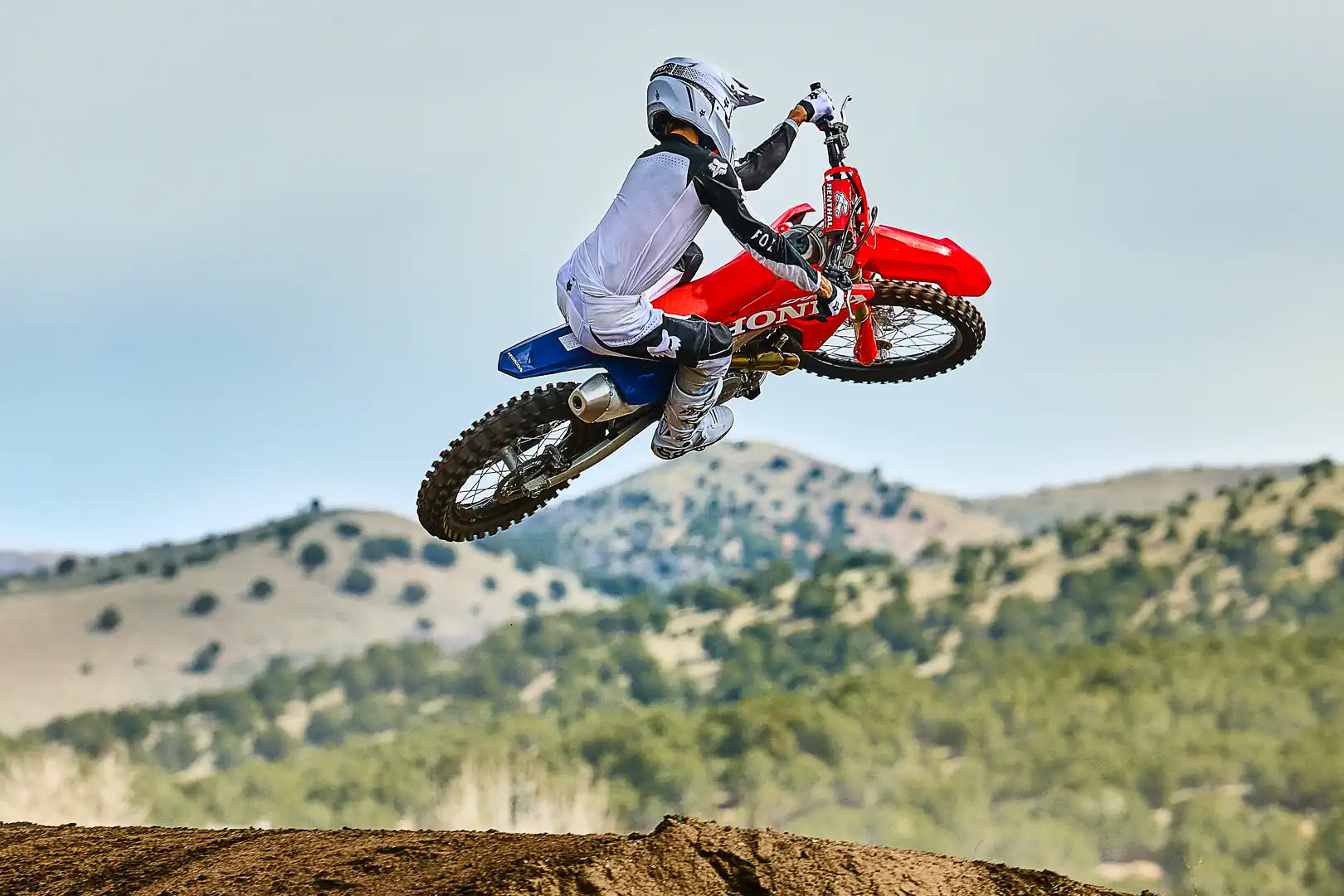
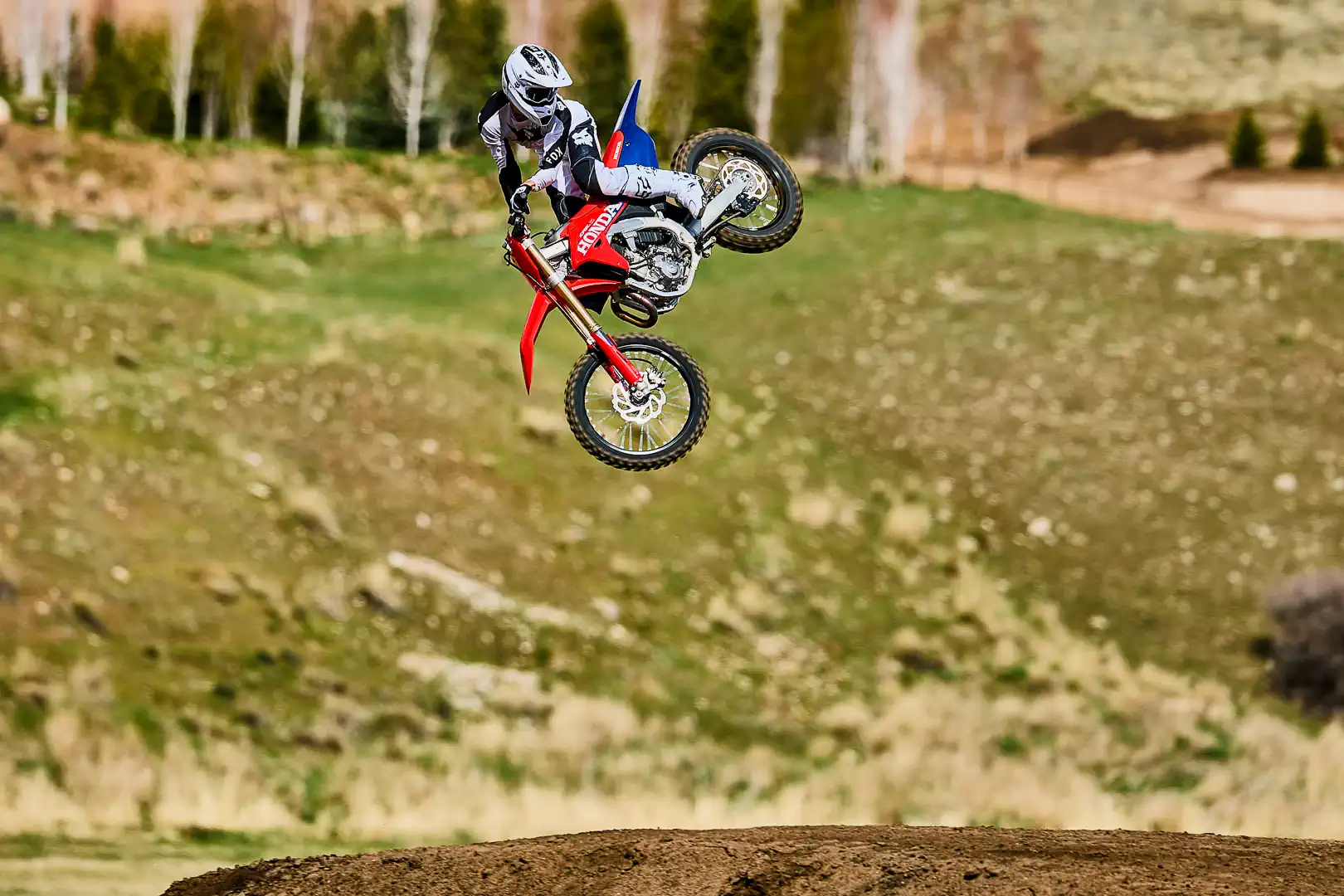
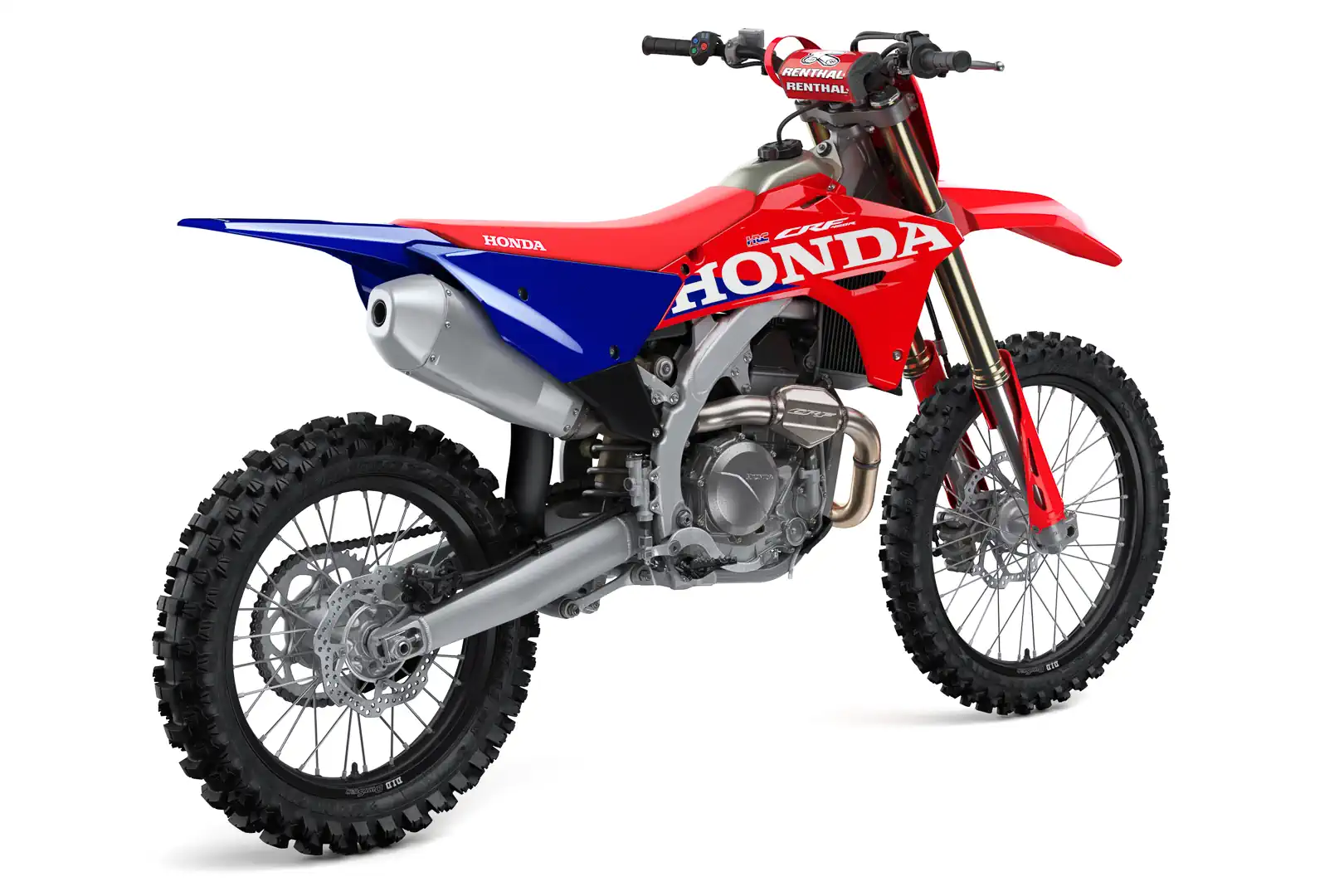
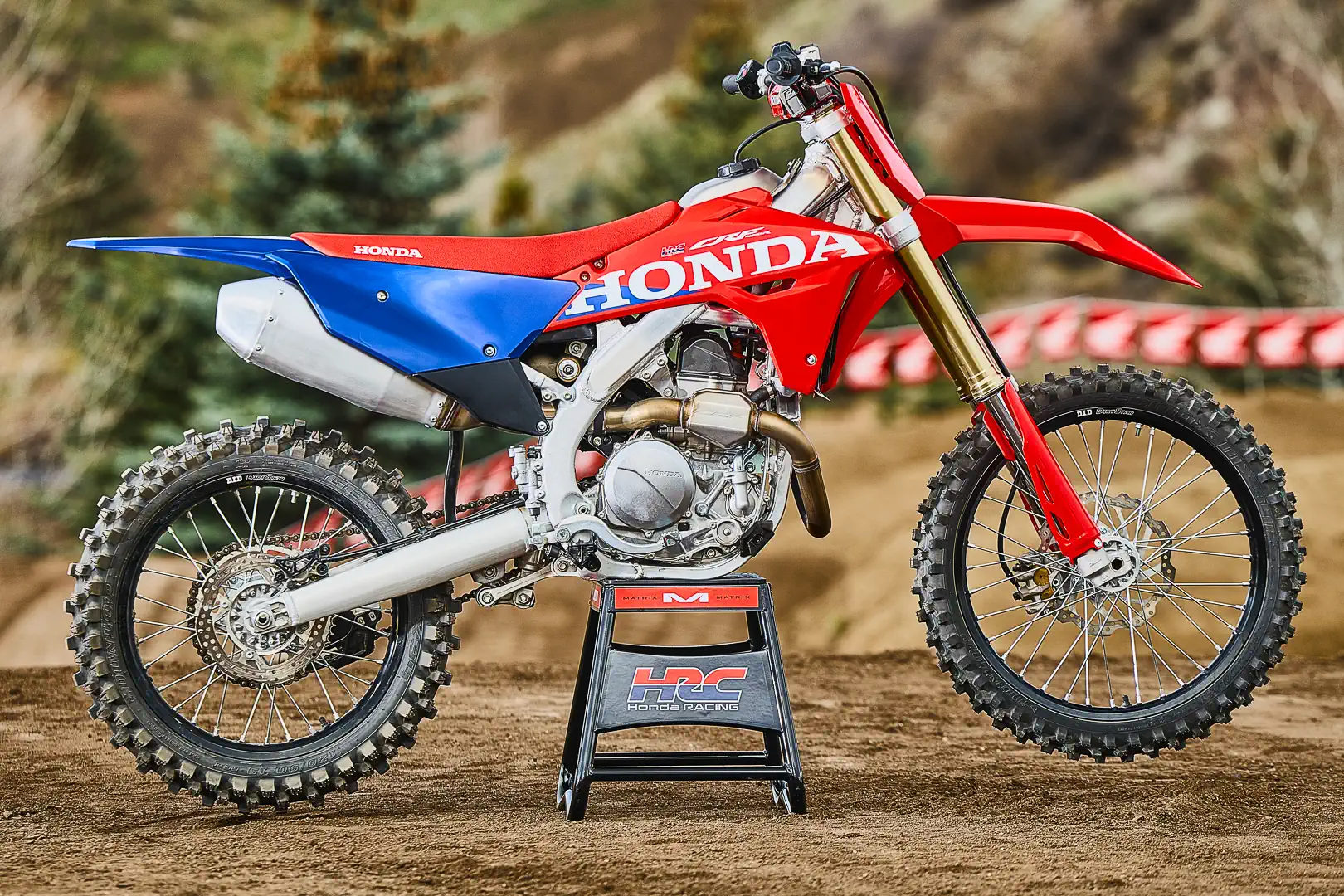
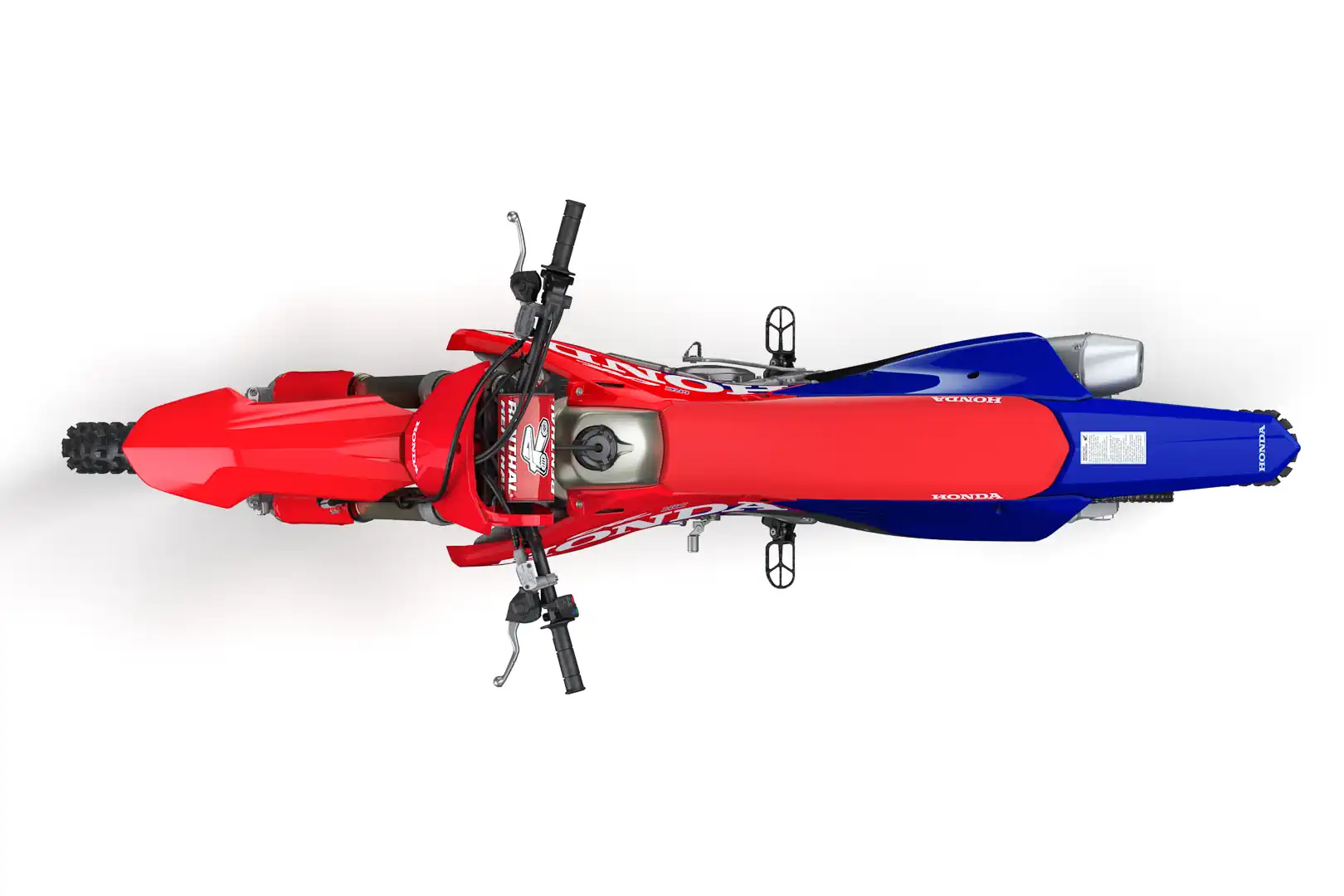
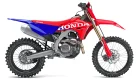
Honda has given its flagship motocrosser its most extensive overhaul in more than a decade, with a new engine, new frame, new suspension internals, new bodywork, and a long list of detail changes throughout. Every major system on the 2027 Honda CRF450R has been reworked, with direct input from the HRC factory teams competing in Supercross, Pro Motocross, and MXGP. The result is a motorcycle that is nearly 10 pounds lighter than last year’s CRF450R. Let’s see how Honda got there, and recount all the other changes that you get with a modest $400 price increase to $10,099. Settle in, because this is a long Fast Facts.
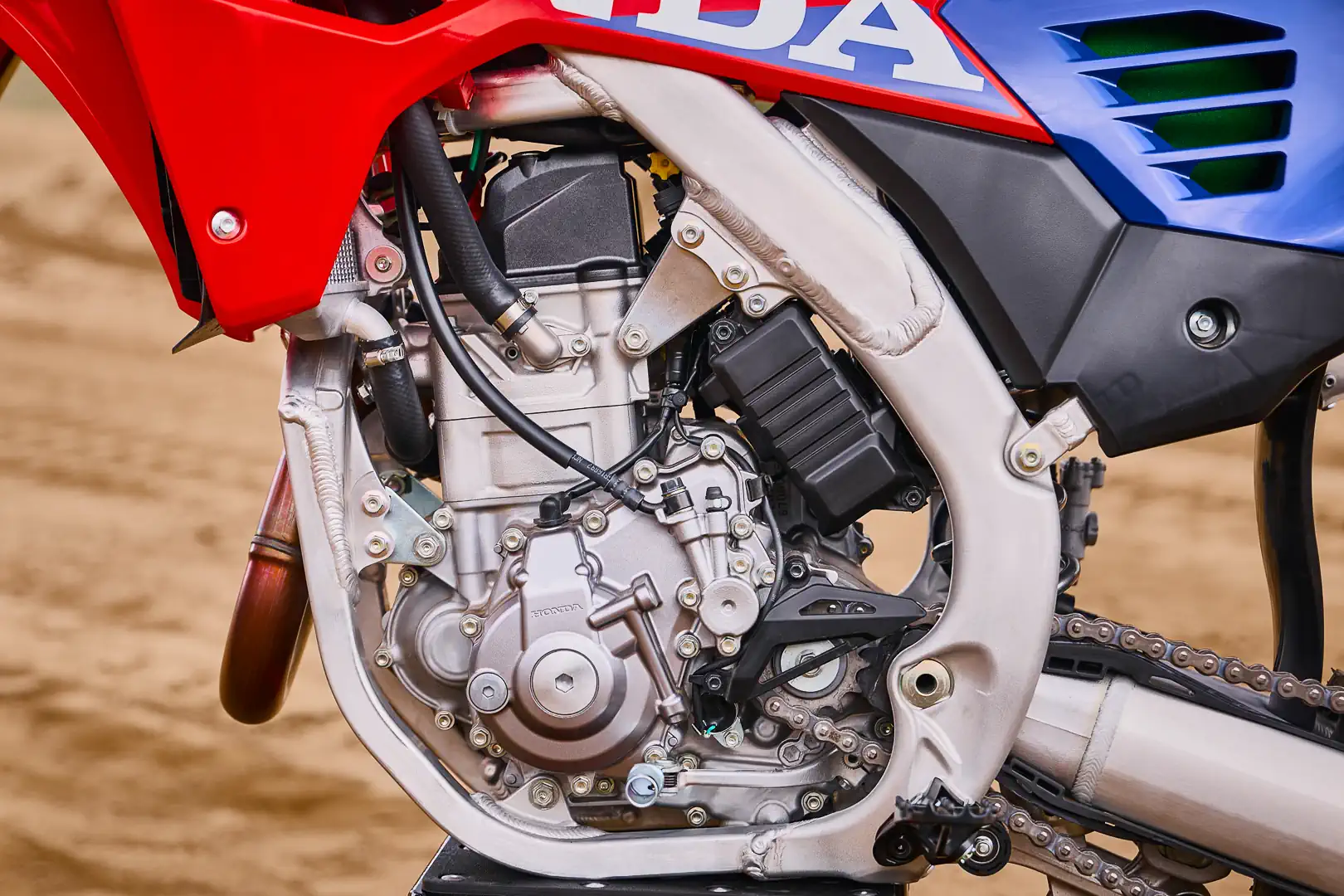
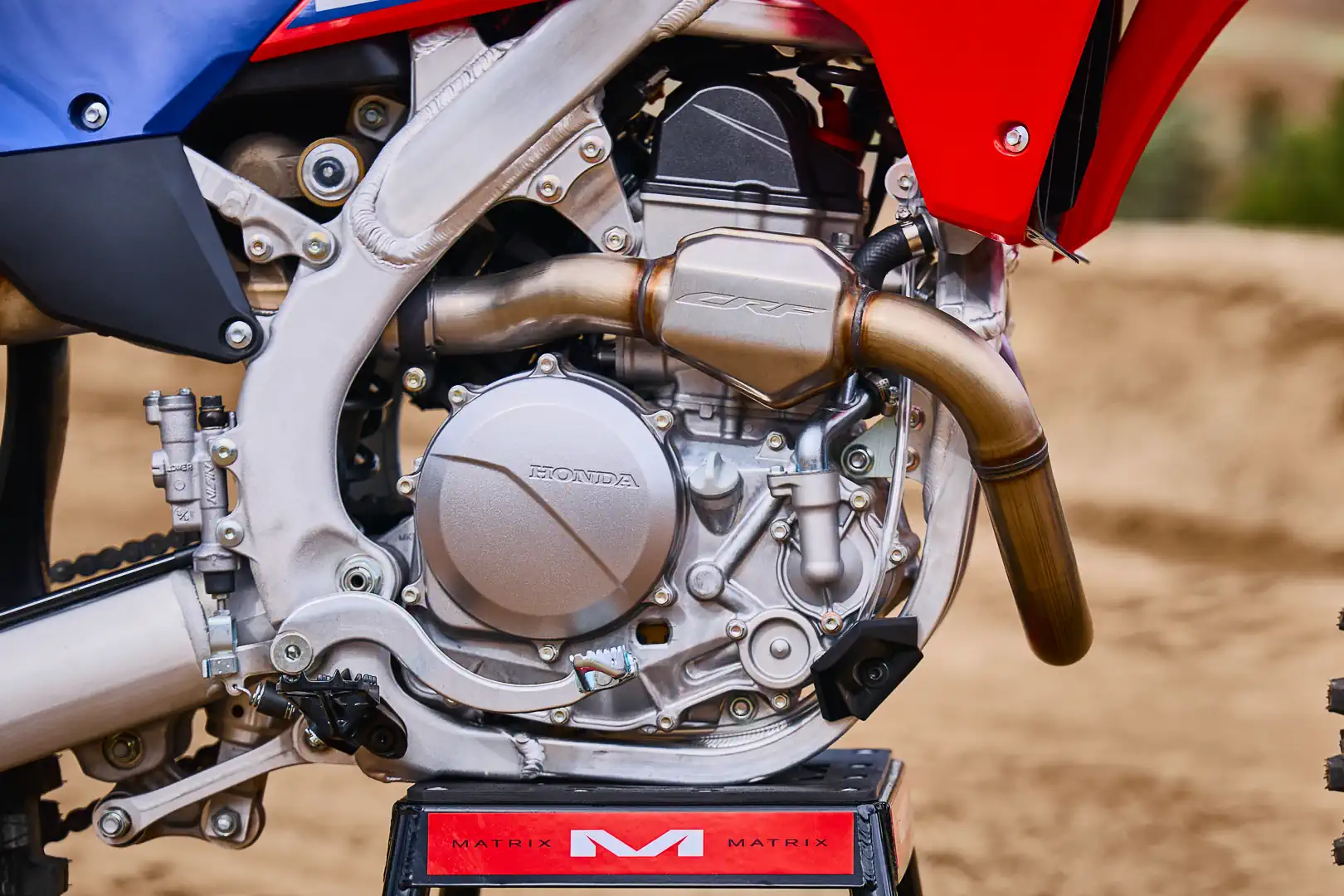
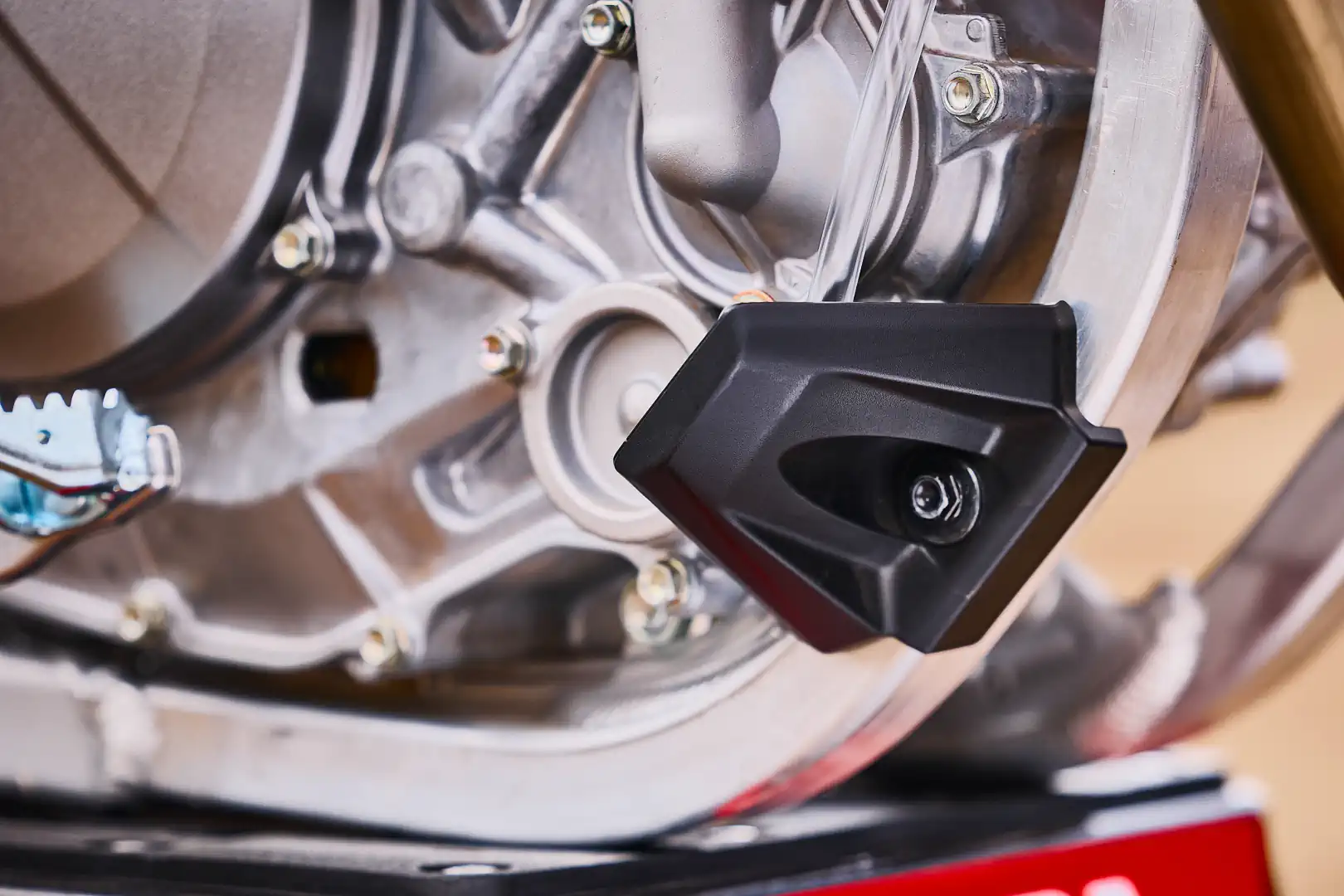
The new engine is 17mm narrower and six pounds lighter than the unit it replaces. Honda engineers achieved that by downsizing components wherever possible, changing the crankshaft profile from an anchor shape to a round one for increased rigidity, and switching the journal bearings on both sides of the crank from ball-and-roller to roller-only. The result, according to Honda, is a more efficient conversion of combustion pressure into rotational force, with less friction at the bearings and gear-engagement points.
The bore has been increased by 1mm, to 97.0mm, while the stroke has been shortened by 1.3mm to 60.8mm to retain the 449.5cc displacement. The larger bore, combined with revised piston-crown and combustion-chamber geometry, raises the compression ratio from 13.5:1 to 13.8:1. A DLC coating on the top piston ring reduces friction and improves durability.
Both intake and exhaust valves are now larger. Intake diameter grows 2mm to 40mm; exhaust diameter is increased by 1mm to 32mm. The exhaust valves are now titanium instead of steel, allowing Honda engineers to run a more aggressive cam profile. The new cam recovers the low-rpm output that larger valves would otherwise lose, while also making the valvetrain lighter and stronger. The included angle between intake and exhaust valves has also been optimized, and the rocker-arm shafts in the evolved Unicam system are now co-axial, making the mechanism more compact and rigid.
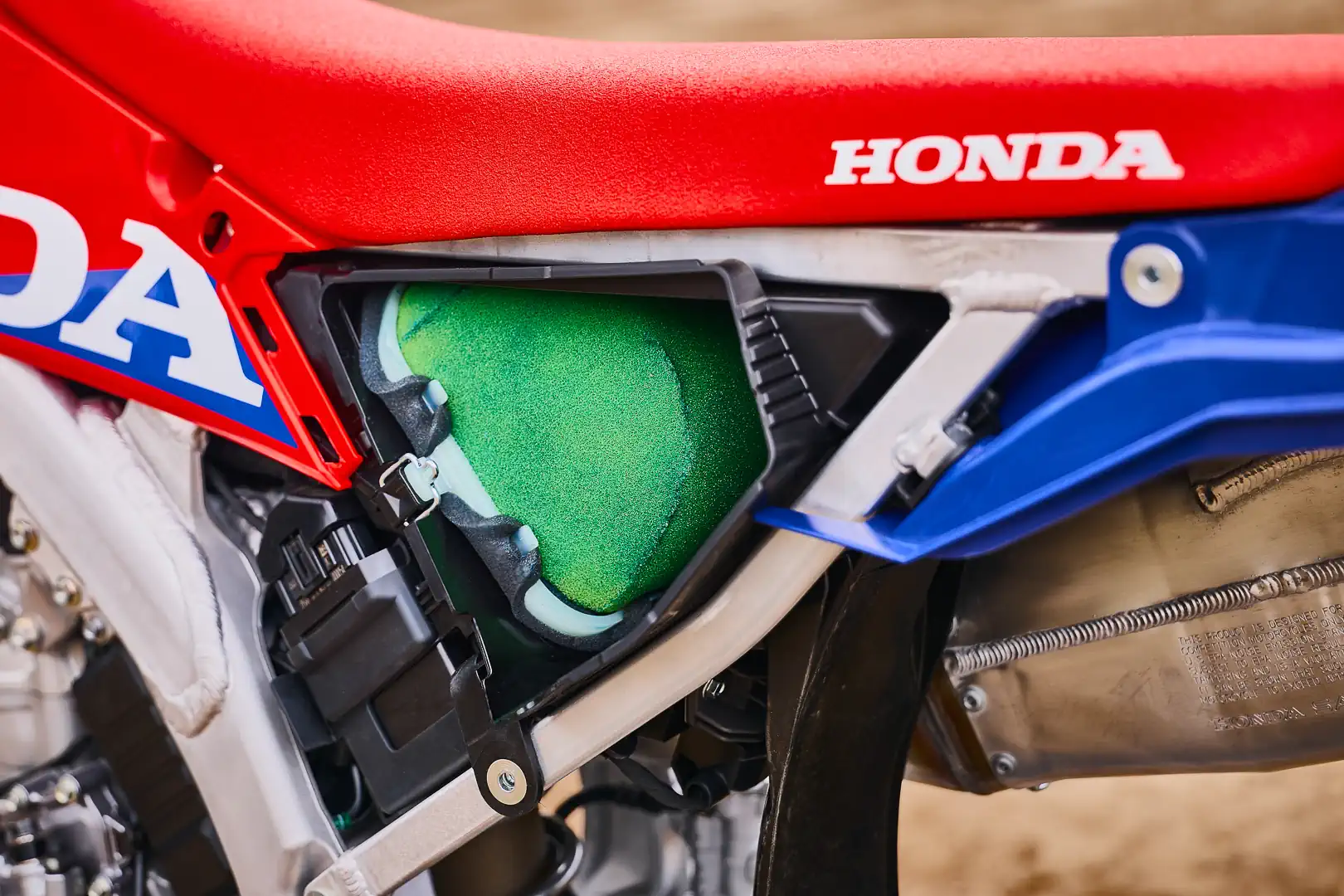
The intake system has been redesigned. The new airbox on the 2027 Honda CRF450R eliminates the lid of the previous design, routes air more directly to the filter, and uses a filter with revised density and a rounder shape. Also, the intake port is steeper and shorter than before, to improve the quality of the intake charge. Honda claims these changes reduce airflow resistance by approximately 10 percent.
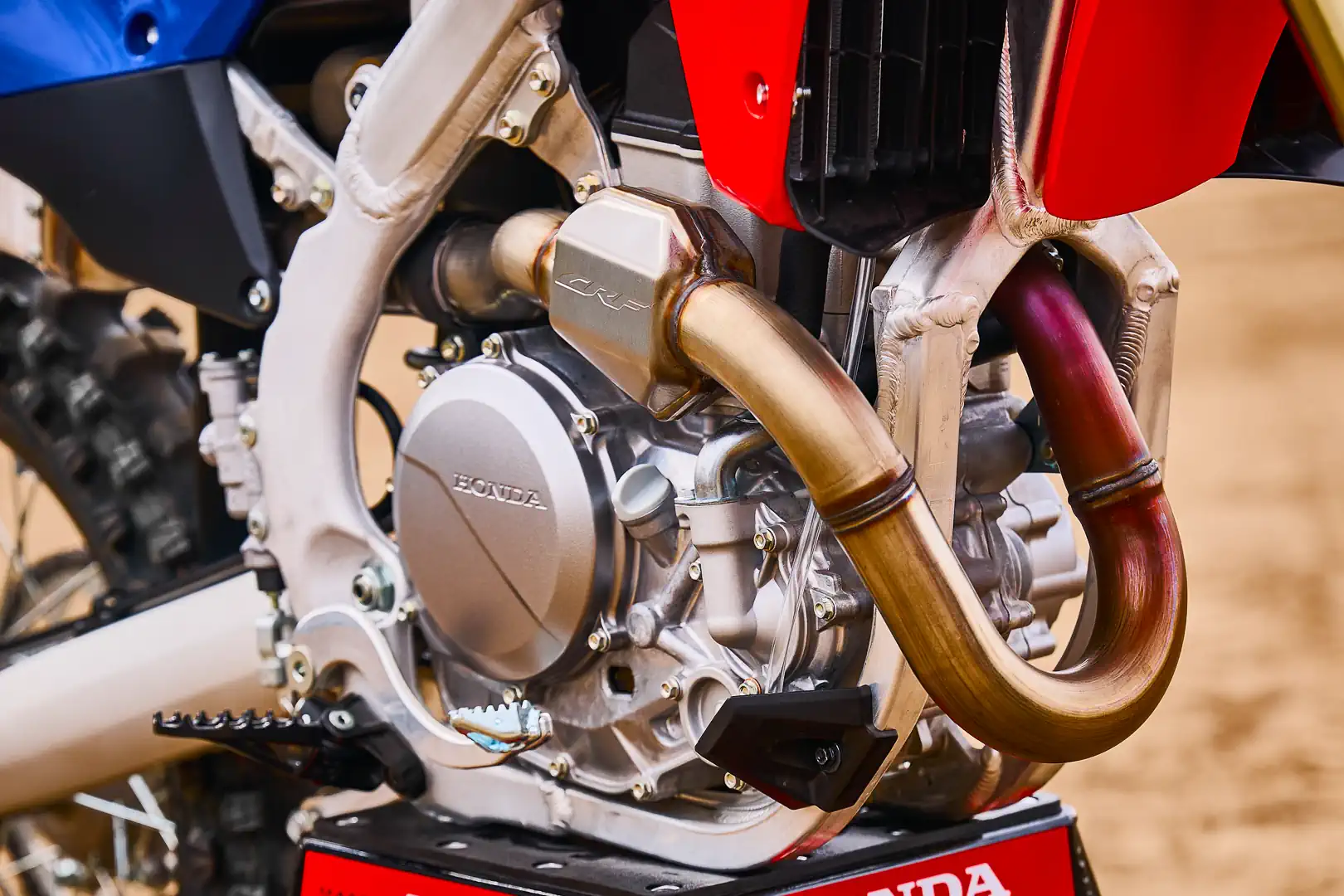
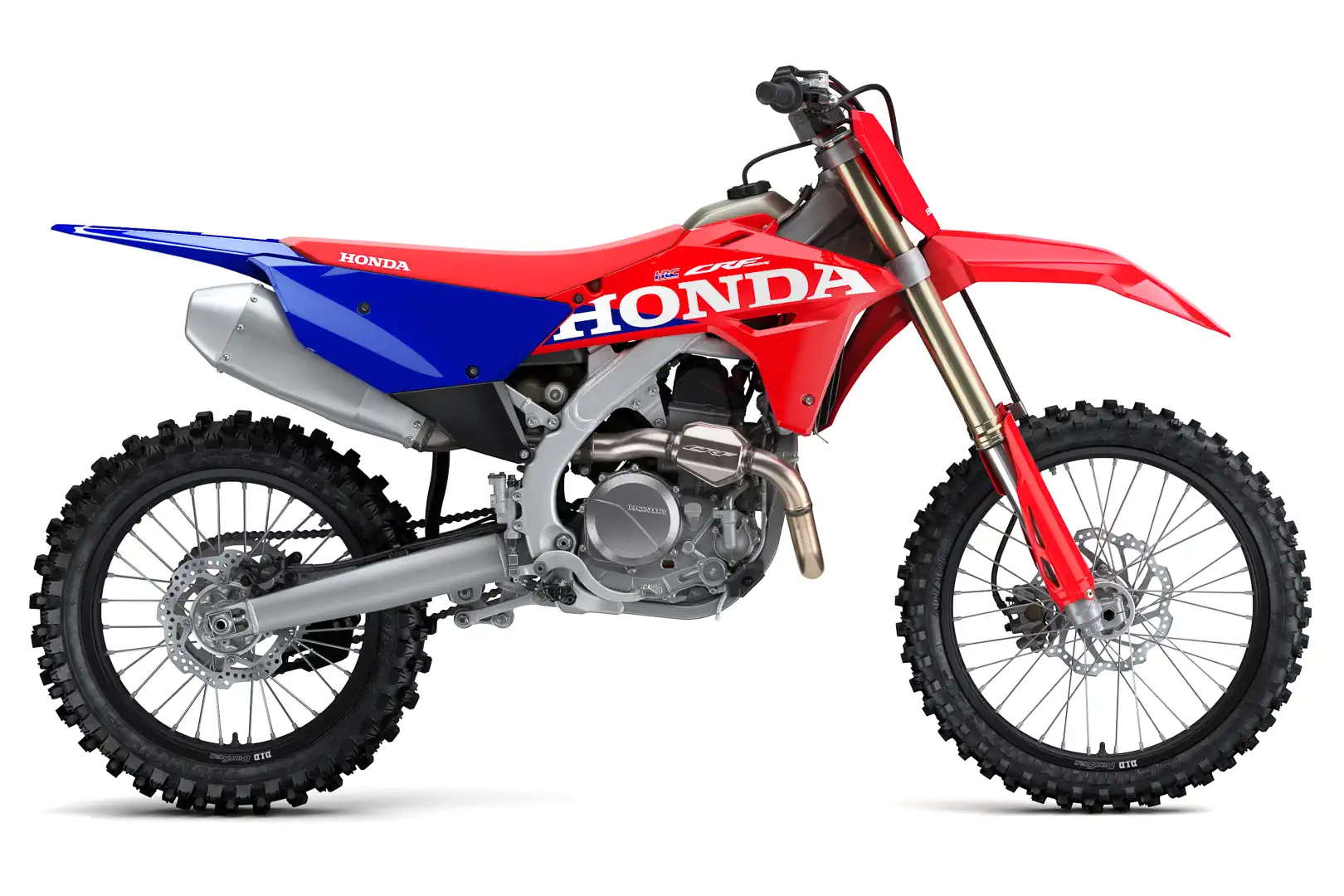
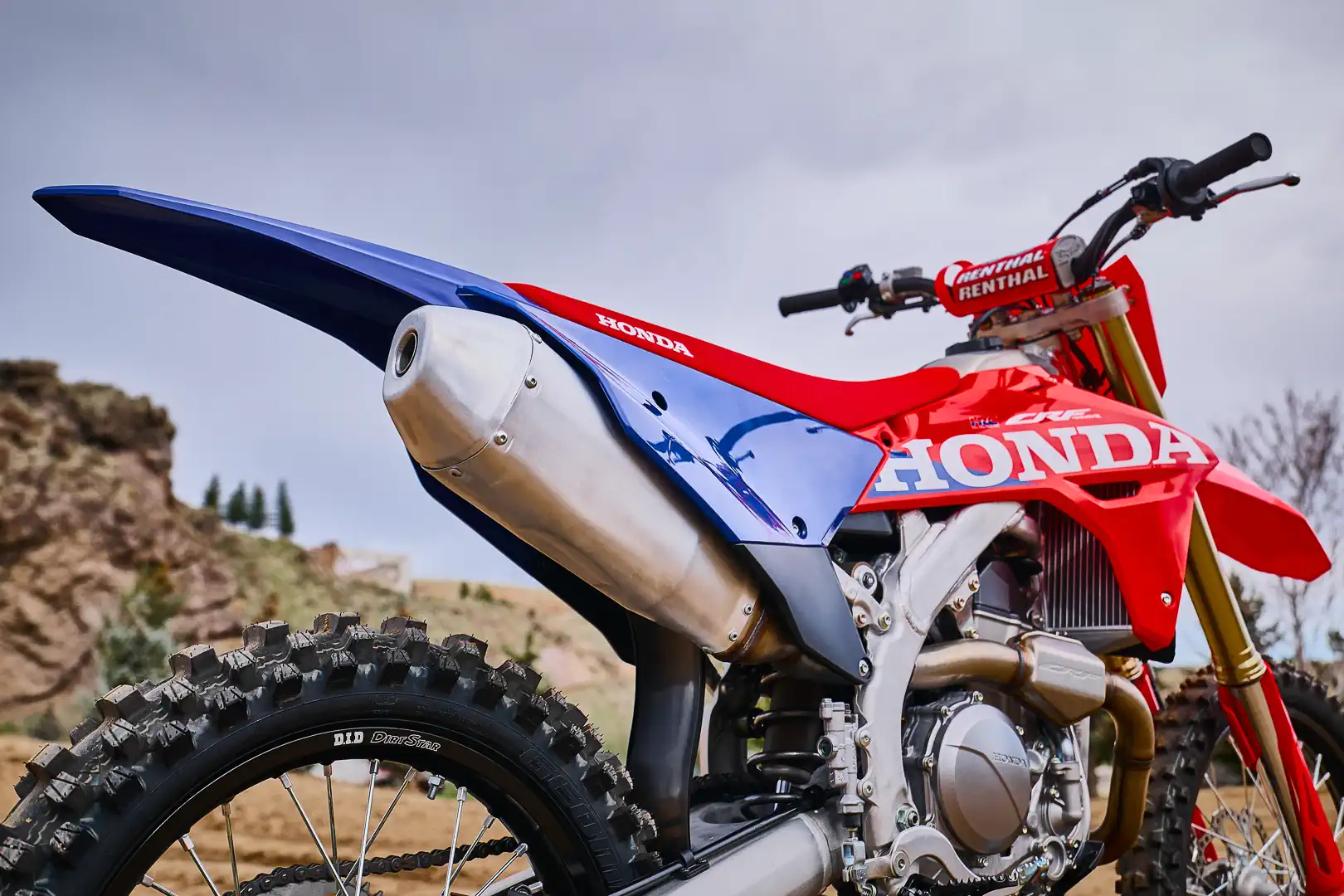
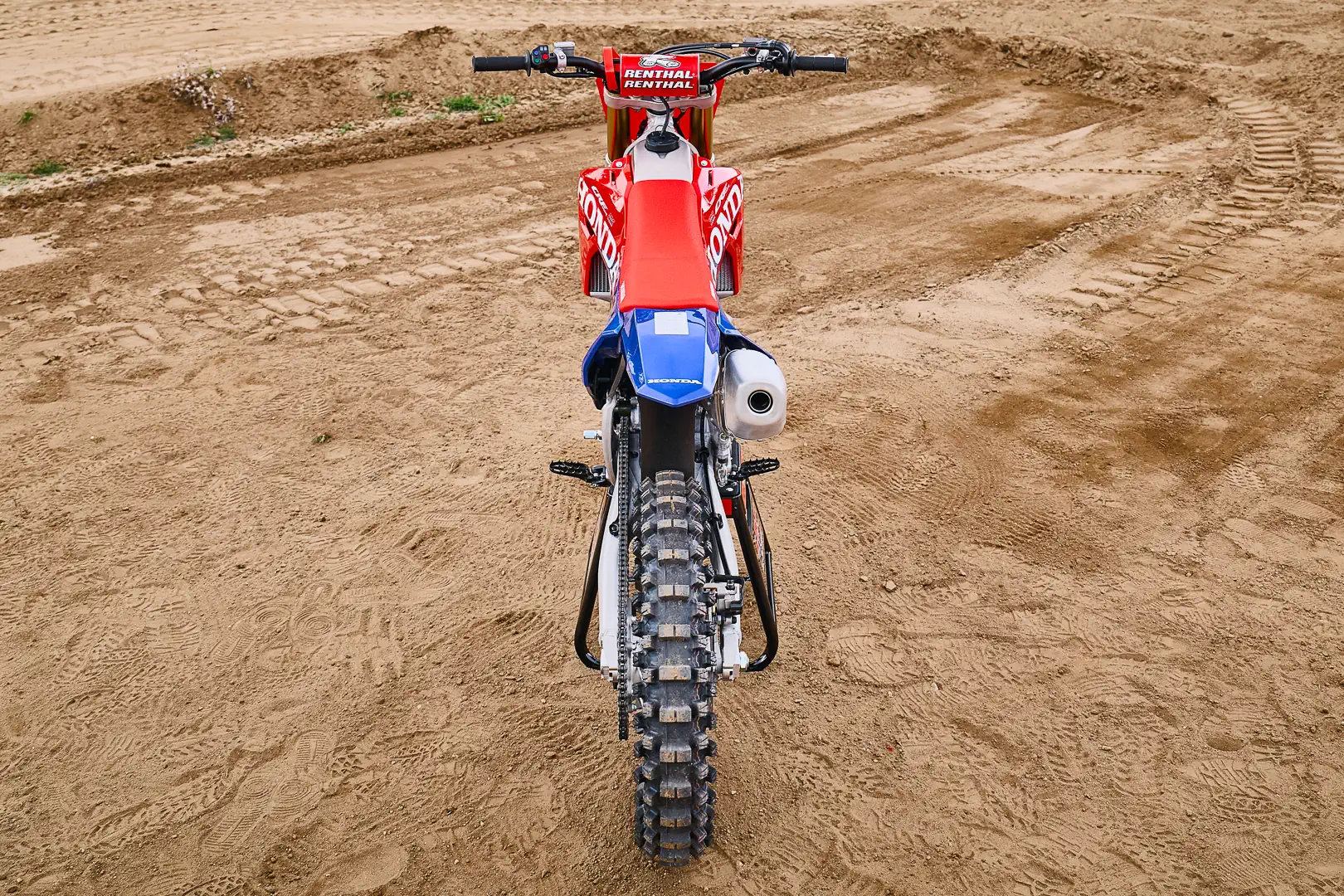
The exhaust system was redesigned for the new engine and to meet the AMA’s tighter sound limit of 109.9 dB. The header is 3.4 inches longer, and the muffler is 3.0 inches longer. A dual-resonator design has one resonator in the header and one in the muffler to manage noise while optimizing power delivery. The muffler is 6061-T6 aluminum.
The clutch is an entirely new design, and it introduces a new technology from Honda. The basket diameter shrinks 7mm to 132mm, and the primary driven gear uses a lighter ring-type layout. The key change is a rubber-damper-activated back-torque limiter. Rather than the cam-type slipper clutch design used on many street bikes, this system uses a rubber damper that deforms under back torque to reduce clutch capacity, smoothing corner-entry transitions. Honda’s MXGP team validated the design’s shape, durability, and limiter capacity in competition. The hydraulically actuated eight-plate clutch retains good durability and a light lever pull on the 2027 Honda CRF450R.
All five gears in the transmission now have taller ratios. First drops from 18.954 to 18.173; fifth from 9.271 to 8.889. Honda says the revised ratios allow the engine to operate over a wider speed range with fewer gear changes. The shift drum itself is 13.4mm shorter. This is achieved by combining two of the three lead grooves into a single groove. Also, the drum is made of a higher-strength material with thinner walls, cutting its weight by 46 percent. The main shaft is 14mm shorter overall. The entire transmission is 1.1 pounds lighter than before, representing a 15 percent reduction.
The starter system has been redesigned from the ground up, dropping more than a pound and improving reliability. The gear layout was reduced from five axes to four. The torque eliminator changed from a press-fit type to a friction-disc type using three disc springs and one friction disc. Also, the one-way starter clutch was downsized. Honda says the redesign produces a more stable and more durable slip-torque characteristic.
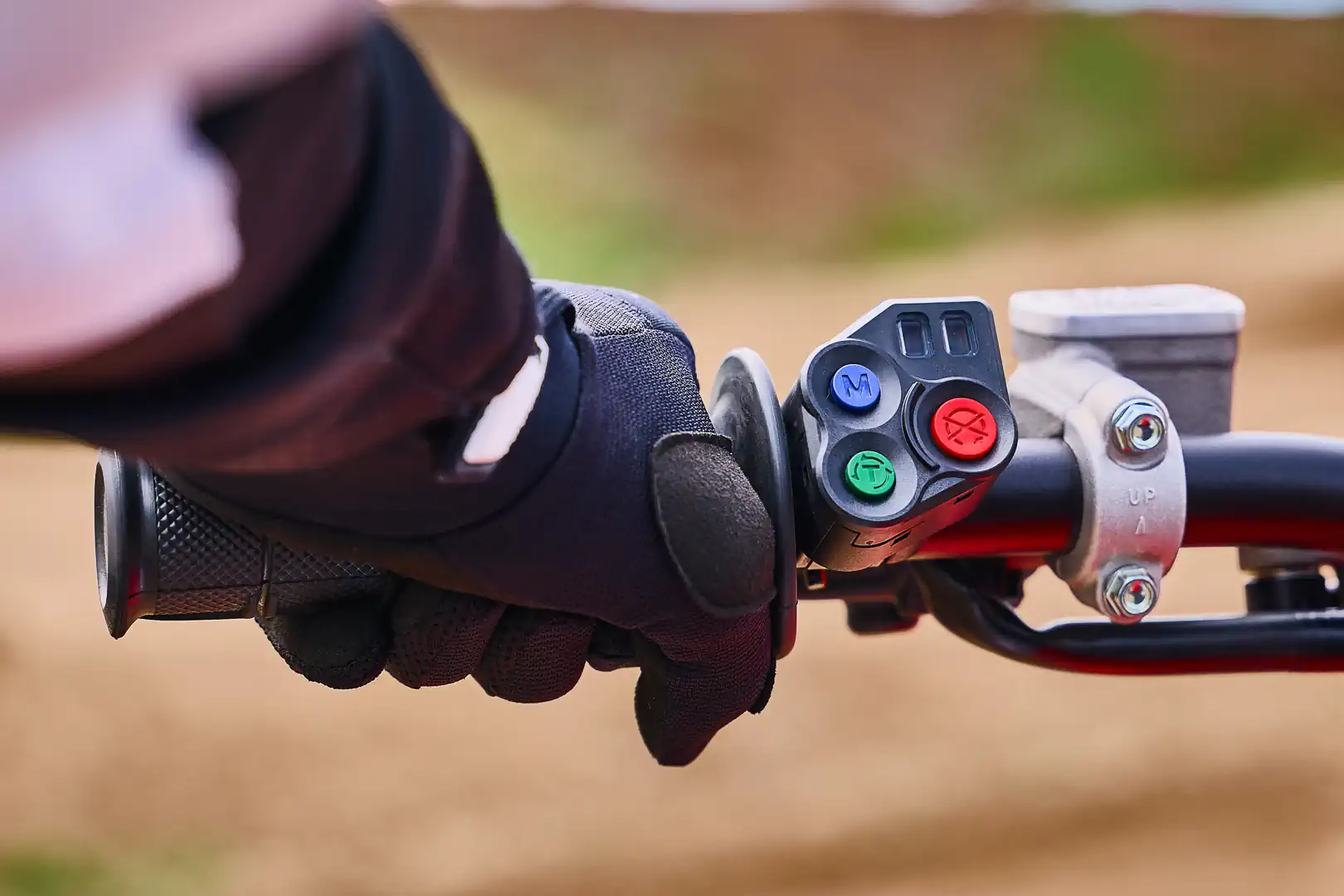
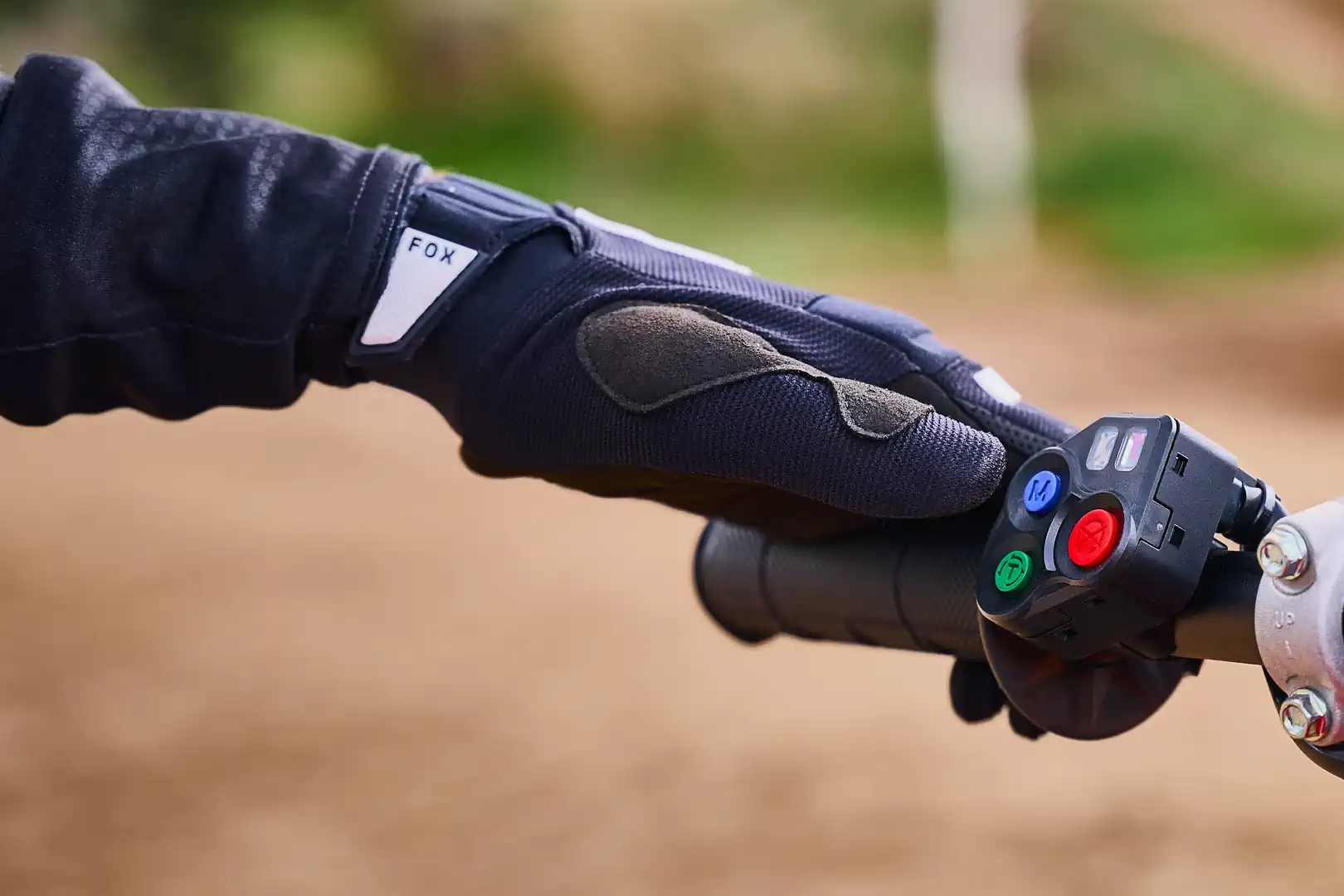
The 2027 Honda CRF450R’s electronic control package has been updated with input from HRC factory teams. Three ignition maps — Aggressive, Standard, and Smooth — are selectable via a left-handlebar-mounted switch. There are separate maps for 1st/2nd, 3rd/4th, and 5th gears.
Honda’s traction control offers three levels of intervention, plus off. The system monitors rpm spikes and responds by retarding ignition timing and adjusting fuel injection to control rear-wheel spin.
Launch control has three modes. They range from a high-rpm hold with minimal wheel-spin intervention for experienced riders in high-traction conditions to a low, gradually rising rpm hold for less experienced riders or for slippery starts. All settings have been tuned based on feedback from HRC works teams.
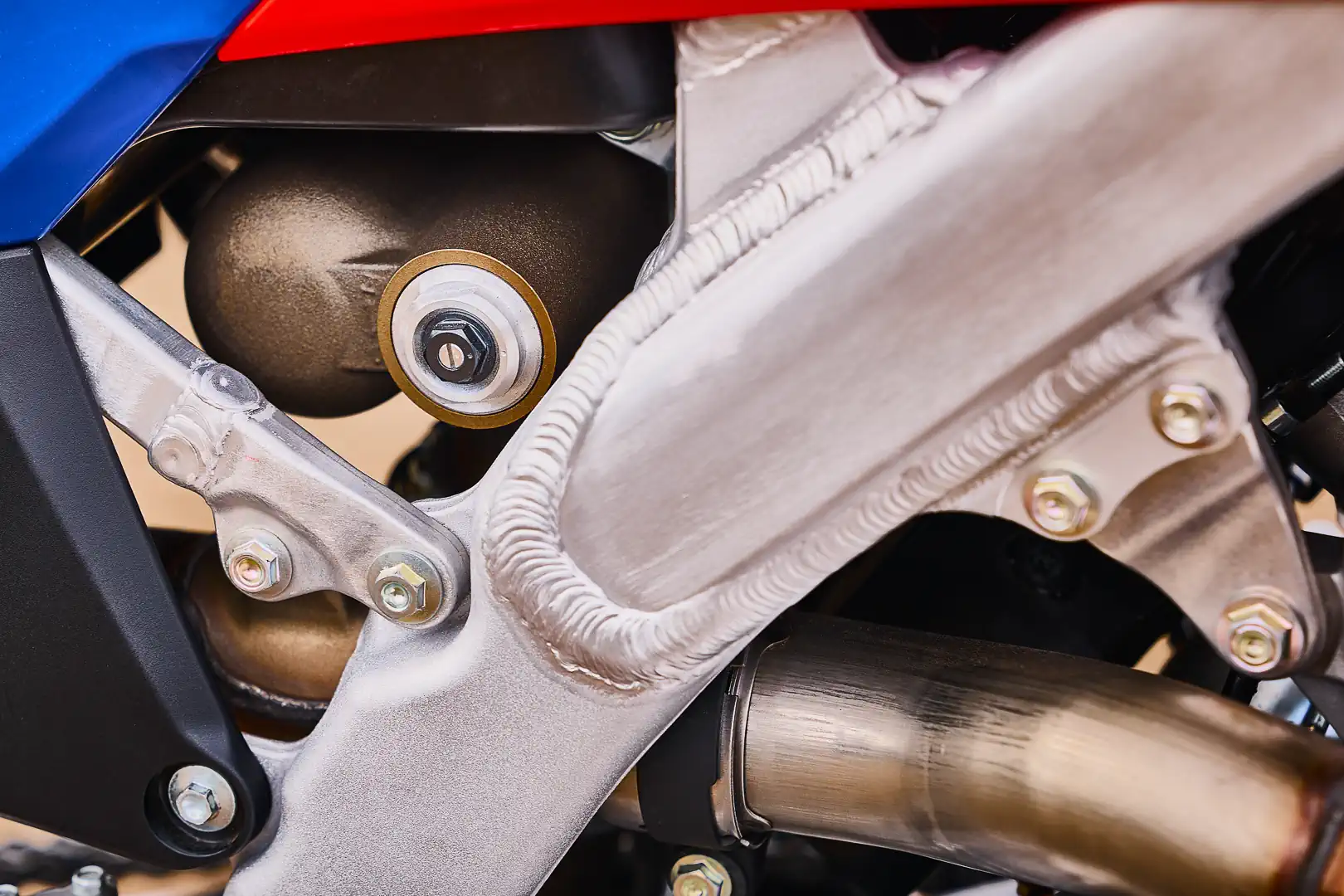
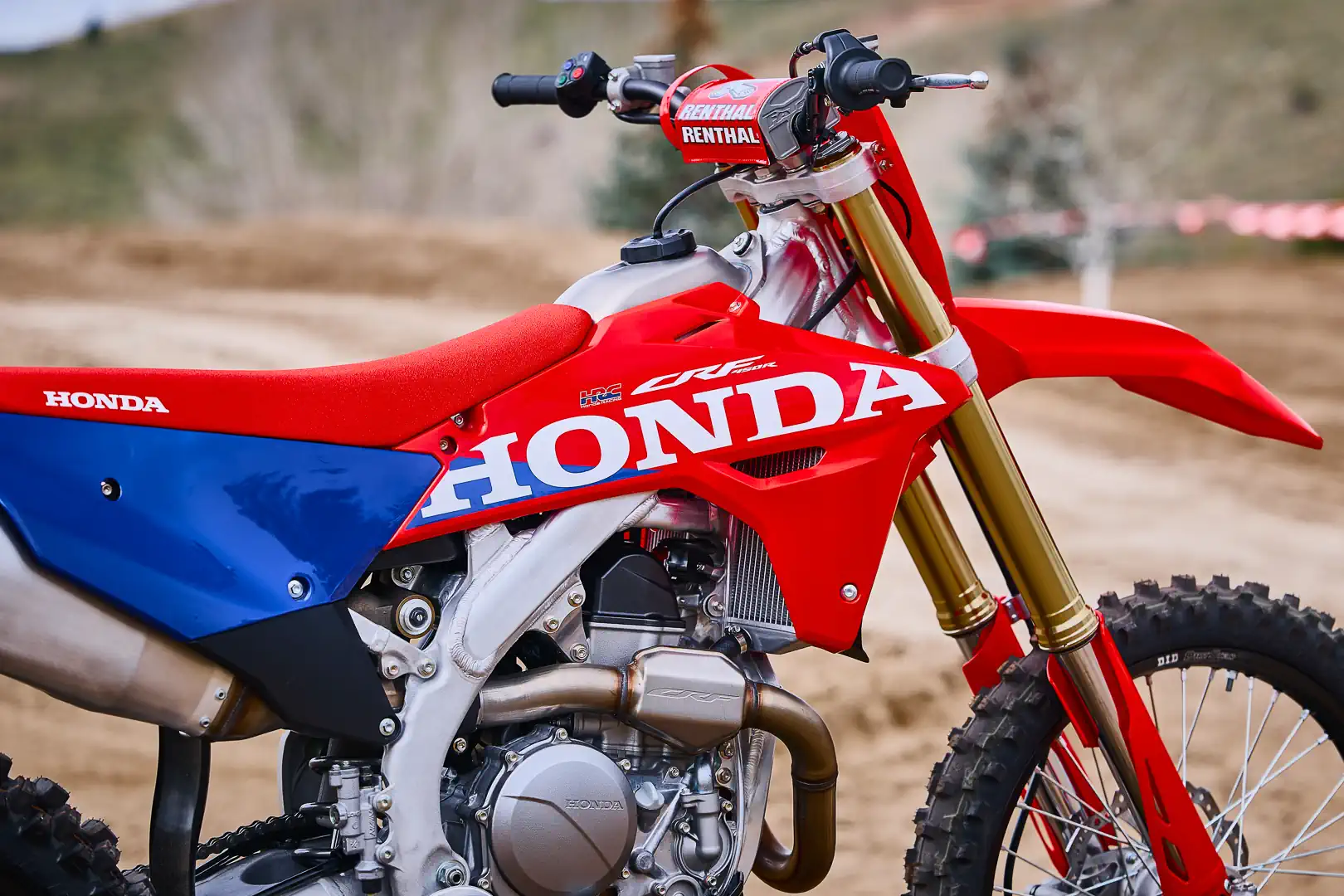
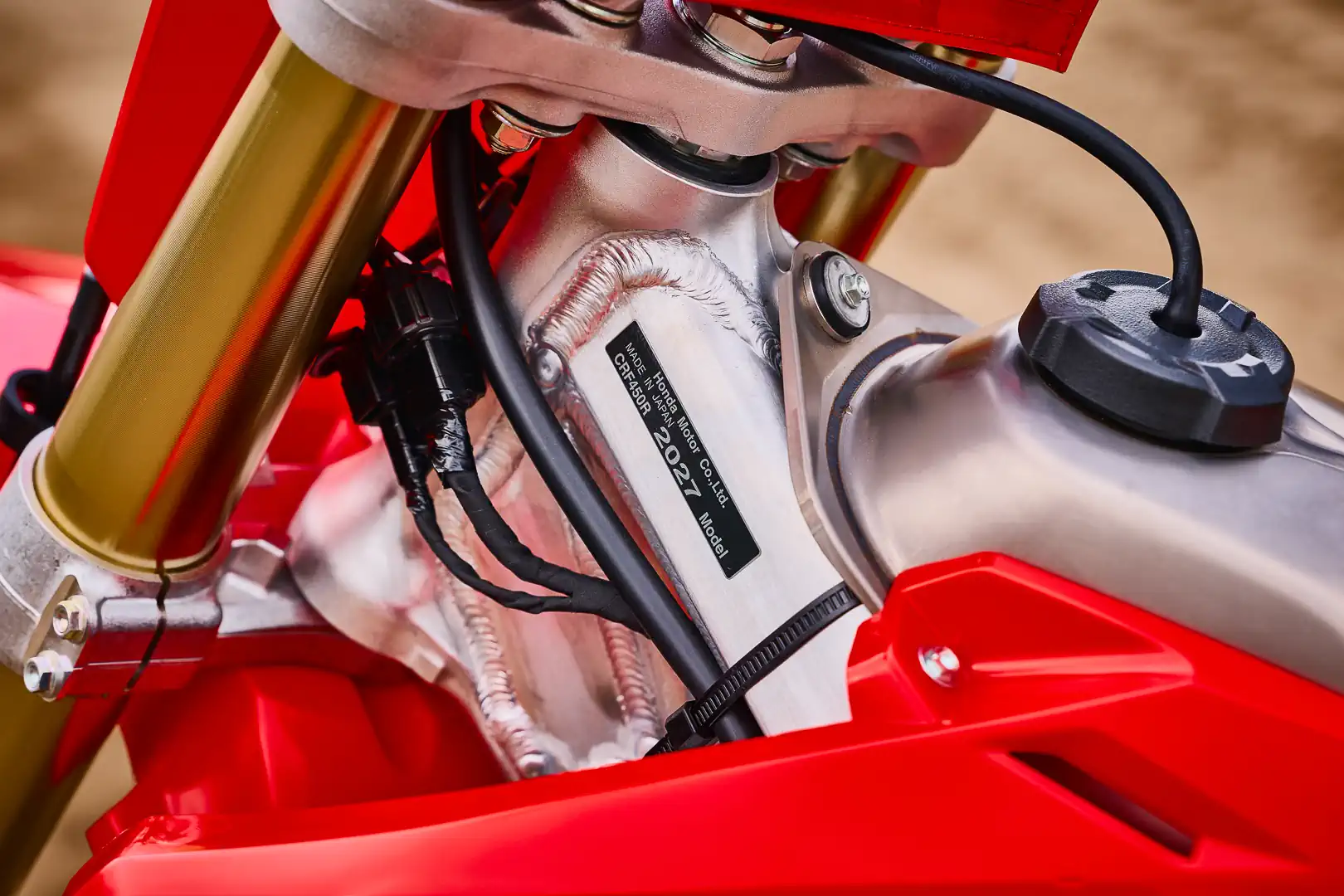
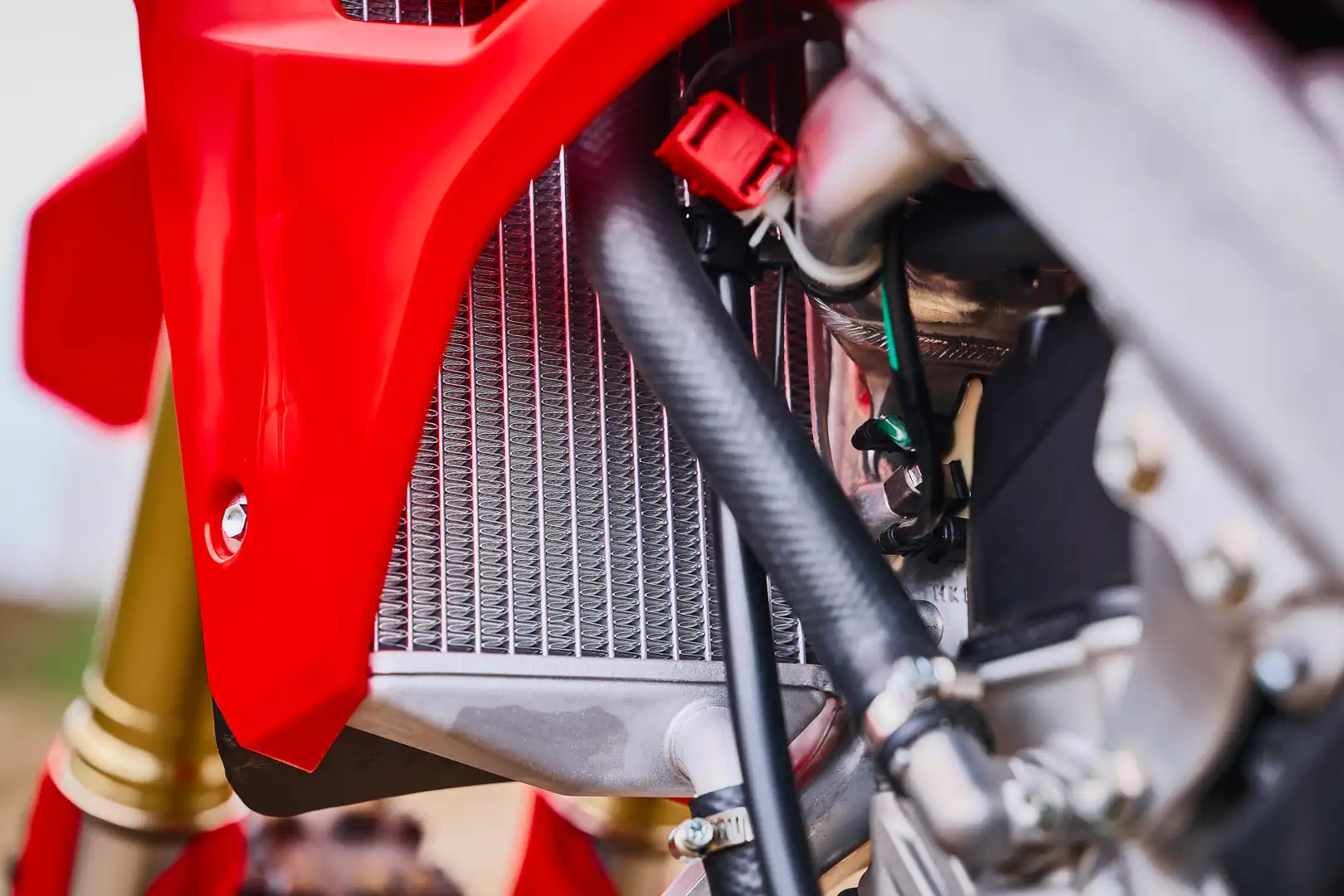
The main frame has approximately 70 percent new components. Longitudinal and torsional rigidity have been increased by about 10 percent, with no increase in weight. The head-pipe area was reworked with a larger gusset that is now cast rather than forged. The cylinder-head hangers are now aluminum instead of steel, saving a combined 0.3 pounds. The lower cradle and middle engine hanger were revised to accept the new, narrower engine.
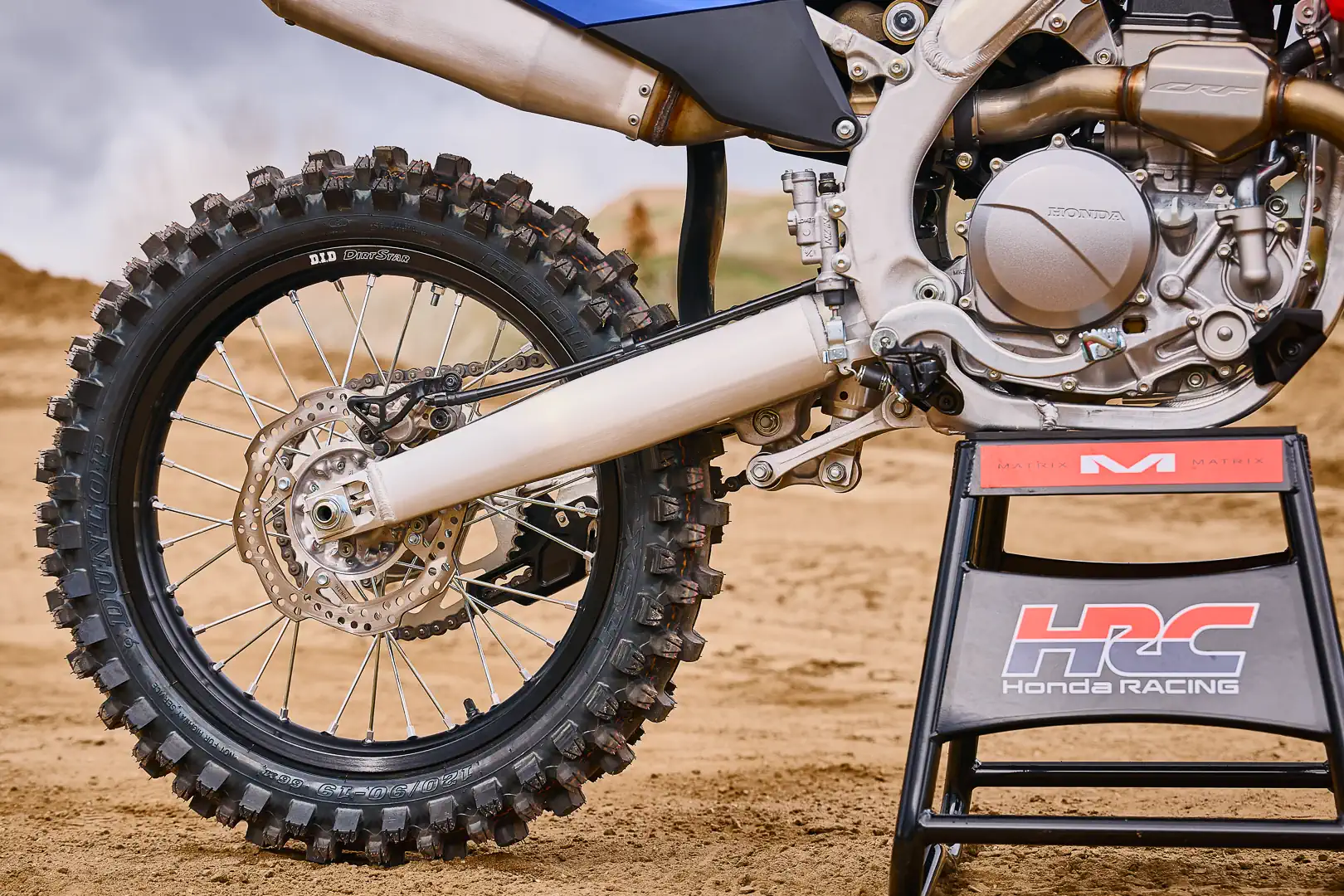
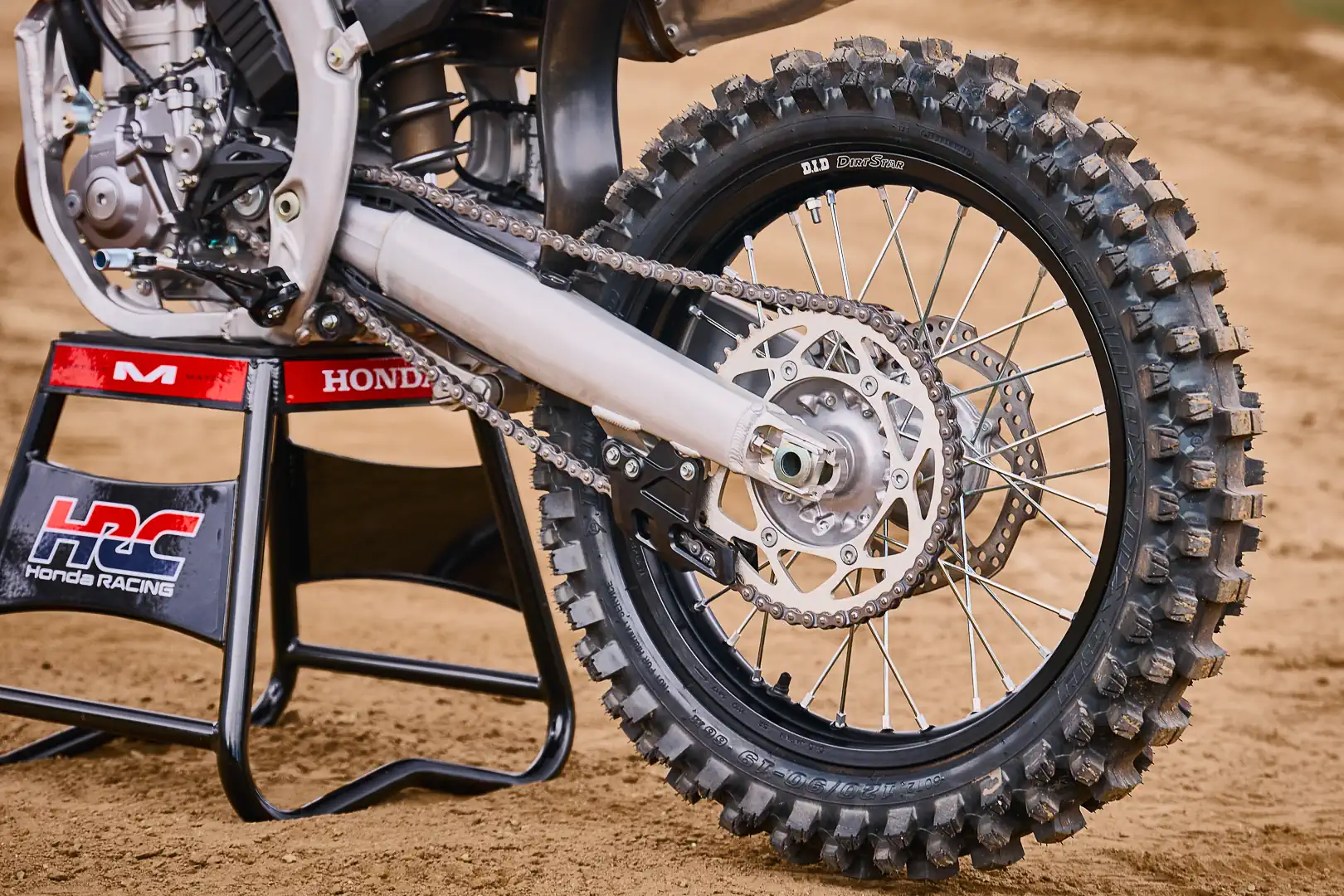
The swingarm is new, and the entire piece is hand-polished. Throat welding at the pipe-to-cross-member joints produces a smooth surface, allowing engineers to use larger-diameter main pipes with thinner walls. This cuts the swingarm’s weight by 0.9 pounds while maintaining rigidity. The main arms are now D-shaped with no sharp edges, which Honda says minimizes drag in ruts. The chain guide uses an impact-resistant resin developed by the Monster Energy Honda HRC Rally team. The chain slider has been reinforced top and bottom, with a small damping hole added to reduce chain bounce.
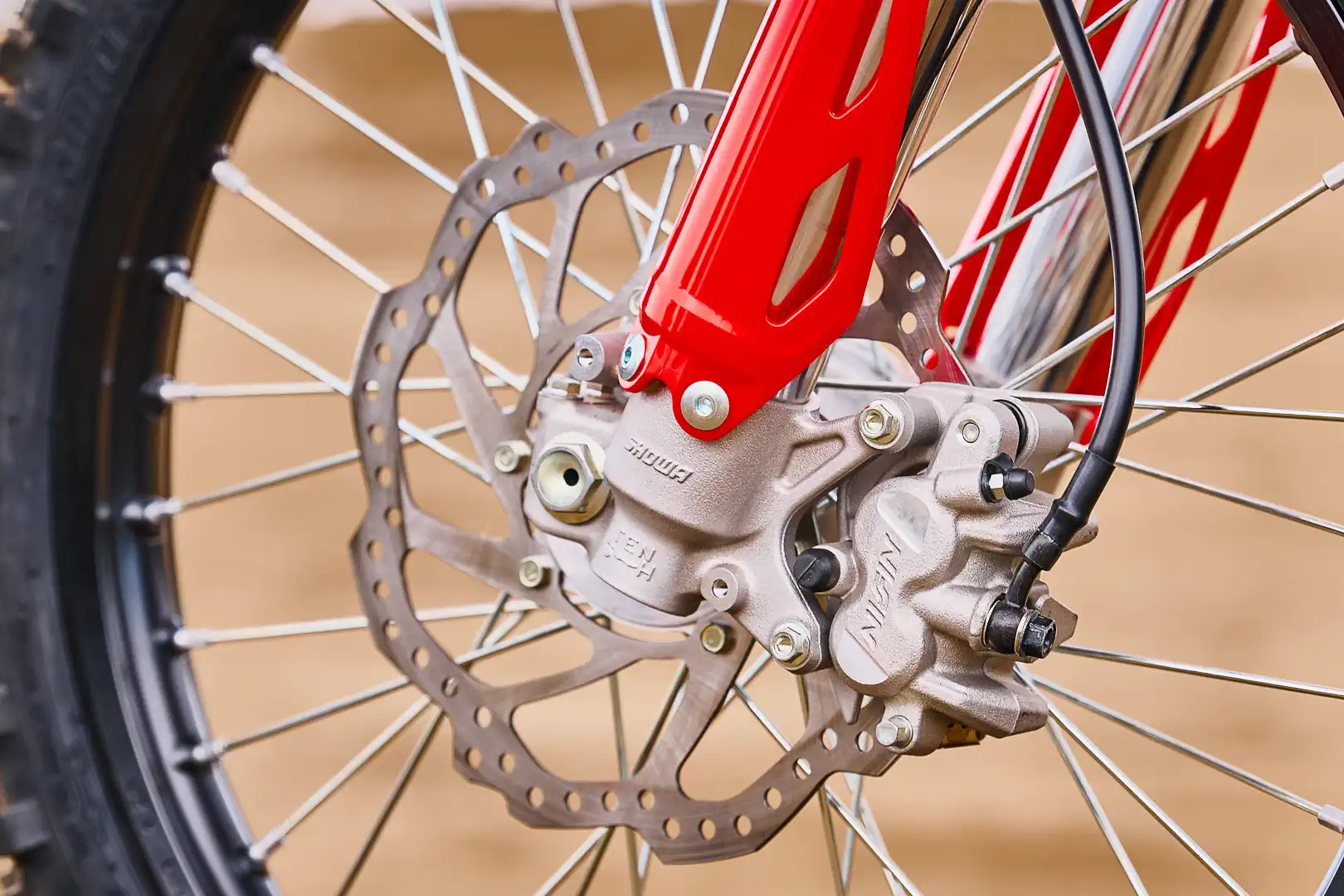
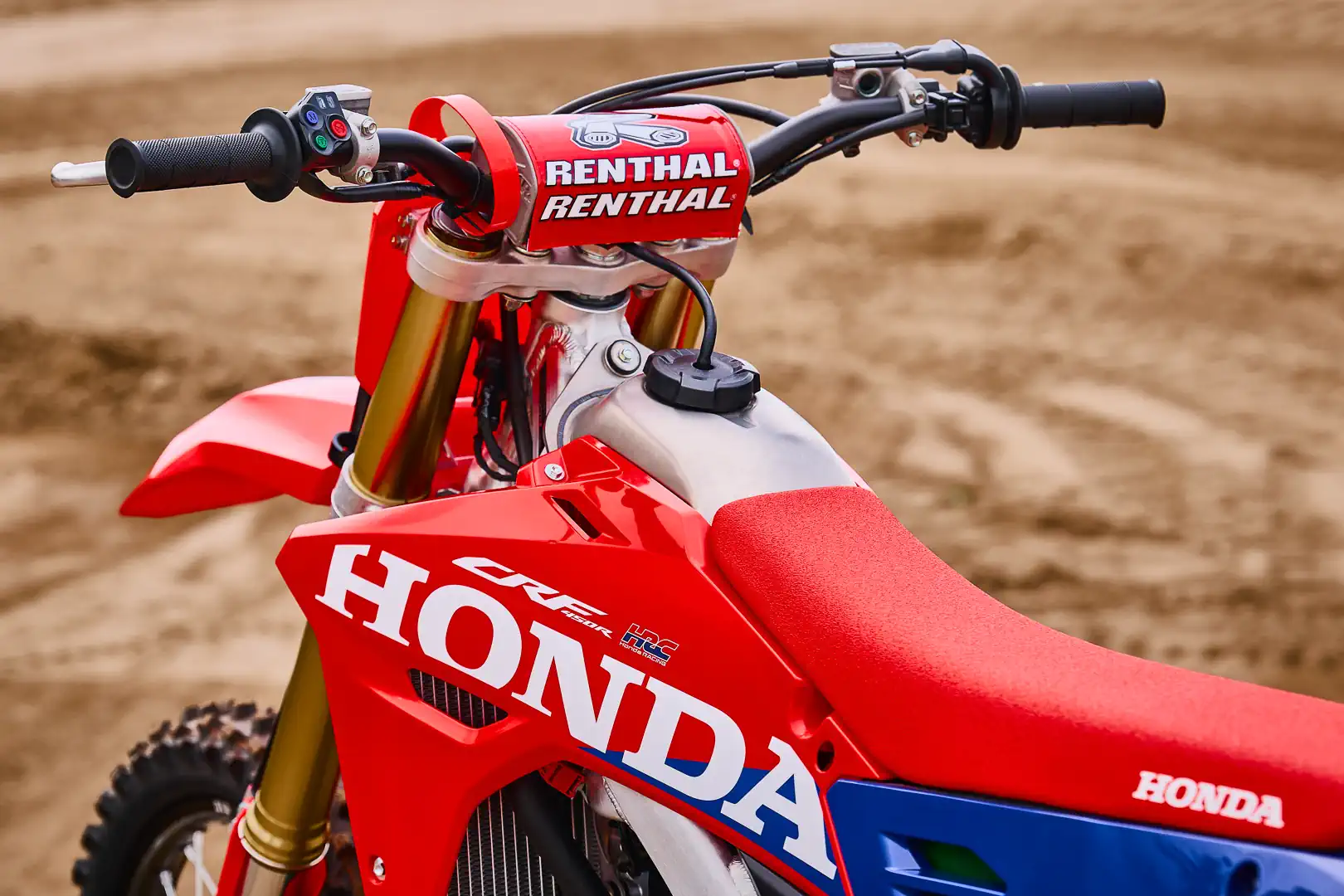
The fork switches from a Bending Check Valve structure to a Showa’s Dynamic Blow System main-piston-valve structure. The inverted 49mm Showa fork gets a stiffer spring, up 0.2 N/mm to 5.2 N/mm. Other changes include Kashima coating on internal sliding parts, a smaller hole in the main piston rod to increase low-speed damping force, a new cylindrical aluminum spring seat replacing the previous conical resin seat, and thinner, more numerous sub-comp valve shims. Honda says the changes improve stroke consistency and increase compression damping in the low-speed range.
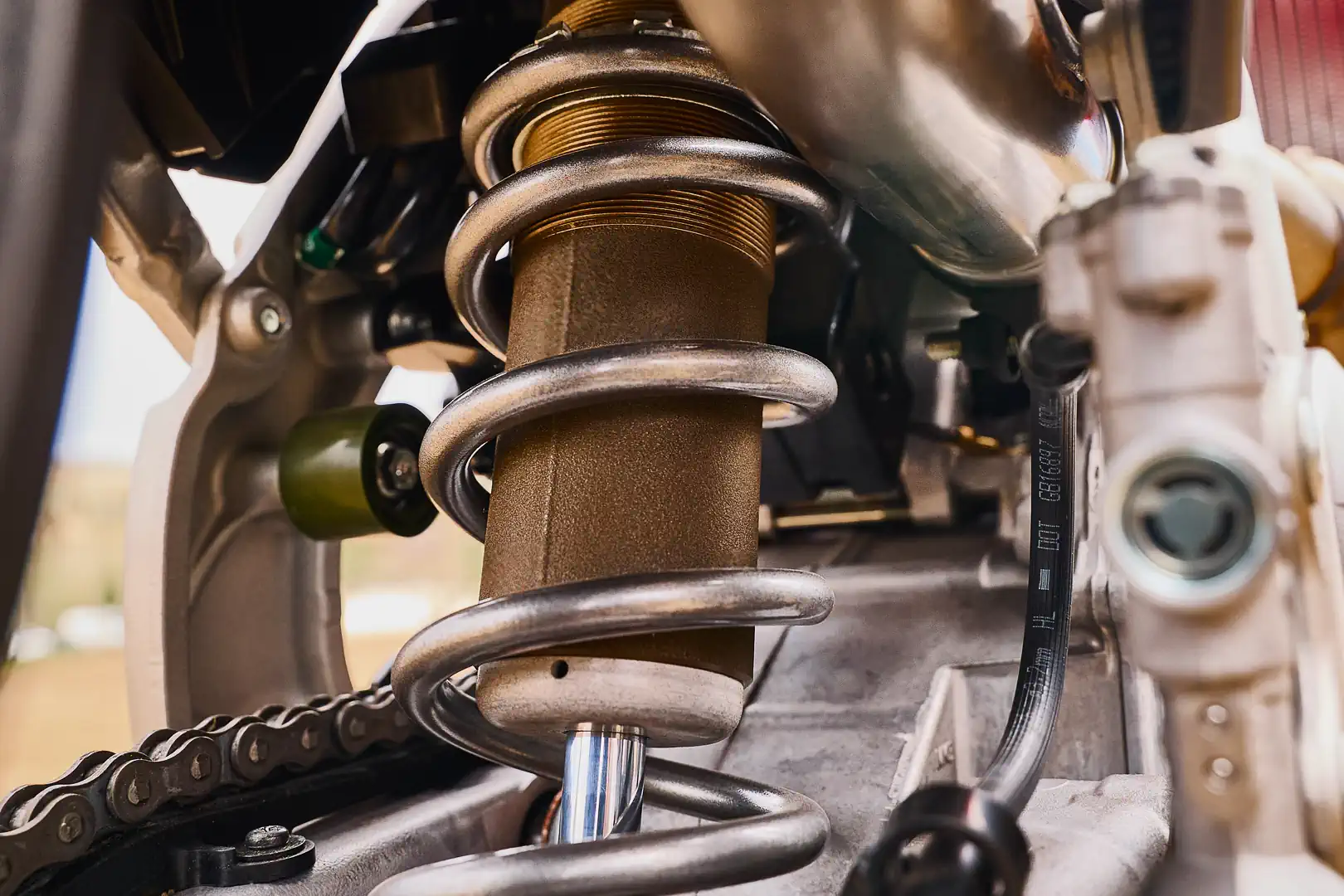
The Showa shock also gets a broad range of updates to match the fork changes. These include a more responsive round bladder, a dramatically stiffer compression-damping-force adjuster spring (87.4 N/mm versus the previous 7.85 N/mm), and SS37 oil replacing SS25 for a more consistent damping feel front-to-rear. The linkage now uses a thrust needle bearing instead of a thrust washer, reducing friction for better traction feedback. The bump rubber is smaller, improving bottoming feel. Additionally, the spring guide has been redesigned to increase adjustment sensitivity. Reservoir body machining reduces weight by 1.4 ounces.
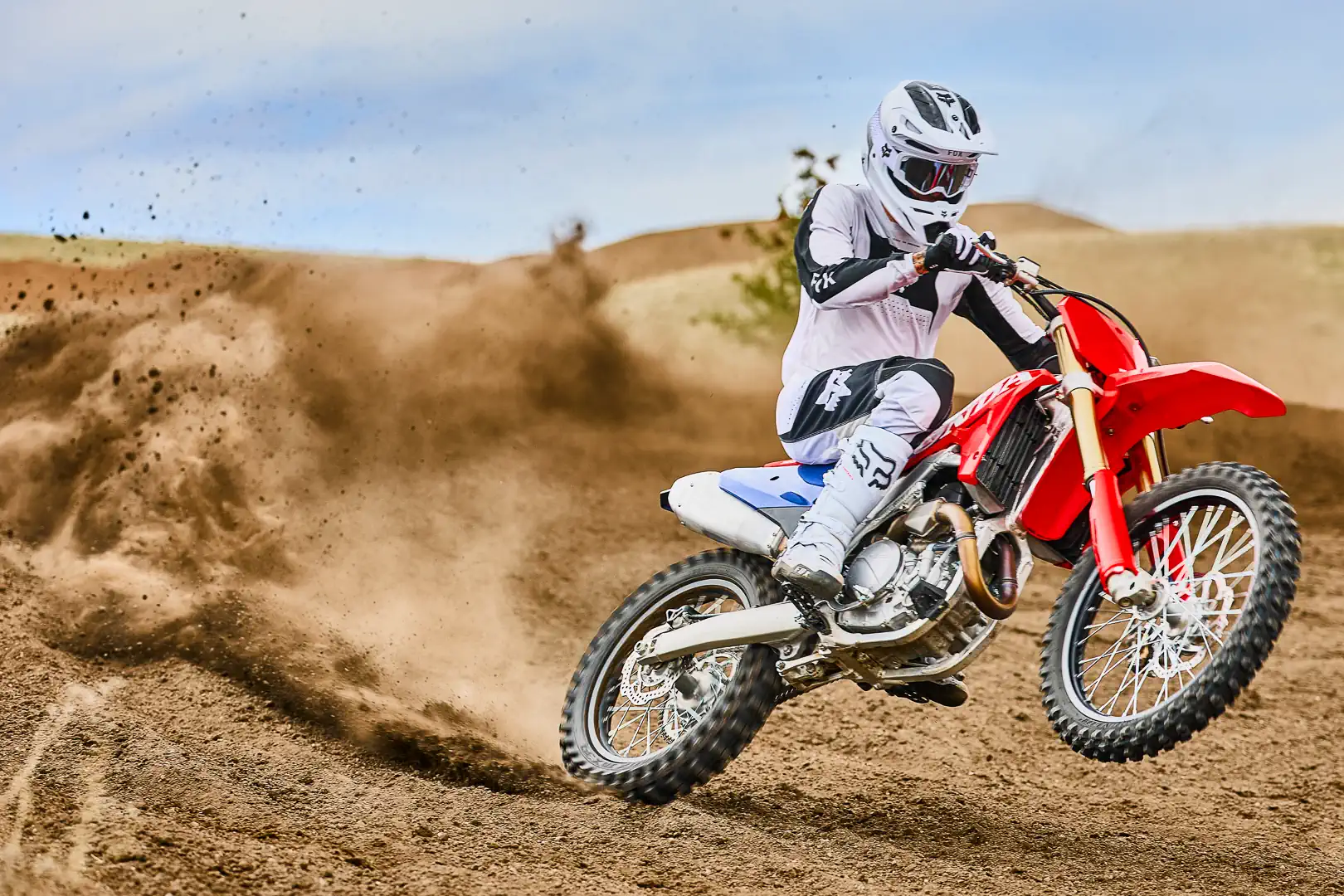
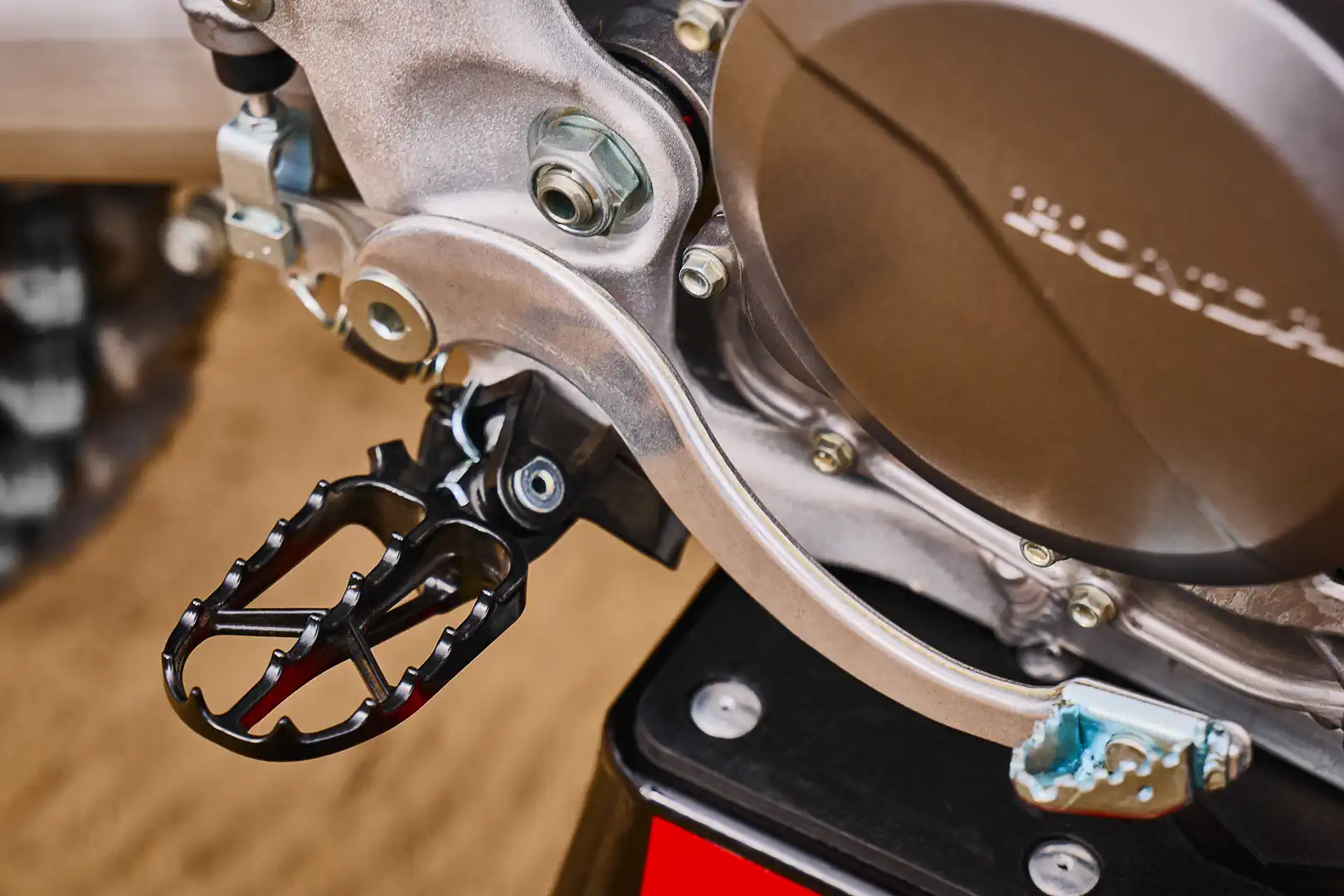
Geometry changes were made to improve stability. The footpegs move 5mm rearward, shifting rider weight toward the back of the bike to improve traction and shock loading. The wheelbase grows 0.3 inches to 58.7 inches, the rear axle moves up 0.5 inches, and rake increases 0.2 degrees to 27.5 degrees. Trail is 4.6 inches.
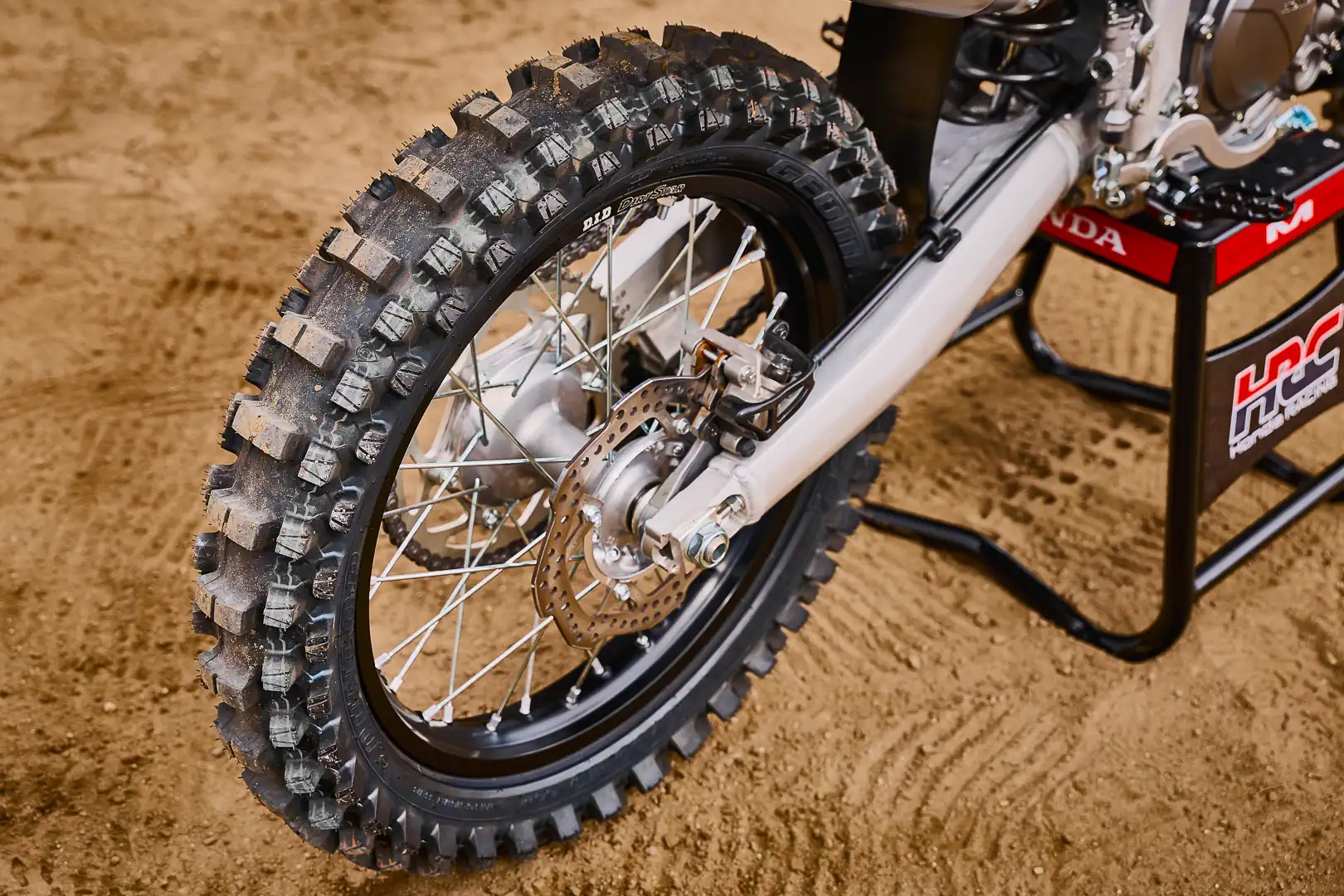
The rear wheel hub is new. Using input from works-level racing programs, the new hub increases strength and serviceability while cutting weight by 0.6 pounds. The span between the axle bearings has been increased for greater rigidity, and the spoke angle has been revised to optimize wheel strength and traction.
Honda has changed the rear sprocket mounting pattern. The new rear sprocket has a mounting diameter 7mm larger than before. The fully machined RK unit ups the mounting diameter to 160mm. If you have a collection of Honda rear sprockets for your CRF450R, it’s obsolete.
The Dunlop Geomax MX34 tires replace the MX33s. The rear tire gets wider, sporting a 120/90-19 meat versus the previous lower-profile 120/80. The center blocks are 11 percent taller and 44 percent wider. Dunlop says the new carcass material will help the tire last 30 percent longer.
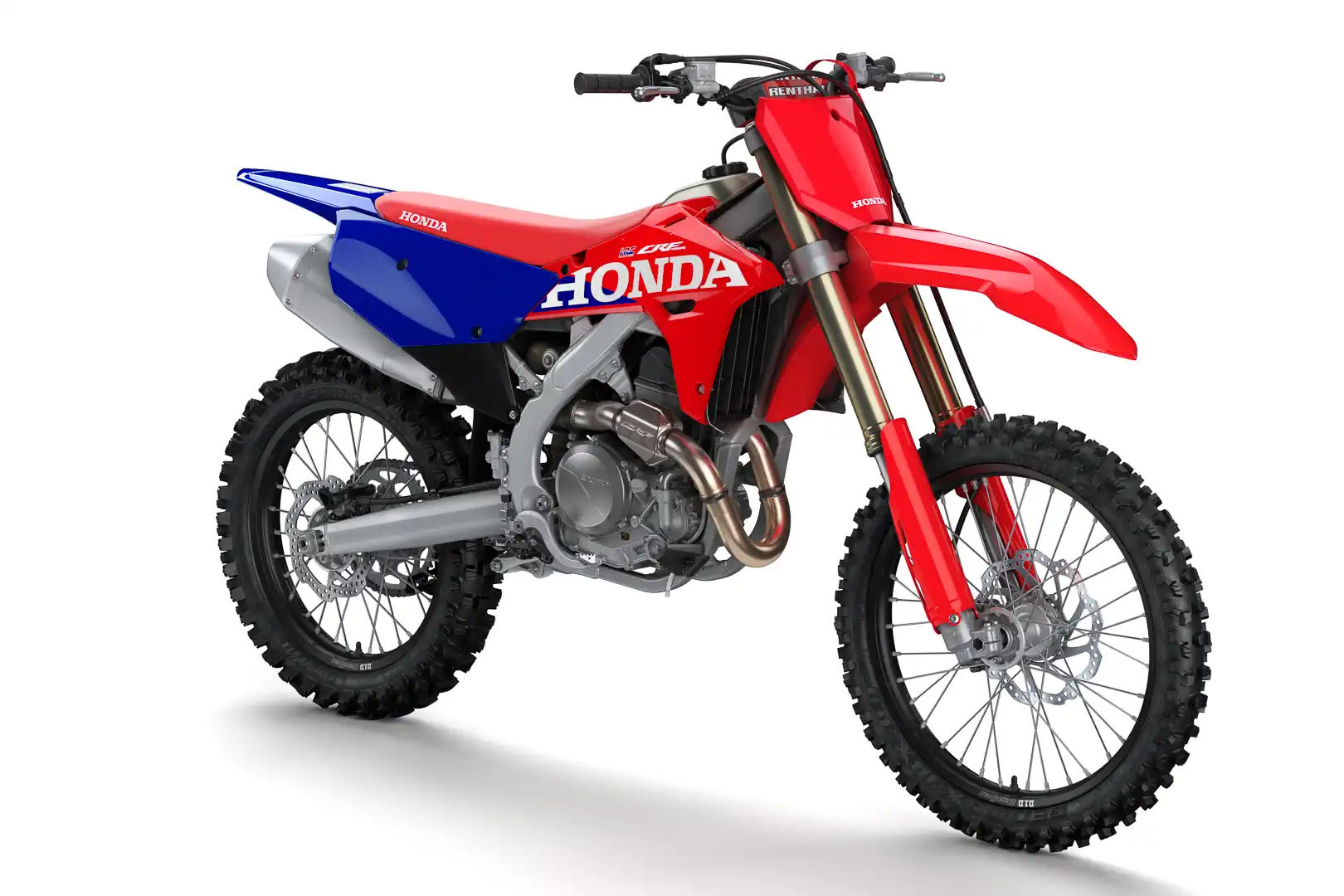
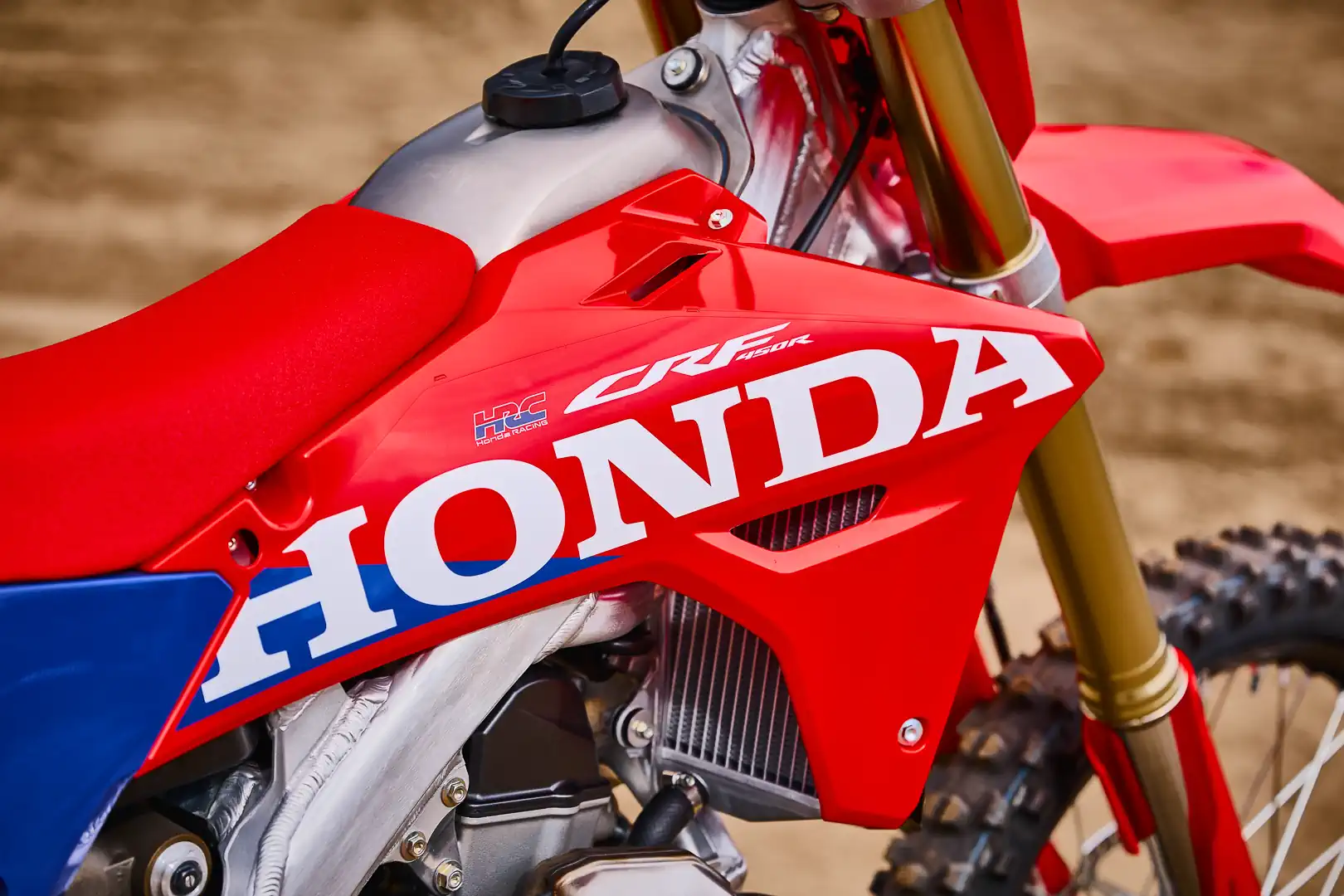
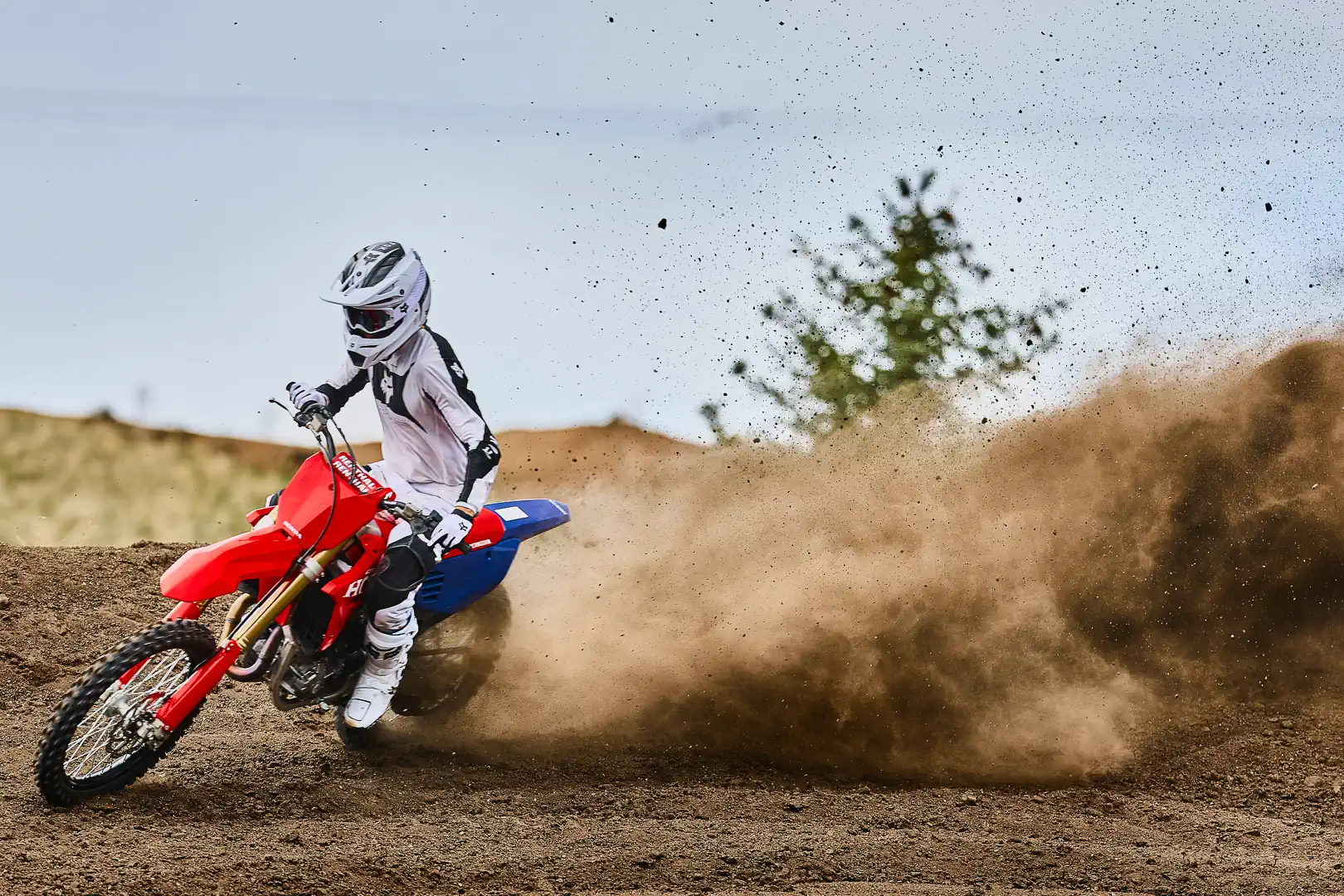
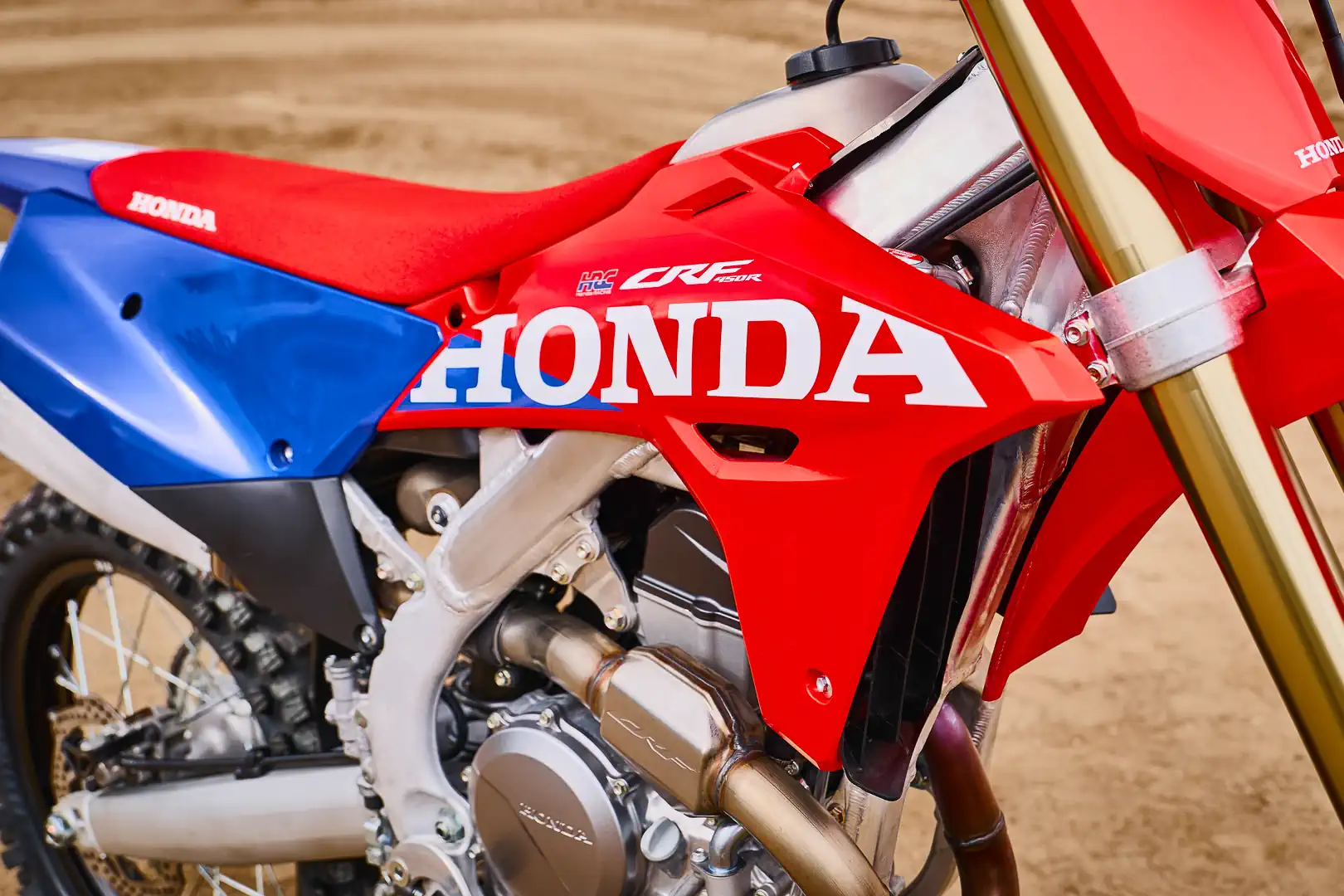
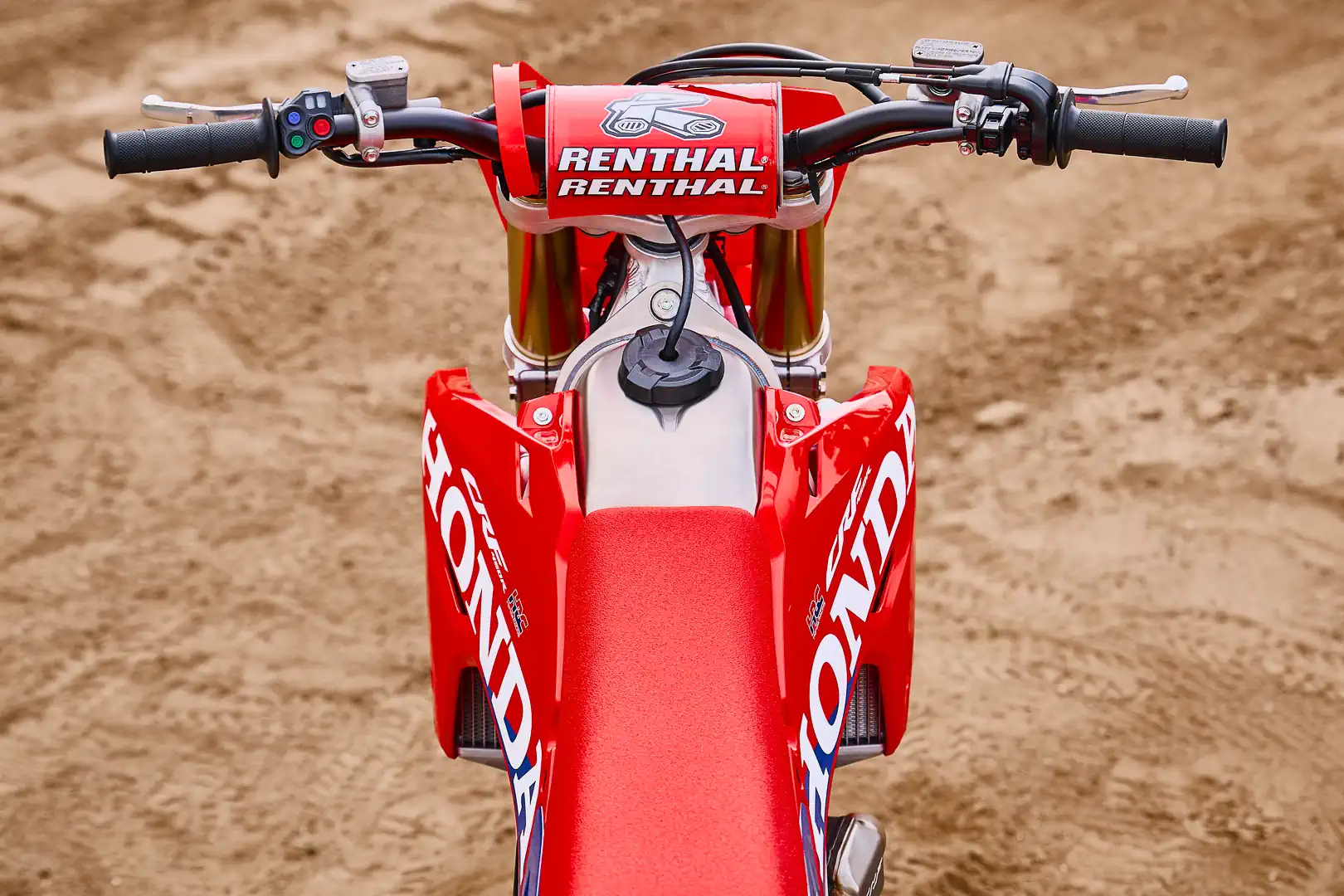
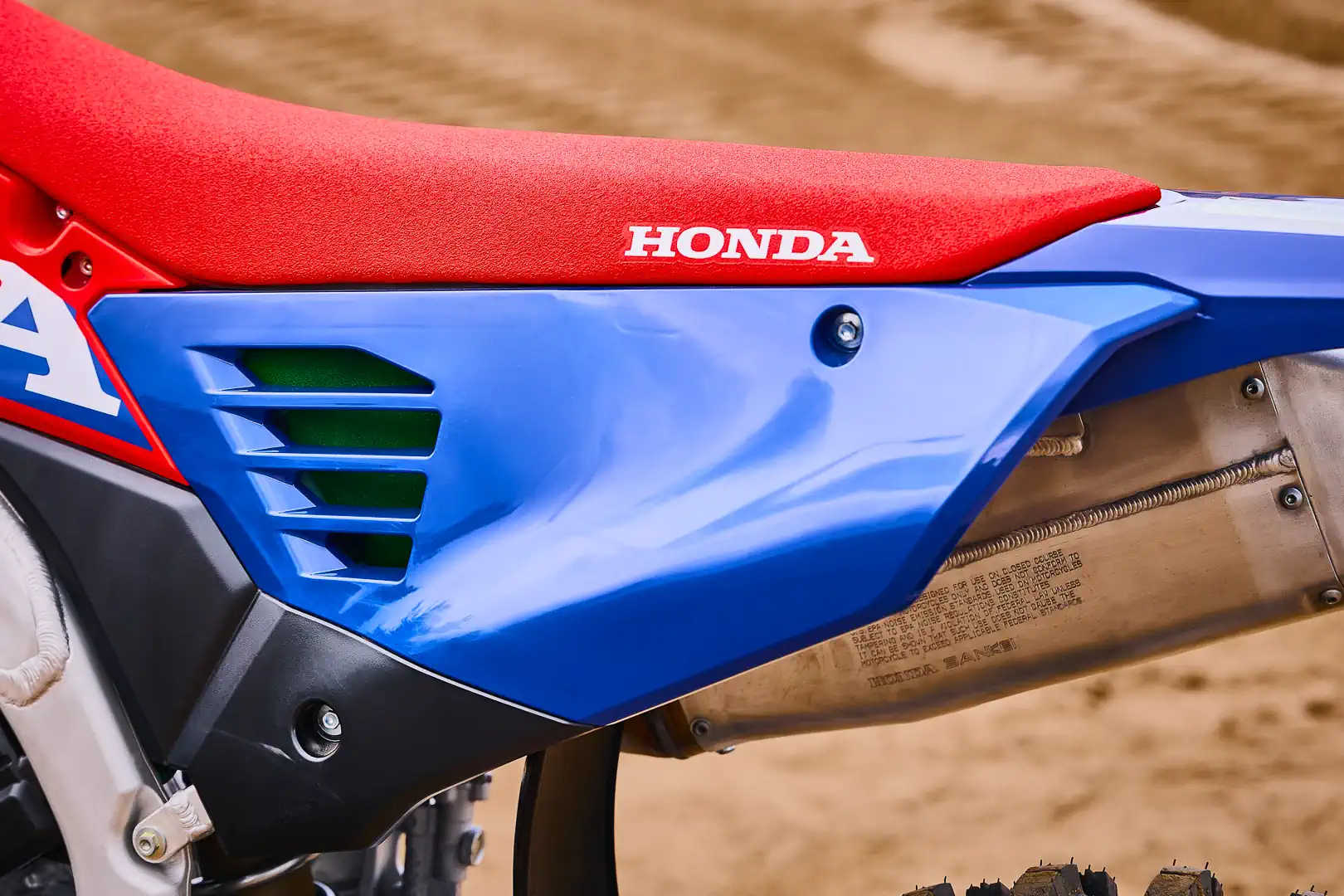
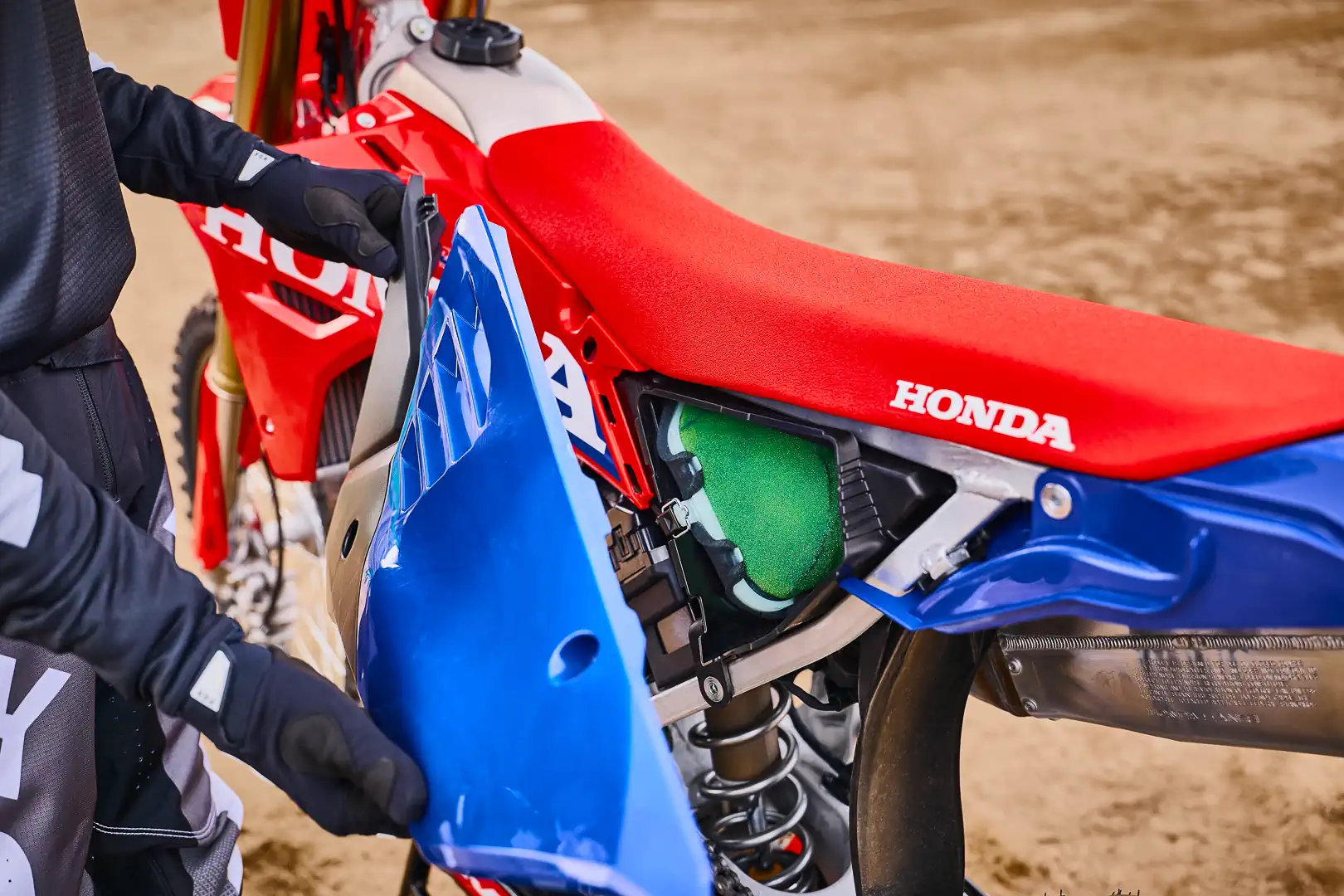
New bodywork on the 2027 Honda CRF450R matches the look used by the Honda HRC Petronas MXGP team. The new red/white/blue tricolor scheme and a large Honda logo have been controversial among the faithful. However, it looks great in person. The radiator shrouds and side panels are reshaped, making the bike 2mm wider at the shrouds and 7mm wider at the seat. This creates a flatter side surface that’s easier to grip with the legs. The side panels are now symmetrical. The left panel now mounts with front and rear bolts for a more secure attachment, though this will slow maintenance. The seat has more cushioning than before.
The titanium fuel tank capacity grows from 1.7 gallons to 1.9 gallons. AMA Nationals riders had complained that the CRF450R was too thirsty to run a 1.7-gallon tank, and factory tanks were expensive. So, Honda added a few ounces to the capacity so it can make it to the checkers in Pro Motocross. Honda claims the new tank does not change the ergonomics.
The front fender, front number plate, radiator shrouds, and seat base are made from post-industrial recycled materials. Honda says the recycled materials achieve a high-gloss finish with good weather resistance. It’s part of Honda’s Triple Action to Zero sustainability program, if you’re concerned about that sort of thing when you’re racing a dirt bike.
Extensive maintenance detail changes simplify routine service. The clutch hose routing was updated, so the fuel tank no longer needs to be removed to access it. The air filter is accessible through the bolted-on side panel, so there is no airbox lid. The shock can now be removed without first pulling the ECU. The rear brake rotor mounts directly to the hub, eliminating the nuts, so it can be removed and installed with one wrench. The chain guide now has press-fitted nuts, so you only need one wrench. The rear wheel’s side collars are rounded and more securely retained, simplifying rear wheel removal and installation.
It’s amazing how many changes you get for $400. While it must have pained Honda’s marketing team to see the price of the 2027 Honda CRF450R creep into the five-digit range for the first time, the engineering department worked to ensure the customer felt it was worth it. Cutting 9.9 pounds for $400 is a miracle. So, all that’s left now is to ride it.
Hello and welcome again to the Motos and Friends Podcast. This episode is brought to you by Leod Escapes.
* * * * *
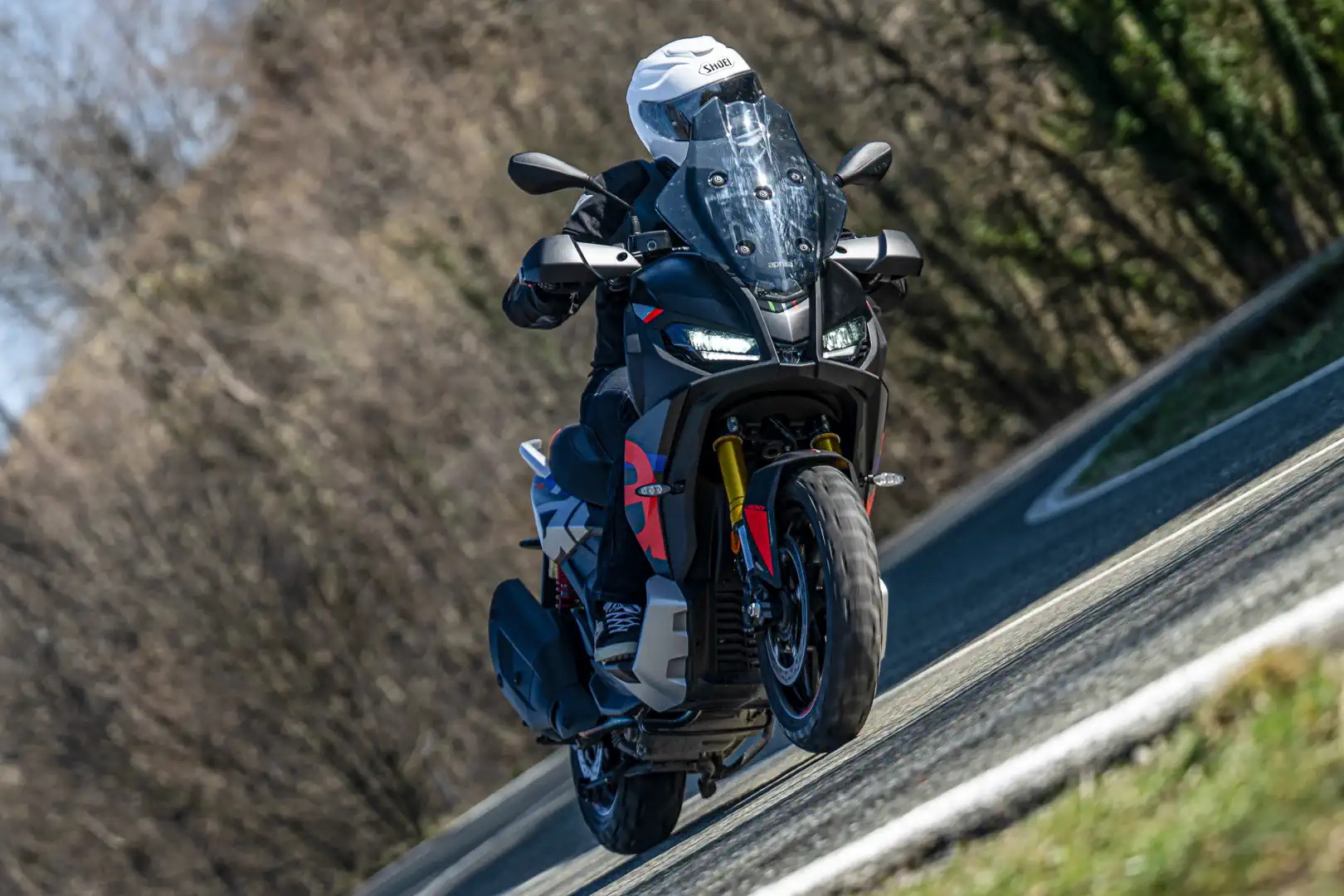
Aprilia is bringing a scooter to North America, and it’s one designed to appeal to adventure motorcyclists. The SR GT 400 is a mid-size scooter built around a steel motorcycle-style frame, a 399cc single, and off-road-ready hardware. It reaches US dealers as soon as this month. Don Williams and Kelly Callan spent some time riding the Aprilia and were surprised by what they discovered. Is this a real motorcycle or just a good-looking urban scooter?
* * * * *
Cat McLeod is founder and owner of Leod Escapes, the ultimate tour company for sport-minded motorcycle riders. Cat talks to us this segment about some of his amazing European experiences and tours that include of course, riding some amazing MotoGP tracks on new BMW S1000RRs. If you like what you hear, now is the time to book your trip of a lifetime, so visit LeodEscapes.com to find out more.
* * * * *
Our guest this episode is Terry Vance, the multiple Motorcycle and Motorsports Hall-of-Famer. Terry is of course the former professional motorcycle drag racer, team owner, and co-founder of the high-performance parts company Vance & Hines. Teejay Adams chats with Terry about his incredible career that includes being the first rider to hit 200 mph in the standing quarter-mile.
Having won this year’s MotoAmerica Mission King of the Baggers championship with Hayden Gillim riding the Vance & Hines factory Indian Challenger, and with Harley-Davidson’s recent withdrawal, Terry gives us his thoughts on where the series might go from here.
* * * * *
Here’s quick reminder to check out our monthly digital magazine. It’s filled with everything you want to read on motorcycling, including some things you’ve probably not seen elsewhere. It’s absolutely free and you will find it on the Apple App Store and of course on Google Play as well.
Don’t forget to leave us your comments on our social media—we’re on all the usual platforms at Ultimate Motorcycling. We love hearing your feedback… so good or bad, please let us know what you think. If there’s something you’d like us to cover, we’d love to hear those ideas too!
We use cookies and browser activity on this website
Functional
Always active
The technical storage or access is strictly necessary for the legitimate purpose of enabling the use of a specific service explicitly requested by the subscriber or user, or for the sole purpose of carrying out the transmission of a communication over an electronic communications network.
Preferences
The technical storage or access is necessary for the legitimate purpose of storing preferences that are not requested by the subscriber or user.
Statistics
The technical storage or access that is used exclusively for statistical purposes.The technical storage or access that is used exclusively for anonymous statistical purposes. Without a subpoena, voluntary compliance on the part of your Internet Service Provider, or additional records from a third party, information stored or retrieved for this purpose alone cannot usually be used to identify you.
Marketing
The technical storage or access is required to create user profiles to send advertising, or to track the user on a website or across several websites for similar marketing purposes.