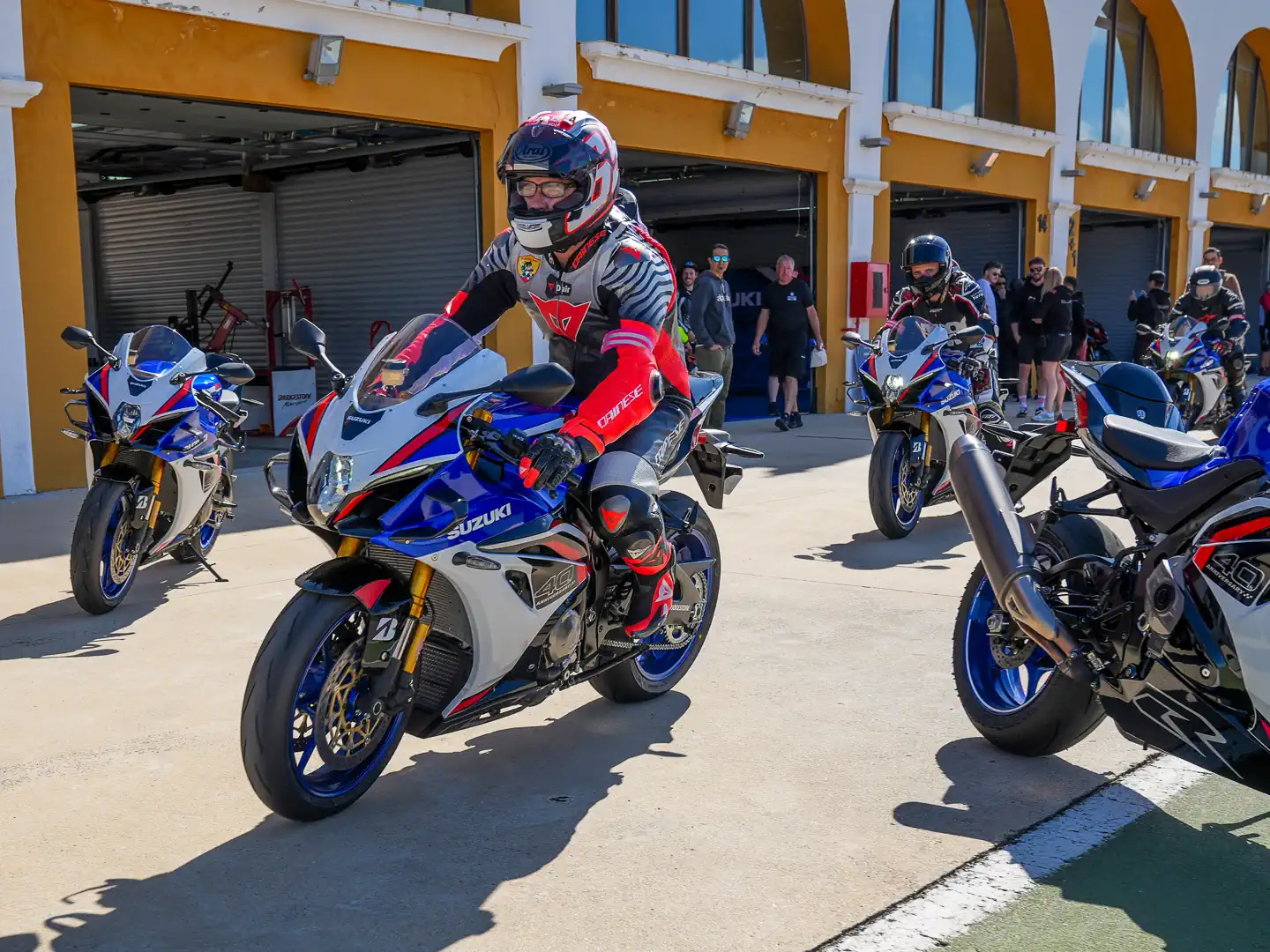
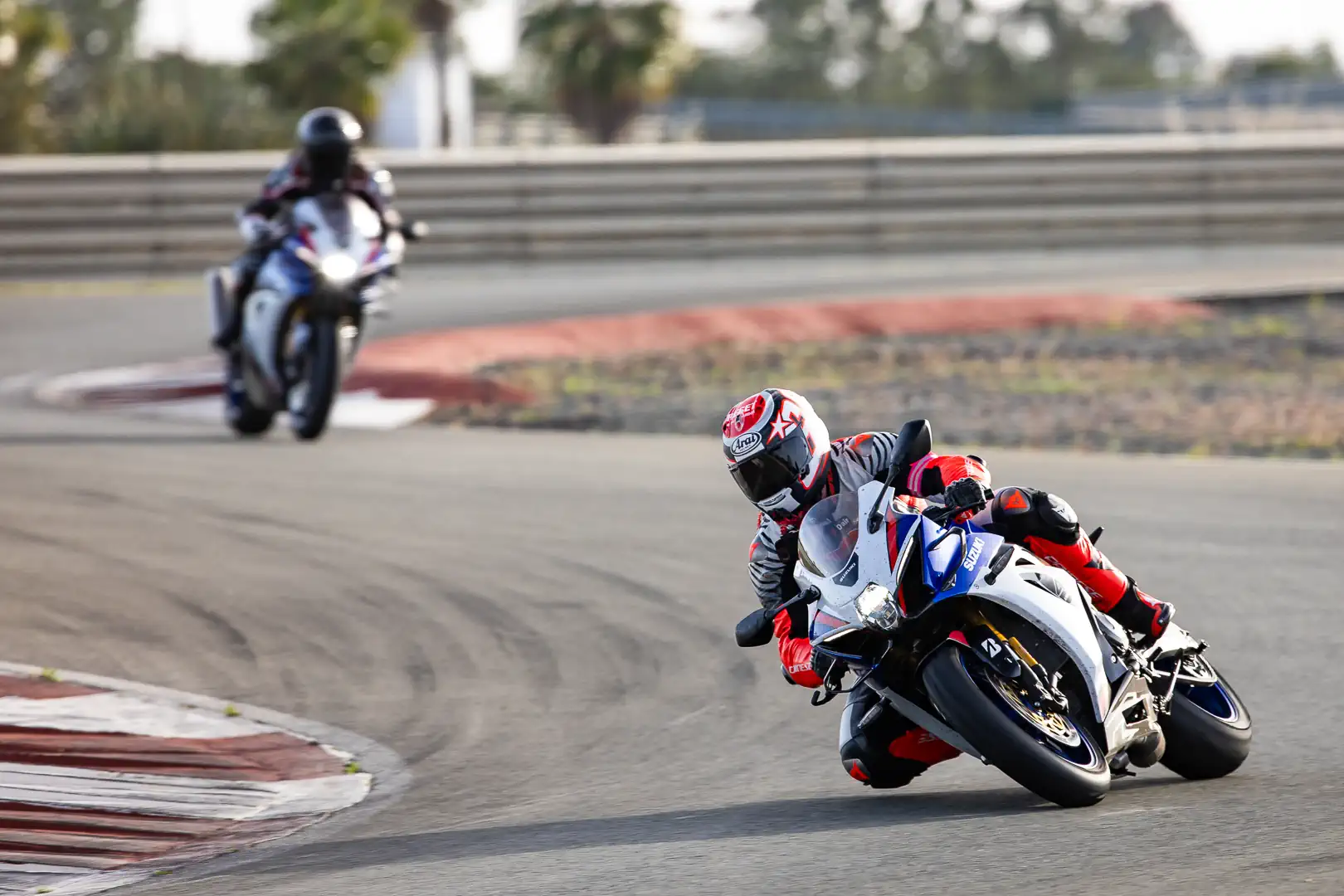
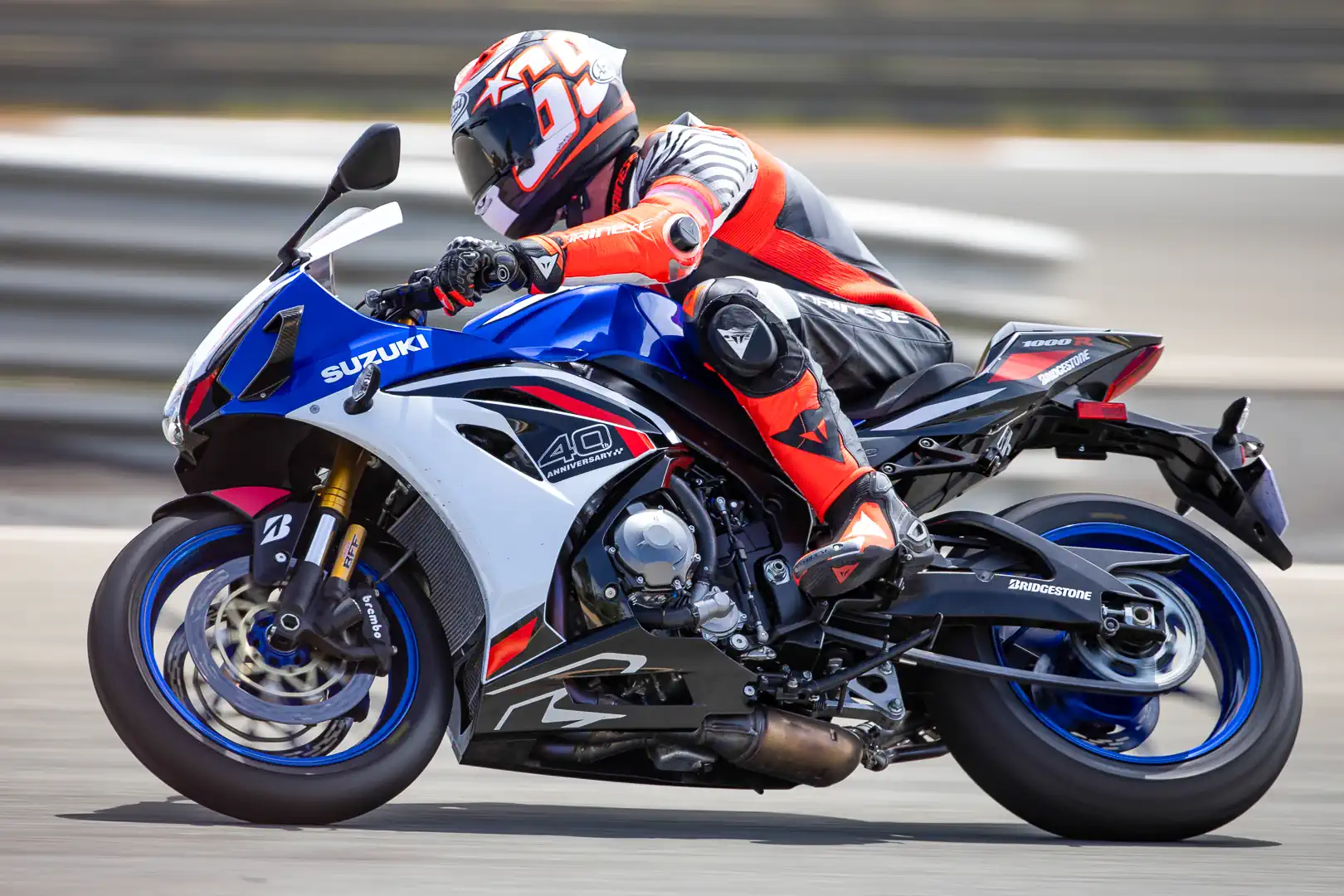
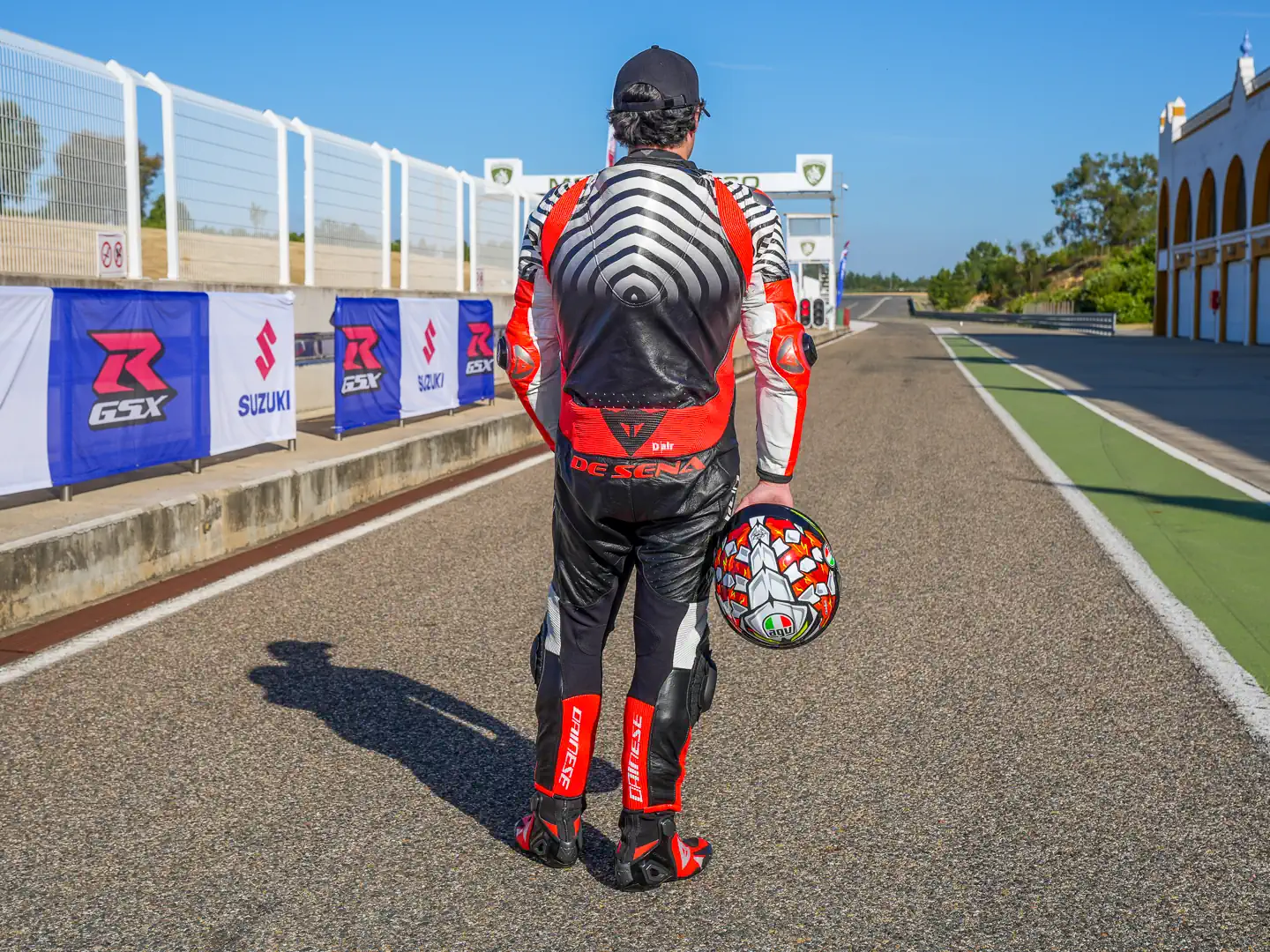
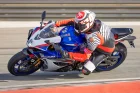
Much ink has been spilled on the mental benefits of motorcycling, with many riders citing the well-known “flow state” and mood improvements. The classic “throttle therapy” quip that points to the age-old saying of “you never see a motorcycle parked outside a psychiatrist’s office” applies here, and, while I can only speak for myself, a decent canyon run does tend to calm raw nerves. It’s a subject that many a scribe has opined about, though one that certainly came into focus while reviewing the 2027 Suzuki GSX-R1000R at an endurance race-style media event dubbed the Suzuki 6 Hours.
Before we dive into heady mental health issues that my humanities degrees avoided entirely, let’s set the stage for those who haven’t indulged in my review of Suzuki‘s updated superbike in this issue.
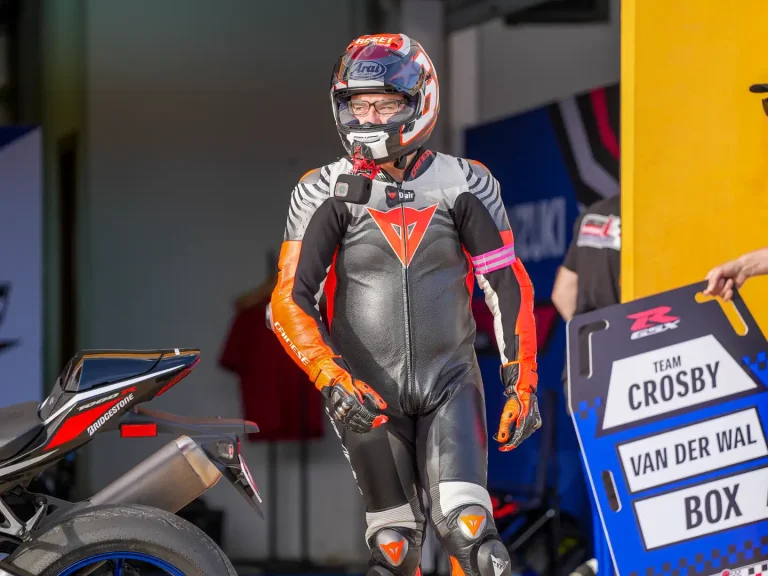
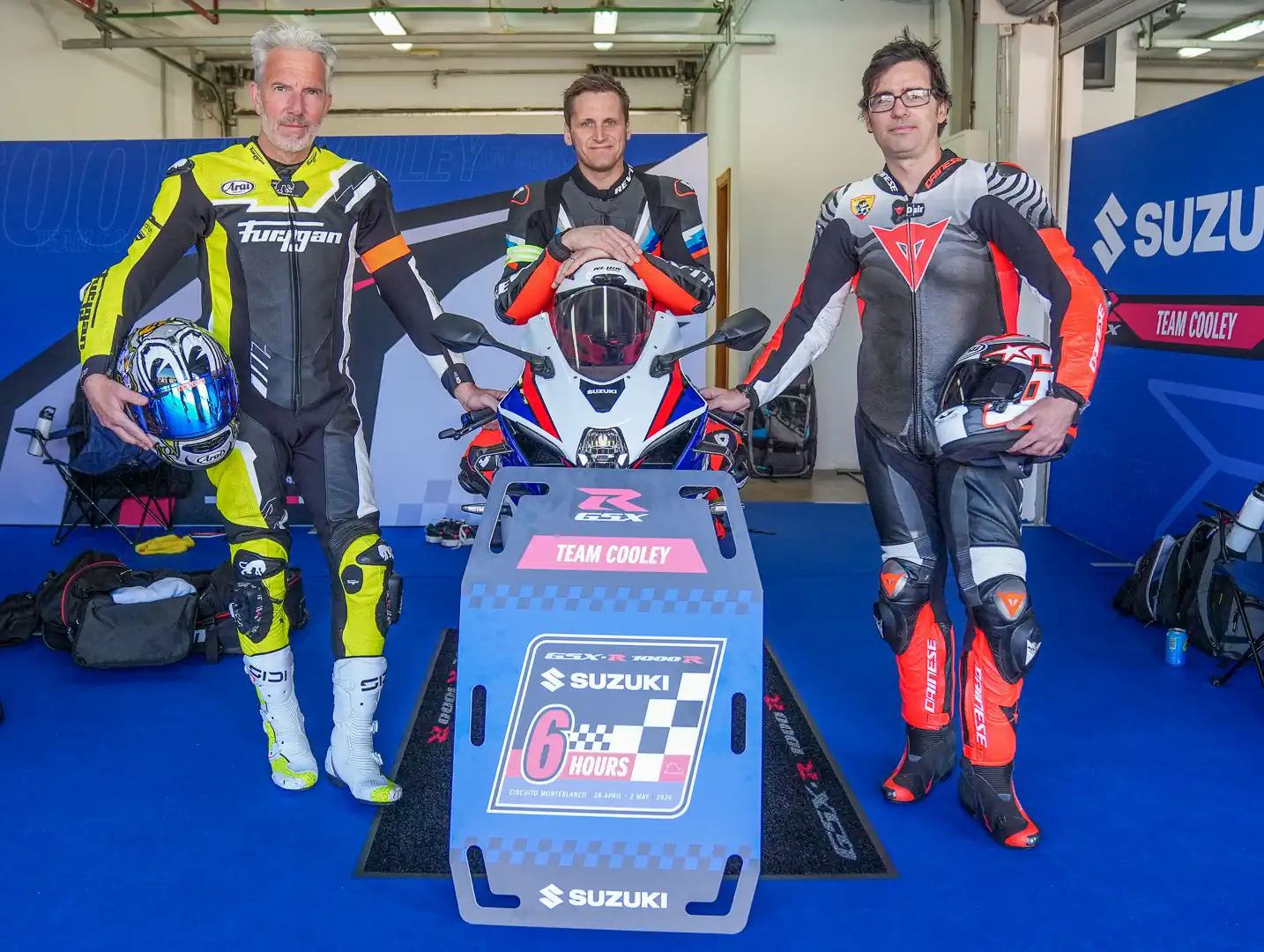
Press events, big or small, follow a tried-and-true formula: assemble journalists in one location, let them ride around for about a day or two, get photos and video, and send them packing as quickly as possible. That wasn’t the case this time around. Instead, we found ourselves testing a new bike on ad hoc teams of riders who may or may not have ever met before.
Okay, so that’s the first layer, albeit an interesting one. The second is that endurance racing typically requires extended sessions that are far, far longer than your average track day session.
For example, professional riders spinning laps at the legendary Suzuka 8 Hours endurance race in Japan will do at least one-hour stints, pitting for fuel or tires as needed. It also isn’t unheard of for riders to push well beyond 60 minutes, depending on their overall race strategy. For readers who might not be aware, the Suzuka race is held during the dog days of Japan’s incredibly hot and humid summers. Worse yet, imagine doing that at the two 24-hour races (the 24 Heures Motos and Bol d’Or) on the FIM Endurance World Championship calendar. Yeesh.
The third layer is that yours truly had never participated in an endurance race. As a card-carrying club racer, I’ve done my fair share of sprint races, and those live up to the name quite well. Typically, a club race lasts between 6 and 10 laps, depending on the track, class, and other factors, and takes about 15 or 20 minutes. The average track day session is 20 minutes, and media events follow the same format.
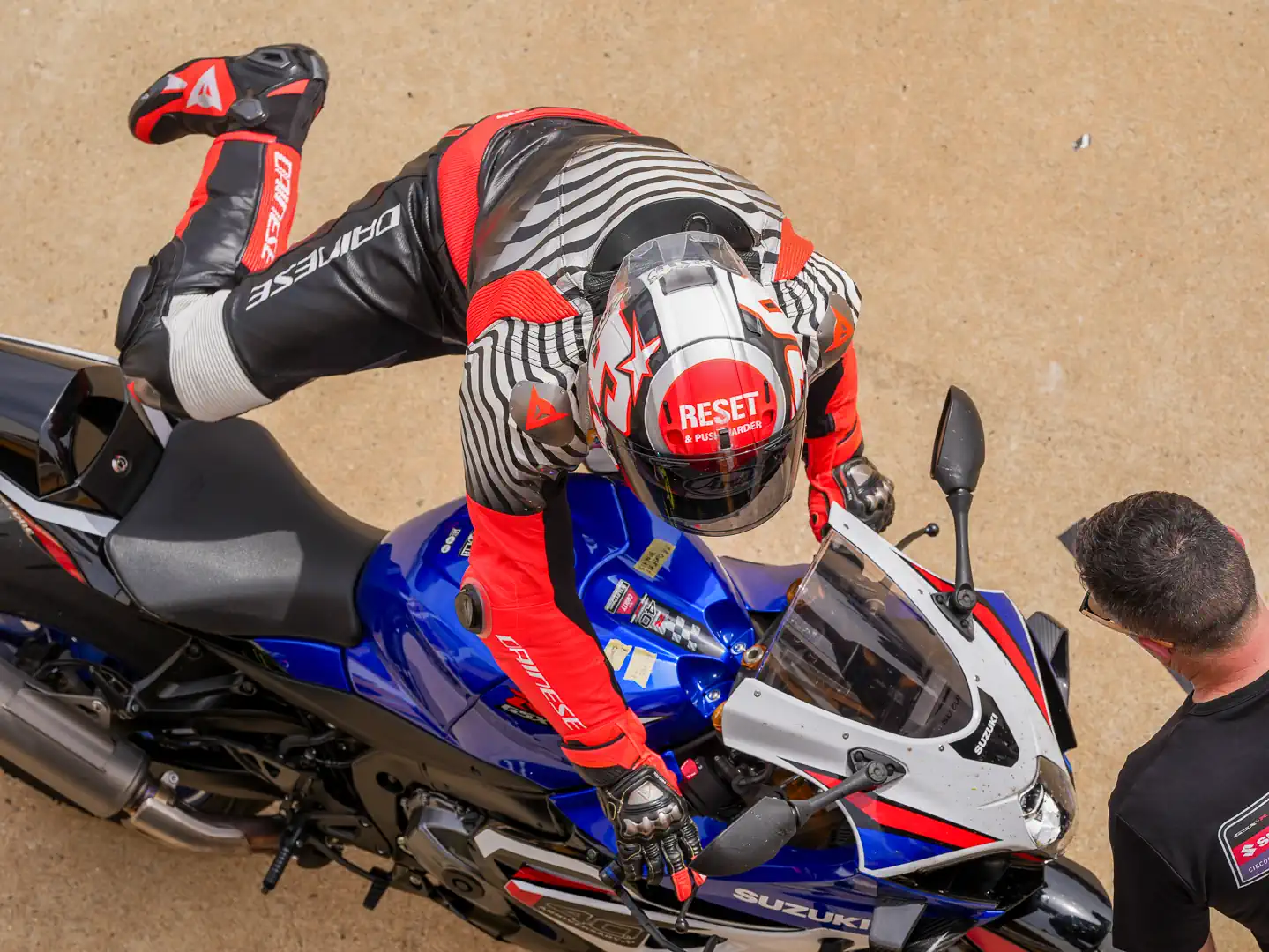
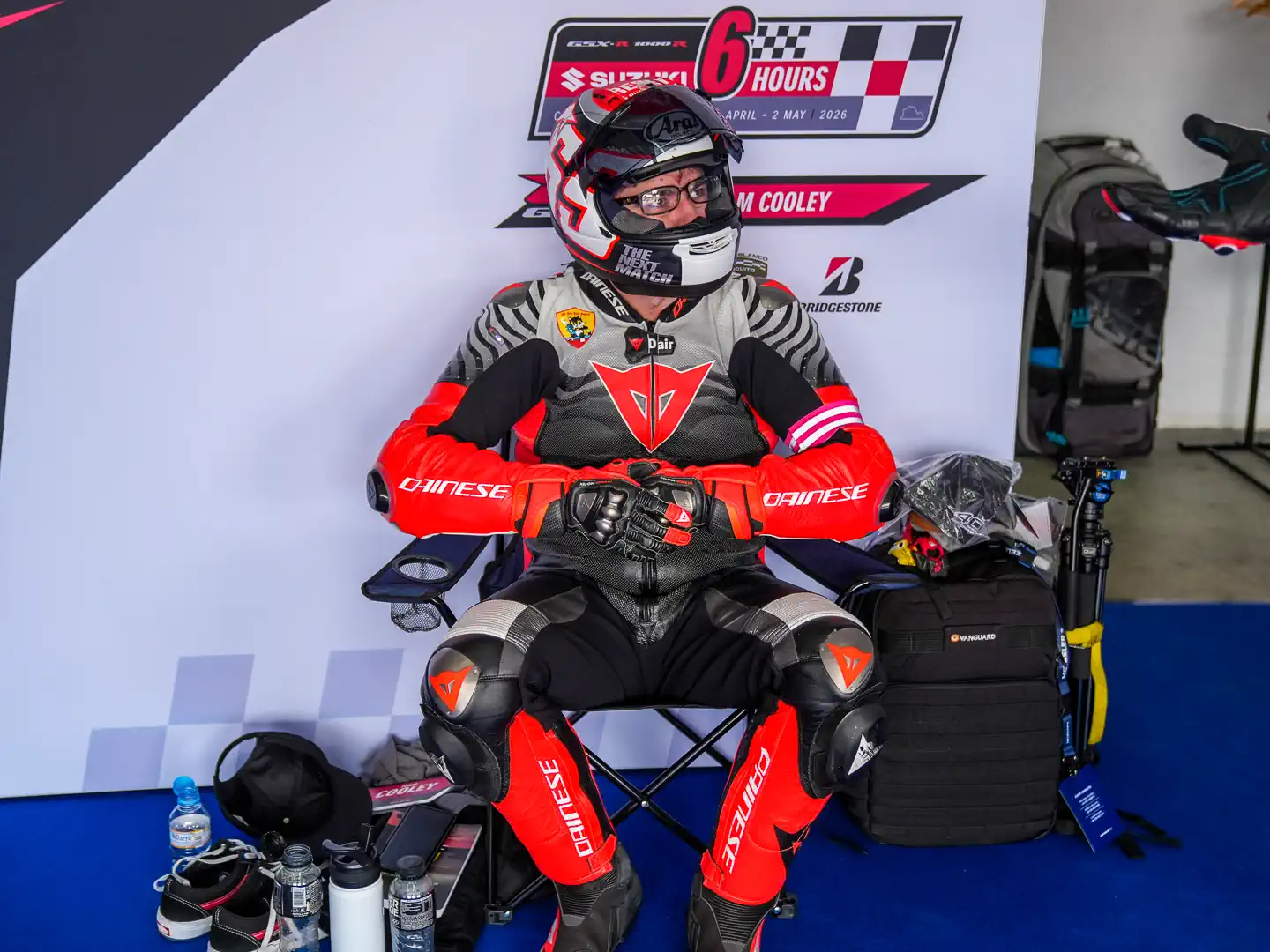
Flipping back to the Suzuki GSX-R1000R and our happy little endurance event, we’d all have two 20-minute warm-up sessions, followed by four 30-minute sessions once the flag dropped. Now, I know what you’re thinking: “Hey, that’s only 10 more minutes than what you usually do on track at a track day or work event.”
That’s true.
However, if you’re almost programmed to ride for a specific length of time and then suddenly that duration changes, the whole thing feels alien. Well, if you’re me, anyway. Knowing that cold reality of my sometimes weirdly regimented behavior, I walked into that event reminded of the flow state so many of us hunt for while riding. We’ve all felt it before, whether on two wheels, at work, or engaged in another task that occupies our attention. It’s that moment when the task at hand is the only thing on your mind.
There’s science behind it, too. Back in 2019, Harley-Davidson funded a neurological study by UCLA’s Semel Institute for Neuroscience and Human Behavior. Veteran riders in good health had their electrical brain activity, heart rate, adrenaline, noradrenaline, and cortisol levels monitored during a predetermined 22-mile ride using an EEG (electroencephalogram). The results were fascinating. Subjects showed increased sensory focus, alertness, and resistance to distraction.
Said subjects also showed interesting readings: their adrenaline and heart rate increased slightly, while cortisol levels decreased. If you haven’t been subjected to any litany of pharmaceutical or fitness ads selling you on stress remedies, then just know that cortisol is a hormone released by your body in response to stress factors.
So, what does it tell us? Taken lightly, we could (probably unsuccessfully) argue that our silly hobby/lifestyle is beneficial to us. On a more serious front, an activity like motorcycling, which demands our full attention to do safely, has some positive mental effects on us.
Well, then, that’d play a part in my own personal race strategy. They say, “Time flies when you’re having fun.” So, I figured it would be best to find ways to settle into a rhythm and ignore the clock instead of staring at it. To that end, it meant getting comfortable quickly.
First order of business: find reference points. Now, we all look for brake markers, turn-in references, acceleration points, and unique aspects of the track to spot while pushing for a lap time.
In this situation, the list grew longer to compensate for the extra time on the bike. This time around, I’d make sure to count the beats until it was time to tuck in and rest my muscles, sit down the front straight, or take in the short respites Circuito Monteblanco offers.
Although the flow state didn’t turn on like a light switch, it felt far more consistent. That came in handy when my muscles started aching, and focus was at a premium. Leaning on those repeated techniques, things started to become automatic, which certainly made me forget about fatigue, sunburn, and, unfortunately, chapped lips (honestly, that was probably the worst bit).
Getting there mentally is the hard part, yet I’d wager it’s something that many of us rely on when we’re hitting canyons, exploring trails, hitting the racetrack, or doing whatever tickles our fancies. And, hey, Science tells us that we should be riding motorcycles. How about that, eh?
Have you ever wanted to ride a real MotoGP track? Well, here’s your chance! Leod Escapes does all sorts of incredible touring experiences with the very best that Europe has to offer. Fabulous accommodation, incredible food, and motorcycles what more can you ask for! So for the trip of a lifetime, visit LeodEscapes.com and check out your dream vacation.
* * * * *
After a dozen years in limbo, the Super Glide is resurrected as a member of the Softail Cruiser family. The 2026 Harley-Davidson Super Glide arrives as a limited edition of 2500 units to celebrate the 250th anniversary of the United States of America. The new Super Glide proudly wears the iconic red, white, and blue of the 1971 original, and Don Williams tells us how this latest Softail feels on the road.
* * * * *
We’ve all heard the old saying, how you never see a motorcycle parked outside a psychiatrist’s office, right? Well, if you struggle with addiction and/or your mental health, then yes, you’ve probably figured out that motorcycles can be a big help. The Remix Racing Project is a California-based nonprofit and motorcycle racing team dedicated to raising awareness for mental health and addiction recovery. Founded by Jeremy Taubman and Shanea Makinson, Jeremy competes in the MotoAmerica Super Hooligan class and hosts fan-zone activities to provide resources and get conversations started. In this guest segment this episode Teejay and Jeremy chat candidly about going racing a little later in life, how it’s helping his own recovery, and what the Remix Recovery non-profit is achieving in helping others. Jeremy has published a book “Remix Recovery—Leading a Brave Space” and you can find it on Amazon. Needless to say, if you’re struggling with life’s challenges—and believe me—we understand, then visit The Remix Racing Project, click on the resources tab, and you’ll find help that’s just a phonecall or text away.
* * * * *
Here’s quick reminder to check out our monthly digital magazine. It’s filled with everything you want to read on motorcycling, including some things you’ve probably not seen elsewhere. It’s absolutely free and you will find it on the Apple App Store and of course on Google Play as well.
Don’t forget to leave us your comments on our social media—we’re on all the usual platforms at Ultimate Motorcycling. We love hearing your feedback… so good or bad, please let us know what you think. If there’s something you’d like us to cover, we’d love to hear those ideas too!
We use cookies and browser activity on this website
Functional
Always active
The technical storage or access is strictly necessary for the legitimate purpose of enabling the use of a specific service explicitly requested by the subscriber or user, or for the sole purpose of carrying out the transmission of a communication over an electronic communications network.
Preferences
The technical storage or access is necessary for the legitimate purpose of storing preferences that are not requested by the subscriber or user.
Statistics
The technical storage or access that is used exclusively for statistical purposes.The technical storage or access that is used exclusively for anonymous statistical purposes. Without a subpoena, voluntary compliance on the part of your Internet Service Provider, or additional records from a third party, information stored or retrieved for this purpose alone cannot usually be used to identify you.
Marketing
The technical storage or access is required to create user profiles to send advertising, or to track the user on a website or across several websites for similar marketing purposes.