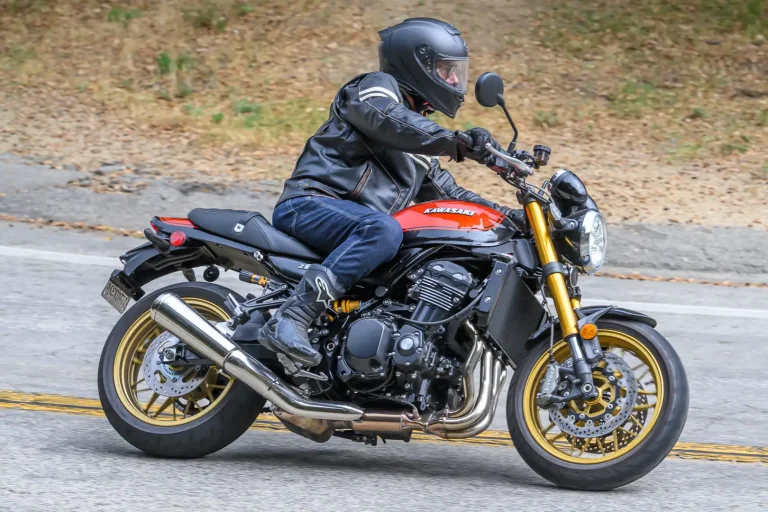
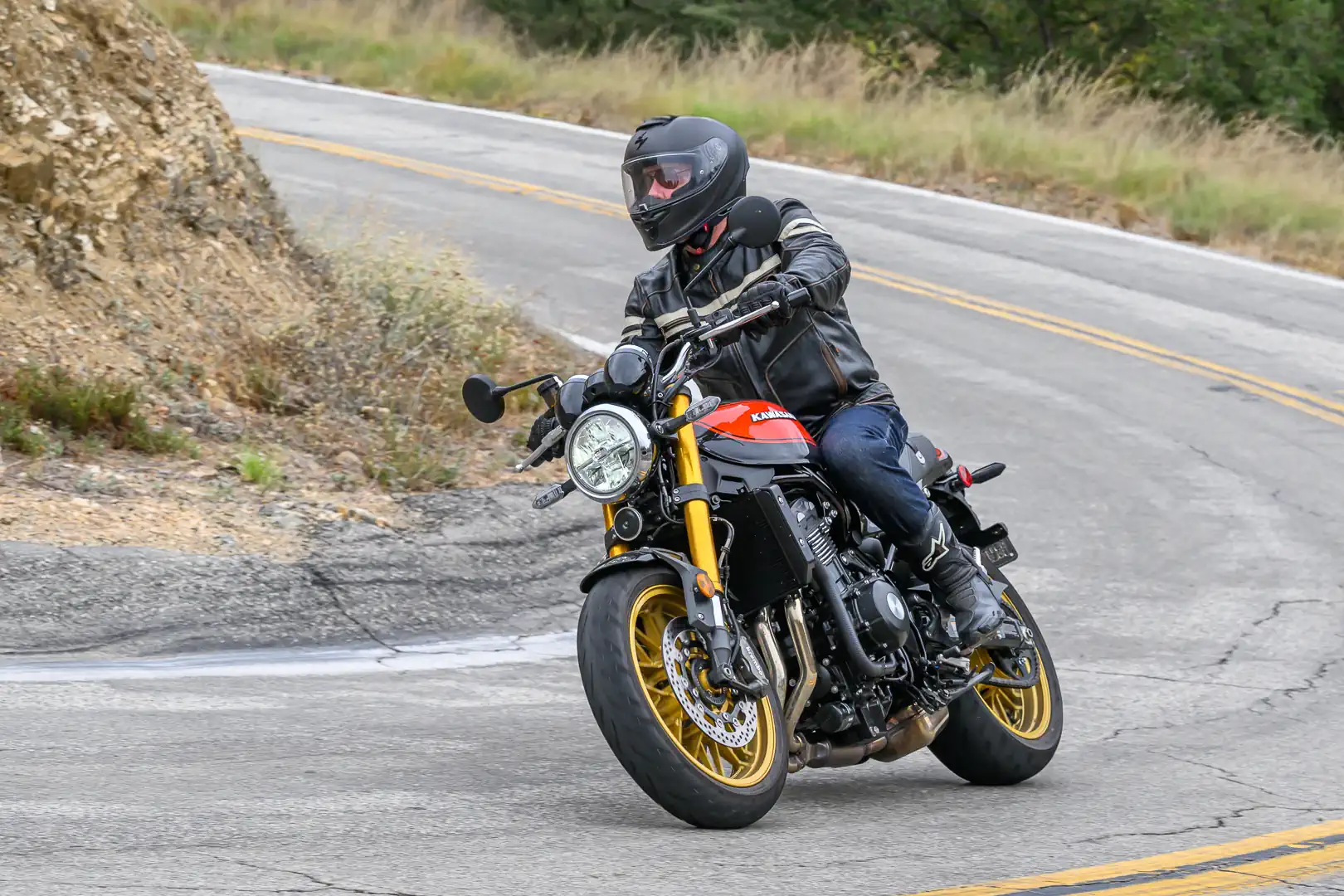
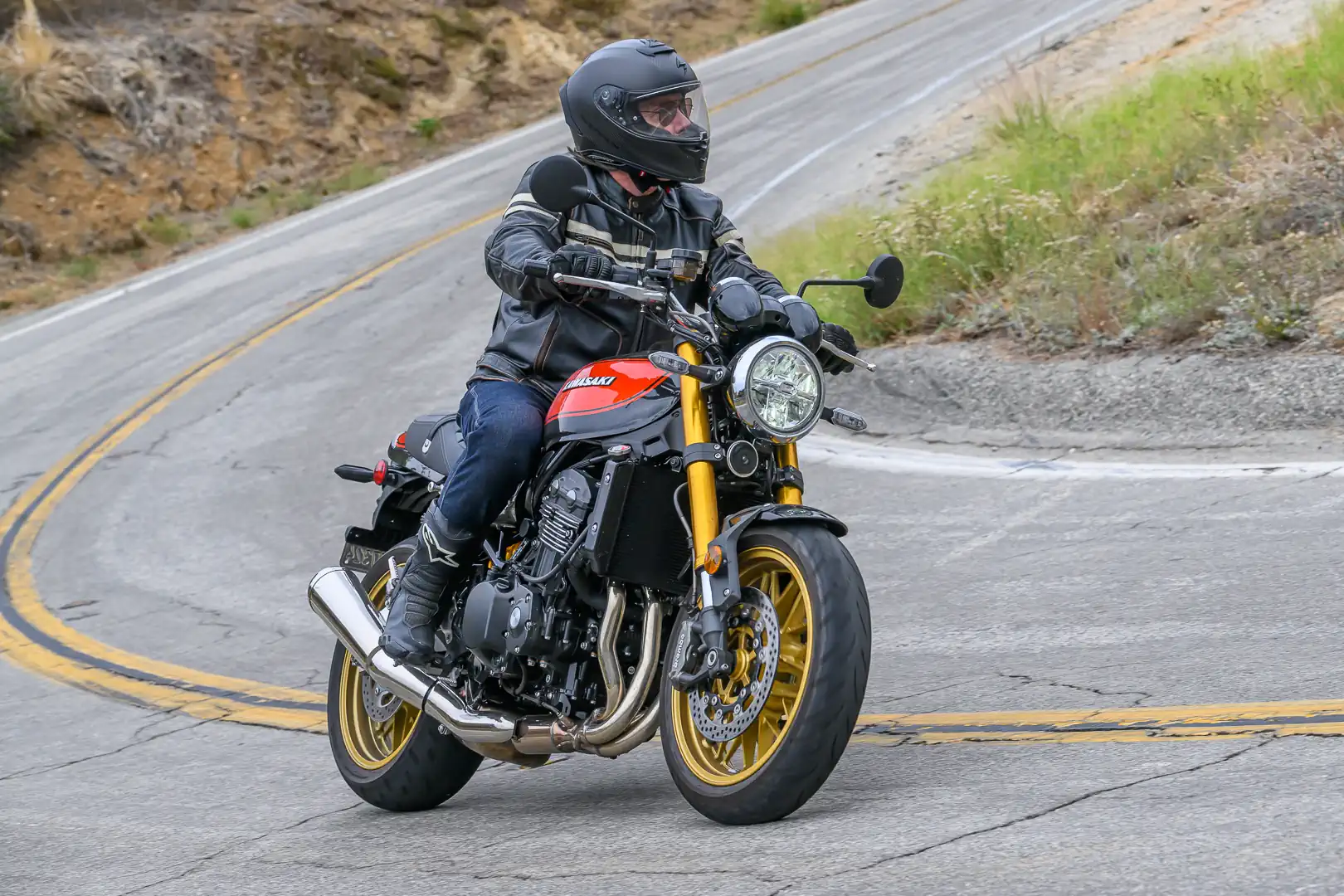
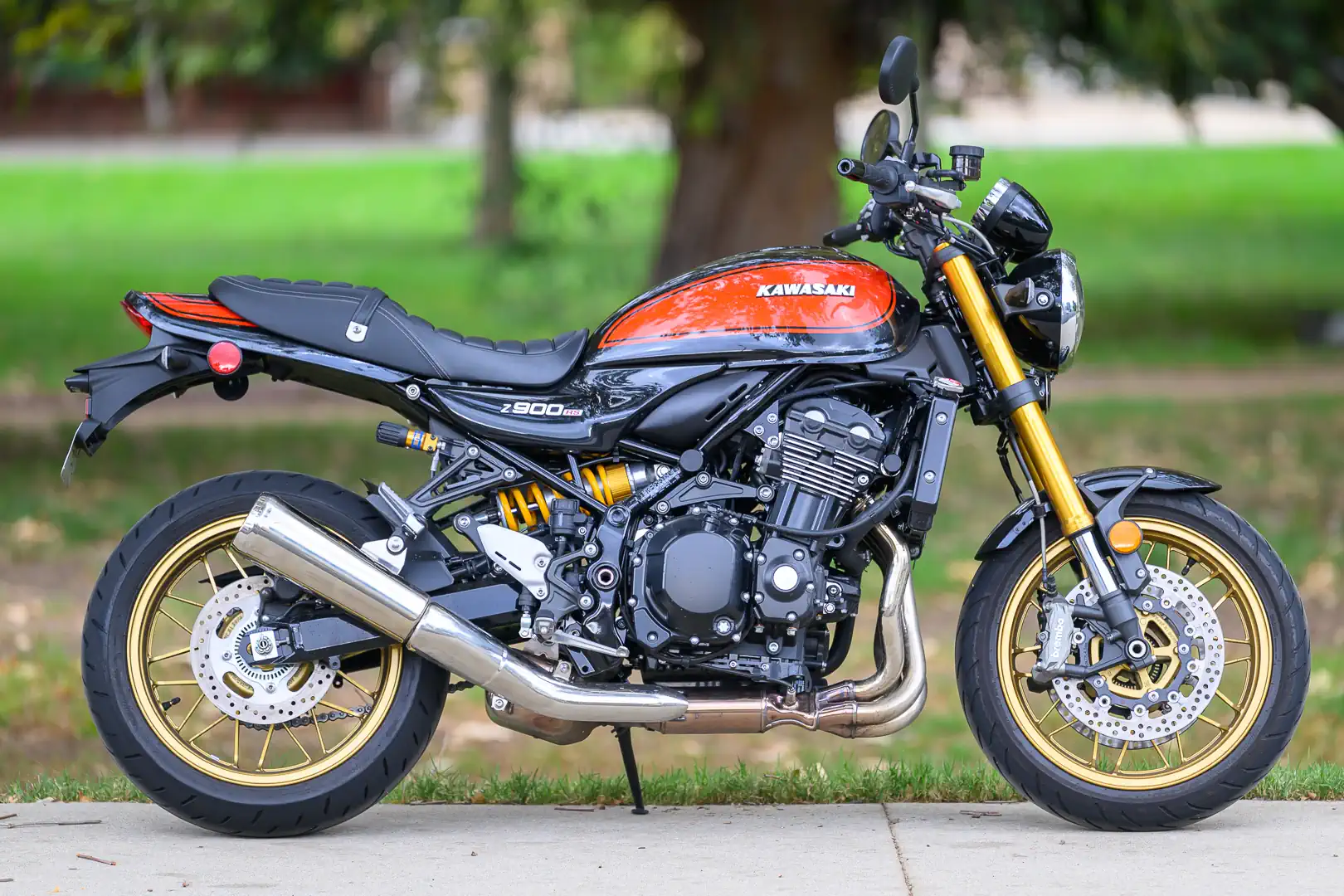
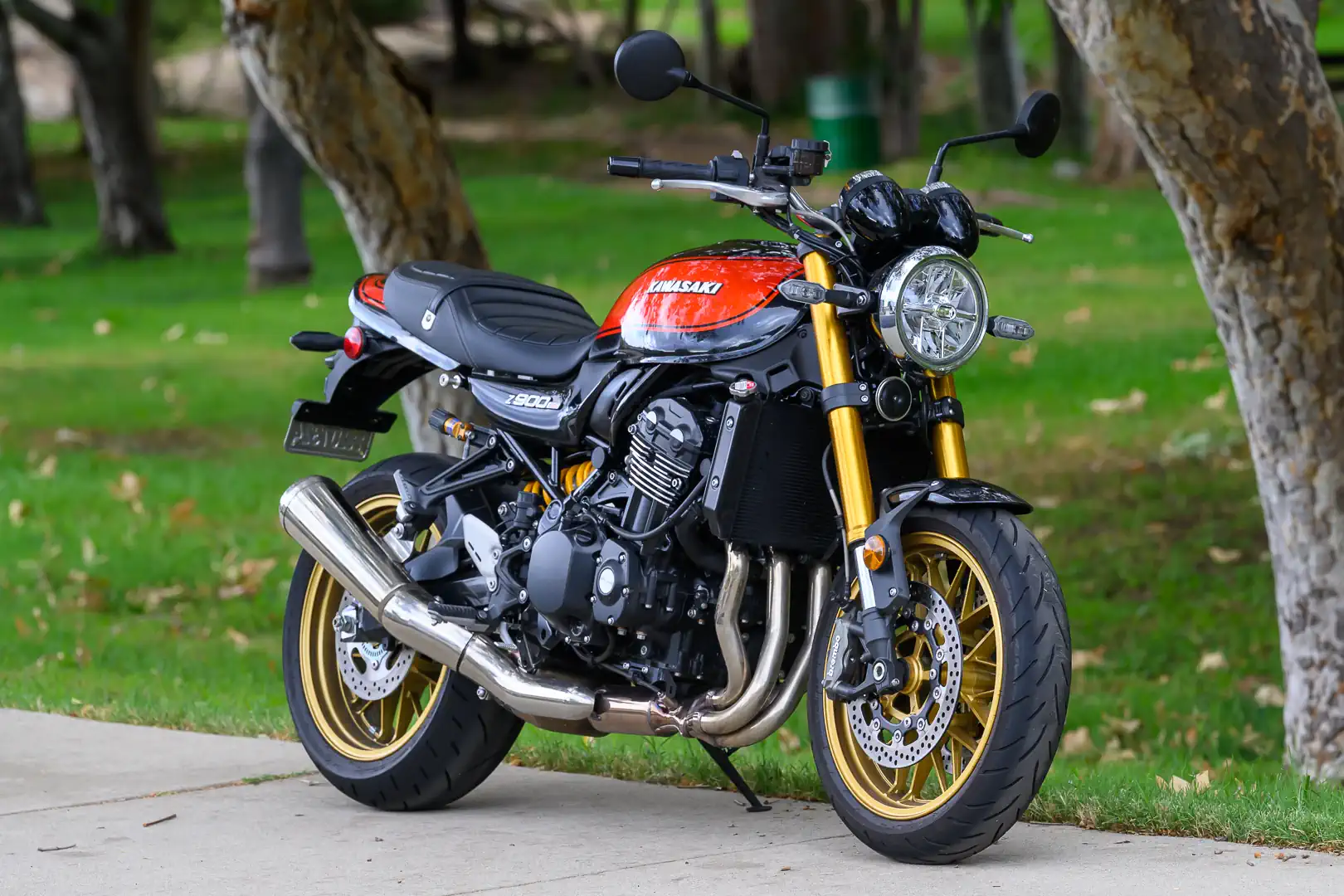
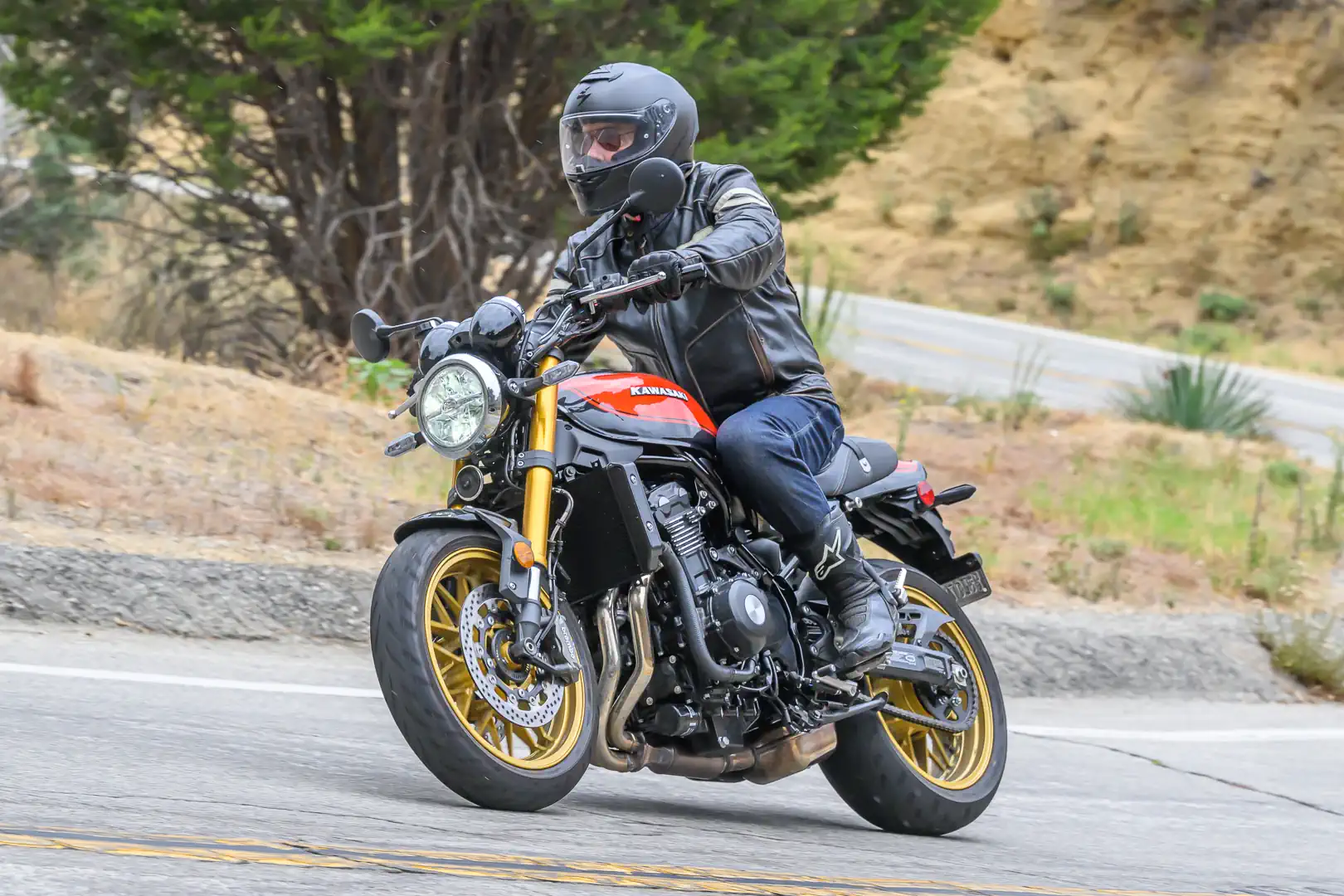
The Kawasaki Z900RS gets its biggest update since it arrived in 2018, and most of it is under the skin. The retro-styled 948cc inline-4 has new cams, higher compression, and electronic throttle valves. Ride-by-wire brings a full-service quickshifter and cruise control. A six-axis IMU adds cornering ABS and traction control. A new megaphone-style muffler gives the engine a deeper voice, and smartphone connectivity is now standard. Every 2026 Z900RS gets these updates, including the standard model and the Z900RS Cafe. The $14,599 SE gets you Öhlins rear suspension, Brembo front brake calipers, and its iconic Fireball paint. For our 2026 Kawasaki Z900RS SE review, we rode it to find out whether the new technology makes an already-great bike even better.
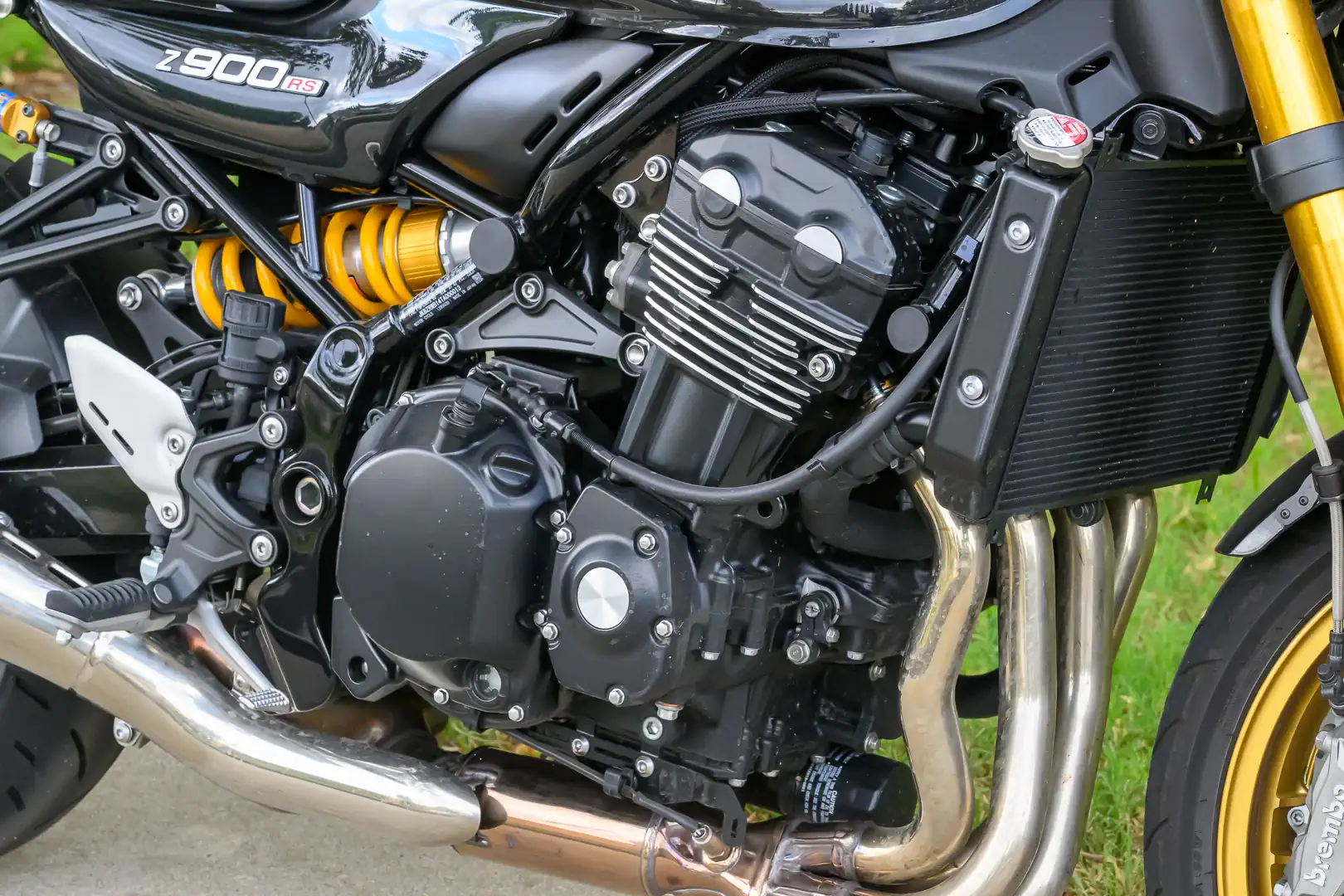
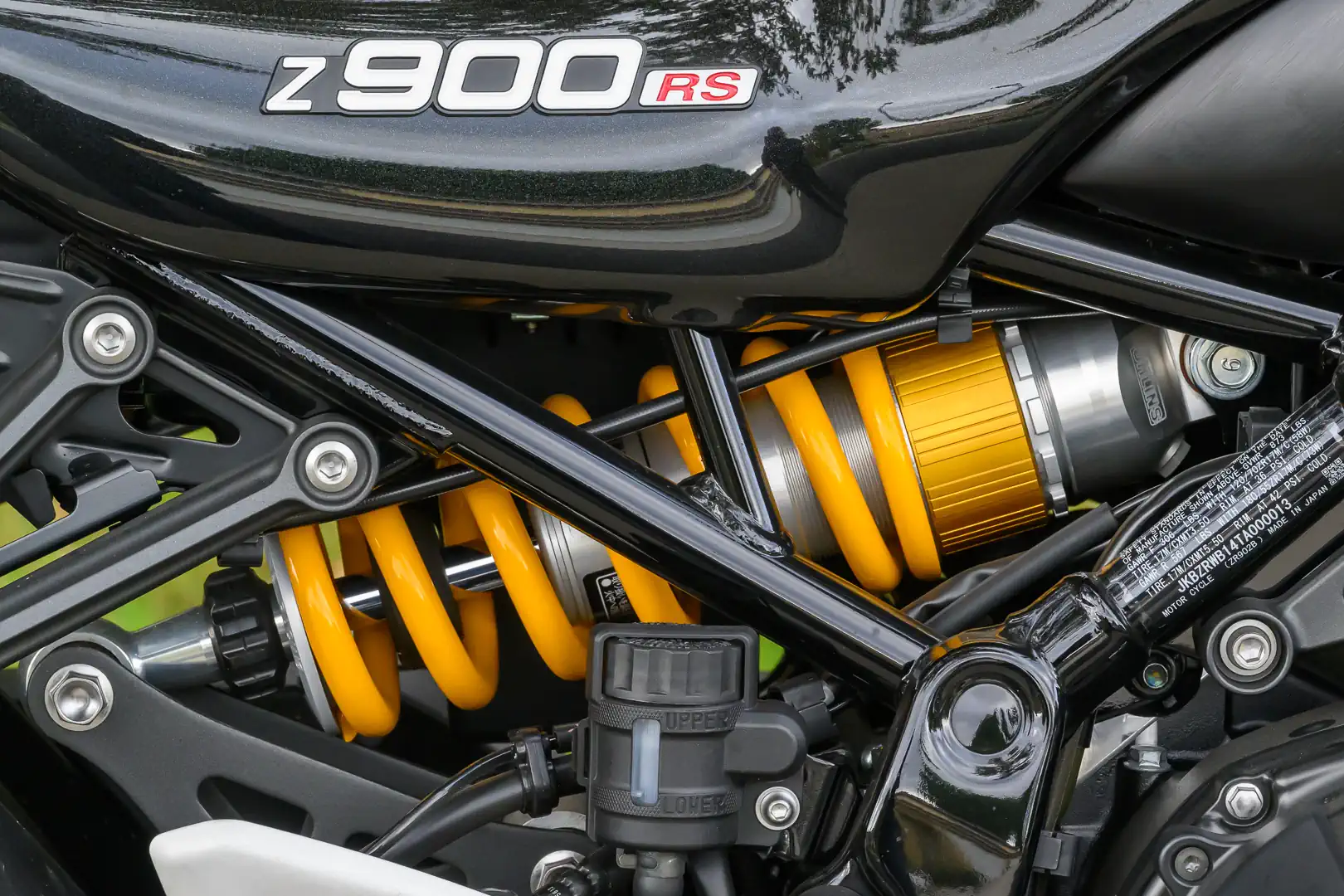
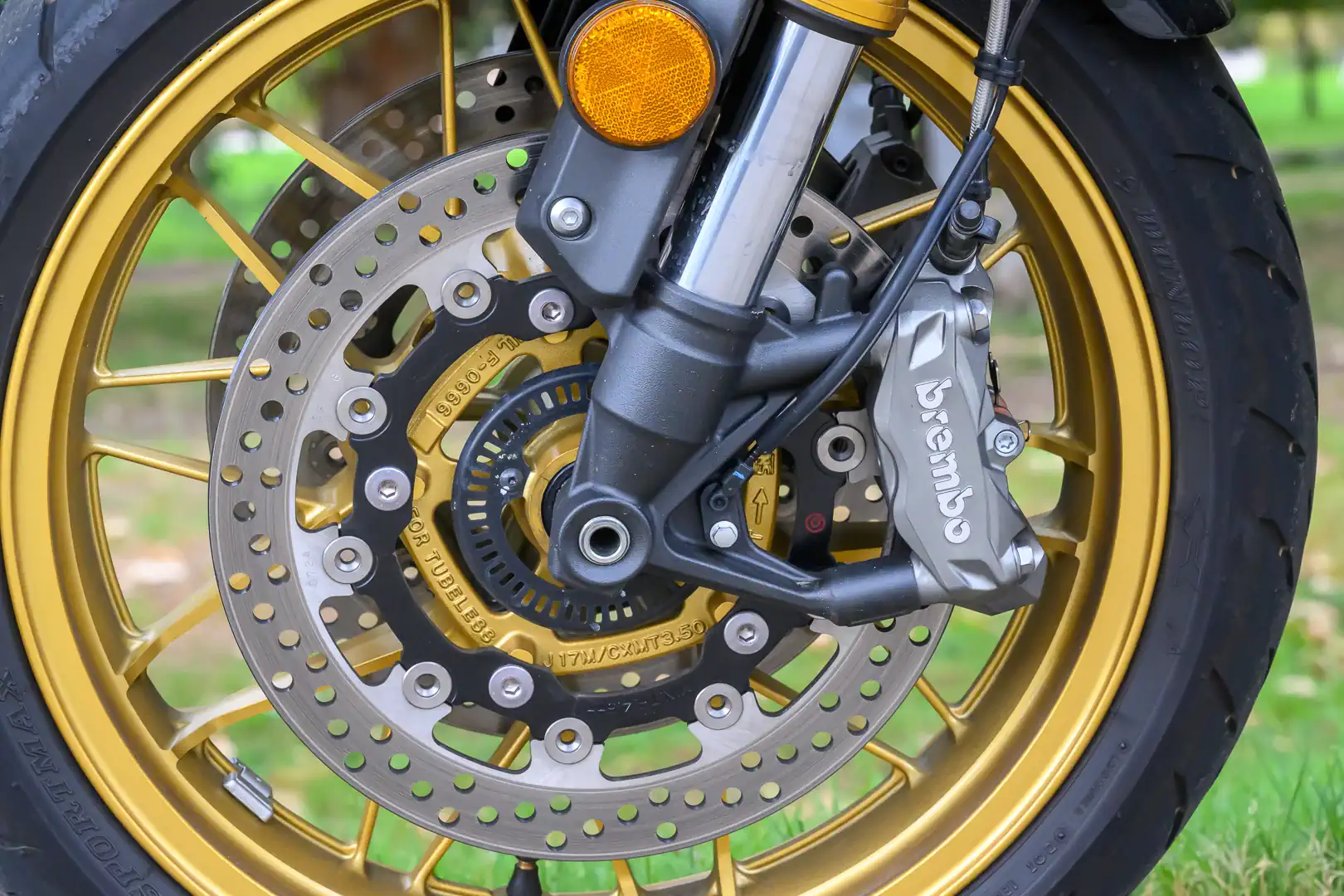
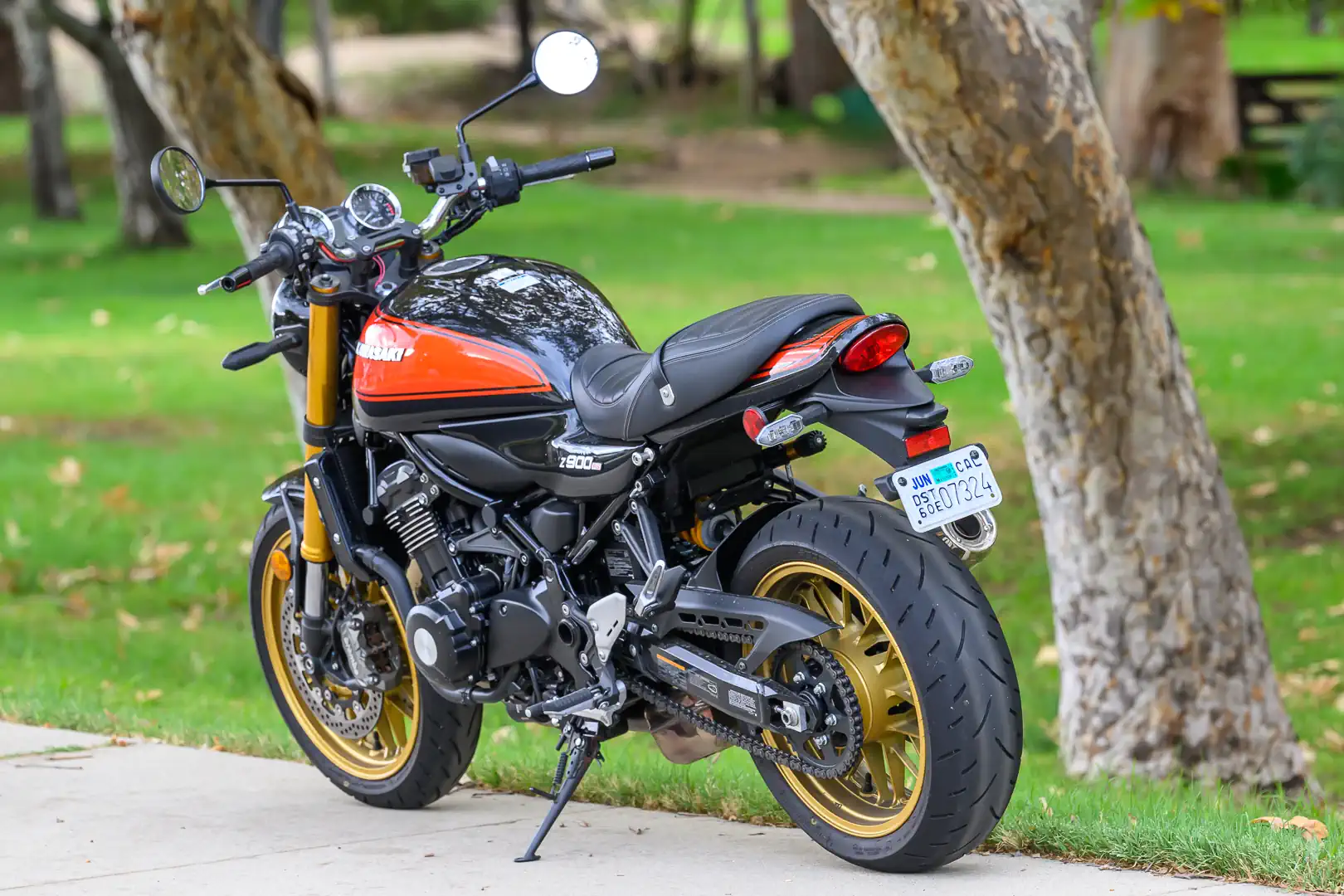
The SE’s upgrades focus on suspension and brakes. An Öhlins S46 shock replaces the standard model’s shock. It has 30-position rebound-damping adjustment and a remote spring-preload adjuster, so dialing in preload for a passenger or luggage is tool-free. Kawasaki retuned the fully adjustable inverted 41mm fork to match the Öhlins. Up front, Brembo M4.32 monobloc calipers replace the standard model’s 4-piston monoblocs. A smaller-diameter Nissin radial-pump master cylinder and stainless-steel braided lines complete the brake package. The SE also gets a USB-C outlet. The engine, electronics, and 476-pound curb weight are the same on both. The SE commands a $1700 premium over the $12,899 standard Z900RS.
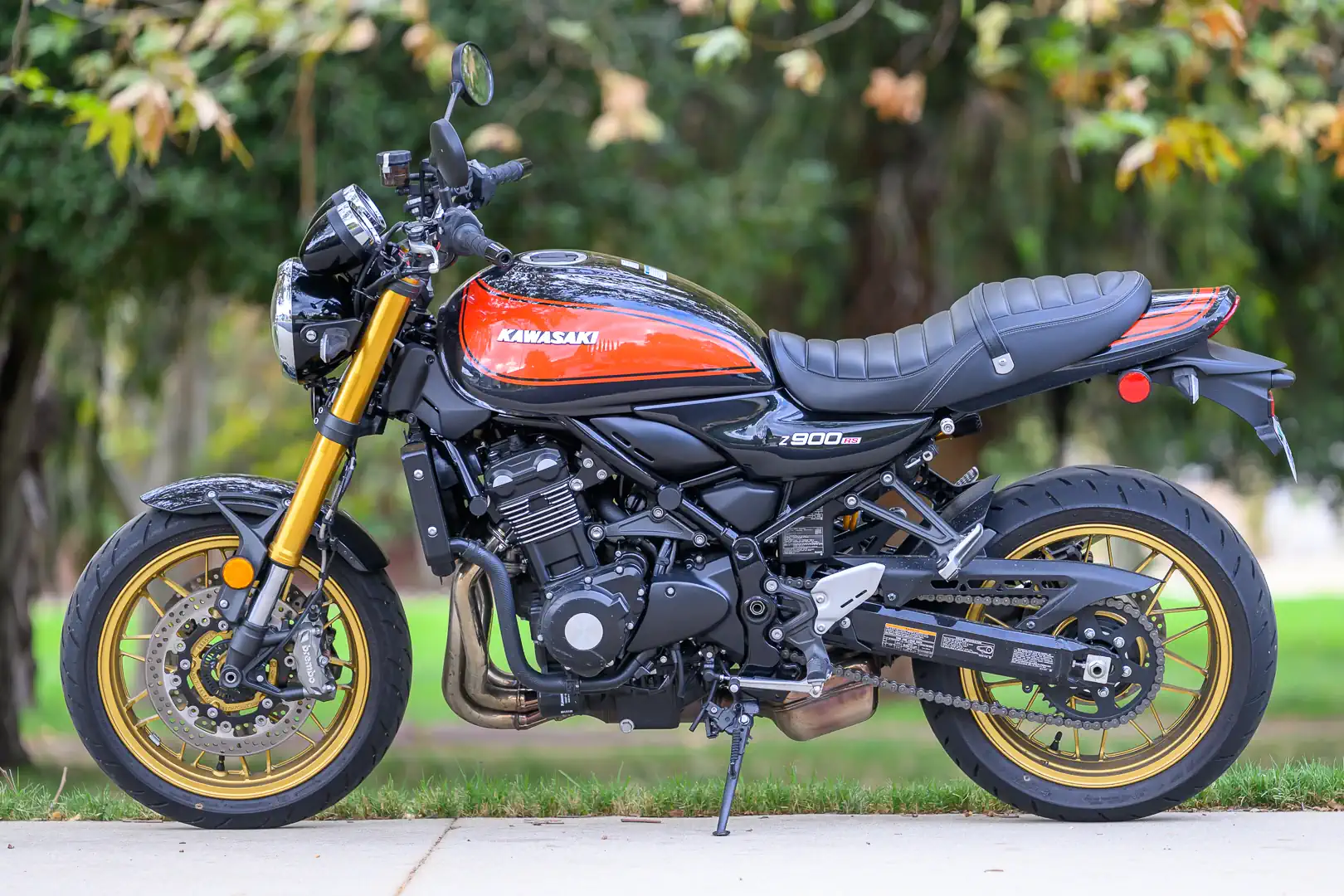
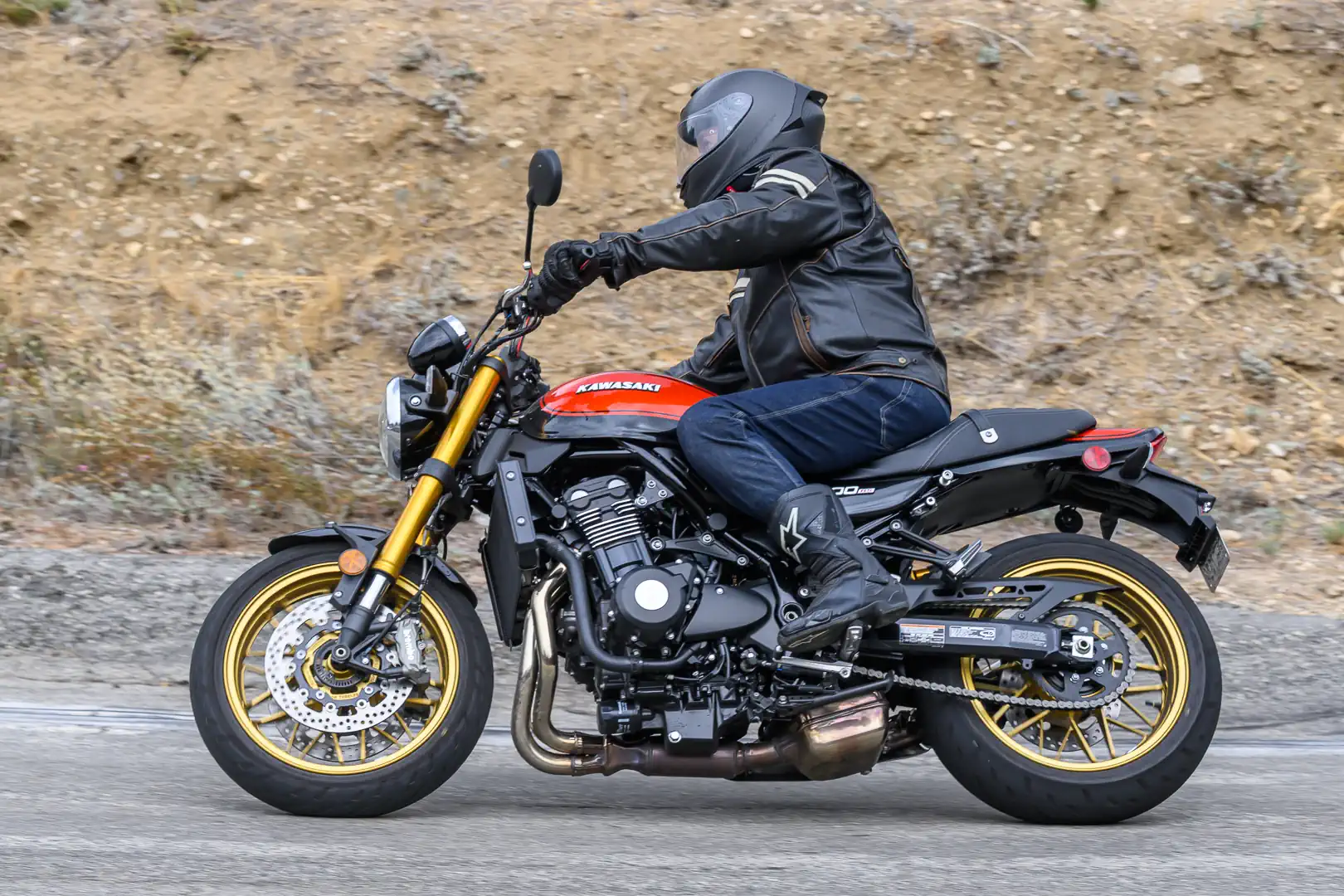
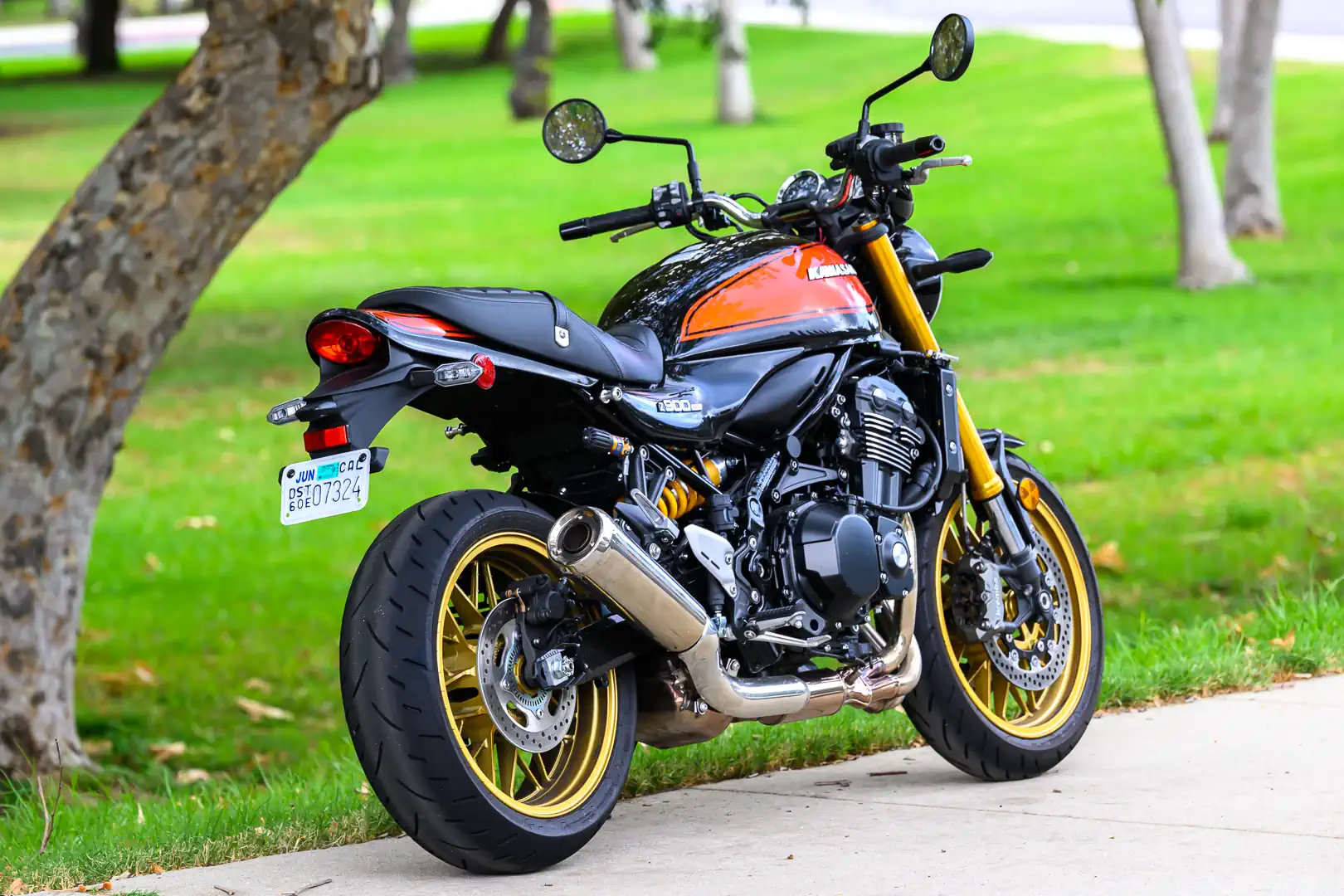
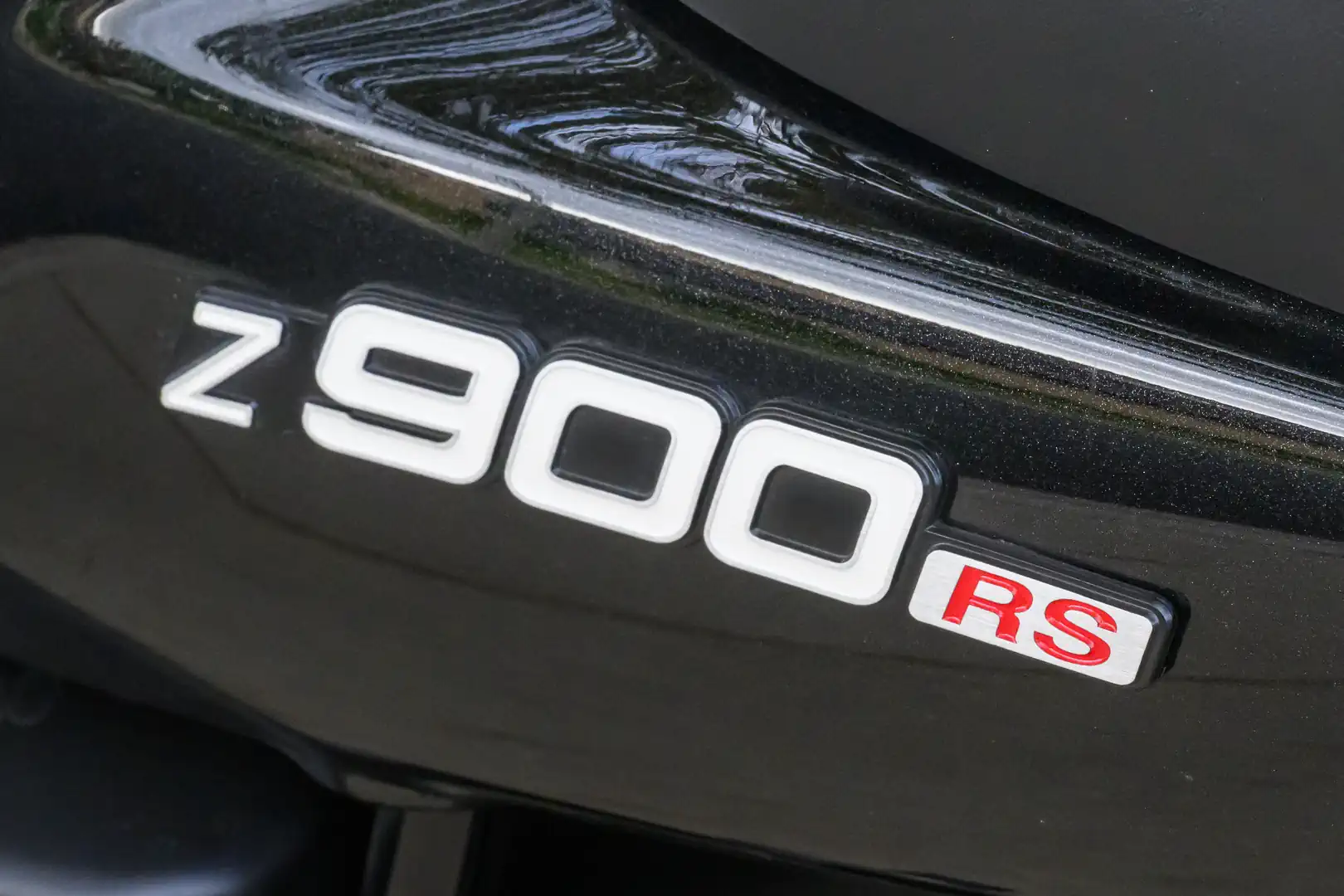
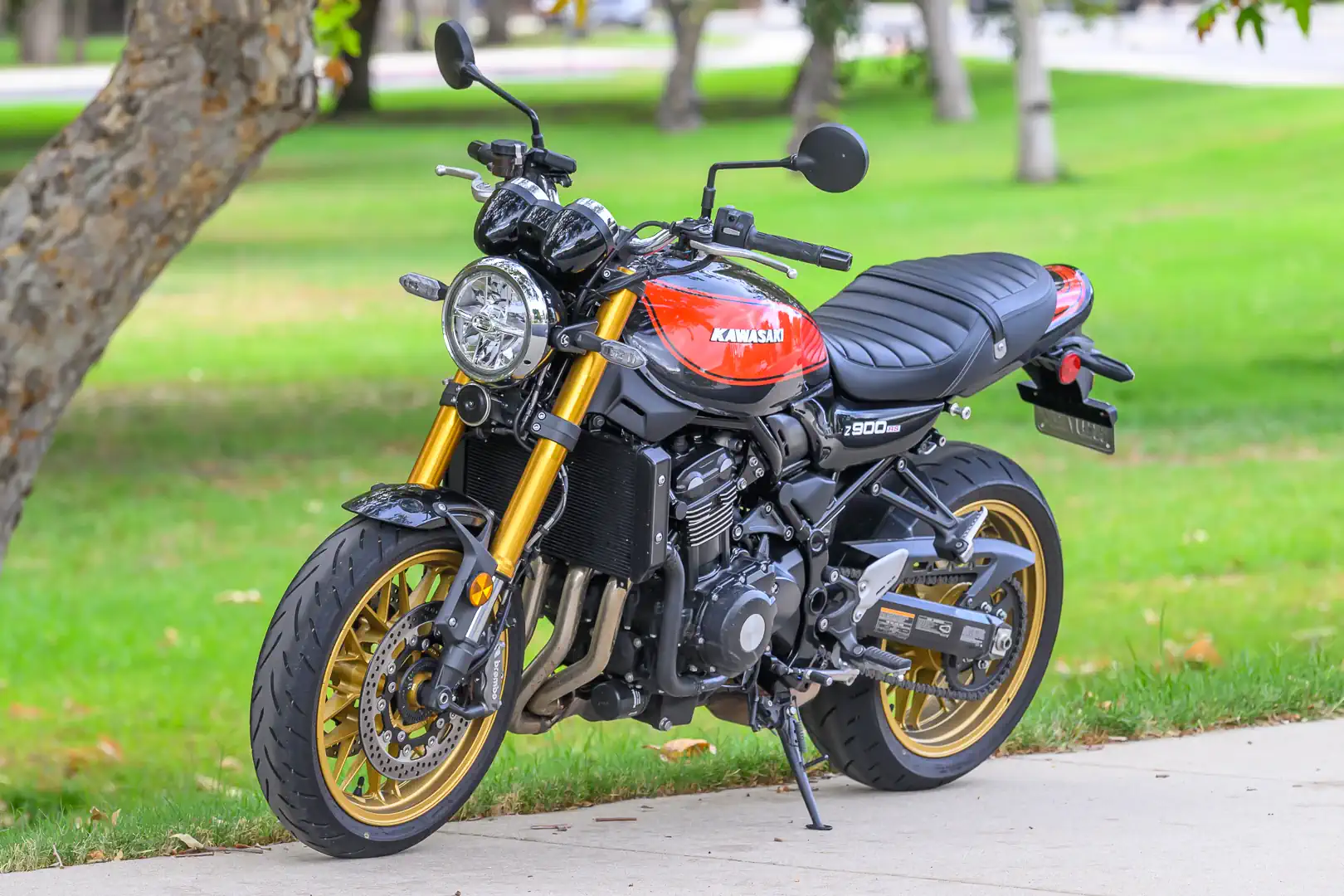
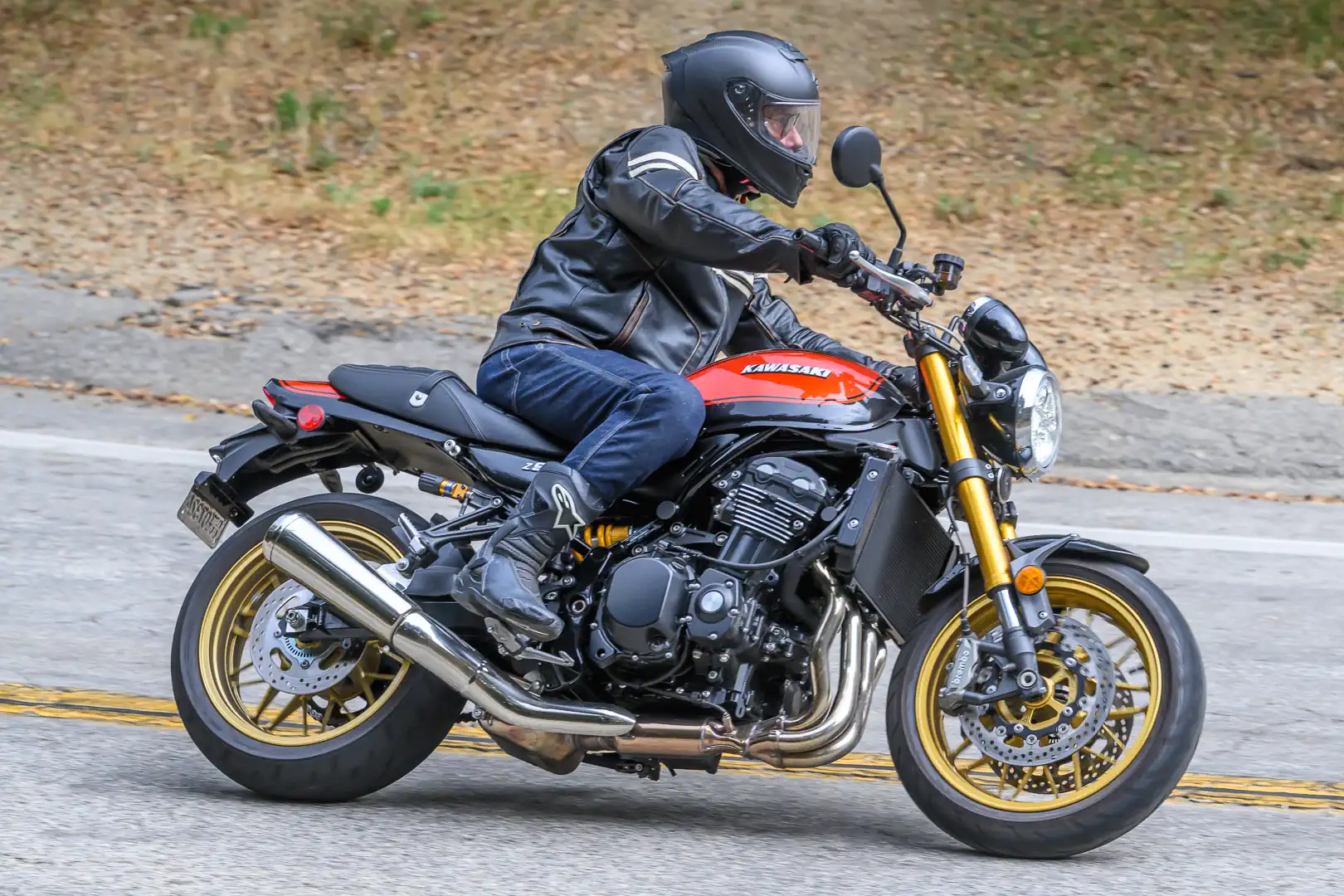
You can spot the SE from across a parking lot. It wears a new version of Kawasaki’s iconic Fireball paint scheme, inspired by the original 1972 Z1, with Metallic Spark Black bodywork and orange graphics. Gold wheels and gold fork tubes call attention to the upgraded hardware, and the Öhlins shock is gold to match. The RS letters on the side covers are red, and the prominent Öhlins remote adjuster adds another premium touch. This is the kind of motorcycle that draws attention, so be prepared to answer questions from strangers about your stylish ride. The standard RS and the Cafe edition each take a different approach to Ebony.
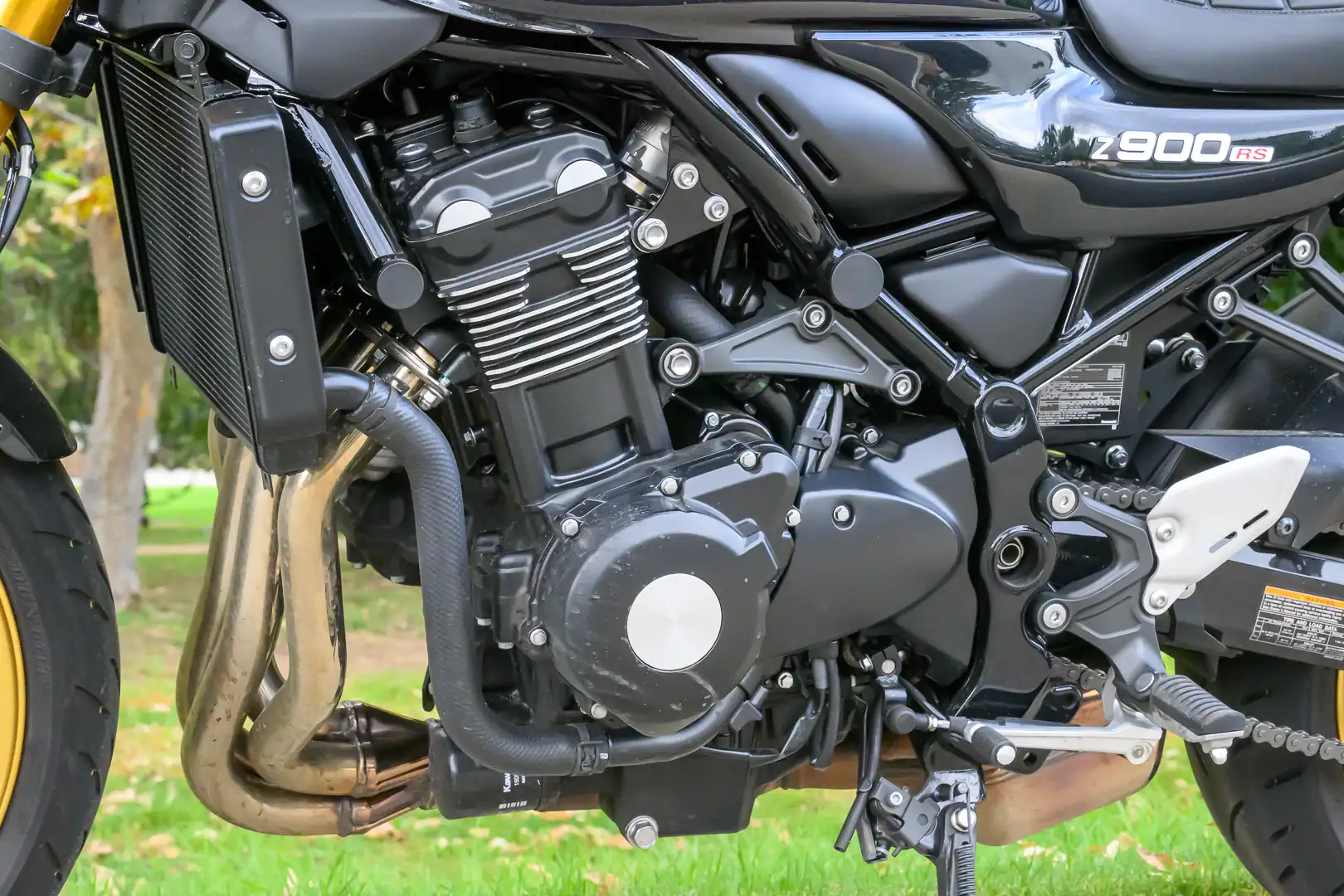
The 948cc inline-4 gets a new top end. Revised cams have more lift and duration, and compression rises from 10.8:1 to 11.8:1. Lighter cast pistons ride in open-deck cylinders. The crankshaft has about 10% less flywheel mass, so the engine spins up more freely. Downdraft 36mm throttle bodies shorten the path from the redesigned airbox. Kawasaki claims 115 horsepower at 9300 rpm and 73 lb-ft of torque at 7700 rpm. Both peaks arrive higher in the rev range than on the 2025 model.
The engine is smooth and predictable, and it pulls harder as the revs climb. Power builds evenly from low rpm through the midrange and keeps coming into the upper third of the tachometer. There is no sudden hit, so the Z900RS SE is never intimidating. It’s easy to dial in exactly how much power you want. Because the peaks are higher, it pays to hold a gear longer, and the intake howl at high rpm is exhilarating. The delivery, rather than the modest peak horsepower number, is what makes this engine enjoyable.
Ride-by-wire cures the abrupt low-speed throttle response of earlier Z900RS models. Electronic throttle valves let the ECU control air and fuel delivery precisely. Response is gradual at low rpm, so roll-ons around town are clean, making it a fantastic urban ride. Pulling away from stops and threading through traffic are completely intuitive, and the assist clutch lightens the pull.
Closer gear ratios and shorter final gearing keep the engine in its sweet spot. The six-speed gearbox has tighter spacing between gears, and the rear sprocket grows by one tooth to 43 to enhance the power increases. If you’re in a leisurely mode, the broad powerband allows a sensible pace without the bother of shifting. However, when it’s time to go, the quickshifter is ready and waiting. Upshifts at full throttle are satisfyingly smooth; downshifts are drama-free, with the slipper clutch chiming in if you’re too aggressive. The quickshifter operates above 1500 rpm, and you’re pretty much always going to be running the engine at a speed above that. Even in town, the quickshifter is a useful tool of convenience.
A new 4-into-1 exhaust gives the SE a deeper voice. The megaphone-style muffler is 2.75 inches longer than before. The dual-wall headers take a more forward path and are designed to resist discoloration. A compact pre-chamber holds the main catalyst, and a sub-catalyst is added. Every part is stainless steel. Kawasaki tuned the muffler’s packing and perforations to bring out lower frequencies. The result is a deep idle, a strong growl on acceleration, and a pleasant burble off the throttle, yet the volume stays civil.
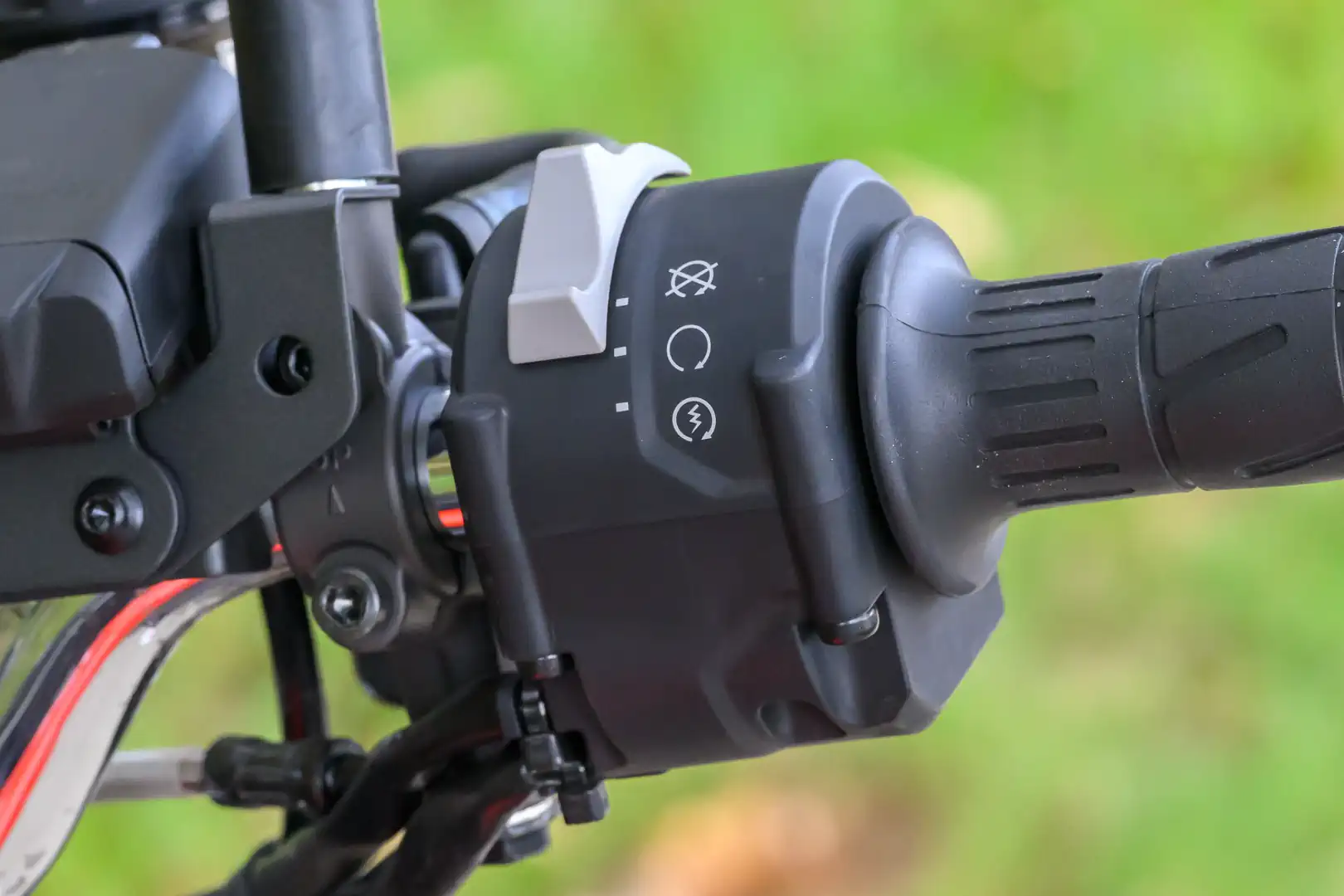
A six-axis IMU adds cornering awareness to the rider aids, but don’t go looking for power modes. Rider aids are run through Kawasaki Cornering Management Function (KCMF), which uses IMU data to manage braking force and engine power. Instead of power modes, you get two traction control modes, or you can switch it off. Mode 1 is less intrusive and meant for sport riding. Mode 2 steps in sooner for slippery conditions. Intervention is smooth and unobtrusive on cold, damp, or loose pavement.
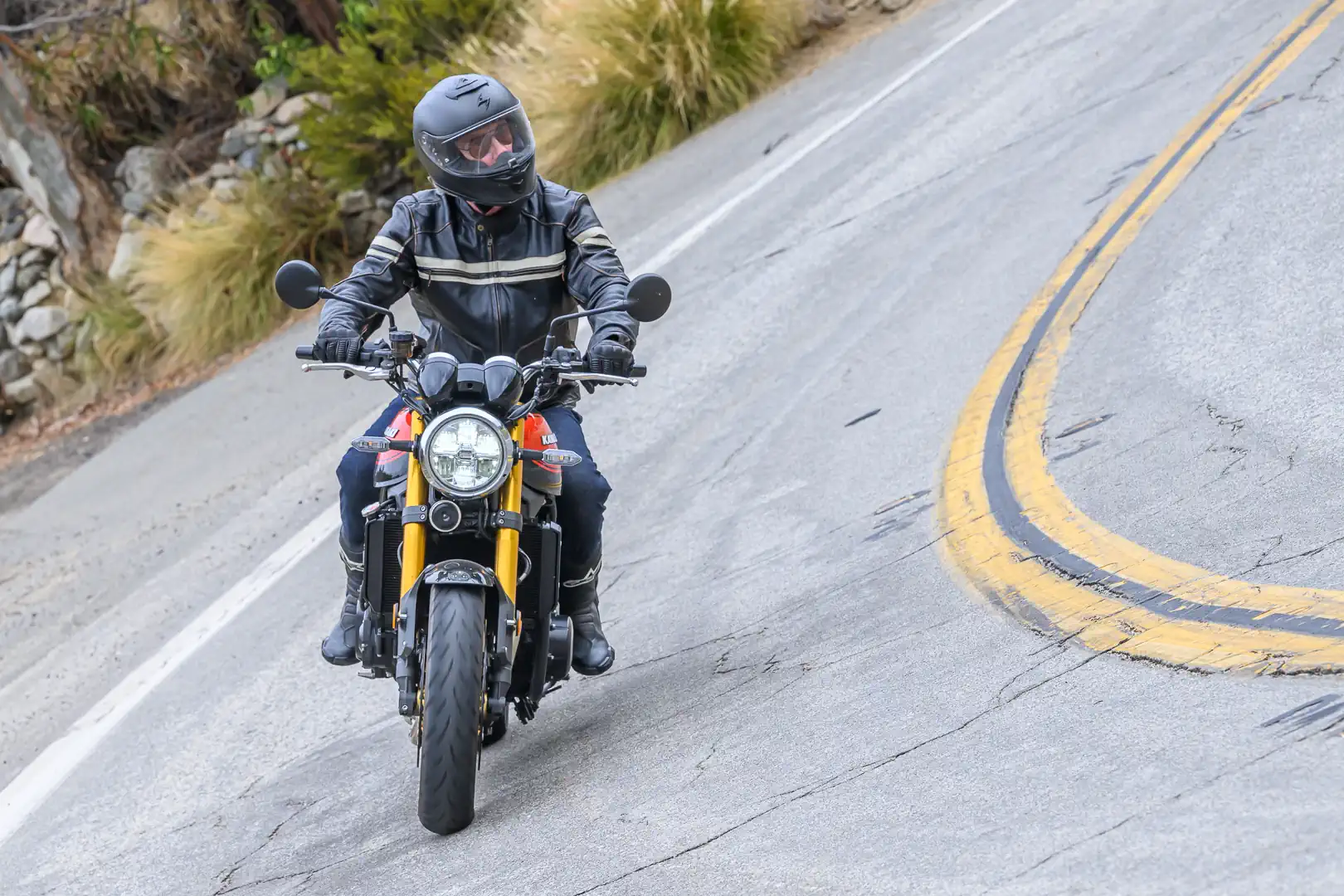
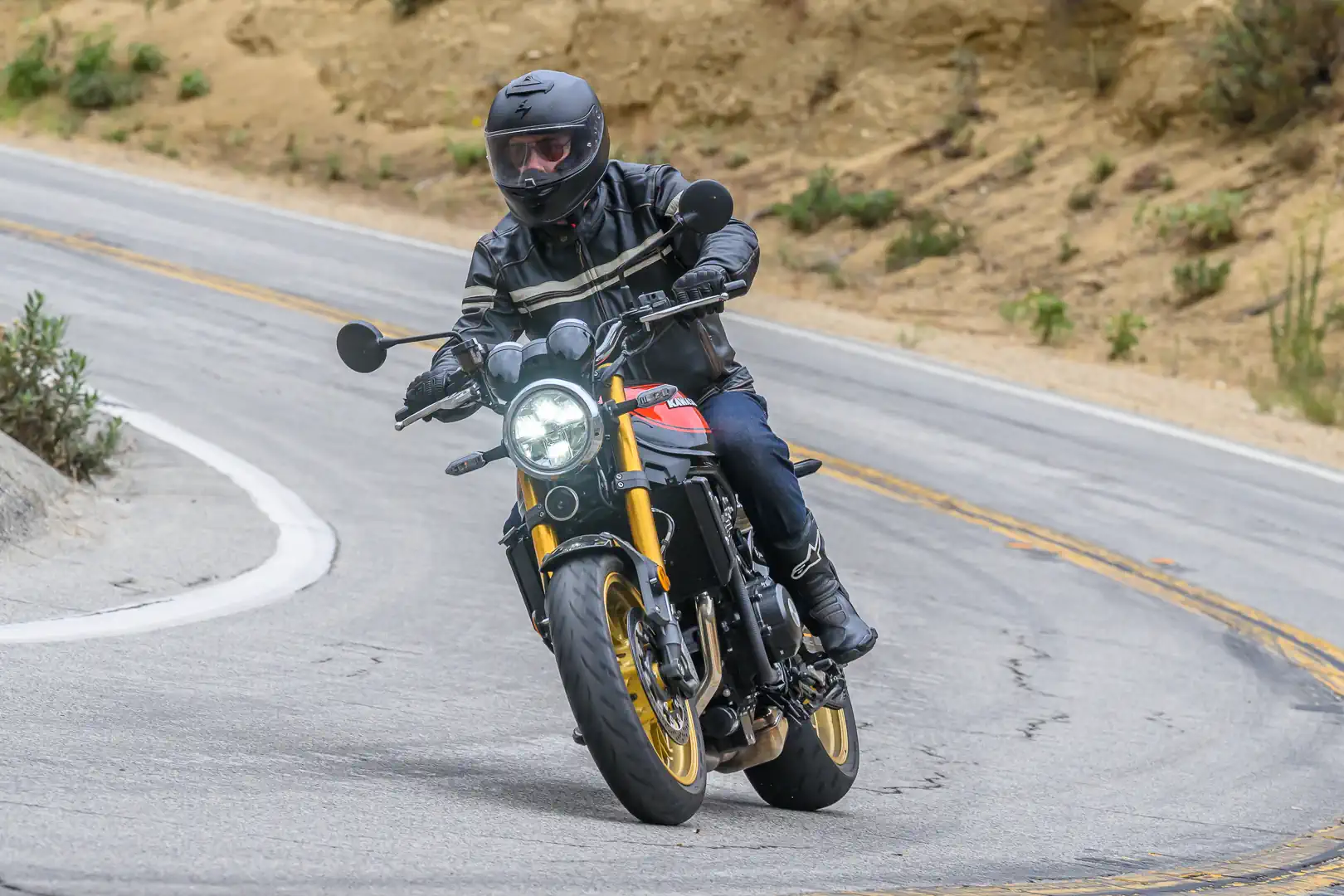
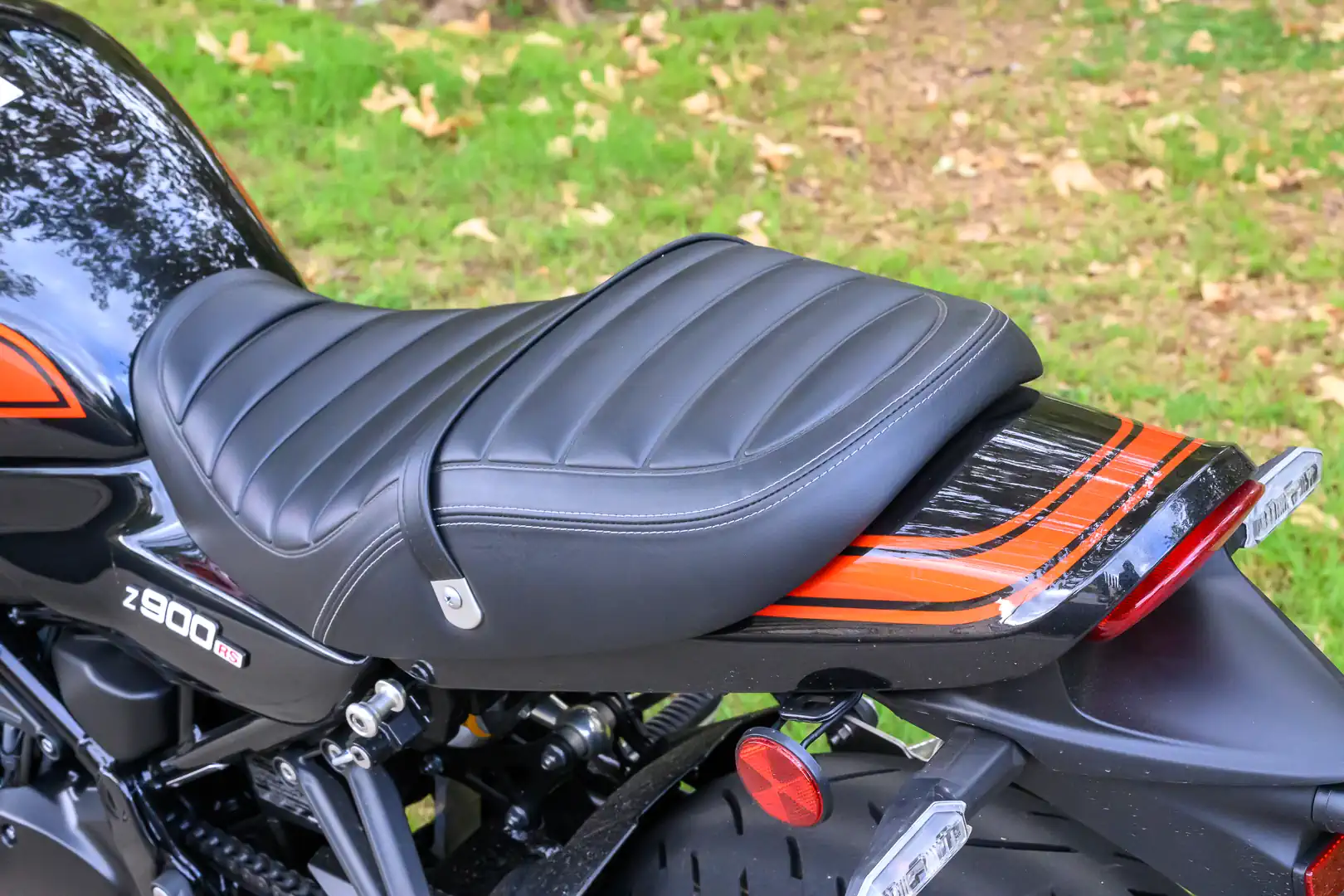
The riding position is upright and relaxed. A wide, flat-bend handlebar falls naturally to hand, and there is plenty of room between the seat and footpegs for taller riders. The slim tank narrows at the back for easy knee grip. The SE’s seat height is 32.3 inches, slightly taller than the standard model’s 31.9 inches. Kawasaki offers both a taller and shorter seat as options. The stock seat is comfortable for long rides, and the step-up for the pillion provides support for the rider during hard acceleration.
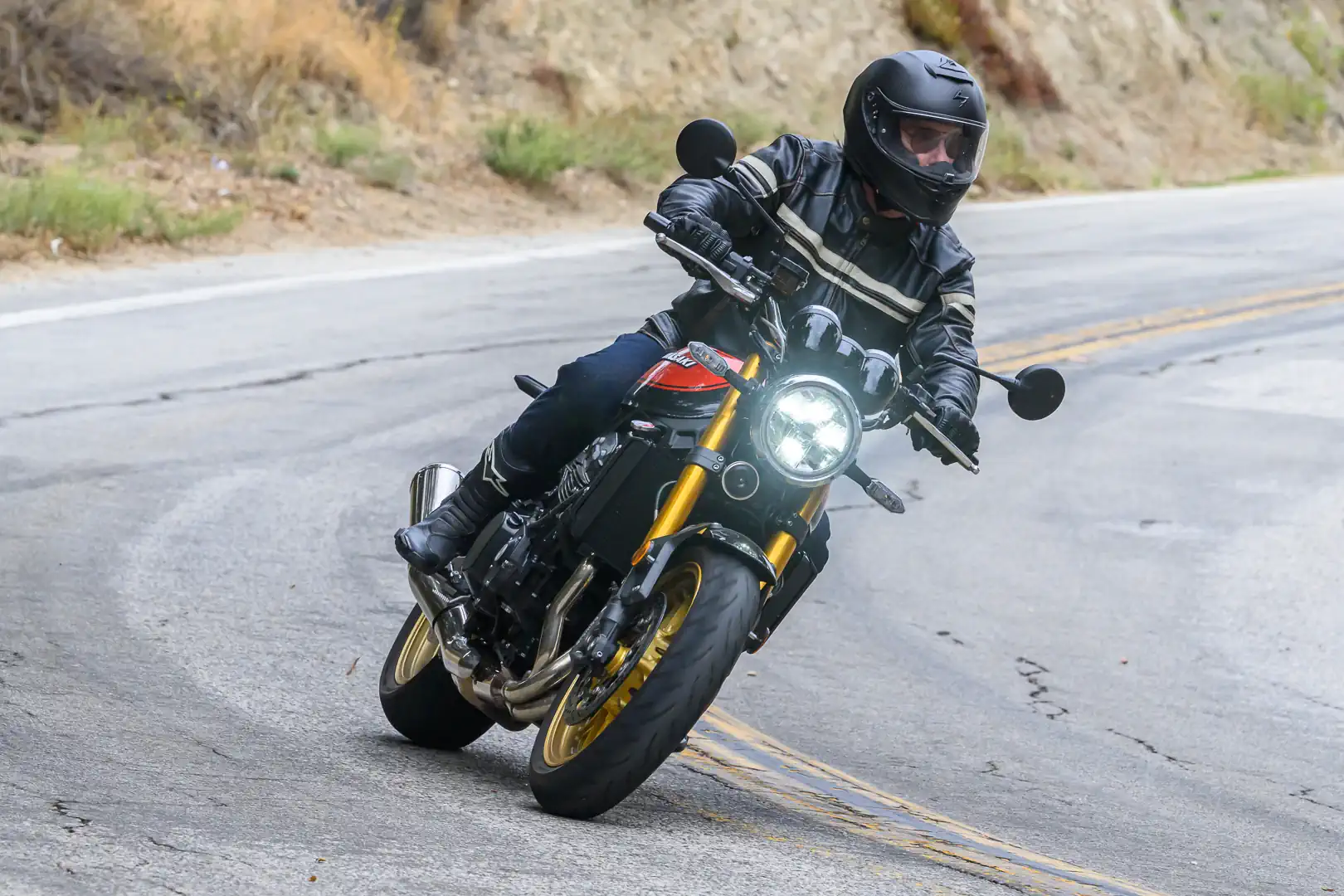
The Z900RS SE is neutral and predictable in corners. The steel trellis frame uses the engine as a stressed member, and an extruded aluminum swingarm keeps unsprung weight down. The triple clamp is offset 34mm to keep steering light. Turn-in is easy, and the SE holds its line without constant corrections. Unlike the more-agile Z900, the Z900RS is about smooth, flowing lines.
Dunlop Sportmax GPR-300 tires raised my eyebrows a bit. I associate them with lower-displacement bikes, so I was concerned with how they’d do with a big inline-4. However, because the RS is about a controlled ride with smooth power delivery and braking, the GPR-300s get the job done with confidence, matching the intention of the RS perfectly. Certainly, if you find the stock tires inadequate, there’s plenty of room to upgrade.
The Öhlins S46 shock gives the SE a supple, perfectly damped ride. This is a main feature of the SE: an upgraded shock. The Öhlins handles broken pavement without wallowing, while the retuned KYB fork is no slouch and is matched perfectly. While Öhlins suspension units are traditionally associated with higher performance, this shock is all about regulating rear wheel movement exquisitely. The suspension allows the SE to be comfortable around town, on the freeway, and in bumpy corners without twiddling the rebound damping adjuster. The action of the Öhlins shock and KYB fork is all about composure.
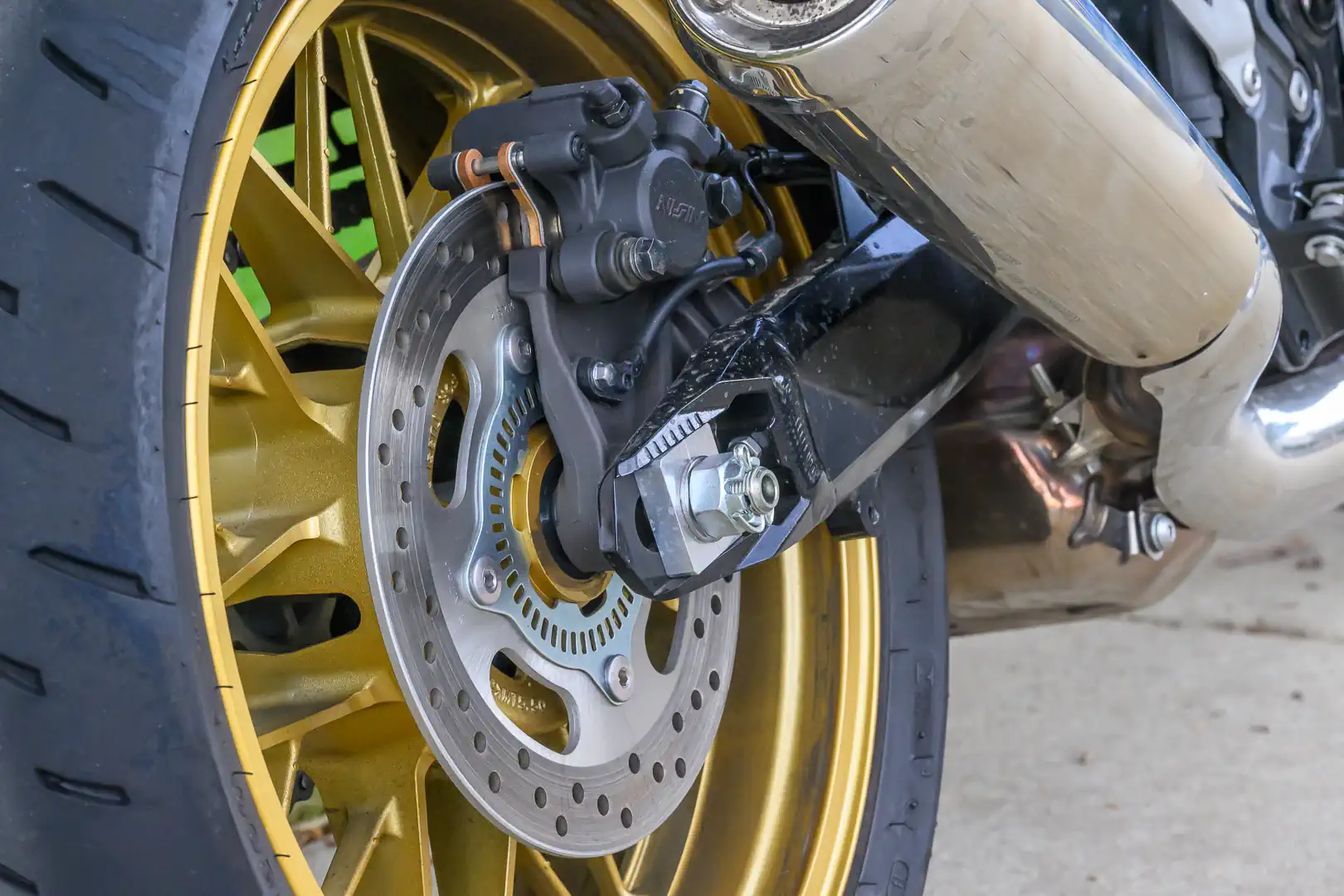
Brembo M4.32 monobloc calipers provide strong, easy-to-control stopping power. They grip dual 300mm discs and get their pressure from a Nissin radial-pump master cylinder through stainless-steel braided lines. Lever feel is firm and linear without being grabby, making the feel perfect for all but the most aggressive rider. While the M4.32 is not Brembo’s newest caliper, it fits in fine with the SE’s mission, so you never feel cheated on the brakes. IMU-assisted ABS adds a safety net when braking while leaned over. At the rear, a 250mm disc and single-piston caliper effortlessly handle trail braking and slow-speed control.
If you’re looking for a stylish commuter, the 2026 Kawasaki Z900RS SE offers itself for consideration. Freeway riding is comfortable until the wind takes over, and at that point you’re riding a serious ticket. The engine is inline-4 buzzy at cruising speed, though the issue is reduced thanks to a secondary balancer, a rubber-mounted handlebar, and rubber-damped footpegs. The upright position ensures you arrive at work without back pain, as does the compliant suspension, which does impressively well on the brutal expansion joints on LA freeways.
Off the freeway, the SE is docile around town, even without a power mode to temper throttle response. The claimed curb weight is 476 pounds, yet the SE feels lighter once it is rolling. A wide steering sweep helps you navigate U-turns and tight spaces. The light clutch, smooth throttle, and good visibility make heavy traffic easy to manage. Fuel capacity is 4.5 gallons. Kawasaki says the new throttle valves and revised exhaust improve fuel economy over the 2025 model, so look for about 170 miles between fill-ups, depending on how often you exercise your right wrist.
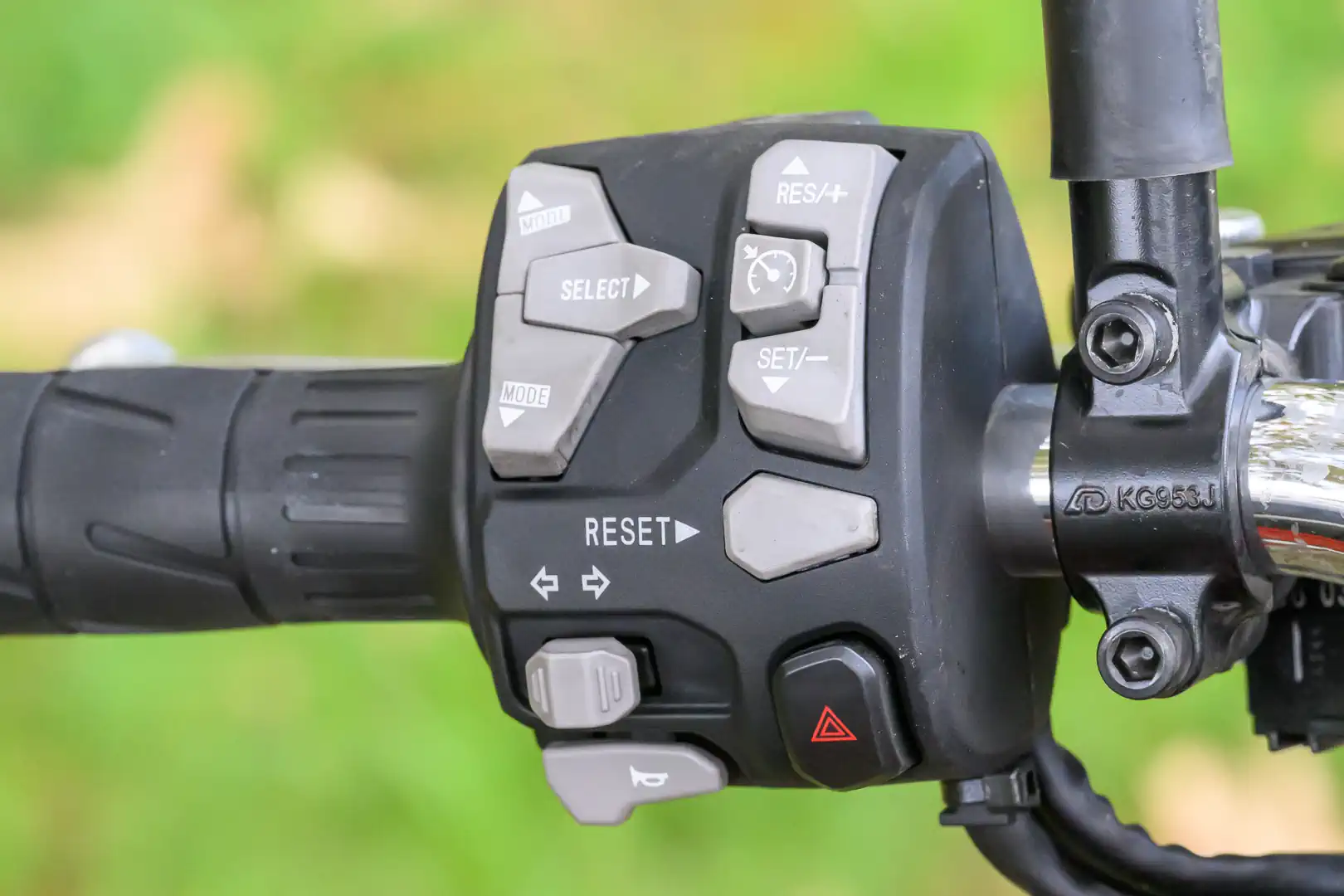
Electronic cruise control is new for 2026. Controls are on the left handlebar and intuitively adjust the set speed; Kawasaki didn’t reinvent the wheel. Using either brake or the clutch, rolling the throttle past closed, or quickshifting into 1st or 2nd gear disengages it. It also switches off if traction control steps in heavily. If you need to drone for a while, the cruise control helps reduce fatigue, though you’re still holding onto an unfaired upright standard.
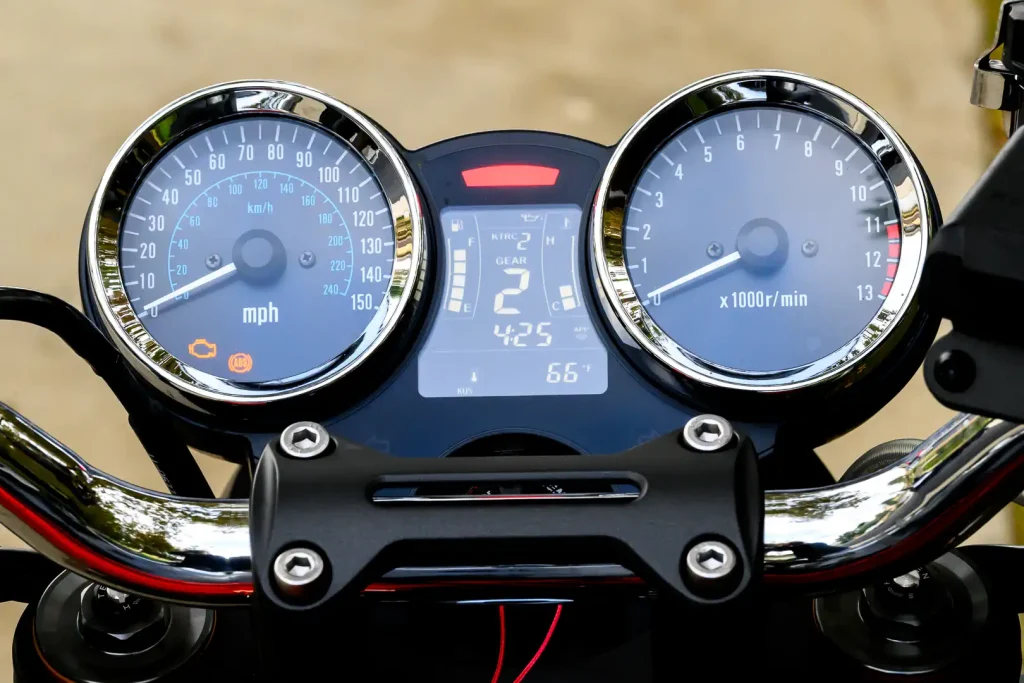
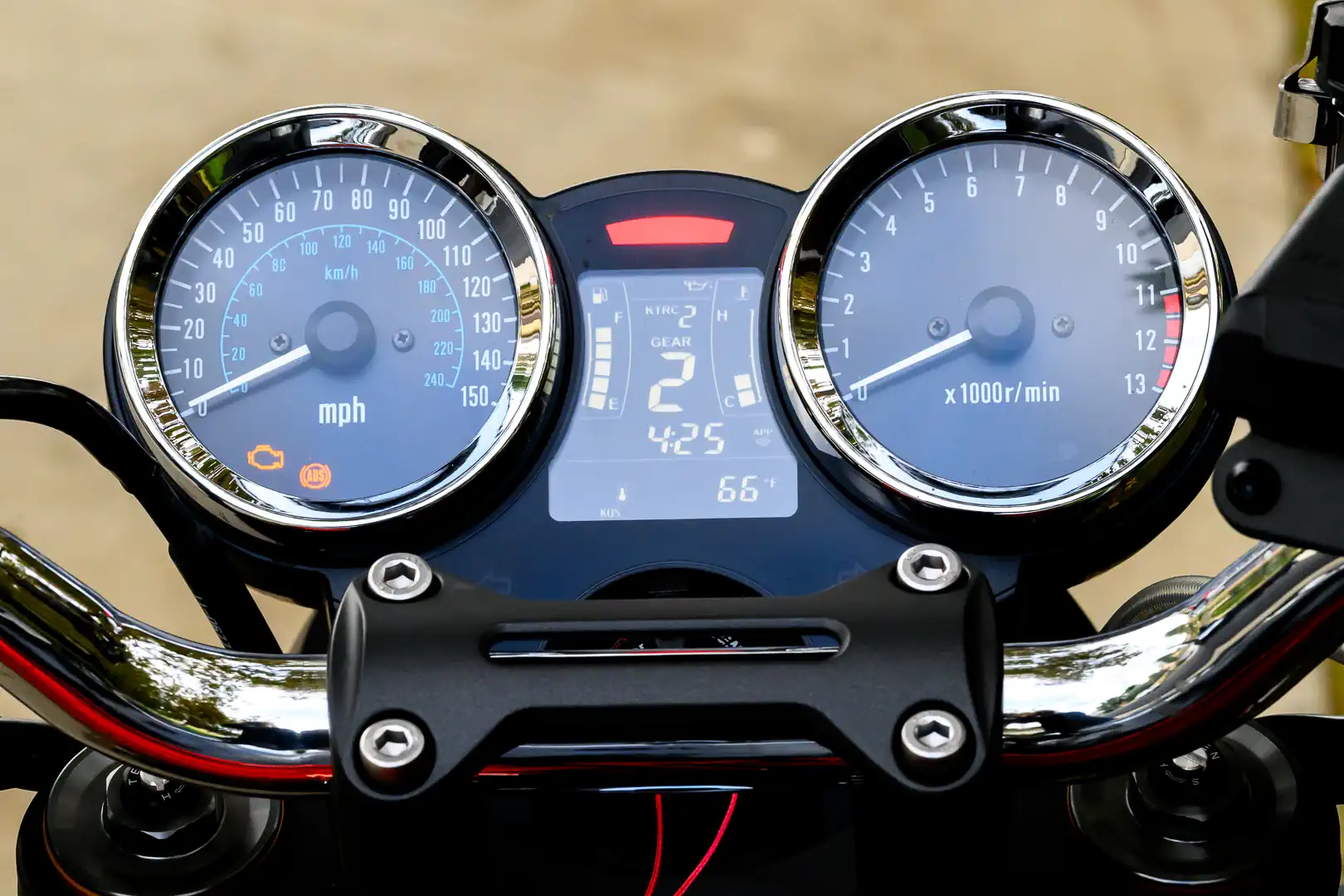
The instruments mix classic looks with modern information. Round, analog-style speedometer and tachometer dials sit in bullet-shaped housings, separated by a small LCD with white characters on a black background. Tiny displays show you gear position, fuel level, range, fuel consumption, coolant and air temperatures, and cruise control status. The switchgear interface has a learning curve, so don’t expect to master it instantly. An oversized pod inboard of the right rearview mirror mount inelegantly houses a USB-C charging port. It’s a bit jolting on a motorcycle as tasteful as the SE. Put Kawasaki’s Rideology The App Motorcycle on your smartphone, and you can pair it to the Z900RS. The app handles the basics, and navigation and voice commands are available by subscription, though the small LCD limits what the dash can show.
The 2026 Kawasaki Z900RS SE adds technology without losing its character. The engine is smoother and more responsive, the quickshifter and cruise control make it easier to live with, and the cornering-aware rider aids add a margin of safety. The Öhlins shock and Brembo brakes earn the SE’s price premium for riders who value ride quality and braking feel. The Z900RS SE remains at its best on backroads and around town, though it is impressively versatile. Looks were always its strongest selling point, and the 2026 updates add to its sporting substance and practicality.
Hello and welcome again to the Motos and Friends Podcast. This episode is brought to you by Leod Escapes.
* * * * *
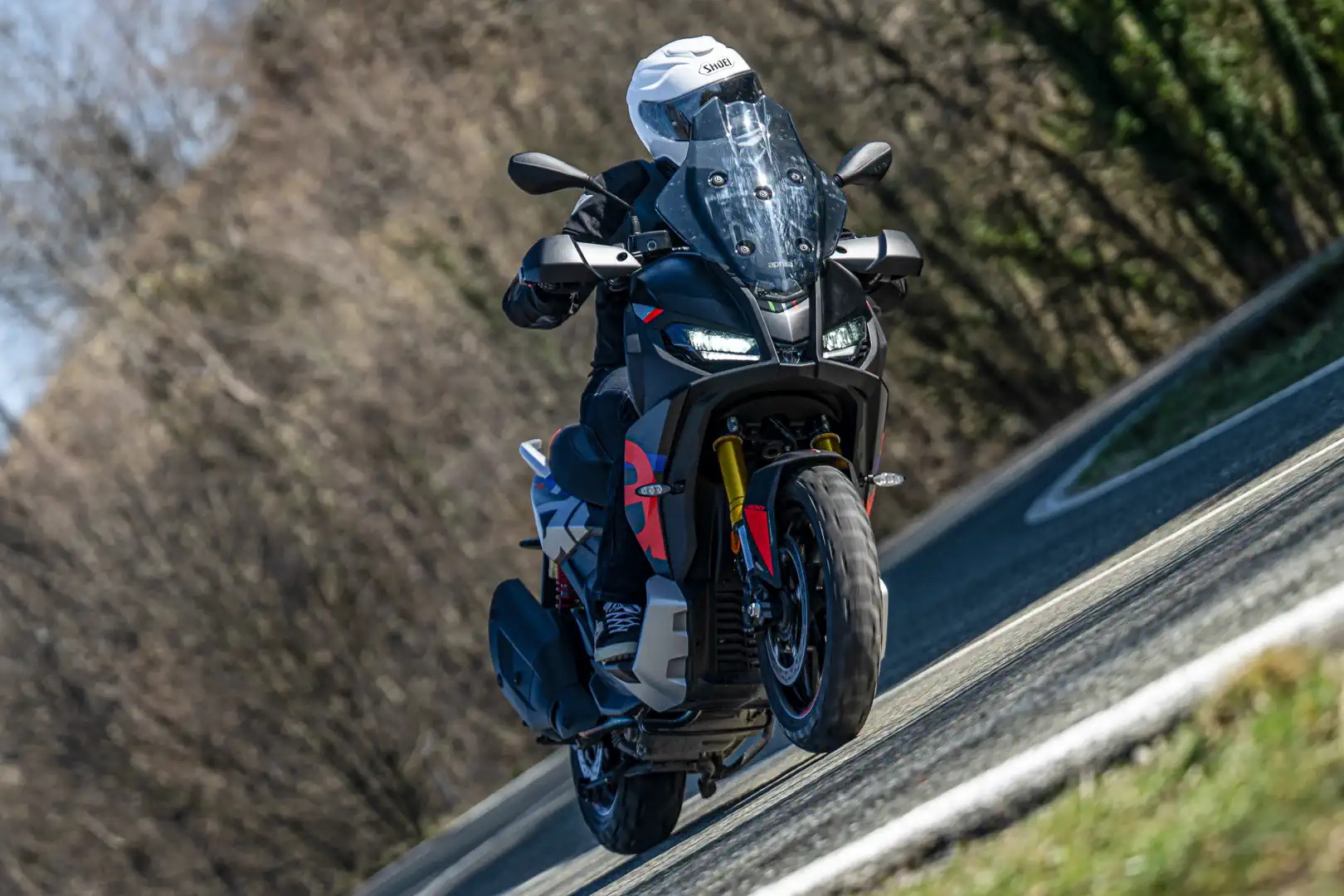
Aprilia is bringing a scooter to North America, and it’s one designed to appeal to adventure motorcyclists. The SR GT 400 is a mid-size scooter built around a steel motorcycle-style frame, a 399cc single, and off-road-ready hardware. It reaches US dealers as soon as this month. Don Williams and Kelly Callan spent some time riding the Aprilia and were surprised by what they discovered. Is this a real motorcycle or just a good-looking urban scooter?
* * * * *
Cat McLeod is founder and owner of Leod Escapes, the ultimate tour company for sport-minded motorcycle riders. Cat talks to us this segment about some of his amazing European experiences and tours that include of course, riding some amazing MotoGP tracks on new BMW S1000RRs. If you like what you hear, now is the time to book your trip of a lifetime, so visit LeodEscapes.com to find out more.
* * * * *
Our guest this episode is Terry Vance, the multiple Motorcycle and Motorsports Hall-of-Famer. Terry is of course the former professional motorcycle drag racer, team owner, and co-founder of the high-performance parts company Vance & Hines. Teejay Adams chats with Terry about his incredible career that includes being the first rider to hit 200 mph in the standing quarter-mile.
Having won this year’s MotoAmerica Mission King of the Baggers championship with Hayden Gillim riding the Vance & Hines factory Indian Challenger, and with Harley-Davidson’s recent withdrawal, Terry gives us his thoughts on where the series might go from here.
* * * * *
Here’s quick reminder to check out our monthly digital magazine. It’s filled with everything you want to read on motorcycling, including some things you’ve probably not seen elsewhere. It’s absolutely free and you will find it on the Apple App Store and of course on Google Play as well.
Don’t forget to leave us your comments on our social media—we’re on all the usual platforms at Ultimate Motorcycling. We love hearing your feedback… so good or bad, please let us know what you think. If there’s something you’d like us to cover, we’d love to hear those ideas too!
We use cookies and browser activity on this website
Functional
Always active
The technical storage or access is strictly necessary for the legitimate purpose of enabling the use of a specific service explicitly requested by the subscriber or user, or for the sole purpose of carrying out the transmission of a communication over an electronic communications network.
Preferences
The technical storage or access is necessary for the legitimate purpose of storing preferences that are not requested by the subscriber or user.
Statistics
The technical storage or access that is used exclusively for statistical purposes.The technical storage or access that is used exclusively for anonymous statistical purposes. Without a subpoena, voluntary compliance on the part of your Internet Service Provider, or additional records from a third party, information stored or retrieved for this purpose alone cannot usually be used to identify you.
Marketing
The technical storage or access is required to create user profiles to send advertising, or to track the user on a website or across several websites for similar marketing purposes.