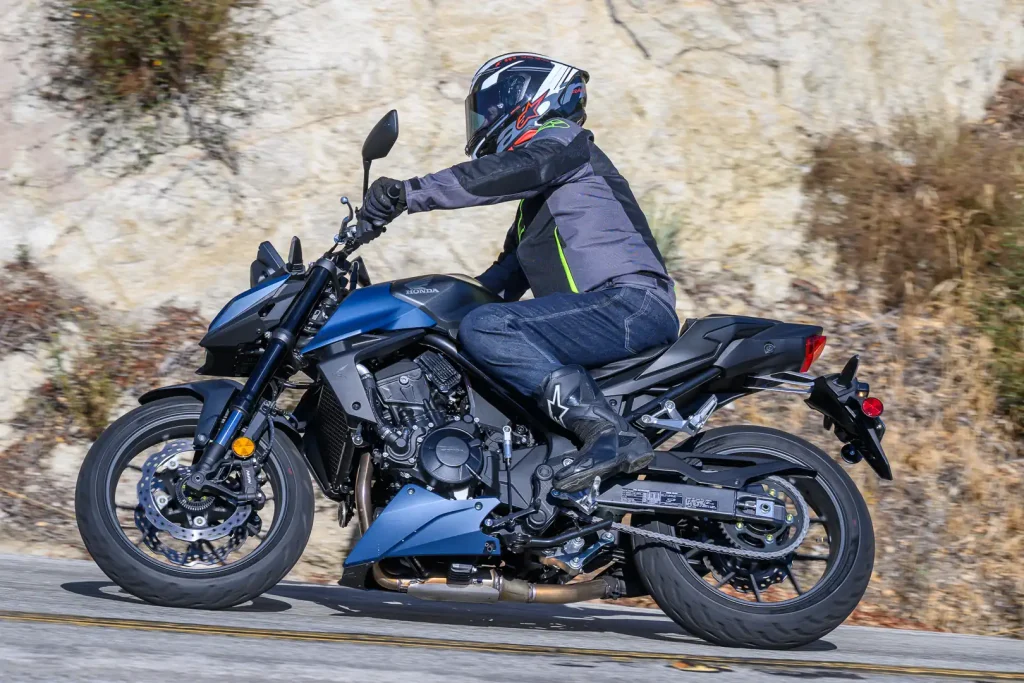
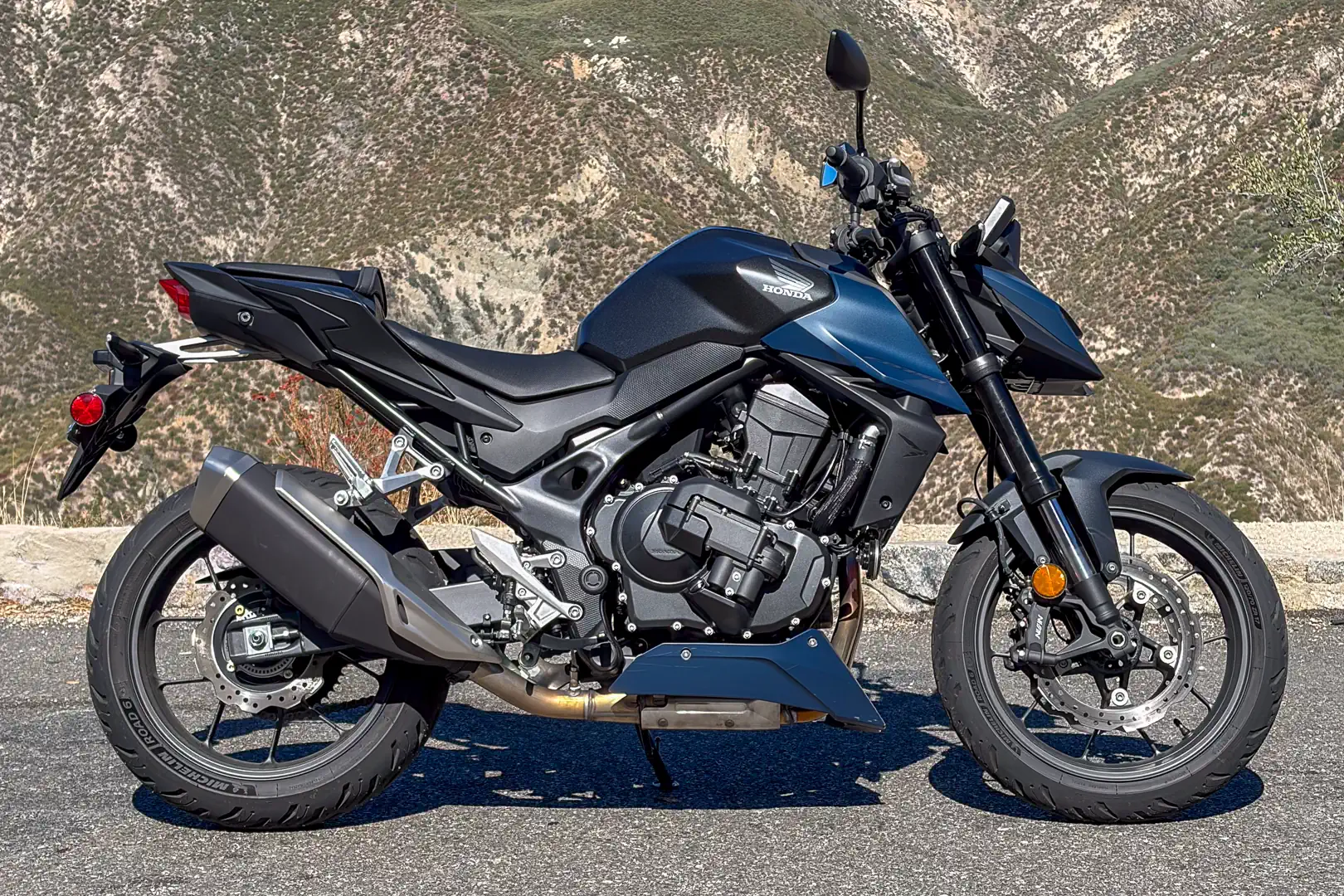
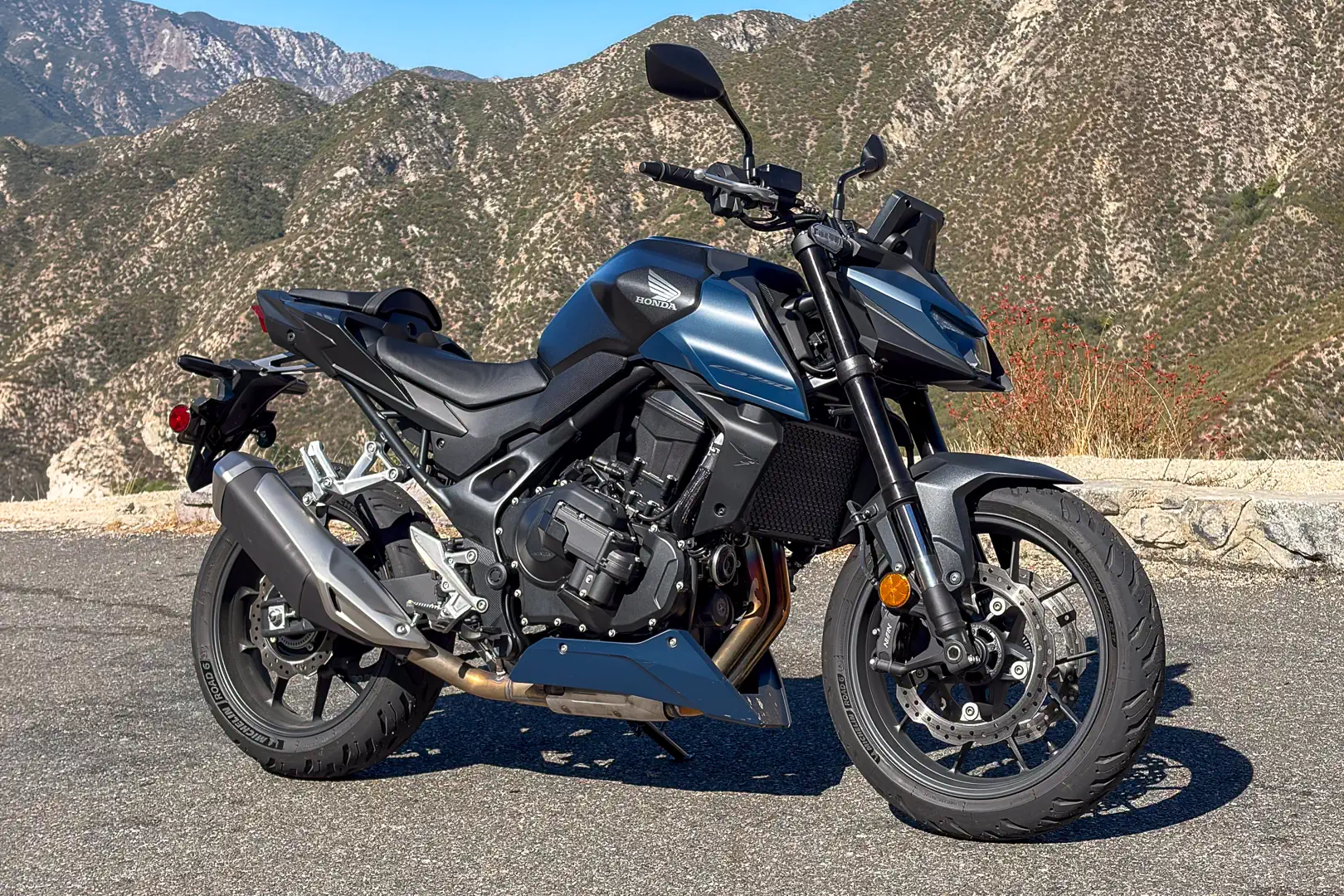
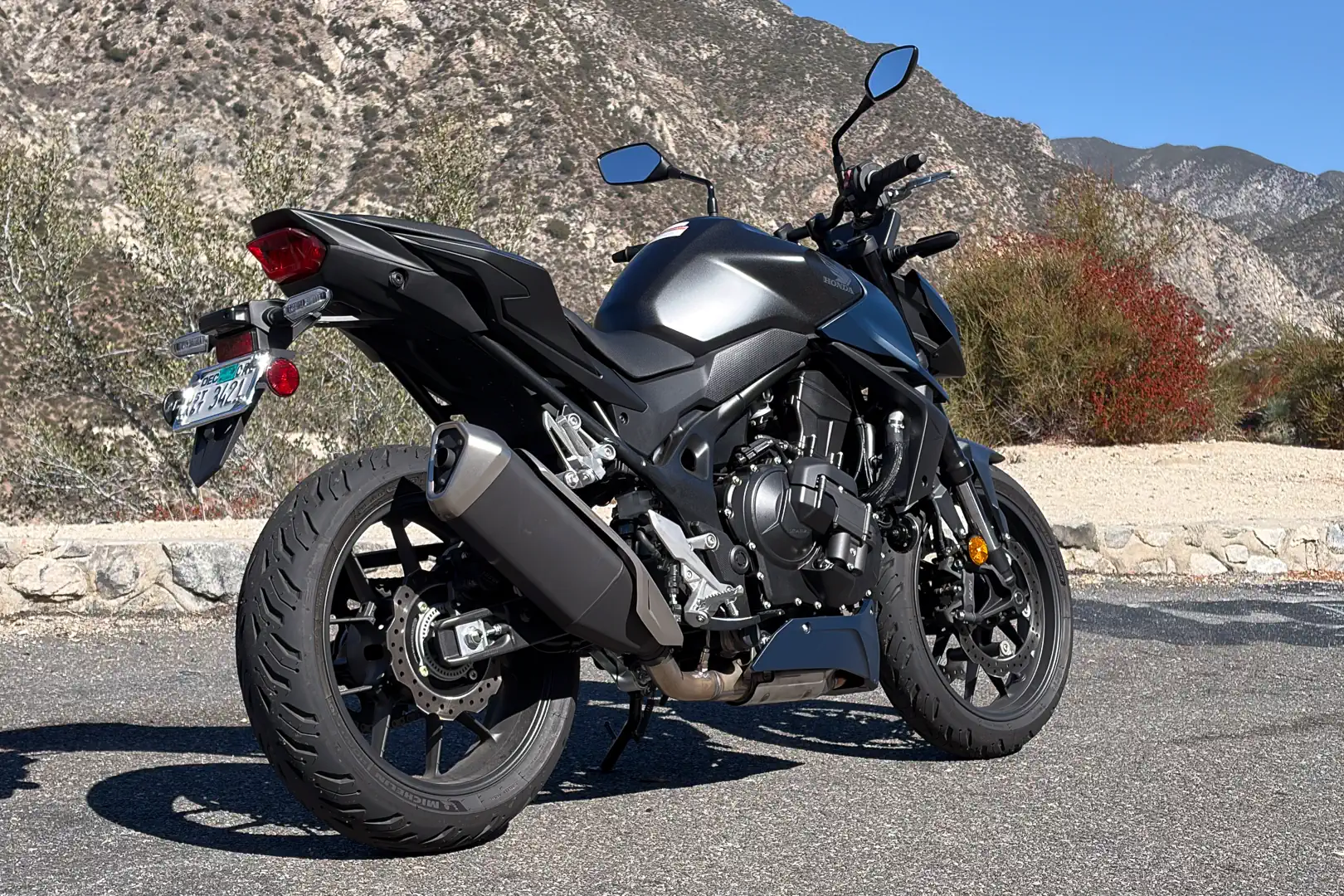
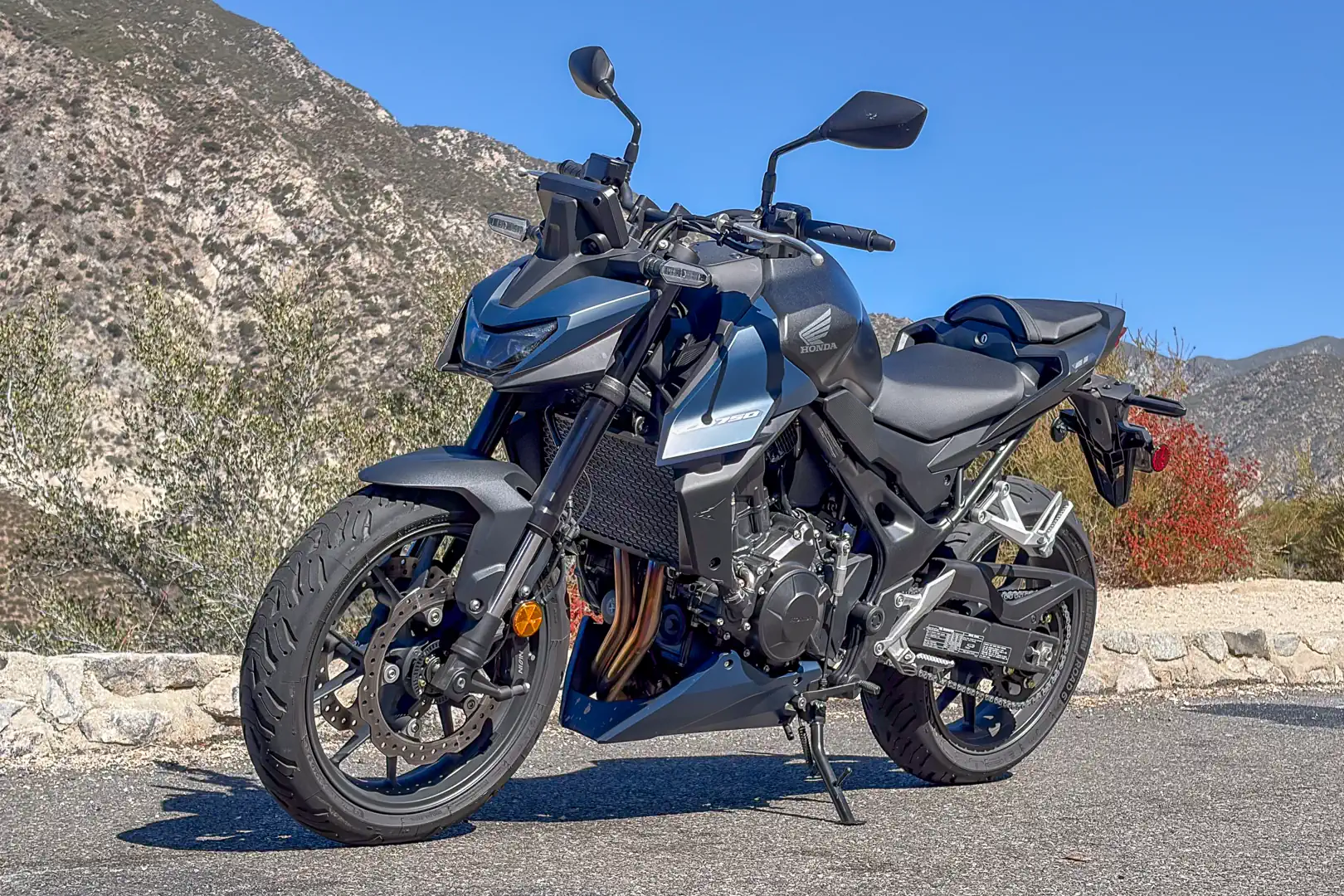
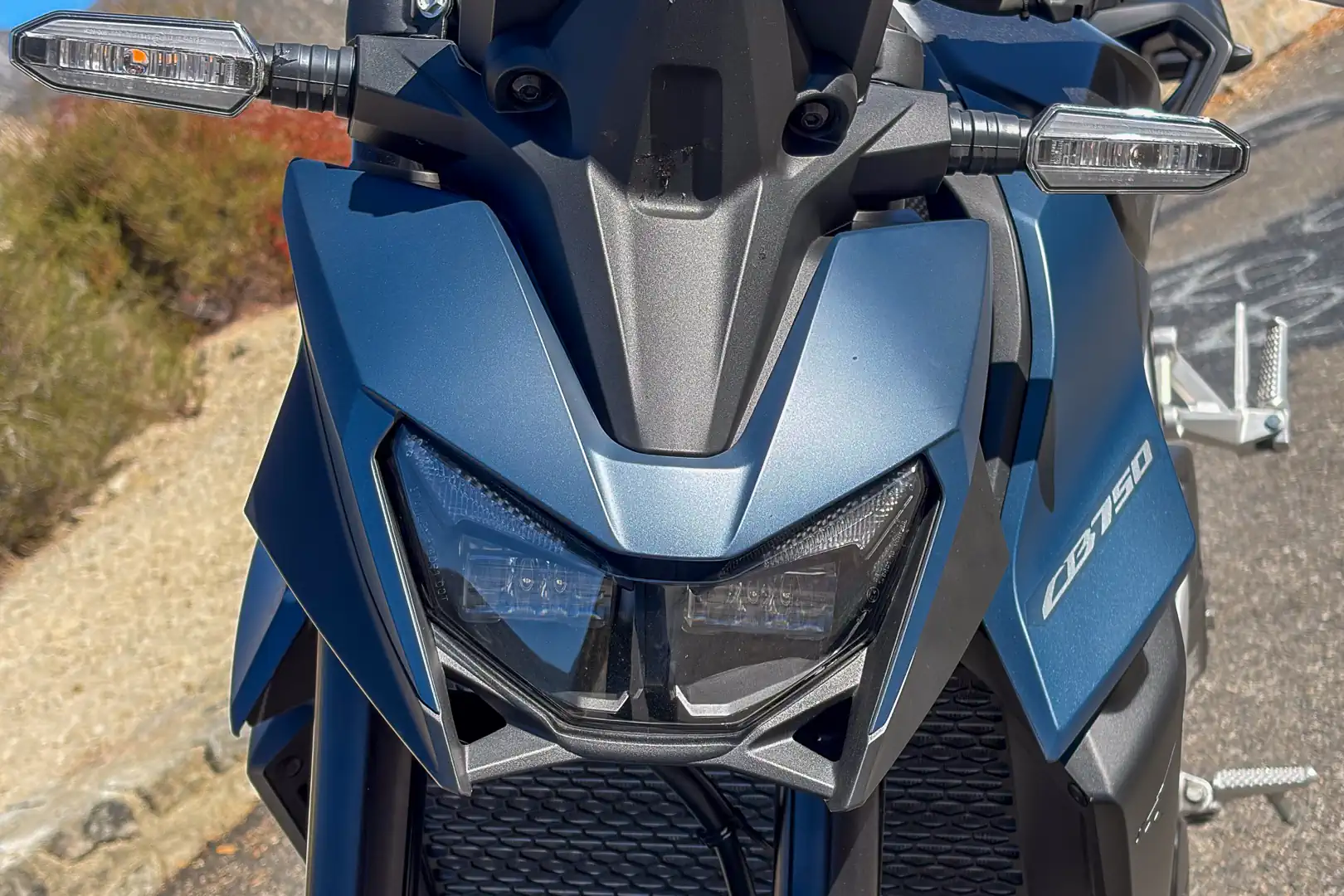
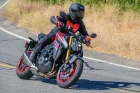
The E-Clutch is taking the Honda lineup by storm. It started with the Honda CB650R and CBR650R in 2024. For 2026, the automatic clutch system has expanded to the Rebel 300, Transalp, and the subject of this review, the CB750 Hornet. The E-Clutch isn’t an optional accessory. Instead, it replaces the manual clutch, which is no longer available for these five models. This isn’t an evolution; it’s a revolution.
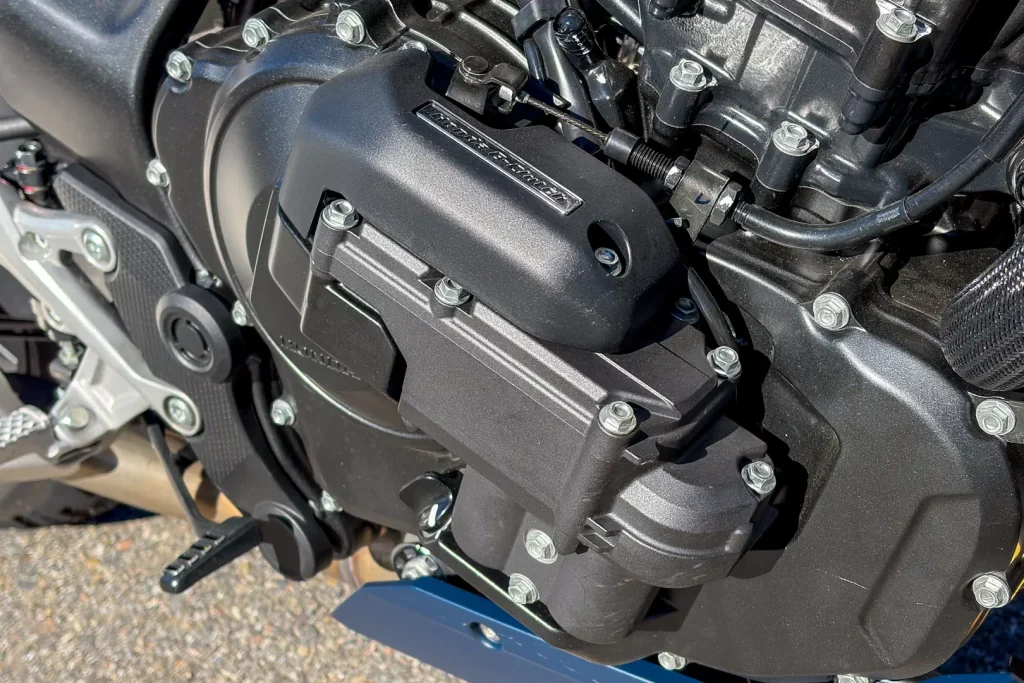
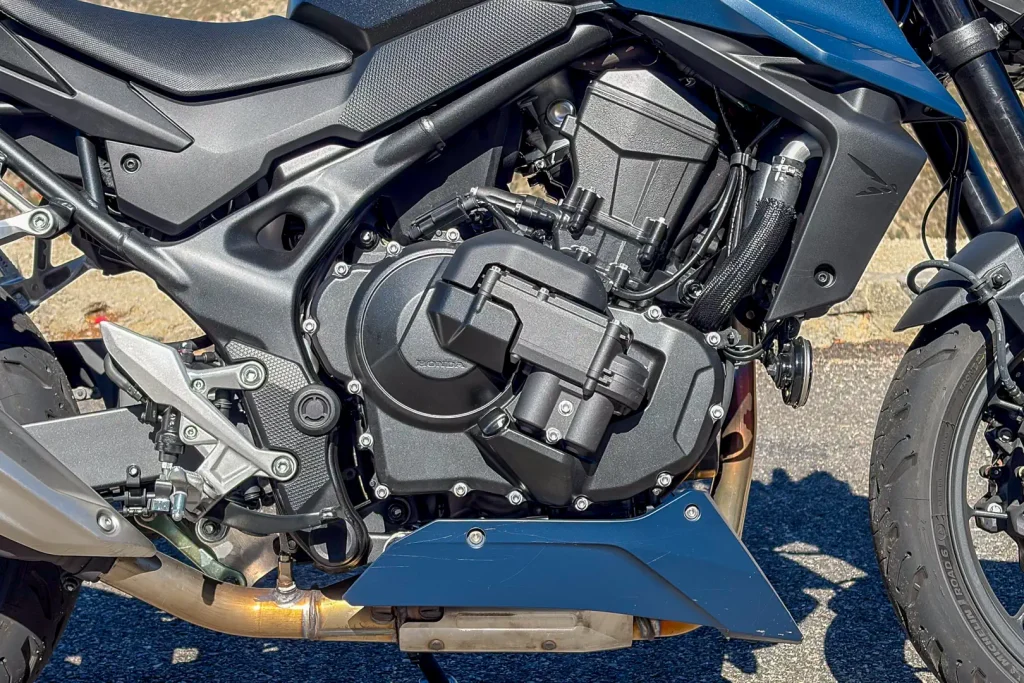
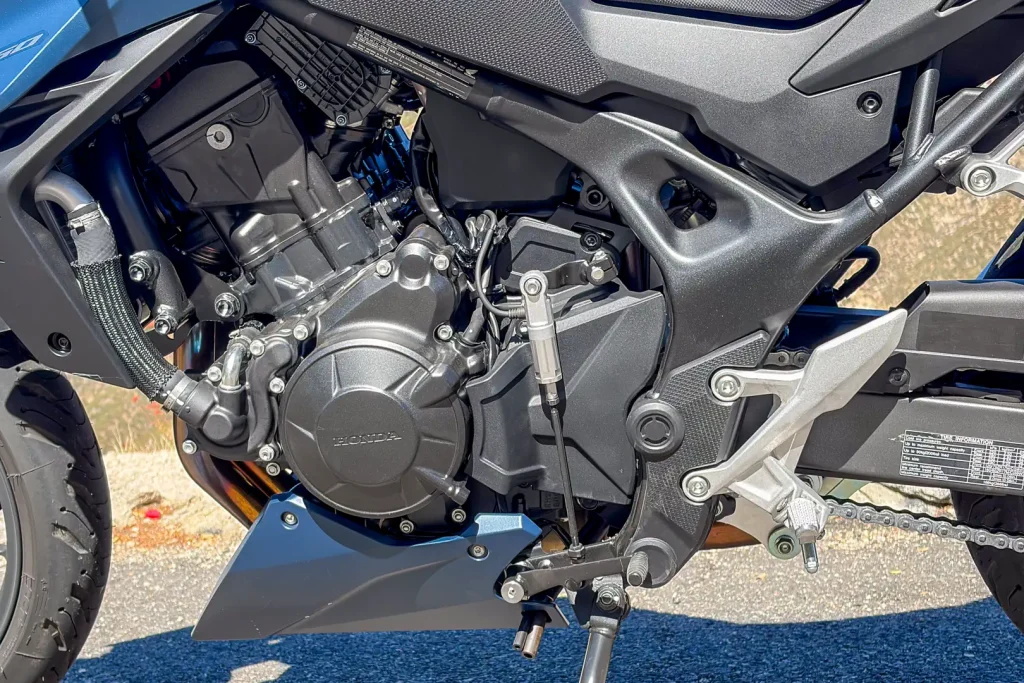
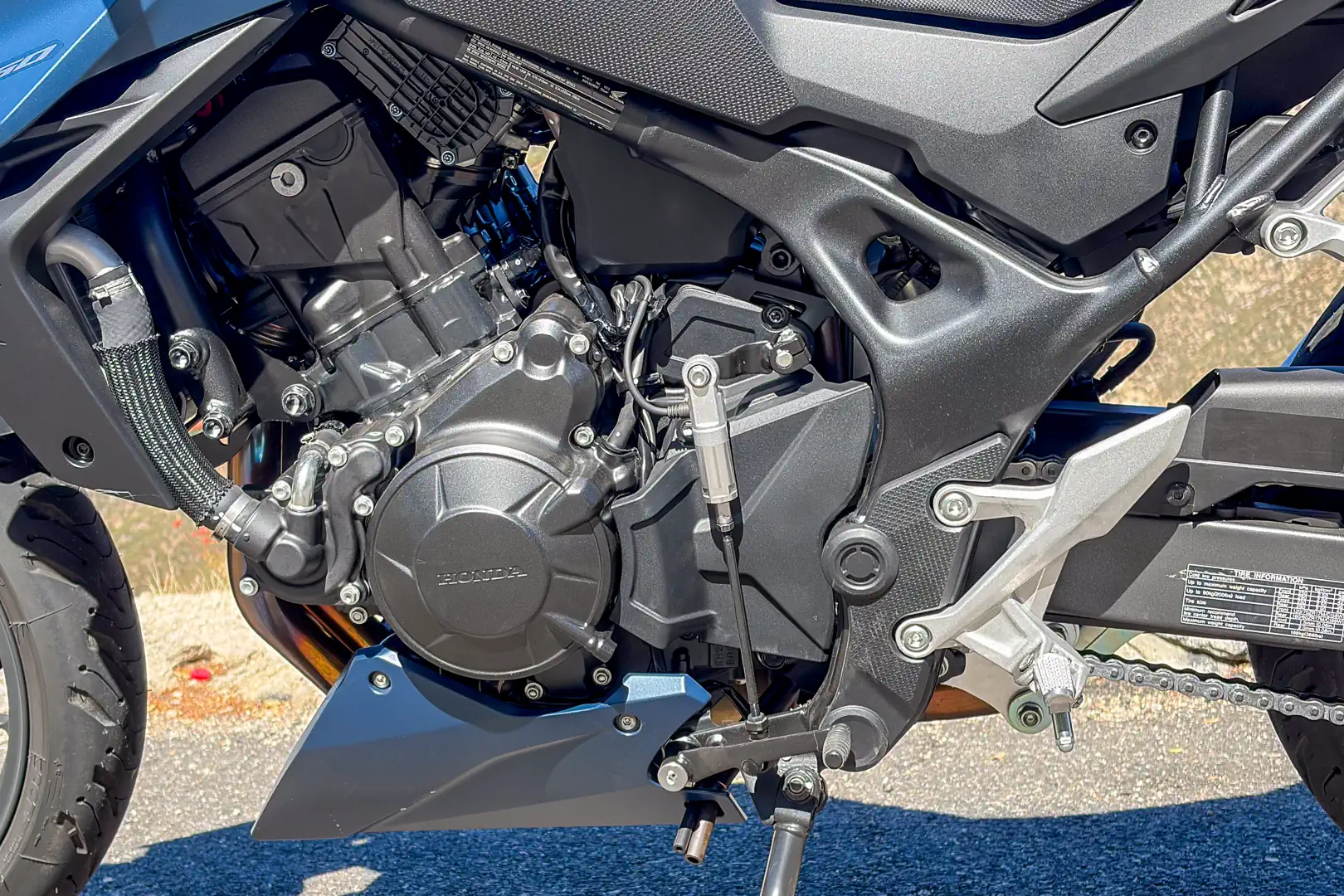
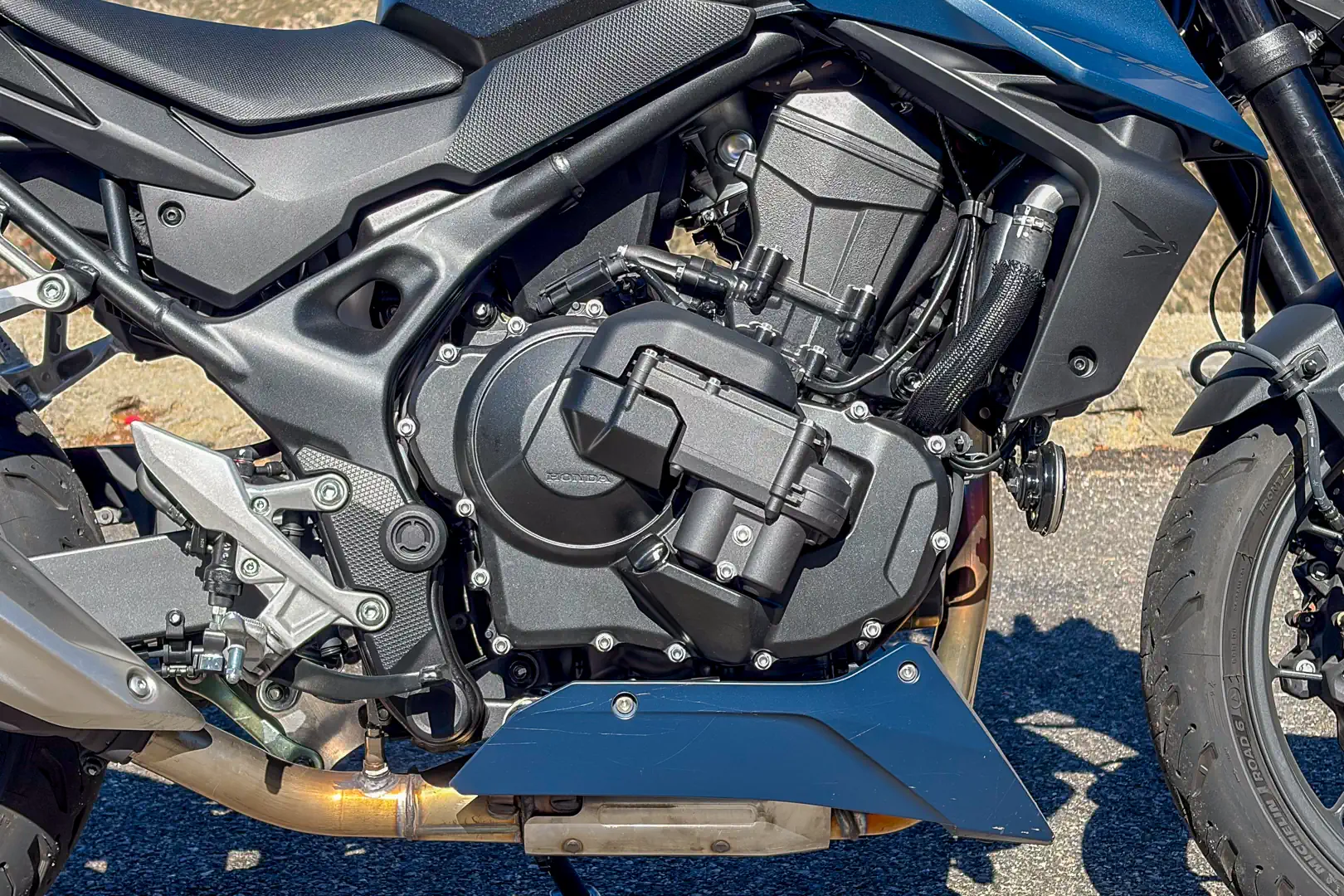
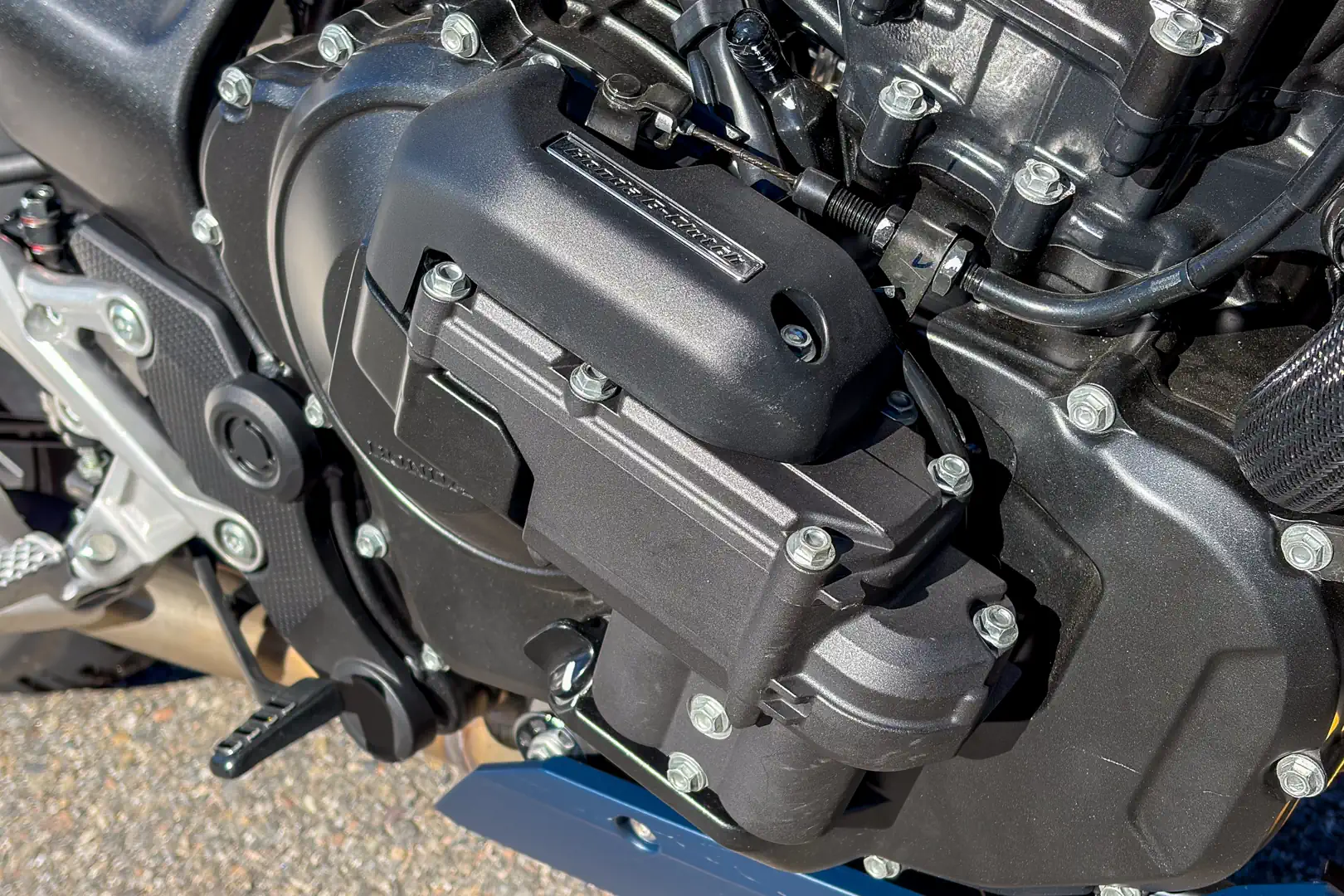
The E-Clutch does the work of your left hand, and you can reclaim that job any time you want. Two small electric motors on the right side of the engine act on the clutch through a control unit that reads throttle position, engine speed, gear position, and shift lever movement. The CB750 Hornet is the first Honda to combine E-Clutch with ride-by-wire, so the system coordinates with the ride modes and traction control when it changes gears. You still make every gear change with your left foot. Use of the clutch is fully optional, as Honda has politely left the clutch lever there for your enjoyment, should you choose to use it.
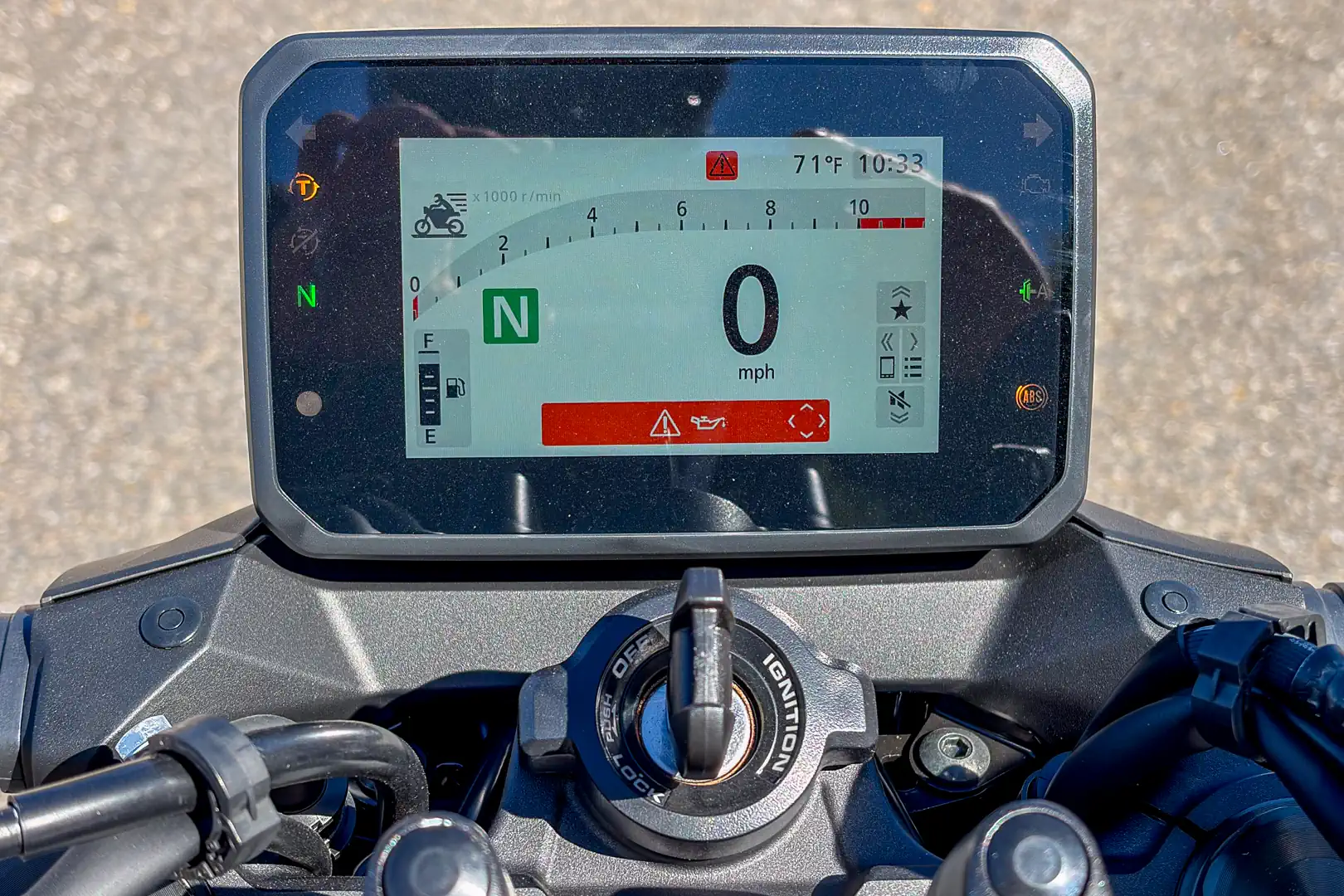
Flawlessly implemented, the E-Clutch never gets in your way. Click into 1st gear from a stop, roll on the throttle, and the system feeds the clutch out for you. Shift up or down at any rpm without touching the clutch lever, and it works the clutch for each change. Do whatever you like with the throttle; the E-Clutch does its thing independently. Roll to a stop in any gear, and the engine keeps running. You can pull away again from whatever gear you are in, though that’s hard on the clutch; the TFT dash will remind you to shift down if you’re in any gear other than 1st. Unlike an automatic transmission, the bike does not creep forward at a stop if you have the brake off and the transmission in gear; the clutch is simply disengaged. If you like, you can shift into neutral, but there’s no point.
Pull the clutch lever at any time, and the system hands control to you instantly. If you pull the lever in at a stop and release it with insufficient power, the engine stalls just as it would on any manual motorcycle. Once you release the lever, automatic operation resumes within a few seconds. A green E-Clutch indicator, a clutch icon with an A for Automatic, goes dark on the right side of the dash when you use the lever. It lights back up when the E-Clutch is back in business. The icon is small and unfamiliar, so you’ll learn it as “the green light” rather than by what it depicts.
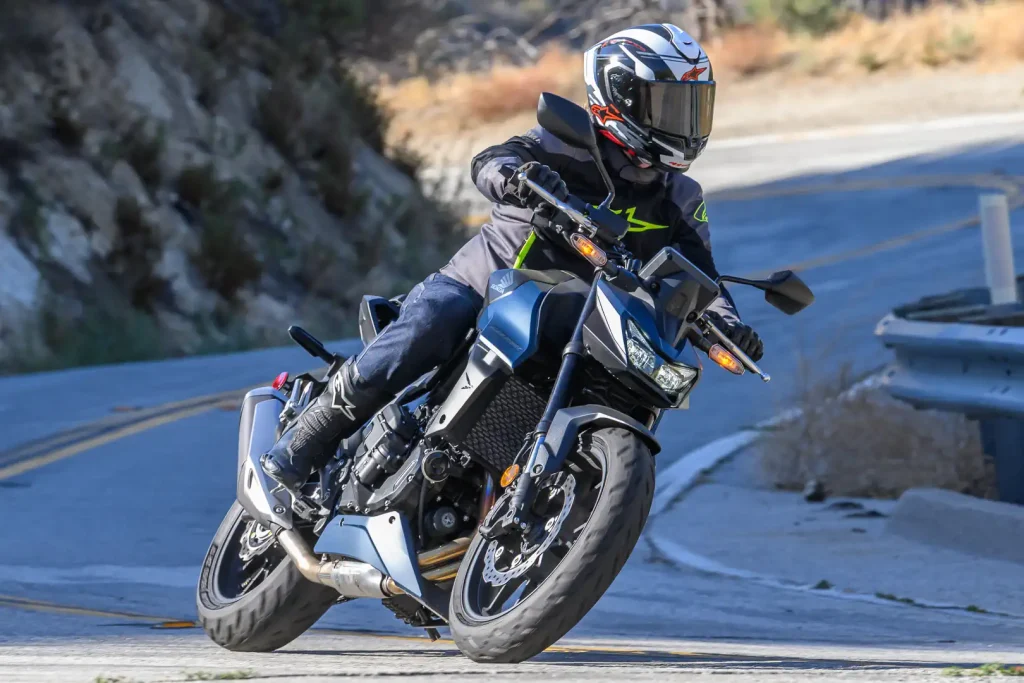
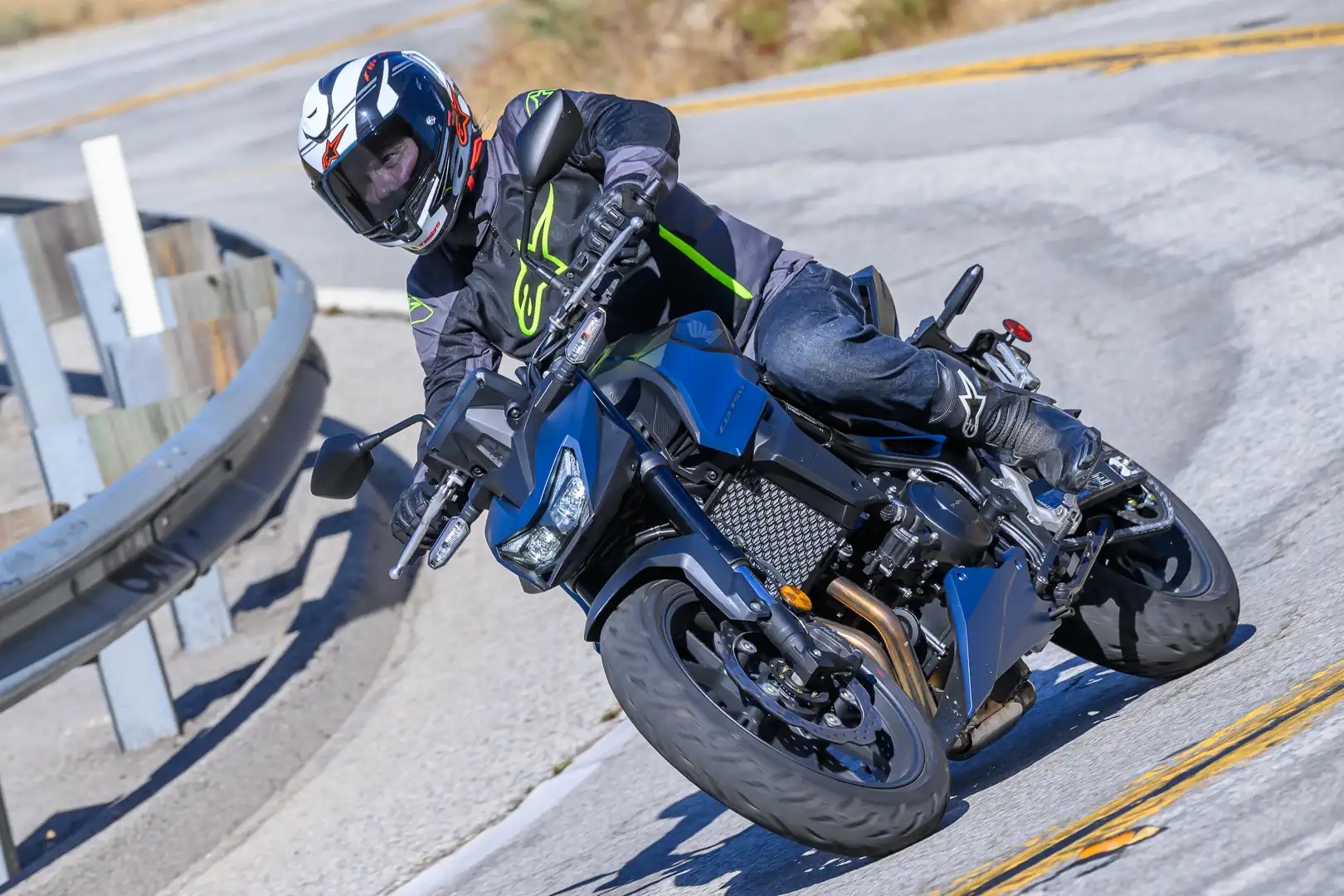
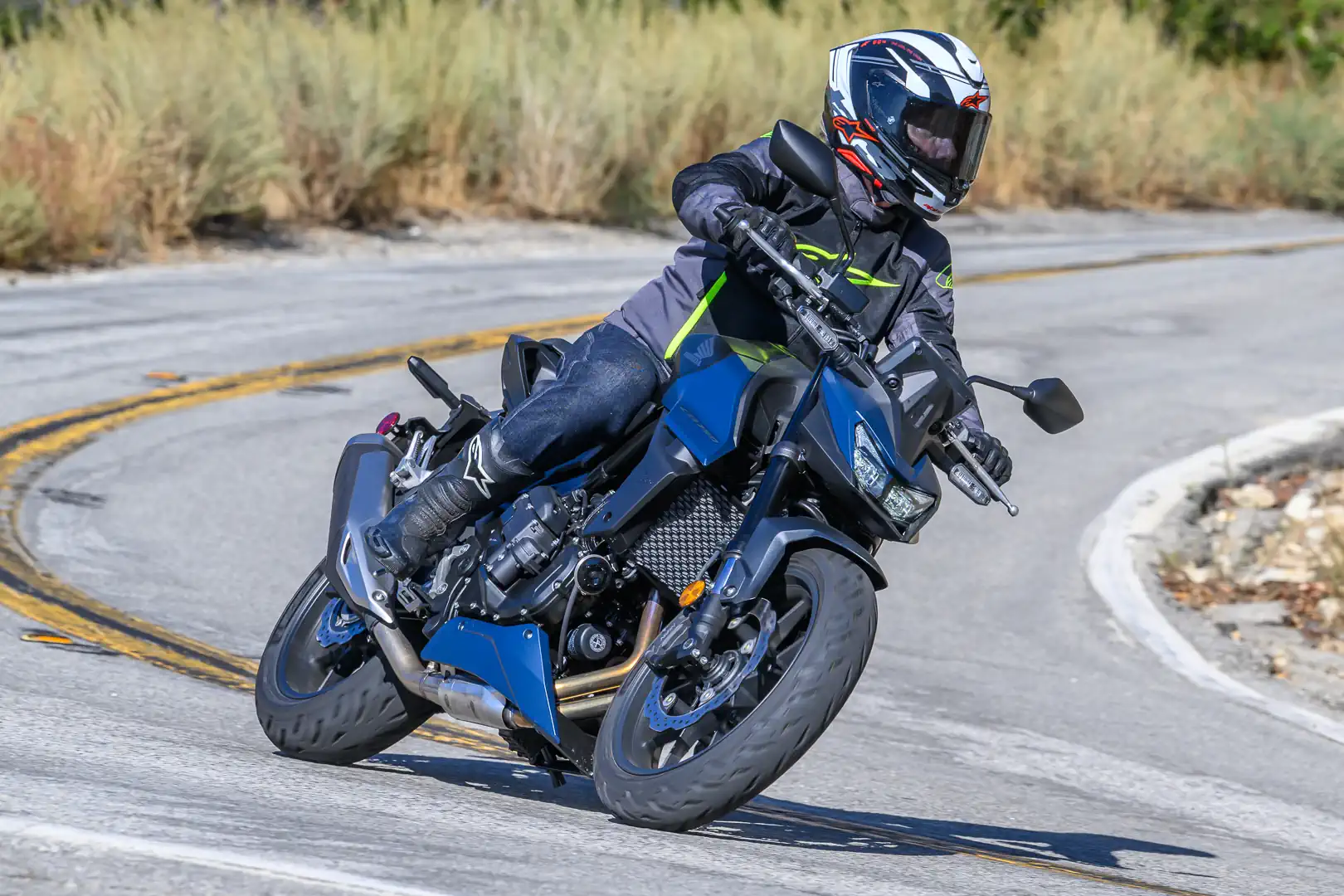
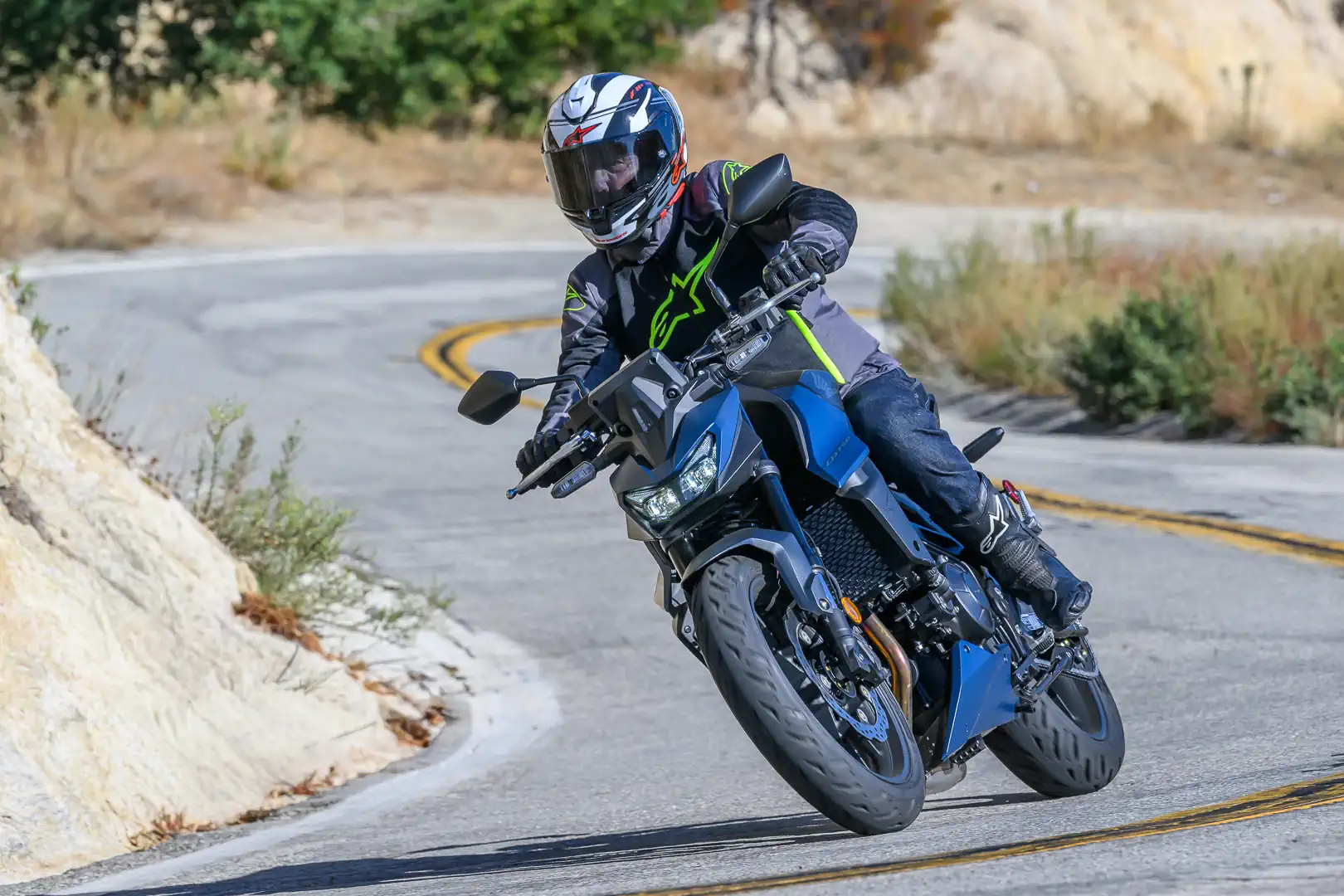
While you may be skeptical of the E-Clutch, you’ll likely embrace it once you use it. As you ride, you’ll discover that working the clutch isn’t essential. Automating that job frees up brain cycles so you can focus on the riding experience. Around town, the utility is obvious, and you’ll never stall the bike unless you touch that clutch lever. In the canyons, the E-Clutch beats a traditional electromechanical quickshifter. Gear changes are seamless, even mid-corner, keeping the bike steady and your focus fully engaged on the road. If you’re on a long ride with lots of gear changes, you’ll appreciate the reduced fatigue, even if you didn’t notice an issue with a manual clutch. The system has no downsides, other than an unnoticeable 10 pounds near the center of gravity. The upsides are enticing, then addicting.
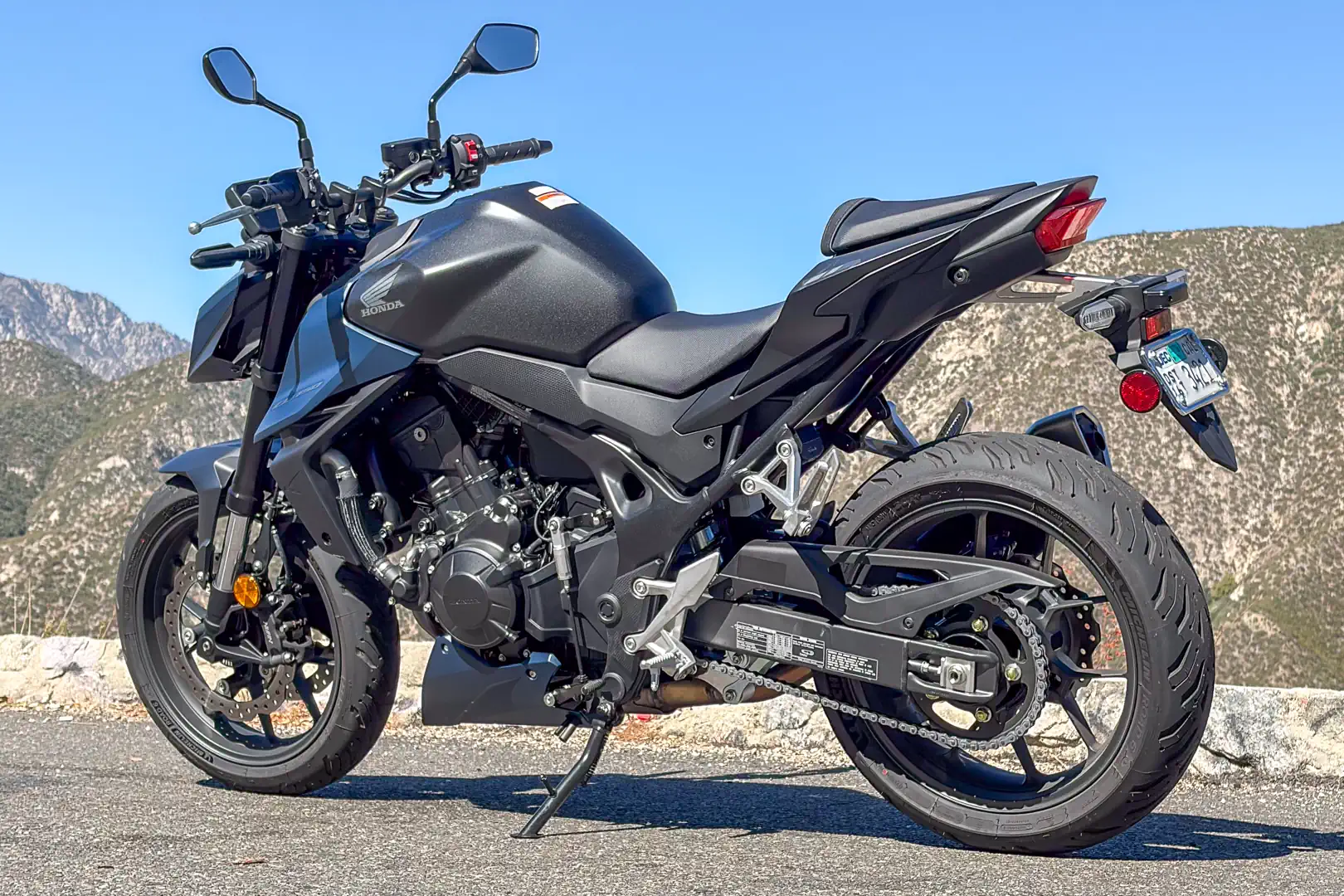
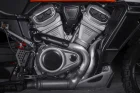
The 755cc parallel-twin is unchanged and the heart of the Hornet 750. It runs a 270-degree crank, a Unicam single-overhead-cam head with four valves per cylinder, and is moderately oversquare. It’s the same motor we have enjoyed in the Transalp. While Honda does not publish power figures in America, the Euro version of the Hornet 750 is claimed to produce 91 horsepower at 9500 rpm and 55 lb-ft of torque at 7250 rpm.
Power builds steadily and relentlessly to the 10,000 rpm redline. The engine is responsive across the entire rev range, avoiding the flat spots in power delivery that mark some middleweight twins. Off-to-on throttle transitions are clean, and the motor is torquey enough to make it a fantastic commuting or urban bike.
The counterbalanced motor is smooth at highway speed, with minimal vibration where you spend your time on the freeway. The sound is a low- to midrange growl that turns into an aggressive bark at high rpm. Despite the 270-degree crank design, you won’t feel significant vibration until you get well into the rev range. On the freeway in 6th gear, the buzz lets itself be known around 100 mph.
Ride modes are Sport, Standard, and Rain, plus two rider-programmable User modes. Each mode sets power delivery, engine braking, and traction/wheelie control at one of three levels. They work exactly as you’d expect, though Sport is smooth enough that you’ll rarely find a need to select Standard. The presets are fixed, and User mode settings are retained when you switch off the ignition, with one exception.
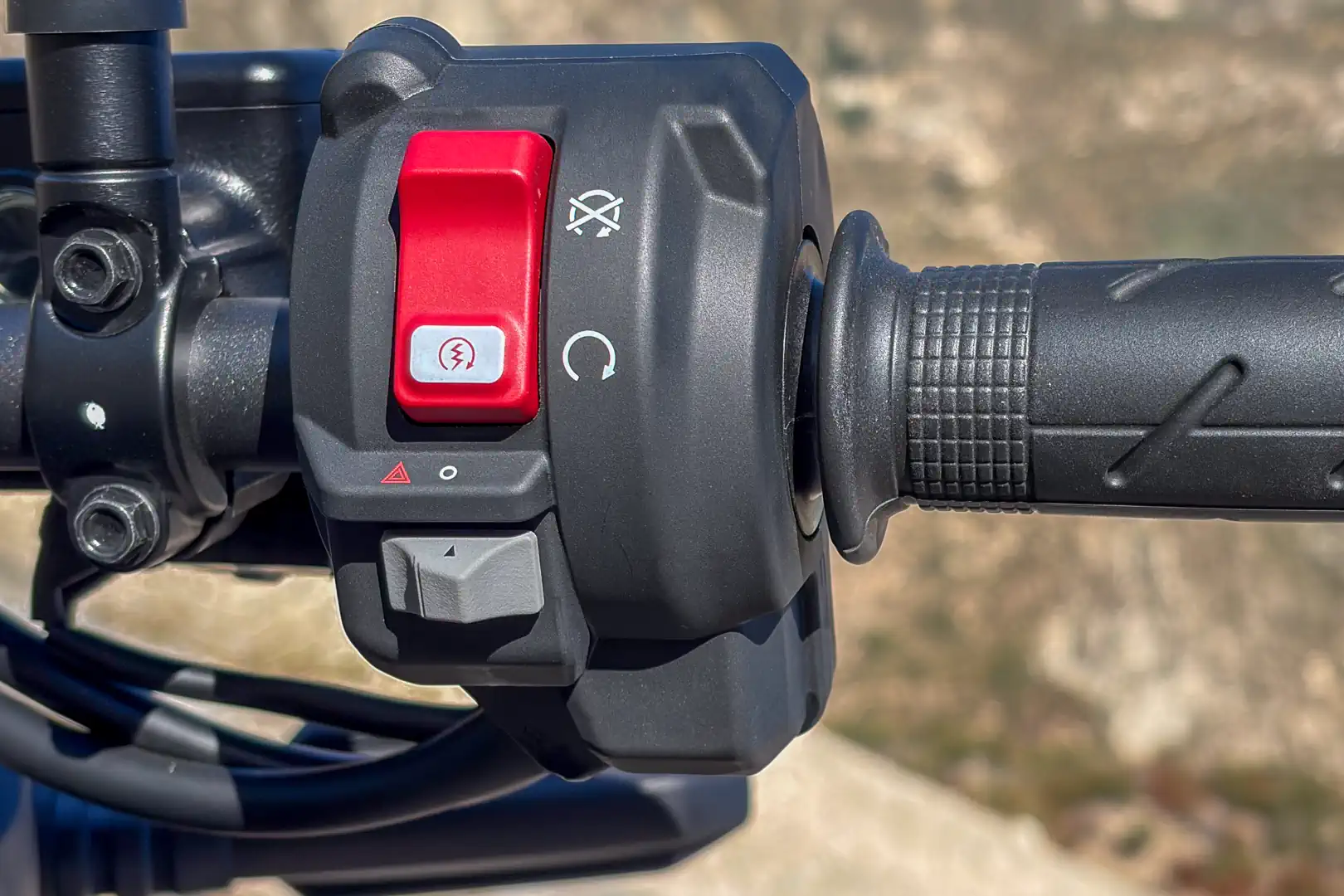
Turning TC/WC off requires a trip into the menu and a long press of the select button. On the next start, it returns to whatever level you chose for that User mode. While Honda lets you switch TC/WC off, it’s not easy, and the choice doesn’t stick from ride to ride. There is no IMU, so the ABS, TC, and WC have no lean-angle sensitivity.
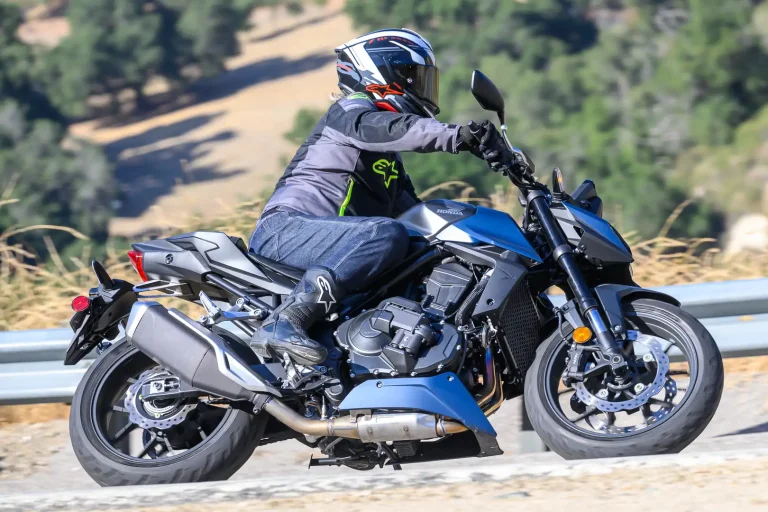
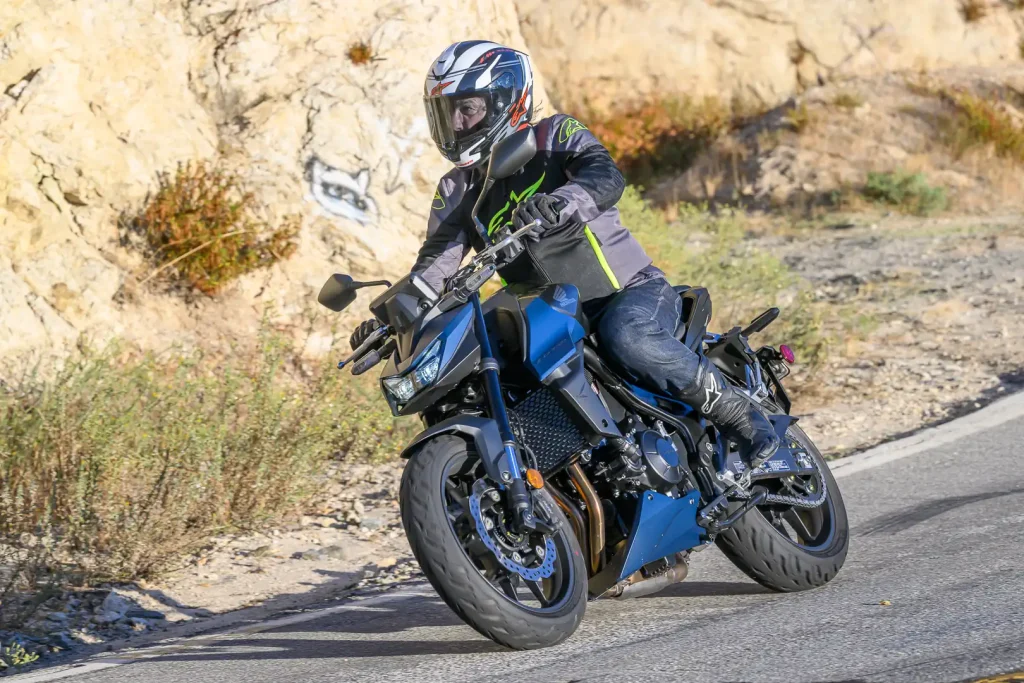
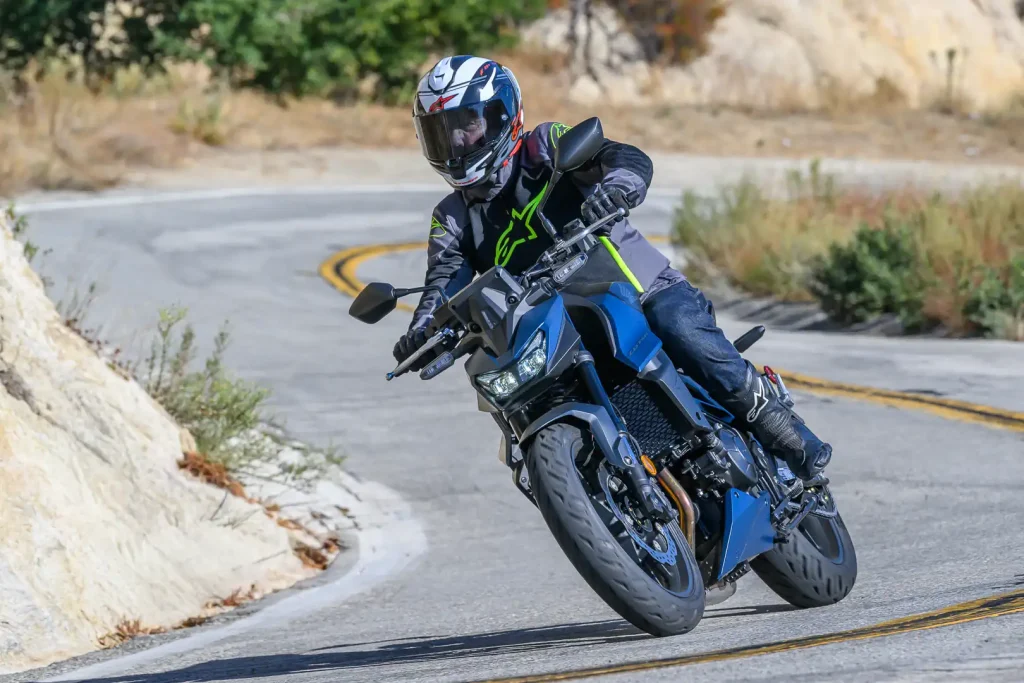
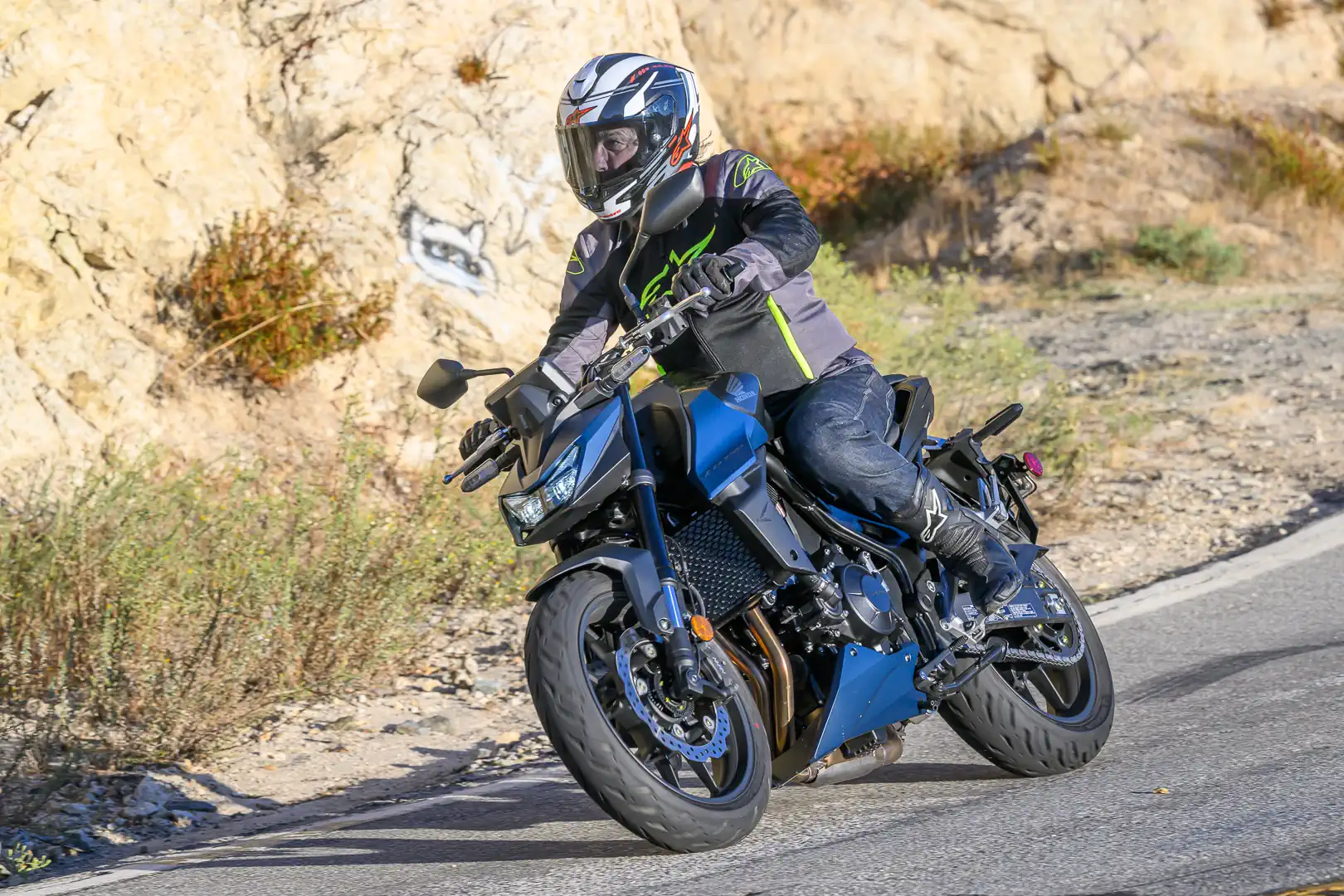
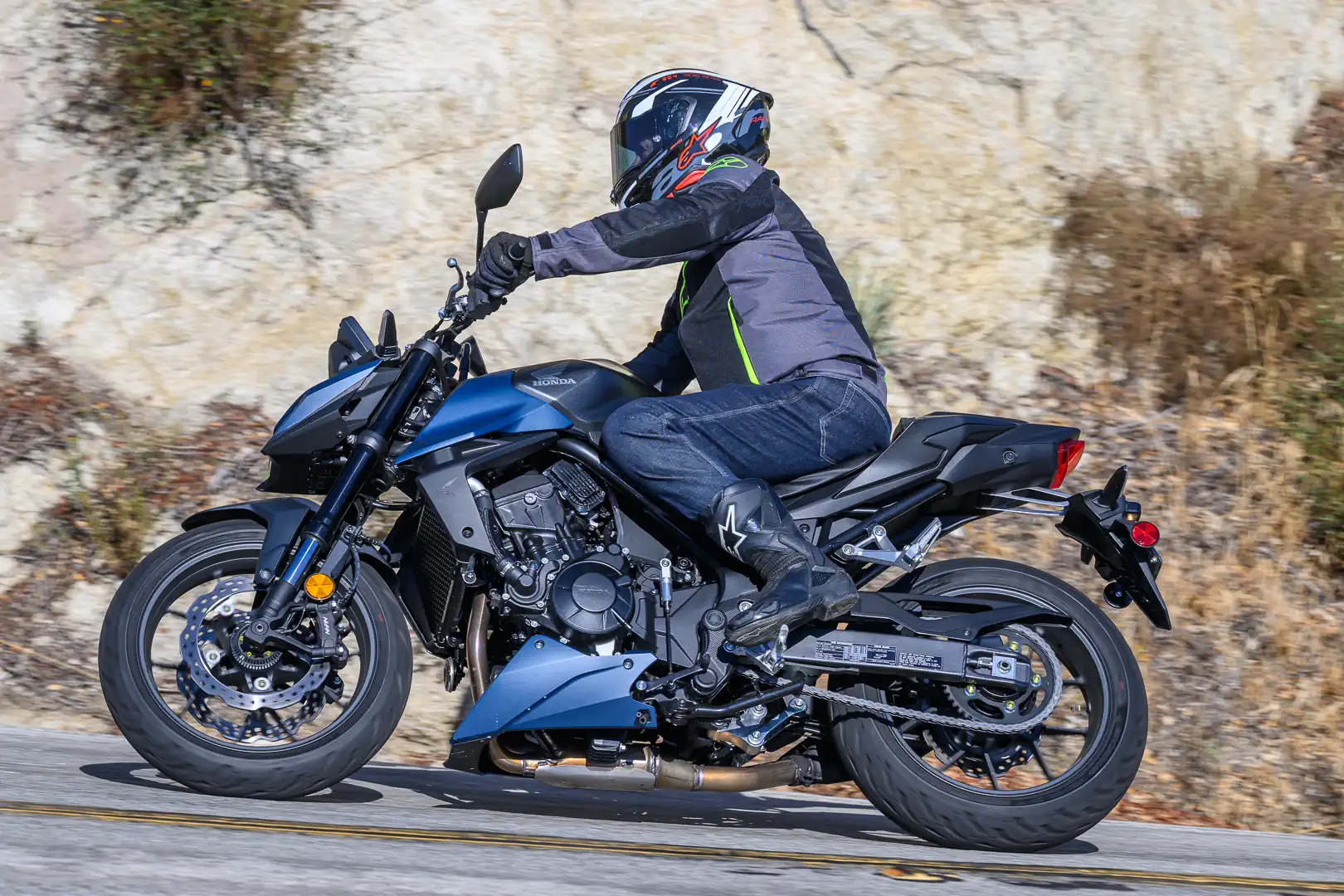
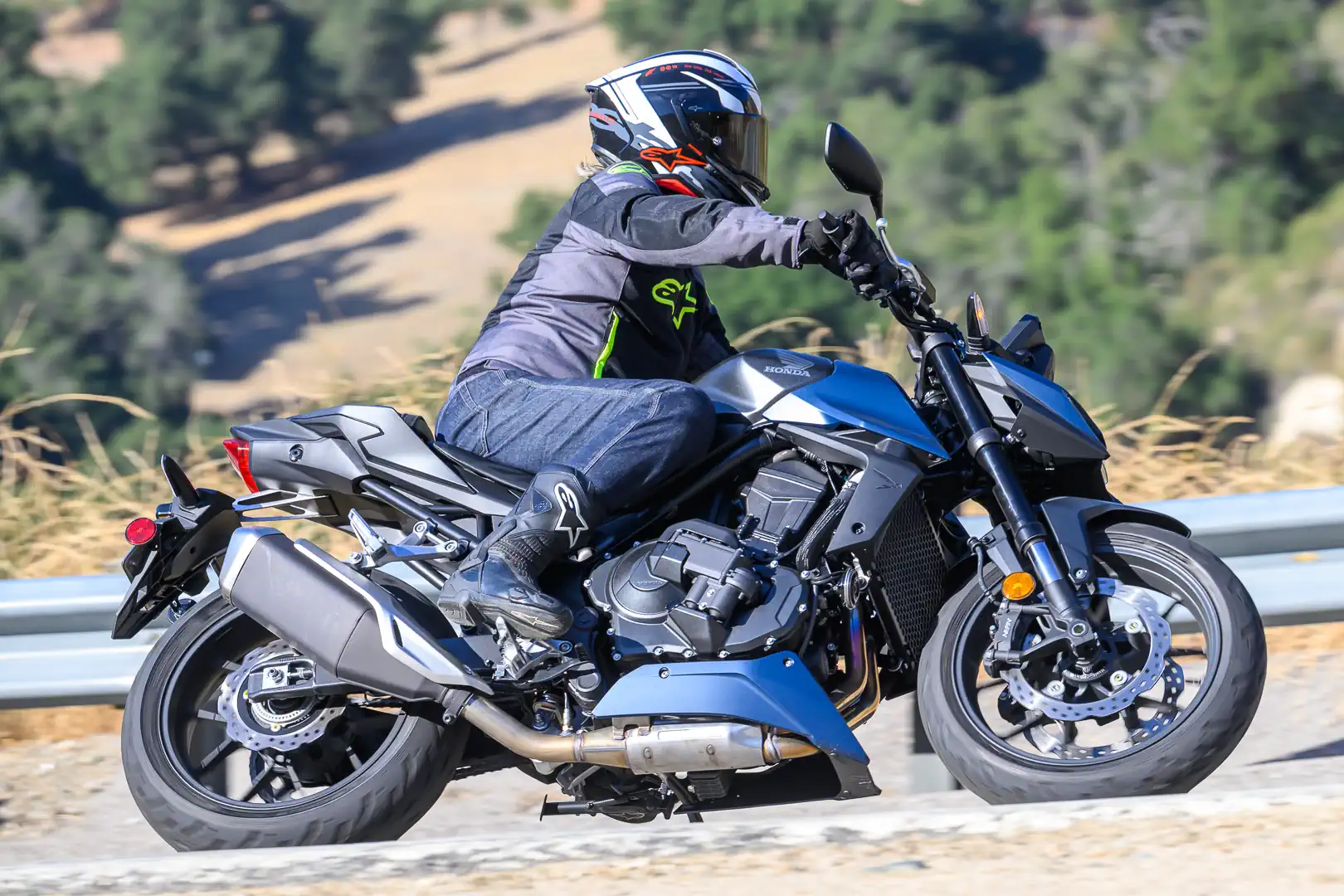
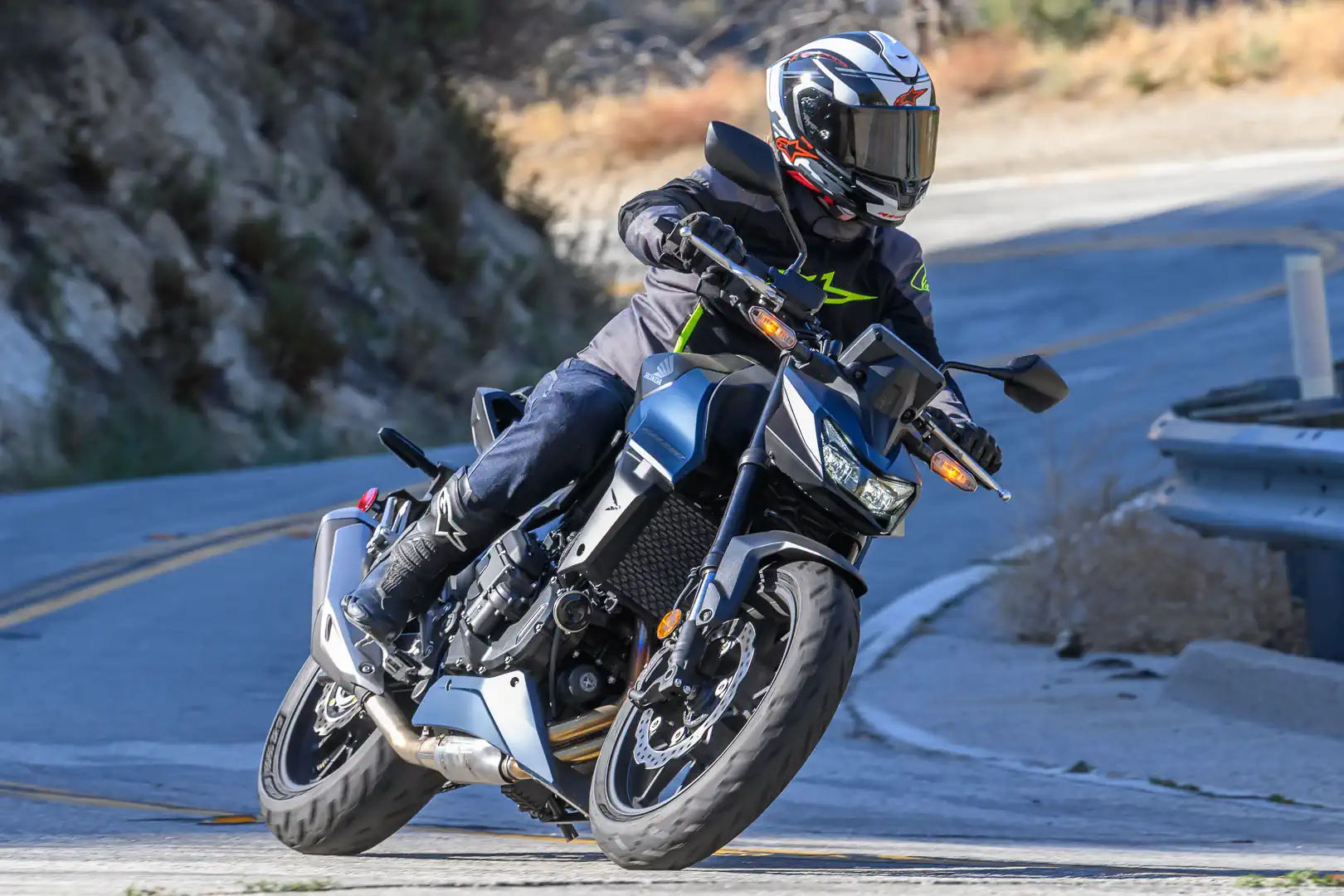
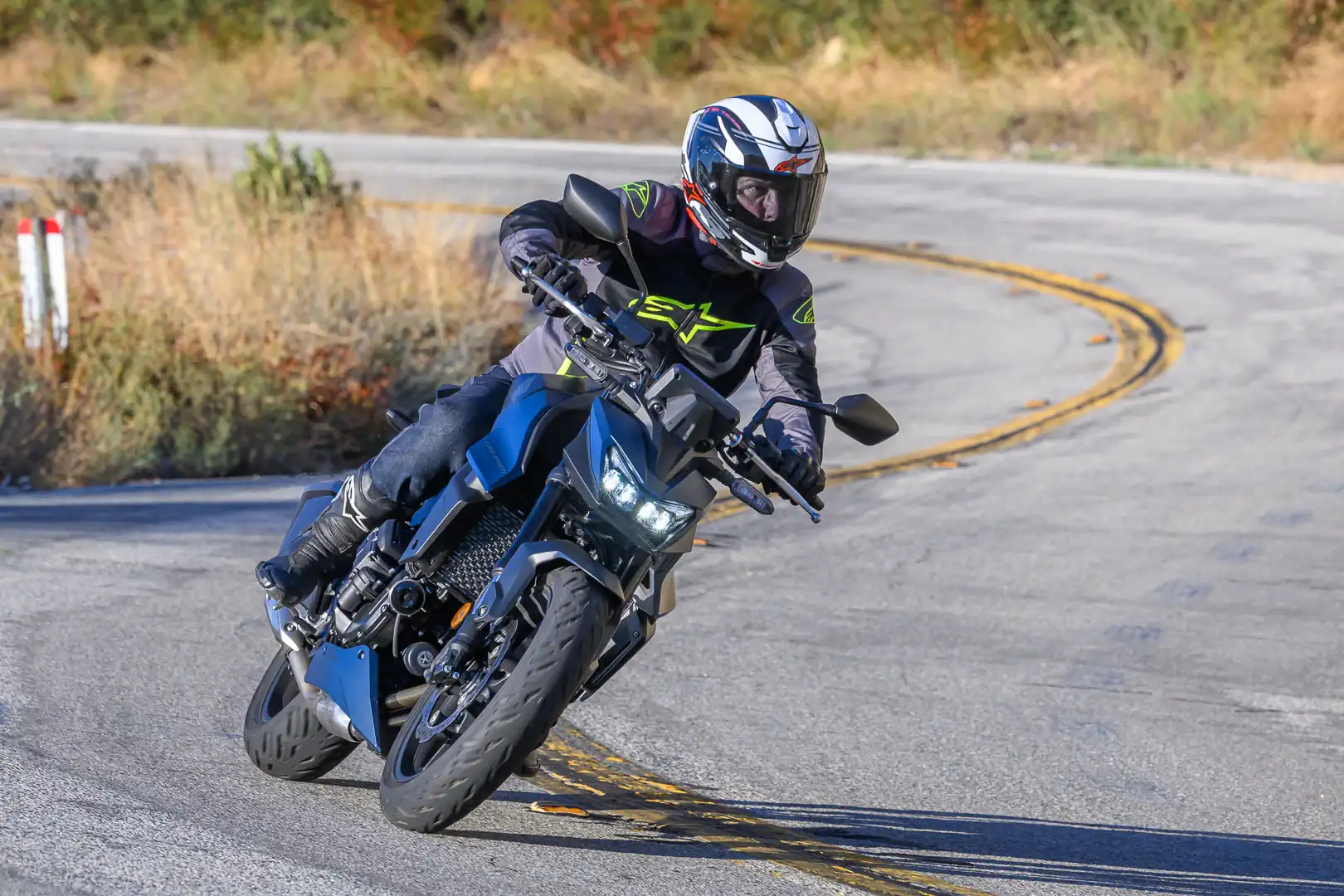
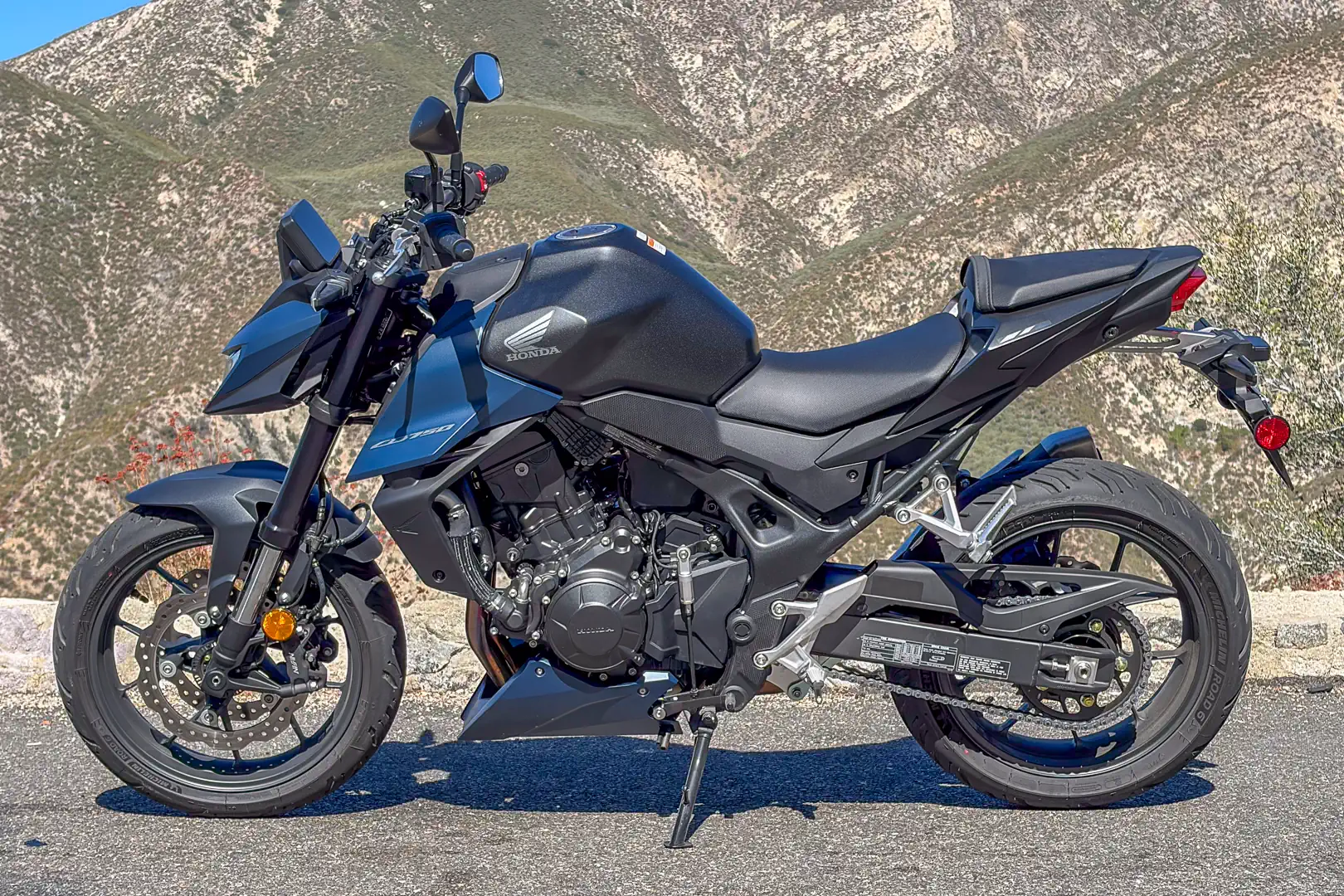
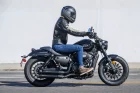
Apropos of the Hornet name, Honda has given the CB750 an agile chassis. Geometry is sporty: 25.0 degrees of rake, 3.9 inches of trail, and a 55.9-inch wheelbase. With a 432-pound curb weight and a wide handlebar, the Hornet 750 changes direction with minimal effort. Its light feel lets you place the bike exactly where you want it in a corner. The Hornet will lock in a line if you like, while still letting you adjust your trajectory as needed. Impressively adaptive, the CB750 is nimble at low speed in town and stable at freeway speeds, even when you’re hitting them on mountain sweepers.
Showa handles the suspension, which is tuned for comfort without giving up much sportiness. The inverted 41mm SFF-BP fork has no adjustments and offers 4.7 inches of travel. The linkage-assisted Showa shock has seven-step spring-preload adjustment and 5.1 inches of travel. The settings are on the soft side, which soaks up potholes and broken pavement. Even when pushing hard in the canyons, we rarely feel limited by the suspension setup. On rough roads, the Hornet 750 holds an advantage over firmer sportbikes thanks to the supple suspension action. Only when ridden unusually aggressively does the fork start to run short of hold-up and damping. If you’re riding that hard, investigate the CB1000 Hornet SP.
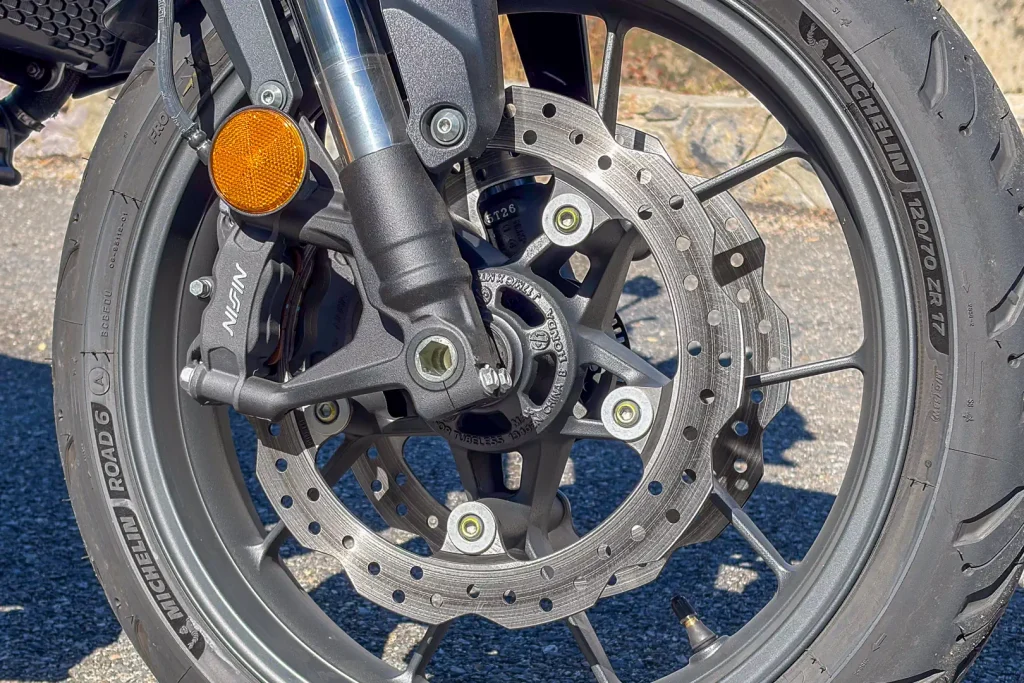
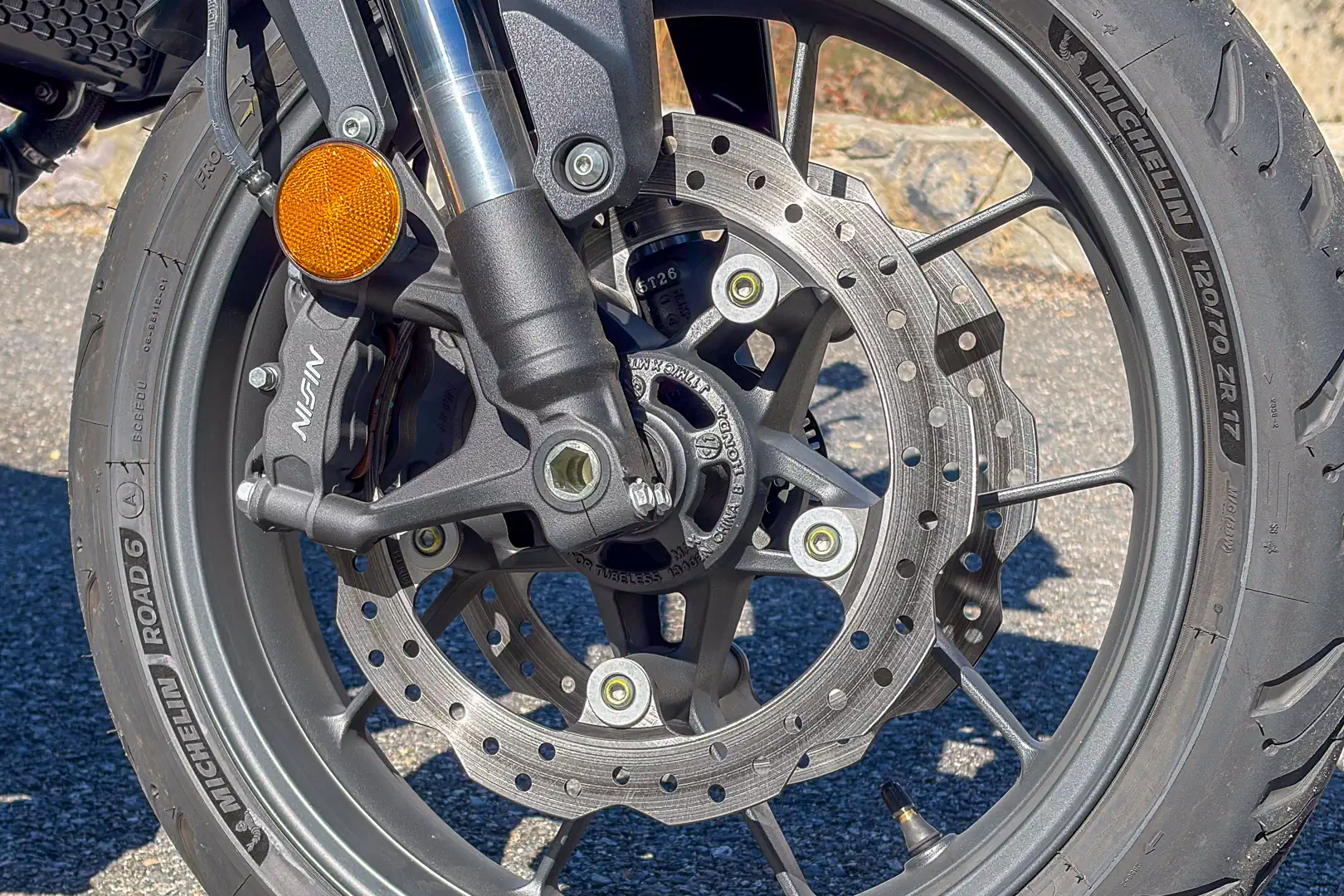
Braking is by Nissin, and it does the job without drama. Radially mounted four-piston calipers grab 296mm floating petal-style discs up front, and a single-piston caliper works a 240mm disc at the rear. Stopping power is solid, and feedback is good. ABS is standard and cannot be switched off. Fortunately, it’s properly calibrated and works unobtrusively.
The Michelin Road 6 tires will suit most riders. As sport-touring rubber, they balance performance and longevity well. Feel free to upgrade to something sportier, though the stickier rubber will likely remind you that you’re riding a fun sportbike rather than a superbike. Regardless, if you have a preferred tire, the CB750 Hornet’s 17-inch wheels will accommodate a broad range of replacement rubber.
The riding position is upright with a slight lean forward to the grips. The seat sits 31.3 inches high and is narrow at the tank, so shorter riders can reach the pavement more easily. The padding is thick enough for a full day on the saddle. Riders over six feet may feel cramped after a long ride because the step to the pillion limits rearward movement. The mirrors tend toward sportiness, at the expense of the rearview that commuters value. Still, the CB750 Hornet makes for a great ride to work and back.
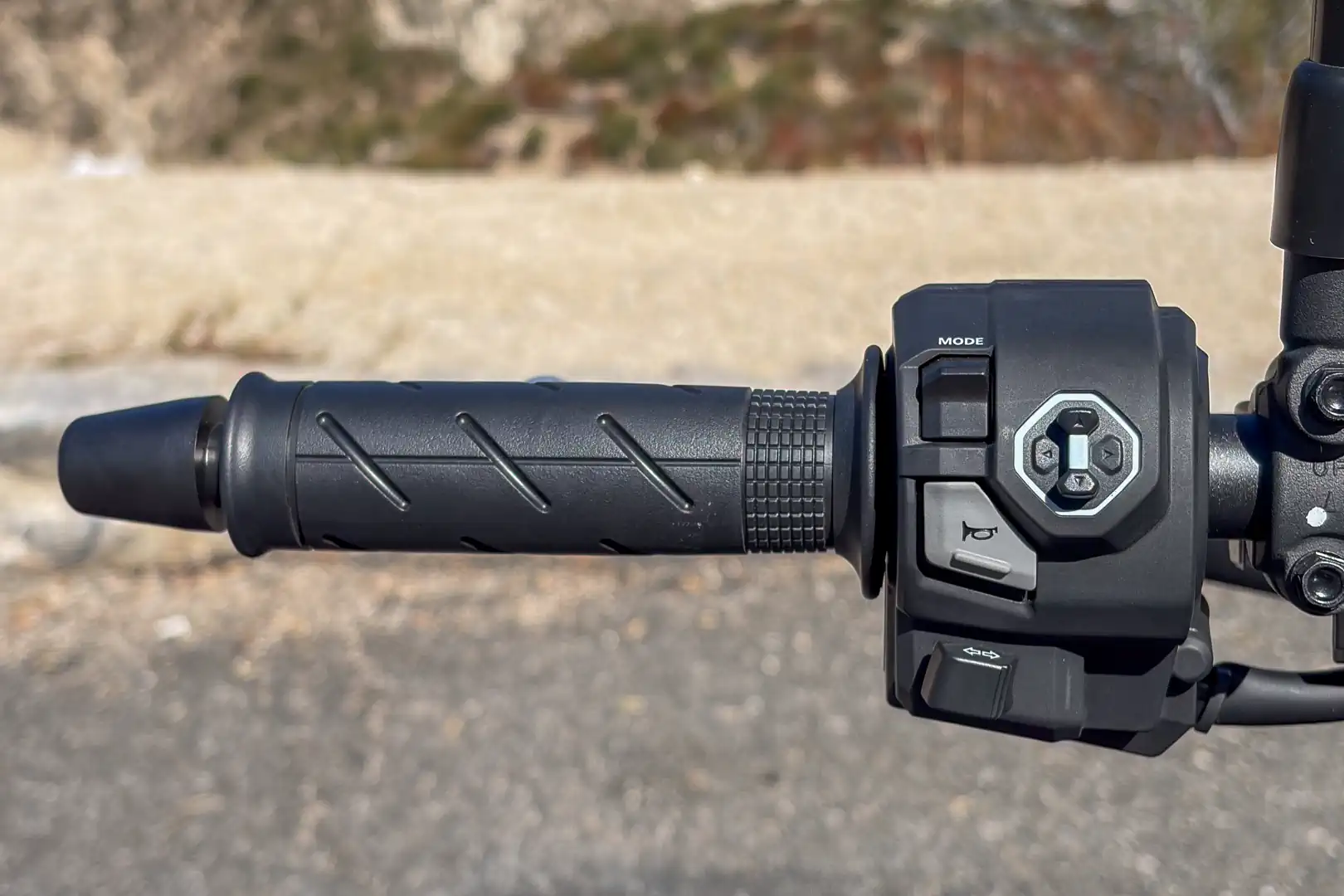
The five-inch TFT display is bright, clear, and easy to read in sunlight. It offers three layout options. You can have a bar tachometer, a circular tachometer, or none at all. The screen can switch between black and white backgrounds automatically or manually. The same goes for brightness control. A backlit four-way toggle on the left handlebar runs the menus and works well with gloves on. Honda RoadSync connects to your smartphone by Bluetooth for turn-by-turn navigation, calls, and music through your helmet headset. It’s easy to pair, though there’s a learning curve after that.
The 2026 Honda CB750 Hornet E-Clutch is the same easy, fast, and affordable middleweight naked we liked last year, with one more thing done for you. The engine is a gem, the chassis is light and precise, and the electronics cover what matters without getting in the way. The E-Clutch takes nothing away from the ride, because you can still use the lever whenever you want, and it removes stalling and clutch fatigue from traffic and low-speed work. For $7999, the same price as last year’s CB750 Hornet with the standard clutch, that is a hard combination to beat.
Action photography by Kelly Callan Static photography by Don Williams
Our bike review this episode is the Yamaha MT-03. Do not underestimate this bike; you get a lot of motorcycle for your money! Associate Editor Kelly Callan rode the smallest MT for several weeks, and that included commuting on it. One of the things that impressed her, was how the MT-03 acted like a larger motorcycle. Kelly also spent some time chasing Editor Don Williams through the canyons when he was on the Yamaha MT-07—obviously a much larger machine. She tells us about how it all went.
* * * * *
We’re closing in fast on the 34th annual Biketoberfest, October 15–18, when all roads will lead to Teddy Morse’s Destination Daytona—the more than 100-acre motorcycle playground in Ormond Beach Florida. This week we get to hear all about it from Teddy Morse himself. With his trademark high energy and enthusiasm, he tells us all about his recently established Triketoberfest that happens the week before, and how the Destination Daytona complex turns into a full-throttle hub of demo rides, vendors, custom builds, live music, food trucks, shops, and nonstop pavilion energy. So, whether you’re on two wheels or three, whether you’re hunting parts or lining up a test ride; grab a cold one and soak up the energy and gorgeous Florida fall weather. This is one of the many Daytona Beach places where Biketoberfest feels like home. So don’t forget: make sure you download the Biketoberfest mobile App from Apple or Google Play or visit www.biketoberfest.org and we’ll see you there!
* * * * *
Our guest this episode is Greg Arnold, Mecum’s motorcycle auction director. He bought his first bike at eleven, joined the company in 2011, and has spent more than a decade helping turn this incredible event into the place collectors, consignors, and dreamers all show up. Next February 3rd through 6th, Mecum will—for the 36th time, bring the world’s largest vintage motorcycle auction back to South Point, Las Vegas. That’s over two thousand bikes over four days. Board-track racers, barn finds, customs, race iron, and especially, those incredible machines that make the room go quiet. Greg gives us insight into what it takes to make this event work so incredibly well, and if you’re interested in selling your pride and joy, what steps you have to take to make it happen.
* * * * *
Here’s quick reminder to check out our monthly digital magazine. It’s filled with everything you want to read on motorcycling, including some things you’ve probably not seen elsewhere. It’s absolutely free and you will find it on the Apple App Store and of course on Google Play as well.
Don’t forget to leave us your comments on our social media—we’re on all the usual platforms at Ultimate Motorcycling. We love hearing your feedback… so good or bad, please let us know what you think. If there’s something you’d like us to cover, we’d love to hear those ideas too!
We use cookies and browser activity on this website
Functional
Always active
The technical storage or access is strictly necessary for the legitimate purpose of enabling the use of a specific service explicitly requested by the subscriber or user, or for the sole purpose of carrying out the transmission of a communication over an electronic communications network.
Preferences
The technical storage or access is necessary for the legitimate purpose of storing preferences that are not requested by the subscriber or user.
Statistics
The technical storage or access that is used exclusively for statistical purposes.The technical storage or access that is used exclusively for anonymous statistical purposes. Without a subpoena, voluntary compliance on the part of your Internet Service Provider, or additional records from a third party, information stored or retrieved for this purpose alone cannot usually be used to identify you.
Marketing
The technical storage or access is required to create user profiles to send advertising, or to track the user on a website or across several websites for similar marketing purposes.