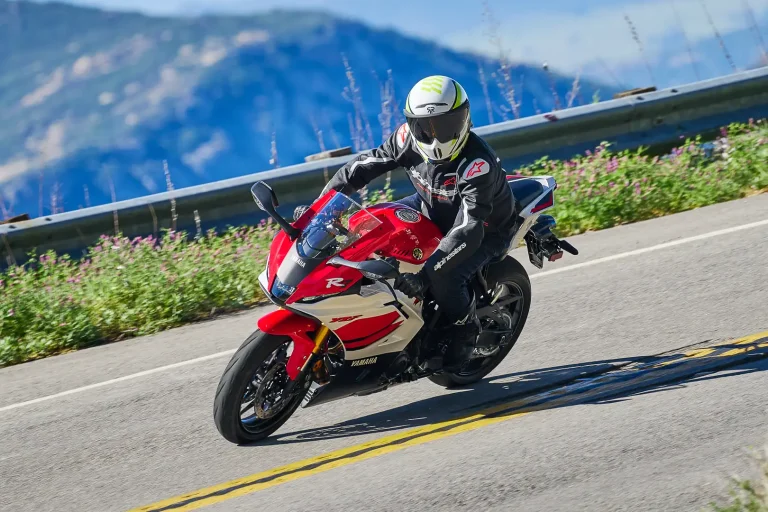
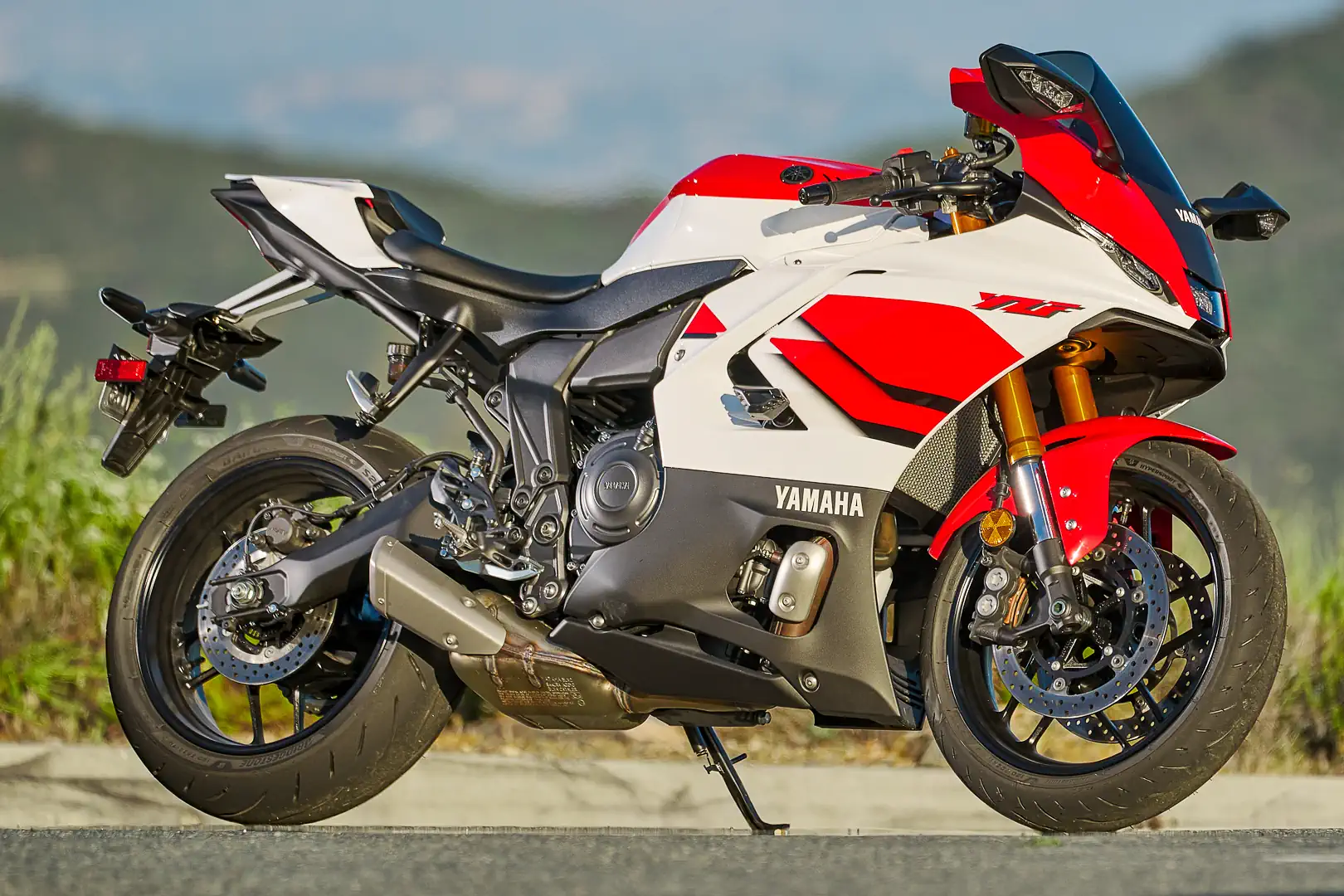
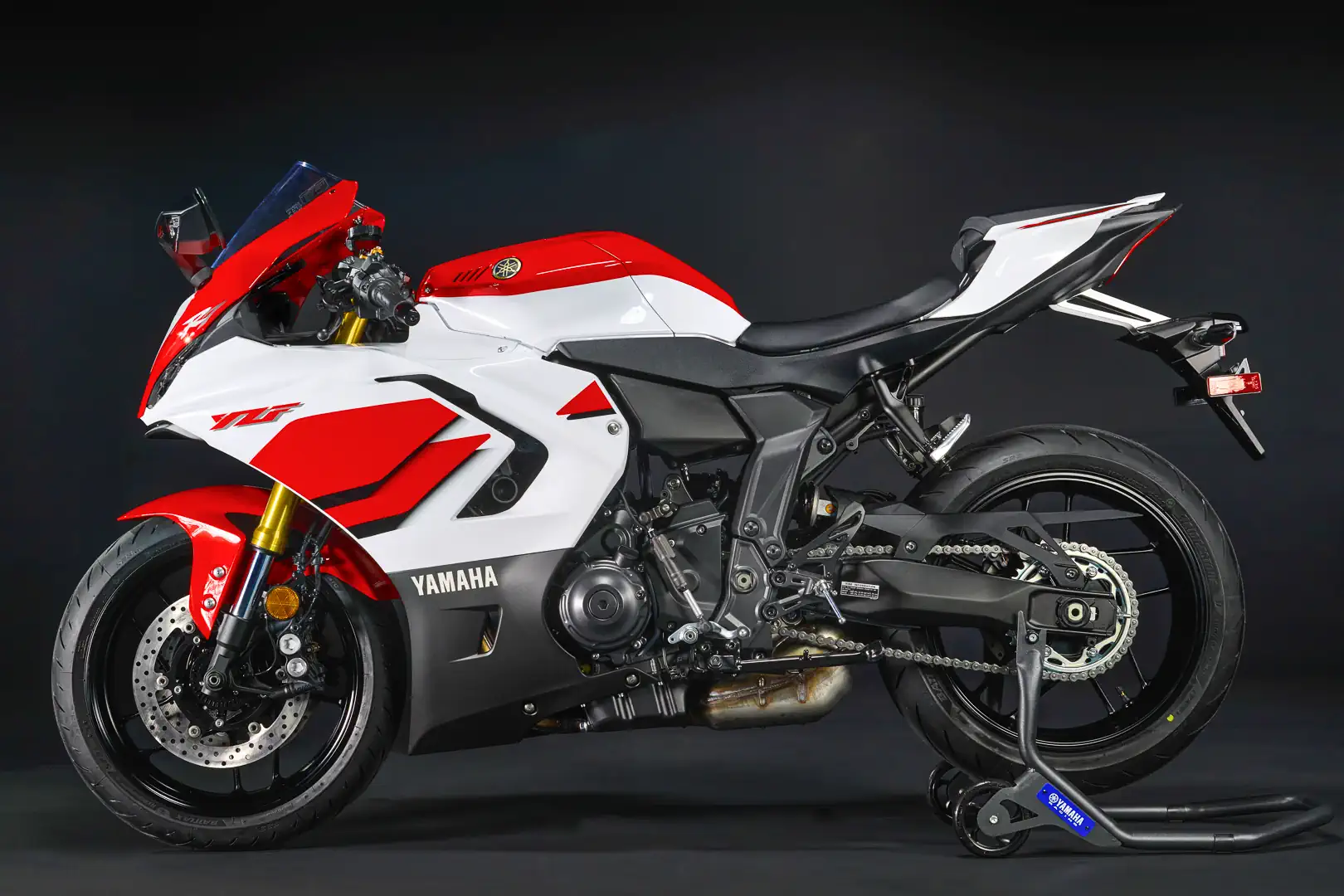
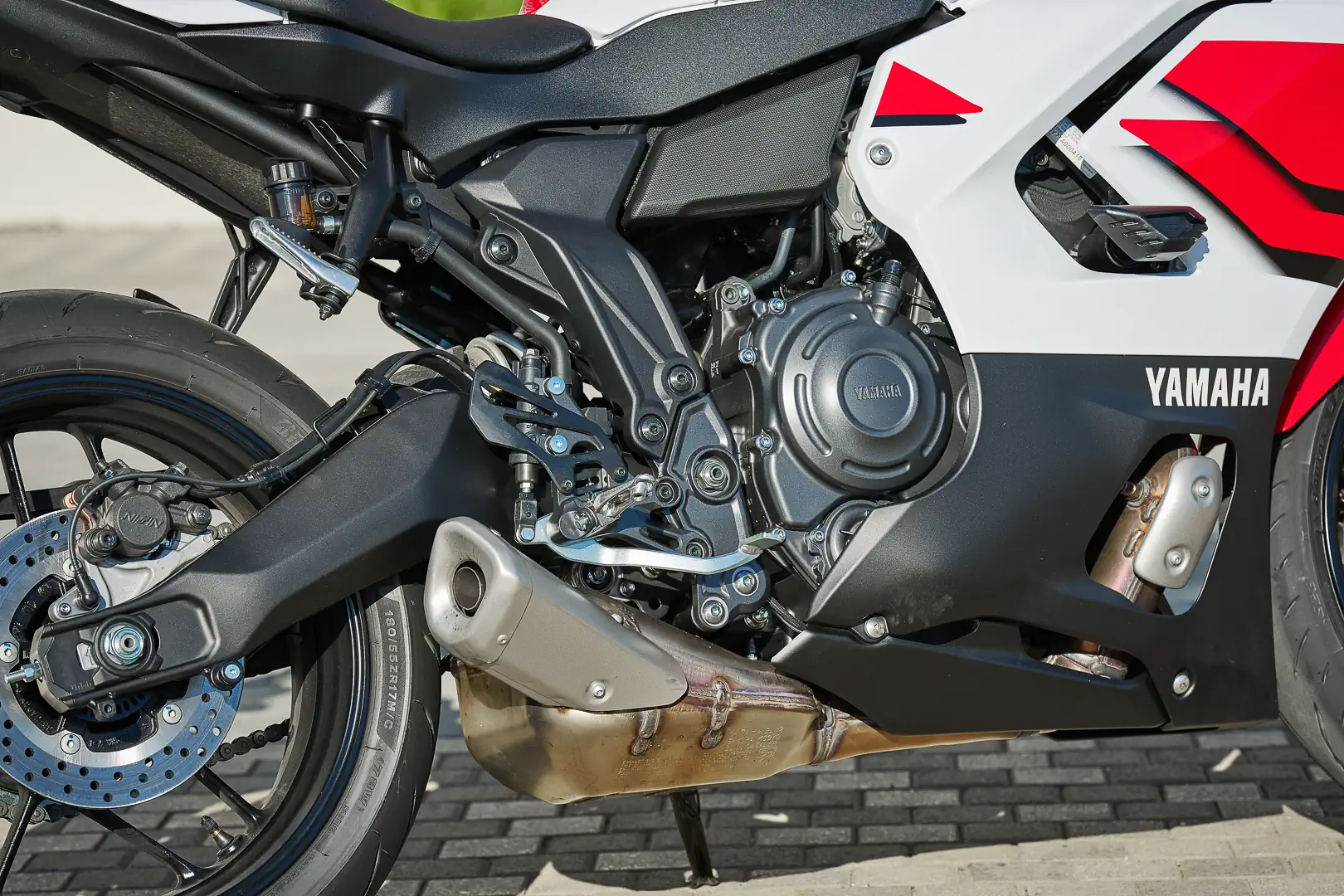
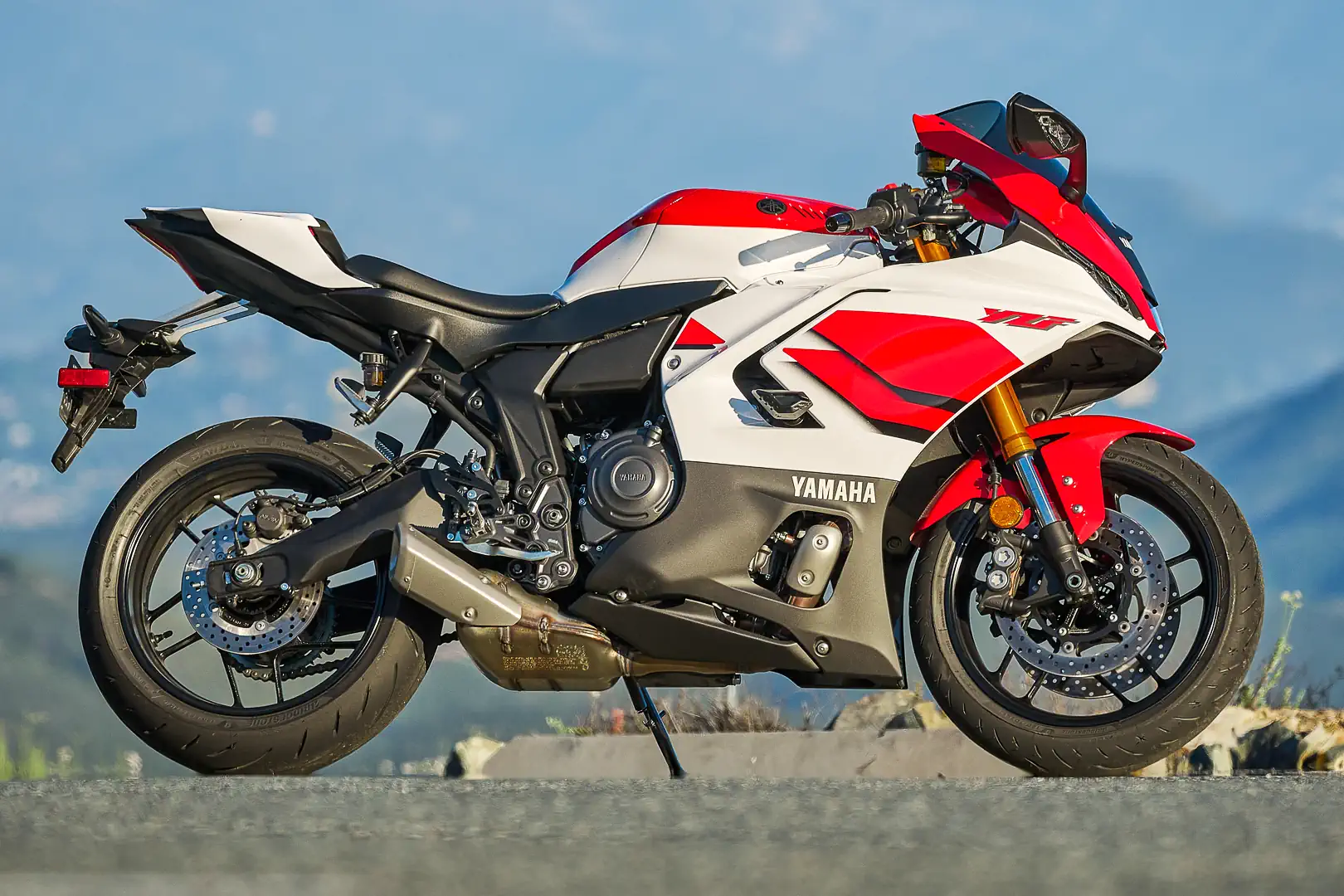
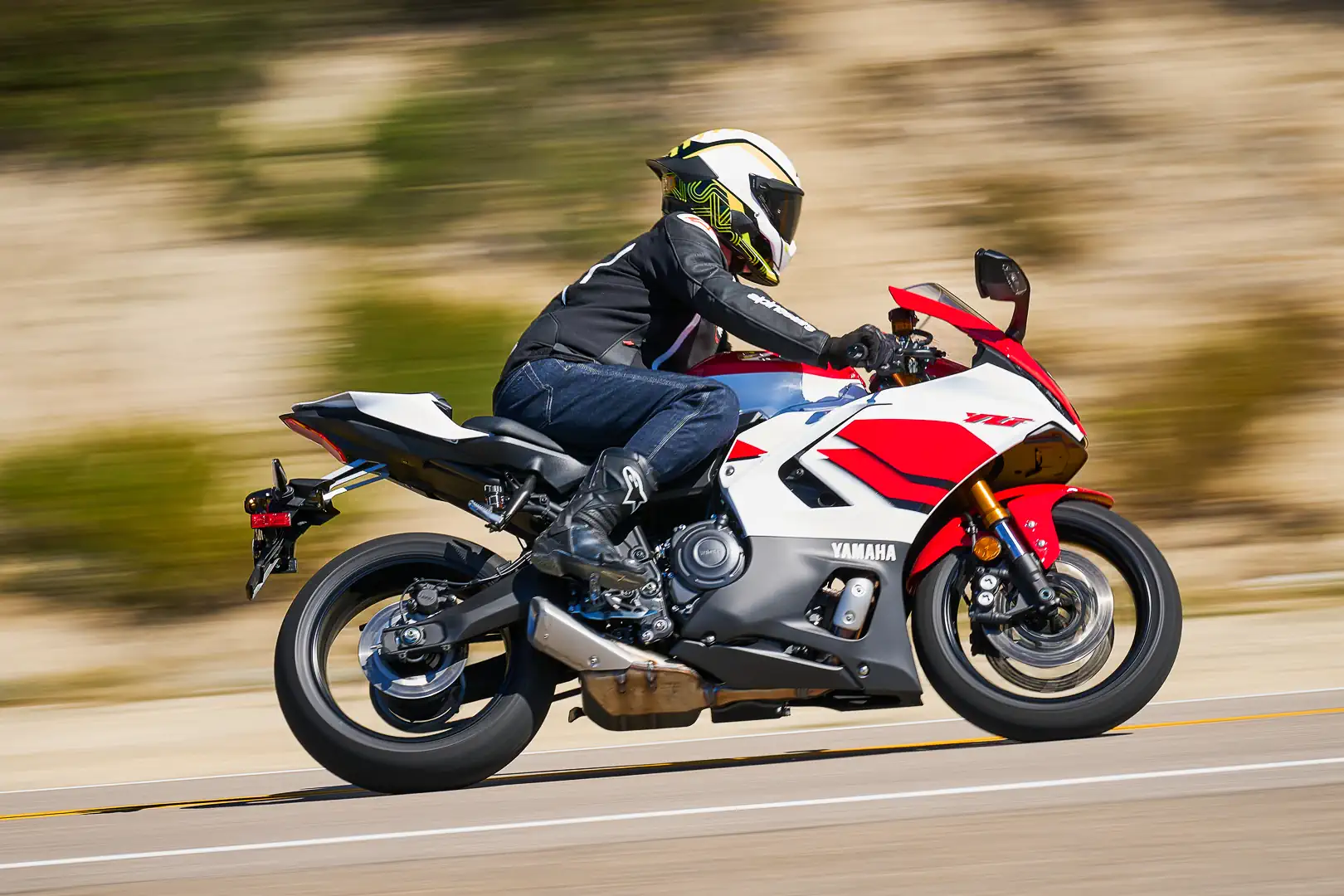
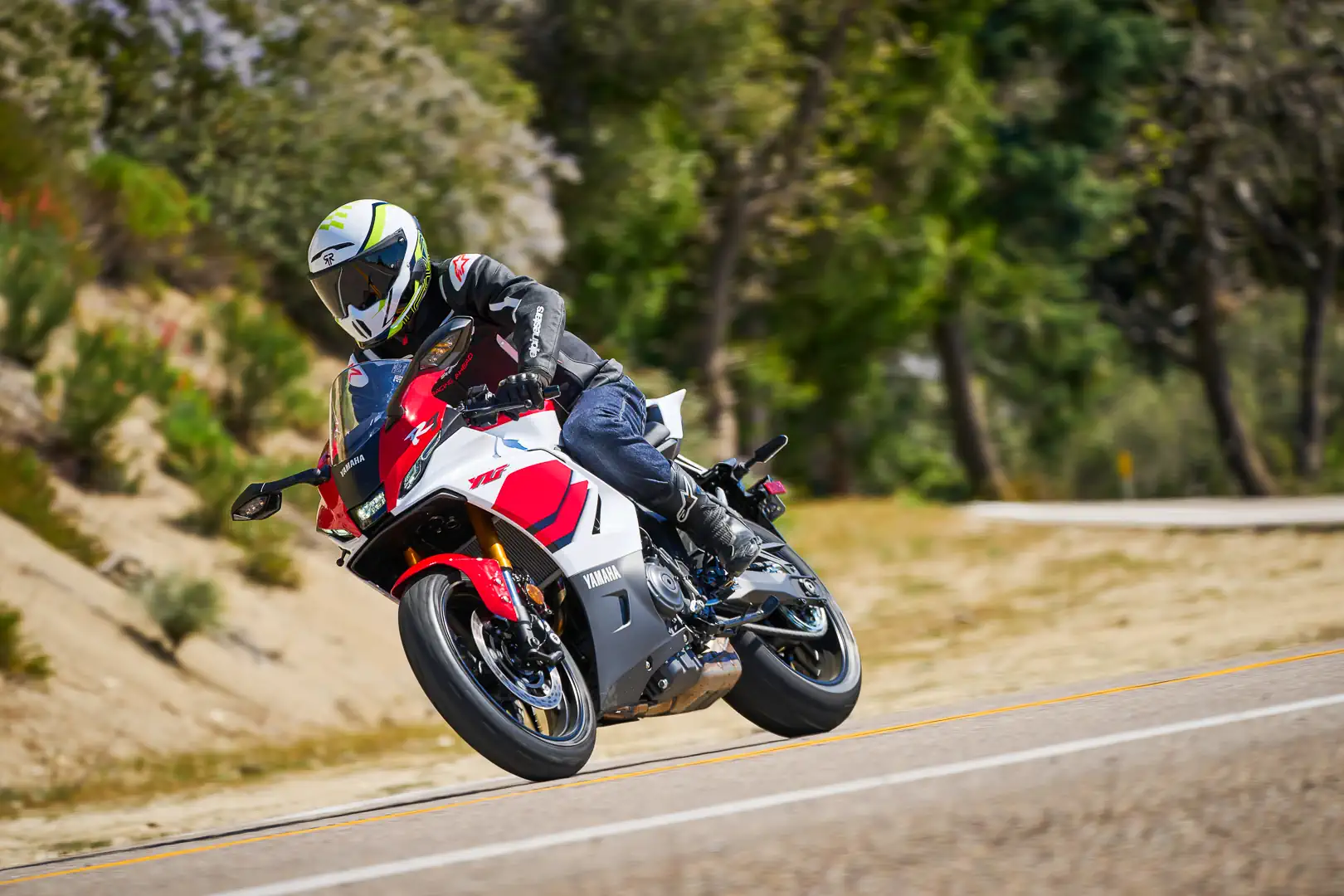
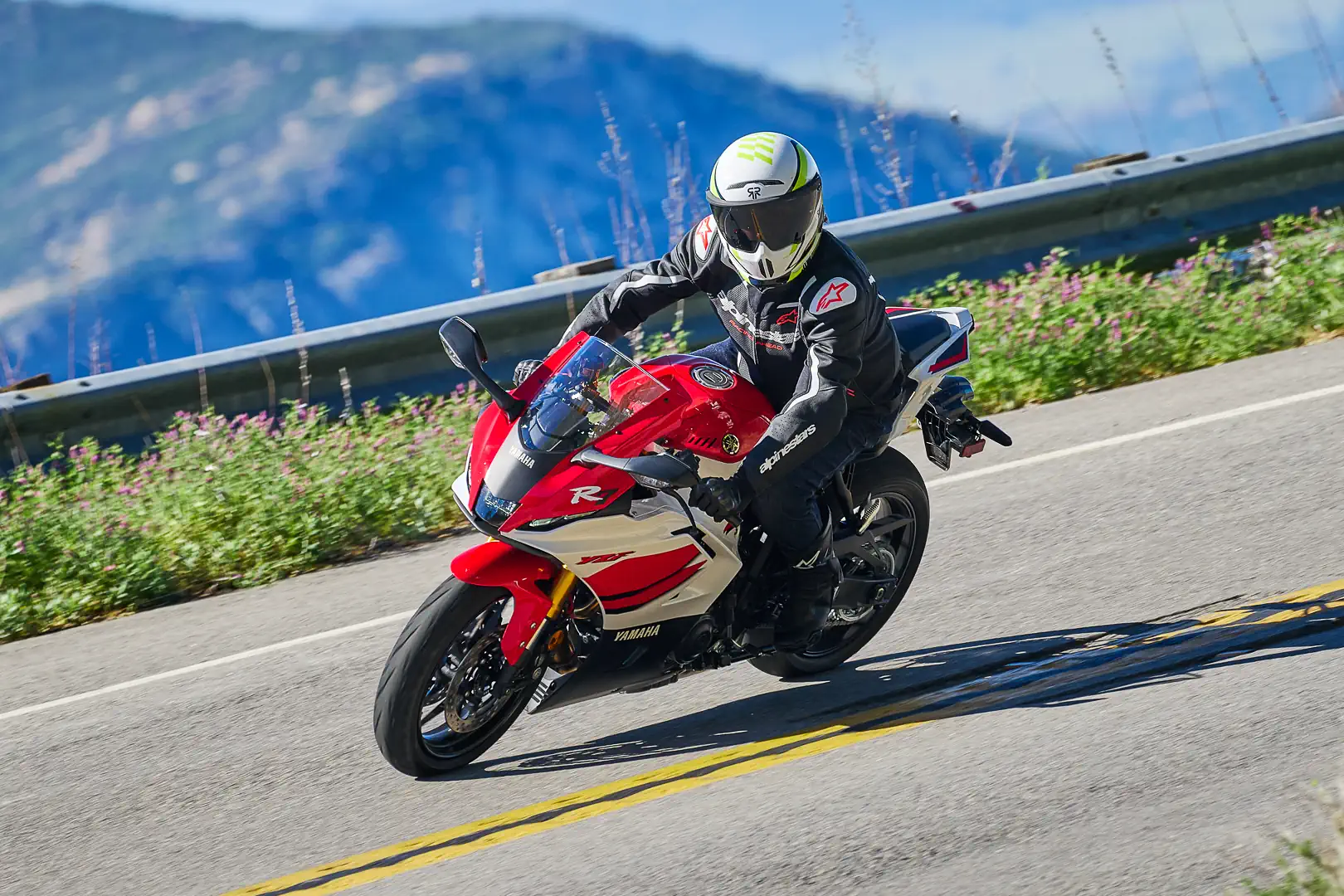
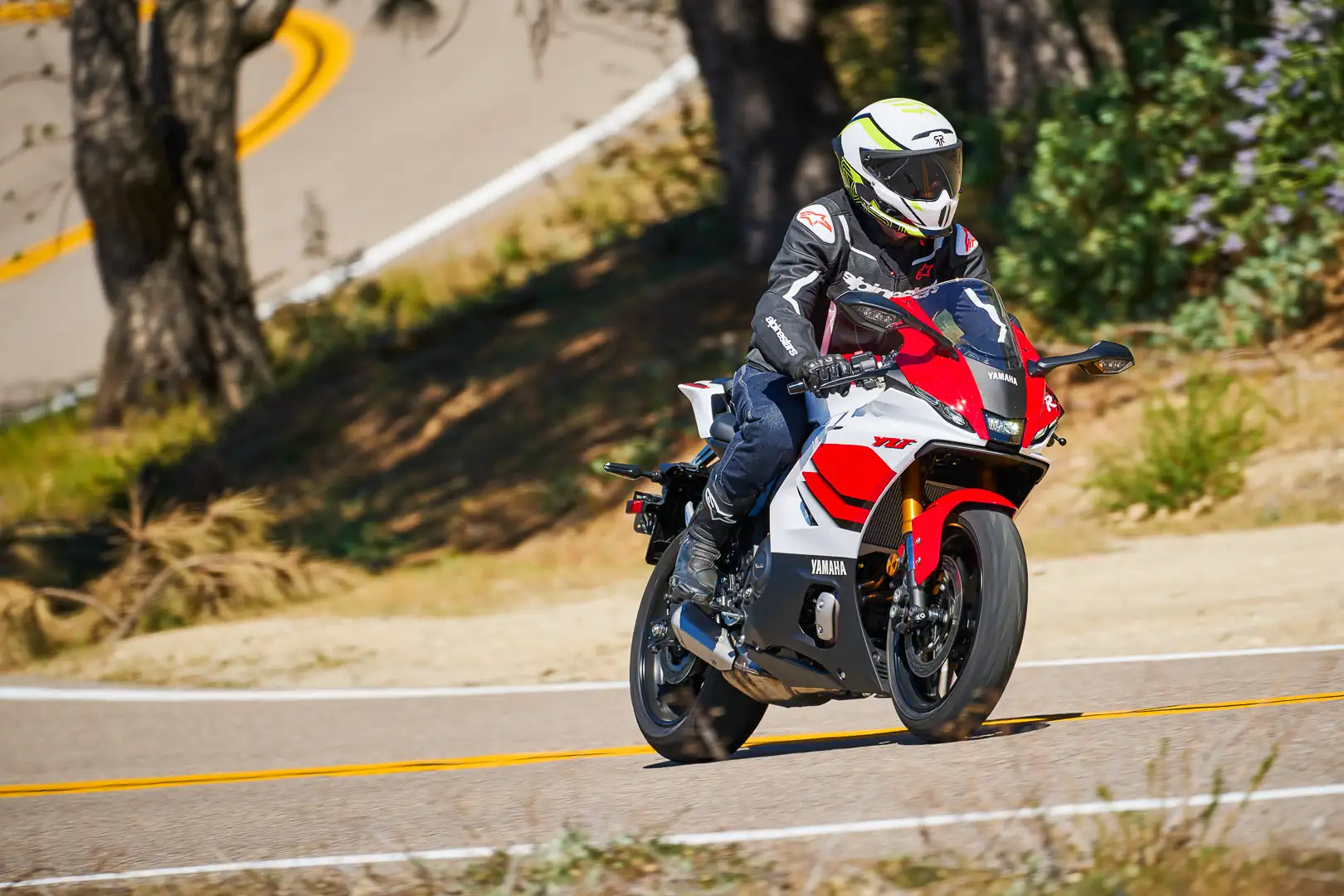
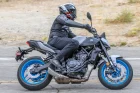
Four years after its debut, the Yamaha YZF-R7 is getting its first major upgrade. The approach taken for the 2026 Yamaha YZF-R7 is multi-pronged. An array of chassis components received attention from the Yamaha R&D engineers this year, along with a new R1-derived electronics package. The 689cc CP2 parallel-twin, with its 270-degree firing order, is untouched, though the six-speed transmission has been beefed up. That results in a motorcycle that is both familiar and refreshed. Generally, we’re looking at a stiffer frame and swingarm, lighter wheels with new tires, revised suspension internals, a new fairing, roomier ergonomics, a six-axis IMU, and all sorts of electronic wizardry behind the five-inch TFT display.
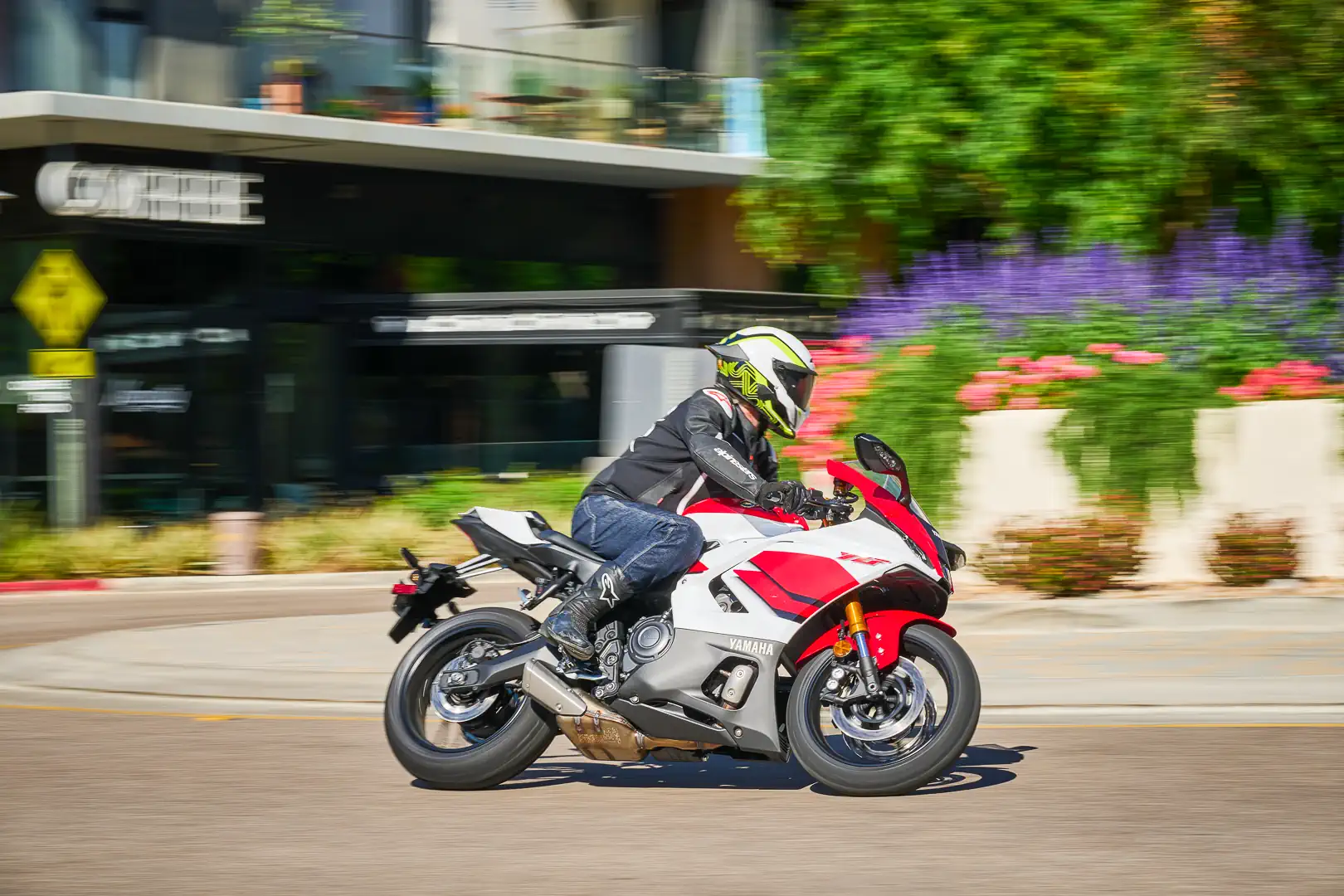
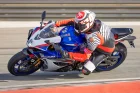
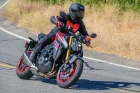
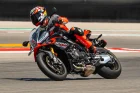
Already a favorite in the MotoAmerica Twins Cup class, Sam Drane has ridden the new R7 to victory this year and leads in the standings against the likes of the Aprilia RS 660, Kawasaki Ninja 650, and a pair of Suzukis — the GSX-8R and SV650. We’ll have Senior Editor Nic de Sena handle the track test of the 2026 R7. In the meantime, we took to the streets for our initial test, as that’s where most R7 owners will be found.
The new frame adds stability via increased stiffness and geometry changes. Although the wheelbase is unchanged at a hair under 55 inches, the rake is kicked out 0.3 degrees, and a tenth of an inch is added to the trail. Combined with the stronger frame, the 2026 Yamaha YZF-R7 has all the stability you need for the demands of the CP2 motor. Turn-in is fully intuitive, with the chassis allowing mid-corner corrections as needed. The R7 is absolutely predictable, which instills confidence in the rider. Exits are drama-free, as it’s easy to pick the bike up as needed. Likewise, the 417-pound bike welcomes switchbacks, as changes in direction are its happy place. Rev it up in 6th gear and tuck behind the bubble to discover how composed the R7 is when speeds hit triple figures.
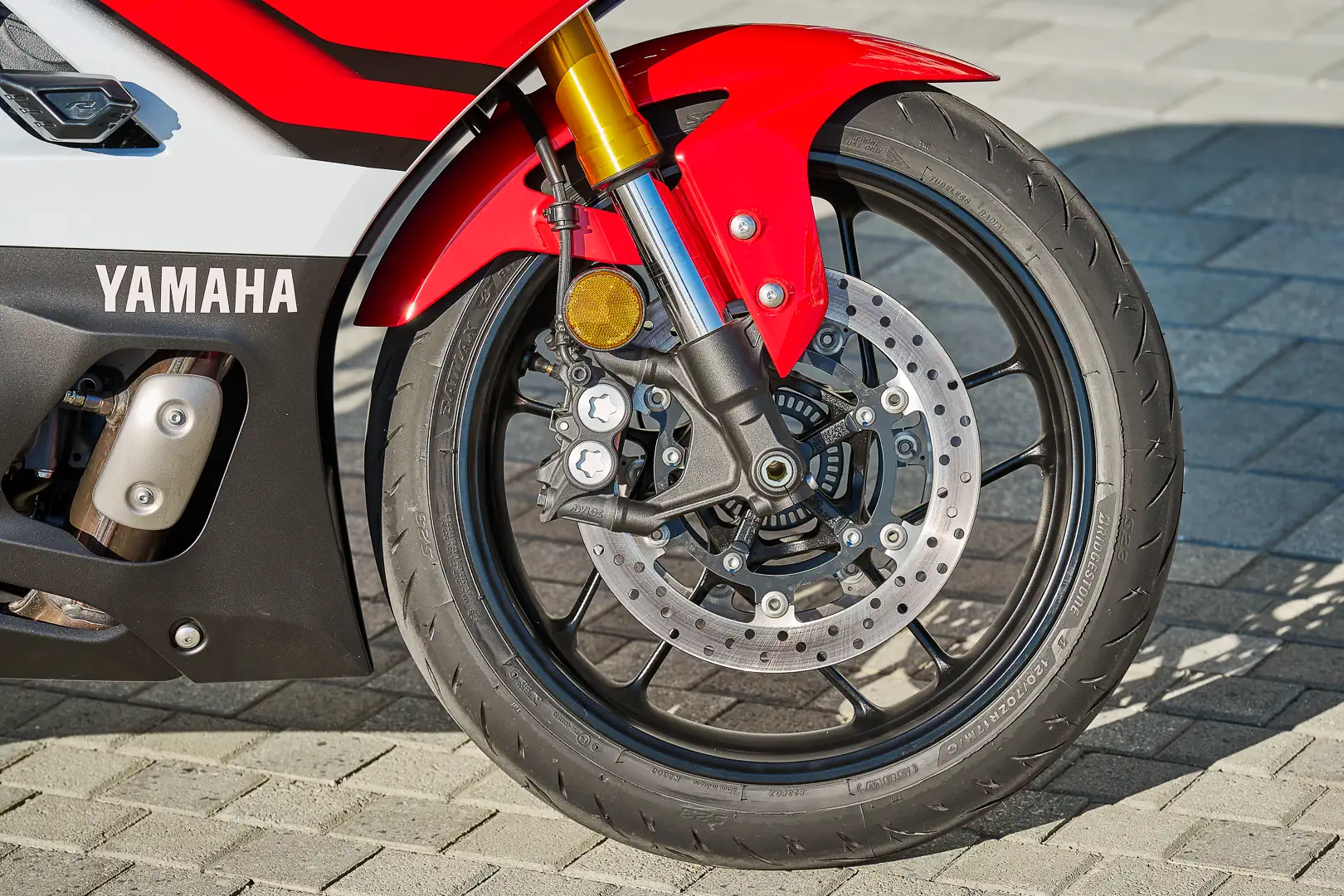
Yamaha upgraded to Bridgestone Battlax Hypersport S23 tires on new SpinForged cast aluminum wheels to complement the chassis. The firmer chassis puts higher demands on the tires, so S23s replace S22s. The wheels use a proprietary manufacturing process that reduces weight and inertia, contributing to the R7’s willingness to turn. The S23 rubber is sticky and helps the bike hold its line in corners, matching up nicely with the lighter wheels. Feedback in the front is outstanding, particularly during braking. While track day riders will undoubtedly want to spoon on more aggressive rubber, the Bridgestone Battlax Hypersport S23 tires are fantastic on the street.
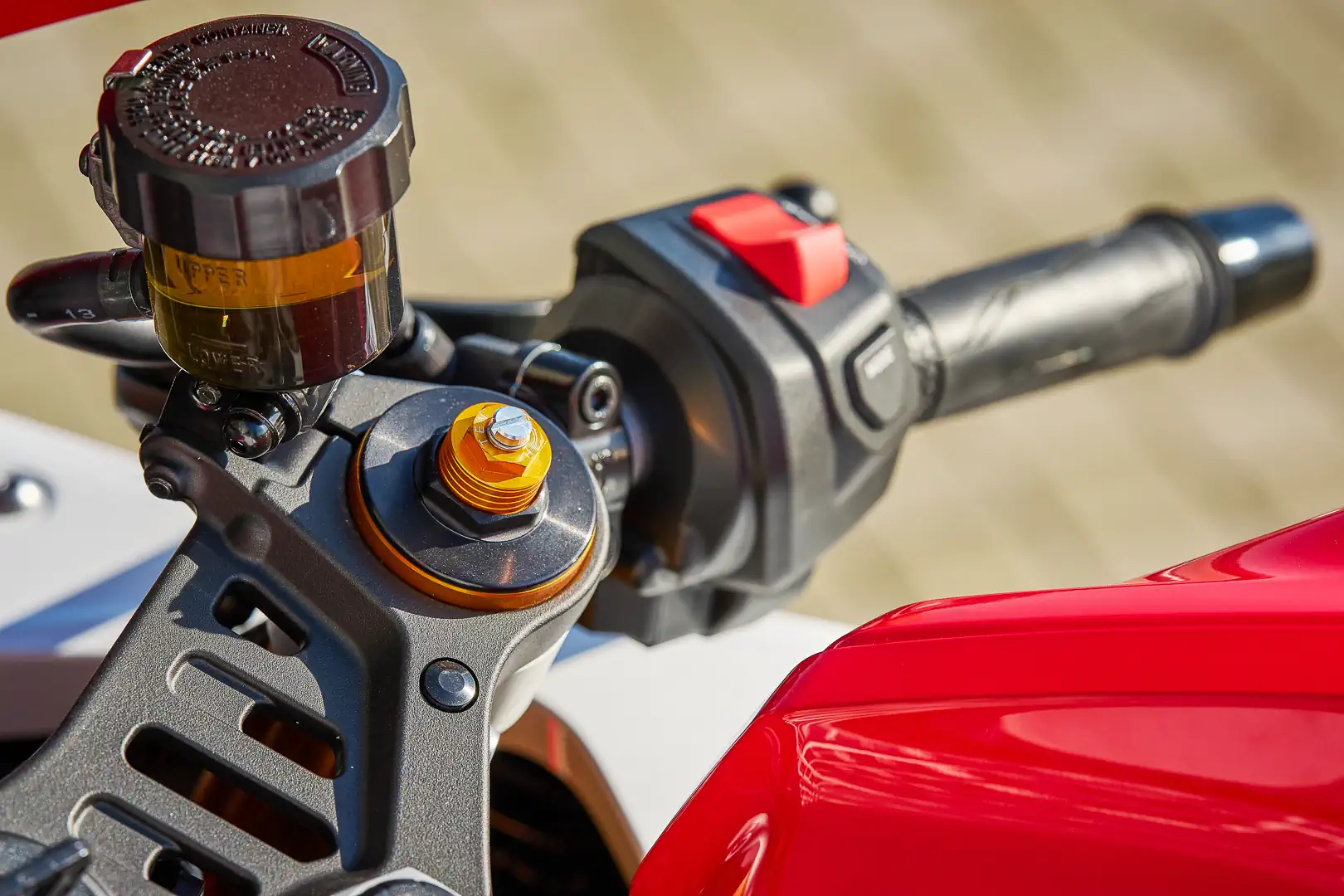
While the KYB suspension is not new, it has been revamped to gel with the stiffer chassis, lighter wheels, and upgraded rubber. A lighter aluminum piston rod is slipped into the fully adjustable fork, while the spring rate was reduced and low- to mid-speed damping firmed up. The shock gets a four-percent-lighter linkage leverage and revised damping settings to reflect changes to the frame, swingarm, and fork. The result is suspension that delivers a great feel for the road, and is tolerant of less-than-perfect conditions. Despite a solid lean into performance, the R7 doesn’t beat you up on suburban streets. The fork resists during hard braking, settles beautifully in corners, and the shock does not squat during full-throttle exits. Suspension can make or break a sportbike, and the engineers and testers at Yamaha and KYB collaborated nicely.
Although the CP2 engine is unchanged, that’s not true of everything around it. The R7 is now ride-by-wire and has an IMU for the advanced suite of electronics. The airbox intake is larger, and the snorkel removed. The updates aren’t huge, and you still have a motor that lets you get aggressive on public roads with far lower risk of ending up in the back of a squad car.
Instead of seeing absolutely how fast you can go, the R7 is a motorcycle that rewards skilled riding over exuberant wrist-twisting. You can wring the CP2’s neck, but you’re still not going to get more than 70 horses out of it in stock trim. The good news is that you get more torque than a YZF-R6 over its entire rev range. That means the R7’s real-world acceleration is satisfying and easily accessible. On the track, though, the now-defunct YZF-R6 would rev 5000 rpm higher and had a 35-ish horsepower advantage. I would choose the R7 over the R6 for street riding without hesitation, where low-end torque matters far more.
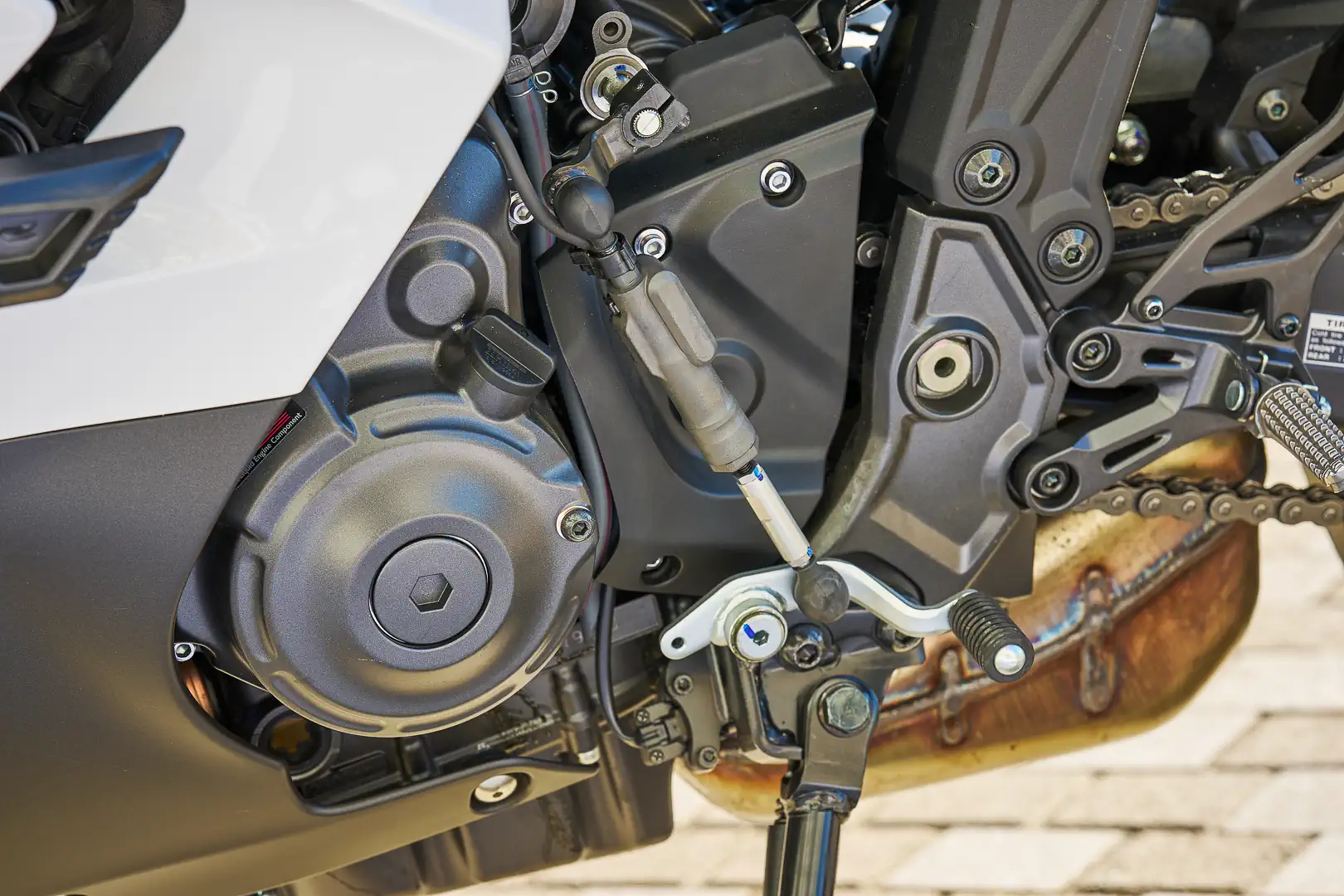
The gearbox adds an addition drive dog for 1st through 3rd gears, with the drive dog angle narrowed for the top three gears. Internally, the clutch is unchanged, though the cover is new, the actuator is rotated 35 degrees clockwise, and the lever has more adjustability.
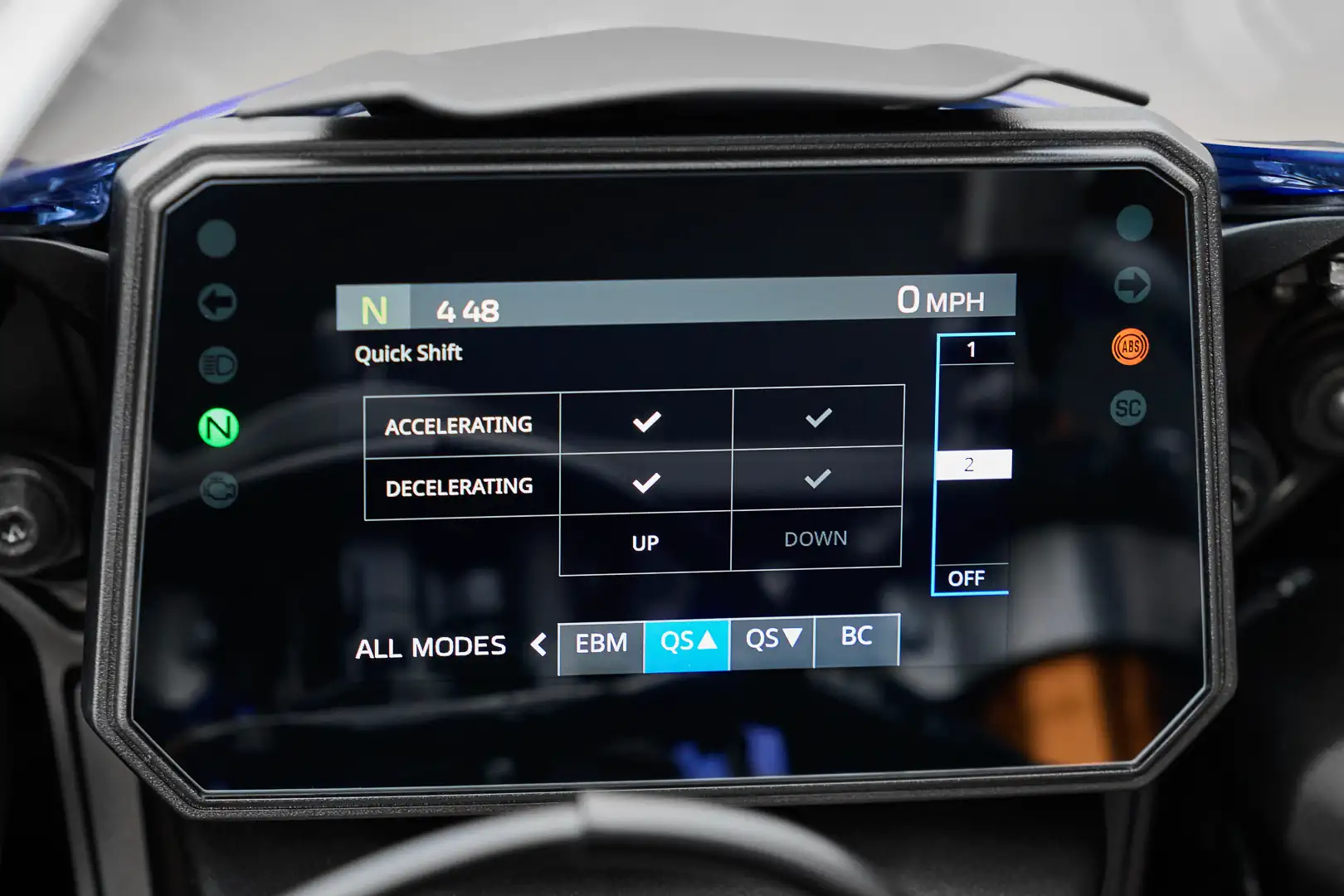
Although we didn’t have a problem with the previous quickshifter gearbox, incremental improvements are nice. Thanks to ride-by-wire, gearshifts are flawless and reliable in both directions; previously, the accessory quickshifter was up-only. Save the clutch for when you come to a stop, as the quickshifter operates over a broad rpm range. Track day fans will be happy to know the transmission can be set up for a GP shift pattern without confusing the quickshifter.
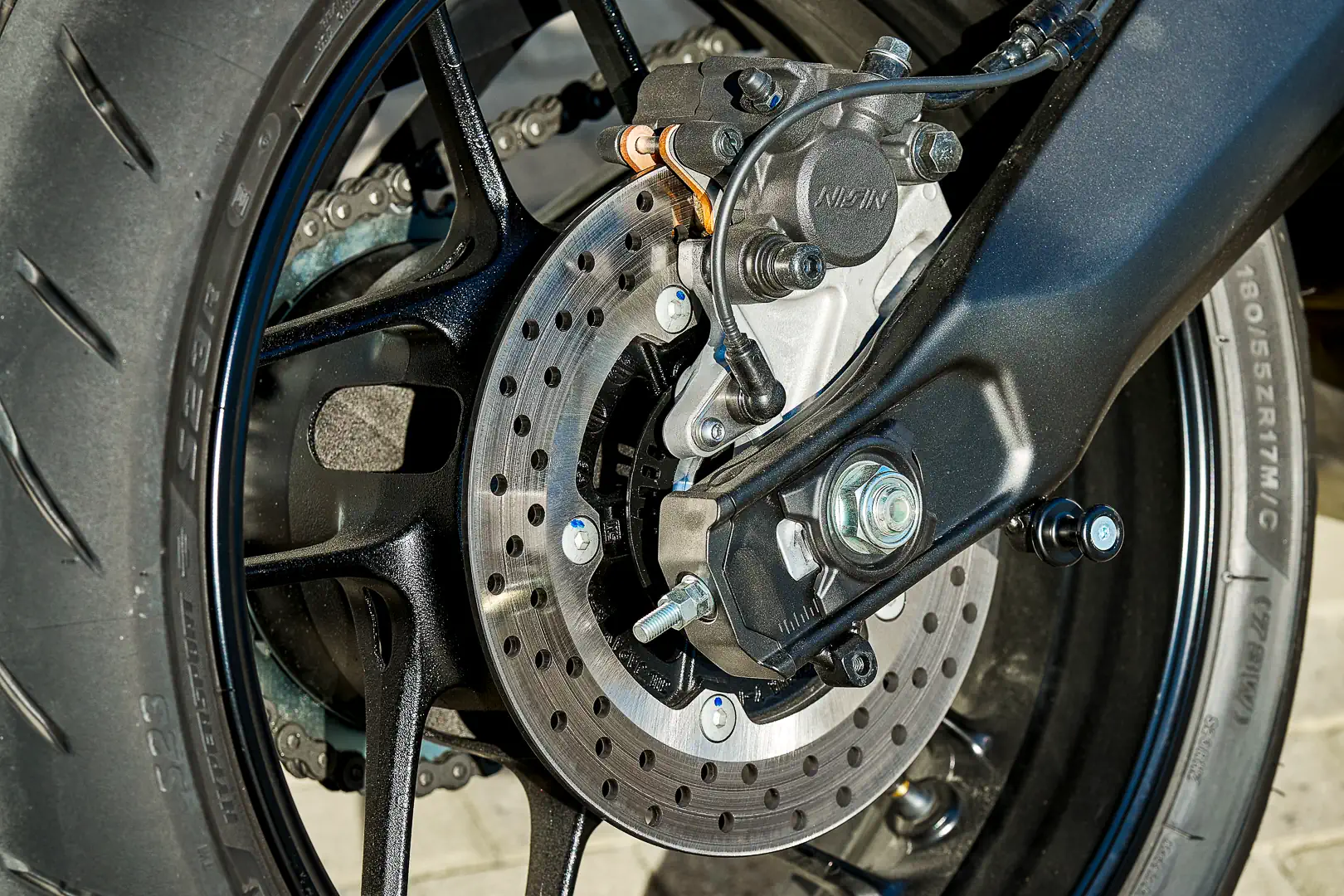
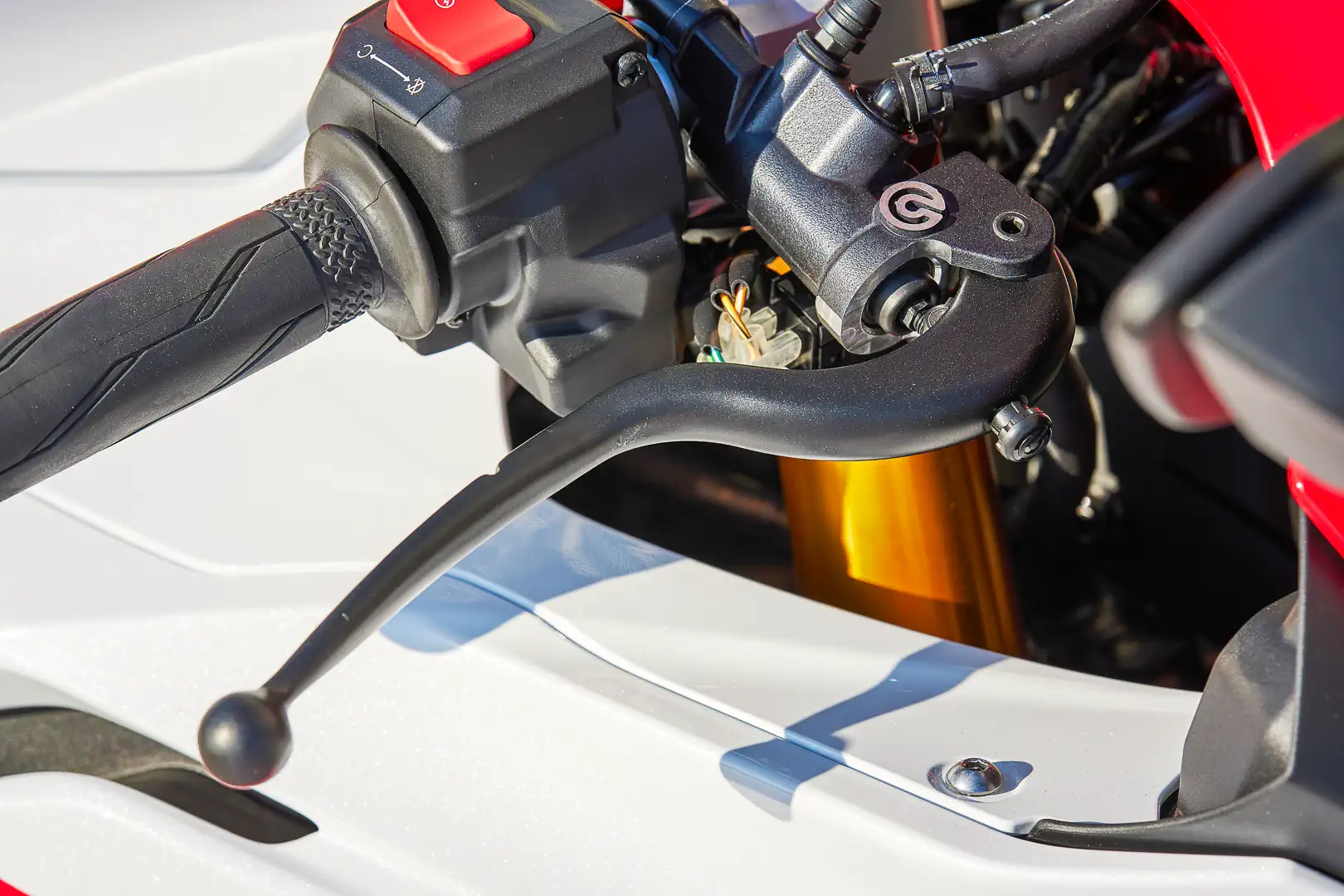
Braking is an essential part of going fast, and the R7 excels at it. The front braking system of a radial Brembo master cylinder, along with 298mm discs grasped by a pair of unbranded Advics calipers, is all you need. The Bridgestones do their part in providing feel and traction, and the suspension holds the front end up for a consistent attitude. It helps that the CP2 doesn’t have blistering acceleration, so you aren’t dealing with excessive speeds, and the 417-pound curb weight is manageable for the brakes. In a few instances when I came into a corner too hard, the rear single-piston Nissin caliper gave me that extra touch of deceleration to keep me on the right side of the double-yellow.
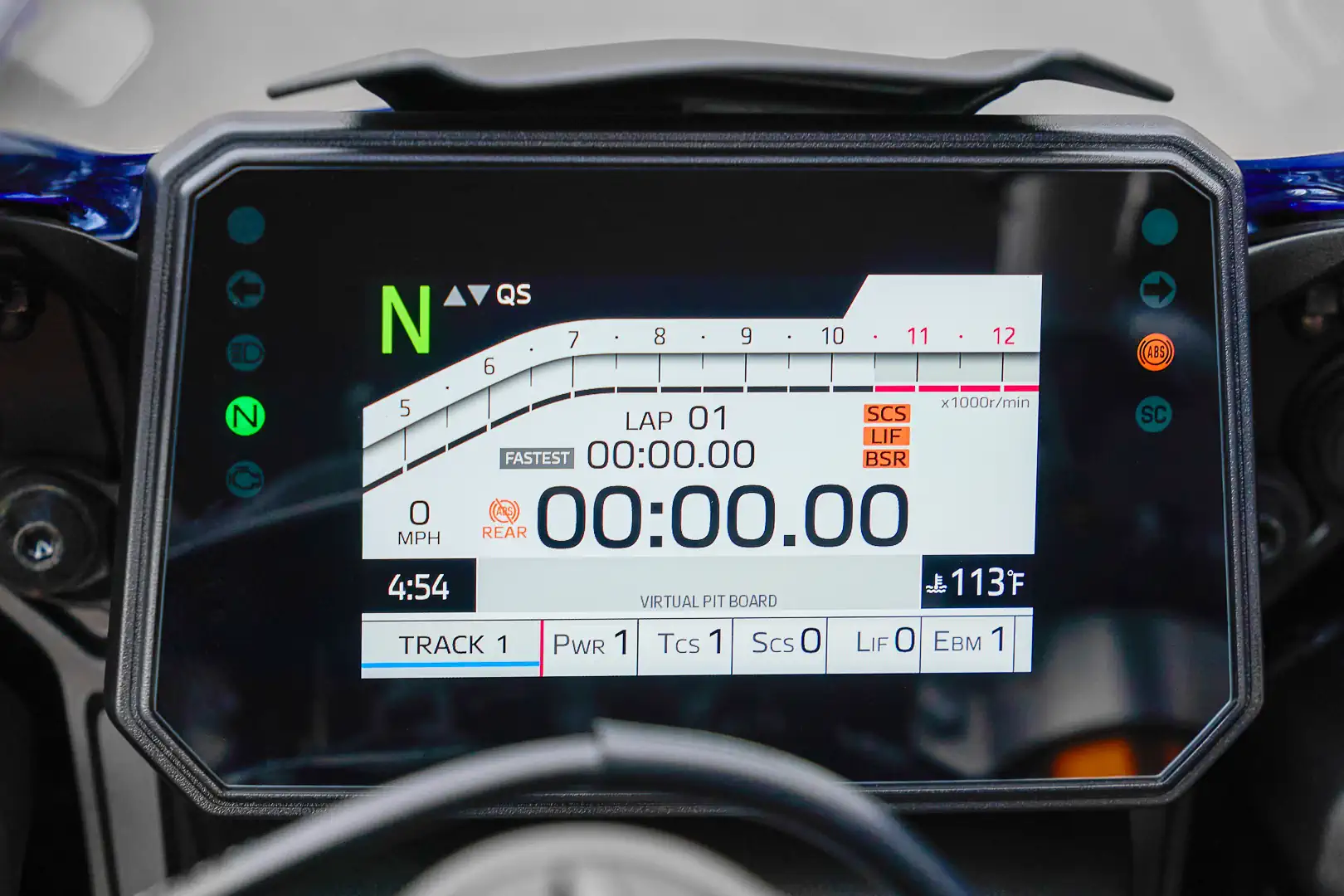
The electronics package is aimed squarely at the track day rider. In addition to three preset modes — Sport, Street, and Rain — a Custom mode allows adjustment to power, traction control, slide control, and wheelie control. Four adjustable Track modes add customization to the quickshifter (up and down, separately), defeatable rear ABS, engine braking, motor slip regulation, and launch control. The five-inch TFT dash has four distinctive display Themes, along with a Track Theme. If you like an analog display of your rev count, go with Theme 1. Theme 3’s tach readout is a bit gimmicky, so I would stick with Themes 2 and 4. The Track Theme is well-named.
Download the Yamaha Y-Trac Rev app, and you’re in full track mode. Distinct from the street-oriented Y-Connect app, the Y-Trac Rev app is all about data acquisition from the CAN. It delivers more info than most riders will know what to do with, including messages from your pit crew that pop up on the TFT dash set to the Track Theme. In addition to making it easier to set up the Track modes, you can save up to 40 settings, though only four are available at a time on the dash. It’s impressive how much track technology is delivered in a motorcycle with a four-figure price tag.
On public roads, quick experimentation convinced me to go with the Sport mode in the twisties, as it’s smoothly aggressive. Eventually, I set up a Custom mode with full power, lightest wheelie control, and a medium level of traction and slide control as a safety net. I didn’t feel any performance hit by increasing the traction and slide control over the Sport mode setting. With more time, I would poke into the Track modes and adjust the engine braking and motor slip.
The Yamaha Motorcycle Y-Connect and Garmin StreetCross apps enhance street use. Y-Connect has the usual array of features, including phone, music, and texts, along with weather reporting and street-oriented data acquisition. There’s also a parking location feature, though the pin is dropped on the phone, so it’s not an anti-theft device. I had some difficulty pairing the R7 with my iPhone 12 Mini, so I used that as an excuse to upgrade to an iPhone 17.
The R7’s ergonomics have been lightly massaged. The seat-to-footpegs distance and angle are unchanged, though the seat is flatter and grippier, and the front is moved forward 0.4 inches. The clip-ons have been moved slightly more than 0.3 inches rearward and sit a tad over an eighth of an inch higher. The tank holds a quart more than the previous R7, with a broader front and narrower width at the rider’s knees, and it avoids the elbows. Put it all together, and you have an incrementally more comfortable and higher-performance seating position behind the new fairing.
In addition to being an outstanding motorcycle, the 2026 Yamaha YZF-R7’s pricing is impressive. At $9399 for the three standard colors, the new iteration of the R7 is only $400 more than the original in 2022. That’s a monster deal by any measure. If you’re graduating from a motorcycle like an R3 or transitioning from a midsize upright, this is a motorcycle that is fun and practical on the street, making far more sense than an inline-four 600 or liter-class superbike. And, if you get the racing bug, the Twins Cup awaits your arrival.
In our first segment this episode Don Williams tries out his first e-clutch motorcycle: the new Honda CB750 Hornet. The Honda 750 is already an excellent motorcycle in its own right; it’s fast, and it handles beautifully. So, does adding the E-Clutch system to an already fabulous motorcycle really make any difference, or is this just an engineering exercise for the sake of it? Don Williams explains how the system works, and whether the E-Clutch is actually an upgrade.
* * * * *
We’ve talked recently about the upcoming Biketoberfest in a few weeks time, and for sure it’s a great party and social event for motorcycle riders everywhere. But we don’t want to leave you with the impression that’s all it is. So Brian Bentley—born and raised in Daytona Beach—takes us through a sample itinerary of how you could spend your four days plus at Biketoberfest. Truth is, there are a ton of things to do in the October sunshine, and Brian’s example itinerary will give you a lot of ideas. And don’t forget: make sure you download the Biketoberfest mobile App from Apple or Google Play or visit www.biketoberfest.org.
* * * * *
In our second segment this episode Arthur Coldwells chats with Tony Bracalente, founder of Ryder-Gear. Tony is a Navy veteran and was a nuclear engineer on submarines; he’s also a frequent track rider and racer. He founded Ryder-Gear as a result of his own track riding needs, and after friends kept asking him to help them out with what they needed, he eventually started the company. Tony’s interesting background and story-telling ability gives some insight into what it takes to improve motorcycle safety both on the track, and on the street.
* * * * *
Here’s quick reminder to check out our monthly digital magazine. It’s filled with everything you want to read on motorcycling, including some things you’ve probably not seen elsewhere. It’s absolutely free and you will find it on the Apple App Store and of course on Google Play as well.
Don’t forget to leave us your comments on our social media—we’re on all the usual platforms at Ultimate Motorcycling. We love hearing your feedback… so good or bad, please let us know what you think. If there’s something you’d like us to cover, we’d love to hear those ideas too!
We use cookies and browser activity on this website
Functional
Always active
The technical storage or access is strictly necessary for the legitimate purpose of enabling the use of a specific service explicitly requested by the subscriber or user, or for the sole purpose of carrying out the transmission of a communication over an electronic communications network.
Preferences
The technical storage or access is necessary for the legitimate purpose of storing preferences that are not requested by the subscriber or user.
Statistics
The technical storage or access that is used exclusively for statistical purposes.The technical storage or access that is used exclusively for anonymous statistical purposes. Without a subpoena, voluntary compliance on the part of your Internet Service Provider, or additional records from a third party, information stored or retrieved for this purpose alone cannot usually be used to identify you.
Marketing
The technical storage or access is required to create user profiles to send advertising, or to track the user on a website or across several websites for similar marketing purposes.