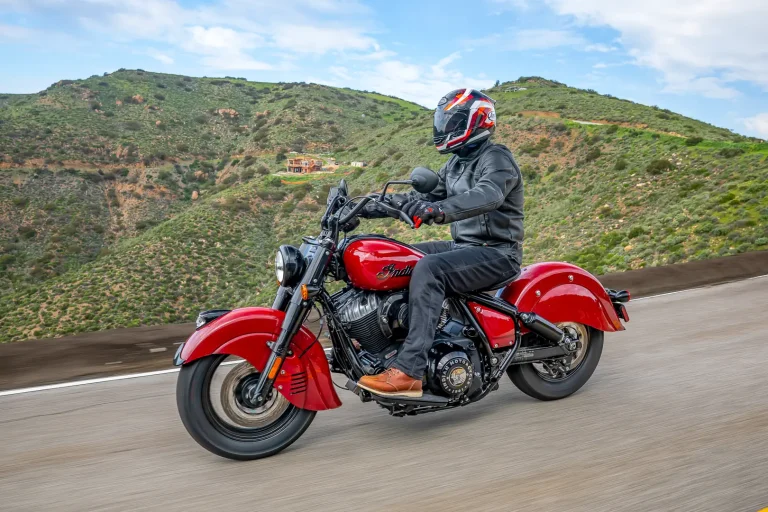
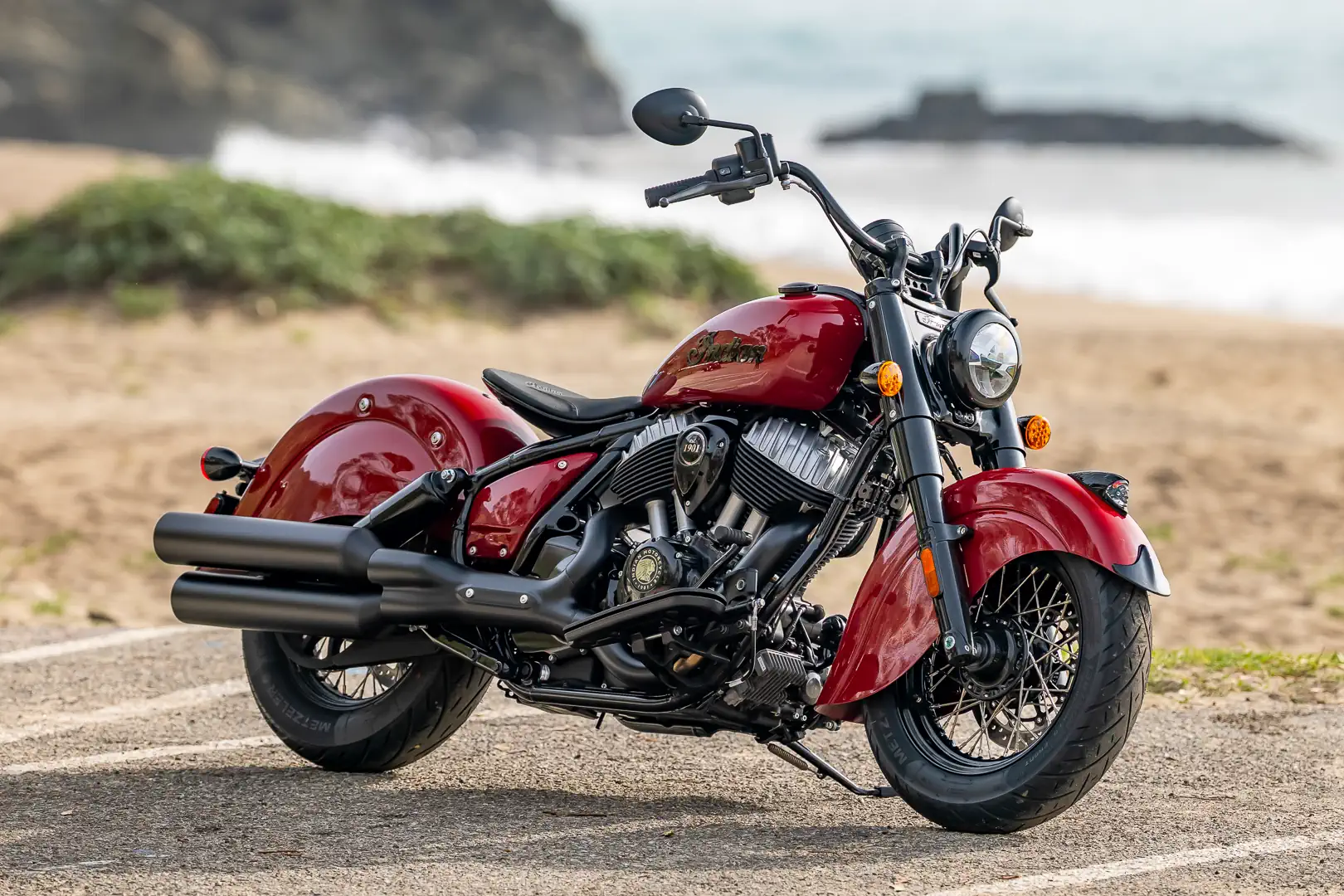
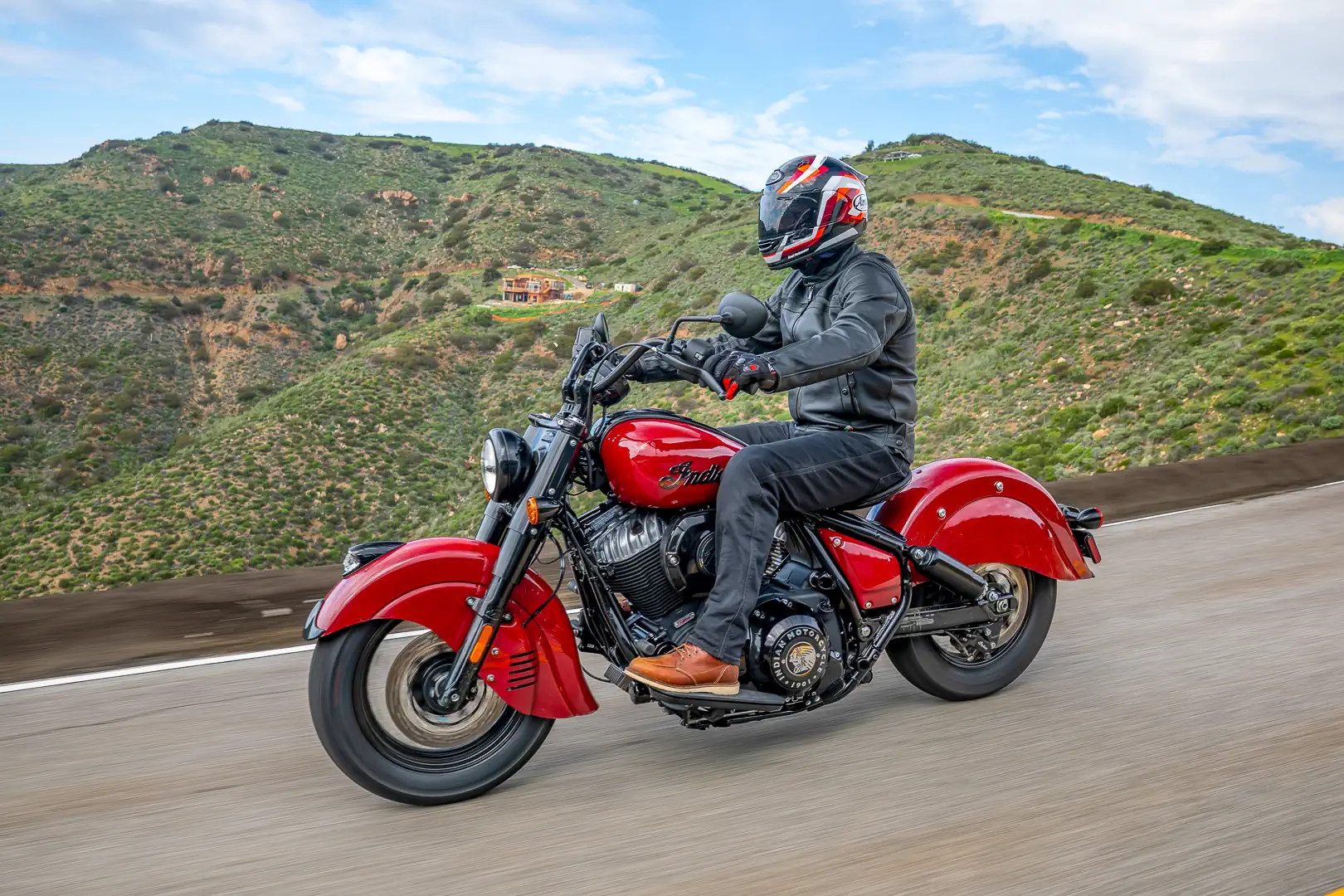
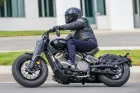
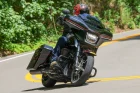
Unveiled at the Petersen Automotive Museum during Indian Motorcycle’s 125th Anniversary celebration, the 2026 Indian Chief Vintage is a heritage-driven cruiser that blends mid-20th-century American design language with the thoroughly modern Chief platform. Built around the air-cooled Thunderstroke 116 V-twin and wrapped in valanced fenders, wire-spoke wheels, and deeply nostalgic detailing, the Chief Vintage is an unabashed love letter to the Chiefs of the 1940s. After spending a full day in the saddle bopping around the Santa Monica Mountains and greater Los Angeles area, it’s time for some Fast Facts.
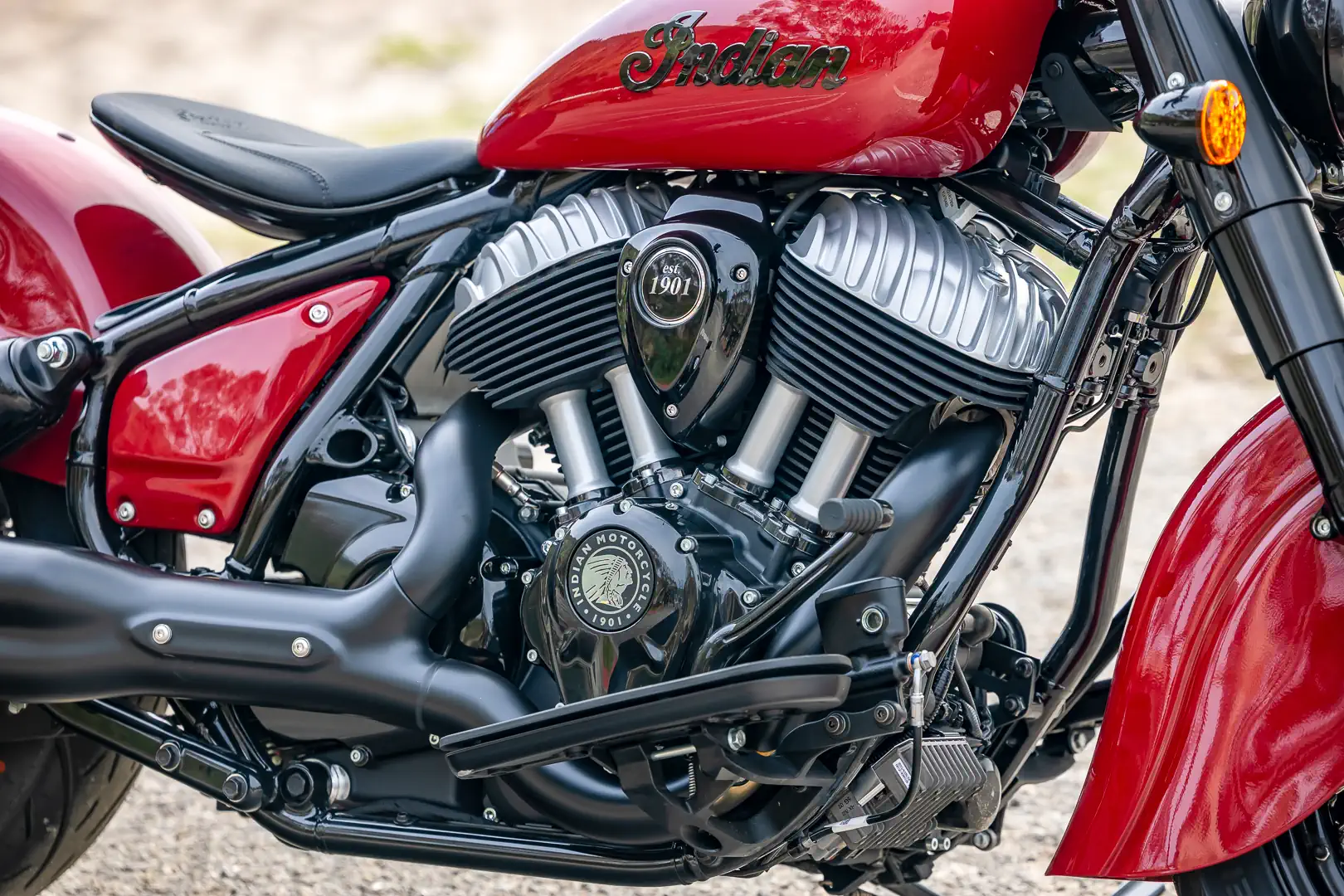
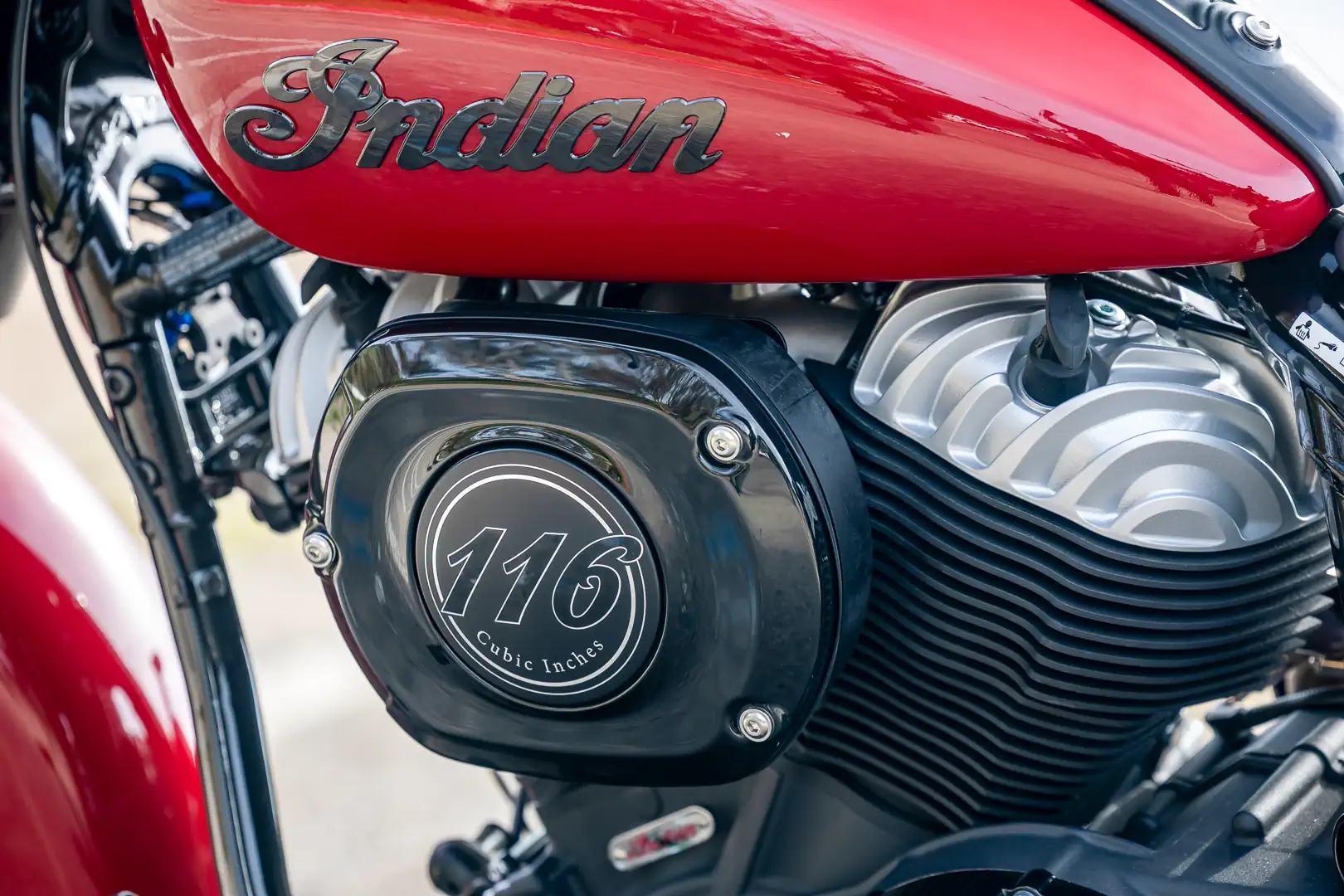
The Thunderstroke 116 powerplant underscores the Chief Vintage’s character with torque-rich, air-cooled authority. Indian’s 1890cc V-twin produces a claimed 120 lb-ft of torque, though the brand conveniently omits horsepower figures. Fair play, as Big Twins aren’t about peak ponies; the emphasis is placed on its low- and midrange thrust rather than top-end theatrics. On the road, the V-twin engine is carefully balanced, allowing enough rumbly air-cooled flavor to be felt without it ever rattling fillings. It’s refined, yet rustic in a way that serves to charm this classically themed cruiser with hearty shifting through the six-speed gearbox.
Ride modes and throttle mapping bring modern control, though not all settings feel equally useful. Ride-by-wire throttle enables three selectable ride modes — Sport, Standard, and Tour — each with a different throttle response. Ride-by-wire throttle and ride modes are a modern gift that can come with unwanted strings. On the 2026 Indian Chief Vintage, the Standard and Tour modes are unnecessarily conservative to the point of feeling awkward, especially when paired with the lengthy throttle throw. Leave the Thunderstroke 116 in Sport for the kind of snap you’d expect out of an amply armed cruiser, and your belief in the Chief Vintage’s authenticity won’t be suspended.
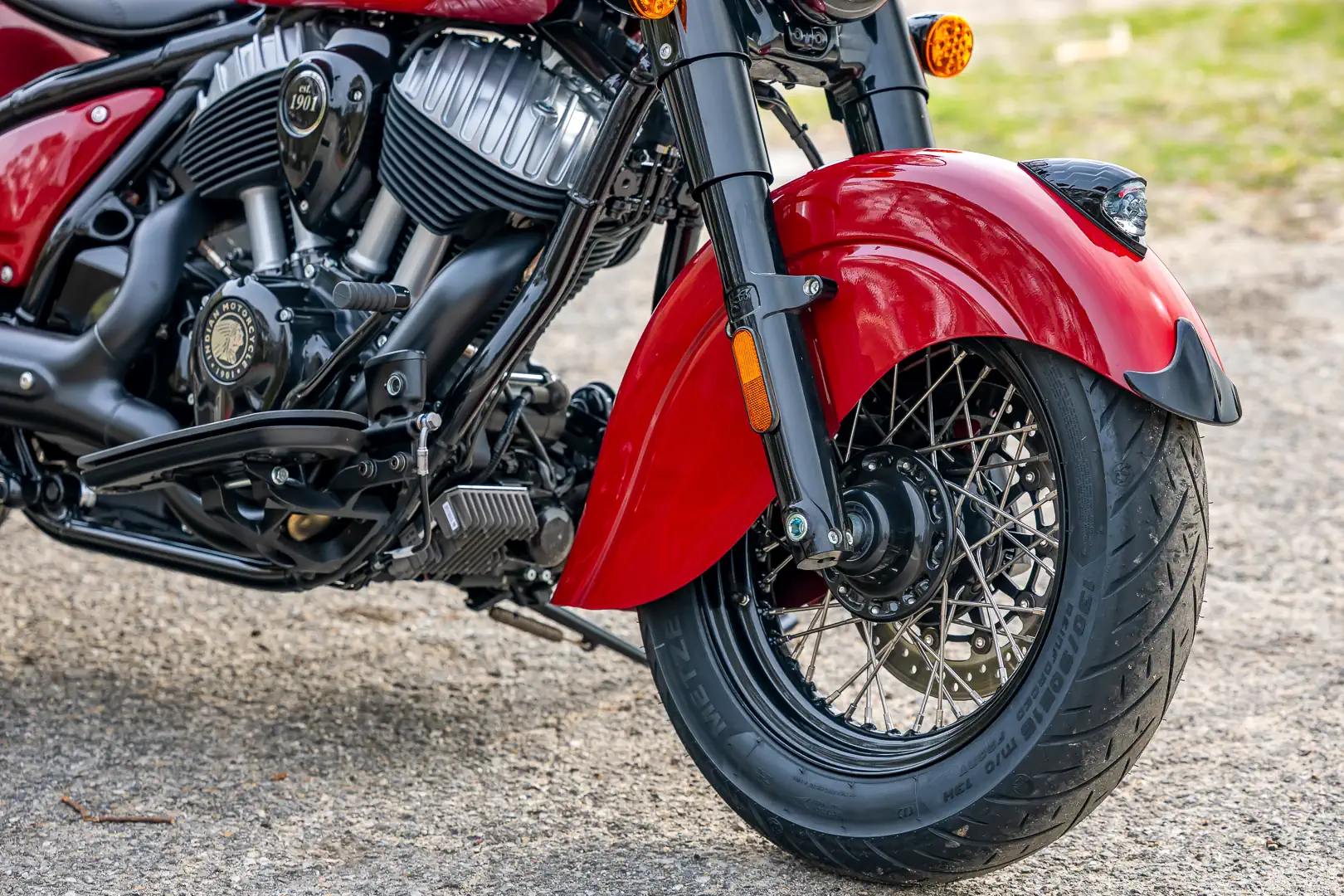
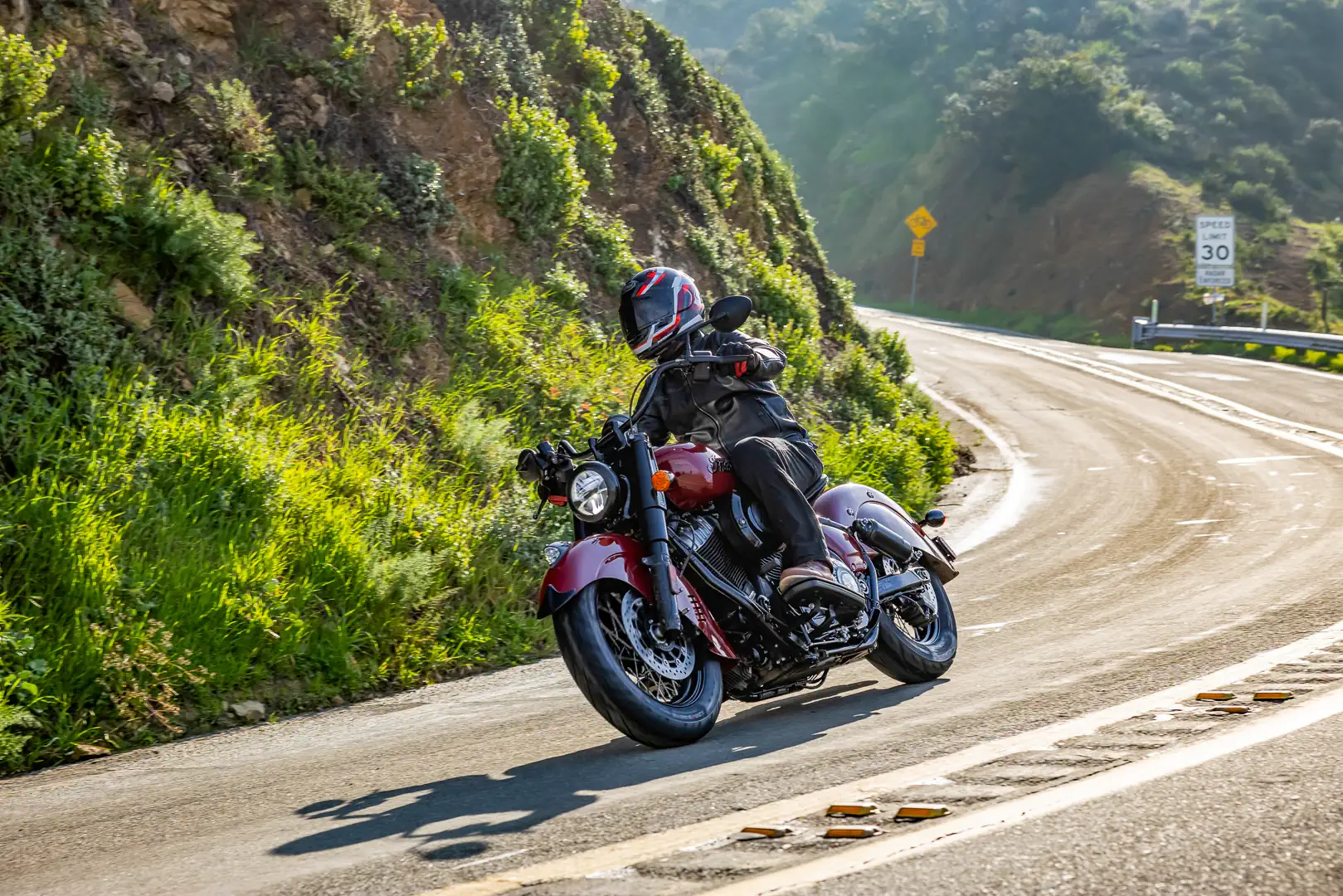
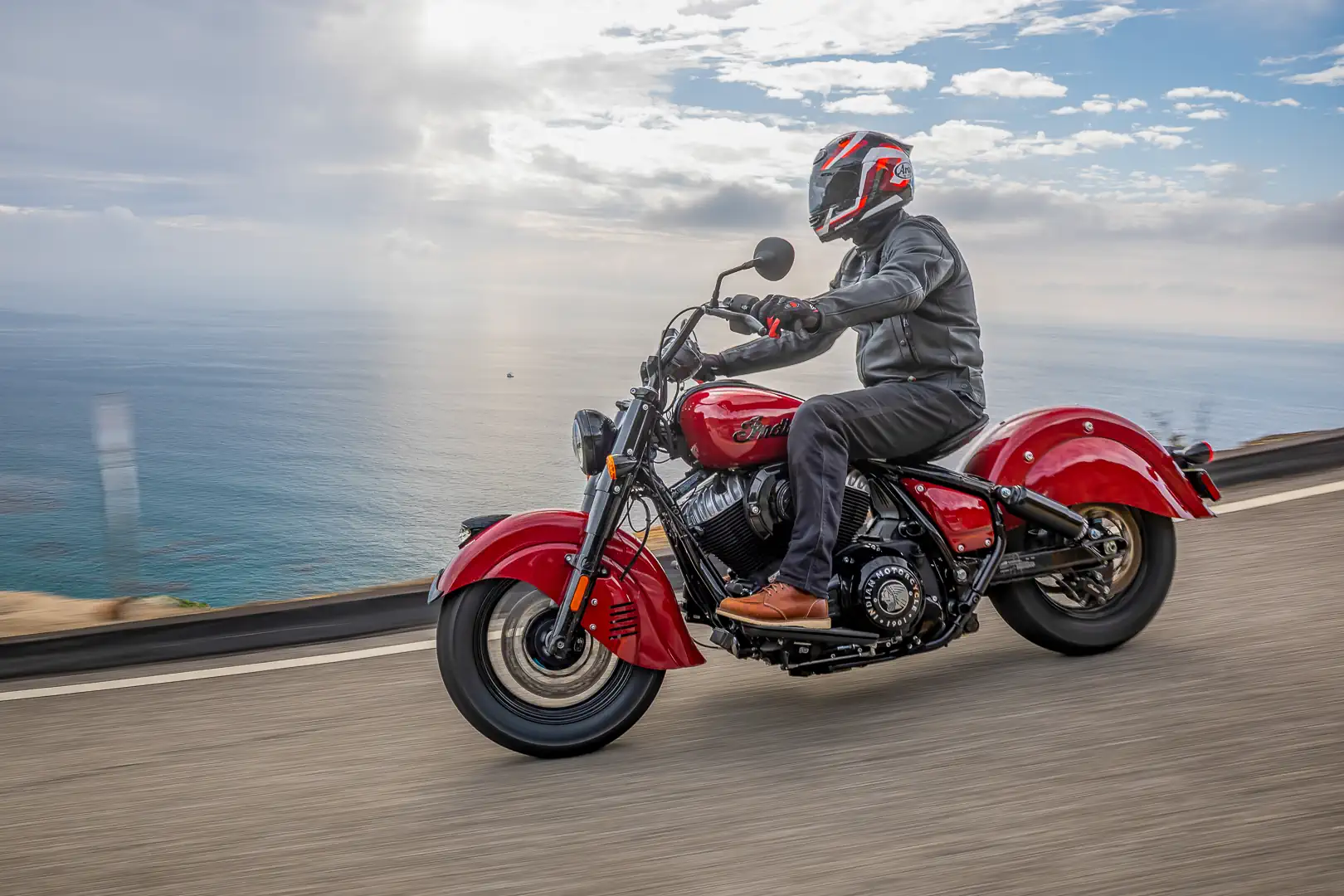
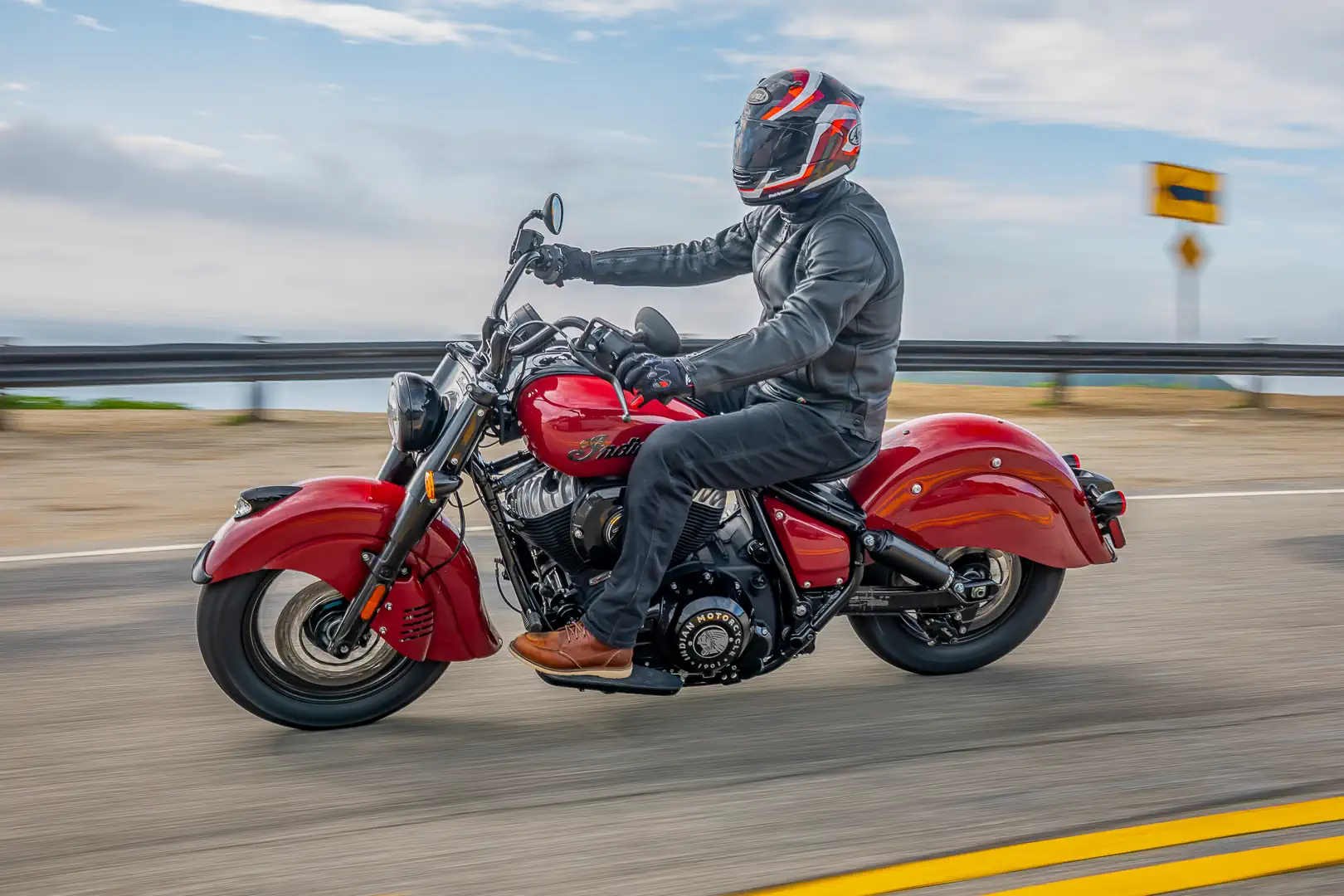
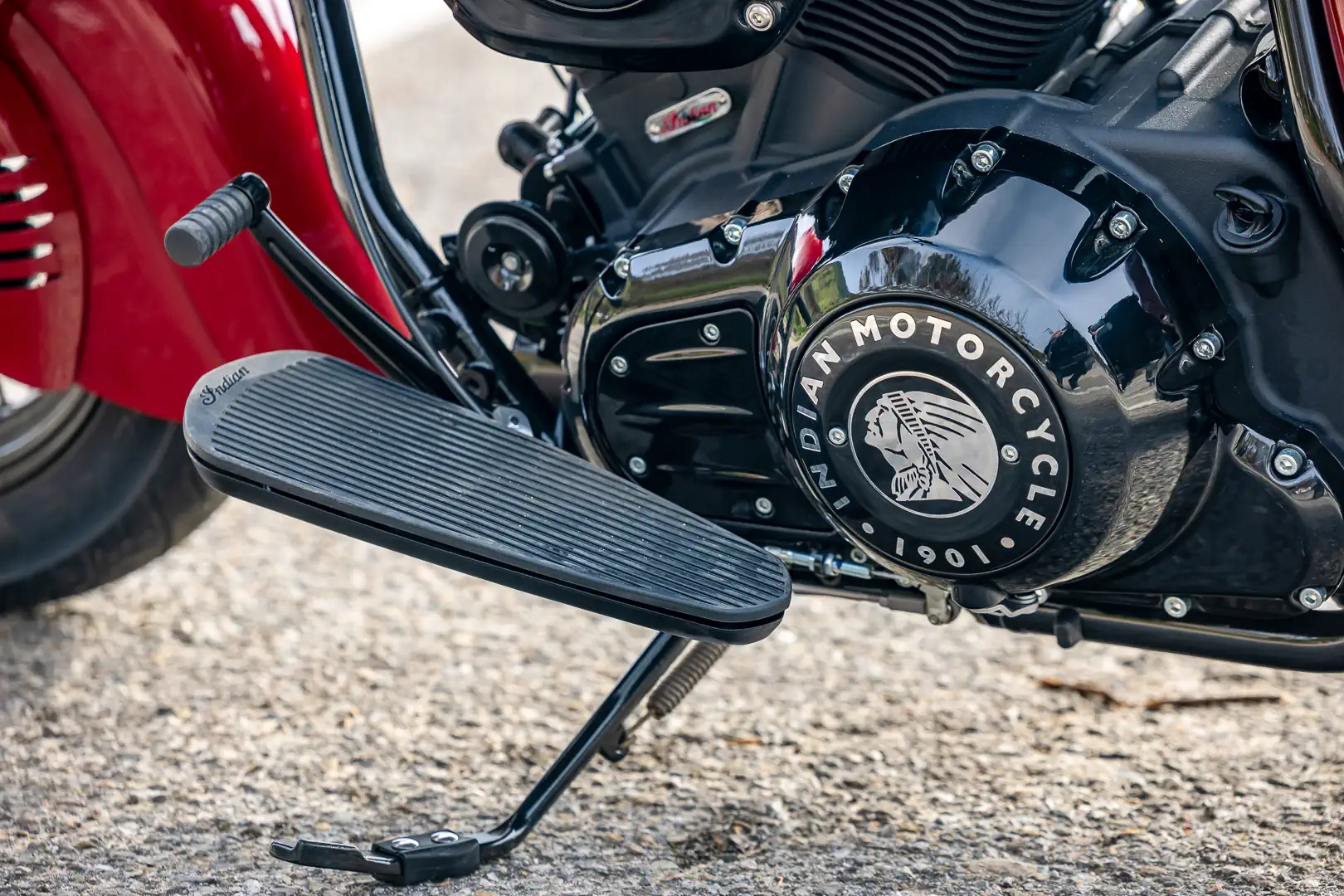
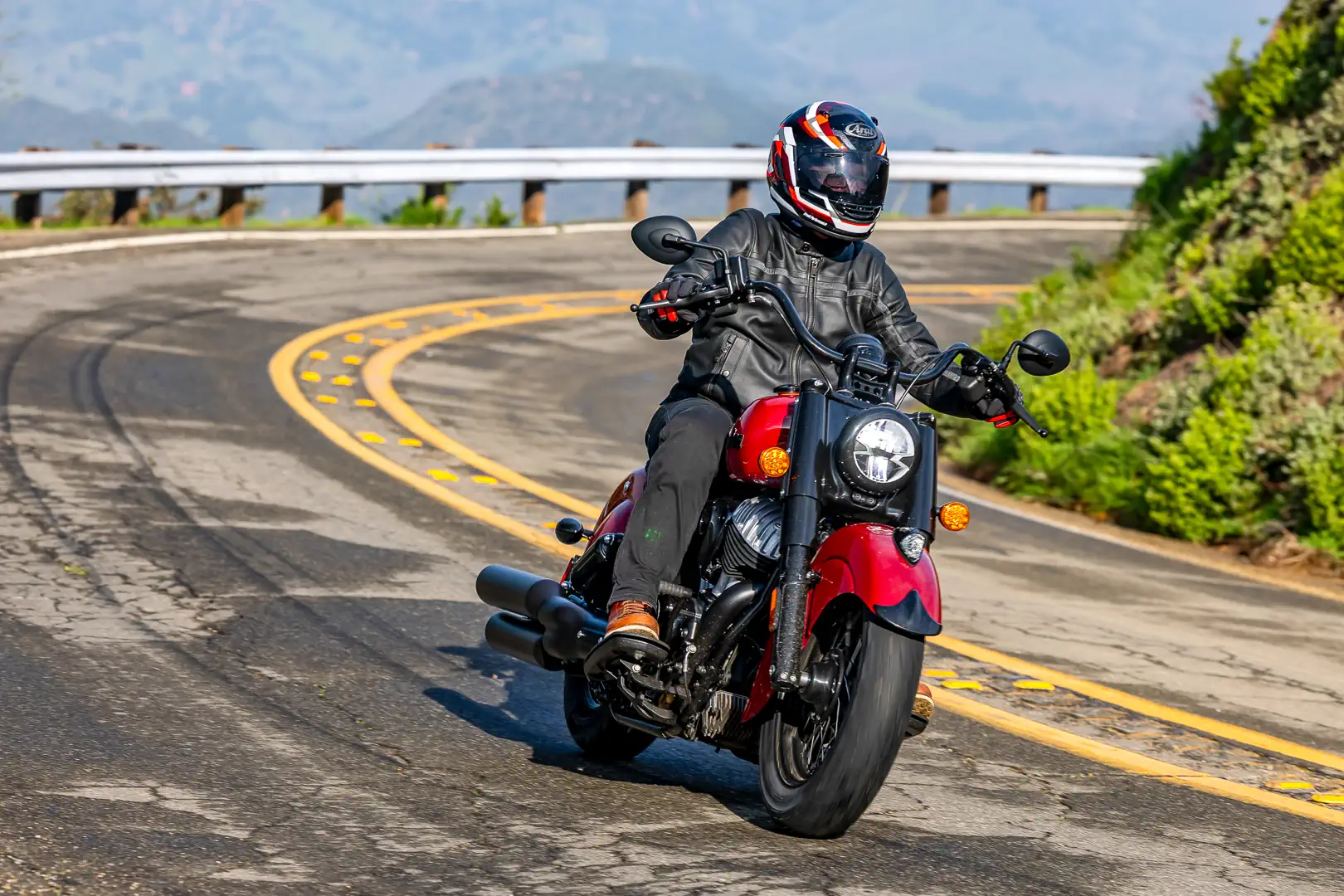
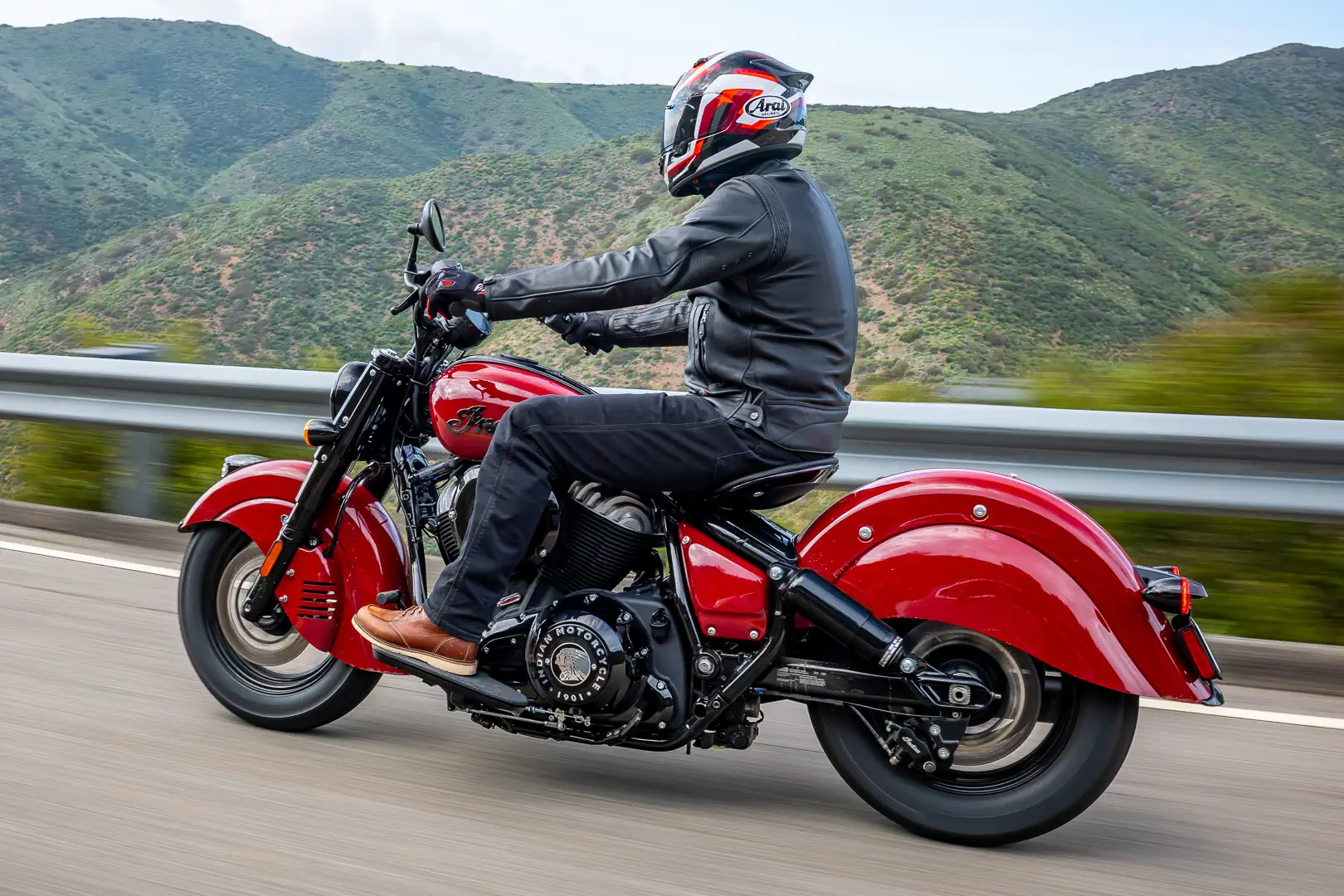
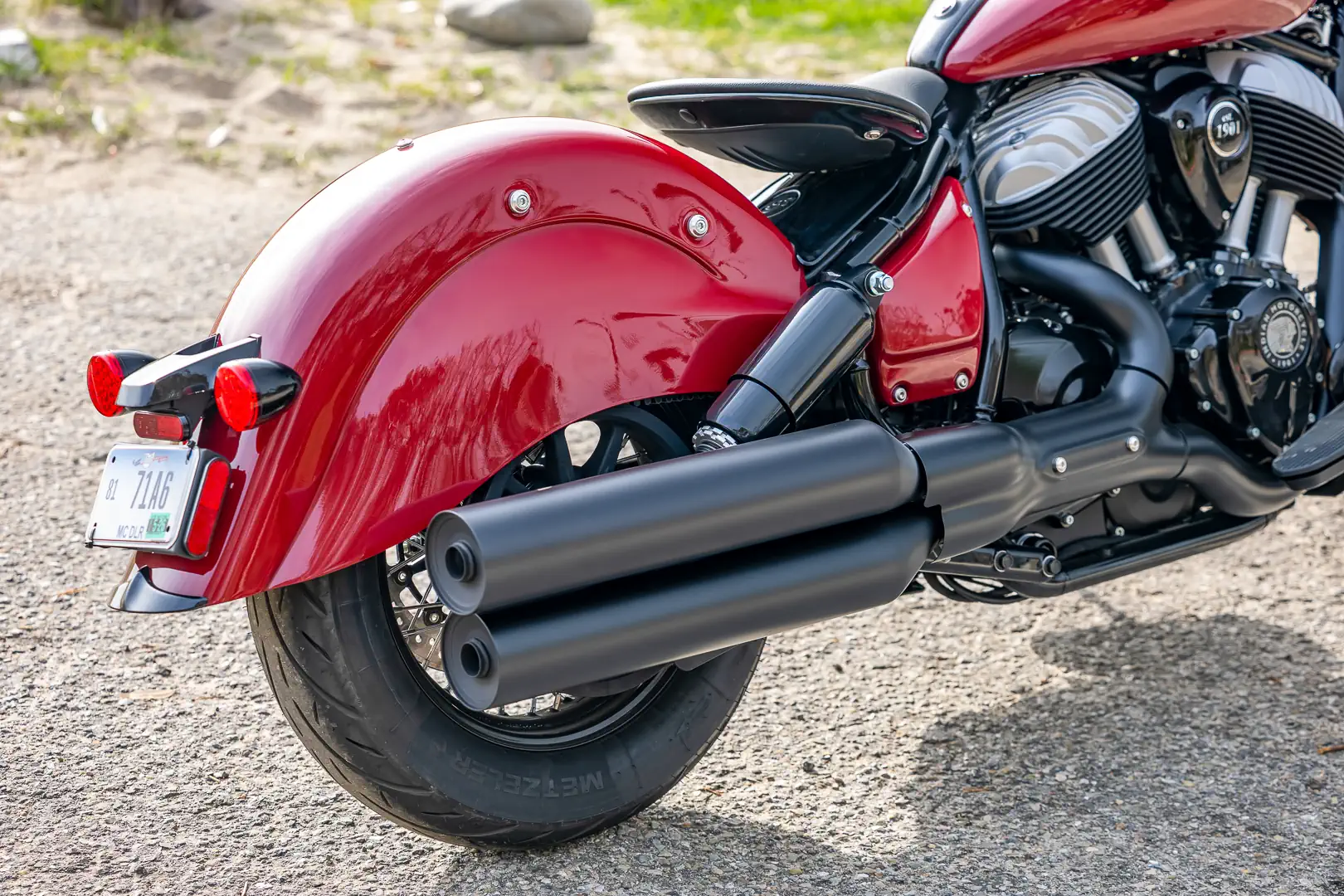
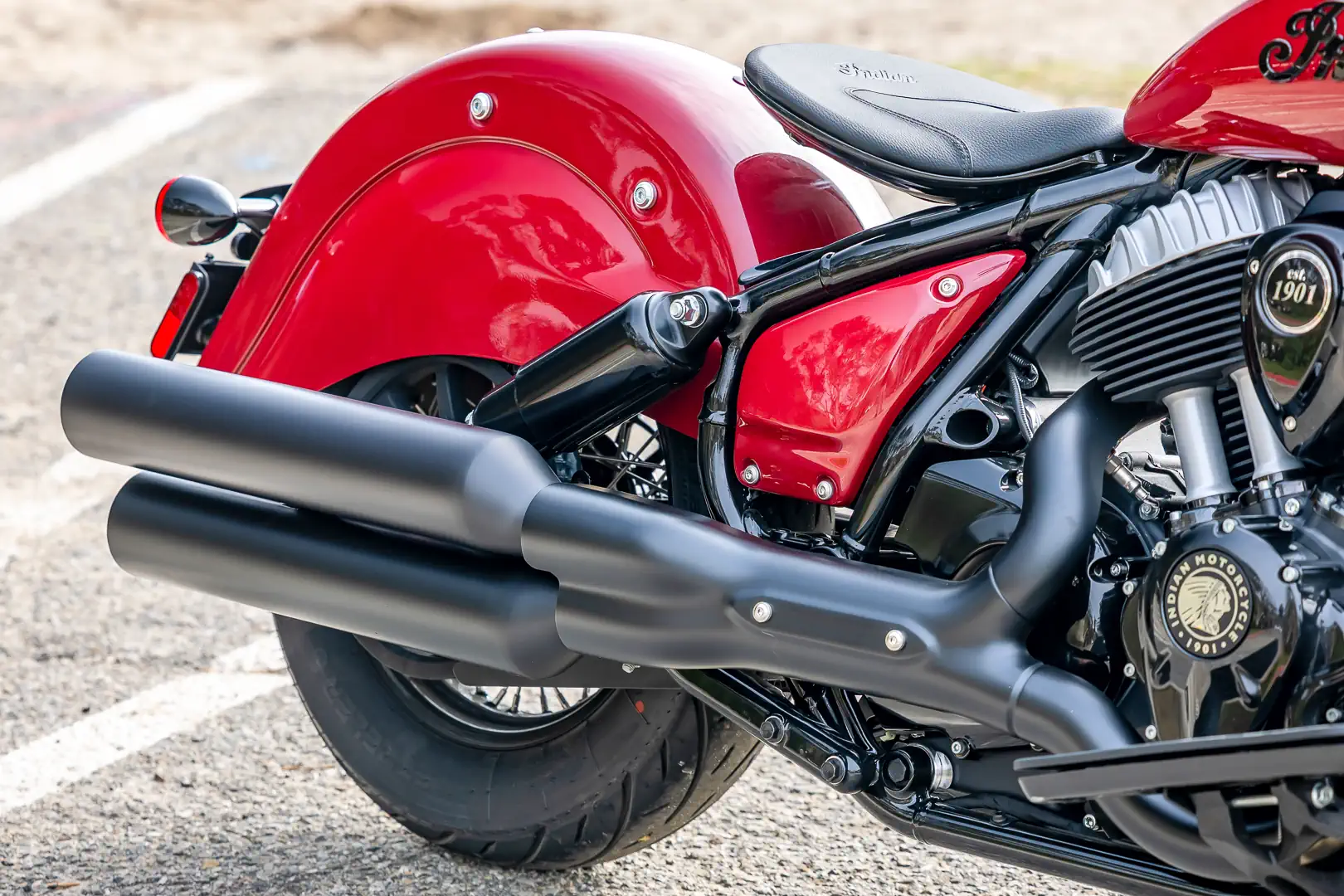
The Vintage is the Chief chassis with a few subtle twists. The Chief Vintage may have an old-school appearance, yet it can keep up with quite a few modern American V-twins that run across its bow, gleefully letting riders customize those lengthy floorboards against the asphalt. It’s an instance of 1940s form meeting contemporary cornering function. The slimmer wire-spoke 16-inch rear wheel, with its narrower 150mm Metzeler Cruisetec tires rather than its Chief counterparts’ heftier 180-size rear hoops, was chosen simply to slot into its valanced fender. The benefit is that the ol’ girl can cut a rug in the Malibu canyons quite handily and is eager to explore all 28.5 degrees of cornering clearance, far more so than the chunky rubbered Chief Bobbber. Still, there are hard edges in abundance on the mean streets, which make us yearn for more suspension travel to improve ride quality.
Stopping power favors style over outright performance. Braking is most kindly described as adequate, though this is where artistic vision doesn’t seem to align with today’s riding expectations. The single 298mm disc setup in the front subscribes to a period-correct motif well enough. Still, its lack of feel and the unimpressive stopping power out of its solo four-piston caliper means that a digit or two isn’t nearly enough to haul this 721-pound machine to a halt — you’ll want to grab a fistful. It’s far more effective to involve the also-298mm rear brake, which works wonders when needing to stop in a hurry.
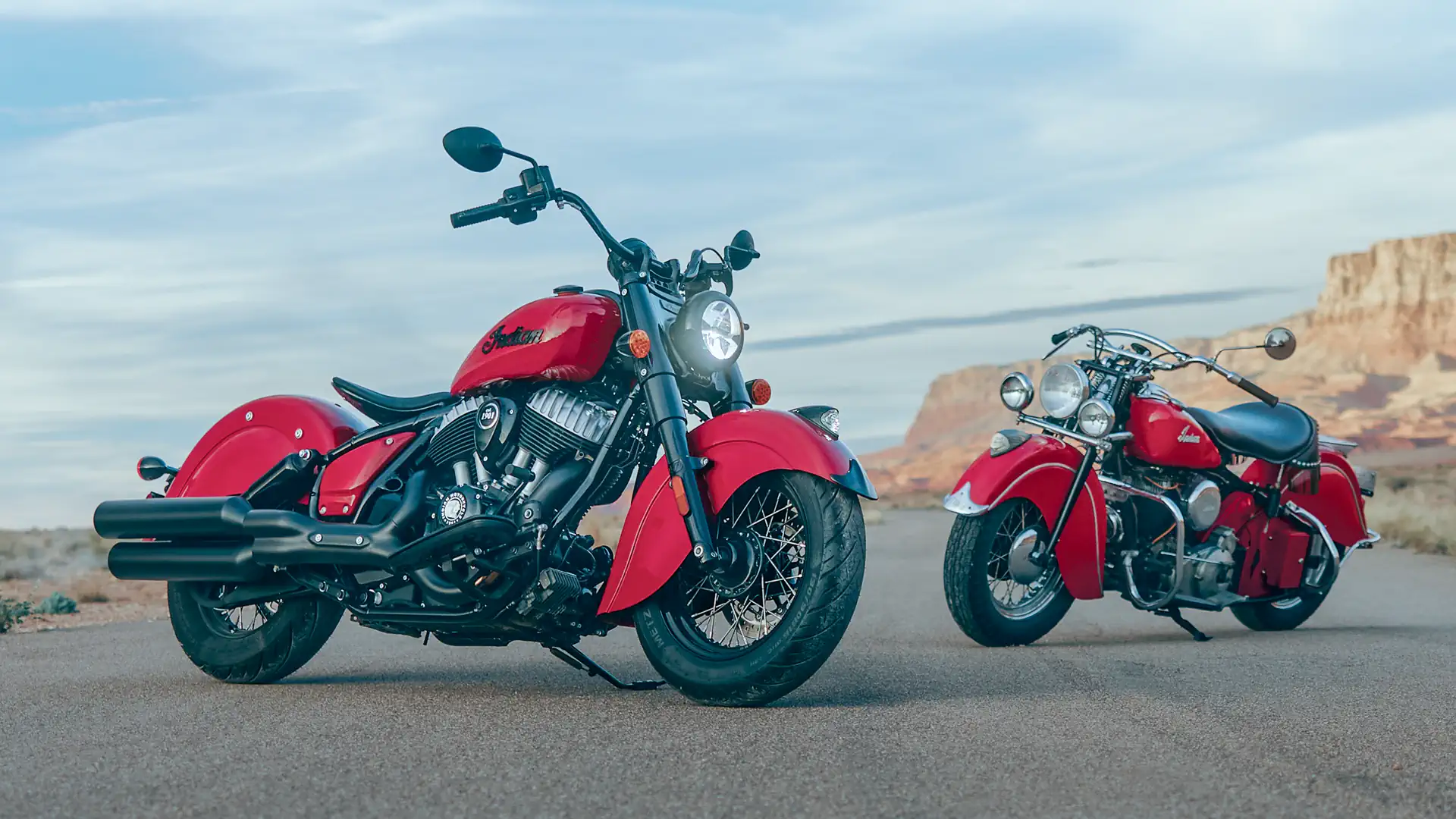
2026 Indian Chief Vintage with its 1940s ancestor.
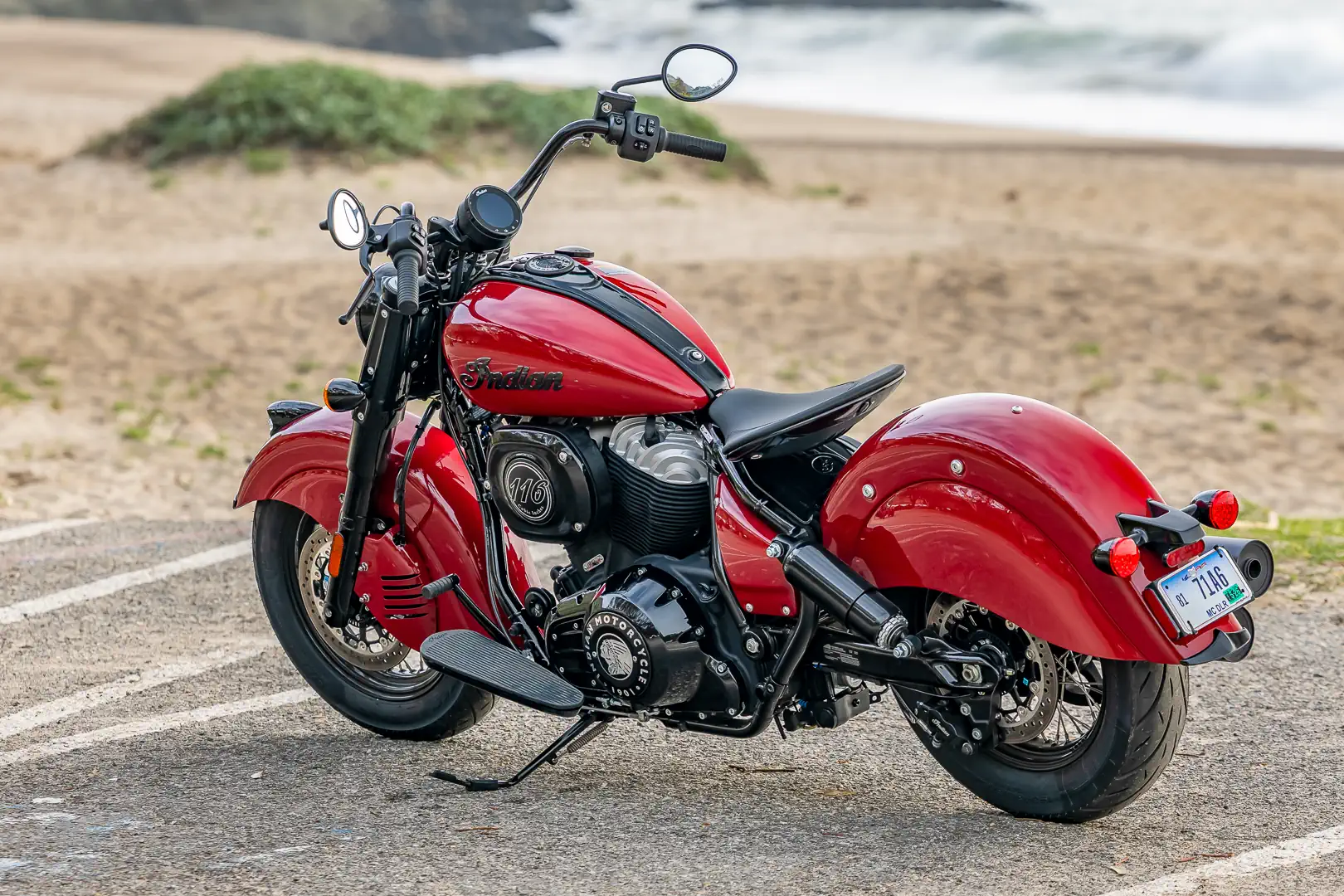
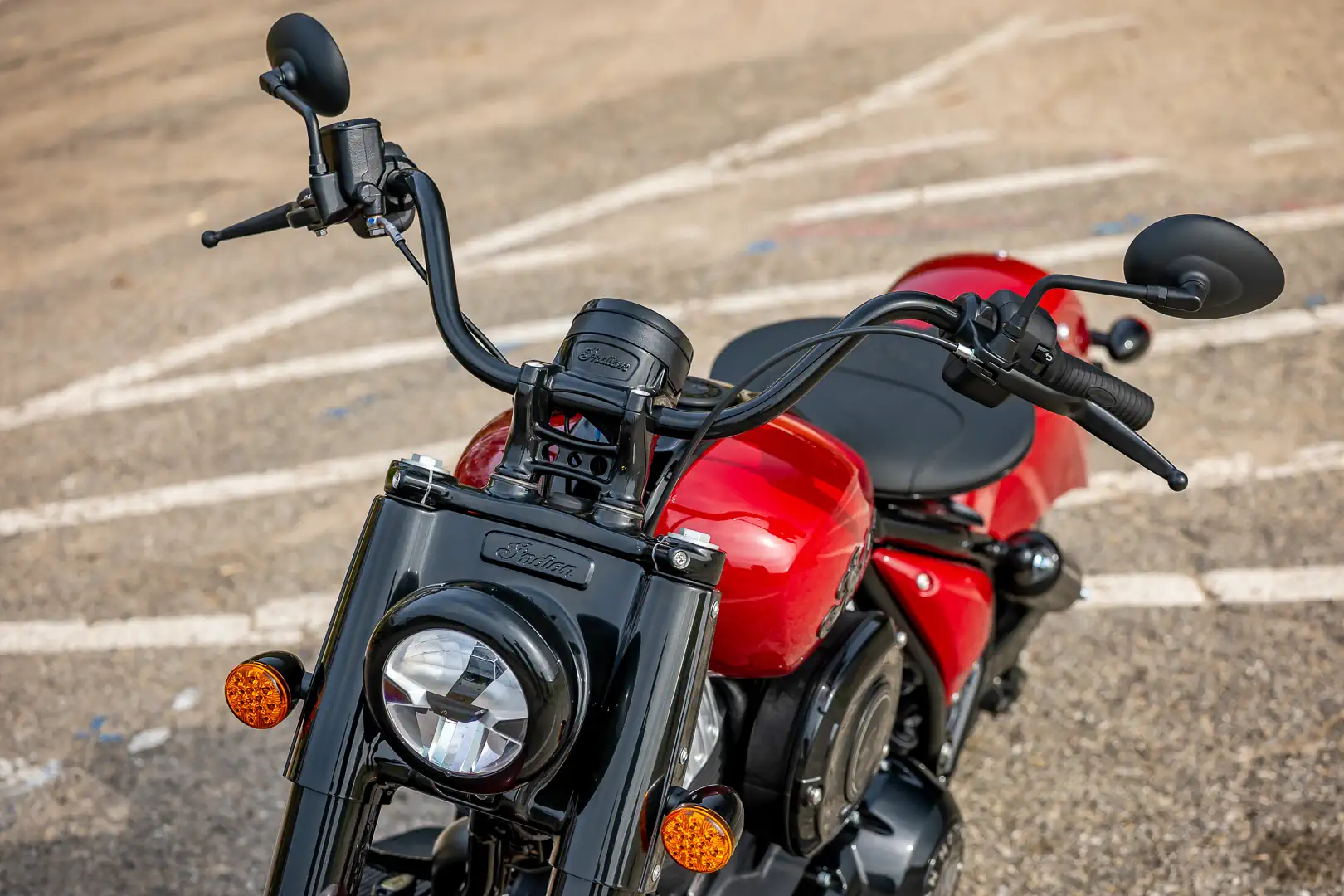
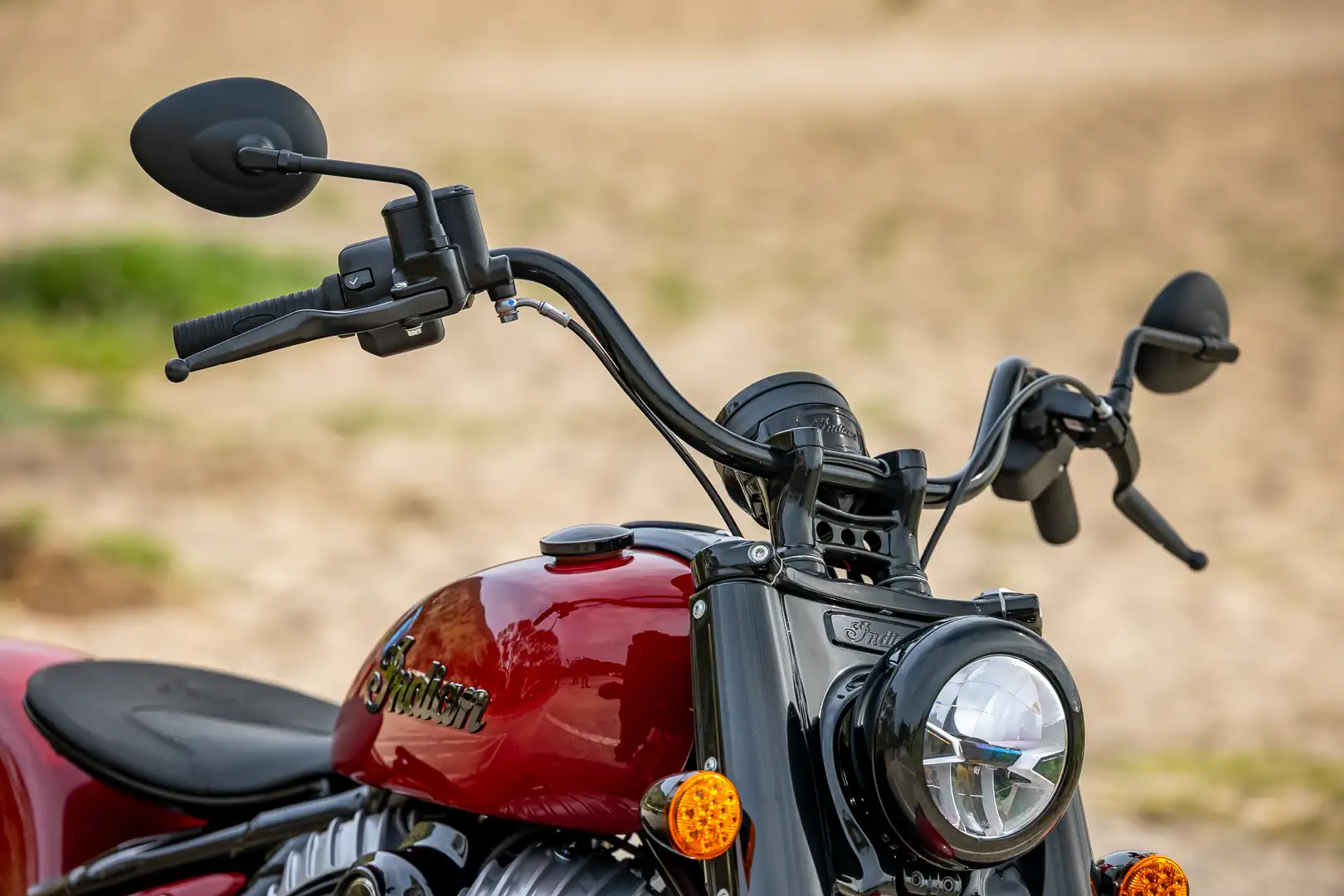
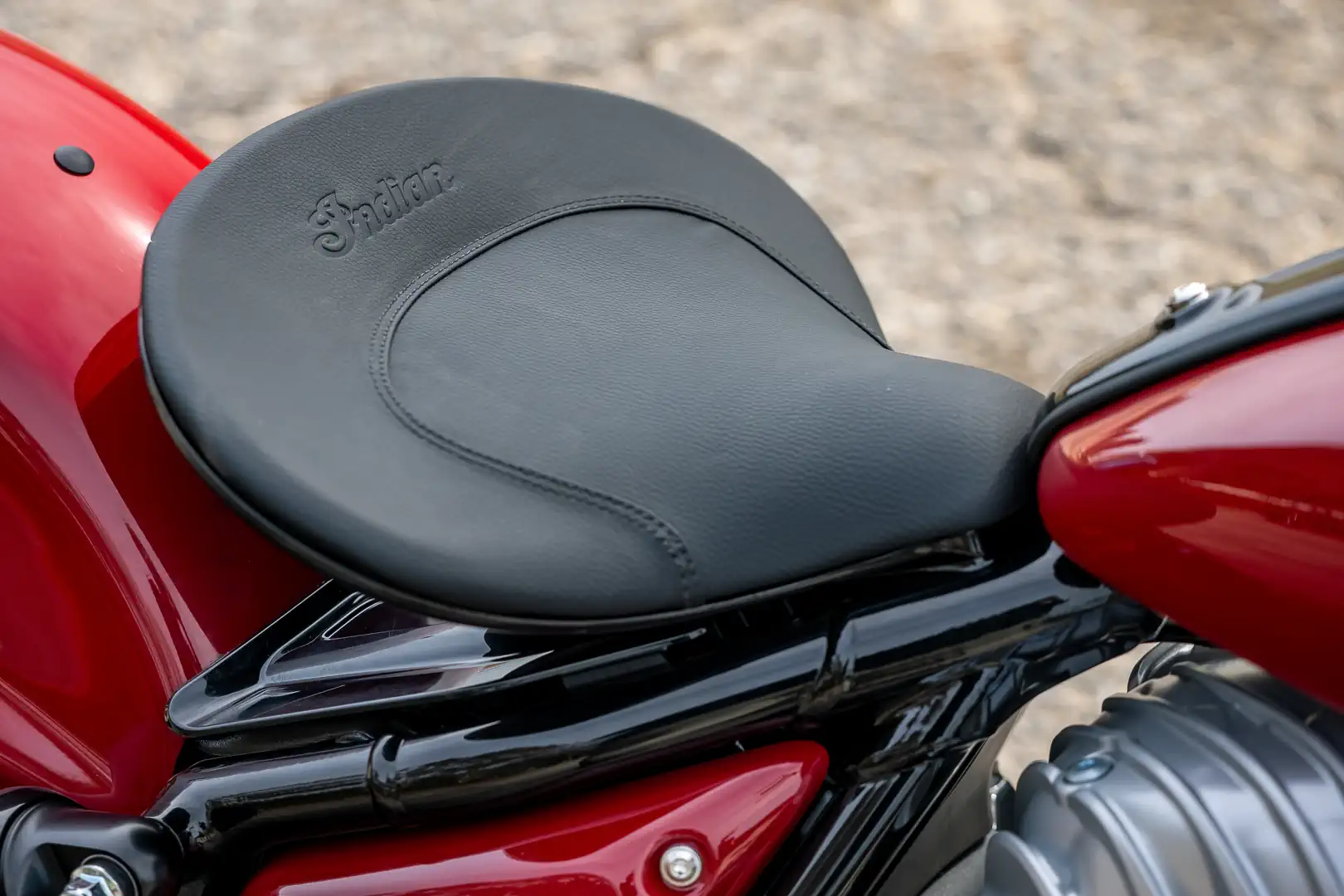
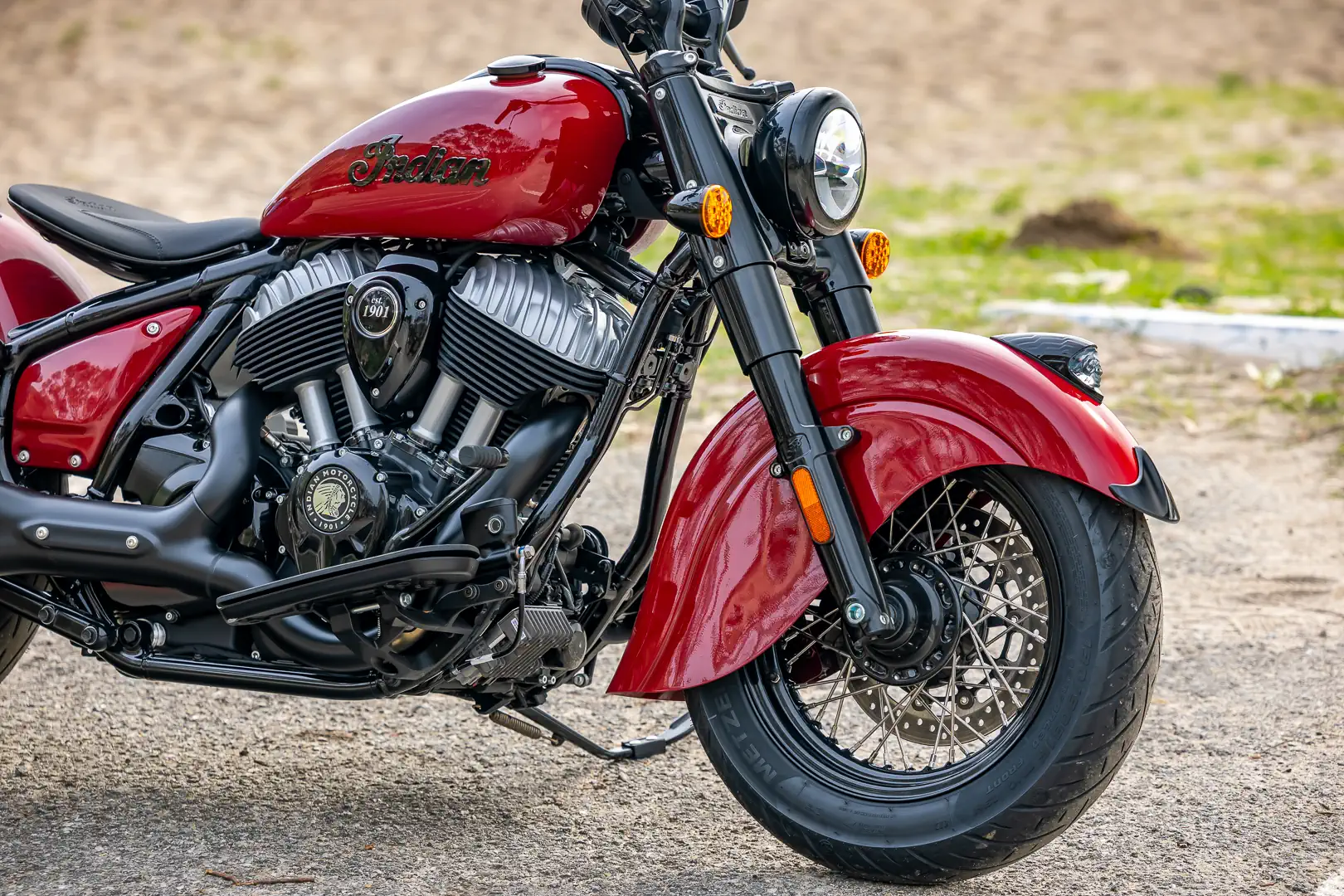
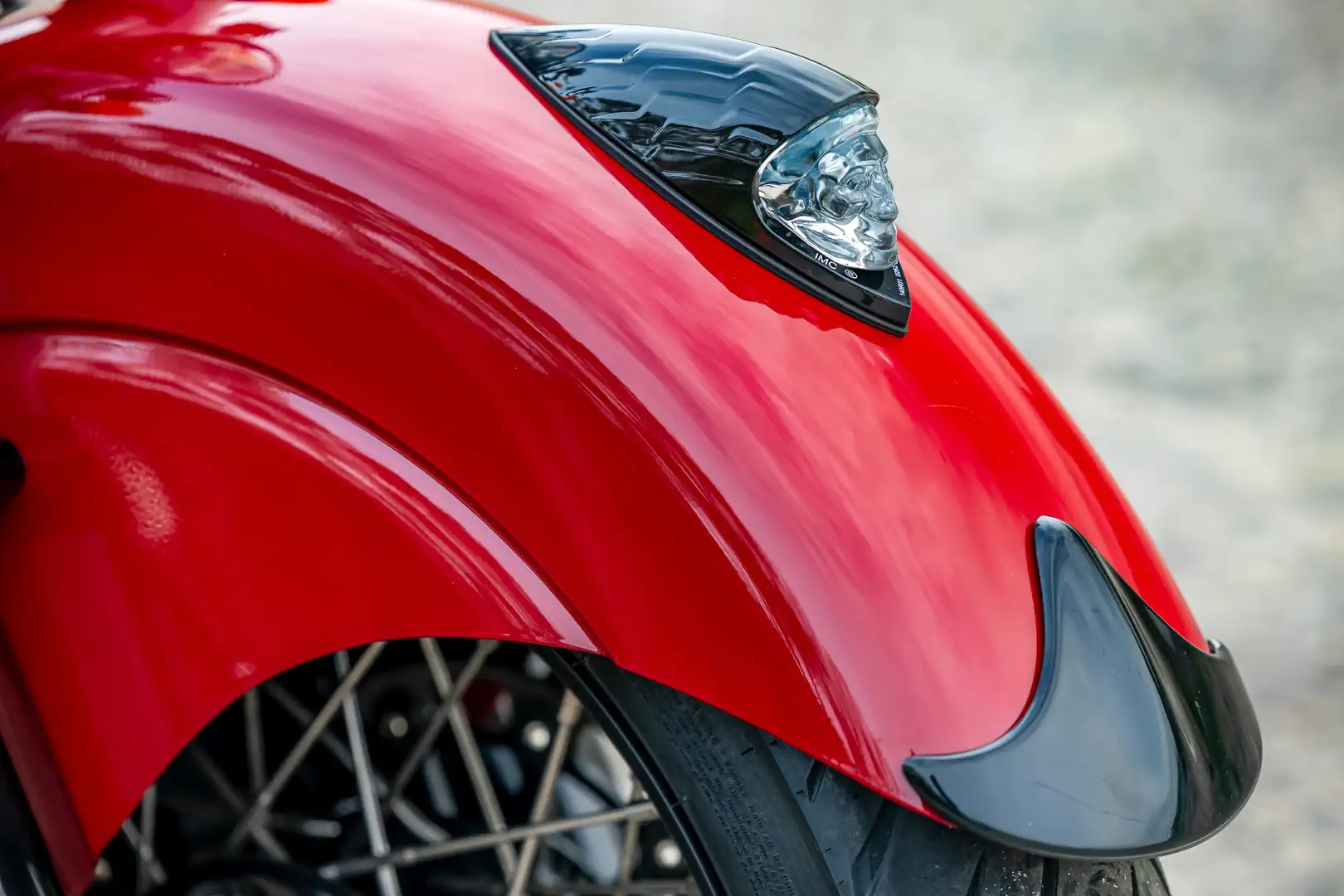
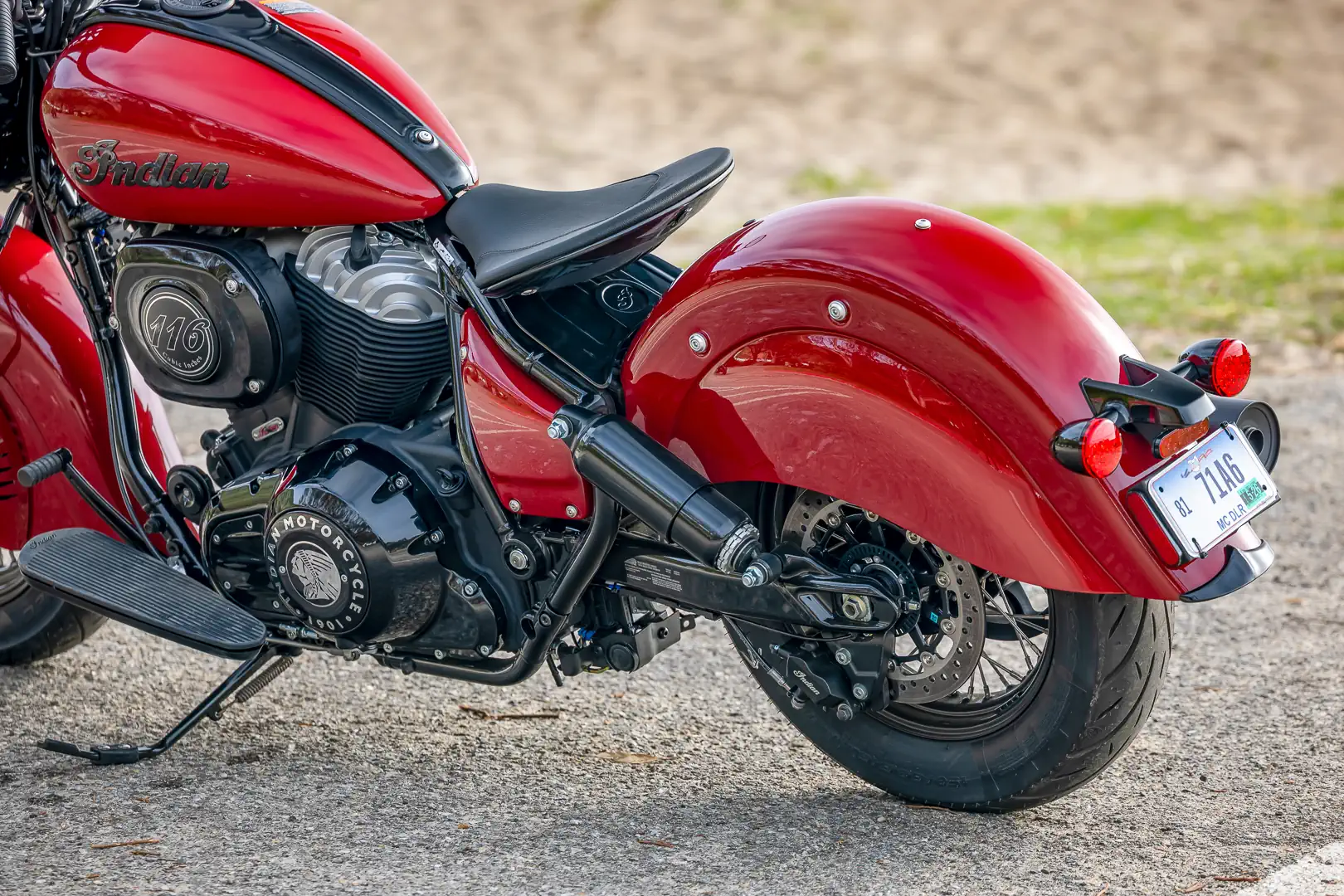
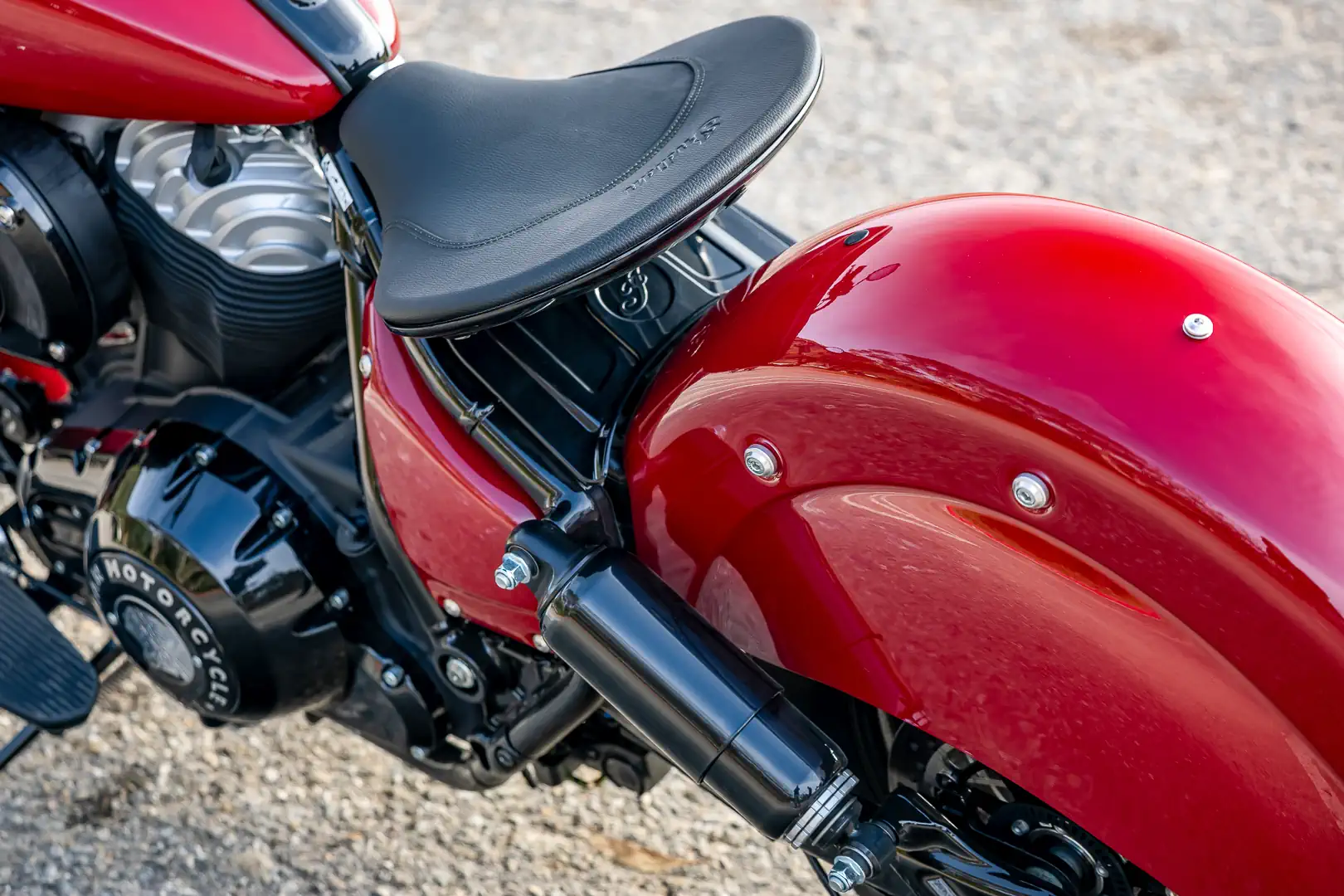
Classic styling cues are executed tastefully. The design centers around hallmark Indian Motorcycle elements drawn from Chiefs released during the Atomic Age, including deeply valanced fenders, a narrow rear subframe, and wire-spoke wheels. A lit headdress ornament crowns the front fender, though the full-regalia tri-headlight design seen in some prewar Chiefs is what this scribe would have preferred. What is perfectly accurate is the solo seat and relaxed pulled-back handlebar bend contributing to the upright, relaxed riding position while also nailing the classic Chief silhouette. The engine’s visual treatment reinforces the bike’s period inspiration, with non-machined black cylinders, silver-painted heads, and gleaming pushrod tubes recalling the raw finishes of post-war motorcycles, separating it from more contemporary-looking V-twins. The overall effect is less retro costume and more faithful reinterpretation.
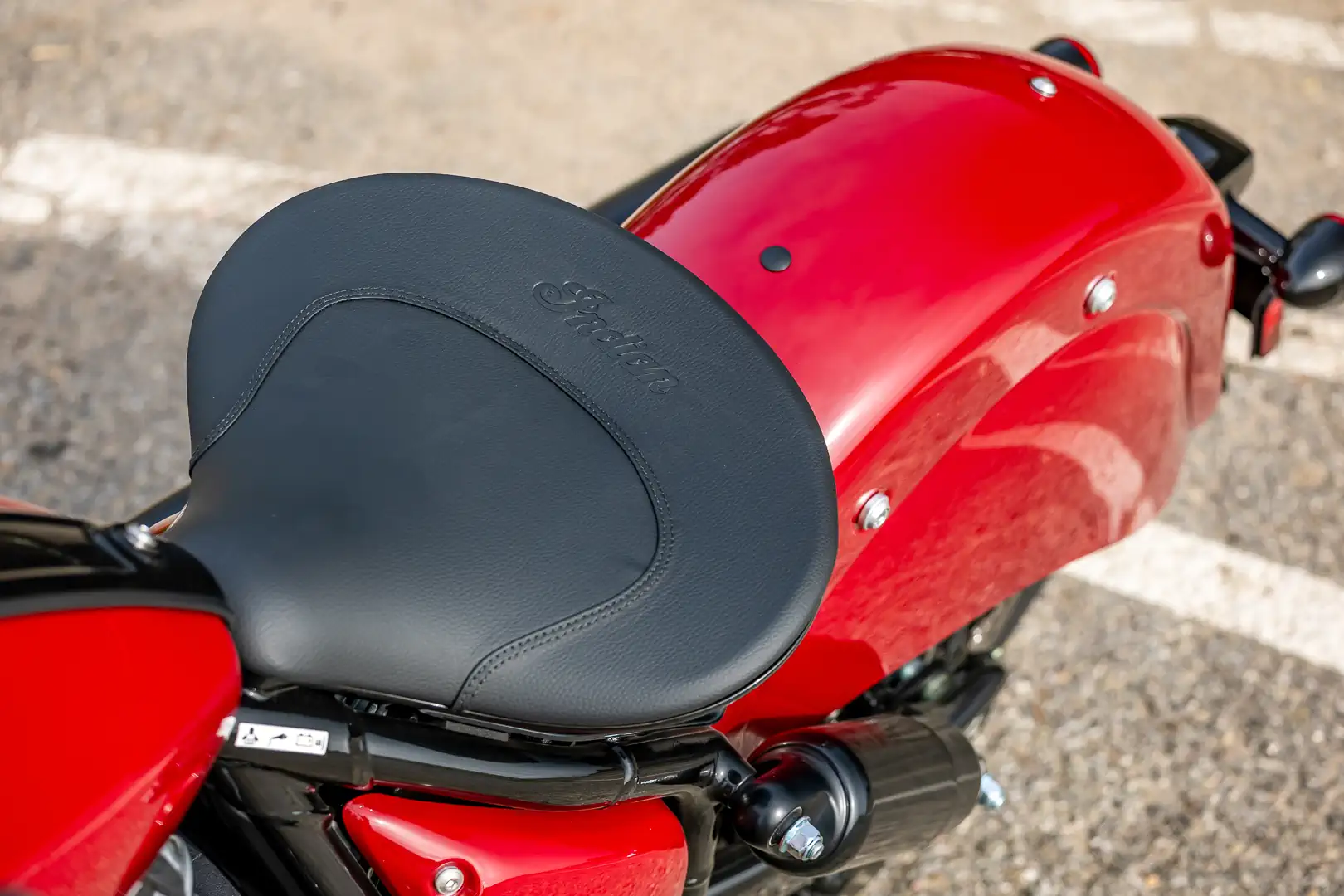
The riding position is pure cruiser, built for long hours at a leisurely pace. A wide handlebar, forward floorboards, and a deeply scalloped, floating solo saddle create an open, low-stress posture that doesn’t abuse your lower back. While many readers may see the seat as something motorcycle designers have dialed in long ago, Director of Product Design at Indian Motorcycle, Ola Stenegärd, hammered home this point during the design phase. The team hemmed and hawed over newer iterations, eventually reaching for an original Chief seat, realizing that it still worked perfectly. According to Stenegärd, “Butts haven’t changed all that much in the past 100 years,” and so the original shape lives on in today’s Chief Vintage. The floorboards offer generous foot placement options, which is useful when cornering clearance is explored to the limits.
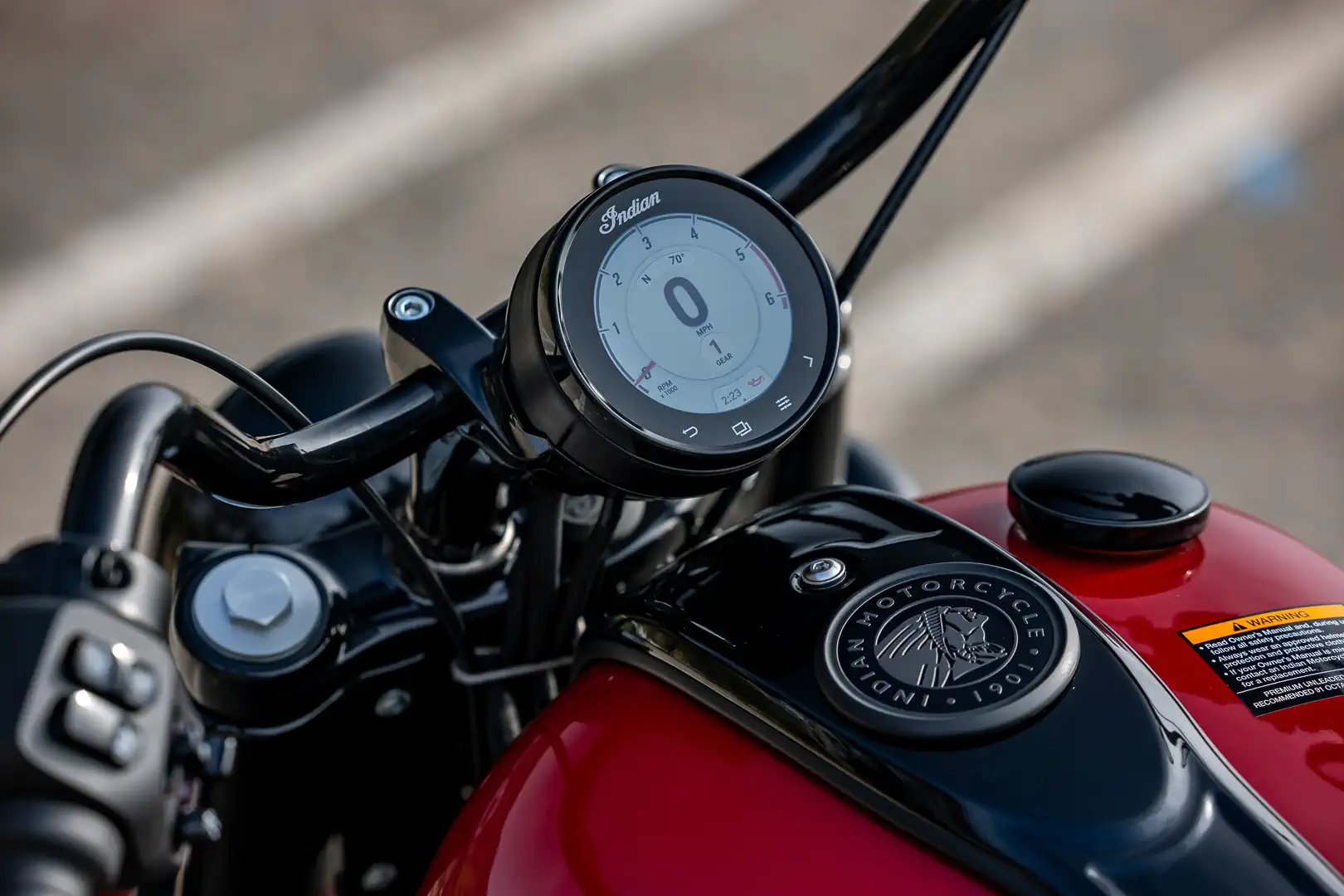
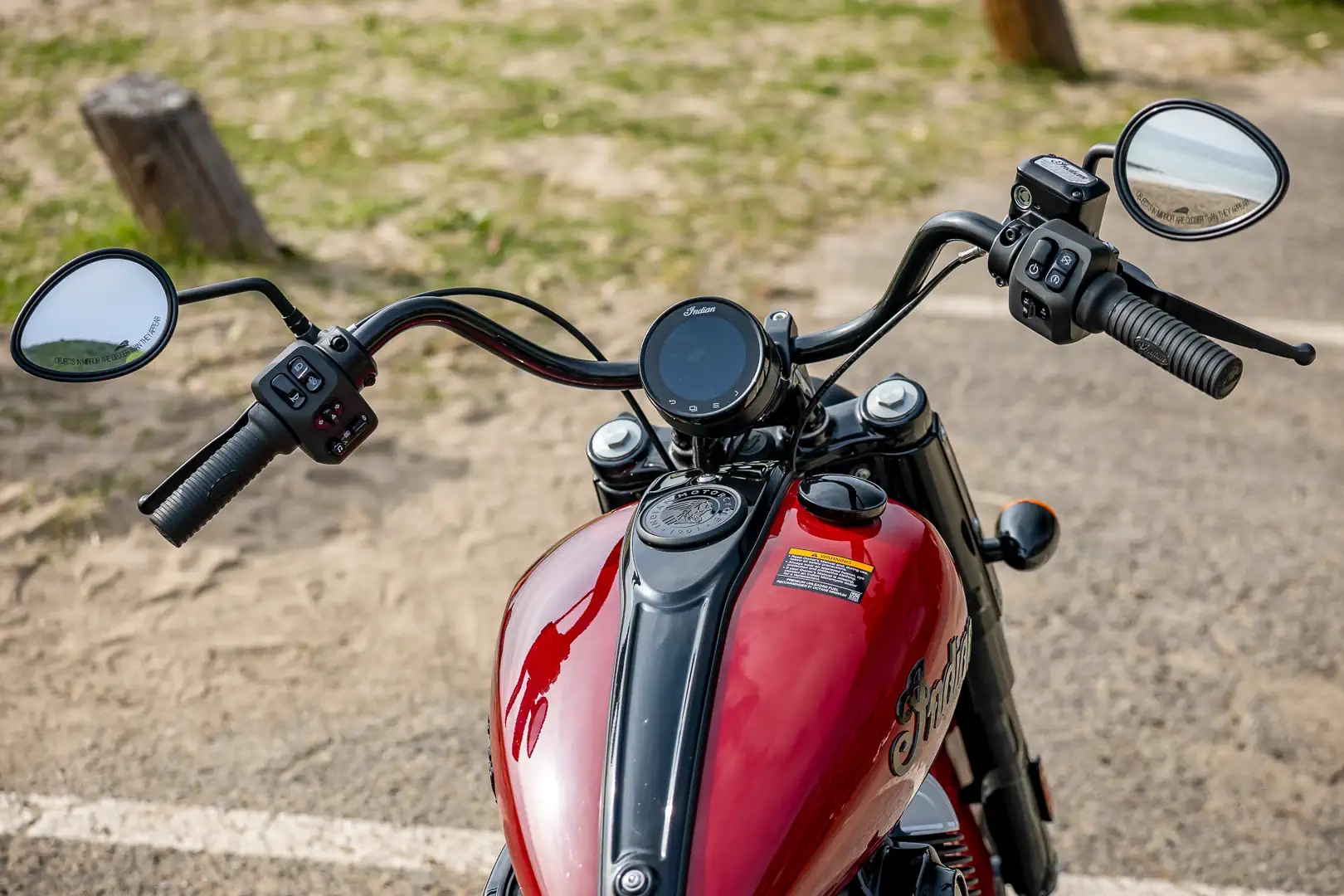
A four-inch TFT display and Ride Command bring full connectivity to a vintage silhouette. The usual four-inch round TFT display and Ride Command interface are standard on the Chief Vintage. However, as functional as it is, and seen across many of its models, with Bluetooth connectivity for every gadget under the sun, the brand still struggles with uncomfortably long initializing times upon startup. Engineers are aware of these complaints and claim a 25 percent shorter boot time, though we’re still raising a curious eyebrow every time we hit the “on” button. Much like the headlight speech, my vote would have favored analog and TFT clocks, not unlike what Triumph has done with its Modern Classics for an even more pointed retro take.
The updated Ride Command system does have some benefits, once it springs to life. App Enhanced Navigation allows riders to plan routes using smartphone mapping apps and transfer directions to the bike’s display via Bluetooth LE. The system supports music control, phone call management, message access, and connected navigation overlays such as weather and traffic, all managed through handlebar controls or the touchscreen interface.
Lighting and accessory options are offered. Available upgrades include the Pathfinder adaptive LED headlight, which adjusts the beam pattern during cornering for improved nighttime visibility. Comfort and touring accessories range from a quick-release low windshield to vinyl saddlebags offering more than five gallons of storage per side. Additional options, such as highway bars, floorboards, and passenger backrests, allow riders to tailor the Chief Vintage for light touring while maintaining its period-correct core look.
The 2026 Indian Chief Vintage is a pure styling exercise, and you know, what? That’s perfectly okay. There is absolutely nothing wrong with a gussied-up model platform, dressed to the nines in whatever throwback or futuristic garb a manufacturer may hint at. If you have that cultural cache at your disposal, then you’d be wise to use it. At its heart, the 2026 Indian Chief Vintage is about delivering the visual romance of mid-century motorcycling Americana without having to put up with mid-century problems. Personally, fiddling with carbs, spark advance, and riding hardtails sounds torturous when the wholly modern Chief Vintage can scoot along a curvy road nicely. Strong torque, stable manners, and comfort stack up to something that reaches far beyond nostalgia. The difference here is that it does it authentically, while still considering the modern rider.
In our first segment this episode Don Williams tries out his first e-clutch motorcycle: the new Honda CB750 Hornet. The Honda 750 is already an excellent motorcycle in its own right; it’s fast, and it handles beautifully. So, does adding the E-Clutch system to an already fabulous motorcycle really make any difference, or is this just an engineering exercise for the sake of it? Don Williams explains how the system works, and whether the E-Clutch is actually an upgrade.
* * * * *
We’ve talked recently about the upcoming Biketoberfest in a few weeks time, and for sure it’s a great party and social event for motorcycle riders everywhere. But we don’t want to leave you with the impression that’s all it is. So Brian Bentley—born and raised in Daytona Beach—takes us through a sample itinerary of how you could spend your four days plus at Biketoberfest. Truth is, there are a ton of things to do in the October sunshine, and Brian’s example itinerary will give you a lot of ideas. And don’t forget: make sure you download the Biketoberfest mobile App from Apple or Google Play or visit www.biketoberfest.org.
* * * * *
In our second segment this episode Arthur Coldwells chats with Tony Bracalente, founder of Ryder-Gear. Tony is a Navy veteran and was a nuclear engineer on submarines; he’s also a frequent track rider and racer. He founded Ryder-Gear as a result of his own track riding needs, and after friends kept asking him to help them out with what they needed, he eventually started the company. Tony’s interesting background and story-telling ability gives some insight into what it takes to improve motorcycle safety both on the track, and on the street.
* * * * *
Here’s quick reminder to check out our monthly digital magazine. It’s filled with everything you want to read on motorcycling, including some things you’ve probably not seen elsewhere. It’s absolutely free and you will find it on the Apple App Store and of course on Google Play as well.
Don’t forget to leave us your comments on our social media—we’re on all the usual platforms at Ultimate Motorcycling. We love hearing your feedback… so good or bad, please let us know what you think. If there’s something you’d like us to cover, we’d love to hear those ideas too!
We use cookies and browser activity on this website
Functional
Always active
The technical storage or access is strictly necessary for the legitimate purpose of enabling the use of a specific service explicitly requested by the subscriber or user, or for the sole purpose of carrying out the transmission of a communication over an electronic communications network.
Preferences
The technical storage or access is necessary for the legitimate purpose of storing preferences that are not requested by the subscriber or user.
Statistics
The technical storage or access that is used exclusively for statistical purposes.The technical storage or access that is used exclusively for anonymous statistical purposes. Without a subpoena, voluntary compliance on the part of your Internet Service Provider, or additional records from a third party, information stored or retrieved for this purpose alone cannot usually be used to identify you.
Marketing
The technical storage or access is required to create user profiles to send advertising, or to track the user on a website or across several websites for similar marketing purposes.