

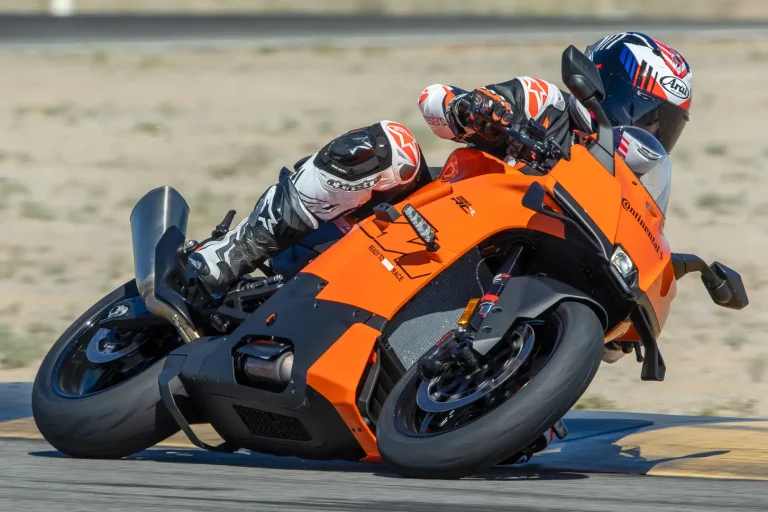
The hypersport tire segment is often the sport rider’s sweet spot, occupying an increasingly important space between mileage-focused sport-touring tires and dry-weather track-dedicated rubber. These jack-of-all-sporting-trades options aim to please on asphalt-oriented fronts, whether that’s commuting, canyon carving, or spinning laps at the racetrack. That’s exactly where the Continental ContiSportAttack 5 calls home.
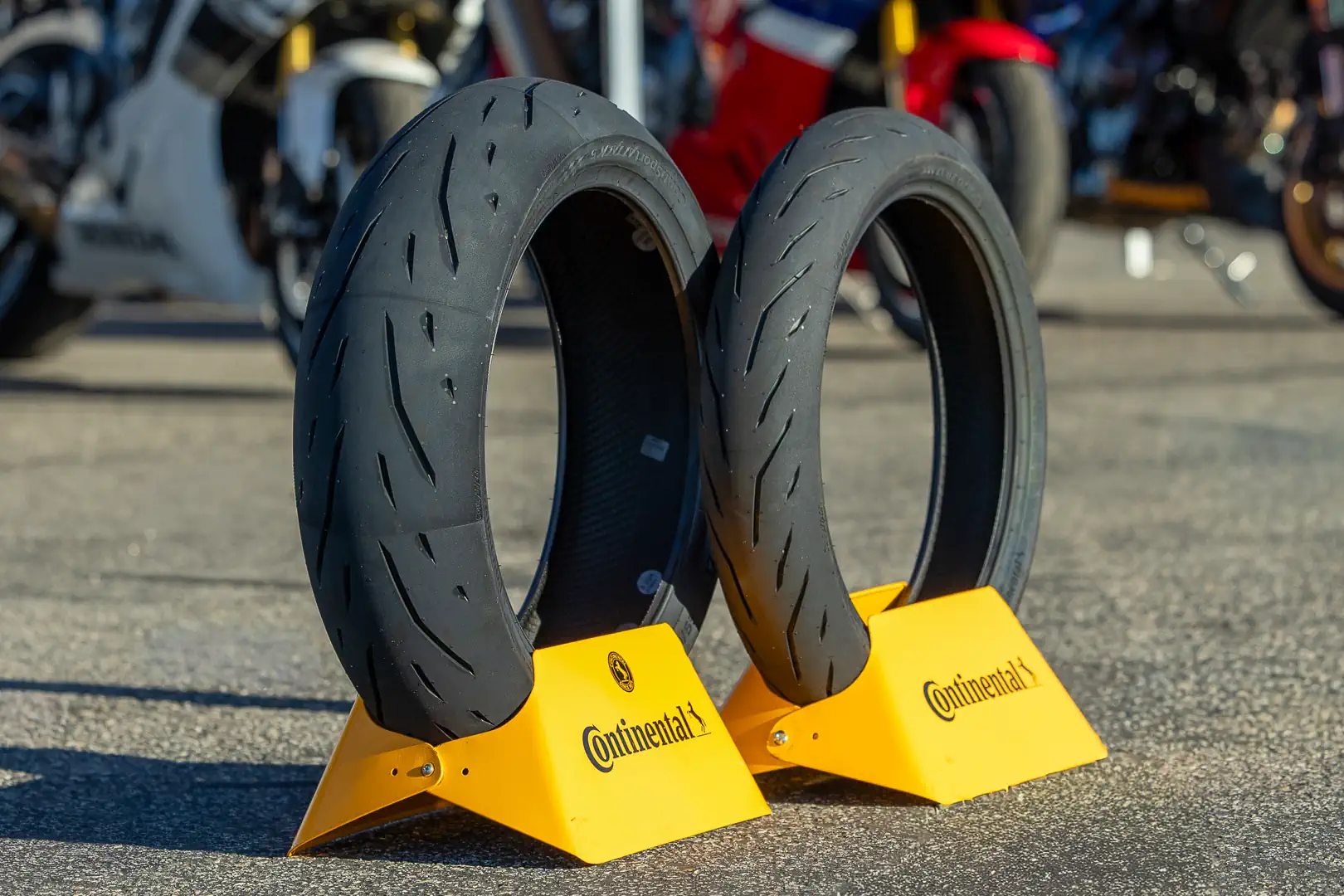
Continental‘s goals for the ContiSportAttack 5 are lofty, citing improvements over its predecessor in nearly every area: faster warm-up, improved dry and wet grip, better mileage, and a wider operating temperature range. We traveled to Chuckwalla Valley Raceway in Desert Center, California, to find out how well the marketing claims stack up when on the racetrack. As this was a track-only test, we’ll focus on peak dry performance, leaving wet-weather and mileage testing for another day.
First, let’s examine where the new ContiSportAttack 5 sits in Continental’s overall street tire lineup. At the raciest end of the brand’s treaded-tire spectrum is the ContiRaceAttack 2, a DOT-compliant race tire, available in soft and medium compounds that require tire warmers for track use and track-specific tire pressures. Bumping down one rung, we have the ContiRaceAttack 2 Street, with its more road-oriented rubber compounds, though Continental still recommends tire warmers and lower pressures on track. Taking another step toward the street is the ContiSportAttack 5, offering superior wet performance and mileage while still delivering high grip levels inspired by the track-specialized models above. The CSA5 is a no-fuss alternative designed expressly to avoid tire warmers, with OEM tire pressures in mind. Conti describes its CSA5 as an 80/20 street/track product, though its high grip levels at Chuckwalla suggest the split is probably conservative.
The German manufacturer enters its almost entirely revamped fifth-generation SportAttack offering against a stacked field. The Bridgestone Battlax Hypersport S23, with its all-around versatility, is the OE choice for several models these days. Meanwhile, the Pirelli Diablo Rosso IV Corsa uses ultra-sticky dry-weather Pirelli Diablo Supercorsa SP rubber compounds on its shoulders, with great effect. Michelin’s Power 6 is another contender, citing wet-weather confidence blended with dry performance. Dunlop comes in with its Sportmax Q5S, which aggressively leans into spirited canyon and track riding. All of these competitors offer their own unique spin on high-performance street rubber capable of hitting the track, and a distinct tire design philosophy.
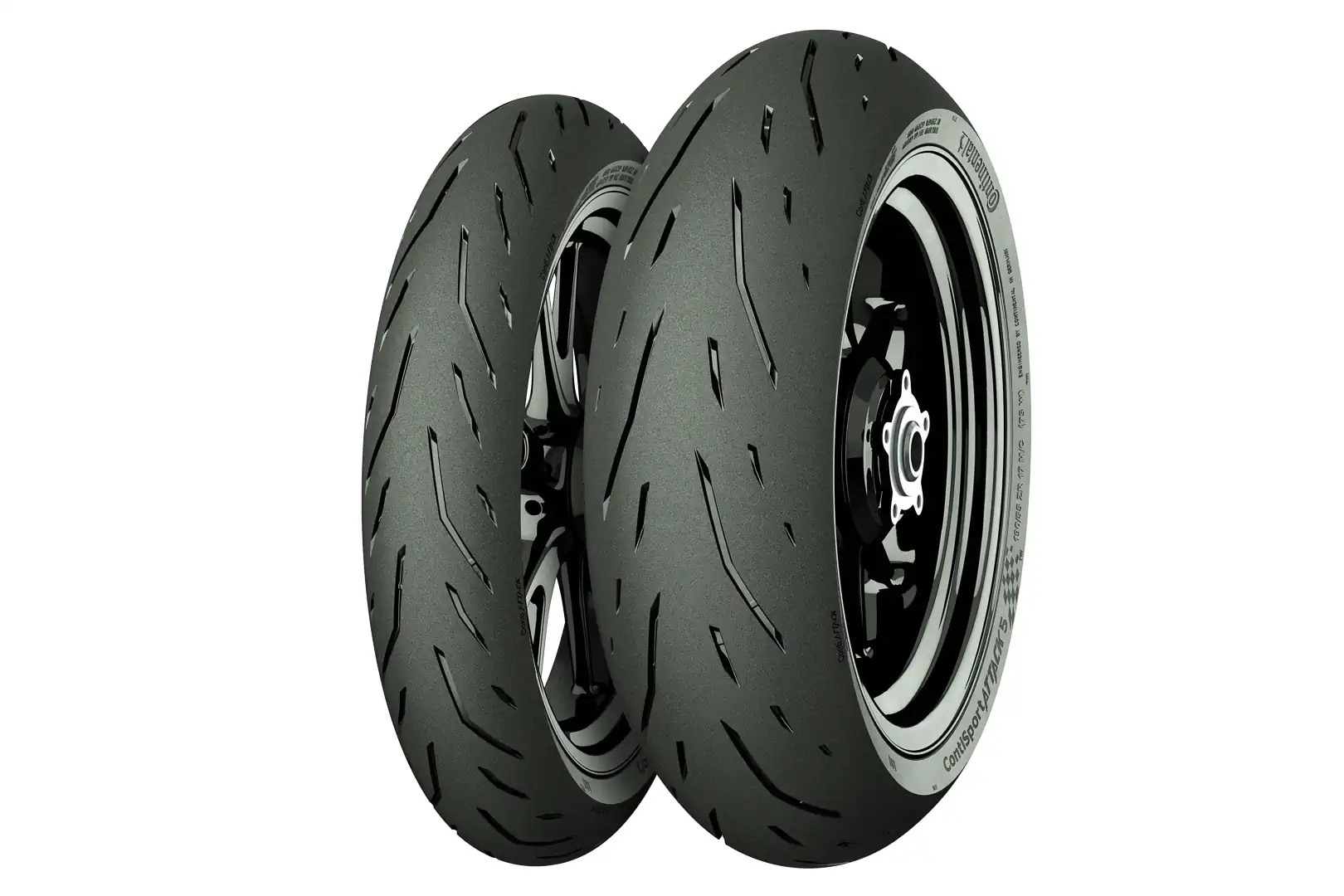
The ContiSportAttack 5 is aimed at middleweight and liter-class machines with the following sizes: 120/70 ZR 17 front, and four rear options spanning 160/60, 180/55, 190/55, and 200/55 ZR 17. Pricing carries over from the CSA4, starting at $280 for the 120/70 ZR 17 front. Meanwhile, rears’ prices range from $356 to $421, depending on size.
What’s new on the Continental ContiSportAttack 5?
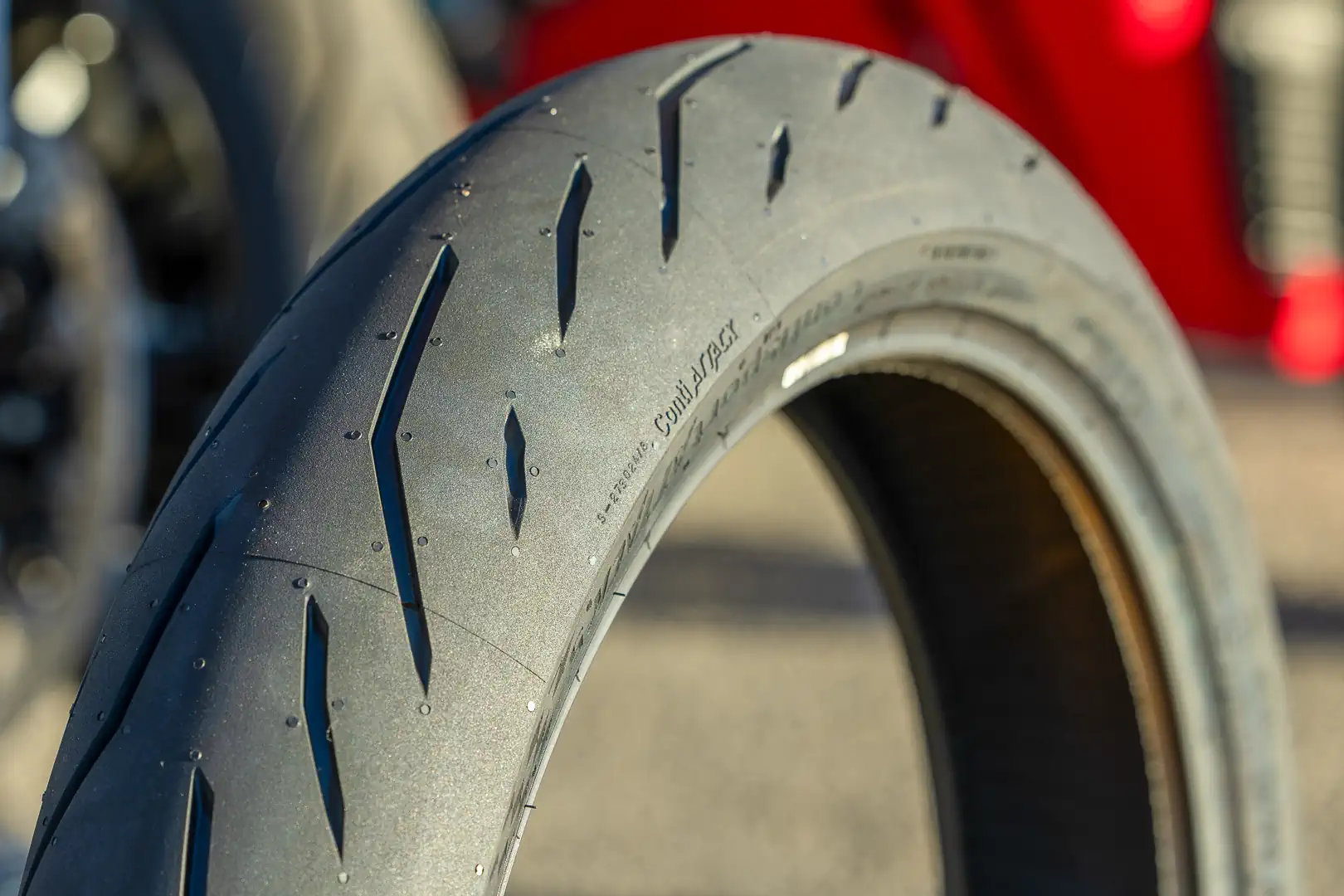
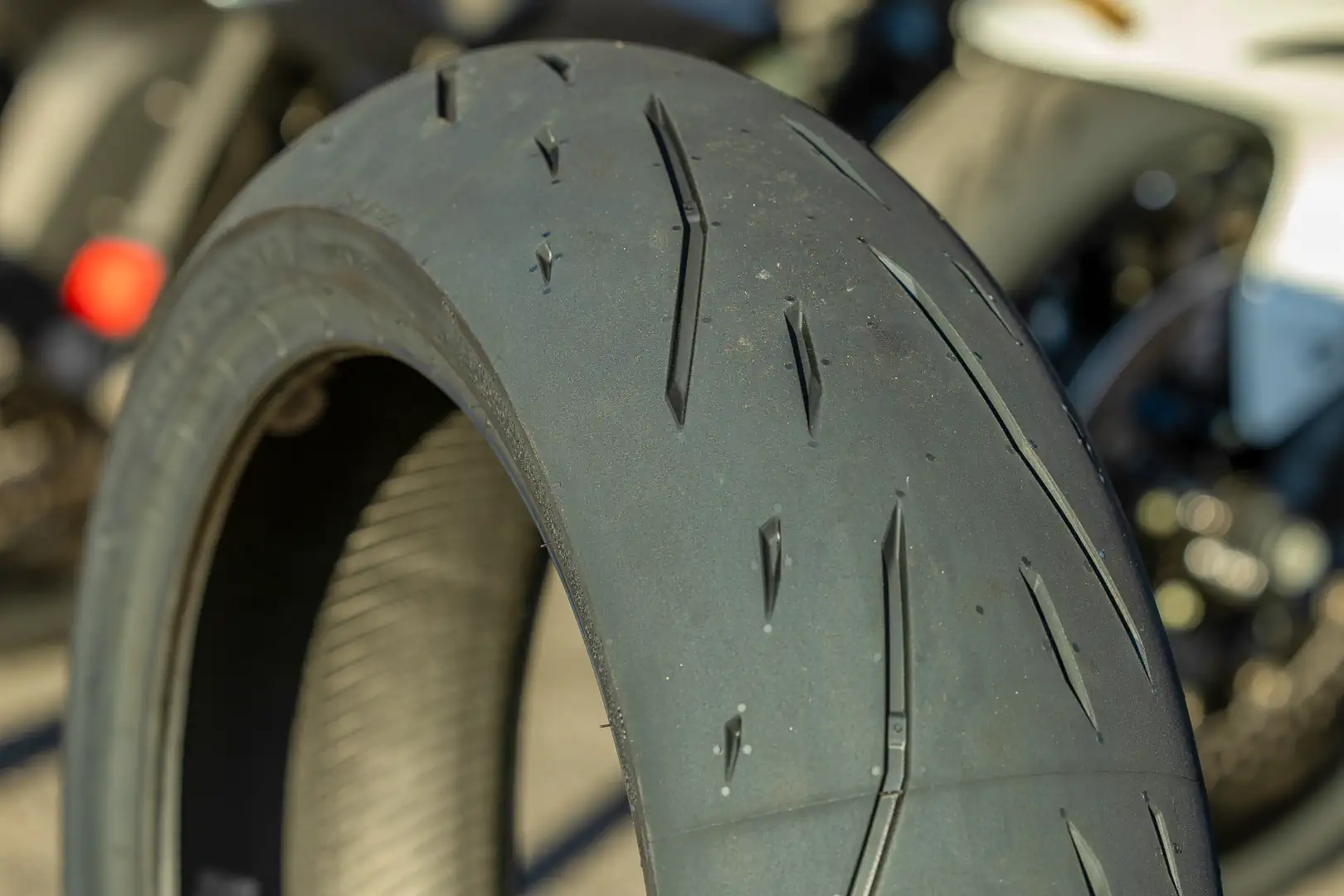
Every iteration of the ContiSportAttack since 2007 has introduced a meaningful technical step. The CSA5’s headline addition is the MultiZoneBelt, a variable-density steel belt construction that applies different winding densities across the tire’s width. In the center, tightly wound steel provides a stiff, stable platform for support during acceleration and braking. In the shoulder zones, the wiring opens up, creating a softer, more flexible region that enlarges the contact patch when the bike is cranked over. The transition between those zones is designed to be progressive rather than sudden, enabling agile turn-in without sacrificing the planted feel riders need under load.
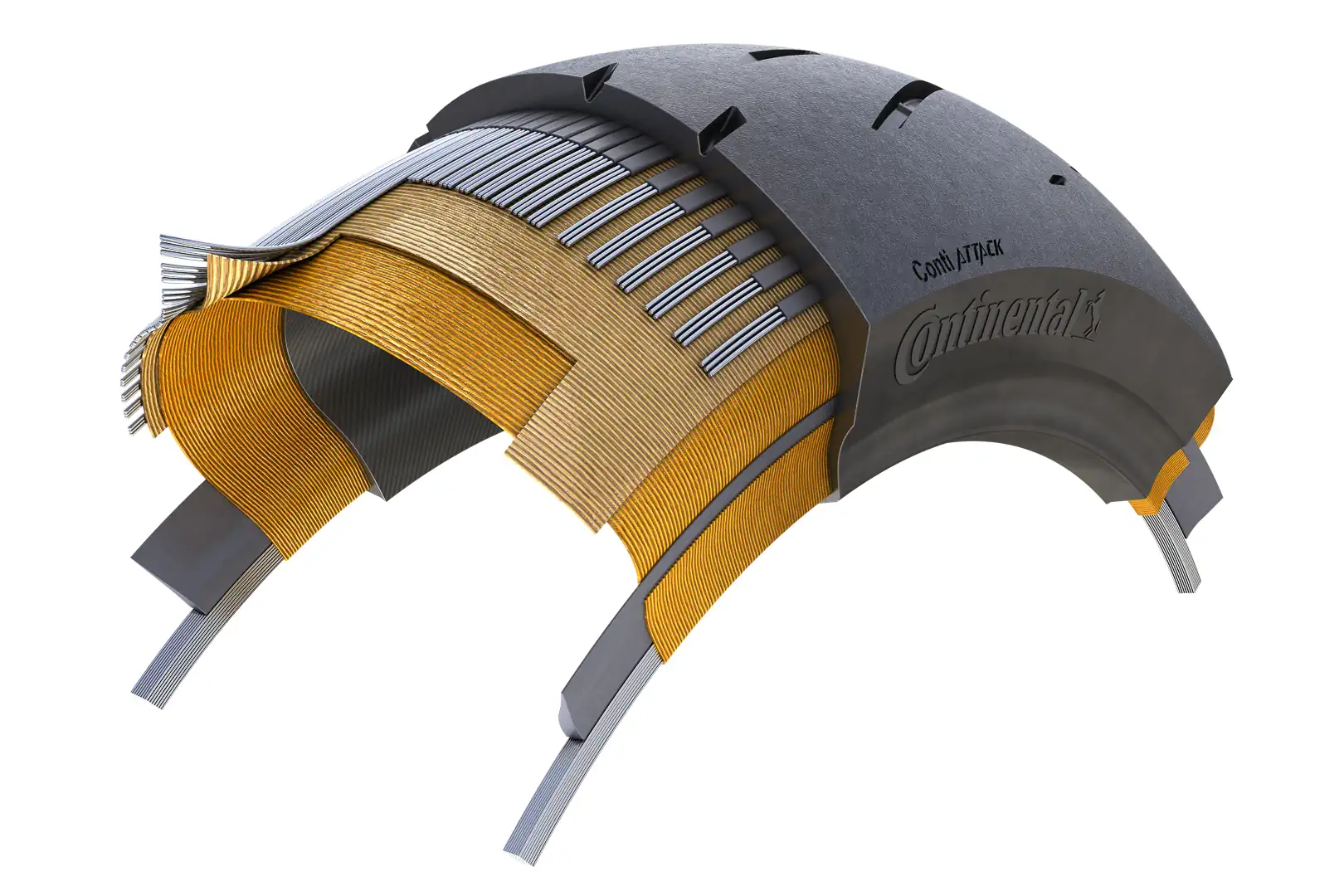
Supporting the MultiZoneBelt is a new breaker geometry, which Continental describes as creating a softer carcass and additional damping. The rear tire also receives new carcass material to reduce overall stiffness and improve feel.
The updated single-compound “BlackChili” rubber brings a few things to the table: increased silica content for wet traction, a new “stickier” resin mixture to enhance overall grip, and encourages additional flex to further improve warm-up times. Tread depth has also been increased over the CSA4 due to the rubber being thicker, which brand reps say helps maintain stable temperatures and improve mileage. Interestingly, despite the additional rubber, Continental managed to keep the CSA5’s weight nearly identical to its predecessor through construction refinements.
Still in play is Conti’s unique single-compound MultiGrip rubber technology, which creates harder, mileage-focused center sections and softer, edge-grip-focused shoulders on the same tire by curing areas at different rates. It’s a nifty solution that results in a uniform feel when exploring the tire’s radius. More importantly, it avoids any unsettling squirming sensations that multi-compound tires with clear-cut compound boundaries can display.
Continental staff suggested riders can expect roughly 3400 miles from a set of CSA5s under ideal conditions, putting it in line with competition in this sporting space. However, tire companies are increasingly wary of citing mileage. Tire wear rate depends on numerous factors, including displacement, performance, asphalt type, riding conditions, psi, suspension settings, riding style, and many others that are difficult to account for. Suffice to say, your mileage may vary (YMMV), and less than 2000 miles isn’t unusual when dealing with rubber in this realm.
TractionSkin is another returning Continental technology. It leaves a visible texture on a new tire and effectively eliminates the cautious break-in period that comes with competitors’ fresh rubber. Sure, it’s a minor detail that applies only to the first few miles of a tire, yet it’s worth mentioning, as Continentals can be put to work immediately.
On Track: Warm-up and First Impressions
Desert Center lived up to its name, greeting us with 70 degrees on our March morning, and saw temperatures climbing into the 90s by day’s end. That balmy start certainly helped put a firm stamp of approval on rapid warm-up claims. The CSA5 communicates grip within a handful of turns and is enough to make the foolhardy feel confident in getting their knees down. We’d still advise a measured first lap before dialing in lean angles, despite the window between cold and hot operating temps being impressively narrow on a warm day.
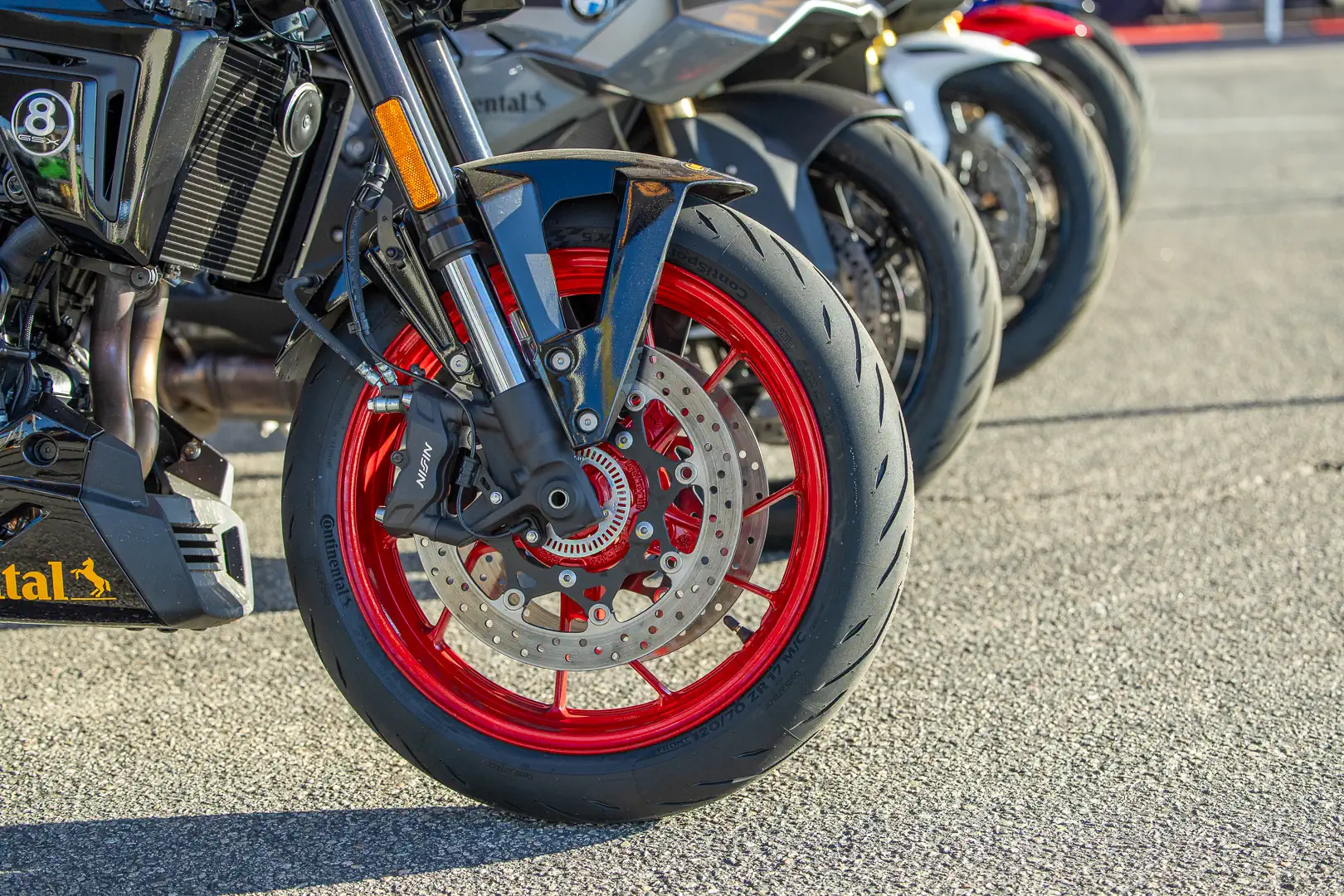
Continental points to a few particular design changes that make this happen: pliability at cooler temperatures, deeper tread, and the new pattern’s outer cuts, which allow the tire to flex and generate heat faster. Once a bit of heat was in the front and rear, the tires remained consistent from that point forward, without a mid-session shift in character.
Historically, Conti has leaned into firm carcass construction to maximize feedback. With the CSA5, the brand is taking a mild step toward the middle. Riders familiar with Dunlop or Michelin’s similarly structured approach will recognize the DNA here. Arguably, Continental is edging toward the balanced territory that Bridgestone typically inhabits, though still on the firmer end of the spectrum. Note that Conti never flirts with Pirelli’s characteristic soft carcass designs.
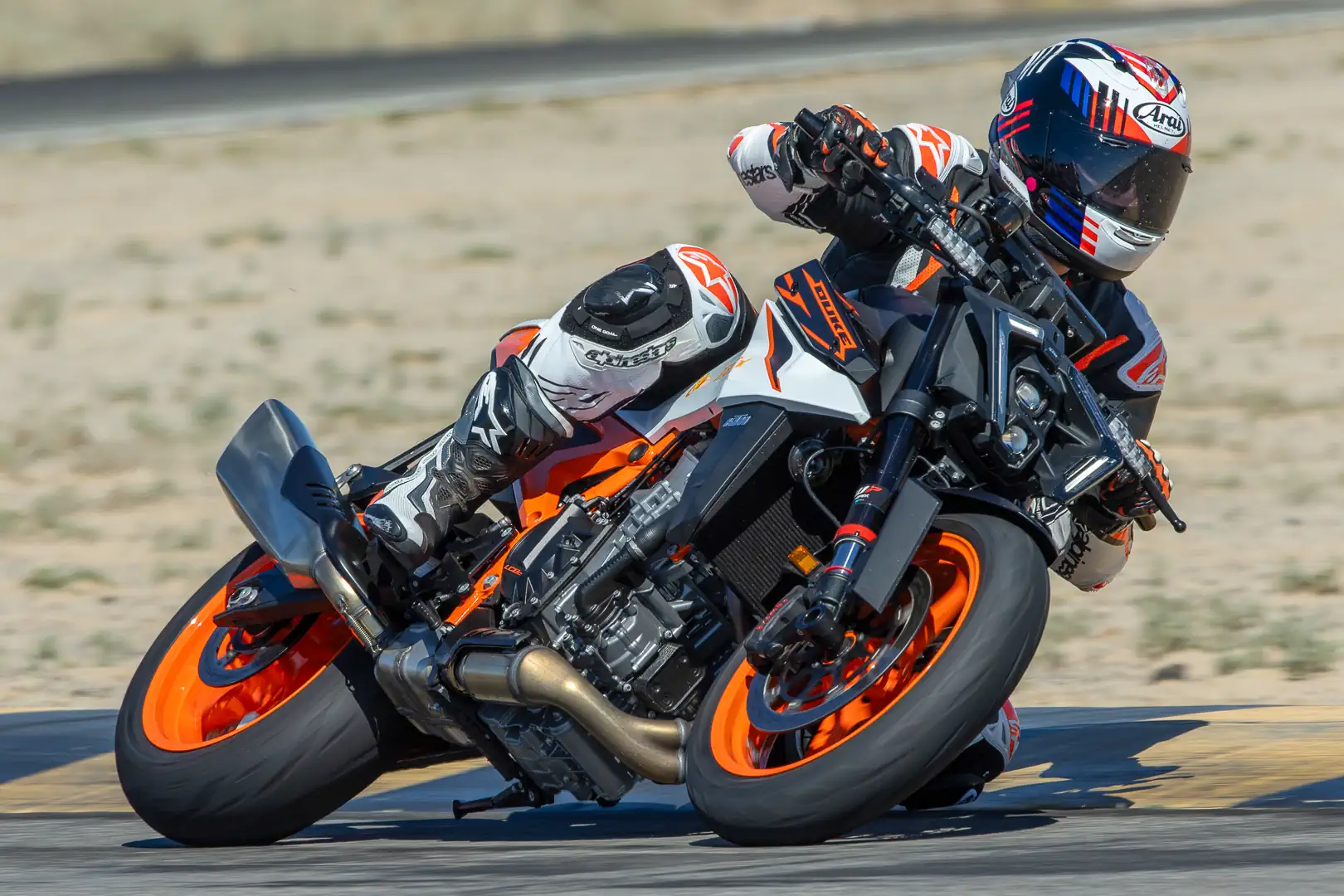
In practice, the front tire is stout regardless of what bike you slap it on. Whether you’re trailing the brakes into Chuckwalla’s Turn 16 finale, or railing through the sweeping Turn 4/5 complex, the front produces clear, readable feedback through the bars with trackday-ready edge grip. When the front encounters tar patches, surface variation, or an overzealous rider at the helm, the CSA5 gives unambiguous communication.
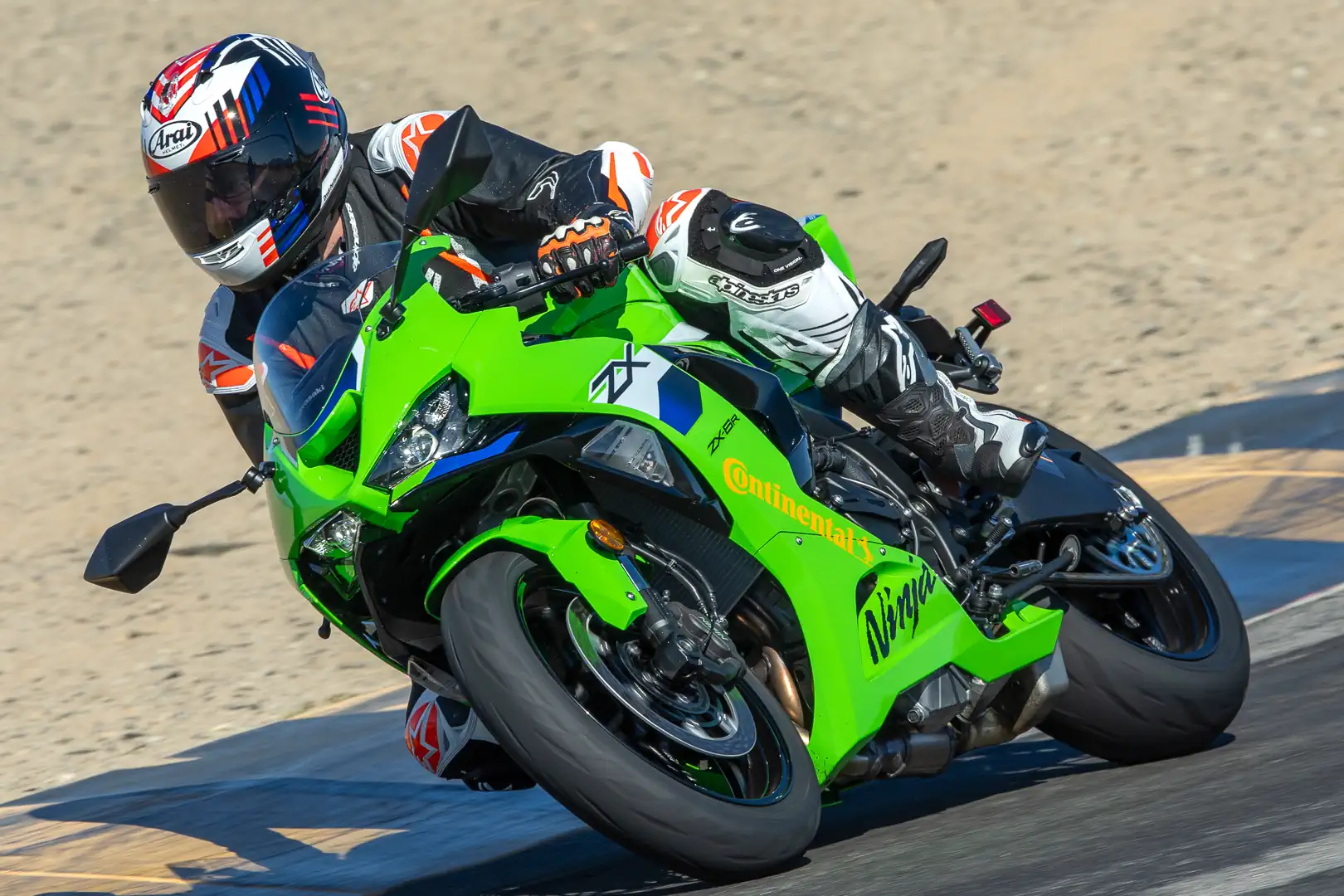
The MultiZoneBelt’s influence is felt in the tire’s behavior as the lean angle increases. There is no jarring transition from center to shoulder, which can occur on some multi-compound tires. Instead, the tire loads progressively, maintaining its shape without the squirm that can occur when a softer-carcass tire deforms under stress. Through Turn 11, the long, fast chicane Chuckwalla regulars call The Slide, the front remained planted and easy to exploit.
The rear tells a similar story. Whether upright and driving hard or cranked over and trusting the shoulder compound, the ContiSportAttack 5s behaved consistently and predictably.

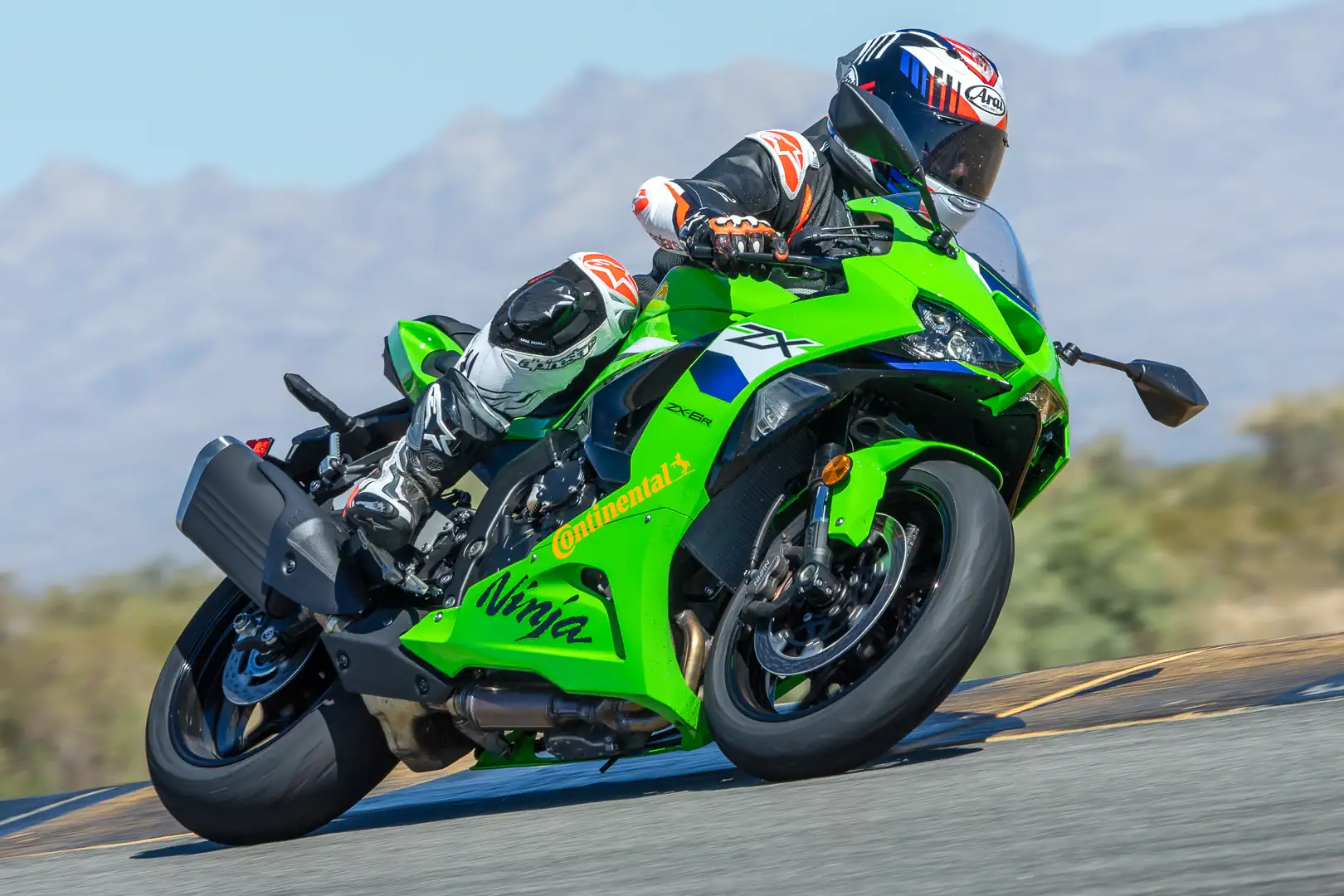
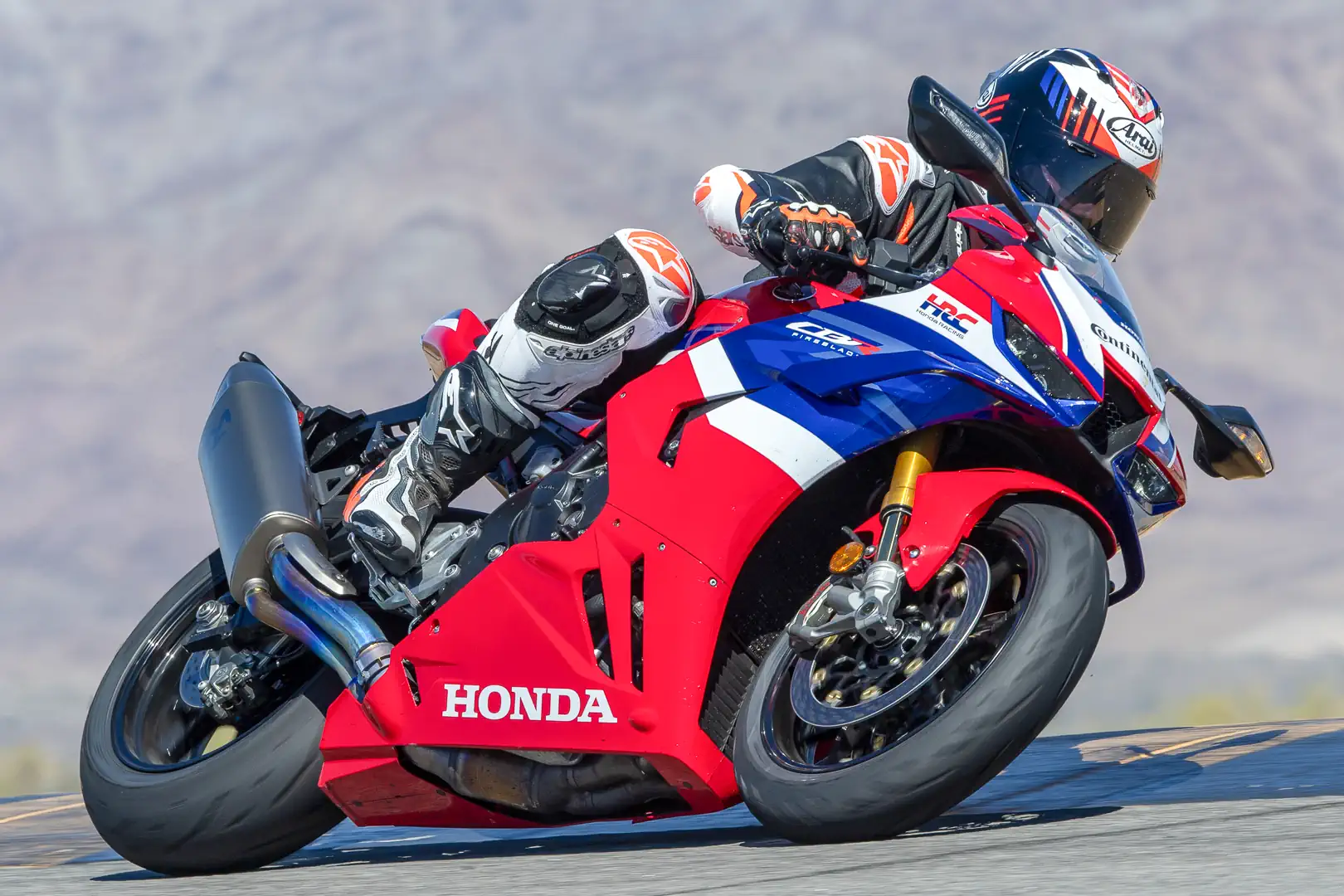
The range of middleweight and light-class machinery on hand spanned the full spectrum of the CSA5’s intended audience. The Suzuki GSX-8TT represented the middleweight parallel-twin contingent, and the tires had no difficulty keeping pace with that bike’s modest output. The Kawasaki Ninja ZX-6R and Honda CBR600RR supersports are good matches as well: plenty of grip for a trackday. Meanwhile, the punchier KTM 990 RC R and 990 Duke R raised the ante. Their torquier twins could tease out squirms during high-lean hard-driving exits, yet the CSA5 rear performed admirably in experienced hands. The 115-130ish horsepower range provides ample front and rear grip, regardless of skill level.
The Honda CBR1000RR-R Fireblade SP and BMW S 1000 RR were where street-first positioning came into play. To be fair, a modern superbike asks a lot of any tire. During the cooler morning sessions, the rear hooked up cleanly with good drive. As the day warmed and lap counts grew, movement under hard acceleration increased, particularly when squaring off corners and applying aggressive point-and-shoot riding techniques.
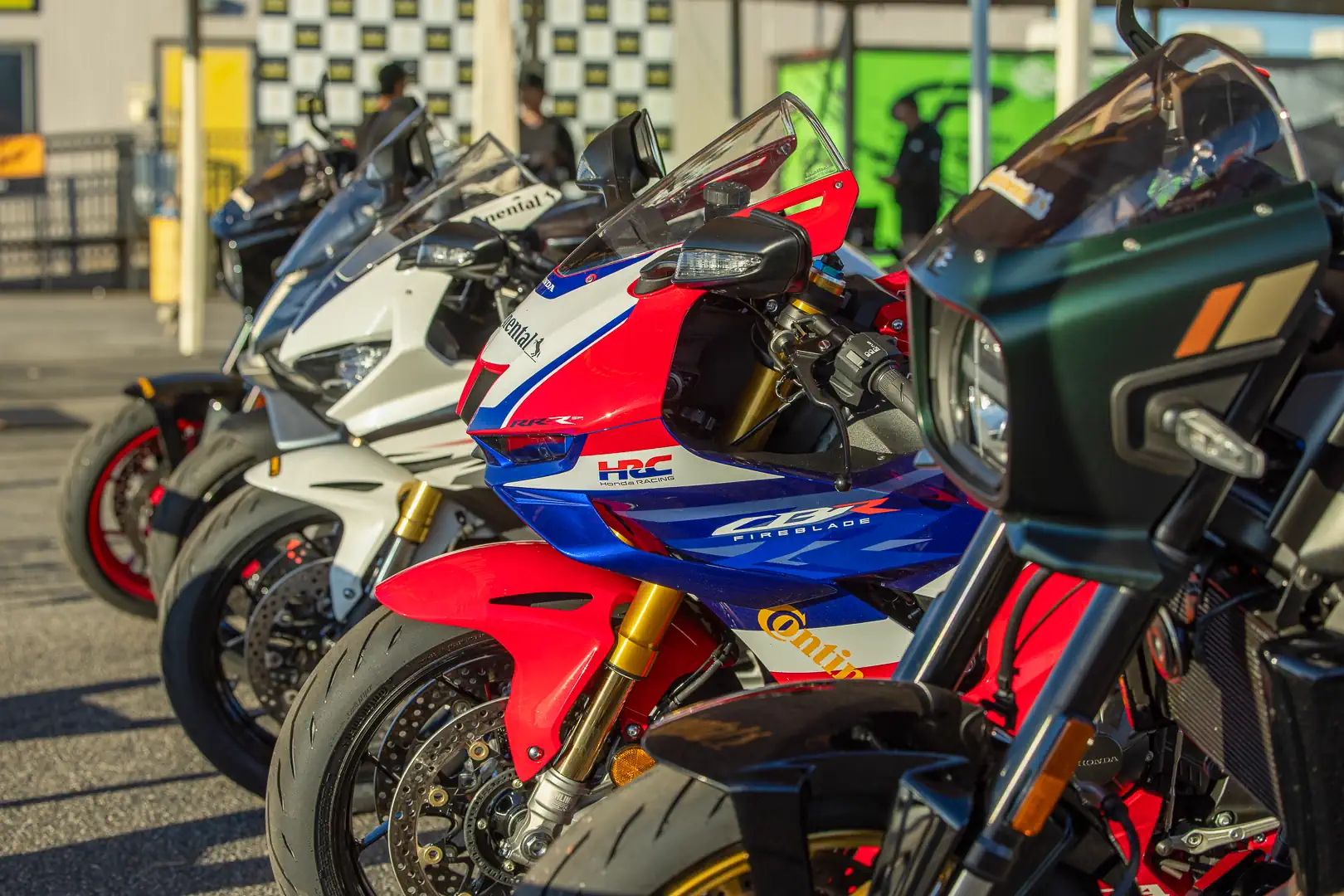
While the redesigned rear carcass provides additional compliance that is appreciated at lean, under the sustained abuse of a liter-class inline-four in 90-degree heat, the CSA5 reminds more experienced riders that we aren’t dealing with racing-slick-level grip. Still, there’s a lot of grip on tap, especially for a “street tire.” Crucially, any slides or spins initiated by faster riders are handled well because the CSA5 remains communicative.
One distinctly unorthodox element of the CSA5 emerged during briefings with Continental’s technical staff. Our cold racetrack tire pressures on all bikes, regardless of displacement, were 32 psi front and 39 psi rear. Although we have no qualms with the front psi, running 39 psi in the rear at the racetrack on most tires could invite chatter, accelerated wear, and reduced grip.
Typically, we lower psi on the track to manage tire pressures and increase contact. According to brand reps, these considerations are designed from the start. The MultiZoneBelt and revised rubber compounds are said to allow the tire to flex and create a solid footprint without relying on reduced psi. Continental’s representatives were equally direct, citing that the CSA5 is designed to work with higher OE-recommended tire pressures. Riders who prefer to experiment with lower pressures can still do so, though the engineering case for staying at street pressures is well made.
After our fleet of test bikes turned considerable laps throughout the day, wear across most of the lineup looked remarkably good, with lots of meat left for meaningful road miles. The test bikes that deviated from the higher OE pressures showed mildly increased wear, whereas those that stuck with the high pressures were far more uniform.
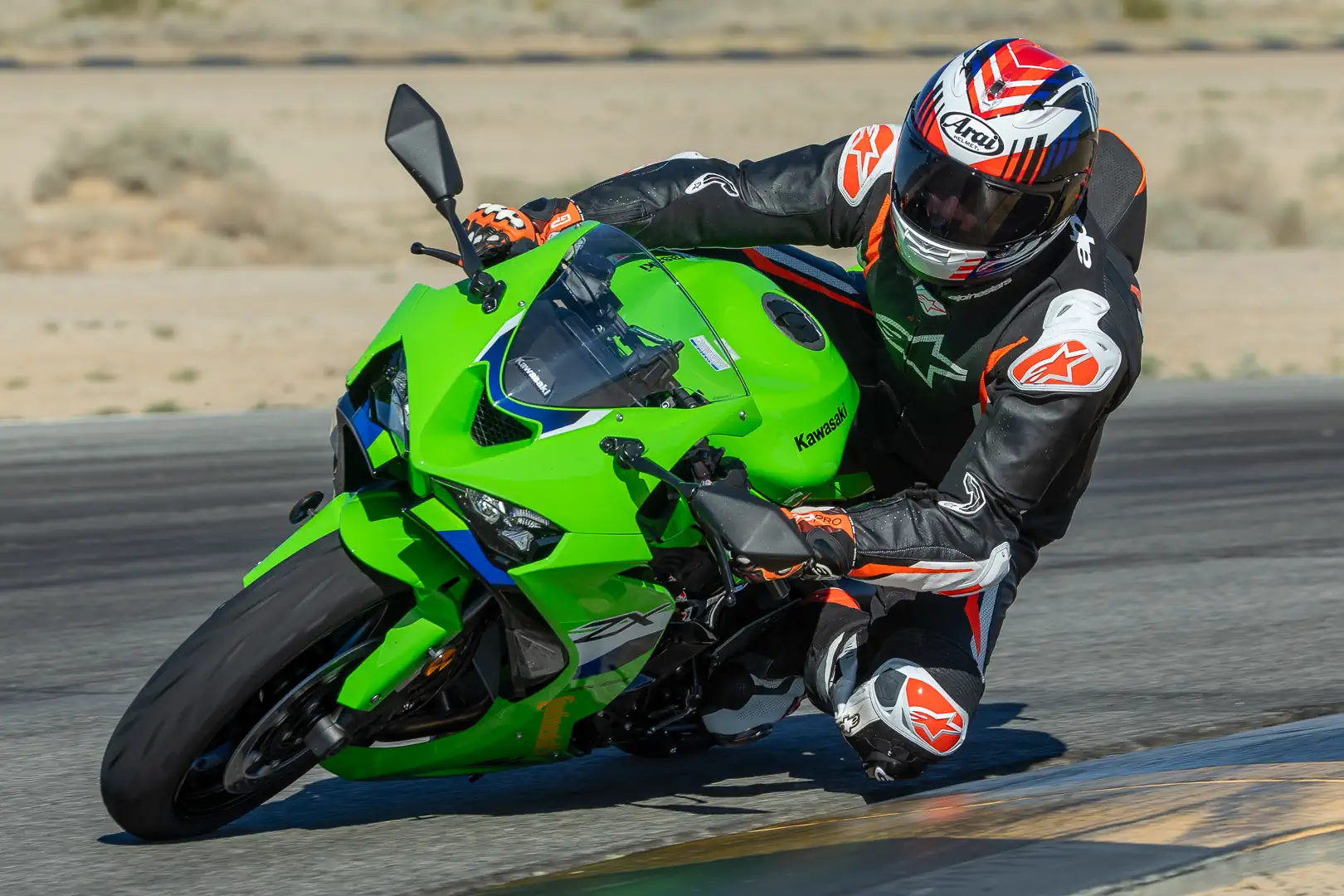
There is a direct trade-off inherent in this category. The grip levels offered in the CSA5 cannot coexist with the mileage of a sport-touring or touring tire. If you’re of the sporting mindset, that is a worthwhile exchange. It’s worth reiterating that we did not have the opportunity to ride the CSA5 on public roads. All impressions are drawn from a full day of track testing at Chuckwalla Valley Raceway aboard a broad range of motorcycles from sportbikes to superbikes. Street behavior, particularly the compound’s response to cold, wet pavement in real-world conditions, remains to be evaluated in a follow-up test.
Verdict: Black, Round, and Sticky
The ContiSportAttack 5 is a highly capable sport tire that delivers on its core promises. Warm-up is genuinely quick. Feedback is clear and consistent. The MultiZoneBelt’s variable-stiffness design works as intended, providing stability where you need it and compliance when at lean. Importantly, there’s a serious amount of grip on hand in the dry. As for the mileage and wet-weather claims, that will have to wait for a future test.
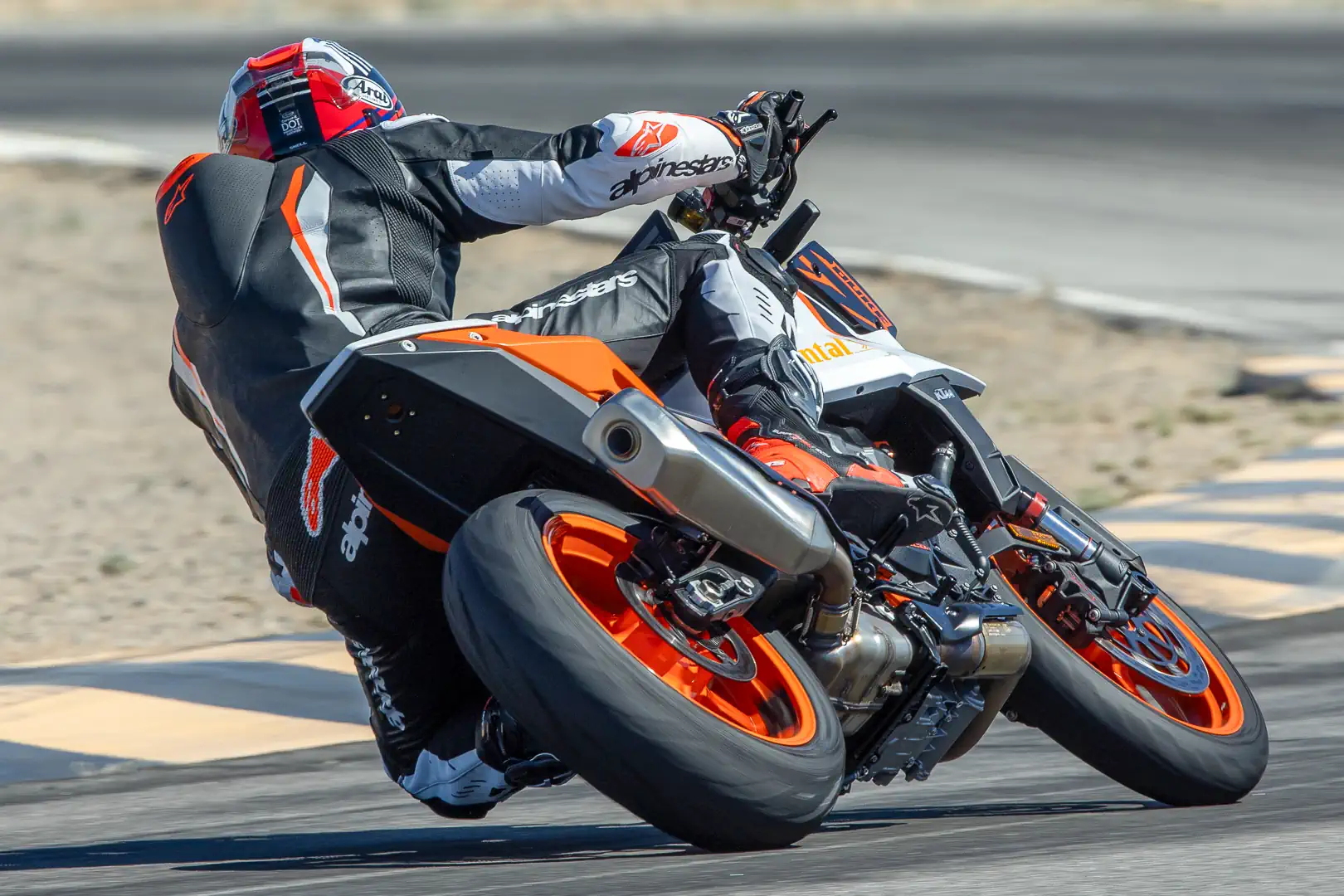
What it offers is a distinctly Germanic balance: structured, informative, capable, and honest about its purpose. For riders who spend most of their time on canyon roads, yet want the option of a trackday without swapping rubber, worrying about finicky tire pressures, or messing with warmers, the Continental ContiSportAttack 5 makes a strong case.
