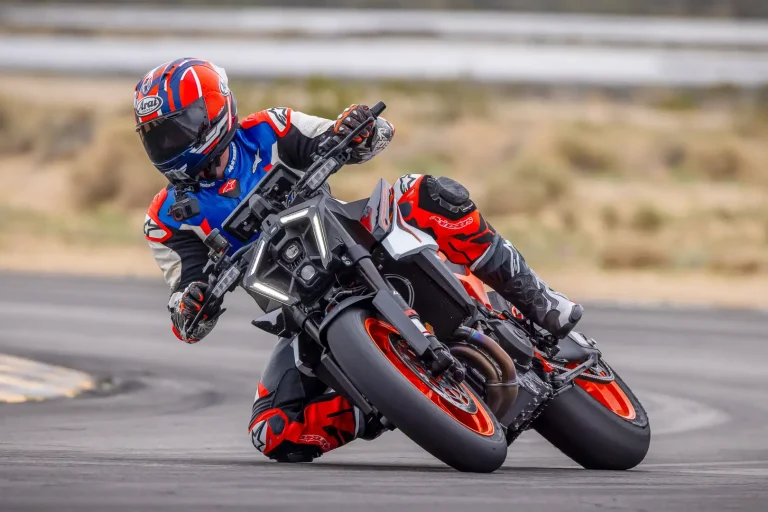
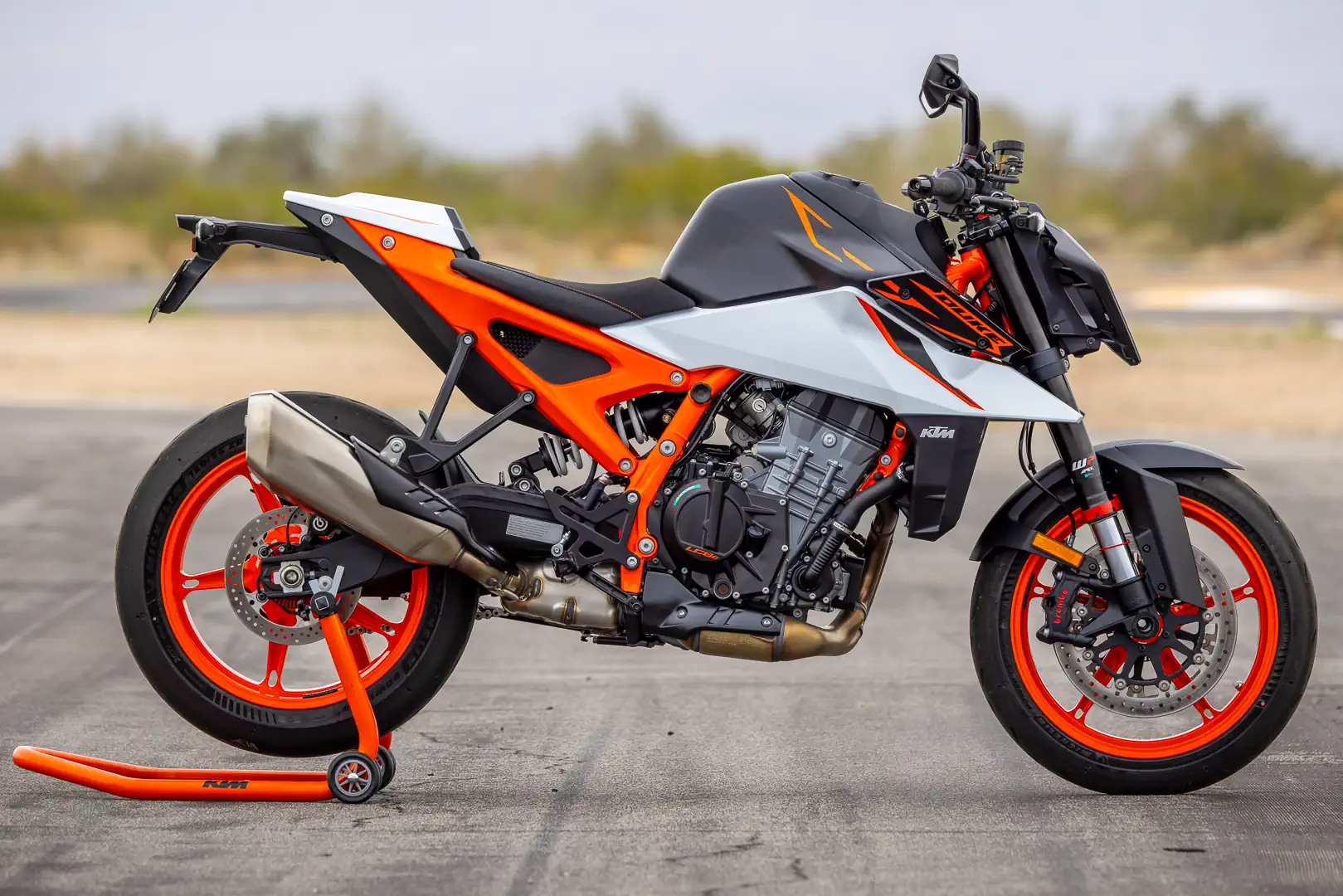
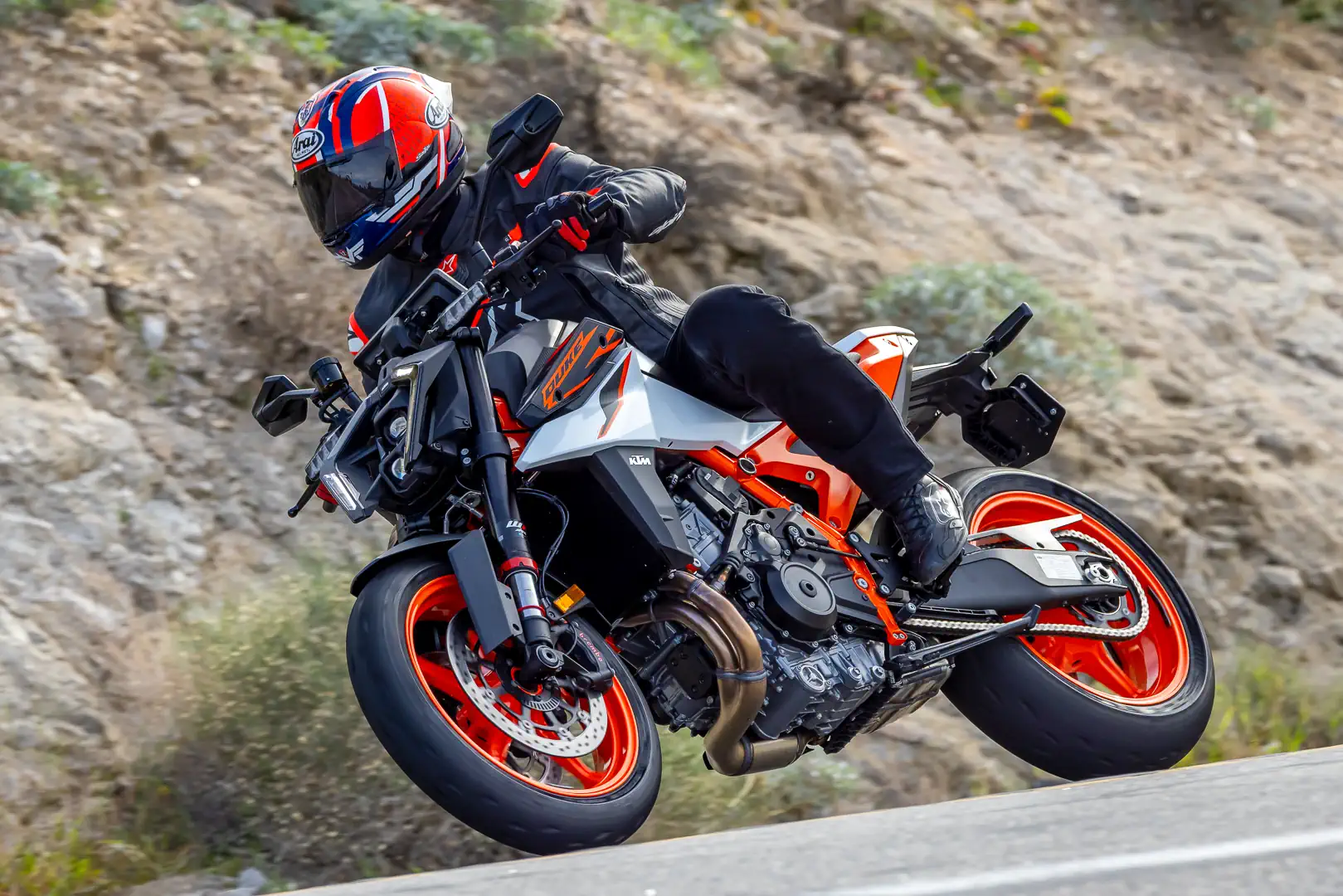
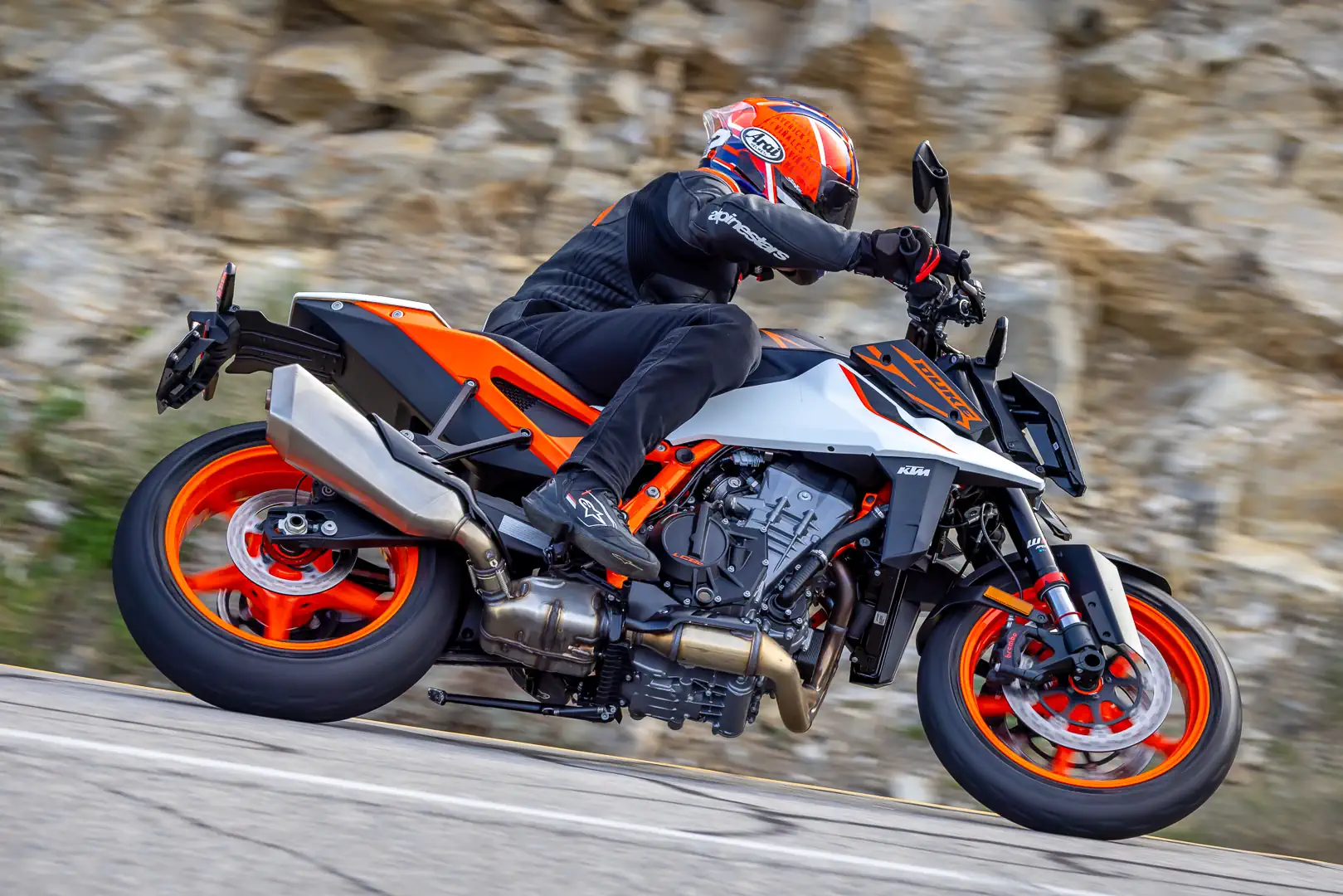
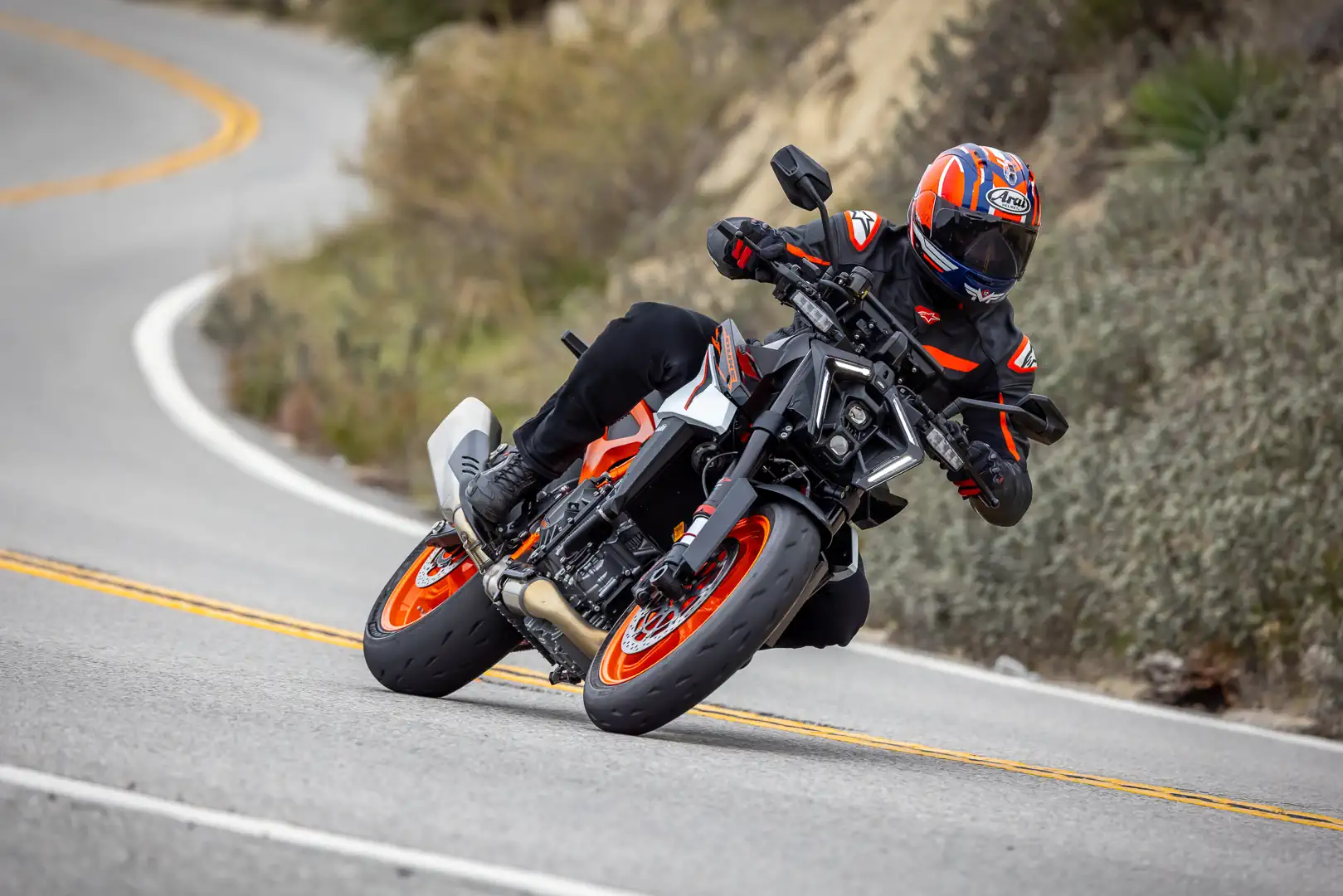
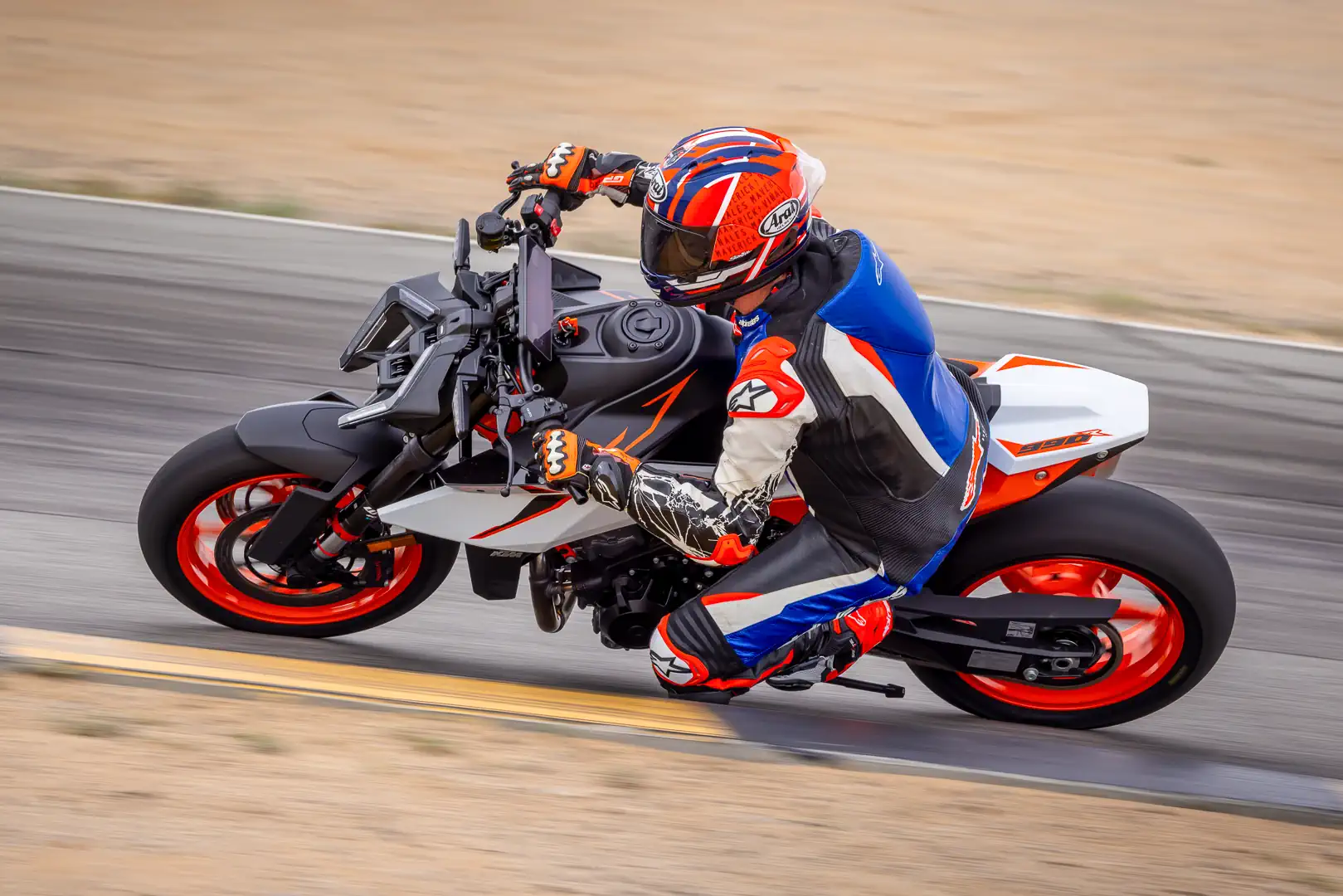
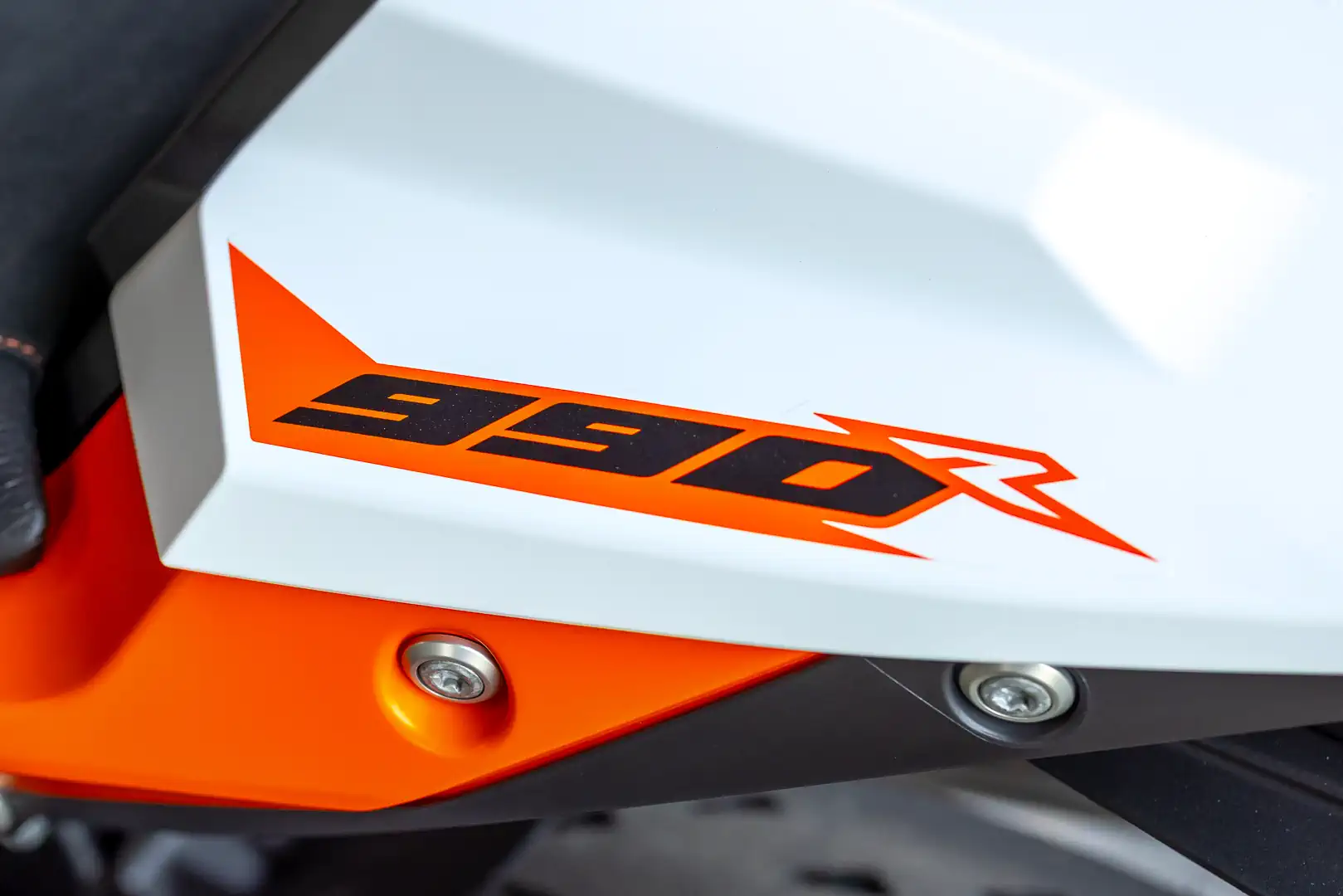
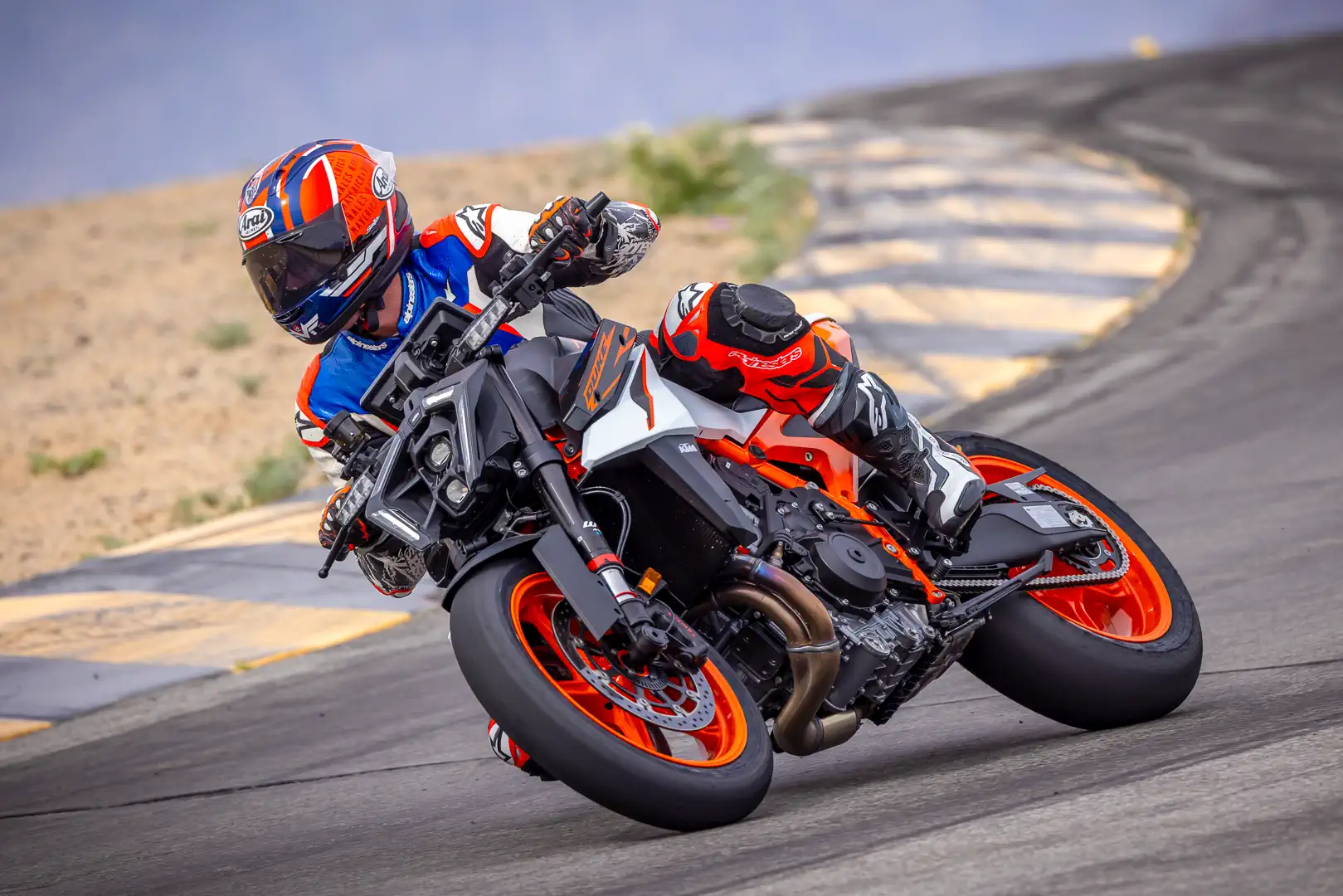
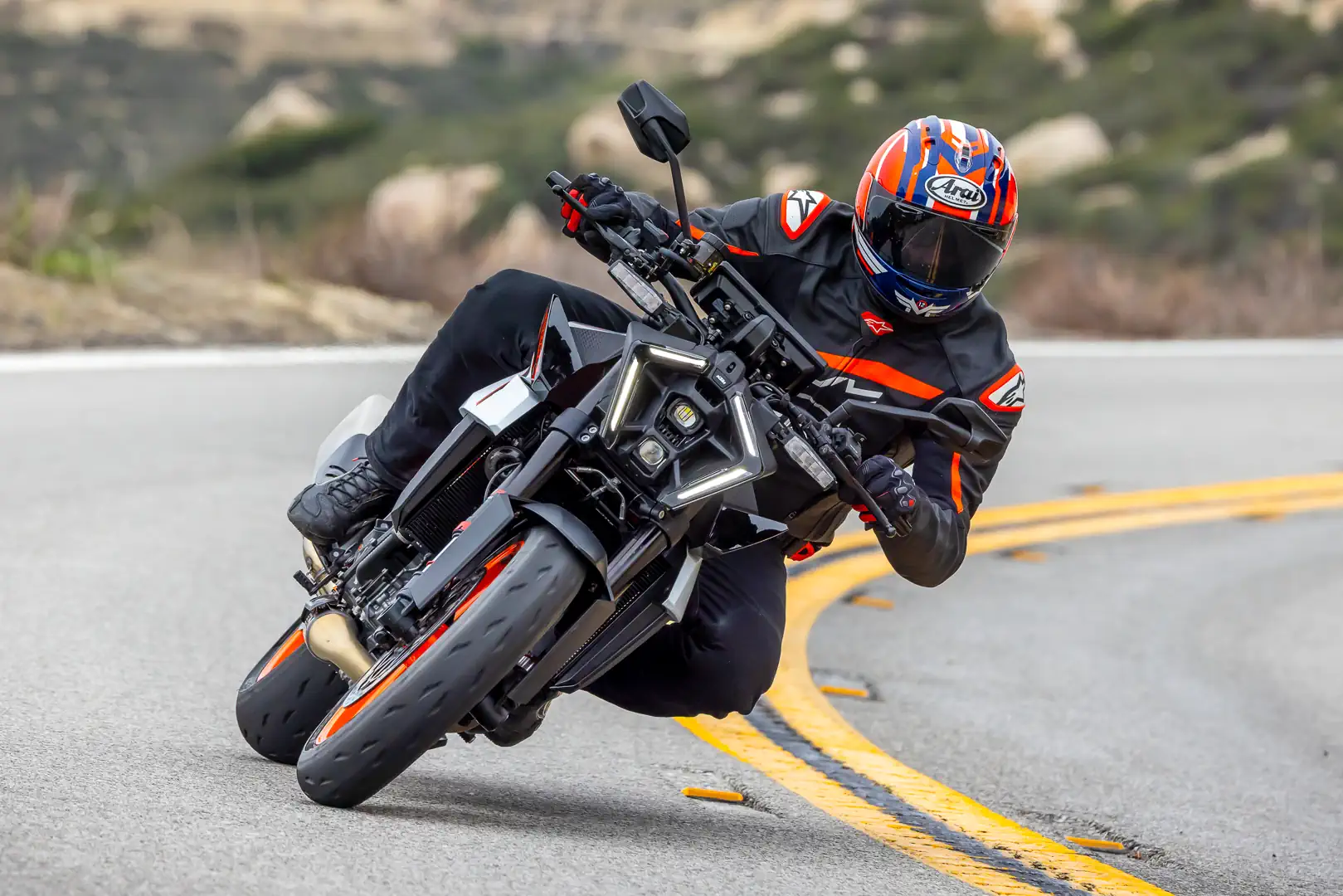
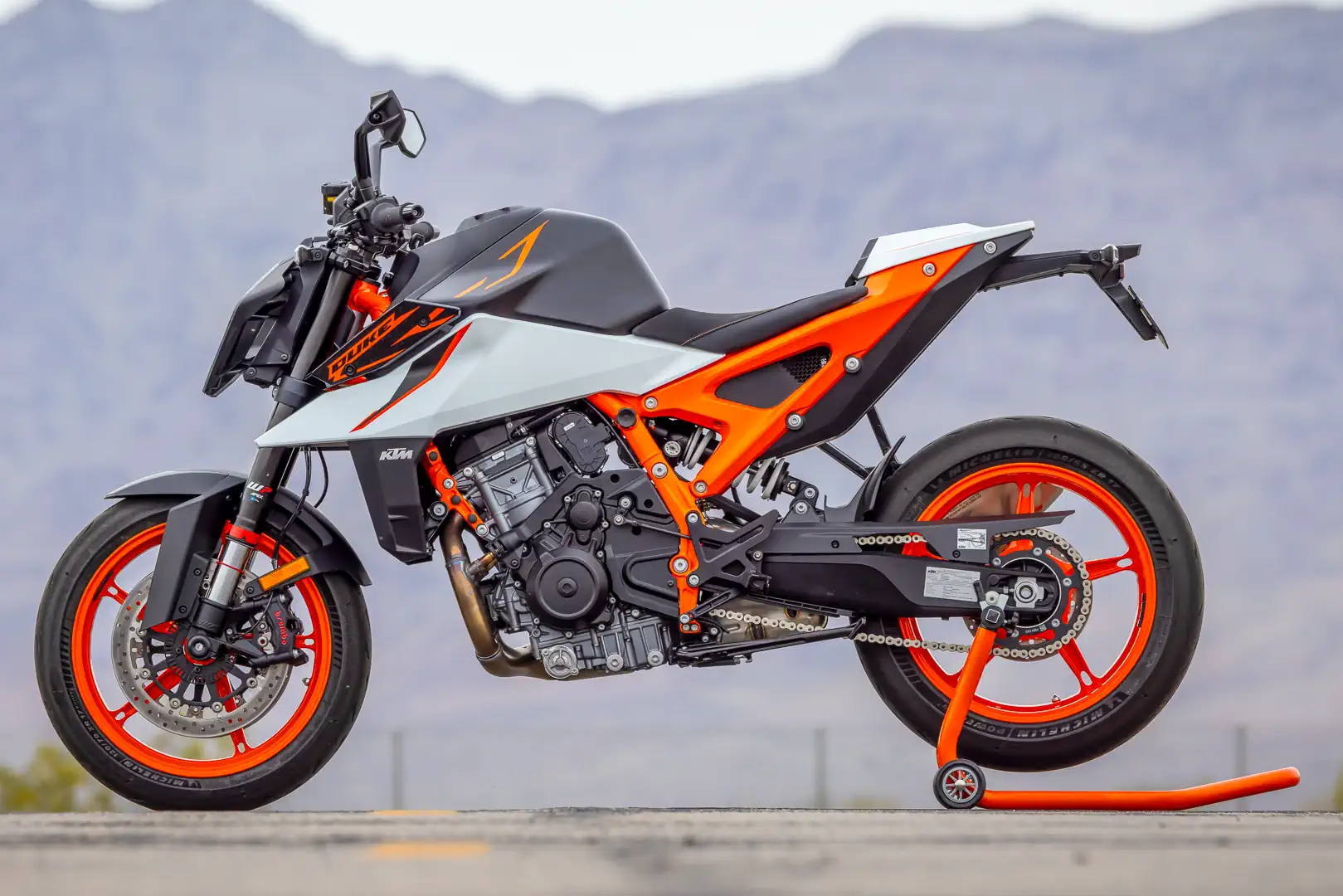
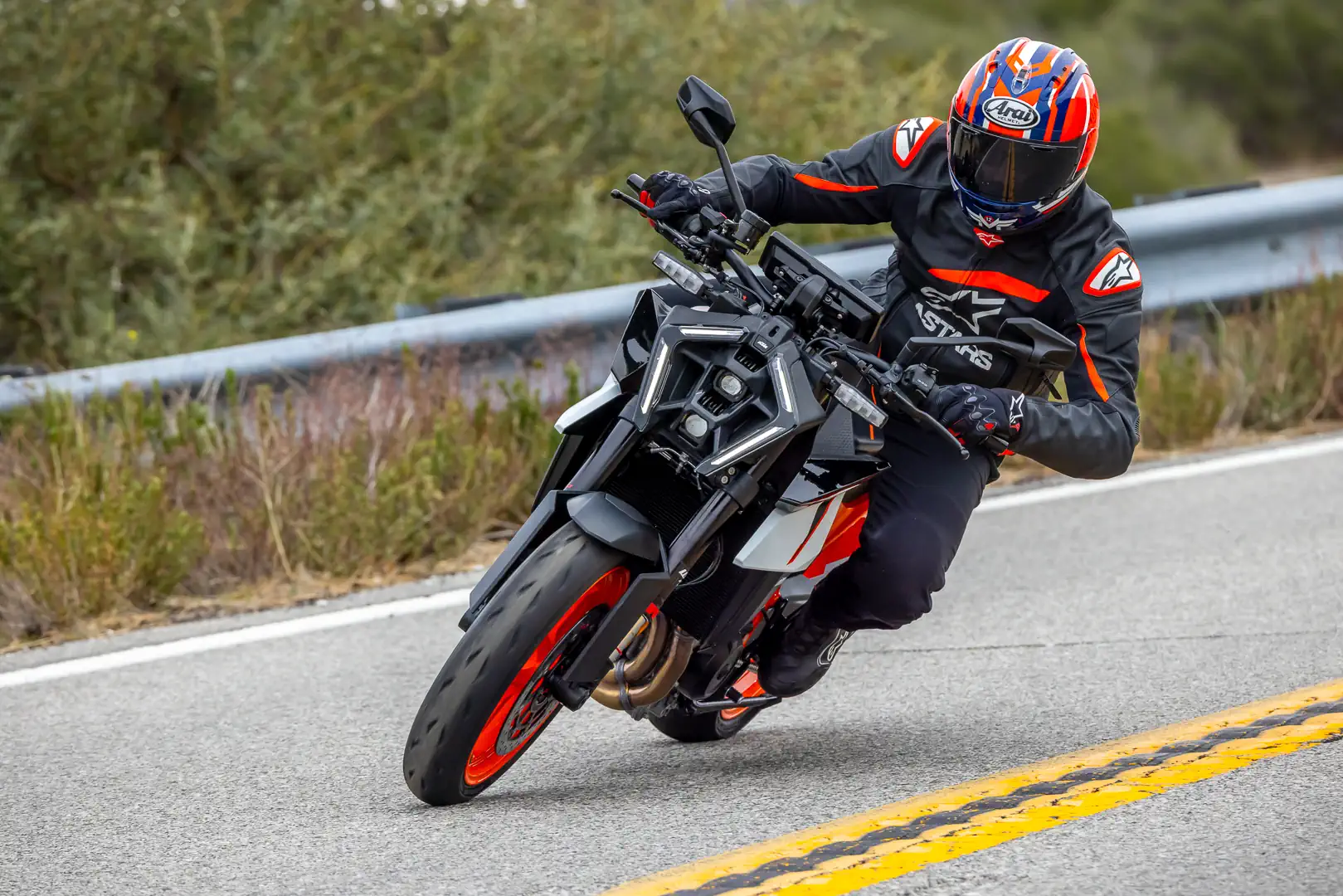
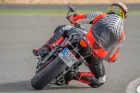
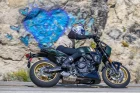
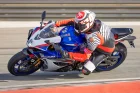
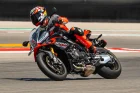
The 2026 KTM 990 Duke R slots into the Austrian brand’s lineup as the sharpest tool in KTM’s middleweight naked sportbike shed, bridging the gap between everyday streetfighter and track-day weapon. Tested on canyon roads near Palm Springs and taken for a track day at Chuckwalla Valley Raceway, the R model builds upon the already potent 990 Duke platform with targeted chassis, suspension, and electronic upgrades aimed squarely at those who appreciate more than a pinch of extra performance. Now, it’s time to hit you with the Fast Facts.
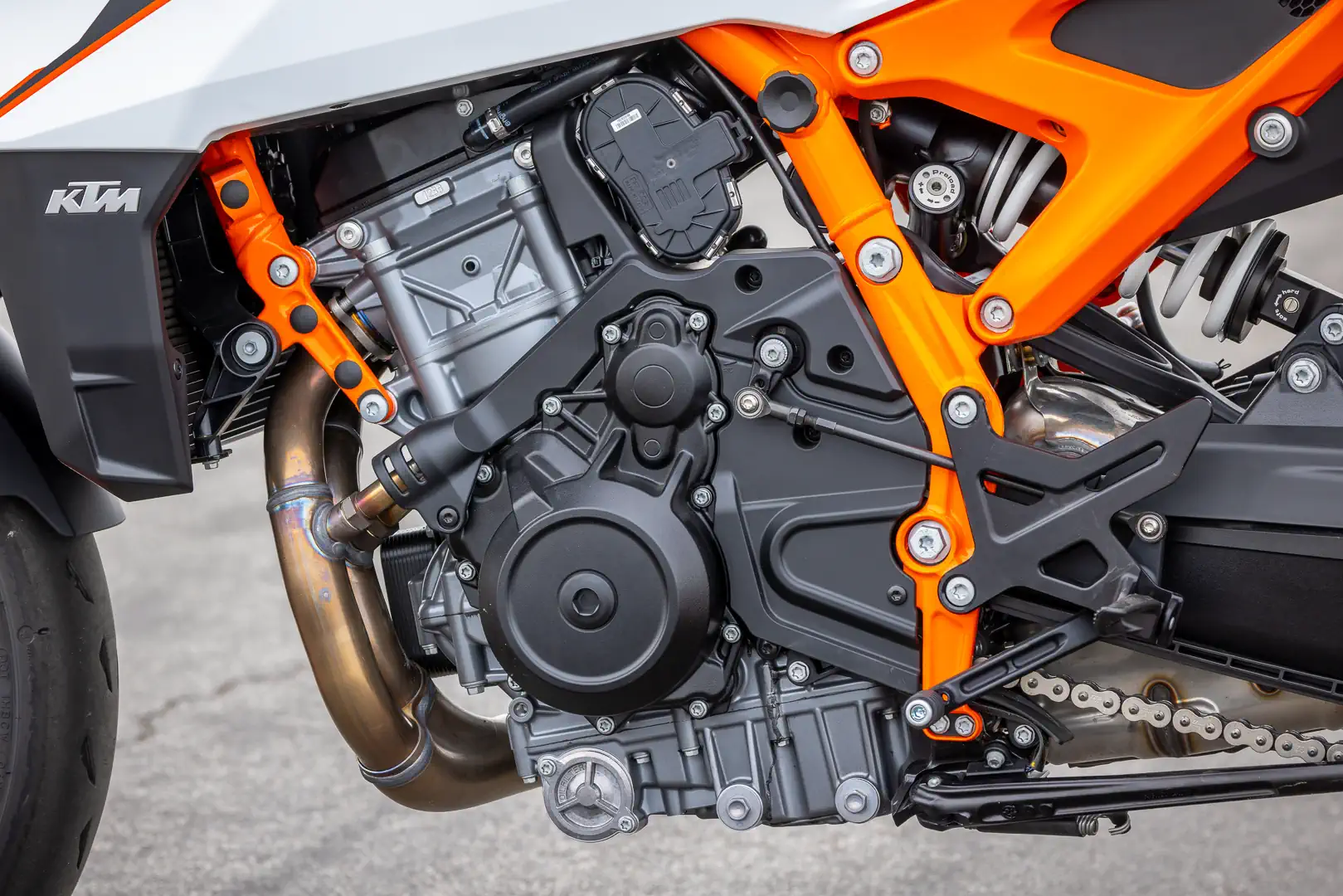
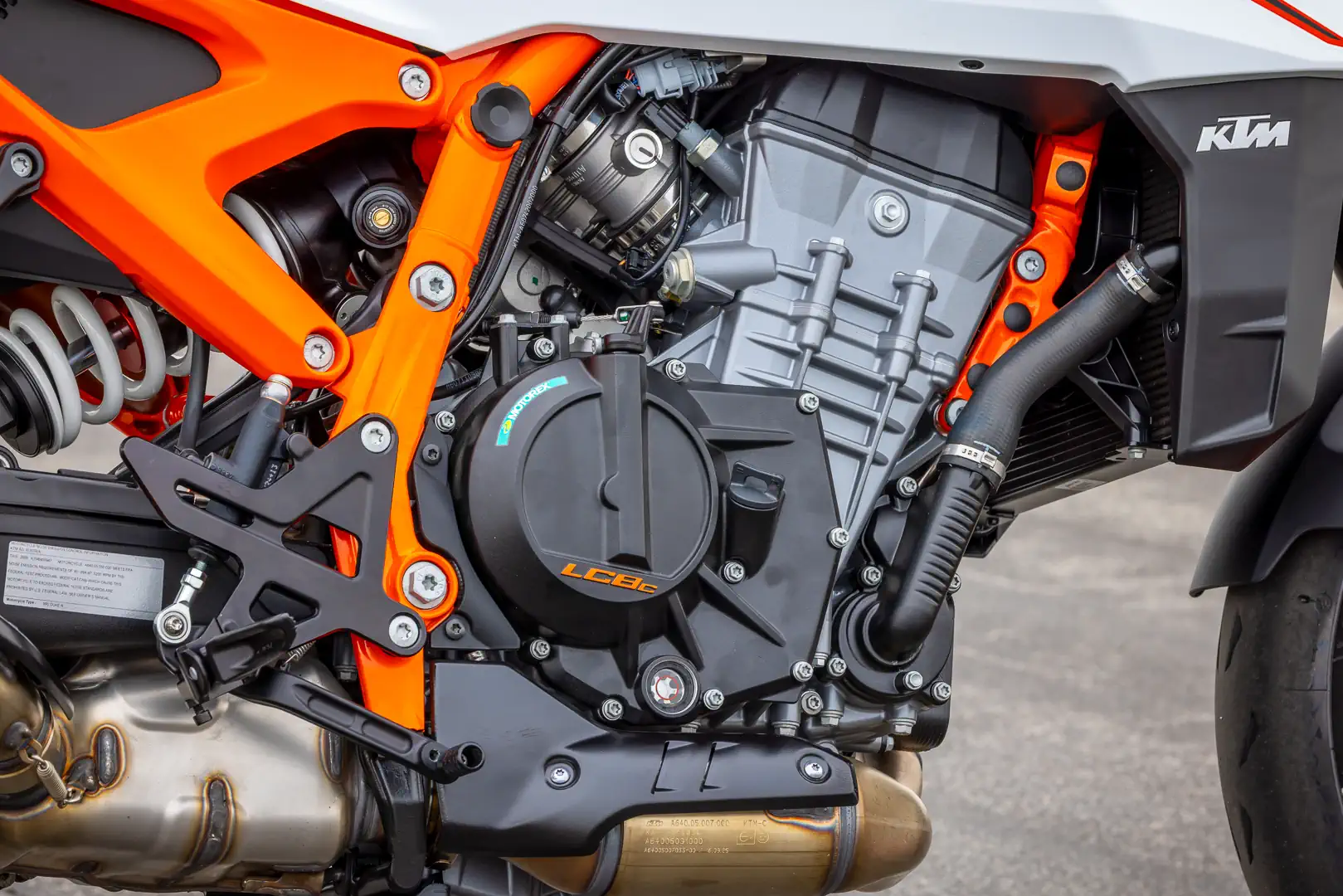
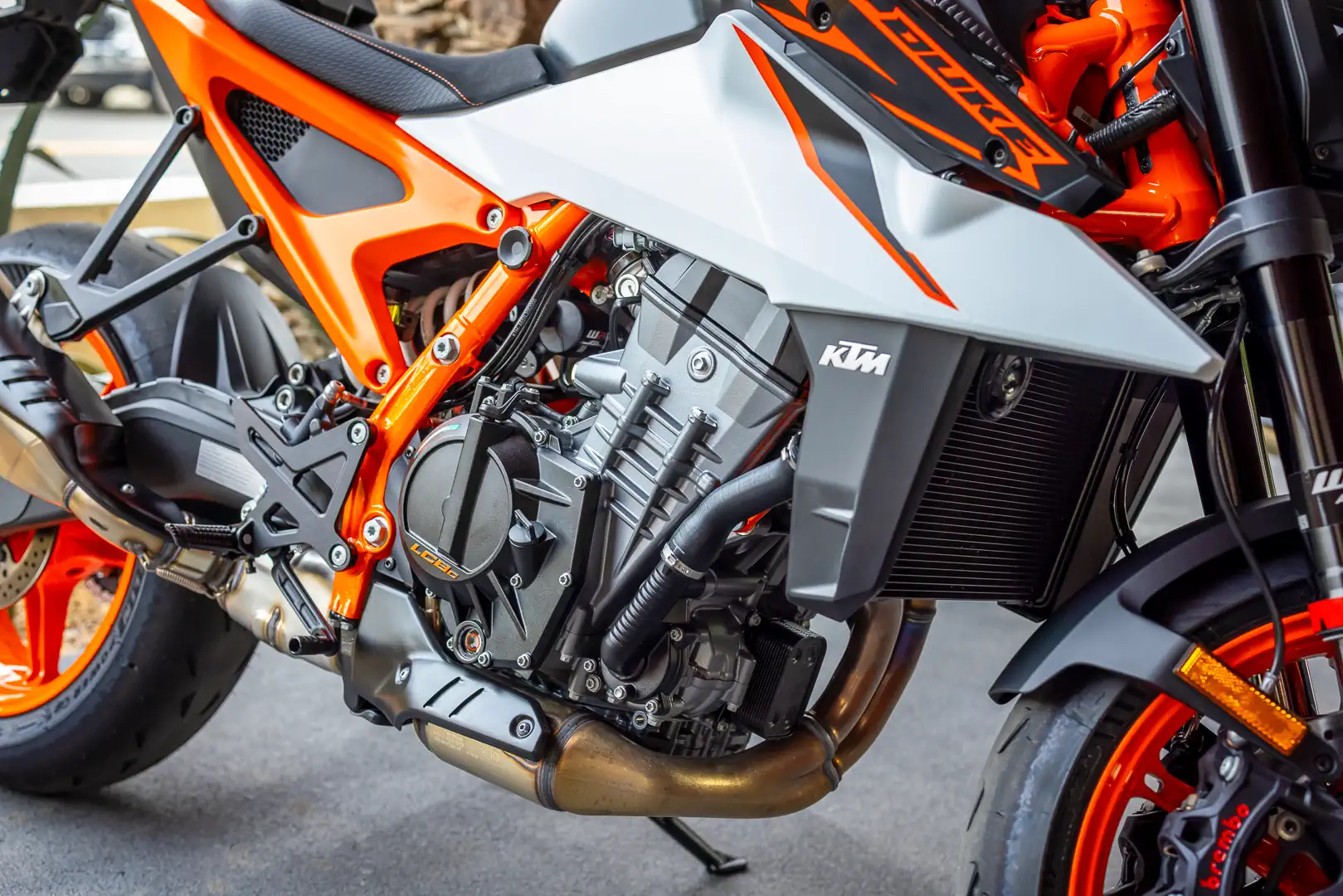
When KTM launched the nearly liter-size 947cc LC8c parallel-twin in the base-model 990 Duke, it staked its claim in the exceedingly broad class. With lovely bottom-end torque and massive midrange giving this steed an oh-so-fitting snotty attitude, lofting the front wheel is a mere throttle snap away. Yet, the Ready To Race brand wouldn’t recycle the powerplant into an R-badged bike without upgrades. Thankfully, the 990 Duke R’s model-specific tune adds an extra septuplet of ponies to the barn, bringing figures up to 128 horsepower at 9500 rpm and 76 lb-ft of torque at 6750 rpm, the same as the fully faired 990 RC R supersport. Bolt for bolt, it is the same mill found across all current 990 platform models. That’s not a bad thing because the perks of a punchy twin-cylinder lump fill the role so well.
The 990 Duke R takes that extra spit and vinegar and delivers torque just about anywhere you ask in the broad powerband. The Austrian nudist pulls hard from the depths, clear through to the hinterlands. In earnest, there’s no benefit to bouncing off the newly raised and hard-hitting 10,500 rpm rev limiter, as power wanes up there. Tons of usable low-end lets riders lazily get through the daily grind donkey work. It also benefits us while wringing it out in the canyons, enjoying the Duke’s zest. Those same traits play well at the racetrack, where the P-twin’s character is far more forgiving than potentially higher-strung inline triples and fours that penalize us for not keeping the revs up. Meanwhile, this thing is always simmering, ready to go.
The six-speed transmission functions as you’d expect from a seriously sporty machine such as this. Short, athletic gear changes are the main topics of this conversation, backed by a slip-and-assist clutch. There is a catch: the bi-directional quickshifter can be harsh in its transitions, particularly at low rpm and when exploring the first half of the gearbox. The solution is one most Duke owners will find agreeable: twist the grip and send that digital tachometer flying, as things smooth out at higher rpm. KTM staffers assured me that some of those issues can be resolved during break-in services by recalibrating the quickshifter. It’s a line I’ll buy, as there were some variances between test units on hand. Some shift levers activated with gentle boot brushing, while others required a firmer press.
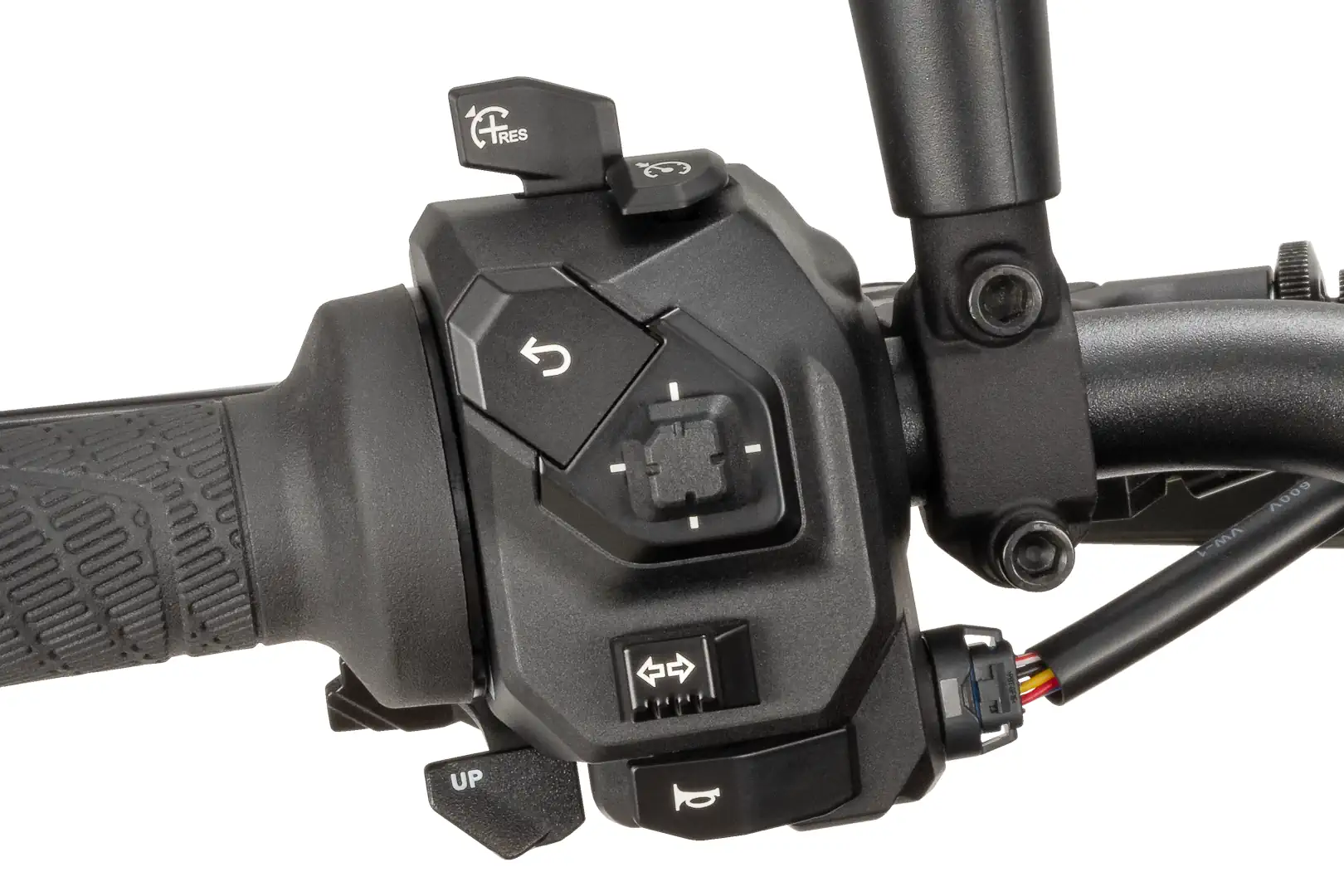
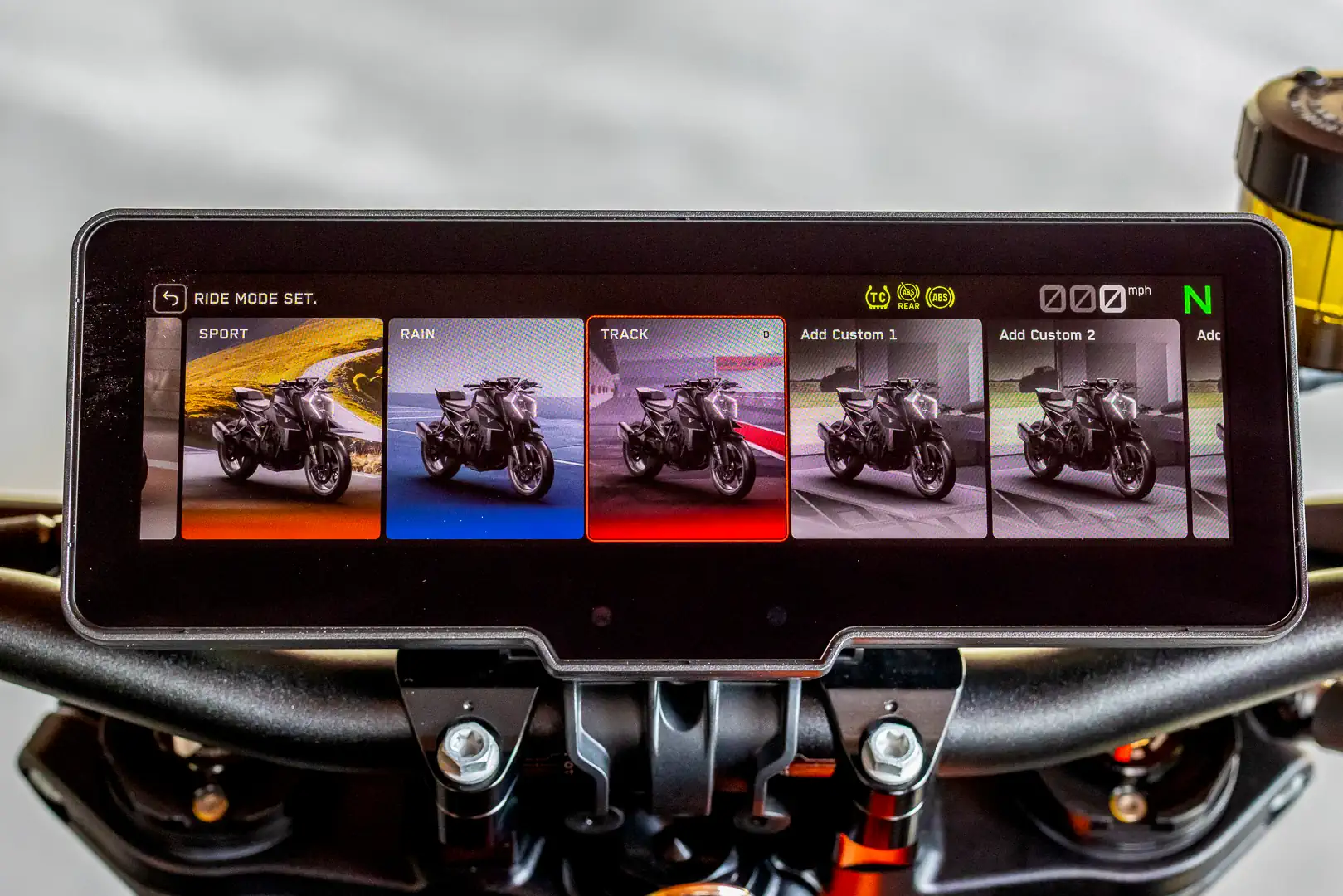
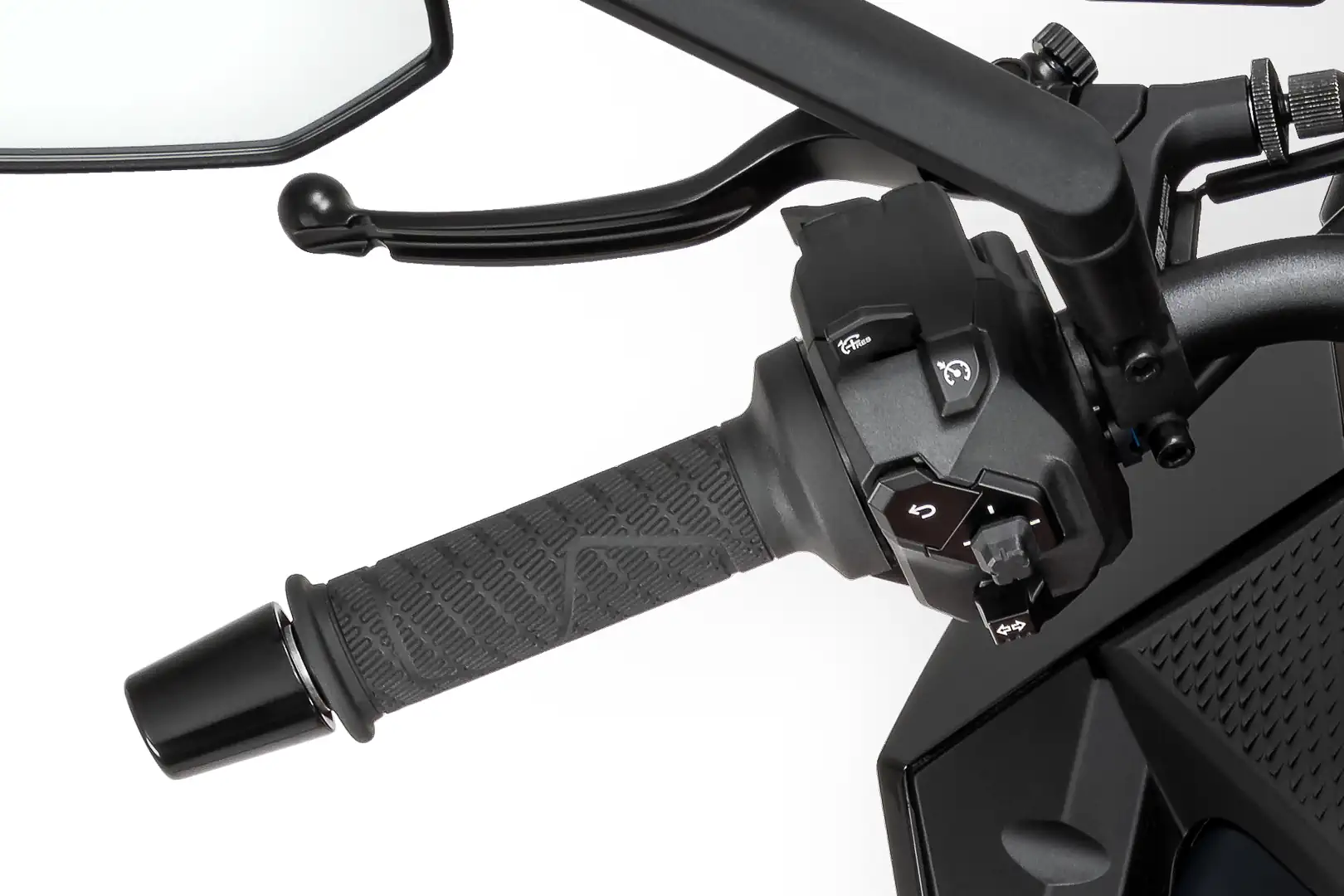
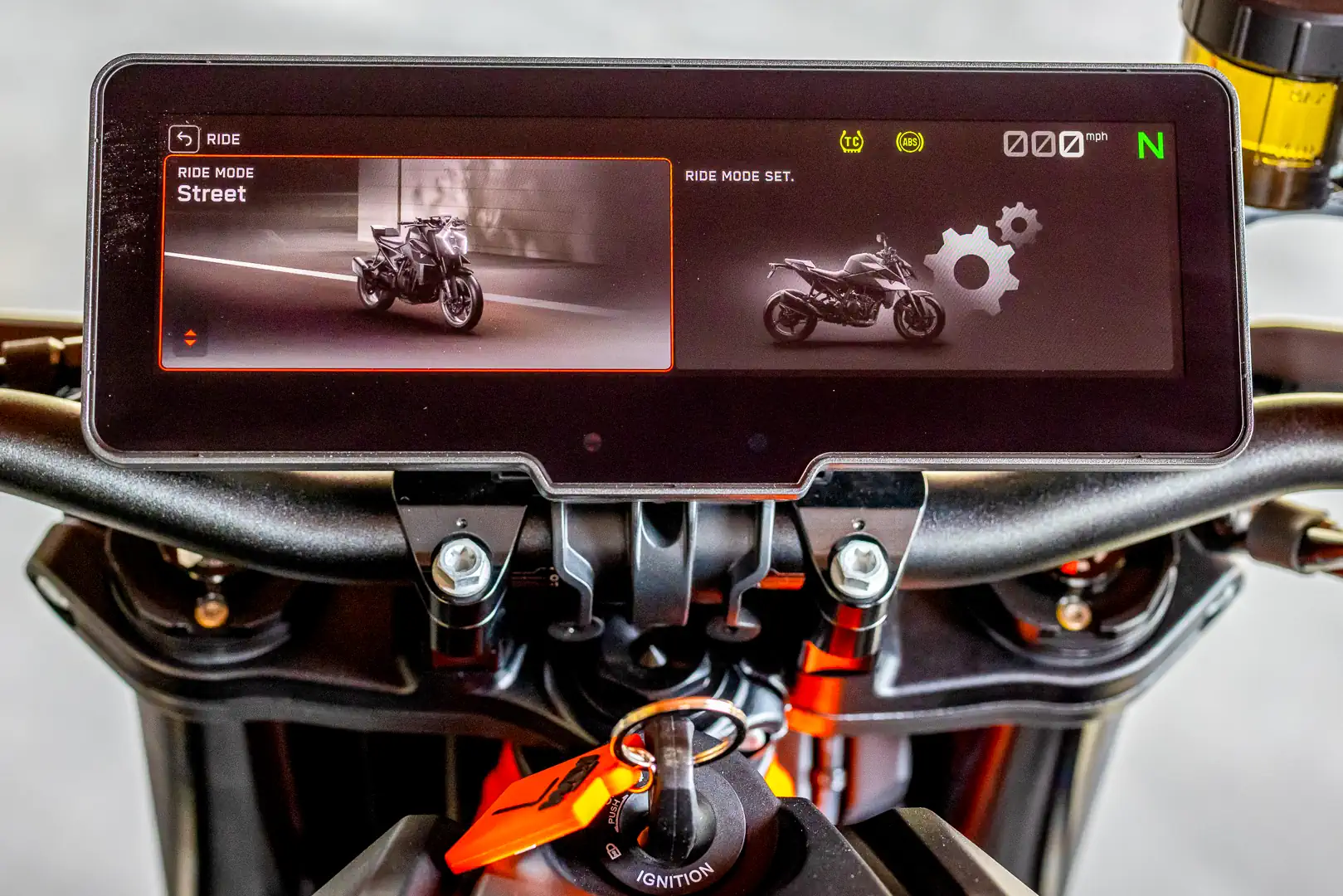
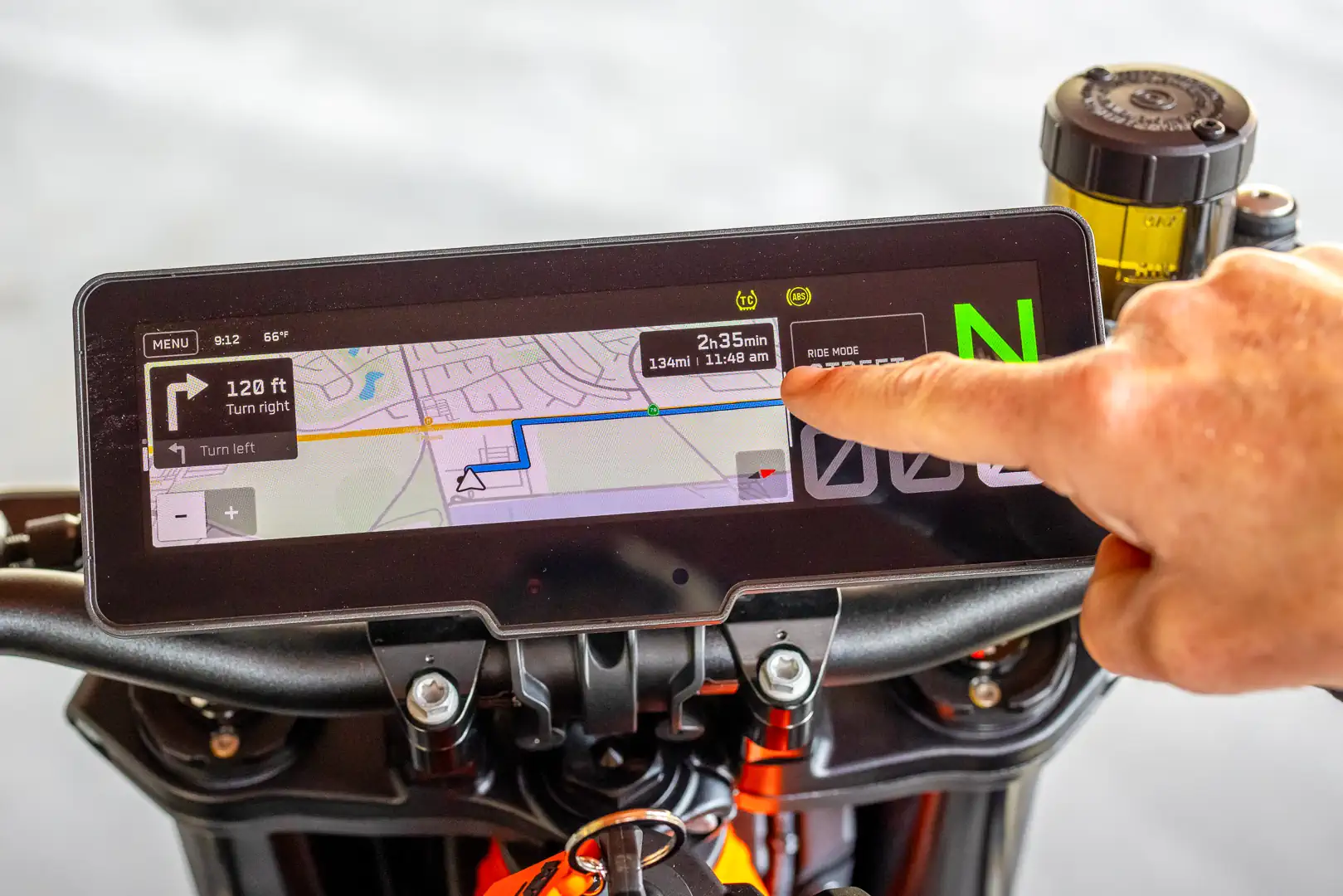
The nine-inch TFT touchscreen display is raising the bar among class peers. Bright, clear, and with more menu customization than you can shake a stick at — that sums it up. If swiping and switching between split-screen layouts by hand doesn’t tickle your fancy, the new joystick-style switchgear aids navigation. It has a slick UI, though the most notable feature is a stand-alone navigation system that doesn’t rely on mobile device pairing with the usual awful, and I do mean awful, proprietary apps all too common in the two-wheeled market. A user can enable live traffic updates, along with the usual laundry list of features, by pairing a smartphone via Bluetooth.
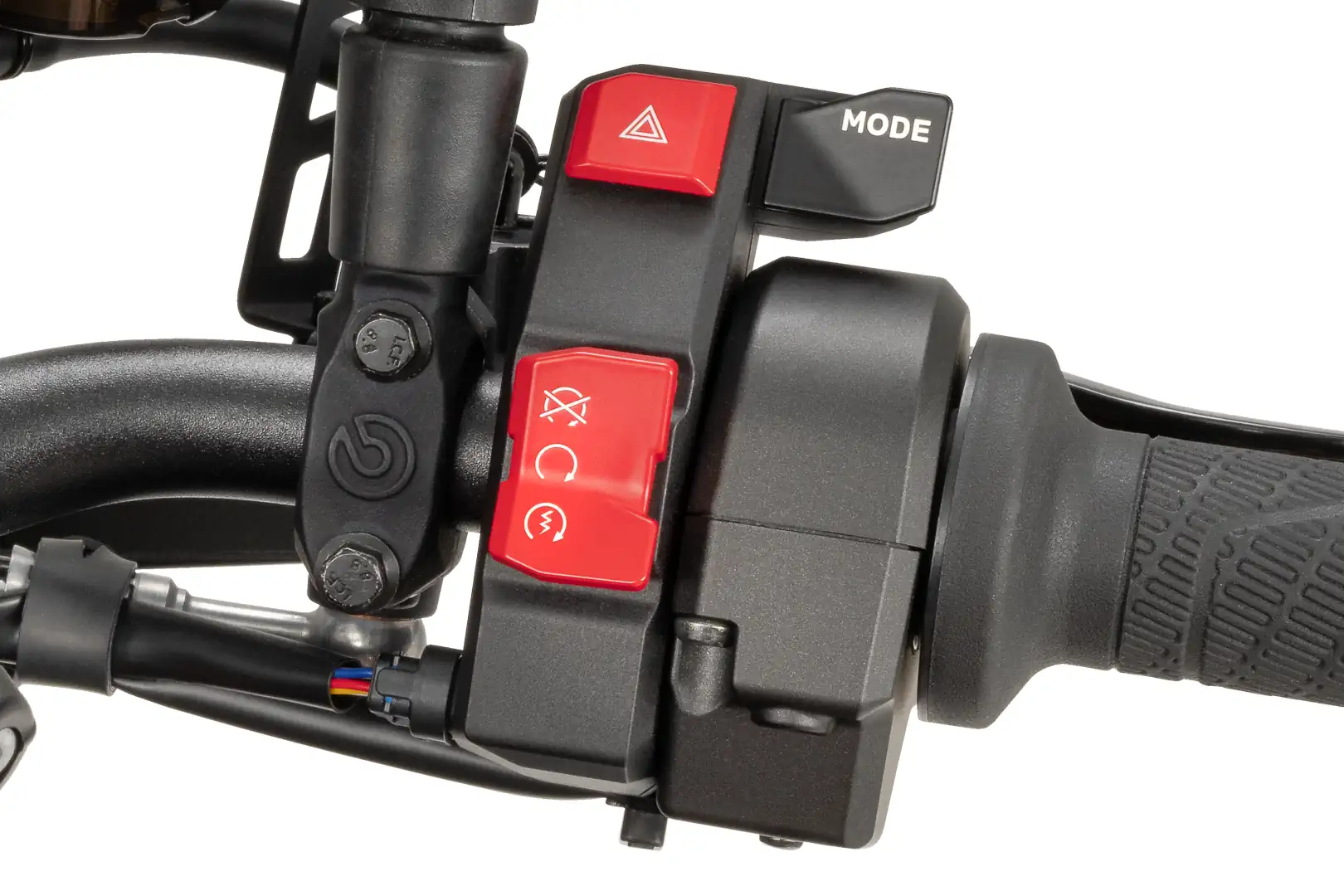
An updated electronics suite comes into the fold. A six-axis IMU informs the usual assortment of traction control, wheelie control, cornering ABS, and more. They work as advertised, with a particular nod going to the WC. Accompanying that, we have four standard ride modes: Rain, Street, Sport, and Custom. Track and two additional modes are optional. Throttle mapping is well-attenuated, save for a hint of initial roll-on snatch in sportier settings. Track mode is darn sharp with an energetic response that’s fun in the canyons, though not quite as useful at the racetrack, where lean angles and risks are higher. Sport is the sweet spot, providing good authority in any environment. Meanwhile, Street is almost too soft off the bottom, giving Rain a run for its money.
If you demand total electronic adjustment, you’ll need the all-encompassing $899 Tech Pack. If you want to use the awesome paddle switches to adjust TC, WC (it can be programmed for either), swap between four ABS modes, or start disabling things for hooligan work, you’ll need the Tech Pack. Said package includes the Track Pack, quickshifter, Motor Slip Regulation, and cruise control. The preset options can suffice for road work, while track day junkies will want to reduce or disable nannies, as the engine’s tractability doesn’t entirely necessitate WC. With all this baked into the bike, the 2026 KTM 990 Duke R’s real-life MSRP rises to $14,298 all in. That’s $697 cheaper than the base model Ducati Streetfighter V2 S, $753 more expensive than the Triumph Street Triple 765 RS, and a $1,599 premium over the Yamaha MT-09 SP.
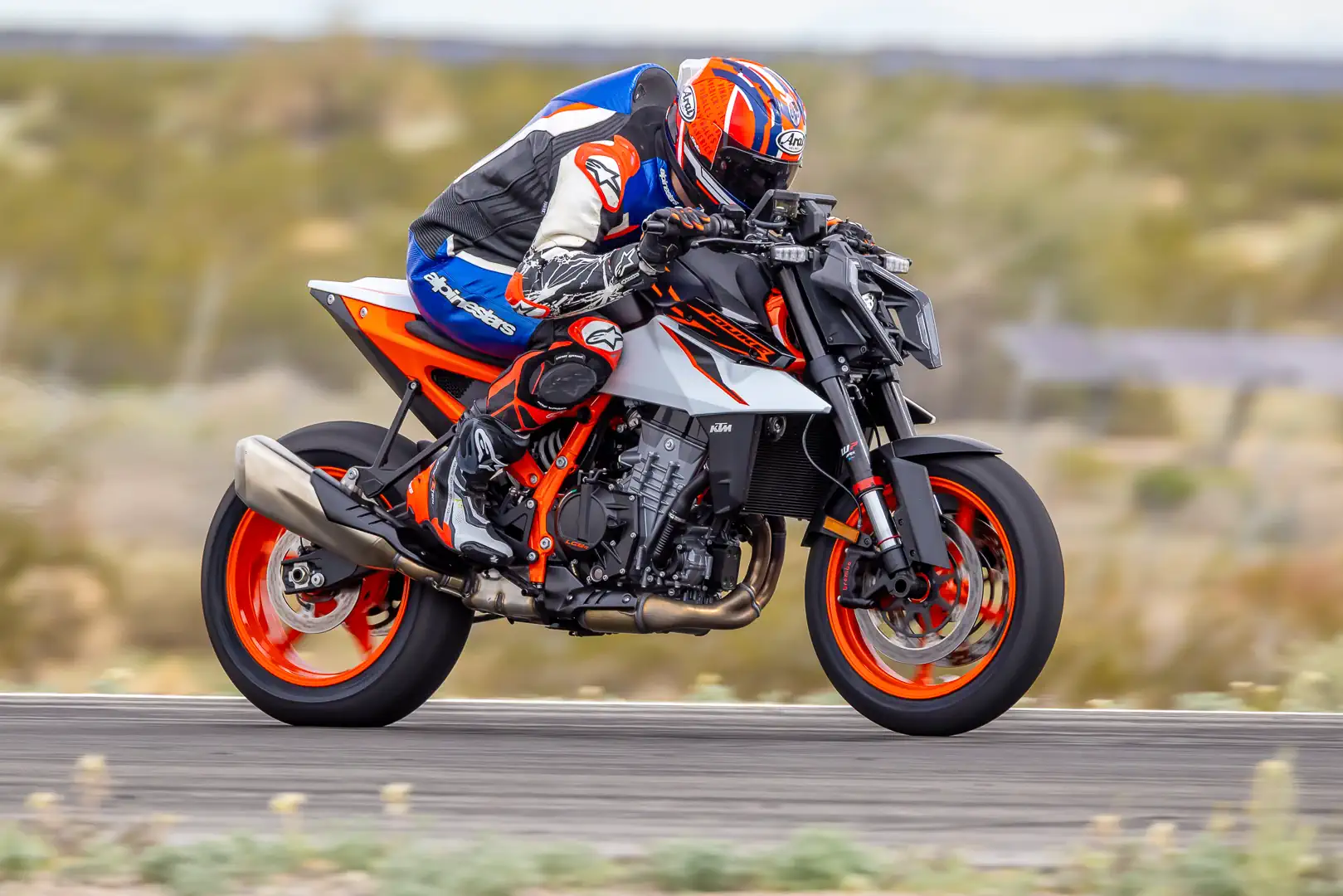
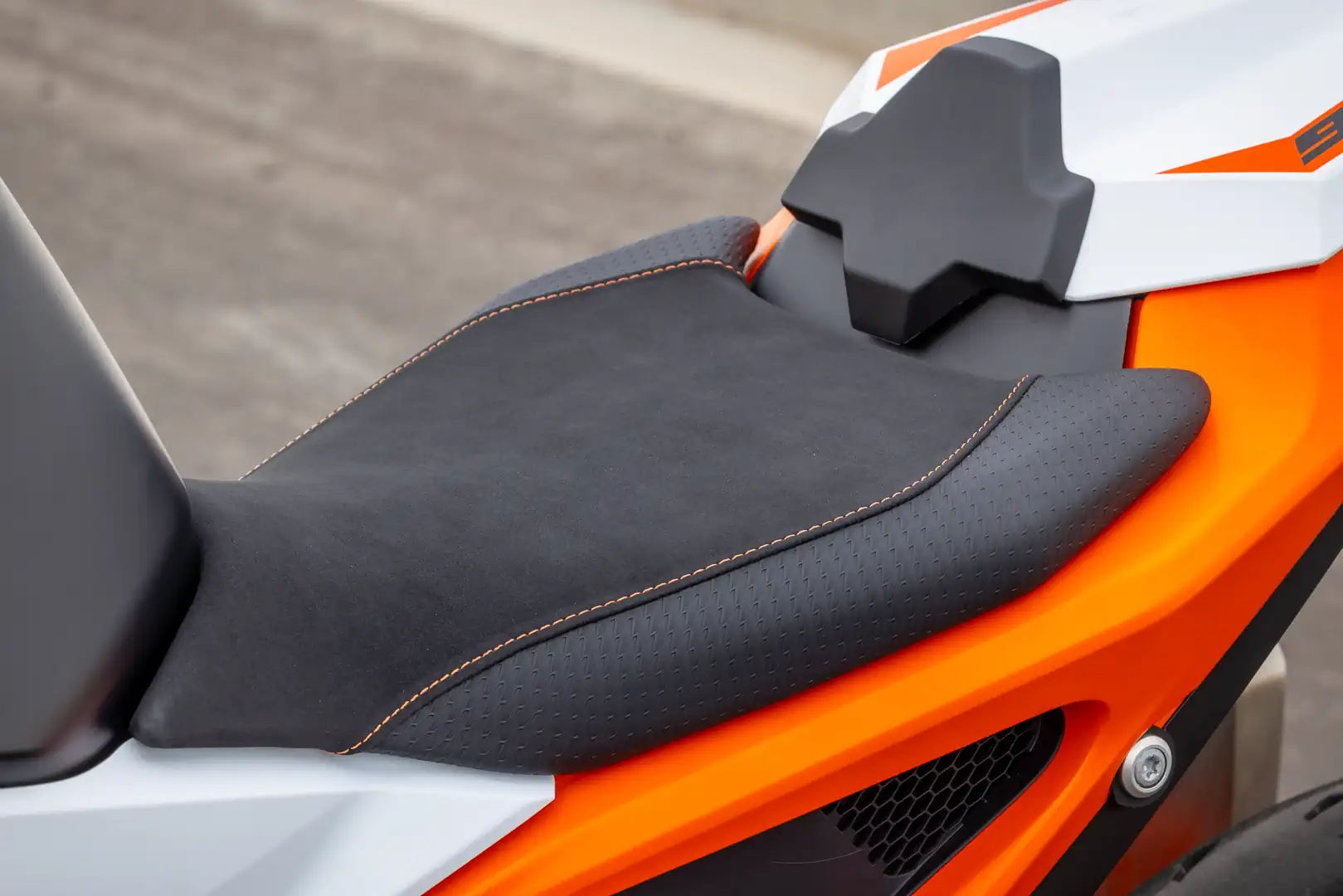
KTM has tweaked ergonomics for a slightly more aggressive stance. Things are a bit different in the R-badged Duke’s saddle, seeing as its taller stature elevates the saddle to a lofty 33 inches. Designers work hard to maximize the parallel-twin’s narrow packaging; the 3.9-gallon fuel tank and airbox-integrated die-cast aluminum subframe feel slim between the knees, allowing my 32-inch inseam to reach the deck easily. What’s more, the wide four-position handlebar rests 0.8 inches forward, 0.4 inches lower, and with a touch more back sweep compared to the standard Duke. Meanwhile, the rearsets are kicked up a half inch and back 1.2 inches, for an athletic posture without taking things too far. Effectively, this tinkering draws the rider closer to the front, netting better front-end feedback. Brazen nudity has its price — wind blast. Fortunately, the dash almost serves as a flyscreen when you’re tucked.
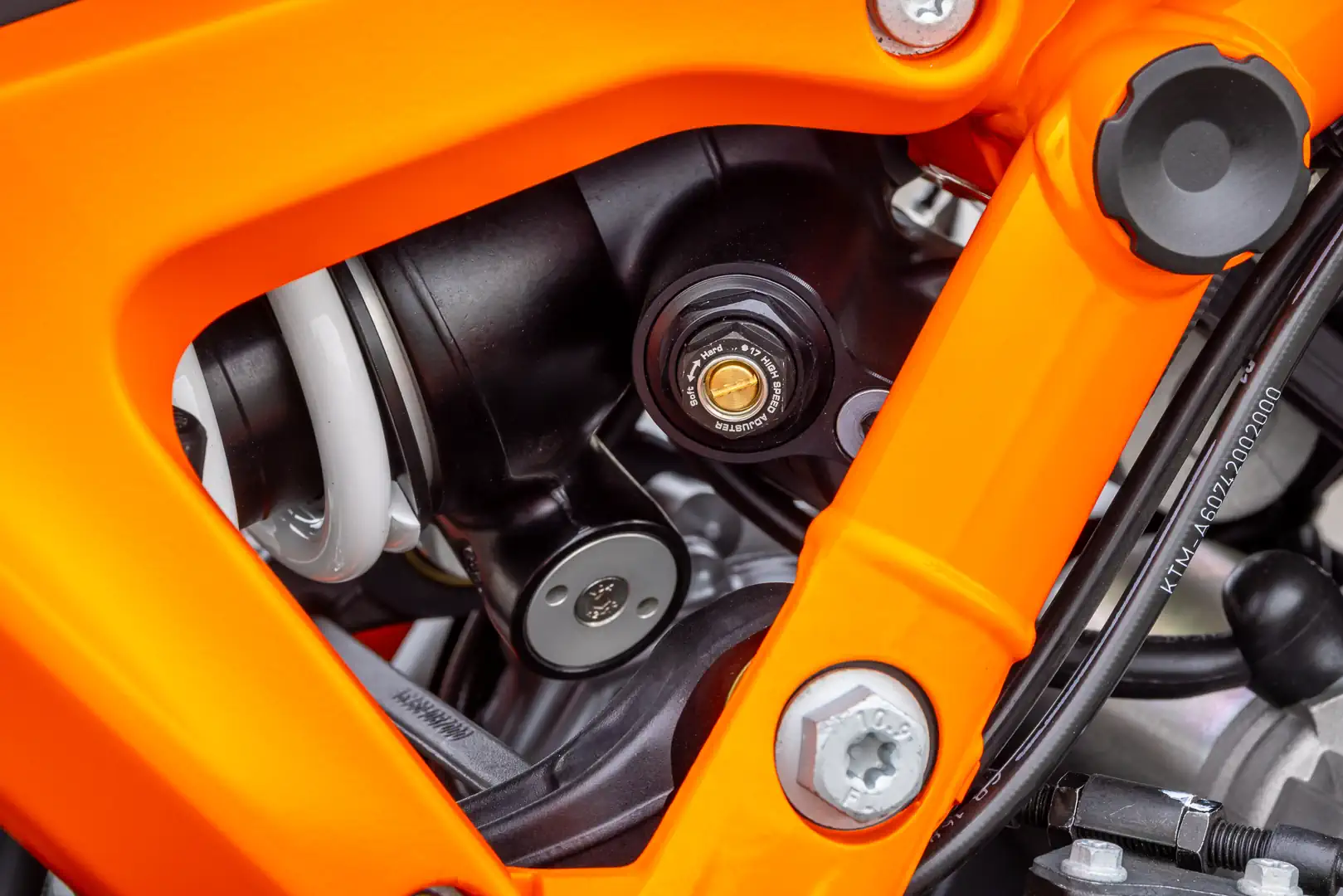
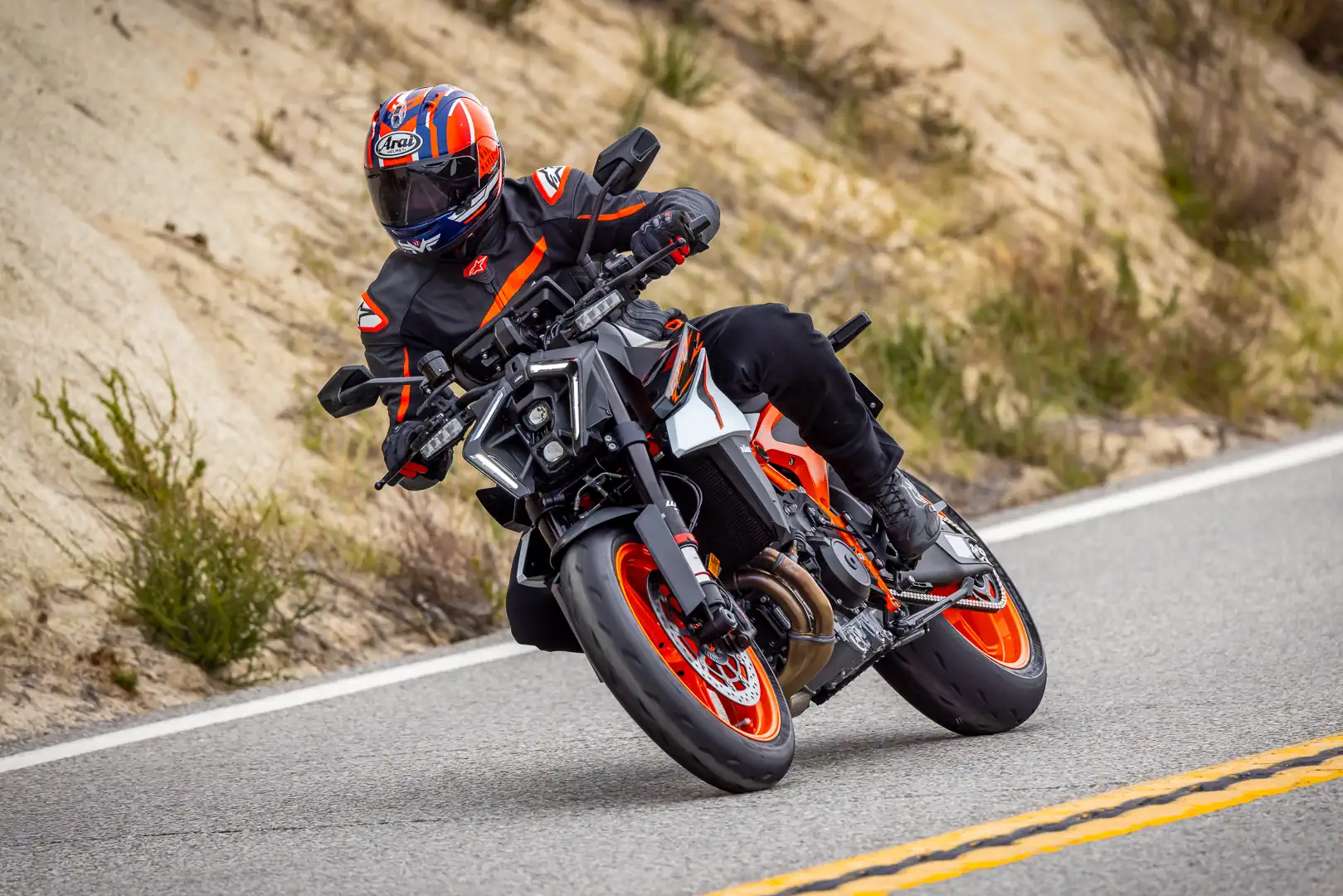
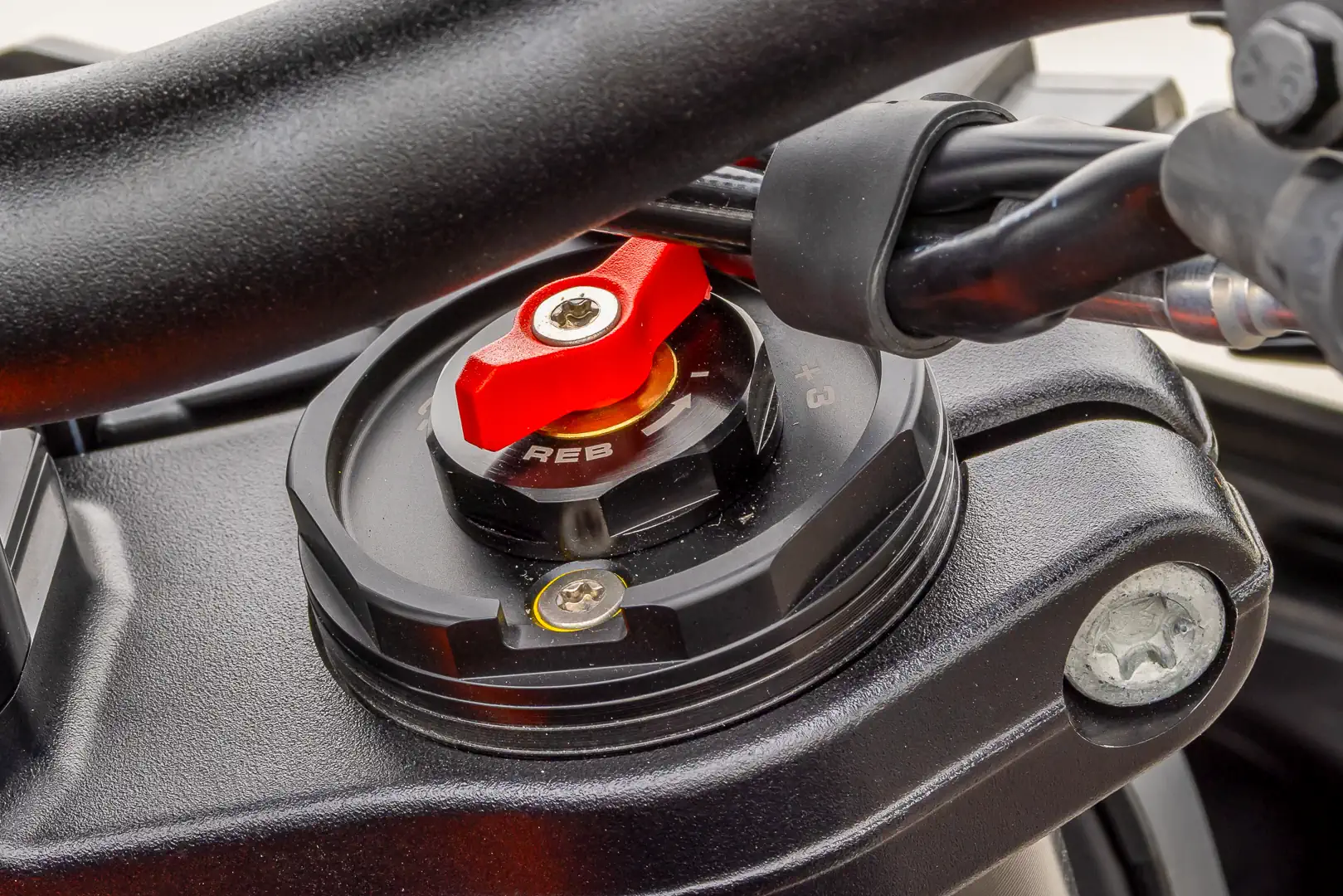
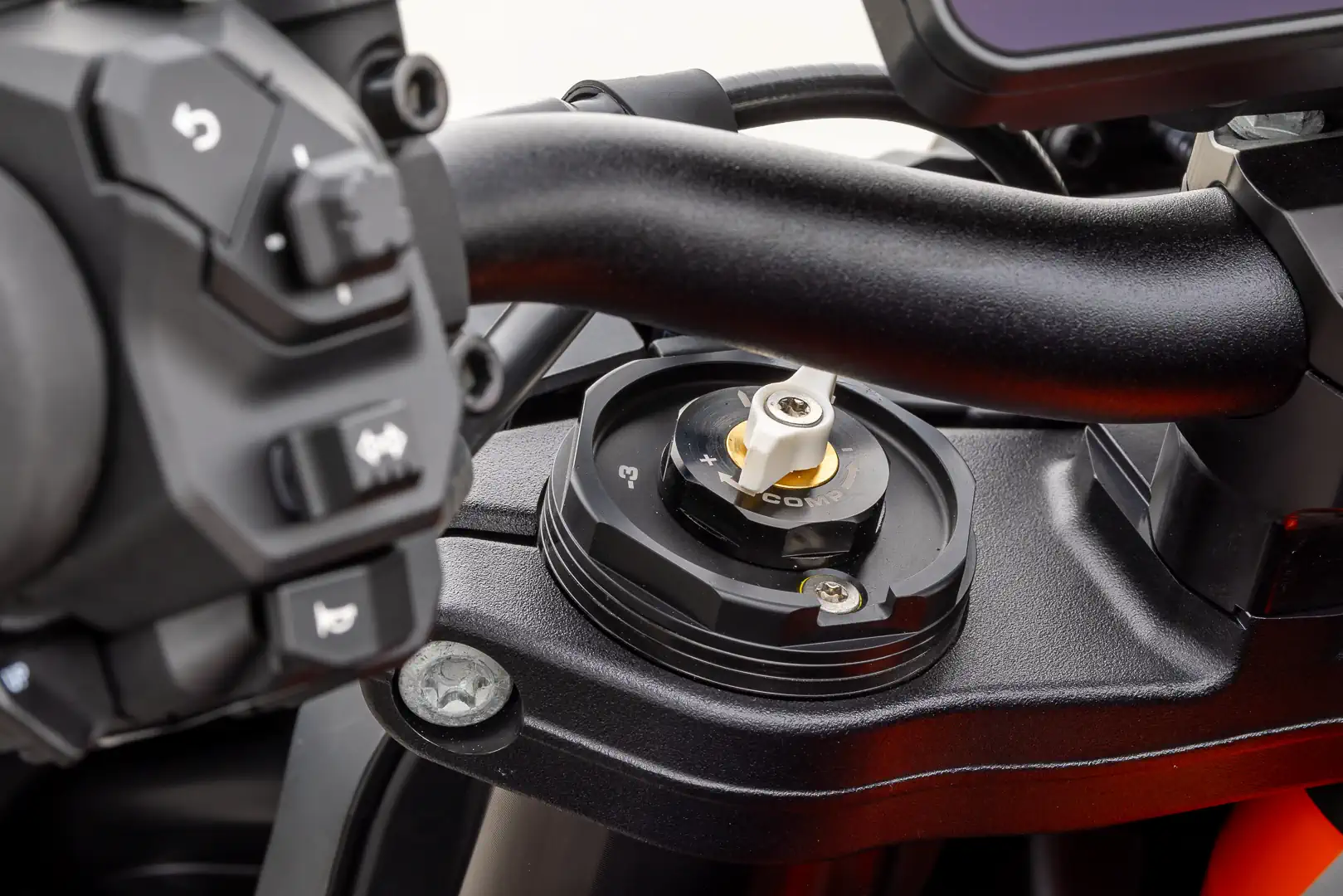
WP Apex suspension upgrades live up to R-model expectations. The R reaches for the beefier, fully adjustable 48mm fork first seen on the RC R supersport. It’s tuned for this application, enjoying the same extra sniff of travel. KTM says those suspenders stiffen the front end by 34 percent, contributing to the exacting front-end feel. Little more than a soft nudge is all it takes to whip the 990 Duke R into curves, putting that stout front-end to work. Despite its sporty setup, it takes hits like a champ.
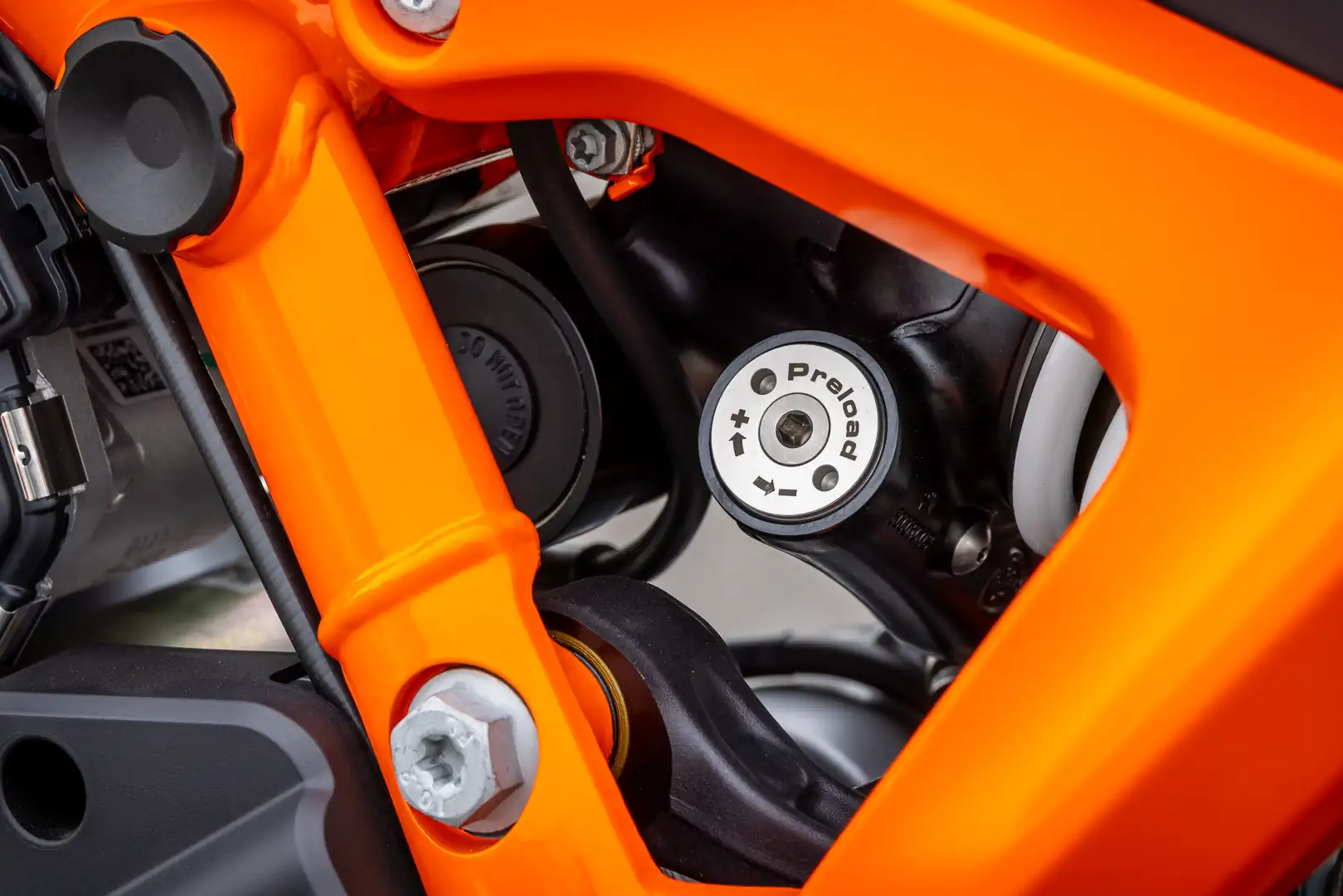
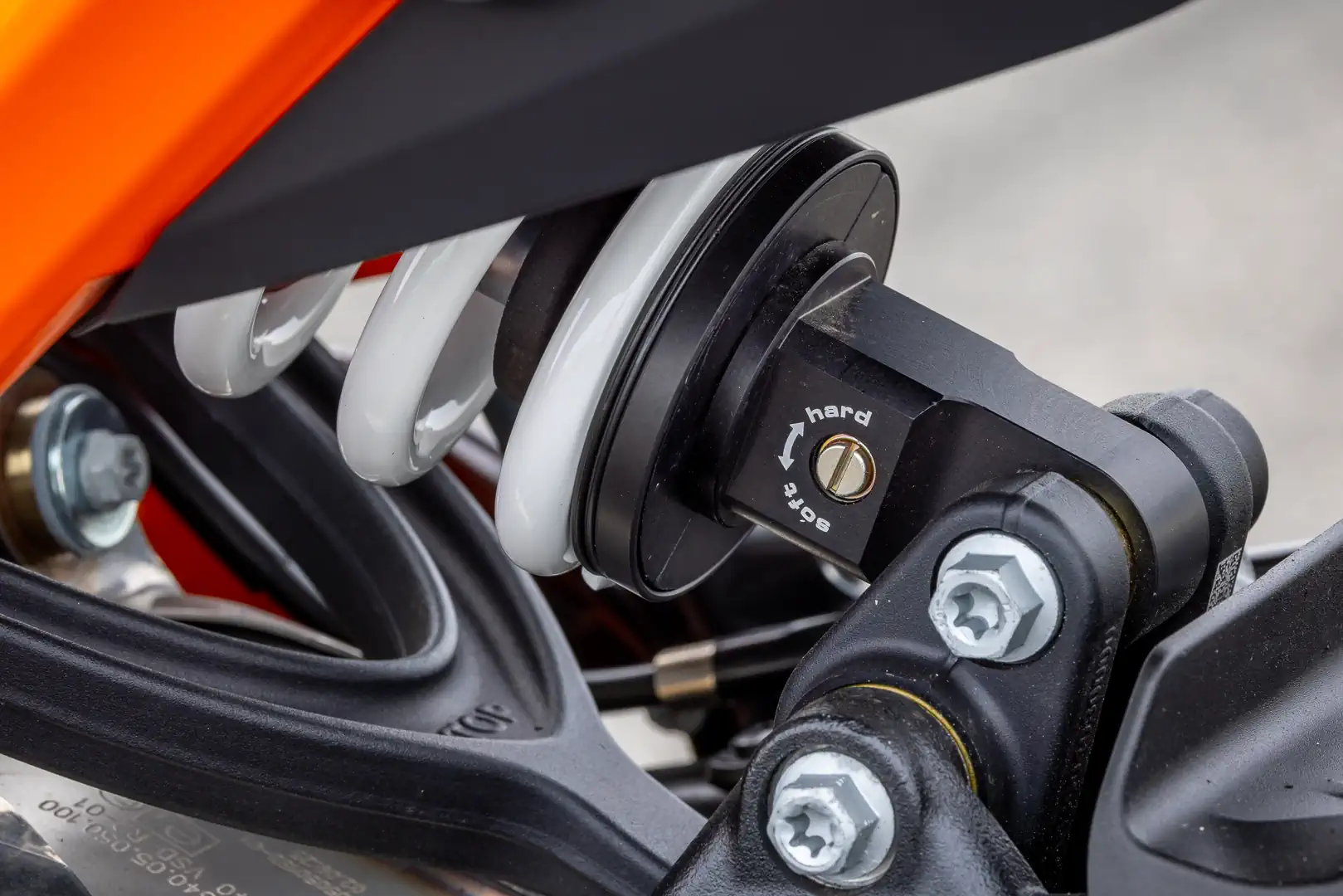
While the frame is mostly the same as the 990 Duke, what’s bolted onto it is quite different. Another RC R carryover is the unique wishbone-style progressive linkage, which connects the fully adjustable shock to the RC R-pilfered swingarm, which is said to be 34 percent less rigid than on the base-model Duke. Together, they add a healthy dose of streetwise suppleness to the mix. Said swingarm is angled more steeply for handling enthusiasm. Put simply, the linkage enables engineers to do more with less, lighter spring rates and valving to achieve superior ride quality and support over direct-mount alternatives. In fact, this is the first middleweight Duke with linkage.
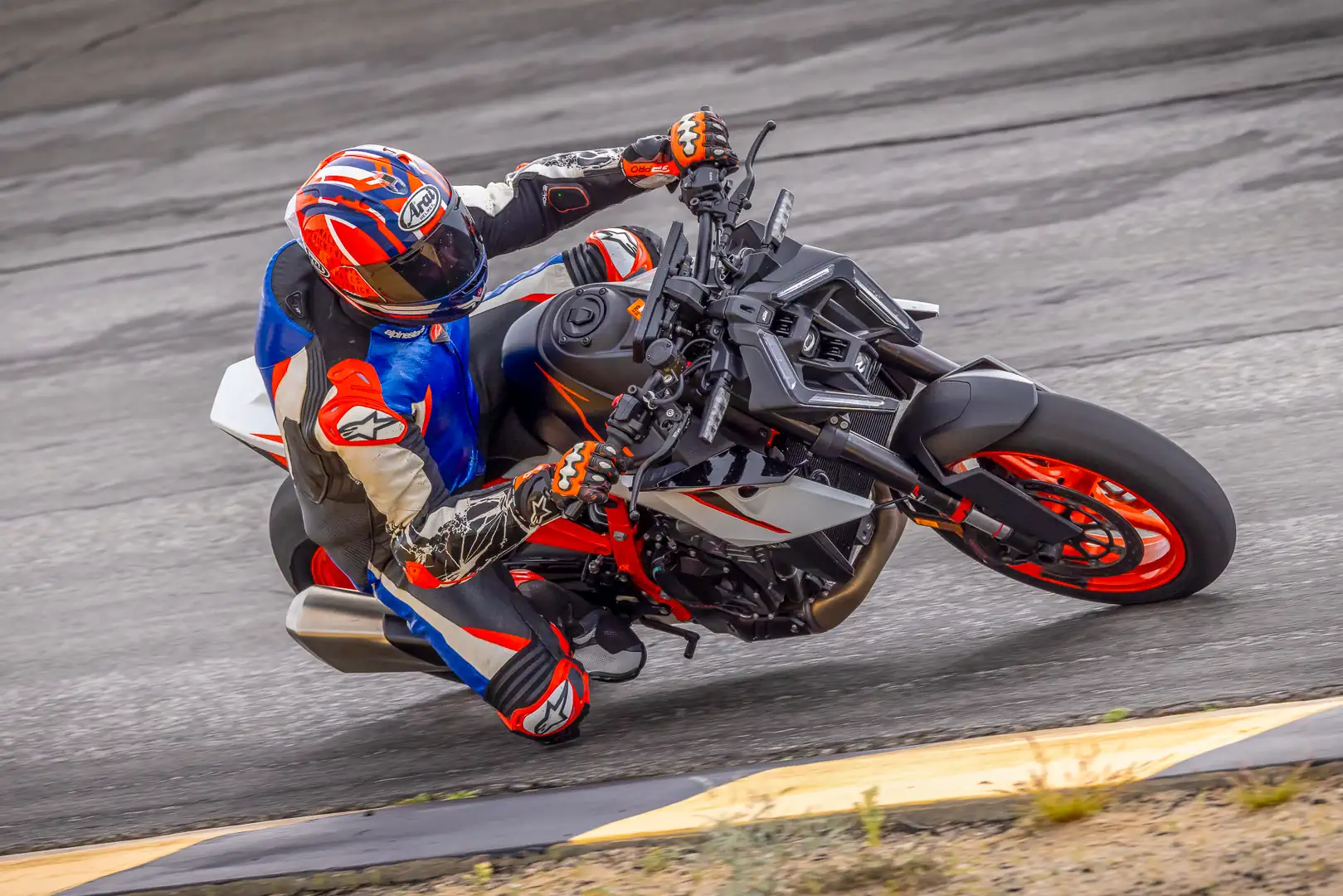
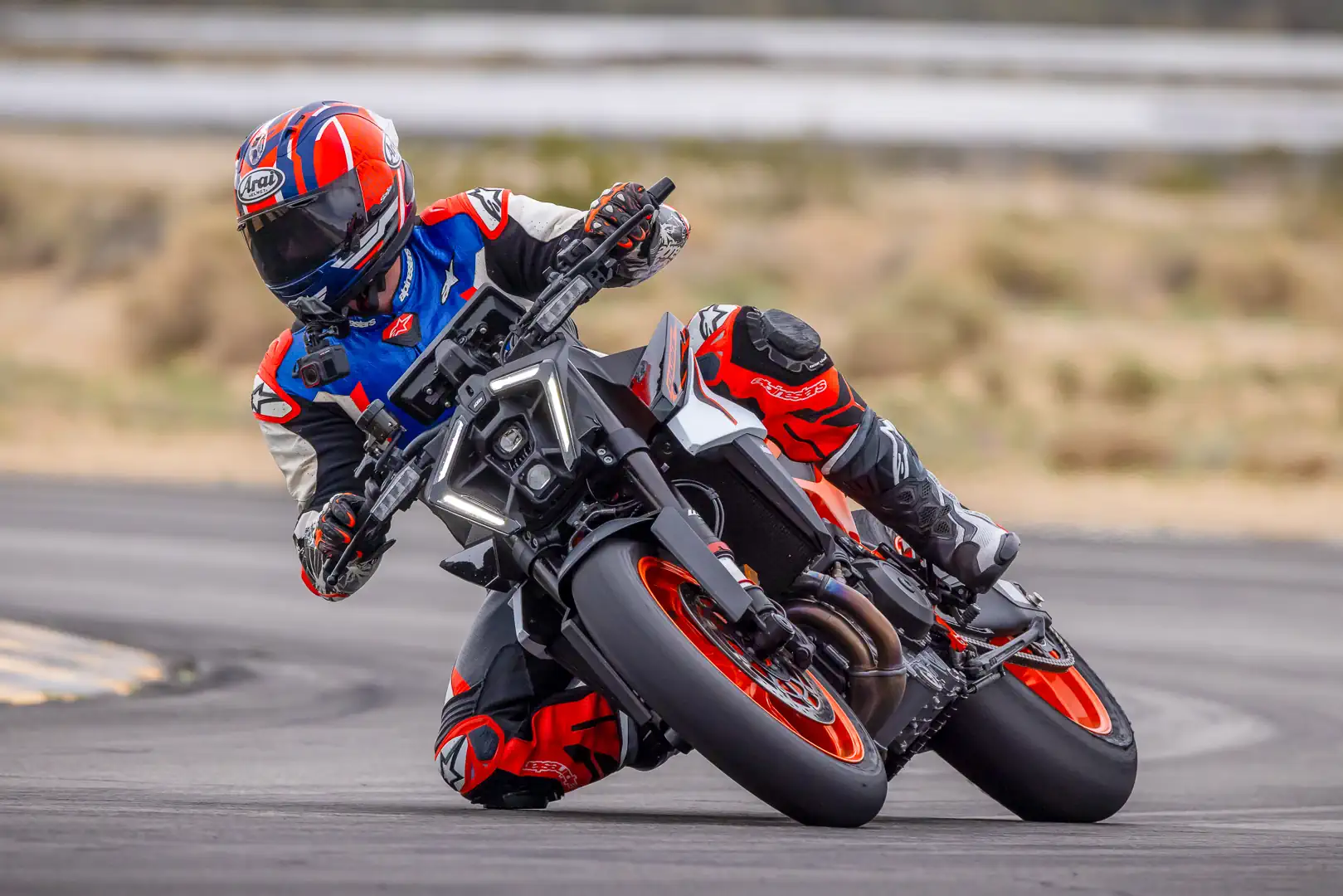
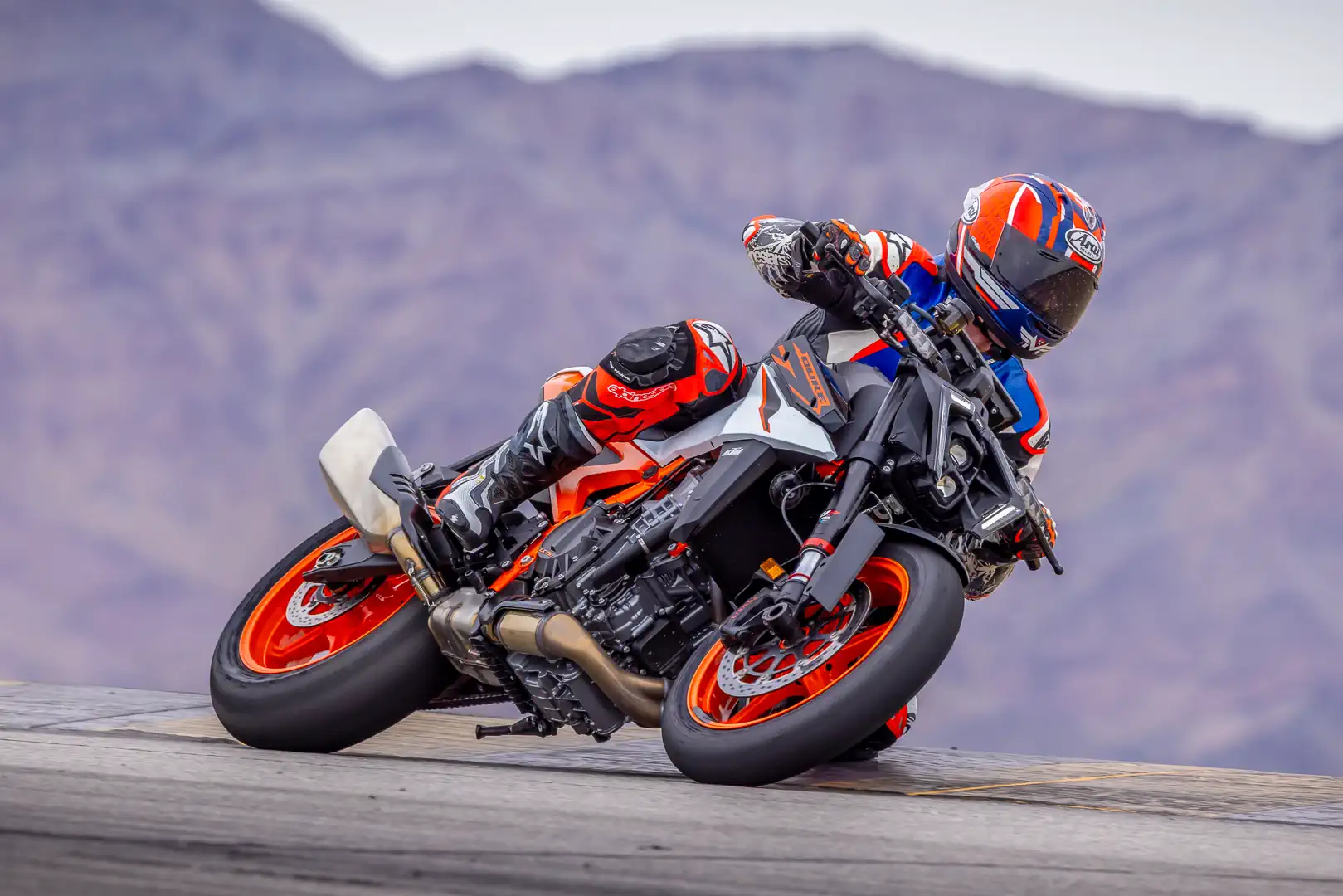
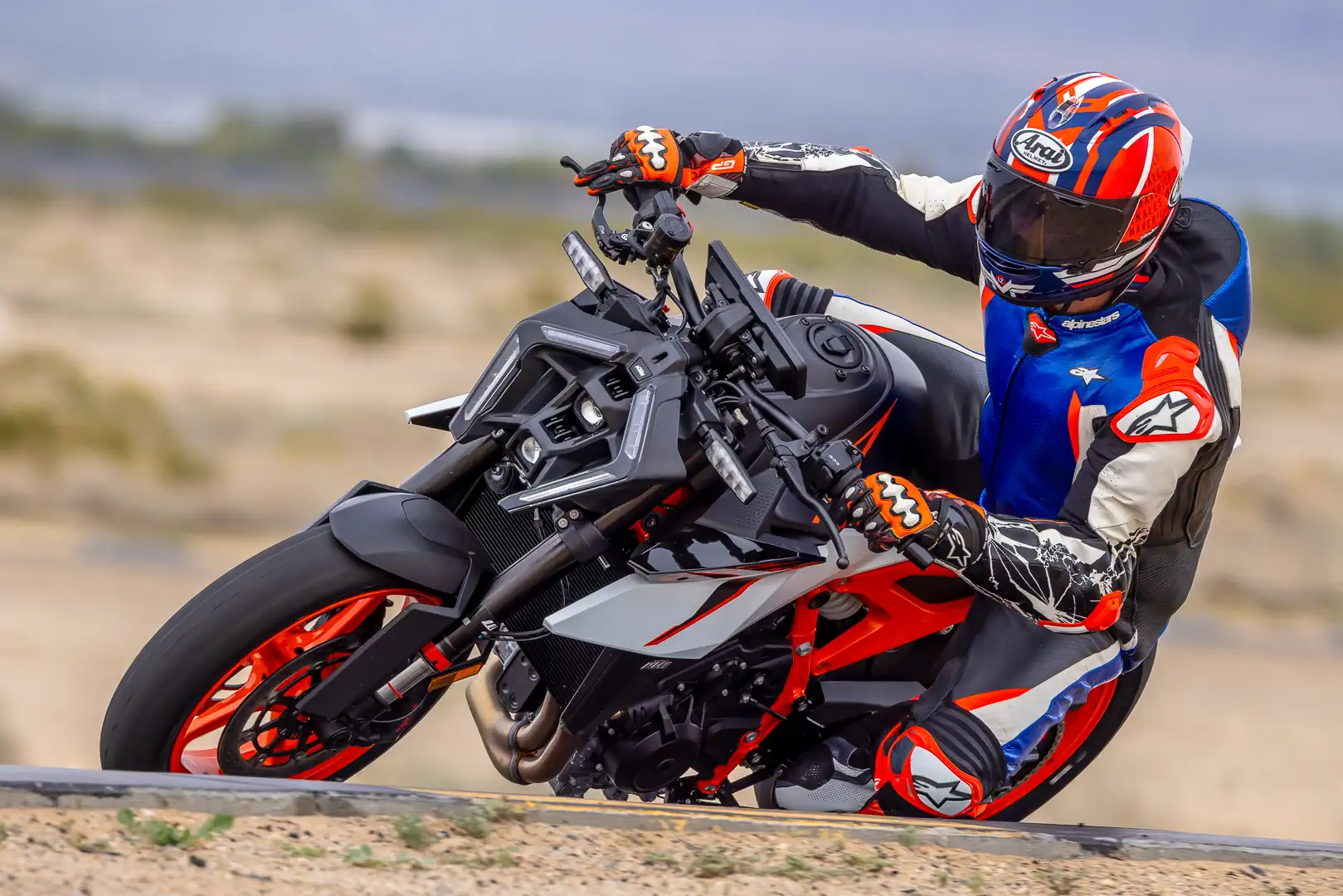
What’s felt on the street transfers to the racetrack, though there are points to discuss. Nimble handling defines this machine on the road, as the Duke R uses its sturdier suspension to sit 0.6 inches higher, eking out an extra few degrees of lean. Interestingly, the Duke R uses the same spring rates as the RC R supersport, but with valving suited for a naked street bike’s purpose. Meanwhile, the lengthened wheelbase doubles down on the planted sensations, especially when cranked over on Chuckwalla’s flowy tarmac. The trade-off is that its impressive road agility isn’t as pronounced when accelerating or braking harder due to using more suspension stroke, which significantly alters the geometry. Stability can sometimes read as being locked in once you’ve set your corner trajectory; coaxing the Duke R back to the apex without preparation requires extra body English and patience.
Here’s how the suspension stuff shakes out, friends. According to KTM staffers, a primary design goal is always to make its street motorcycles perform as well as possible at the racetrack, as long as that doesn’t compromise its roadworthiness. It’s a reassuringly practical take from a brand known for its lack of subtlety. Naturally, there will be some goalpost shuffling, depending on the product. Still, the 990 Duke R is a street bike first and foremost. Sure, stiffening the stock springs and/or valving would potentially make it a better track weapon for my 190-plus-pound frame. Conversely, tuning for racetrack use chips away at its excellent compliance and grip on the road. So, what we’re left with is one hell of a road bike that can also hang at track days. We can’t have it all, but we can often get close.
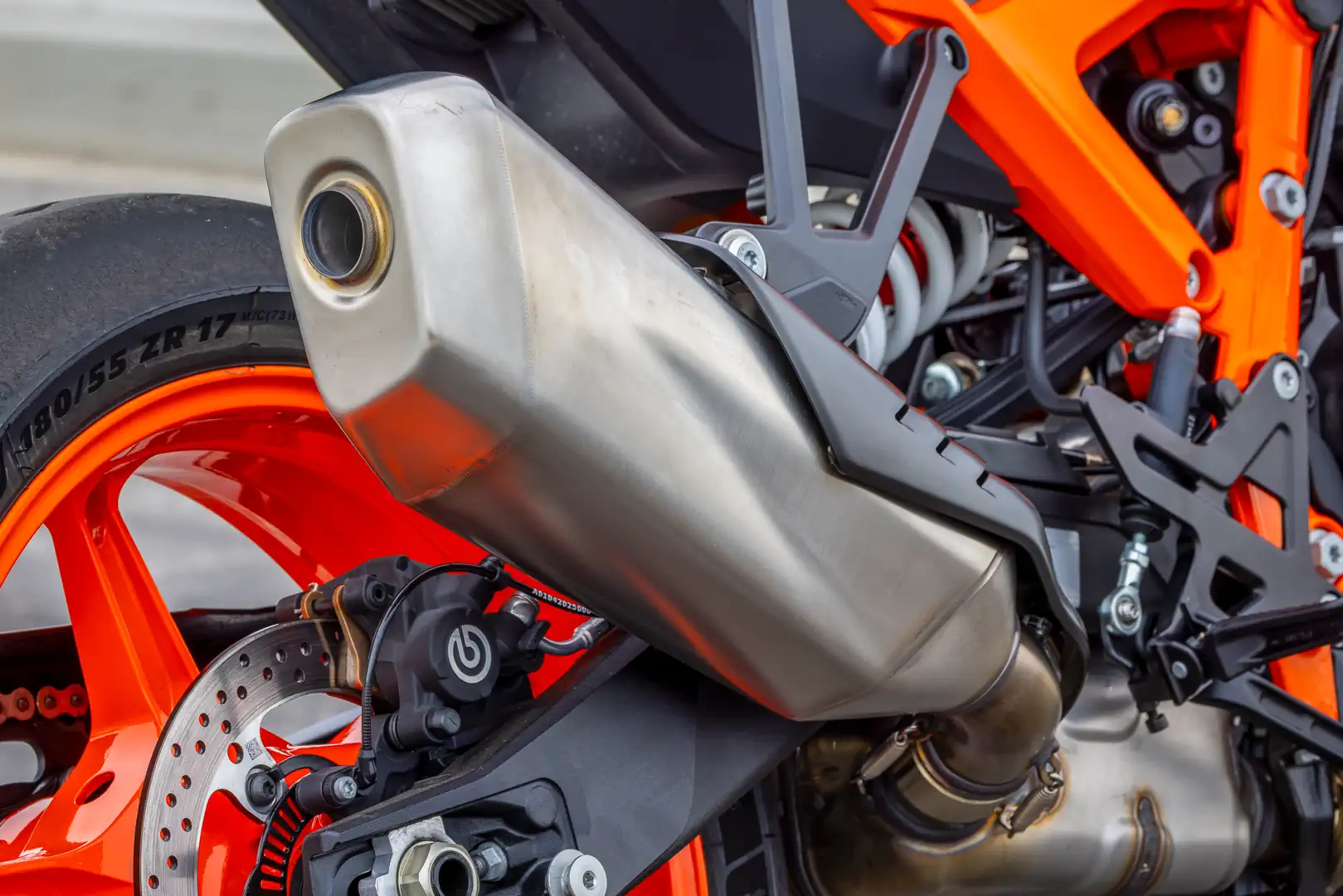
Braking comes to us by way of Brembo. A point of interest to eagle-eyed spec-sheet warriors is that the R’s Brembo Stylema calipers and 320mm rotors are a clear step above the J.Juan binders and 300mm discs on the base Duke. We have extra feel and stopping power, as well as the swish Brembo MCS span-and-ratio adjustable master cylinder. While on the subject of stopping, ABS modes expand to four total settings: Road, Sport, Supermoto+, and Supermoto. Road is self-explanatory, while Sport lessens the leash in aggressive road settings. Supermoto is front-only ABS, leaving it up to the rider to use the rear brake. Meanwhile, Supermoto+ modulates the rear brake and allows riders to kick the rear out roughly eight degrees before intervening. In either of the Supermoto-dubbed settings, cornering ABS is disabled, making them the preferred option for racetrack use.
While Michelin Power Cup 2 tires are standard, we were treated to Dunlop Sportmax Slick rubber for the racetrack. The Power Cup 2 is essentially a road-legal track day tire, meaning it is exceedingly capable in the canyons and won’t shy away from laps at pace. KTM North America wanted to extract a little extra zhuzh from our test units and mounted Dunlop Sportmax Slick R7 front and R8 rear compounds. These are certainly on the harder end of the brand’s compound spectrum, and were chosen mainly for their durability. Slides, squirms, and the like were predictable through our four 30-minute sessions, while their wholly respectable grip remained consistent as laps wore on. There is, perhaps, not as much outright grip as seen in the competition, though not nearly the same drop off.
The 990 Duke platform pulls on more serious threads than those that informed it, simply by virtue of its larger size and greater performance. We’ve come a long way from the playfulness of the sprightly 790 Scalpel, which grew into the livelier 890 Super Scalpel. Now, we’re face-to-face with what Mattighofen marketers call The Punisher. The 2026 KTM 990 Duke R stands at the pinnacle of the brand’s middleweight Dukes, expanding on the platform’s strengths, particularly with respect to chassis performance. If you’re hankering to take advantage of that, then the upgraded suspenders will hold their rightful appeal when pushing in the canyons or at the racetrack. And for all its sport-aligned upgrades, the Duke R proves itself to be a nice ride on the streets. The slick electronics and TFT add a premium feel, but let’s just get to the point: this one is a certifiable ripper.
Hello and welcome again to the Motos and Friends Podcast. This episode is brought to you by Leod Escapes.
* * * * *
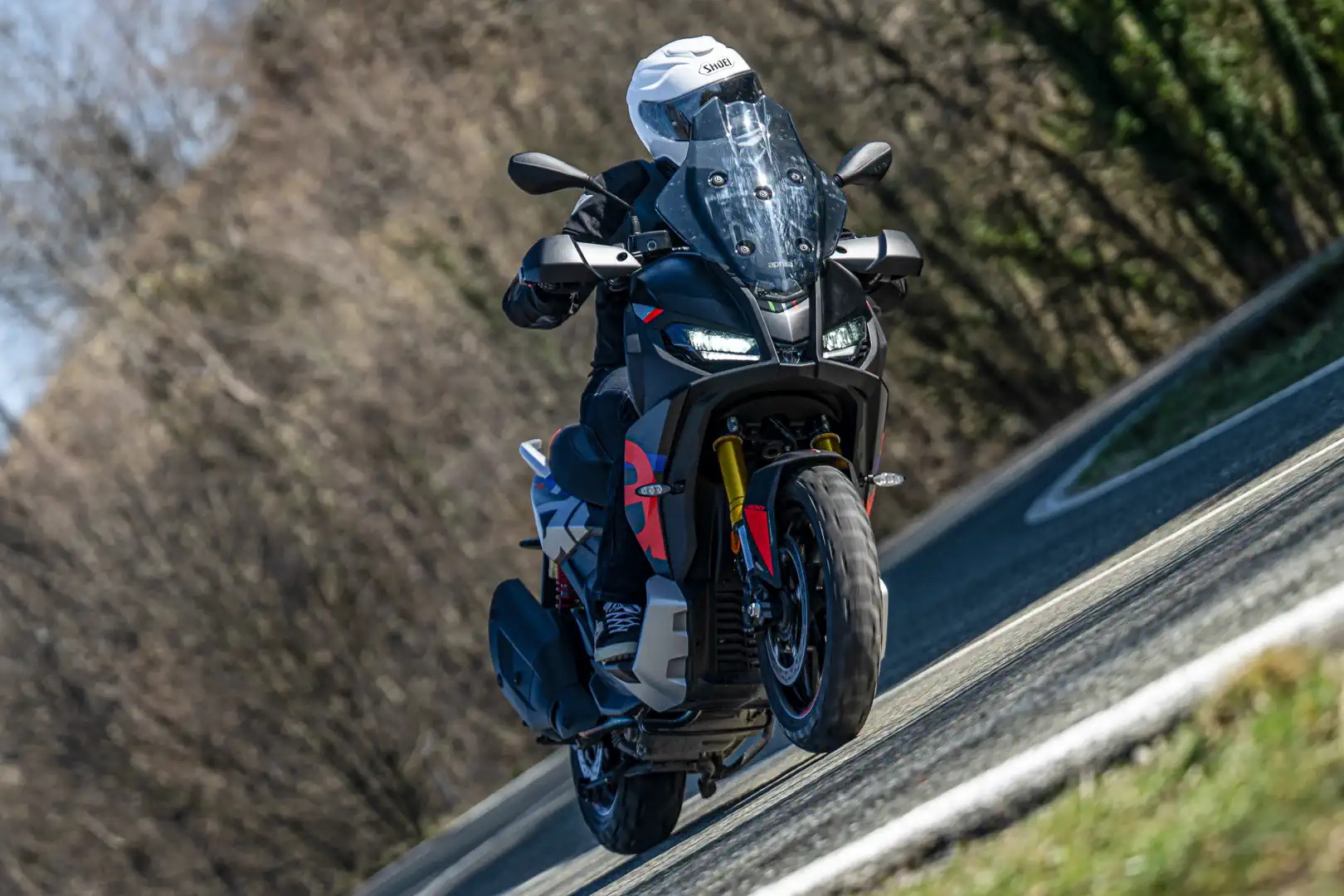
Aprilia is bringing a scooter to North America, and it’s one designed to appeal to adventure motorcyclists. The SR GT 400 is a mid-size scooter built around a steel motorcycle-style frame, a 399cc single, and off-road-ready hardware. It reaches US dealers as soon as this month. Don Williams and Kelly Callan spent some time riding the Aprilia and were surprised by what they discovered. Is this a real motorcycle or just a good-looking urban scooter?
* * * * *
Cat McLeod is founder and owner of Leod Escapes, the ultimate tour company for sport-minded motorcycle riders. Cat talks to us this segment about some of his amazing European experiences and tours that include of course, riding some amazing MotoGP tracks on new BMW S1000RRs. If you like what you hear, now is the time to book your trip of a lifetime, so visit LeodEscapes.com to find out more.
* * * * *
Our guest this episode is Terry Vance, the multiple Motorcycle and Motorsports Hall-of-Famer. Terry is of course the former professional motorcycle drag racer, team owner, and co-founder of the high-performance parts company Vance & Hines. Teejay Adams chats with Terry about his incredible career that includes being the first rider to hit 200 mph in the standing quarter-mile.
Having won this year’s MotoAmerica Mission King of the Baggers championship with Hayden Gillim riding the Vance & Hines factory Indian Challenger, and with Harley-Davidson’s recent withdrawal, Terry gives us his thoughts on where the series might go from here.
* * * * *
Here’s quick reminder to check out our monthly digital magazine. It’s filled with everything you want to read on motorcycling, including some things you’ve probably not seen elsewhere. It’s absolutely free and you will find it on the Apple App Store and of course on Google Play as well.
Don’t forget to leave us your comments on our social media—we’re on all the usual platforms at Ultimate Motorcycling. We love hearing your feedback… so good or bad, please let us know what you think. If there’s something you’d like us to cover, we’d love to hear those ideas too!
We use cookies and browser activity on this website
Functional
Always active
The technical storage or access is strictly necessary for the legitimate purpose of enabling the use of a specific service explicitly requested by the subscriber or user, or for the sole purpose of carrying out the transmission of a communication over an electronic communications network.
Preferences
The technical storage or access is necessary for the legitimate purpose of storing preferences that are not requested by the subscriber or user.
Statistics
The technical storage or access that is used exclusively for statistical purposes.The technical storage or access that is used exclusively for anonymous statistical purposes. Without a subpoena, voluntary compliance on the part of your Internet Service Provider, or additional records from a third party, information stored or retrieved for this purpose alone cannot usually be used to identify you.
Marketing
The technical storage or access is required to create user profiles to send advertising, or to track the user on a website or across several websites for similar marketing purposes.