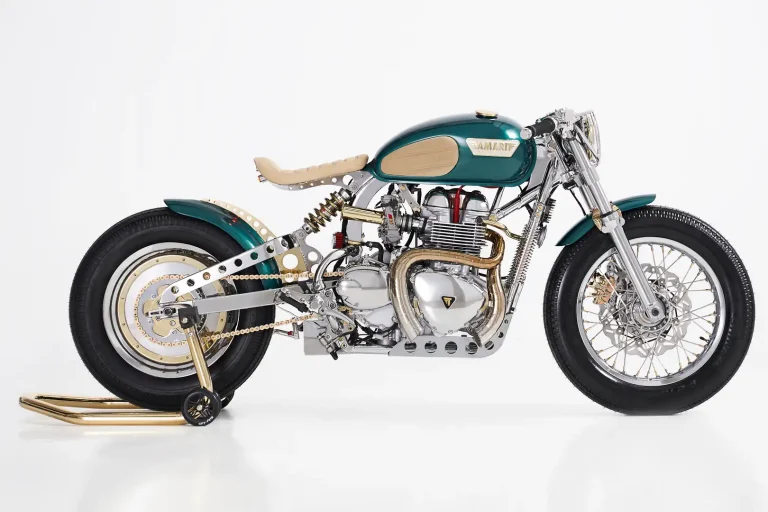
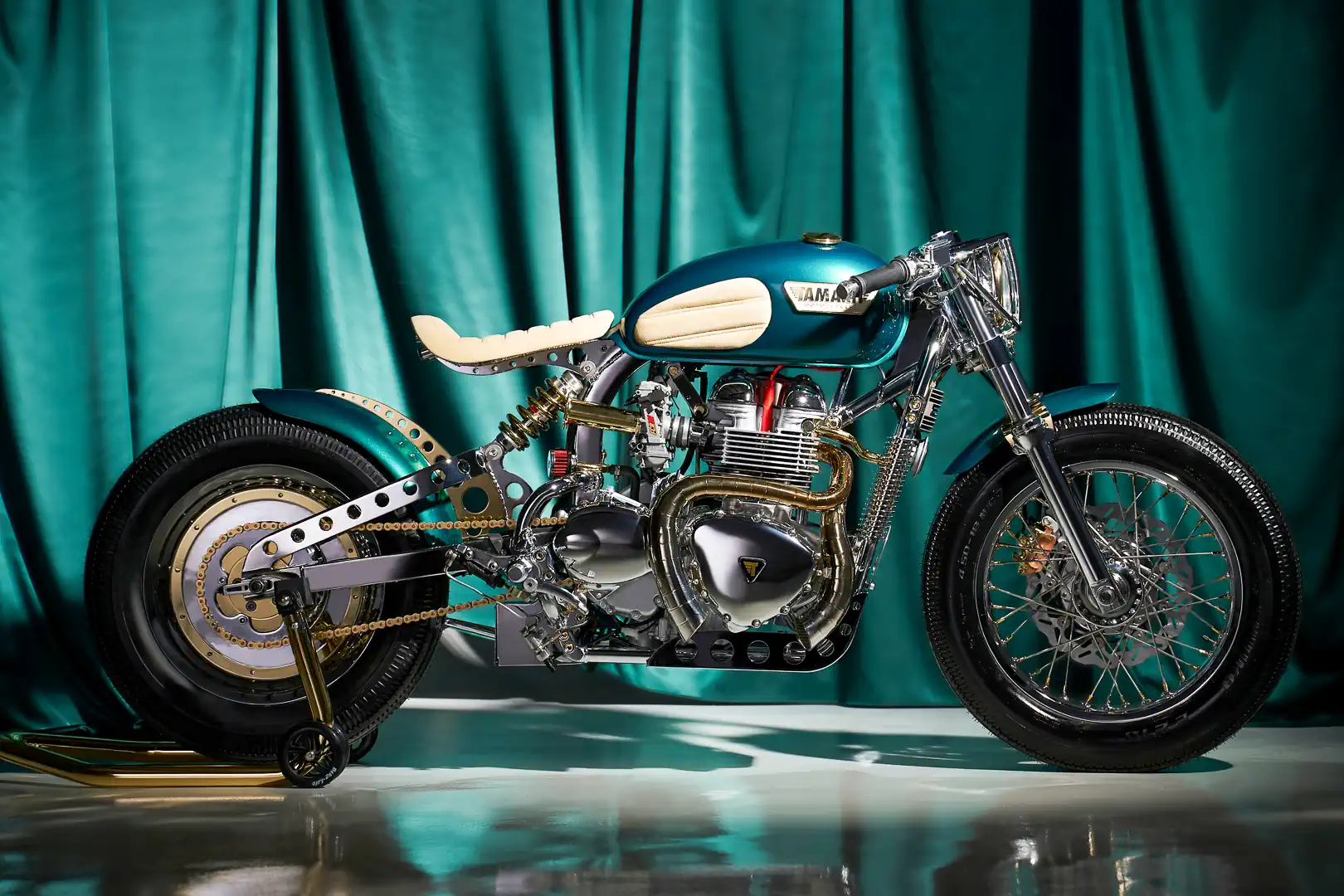
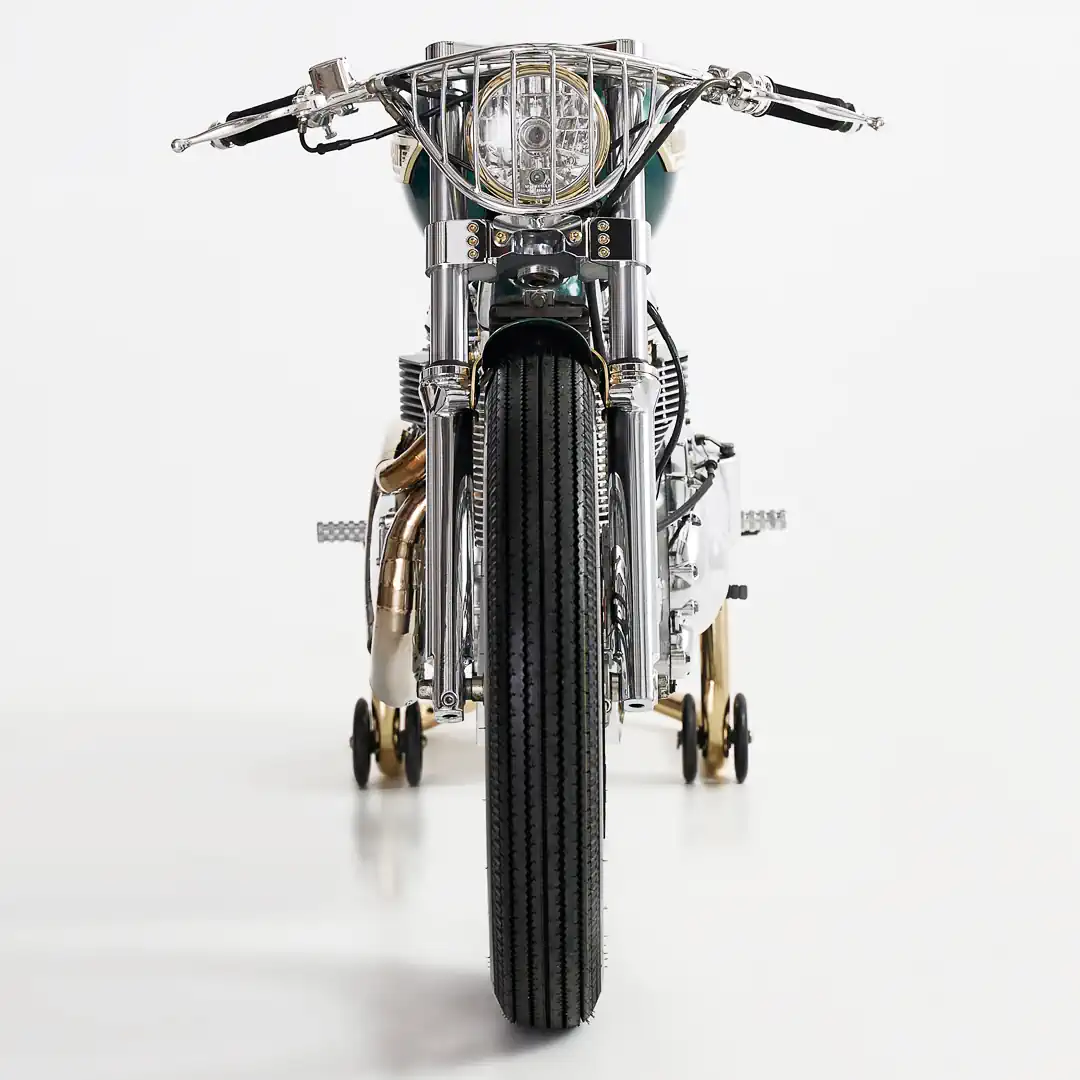
In the halls of the Grand Palais Historique in Paris, a motorcycle stood, less as a machine and more as a finished sculpture. The Tamarit Emerald, Lot 469 at Bonhams‘ Les Grandes Marques du Monde sale, sold for €28,750. It entered the auction without reserve, carrying the quiet confidence of an objet d’art that already knew its worth.
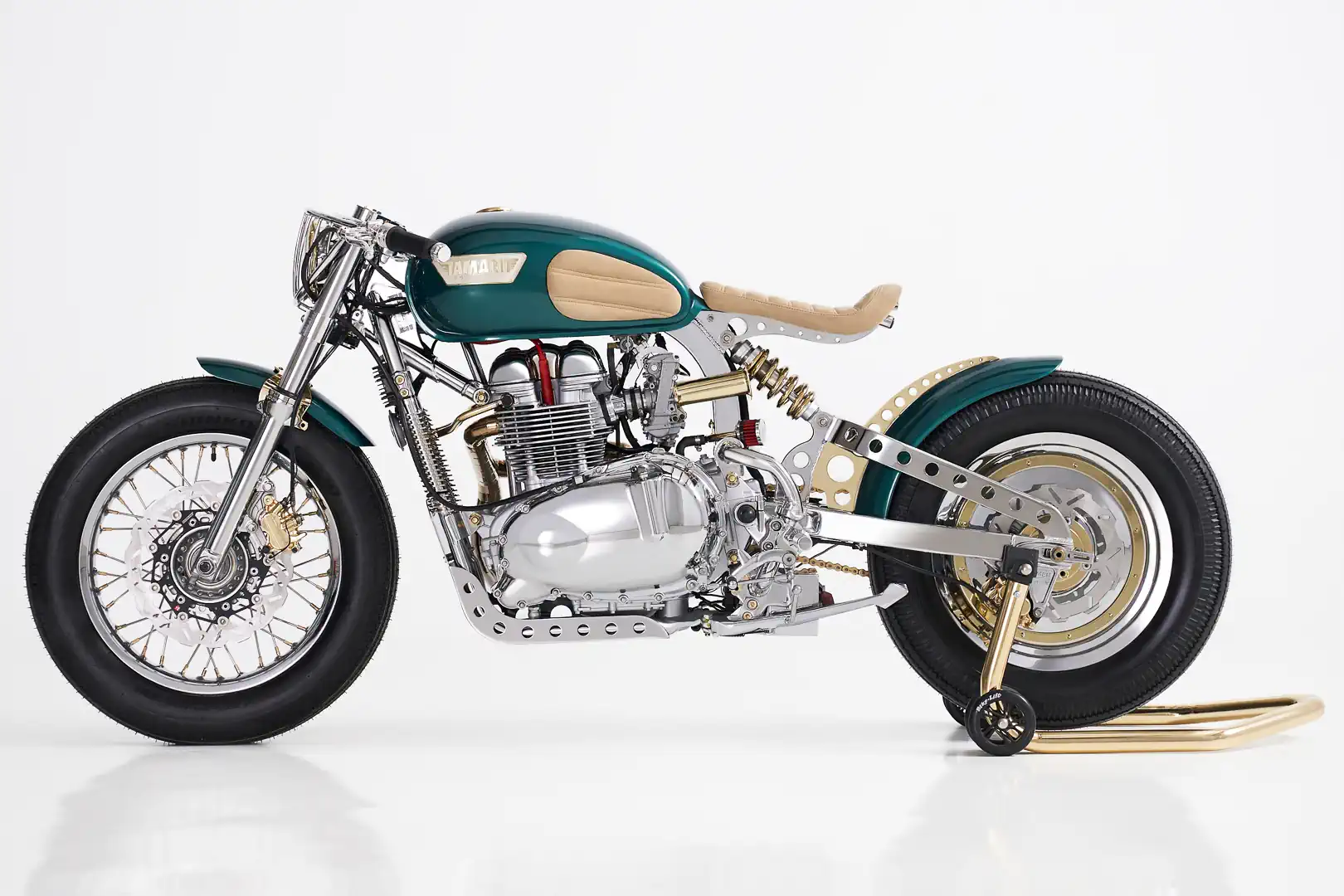
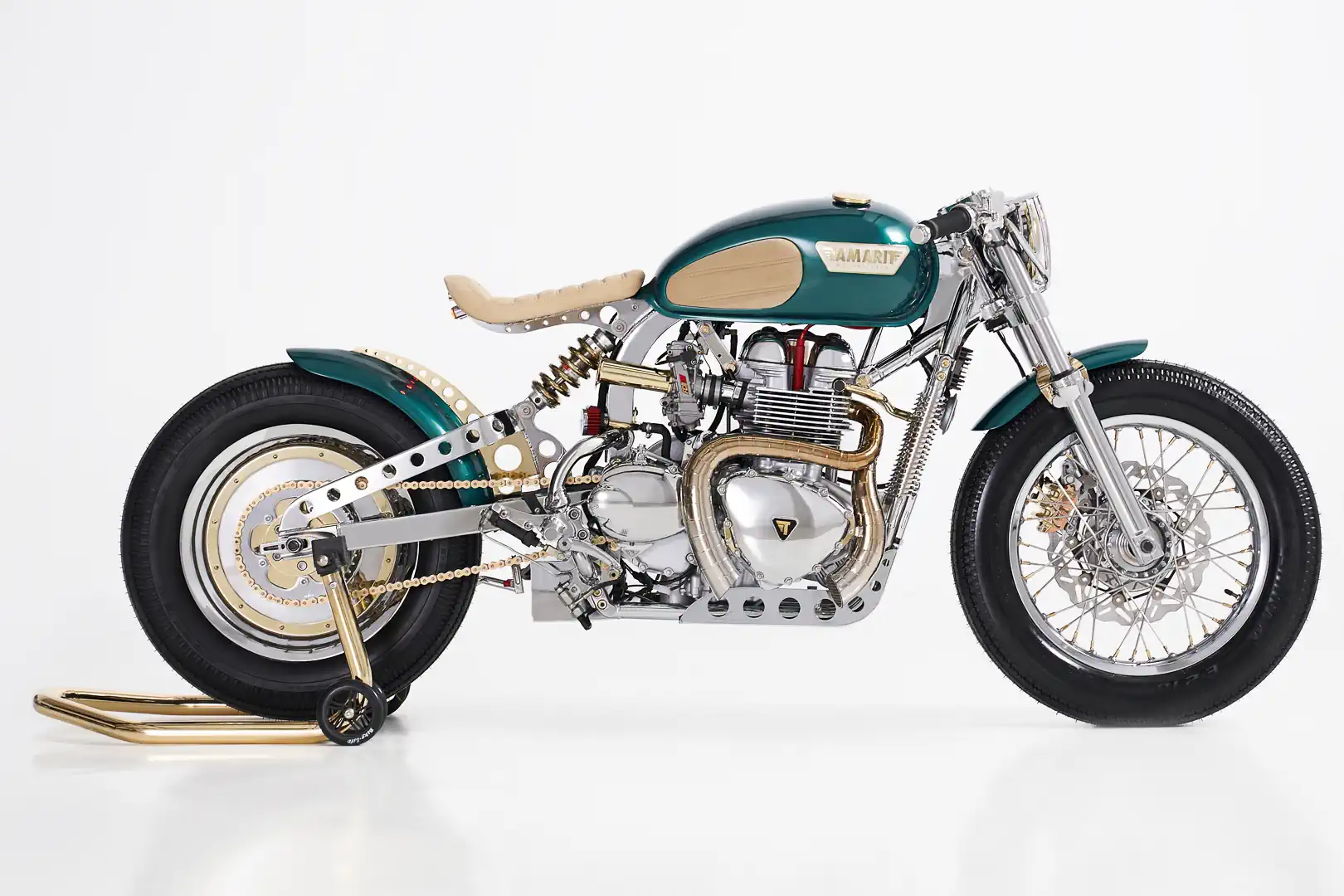
This is a custom motorcycle that presents itself with the restraint of a well-cut gemstone. Its color is a deep, saturated green that shifts between forest shadow and polished emerald under changing light. Chrome surfaces catch and throw that light back in hard, clean flashes.
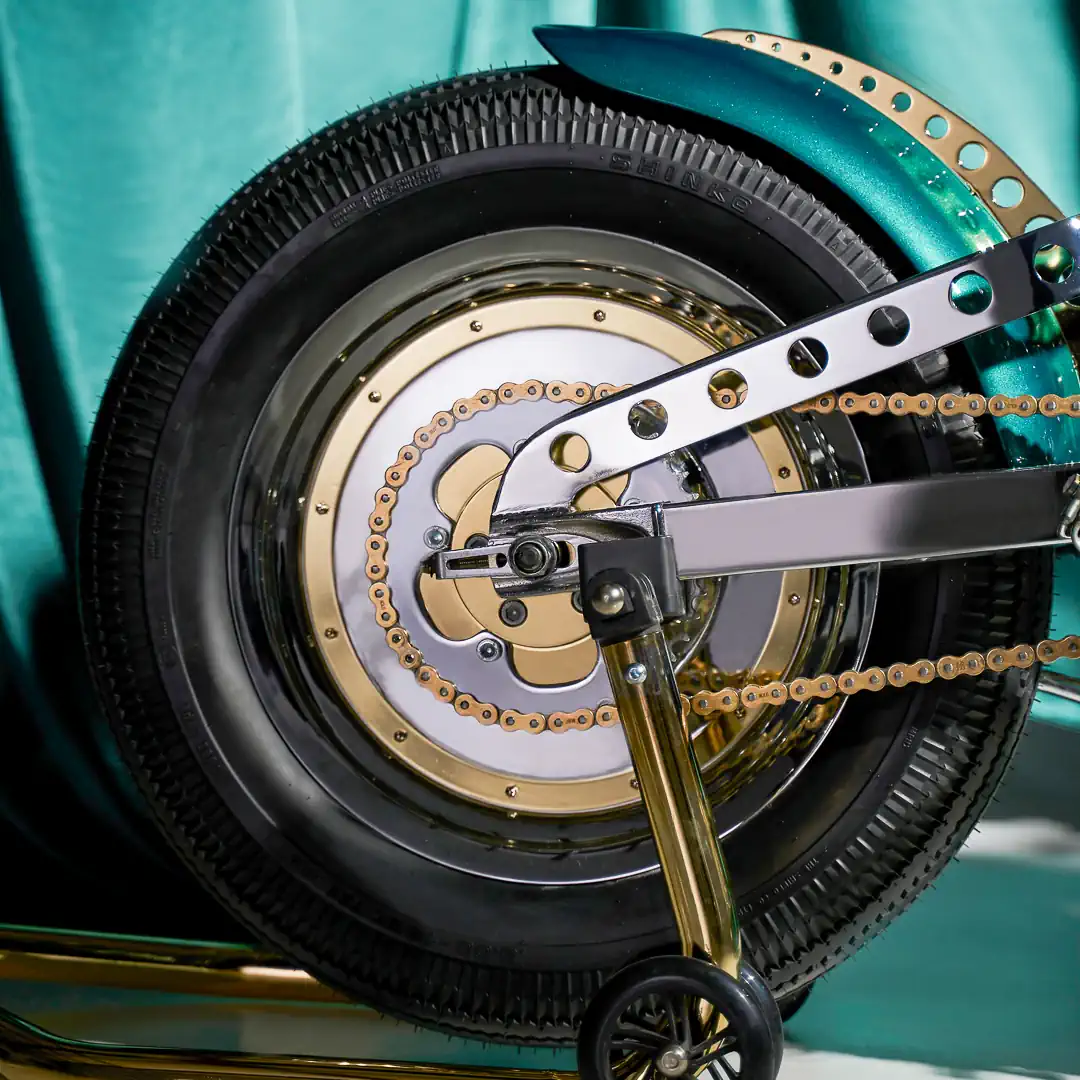
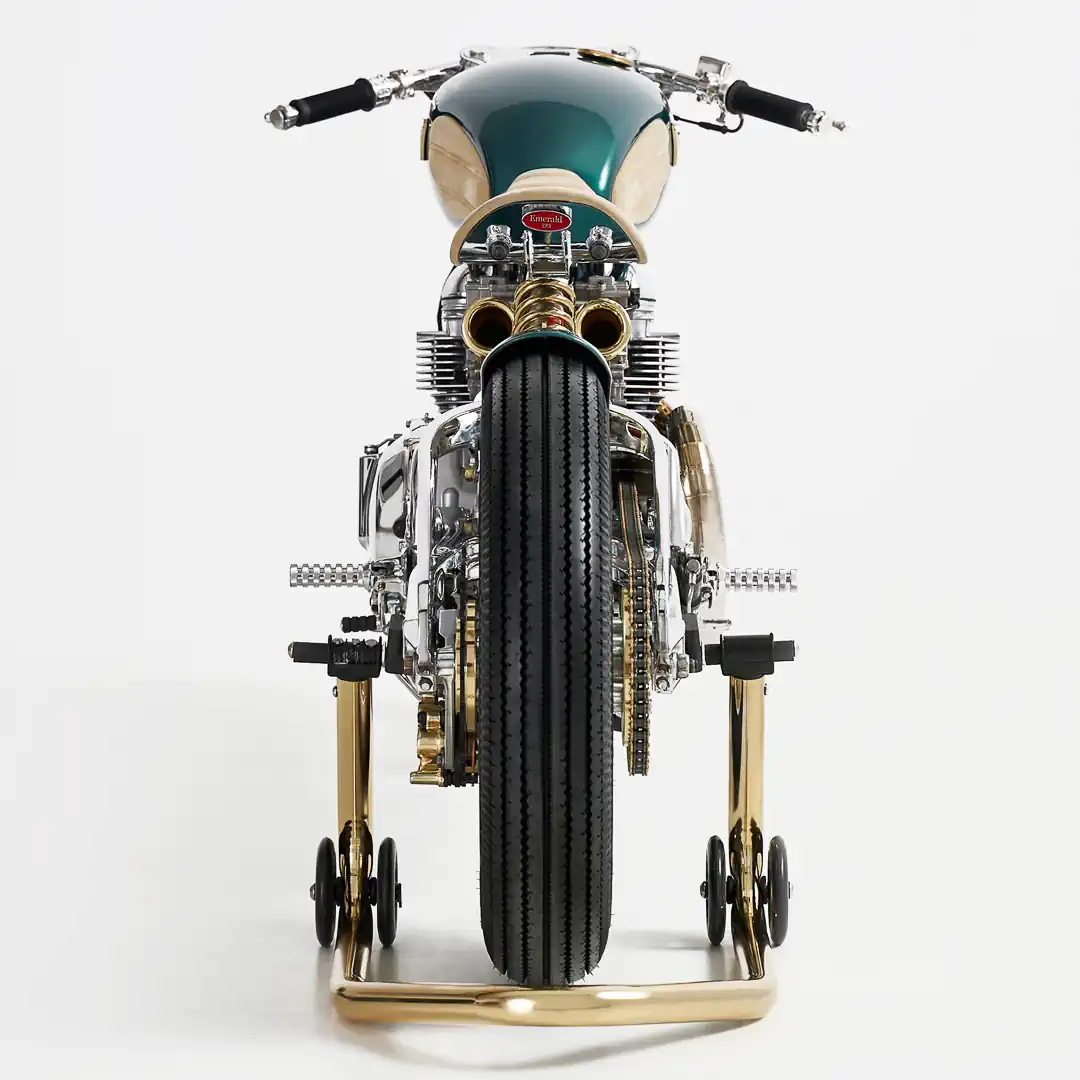
The overall silhouette is long and low, stretched by a carefully extended swingarm. In contrast, the meaty, high-profile tires deliver a strong sense of presence.
Tamarit Motorcycles is a Spanish workshop based in Elche. It began when Quique, a designer and maker of leather shoes, was asked to create leather parts for a custom bike.
The work succeeded. Demand followed.
Quique soon joined forces with his co-founder, Matías, and the side project became a full company. Since then, Tamarit has built more than 129 one-off machines, almost all of which are rooted in Triumph’s modern twin-cylinder platform. Their specialty is not modification in the usual sense. It is reconstruction. Tamarit takes a production motorcycle and rebuilds it until nearly every surface, line, and material has been reconsidered by hand.
Tamarit describes its most ambitious machines as “jewel motorcycles.” Jade and Circe came first. Emerald became the next stone in that series. The name is deliberate. Emeralds have long been linked to ideas of power, endurance, and a kind of lasting youth.
Tamarit treats those associations seriously. The green paint is not decoration layered on top of a chassis; it is the central visual idea from which everything else grows.
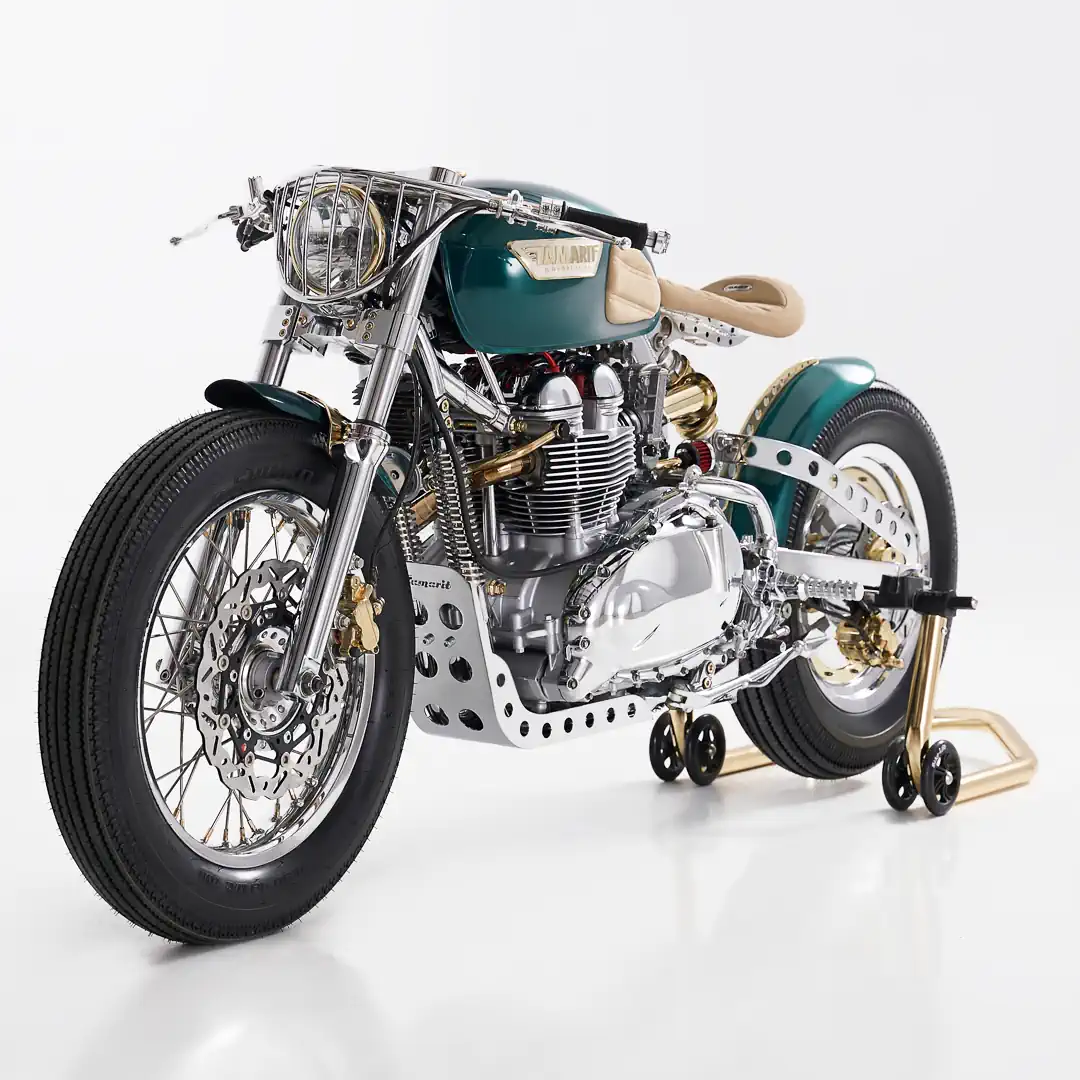
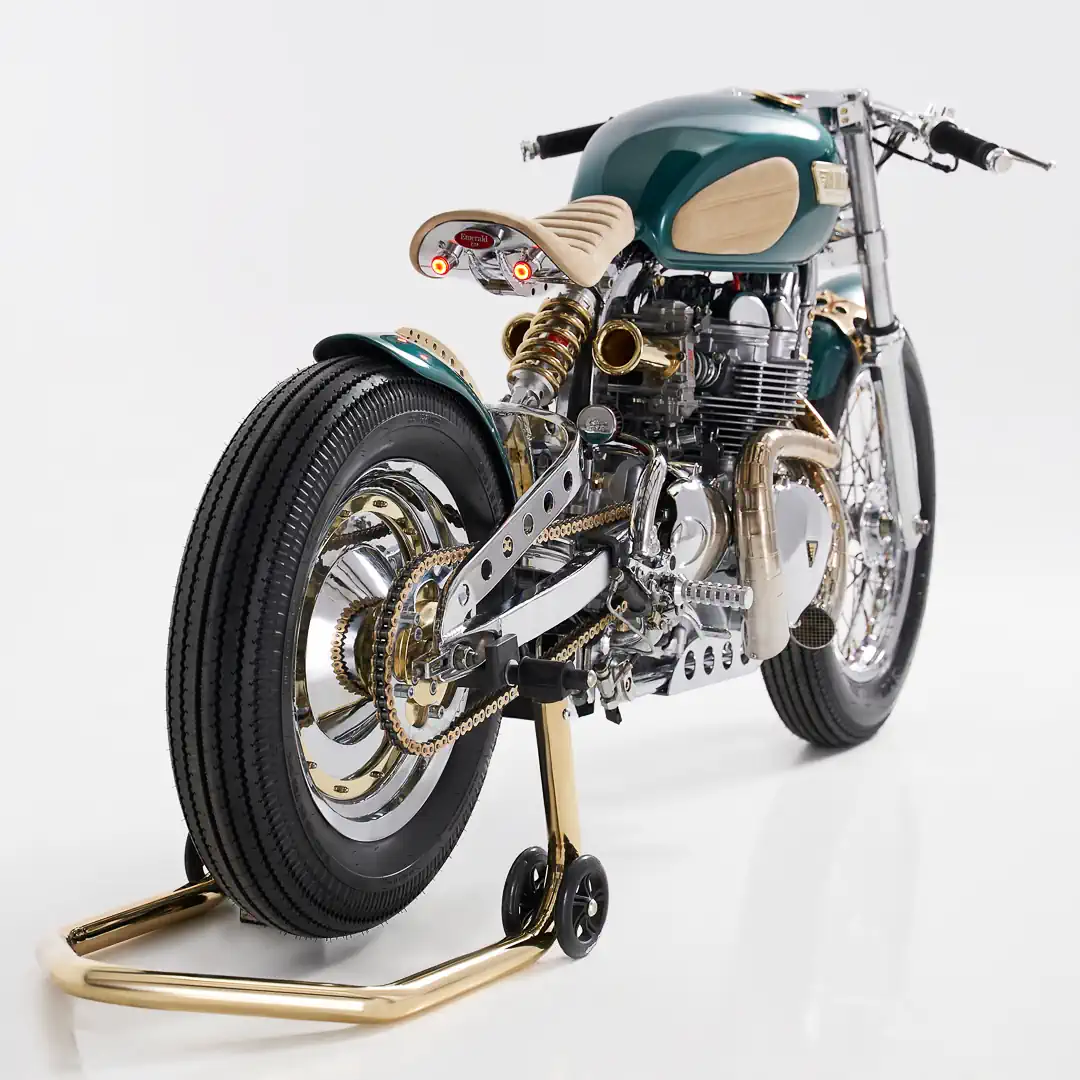
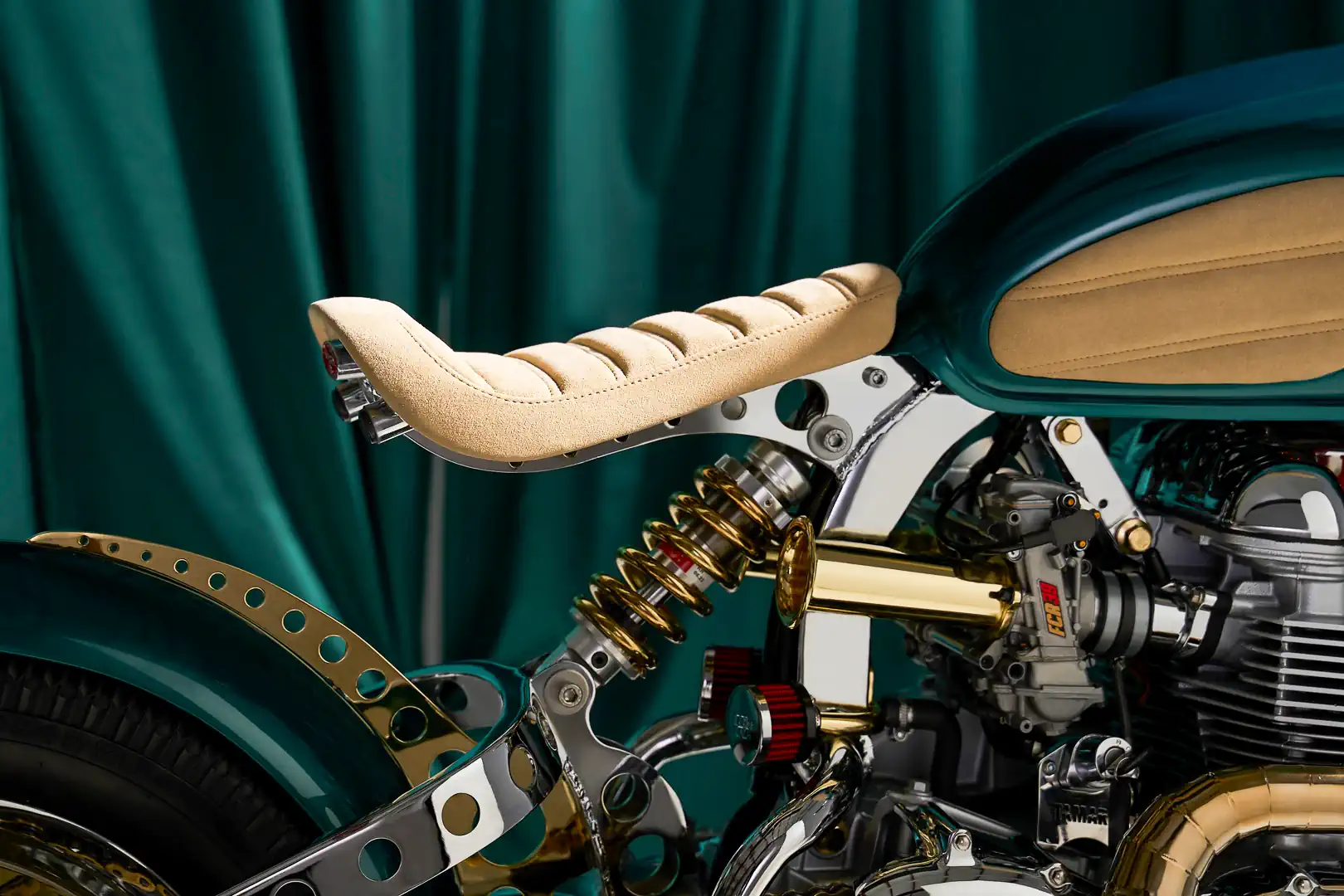
Look closely at the tank and seat. Hand-shaped pads sit flush with the tank sides. The edges are so carefully fitted that two surfaces become one continuous form. The seat itself continues that line rearward, clean and low.
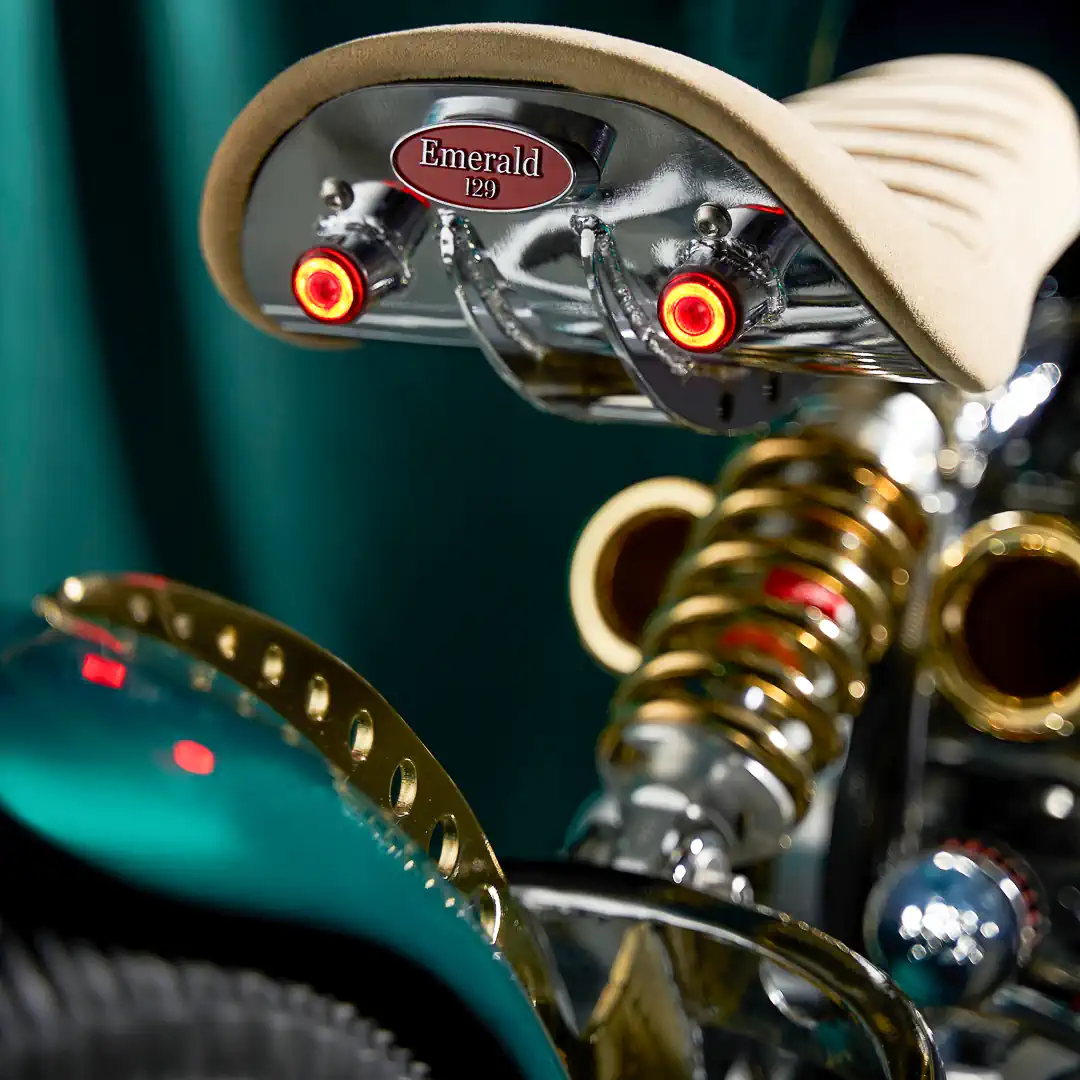
At the rear of the seat base, thin LED strips are embedded. The brake light and turn signals become part of the structure, rather than additions to it. Yes, this is a motorcycle intended for street use.
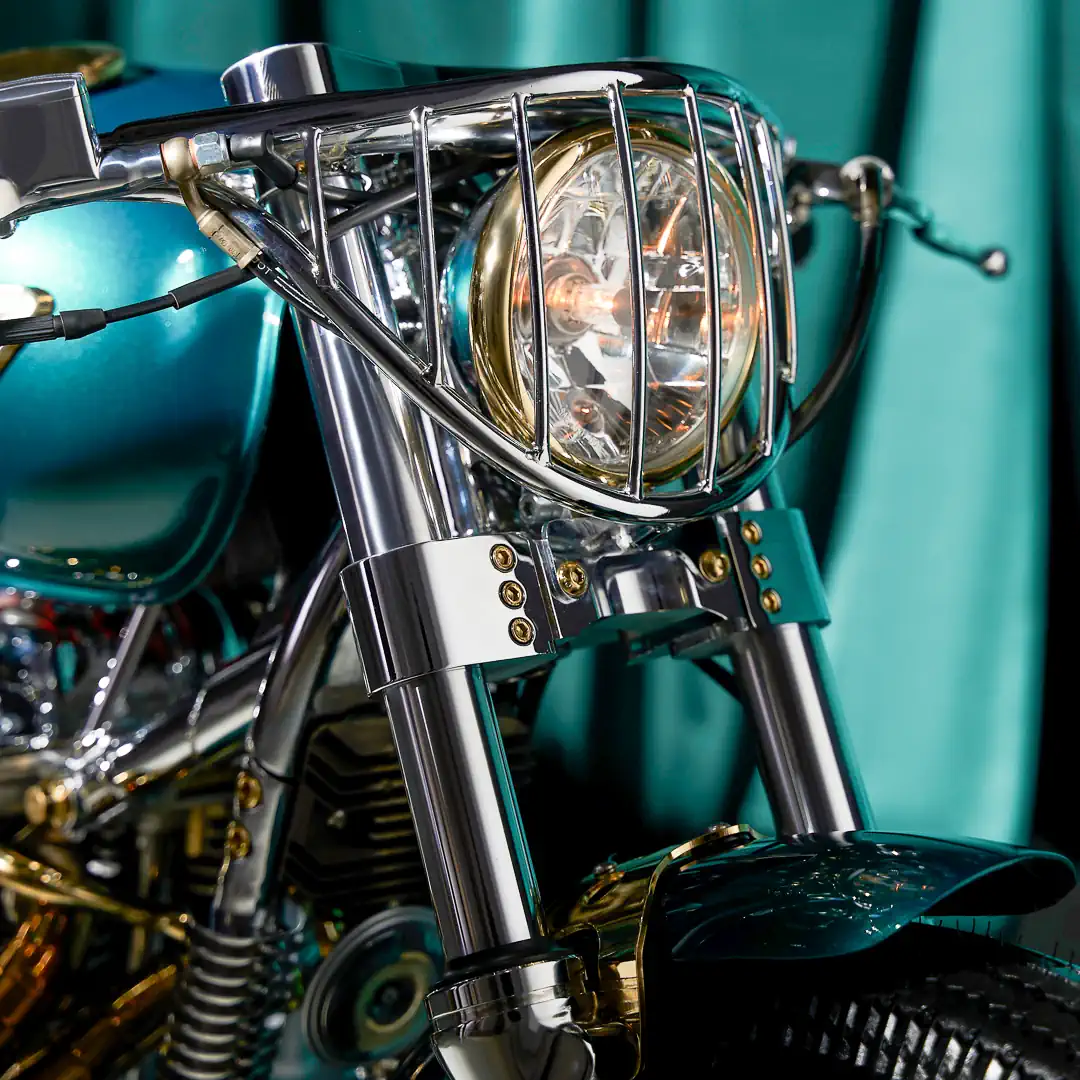
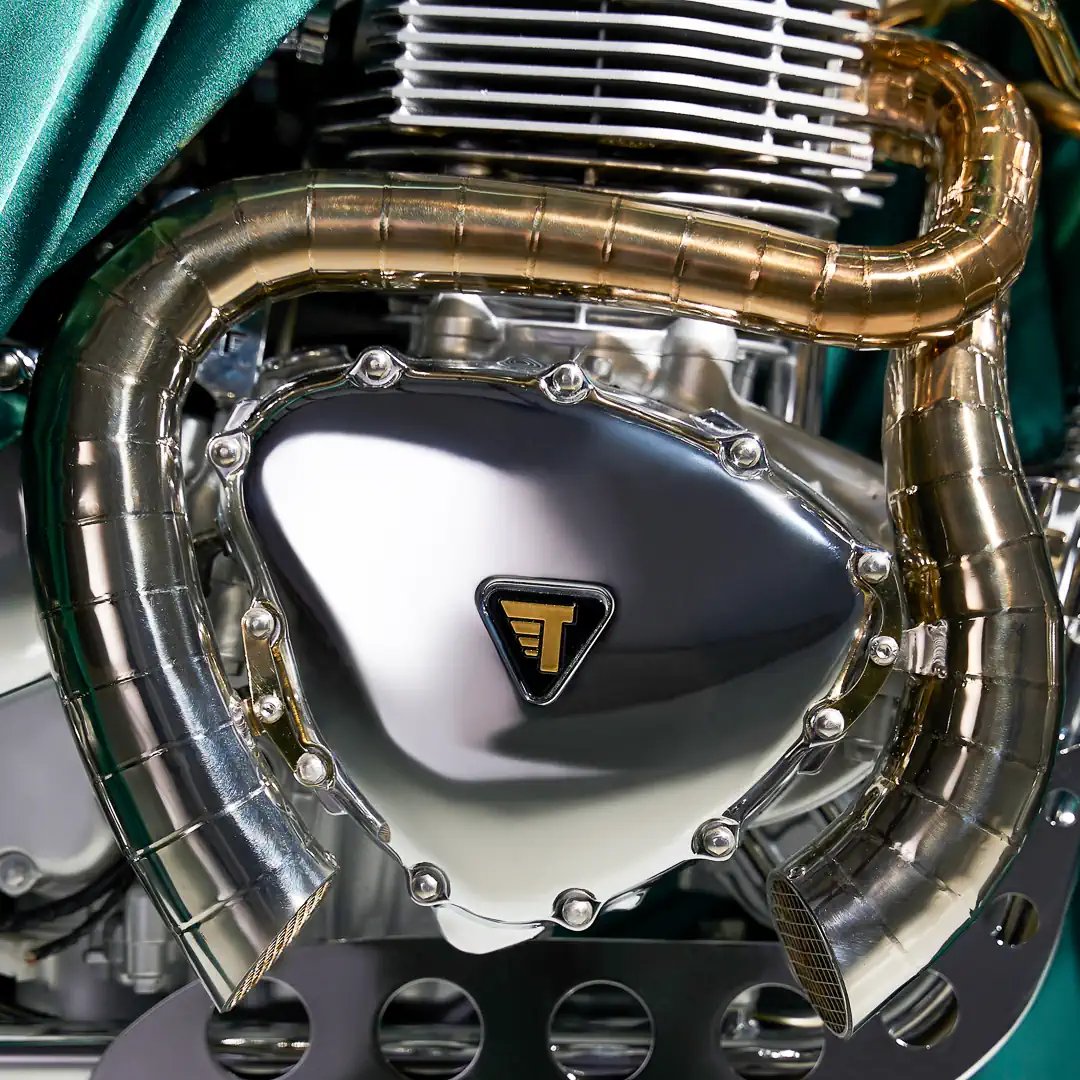
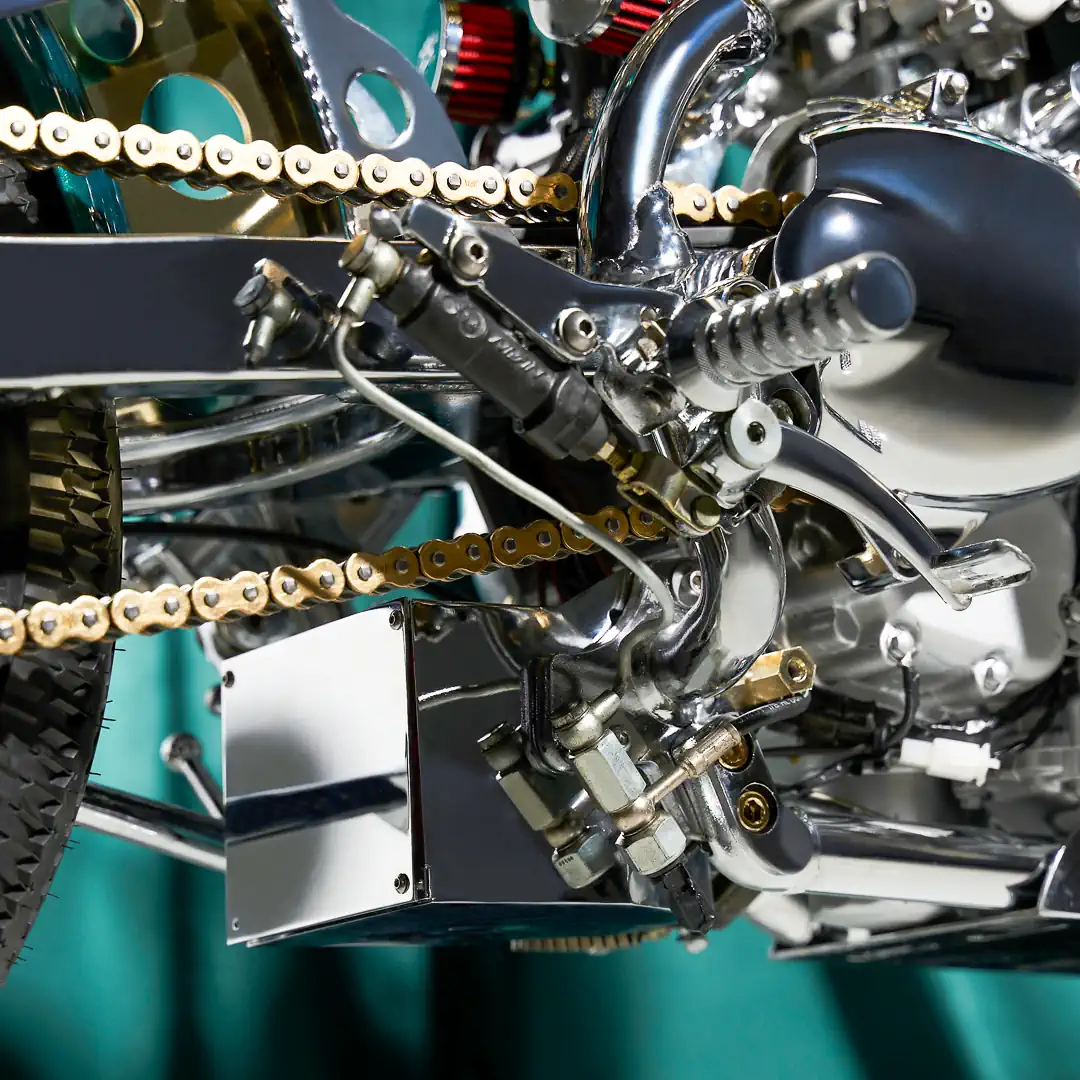
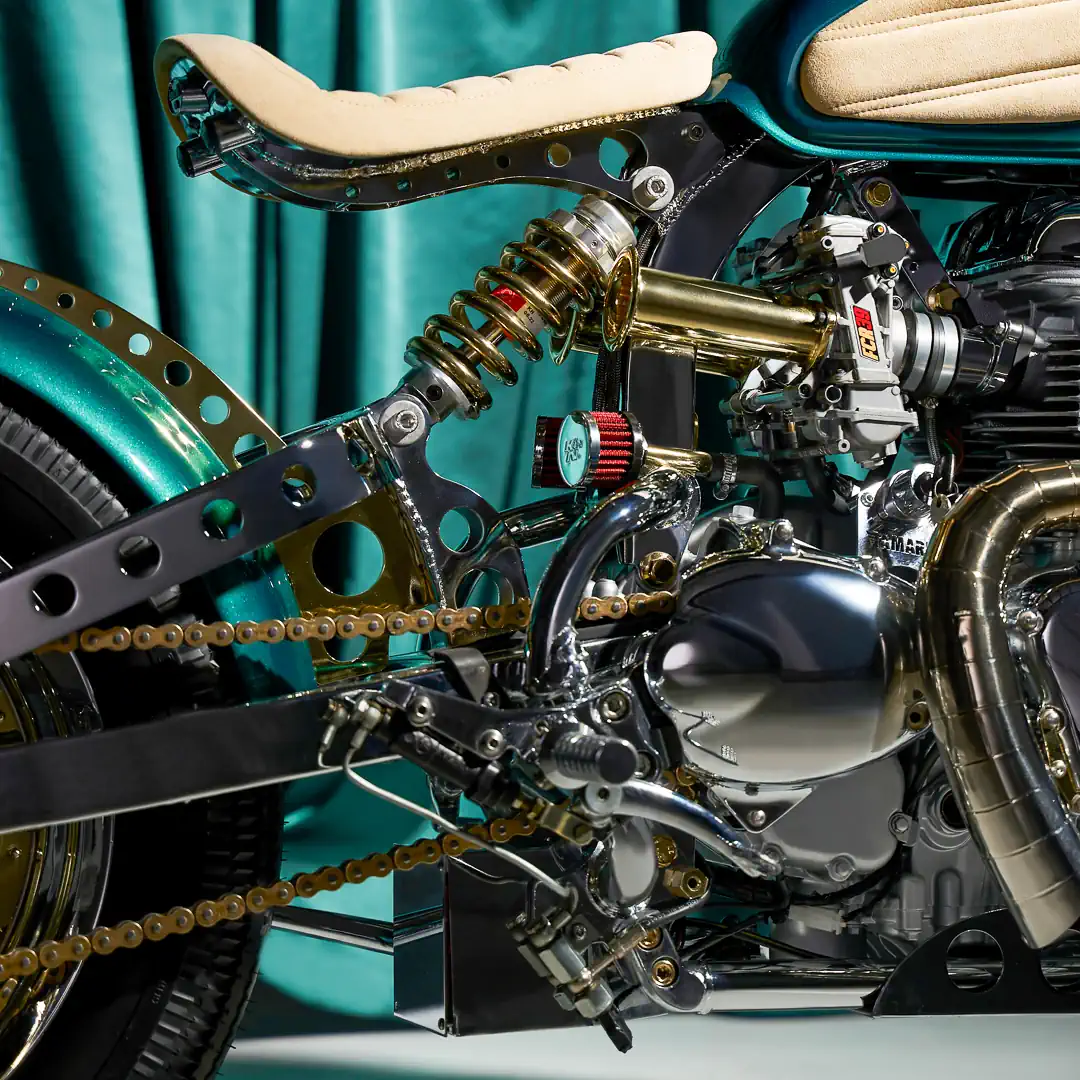
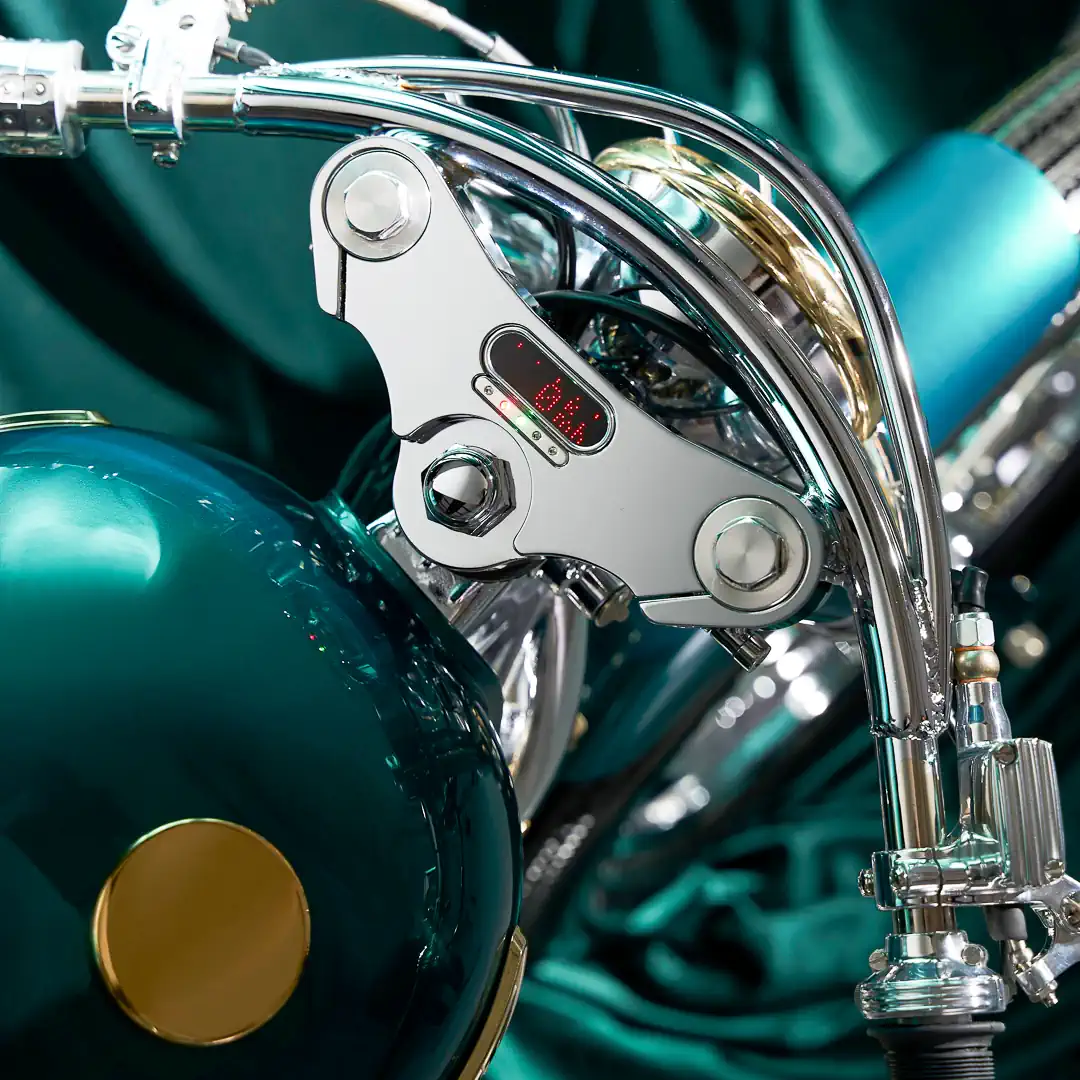
Chrome is used with restraint rather than excess. Nearly every metal surface has been plated until it reflects like a mirror. The process is slow and laborious, involving hundreds of hours of preparation, polishing, and finishing. Brass-plated fasteners and a gold chain pick up the warm tones against the cooler green and silver. The effect is controlled brilliance, best understood by the patient viewer.
The complex handlebar curves frame the headlight from both above and below. The handlebar acts as a kind of grille, giving the front of the motorcycle a composed, almost architectural face.
Short, low exhaust pipes wrap around the stator cover in a shape made only for this machine. They do not simply route spent gases away; they complete the engine’s visual mass.
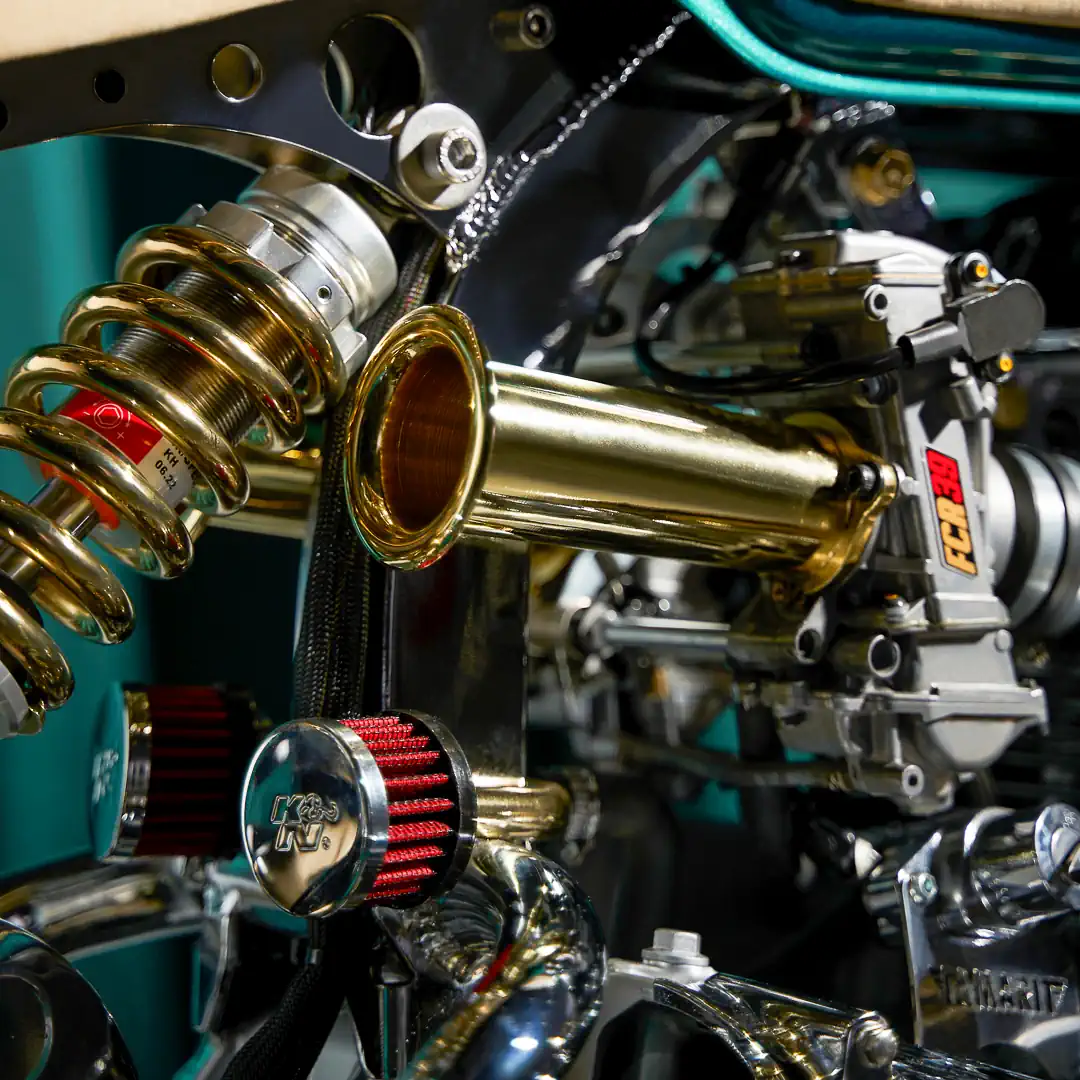
The cantilevered shock is deployed to allow the seat and rear fender to sit lower and cleaner than a conventional twin-shock arrangement would permit. The result is a silhouette that feels both classic and newly invented.
Even the mechanical heart has been treated as part of the aesthetic whole. The engine is a carbureted Triumph twin, restored and fitted with Keihin carburetors and filters that sit openly as sculptural objects.
Oversize pistons and internal engine work increase its presence in use, though the real statement lies in the sound and the visible hardware. In an age of fuel-injected powerplants and carefully regulated intake tracts, the open trumpets are a clarion call to return to something more tangible.
Eleven people worked on Emerald across more than 650 hours. It’s easy to see how it added up: frame, suspension geometry, cooling passages routed through the chassis itself, custom brackets, fiberglass rear fender with machined aluminum and brass supports. Almost nothing remains of the donor machine except the basic engine and transmission.
The chassis was modified and then laboratory-tested to confirm its safety. The electronics were simplified to ensure the visual field stays uncluttered, with the battery enclosed in a purpose-built metal box. Every decision serves the same goal: a motorcycle that holds together as a single, coherent object.
When looking at machines of this quality, there is a temptation to separate the art from the engineering. Resist it.
Tamarit understands that a motorcycle is experienced in motion and at rest, under changing light, and from different distances. Emerald is built for all of those conditions.
In the auction room in Paris, it stood among more traditional classics and racing machines. Its presence was different. It did not rely on rarity of provenance or competition history. It relied on the quality of its making and the clarity of its idea. A green stone has been cut and set into metal, leather, and light. The result is a motorcycle that asks to be appreciated as one would assess a carefully finished sculpture. It is done slowly, from several angles, paying close attention to the meeting of the surfaces and how the color holds.
That is the standard Tamarit has set for itself. Emerald meets it.
The modern superbike class is an arms race fought on several fronts. There’s still the battle for horsepower supremacy, that fuels endless spec-sheet skirmishes on internet forums. But what has caused more than a few designers to burn the midnight oil is the bold new frontier of MotoGP-inspired aerodynamics, and the challenge of integrating those into the already exceedingly complex superbike. Nic de Sena rode the new Kawasaki Ninja ZX-10R at a recent Laguna Seca track day with Volant Vivere and he tells us all about what he discovered and what it takes to go fast.
* * * * *
Now here’s a rally you absolutely cannot miss—yes, we’re rapidly approaching the 34th Annual Biketoberfest Rally in Daytona Beach, sunny Florida.Biketoberfest this year runs October 15th through the 18th. Biketoberfest is all about the beautiful Florida weather, live music, the industry’s top vendors, bike shows, and motorcycle racing at Daytona International Speedway. And don’t forget, there are miles of spectacular rides along the famous A1A, the historic Main Street and the Ormond Beach Scenic Loop. There really is something for everyone here, and almost every event and attraction is free to attend. So, if you want a fun few days out in the Florida sunshine, Biketoberfest really is the place to be. Make sure you download the Biketoberfest mobile App from Apple or Google Play or visit www.biketoberfest.orgfor more details.
* * * * *
Austin and Ellie got married in 2022 and recently returned from a four-year trip around the world riding their Ural sidecar. The epic trip is documented on their Instagram page @sidebysidecar. In this second segment, Teejay Adams chats with them about the challenges and effort it took to make it all happen, and some of the adventures they had along the way.
* * * * *
Here’s quick reminder to check out our monthly digital magazine. It’s filled with everything you want to read on motorcycling, including some things you’ve probably not seen elsewhere. It’s absolutely free and you will find it on the Apple App Store and of course on Google Play as well.
Don’t forget to leave us your comments on our social media—we’re on all the usual platforms at Ultimate Motorcycling. We love hearing your feedback… so good or bad, please let us know what you think. If there’s something you’d like us to cover, we’d love to hear those ideas too!
We use cookies and browser activity on this website
Functional
Always active
The technical storage or access is strictly necessary for the legitimate purpose of enabling the use of a specific service explicitly requested by the subscriber or user, or for the sole purpose of carrying out the transmission of a communication over an electronic communications network.
Preferences
The technical storage or access is necessary for the legitimate purpose of storing preferences that are not requested by the subscriber or user.
Statistics
The technical storage or access that is used exclusively for statistical purposes.The technical storage or access that is used exclusively for anonymous statistical purposes. Without a subpoena, voluntary compliance on the part of your Internet Service Provider, or additional records from a third party, information stored or retrieved for this purpose alone cannot usually be used to identify you.
Marketing
The technical storage or access is required to create user profiles to send advertising, or to track the user on a website or across several websites for similar marketing purposes.