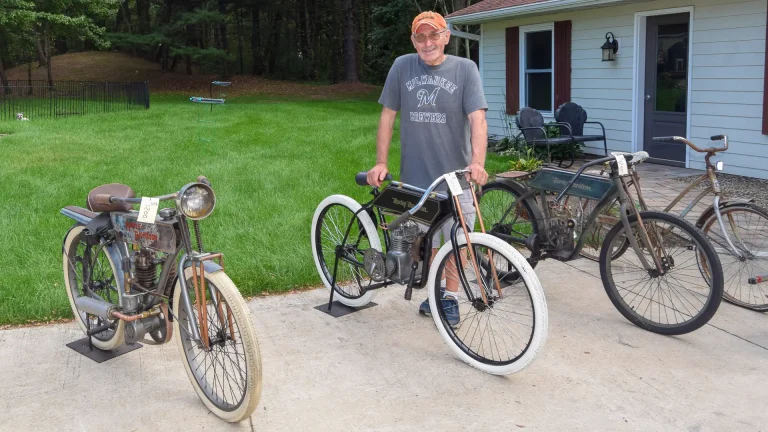
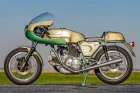
Remarkable replica builder Joe Hackl poses with some of his classic creations.
0:00
▶
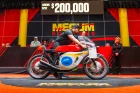
Many motorcyclists are fascinated by the notion of owning, riding, or even just examining one of those ultra-rare classics that show up at major international classic motorcycle auctions. How about taking a ride on a bicycle-framed 1904 BSA Minerva, which sold at auction this year for $23,100? Or maybe having a go on a 1912 Indian Hedstrom 4-valve board track racer, which sold at auction this year for $110,000? Or a 1922 Harley-Davidson 8-valve board track racer, which sold at auction this year for $93,500? Okay, these true classics from Mecum Auctions’ Las Vegas Motorcycles 2026 event may well be a little out of most riders’ price range.
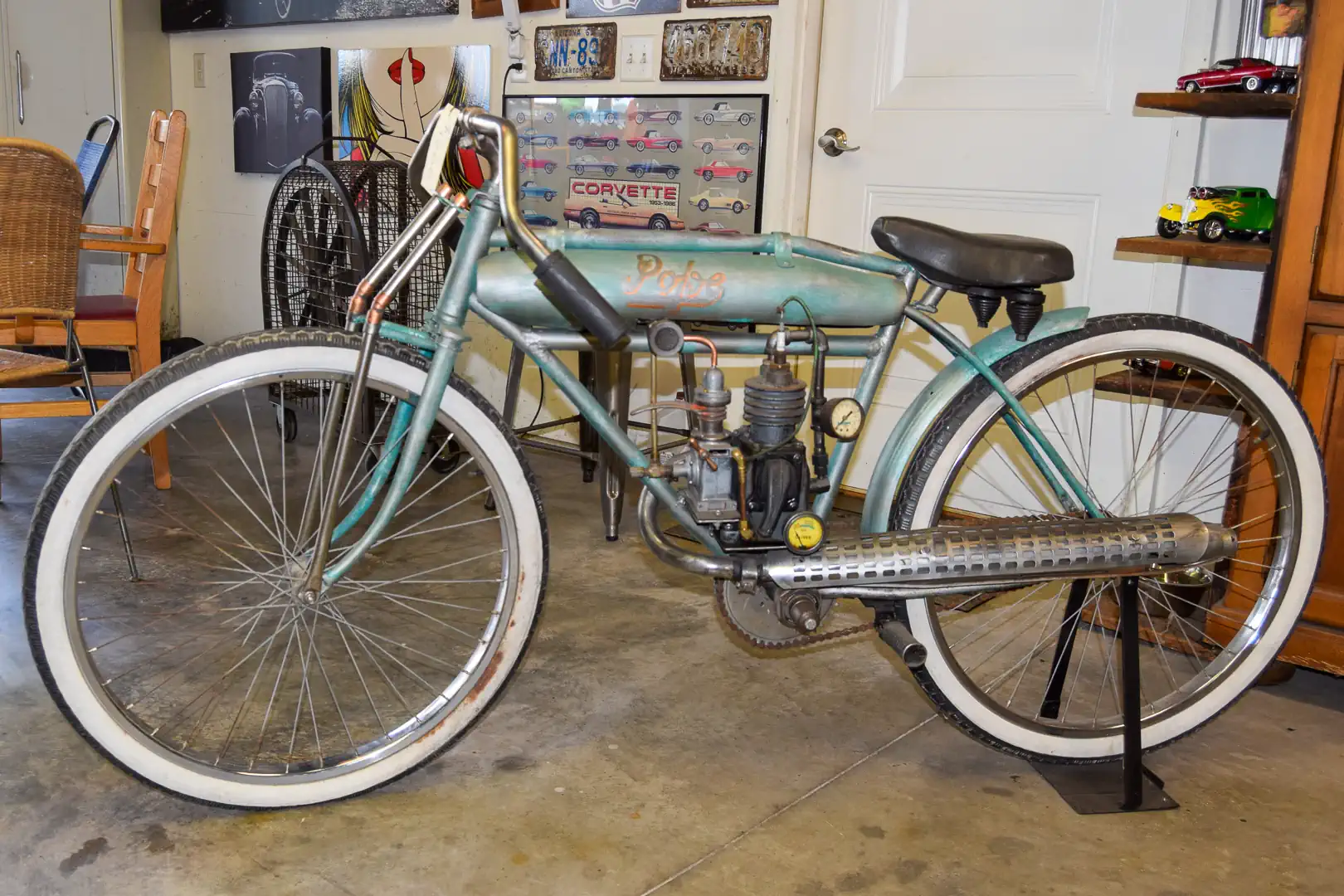
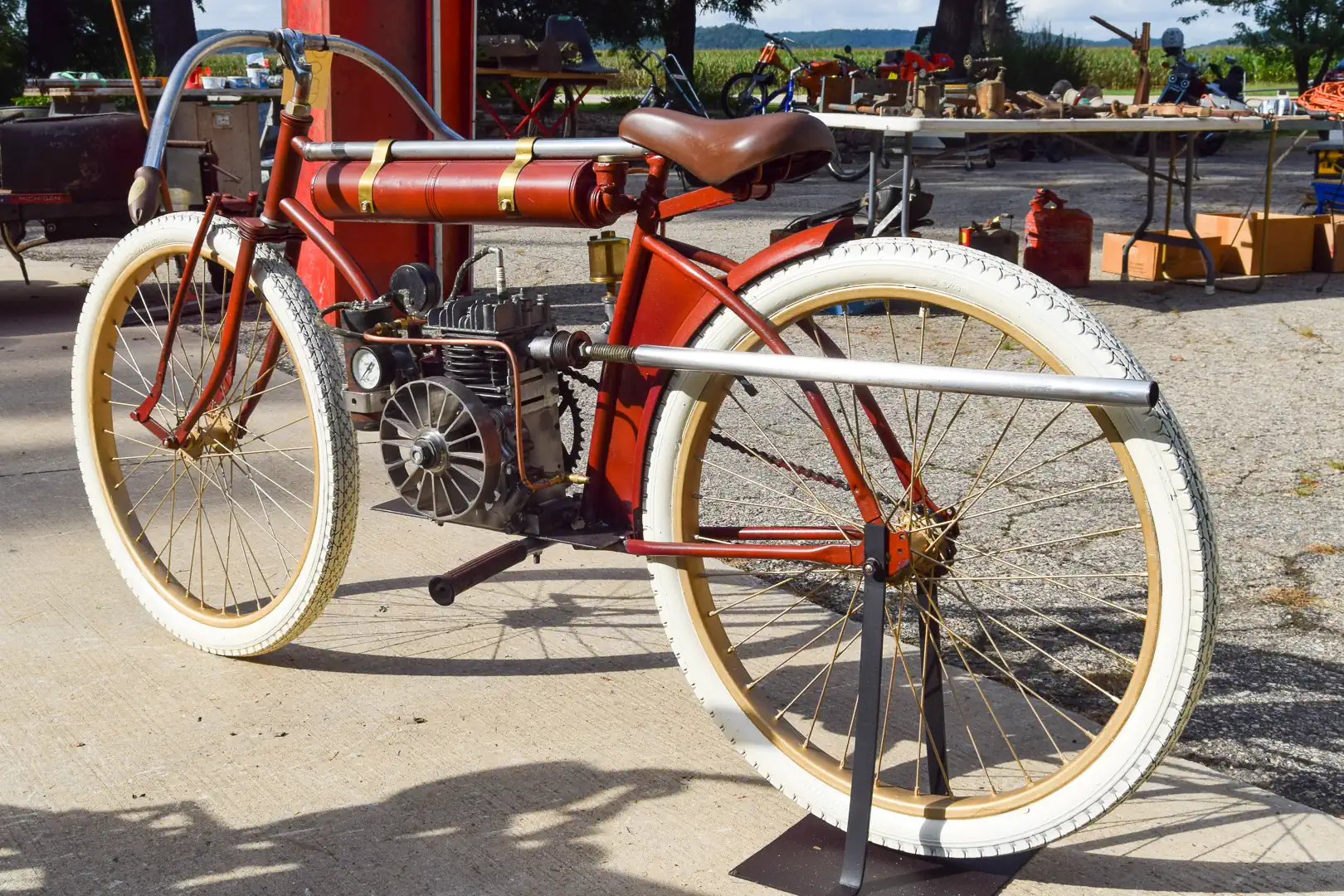
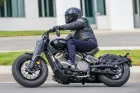
This replica recalls a 1911 Pope single-cylinder board track racer and looks ready to go.
Wisconsin’s Joe Hackl feels your pain. He also has a strong interest in classic and vintage motorcycles, though most of us don’t to the same degree. He has such an affinity for these rare, expensive motorcycles that he builds replicas for himself as a hobby. But he’s also open to the occasional commission. How Hackl does it and how realistic his replicas turn out is a remarkable story in itself.
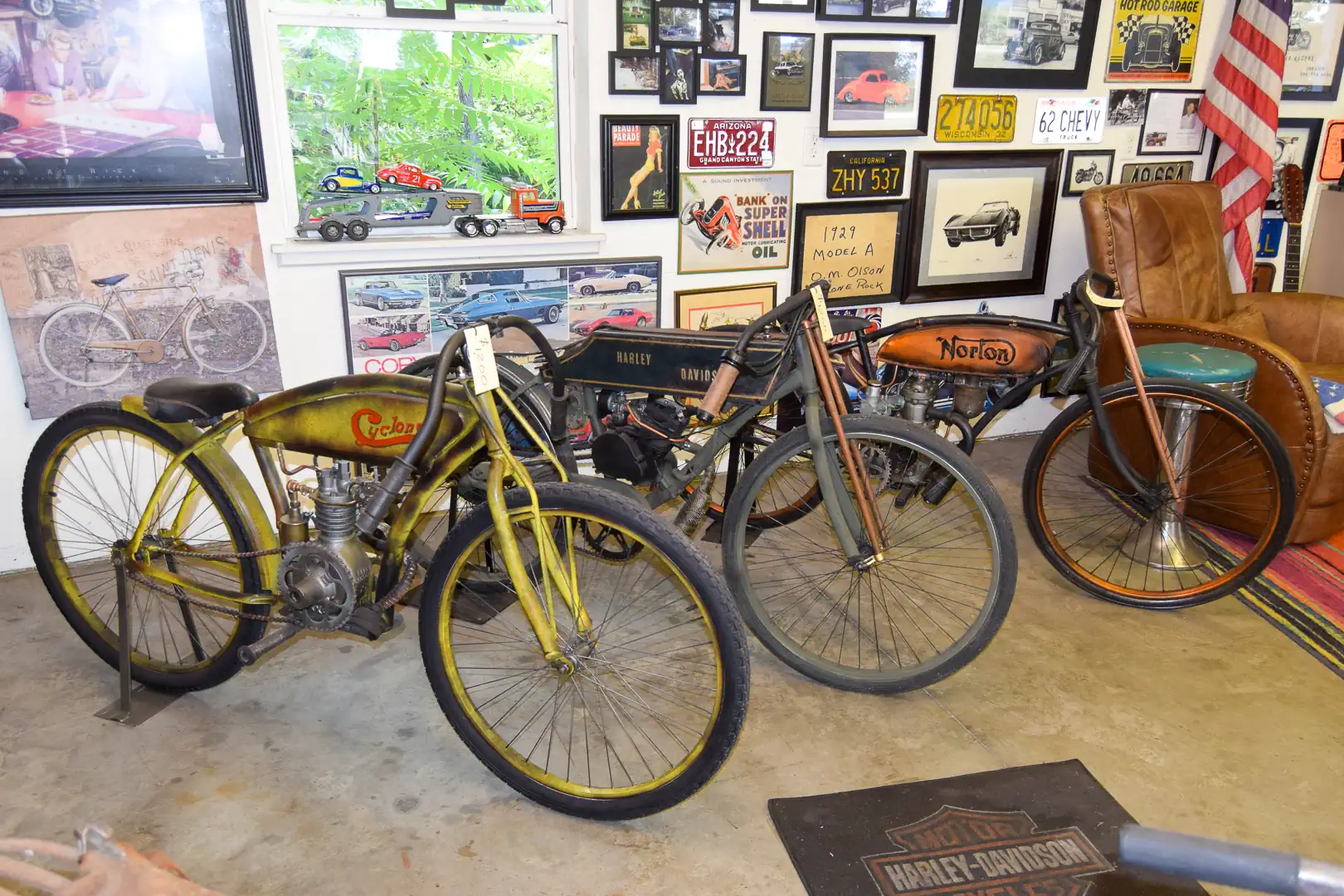
This grouping features, from left, replica board trackers branded as a Cyclone, Harley-Davidson, and Norton. Though it lacks an H-D engine, the middle bike actually runs and rides!
How Joe Hackl’s Handmade Classics Come Together
Most of the replica bikes are built from repurposed bicycle frames and tires, which, when you think about it, lends the creations authenticity because so many of the motorcycles in the period he emulates started out with bicycle frames and tires.
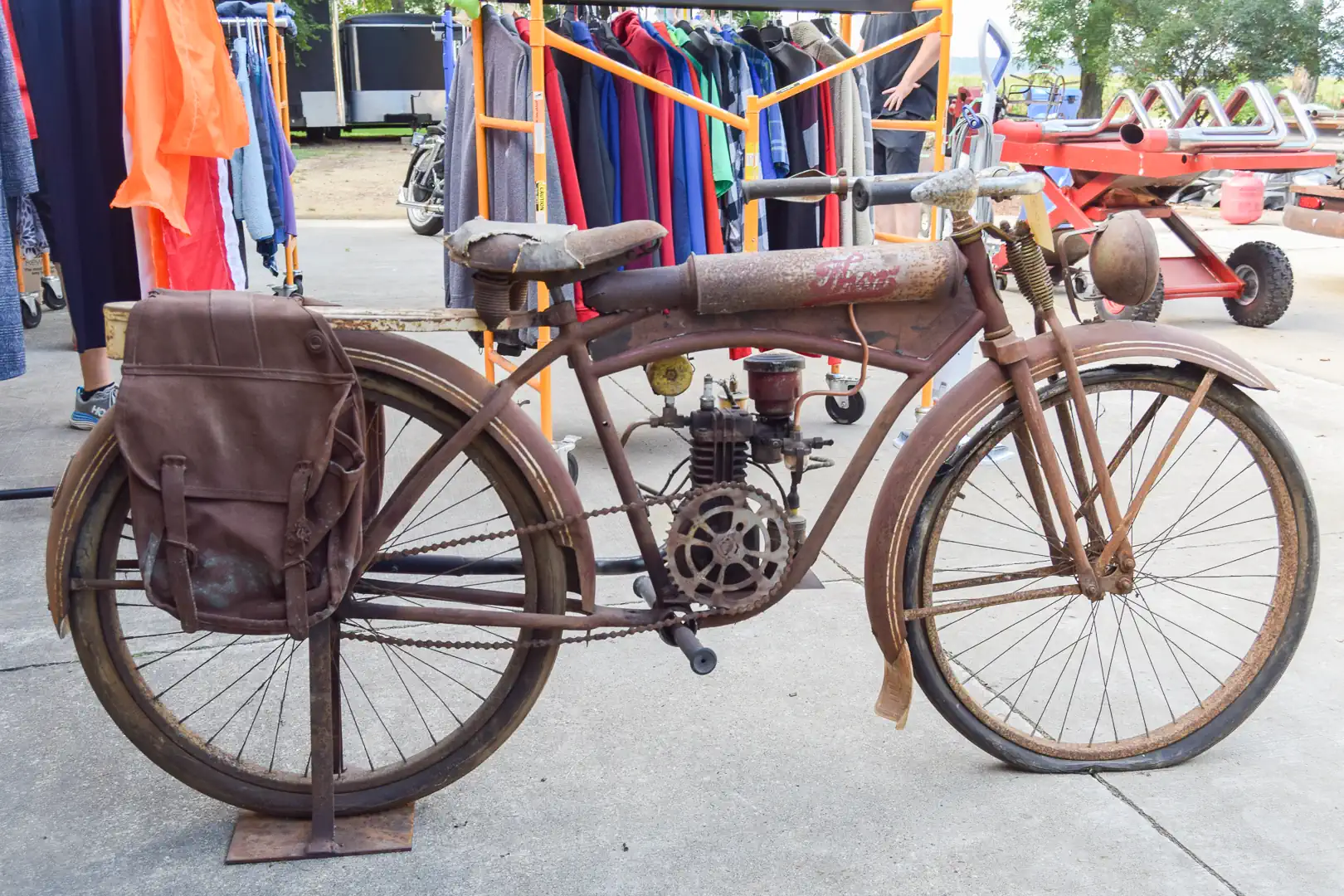
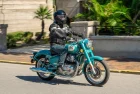
Complete with antique patina, this replica has the look of a 1909 Thor built in Aurora, Illinois, complete with very antique saddlebags.
Flipping the handlebars upside down creates the illusion of the down-swept bars worn by board-track racers. Flat-side fuel tanks of those early days are mimicked by sheet metal cut and bent to approximate size and shape, though not necessarily complete with a bottom capable of holding any fuel.
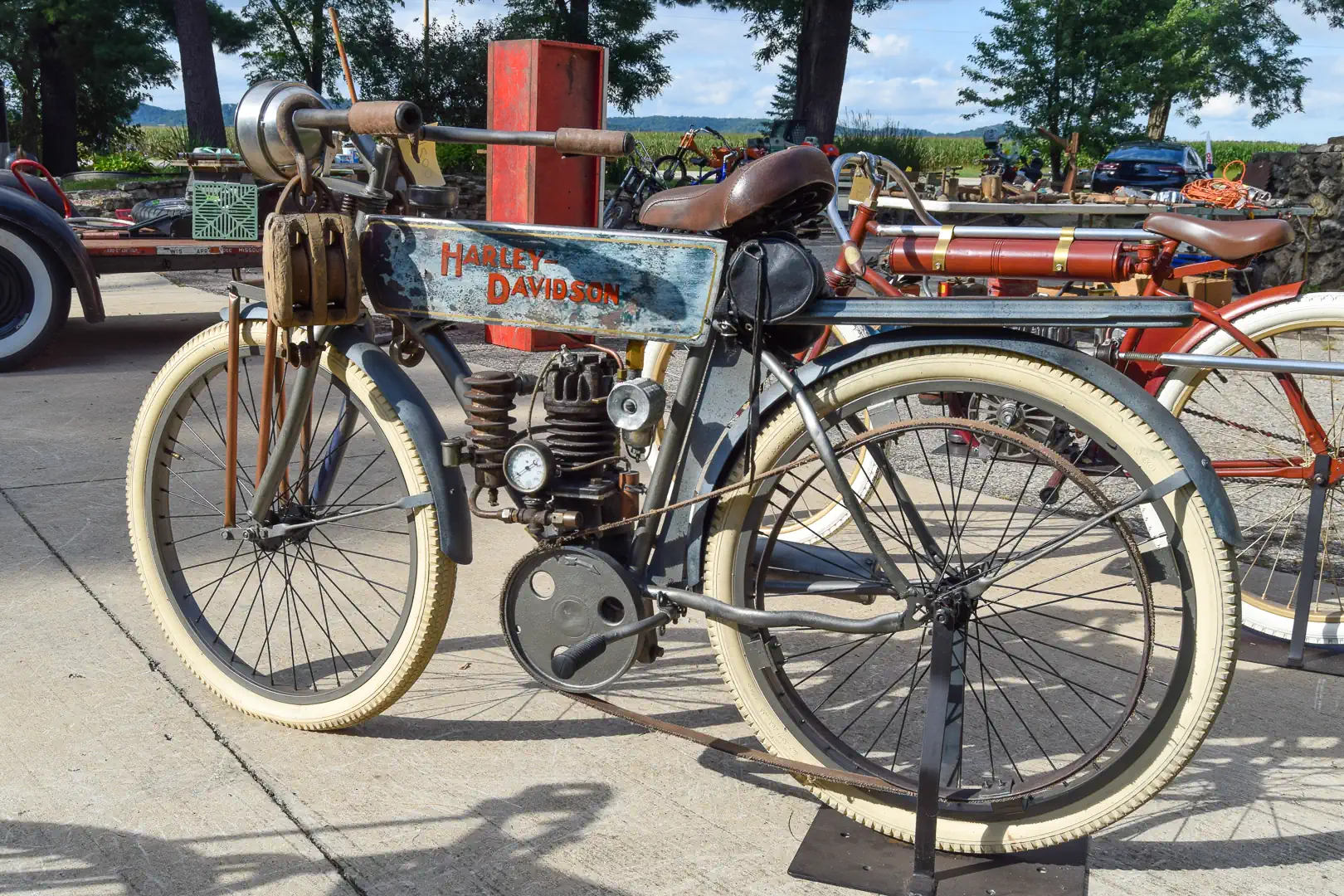
At a glance, this replica Harley-Davidson looks like a 1910 Model 6 Single ready to putter down the road.
Girder forks are created with extra leg bars welded on and non-functional coil springs added for effect. A surprisingly effective look-alike for a period engine can often be achieved with a single-cylinder or V-twin air-cooled air compressor. Old gas lawn mower or utility engines also sometimes fill the bill.
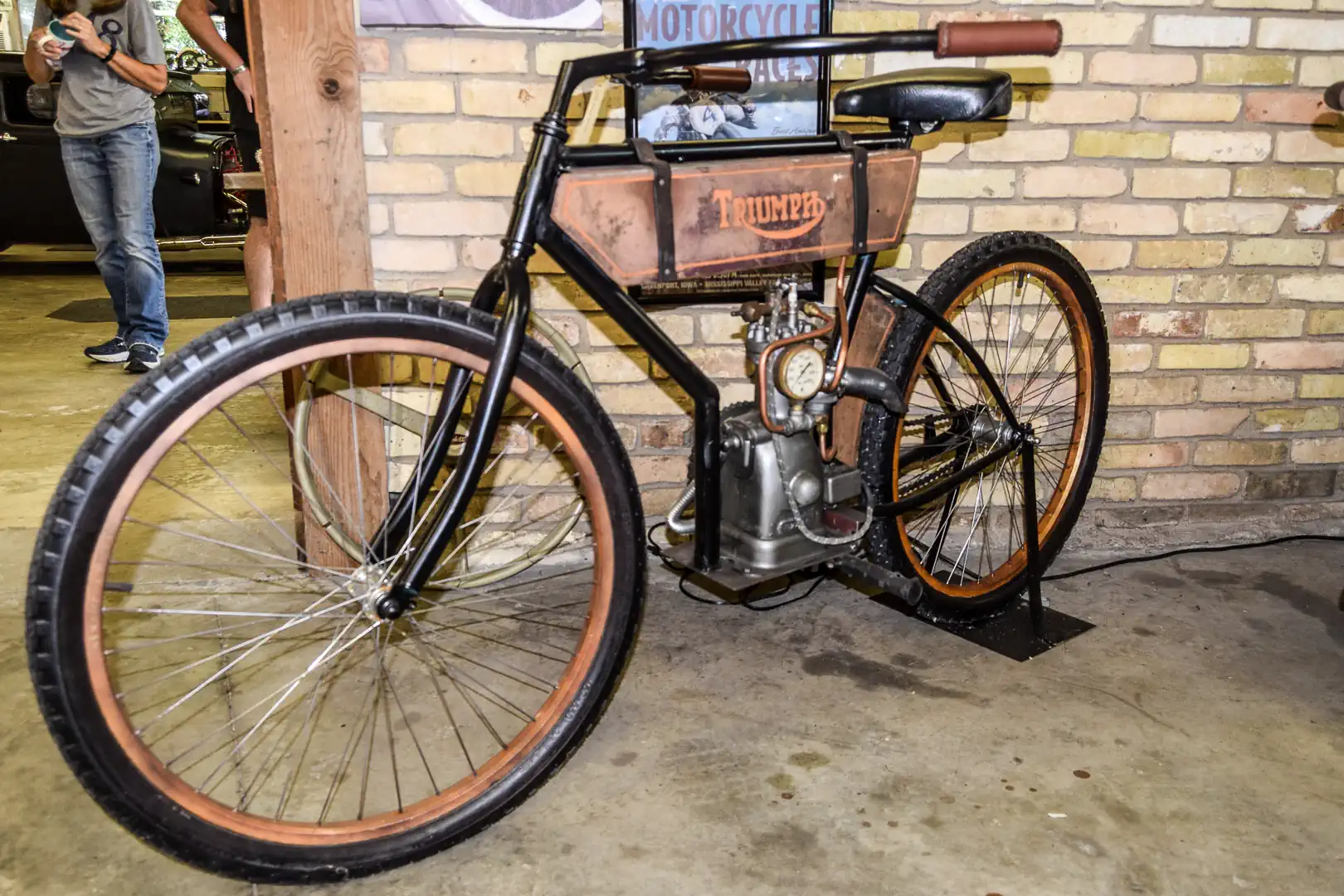
This build recalls the 1906 Triumph 3-horsepower single.
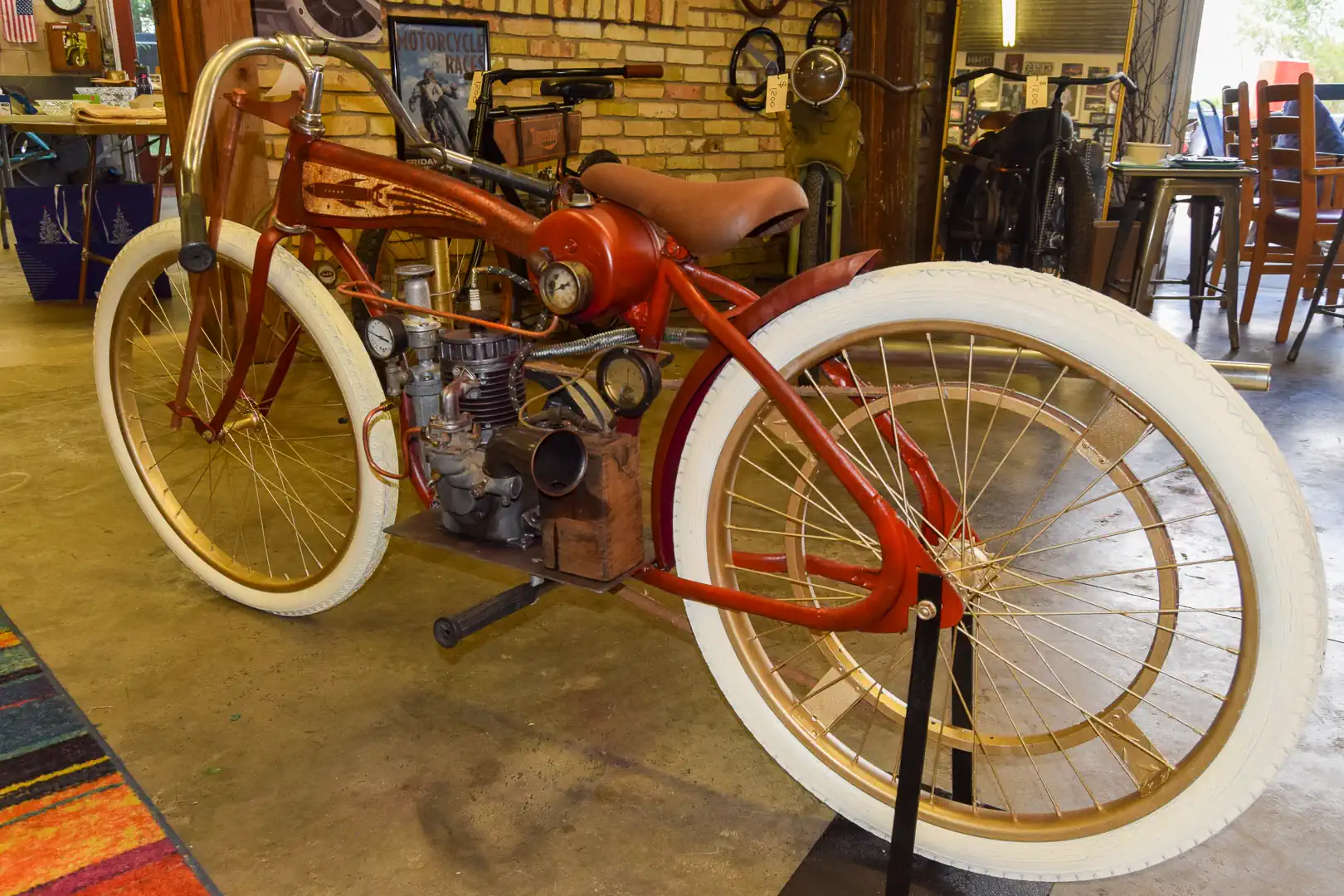
A mash-up of miscellaneous odd parts here and there can add to the old-time, everything-is-mechanical look of the period. For example, on a replica board track racer, Hackl drew my attention to what appeared to be a gracefully curved velocity stack on the carburetor. Surprised by its design, I asked where he’d found it. “It’s a faucet spout from an old bathtub,” he answered with a smile. Imaginative repurposing is part of the magic of Hackl’s handmade classics!
Look closely at this interpretation of a board tracker, and you’ll spot a velocity stack on the carb. It’s made from an old bathtub faucet spout!
Hackl’s use of cast-off bits and pieces is clever and imaginative. It also lets him build his classic creations on a tight budget, at least when it comes to materials. His labor and time are often quite another matter.
“Some of these bikes I’ve done in only a few days. Others really took some time to work out the design and to put together,” Hackl explains. “I usually have a design in mind when I start, but the details get filled in as I go. Things I get at yard sales or an auction and things like that might be used on a project I hadn’t thought about when I started it.”
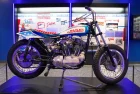
Hackl built this unbranded replica board track racer on commission for a buyer in Texas.
Patina, Paint, and Mistaken Identity
Preserving existing scuffs, rust, and faded paint results in authentic patina. Remarkably convincing classic brand logos hand-painted on the tank top off the look.
At a glance, many of his creations are often mistaken for the ultra-rare real things! Hackl once had an observer at a car and bike show, who was a longtime motorcycle enthusiast, insist that one of his creations had to be the real thing. The viewer persisted, even though Hackl assured him he built it and that the “engine” was actually an old air compressor!
Our bike review this episode is the Yamaha MT-03. Do not underestimate this bike; you get a lot of motorcycle for your money! Associate Editor Kelly Callan rode the smallest MT for several weeks, and that included commuting on it. One of the things that impressed her, was how the MT-03 acted like a larger motorcycle. Kelly also spent some time chasing Editor Don Williams through the canyons when he was on the Yamaha MT-07—obviously a much larger machine. She tells us about how it all went.
* * * * *
We’re closing in fast on the 34th annual Biketoberfest, October 15–18, when all roads will lead to Teddy Morse’s Destination Daytona—the more than 100-acre motorcycle playground in Ormond Beach Florida. This week we get to hear all about it from Teddy Morse himself. With his trademark high energy and enthusiasm, he tells us all about his recently established Triketoberfest that happens the week before, and how the Destination Daytona complex turns into a full-throttle hub of demo rides, vendors, custom builds, live music, food trucks, shops, and nonstop pavilion energy. So, whether you’re on two wheels or three, whether you’re hunting parts or lining up a test ride; grab a cold one and soak up the energy and gorgeous Florida fall weather. This is one of the many Daytona Beach places where Biketoberfest feels like home. So don’t forget: make sure you download the Biketoberfest mobile App from Apple or Google Play or visit www.biketoberfest.org and we’ll see you there!
* * * * *
Our guest this episode is Greg Arnold, Mecum’s motorcycle auction director. He bought his first bike at eleven, joined the company in 2011, and has spent more than a decade helping turn this incredible event into the place collectors, consignors, and dreamers all show up. Next February 3rd through 6th, Mecum will—for the 36th time, bring the world’s largest vintage motorcycle auction back to South Point, Las Vegas. That’s over two thousand bikes over four days. Board-track racers, barn finds, customs, race iron, and especially, those incredible machines that make the room go quiet. Greg gives us insight into what it takes to make this event work so incredibly well, and if you’re interested in selling your pride and joy, what steps you have to take to make it happen.
* * * * *
Here’s quick reminder to check out our monthly digital magazine. It’s filled with everything you want to read on motorcycling, including some things you’ve probably not seen elsewhere. It’s absolutely free and you will find it on the Apple App Store and of course on Google Play as well.
Don’t forget to leave us your comments on our social media—we’re on all the usual platforms at Ultimate Motorcycling. We love hearing your feedback… so good or bad, please let us know what you think. If there’s something you’d like us to cover, we’d love to hear those ideas too!
We use cookies and browser activity on this website
Functional
Always active
The technical storage or access is strictly necessary for the legitimate purpose of enabling the use of a specific service explicitly requested by the subscriber or user, or for the sole purpose of carrying out the transmission of a communication over an electronic communications network.
Preferences
The technical storage or access is necessary for the legitimate purpose of storing preferences that are not requested by the subscriber or user.
Statistics
The technical storage or access that is used exclusively for statistical purposes.The technical storage or access that is used exclusively for anonymous statistical purposes. Without a subpoena, voluntary compliance on the part of your Internet Service Provider, or additional records from a third party, information stored or retrieved for this purpose alone cannot usually be used to identify you.
Marketing
The technical storage or access is required to create user profiles to send advertising, or to track the user on a website or across several websites for similar marketing purposes.