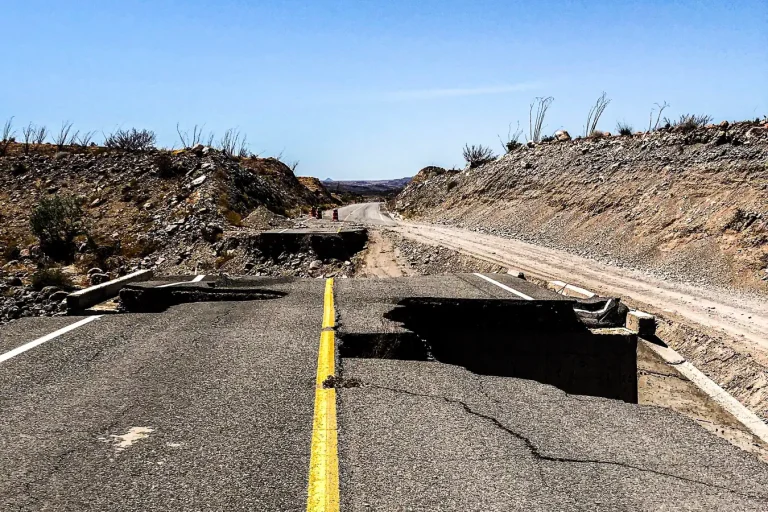
West Virginia has the worst combination of crumbling pavement and condition-related traffic deaths in the country, according to an August 2026 study of federal crash and pavement data covering 2020 through 2024.
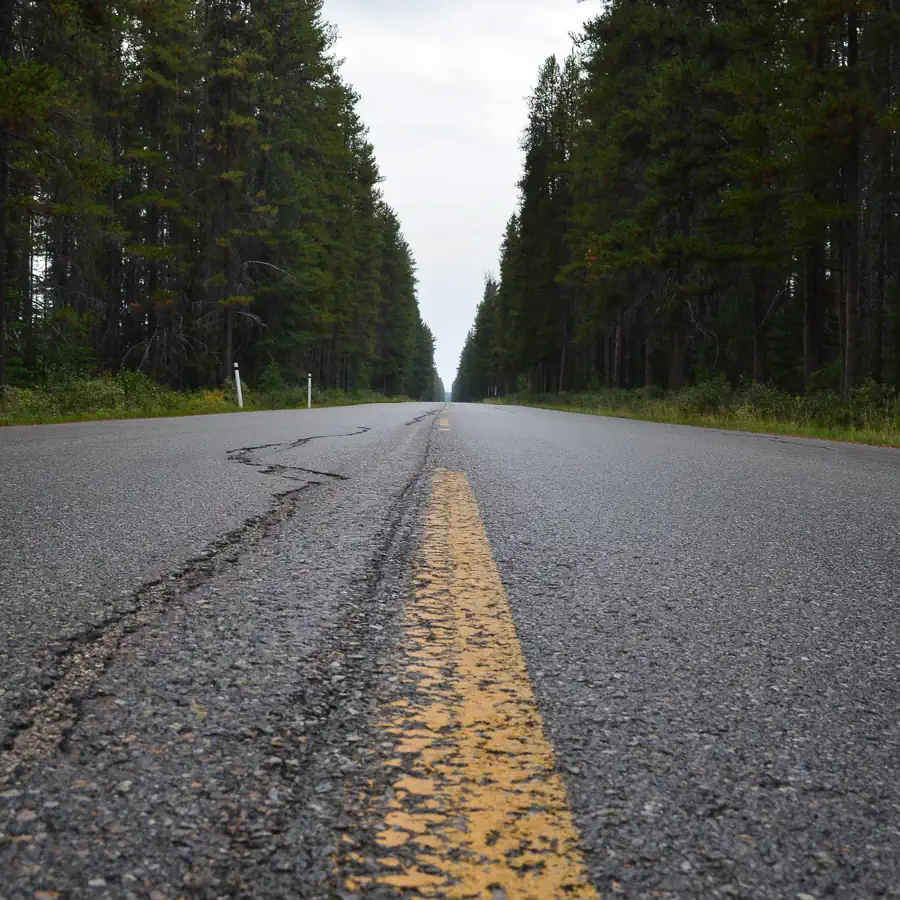
Photograph by Don Williams.
The state recorded 0.386 road-condition-related deaths per 100 million vehicle miles traveled. That is nearly double the national rate of 0.196, and it comes on roads where 13.2% of the surface is rated poor. West Virginia spends the second-most per lane-mile in the nation at $81,566, yet ranks 34th in road quality. It also has the highest share of structurally deficient bridges in the country.
The study comes from George Salinas Injury Lawyers, a San Antonio personal injury firm that pulled federal crash records and pavement ratings for 49 states. Alaska was dropped as a statistical outlier, with a condition-related fatality rate four standard deviations above the mean. The study also mapped the deadliest roads in each state by fatality count.
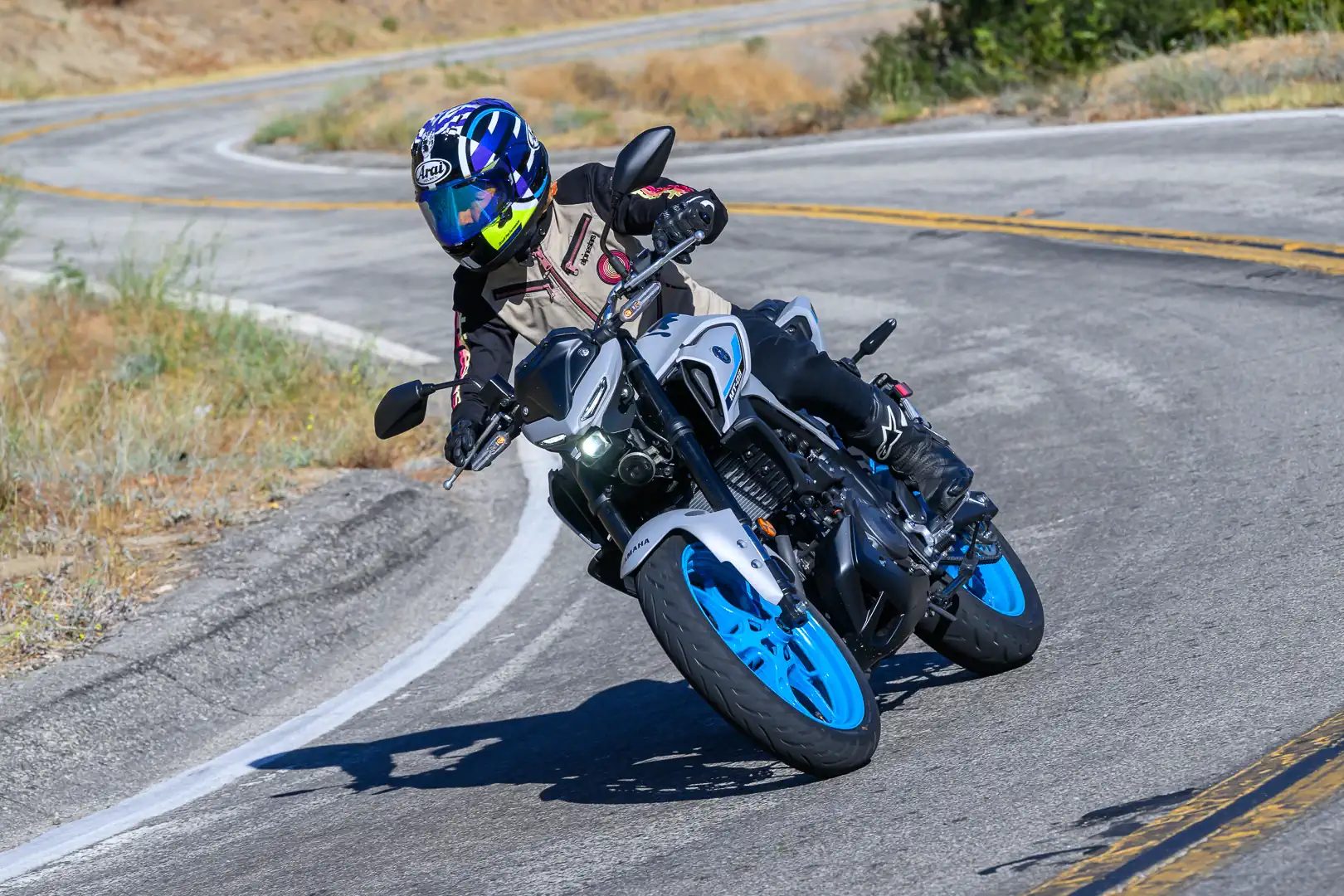
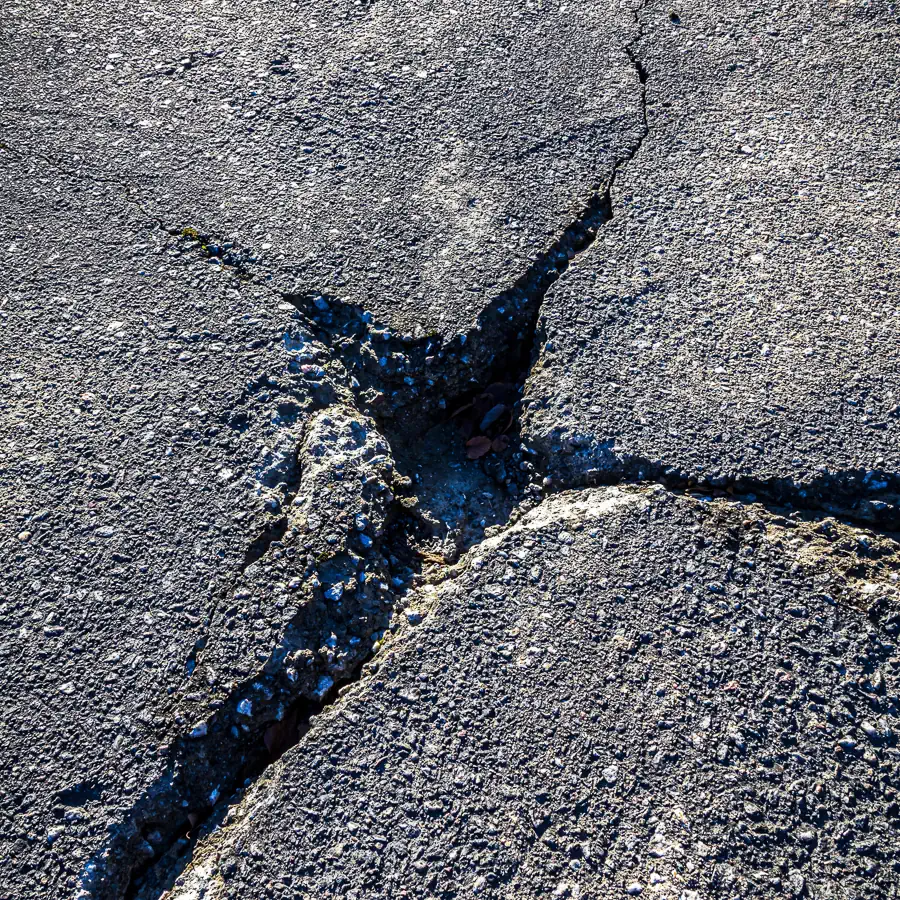
Photograph by Don Williams.
Our ranking scored states on two measures: condition-related deaths per 100 million vehicle miles traveled and the share of roads rated in poor condition. We weighted the death rate roughly 2-to-1 against pavement condition.
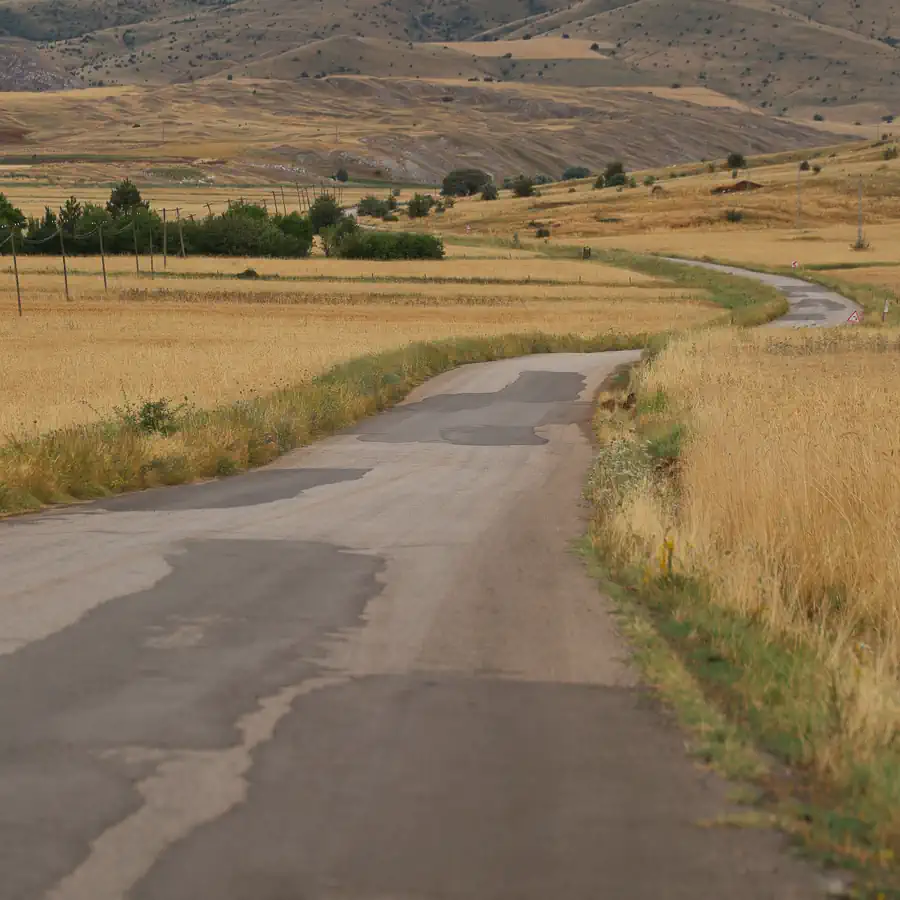
The numbers contradict a common assumption. The states with the worst pavement are not the states where bad pavement kills the most people. Rhode Island has the roughest roads in the nation at 36.2% poor, nearly 7 points worse than any other state, yet has one of the lowest death rates at 0.121. Although Massachusetts (29.3% poor) and California (28.4%) rank second and third for bad pavement, they sit near the bottom for condition-related deaths.
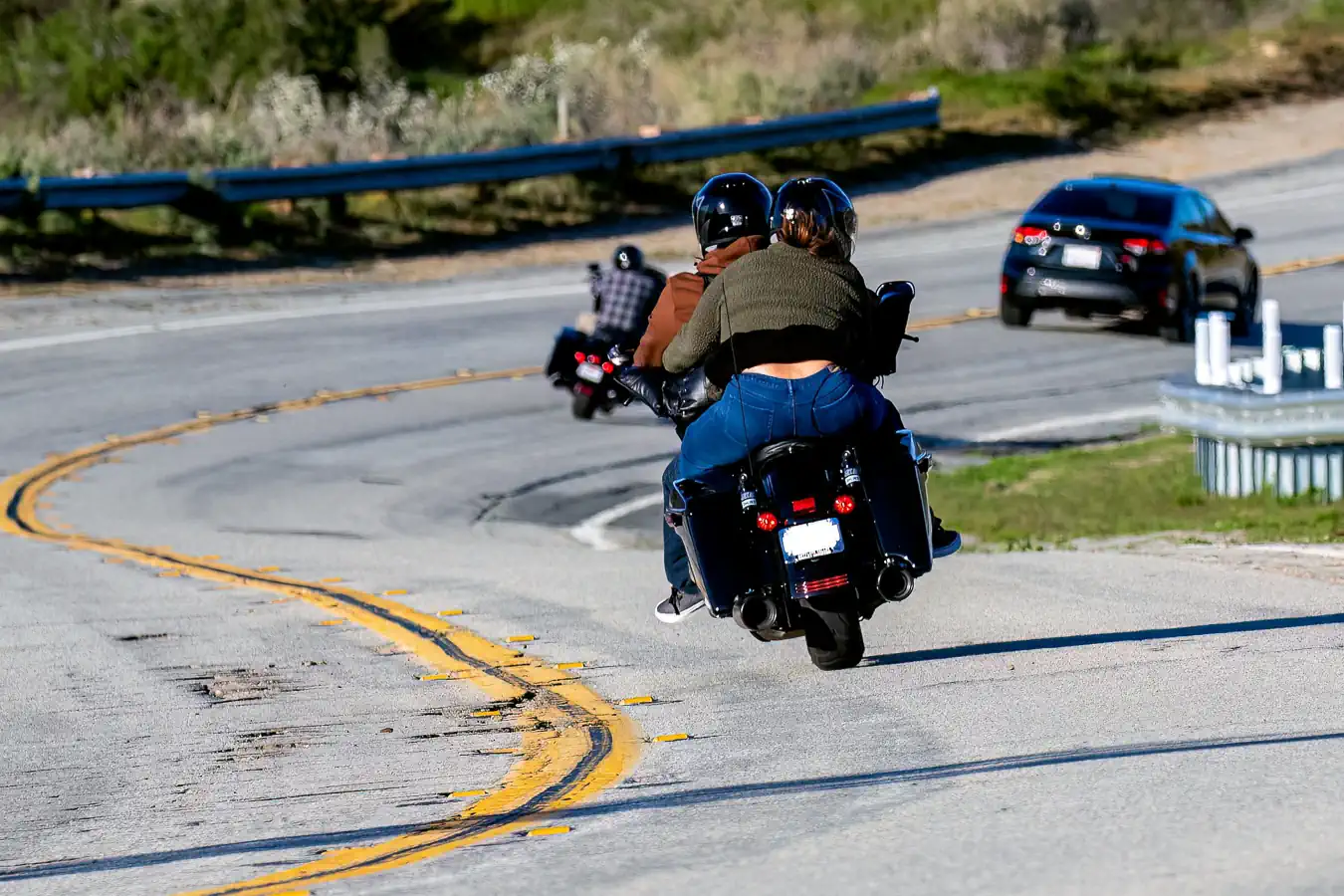
Photograph by Sefa Demirtaş via Pexels.
Two notes on the numbers below. They cover all vehicle types, not motorcycles alone. Rates are deaths per 100 million vehicle miles traveled across the full five years.
West Virginia
0.386 deaths per 100 million vehicle miles, 13.2% of roads poor. The worst rate in the country by a wide margin, on mountain roads where frost or a broken edge leaves nowhere to go. Deaths cluster evenly on I-64, I-79, and SR-16, at 13 each.
Oregon
0.376 deaths, 6.1% of roads poor. That’s the second-worst death rate on some of the better pavement in the nation. Landslides and washouts on OR-6 between Portland and Tillamook closed lanes repeatedly through early 2026. Pavement displacement on US-26 near milepost 13, caused by groundwater pushing the surface upward, needs constant repair. US-26 accounts for 31 deaths, with I-5 and US-97 at 33 each.
Washington
0.295 deaths, 22.1% of roads poor. The only state that ranks near the top on both measures, which makes it arguably the most consistently dangerous place to ride on this list. I-5 is the deadliest corridor in the state at 78 deaths. Northbound I-5 is down to two lanes across Seattle’s Ship Canal Bridge through the end of 2026.
Photograph by Introspective Design via Pexels.
Montana
0.350 deaths, 5.6% of roads poor. Pavement is not the problem; exposure is. Montana relies on rural roads for 70% of its travel, the highest share in the country. I-90 alone accounts for 35 deaths, and US-93 adds 25.
Arkansas
0.341 deaths, 5.7% of roads poor. Arkansas logged 134 deaths coded to road defects, the highest count of any state, on roads that grade near the top nationally. That gap could reflect more careful reporting by officers rather than worse asphalt. I-30 and I-40 carry 34 deaths each.
Photograph by Luke Miller via Pexels.
Kentucky
0.307 deaths, 5.9% of roads poor. Pew Charitable Trusts lists Kentucky among nine states with a declining asset sustainability index. That means the maintenance backlog is growing faster than the budget to fix it. I-65 and I-75 sit at 27 deaths each, with US-60 at 22.
South Carolina
0.272 deaths, 9.6% of roads poor. Its rural fatality rate ranks among the three highest in the nation. I-26 leads with 33 deaths, followed by I-85 at 27 and US-17 at 25.
Maine
0.268 deaths, 7.8% of roads poor. Maine has a high pavement death rate, grades well, and more than 10% of its bridges are rated structurally deficient. I-95 accounts for 17 deaths, US-1 for 10, and SR-9 for 8.
Photograph by Surdu Horia via Pexels.
Mississippi
0.264 deaths, 14.0% of roads poor. I-59 leads at 24 deaths, with I-55 and US-49 tied at 22. Roughly $150 million in new state funding will widen I-55 in Madison County and rebuild part of SR-25, though that work does not break ground until spring 2027.
Michigan
0.253 deaths, 12.9% roads poor. Michigan is one of a handful of states declining on both pavement and bridges, with more than 10% of bridges structurally deficient. I-94 is the worst corridor at 46 deaths. MDOT plans to repair roughly 2,000 lane-miles and nearly 100 bridges in 2026, which means more work zones on the same corridors.
Four states just missed. Wyoming has a 0.281 pavement condition rating on the second-best pavement in the nation, with 3.0% poor. Louisiana pairs a rate near the national average with 21.3% of roads in poor condition and more than 10% of its bridges rated structurally deficient. Hawaii and New York carry some of the worst pavement in the country, at 26.5% and 24.3% poor, with death rates below the national mark.
Photograph by Tadeu Gabriel Arcieri via Pexels.
Raw corridor counts tell a different story, one driven by traffic volume. I-95 in Florida is the deadliest road in the country for condition-related crashes, with 142 deaths over five years, 105 of them on compromised surfaces. I-10 in Texas follows at 122, then I-35 in Texas at 110, and I-5 in California at 94. I-75 racks up 84 deaths each in Georgia and Florida. I-40 in Tennessee reaches 83.
Texas also recorded 1,008 work-zone deaths, the highest count in the nation, and 2026 adds more. The $4.5 billion I-35 Capital Express Central project has reconstruction underway through Austin, and I-20 widening in Taylor County starts late this year.
Attorney George Salinas, whose firm published the study, argues that road quality gets left out of the conversation after a crash: “Road accidents are often talked about in the context of drivers’ fault. Were they distracted? Were they aggressive? Did they break the law? The actual road conditions are covered less often, with many drivers having to accept difficult and, in many cases, openly dangerous roads as a part of life. To get compensation for an accident like that is very difficult, from knowing the right procedures for filing police reports and photographing the road defects to sending a formal notice before the deadline is up.”
Photograph by David Brown via Pexels.
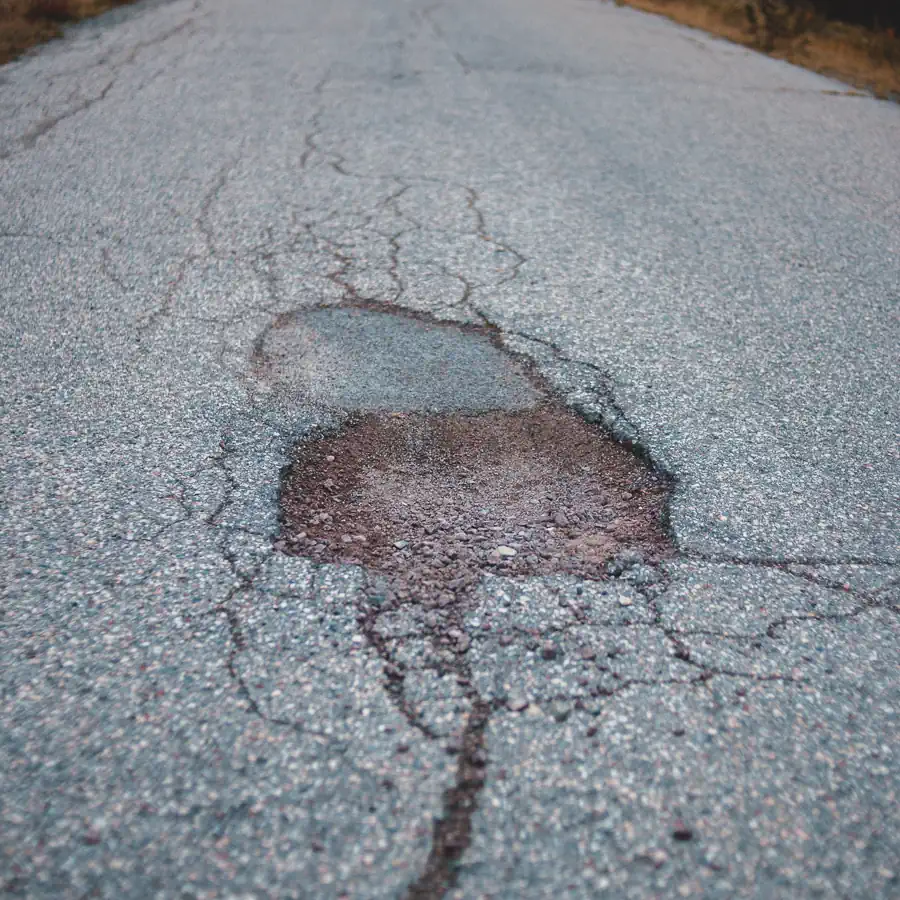
The firm handles road-defect claims, so that advice serves its business. The underlying point still holds for any rider who goes down on a pothole or a broken shoulder edge. The police report has to happen before the patch crew shows up.
Two corridors deserve extra caution this season. I-40 East remains reduced to one lane between mile marker 446 in Tennessee and mile marker 7 in North Carolina. Work is still underway to finish permanent repairs to Hurricane Helene damage. Trucks over 30 feet are banned from US-129, the Tail of the Dragon, as an alternate route.
None of these numbers are specifically about motorcycles, and that is exactly why they are worth a rider’s time. Broken pavement in stop-and-go traffic costs a rim. The same defect on a fast rural road with no shoulder leaves far less room to recover.
Look at where the deaths actually occur, and a pattern emerges. Rural US and state highways, including US-93 in Montana, US-26 in Oregon, US-60 in Kentucky, SR-9 in Maine, and SR-16 in West Virginia, are not commuter routes. They are the roads riders plan trips around. The roads worth riding and the roads worth watching are often the same routes. Watch the road, literally.
Our bike review this episode is the Yamaha MT-03. Do not underestimate this bike; you get a lot of motorcycle for your money! Associate Editor Kelly Callan rode the smallest MT for several weeks, and that included commuting on it. One of the things that impressed her, was how the MT-03 acted like a larger motorcycle. Kelly also spent some time chasing Editor Don Williams through the canyons when he was on the Yamaha MT-07—obviously a much larger machine. She tells us about how it all went.
* * * * *
We’re closing in fast on the 34th annual Biketoberfest, October 15–18, when all roads will lead to Teddy Morse’s Destination Daytona—the more than 100-acre motorcycle playground in Ormond Beach Florida. This week we get to hear all about it from Teddy Morse himself. With his trademark high energy and enthusiasm, he tells us all about his recently established Triketoberfest that happens the week before, and how the Destination Daytona complex turns into a full-throttle hub of demo rides, vendors, custom builds, live music, food trucks, shops, and nonstop pavilion energy. So, whether you’re on two wheels or three, whether you’re hunting parts or lining up a test ride; grab a cold one and soak up the energy and gorgeous Florida fall weather. This is one of the many Daytona Beach places where Biketoberfest feels like home. So don’t forget: make sure you download the Biketoberfest mobile App from Apple or Google Play or visit www.biketoberfest.org and we’ll see you there!
* * * * *
Our guest this episode is Greg Arnold, Mecum’s motorcycle auction director. He bought his first bike at eleven, joined the company in 2011, and has spent more than a decade helping turn this incredible event into the place collectors, consignors, and dreamers all show up. Next February 3rd through 6th, Mecum will—for the 36th time, bring the world’s largest vintage motorcycle auction back to South Point, Las Vegas. That’s over two thousand bikes over four days. Board-track racers, barn finds, customs, race iron, and especially, those incredible machines that make the room go quiet. Greg gives us insight into what it takes to make this event work so incredibly well, and if you’re interested in selling your pride and joy, what steps you have to take to make it happen.
* * * * *
Here’s quick reminder to check out our monthly digital magazine. It’s filled with everything you want to read on motorcycling, including some things you’ve probably not seen elsewhere. It’s absolutely free and you will find it on the Apple App Store and of course on Google Play as well.
Don’t forget to leave us your comments on our social media—we’re on all the usual platforms at Ultimate Motorcycling. We love hearing your feedback… so good or bad, please let us know what you think. If there’s something you’d like us to cover, we’d love to hear those ideas too!
We use cookies and browser activity on this website
Functional
Always active
The technical storage or access is strictly necessary for the legitimate purpose of enabling the use of a specific service explicitly requested by the subscriber or user, or for the sole purpose of carrying out the transmission of a communication over an electronic communications network.
Preferences
The technical storage or access is necessary for the legitimate purpose of storing preferences that are not requested by the subscriber or user.
Statistics
The technical storage or access that is used exclusively for statistical purposes.The technical storage or access that is used exclusively for anonymous statistical purposes. Without a subpoena, voluntary compliance on the part of your Internet Service Provider, or additional records from a third party, information stored or retrieved for this purpose alone cannot usually be used to identify you.
Marketing
The technical storage or access is required to create user profiles to send advertising, or to track the user on a website or across several websites for similar marketing purposes.