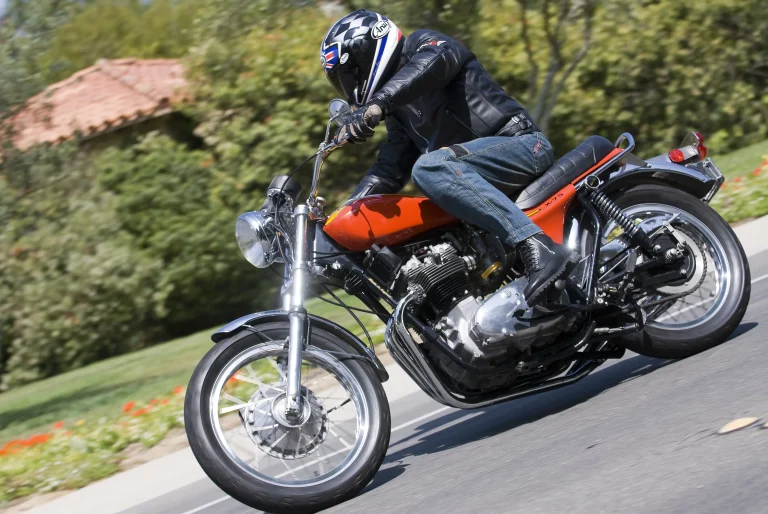
Ultimate Motorcycling Founder and President Arthur Coldwells on the 1972 Triumph X-75 Hurricane. Photo by Don Williams.
0:00
▶
The 1970s was an exciting time for motorcycle enthusiasts. Development was running rampant, and the range of engine configurations was at an all-time high. You could choose between two-stroke and four-stroke motors, and consider cylinder counts of one to six (except five). Air cooling, liquid cooling, kickstart, or electric start. Buyers had all sorts of choices. This is a collection of 12 essential motorcycles of the 1970s that mattered, presented in chronological order. We’d love to hear what you think shouldn’t have been left out, but that also means you’ll need to remove a bike from the list. Have at it.
12 Essential Motorcycles of the 1970s
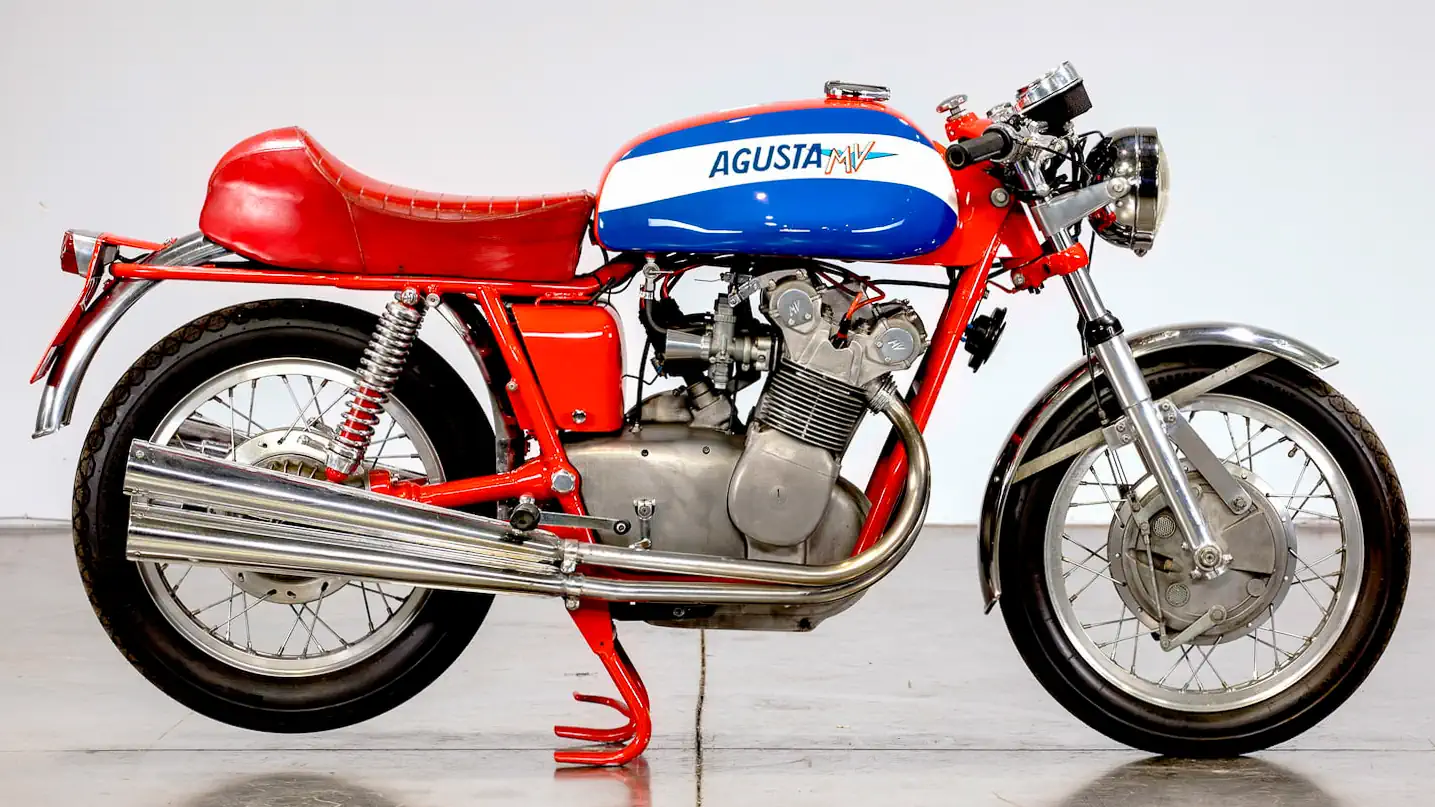
1971 MV Agusta 750S
The 1971 MV Agusta 750S was a rare Italian superbike with a 743cc DOHC inline-four engine producing about 70 horsepower. Its stunning red-white-blue livery, clip-on bars, and race-bred character delivered thrilling performance near 120 mph. Despite a price three times the Honda CB750 and ultra-limited production, it marked MV Agusta’s first street-legal superbike, bringing Grand Prix-winning tech to public roads. Photo courtesy of Mecum Auctions.
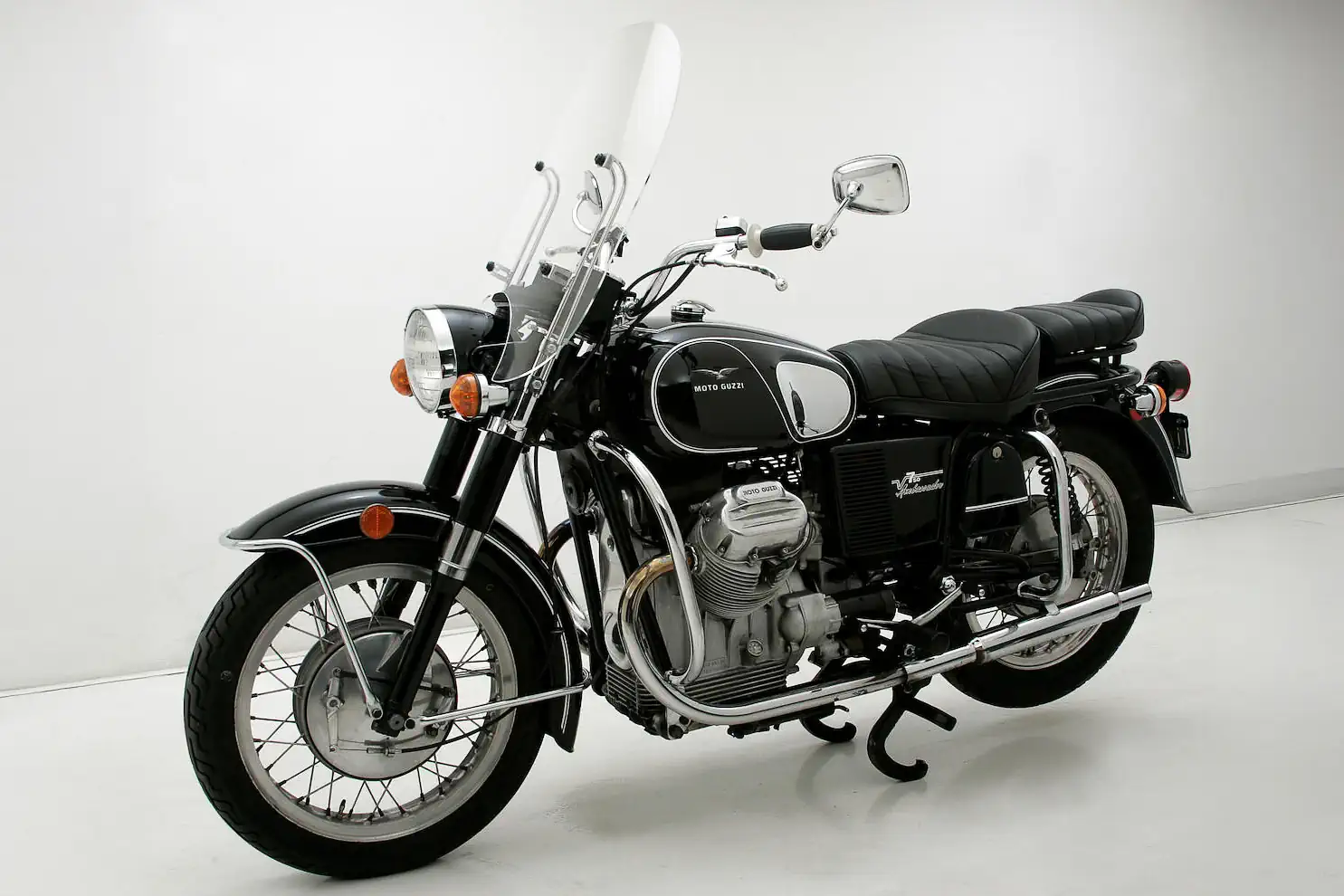
1971 Moto Guzzi Ambassador
The 1971 Moto Guzzi Ambassador featured a 757cc V-twin engine putting out around 60 horsepower, a shaft drive, and an electric start. Built for comfortable touring with upright ergonomics and a large tank, it reached speeds over 110 mph. It was crucial as Moto Guzzi’s key US market success, boosting production to record levels and cementing the longitudinal V-twin layout for decades. Photo courtesy of Bonhams.
1972 Kawasaki Z1
The 1972 Kawasaki Z1 featured a groundbreaking 903cc air-cooled DOHC inline-four engine delivering 82 horsepower, with four Mikuni carbs, chain drive, and a top speed over 130 mph. Its muscular styling, teardrop tank, and raw performance made it an instant icon. It was important as the first mass-produced Japanese four-cylinder superbike with DOHC technology, outpacing the Honda CB750 in power and cementing Kawasaki’s performance legacy. Photo courtesy of Mecum Auctions.
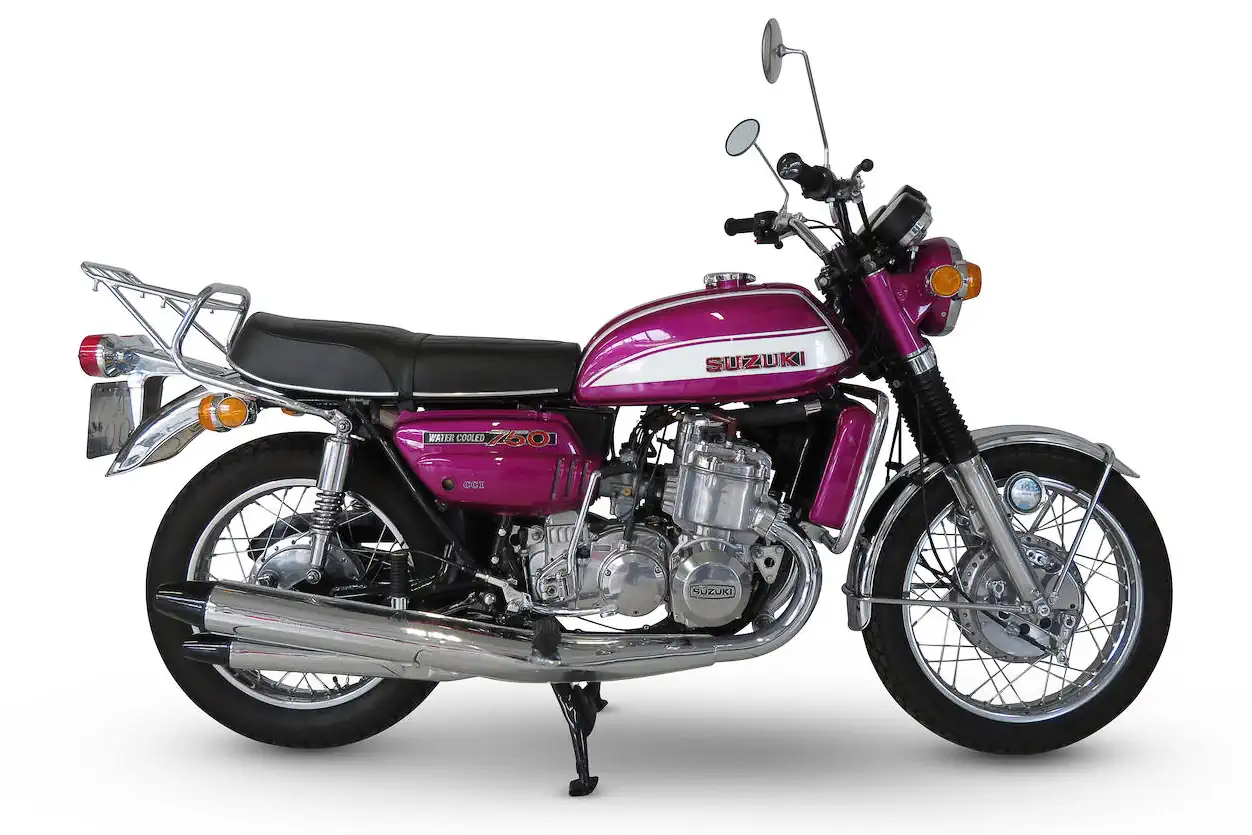
1972 Suzuki GT750 Le Mans
The 1972 Suzuki GT750 was a liquid-cooled 738cc two-stroke inline-three producing nearly 70 hp, with 40mm Mikuni CV carbs, dual front disc brakes, and smooth touring ergonomics for comfortable highway cruising up to 110 mph. Marketed as the Le Mans in the US and nicknamed the Water Buffalo, the GT750 offered low-vibration reliability. It was important, as it was Japan’s first production liquid-cooled motorcycle, pioneering advanced cooling for two-strokes and providing a refined, torquey alternative to four-stroke superbikes. Photo courtesy of Bonhams.
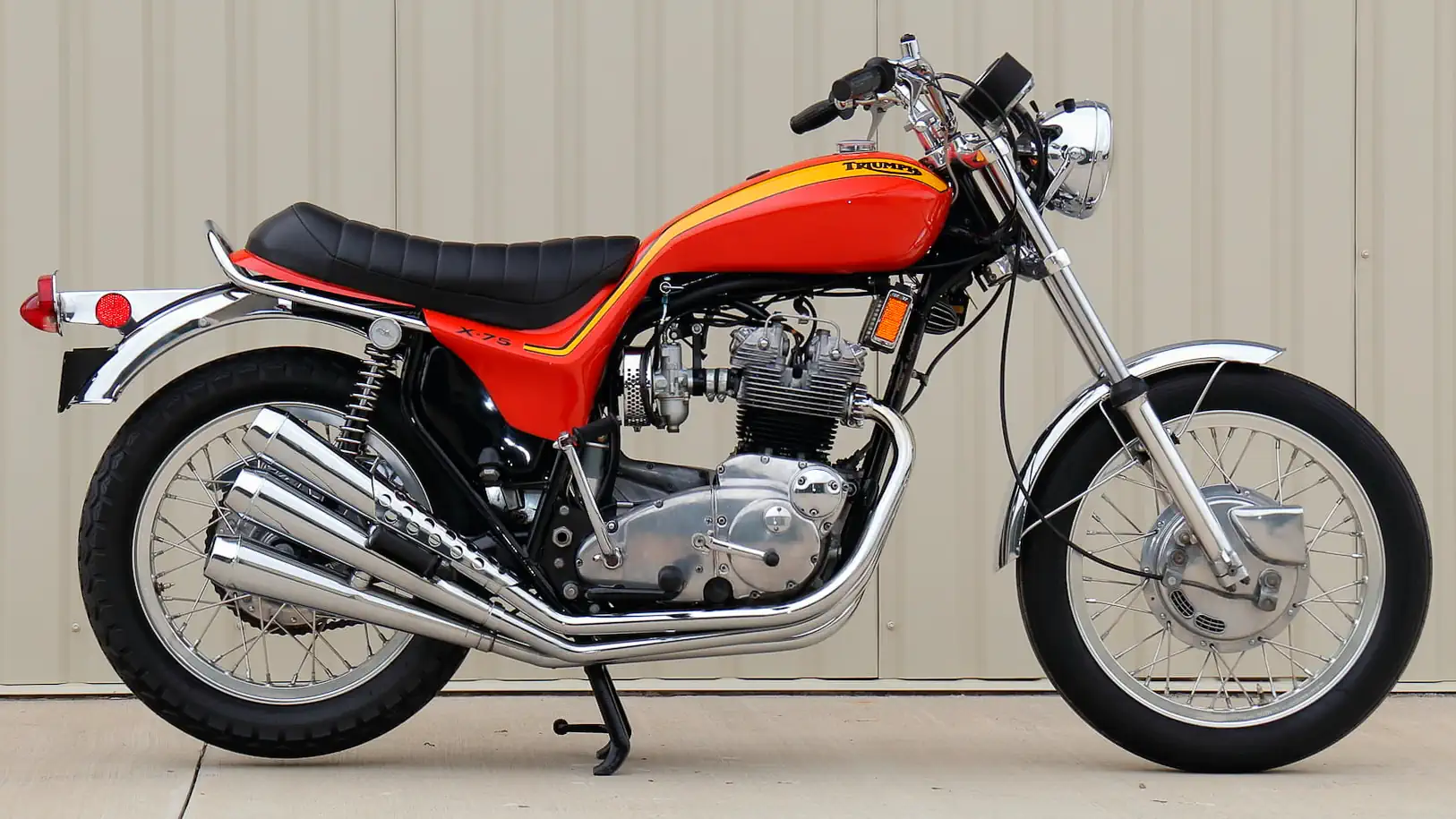
1972 Triumph X-75 Hurricane
The 1972 Triumph X-75 Hurricane, designed by Craig Vetter on the Trident platform, featured a 740cc inline-three, a flowing fiberglass tank-seat, a tiny three-gallon fuel tank, a lowered stance, and signature right-side upswept triple mufflers. It stands as the first factory custom motorcycle. Though only 1200 examples were produced, it was a highly influential motorcycle. Photo courtesy of Mecum Auctions. Photo courtesy of Mecum Auctions.
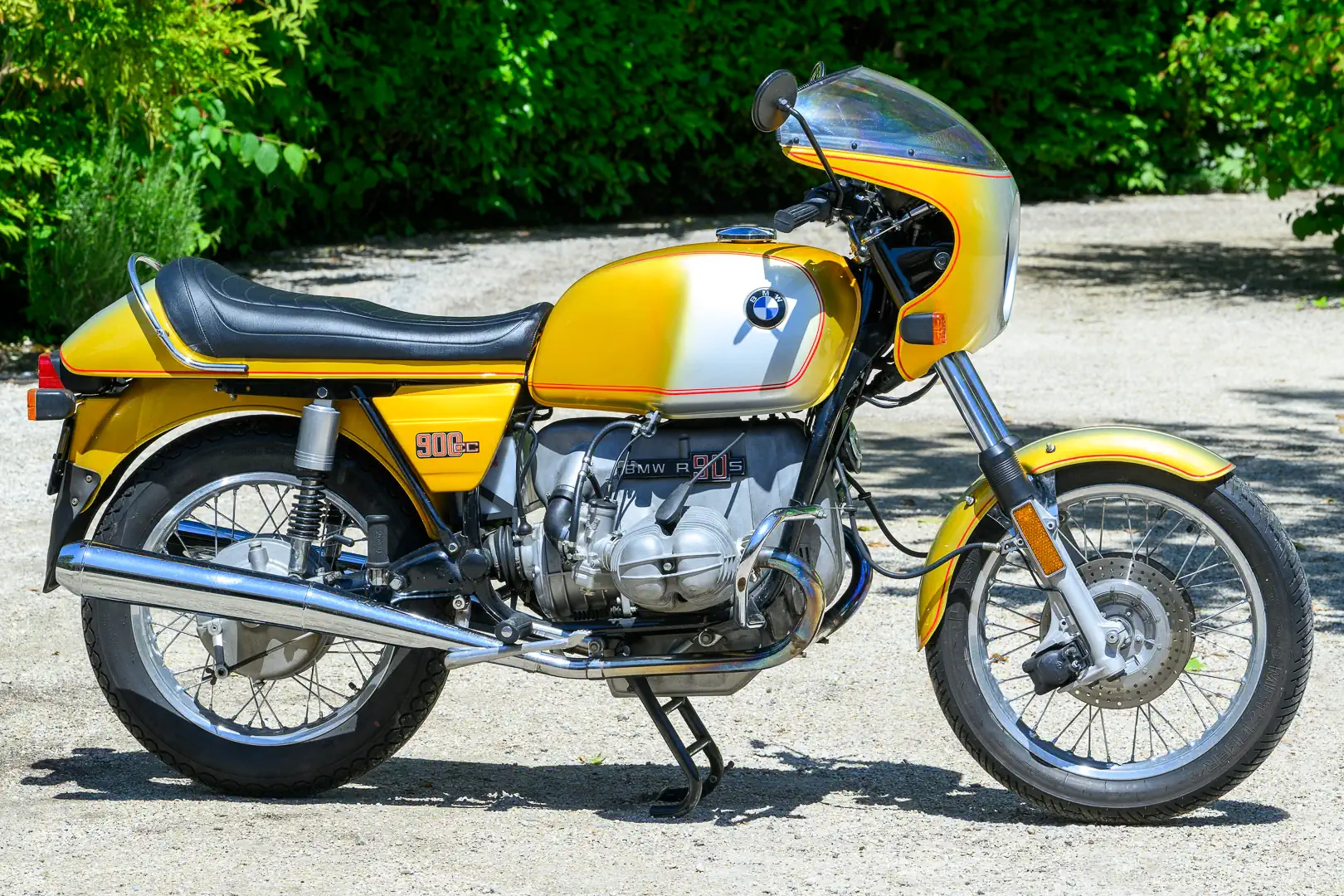
1973 BMW R 90 S
An unabashed superbike, the 1973 BMW R90S featured a 67-horsepower 898cc boxer engine, Dell’Orto carbs, twin front disc brakes, a five-speed gearbox, shaft drive, and a top speed around 124 mph. Its cockpit-style bikini fairing and Daytona Orange paint defined its look. It was important as BMW’s first true superbike, shifting the brand toward sport performance and challenging Japanese rivals. Photo courtesy of Bonhams.
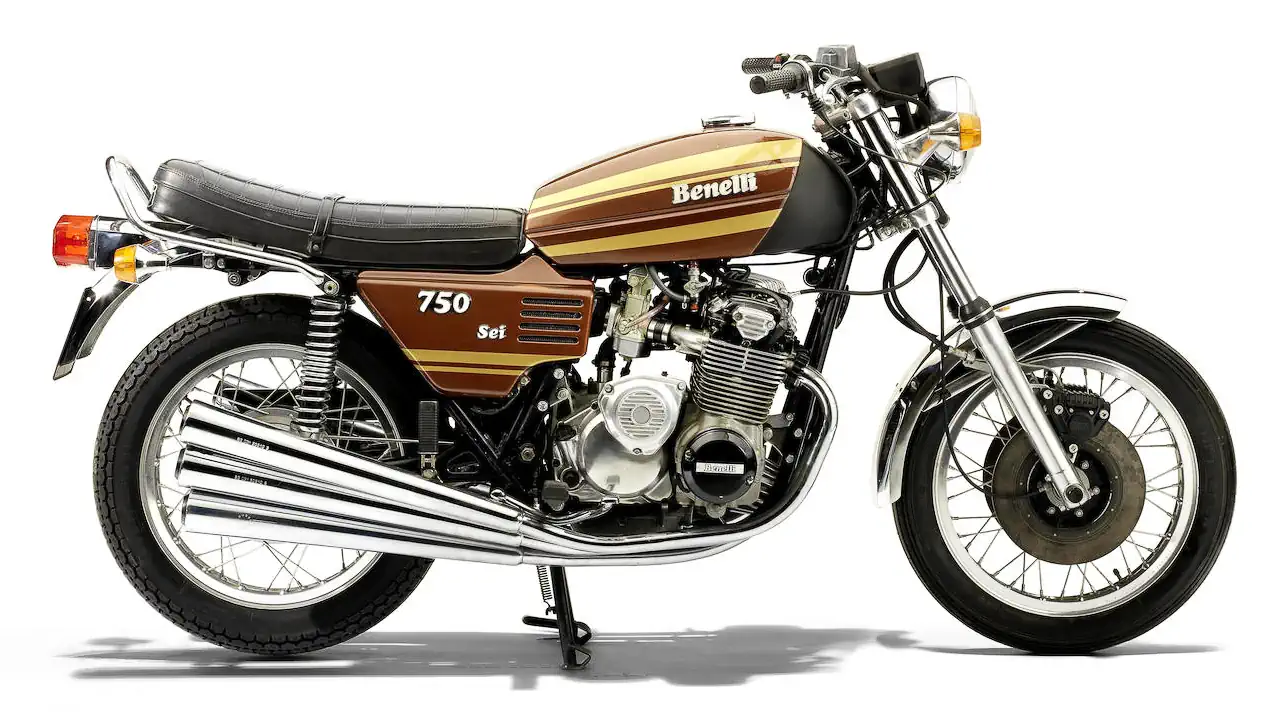
1974 Benelli 750 Sei
The 1974 Benelli 750 Sei was important as the world’s first production six-cylinder motorcycle. The motor featured 71 horsepower for a 120 mph top speed, with three Dell’Orto carburetors and six mufflers. It delivered smooth, vibration-free power and decent handling despite its weight, and served as a European return volley from the Honda CB750 and Kawasaki Z1. Photo courtesy of Bonhams.
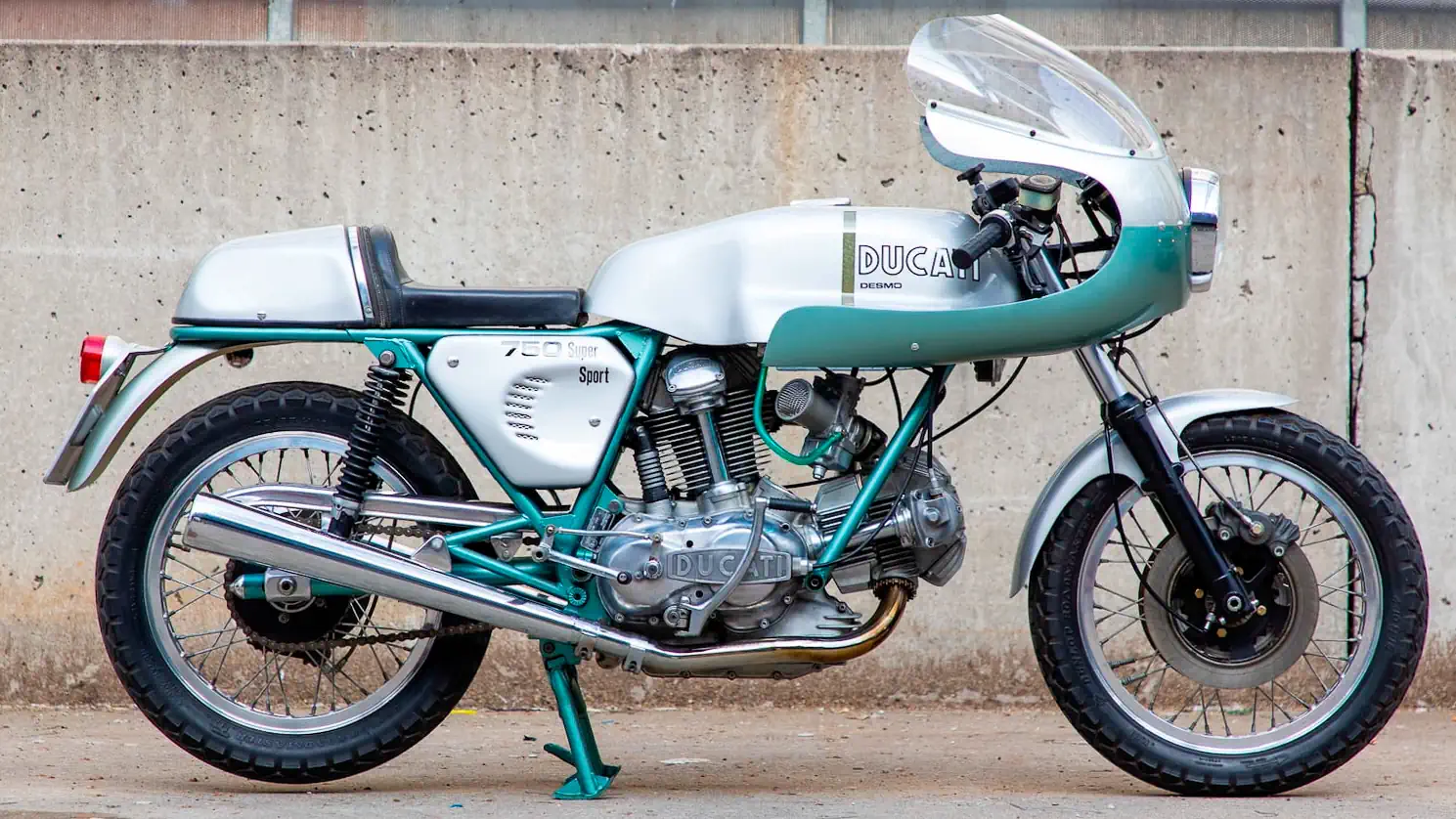
1974 Ducati 750 SS Green Frame
The 1974 Ducati 750 SS Green Frame was a stunning superbike with a 748cc desmodromic L-twin engine, twin Dell’Orto carbs, twin disc brakes, and a green-painted frame. Putting out 70 horsepower, it hit over 130 mph with razor-sharp handling. Only 401 examples of this first production race replica from Ducati were built for homologation after the 1972 Imola win. This Holy Grail defined Ducati’s performance legacy. Photo courtesy of Mecum Auctions.
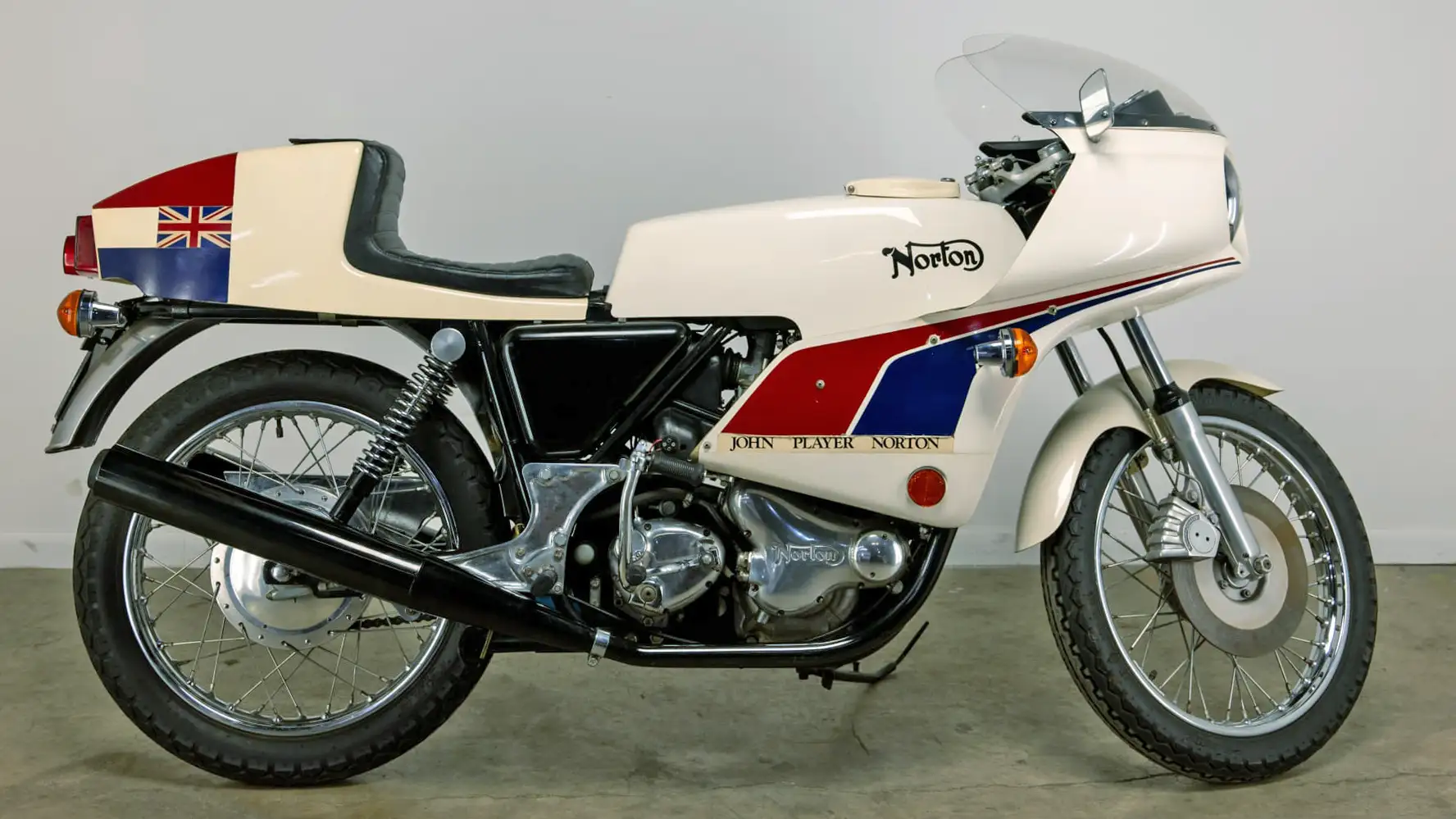
1974 Norton Commando John Player Special
The Norton Commando John Player Special (JPS) was a striking limited-edition version of the classic 850cc parallel-twin Commando. Styled to mimic Norton’s John Player-sponsored Formula 750 racers, it featured bold white fiberglass bodywork with red/white/blue stripes, a full fairing with twin headlights, black-chromed exhausts, clip-ons, and rearsets, creating an exotic, race-inspired cafe-racer look over largely stock mechanicals. Two hundred examples were built. Photo courtesy of Mecum Auctions.
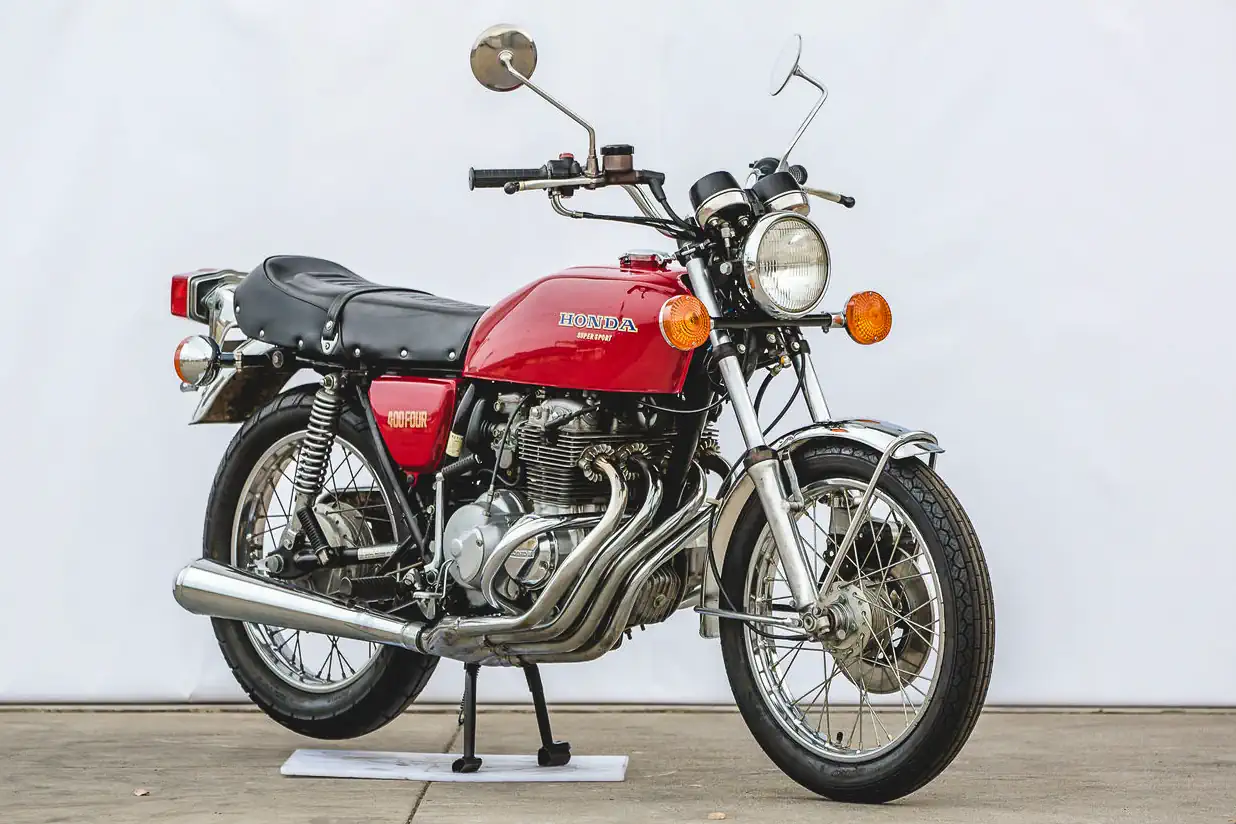
1975 Honda CB400F Super Sport
The 1975 Honda CB400F Super Sport featured a 408cc air-cooled SOHC inline-four engine delivering 37 horsepower at 8500 rpm, four Keihin carburetors, a six-speed gearbox, rearset footpegs, agile handling, and a stylish four-into-one exhaust. It offered smooth revving, excellent handling, and café racer styling. A huge success, over 100,000 CB400F Super Sports were sold in four years. Photo courtesy of Mecum Auctions.
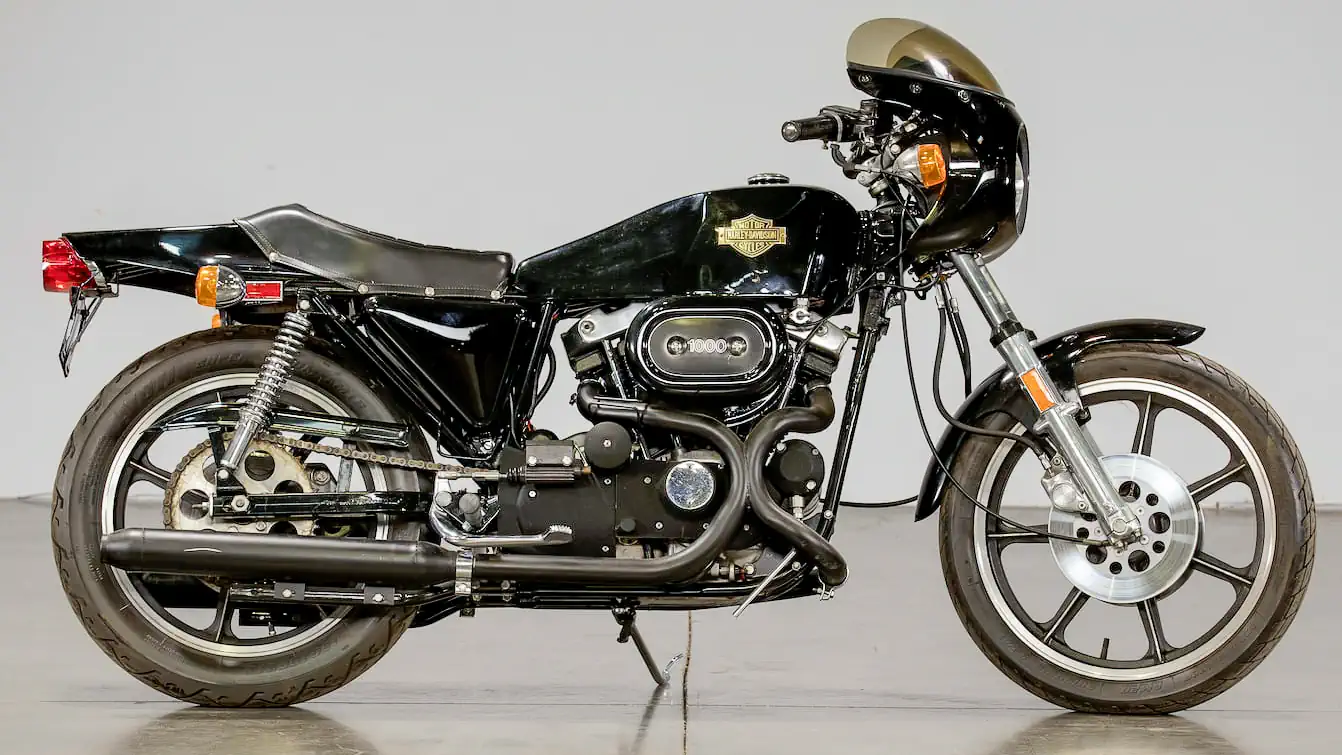
1977 Harley-Davidson XLCR
The 1977 Harley-Davidson XLCR was a blacked-out café racer based on the Sportster, with a 997cc V-twin engine producing 61 horsepower for a top speed of about 110 mph. It had a bikini fairing, triple disc brakes, and bold styling by Willie G. Davidson to tempt sport riders away from Japanese competition. Though a sales flop due to performance and reliability issues, it became a collectible icon. Photo courtesy of Mecum Auctions.
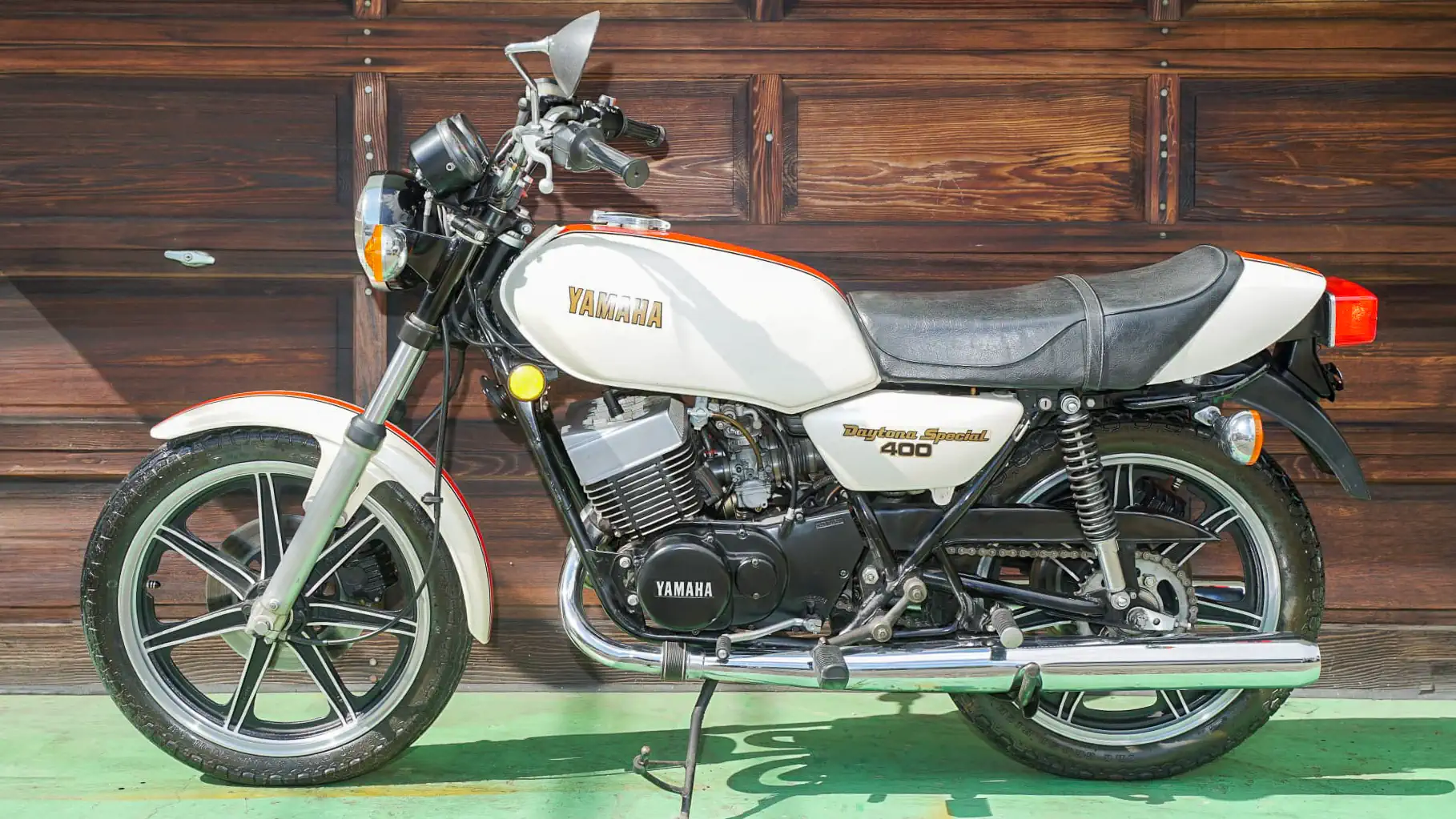
1979 Yamaha RD400 Daytona Special
Known as a giant killer, the 1979 Yamaha RD400F Daytona Special was the last hurrah for air-cooled two-stroke street bikes in the United States. The kickstart, oil-injected 398cc twin had reed valves, a six-speed gearbox, cast wheels, upgraded suspension, precise handling, disc brakes, and unique ram-air styling with fresh bodywork. It delivered fun, punchy performance up to 105 mph from around 40 horsepower. Photo courtesy of Mecum Auctions.
Thanks to Bonhams and Mecum Auctions for fine examples of these 12 essential motorcycles of the 1970s.
Our bike review this episode is the Yamaha MT-03. Do not underestimate this bike; you get a lot of motorcycle for your money! Associate Editor Kelly Callan rode the smallest MT for several weeks, and that included commuting on it. One of the things that impressed her, was how the MT-03 acted like a larger motorcycle. Kelly also spent some time chasing Editor Don Williams through the canyons when he was on the Yamaha MT-07—obviously a much larger machine. She tells us about how it all went.
* * * * *
We’re closing in fast on the 34th annual Biketoberfest, October 15–18, when all roads will lead to Teddy Morse’s Destination Daytona—the more than 100-acre motorcycle playground in Ormond Beach Florida. This week we get to hear all about it from Teddy Morse himself. With his trademark high energy and enthusiasm, he tells us all about his recently established Triketoberfest that happens the week before, and how the Destination Daytona complex turns into a full-throttle hub of demo rides, vendors, custom builds, live music, food trucks, shops, and nonstop pavilion energy. So, whether you’re on two wheels or three, whether you’re hunting parts or lining up a test ride; grab a cold one and soak up the energy and gorgeous Florida fall weather. This is one of the many Daytona Beach places where Biketoberfest feels like home. So don’t forget: make sure you download the Biketoberfest mobile App from Apple or Google Play or visit www.biketoberfest.org and we’ll see you there!
* * * * *
Our guest this episode is Greg Arnold, Mecum’s motorcycle auction director. He bought his first bike at eleven, joined the company in 2011, and has spent more than a decade helping turn this incredible event into the place collectors, consignors, and dreamers all show up. Next February 3rd through 6th, Mecum will—for the 36th time, bring the world’s largest vintage motorcycle auction back to South Point, Las Vegas. That’s over two thousand bikes over four days. Board-track racers, barn finds, customs, race iron, and especially, those incredible machines that make the room go quiet. Greg gives us insight into what it takes to make this event work so incredibly well, and if you’re interested in selling your pride and joy, what steps you have to take to make it happen.
* * * * *
Here’s quick reminder to check out our monthly digital magazine. It’s filled with everything you want to read on motorcycling, including some things you’ve probably not seen elsewhere. It’s absolutely free and you will find it on the Apple App Store and of course on Google Play as well.
Don’t forget to leave us your comments on our social media—we’re on all the usual platforms at Ultimate Motorcycling. We love hearing your feedback… so good or bad, please let us know what you think. If there’s something you’d like us to cover, we’d love to hear those ideas too!
We use cookies and browser activity on this website
Functional
Always active
The technical storage or access is strictly necessary for the legitimate purpose of enabling the use of a specific service explicitly requested by the subscriber or user, or for the sole purpose of carrying out the transmission of a communication over an electronic communications network.
Preferences
The technical storage or access is necessary for the legitimate purpose of storing preferences that are not requested by the subscriber or user.
Statistics
The technical storage or access that is used exclusively for statistical purposes.The technical storage or access that is used exclusively for anonymous statistical purposes. Without a subpoena, voluntary compliance on the part of your Internet Service Provider, or additional records from a third party, information stored or retrieved for this purpose alone cannot usually be used to identify you.
Marketing
The technical storage or access is required to create user profiles to send advertising, or to track the user on a website or across several websites for similar marketing purposes.