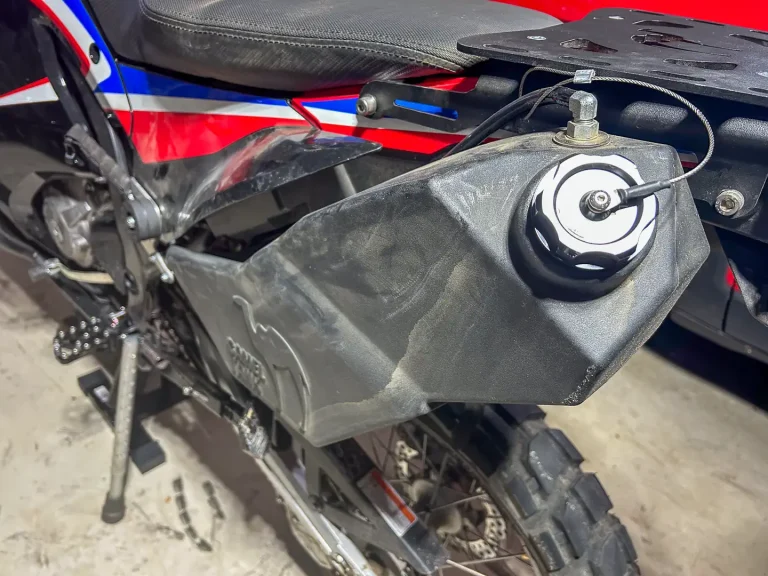
Camel ADV innovates quality upgrades and replacement parts for most adventure bikes. After six months away from the US market, the Calgary-based company now has a US presence for direct shipping. Many of the most useful upgrades I installed on the Ultimate Motorcycling Ténéré 700 Project Bike were from Camel ADV. It was the first manufacturer I looked up when I embarked on the Honda CRF300L Rally Project Bike. To my great delight, Camel makes a 1.3-gallon auxiliary fuel tank and a minimalist rear cargo rack. Those are two upgrades I knew I would need for the riding I had planned.
The standard Honda CRF300L Rally has a 3.4-gallon fuel tank. With my heavy throttle hand, that can be as few as 183 miles to walking. Having the option to add 70 more miles between gas stops comes in handy for backcountry exploring, especially on multi-day trail rides.
My regular riding partners’ bikes have ranges up to 310 miles. Having to find a gas station twice as often as they do would subject me to the same ridicule as having to stop twice as frequently for nature calls. The Camel Tank takes me roughly 70 additional miles, and that 250-mile mark is where everyone starts thinking about looking for a gas station.
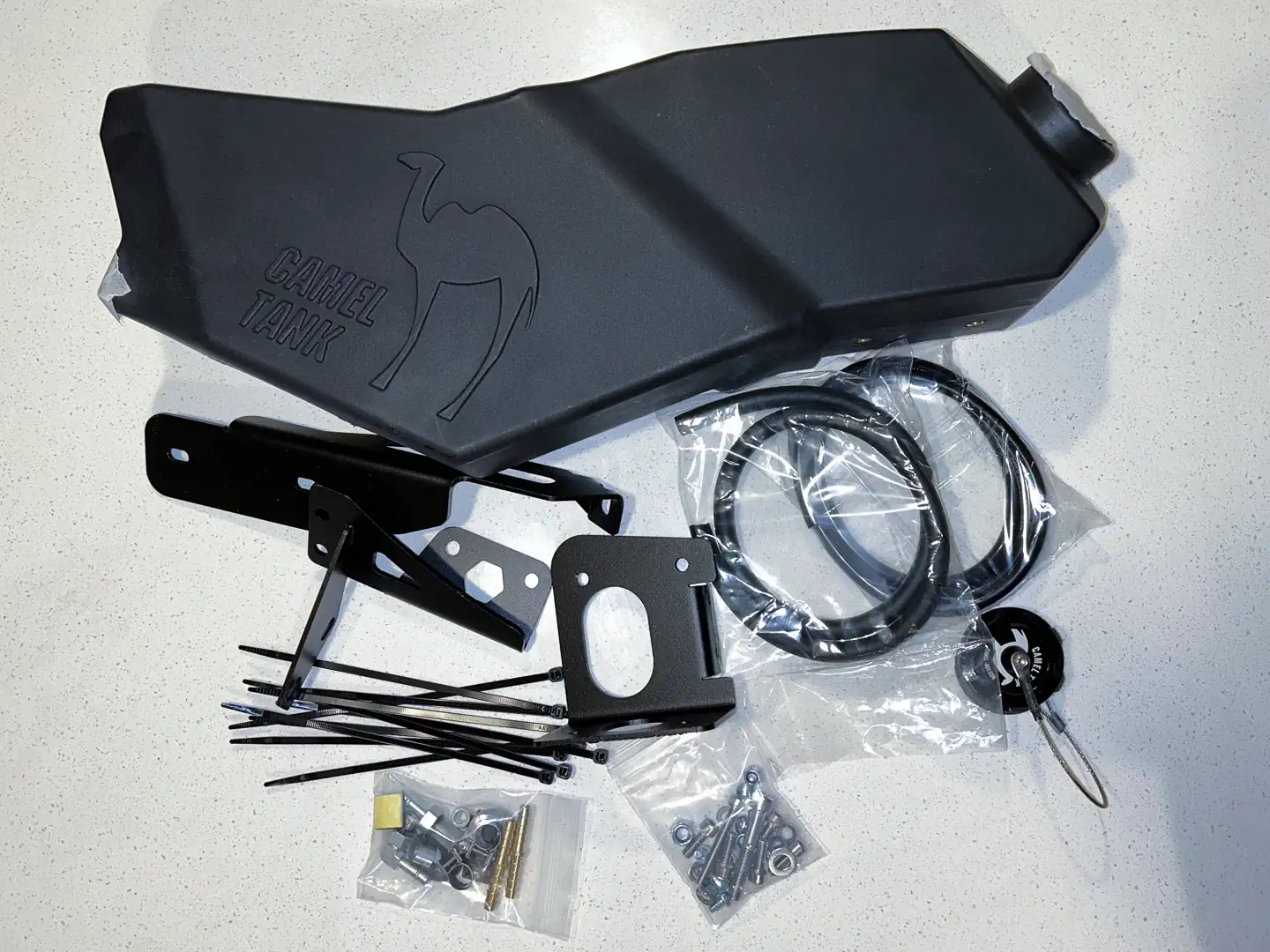
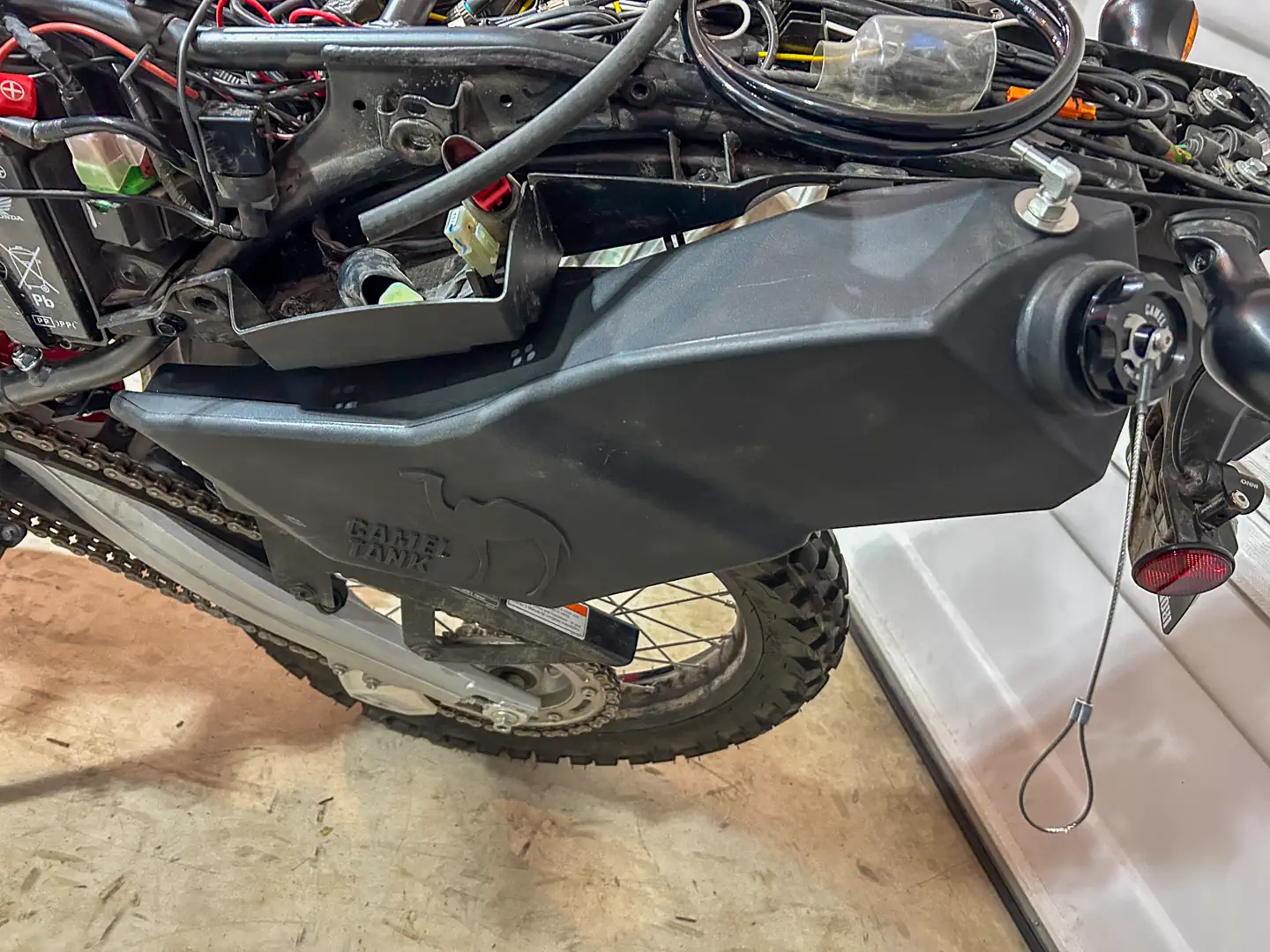
The Camel Tank kit runs $429 (US MSRP) and includes all components and instructions needed to complete the installation. It is molded from XLPE (crosslinked polyethylene) and has no seams that can split or crack. The tank mounts on the left side of the bike, so its 13-pound weight when filled balances nicely with the 300’s muffler.
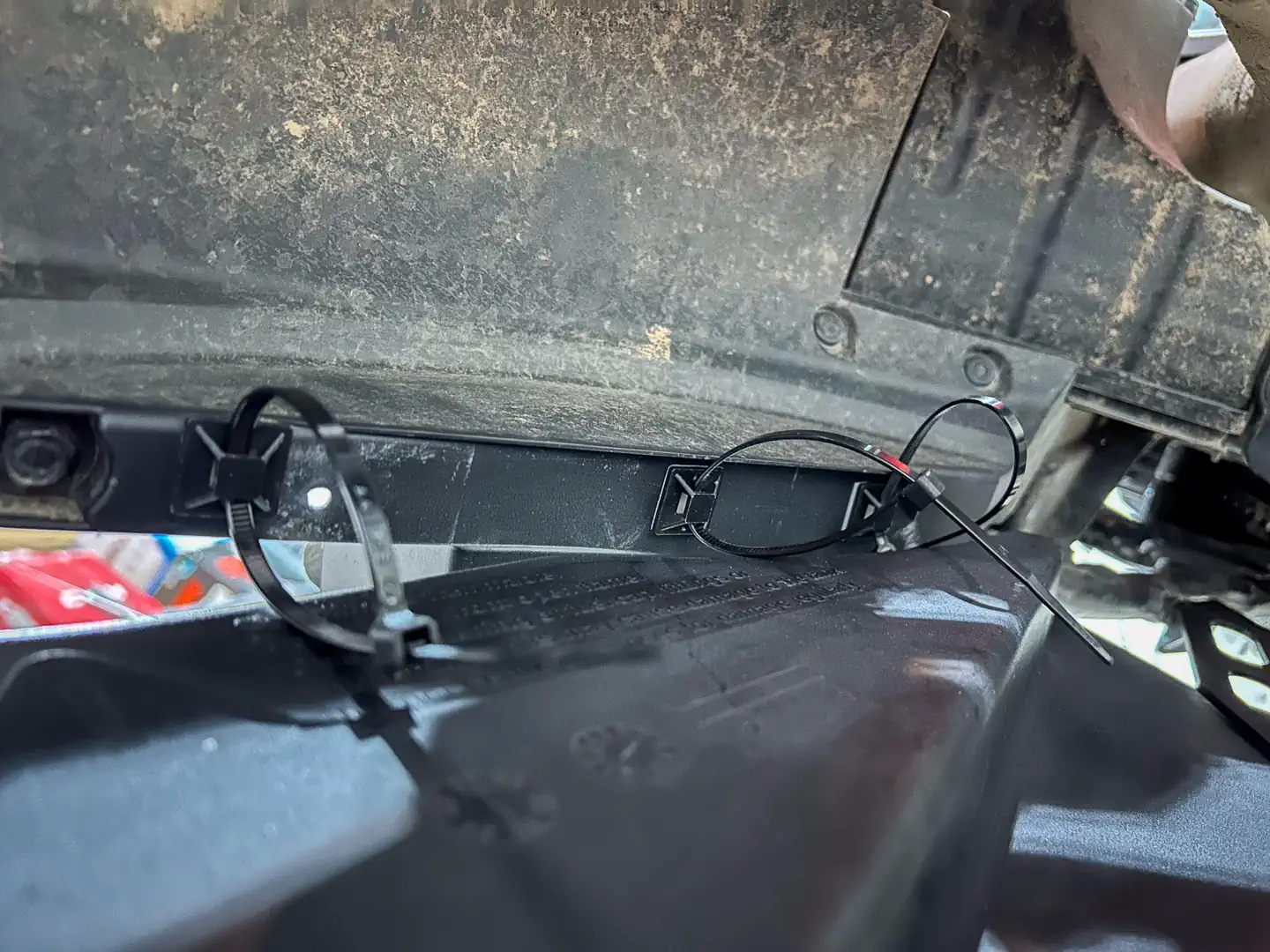
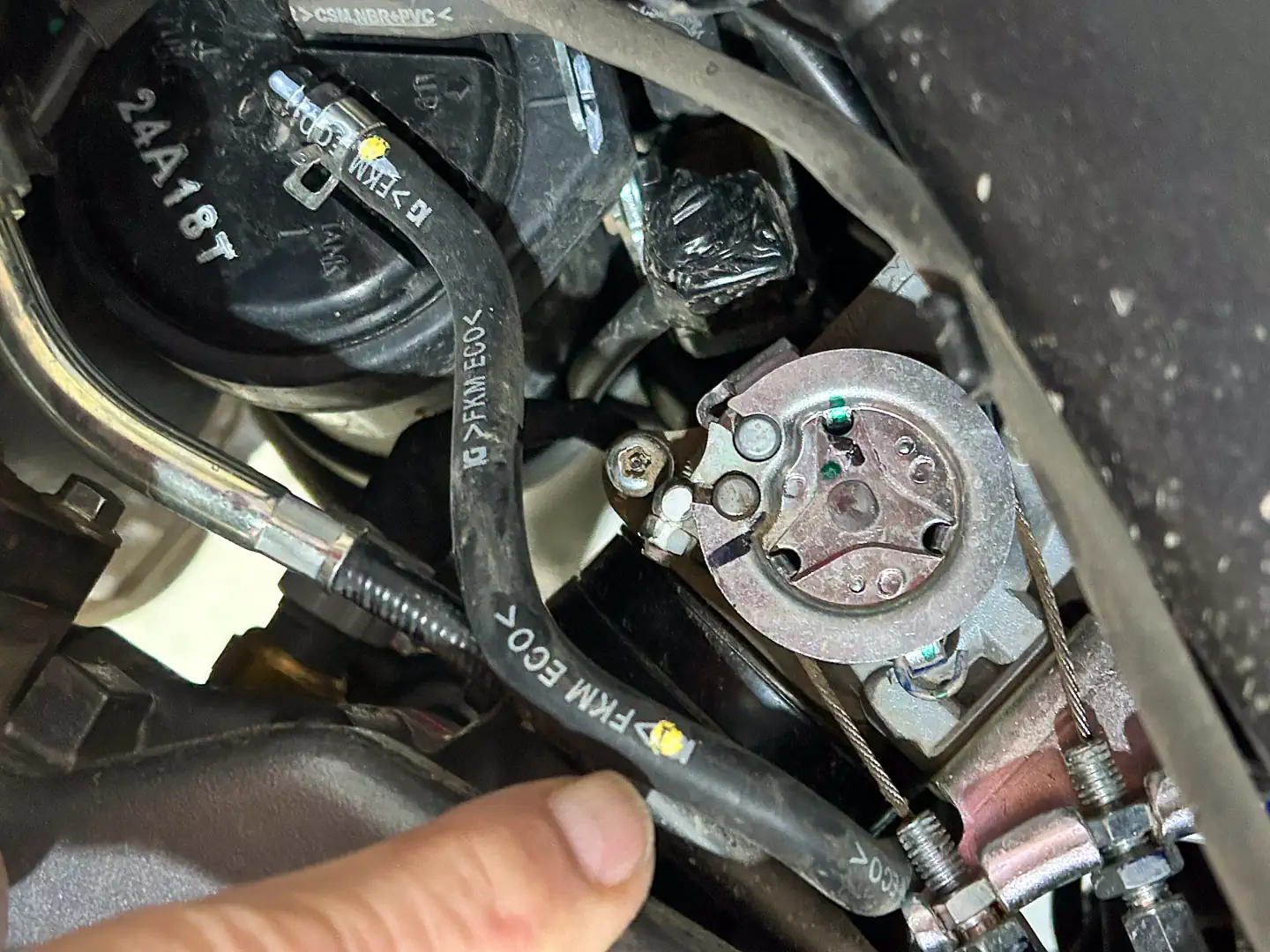
Once I garnered the confidence to decide where to cut the clearly enough marked fuel system line that runs from the fuel tank to the evaporative canister, the couple of hours of installation went very smoothly.
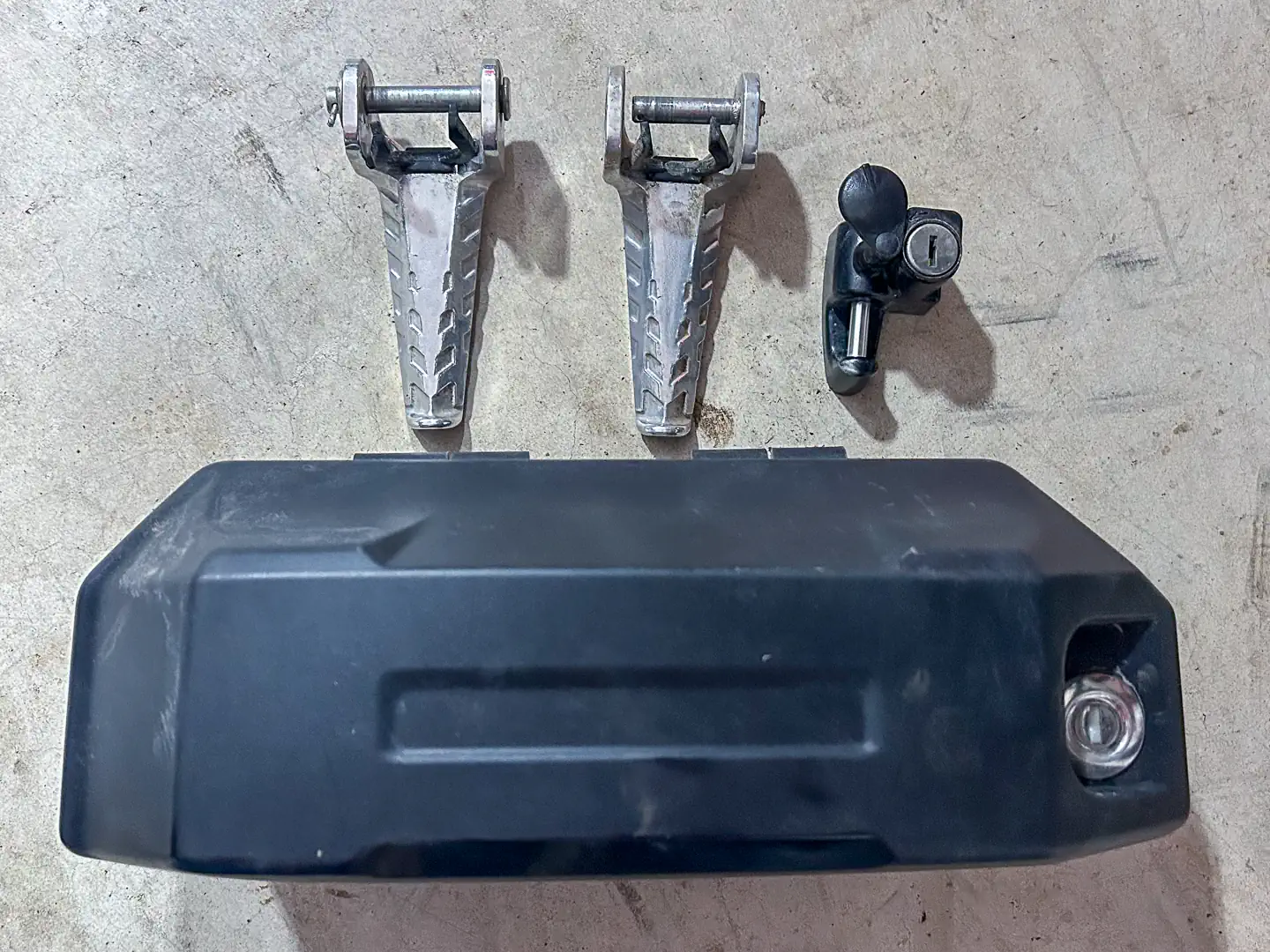
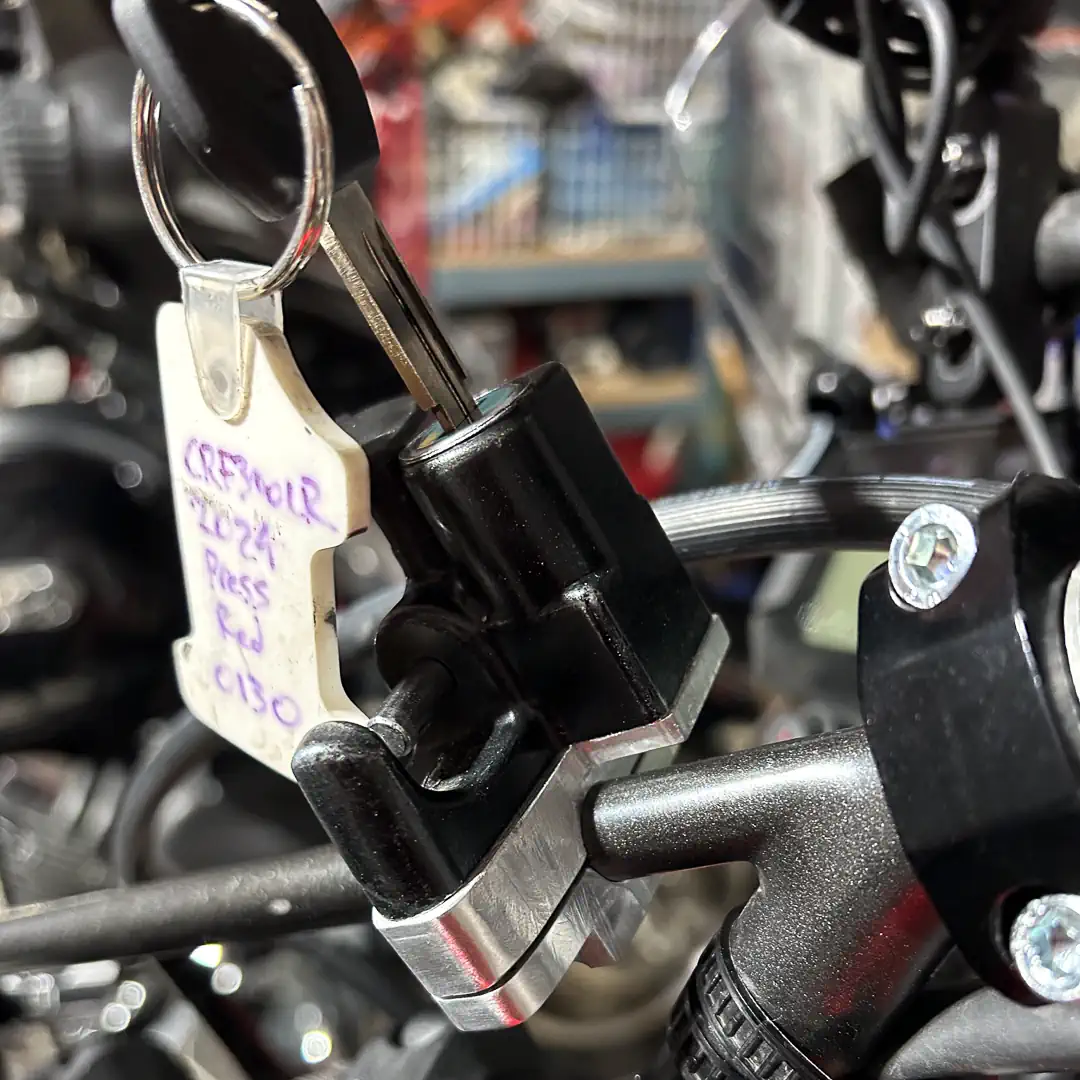
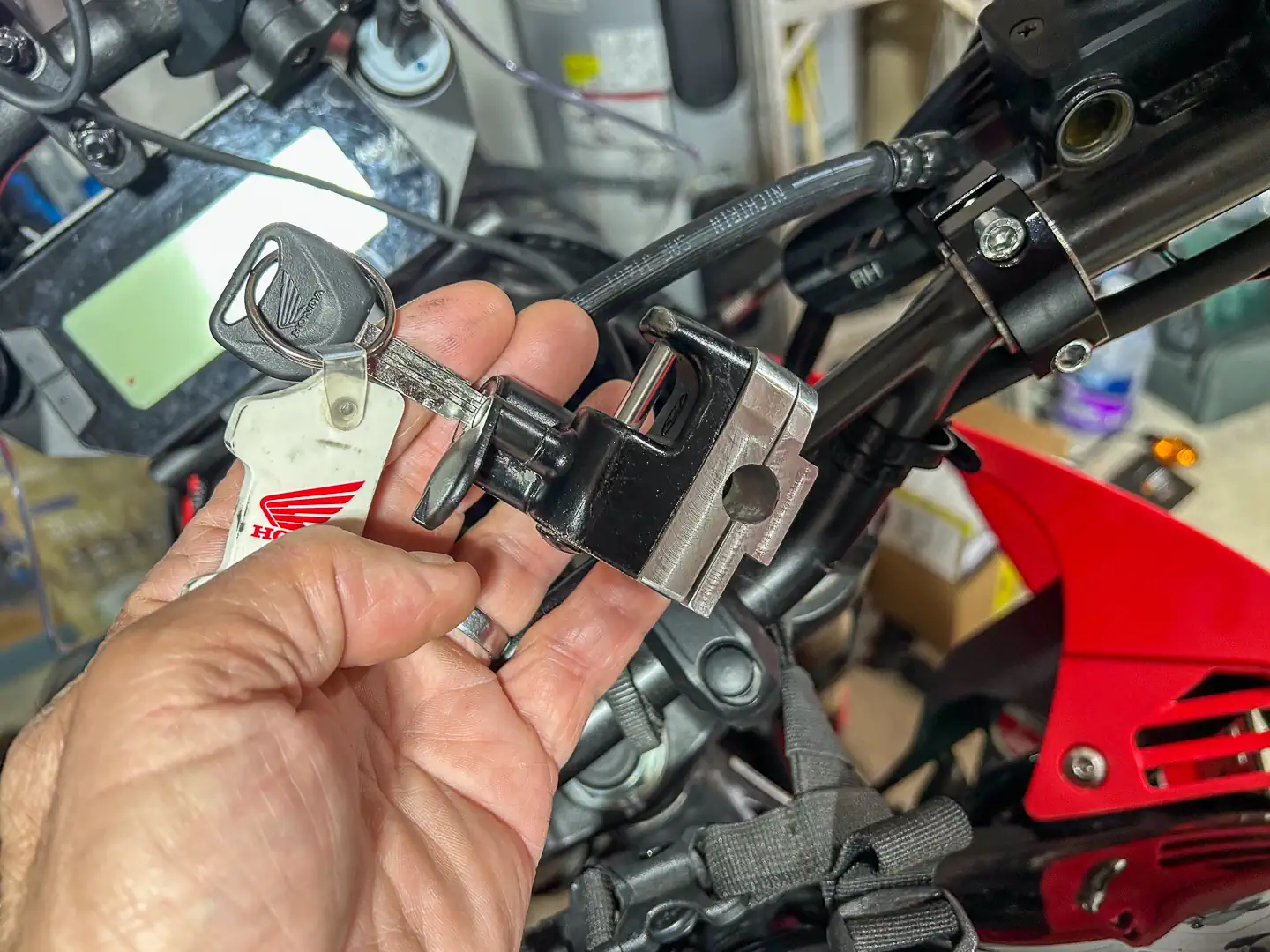
Start by removing the helmet lock, toolbox, and passenger footpegs. With my machinist neighbor’s help, I was able to relocate the keyed helmet lock to the handlebars. The rest of the process, all of which is clearly demonstrated in Camel ADV’s 47-minute installation video, is easy to follow.
Like many, I wondered how the fuel gets from the low point below the gas tank level up into the gas tank without a pump or gravity assist. The simple explanation is that it uses vacuum pressure.
The stock gas tank sucks the fuel from the Camel Tank. This only works when the stock tank is full, so you always start with both tanks filled. The gas gauge doesn’t budge for about 70 miles as the fuel in the Camel Tank is sucked out first without the fuel gauge noticing. When the Camel Tank is depleted, the amount of fuel in the main tank starts to decrease, and the fuel gauge registers the usage as normal.
When I fill the Camel Tank, I fill it first while watching the gas pump closely. The auxiliary tank takes exactly 1.3 gallons without spilling over, if you slow down at the end to eliminate the bubbling from the pump. The filled tank weighs about 13 pounds, not enough to require any adjustment of the shock.
The Camel ADV Camel Tank has proven itself as a genuinely useful addition to the Ultimate Motorcycling Honda CRF300L Rally project bike. Most of my day rides fall into the 230-mile range, so being able to complete them without thinking about a fuel stop is liberating. On 500+ mile days, that extra 70 miles consistently removes two or more fuel stops from the plan. More importantly, the auxiliary fuel tank changes how routes are approached. Instead of riding from gas station to gas station, the focus shifts back to the ride itself. Not having to constantly calculate fuel range makes the Rally feel more capable and better suited to the type of riding I do.
Hello and welcome again to the Motos and Friends Podcast. This episode is brought to you by Leod Escapes.
* * * * *
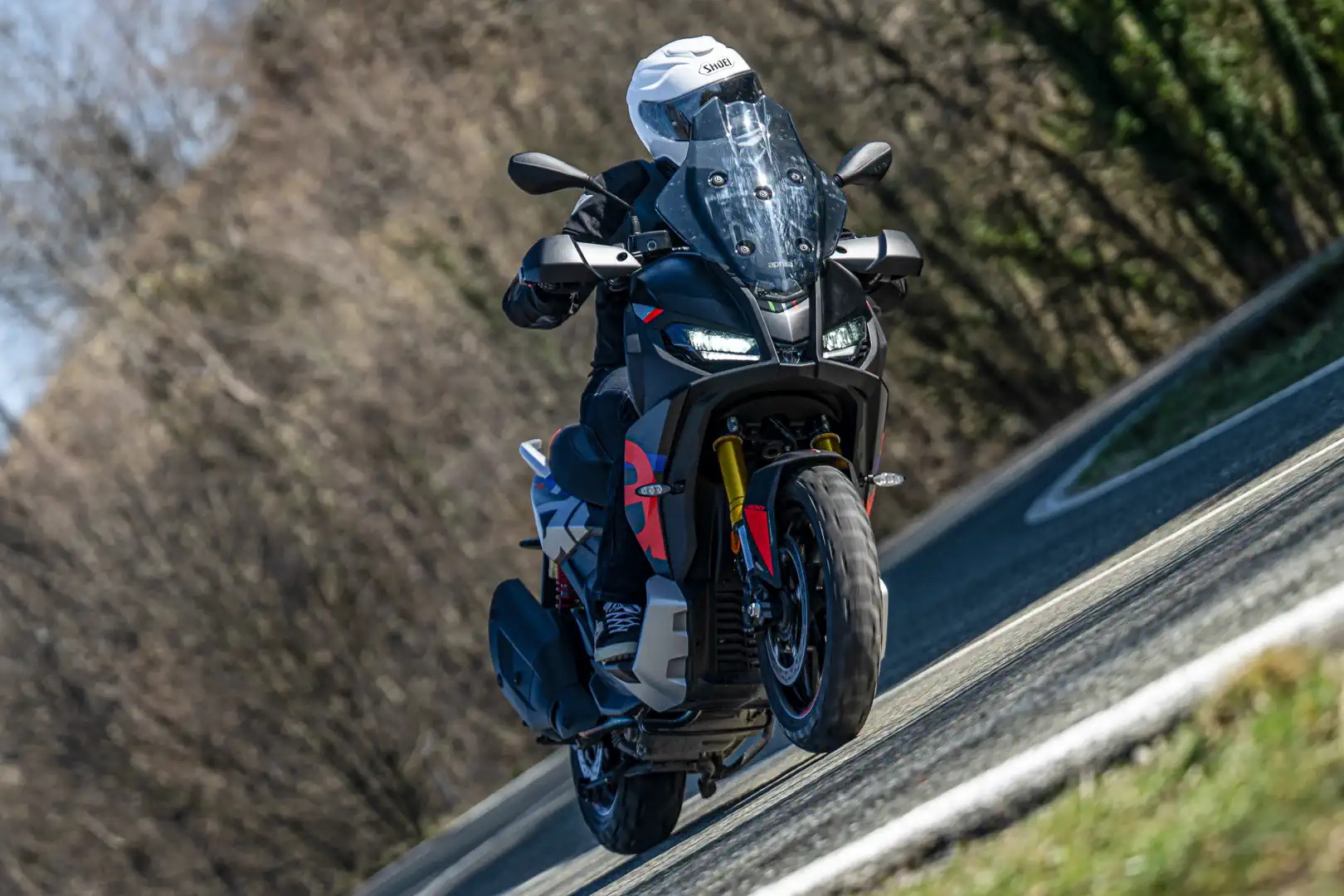
Aprilia is bringing a scooter to North America, and it’s one designed to appeal to adventure motorcyclists. The SR GT 400 is a mid-size scooter built around a steel motorcycle-style frame, a 399cc single, and off-road-ready hardware. It reaches US dealers as soon as this month. Don Williams and Kelly Callan spent some time riding the Aprilia and were surprised by what they discovered. Is this a real motorcycle or just a good-looking urban scooter?
* * * * *
Cat McLeod is founder and owner of Leod Escapes, the ultimate tour company for sport-minded motorcycle riders. Cat talks to us this segment about some of his amazing European experiences and tours that include of course, riding some amazing MotoGP tracks on new BMW S1000RRs. If you like what you hear, now is the time to book your trip of a lifetime, so visit LeodEscapes.com to find out more.
* * * * *
Our guest this episode is Terry Vance, the multiple Motorcycle and Motorsports Hall-of-Famer. Terry is of course the former professional motorcycle drag racer, team owner, and co-founder of the high-performance parts company Vance & Hines. Teejay Adams chats with Terry about his incredible career that includes being the first rider to hit 200 mph in the standing quarter-mile.
Having won this year’s MotoAmerica Mission King of the Baggers championship with Hayden Gillim riding the Vance & Hines factory Indian Challenger, and with Harley-Davidson’s recent withdrawal, Terry gives us his thoughts on where the series might go from here.
* * * * *
Here’s quick reminder to check out our monthly digital magazine. It’s filled with everything you want to read on motorcycling, including some things you’ve probably not seen elsewhere. It’s absolutely free and you will find it on the Apple App Store and of course on Google Play as well.
Don’t forget to leave us your comments on our social media—we’re on all the usual platforms at Ultimate Motorcycling. We love hearing your feedback… so good or bad, please let us know what you think. If there’s something you’d like us to cover, we’d love to hear those ideas too!
We use cookies and browser activity on this website
Functional
Always active
The technical storage or access is strictly necessary for the legitimate purpose of enabling the use of a specific service explicitly requested by the subscriber or user, or for the sole purpose of carrying out the transmission of a communication over an electronic communications network.
Preferences
The technical storage or access is necessary for the legitimate purpose of storing preferences that are not requested by the subscriber or user.
Statistics
The technical storage or access that is used exclusively for statistical purposes.The technical storage or access that is used exclusively for anonymous statistical purposes. Without a subpoena, voluntary compliance on the part of your Internet Service Provider, or additional records from a third party, information stored or retrieved for this purpose alone cannot usually be used to identify you.
Marketing
The technical storage or access is required to create user profiles to send advertising, or to track the user on a website or across several websites for similar marketing purposes.
Advertising helps us keep our content available for free, so adjusting your ad blocking settings will help us.
We appreciate your support!
i
How to Allow Ads on This Site
Depending on your setup, ads may be blocked by a browser extension, VPN, antivirus software, or other application. Here are some common ways to allow ads:
Browser Extensions (e.g., Adblock, uBlock, etc.)
Click the extension icon in your browser toolbar.
Look for an option like "Don't run on pages on this site" or "Pause on this site".
Save the change and refresh the page.
VPNs with Ad Blocking (e.g., NordVPN, Proton VPN, etc.)
Open your VPN app.
Go to settings or features.
Disable any ad blocking or tracking protection features.
Refresh the page.
Antivirus Software or Other Privacy Tools
Check for web protection, ad filtering, or browser privacy settings.
Click the power button to disable it for this site.
Refresh the page.
Not sure what's blocking ads? Look for tools with privacy or filtering features, or check your browser extensions. We only use respectful, non-intrusive advertising.