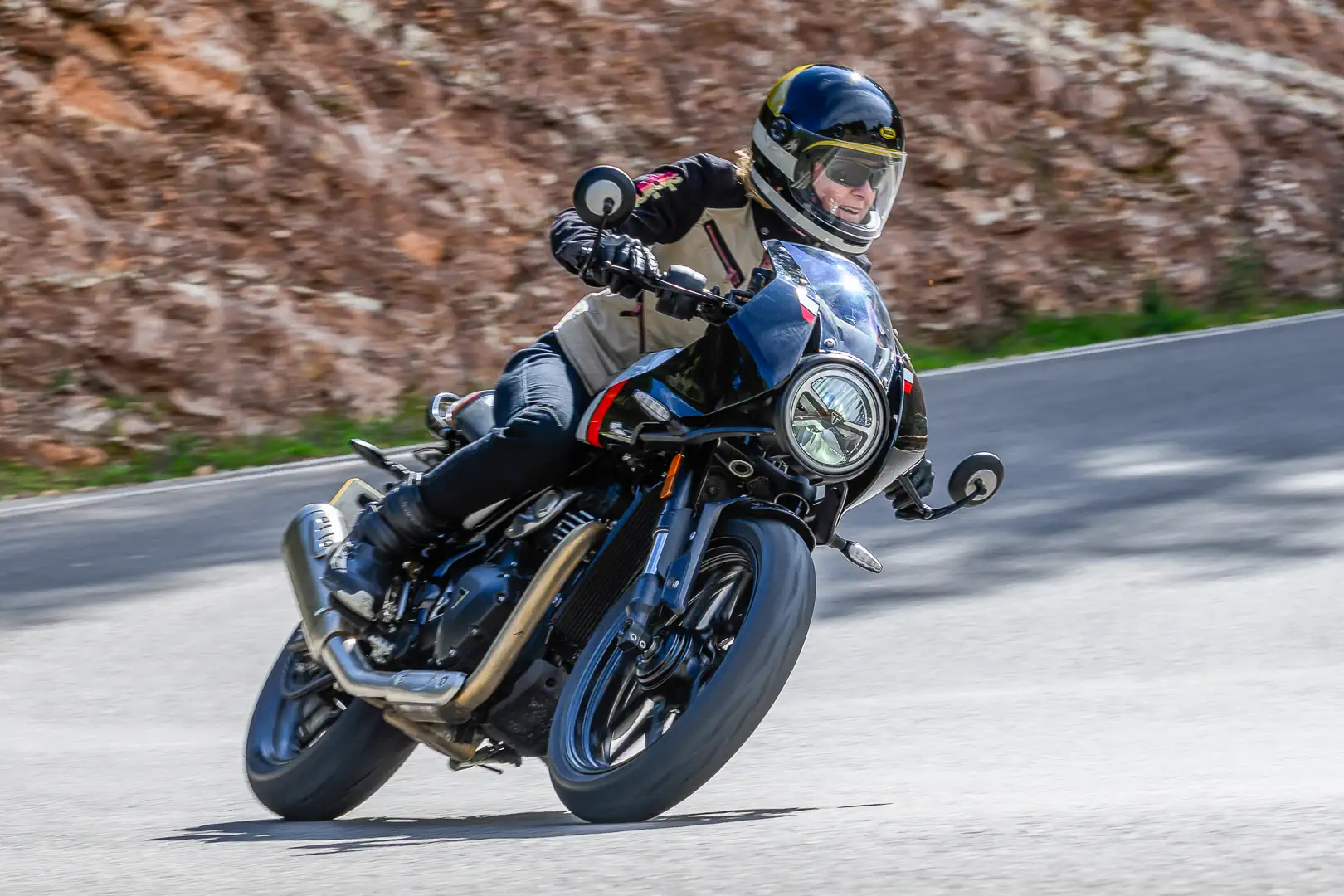
Polarized sunglasses are a popular choice among motorcycle riders. They cut glare, improve contrast, and reduce eye fatigue on long rides. They work great with analog and analog-style dashes. Unfortunately, many riders discover too late that their polarized lenses conflict with the LCD and TFT screens on modern motorcycles, and the results can be dangerous.
What About Polarized Lenses Causes the Problem
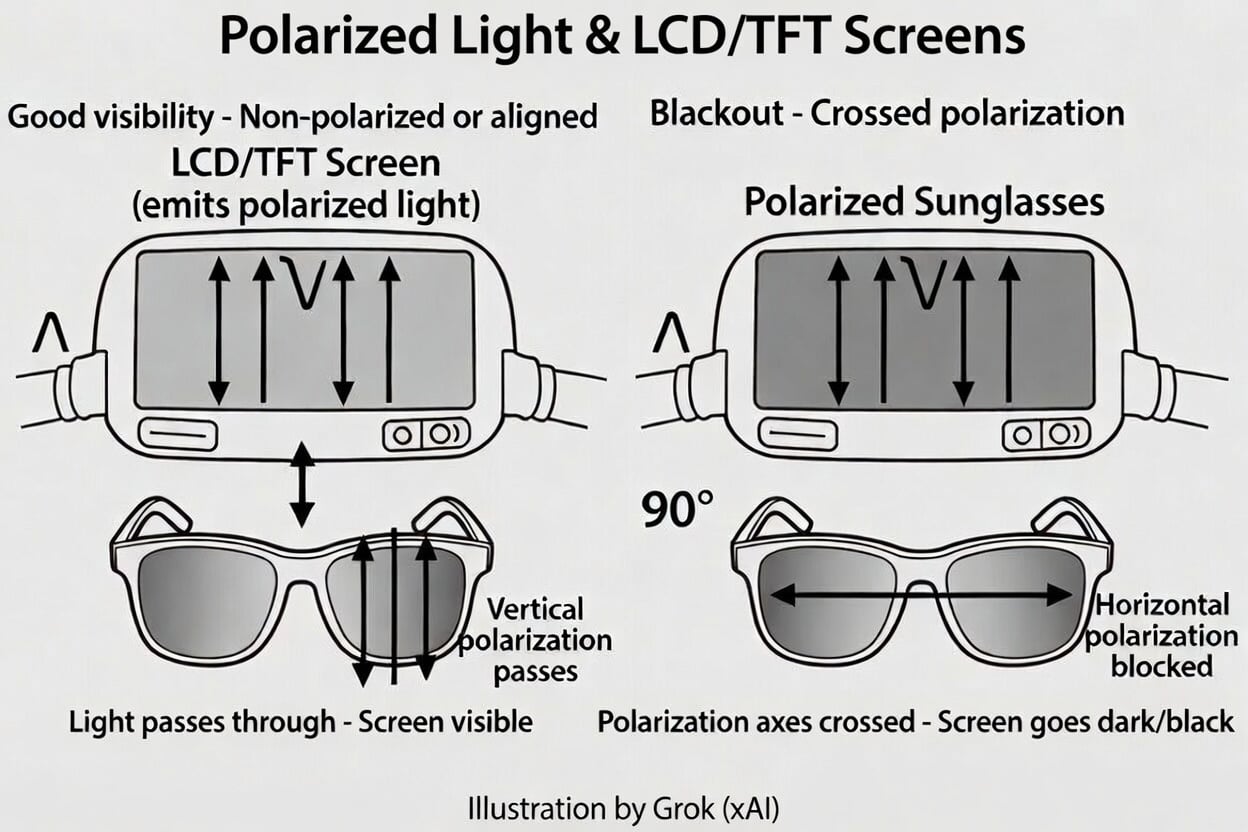
Light normally travels in all directions at once. Polarized lenses contain a filter that blocks light oscillating in the horizontal direction, while allowing vertically polarized light to pass through. Road and water glare are caused by horizontally polarized light, so the filtering that polarized lenses provide makes them effective.
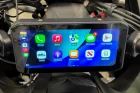
LCD and TFT displays, the screens used in most modern motorcycle instrument clusters, GPS units, and handlebar-mounted phones, also emit polarized light. It’s a byproduct of how liquid-crystal screens produce images. When the polarization angle of your lenses is perpendicular to that of the screen, the light waves cancel each other out. The display can go completely dark behind the polarized lenses. Other unwanted artifacts include simple dimming or rainbow effects.
The angle matters. At some viewing angles, the screen looks normal. Shift your head slightly, and it disappears. On a motorcycle, where your head constantly moves and leans, hitting that blackout angle is easy and unpredictable — a bad combination.
Which Screens Are Affected
Nearly every LCD and TFT display is vulnerable, regardless of brand. Aftermarket GPS units, again, from any brand, are also affected, as are smartphones mounted to handlebars. If it uses a liquid-crystal display, polarized lenses can black it out.
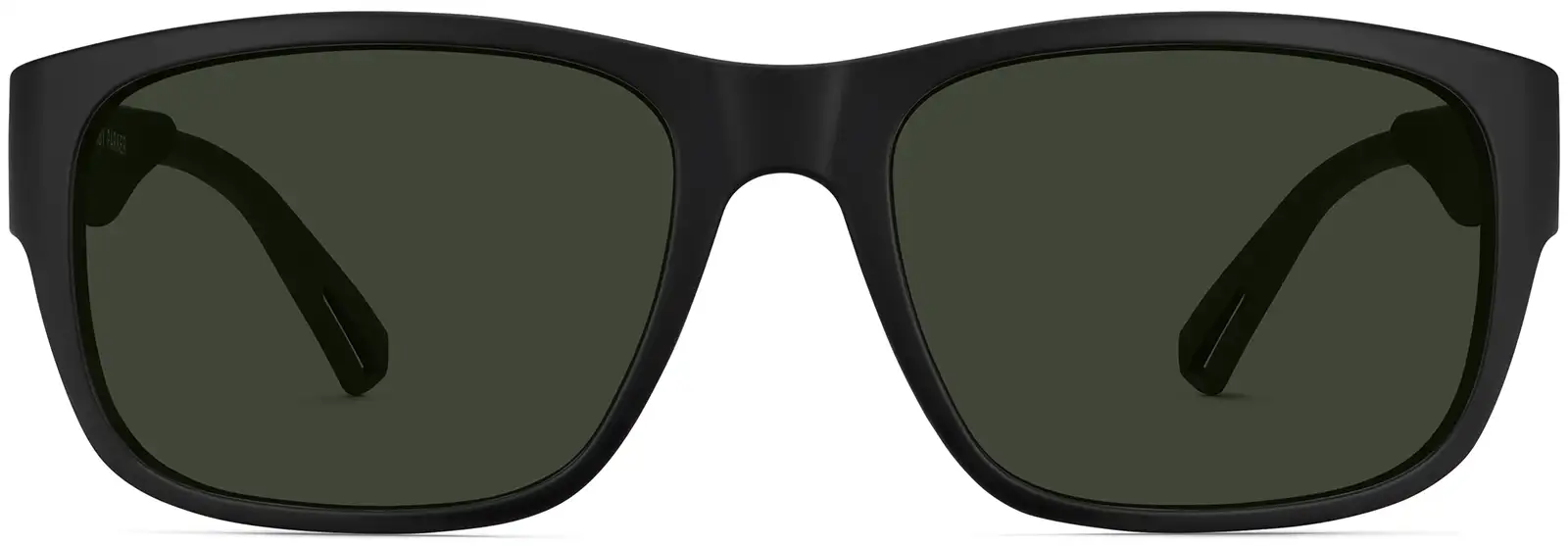
Warby Parker‘s new Sport line of frames offers non-polarized lenses.
OLED screens are found on newer, high-end smartphones. They are largely immune to this problem because they emit light differently. However, premium motorcycle dashboard displays use TFT rather than OLED, as TFT displays are easier to read in direct sunlight and more durable.
The Risks
Losing visibility of your instrument cluster at any time is more than an inconvenience. Riders can miss speed readings, low-fuel warnings, navigation prompts, and engine warning lights at exactly the moment they need them most. In heavy traffic or on unfamiliar roads, a blacked-out display creates a genuine safety hazard.
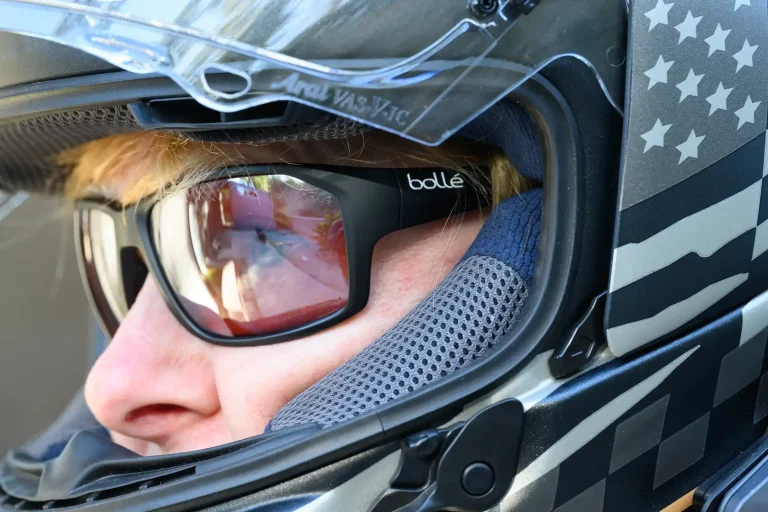
Wiley X WX Grid eyewear is designed for motorcycle riding, so the lenses are not polarized.
Polarized lenses can also cause distracting rainbow effects when looking through a clear faceshield. This is due to the manufacturing process used to create a curved plastic faceshield and its impact on light distribution. While the change in light distribution by the faceshield is invisible to the naked eye, the polarization reveals it.
What Riders Can Do
The most reliable fix is to not use polarized lenses when riding a motorcycle with an LCD or TFT display. Standard tinted lenses reduce brightness and glare without filtering polarized light. They keep displays fully visible at every angle.
Photochromic lenses darken automatically in sunlight. They are typically not polarized, so they are compatible with LCD screens. They are a practical alternative for riders who want automatic glare control without the display conflict.
Some riders find that tilting their head slightly changes the angle enough to restore screen visibility. This solution is inconsistent and unreliable as a safety measure.
The Bottom Line
Polarized lenses and LCD/TFT motorcycle displays do not mix well. Riders should keep this in mind when selecting lenses for their eyewear. You don’t want to be staring at a black screen at highway speed.
Our bike review this episode is the Yamaha MT-03. Do not underestimate this bike; you get a lot of motorcycle for your money! Associate Editor Kelly Callan rode the smallest MT for several weeks, and that included commuting on it. One of the things that impressed her, was how the MT-03 acted like a larger motorcycle. Kelly also spent some time chasing Editor Don Williams through the canyons when he was on the Yamaha MT-07—obviously a much larger machine. She tells us about how it all went.
* * * * *
We’re closing in fast on the 34th annual Biketoberfest, October 15–18, when all roads will lead to Teddy Morse’s Destination Daytona—the more than 100-acre motorcycle playground in Ormond Beach Florida. This week we get to hear all about it from Teddy Morse himself. With his trademark high energy and enthusiasm, he tells us all about his recently established Triketoberfest that happens the week before, and how the Destination Daytona complex turns into a full-throttle hub of demo rides, vendors, custom builds, live music, food trucks, shops, and nonstop pavilion energy. So, whether you’re on two wheels or three, whether you’re hunting parts or lining up a test ride; grab a cold one and soak up the energy and gorgeous Florida fall weather. This is one of the many Daytona Beach places where Biketoberfest feels like home. So don’t forget: make sure you download the Biketoberfest mobile App from Apple or Google Play or visit www.biketoberfest.org and we’ll see you there!
* * * * *
Our guest this episode is Greg Arnold, Mecum’s motorcycle auction director. He bought his first bike at eleven, joined the company in 2011, and has spent more than a decade helping turn this incredible event into the place collectors, consignors, and dreamers all show up. Next February 3rd through 6th, Mecum will—for the 36th time, bring the world’s largest vintage motorcycle auction back to South Point, Las Vegas. That’s over two thousand bikes over four days. Board-track racers, barn finds, customs, race iron, and especially, those incredible machines that make the room go quiet. Greg gives us insight into what it takes to make this event work so incredibly well, and if you’re interested in selling your pride and joy, what steps you have to take to make it happen.
* * * * *
Here’s quick reminder to check out our monthly digital magazine. It’s filled with everything you want to read on motorcycling, including some things you’ve probably not seen elsewhere. It’s absolutely free and you will find it on the Apple App Store and of course on Google Play as well.
Don’t forget to leave us your comments on our social media—we’re on all the usual platforms at Ultimate Motorcycling. We love hearing your feedback… so good or bad, please let us know what you think. If there’s something you’d like us to cover, we’d love to hear those ideas too!
We use cookies and browser activity on this website
Functional
Always active
The technical storage or access is strictly necessary for the legitimate purpose of enabling the use of a specific service explicitly requested by the subscriber or user, or for the sole purpose of carrying out the transmission of a communication over an electronic communications network.
Preferences
The technical storage or access is necessary for the legitimate purpose of storing preferences that are not requested by the subscriber or user.
Statistics
The technical storage or access that is used exclusively for statistical purposes.The technical storage or access that is used exclusively for anonymous statistical purposes. Without a subpoena, voluntary compliance on the part of your Internet Service Provider, or additional records from a third party, information stored or retrieved for this purpose alone cannot usually be used to identify you.
Marketing
The technical storage or access is required to create user profiles to send advertising, or to track the user on a website or across several websites for similar marketing purposes.