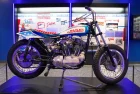
We all saw the video of McDonald’s CEO Chris Kempczinski talking about his company’s latest “product” and looking like he was being held hostage when forced to take a bite of the Big Arch. Well, it was exactly the opposite when Ducati North America CEO Jason Chinnock showed up at the Biltwell 100 with a 55-year-old Ducati 450 R/T Desmo he personally restored. He didn’t just show off his museum piece; he raced it.
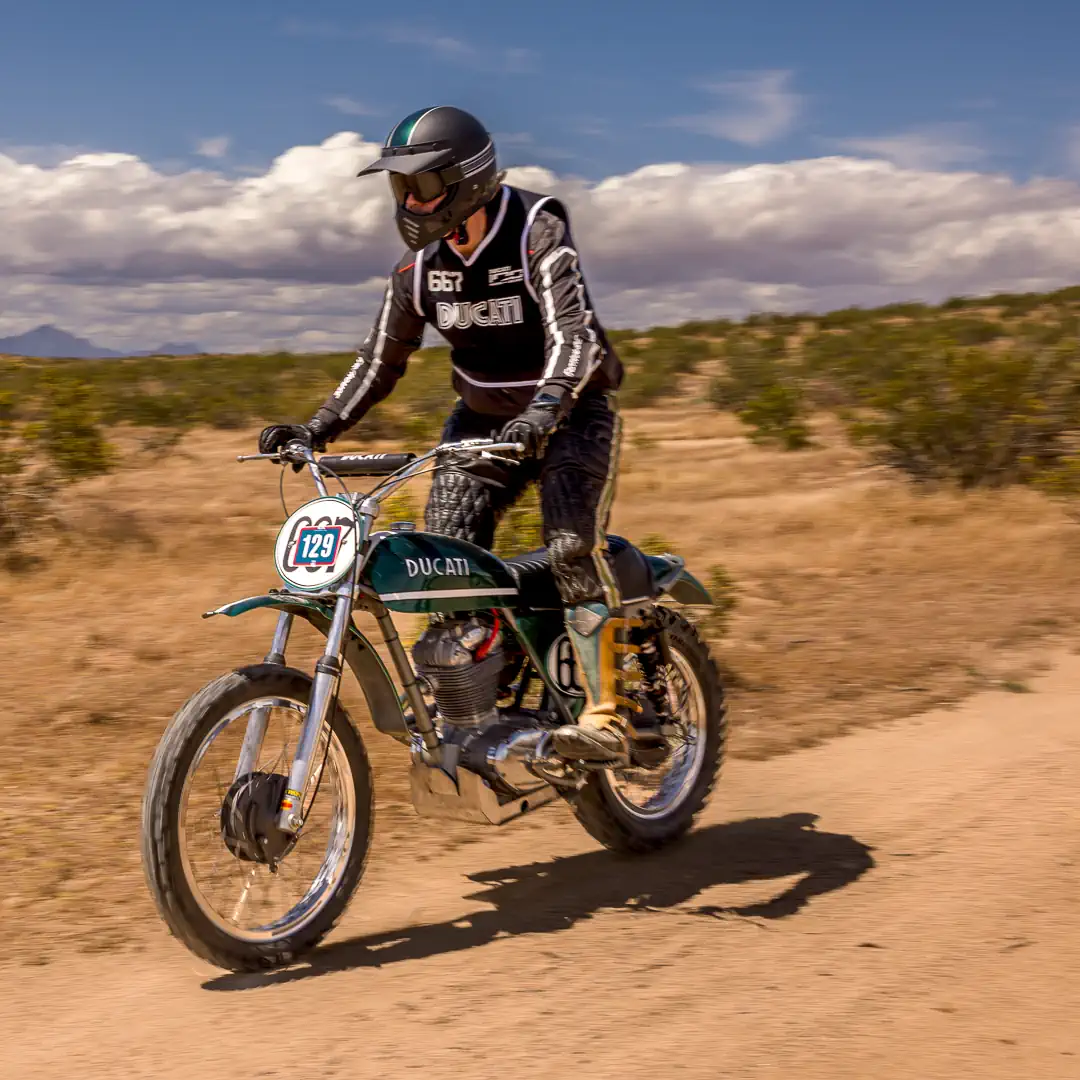
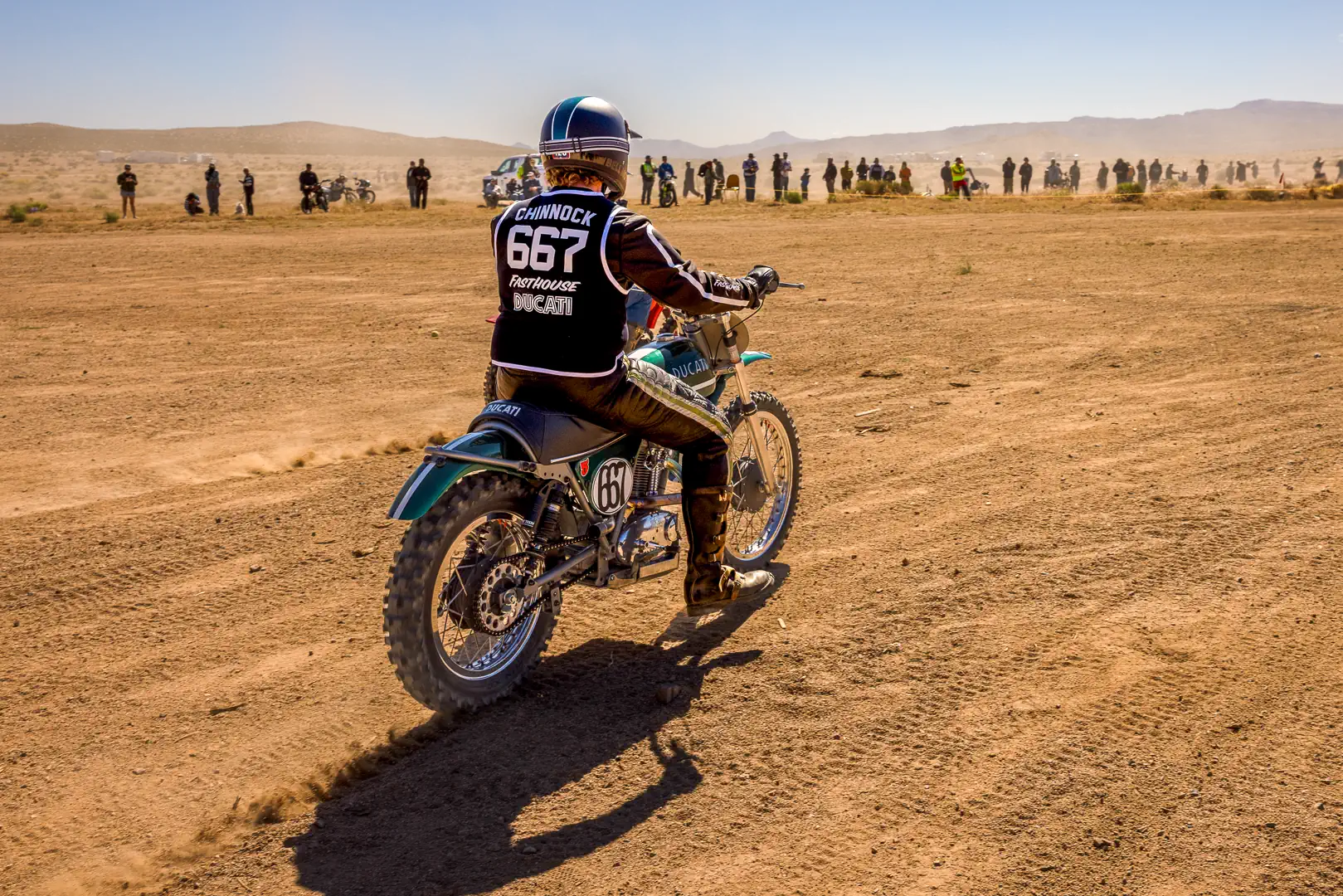
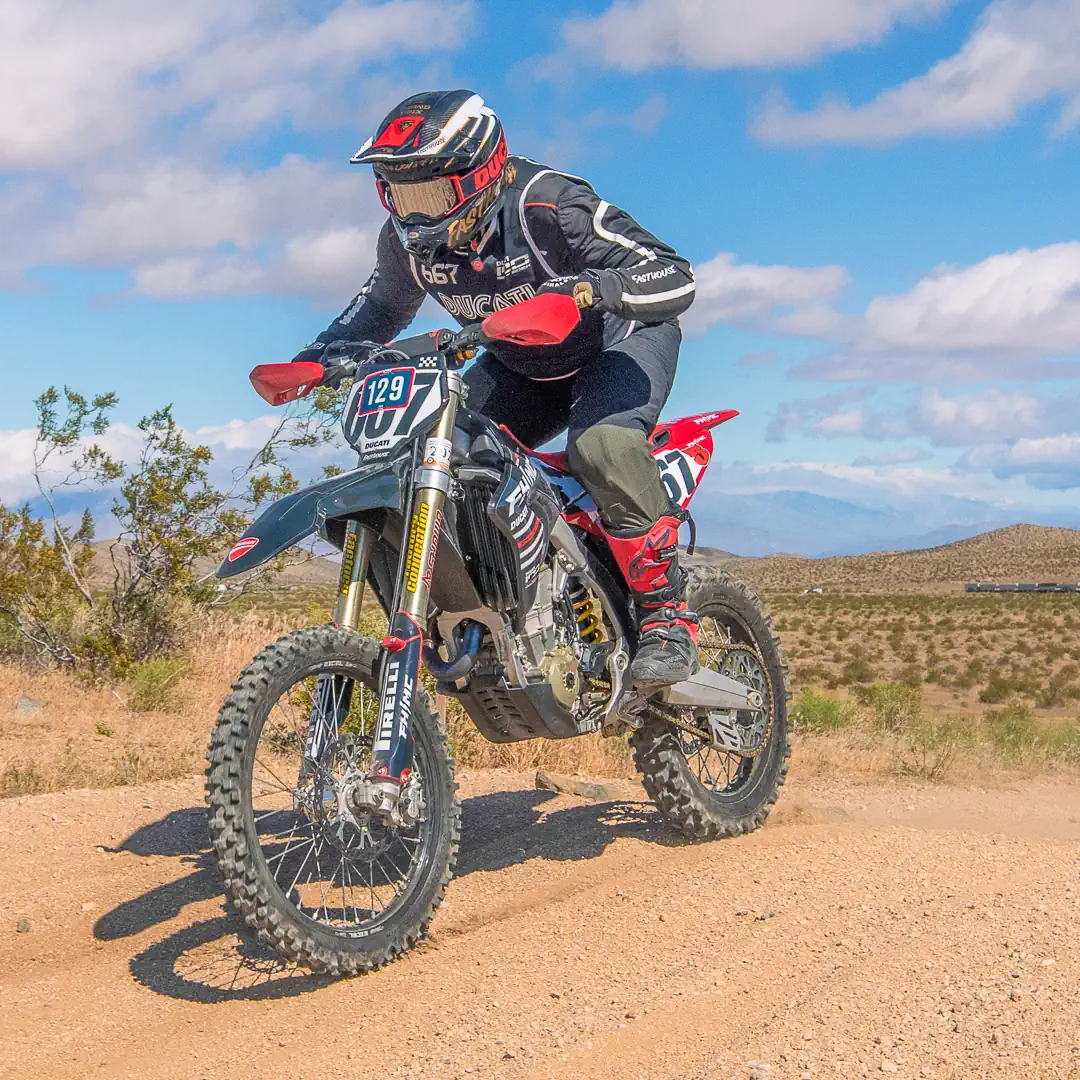
Ducati North America CEO Jason Chinnock racing through the California high desert on a 1971 Ducati 450 R/T Desmo he restored. Photos by Cara Bloch unless otherwise noted.
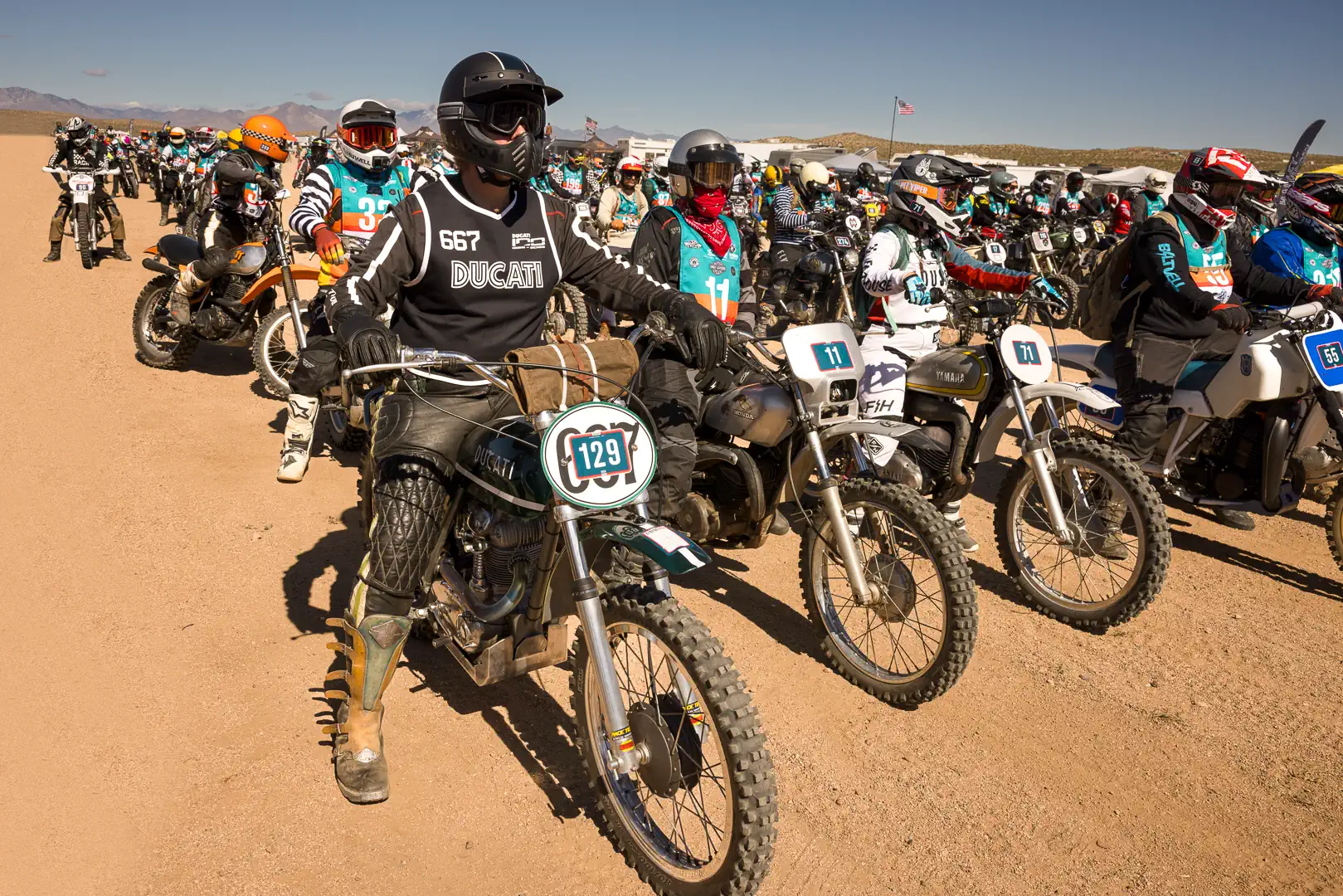
Chinnock competed in the Biltwell 100 Dual Shock class (1971–1990) aboard a 1971 Ducati 450 R/T Desmo he’d been turning wrenches on since late January, completing the build just a few months before race day.
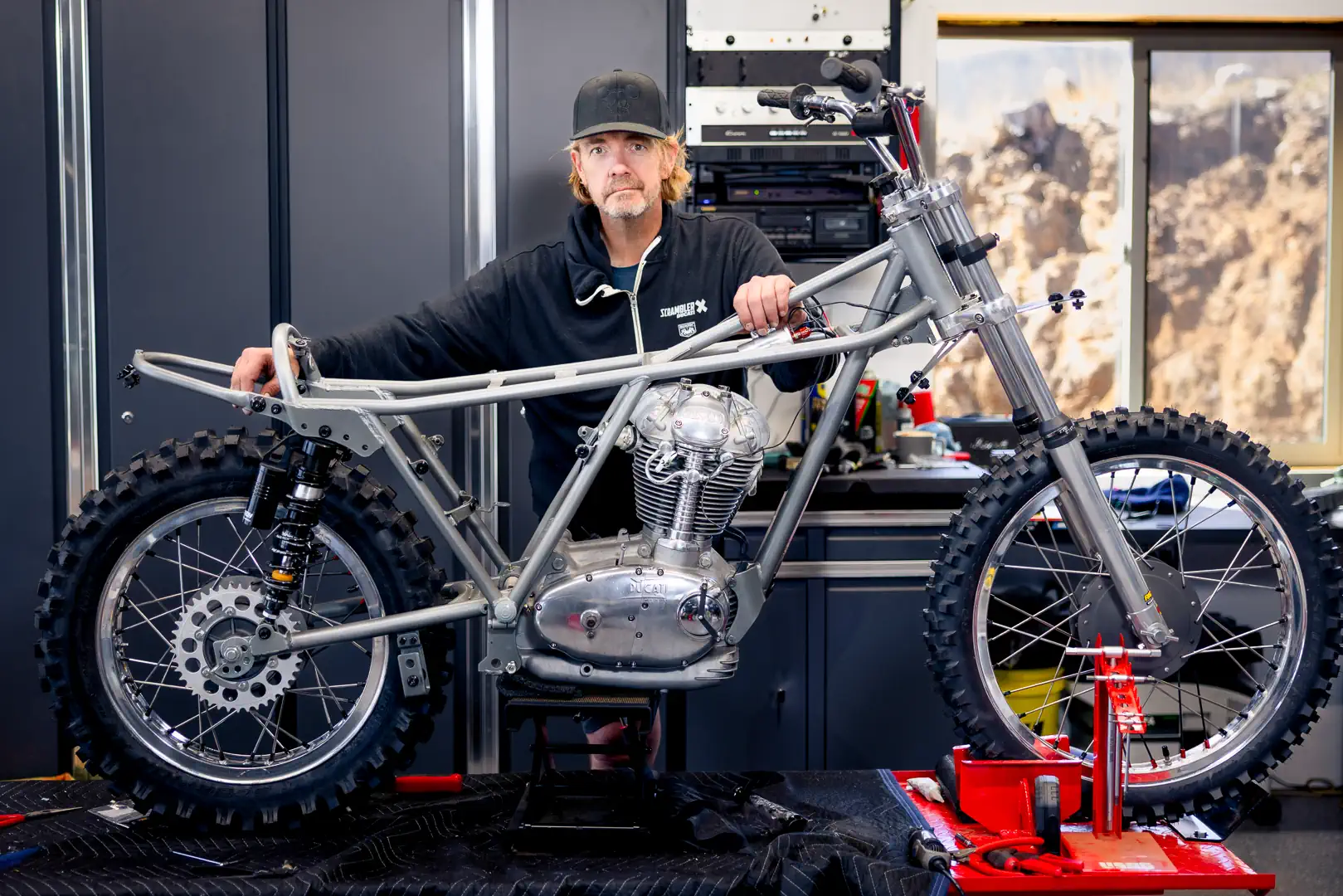
Chinnock working on his vintage racer.
The 450 R/T has an unusual origin story. In 1969, a Ducati Scrambler 350 won the Baja 500. That result caught the attention of Berliner Motors, the U.S. importer at the time. The New Jersey-based company saw an opportunity in the growing desert-racing market and pushed Ducati to build a proper off-road machine. What came back was the 450 R/T. The R/T stood for Regolarità Turismo, the Italian designation for dual-sport and off-road machines. Despite the misnaming, it was Ducati’s first dirt bike for off-road-only competition.
An immaculate 1971 Ducati 450 R/T Desmo at The Quail Motorcycle Gathering in 2017. Photo by Heromade/Aaron Schasse.
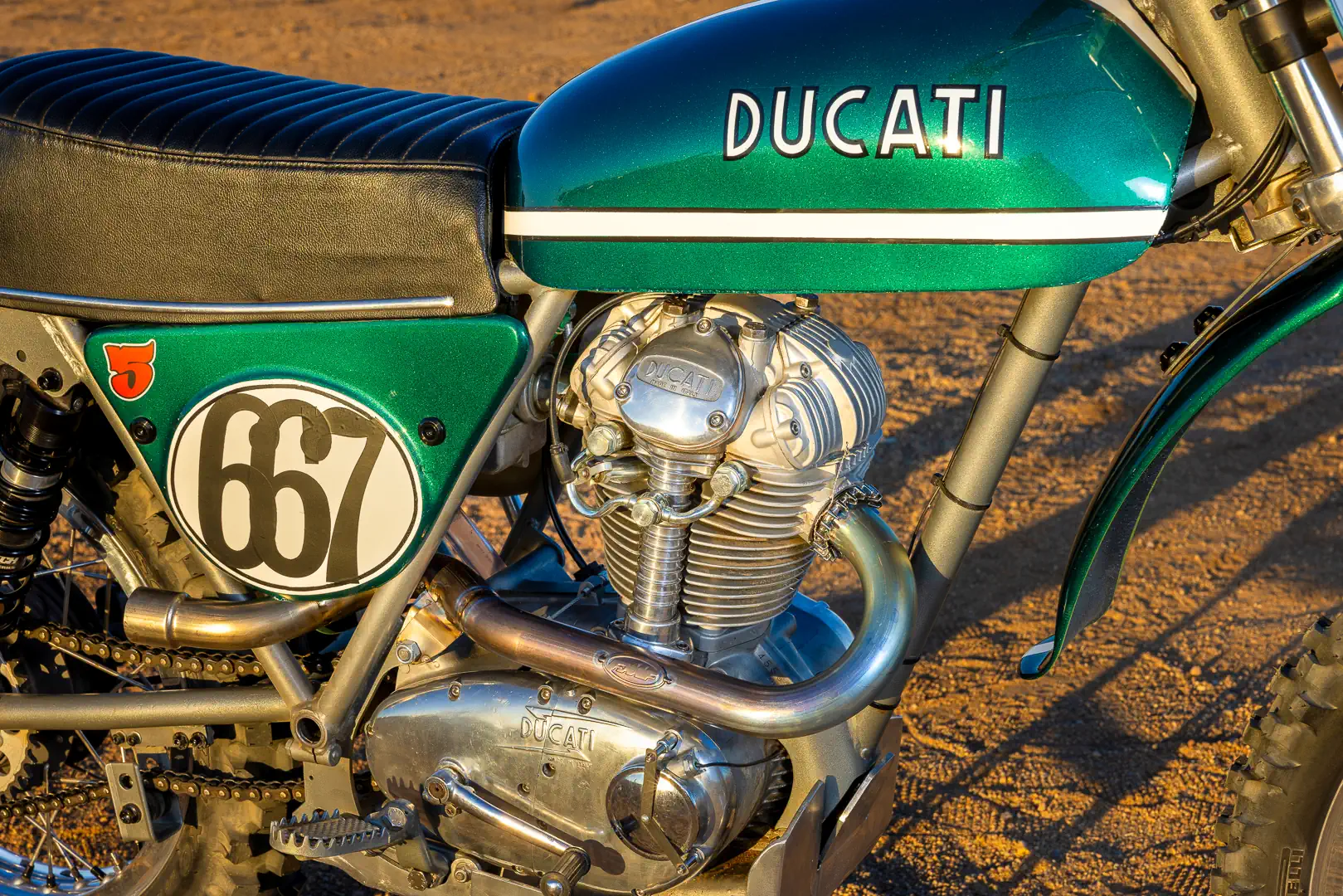
What made it unusual, even by 1971 standards, was the engine. The 436cc thumper used desmodromic valve actuation, which mechanically closes valves rather than using a spring.
The cam was operated via a bevel-drive overhead cam system, another Ducati signature technology. Instead of a chain or belt, a pair of bevel gears and a vertical shaft drive the camshaft. It’s mechanically precise, durable when properly maintained, and gives old Ducati singles a distinct character.
A desmo valvetrain offers more precise control at high rpm and eliminates valve float because the valve is closed mechanically rather than relying on a spring to snap it shut in time. Dropping that technology into a dirt bike was genuinely exotic for the era and remained so, as Ducati didn’t try it again until the new Desmo450 MX and EDX.
Production was limited to a single year for the U.S. market only. The R/T was quietly dropped, as the hefty four-stroke didn’t stand a chance against the simple and agile two-strokes of the day. Just a few hundred were ever sold in America, though a dual-sport version continued in Europe until 1974. Finding an American R/T today in any condition takes patience. Finding one worth restoring is another matter.
Chinnock sourced the bike and got to work in January. For the engine, he turned to Rich Lambrechts of DesmoPro, a specialist in vintage Ducati bevel-drive motors. The engine was rebuilt to factory blueprint specs, with improvements drawn from racing experience.
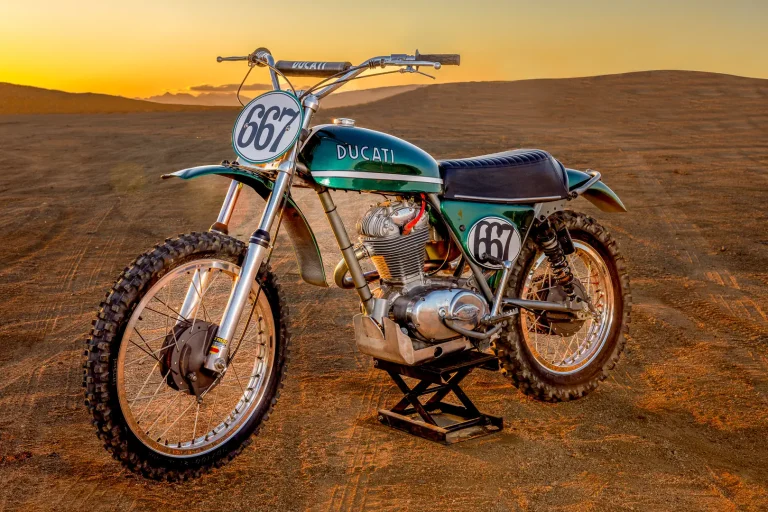
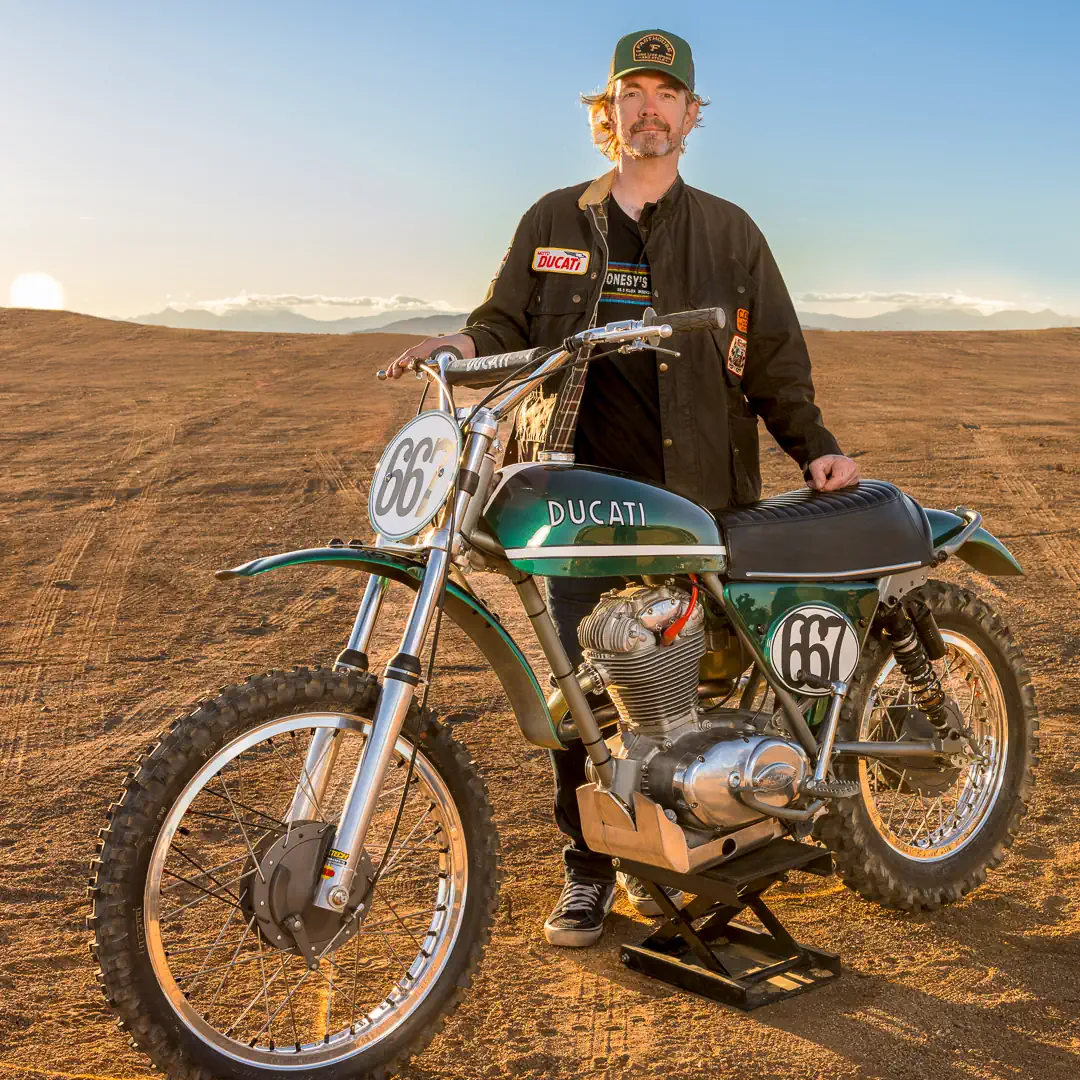
Ducati North America CEO Jason Chinnock and his restored 1971 Ducati 450 R/T Desmo.
The rest of the build drew on a set of performance partners. Dubya USA supplied the wheels, consisting of Excel rims, Bulldog nipples and spokes, and hubs boasting a Cerakote polymer-ceramic composite coating. Pirelli Scorpion Mid-Hard XC tires were spooned on. Race Tech reworked the fork with gold valves, laid-down G3-S custom shocks handled rear suspension duty. FMF Racing fabricated a custom one-off titanium exhaust with a spark arrestor. Pro-Bolt titanium hardware was used throughout, along with a custom aluminum skid plate. The swingarm was modified from a Ducati narrow case single, a detail that matters to anyone who’s dealt with these frames and knows how thin the aftermarket support is. Rather than the original yellow paint, Chinnock went with livery inspired by the 450 R/T prototype.
Chinnock entered the Dual Shock class with a simple goal: finish the race. That’s easier said than done on a 55-year-old dirt bike, regardless of how well prepped it is.
On lap one, a plug fouled, requiring on-course replacement. On lap three, Chinnock took a detour into a rain ditch, twisting the fork assembly in the triple clamps. He rode the final 17 miles to the finish with crooked bars.
“It will take more than winning races for Ducati to be taken seriously in the off-road category in the U.S.,” Chinnock said. “My interest in motorcycles started with the fascination of Evel Knievel, like many kids of the ’70s, but it wasn’t until I witnessed desert racing in Nevada that I knew it would be a part of my life forever. I understand that, in representing Ducati, we need to be authentic and show up on the starting line to be part of the community and be accepted, and I couldn’t think of a better way than to do it myself. The Biltwell 100 was a perfect entry point for me, and I had an incredible time. I expect to come back next year.”
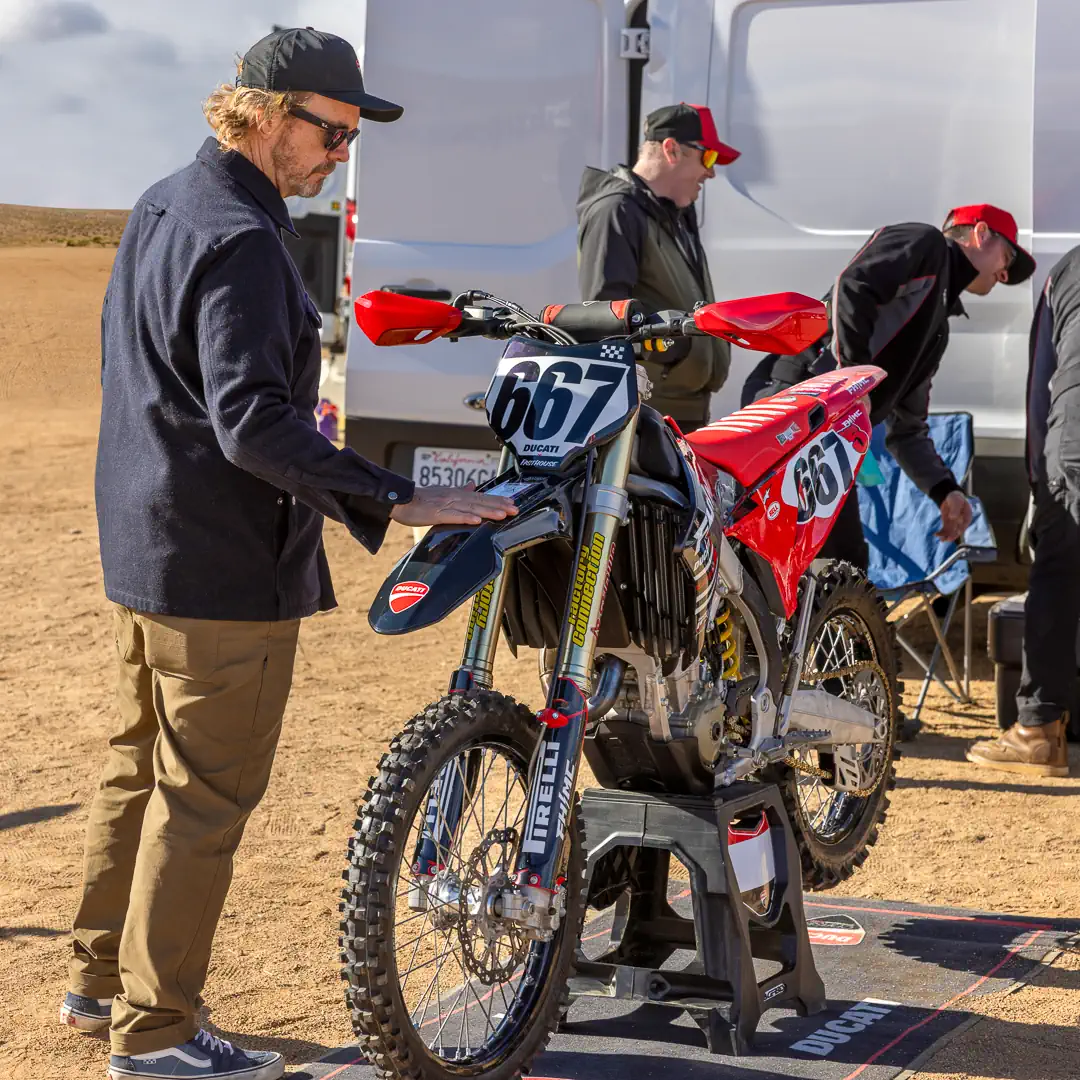
Ducati North America CEO Jason Chinnock also raced the new 2026 Ducati Desmo450 EDX in the Biltwell 100. Photo by Ed Subias.
Chinnock returned the following day to race the 2026 Ducati Desmo450 EDX competition dirt bike in the Modern Class. He moved from P9 to P6 on lap two before a crash ended his race on lap three. Fellow Ducati rider Jordan Graham had a cleaner weekend, taking the overall aboard a Fasthouse Ducati Desmo450 EDX.
Chinnock’s two-day effort was a broad one. Showing up on a 55-year-old ride, breaking down, sorting it out mid-race, and finding a way to finish is exactly the kind of credibility you can’t manufacture. The same goes for crashing out on a modern bike, something we’ve all done.
2026 marks Ducati’s 100th anniversary, and the brand is making a push into motocross, supercross, and off-road racing. While the 1971 Ducati 450 R/T Desmo was a footnote in the histories of Ducati and off-road racing, it’s a chapter worth remembering. We expect the new Desmo450 to have a much longer life.
Hello and welcome again to the Motos and Friends Podcast. This episode is brought to you by Leod Escapes.
* * * * *
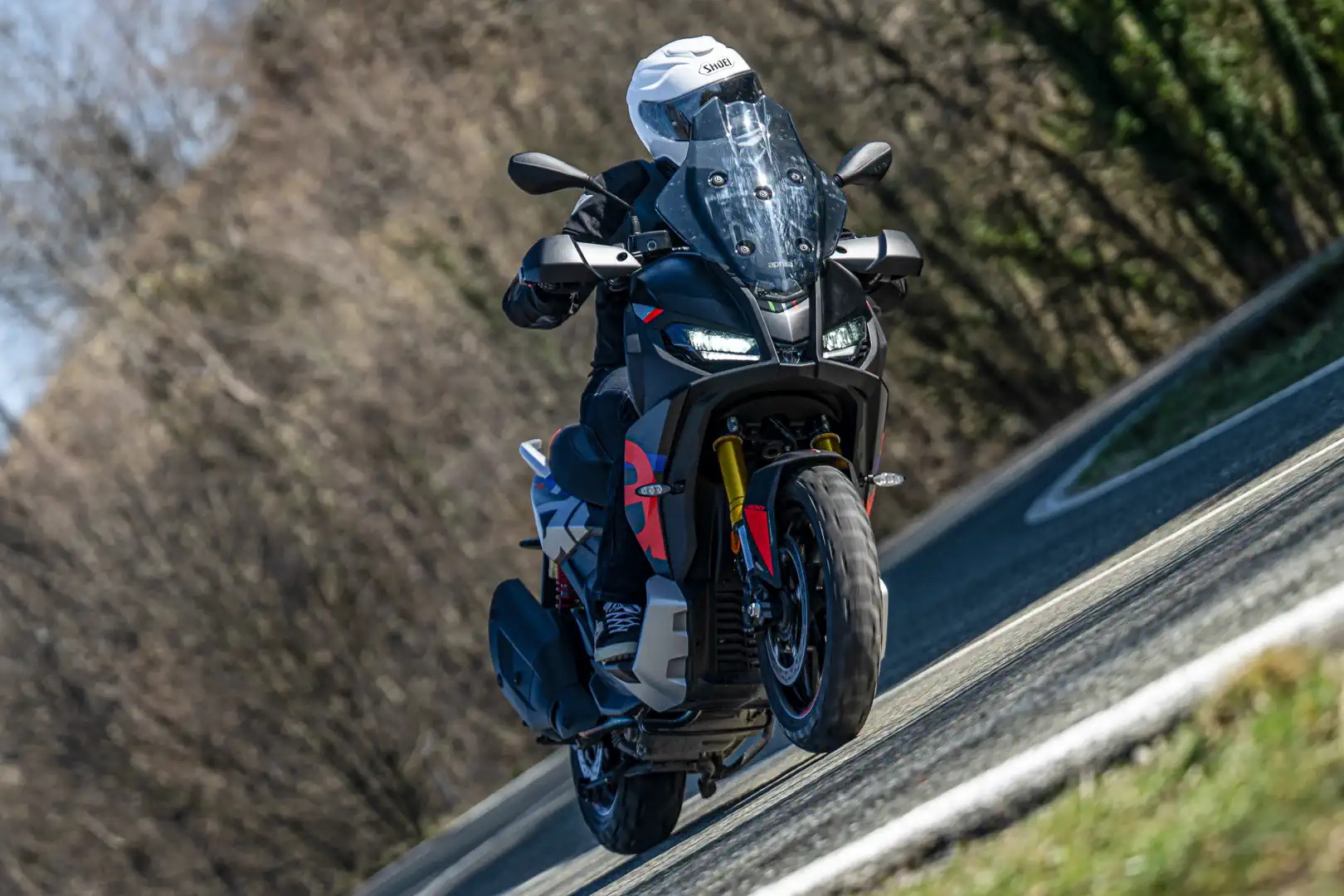
Aprilia is bringing a scooter to North America, and it’s one designed to appeal to adventure motorcyclists. The SR GT 400 is a mid-size scooter built around a steel motorcycle-style frame, a 399cc single, and off-road-ready hardware. It reaches US dealers as soon as this month. Don Williams and Kelly Callan spent some time riding the Aprilia and were surprised by what they discovered. Is this a real motorcycle or just a good-looking urban scooter?
* * * * *
Cat McLeod is founder and owner of Leod Escapes, the ultimate tour company for sport-minded motorcycle riders. Cat talks to us this segment about some of his amazing European experiences and tours that include of course, riding some amazing MotoGP tracks on new BMW S1000RRs. If you like what you hear, now is the time to book your trip of a lifetime, so visit LeodEscapes.com to find out more.
* * * * *
Our guest this episode is Terry Vance, the multiple Motorcycle and Motorsports Hall-of-Famer. Terry is of course the former professional motorcycle drag racer, team owner, and co-founder of the high-performance parts company Vance & Hines. Teejay Adams chats with Terry about his incredible career that includes being the first rider to hit 200 mph in the standing quarter-mile.
Having won this year’s MotoAmerica Mission King of the Baggers championship with Hayden Gillim riding the Vance & Hines factory Indian Challenger, and with Harley-Davidson’s recent withdrawal, Terry gives us his thoughts on where the series might go from here.
* * * * *
Here’s quick reminder to check out our monthly digital magazine. It’s filled with everything you want to read on motorcycling, including some things you’ve probably not seen elsewhere. It’s absolutely free and you will find it on the Apple App Store and of course on Google Play as well.
Don’t forget to leave us your comments on our social media—we’re on all the usual platforms at Ultimate Motorcycling. We love hearing your feedback… so good or bad, please let us know what you think. If there’s something you’d like us to cover, we’d love to hear those ideas too!
We use cookies and browser activity on this website
Functional
Always active
The technical storage or access is strictly necessary for the legitimate purpose of enabling the use of a specific service explicitly requested by the subscriber or user, or for the sole purpose of carrying out the transmission of a communication over an electronic communications network.
Preferences
The technical storage or access is necessary for the legitimate purpose of storing preferences that are not requested by the subscriber or user.
Statistics
The technical storage or access that is used exclusively for statistical purposes.The technical storage or access that is used exclusively for anonymous statistical purposes. Without a subpoena, voluntary compliance on the part of your Internet Service Provider, or additional records from a third party, information stored or retrieved for this purpose alone cannot usually be used to identify you.
Marketing
The technical storage or access is required to create user profiles to send advertising, or to track the user on a website or across several websites for similar marketing purposes.