

Italian manufacturer Cagiva produced motorcycles for only slightly more than three decades, yet in that time it built an outsized reputation through racing success, iconic models, and an astonishing series of acquisitions and divestitures. Founded and controlled throughout its life by the Castiglioni family of Varese, Cagiva ultimately ceased production in 2012, leaving behind a legacy that still resonates with knowledgeable riders.
Cagiva’s roots date back to 1950, when Giovanni Castiglioni established a small metal components factory in Varese, about 35 miles northwest of Milan. Following Giovanni’s death in 1962, his sons Claudio and Gianfranco took the helm. Although the factory initially produced components rather than complete vehicles, the brothers harbored a passion for motorcycles.
In 1978, they launched the Cagiva brand—an acronym derived from CAstiglioni GIovanni VArese—and released their first complete machines, mostly 125 cc two-stroke road and motocross models aimed at the Italian market.
Expansion began almost immediately. Between 1978 and 1979, Cagiva acquired the former Aermacchi/Harley-Davidson plant at Schiranna on Lake Varese. They also secured the rights to Harley-Davidson’s Italian-built 250 and 350 two-stroke singles, which were sold for a short time with HD-Cagiva badging and the SST model name.
The company leveraged its acquisition of the former Aermacchi/Harley-Davidson factory in Schiranna to aggressively scale operations. Cagiva focused on consolidating its two-stroke lineup, enhancing its off-road capabilities, and laying the groundwork for larger-displacement models.

From 1979 to 1983, Cagiva transitioned from a fledgling motorcycle brand to a major European player. The company enjoyed rapid production growth, model diversification, off-road innovation, and forays into Grand Prix racing. By 1983, Cagiva had established itself as Italy’s leading motorcycle producer by volume.
In 1983, Cagiva purchased the bankrupt Ducati from state ownership. This acquisition provided Cagiva with access to Ducati’s legendary air-cooled desmodromic V-twin engines. Two years later, Cagiva added the historic Moto Morini brand and its 350cc and 500cc V-twins to the portfolio.
The buying spree continued in 1987 with the purchase of Husqvarna, a legendary Swedish off-road brand. Cagiva acquisition fever peaked in 1992 when it bought the MV Agusta name. The Castiglioni holding company controlled five iconic marques: Cagiva, Ducati, Moto Morini, Husqvarna, and MV Agusta.
Cagiva also dedicated itself to racing, most notably in the Paris-Dakar rally and Grand Prix road racing.
The company’s greatest triumphs came in the Paris-Dakar Rally. After several years of campaigning modified two-strokes, Cagiva introduced the purpose-built Elefant series powered by enlarged Ducati desmo V-twins—904cc and, later, 944cc.

In 1990, Italian rider Edi Orioli delivered Cagiva its first outright Dakar victory aboard the Elefant 900 wearing the famous red-and-white Lucky Explorer livery sponsored by Lucky Strike cigarettes—a look reprised on the 2024 MV Agusta LXP Orioli. Four years later, in 1994, Orioli repeated the feat on an updated Elefant 900, securing the Italian marque’s second and final Dakar win against factory efforts from Honda, Yamaha, and BMW.
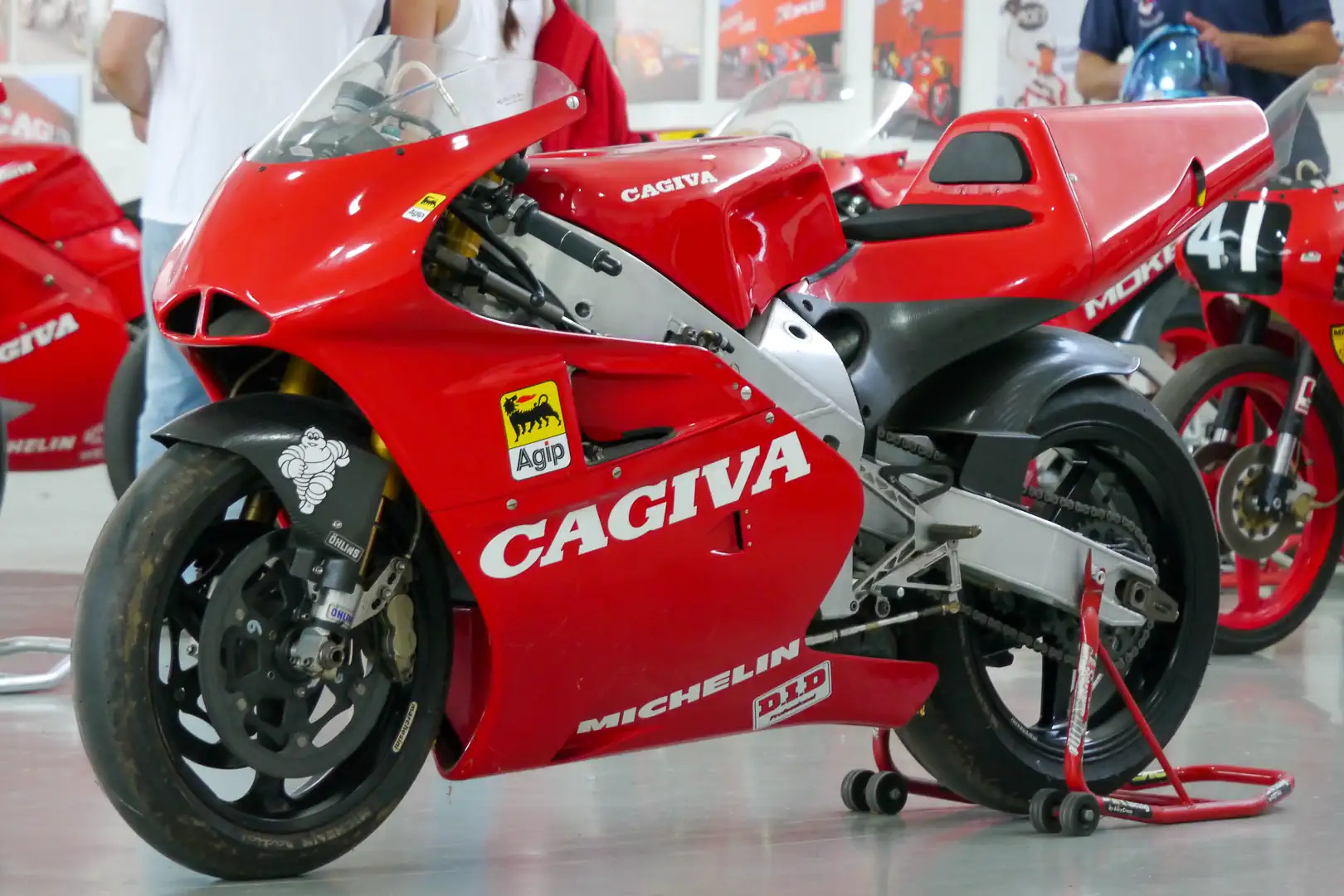
On the Grand Prix circuits, Cagiva campaigned 500cc factory two-strokes in the premier class from 1988 until 1995. The first bikes were complex rotary-valve-intake V4 engines, which were eventually replaced by more conventional designs.
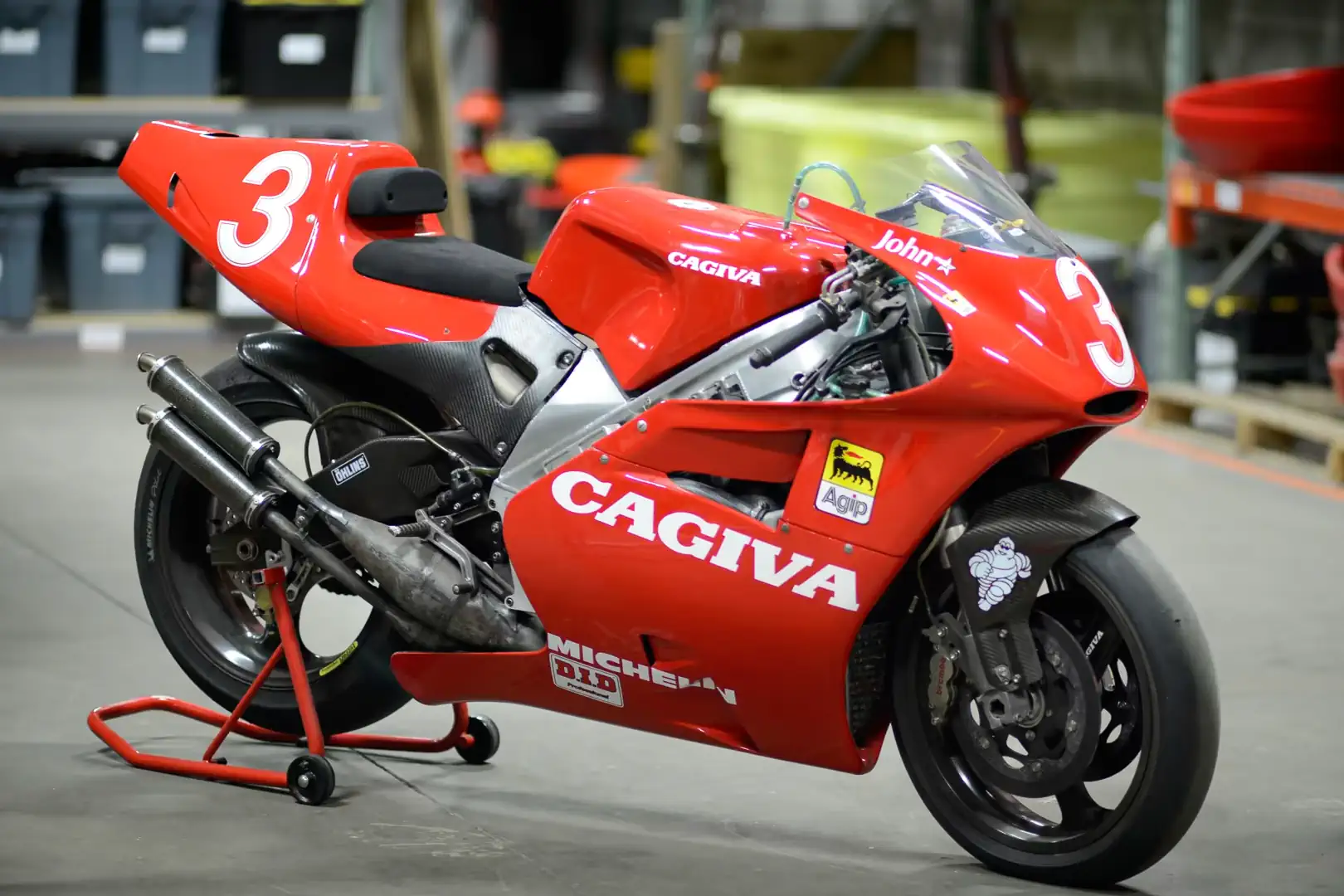
Randy Mamola scored Cagiva Corse’s first podium in 1988 aboard the C588. In 1992, Eddie Lawson took Cagiva’s first 500 GP win in Hungary while riding for the Cagiva Team Agostini factory effort on the C592. Earning seven podiums, including a win at the season opener, John Kocinski put the Cagiva C593 on the podium in the final standings for the first time in 1994. That was to be Cagiva’s final success in the 500 GP class, as Cagiva Corse ran just one race the following year before leaving the paddock entirely and permanently.
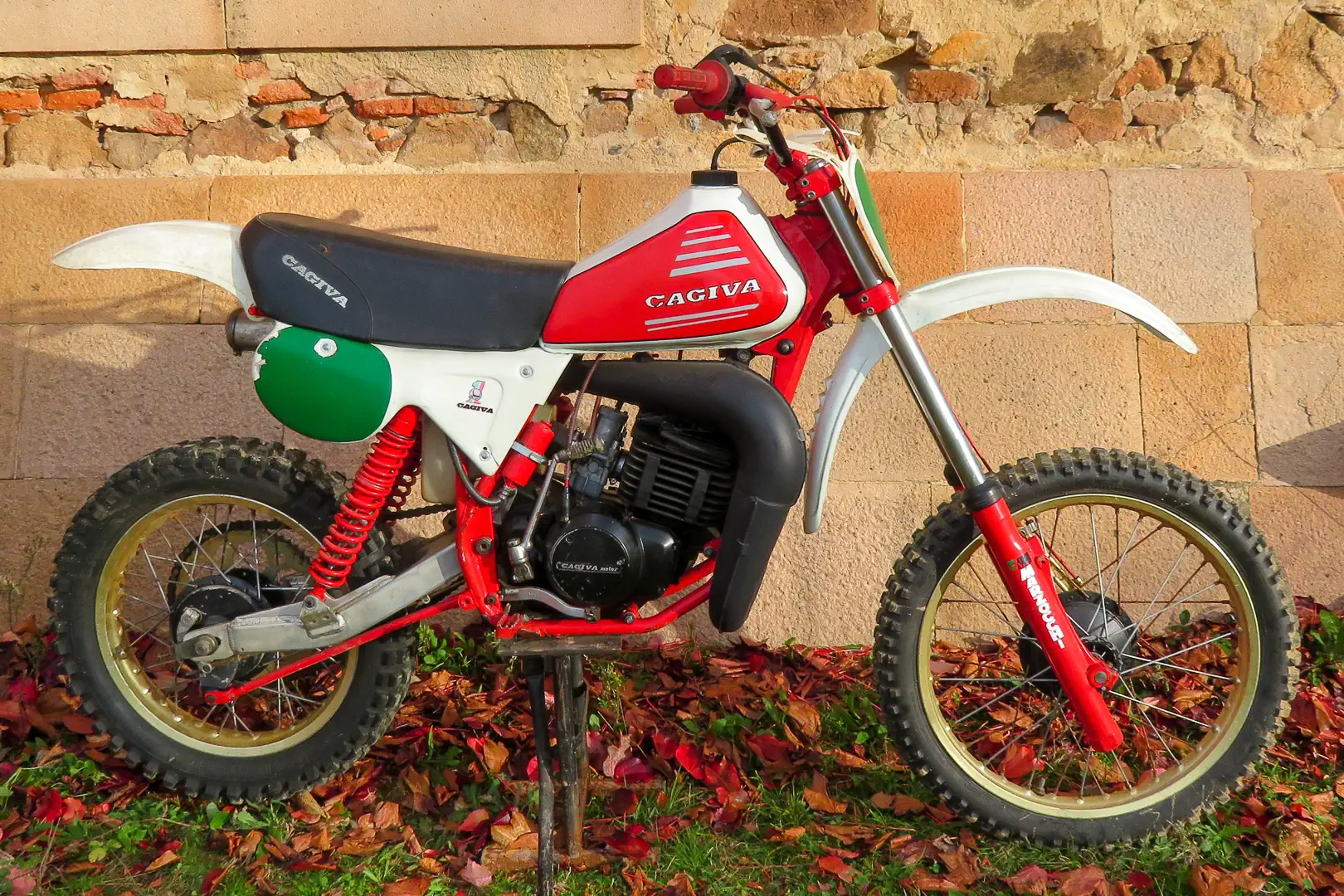
In support classes, Cagiva also had success. Cagiva took the 1982 350 GP title with Jon Ekerold aboard. World motocross championships came in the 125 class—Pekka Vehkonen took the honors in 1985 and David Strijbos the following year.
While racing, Cagiva continued to produce notable consumer motorcycles that tapped into various markets.
The Elefant series, produced from 1985 to 1997, represented the road-going counterpart to the Dakar racers. These were early versions of what are now known as adventure bikes. Early Elefants used 350 and 650 Ducati engines. However, the definitive models were the 750cc (1987–1993) and the fuel-injected 900 i.e. (1993–1997). Weighing around 440 pounds dry and producing approximately 70 horsepower with excellent mid-range torque, the 900 Elefant combined genuine off-road capability with comfortable long-distance road manners.
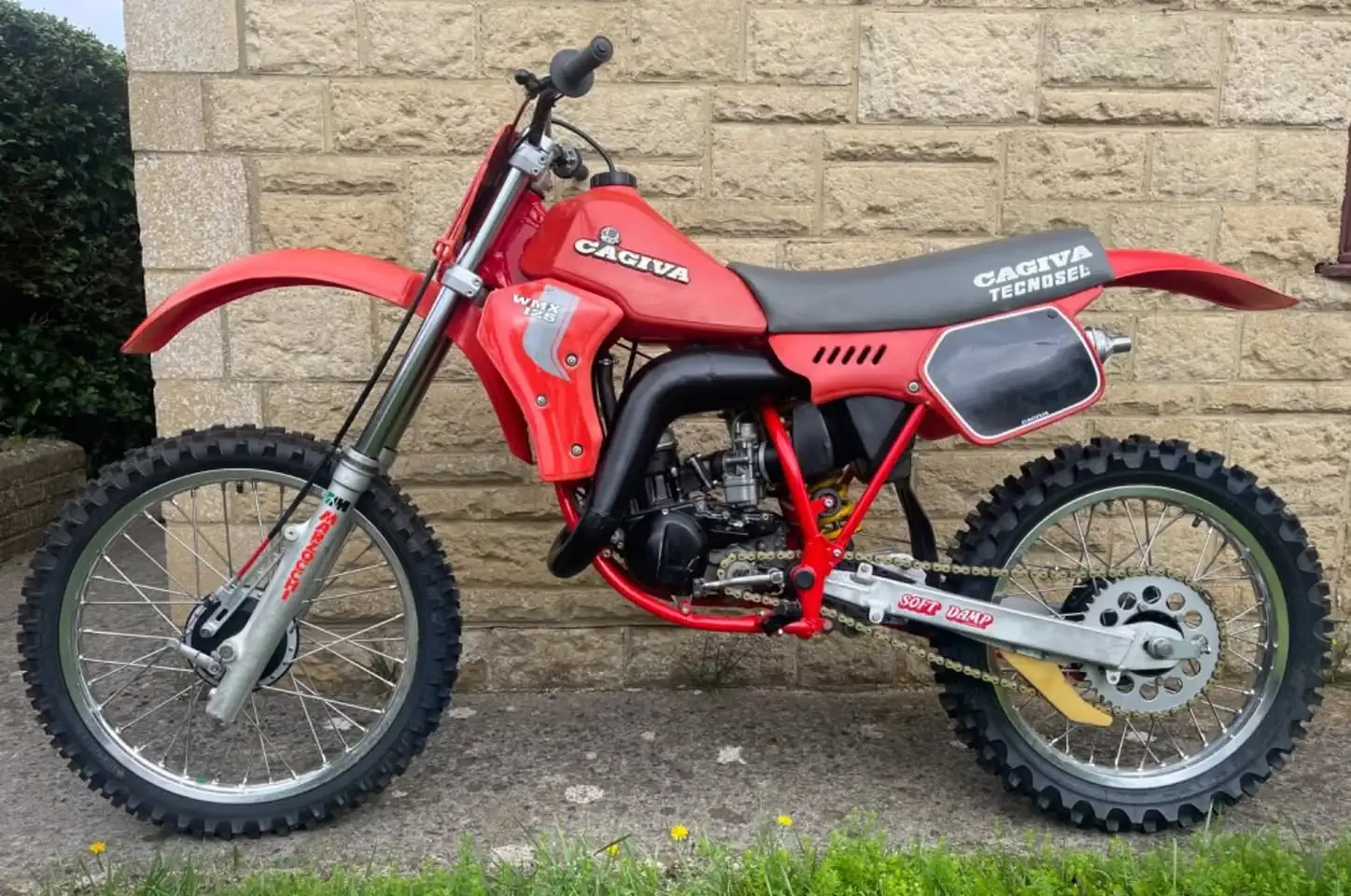
During the 1980s, the Cagiva WMX 125 was popular in the European motocross market but never made inroads in the United States. Worldwide, Cagiva ranked #5 in motocross bike production in 1986, trailing only the four Japanese brands.
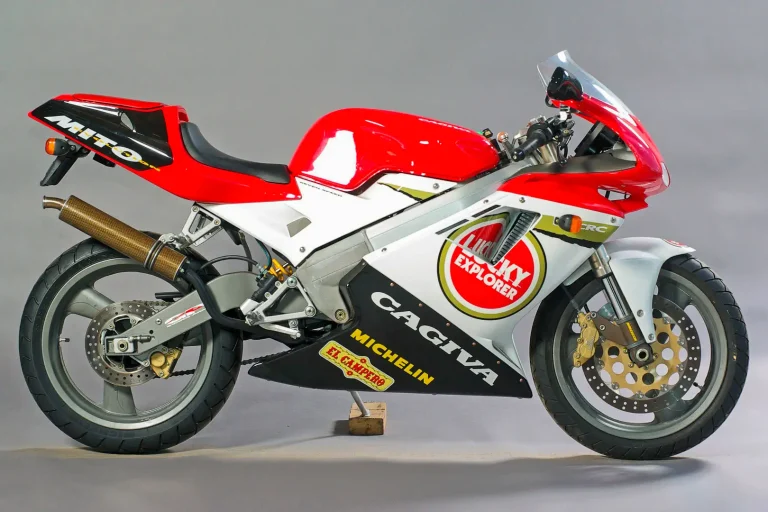
Manufactured from 1990 until the factory’s closure in 2012, the Cagiva Mito 125 was an iconic two-stroke Euro learner-legal sport bike. Equipped with a seven-speed gearbox (six, later), electric power valve, twin-spar aluminum frame, and Massimo Tamburini’s styling inspired by the Ducati 916, the Mito delivered performance that embarrassed many larger machines. Its sharp handling and screaming 30+ horsepower engine, when derestricted, made it a legend among European teenagers. 15-year-old Valentino Rossi raced a factory Cagiva Mito to an Italian championship in 1994.
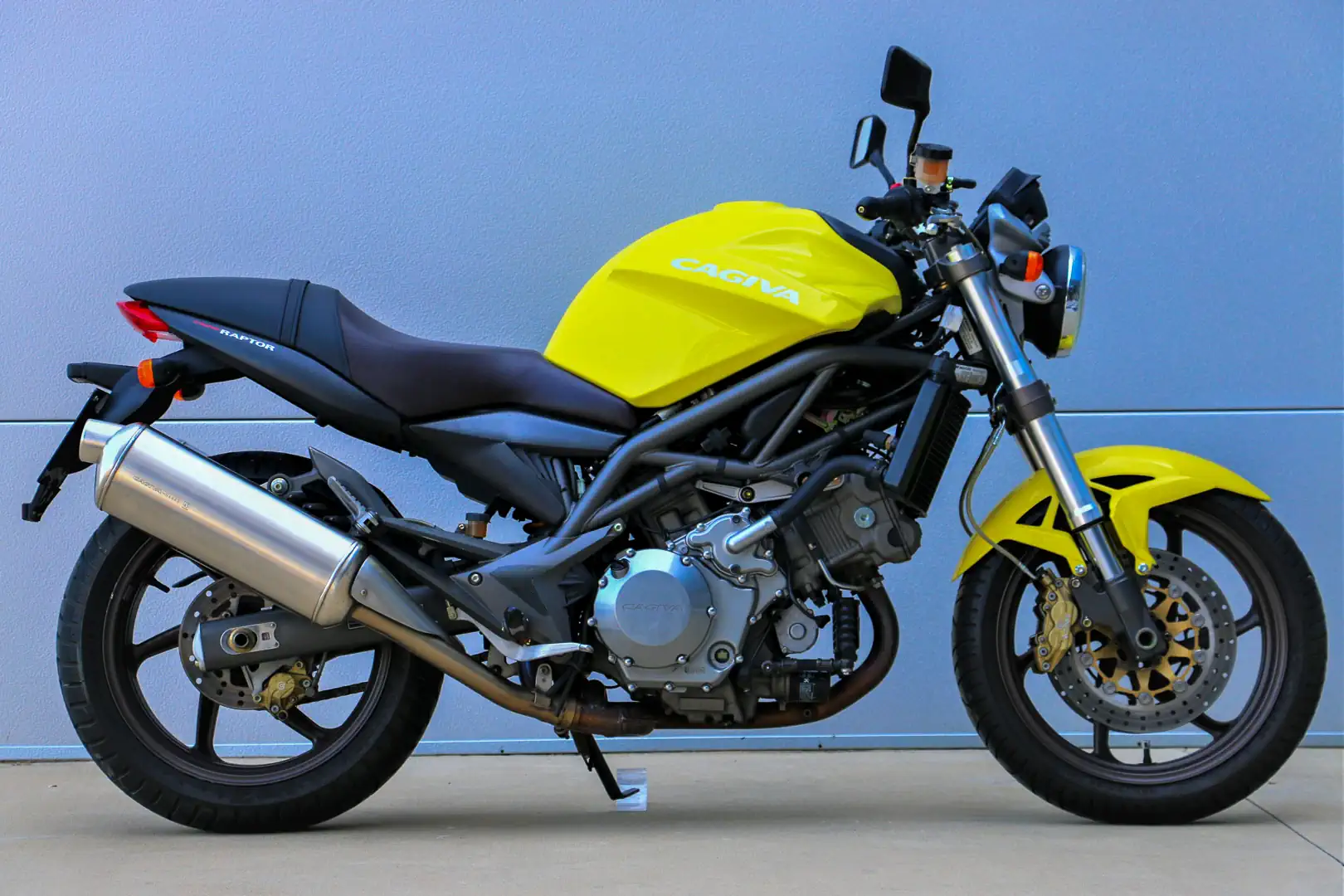
From 2000 to 2005, Cagiva offered the Raptor and V-Raptor semi-naked sport bikes in 650 and 1000 versions. Both used the Suzuki TL1000 90-degree V-twin engine mounted in a Cagiva chromoly trellis frame. The light and agile motorcycles earned praise for their agility and character, making them a legitimate alternative to their Suzuki counterparts.
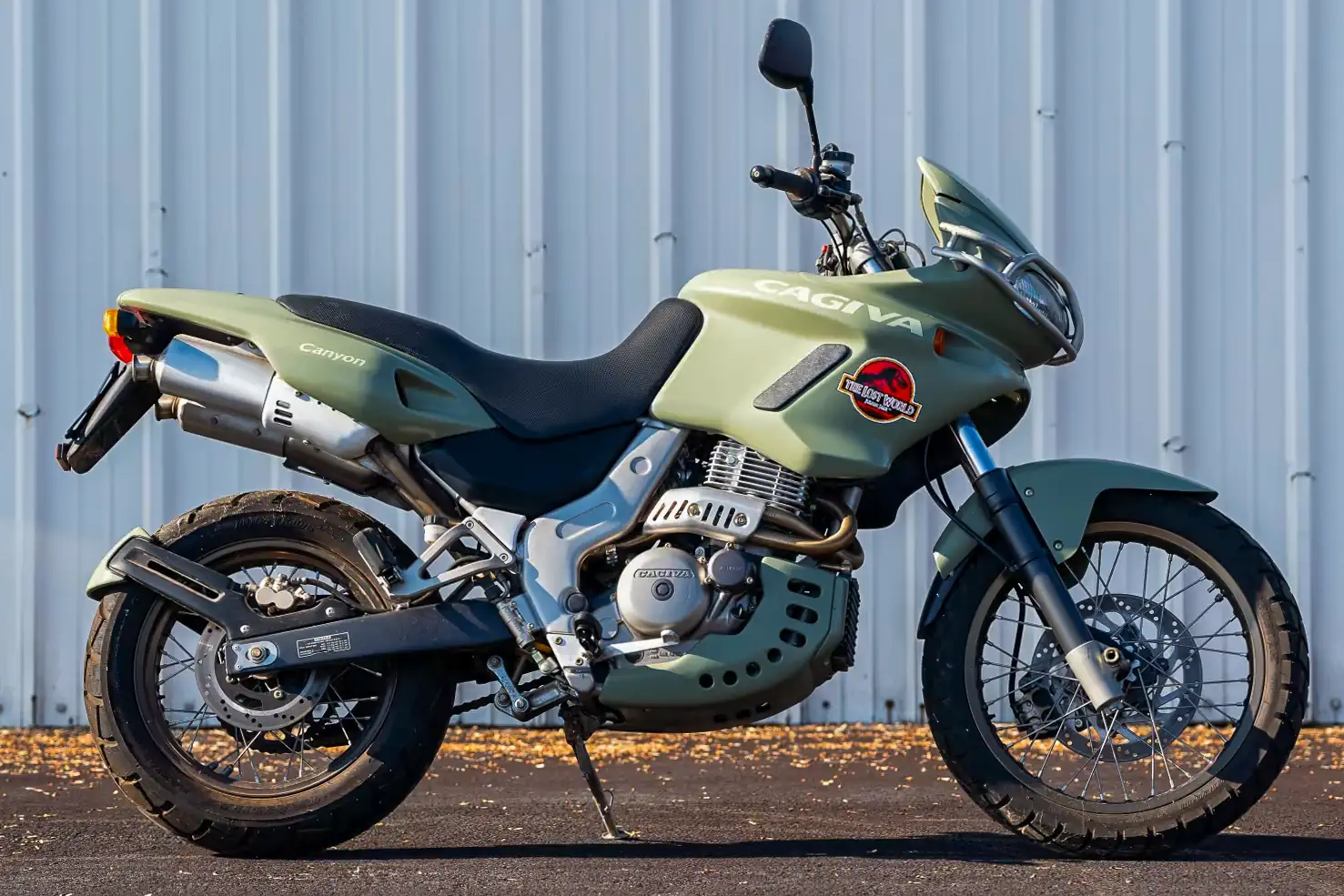
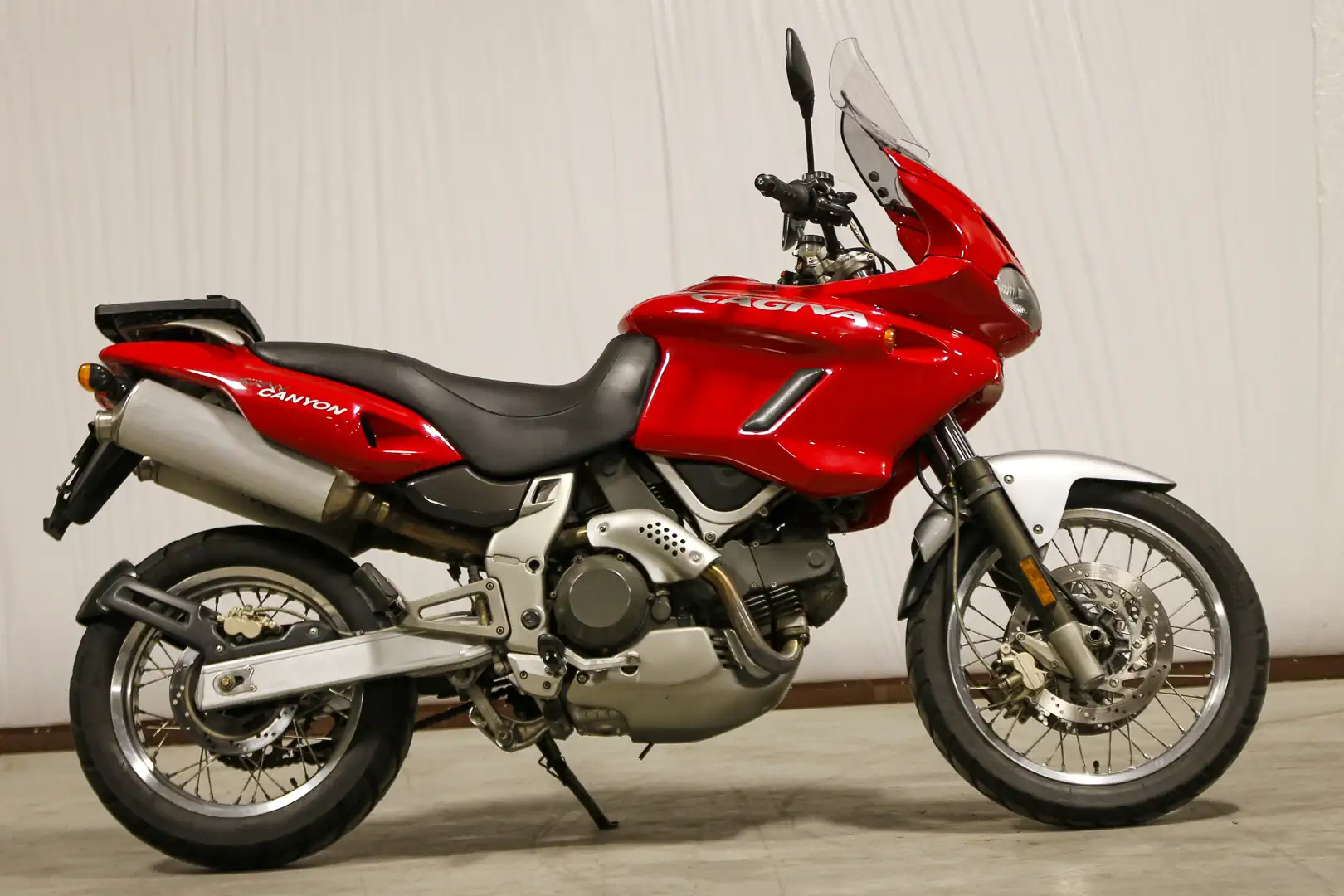
The Gran Canyon—yes, no “d”—produced from 1998 to 2000, served as a road-oriented adventure tourer featuring a half-fairing, high bars, luggage capability, and a 904cc air-cooled Ducati engine shared with the 900 SS.
Financial overextension from the acquisition campaign eventually forced the sale of assets. Husqvarna was divested to BMW in 2000. MV Agusta changed hands multiple times between 2007 and 2010, passing briefly to Harley-Davidson before returning to Italian ownership. Ducati, the most valuable holding, was gradually sold. Majority control went to Texas Pacific Group in 1998, then to Investindustrial, and finally to the Volkswagen Group via Audi in 2012. Without Ducati engines and revenue, Cagiva’s original production shrank to small batches of the Mito 125 and rebadged Asian scooters.
Motorcycle manufacturing under the Cagiva name ended completely in 2012. Claudio Castiglioni died in August 2011, and Gianfranco followed in 2014. The family retained the Cagiva trademark but has not resumed production. The historic Schiranna factory now builds MV Agusta motorcycles.
Cagiva’s 34-year history is fascinating on many levels. A family-owned company briefly controlled much of Europe’s two-wheeled heritage, scored Dakar and 500 GP victories, and created legendary motorcycles favored by riders who value character over corporate perfection. Cagiva’s ambition and hubris made the Italian brand a supernova in the motorcycling universe.
